From Food Stamps to the Governor’s Mansion: Deb Haaland Makes American History
By Dhabessa Wakjira
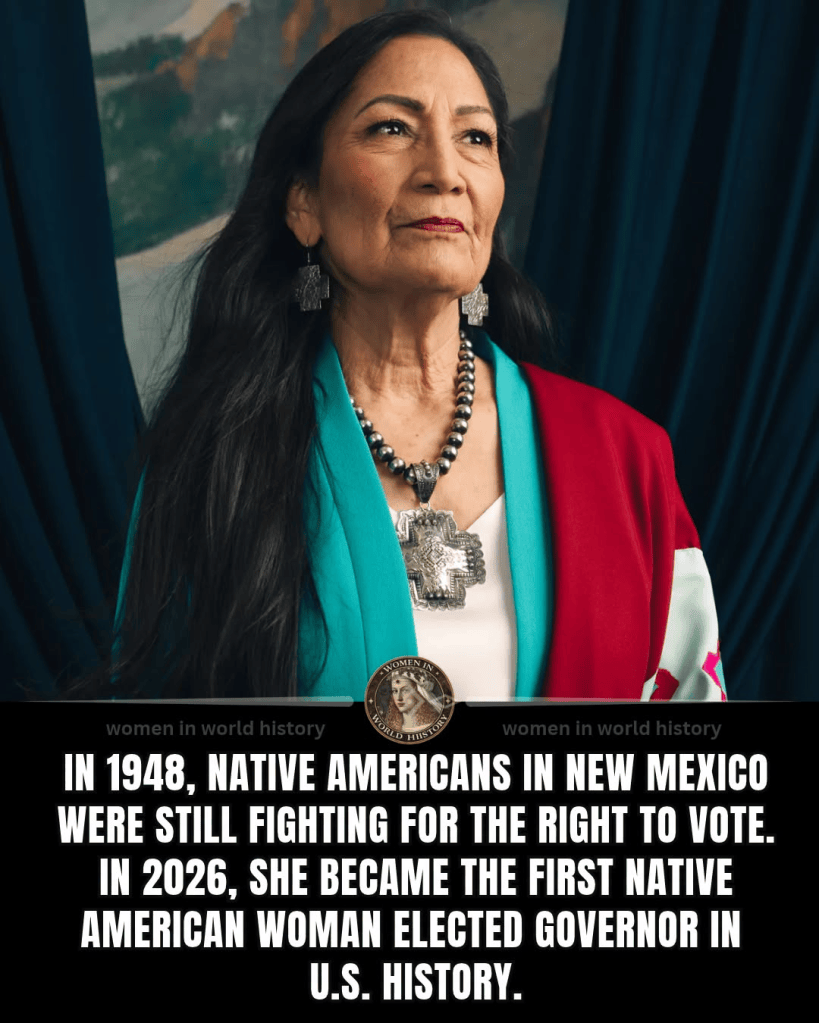
SANTA FE, New Mexico — Seventy-eight years ago, Native Americans in New Mexico were still fighting for the right to vote. Last night, a Native American woman was elected to lead the entire state.
Her name is Deb Haaland. And her journey to becoming the first Native American woman elected governor in United States history is extraordinary.
A Life Forged in Struggle
Haaland is 65 years old, a member of Laguna Pueblo, a mother, a grandmother, and a woman who knows what it means to struggle. Before Washington, before Congress, before making history, she was a single mother trying to keep food on the table.
She relied on food stamps. She lived paycheck to paycheck. At times, she and her child had no permanent home, staying with relatives or sleeping on friends’ couches. She went back to college at 28, graduated while nine months pregnant, and later earned a law degree. She sold homemade salsa to support her family.
And she kept going.
A Trail of Firsts
In 2018, she became one of the first two Native American women elected to Congress. In 2021, she became the first Native American to serve as a United States Cabinet secretary. As Secretary of the Interior, she confronted one of America’s darkest chapters: the government-run system of boarding schools that separated Indigenous children from their families, languages, and cultures.
This history was personal. Her own grandmother had been taken from home as a child and sent to one of those schools.
November 3, 2026: A Historic Night
During National Native American Heritage Month, voters in New Mexico elected Haaland as their next governor. For generations, Indigenous people had been denied political rights in a land their ancestors inhabited long before the United States existed. Haaland describes herself as a 35th-generation New Mexican.
Standing before a cheering crowd last night, she spoke about being a single mother, overcoming poverty, and working toward a future she once could scarcely have imagined.
“Here in New Mexico, we can do anything,” she said. “And I know this because I am living proof.”
From Struggle to Leadership
A woman who once struggled to afford groceries will now lead a state of more than two million people. Her victory is not merely a personal triumph—it is a milestone in the long, unfinished struggle for Indigenous political rights in the United States. It comes in a state where, less than eight decades ago, Native Americans were still denied the ballot.
Haaland’s story is one of resilience, determination, and the refusal to accept the limits that poverty and circumstance impose. She did not inherit power; she built it from the ground up, one step at a time, while raising a child, earning degrees, and selling salsa to make ends meet.
A Symbol of What Is Possible
Her election sends a message that resonates far beyond New Mexico. It speaks to single mothers, to Native communities, to anyone who has ever been told that the odds are too great. Haaland’s life is proof that the distance between struggle and leadership is not as vast as it sometimes seems—and that the people who have lived through hardship often make the most committed public servants.
As she takes office, Haaland will carry with her the experiences of a life lived on the margins and the perspective of a people who have endured centuries of dispossession. Her governorship will be watched closely—not only for what she does, but for what she represents.
A Historic First
Her name is Deb Haaland. And on November 3, 2026, she made American history.
Deb Haaland — Governor-elect of New Mexico. First Native American woman elected governor in United States history. A 35th-generation New Mexican. Living proof.

Posted on November 4, 2026, in Aadaa, Afaan, Diaspora, Election, Events, freedom, gadaa, gender, health, Information, Language, Media, News, Oromia, Oromo diaspora, Press Release, Promotion, Siinqee. Bookmark the permalink. Leave a comment.






Leave a comment
Comments 0