Irreechaa: The Power of Oromia Has Arrived — This Year’s and Forever
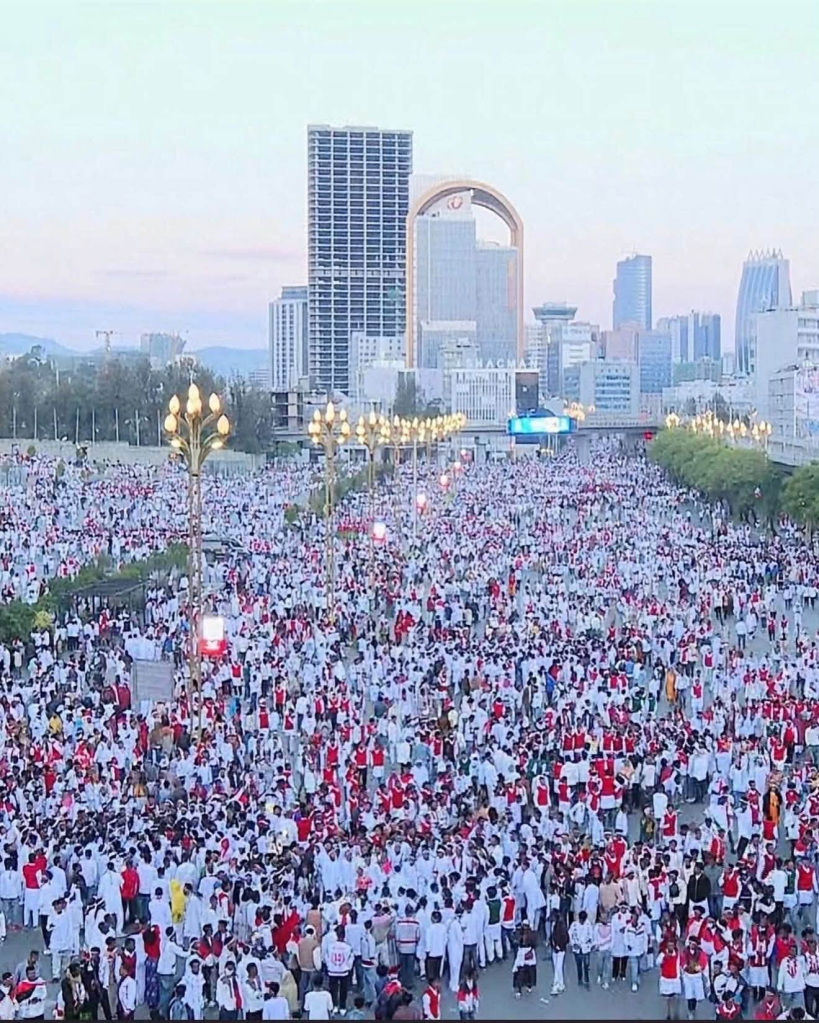
In a passionate reflection on the 2019 E.C. Irreechaa celebration at Hora Finfinnee, one voice captures what millions felt: a festival that is not merely thanksgiving but the very power of a people — their unity, their identity, their unbreakable spirit.
“Irreechaa is IRREE — the POWER of Oromia. And it has arrived. This year’s. And forever.”
A Voice from the Water’s Edge
There are testimonies that transcend reporting. They are not journalism, not analysis, not commentary. They are witness — the raw, unfiltered voice of someone who was there, who saw, who felt, who was changed.
What follows is such a testimony. Shared in the aftermath of the 2019 E.C. Irreechaa celebration at Hora Finfinnee, it is a reflection on what Irreechaa means — not in theory, but in lived experience. Not as a cultural artifact, but as a living force.
The author writes not as a detached observer but as a participant, a beneficiary, a son of Oromia who found in Irreechaa something he had been searching for his entire life.
This is his testimony.
“Irreechaa — The Power of Oromia! We Have Arrived!”
The message begins with a declaration — not a greeting, not a description, but a proclamation:
“Irree/Humna Oromoo! Baga geenye! Kan baranaa-kan bara egeree!!!!!”
“Irree — the Power of Oromia! We have arrived! This year’s — and forever’s!!!!!”
This is the language of victory. Not victory over an enemy, but victory over erasure. Victory over silence. Victory over the forces that sought to sever a people from their sacred traditions.
The author continues:
“Irreecha Bara kanaa kan Hora Finfinnee Irreeffannee Ofkolleerra! Galata Waaqaa!”
“This year’s Irreechaa at Hora Finfinnee — we celebrated it and we found ourselves! Thanks be to Waaqa!”
Ofkolleerra — “we found ourselves.” This is the heart of the testimony. Irreechaa is not just a festival one attends. It is a place where a people rediscover who they are. At the sacred waters of Hora Finfinnee, in the heart of what is now Addis Ababa, the Oromo people reclaimed not just a celebration but their own identity.
“Galata warra waan kana asiin gahaniif, warra kanaaf gumaachan hundumaaf!!!!!”
“Thanks to all who made this possible, to all who sacrificed for this!!!!!”
Gratitude extends in every direction — to Waaqa, to the ancestors, to those who struggled and sacrificed so that Irreechaa could be celebrated freely at its ancestral site.
A Teacher’s Prophecy
The testimony then turns to memory — a story from a classroom, years ago:
“Gaafan kutaa 9 baradhu — waggaa 26n har’aa dura, bariisaan Seenaa tokko, barsiisaa Tameen, ‘Yoo ofbaruu feetani Irreeessa Hora Harsadii dhaqaa; Waldaa Maaccaa fi Tuulamaa dhaqaa’ nuun jedhu ture!”
“When I was in Grade 9 — 26 years ago — a History teacher, Teacher Tame, used to tell us: ‘If you want to know yourselves, go to Irreechaa at Hora Arsadi; go to the Maaccaa and Tuulama assemblies!'”
Twenty-six years ago, in a classroom in Oromia, a teacher planted a seed. He told his students that if they wanted to understand who they were, they needed to go to Irreechaa. They needed to go to the traditional assemblies. They needed to encounter their own culture, their own history, their own people.
That teacher understood something profound: identity is not taught in textbooks alone. It is experienced. It is felt. It is lived in community, at sacred sites, in rituals that stretch back thousands of years.
And now, twenty-six years later, his student testifies:
“Dhuguma waan Oromoo fi Oromummaa baay’eesaa bakka tokkotti dubbatu waraabamees dubbatamees hindhumnetu Irreeessan ifa: Gootummaa, jaalala, Huyyummaa, Safuu, Tokkummaa, xiiqii, Miidhagina, Walqixxummaa, Abdii, …”
“Truly, what speaks of Oromia and Oromummaa in one place — written and spoken — is nowhere else but Irreechaa: Heroism, love, abundance, Safuu (moral order), unity, excitement, beauty, equality, hope, …”
This is the curriculum of Irreechaa. Not subjects to be studied, but virtues to be embodied. At the water’s edge, the Oromo people do not learn about heroism — they become heroes. They do not study love — they practice it. They do not read about unity — they experience it.
“Anis isan hanga har’aa DHEEBOTAA turef argadheen LAMMATA dhaladhera!”
“I, too, found what I had been searching for until today — and I was born twice!”
LAMMATA dhaladhera — “I was born twice.” This is the language of conversion, of transformation, of rebirth. Irreechaa is not just an event one attends. It is an experience that changes you. The author came to Irreechaa searching. He left reborn.
“Waan ofii argachuu maaltu namaaf gaharee? Galaana Gammachuu daakeen quufaa oole!”
“What is greater than finding oneself? I have been satisfied by an ocean of joy!”
There is no greater gift, the author suggests, than self-discovery. And Irreechaa, for the Oromo people, is the place where that discovery happens. It is an ocean of joy — galaana gammachuu — that satisfies the deepest human longing.
The Grief of Loss and the Joy of Return
The testimony then takes a poignant turn — a memory of what was lost:
“‘EE AADAAN BADDE GALTE…’ kanammoo bara Yuunivarsiitii Gondaritti Irreeffanne waggaa 20n dura ittiin weedifne.”
“‘Oh, culture, you are lost…’ — that was the song we sang when we celebrated Irreechaa 20 years ago at Gondar University.”
Twenty years ago, Irreechaa was celebrated in exile — far from the sacred waters, far from the ancestral sites, in a university far from home. The song they sang was a lament: “Oh, culture, you are lost.”
It was a cry of grief. A recognition that something precious had been taken. A people separated from their sacred traditions, forced to celebrate in foreign places, singing songs of loss.
But now — now the tone has changed. The same people who sang “culture is lost” are now singing “we have arrived.” The same people who celebrated in exile are now celebrating at Hora Finfinnee. The same people who mourned are now rejoicing.
This is the arc of the Oromo story. Grief transformed into joy. Exile transformed into return. Loss transformed into reclamation.
Irreechaa as the Power of Existence
The testimony then expands into a philosophical reflection on the nature of power and existence:
“Irreechi IRREE/HUMNA Oromooti!”
“Irreechaa is the IRREE — the POWER — of Oromia!”
This is the central claim. Irreechaa is not just a festival. It is power. It is the force that holds a people together, that sustains them through hardship, that enables them to survive and thrive in a world that often seeks their destruction.
The author continues:
“Eeyyeen, Dhimmi ijoon addunyaa lubbuu qabeeyyii tokko dhimma JIRAACHUUti.”
“Yes, the fundamental issue for all living beings in the world is the matter of EXISTENCE.”
This is the philosophical foundation. Before anything else — before politics, before economics, before culture — there is the question of existence. Will we survive? Will we continue? Will we be here tomorrow?
“Addunyaa dorgommii fi butee/kuffisee darbaa kana keessatti kuun jiraachuuf kuunimmoo daangaa darbee kaan dhaalee/balleessee dhuunfachuuf kaata.”
“In this world of competition and struggle, some strive to live, while others seek to cross boundaries, destroy others, and possess exclusively.”
The world is divided, the author observes. There are those who seek simply to live — to exist, to survive, to thrive in peace. And there are those who seek to dominate — to cross boundaries, to destroy others, to possess what is not theirs.
“Kan madaalaan jiraachuuf jedhus kan daangaa darbuun dhaalee ofittummaan jiraachuu fedhus mala ittisaa fi mala irra aanu garagaraa fayyadamu.”
“Those who seek to live in balance and those who seek to live by crossing boundaries and possessing selfishly use different means of defense and offense.”
This is the human condition. The struggle between those who seek harmony and those who seek domination. The struggle between madaala — balance, justice, proportionality — and daangaa darbuu — boundary-crossing, transgression, domination.
“Kanneen keessa tokko, inni guddaa-guddichi HUMNA/IRREE dha.”
“Among these means, the greatest of the great is POWER — IRREE.”
Power is the fundamental currency of existence. Without power, a people cannot defend themselves. Without power, a people cannot survive. Without power, a people cannot thrive.
“Humni waan baay’ee qaba: … Tokkummaanis Humna- Isa amma Oromoon Irreechaan dhimma itti bahaa jiru kana.”
“Power has many dimensions: … And unity is power — the power that Oromia is now utilizing through Irreechaa.”
This is the insight. Irreechaa is not just a celebration of unity. It is the mechanism of unity. It is the technology by which a scattered, fragmented, oppressed people become one. And in becoming one, they become powerful.
“Irreechi dirree barnootaati, kan Abdiitis, kunneenis humna, sanuu warra BU’UURAA fi HUNDEE ta”ani.”
“Irreechaa is a field of learning, of hope, and these are power — the power of the ROOT and the FOUNDATION.”
Irreechaa is education. It is hope. It is the root and foundation of Oromo identity. And these things — learning, hope, identity — are not soft, abstract ideals. They are power. They are the force that enables a people to survive, to resist, to thrive.
“Irreechi kanaaf tikfama, kanaafiis leellifama!”
“Irreechaa is planned for this, and for this it is beloved!”
Irreechaa is not spontaneous. It is tikfama — planned, organized, intentional. It is a deliberate act of community-building. And because of this, it is leellifama — beloved, cherished, celebrated.
The Weapon of War and Peace
The testimony now turns to one of its most powerful images:
“Meeshaa LOLAA fi ARAARAA keenyadha- HAADUU QARA LAMAA!”
“It is our weapon of WAR and PEACE — a DOUBLE-EDGED SWORD!”
Irreechaa is a weapon. This is not a metaphor to be taken lightly. In a world of struggle, a people needs weapons. But Irreechaa is a unique weapon — a double-edged sword that serves both war and peace.
“Diina Oromootti gamu ni cira, waan Oromoo fi Oromummaaf tolummoo ni gabbisa!”
“It destroys what is harmful to Oromia, and it strengthens what is beneficial for Oromia and Oromummaa!”
The sword cuts both ways. It destroys the enemy — not necessarily a human enemy, but the forces that harm Oromia: division, self-hatred, cultural erasure, despair. And it strengthens the friend — the forces that benefit Oromia: unity, pride, cultural revival, hope.
Irreechaa is a weapon that heals as it cuts. It destroys what is harmful and cultivates what is beneficial. It is a sword that serves both war and peace.
The Enemy’s Strategy and Irreechaa’s Defense
The testimony then offers a profound analysis of how enemies destroy a people:
“Diinni gaafa Saba tokko nyaachuuf abbalu dura qorqalbii sabichaaf tolu kanneen akka aadaa/Galaana jiruu fi jireenyaa cabsee afaanfajjeessa, jaamaa ulee jalaa fuudhan godha, waan sabichaaf tolu xureessee itti ajeessee madda saalfii/kan itti qaanfatan godheeti kan isaa waan ajaa’ibaa fakkeessee gowwoomsa-kanaan sakaalee/gaadi’ee garboomfata/ergamtuu godhata!”
“When an enemy wants to devour a people, it first destroys the spirit of the people — it breaks their culture, their way of life, their language; it makes them blind and takes away their staff; it turns what is beneficial for the people into something harmful, a source of suffering; it makes what belongs to the people seem strange, and by deception it turns them into tools, riding them and making them serve!”
This is a devastating analysis of cultural imperialism. The enemy does not attack with weapons first. It attacks with culture. It destroys language. It breaks traditions. It blinds the people to their own heritage. It takes away their staff — their support, their foundation, their means of walking upright.
Then, having blinded them, the enemy turns what was beneficial into something harmful. It makes the people’s own culture seem strange to them. It deceives them into serving the enemy’s purposes. It rides them like animals.
This is how a people is destroyed — not by armies, but by the erasure of identity. Not by violence, but by cultural annihilation.
“Irreechi keenya kana nurraa cabsuuf/ittisuuf Dawaa/qorsa ta”an keessaa isa tokkodha. …”
“Our Irreechaa is one of the remedies/preventions against this breaking and prevention. …”
Irreechaa is the antidote. It is the medicine — dawaa — that heals the wounds of cultural erasure. It is the prevention — qorsa — that stops the enemy’s strategy before it succeeds.
When a people gathers at the sacred waters, when they sing the ancient songs, when they speak their language, when they practice their traditions, when they remember who they are — the enemy’s strategy fails. The blindness is lifted. The staff is restored. The people see again.
This is why Irreechaa is so important. It is not just a festival. It is resistance. It is survival. It is power.
The Final Proclamation
And so the testimony ends as it began — with a declaration:
“Ammas BAGA GEENYE, KAN BARANAA KAN BARA EGEREE!!!!!”
“Again, WE HAVE ARRIVED — THIS YEAR’S AND FOREVER’S!!!!!”
The repetition is intentional. This is not just a report. It is a proclamation. It is a declaration of victory. It is a statement of faith.
The Oromo people have arrived. Not just this year, but forever. Irreechaa has been celebrated. Not just at Hora Finfinnee, but in the hearts of millions. The power of Oromia has been renewed. Not just for a season, but for all time.
The Testimony of a People
This testimony — raw, passionate, unpolished — is not just one person’s reflection. It is the voice of a people.
It is the voice of those who were told their culture was lost and found it again at the water’s edge.
It is the voice of those who were taught in classrooms twenty-six years ago to seek their identity at Irreechaa — and who finally found it.
It is the voice of those who celebrated in exile, singing songs of grief, and now celebrate at home, singing songs of joy.
It is the voice of those who understand that Irreechaa is not just a festival but a weapon — a double-edged sword that destroys what harms and strengthens what heals.
It is the voice of those who know that existence itself is the fundamental struggle, and that unity is power, and that Irreechaa is the mechanism by which a scattered people become one.
It is the voice of those who have been reborn at the water’s edge and cannot stop testifying to what they have seen.
Baga Geenye — We Have Arrived
The Oromo proclamation echoes across the waters:
Baga geenye! Kan baranaa — kan bara egeree!
We have arrived! This year’s — and forever’s!
Irreechaa is the power of Oromia.
Irreechaa is the unity of a people.
Irreechaa is the weapon of war and peace.
Irreechaa is the medicine against cultural erasure.
Irreechaa is the place where a people finds itself.
Irreechaa is the ocean of joy that satisfies the deepest longing.
Irreechaa is the double-edged sword that destroys harm and cultivates good.
Irreechaa is the root and foundation of identity.
Irreechaa is the field of learning and hope.
Irreechaa is the power that enables a people to exist, to survive, to thrive.
Irreechaa is the testimony of a people who were told they were lost and found themselves at the water’s edge.
Baga geenye! Kan baranaa — kan bara egeree!
We have arrived! This year’s — and forever’s!
#Irreechaa #Oromia #IrreeHumnaOromoo #BagaGeenye #PowerOfUnity #CulturalResistance #HoraFinfinnee #Thanksgiving #Renewal

Posted on October 4, 2026, in Aadaa, Afaan, Events, Finfinne, freedom, gadaa, Information, Irreechaa, Kindness, Language, Media, News, Oromia, Press Release, Promotion. Bookmark the permalink. Leave a comment.






Leave a comment
Comments 0