Category Archives: Bokkkuu

Urjii Festival to Represent Oromo Gadaa on the World Stage in Dubai
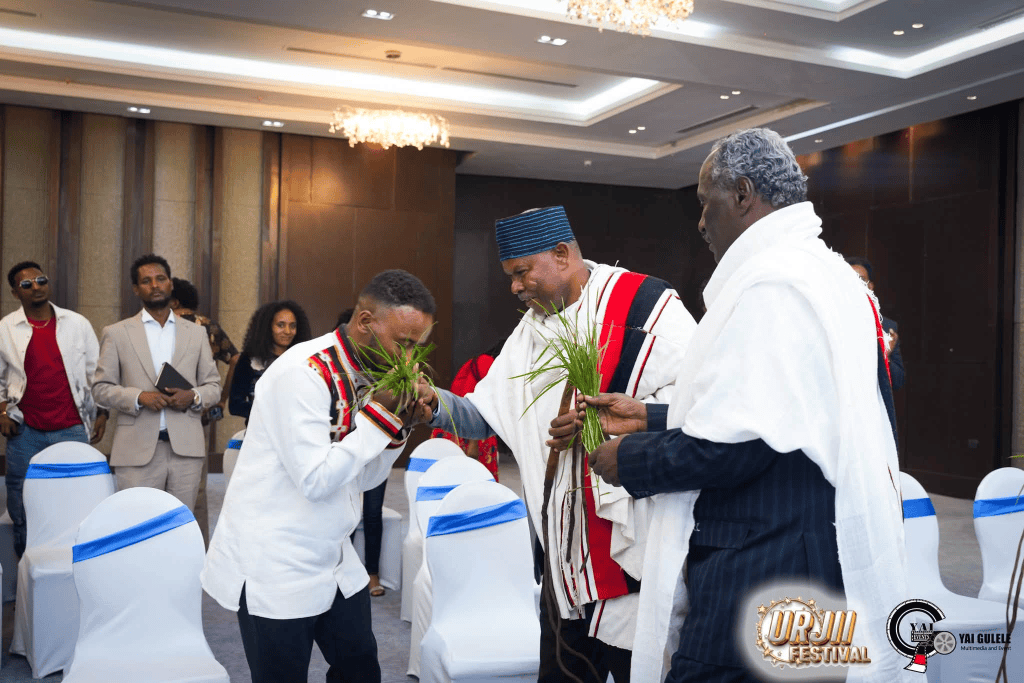
By Dhabessa Wakjira
ADDIS ABABA — The Urjii Festival, a celebration of Oromo heritage and the Gadaa system, is preparing to represent Oromo culture on the global stage, with organizers calling on all stakeholders to support and stand alongside the initiative. The festival is scheduled to take place on 15 November 2026 in Dubai, United Arab Emirates.
Media Briefing Held in Addis Ababa
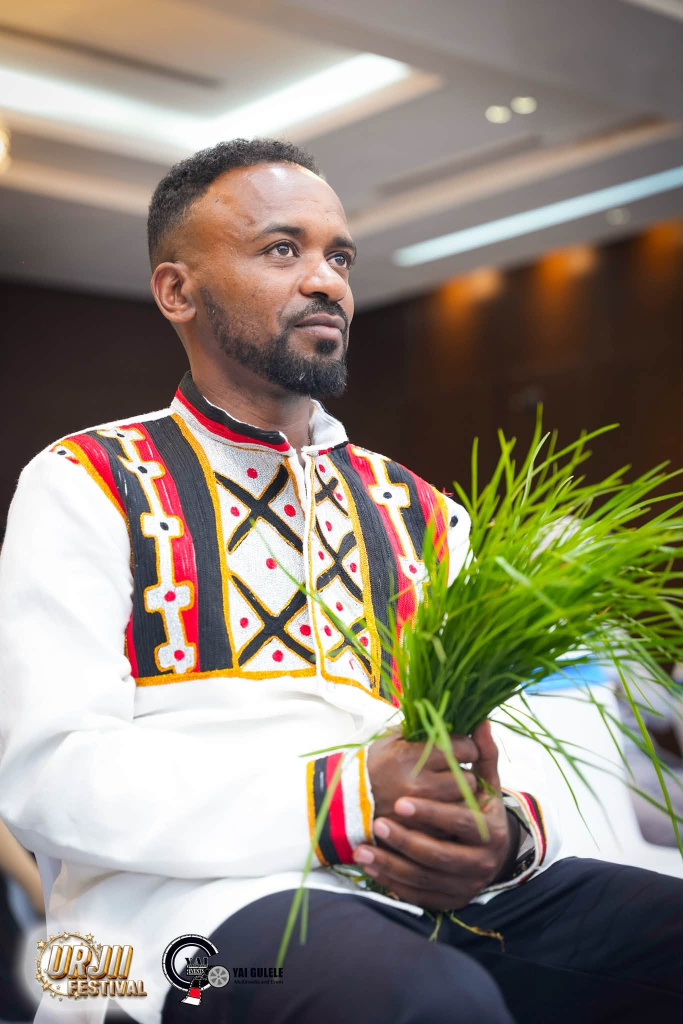
On Friday, 20 October 2026, a detailed media briefing on the Urjii Festival was held in Addis Ababa. In keeping with Oromo tradition, the briefing opened with blessings from Abbootii Gadaa (Gadaa leaders) and Haadholii Siinqee (women elders). The event was attended by invited guests, media professionals, and artists.
The briefing provided comprehensive information about the upcoming festival, which is being organized to showcase Oromo culture, traditions, and the Gadaa system to an international audience. The festival is expected to serve as a platform for cultural exchange and economic engagement between Oromia and the diaspora community in the UAE.
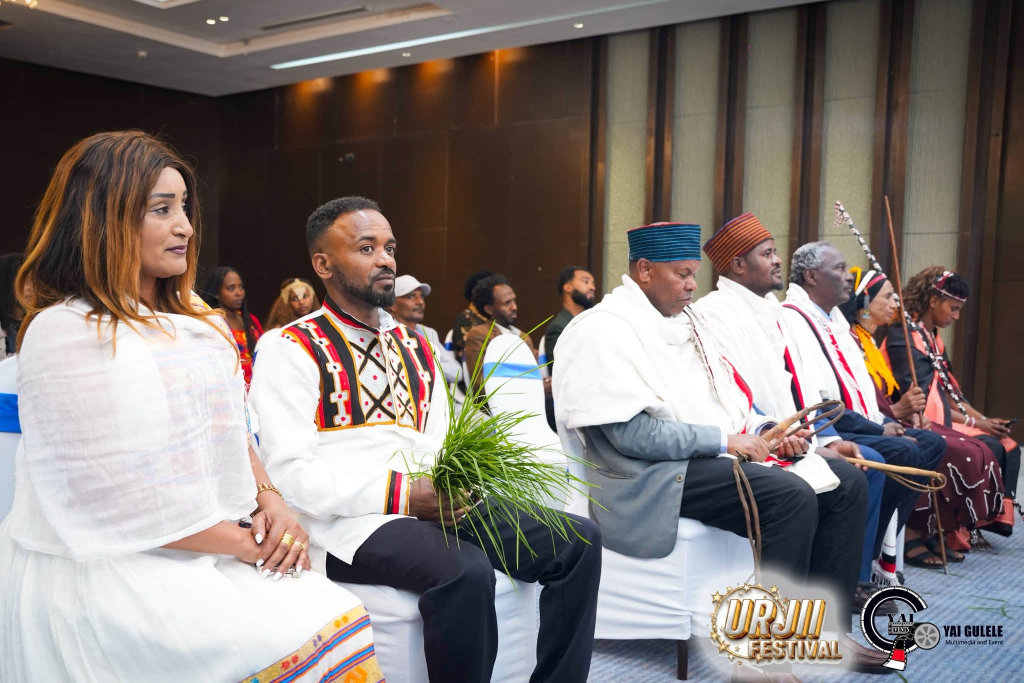
A Call to the Diaspora
The organizers have extended an invitation to the Oromo community in the UAE and neighboring countries to participate in the festival and take part in the various programs being prepared. The festival is designed to strengthen social ties and community connections among Oromo people in the region.
The Urjii Festival in Dubai will feature a diverse program, including:
- Community gathering and social networking events
- An Investment Forum
- A Coffee Trade exhibition
- Short film screenings
- A photography gallery
- Book displays
- Fashion and traditional attire shows
- Dance performances
- A major music concert featuring numerous artists
The festival will also highlight tourism destinations in Oromia, promoting the region as a place of cultural and historical significance.
Recognition of Gadaa on the World Stage
The organizers emphasized that the Urjii Festival represents the Gadaa system and Oromo heritage on the world stage. “The Urjii Festival is going to represent our Gadaa system and showcase our culture to the world,” the organizers stated. “Therefore, every stakeholder should support it and stand alongside it.”
The festival is being organized with the support of the Yaa’ii Gullallee multi-media and event organization, which has pledged its commitment to ensuring the success of the event.
A Moment of Pride for the Oromo Nation
The Urjii Festival comes at a time when Oromo cultural expression is gaining increasing international recognition. The Gadaa system, inscribed by UNESCO as Intangible Cultural Heritage in 2016, is a source of pride for the Oromo people and a testament to their democratic traditions. The festival in Dubai will provide an opportunity for the global Oromo diaspora to celebrate their heritage, connect with one another, and share their culture with the world.
As the organizers prepare for the November event, the call has gone out to the community in the UAE and beyond: come, participate, and be part of this historic celebration.
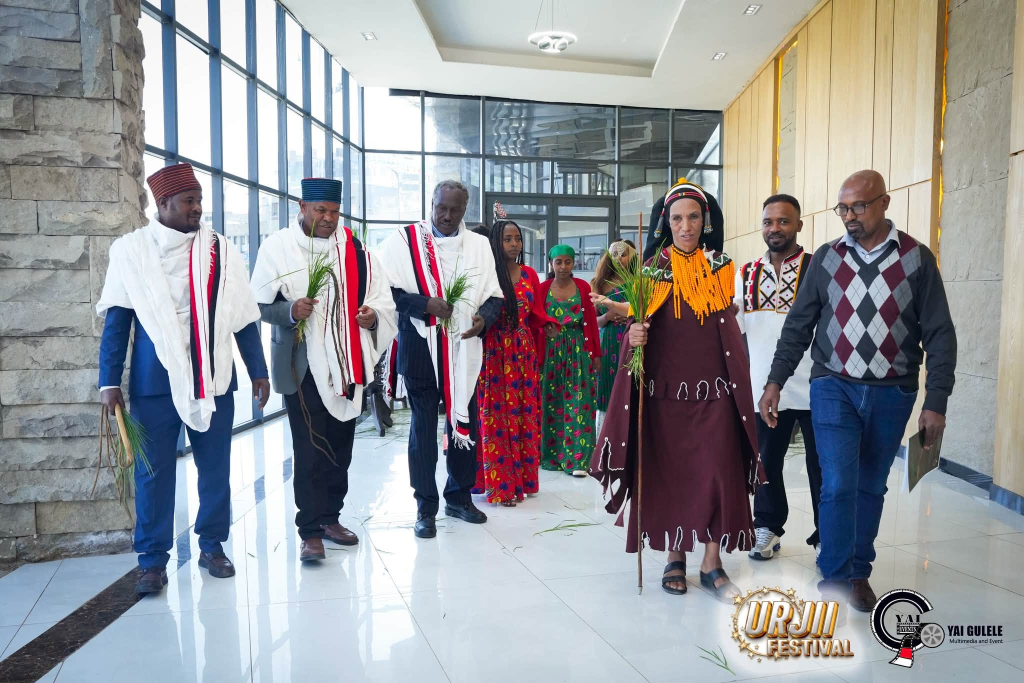
For more information about the Urjii Festival, including registration and participation details, please contact the organizing committee at Elias Kiflu Tolera.

The Silence of the Press: Ethiopia’s Media Authority Suspends The Reporter Indefinitely

In a decision that rights advocates are calling a watershed moment for press freedom, the Ethiopian Media Authority has revoked the registration of one of the country’s most storied independent news brands — and the clock on its silence has no end date
By Daandii Ragabaa
—
ADDIS ABABA — For more than two decades, The Reporter has been a fixture of Ethiopian public life — a bilingual newspaper that carried investigative reporting, analysis, and the kind of scrutiny that powerful institutions rarely welcome. Its Amharic edition, its English edition, and its digital platforms together formed one of the few remaining spaces where Ethiopian readers could encounter reporting not calibrated to official messaging.
That space, as of this week, has been declared closed.
The Ethiopian Media Authority announced that it has indefinitely suspended the registration certificate of The Reporter — encompassing the Amharic-language Reporter, the English-language The Reporter, and the Ethiopia Reporter digital platforms — effective from the 23rd of the month. The suspension has no stated end date. The institution has been barred from all printing and publishing activity.
A Decision in Full
The Media Authority grounded its decision in the powers granted to it under Proclamation No. 1238/2013, invoking a year of content monitoring that it says confirmed “repeated violations of the law and professional ethics.”
The violations cited are sweeping. The Authority accused the publication of disseminating content contrary to the country’s national interest; of fomenting confusion among the public by inflating political and economic issues; and of spreading distorted information that exerts a negative influence on foreign investment, tourism, and diplomacy. It further stated that the publication had persisted in offering unbalanced reporting that tarnished the country’s image.
According to the announcement, the Authority had previously engaged with the media outlet’s owners and editors, held discussions, and issued final warnings in an effort to secure corrections. But no improvement was observed in the content, it said — and so the suspension was imposed.
A Familiar Script, a Higher Stakes
The language of the decision will be familiar to anyone who has followed Ethiopia’s media landscape in recent years. The Authority has used similar formulations to justify the suspension of other outlets — most prominently Tigray TV, which was shut down indefinitely in the aftermath of the breakdown of the Pretoria Agreement. Earlier this month, the Authority also indefinitely suspended the registration of another independent publication, Addis Standard.
What distinguishes the suspension of The Reporter is not the language but the institution. The Reporter is not a partisan outlet or a niche platform. It is one of the oldest and most established independent newspapers in the country — a publication that has, over the years, trained generations of Ethiopian journalists, hosted debate, and maintained a reputation for professional rigor that even its critics acknowledge.
The closure of a newspaper is never merely the closure of an office. It is the closure of a habit of reading, of a community of writers, of a memory of what independent journalism in Ethiopia can look like.
“National Interest” and the Moving Line
The Authority’s invocation of “national interest” is the crux of the matter, and the source of deepest concern among press-freedom advocates.
The concept is not defined in the announcement. It does not need to be. In practice, “national interest” functions as a moving line — one whose location is determined by the regulator, in the moment, according to criteria it does not disclose. A report on a security operation may be said to endanger national interest. An analysis of economic policy may be said to foment confusion. An investigation into official misconduct may be said to tarnish the country’s image.
The problem with such a standard is not that it is applied too strictly. It is that it cannot be contested. There is no counter-argument the accused can offer against a criterion whose content is never specified. The Authority’s decision cites a year of monitoring, but the monitoring methodology, the specific articles found wanting, and the reasoning connecting them to the cited violations are not made public.
The result is a regulatory environment in which a newspaper can be shut down without ever knowing exactly which words condemned it — and in which every other publication is left to guess.
The Wider Context
The suspension of The Reporter did not happen in a vacuum. It follows a pattern that has accelerated in recent months.
In January, Haymanot Zeleke was appointed Director of the Ethiopian Media Authority — a figure with a long career inside Ethiopia’s state media apparatus, who had previously enumerated the categories of content she considered violations: obscenity, content harmful to youth, disrespect toward women, unverified sourcing. The board of the Authority is chaired by Redwan Hussein, who simultaneously serves as Director General of the National Intelligence and Security Service — an arrangement whose implications for press freedom are difficult to overstate.
In September, Tigray TV was suspended indefinitely and barred as a source. This month, Addis Standard was suspended. This week, The Reporter. The sequence is not random. It is a consolidation — a steady, methodical narrowing of the space in which independent journalism can operate.
Meanwhile, the country’s political and security situation remains fragile: the collapse of the Pretoria Agreement, renewed fighting in the north, a restive Oromia, and strained relations with Eritrea. In such moments, the temptation to treat information as a weapon to be controlled rather than a public good to be protected is at its strongest.
What the Newspaper Leaves Behind
The Reporter’s closure will not be felt immediately in the way a power outage or a road closure is felt. Its absence will accumulate slowly, in the stories that go unreported, the questions that go unasked, the readers who gradually forget that a newspaper once held the powerful to account.
But for the journalists who worked there, the end is immediate. Their bylines are suspended. Their investigations — some of them months or years in the making — are frozen. Their sources, who trusted them, are left exposed. And their colleagues at other publications are left with a single, inescapable question: am I next?
The Authority has framed its decision as a matter of law and professional ethics. The newspaper’s defenders frame it as a matter of survival — of an independent press in a country that has never fully allowed one to flourish. Both framings can be true at once. What cannot be disputed is that a newspaper that existed last week does not exist this week, and that the decision to end it was made by an institution whose chairman also runs the country’s intelligence service.
The Reporter’s presses have gone quiet. The question now is how long the silence will last — and who will be left to break it.
—
The Ethiopian Media Authority’s decision was announced in an official statement. The Reporter has not issued a public response at the time of publication.

The Price of Truth: When Telling the Story Costs Everything
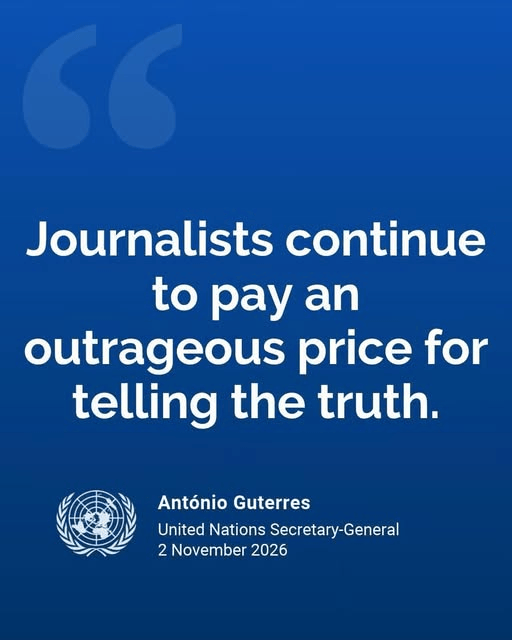
On the International Day to End Impunity, the UN chief sounds an alarm: journalists are being harassed, surveilled, sued, attacked, imprisoned — and sometimes killed — simply for doing their jobs
By Dhabessa Wakjira
—
They gather the news in war zones and city halls, in courtrooms and courthouse squares. They ask the uncomfortable questions, chase the paper trail, and knock on the doors of the powerful. And increasingly, for doing exactly that, they pay a devastating price.
On Monday, as the world marked the International Day to End Impunity for Crimes against Journalists, United Nations Secretary-General António Guterres issued a blunt and urgent appeal: the world must protect media professionals so they can carry out their essential work safely.
“Journalists continue to pay an outrageous price for telling the truth,” Guterres said, noting that reporters are routinely harassed, surveilled, sued, physically attacked or imprisoned — and sometimes even tortured or killed — simply for doing their jobs.
“Nothing should impede journalists’ ability to do their work, which is fundamental to human rights, democracy and the rule of law,” he added.
A Global Pattern of Pressure
The Secretary-General’s warning reflects a reality familiar to press-freedom organizations around the world. From authoritarian capitals to established democracies, journalists face a growing arsenal of tools designed to silence them: surveillance software deployed against reporters’ phones, defamation lawsuits engineered to bankrupt newsrooms, arbitrary detention, and, in the worst cases, physical violence that goes unpunished.
The day itself — established by the UN General Assembly in 2013 — commemorates the 2013 assassination of two French journalists, Ghislaine Dupont and Claude Verlon, killed in Mali. More than a decade later, the core problem it was designed to confront persists: the vast majority of crimes against journalists go unpunished, emboldening those who would harm them.
Impunity, press-freedom advocates argue, is the engine of the crisis. When attacks on journalists go unprosecuted, the message sent is unmistakable: the truth-teller is fair game.
“Fundamental to Human Rights, Democracy and the Rule of Law”
Guterres’ statement places journalists at the center of the democratic project — not as a special-interest group, but as an essential infrastructure of free societies. A free press holds governments accountable, exposes corruption, and gives citizens the information they need to make decisions about their own lives. When journalists are intimidated into silence, it is not only their rights that are violated — it is the public’s right to know.
That principle has particular resonance in a year that has seen journalists detained in record numbers, newsrooms raided, and reporters targeted online with coordinated campaigns of harassment and disinformation. In conflict zones, press insignia have offered little protection; in peacetime, legal harassment has become a favored weapon of the powerful.
A Call to Action
The UN chief’s message on Monday was less a commemoration than a call to action. Protecting journalists, he suggested, requires more than rhetoric — it demands that governments investigate attacks, prosecute perpetrators, and safeguard the legal and physical safety of media workers.
For the journalists still working the beat — the ones filing from conflict lines, sitting through court hearings, and requesting records that someone would prefer stay buried — the stakes are personal. Every story filed is an act of persistence. Every byline, a small assertion that the truth matters.
On this International Day to End Impunity, the message from the UN’s highest office was clear: the price journalists pay for telling the truth is already too high — and the world has a duty to bring it down.
—
This article was produced in recognition of the International Day to End Impunity for Crimes against Journalists, observed annually on November 2.

“The Worqitu We Saw at Moyale”: Oromo Identity, Boorana Women, and the Fire of Defiance
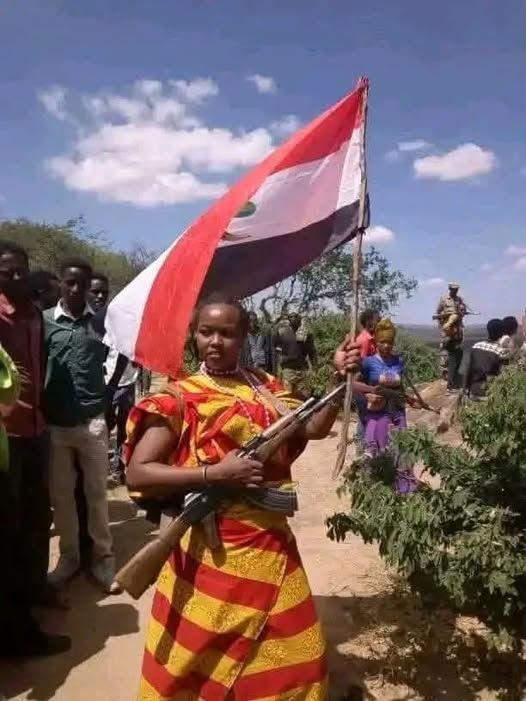
A viral message from the frontier of identity — celebrating the Boorana women who stand at the border of land and selfhood — has reignited a conversation about what it means to be Oromo, and who pays the price for defending it
By Daandii Ragabaa
—
It begins with a declaration, and it ends with a blessing.
Across social media this week, an impassioned message written in Afaan Oromoo has been shared and reshared — a tribute to the Oromo spirit, to the fighters at Moyale, and above all to the women of Boorana who, in the words of the post, stand for their land and their identity.
“Every Oromo, if she/he is wounded for her/his Oromoness and defies the enemy in this way — even if we become a plaything for anyone’s mockery — behold, at Moyale we have seen many Worqitus ones who struggle for their border and their identity,” the message reads. “May their seed multiply, Abo.”
Then, a proverb, and a salute: “Sabni Hidhannoo qabu mataa gadii hin qabu” — a nation with a covenant holds its head high. “Baga kabachiiftan! Ammallee duratti!” — Congratulations! And forward, still forward! “Dubartii Boorana!!” — Boorana women!!
A Message from the Frontier
Moyale sits at the edge of things — a place where land, identity, and history press against one another. In the Oromo imagination, and particularly in Boorana memory, such places are not merely geography. They are archives. Every ridge and river carries the story of who belongs to the land and who has defended it.
The message’s reference to “the border” is therefore more than a line on a map. It is the boundary of belonging itself — the place where a people’s right to be who they are is tested.
And it is there, the message insists, that “golden ones” have been seen. The imagery is deliberate: gold in Oromo and Boorana oral tradition is not merely precious — it is enduring, tested by fire, and impossible to counterfeit. To call the women of Boorana “golden” is to say that their worth has been proven in the crucible.
“Dubartii Boorana” — The Women Who Carry the Nation
The exclamation that closes the message — Dubartii Boorana! — is both salute and summons. In Boorana society, women hold a distinct and honored place: custodians of tradition, keepers of the gadaa calendar’s moral memory, and, in moments of crisis, the ones who stiffen the spine of the community.
The message’s author understands this. By centering women in a tribute to resistance, the post quietly overturns the assumption that the story of struggle belongs only to men. It is the mothers, the daughters, the wives, and the sisters who transmit identity across generations — who teach a child what it means to be Oromo before any flag or border can.
“May their seed multiply” is thus not a casual blessing. It is a prayer for continuity — for the future itself.
The Weight of “Being a Plaything”
Perhaps the most striking line in the message is also its most painful: the acknowledgment that a people who fight for their identity may be mocked, dismissed, or made “a plaything” in the eyes of others.
It is a recognition born of experience. Oromo communities have long contended with marginalization, with the distortion of their history, and with the casual contempt of those who see identity assertion as inconvenient. The message does not deny this. Instead, it absorbs the mockery and answers it with dignity: even if we are mocked, behold what we have seen at Moyale.
There is an old strength in that posture — the strength of a people who have learned that dignity is not granted by others but claimed by oneself.
“A Nation with a Covenant Holds Its Head High”
The proverb at the heart of the message — Sabni Hidhannoo qabu mataa gadii hin qabu — is a key to understanding everything else.
Hidhannoo is covenant, bond, agreement — the sacred compact that binds a community to its values, its land, and its future. A nation with such a covenant, the proverb says, need never bow its head. It can look the world in the eye.
For the Oromo, that covenant is carried in the gadaa system, in the oral epics, in the shared memory of the Boorana and beyond. It is the reason the message can move so quickly from lament to triumph — from the wound to the blessing, from the mockery to the gold.
A Blessing That Travels
What makes this message remarkable is not only its content but its movement. Composed in Afaan Oromoo and shared across platforms, it travels from the specific — a place called Moyale, a people called Boorana — to the universal: the right of any people to defend who they are.
“Baga kabachiiftan! Ammallee duratti!” — Congratulations! Forward, still forward!
It is the language of a people who know that the struggle for identity is never finished, only renewed. And it is a reminder, as the message’s author clearly intends, that the “golden ones” are not only at Moyale. They are wherever an Oromo woman teaches her child the name of her people, wherever a community holds its head high, and wherever the covenant is remembered.
The seed, the blessing says, will multiply.
—
The message referenced in this feature was widely shared in Afaan Oromoo on social media. This article honors the sentiment expressed in that message and the communities it celebrates.

Irreecha at Hora Liqqimee: A Peaceful Thanksgiving in Debre Libanos
By Daandii Ragabaa
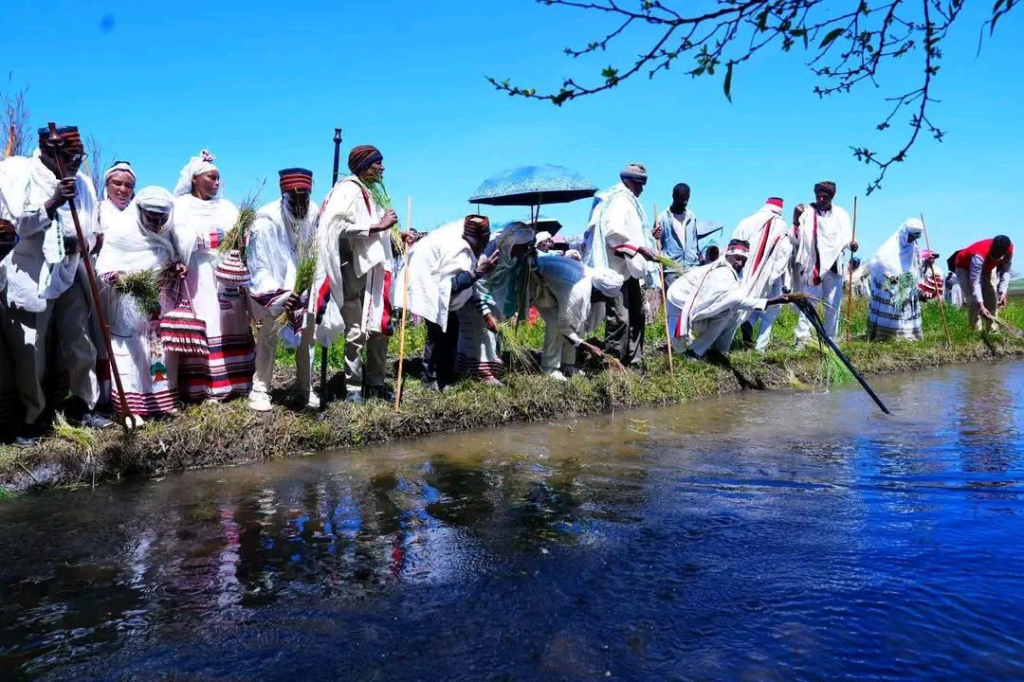
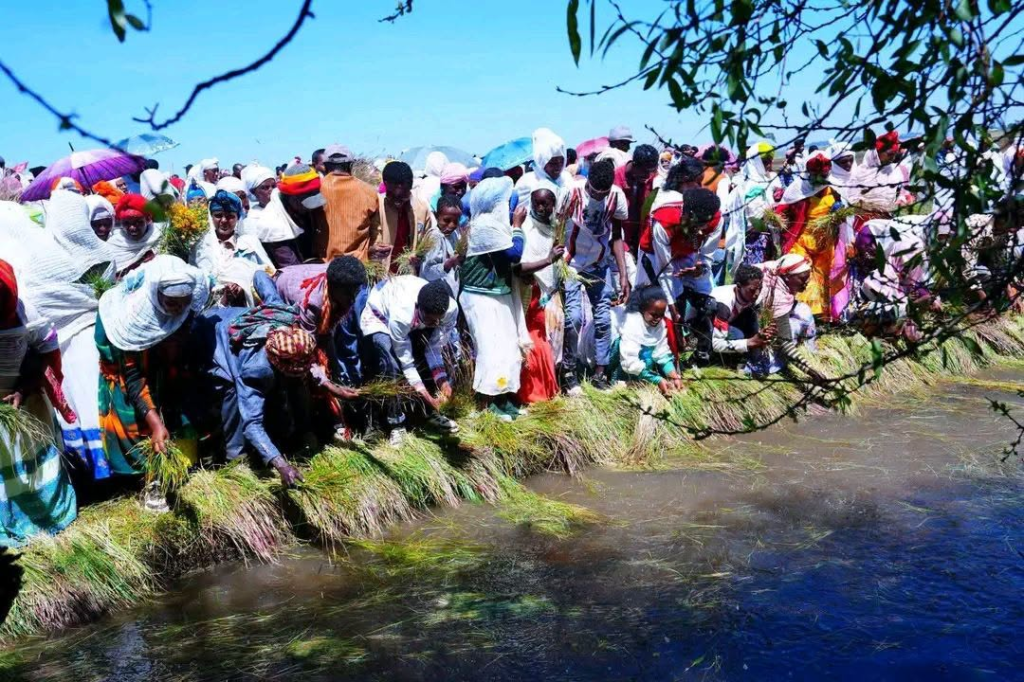
DEBRE LIBANOS, Central Oromia — In the heart of North Shewa, where the highlands roll toward the gorge of the Blue Nile and the ancient monastery of Debre Libanos has stood for over seven centuries, the Oromo community gathered at Hora Liqqimee to celebrate Irreecha. The festival, marking the end of the dark rainy season and the arrival of Birraa, was observed peacefully—a quiet but meaningful testament to the enduring power of Oromo tradition in a region known more for its religious history than for its Irreecha celebrations.
A Festival of Gratitude in a Sacred Landscape
Irreecha is, at its core, an act of thanksgiving. The Oromo people gather at water sources—malkaa—to offer gratitude to Waaqa for peace, health, a good harvest, and the well-being of family and livestock, while praying for blessings in the year to come . At Hora Liqqimee, participants carried fresh green grass and yellow keelloo flowers to the water’s edge, dipping them into the lake and sprinkling the water as a blessing—a ritual of renewal that connects the present generation to an unbroken chain of practice stretching back centuries .
The location itself carries layers of meaning. Debre Libanos is home to one of Ethiopia’s most significant Orthodox monasteries, founded in 1284 by Saint Tekle Haymanot, and the surrounding area is steeped in religious history . Yet the celebration of Irreecha here speaks to a different dimension of Oromo spiritual life—one rooted in the indigenous relationship between the people, the land, and the Creator. The peaceful coexistence of these traditions in the same landscape is itself a quiet statement about the pluralism that has long characterized Oromo society.
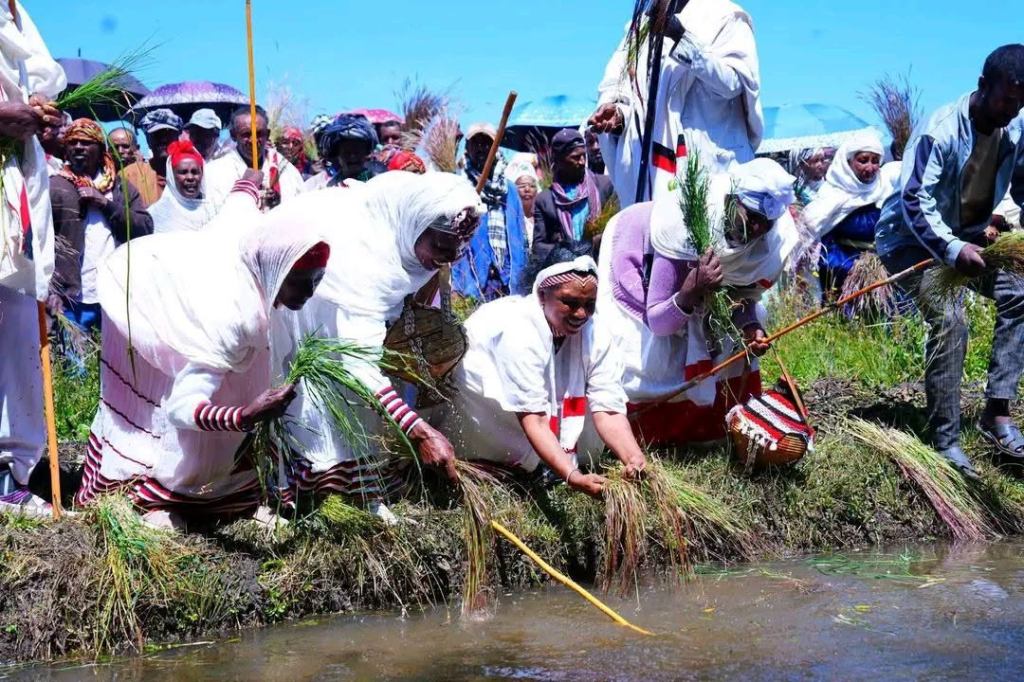
The Presence of Gadaa and Elders
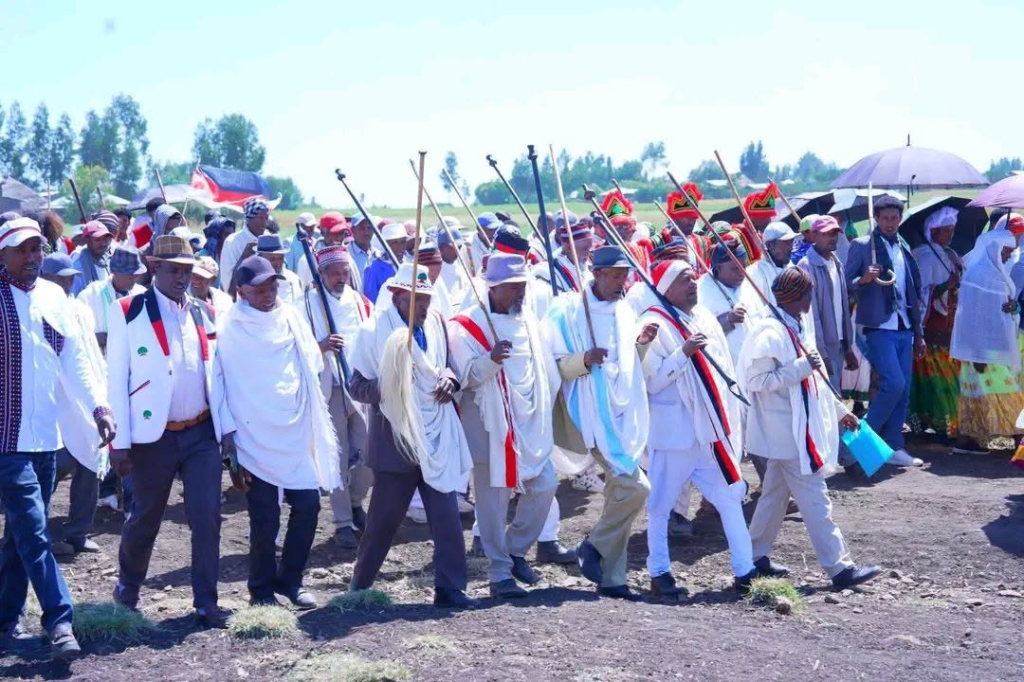
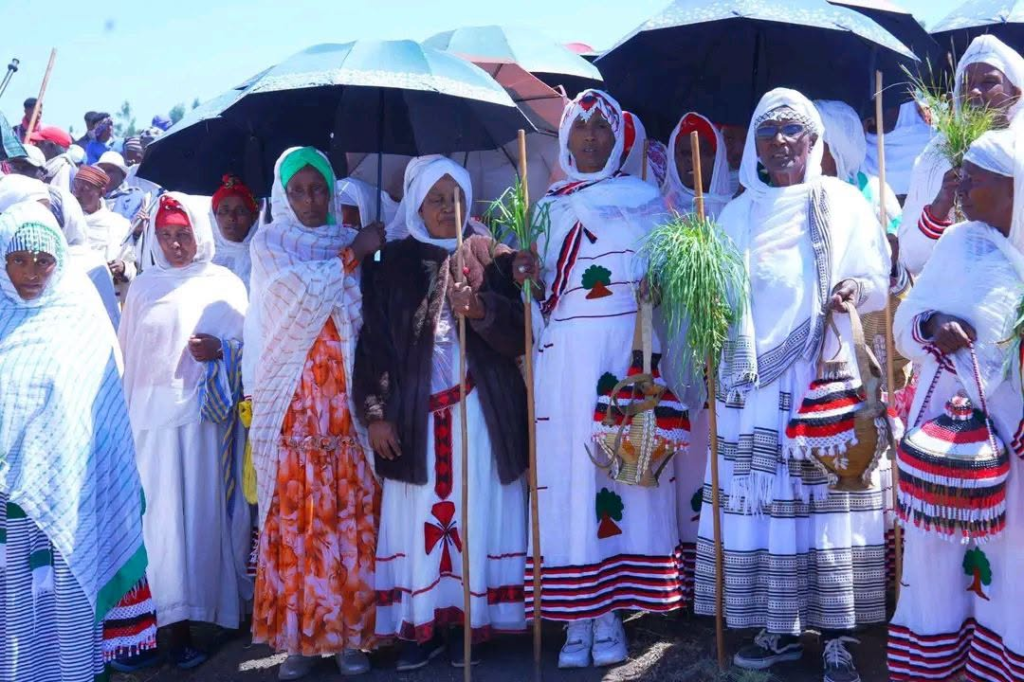
The celebration was honored by the presence of Abbootii Gadaa and Haadholii Siinqee, whose participation lends the festival its institutional and spiritual authority. In Oromo tradition, Irreecha is not merely a cultural event but a ritual embedded within the Gadaa system—the indigenous democratic order recognized by UNESCO as Intangible Cultural Heritage . The elders’ presence at the water’s edge is a living expression of a system that has regulated Oromo social, political, and spiritual life for generations.
The Abbaa Malkaa (father of the river) and the Abbaa Gadaa play central roles in the blessing that precedes the communal thanksgiving. Traditionally, the site is cleansed and blessed before the gathered community is blessed in turn. At Hora Liqqimee, this sequence unfolded as it has for countless seasons, grounding the celebration in a framework of legitimacy that no external authority can confer.
A Call for Peace and Reconciliation
Irreecha is not only about gratitude for the past; it is also about repairing relationships for the future. Traditional teachings emphasize that people should reconcile before entering the sacred gathering. Conflict, resentment, and division have no place at the water’s edge. The elders ask the gathered crowd: Are you at peace with each other? Are you at peace with the Creator? Only when the community affirms its peace does the thanksgiving officially begin.
The peaceful conduct of the celebration at Hora Liqqimee—described simply as having been held “in peace”—carries its own weight. In a region and a country where tensions often run high, the ability of a community to gather, give thanks, and disperse without incident is not a small achievement. It is a testament to the discipline and mutual respect that Irreecha cultivates among its participants.
A Tradition That Lives Beyond the Major Gatherings
While the largest Irreecha celebrations draw millions to Hora Finfinnee in Addis Ababa and Hora Arsadi in Bishoftu, the festival’s meaning is not diluted in smaller settings. Indeed, it is in places like Debre Libanos, at lakes like Hora Liqqimee, that the tradition remains most intimately connected to the land and the local community. The core elements are the same: the gathering at water, the carrying of fresh grass and flowers, the prayers of gratitude, and the reaffirmation of peace.
This year’s celebration at Hora Liqqimee may not have made headlines. But for the people who gathered there—elders in traditional attire, youth carrying keelloo, families reunited after the hardships of the rainy season—it was Irreecha in its fullest sense: a day of thanksgiving, a moment of community, and a reaffirmation of a identity that has survived and thrived for centuries.
Baga Irreecha Hora Liqqimee nagaan geenye!

A Family’s Gratitude and a Call for Dignity: The Ahmad Gishee Memorial Statement
By Dhabessa Wakjira
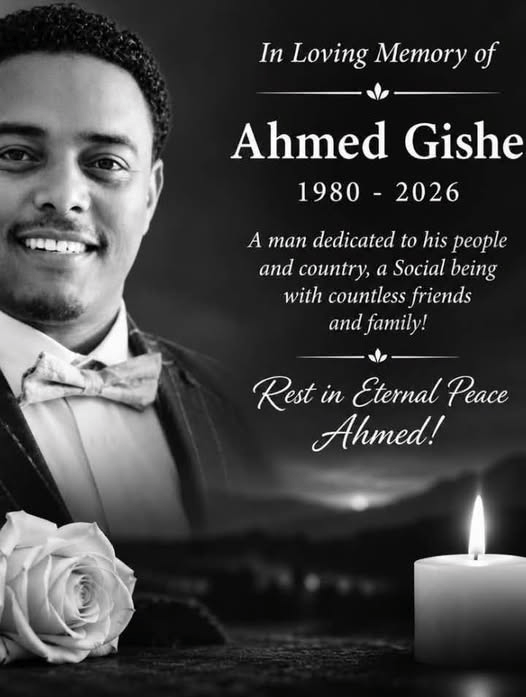
October 31, 2026 — In a statement released to the media, the family of the late Ahmad Gishee has expressed profound gratitude to friends, relatives, and the wider Oromo community for their support during a time of inconsolable grief, while also issuing a powerful call for responsible communication and respect for the family’s privacy.
The statement, titled “A Statement of Gratitude, Honour for a Life Lived, and a Pillar for the Legacy of Ahmad Gishee,” opens with a direct address to Ahmad’s friends, loved ones, relatives, and the broader Oromo public. “In this time of heart-breaking grief caused by Ahmad’s passing, we say thank you and we are grateful for standing with us, for encouraging us, and for sharing our pain,” the family writes.
Gratitude for a Community’s Support
The family’s gratitude is expansive and specific. They thank those who, “without hesitating,” stood by Ahmad when he needed help. They acknowledge those who traveled from far distances to attend his funeral and those who demonstrated that Ahmad was “a son of the broader Oromo nation” to the family and the district. “You have been a strong force for us to bear this heavy grief,” the statement reads. “Your honour is immense, immense!”
The family also requests that the community remember Ahmad in their prayers and supplications, and that they seek forgiveness and reconciliation on his behalf.
A Life Lived Without Regret
The statement offers a portrait of Ahmad as a man who lived his life fully and on his own terms. “The time Ahmad lived on this earth was very short. But he had no regret about the way and manner in which he lived his life,” the family writes. Before departing for the afterlife, Ahmad left a message for those he left behind: he had lived his life as he wished, he would not change anything, and he had done and seen much of what he wanted to do and see in his life.
When the time of death came to him, the family says, Ahmad confirmed to them that he was prepared. “This has given us some peace of mind,” they write. “The sorrow that struck us with his heart-breaking departure has shaken us. The wound created in our hearts has pained us.”
A Legacy of Achievement and Connection
In his short life, Ahmad achieved much and cultivated many friendships. He was a man who “embraced the Oromo nation broadly” and “sacrificed to the extent of his capacity.” His death revealed just how beloved and respected he was. The memorials and tributes being prepared for him, the family says, demonstrate not only that he was a strong man but that he was “a son of the entire Oromo nation.”
The family finds great comfort in knowing that Ahmad’s life held profound meaning for many people. They have resolved to honour his life, to respect the legacy he left behind, and to work to complete the tasks he had undertaken. “His work is foundational,” they write, “and this legacy must be passed from generation to generation.”
A Warning Against Misinformation
The statement takes a serious turn as the family addresses a troubling development: the spread of unverified information and harmful rumors about Ahmad’s life and death. “As people who have a responsibility to look after their community, we are seeing many who are opening empty spaces among these people,” the family writes. “Unverified, harmful, and baseless news is spreading without limit in the community’s social circles.”
Some of this information, the family says, has touched the emotions of family, relatives, and loved ones, and some displays a lack of respect for the family and for Ahmad himself. “This is putting pressure on the family,” they state. “We strongly and respectfully ask that unverified information, false news, or various speculations—especially on social media—not be spread.”
At this time, the family says, what helps Ahmad and them is to seek forgiveness for him and to offer encouragement to the living. “Give thought and human respect to him and his family. Refrain from raising irrelevant matters, spreading, publishing, and reporting things that have no basis—and prevent others from doing so!”
A Call for Responsibility
The family uses the statement to reflect on the power of words and actions. “We have great respect for those who, in this role, recognize that their words and actions have caused harm, and who apologize sincerely,” they write. “When we speak about the lives of other people, we want to remind each other that it is a great responsibility to weigh the good and the harm it carries.”
The way we live together and our relationships as a community must be characterized by compassion, respect, and self-restraint, the family argues. “Words create wounds that do not heal easily; actions bring harm that later requires correction. A painful experience must serve as a lesson for others, helping them understand emotions, and enabling them to cultivate kindness and humanity within themselves. We believe Ahmad’s passing must be a strong force for this.”
Honouring Ahmad’s Legacy
The family acknowledges the many people, both within the country and abroad, who have expressed their desire to honour Ahmad’s life and sacrifice together. “We are grateful for this! Your thoughts are greatly encouraging us. We have great gratitude for your efforts.”
The family extends an open invitation for support and participation in preserving Ahmad’s legacy. “Together, we believe we can pass on the life he lived and the principles he believed in to future generations. For the positive change he brought to the lives of many people, we have great hope that we can follow in his footsteps and honour him in a meaningful way.”
A memorial program for Ahmad will be organized in the near future, and a short-term committee is being established to coordinate it. Further information will be communicated promptly.
A Request for Privacy
In a pointed conclusion, the family states that it has not authorized the collection of any financial or other form of support at this time. “Until further information is communicated to you, we respectfully ask that you understand and respect the decision and direction the family has taken.”
The statement ends with renewed gratitude. “For the kindness, compassion, prayers, and support you have given us, we want to again express our great gratitude in Ahmad’s name. Your support has a meaning beyond words for our family. Thank you all once again.”
Maatii Ahmad Gishee (The Family of Ahmad Gishee)
October 31, 2026
This feature story is based on the family’s official statement. For further information about the memorial program, please await official communication from the family committee.

Ethiopia’s Leaders Trade Suits for Uniforms: A Wartime Cabinet in Training
By ONA Staff Reporter
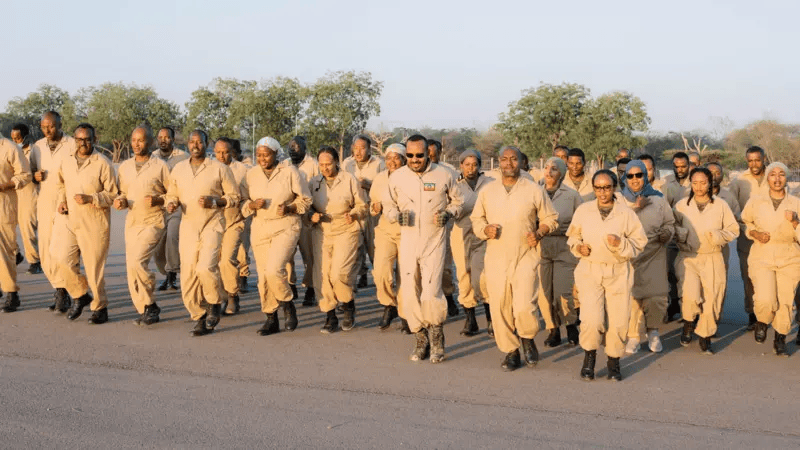
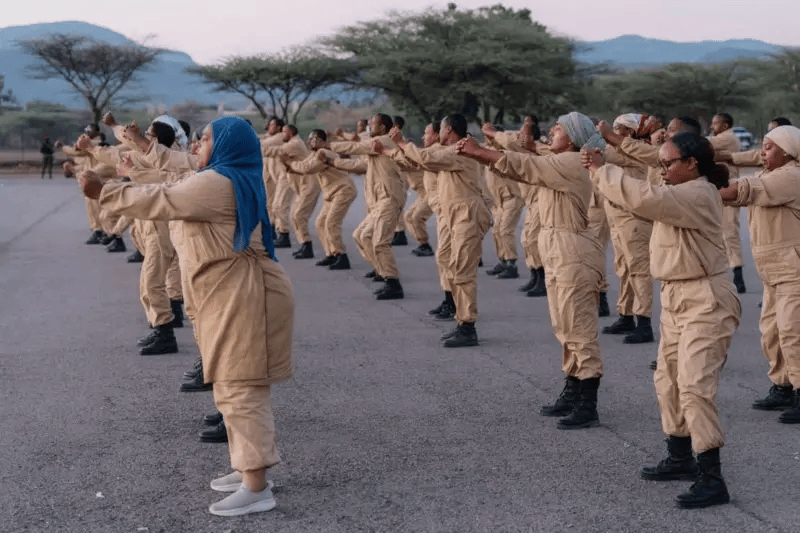
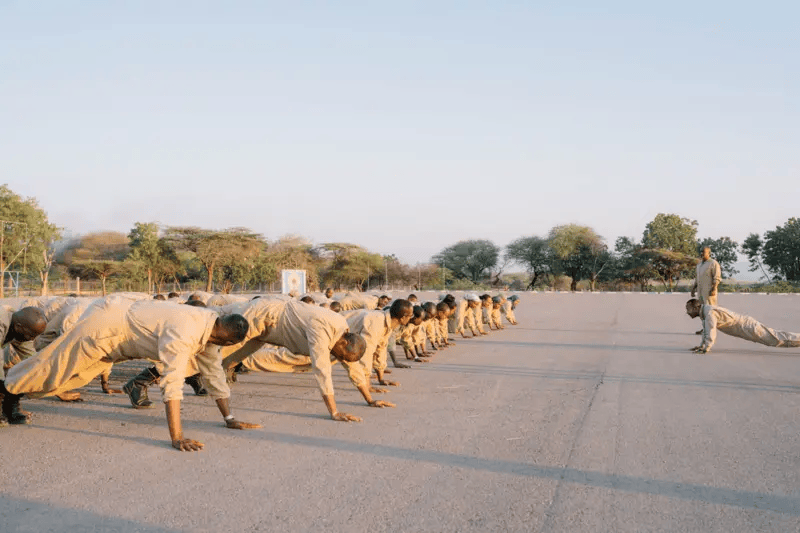
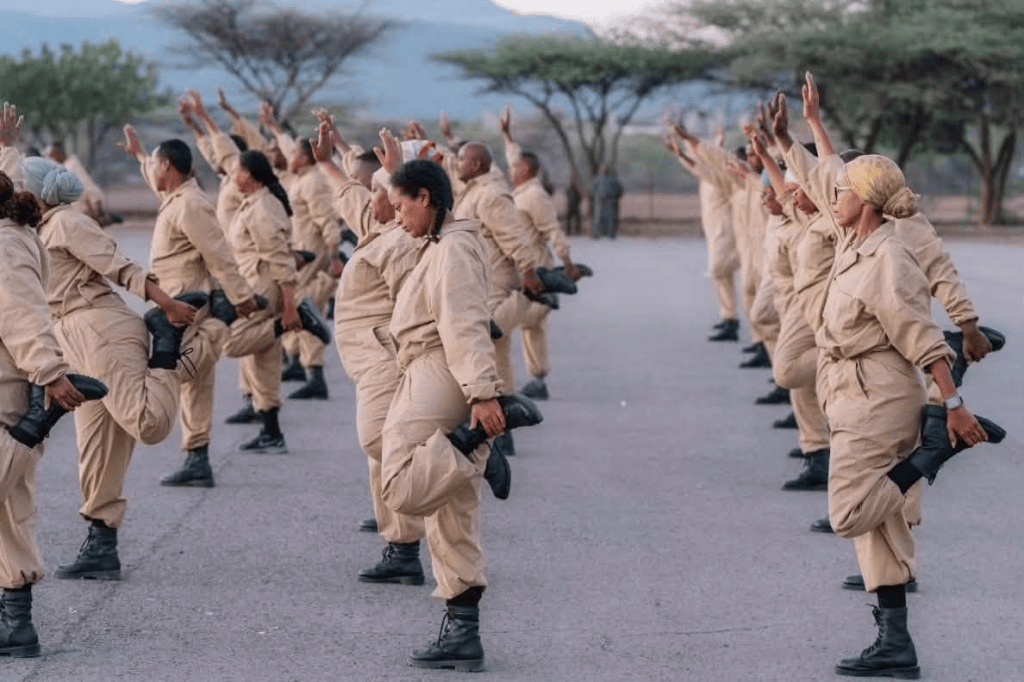
ADDIS ABABA — In a striking image that has circulated widely across Ethiopian social media, Prime Minister Abiy Ahmed stands shoulder to shoulder with his cabinet members and senior officials, not in the dark suits of governance but in the olive-green fatigues of military trainees. The photographs, shared on the Prime Minister’s own social media pages on Saturday, October 31, 2026, reveal a government preparing for war—and framing that preparation as a strategic necessity.
A Cabinet in Uniform
Among those pictured in military training gear at the Hurso facility were Mufrihat Kamil, Speaker of the Federation Council; Dr. Fitsum Assefa, Minister of Finance; and Dr. Mekdes Daba, Minister of Health. They were not observing exercises from a distance. They were participating in them.
According to the Prime Minister’s statement, the officials are undergoing military training at Hurso, a site that has become synonymous with the government’s increasingly militarized approach to statecraft. The training, Abiy explained, is designed to help officials “properly understand and implement” the ideas contained in what he calls the “Great Strategy of Additive Civilization” (Ye Medemer Siltenie Talaku Strategy).
The “Additive Civilization” Doctrine
The strategy, as articulated by the Prime Minister, contains principles that read as much like a wartime manifesto as a governance blueprint: “ensuring national security at all times,” “building a strong country that cannot be bent by anyone or anything,” and “mobilizing the structure from bottom to top for a national purpose.”
Military science, Abiy wrote, “has no competitor in shaping the purpose and humanity of a person.” He described it as a discipline that makes people “physically, spiritually, morally, and in execution disciplined.” The knowledge, skills, and experience drawn “from military science and life,” he argued, are essential to implementing the strategy.
“Leaders of the Additive government are taking military training at the Hurso military training camp,” Abiy wrote. “Soldiers have targets; civilians have objectives. The goal of both is to register victory. By combining both disciplines, we will create a generation that hits the target and achieves the objective.”
The Context: A Region on Edge
The timing of the training is not incidental. It comes as the Ethiopian National Defense Force (ENDF) has moved closer to the border with Eritrea, amid mounting fears that the two countries—locked in a diplomatic freeze over accusations of supporting insurgents and a dispute over sea access—could be drawn into war. The two nations have severed diplomatic relations, and the threat of renewed conflict hangs over the Horn of Africa.
The training also comes as the government continues to consolidate its military posture. This week, during a visit to Russia, Prime Minister Abiy announced that Ethiopia had received Su-35 fighter jets—advanced aircraft that would make Ethiopia the first sub-Saharan African nation to operate them. The delivery represents a significant escalation in the country’s aerial capabilities.
The Prime Minister has repeatedly stated that strengthening Ethiopia’s military capacity across all sectors is among his objectives. The images of his cabinet in uniform are not merely symbolic; they are a signal that the government’s approach to governance has become inseparable from its approach to war.
A Government at War with Itself?
The photographs raise uncomfortable questions. A finance minister in fatigues, a health minister in combat gear—what does it mean for a government to train its civilian leadership for battle? The Prime Minister’s framing suggests a belief that military discipline is the antidote to the indiscipline of civilian governance, that the battlefield’s clarity of purpose should be brought to the messy work of running a state.
But critics may see something else: a government that has increasingly turned to military solutions for political problems. The training at Hurso, the procurement of advanced fighter jets, the escalating rhetoric—all of this unfolds against a backdrop of internal conflict, including renewed fighting with forces in northern Ethiopia and ongoing unrest in Oromia.
The government has not disclosed when the training began or how long it will last. What is clear is that the image of a cabinet in uniform is intended to convey a message: Ethiopia’s leadership is preparing for something. Whether that something is defense, deterrence, or the prosecution of war remains to be seen.
The Image That Speaks
In a region where symbols carry enormous weight, the photograph of Abiy and his officials in military fatigues is more than a social media post. It is a declaration of intent. The “Great Strategy of Additive Civilization” is being taught at a military camp, to a cabinet, in a country on the brink. The soldiers have targets; the civilians have objectives. And the Prime Minister has made clear that he expects both to hit them.
As Ethiopia navigates a precarious moment in its history, the sight of its leaders in uniform offers a glimpse of how they see the road ahead: not as a path of diplomacy and civilian governance, but as a campaign to be won.
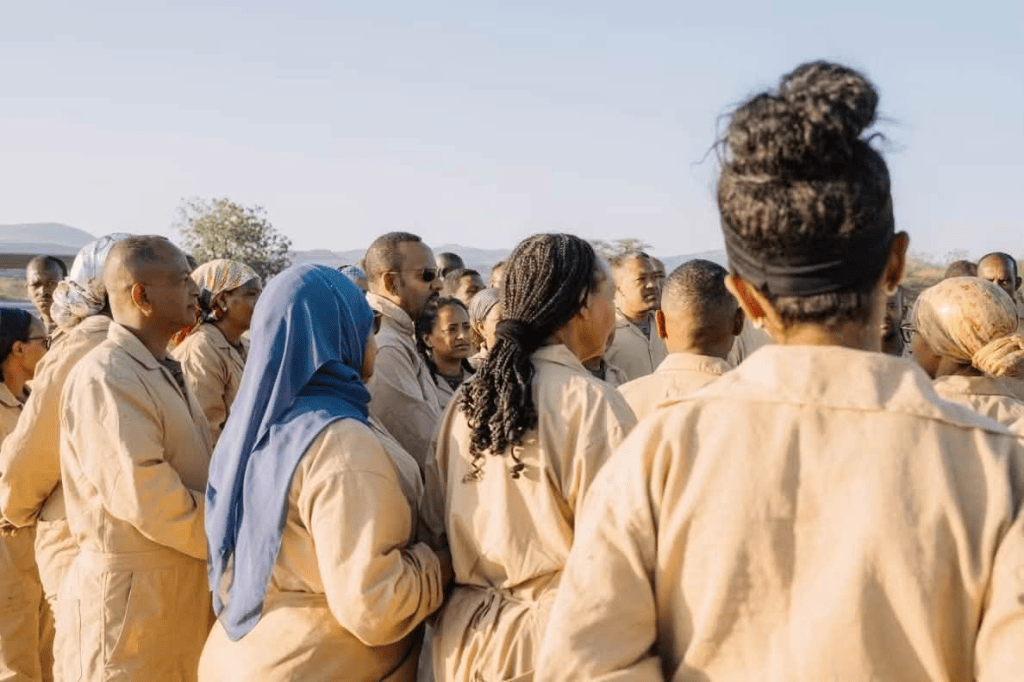
Source: EBC (Ethiopian Broadcasting Corporation) and the Prime Minister’s official social media pages.

Reflections on Professor Beyene’s Essay: A Call for Evidence, Clarity, and Intellectual Honesty in the Oromo Nationalist Discourse
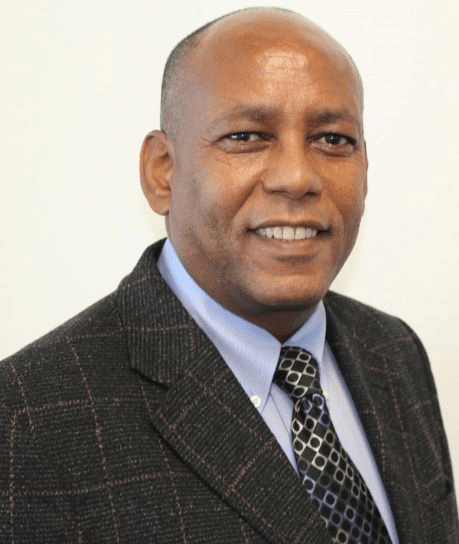
By Hambisa Belina, Morgan State University
In a political landscape too often shaped by rhetoric and presumption, Professor Beyene’s recent essay stands out as a model of what rigorous intellectual engagement should look like. As a scholar reading his work, I found the piece both eloquently written and intellectually engaging—a rare combination that invites readers not merely to agree or disagree, but to think more carefully about the contested narratives shaping political discourse across Ethiopia and the wider Horn of Africa.
Situating the Debate in Historical and Regional Context
What makes Professor Beyene’s contribution particularly valuable is his skill in exploring the historical circumstances and political happenstances that evoke our collective memory. He does not treat contemporary debates as isolated phenomena but situates them within a broader historical and regional context, encouraging readers to grapple with enduring questions of identity, power, historical justice, and political legitimacy. This contextual approach is essential. Too often, discussions about nationalism and self-determination are conducted in a historical vacuum, as if the grievances and aspirations of today emerged from nowhere. Professor Beyene resists that tendency, reminding us that the present is always in conversation with the past.
The Insistence on Evidence
One of the article’s most compelling contributions is its insistence on evidence-based argumentation. Professor Beyene rightly questions the frequent assertion that Oromo nationalism has somehow crossed the line from demanding its own rights to infringing upon the rights of others. This is a serious accusation, and as he argues, it should be supported by concrete evidence rather than broad claims or political rhetoric. His call for a more rigorous examination of these allegations is both justified and necessary.
I concur with Professor Beyene’s observation that I have not seen any Oromo political party or prominent Oromo politician advocate for the repression, subjugation, or denial of the rights of other societies. This is not a claim of perfection—all political movements should be subject to scrutiny and criticism. But such criticism must rest on verifiable facts rather than assumptions or unfounded characterizations. The distinction matters, not only for the sake of fairness but for the integrity of public debate itself.
The Responsibility of Clarity
At the same time, I believe it is important for Oromo nationalists to continue articulating clearly what Oromo nationalism stands for and what it seeks to achieve. Greater clarity regarding its principles, objectives, and vision for coexistence can help dispel misconceptions, strengthen public understanding, and foster more constructive dialogue among Ethiopia’s diverse communities and the peoples of the wider Horn of Africa. This is not a concession to critics but a strengthening of the movement’s own foundation. A nationalism that knows what it stands for is better equipped to withstand misrepresentation and to build the alliances necessary for lasting peace.
Vigilance Against Misrepresentation
Moreover, Oromo political thinkers, legal experts, intellectuals, and political organizations should remain vigilant against efforts to misrepresent, delegitimize, or slander Oromo aspirations. They have an important responsibility to defend and explain the legitimacy of Oromo efforts to restore political authorship over their land, resources, laws, institutions, culture, and language. Such vigilance is necessary not only to counter mischaracterizations but also to ensure that the movement remains anchored in democratic principles, justice, equality, and respect for the rights of all peoples and all individuals. The struggle for Oromo rights is, at its core, a struggle for the right to define one’s own future—and that right must be exercised with the same commitment to justice that the movement demands for itself.
A Timely and Important Contribution
Ultimately, Professor Beyene’s essay raises an important challenge: political accusations should be assessed on the basis of evidence, not presumption. His thoughtful intervention serves as a valuable reminder that discussions about nationalism, self-determination, political rights, and historical justice are best advanced through careful historical analysis, intellectual honesty, and a commitment to factual debate. In that regard, his essay is a timely and important contribution to an ongoing conversation about the future of Ethiopia and the broader Horn of Africa.
As scholars and citizens alike continue to navigate these contested questions, the standard Professor Beyene sets—evidence over assumption, clarity over ambiguity, and intellectual honesty over political convenience—offers a path toward more constructive dialogue. It is a standard worth upholding.
Hambisa Belina
Morgan State University
ORCID | Google Scholar | LinkedIn

The Lion of Borana: Remembering Guyyoo Boruu Galmaa, the Abbaa Gadaa Who Defied Empires
By Dhabessa Wakjira
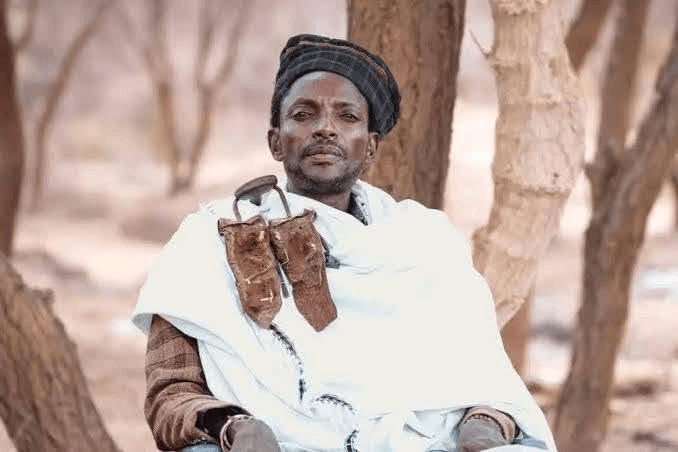
In the annals of Oromo history, there are leaders who govern, and then there are those who become the embodiment of a people’s resistance. Guyyoo Boruu Galmaa, who served as the Abbaa Gadaa of the Borana Oromo from 1944 to 1952, belongs unequivocally to the latter. He was not merely a custodian of the ancient Gadaa system; he was a shield against the encroaching empires of the 20th century—a man whose defiance of both Italian invaders and the Ethiopian imperial state preserved the soul of the Borana people.
His story, deeply intertwined with the fate of the sacred wells and the contested borders of Moyale, offers a masterclass in indigenous diplomacy and unyielding sovereignty.
A Legacy Born in the Shadow of Partition
The roots of Guyyoo Boruu’s leadership stretch back to a defining tragedy for the Borana nation. In 1907, the British and Ethiopian empires signed the Anglo-Ethiopian Boundary Agreement, a colonial decree that arbitrarily carved the Borana homeland in two, dividing the people of Moyale.
At that time, it was Boruu Galmaa Dooyyoo—the father of Guyyoo—who served as the Abbaa Gadaa. He was among the first to openly reject the treaty, recognizing it not as a legal boundary, but as an existential threat to the unity and sovereignty of the Borana. The son inherited the father’s fire.
In 1944, when Guyyoo Boruu Galmaa took the Baallii (the ritual transfer of power) and assumed the mantle of Abbaa Gadaa, he stepped into a region rife with external pressure. The Borana were not only facing the legacy of the 1907 partition but were also navigating the chaotic fallout of global wars and shifting imperial ambitions in the Horn of Africa.
Defying the Italian War Machine
Historical records reveal that Guyyoo Boruu’s leadership did not begin in 1944; his journey as a freedom fighter started much earlier. Between 1936 and 1945, he was actively leading the Borana Oromo in resistance against the Italian occupation.
When the Italians invaded, they brought not just armies, but a strategy of land seizure. As the historical account notes, the Italian forces attempted to annex vast tracts of Handaraa land, claiming everything except the sacred Arddaa and Tula (water wells). Guyyoo Boruu responded by building the Borana Gadaa structures and waging a relentless war against the Italians.
His struggle was not just about repelling a foreign army; it was about defending the sacred ecology of Borana life. The Tula wells were the lifeblood of the cattle and the people. Guyyoo Boruu understood that to lose the land was to lose the wells, and to lose the wells was to lose the Borana identity itself.
Standing Against the Imperial Crown
Following the defeat of the Italians, the Borana faced a new, more insidious threat: the expanding centralization of Emperor Haile Selassie’s government. Between 1947 and 1950, the imperial regime sought to impose its administrative and cultural dominance on the southern frontiers.
Guyyoo Boruu Galmaa became the primary obstacle to this encroachment. He did not merely resist the political pressures of the imperial state; he actively protected the Gadaa system, ensuring that traditional laws, democratic consensus, and indigenous governance continued to thrive despite the centralizing forces of Addis Ababa.
His defiance culminated in a moment of profound historical significance. In 1950, the Haile Selassie government, seeking to co-opt local leaders, offered Guyyoo Boruu the title of “Giraazmach”—a high-ranking imperial military and administrative honor.
He refused.
In rejecting the title, Guyyoo Boruu Galmaa made a definitive statement of Oromo autonomy. He rejected the legitimacy of an empire that had partitioned his people and threatened their customs. By turning his back on imperial honors, he affirmed that his authority came not from a distant emperor, but from the Gadaa, the Borana people, and the land itself.
The Enduring Wisdom of the Elders
The legacy of Guyyoo Boruu Galmaa is not confined to the history books; it is a living, breathing testament to the resilience of Oromo culture.
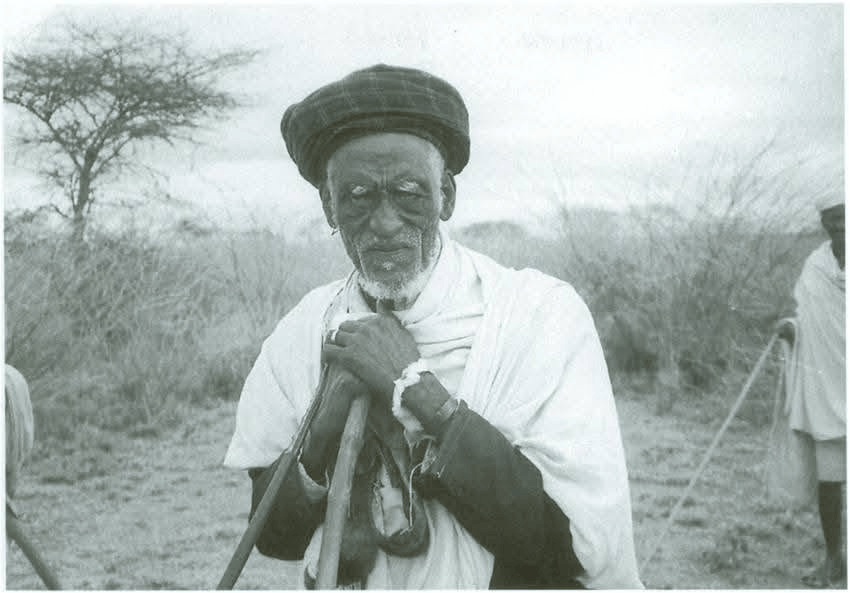
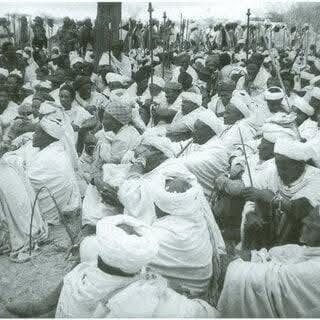
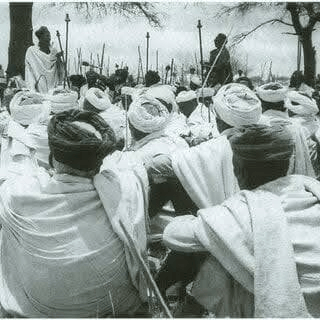
His life was meticulously documented by Western anthropologists who recognized the profound nature of the Borana political system. The renowned scholar Eike Haberland photographed him in 1952—the year he completed his term as Abbaa Gadaa. Decades later, in 1986, anthropologist Günther Schlee captured another historic moment: Guyyoo Boruu, then approximately 95 years old, was photographed at the Gumii Gaayyoo (the great assembly) as his son, Boruu Guyyoo Boruu, took the Baallii and assumed the leadership of the Gadaa.
That photograph, showing the aged father watching his son take the reins of power, is a powerful visual metaphor. It represents the unbroken chain of the Gadaa system—a system that Guyyoo Boruu fought to protect with weapons, diplomacy, and sheer moral courage.
A Beacon for the Present
As the Oromo people today face a renewed crisis of state violence, displacement, and the ongoing political capture of their sacred resources—including the Tuula Saglan Booranaa—the legacy of Guyyoo Boruu Galmaa serves as a vital beacon.
He stands as a reminder that Oromo sovereignty is ancient, sophisticated, and deeply rooted in a democratic culture that predates modern statehood. He proved that true leadership is not measured by the titles bestowed by empires, but by the courage to defend one’s people against them.
Nearly a century after he began his resistance, the spirit of Guyyoo Boruu Galmaa still echoes across the plains of Borana, flowing like the waters of the sacred wells he fought to protect: undivided, unbroken, and eternally free.
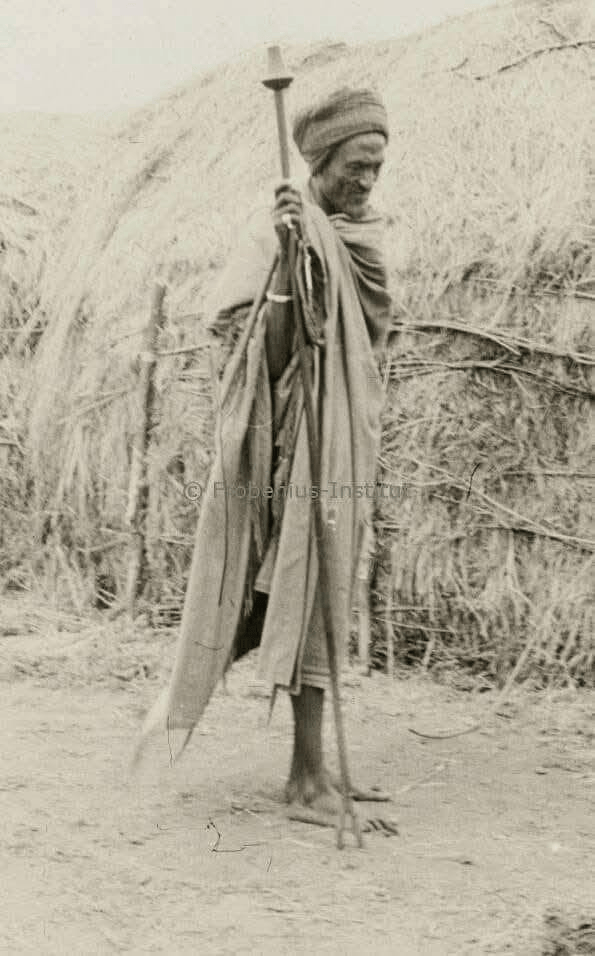
Photos: Guyyoo Boruu Galmaa, photographed by Eike Haberland (1952) and Günther Schlee (1986).

Dr. Taaddasaa Eebbaa (Gadaa Meelbaa): The Visionary Who Breathed Life into Ethiopia’s Biodiversity Legacy
By Dhabessa Wakjira
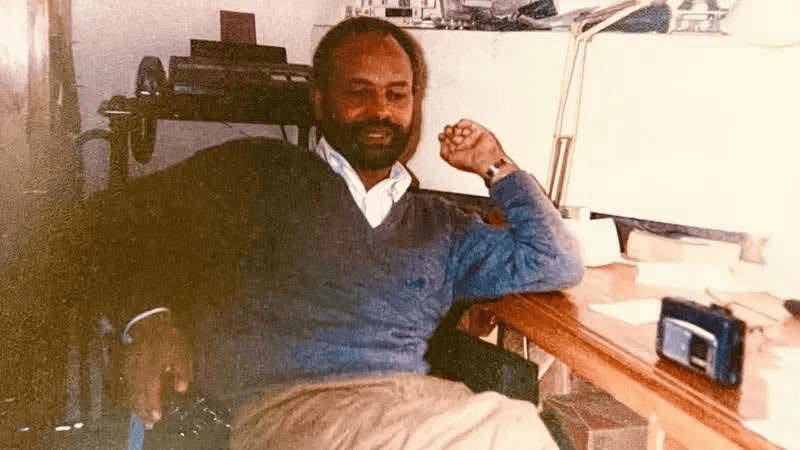
In the annals of Ethiopian and Oromo history, few figures embody the rare combination of scientific brilliance, political conviction, and unwavering sacrifice as profoundly as Dr. Taaddasaa Eebbaa. Known affectionately by many names—Dr. Fidoo, Doktoree, and most famously in literary circles as Gadaa Meelbaa—this remarkable scholar, freedom fighter, and author left an indelible mark on his nation’s scientific and political landscape before his passing on May 1, 2022, in Washington, D.C.
Humble Beginnings, Extraordinary Vision
Born in Najjoo, in the West Wallagga region, Dr. Taaddasaa’s journey from a young student in his hometown to an internationally recognized geneticist reads like a testament to the power of determination. He completed his primary education in Najjoo before pursuing his secondary studies in Jimma—a journey that would set the stage for an extraordinary academic career.
His first degree in agriculture from Alemaya College (now Haramaya University) marked the beginning of a lifelong dedication to understanding and preserving Ethiopia’s natural wealth. Not content with domestic excellence, Dr. Taaddasaa pursued his master’s and doctoral degrees at universities in the United States and the United Kingdom, specializing in genetics—a field that would become central to his life’s work.
The Architect of Ethiopia’s Biodiversity Conservation
The 1970s found Dr. Taaddasaa teaching at Haramaya University before joining the Ministry of Agriculture as a researcher. It was during this period that his visionary leadership would leave an enduring legacy on Ethiopian science.
As the director of a groundbreaking research project dedicated to studying Ethiopia’s plant genetic resources, Dr. Taaddasaa didn’t merely participate in scientific inquiry—he fundamentally shaped it. The institution that would eventually become the Ethiopian Biodiversity Institute (EBI) stands as a monument to his foresight and dedication.
According to historical accounts, Dr. Taaddasaa was not just a founding member but the intellectual force behind the establishment of this crucial institution in 1978, initially named the Plant Genetic Resource Centre of Ethiopia. Professor Endashaw, a former colleague, emphasizes this point with conviction: “Everything was initiated by Taaddasaa. Nothing was added. They removed him from the institution’s history. From all of us, they bought it from there.”
The institution’s original location near present-day Embasi, Kenya, was selected under Dr. Taaddasaa’s guidance—a decision that reflected his deep understanding of Ethiopia’s ecological diversity and its importance for global food security.
When Science Met Politics
Dr. Taaddasaa’s brilliance extended beyond the laboratory. His passion for Oromo culture and identity led him to help organize the first Oromo cultural showcase at the National Theatre in the 1970s—an act of cultural preservation that foreshadowed his later political engagement.
The political repression of the Derg regime did not spare this distinguished scientist. Historical accounts document that he was imprisoned twice in 1979 for his activities. The political pressure became unbearable, forcing Dr. Taaddasaa to make the heart-wrenching decision to leave his work and family behind in Finfinne, escaping through Assosa to Sudan at the end of 1979. From there, he joined the Oromo Liberation Front (OLF), beginning a new chapter in his life of service.
Dr. Shuggux Galataa Qondaalaa, a former OLF leader who knew Dr. Taaddasaa intimately, recalls his political journey: “He was among those who participated in founding the OLF. He took part in the secret meeting held in Finfinne on June 11, 1976. Everyone who participated in that meeting continued as members of the central committee, and Dr. Taaddasaa continued the struggle from then on.”
Sacrifices Beyond Measure
The personal cost of Dr. Taaddasaa’s commitment to freedom was staggering. His wife, Aadde Addisaalem Gannat, was imprisoned for over ten years during the Derg regime, finally released in 1988. His young son, barely two years old, died from neglect—a tragedy that haunts the pages of his life story. His daughter Urjii remains as a testament to a family that paid dearly for their convictions.
“Taaddasaa is not just someone with a good mind, but someone who thinks of others. Someone who thinks of his country,” reflects Professor Endashaw. “If he had stayed in science, he would have been a star researcher. What is past cannot be returned.”
Within the OLF, Dr. Taaddasaa’s contributions were equally significant. He served as a member of the Political Bureau after the 1988 leadership transition and contributed to the Biree Diplomaasii—a foundational document for the organization’s diplomatic strategy. His journey of exile took him through Khartoum, Germany, and finally to the United States, where he lived until his death.
The Pen That Awakened a Nation
Perhaps Dr. Taaddasaa’s most enduring contribution to Oromo consciousness came not through politics or science, but through literature. In 1988, while in Khartoum, he published “Oromia”—a book that would become a cornerstone of Oromo national awakening.
Published under the pseudonym Gadaa Meelbaa, the book’s authorship remained a mystery to many for years. The text, later translated into both Afaan Oromoo and Amharic, comprehensively addressed Oromia’s resources, culture, traditions, historical oppression, and the challenges facing the Oromo people.
Bulii Ejjetaa, who was a university student when the book was published, recalls its transformative impact: “We saw that book as a ‘pill of freedom.’ It asked us clearly: What is Oromia? Where is it located? What does it have? What has it been through? We shared it and discussed it at university. After joining the struggle, we used it to educate our people.”
The book served as a consciousness-raising tool for countless young Oromos, many of whom had been disconnected from their cultural identity. “For students who didn’t know their Oromummaa, we would say, ‘Give this child that pill,'” Bulii remembers. “That book was a pill for strengthening Oromummaa and nationalism.”
Years after its publication, when Dr. Taaddasaa’s authorship became known, he transferred the book’s rights to the Oromo people and the OLF—a final act of generosity from a man who had given everything.
An Unacknowledged Legacy
Despite his monumental contributions, Dr. Taaddasaa’s role in founding the Ethiopian Biodiversity Institute has been systematically erased from official narratives. Five years after he established the institution, records began crediting someone else with its founding.
This erasure of his legacy represents a broader pattern of historical amnesia that has obscured the contributions of Oromo intellectuals to Ethiopian national development. Yet those who knew him and benefited from his work ensure his memory endures.
A Life of Purpose, A Legacy of Inspiration
Dr. Taaddasaa Eebbaa’s life represents the intersection of scientific excellence and political conviction—a rare combination that produced lasting change in multiple spheres. He was a geneticist who understood that preserving Ethiopia’s biodiversity was essential for the nation’s future. He was a freedom fighter who believed that the Oromo people deserved dignity, self-determination, and cultural recognition. And he was an author whose words awakened a generation.
In his final years, Dr. Taaddasaa returned to Ethiopia briefly when the OLF transitioned to peaceful political participation, serving as an advisor to the organization. His journey had come full circle—from a young student in Najjoo to an internationally recognized scientist, from a political prisoner to a freedom fighter, from an exiled author to a respected elder statesman.
He passed away on May 1, 2022, in Washington, D.C., after a long illness, leaving behind his daughter Urjii and a legacy that transcends the boundaries of science, politics, and literature.
Dr. Taaddasaa Eebbaa—Gadaa Meelbaa—reminds us that true greatness lies not in what we accumulate but in what we give. He gave his scientific genius to Ethiopia’s biodiversity, his political passion to Oromo liberation, and his literary gift to a people hungry for self-knowledge. In doing so, he became more than a scholar or a revolutionary—he became a pillar of Oromo memory, a testament to what one person can accomplish when guided by love for people and country.
His story deserves to be told, retold, and never forgotten—not merely as a historical record, but as an inspiration for generations yet to come. For in remembering Dr. Taaddasaa Eebbaa, we remember what it means to live with purpose, to sacrifice with dignity, and to leave the world better than we found it.
—
This feature article honors the life and legacy of Dr. Taaddasaa Eebbaa (Gadaa Meelbaa), whose contributions to Ethiopian science, Oromo liberation, and literature continue to inspire.






