Category Archives: Kindness

“A Warning from the Grave”: Dr. Negasso Gidada’s 2014 Prophecy on the Addis Ababa Master Plan – and Why It Was Ignored

As Ethiopia reels from the aftermath of the 2014 Oromo protests, a newly surfaced document reveals that one of the Constitution’s architects had foreseen the catastrophe – and offered a roadmap to avoid it. His advice went unheeded.
By Our Staff Reporter
In May 2014, just weeks after violent protests erupted across Oromia over the “10th Addis Ababa Integrated Development Master Plan,” Dr. Negasso Gidada – a key intellectual and co-architect of Ethiopia’s 1995 Constitution – sat down to write a sobering analysis. He titled it: “A Tragic Consequence of the ‘10th Addis Ababa Integrated Development Master Plan’: A Warning for the Future.”
The document, now circulating widely, reads like a dispatch from a man who saw the storm coming. In it, Dr. Negasso dissects the historical grievances, constitutional failures, and political miscalculations that ignited the unrest – and warns that if the root causes were not addressed, the federal system itself could unravel.
Nearly a decade later, his words carry a haunting resonance. The protests that began in Adaamaa University on April 29, 2014, spread to dozens of towns, leaving dozens dead, property destroyed, and ethnic tensions inflamed. The government’s response – a mix of repression and belated appeasement – did little to quell the anger. And, as Dr. Negasso predicted, the underlying issues remain unresolved.
A City Built on Conquest, a Constitution Unfulfilled
Dr. Negasso begins by grounding the crisis in history. Addis Ababa, founded in 1887 by Emperor Menelik and Empress Taitu around the hot spring of Finfinnee, was established on land that belonged to the Oromo of Shawa. He cites British envoy Harris, who in 1844 witnessed King Sahle Sellasie’s forces – armed with European guns – “destroy the Oromo life and resources,” burning homes, capturing women, and slaughtering men. The Oromo of Gulalle, he notes, still remember leaders like Tufa Mona and Birraatuu Goolee who died in those wars.
This historical memory, he argues, is not ancient grievance – it is living pain. And it has been compounded by three modern failures:
1. The Constitution of 1995, which promised Oromia a “special interest” in Addis Ababa (Article 49/5) but never defined it in law.
2. The 2003/2004 decision to move Oromia’s capital to Adaamaa, which sparked student protests and led to mass expulsions and imprisonments.
3. The broken promises of 2005, when OPDO, after losing the election, re-declared Finfinnee as the capital and vowed to build Oromo cultural centres and language schools in the city’s ten districts – none of which materialised.
“Nine years have passed,” Dr. Negasso wrote, “and nothing from the decisions and promises were implemented.”
The Master Plan: A Spark on Dry Tinder
When the “Integrated Master Plan” – which proposed integrating surrounding Oromo towns into Addis Ababa – was publicly announced in March 2014, it struck at this accumulated trauma. The plan was presented as a development initiative, but for Oromo farmers on the city’s fringes, it meant eviction. For Oromo intellectuals, it meant the erasure of their territorial rights. For the youth, it was the final straw.
“Here lies the root cause of the current incident and the tragic consequence,” Dr. Negasso wrote.
The protests were swift and fierce. They began at Adaamaa University, then spread to Haroo Maayaa, Dire Dawa, Bale, Guji, and beyond. By the time Dr. Negasso penned his note, the death toll was mounting – two students killed in a TV room explosion at Haroo Maayaa, others thrown into rivers, and reports of mutilation and ethnic violence. Security forces responded with live fire, and the government issued statements defending the plan while blaming “outside forces.”
A Constitutional Crisis in Plain Sight
Dr. Negasso’s most incisive contribution is his legal analysis. He walks through the Constitution article by article, showing how both the ruling party and nationalist forces were undermining it.
He quotes Article 49/5: “The special interest of the State of Oromia in Addis Ababa… shall be respected. Particulars shall be determined by law.” That law, he notes, has never been enacted.
He cites Article 40/4, which guarantees peasants the right to land and protection from eviction – a right routinely violated in the suburbs of Addis.
And he warns that if the Constitution is not respected, the federal system could collapse into ethnic conflict. “The end result could also mean the disintegration of Ethiopia which no one of us wants to see.”
What He Prescribed – and What Was Ignored
Dr. Negasso did not merely diagnose; he offered a cure. His recommendations were clear:
· Apologise for the failures: the unfulfilled constitutional provision, the broken promises, the violence by security forces.
· Investigate human rights violations by both state and individual actors, and bring perpetrators to justice.
· Immediately implement Article 49/5 – define Oromia’s special interest, demarcate the boundary, and affirm the jurisdiction of surrounding towns.
· Stop hate propaganda from both “Ethiopianist” and “Oromummaa” camps.
· Launch a national dialogue on the Constitution, the national question, land policy, federalism, and the role of the media.
“We can only try to mend the damage by taking corrective measures based on what we have learnt from the mistakes done,” he wrote.
The Unheeded Warning
Dr. Negasso concluded his note with a plea: “If we want to live together and save our people and country, we should either respect the Constitution as it is or create a situation in which it could be amended and ratified by the people through a referendum.”
The TPLF-led government did neither. The master plan was shelved – but the underlying issues were never resolved. The protests of 2014 would echo in the 2015 elections, and again in the 2016–2018 Oromo uprisings that ultimately reshaped the country’s political landscape.
Dr. Negasso Gidada passed away in 2019. But his note from May 2014 remains a haunting artifact – a warning written in ink, delivered from the grave, and largely ignored by those who had the power to act.
Today, as Ethiopia navigates yet another national dialogue, his words serve as a stark reminder: tragedy is not inevitable, but it is the price of constitutional neglect.
—
This feature is based on Dr. Negasso Gidada’s unpublished note dated May 2014, titled “A Tragic Consequence of the ‘10th Addis Ababa Integrated Development Master Plan’: A Warning for the Future.”

Constitutional Legitimacy and Federalism in Ethiopia: A Trap in the Making?
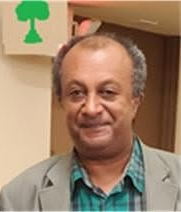
With constitutional amendments on the table and a national dialogue that critics call structurally rigged, Ethiopia stands at a crossroads that could determine the fate of its multinational federation
By Prof Asfaw Beyene
There is absolute consensus among Ethiopians on one fundamental truth: the country is bleeding, and a genuinely inclusive, transparent, and democratic dialogue is the only viable exit from the abyss . However, when the very architecture of a peace-building process is engineered to marginalise the country’s largest demographic constituency and dismantle its constitutional foundations, the process ceases to be a dialogue. It becomes a structural trap .
As the Ethiopian National Dialogue Conference commenced on July 15, 2026, the stakes could not be higher. The federal government is preparing a sweeping constitutional reform package that could redefine Ethiopia’s federal structure, with proposals that include amending Article 39—the constitutional provision that enshrines the right of nations, nationalities, and peoples to self-determination, including secession—and replacing ethnicity-based regional boundaries with geography-based ones .
These are not mere policy adjustments; they are existential threats to the constitutional order that has governed Ethiopia since 1995. As Asfaw Beyene’s analysis argues, the national dialogue may be heading toward a “barred trap” from which there is no easy escape .
The Mathematics of Disenfranchisement
At the heart of the controversy lies the decision-making framework of the National Dialogue Commission. According to the Commission’s documented multi-tier decision-making system, the ultimate power to pass or reject national agendas is vested in a Regional Representatives Assembly composed of 211 members .
Every region and city administration is granted exactly 14 representatives, alongside 15 representatives handpicked by the federal government. The result? Oromia, a region home to an estimated 40 million people—roughly 35% to 40% of the Ethiopian population—is granted the exact same voting power (14 seats) as city administrations like Dire Dawa or Harari, which have populations of approximately 500,000 .
Mathematically, Oromia is granted a mere 6.6% of the voting power in the assembly that will decide the fate of the country. This is not equality; it is the systematic erasure of the Oromo voice .
The Danger of Dismantling Federalism
“The outcome of dismantling federalism can be separation, not unity.”
Many constitutional democracies require broad consensus before fundamental constitutional changes take effect. Some do not allow even supermajority voices for constitutional amendment; they require unanimous vote .
In Germany’s Basic Law, the law that establishes Germany’s federalism cannot be amended at all, even by a unanimous vote. In Canada, unanimous provincial consent is required for certain constitutional amendments under the unanimity formula. These systems protect federalism at such high cost because they are aware the alternative would be separation and independence .
They recognize that constitutions should not be altered solely based on the political preferences of a temporary governing majority because they provoke a counter remedy: secession . Ethiopia’s elections did not provide even a majority vote to the ruling party; elections were not organized in many parts of the country for security reasons .
Article 39: A Constitutional Prerequisite, Not a Mere Provision
Article 39 of the Ethiopian constitution must be understood not merely as a constitutional provision, but as a prerequisite upon which the constitutional order itself rests. Recognition of the right to self-determination, including the possibility of secession under Article 39, establishes the foundational boundaries within which the state exists .
Because this principle defines the relationship between the state, its territory, and the peoples composing it, any amendment that would fundamentally alter or remove this guarantee must logically require unanimous consent of a duly established representative body—not a majority vote .
Article 39 is not, by itself, a sufficient condition to unite a country. But it is a prerequisite that establishes the boundaries and consent-based framework through which the country’s territorial and constitutional existence is maintained. An attempt to remove or fundamentally alter this prerequisite would forfeit the very foundation that gives the constitutional system some legitimacy .
The Eritrean precedent is instructive. When Haile Selassie dismantled Eritrea’s legally mandated autonomy and unilaterally dissolved the Eritrea-Ethiopian Federation, followed by full annexation of Eritrea in 1962, this action prompted an armed national movement, triggering the 30-year Eritrean War of Independence .
The Referendum Question
Where a legally recognized political actor has formally advanced a referendum proposal pursuant to the existing constitutional framework, and where the governing law provides a mechanism for a referendum under applicable circumstances, the constitutional process cannot be circumvented through a preemptive amendment designed to render that referendum unnecessary or ineffective .
Article 39 of the Constitution provides a clear procedure for secession: when a demand for secession has been approved by a two-thirds majority of the members of the Legislative Council of the Nation, Nationality or People concerned; and when the Federal Government has organized a referendum which must take place within three years from the time it received the concerned council’s decision for secession .
The referendum proposal submitted by the OLF for independent Oromia constitutes a pending constitutional process that must be addressed according to the law in force at the time it was initiated. Allowing a subsequent amendment to override, extinguish, or bypass a properly raised referendum petition would undermine constitutional certainty, procedural fairness, and the principle that constitutional change must follow established legal procedures .
The View from the Regions
Regional reactions to the proposed constitutional reforms are mixed. Oromia and Somali regions favor preserving the current model, while Amhara and parts of the Southern Nations, Nationalities, and Peoples’ Region (SNNPR) show growing support for change .
Mulatu Gemechu, vice chairman of the Oromo Federalist Congress (OFC), has argued that the amendment process lacks legitimacy: “One cannot just pop out of a commission and decide to amend [the Constitution]. I was there when it was created. Every element of the Constitution was put in intentionally” .
Dejen Mezgebe, chairman of the Tigray Independence Party, has warned that “this amendment proposal is dangerous, especially for Tigray, which currently has no official or legal representation in federal institutions. Any amendment before Tigray returns to the constitutional order would create a generational crisis” .
Conclusion: A Trap or a Solution?
The constitution amendment is widely seen as a trap to get rid of the Oromo regional state, which is a prerequisite for the secessionist referendum. The Constitution was created through a long, inclusive process of deliberation among all nations and nationalities—a process that reflected the free will of the peoples of Ethiopia . It is impossible to remove the right of secession from the Constitution without violating the foundations of the constitutional order and federalism .
How can the people whose constitutional rights the dialogue is supposed to address be structurally cheated out of their representation? You cannot legally bind a nation to a contract in which its signature was forged .
Instead of ending the tragic wars currently ravaging the country, including the ongoing conflict in Oromia, this manufactured consensus will inevitably exacerbate ethnic polarisation and institutionalise conflict for generations .
“A constitutional amendment cannot be used as a procedural shortcut to defeat a lawful petition or to prevent the electorate from exercising a right that has already been invoked under the existing constitutional order.”

Bonnie Holcomb: The Mother of Oromo Studies
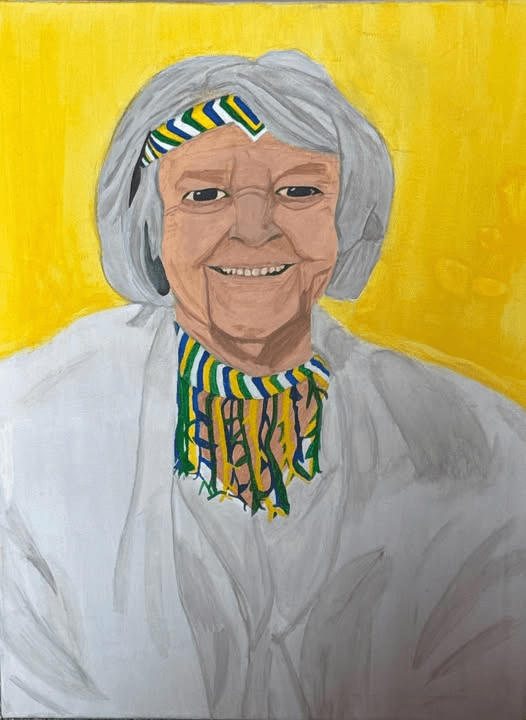
A lifetime of scholarship, sacrifice, and service in the pursuit of Oromo dignity and truth
MINNEAPOLIS, MINNESOTA — For forty years, one name has stood at the centre of Oromo scholarship, guiding the field from its exiled beginnings to global academic recognition. Bonnie Holcomb, co-founder of the Oromo Studies Association (OSA) and Editor-in-Chief of its Journal, has dedicated her life to ensuring that Oromo history, culture, and identity are studied on their own terms.
This year, as the OSA marks its 40th anniversary , the community celebrates not just an organisation, but the extraordinary vision and persistence of one woman—affectionately known as “The Mother of OSA” . In recognition of her lifetime service, a portrait of Holcomb was commissioned from a 15-year-old artist, Qabbanne, reflecting the intergenerational impact of her work .
The Founding of a Movement
The year was 1986 . In exile, scattered across meeting rooms in the diaspora, a small group of Oromo and non-Oromo scholars gathered with a radical idea: to build an independent academic home for the study of a people whose history, culture, and very existence had been systematically erased from mainstream scholarship . They would create a space where knowledge about the Oromo could be produced not by outsiders, but on its own terms .
Bonnie Holcomb was among them.
The OSA was born in direct response to a brutal crackdown—a void in which Oromo heritage was not merely absent from academia and state narratives, but actively suppressed . Those campaigning for greater recognition of the Oromo people were being murdered, tortured, jailed, or driven into exile . The founding of the OSA was an act of intellectual resistance: a refusal to accept erasure and a determination to tell stories that had been silenced .
The Invention of Ethiopia and Other Landmarks
In 1990, Holcomb, alongside fellow founder Sisai Ibssa, co-authored The Invention of Ethiopia: The Making of a Dependent Colonial State in North Africa . The book was a landmark work, offering a radical critique of how Ethiopian history had been represented and exposing a broader set of readers to Oromo history and ethnicity in the Horn of Africa . At its heart was a concern with inequality and a fundamental challenge to dominant state narratives .
The 1990s marked a productive period for Oromo studies, with diaspora intellectuals becoming key actors in the field . The Journal of Oromo Studies (JOS), launched in 1993, grew into the premier peer-reviewed publication for interdisciplinary scholarship on the Oromo people .
A Long and Difficult Road
Holcomb has described the journey as “a long and sometimes a difficult road to reveal evidence and build knowledge which shift the narrative in the region and globally” . This is not hyperbole. For decades, Oromo scholarship faced suppression, neglect, and active hostility. The OSA and its Journal have been more than academic endeavours; they have been an act of intellectual resistance—a refusal to accept the erasure of a people’s history and a determination to tell stories that had been silenced .
Despite these obstacles, the OSA has grown into a global scholarly community spanning continents and disciplines . In a landmark achievement, the Journal of Oromo Studies was recently indexed in Scopus, the gold standard of academic databases—placing it alongside publications from Springer, Elsevier, and Cambridge University Press . Holcomb’s message to contributors and advisors on this achievement reflected both pride and humility: “This publication, and the indexing in Scopus, are notable achievements, all. We have come a long way together” .
The Mother of OSA
The affectionate title “The Mother of OSA” is a testament to Holcomb’s foundational role and her ongoing commitment to the community . She has served as a Board Director and co-chair of the organising team for the 2026 annual conference, continuing to guide the organisation she helped build . Her work has been recognised with an OSA lifetime achievement award .
The theme for the 2026 conference, “Oromo on the Global Landscape: Honoring Asmarom Legesse as OSA Turns 40” , honours another visionary scholar whose work shaped Oromo studies . Asmarom Legesse, author of the landmark Gada: Three Approaches to the Study of African Society (1973), passed away in early 2026 . The conference will take place from July 31 to August 2, 2026, in Minneapolis .
Passing the Torch
In a touching tribute to Holcomb’s legacy, a portrait of her was commissioned from a 15-year-old artist, Qabbanne . This act is itself symbolic: it reflects the intergenerational impact of Holcomb’s work and the future she has invested in. As the OSA enters its fifth decade, the question is whether the next generation will carry the torch forward . Holcomb’s message to the community is also a call to action:
“Please remember that it is the Oromo Studies Association that has conceived, designed, hosted, nurtured, upheld and published the research and scholarship represented in JOS. I urge you all to continue to support OSA, and by extension, its Journal, with donations, membership in OSA and engagement as well as submissions” .
Conclusion
Four decades ago, a small group of exiled scholars dared to imagine a world in which Oromo knowledge was recognised as a contribution to the full breadth of human civilization . Today, that vision is reality . Bonnie Holcomb has been central to that journey. Her legacy is not just the Journal, the conferences, or the Scopus indexing—it is the community of scholars, activists, and artists who continue the work.
As Holcomb wrote, with a warmth that reflects decades of dedication: “Congratulations, one and all” .
The celebration is earned. The legacy is enduring. And the future—if the community continues to support it—is bright.
“Bonnie Holcomb is more than a scholar; she is the architect of a field and the mother of a movement.”

A New Chapter for Victoria’s Multicultural Communities: Louise Perry Welcomes Reform and Community Leadership
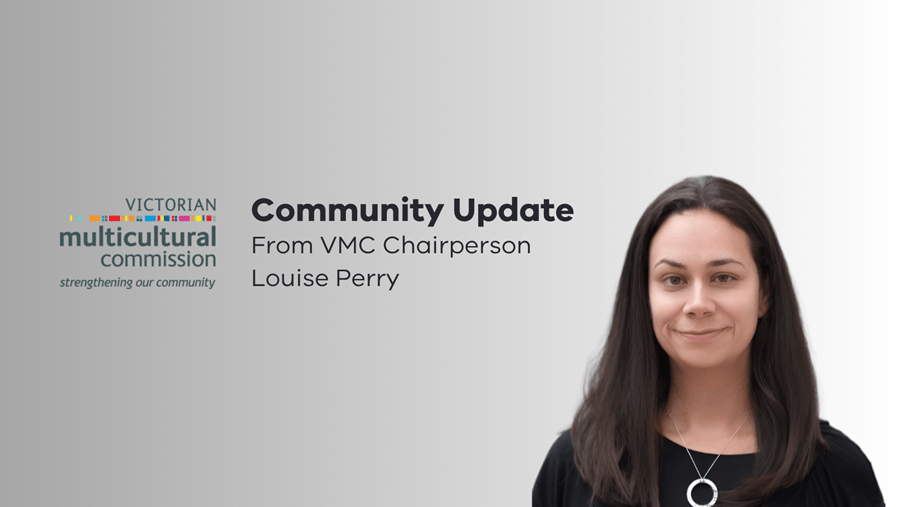
As the VMC transitions to Multicultural Victoria, the new interim Chairperson invites community participation in shaping the state’s diverse future.
MELBOURNE, VICTORIA — In her inaugural address as the interim Chairperson of the Victorian Multicultural Commission (VMC), Louise Perry has struck a tone of optimism and collaboration, heralding a “new era” for Victoria’s multicultural and multifaith communities.
Perry’s appointment marks a critical transitional period for the state, as the Victorian Government introduces legislation to establish Multicultural Victoria, a new statutory body designed to strengthen the way government listens to, engages with, and supports its diverse population.
“It is a privilege to write to you for the first time as Chairperson,” Perry stated. “I am honoured to have the opportunity to serve our multicultural and multifaith communities“.
A Leader with Deep Community Roots
A Victorian woman of Burmese heritage, Perry brings a wealth of experience to the role, including a background in journalism, leadership in community organisations, and a distinguished career in international development and human rights. Her recent role as Deputy Secretary for Fairer Victoria at the Department of Families, Fairness and Housing saw her lead landmark strategies on anti-racism, youth, and gender equality.
“This is an exciting time for multicultural Victoria,” Perry wrote, reflecting on the week’s developments, which saw the introduction of the Bill to amend the Multicultural Victoria Act into Parliament. The proposed legislation seeks to dissolve the VMC and replace it with Multicultural Victoria, a move that aims to modernise how the state engages with its migrant and refugee communities.
Building a More Inclusive Future
The new body is designed to bring together the community engagement functions of the VMC with the policy responsibilities of Multicultural Affairs, creating a more integrated and effective approach. It will be led by a newly created Multicultural Coordinator General, supported by two Deputy Coordinators, one of whom will be dedicated to regional Victoria, and a diverse advisory group.
Perry has emphasised her commitment to building an organisation that reflects the aspirations of the communities it serves, prioritising a “recalibrated and coordinated approach” that promotes cohesion, equity, and inclusion.
“I look forward to working with communities, VMC staff and government as we prepare for legislative changes,” Perry said.
A Call for Community Leadership
As part of the transition, applications are now open for a range of leadership opportunities, including membership of the new Multicultural Community Advisory Group. This is a unique opportunity for community leaders to contribute their experience and insights, ensuring community voices remain central to the future direction of Multicultural Victoria.
Perry encouraged anyone with passion and commitment to shaping Victoria’s multicultural future to consider applying. “I encourage anyone with the passion and commitment for shaping Victoria’s multicultural future to consider applying“. Applications close on Sunday, 9 August.
Looking Ahead
As Perry begins her journey, she has committed to getting out into communities across Victoria, meeting people in person, and learning about their work, aspirations, and the issues that matter most to them.
“Together, we can continue building a Victoria where every community feels heard, valued and connected,” she concluded.
The establishment of Multicultural Victoria is subject to the passage of legislation.

Louise Perry Appointed Interim Chairperson of the Victorian Multicultural Commission

A seasoned leader in human rights and community engagement steps in to guide Victoria’s multicultural sector through a historic transition
MELBOURNE, VICTORIA — As the Victorian Multicultural Commission (VMC) prepares for a significant transformation, Ms Louise Perry has been appointed as interim Chairperson to lead the organisation through a critical transitional period. Her appointment, effective Thursday 16 July, comes as Victoria moves toward the establishment of Multicultural Victoria, a new statutory body that will reshape the state’s approach to multicultural and multifaith affairs .
Perry’s term is interim, extending until Multicultural Victoria is formally established. A Victorian woman of Burmese descent, she brings a wealth of experience spanning journalism, community leadership, international development, human rights, and the Victorian Public Service .
A Career of Service and Advocacy
Louise Perry’s professional journey reflects a deep commitment to social justice and community empowerment. She began her working life as a journalist, developing a keen understanding of storytelling and the power of narrative in shaping public understanding. This foundation led her to leadership roles in community organisations, where she championed the voices of marginalised and underrepresented groups.
Her career later took her into the International Development and Human Rights space, where she worked extensively on issues of justice, equity, and inclusion. This global perspective, combined with her local experience, has equipped her with a nuanced understanding of the challenges and opportunities facing multicultural communities.
Before her appointment to the VMC, Perry served as Deputy Secretary for Fairer Victoria within the Department of Families, Fairness and Housing, where she led landmark work on anti-racism, youth, and gender equality strategies . Her leadership in this role demonstrated her ability to drive systemic change and build partnerships across government and the community sector.
A Vision for Unity and Cohesion
Perry’s appointment comes at a pivotal moment for Victoria’s multicultural and multifaith communities. The transition to Multicultural Victoria represents an opportunity to elevate multicultural affairs across the whole of government, ensuring that diverse voices remain at the centre of policy and service delivery.
“The establishment of Multicultural Victoria presents a unique opportunity for multicultural and multifaith affairs in our state,” Perry said. “I look forward to working with communities, VMC staff and government as we prepare for legislative changes” .
Her leadership is expected to support and uplift Victoria’s multicultural and multifaith communities as champions of unity and cohesion, delivering benefits for all Victorians . The changes she will guide aim to ensure that the new structure is fit for purpose and responsive to the needs of communities .
The Transition to Multicultural Victoria
The establishment of Multicultural Victoria is subject to the passage of legislation . The new body will bring together the functions of the VMC and Multicultural Affairs, creating a unified approach to multicultural policy and community engagement . It will be led by a Multicultural Coordinator General, supported by two Deputy Coordinators General and a Multicultural Community Advisory Group .
The transition reflects a recognition that Victoria’s multicultural communities are not just a part of the state’s identity—they are central to its future. As Perry noted, this is a unique opportunity to strengthen the foundations of multicultural and multifaith affairs.
A Legacy of Leadership
Perry succeeds Vivienne Nguyen AM, who concluded her seven-year tenure as Chairperson on 15 July 2026 . Nguyen’s leadership saw the VMC through the COVID-19 pandemic, flood recovery, and the impacts of international events on multicultural and multifaith communities . Her legacy of community-led engagement and partnership-building has laid the groundwork for the next chapter.
Perry expressed appreciation for Nguyen’s contributions, which she described as “invaluable” and commended the groundwork laid for the future .
Looking Ahead
As Louise Perry steps into her interim role, Victoria’s multicultural and multifaith communities can look forward to a leader with a proven track record of advocacy, collaboration, and systemic change. Her appointment signals continuity and stability during a period of significant transformation.
Applications for leadership positions within Multicultural Victoria—including the Coordinator General, two Deputy Coordinators General, and members of the Multicultural Community Advisory Group—are expected to open shortly. Community members are encouraged to stay informed and participate in shaping the future of multicultural affairs in Victoria.
“The establishment of Multicultural Victoria presents a unique opportunity for multicultural and multifaith affairs in our state. I look forward to working with communities, VMC staff and government as we prepare for legislative changes.”
— Louise Perry, Interim Chairperson, Victorian Multicultural Commission

A Grateful Farewell: Vivienne Nguyen AM Concludes Seven-Year Leadership of the Victorian Multicultural Commission
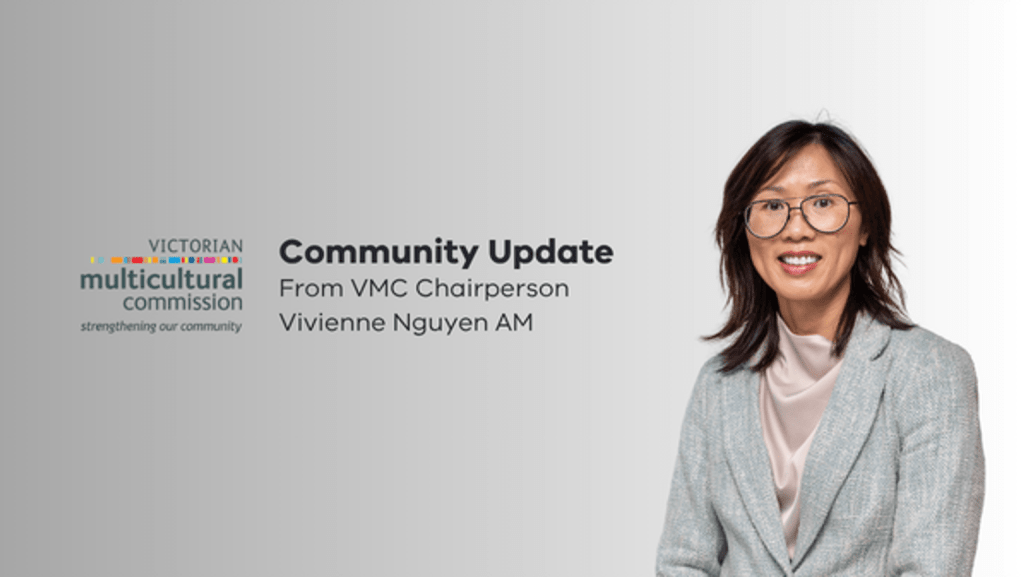
After guiding Victoria’s multicultural communities through pandemic, flood recovery, and social transformation, the VMC Chairperson’s legacy is one of resilience, inclusion, and hope.
MELBOURNE, VICTORIA — Wednesday 15 July 2026 marks the end of an era for Victoria’s multicultural landscape. Vivienne Nguyen AM, Chairperson of the Victorian Multicultural Commission (VMC), has concluded her seven-year tenure, closing a chapter defined by crisis, celebration, and profound community connection .
Since her appointment in 2019, Nguyen has served as a steadfast advocate for Victoria’s culturally, linguistically, and religiously diverse communities. Her leadership spanned some of the state’s most challenging periods, including the COVID-19 pandemic, flood recovery efforts, and the far-reaching impacts of international events on multicultural and multifaith communities . Under her guidance, the VMC ensured that diverse voices remained central to the state’s response and recovery.
A Legacy of Advocacy and Inclusion
“Being in this role has been an honour and a privilege,” Nguyen reflected. “We have shown that we can live and thrive, and we can overcome adversity no matter the shape and size. Diversity is indeed our strength and our asset.”
Nguyen’s journey to this role began long before her appointment. She arrived in Australia as a 12-year-old refugee from Vietnam, a young girl who would grow into one of Victoria’s most passionate advocates for community engagement and cultural diversity . Over more than 25 years, she has been a leader across corporate, community, and government settings, holding executive roles at AMP Asset Management and ANZ Banking Group, where she led their global diversity strategy .
In 2021, she was appointed a Member of the Order of Australia (AM) in recognition of her significant service to multicultural Victoria . Her contributions have also been acknowledged through the Australian Centenary Medal and induction into the Victorian Honour Roll for advocating for women’s leadership and supporting young Vietnamese people .
“Vivienne Nguyen is a true champion of multiculturalism who goes above and beyond,” said Mr Juma Piri Piri, Chairperson of the Refugee Communities Association of Australia, at the time of her AM recognition .
Strengthening the Foundations of Multicultural Victoria
Under Nguyen’s leadership, the VMC convened the Multifaith Advisory Group, contributed to Victoria’s Anti-Racism Taskforce, and delivered flagship initiatives including Cultural Diversity Week . She played a critical role in the Victorian Government’s pandemic response, partnering with community leaders and peak bodies to deliver unique resources for diverse communities .
Minister for Multicultural and Multifaith Victoria Ingrid Stitt expressed gratitude for Nguyen’s contributions. “I want to thank Vivienne for her valuable contributions to the Victorian Multicultural Commission and to Victoria’s multicultural communities since 2019,” Minister Stitt said.
A Transition to a New Chapter
Nguyen’s departure comes as the Victorian Government prepares for the proposed establishment of Multicultural Victoria, a new statutory body that will bring together the functions of the VMC and Multicultural Affairs, subject to the passage of legislation . This body will have a Multicultural Coordinator General and two Deputies, leading community engagement, advocacy, and accountability functions .
Applications for leadership positions within Multicultural Victoria—including the Coordinator General, two Deputy Coordinators General, and members of the Multicultural Community Advisory Group—are expected to open shortly . Community members are encouraged to keep an eye out for these opportunities and share them widely through their networks.
Ms Louise Perry has been appointed as interim Chairperson to support this transitional period, starting Thursday 16 July. Her term will continue until Multicultural Victoria is formally established .
A Victorian woman of Burmese heritage, Perry brings extensive experience in public policy and community engagement. She has served as Deputy Secretary for Fairer Victoria within the Department of Families, Fairness and Housing, where she led landmark anti-racism, youth, and gender equality strategies .
“The establishment of Multicultural Victoria presents a unique opportunity for multicultural and multifaith affairs in our state,” Ms Perry said. “I look forward to working with communities, VMC staff and government as we prepare for legislative changes” .
A Final Farewell
As Nguyen steps down, her legacy continues through the relationships she has built, the communities she has championed, and the foundation she has helped create for the next chapter of multicultural affairs in Victoria.
“Thank you for allowing me the privilege of serving alongside you,” Nguyen said in her farewell message .
While her role as Chairperson has come to an end, her commitment to Victoria’s multicultural communities remains steadfast. The VMC extends its deepest gratitude to Nguyen for her outstanding leadership and unwavering dedication over the past seven years.
“Diversity is indeed our strength and our asset.”
— Vivienne Nguyen AM, Chairperson, Victorian Multicultural Commission

The Two Humiliations of TPLF: A Reflection on Power, Pride, and the Oromo Awakening
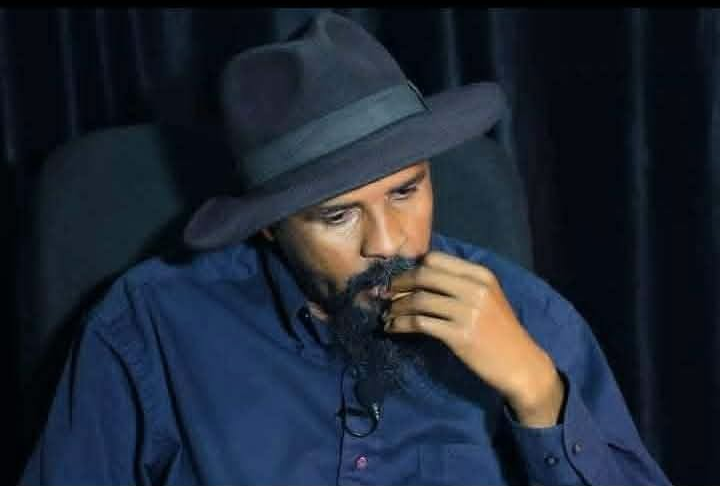
In the shifting sands of Ethiopian politics, the Tigrayan People’s Liberation Front has suffered wounds that time has not healed—and the Oromo people remain the central characters in this unfolding drama
In the annals of Ethiopian political history, few organizations have risen as high or fallen as dramatically as the Tigrayan People’s Liberation Front (TPLF). For nearly three decades, it dominated the political landscape of the Ethiopian Empire, ruling with an iron fist while projecting an image of revolutionary legitimacy. Yet today, the TPLF finds itself nursing wounds that history will not allow it to forget—wounds inflicted not by foreign enemies but by the very people it sought to subjugate.
The reflection of Abba Ebba offers a searing analysis of what he calls the “two humiliations” of the TPLF—humiliations that, in his view, are inextricably linked to the Oromo people and their awakening. These are not merely military defeats but moral and political reckonings that the TPLF has been unable to accept or process.
The First Humiliation: The Fall of Mekelle
“For 27 years, like the saying ‘the hare’s skin cannot cover the elephant,’ the TPLF tried to stretch its hide over an empire too vast for its frame. In the final hour, it was the sons and daughters of Oromo—the Qeerroo and Qarree—who stood before tanks with empty hands and brought down the regime. They made the TPLF retreat to Mekelle, dragging its ill-gotten wealth behind it. This is the first humiliation that remains unhealed to this day.”
The 2018 Oromo protests were not merely a political uprising—they were a seismic shift in the Ethiopian political landscape. The Oromo youth, known as the Qeerroo and Qarree, rose in a wave of popular resistance that the TPLF could not contain. The protests were decentralized, leaderless, and yet remarkably unified in their demands for justice, equality, and an end to the TPLF’s domination .
The TPLF, which had ruled Ethiopia for 27 years, was forced to abandon power and retreat to its northern stronghold of Mekelle. This was not a defeat by a rival military force but a collapse in the face of unarmed civilian resistance. The humiliation was profound and, according to Abba Ebba, has never been truly accepted by the TPLF leadership.
“The TPLF was defeated by the popular wave that ignited from one end of Oromia to the other—a wave that was part of the Oromo liberation struggle. This is an undeniable truth. The Oromo is an elephant; when it tramples, it crushes. The TPLF was forced to swallow this reality, whether it liked it or not.”
The Second Humiliation: The Retreat to Mekelle
The second humiliation followed the first. After initially retreating to Mekelle, the TPLF sought to reassert its influence on the national stage. It formed alliances with various forces—including some within the Amhara political spectrum—and attempted to challenge the Prosperity Party government.
However, this effort ended in another defeat. The TPLF was forced to retreat once again to Mekelle, leaving behind its ambitions and its allies, having consumed itself in the fires it had ignited. This second retreat, Abba Ebba argues, is the other humiliation that remains raw and unprocessed .
“When the TPLF was about to return to Addis Ababa, it found itself burned by the fire it had started. It was forced to retreat to Mekelle—another humiliation that has not faded.”
The Unlearned Lesson
Despite these humiliations, the TPLF has not learned its lesson. Instead, it continues to prepare for a new war, this time under the cover of the Prosperity Party government’s own challenges. After four years of uninterrupted military preparation, the TPLF is once again positioning itself for conflict .
Abba Ebba warns that this preparation is driven by a desire for revenge—a desire to settle scores with the Oromo people who, in the TPLF’s view, are responsible for its humiliations. “Under the cover of the Prosperity Party government, the TPLF is seeking to take revenge on our people for its past humiliations.”
The Unnecessary Price
Abba Ebba poses a pointed question: why must the Oromo people pay the price for the TPLF’s ambitions? Why must Oromia become a battlefield for conflicts that are not of its making?
“The TPLF did not need to travel 600 kilometres into the heart of the country, into the breadbasket of Ethiopia—Oromia. It could have declared Eritrea-style independence when the Derg fell, and it could do so today. All it needs is to settle its accounts and secure the consent of its people.”
The TPLF’s refusal to accept defeat has left the Oromo people caught between multiple threats. On one hand, there is the TPLF’s continued military preparations and its desire for revenge. On the other, there are forces like Fano and other armed groups that have also targeted Oromo communities.
The Oromo Elite’s Responsibility
Abba Ebba also points a finger at the Oromo elite, accusing them of failing to fulfill their responsibilities. The Oromo people, who have paid the heaviest price in the struggle against the Ethiopian Empire, now face a dual threat: the TPLF’s revanchism and the Oromo elite’s failure to protect the gains of the struggle.
“The Oromo elite has failed to protect the historic victory achieved by the Oromo popular struggle. It has also failed to protect the constitutional right to self-determination—the right to democracy, justice, and self-rule—from being undermined.”
This failure, Abba Ebba argues, has allowed the Oromo people to be marginalized and treated with suspicion by their neighbours. The Oromo elite’s failure to step up has left the people vulnerable to manipulation and exclusion.
A Call to Vigilance
Abba Ebba concludes with a call to the Oromo people:
“Our people must prepare themselves for the danger of the approaching war and actively monitor the situation. The war that is being prepared—whether by TPLF or by the Fano forces—poses a threat to the next generation of Oromo. Decisive action must be taken to find a lasting solution.”
He insists that Oromia must not become a doormat for the ambitions of others. “Oromia will not be a doormat for Fano or the TPLF! With its determined sons and daughters, it will stand, honoured and respected, and it will endure forever.”
A Historical Warning
The reflection of Abba Ebba is not merely a commentary on contemporary politics—it is a historical warning. It reminds the Oromo people that the TPLF, despite its humiliations, has not abandoned its ambitions. The two humiliations remain unhealed, and the TPLF continues to seek revenge.
But the reflection also carries a message of hope and resolve. The Oromo people, having risen once, can rise again. The elephant has crushed its enemies before, and it can do so again.
Conclusion
The two humiliations of the TPLF are more than military or political defeats—they are symbolic wounds that the organization has not been able to accept. The TPLF’s refusal to learn from its past has left the Oromo people facing a renewed threat. But the Oromo people, having already demonstrated their power, are not powerless.
As Abba Ebba declares: “Oromia will not be a doormat for Fano or the TPLF! With its determined sons and daughters, it will stand, honoured and respected, and it will endure forever.”
The elephant has crushed its enemies before, and it can do so again.

Why Unity Remains a Constant Theme in the Oromo Freedom Struggle
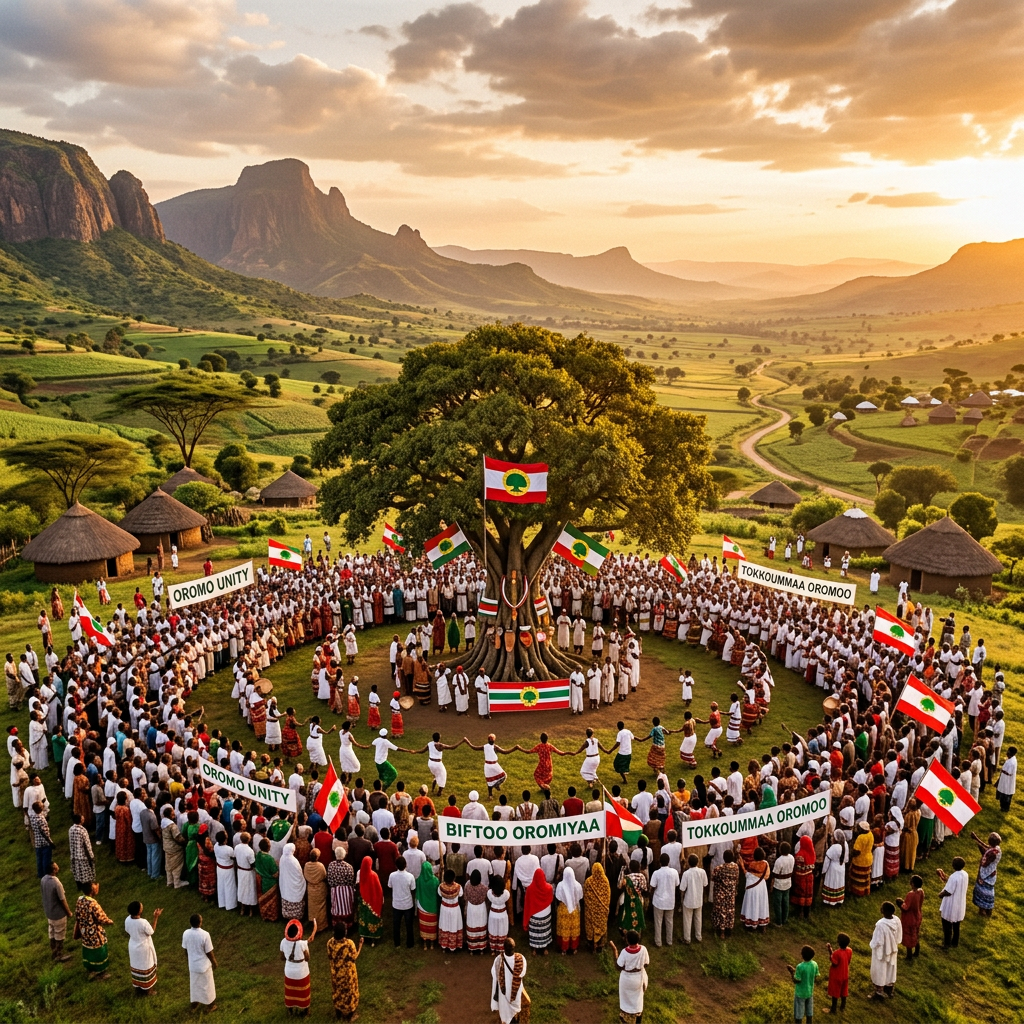
In the face of colonial domination and systemic oppression, the call for Oromo unity is not just a political slogan—it is a survival strategy, a moral imperative, and the foundation of a centuries-old struggle for liberation
The Oromo freedom struggle is one of the longest-running national liberation movements in Africa. For over a century, the Oromo people have resisted colonial domination, cultural suppression, and political marginalisation within the Ethiopian Empire. Throughout this long and arduous journey, one theme has remained constant: the call for unity.
Unity is not merely a rhetorical device in Oromo political discourse. It is a practical necessity, a moral principle, and a historical lesson that has been learned through generations of struggle. To understand why unity remains so central to the Oromo cause, we must look at the history of oppression, the nature of colonial strategy, and the lessons learned from both successes and failures.
The Colonial Strategy: Divide and Rule
The Ethiopian Empire was built through conquest. In the late 19th century, Emperor Menelik II’s armies, armed with European rifles, swept through the Oromo territories, confiscating land, imposing a feudal system of tribute and forced labor, and suppressing Oromo institutions such as the Gadaa system. The neftegna-gabbar system was not a metaphor—it was a system of land confiscation, tribute extraction, and forced labour that persisted for generations .
“When Menelik’s armies swept through what is now Oromia in the 1880s and 1890s, they did not arrive as liberators. They arrived with rifles purchased from European powers, with a feudal ideology that viewed the southern peoples as pagans to be civilised and their land as empty territory to be claimed” .
To maintain control over a conquered population that vastly outnumbered the colonisers—Oromos comprise roughly 35% of Ethiopia’s population —the imperial state employed a classic colonial strategy: divide and rule. Oromo society was fragmented, regional differences were exploited, and some Oromo elites were co-opted into the colonial administration. This strategy of fragmentation served the coloniser’s interests by preventing the emergence of a unified Oromo national consciousness .
The suppression of Oromo unity was not incidental to colonial rule—it was essential to it. A united Oromo nation posed an existential threat to the colonial system. This is why successive Ethiopian governments have sought to undermine Oromo unity, whether through direct repression or through the co-optation of Oromo elites into the state structure .
The Birth of National Consciousness
The 1960s marked a turning point in Oromo political consciousness. Oromo intellectuals and artists began to articulate their dissatisfaction with socio-economic deprivation and what was seen by some as ethnic oppression . The Macha-Tulama Self-Help Association (MTA), founded in the 1960s, represented one of the first organised attempts to build Oromo unity across regional and clan divisions .
The Haile Selassie government, recognising the threat posed by this emerging unity, crushed the MTA. Its destruction was the immediate catalyst for the founding of the Oromo Liberation Front (OLF) in the early 1970s . The establishment of the OLF represented a decisive shift: for the first time, a unified political organisation was created to lead the Oromo struggle for self-determination .
“The effort to bring together a few Oromo nationalists of diverse backgrounds from all over Oromia” to establish the OLF was itself an act of unity . The founders understood that only through a unified national movement could the Oromo people overcome the colonial system.
The Weapon of Culture
Oromo culture has been a powerful force for unity. While the Ethiopian state banned the Oromo language from public contexts and prevented it from being printed, Oromo musicians and artists developed creative forms of cultural resistance that sustained Oromo identity and consciousness .
“Afaan Oromo song (music) was used as the most powerful form of chimerical power in speaking across age, class, region, sex, power, and even ideology in resisting the domination of Imperial rule while striving to sustain common Oromo unity” .
Oromo musical icons such as Ali Birra, Abitaw Kebede, Nuho Gobana, Umar Suleyman, Ebbisa Adunya, and Kadir Said played an indispensable role in creating a social space wherein the Oromo struggle for equality and self-emancipation is articulated and debated . Songs like Haacaaluu Hundeessaa’s Maalan Jiraa became anthems of resistance, weaving together stories of pain and pride, hope and despair, and reminding Oromos of their shared identity and destiny .
“It is here, in this reservoir of songs, in the unruly dances and heart-breaking ballads, that one finds the story of the Oromo nation and its struggle for self-determination, not in the official archives and historiographies of the Ethiopian state” .
These artists became targets of state repression because their songs threatened the colonial order by building Oromo unity and consciousness .
Lessons from History
The Oromo people have a long memory of both the costs of disunity and the power of unity. The 16th-century Oromo campaigns, which successfully reclaimed territories from both Christian and Islamic imperial forces, were made possible by the sophisticated organisation of the Gadaa system—a system built on unity of purpose and collective action .
“The successes of the Oromo were not due to sheer numbers or migratory luck—but stemmed from an internally sophisticated and morally grounded civilisational system anchored in the Gadaa democratic order” .
Factors such as the Gadaa system, age-set institutions (Cibra), the unifying goal of reclaiming ancestral land (Galma), spiritual conviction (Kaawoo), and inclusive sociopolitical integration (Moggaasaa) all contributed to Oromo military success .
Conversely, the weakness of the Oromo movement has often been attributed to disunity. As one analysis notes, within the Oromo nationalist movement there are “lots of varieties, units, political agendas, and goals” . This diversity, while reflective of the Oromo people’s richness, has at times been exploited by the state to undermine the movement.
The recognition that disunity serves the coloniser is a constant theme in Oromo political discourse. “The colonizers and their agents have vilified and attacked” the OLF “to make the Oromo society leaderless” . A leaderless, fragmented society is easier to control.
Unity in Contemporary Struggles
The theme of unity remains urgent today. Recent efforts by the Oromo Liberation Front (OLF) and the Oromo Federalist Congress (OFC) to establish a “Transitional National Unity Government of Oromia” reflect this ongoing imperative . These groups have called on “all genuine Oromo forces, regardless of their method of struggle, to resolve their political differences and galvanize their unity” .
The call for unity is not merely political—it is a response to the dire situation facing the Oromo people. Across all 22 zones of Oromia, conflict between government forces and the Oromo Liberation Army (OLA) has led to arrests, beatings, displacement, mass burning of civilian houses, and other atrocities . The Oromo people face a crisis that demands unified action .
Yet the path to unity is not simple. The Oromo nation is divided by class, region, religion, and political orientation. As one analysis notes, “the Oromo nation is not a monolith. It is divided by class” . At the top is the Oromo comprador bourgeoisie—elites integrated into the state structure who benefit from the existing system . At the bottom is the Oromo working class—peasants, agricultural labourers, industrial workers, unemployed youth, and the urban poor .
This class division has led to a recognition that “nationalism alone cannot deliver what the Oromo masses actually need” . The Oromo peasant displaced from their land does not care whether the displacer is Amhara or Oromo—the displacement is the same . The Oromo worker paid starvation wages does not care whether the boss is based in Addis or abroad—the exploitation is the same .
This insight has led some to argue that the Oromo struggle must move beyond nationalism to class politics, building alliances with other oppressed peoples across Ethiopia . “Your ally is the Amhara worker who also wants land. Your ally is the Tigrayan worker who also wants a living wage” .
The Role of the Gadaa System
The Gadaa system continues to be a source of unity for the Oromo people. Its principles of regular rotation of leadership, checks and balances, and consensus-building mechanisms are considered “one of the most sophisticated pre-capitalist socio-political systems ever developed” . The Gadaa system is not merely a cultural artefact—it offers lessons in democratic governance that are relevant to the contemporary struggle .
“A liberated Ethiopia would not erase Oromo culture. It would draw on it. It would recognise that the Gadaa system offers lessons in democratic governance that the European liberal tradition cannot teach” .
The revival of the Gadaa system and the celebration of the Irreechaa festival have become powerful symbols of Oromo unity and cultural renaissance.
Conclusion
Unity remains a constant theme in the Oromo freedom struggle because it is both a necessity and a lesson learned through generations of experience. The colonial state has sought to divide the Oromo people because a united Oromo nation poses an existential threat to the colonial system. The Oromo people have learned, through both victory and defeat, that unity is the foundation of successful resistance.
But unity is not merely a political strategy—it is a moral principle rooted in the Oromo worldview. The concept of Safuu, the moral order that maintains balance and harmony, applies to the Oromo nation as well. Disunity is a breach of Safuu, a disruption of the natural order that brings suffering to the community .
As the Oromo struggle continues, the call for unity remains urgent. Whether through political organisation, cultural expression, or class solidarity, the Oromo people must find ways to overcome the divisions that have been imposed upon them and build the unity necessary for genuine liberation.
“The full restoration of the Oromo people’s freedom and rights is essential for lasting peace” . And that restoration will only be achieved through unity.
The struggle for Oromo liberation is the struggle for Oromo unity. And the struggle continues.

A life of resilience, philanthropy, and service to the city of Bishoftu
From Farm to Honor Guard: The Legacy of Assefa Abebe (Assefa Korenti)
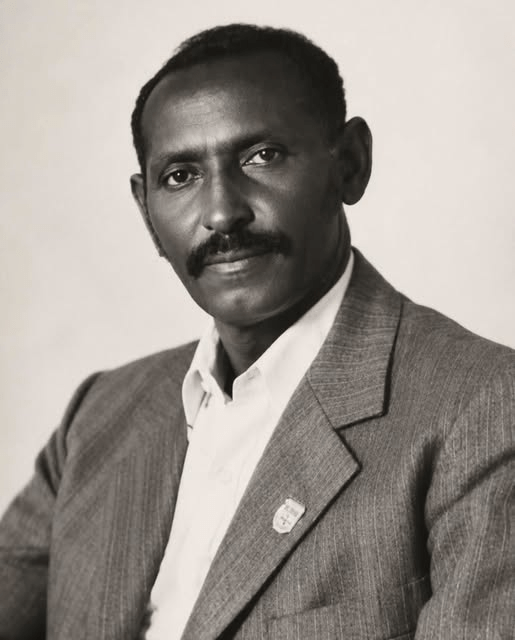
BISHOFTU, OROMIA — In the annals of community service and quiet heroism, some names deserve to be remembered not for titles or wealth, but for the lives they touched and the legacy they left behind.
Mr. Assefa Abebe, known affectionately as Assefa Korenti, was one such figure. From humble beginnings as a farm laborer to serving in the elite Imperial Bodyguard, from working as an electrician to becoming a successful entrepreneur and philanthropist, his life story is a testament to the power of hard work, generosity, and unwavering commitment to community .
A Journey of Many Hats
Assefa Abebe’s life was a tapestry of varied and remarkable experiences. He worked as a farm laborer, served as a soldier in the Imperial Bodyguard, and later became a skilled electrician. It was during his time at the Electric Light and Power Authority, earning a modest salary of 40 birr, that he earned the nickname “Assefa Korenti” (Assefa the Electrician) for his tireless work installing and repairing electrical poles across Bishoftu, often working after hours to serve his community.
His entrepreneurial spirit led him to establish the first fuel station in Bishoftu, then known as Debre Zeyit, and later the Bishoftu Afaf Hotel, situated on the shores of Lake Bishoftu. Yet, what truly set him apart was his generous heart.
The Generosity That Defined a Legacy
In a time of severe drought, a group of farmers from the surrounding Ada’a district approached Assefa Abebe for help. Without hesitation, he offered them an incredible act of trust and generosity: he handed over his hotel for two years, telling them, “Manage the hotel yourselves and keep all the income until the drought passes.”
When the farmers returned after two years, they were no longer in need, but they made a request: that he rename the hotel in their honor. He complied, renaming it the “Farmers Hotel” (Ye Aresha Hotel) . This humble story of generosity and gratitude became a symbol of the bond between Assefa and his community. It was later recounted by Ethiopia’s Prime Minister Abiy Ahmed during the launch of the Goodwill Project as an example of selfless community service .
A Life of Service and Legacy
Assefa Abebe’s contributions to Bishoftu are numerous. He was an early adopter and distributor of clean energy, introducing “white gas” (smokeless fuel) and cylinder gas to the city, improving public health and living standards .
He was deeply involved in education, supporting schools like Lebe Dengel, Ada’a Model, and Teodros, both financially and as a member of their administrative boards. He also established numerous grain mills, many of which continue to serve the community. In the 1970s, he was the only hotelier in Bishoftu at the time, and a pioneer in many sectors, including a gas station .
A Call for Recognition
Mr. Assefa Abebe (Assefa Korenti), who passed away tragically, leaves behind a legacy that has touched thousands of lives. It is a legacy that many believe should be formally recognized, and community members have called for him to be honored at the 6th Bishoftu Philanthropy Award . His story remains a powerful reminder that true heroes are not always the famous or wealthy, but those who build up their communities with quiet strength and open hearts.
“Hard work, resilience, and giving back to the community are the hallmarks of a life that leaves a legacy.”

Shashemene Welcomes U.S. Ambassador: A New Chapter in Partnership and Progress
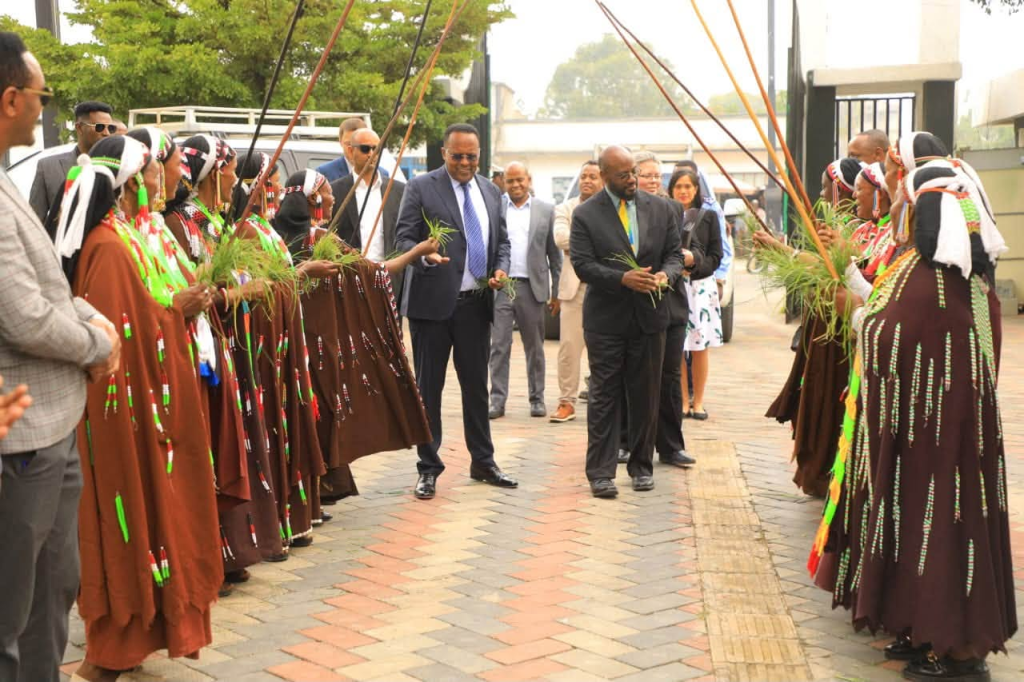
In a historic visit, the city of Shashemene opened its doors to the United States Ambassador, showcasing decades of resilience and a vision for transformative development.
SHASHEMENE, OROMIA — Today, the city of Shashemene stood still to warmly welcome the Honorable Ambassador of the United States. The visit marked more than a formal diplomatic engagement; it was a powerful testament to the growing partnership, mutual respect, and shared aspirations between the United States and the people of Ethiopia .
The city, with its rich history of over 115 years, presented its developmental scenario to the Ambassador, covering key indicators in demographics, infrastructure, economic progress, and humanitarian efforts. The visit signals a strong message of cooperation as Ethiopia continues its journey of reform and transformation.
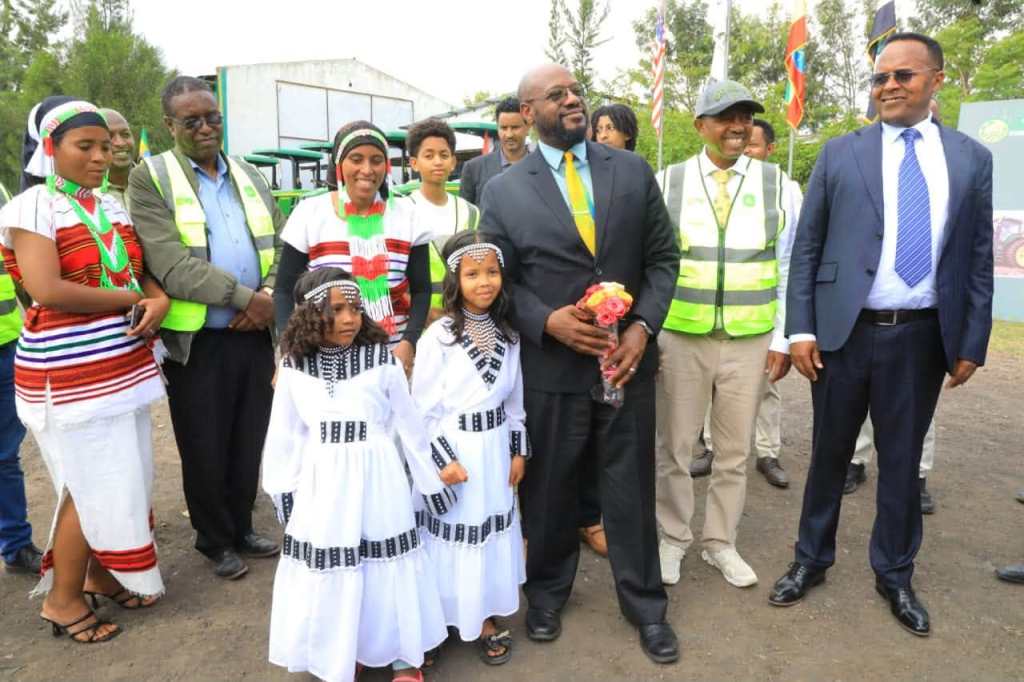
A City of Resilience and History
Shashemene is not just a city; it is a symbol of endurance and hope. Originally established in 1910/1911 (1903 E.C.), the name “Shashemene” is derived from a famous Oromo lady named “Shashe,” who operated a rest-stop called “Mene” in the area . For over a century, the city has served as a vital crossroads in the Rift Valley, connecting the southern regions of Ethiopia to the capital, Addis Ababa .
Shashemene gained international recognition in 1948 when Emperor Haile Selassie I granted 500 acres of fertile land to the Black people of the West as a token of appreciation for their support during the Italian occupation . This land grant led to the settlement of Rastafarian communities from Jamaica, the United States, and the Caribbean, making Shashemene a unique symbol of Pan-Africanism and diaspora repatriation .
As the city continues its journey, the resilience and hope of its people remain its greatest assets.
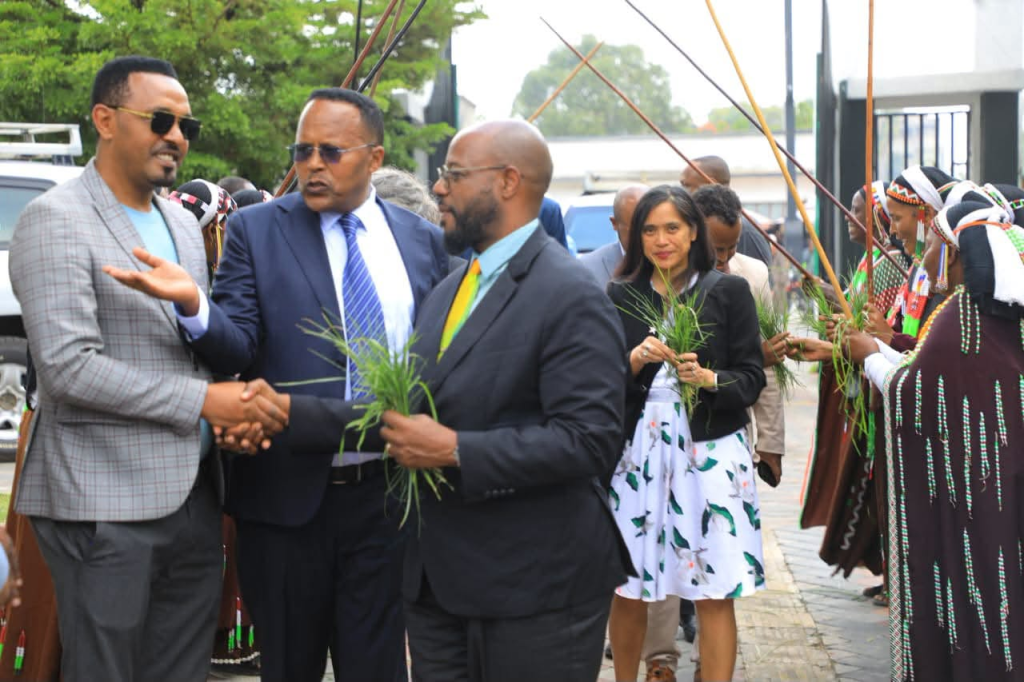
Presenting a Vision for Progress
During the visit, local officials detailed the city’s developmental scenario, highlighting significant progress across multiple sectors. Key indicators shared with the Ambassador included:
Demographics: With a rapidly growing population, Shashemene is a city of young people. An estimated 65% of residents are under the age of 25 . This youth bulge presents both an opportunity and a challenge. Harnessing the energy and potential of this demographic is central to the city’s development strategy.
Infrastructure: The city is undergoing significant transformation. Under the national “Corridor Development” initiative, Shashemene is being upgraded into a smart city with modern transportation networks and improved public services . Recently, Shashemene was also upgraded to the status of a “Regiopolis” (a major regional urban center) .
Economic and Humanitarian Works: The city is seeing strong potential in revenue generation, economic development, and social services. There is real potential for job creation and attracting investment to improve livelihoods. Simultaneously, the city is focused on strengthening education, health, and security services for its families.
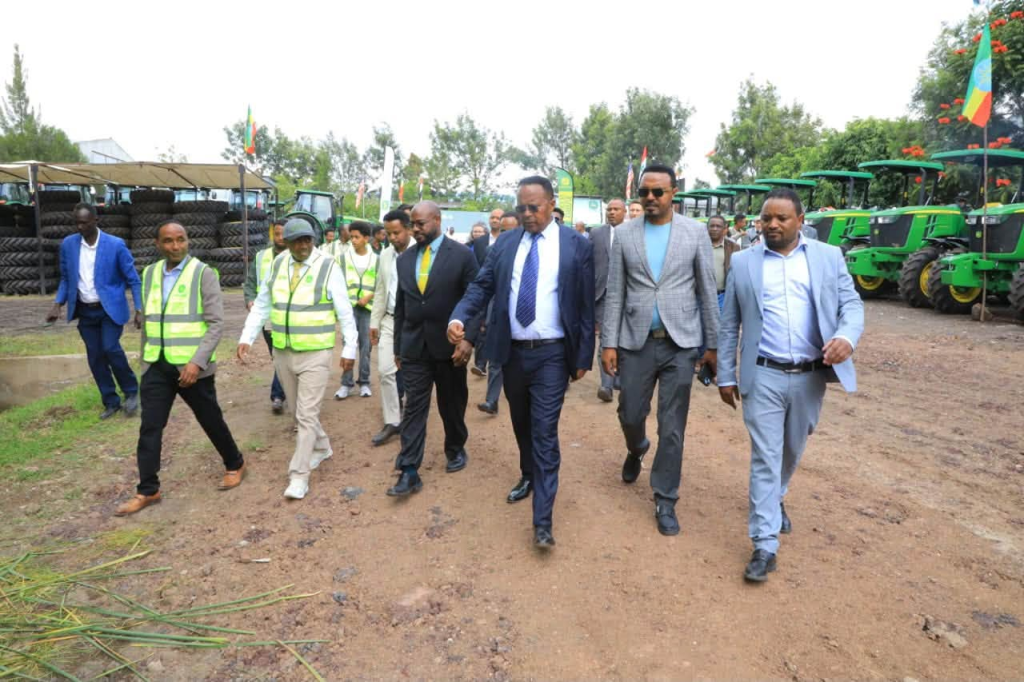
A Message of Partnership and Hope
In welcoming the Ambassador, city officials expressed gratitude for the United States’ continued engagement and support. The Ambassador’s visit follows recent U.S. Embassy engagements in Oromia, where the focus has been on promoting inclusive economic development, improving health outcomes, and increasing the quality of education .
“Honorable Ambassador, we welcome your partnership and support as we continue building Shashemene into a safer, stronger, and more prosperous hub for many nations and nationalities.”
The officials noted that following the reform and prosperity government, meaningful transformation is not only possible but is already becoming real in communities across Ethiopia. The visit was described as a strong message of partnership, mutual respect, and shared goals.
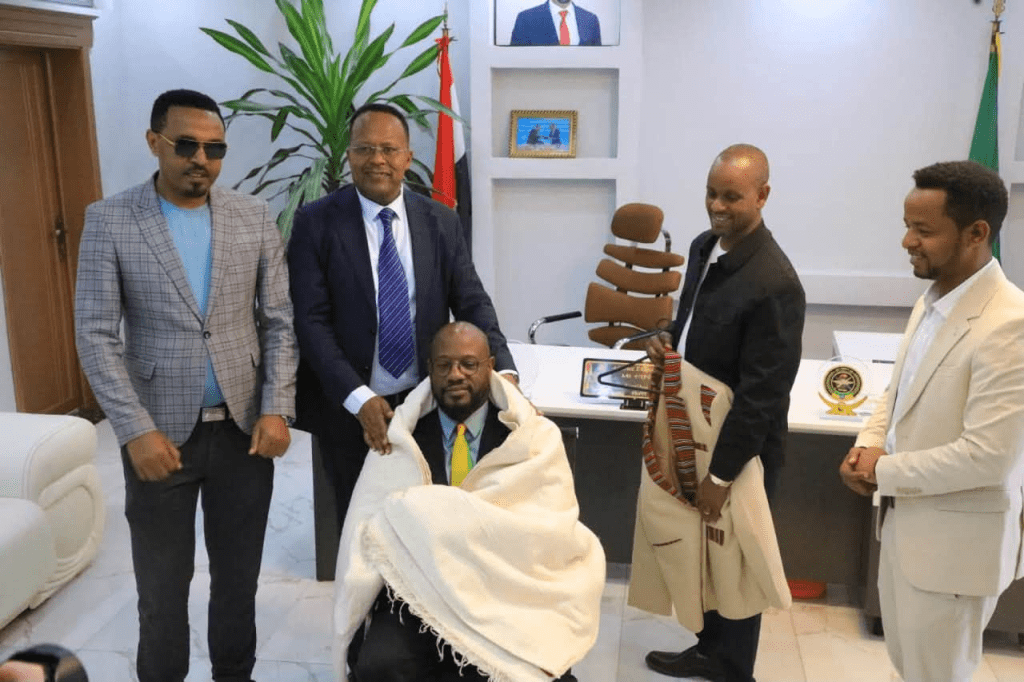
The Power of Dialogue and Collaboration
As the visit concluded, the city offered its sincere gratitude and well wishes to the Ambassador.
“Honorable Ambassador, As a nation and transformative government all Ethiopians believe in the power of dialogue and collaboration. We hope your visit will deepen understanding, strengthen ties, and open new avenues for constructive support that benefits the people of Shashemene, Oromia and Ethiopia.”
The visit concluded with a reaffirmation of the commitment to build bridges of friendship between nations.
“Once again, welcome to Shashemene. We wish you a successful visit, and we thank you for your commitment to building bridges of friendship between nations. Thank you.”






