Category Archives: Oromia

Oromo Advocacy Group Rejects Pan-Ethiopian Alliance, Citing Historical Erasure and Political Opportunism

By Staff Reporter
A prominent Oromo advocacy organization has formally rejected the newly formed “Ethiopian Peoples’ Forces Alliance for Survival,” accusing the coalition of failing to acknowledge the historical suffering of the Oromo people and of engaging in political opportunism rather than genuine problem-solving.
In a detailed statement released on 21 September 2026, Advocacy for Oromia outlined its objections to the alliance, which was established on 10/2019 E.C. (Ethiopian Calendar) and claims to represent a broad coalition of Ethiopian peoples against the current government.
The Alliance’s Platform
The Ethiopian Peoples’ Forces Alliance for Survival presents itself as a unified front against what it describes as a regime that has institutionalized national and religious divisions. Its stated objectives include removing the current government through “any means necessary,” establishing a transitional government, ensuring security for all citizens, and rebuilding the economy. The alliance explicitly calls for the right to self-determination for seven major national groups: Oromo, Amhara, Tigray, Afar, Somali, Benishangul-Gumuz, and Gambella.
The alliance’s rhetoric is sweeping: “We have reached a point where we must unite to save ourselves and our country,” reads its preamble, which accuses the current regime of fueling conflicts, engaging in widespread human rights violations, and pushing the country to the brink of disaster.
The Oromo Rejection
Advocacy for Oromia, however, sees the alliance as fundamentally flawed. In its statement, the organization argues that the coalition’s generic language about “immense suffering” and “widespread displacement” deliberately avoids naming the Oromo people as specific victims of systemic oppression.
“The harm includes, but is not limited to, land dispossession, political marginalization, cultural suppression, and economic exploitation under successive Ethiopian regimes—the imperial era, the Derg regime, the EPRDF administration, and continuing under the current government,” the statement reads. “This omission is not accidental; it reflects a deliberate refusal to centre Oromo historical trauma within the alliance’s political framework.”
The advocacy group further accuses the alliance of refusing to accept the reality of systemic oppression inflicted upon the Oromo people by past regimes. Rather than demanding accountability for historical wrongs, the alliance frames the current crisis as a departure from an otherwise acceptable trajectory—a framing that Advocacy for Oromia rejects outright.
A Question of Strategy
At the heart of the dispute lies a fundamental strategic disagreement within Ethiopian opposition politics: whether to prioritize unity against a common enemy or to insist upon historical justice as a precondition for any alliance.
The alliance positions itself as a broad-based coalition, calling for unity among Ethiopia’s diverse national groups to confront a shared adversary. Its document lists self-determination for multiple peoples and declares that “the unity of the Ethiopian peoples is paramount.”
Advocacy for Oromia, however, argues that without acknowledging past wrongs, any coalition risks reproducing the same structural injustices that have historically subjugated the Oromo people. “Formal recognition of Oromo rights within a reformed Ethiopian state is insufficient,” the statement asserts. “What is required is transformative justice that addresses the structural legacy of Oromo dispossession and abuses.”
The “Survival” Critique
The advocacy group also takes issue with the alliance’s very name. In the original Oromo statement, Advocacy for Oromia notes that the alliance is called “Survival”—a designation the group argues reveals its limited and inadequate scope.
“The alliance is named ‘Survival,’ which reveals its limited and inadequate scope,” the statement reads. “It is not founded to genuinely resolve the country’s problems, but rather to engage in political maneuvering and gamesmanship.”
This critique suggests that the alliance’s focus on mere survival—bare existence—falls far short of the Oromo struggle for liberation, justice, and systemic transformation.
Political Opportunism Alleged
The most serious charge leveled by Advocacy for Oromia is that the alliance is a vehicle for political opportunism. The group points to the alliance’s inclusion of multiple ethnic groups and its call for armed struggle as evidence of a framework that “superficially accommodates Oromo demands while failing to address the fundamental historical injustice against the Oromo people.”
“This framework offers only formal recognition, not substantive transformation,” the statement argues.
Advocacy for Oromia explicitly rejects any pan-Ethiopian initiative that does not subordinate itself to Oromo nationalist priorities, describing the alliance’s refusal to do so as exposing it “as a vehicle for political opportunism rather than a genuine instrument for liberating the Oromo people.”
An Unresolved Contradiction
The advocacy group also highlights what it sees as a contradiction within the alliance’s logic. The alliance’s stated objective is to remove the current regime—which Advocacy for Oromia notes is itself a product of past systems of Oromo oppression.
“If the alliance succeeds in dismantling the current order, does that not constitute a form of accountability?” the statement asks rhetorically. “Removal without acknowledgment and redress is insufficient. True liberation requires not merely a change of personnel but a reckoning with the structural foundations of Oromo subjugation.”
The Broader Context
The rejection of the alliance reflects long-standing tensions within Ethiopian opposition politics. The Oromo people, Ethiopia’s largest national group, have historically experienced marginalization and dispossession under successive regimes. The emergence of Oromo nationalist movements—both peaceful and armed—has challenged the centralized Ethiopian state, demanding greater autonomy, self-determination, and historical justice.
The Ethiopian Peoples’ Forces Alliance for Survival appears to be an attempt to bridge these divides, bringing together diverse national groups under a common banner. But Advocacy for Oromia’s rejection suggests that such efforts will face significant obstacles, particularly when they require subordinating specific historical grievances to a broader, more generic narrative of national suffering.
The Unanswered Question
The statement from Advocacy for Oromia leaves an important question unresolved: can Oromo liberation be achieved through alliance with other Ethiopian peoples, or does it require a separate, Oromo-centred path?
The group clearly leans toward the latter, but does not fully grapple with the strategic costs of that position—including potential isolation, the difficulty of achieving liberation without allies, and the risk of perpetuating the very divisions that have historically weakened Ethiopian opposition movements.
For now, Advocacy for Oromia’s rejection of the alliance stands as a clear statement of its position: any coalition that does not explicitly centre Oromo historical suffering and commit to its redress cannot be trusted.
Advocacy for Oromia formally rejects the “Ethiopian Peoples’ Forces Alliance for Survival” as an unsuitable vehicle for the liberation and advancement of the Oromo people.
Rejection of the “Ethiopian Peoples’ Forces Alliance for Survival” from an Oromo Nationalist View
Advocacy for Oromia hereby issues this formal statement to articulate its categorical rejection of the so-called “Ethiopian Peoples’ Forces Alliance for Survival.” This rejection is grounded in a thorough analysis of the alliance’s foundational assumptions, its treatment of Oromo historical grievances, and its strategic objectives. Advocacy for Oromia concludes that the aforementioned alliance is not beneficial for the Oromo people, and this statement sets forth the reasons for that conclusion.
I. Failure to Acknowledge the Historical Suffering of the Oromo People
The alliance does not genuinely believe in or acknowledge the harm that has persisted for years against the Oromo people. This harm includes, but is not limited to, land dispossession, political marginalization, cultural suppression, and economic exploitation under successive Ethiopian regimes—the imperial era, the Derg regime, the EPRDF administration, and continuing under the current government.
While the alliance document employs generic language regarding “immense suffering,” “widespread displacement,” and “destruction and death,” it conspicuously avoids naming the Oromo people as a specific victim of systemic oppression. This omission is not accidental; it reflects a deliberate refusal to centre Oromo historical trauma within the alliance’s political framework.
Advocacy for Oromia maintains that any political coalition that does not explicitly acknowledge and centre the specific historical grievances of the Oromo people is inherently suspect and cannot be trusted to advance Oromo national interests.
II. Refusal to Accept the Wounds of Past Systems of Oppression
The alliance refuses to accept the reality of systemic oppression inflicted upon the Oromo people by and current regimes. This refusal manifests in the alliance’s framing of the current crisis as a departure from an otherwise acceptable historical trajectory, rather than as the culmination of centuries of Oromo subjugation.
The alliance positions itself as a broad-based coalition against the current regime, while declining to demand accountability for past systems. This approach reflects a fundamental strategic disagreement within Ethiopian opposition politics: whether to prioritize unity against a common enemy or to insist upon historical justice as a precondition for any alliance.
Advocacy for Oromia unequivocally adopts the latter position. Without acknowledging past wrongs, any coalition risks reproducing the same structural injustices that have historically subjugated the Oromo people. Formal recognition of Oromo rights within a reformed Ethiopian state is insufficient; what is required is transformative justice that addresses the structural legacy of Oromo dispossession and abuses.
III. Political Opportunism Rather Than Genuine Problem-Solving
The alliance is not founded to solve the empire’s problems but rather to play political games. This is the most serious charge against the alliance, and Advocacy for Oromia asserts it without equivocation.
The alliance’s inclusion of multiple national groups, its call for armed struggle, and its specific demands for self-determination for various peoples—Amhara, Oromo, Tigray, Afar, Somali, Benishangul-Gumuz, and Gambella—collectively constitute an ethnic-federal framework that superficially accommodates Oromo demands while failing to address the fundamental historical injustice against the Oromo people. This framework offers only formal recognition, not substantive transformation.
Advocacy for Oromia rejects any pan-Ethiopian initiative that does not recognize Oromo nationalist priorities. The alliance’s refusal to do so exposes it as a vehicle for political opportunism rather than a genuine instrument for liberating the Oromo people.
IV. The Contradiction Within the Alliance’s Logic
The alliance’s stated objective is to remove the current regime—which is itself a product of past systems of Oromo oppression. If the alliance succeeds in dismantling the current order, does that not constitute a form of accountability?
Advocacy for Oromia answers unequivocally: removal without acknowledgment and redress is insufficient. True liberation requires not merely a change of personnel but a reckoning with the structural foundations of Oromo subjugation. The alliance’s failure to commit to such a reckoning renders its objectives inadequate for the Oromo struggle.
V. Conclusion
Advocacy for Oromia articulates a coherent Oromo nationalist position: any political alliance that does not explicitly centre Oromo historical suffering and commit to its redress cannot be trusted.
The critique is strongest in its insistence on historical specificity—generic calls for “survival” and “democracy” can obscure rather than address ethnic-specific oppression. However, the statement is weakest in its lack of concrete evidence for the “political games” charge and in its implicit rejection of broad-based coalition politics.
The underlying question remains unresolved: can Oromo liberation be achieved through alliance with other Ethiopian peoples, or does it require a separate, Oromo-cantered path? Advocacy for Oromia clearly leans toward the latter, but does not fully grapple with the strategic costs of that position.
Therefore, Advocacy for Oromia formally rejects the “Ethiopian Peoples’ Forces Alliance for Survival” as an unsuitable vehicle for the liberation and advancement of the Oromo people.
Advocacy for Oromia
21 September: 2026

Oromo Youth and Elders Rally in The Hague, Protest Killings and Rights Abuses in Ethiopia
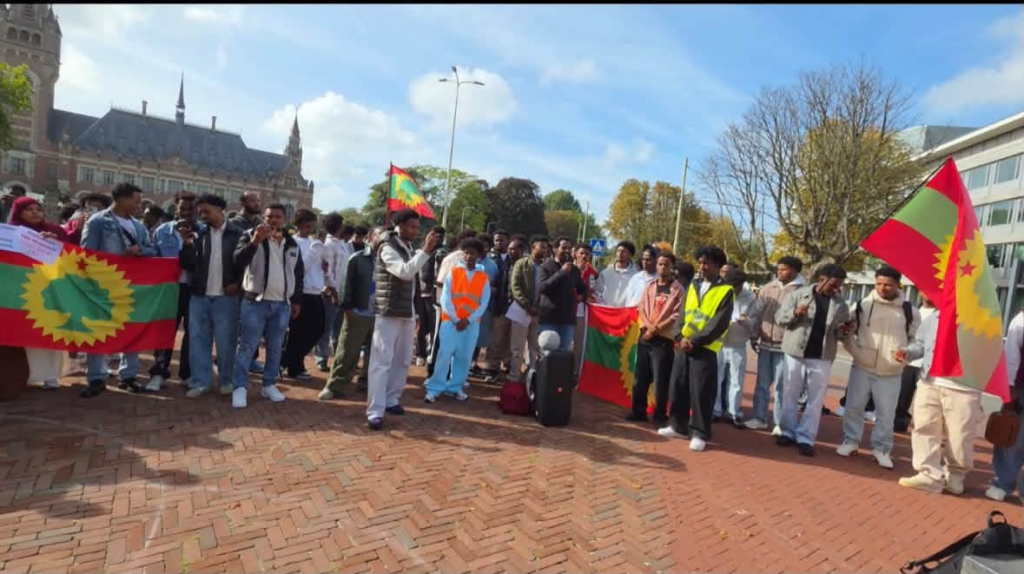
The Hague, Netherlands — Oromo youth and many members of the older generation living in the Netherlands took to the streets yesterday in a powerful demonstration, raising their voices in support of the Oromo people in Ethiopia and protesting against the killings and human rights violations being committed against innocent civilians.
The demonstration, held on 18 September 2026 in The Hague (Den Haag), brought together generations of the Oromo diaspora — young activists standing shoulder to shoulder with elders — united in their demand for justice and an end to the suffering of their people.
A Government Accused
Protesters directed sharp criticism at the government of Prime Minister Abiy Ahmed, accusing it of using the name of the Oromo people while Oromos are being killed and left to suffer. The demonstrators voiced their rejection of what they described as a government that claims to represent the Oromo while failing to protect them.
Among the slogans and demands raised during the demonstration were urgent calls for the government to stop forcing young people into military service and to halt the killing of innocent civilians.
Targeted for Politics
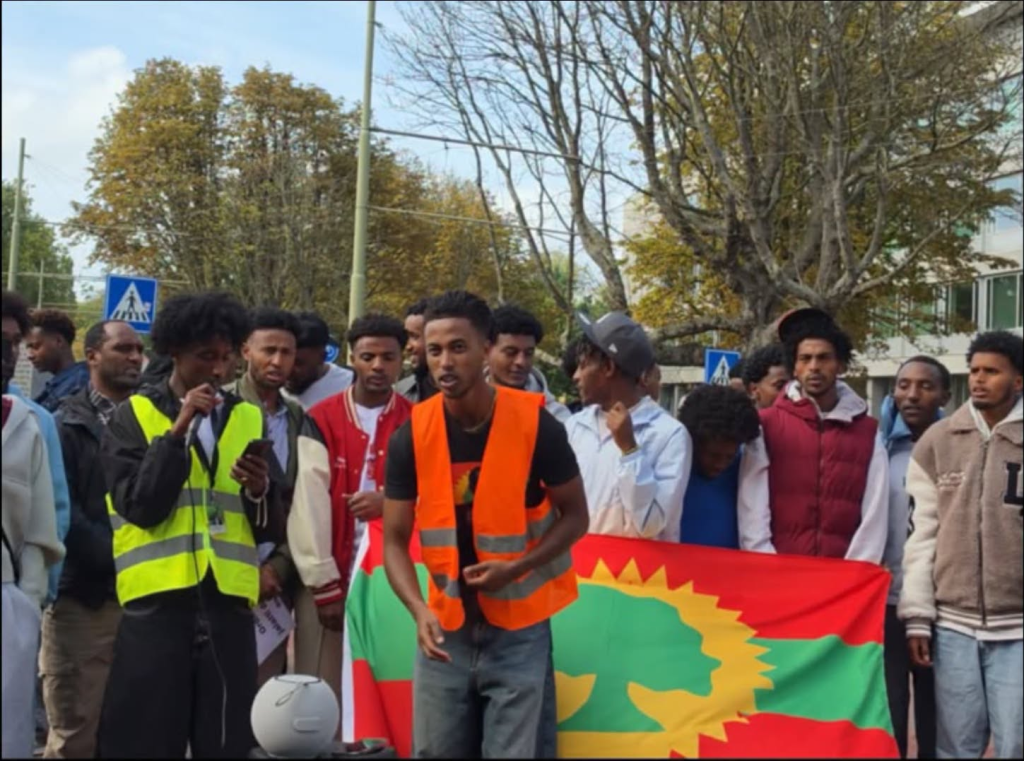
The demonstrators also protested against what they described as the targeting and killing of people for political reasons — a practice they say has claimed the lives of countless innocent Oromos.
The rally was marked by the presence of both the youth and the older generation, a visible sign of the unity and shared commitment of the Oromo diaspora across generations. Their message was clear: the killings must stop, human rights must be respected, and the voices of the Oromo people must be heard.
A Diaspora’s Voice
The Hague demonstration is the latest in a series of protests by the Oromo diaspora across Europe and beyond, as communities abroad continue to speak out against the violence and repression they say their people face at home.
For those who gathered in The Hague, the protest was more than a political statement — it was an act of solidarity with families and communities in Ethiopia, and a declaration that the Oromo people’s struggle for justice, dignity, and freedom will not be silenced.

Gifata Festival Celebrated in Wolaita Sodo with Color, Unity, and Cultural Pride
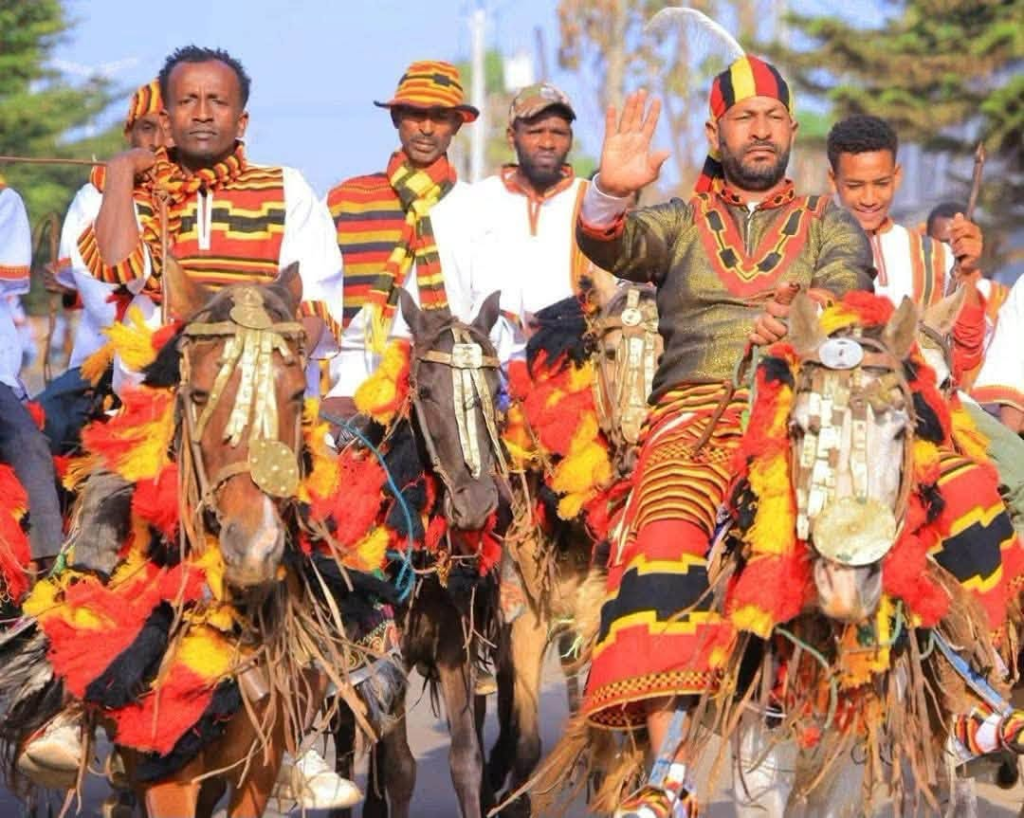
(ENA, Wolaita Sodo, Ethiopia) — The 2019 Ethiopian calendar Gifata festival, marking the Wolaita New Year, is being celebrated in grand style at the Wolaita Sodo Multipurpose Stadium with a series of vibrant events and cultural performances.
The 2026 celebration is being held under the theme: “Let us protect our ancestral heritage; let us continue the legacy of Gifata.”
A Festival of Reconciliation and Unity
Gifata is far more than a New Year celebration. It is a deeply meaningful cultural festival that reflects Ethiopian unity and solidarity — a time when relatives and friends who have been apart come together, when the scattered reunite, and when those who have fallen out reconcile.
It is described as a celebration of peace, love, unity, and joy — a powerful expression of the values that bind communities together across generations.
The festival holds a special place in the hearts of the Wolaita people and serves as a symbol of shared identity, mutual respect, and collective hope for the year ahead.
A UNESCO-Recognised Heritage
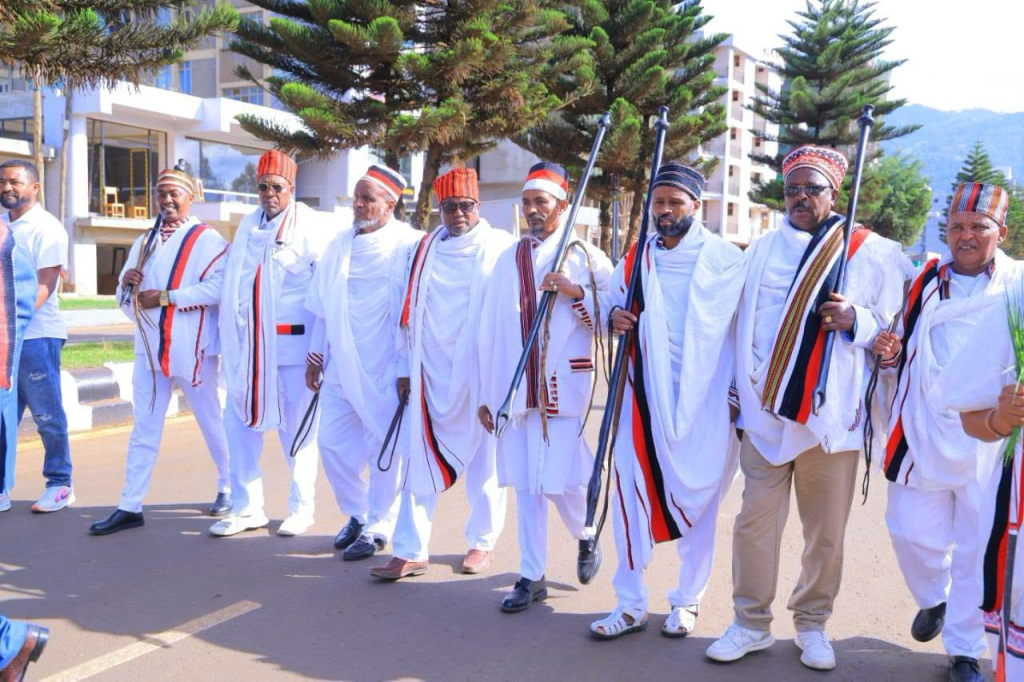
In December 2018, Gifata was inscribed by UNESCO as an Intangible Cultural Heritage of Humanity. This year’s celebration marks the first time the festival has been held on such a grand scale since receiving that prestigious recognition.
The UNESCO listing affirmed Gifata’s significance not only to Ethiopia but to the world — recognising it as a living tradition that embodies cultural diversity, community resilience, and the universal human desire for connection and renewal.
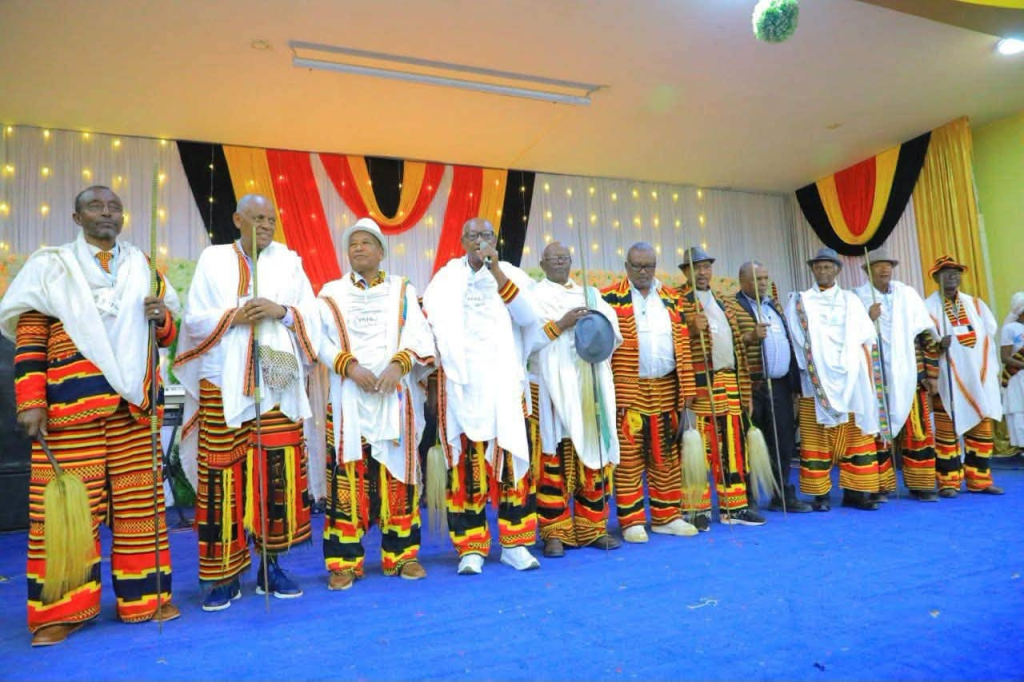
A Gathering of Dignitaries and Communities
The celebration has drawn a wide cross-section of participants, including:
- Tilahun Kebede, Chief Administrator of the South Ethiopia Regional State
- Federal, regional, zonal, city administration, and district government officials
- Elders and community leaders
- Religious fathers
- Invited delegates from all Ethiopian regions
- Local residents from across the area
Their presence underscores the festival’s role as a unifying force that transcends regional and ethnic boundaries, bringing together people from all walks of life in a shared celebration of culture and heritage.
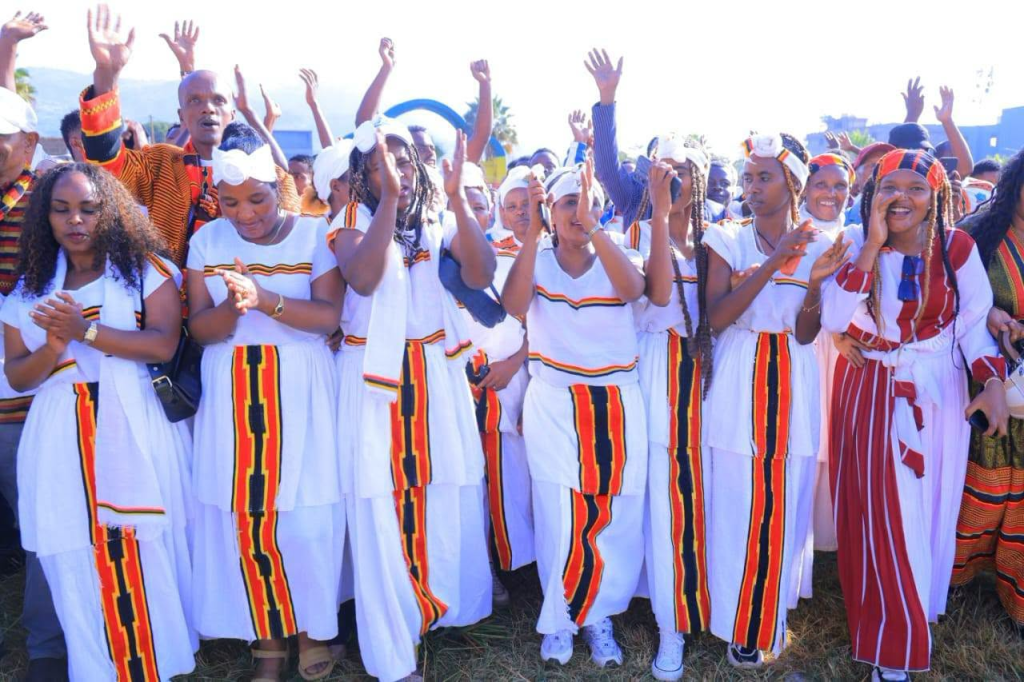
What Is Gifata?
Gifata is the traditional New Year festival of the Wolaita people, celebrated annually in September. It marks the transition from one year to the next and is a time for:
- Giving thanks for the blessings of the past year
- Strengthening relationships with family and community
- Reconciling differences and seeking forgiveness
- Celebrating cultural identity through music, dance, and traditional attire
- Looking forward with hope to the year ahead
The festival is characterised by colourful processions, traditional songs and dances, communal feasting, and the exchange of blessings among elders and youth.
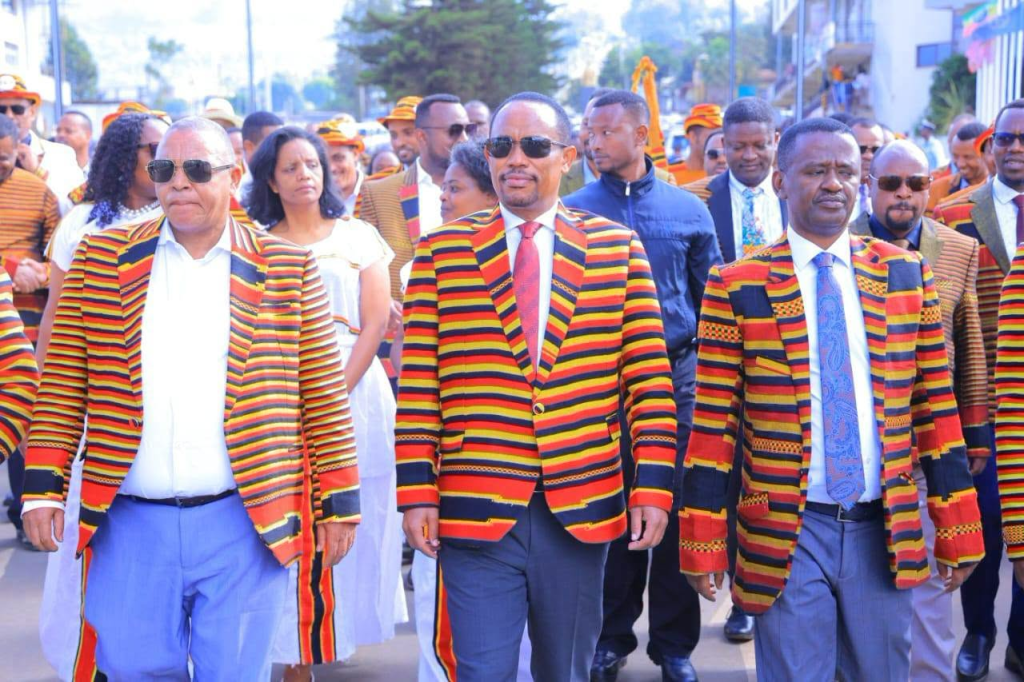
A Celebration of Heritage and Hope
As the Gifata festival unfolds in Wolaita Sodo, it serves as a powerful reminder of the richness of Ethiopia’s cultural tapestry. In a world where traditions are often under pressure, Gifata stands as a testament to the resilience of community, the importance of heritage, and the enduring power of celebration.
The theme of this year’s festival — protecting ancestral heritage and continuing the legacy of Gifata — speaks directly to the responsibility of each generation to preserve and pass on the cultural treasures entrusted to them.
Looking Ahead
With its UNESCO recognition and growing participation, Gifata continues to shine as a beacon of Ethiopian culture and unity. As communities gather in Wolaita Sodo to welcome the new year, they do so with gratitude for the past and hope for the future.
Happy Gifata! May the new year bring peace, prosperity, and unity to all.
Source: Ethiopian News Agency (EZA)

Minnesota Oromo Community Celebrates Irreecha with Gratitude, Unity, and Hope
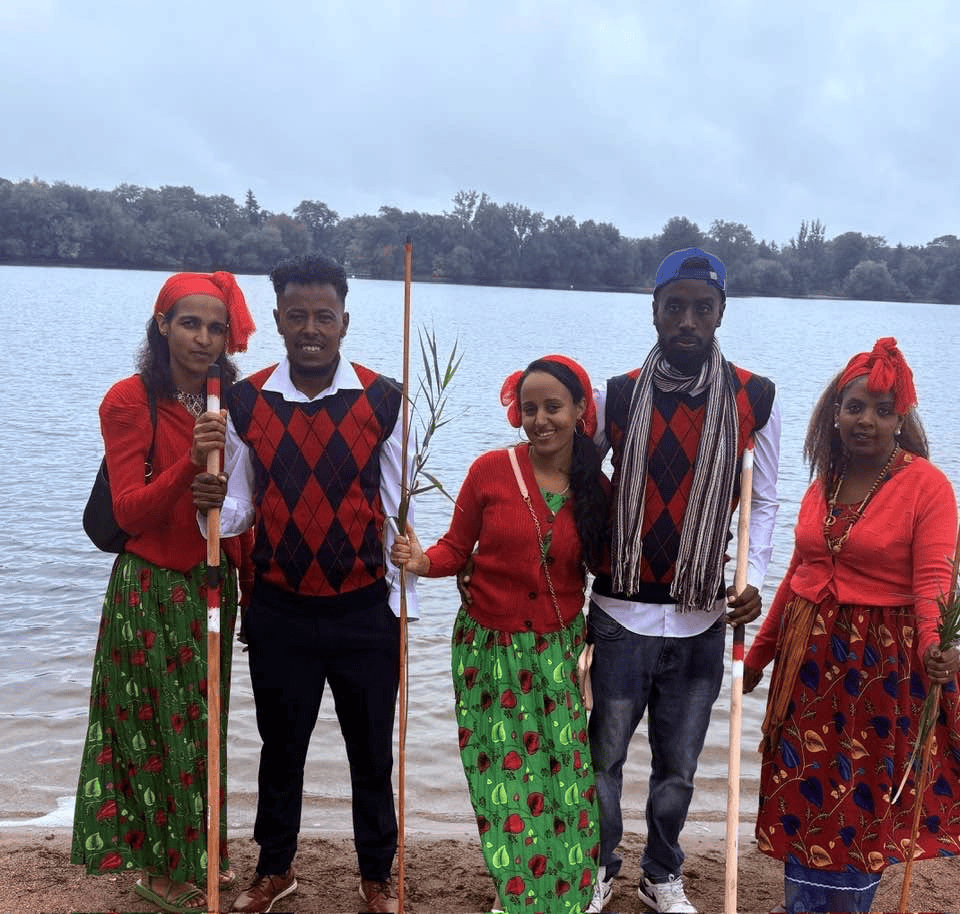
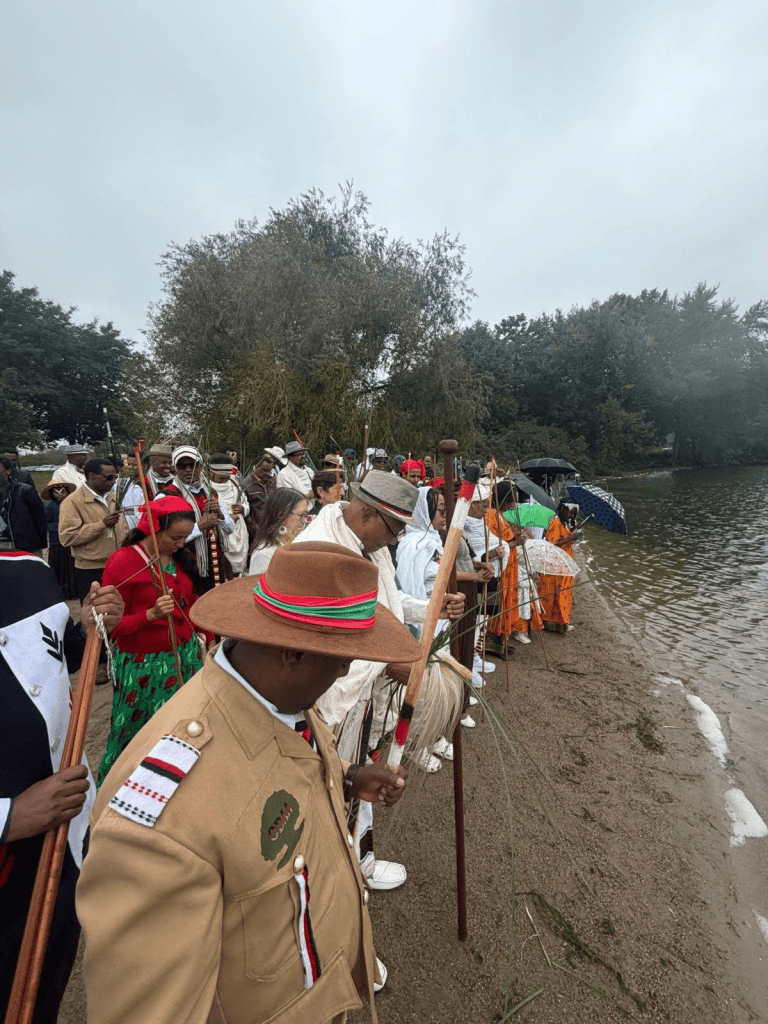
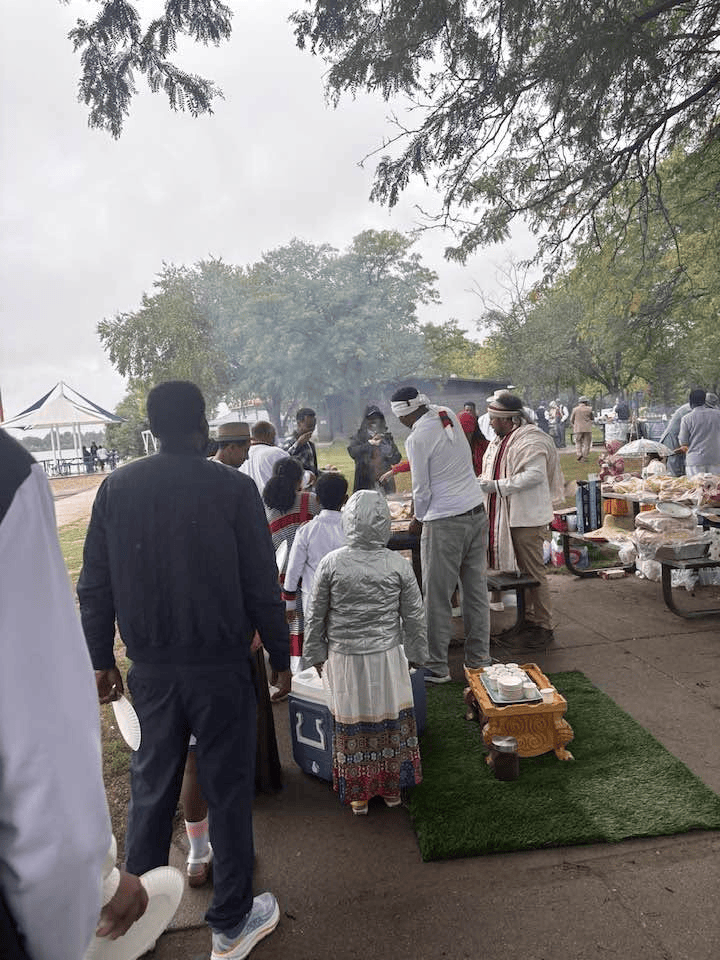
Minnesota, USA — The Oromo community in Minnesota gathered at Lake Nokomis on 19 September 2026 to celebrate Irreecha, the sacred Oromo Thanksgiving festival, in a vibrant and deeply meaningful observance that brought together families and friends from across the state.
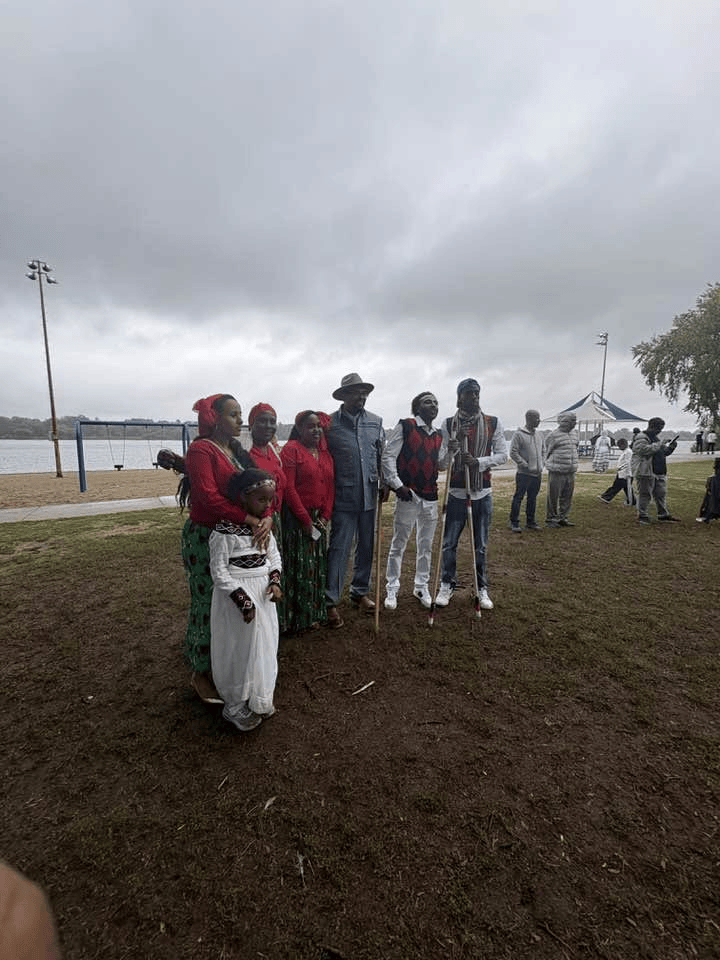
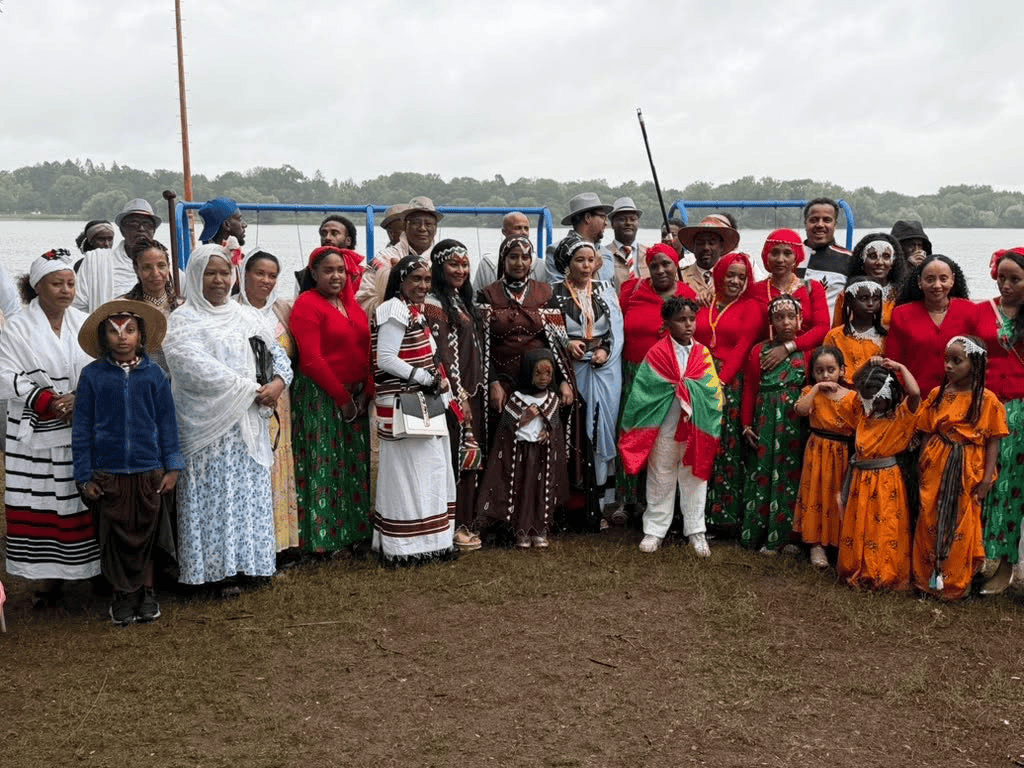
The celebration, organised by Hawaasa Oromoo Minnesota, was marked by prayers, cultural performances, traditional attire, and a shared spirit of gratitude that reflected the enduring strength of Oromo heritage in the diaspora.
Irreecha: A Festival That Unites the World
During the celebration, speakers described Irreecha as a great Oromo festival that brings the global Oromo community together and showcases the beauty and richness of Oromo culture to the world.
It was emphasised that Irreecha has reached its current level of recognition through immense effort and dedication over many years. Community members were reminded that the journey to elevate the festival has not been easy, and that the sacrifices made along the way must always be honoured.
The gathering also paused to remember the tragic events of 2016 at Arsadi, where lives were lost during Irreecha celebrations. Those who gathered were reminded that the sacrifices made that day will never be forgotten — a solemn moment that underscored the resilience and determination of the Oromo people.
A Celebration Rooted in Gratitude
Thanksgiving is one of the most beautiful and meaningful parts of Oromo culture. Irreecha is a time when the Oromo people come together to give thanks to Waaqa for life, peace, rain, harvest, family, and the blessings of the past season.
More than just a celebration, Irreecha is an expression of gratitude, unity, reconciliation, hope, and renewal. People gather in nature, often near rivers and lakes, carrying fresh green branches and flowers as symbols of life, abundance, and renewal.
Through prayers, songs, traditional clothing, and cultural expressions, communities celebrate together and give thanks for the blessings of creation.
Strengthening Relationships and Building Unity
Irreecha is also a time to strengthen relationships, forgive one another, resolve differences, and look toward the future with hope. The celebration reflects the deep Oromo understanding that human beings are connected to one another, to the land, and to the natural world.
In Minnesota, this spirit of unity was on full display as community members came together in traditional attire, sharing prayers, songs, and fellowship. Elders, youth, and children alike participated in the festivities, ensuring that the traditions of their ancestors continue to thrive in the diaspora.
A Message of Peace and Hope
As the celebration drew to a close, heartfelt wishes were extended to Oromo communities around the world:
“May this Irreecha bring peace to our hearts, unity to our communities, prosperity to our families, and hope for the generations to come.”
The gathering concluded with the traditional blessings that echo across Oromo celebrations everywhere:
“Happy Irreecha! 🌿 🙏🏾 🌳”
“Horaa bulaa, deebanaa! ❤️💚❤️”
Irreecha: A Tradition That Transcends Borders
Irreecha remains a powerful symbol of Oromo identity, connecting millions of people across Ethiopia and the global diaspora. From the shores of Lake Hora Arsadi in Bishoftu to community halls and parks in Minnesota, London, Melbourne, and beyond, the festival continues to unite Oromo people in gratitude, hope, and shared heritage.
As the Oromo community in Minnesota demonstrated, Irreecha is not merely a tradition of the past — it is a living, breathing celebration of faith, resilience, and the enduring bonds of community.
Irreecha nagaan! 🌿

“The Game Is Not Over”: Oromo Activist Gamachu Dembali Declares Abyssinian Colonialism Must End
By Gamachu Dembali
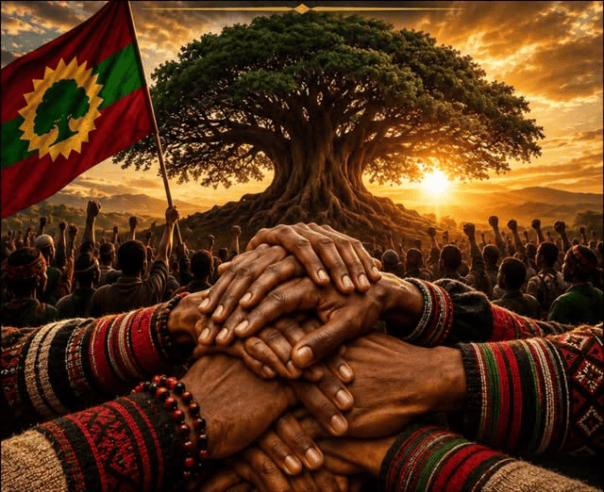
In a forceful political statement marking what he calls an unbroken history of conquest, Oromo activist Gamachu Dembali has declared that Abyssinian colonialism in Oromia “has never ended and must end” — calling for full decolonization, the restoration of Oromo identity, and the right to self-determination.
Dembali’s statement, dated 20 September 2026, draws on the words of British writer Evelyn Waugh to frame what he describes as the systematic destruction of Oromo culture and society.
“Nothing to Give, Nothing to Teach”
Quoting Waugh’s account of Abyssinian rule, Dembali cites the writer’s observation that the Abyssinians “had nothing to give their subject peoples, nothing to teach them” — no crafts or knowledge, no new systems of agriculture or road-making, no medicine or hygiene, no higher political organization, “no superiority except in their magazine rifles and belts of cartridges.”
Waugh wrote that they “built nothing,” squatting in the villages of conquered peoples, “dirty, idle and domineering, burning the timber, devouring the crops, taxing the meager stream of commerce.”
“Waugh was absolutely right,” Dembali writes. “This is the exact history of the destruction of Oromo culture and Oromo society.”
The Second Weapon: Forced Religious Colonization
But Dembali argues that Waugh did not fully tell the story. Alongside the rifle, he contends, came another weapon — one that “has poisoned the minds of the Oromo and other colonized peoples.”
“They brought forced religious colonization,” he writes. “They imposed their Orthodox religion and beliefs upon the Oromo, a system completely contrary to Oromo religion, Waaqeffannaa, and to Oromo values embodied in the Gadaa system.”
Religion, he argues, was used as an effective tool of conquest. “While their guns killed millions of Oromos physically, their imposed religion was used to destroy the minds, identity and values of millions more.”
“Colonialism in Its Purest Form”
Dembali rejects any framing of this history as a civilizing mission. “It was colonialism in its purest form: to exploit, to enslave, to erase, and to replace,” he writes.
And, he warns, “the game is not over.” In the 21st century, he argues, the Oromo people remain under the same Abyssinian colonial system, “operating with the same mindset, only under different names and different regimes.” The structures of domination, cultural erasure, and political subjugation, he says, continue.
A Demand for Decolonization
The statement closes with a declaration and a set of demands: that Abyssinian colonialism in Oromia has never ended and must end; full decolonization; the restoration of Oromo identity, culture and values; and the right of the Oromo people to self-determination and freedom in their own land.
The statement is signed by Gamachu Dembali and carries the hashtag #FreeOromiya.
The views expressed in this feature are those of the author and do not necessarily reflect the editorial position of this publication.
Oromo Community in London Celebrates Irreecha with Joy, Reflection, and Hope
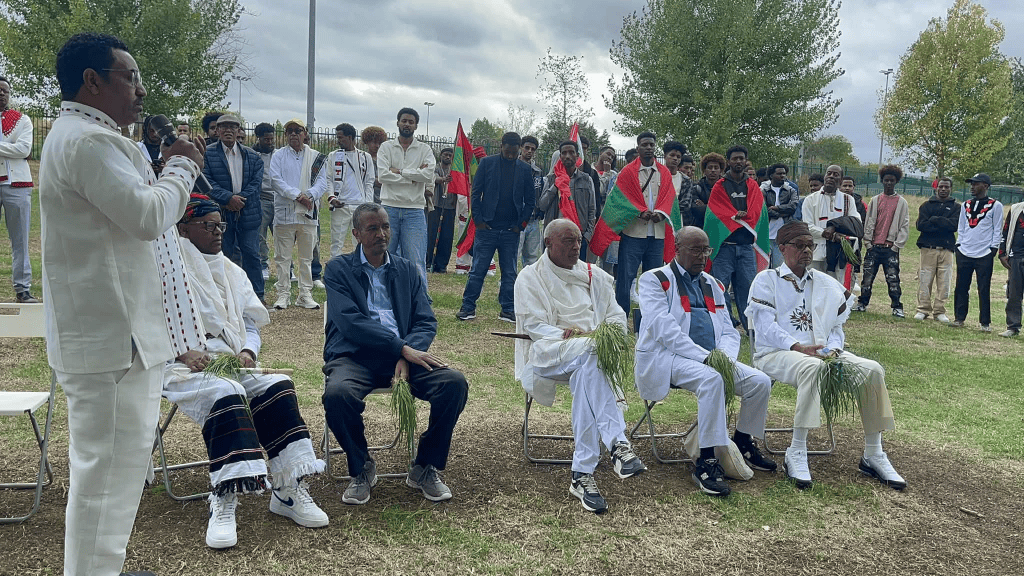
London, UK — The Oromo community in the United Kingdom gathered in London on 19 September 2026 to celebrate Irreecha, the sacred Oromo Thanksgiving festival, in a vibrant display of culture, faith, and unity.
The celebration, organised by Hawaasa Oromoo biyya UK – London, brought together Oromo families and friends from across the United Kingdom for a day of gratitude, reflection, and cultural pride.
A Celebration Rooted in Gratitude
Irreecha is one of the most beautiful and meaningful parts of Oromo culture. It is a time when the Oromo people come together to give thanks to Waaqa for life, peace, rain, harvest, family, and the blessings of the past season.
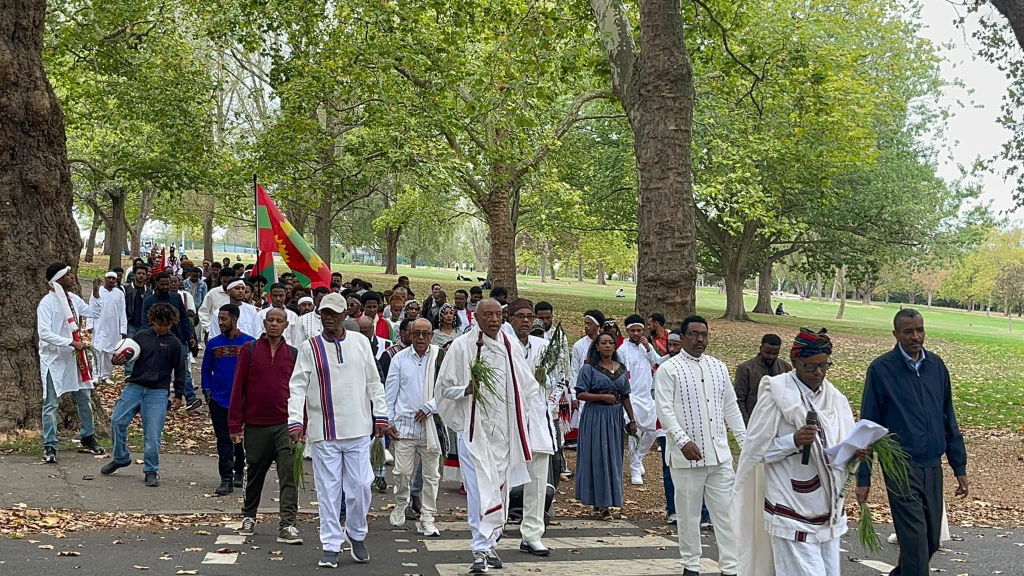
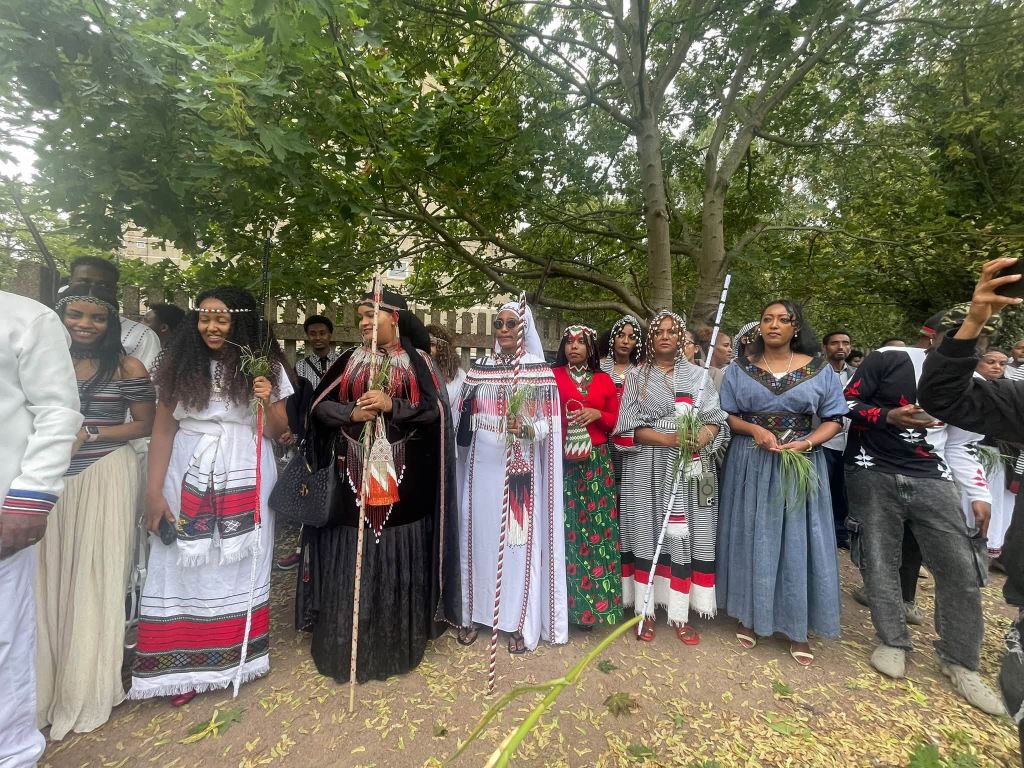
More than just a celebration, Irreecha is an expression of gratitude, unity, reconciliation, hope, and renewal. People gather in nature, often near rivers and lakes, carrying fresh green branches and flowers as symbols of life, abundance, and renewal.
Through prayers, songs, traditional clothing, and cultural expressions, communities celebrate together and give thanks for the blessings of creation.
A Time for Reflection and Remembrance
During the London celebration, speakers reflected on the journey of Irreecha and the sacrifices made to elevate the festival to its current standing. It was noted that great effort and dedication were required to bring Irreecha to the level of recognition it enjoys today.
The community also paused to remember the tragic events of 2016 at Arsadi, where lives were lost during Irreecha celebrations. Those who gathered were reminded that the sacrifices made that day will never be forgotten — a solemn moment that underscored the resilience and determination of the Oromo people.
Strengthening Bonds and Building Unity
Irreecha is also a time to strengthen relationships, forgive one another, resolve differences, and look toward the future with hope. The celebration reflects the deep Oromo understanding that human beings are connected to one another, to the land, and to the natural world.
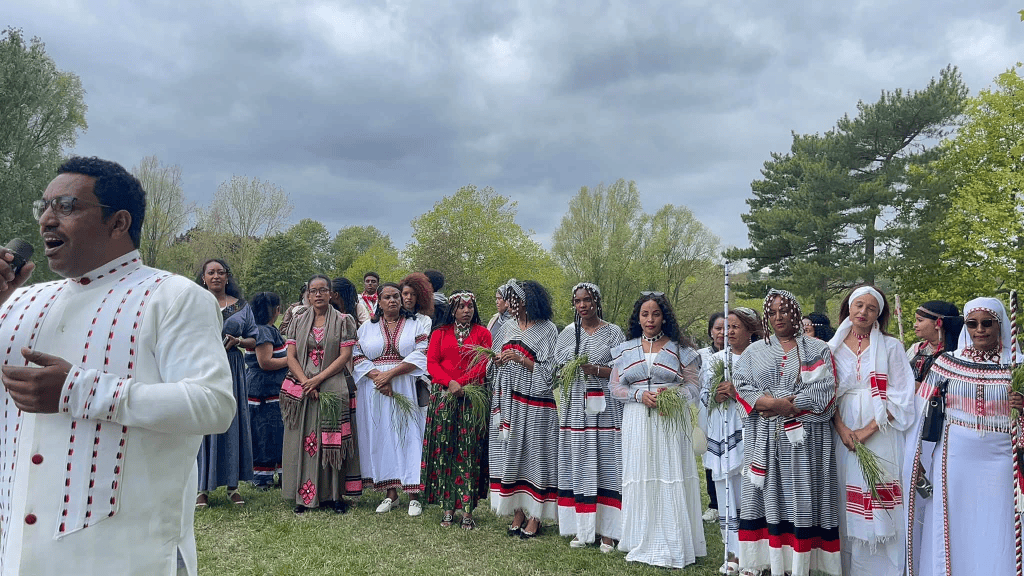
In London, this spirit of unity was on full display as community members came together in traditional attire, sharing prayers, songs, and fellowship. Elders, youth, and children alike participated in the festivities, ensuring that the traditions of their ancestors continue to thrive in the diaspora.
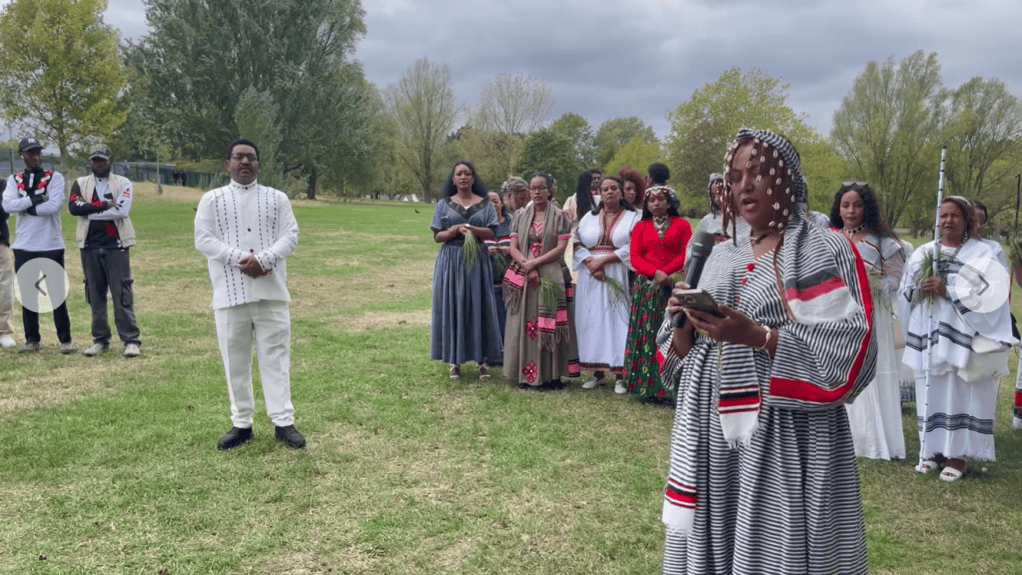
A Message of Peace and Hope
As the celebration drew to a close, heartfelt wishes were extended to Oromo communities around the world:
“May this Irreecha bring peace to our hearts, unity to our communities, prosperity to our families, and hope for the generations to come.”
The gathering concluded with the traditional blessings that echo across Oromo celebrations everywhere:
“Happy Irreecha! 🌿 🙏🏾 🌳”
“Irreecha nagaan! 🌳”
“Horaa bulaa, deebanaa! ❤️💚❤️”
Irreecha: A Tradition That Transcends Borders
Irreecha remains a powerful symbol of Oromo identity, connecting millions of people across Ethiopia and the global diaspora. From the shores of Lake Hora Arsadi in Bishoftu to community halls and parks in London, Melbourne, Minneapolis, and beyond, the festival continues to unite Oromo people in gratitude, hope, and shared heritage.
As the Oromo community in London demonstrated, Irreecha is not merely a tradition of the past — it is a living, breathing celebration of faith, resilience, and the enduring bonds of community.
Irreecha nagaan! 🌿

From Guerrilla Fighters to Election Contenders: Inside the OLF’s Historic Political Transition
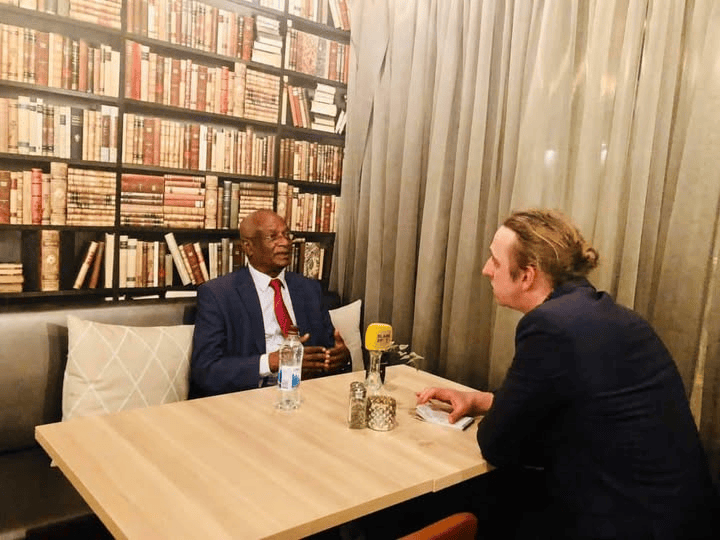
For over four decades, the Oromo Liberation Front (OLF) waged an armed struggle from the forests of southern Ethiopia. Today, its chairman Dawud Ibsa Ayana is preparing for a different kind of battle — one fought at polling stations rather than on frontlines. In a rare interview with Swedish journalist Martin Schibbye of The Blankspot, the OLF leader opens up about the challenges, compromises, and cautious hopes shaping his movement’s unprecedented entry into electoral politics.
A Movement Transformed
The guerrilla group was allowed to return to Ethiopia in 2018 as part of newly-appointed Prime Minister Abiy Ahmed’s sweeping reforms. After decades of operating as an underground liberation army, the OLF now finds itself navigating the complex terrain of formal politics — registering as a political party, forming alliances, and preparing to contest elections it believes it can win.
The interview takes place at Scandic Hotel in Skärholmen, Sweden, where a wedding party’s music competes with the conversation. Dawud Ibsa Ayana, settling into a room with bookish wallpaper, appears eager to speak. For years, journalists had to venture into guerrilla-controlled territories to understand OLF’s positions — a reality that meant the movement’s struggle was either misunderstood or entirely unknown to the outside world.
A Personal History Forged in Struggle
Dawud Ibsa Ayana’s story is inseparable from the organization he leads. He studied at Haile Selassie I University in the 1970s, where he became involved in the student movement and eventually rose to its leadership. In the late 1970s, he was elected to the OLF Central Committee and imprisoned shortly afterward by the Ethiopian regime.
After his release, he fled to Sudan, combining statistics studies with military training. Back in Ethiopia, he led the OLF platoon that initiated armed struggle in Welega province. Arrested again, he was poisoned, tortured, and imprisoned without trial until 1986, when he rejoined the rebel army and resumed his work on the Central Committee.
Throughout interviews from that era, he remained firmly convinced that once free elections were permitted, the OLF would win and form the backbone of Ethiopia’s next government.
From Armed Struggle to Political Arena
The path to electoral politics has not been straightforward. “A few years ago I had not thought that we would prepare for such a situation,” Dawud admits. “What a choice!”
The Berlin Wall fell. The Soviet Union collapsed. But in the wooded parts of southern Ethiopia, Dawud and his comrades fought a war that, for many rebels, was older than themselves.
The historical context is profound. The Ethiopian emperor of the 20th century, from the Amhara people group, had colonized the Oromo people’s wealthy home territories during the same era European powers colonized the rest of Africa. While other countries eventually gained independence, the Oromo people — one of the largest ethnic groups in Africa — did not.
The popular revolution that swept away the Mengistu dictatorship in 1991 also failed to resolve the region’s fundamental conflict with central power.
The Decision to “Play the Game”
When Ethiopian Prime Minister Abiy Ahmed received the Nobel Peace Prize in 2019, he was rewarded primarily for peace with Eritrea. More forgotten, but perhaps more important for Ethiopia’s future, was peace with local rebel groups — including the OLF.
Dawud believes the TPLF survived because the regime understood that growing protests were directed at their own party and that they had to “reform” the country to continue governing.
“I put ‘reforms’ in quotes because they were forced to release prisoners. It was nothing they wanted to do. There was no amnesty,” he says. “We are not completely happy about the situation, but we decided to ‘play the game.'”
Was it a difficult decision? “It was a tough decision absolutely, but we had no choice. The TPLF created confusion and the outside world thought this was a genuine change, so we were then forced to ‘play the game’ because the government said they would invite exile organizations and remove the stamp of terror. If we had not taken the chance, we would have been branded as those who ‘destroyed the peace’ or ‘nihilists.'”
The Unresolved Question of the Disappeared
When the OLF and Ethiopian government settled down after decades of armed conflict, one major stumbling block was the OLF members who had disappeared over the years.
“We presented a list of 300-400 names and wanted answers: are these people living or are they dead?”
They did not receive a straight answer, but they agreed that criminals responsible for human rights violations on both sides should be tried. The OLF suggested a commission be appointed. The idea was not rejected but was postponed until after the election.
“If the choice goes well, this will be a priority for us,” Dawud says. “Whether we agree on a South African reconciliation model or a personal arrangement remains to be seen.”
Obstacles and Harassment
The movement’s problematic relationship with state powers did not end when they laid down their weapons. Even registering their party was delayed — it took over a year after the peace agreement to formalize.
“Since we brought home our soldiers from Eritrea in September 2018, we have had a tough time. The government has obstructed and hampered our work, they have closed down our local offices which we have opened and over 20,000 of our members have been imprisoned for short or longer periods.”
The areas where the movement has encountered most difficulties are in Ambo and the southwestern parts of the Oromo region.
“Here are the large garrisons of the Ethiopian army and in these, several members have been detained for months without a trial, often under torture-like conditions. Not only former soldiers, but also farmers, young people and teachers have been taken from the entire Oromo region to these places.”
He believes the purpose is to weaken the party ahead of the August 2020 elections.
In mid-February 2020, Amnesty International issued a report showing that 75 members of OLF had been arrested at the beginning of the new year. The human rights organization noted it was “inadvertent that opposition politicians were so close to the impending election.” Amnesty warned that what was happening was a trend break that risked undermining both the newly won organization and freedom of expression in the country.
Amnesty also noted that several local offices opened by OLF were stormed by police, and several OLF members had been killed. Journalists working for the satellite TV channel Oromia News Network (OMN) had also had their vehicles and equipment broken.
The government itself believes it is fighting the Oromo Liberation Army (OLA), an splinter group from the OLF that did not accept the peace agreement but continued the armed struggle.
Electoral Hopes and Fears
Despite the difficulties, Dawud remains confident. The OLF has formed electoral alliances with other organizations such as the Oromo Federalist Congress and the Oromo National Party.
“We are confident that we will win a majority regionally and significantly with the seats in the national parliament,” he predicts.
But the party’s concern is now about the time leading up to the election, and it is not only the OLF that is worried about developments in the region.
Dawud is concerned about how local militias and “soldiers taking orders from political parties” will act during the upcoming election movement.
“Will they continue to harass and arrest our members or will the government discipline them?” he asks.
Another test is the upcoming staffing of polling stations and the question of voters’ sympathies. During the TPLF era, many organizations that called themselves “civil society” were in fact fronts for the ruling party.
“We will closely monitor the election authority’s staffing at village level so that they recruit independent administrators and volunteers.”
If the situation continues to escalate, the question arises as to whether it is possible to hold elections at all.
“No, today it is not possible to hold free elections in the areas that are under emergency conditions and are controlled by the military’s command post,” Dawud says.
The Question of Minority Rights
When asked about activist and journalist Eskinder Nega’s claims of ethnic cleansing in the Oromo region aimed at expelling non-Oromos, Dawud is dismissive.
“It is not surprising that Eskinder exploits this and travels around the world, warning the UN that Oromo’s youth, querroos, are terrorists, but it must stand for him. But if you are going to talk about the matter: the situation of Amharas in the Oromo region he is wrong, that they would be forced to flee is nonsense.”
According to him, recent reports of attacks on civilian students are not something for which his organization has responsibility.
“OLF operated in the region for 40 years while tens of thousands of civilians from the Amharic region lived in the area, but they were not attacked by OLF. We fought against the Ethiopian army, never against the Amharas people, their houses or homes.”
He points out that in several of the region’s largest cities there have always been 100,000 Amharas and that there are also officers and generals from the Amharan region within OLF’s ranks.
“Why would any of us attack innocent young students? To say that is an attack on us.”
So in a future Oromo region, where they own a majority of the seats, will the rights of minorities be guaranteed?
“Undoubtedly! It has been black and white in our political program since 1976: OLF respects the rights of minorities. They have the right to choose and to candidate and run their own affairs in Parliament. Why after 27 years would we have changed now? We are crystal clear in this regard.”
The Path Forward
Although OLF now faces a roadmap, its struggle has always been about two things: creating political consciousness among the population and pursuing independence.
When the OLF was formed, the aim was to fight against oppression in all its forms and to give the inhabitants of the region the political confidence to stand up for themselves. The main issues were also that the region and its inhabitants had the right to self-determination and to their own country.
When the Ethiopian Constitution was written after Mengistu was overthrown in 1991, a section on the right to self-determination was enrolled. The movement chose to participate in the transitional government with the goal of creating a democratic Ethiopia and not pushing the issue of independence.
But shortly thereafter, the transitional government collapsed and OLF chose — or was forced, depending on how one looks at it — into the forest again.
So how does OLF today view the demand for an independent state?
“It was OLF’s position previously to work for it. But at present we understand that it is not something we can demand from the Ethiopian state because it is not capable of giving it to us,” Dawud replies.
Just as in 1991-1992, people have been chosen to participate in the democratization process with the goal of seeing a democratic Ethiopia.
“We have chosen to play down our own historic demand for independence and prioritized the democratization of Ethiopia as a federation, a country with several states, several nations, living in peace. We wanted to and then we want to give this a chance again.”
According to him, it is a “pragmatic move” based on the analysis that today’s Ethiopian state formation would not respect a fully independent Oromo.
“What happens in the future, it lies in the future, there are of course several Eritrea-like opportunities to jump off, if they were so rigid that they do not accept self-determination, under this Ethiopian umbrella.”
Land Reform and Economic Vision
If everything goes the way of the election, a priority issue will be land reform in the region.
“Land ownership is the central political issue for us. Land that was formerly owned by feudal lords in the region is now owned by the government and because the people do not own the land they use, they also have no control over their lives.”
The goal is a land reform where users take over ownership. But Dawud emphasizes that previous owners should be compensated.
“Such a process is complex and in order for no one to be deceived by banks or investors, we also want to set up a control authority to monitor how land is sold and bought in the region.”
Areas that are now agricultural areas may also be considered for future industrial areas.
“Industrialization will be a ‘game changer’ for the area and mean that we are moving from an agrarian economy to a more mixed one. In this upcoming development, we welcome private companies and investors, but we have a social democratic view of society and want central functions such as communications, education, infrastructure, healthcare to be taken care of by the general public.”
A Question of Acceptance
Political self-confidence is high, and despite harassment and imprisoned party members, Dawud believes they will soon be the victors of the election.
But the question he ponders a lot is whether the ruling party will hand over power.
“Will the election be peaceful? Will the result be accepted? We don’t know that yet – but we want to show the outside world that we are for peace and for free elections. Then it becomes clear who is breaking this. We have our fears that the result will not be accepted.”
The Role of International Observers
In his work on the formal elections, Dawud believes countries such as Sweden have a big role to play — both with independent election observers and knowledge. He also points out that foreign states that have supported Abiy Ahmed’s reforms have a responsibility for the process and for pushing the government so that the military stays away during the electoral movement.
“We expect that Sweden does not accept that anyone abuses power, but ensures that it becomes a free, genuine choice in which the people can choose their representatives.”
Conclusion
The OLF’s journey from armed insurgency to electoral politics represents one of the most significant political transformations in contemporary Ethiopia. Whether that transformation succeeds — and whether the movement’s hopes for democratic change are realized — remains to be seen. What is clear is that the coming months will be decisive, not only for the OLF but for the future of Ethiopia’s fragile democratic experiment.
For a movement that fought for over 40 years, the ballot box may prove to be the most challenging battlefield of all.
This article is based on an interview by Martin Schibbye, originally published by The Blankspot on February 20, 2020.

Multicultural and Multifaith Victoria: A New Independent Voice for Diverse Communities
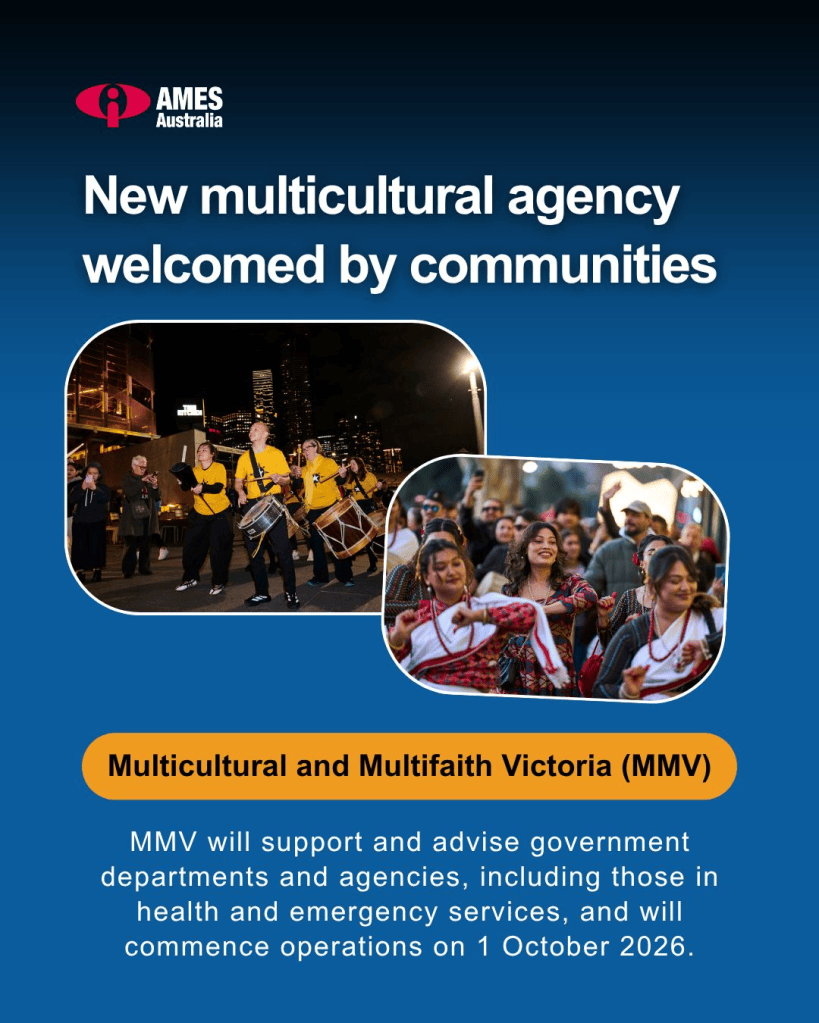
Victoria’s multicultural groups and communities have welcomed the creation of Multicultural and Multifaith Victoria, a new agency aimed at giving diverse communities a stronger voice in government, according to AMES Australia.
The government says the new agency will ensure diverse communities have an independent voice in government to influence policies and programs. Multicultural and Multifaith Victoria will support and advise government departments and agencies, including health and emergency services, and it will commence operations on 1 October 2026.
A Significant Step for Multicultural Victoria
The establishment of Multicultural and Multifaith Victoria marks a major development in how the Victorian Government engages with its diverse communities. For decades, multicultural communities have sought greater representation and a more direct channel to influence the decisions that affect their lives. This new agency is designed to be that channel.
The agency will serve as an independent body, providing advice and support to government departments and agencies across a range of portfolios. Its mandate includes ensuring that the needs and perspectives of multicultural and multifaith communities are considered in the development and delivery of policies and programs — particularly in critical areas such as health and emergency services.
What the Agency Will Do
Multicultural and Multifaith Victoria is expected to play a central role in:
- Advising government on policies and programs affecting diverse communities
- Ensuring independent representation for multicultural and multifaith voices within government
- Supporting government departments and agencies, including health and emergency services, to better serve diverse communities
- Strengthening community engagement and participation in civic life
By embedding these functions within a dedicated agency, the government aims to move beyond consultation toward genuine partnership with the communities it serves.
Commencing 1 October 2026
The agency will officially commence operations on 1 October 2026, a date that marks the beginning of a new chapter in Victoria’s approach to multicultural affairs. Communities and stakeholders are encouraged to stay informed as the agency takes shape and begins its work.
A Welcome Development
The creation of Multicultural and Multifaith Victoria has been welcomed by Victoria’s multicultural groups and communities, who see it as a positive step toward greater inclusion and representation. AMES Australia, a longstanding advocate for multicultural communities, has highlighted the significance of this development.
For communities that have long called for a stronger voice in government, the new agency represents both recognition and opportunity — a chance to shape the policies and programs that impact their daily lives.
Looking Ahead
As Victoria continues to grow as one of the world’s most diverse societies, the establishment of Multicultural and Multifaith Victoria signals a commitment to ensuring that diversity is not only celebrated but actively represented in the corridors of power.
The agency’s success will ultimately be measured by how well it amplifies community voices, influences meaningful change, and helps build a Victoria where every community feels seen, heard, and valued.
To read more about Multicultural and Multifaith Victoria, visit the link shared by AMES Australia.
#AMES #AMESAustralia #Victoria #MMV #VictorianGovernment

Irrecha Australia: Celebrating Culture, Community and Gratitude Across a Continent
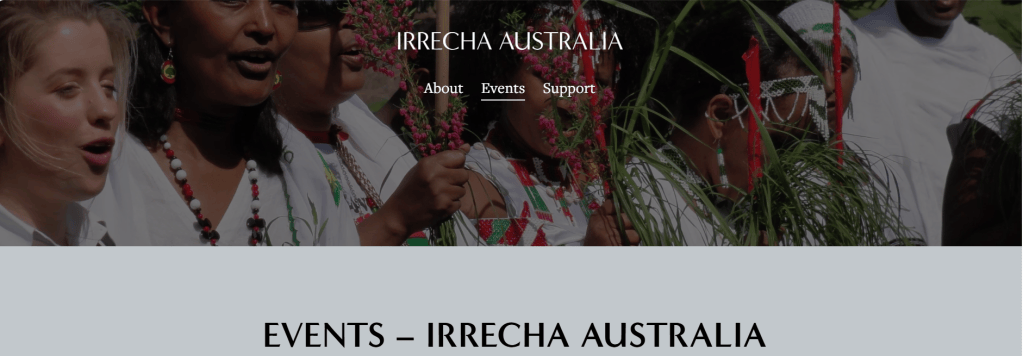
What began as small community gatherings among Oromo families in Australia has blossomed into vibrant national festivals that now draw together elders, youth, and friends from across multicultural Australia — all in the spirit of thanksgiving.
At the heart of this growing movement is Irrecha Australia, a registered non-profit organization dedicated to honoring the Oromo people’s cherished thanksgiving tradition. Rooted in a deep reverence for nature, gratitude, and unity, the celebration has traveled thousands of kilometers from East Africa to find new life on Australian soil.
A Tradition of Thanksgiving Carried Across Continents
Irrecha is one of the most significant cultural and spiritual traditions of the Oromo people, celebrated as an expression of gratitude for nature’s bounty, peace, and community well-being. For Oromo Australians, the festival serves as both a connection to their ancestral homeland and a living, breathing practice passed down through generations.
What was once observed in modest gatherings has expanded into large-scale national festivals, reflecting the growth and vitality of the Oromo diaspora in Australia. These events have become cherished occasions where culture, faith, and community intersect.
Building an Inclusive Home for Culture
As a registered non-profit, Irrecha Australia has committed itself to preserving and promoting Oromo cultural heritage while creating inclusive spaces for learning and celebration. The organization places particular emphasis on empowering young people, equipping the next generation to carry traditions forward with pride and confidence.
Through its work, Irrecha Australia ensures that Oromo culture is not merely remembered but actively practiced, shared, and celebrated — in classrooms, community halls, and festival grounds alike.
A Vision for Multicultural Australia
The organization’s vision extends beyond the Oromo community itself. Irrecha Australia envisions a nation where Oromo culture thrives as an integral part of Australia’s diverse identity — a culture that enriches the broader society and contributes to the country’s multicultural fabric.
“Through festivals, education, and community initiatives, we strengthen connections, honour our heritage, and celebrate a way of life rooted in gratitude, resilience, and unity,” the organization states.
Gratitude, Resilience, and Unity
At a time when cultural preservation and community cohesion are increasingly valued, Irrecha Australia’s mission resonates with a wider Australian audience. Its festivals serve as a bridge — connecting generations, welcoming neighbors of all backgrounds, and demonstrating how heritage can flourish in a new home while remaining faithful to its roots.
For Oromo Australians and their friends across the country, Irrecha is more than a festival. It is a statement of identity, a celebration of survival and resilience, and an invitation to share in a tradition built on gratitude.
To learn more about Irrecha Australia’s festivals, educational initiatives, and community programs, follow the organization’s official channels or contact its team directly. Irrecha Australia






