Category Archives: Waaqeffannaa

Ifaanoo: Welcoming the Season of Light
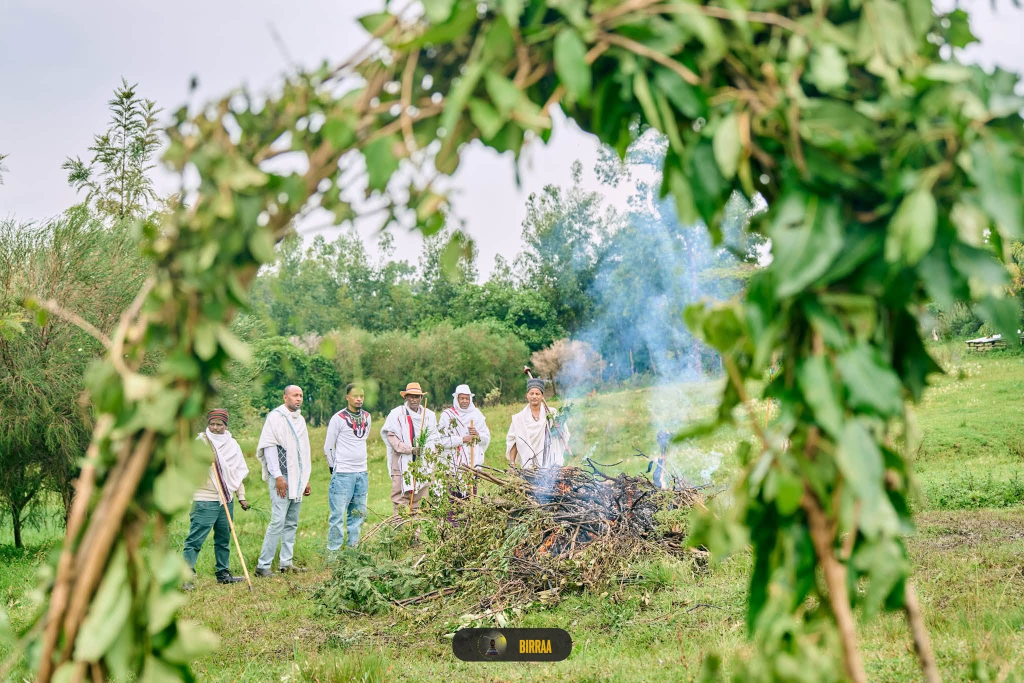
How the Sacred Mijirii Bonfire Illuminates Hope, Rebirth, and Oromo Unity
ByMaatii Sabaa
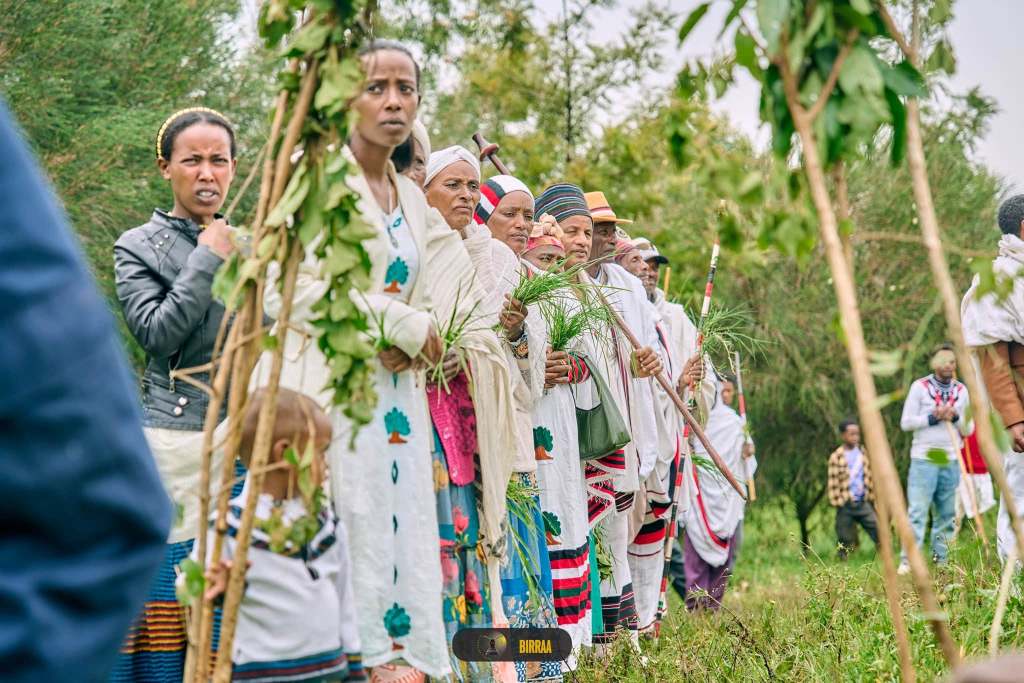
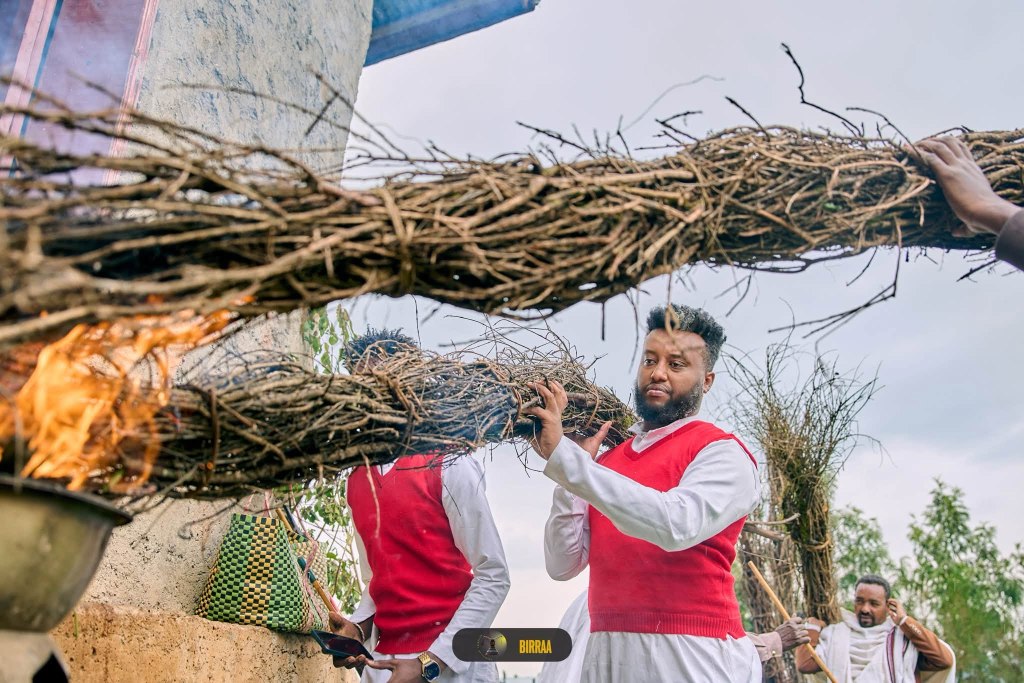
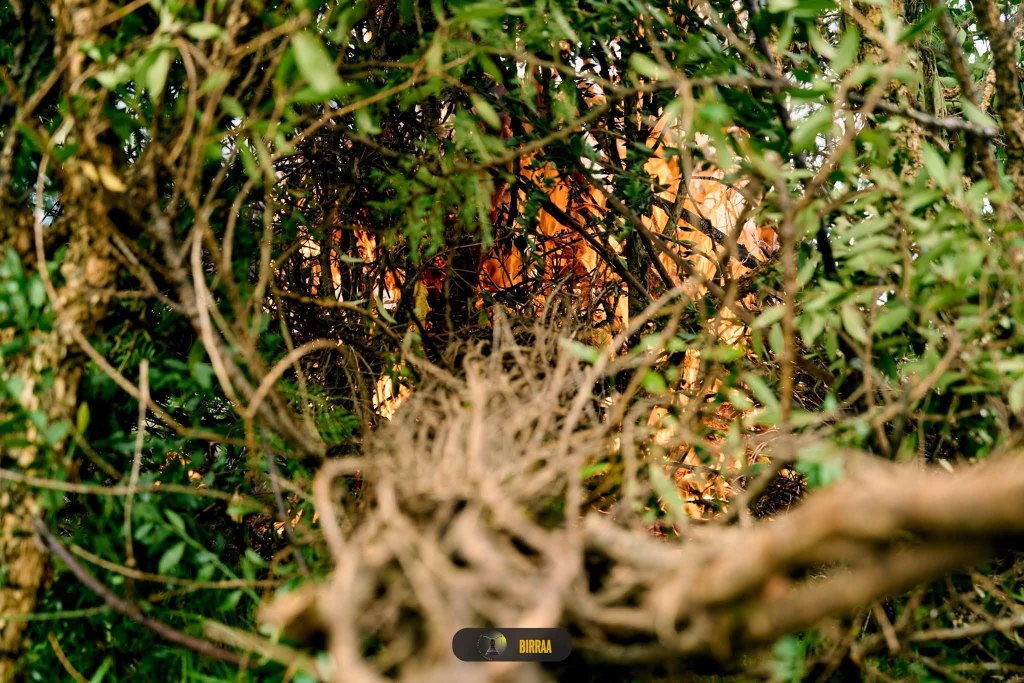
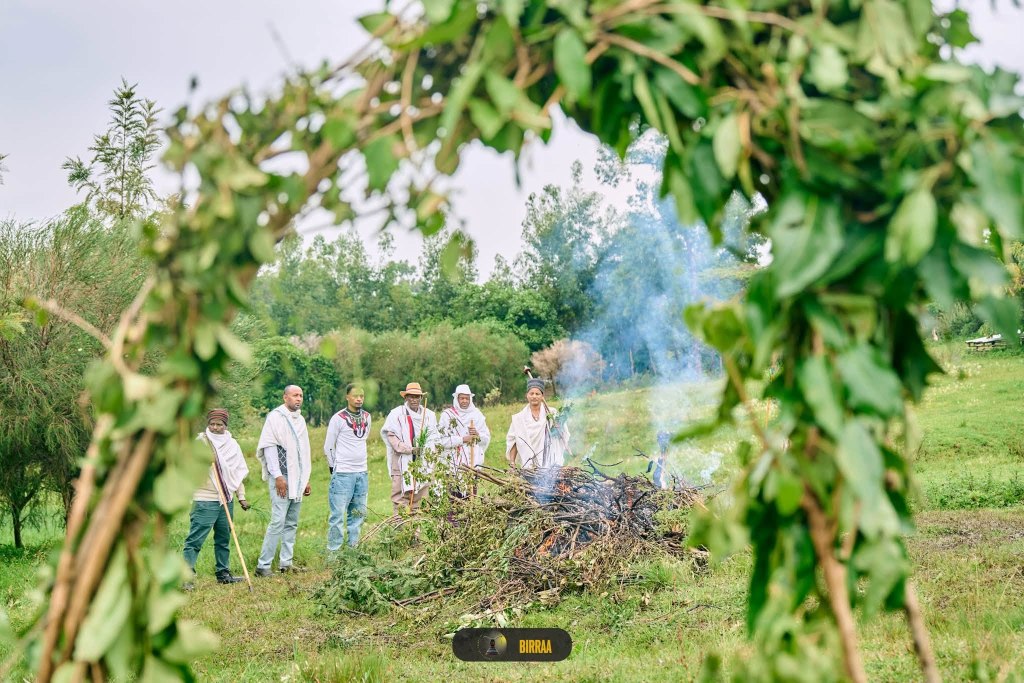
At the break of dawn, as the first rays of light touch the horizon, the sky ignites with warmth. Flames leap toward the heavens, casting a golden glow across the gathered community. This is Ifaanoo—the sacred Oromo ritual that marks the end of the dark winter season and the joyous arrival of Birraa (spring).
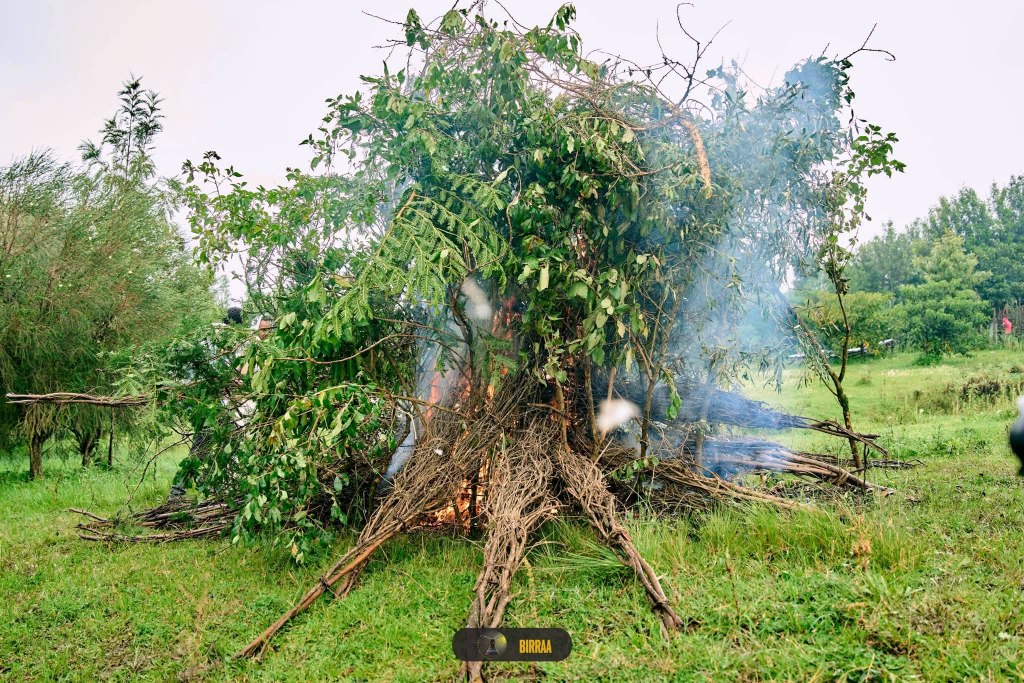
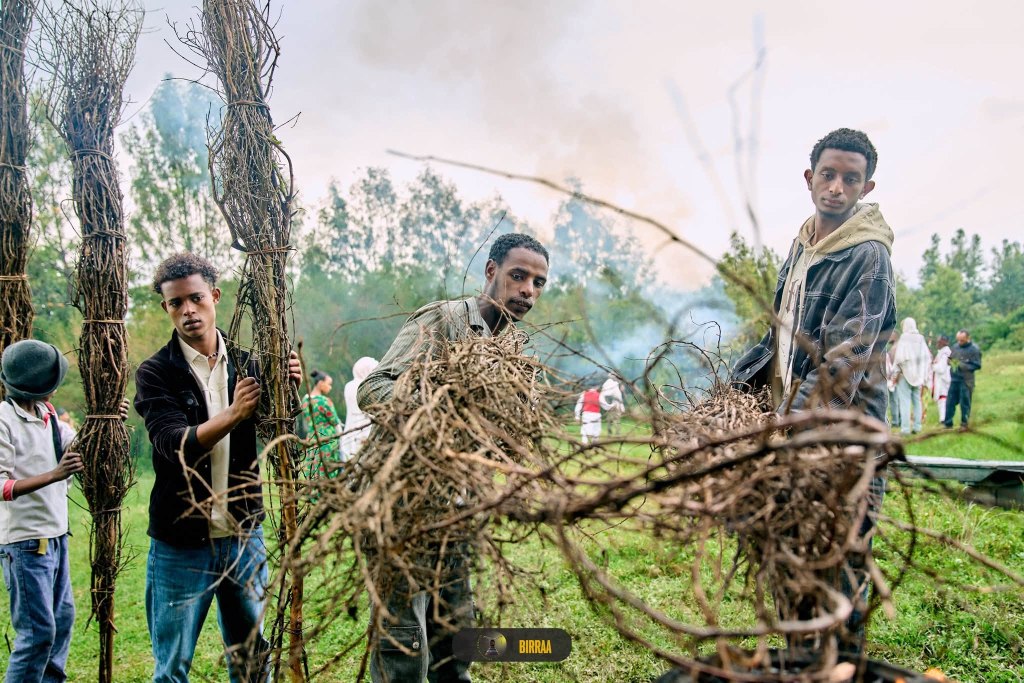
The historic Mijirii bonfire is lit, filling the air with the crackling sound of fire and the scent of burning wood. Families, elders, youth, and children gather around the flames, their faces illuminated by the glow. It is a moment of profound spiritual significance—a time when the community comes together to cast away the gloom of winter, uplift one another, and celebrate the rich, enduring customs of their ancestors.
The Meaning of Ifaanoo
Ifaanoo is a celebration of light and renewal. The word ifaa in Afaan Oromoo means “light,” and the festival embodies the dispelling of darkness—both literal and metaphorical. Just as the dawn breaks after a long night, Ifaanoo represents the triumph of hope over despair, of unity over division, of life over hardship.
The lighting of the Mijirii bonfire is the centrepiece of the celebration. The bonfire is not merely a source of warmth; it is a symbol of the sun’s return, the rebirth of the earth, and the renewal of the community’s covenant with Waaqa (God). As the flames rise, participants offer prayers of gratitude for the blessings of the past year and petitions for peace, prosperity, and unity in the year ahead.
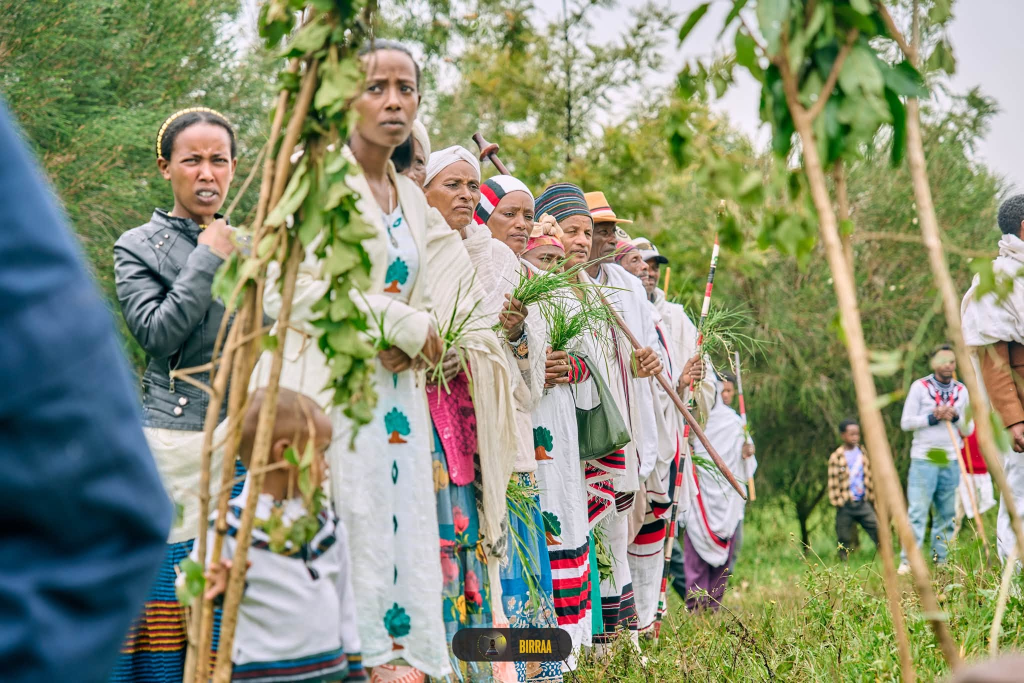
A Ritual of Community and Solidarity
Ifaanoo is a profoundly communal celebration. Families and neighbours gather around the bonfire, sharing stories, songs, and traditional foods. The warmth of the fire mirrors the warmth of human connection, reinforcing the bonds that hold the community together.
The festival is also a time for reconciliation. As with other Oromo celebrations, participants are encouraged to resolve conflicts and seek forgiveness before joining the festivities. This requirement ensures that the celebration is not merely a superficial gathering but a genuine act of collective healing and renewal.
Elders play a central role in the Ifaanoo ceremony. They lead the prayers, offer blessings, and share the wisdom of the ancestors with the younger generation. The intergenerational transmission of knowledge ensures that the values and traditions of the Oromo people are preserved and passed on.
The Symbolism of Light
For the Oromo people, light represents not only physical illumination but also spiritual clarity, moral purity, and the presence of divine blessing. The bonfire is a reminder that even in the darkest times, light can be kindled—that hope is never extinguished, and that renewal is always possible.
The transition from winter to spring is a powerful metaphor for the human experience. Winter, with its cold, darkness, and isolation, represents the hardships and challenges of life. Spring, with its warmth, light, and abundance, represents the promise of renewal and hope. Ifaanoo celebrates this transition, reminding the community that after every winter, spring will come.
A Living Tradition
Ifaanoo is not a relic of the past—it is a living tradition that continues to evolve and adapt to the needs of the present. In recent years, the celebration has been revived and embraced with renewed enthusiasm in Oromia and diaspora communities across the world.
The festival serves as a powerful statement of cultural identity and resilience. For a people who have faced centuries of oppression and cultural erasure, the act of gathering around the Mijirii bonfire is a declaration that their traditions endure and that their identity will not be extinguished.
A Call to Renewal
As the Mijirii bonfire illuminates the sky, it also illuminates the path forward. Ifaanoo is a call to renewal—to let go of past grievances, to embrace hope, and to recommit to the values of unity, peace, and mutual respect.
In a world often marked by division and despair, the Oromo people offer a powerful alternative: a celebration of light, community, and the enduring hope that dawn will always follow the night.
This feature article is dedicated to the custodians of Oromo tradition who keep the flame of Ifaanoo burning bright for future generations.

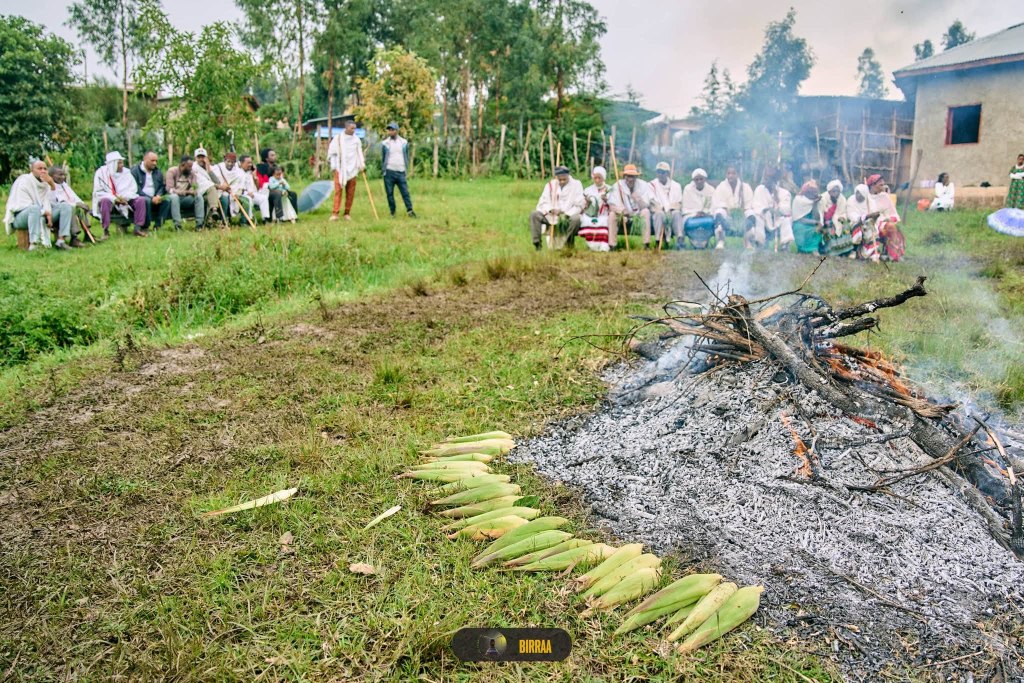

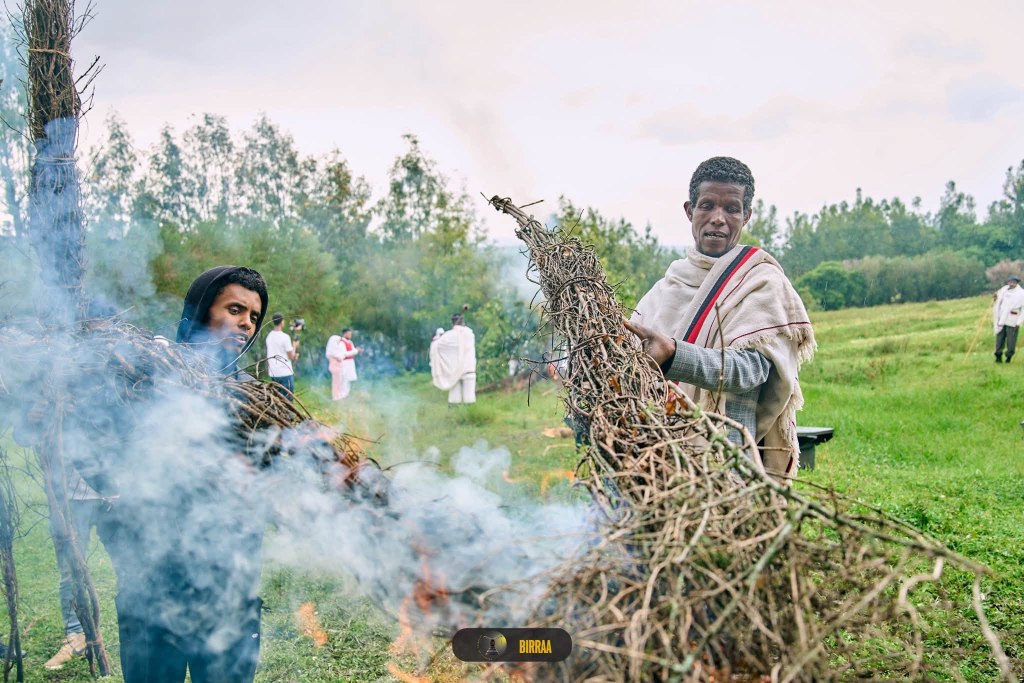



Irreechaa 2026: Africa’s Largest Gathering of Gratitude and Resilience
Millions Prepare to Celebrate Oromo Thanksgiving in Finfinne and Bishoftu
By Maatii Sabaa
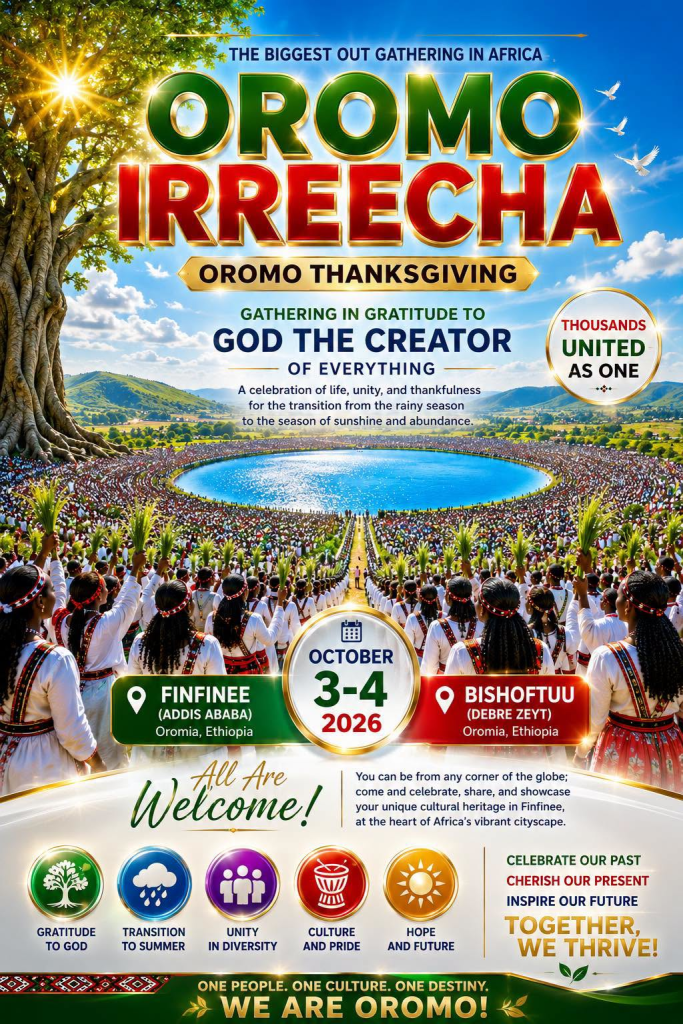
As the golden light of spring breaks over the Oromo landscape, a profound spiritual awakening stirs across Oromia and the global diaspora. Irreechaa—the Oromo Thanksgiving—is set to transform Finfinne and Bishoftu into a vibrant sea of white, green, and cultural pride from October 3 to October 4, 2026 . This is not merely a festival. It is Africa’s largest outdoor gathering, where millions will come together to express gratitude to Waaqa (God) and celebrate a cultural heritage that has endured for millennia .
The Heartbeat of a People: What Is Irreechaa?
Irreechaa, known in some traditions as Irreessa or Dhibaayyuu, is an annual thanksgiving holiday that marks the end of the rainy winter season and the joyous arrival of Birraa (spring) . It is a time when the Oromo people gather at sacred lakes, rivers, and springs to thank Waaqa for the blessings, mercies, and bountiful harvests received over the previous twelve months .
The festival’s roots run deep—over 6,000 years into the ancient Oromo and Cushitic civilization, long before the rise of modern empires or religions . It is intimately connected to the Gadaa system, the traditional Oromo governance structure recognised by UNESCO as an Intangible Cultural Heritage of Humanity . As the elders teach, Irreechaa is simply “giving thanks to the one God”—the pinnacle of Oromo religious and cultural expression .
Two Sacred Sites, One Unifying Spirit
This year’s celebration will unfold over two days across two of the Oromo people’s most sacred sites, following a time-honoured itinerary announced by the Council of Oromo Gadaa Elders .
Hora Finfinne: Reclaiming the Heart of the Capital
On October 3, the celebration will commence at Hora Finfinne, in the heart of the capital city . This location carries profound historical weight. For decades, under oppressive regimes, public celebrations of Irreechaa were banned, and the Oromo people were denied the right to give thanks at their own sacred sites . The site now known as Finfinne was originally named after the very same Hora Finfinne—a sacred geography that the construction of a colonial capital attempted to overwrite . Celebrating Irreechaa here is not just a cultural act; it is a powerful reclamation of space, identity, and dignity.
Hora Arsadi: The World’s Stage
On October 4, the festival moves to its grandest location: Hora Arsadi in the city of Bishoftu, approximately 45 kilometres south of Finfinne . This is the site of the main event—a gathering so vast that it is recognised as one of the largest annual human gatherings on the African continent . Here, in a landscape of breathtaking natural beauty and sacred waters, the celebration reaches its crescendo.
In recent years, the scale of the gathering has been so immense that international media, including the BBC, Al Jazeera, and CNN, have broadcast images of the spectacle: hundreds of thousands, sometimes millions, of people dressed in a vibrant sea of traditional colours, moving with purpose and joy towards the water .
The Rituals of Renewal
The Irreechaa ceremony is a tapestry of ritual and symbolism. At the lake, participants carry freshly cut green grass and flowers—symbols of fertility, life, and renewal . They immerse these offerings in the water, sprinkle themselves, and raise their hands in prayer. The grass, dipped and sprinkled, is a symbolic gesture of cleansing, purification, and the washing away of hardship. Traditional songs, known as sirba, echo across the valley, their melodies passed down from elders to the youth, ensuring the continuity of a living heritage .
Women are decorated in their finest traditional attire, while youth, particularly young men known as Kormoomsaa, move through the crowd, sprinkling people with fresh water as a gesture of cleansing and blessing . The event is a total immersion in culture and community. After the prayers, families and friends share meals of traditional dishes and freshly brewed coffee, reinforcing the profound social bonds that the festival strengthens .
More Than a Festival: A Symbol of Unity and Resilience
Irreechaa is often described as the “most celebrated cultural festival in Africa” . However, its significance extends far beyond its sheer scale. The festival’s core principles are peace, unity, love, and reconciliation. As the history of the festival teaches, holding onto resentment or grievance is not permitted at Irreechaa. A person cannot attend unless they have resolved their disputes with others . This requirement is a profound social intervention, reinforcing the idea that one cannot give thanks while holding a grudge.
The revival and growth of Irreechaa, particularly the celebrations in Finfinne, represent a powerful statement of cultural resilience. It is a declaration to the world that the Oromo culture, with its deep-rooted values of democracy, community, and spirituality, is not a relic of the past but a vibrant force for the present and future .
A Call to the World
The message from the Oromo community is clear: “You can be from any corner of the globe, individuals can come and showcase their unique cultural heritage in Finfinne during our celebration, at the heart of Africa’s vibrant cityscape.” As the Oromo people gather to give thanks, they extend an invitation to the world to witness the unity and resilience of a nation that has overcome immense challenges and continues to celebrate life, faith, and hope with unparalleled passion.

The Oromo Calendar and the Year 6420: A Legacy of Ancient Timekeeping
Understanding the Origins of One of Africa’s Oldest Calendrical Systems
By Maatii Sabaa
In March 2026, when most of the world marked the beginning of a new year according to the Gregorian calendar, the Oromo people—across Oromia and the global diaspora—celebrated the arrival of a different milestone: the Oromo New Year, 6420. For many outside the Oromo community, this number raises a fundamental question: Where does the year 6420 come from?
The Oromo Calendar: A 2,300-Year-Old Legacy
The Oromo calendar is one of Africa’s oldest indigenous calendrical systems. It is believed to have been developed by the Oromo people around 300 BC . This places its origins at approximately 2,300 years ago—a period when the Oromo were already sophisticated observers of the cosmos.
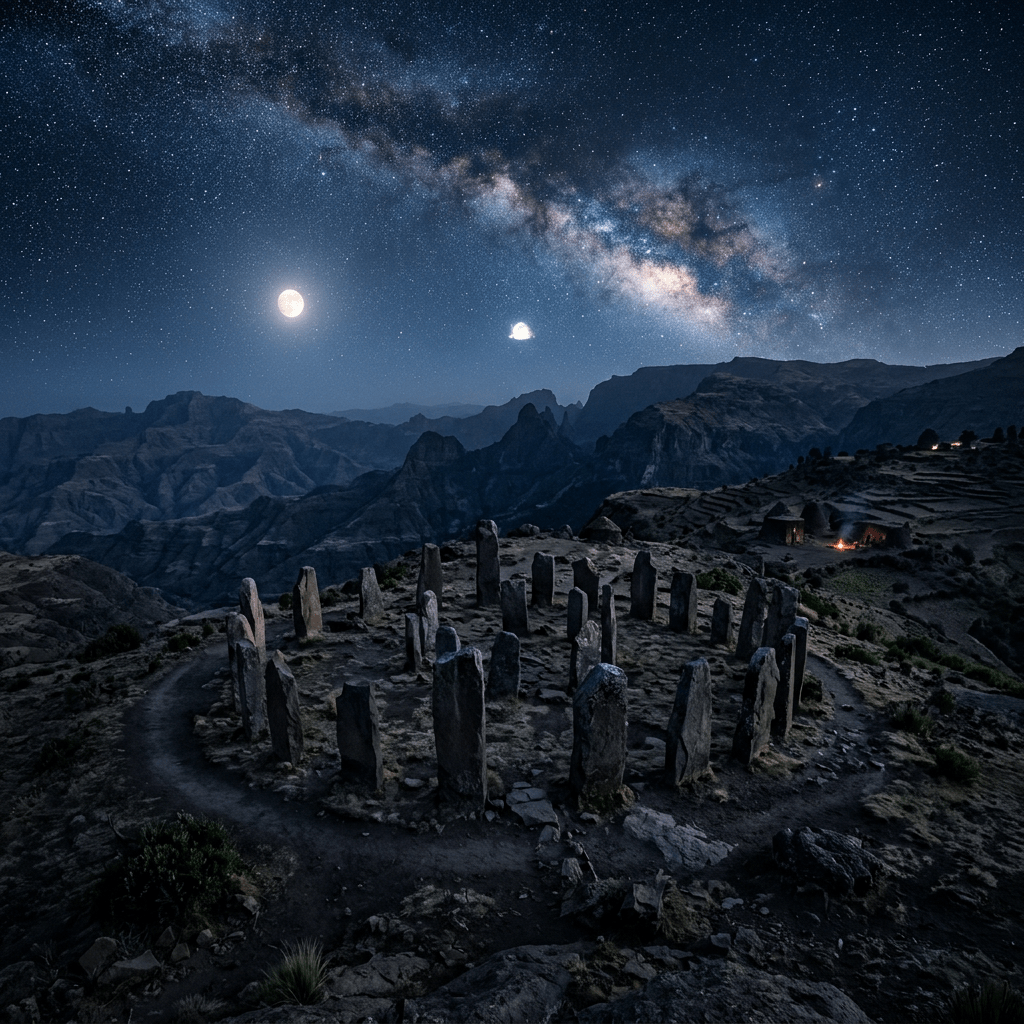
Known as the Borana calendar or the Dhaha/Henni calendar, it is a lunar-stellar calendar system. This means it relies on astronomical observations—specifically, the phases of the moon in conjunction with the rising and setting of seven particular stars or constellations.
The calendar’s sophistication lies in its integration of astronomy with daily life. It consists of 12 months and 354 days in a year, based on the lunar cycle. It has no weeks, but rather a name for each day of the month. The first day of the Oromo year begins in the month of Bitootessaa (March), when the constellation Triangulum is in conjunction with the new moon.
The Significance of the Number 6420
The year 6420 is reached by counting forward from the calendar’s inception around 300 BC. While the exact starting point is a subject of ongoing scholarly discussion, the calendar’s antiquity is well-established.
For the Oromo people, the calendar is more than just a way to count time—it is a cornerstone of their identity and cultural continuity. As one elder explained at the Walisoo Liiban celebration of the 6420 New Year:
“Observing Birboo at our Galma is not just about marking a calendar. It is about remembering who we are. It is about connecting our past to our future, grounding ourselves in the values of balance, respect for all creation, and community that Waaqeffannaa teaches” .
The calendar is tied to the traditional Oromo religion, Waaqeffannaa, and is used to schedule the Gadaa system of elections and power transfer. The Gadaa system, recognised by UNESCO as an Intangible Cultural Heritage of Humanity, is itself deeply connected to the calendar.
Archaeological and Astronomical Evidence
The Oromo calendar’s origins are not merely a matter of oral tradition. The Namoratunga archaeological site near Lake Turkana, Kenya, has been central to understanding its antiquity. Some scholars have argued that the site, dating to around 300 BC, contains evidence of an early Cushitic calendar that shares astronomical alignments with the Oromo calendar. The site’s basalt pillars are aligned with seven star groups that correspond to the Borana star groups still used in the Oromo calendar today.
However, it should be noted that the relationship between Namoratunga and the Oromo calendar has been debated. Astronomer and archaeologist Clive Ruggles, after re-examining the site, concluded there is no direct relationship. Nevertheless, the broader scholarly consensus acknowledges the calendar’s ancient roots and its continuity into the present day.
A Living Calendar in the Modern World
Today, the Oromo calendar remains a living tradition. In January 2026, Waaqeffannaa faithful gathered at the Galma Amantaa (House of Worship) in Walisoo Liiban, Oromia, to observe the Oromo New Year, Birboo, marking the year 6420. The celebration, which included prayers for peace (nagaa), love (jaalala), and unity (tokkummaa), was described as “a powerful reaffirmation of an ancient identity” and “a community’s declaration of continuity”.
The calendar’s months and day names, with their astronomical origins, are still used by Oromo communities in both Ethiopia and Kenya. The Ayyaantu—Oromo time-experts with knowledge about stars—continue to track time astronomically, preserving a tradition that has survived for millennia.
Conclusion: A Calendar of Identity and Continuity
The Oromo calendar, with its year 6420, is a testament to the ancient astronomical knowledge of the Oromo people and their enduring cultural identity. Its development around 300 BC and its continued use today represent one of the longest continuous calendrical traditions in the world. For the Oromo people, the calendar is not just a way to count years—it is a declaration of continuity, a connection to ancestors, and a guide for the future.
As the Oromo New Year 6420 was celebrated, the message was clear: “May this New Year bring you peace, love, and unity” .
This feature article is dedicated to the custodians of the Oromo calendar and to all those working to preserve and promote Oromo cultural heritage.

Celebrating Qaammee: A Sacred Oromo Tradition of Womanhood, Unity, and Cultural Pride
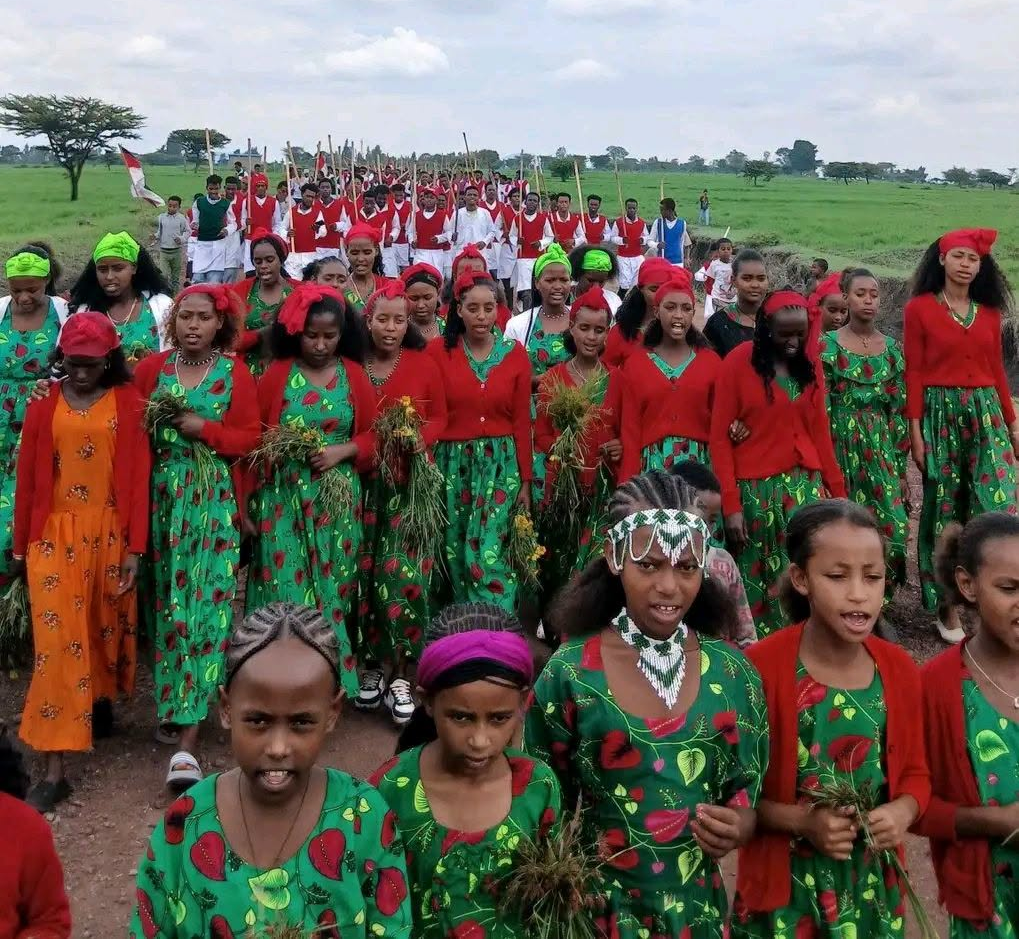
The Rituals of Buqqisaa and Daddarbaa — A Timeless Celebration of Young Women
By Daandii Ragabaa
The Oromo people are blessed with a rich tapestry of cultural traditions that have been passed down through generations. Among these, the Ayyaana Qaammee stands as one of the most beautiful and significant celebrations—a sacred festival honouring young unmarried women, their transition into adulthood, and their vital role in the continuity of Oromo society.
The word Qaammee refers to a young unmarried woman who participates in this sacred festival. The celebration embodies the essence of youthful femininity, purity, and the promise of a bright future. It is a rite of passage, a communal blessing, and a moment of profound cultural significance.
This year, as the community gathers to celebrate Qaammee, we extend our warmest greetings: “Baga Nagaan Ayyaana Qaammee geessan!” —Happy Qaammee Festival!
Understanding Qaammee: More Than a Celebration
The Qaammee festival is more than just a cultural event—it is a sacred tradition that connects the Oromo people to their ancestors, their community, and the natural world around them. It is a celebration of womanhood, a blessing for the future, and a reaffirmation of Oromo identity.
The festival takes place annually, beginning in the month of Hagayya (roughly July-August) and continuing through the month of Fulbaana (September-October). The timing coincides with the end of the rainy season—a time of renewal, abundance, and new beginnings. This year’s celebration is a continuation of this sacred tradition, bringing communities together in joy, song, and blessing.
Central to the Qaammee celebration are two key rituals:
- Buqqisaa — The “Breaking” or preparation ceremony
- Daddarbaa — The “Passing” or blessing ceremony
The Buqqisaa Ceremony: Preparation and Unity
The Qaammee celebration begins with the Buqqisaa ceremony, a vibrant evening of preparation and community bonding.
Gathering by the Water
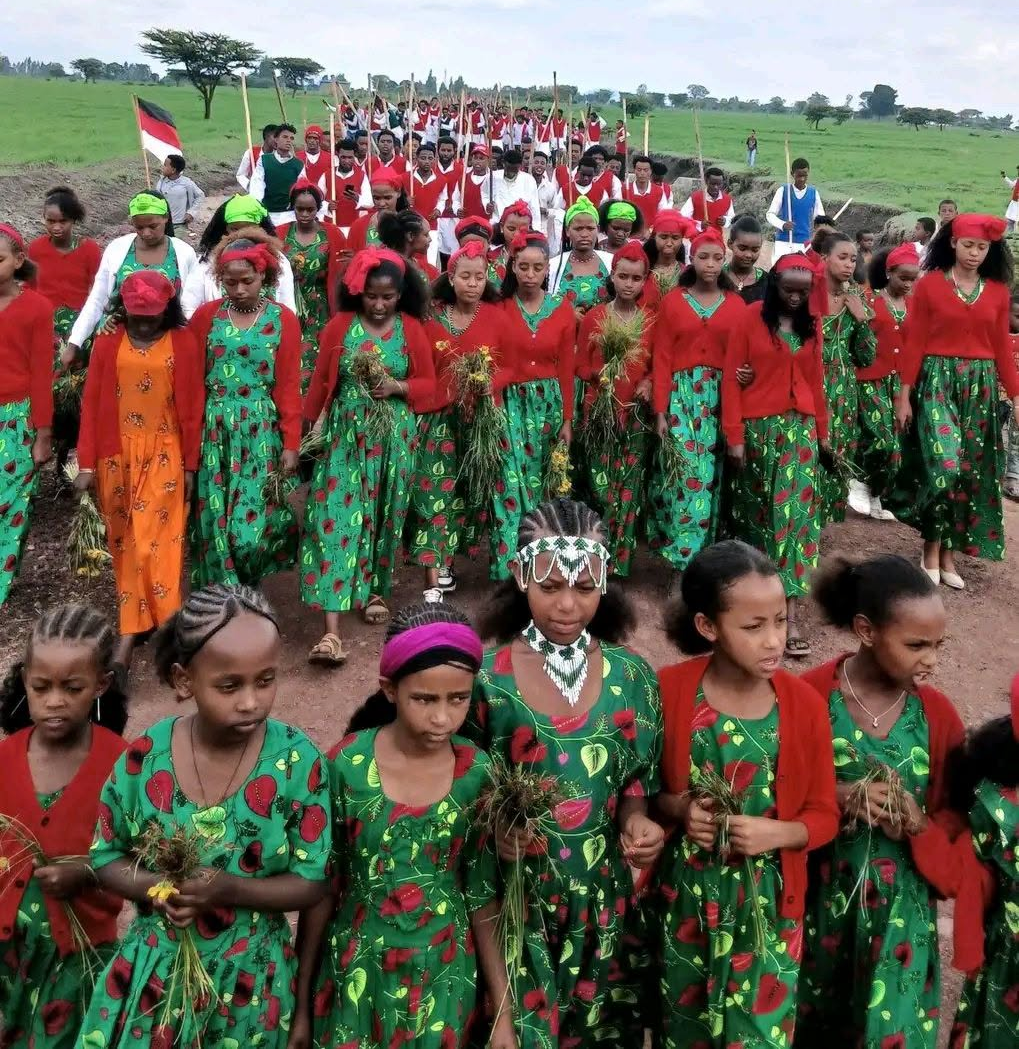
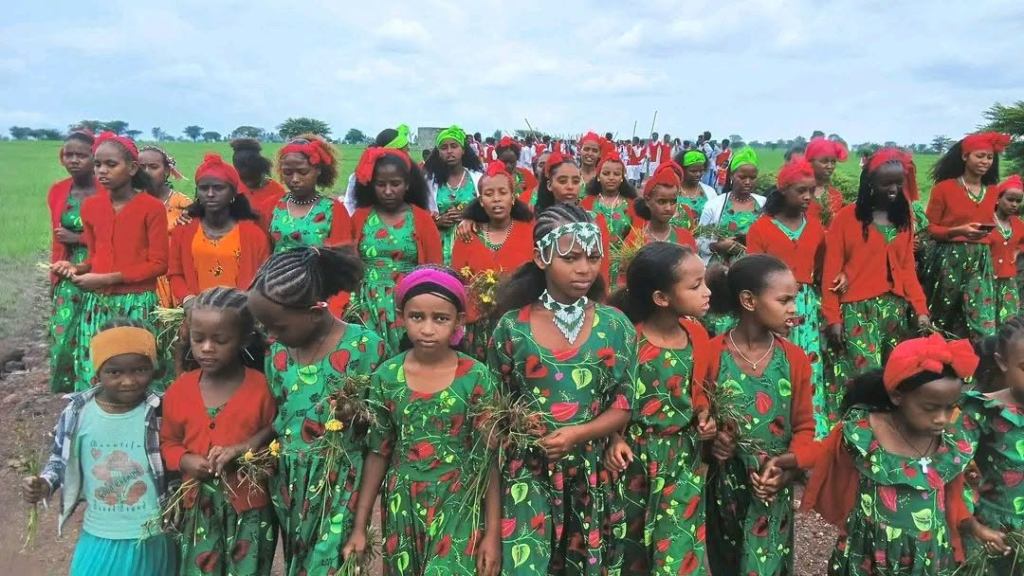
On the evening of Buqqisaa, young unmarried women (Qaammeen) gather in groups and make their way to a nearby river or stream (laga or caffee). This is a time of sisterhood, joy, and anticipation. The women come together in large numbers, united by their shared identity and purpose.
The Breaking of Qunnii
At the water’s edge, the women perform the ritual of Buqqisaa—the breaking or preparation of Qunnii, a special plant similar to grass that has a fragrant fruit (gumaa/firii) at its base. When the Qunnii blooms, it becomes Dhallaadduu, ready for use.
The Qunnii plant is significant for several reasons:
- It produces a natural fragrance that is pleasing to the senses
- It has medicinal properties that are beneficial for women’s health
- It is used as a natural perfume (Qayya) by the young women
Songs, Dance, and Celebration
The Buqqisaa ceremony is accompanied by traditional songs, dances, and celebrations that continue well into the night. The women sing Faaruu Qaammee (Abaabilee)—special songs composed for the occasion—as they prepare the Qunnii together.
The women break and prepare the Qunnii, sharing in the work and the joy of the occasion. The atmosphere is filled with laughter, song, and the spirit of unity.
Returning Home with Blessings
After the preparation is complete, each woman returns to her home with the Qunnii she has prepared. She places it on the doorstep (balbala irra kaawwatanii) as she enters, symbolizing the blessings she brings into her home.
The Ashaashullaa Tradition
On this same evening, young girls (ijoolleen dubaraa) participate in a special tradition involving Ashaashullaa—a plant similar to moss or creeping vine. The Ashaashullaa is tied to their hands and feet (harkaa fi quba miilatti hidhatanii bulu), and they sleep with it overnight.
In the morning, the plant has turned their hands and feet red—a beautiful decoration that adds to their adornment. The plant is considered a traditional ornament for girls, enhancing their beauty and connection to nature.
The Daddarbaa Ceremony: Blessings and Passing Forward
The following day is the Daddarbaa ceremony—the Passing or Blessing ceremony. This is the main day of the Qaammee celebration, when the young women receive the community’s blessings and are honoured for their transition.
Gathering at the Meeting Place
In the morning, the young women take the Qunnii they prepared the previous evening and gather at a designated meeting place, known as the Mootii Durbaa (the place of the chosen leader). The Mootii Durbaa is the eldest or most respected among the young women, chosen by the group.
The Journey Through the Community
From the Mootii Durbaa, the women begin their journey through the community. Walking in groups, they sing the Abaabilee songs as they go from house to house. They start with the Warra Angafaa (the elders/leaders of the clan) and then visit every household in their community.
The Ritual of Daddarbaa
At each household, the women perform the Daddarbaa ritual. They pass the Qunnii from the previous day to the household, receiving blessings in return. They eat and drink a little at each home, and the elders offer prayers and blessings for their future.
The women continue this journey until they have visited all the households in their community, spreading joy, receiving blessings, and reinforcing the bonds of community.
The Role of Young Men in Qaammee
While Qaammee is primarily a celebration of young women, young men also play an important role—though it is very different from that of the women.
Young unmarried men (who are not yet married) do not participate in the Buqqisaa or Daddarbaa ceremonies in the same way as the women. However, they accompany the women during the celebrations, walking alongside the groups and participating in the songs and dances.
The Wadaajii Tradition
The most notable tradition involving young men is the Wadaajii Dhungachuu—a ritual that is eagerly awaited, especially by the men. This tradition is unique to the Oromo culture and reflects the playful and respectful nature of the Qaammee celebration.
During the procession, when the women leave one household to go to the next, the young men position themselves along the route. As the women pass, the men suddenly fall to the ground in front of them and attempt to “drink” (dhungachuu) from them. The women, in turn, push the men away using their hands and the Dhallaadduu they are carrying.
This is a playful ritual, not a violation. The men approach with respect, and the women respond with good-natured resistance. The location for this ritual is often a boqoo/maddii—a designated area along the route.
After the ritual, the women continue on their way, laughing and continuing their songs. The men, having participated in the tradition, rejoin the procession. This tradition is an important part of Oromo youth culture, reinforcing bonds between young men and women while maintaining cultural protocols.
Important note: Men who participate in the Wadaajii ritual are not allowed to marry the women they “drink” from—it is a matter of cultural respect and propriety.
The Spiritual Significance of Qaammee
At its heart, the Qaammee celebration is a spiritual experience. The rituals are conducted with reverence and respect, invoking the blessings of Waaqa (God) and the ancestors.
The young women receive the prayers of the elders, the admiration of the community, and the hope of their families. The celebration is an act of thanksgiving—giving thanks for the rain, the harvest, and the continuity of Oromo culture.
The songs of Qaammee, known as Abaabilee, carry deep meaning and are an essential part of the celebration:
“Aababilee haa doolee” — Let the Abaabilee songs be sung
“Haayee yaa shoroorootoo” — Oh, the beautiful songs
“Shoororoo haati deechee” — The mother has sung the Shoororoo
“Yaa qal’oo qaammen geechee” — The Qaammee women have come
A Celebration of Promise and Renewal
As the Qaammee festival concludes, the participants and their families are filled with a sense of pride, joy, and hope. The young women who have been blessed and celebrated carry with them the strength and support of their community as they embark on their journeys into adulthood.
The festival is also a reminder of the beauty and resilience of Oromo culture—a culture that has survived centuries of oppression and continues to thrive in the hearts of its people.
The Challenge of Cultural Erosion
It is important to note that the Qaammee festival is in danger of being forgotten in many areas. In some places, it is no longer celebrated at all. In others, a modified version called “Qaammee Sidaamaa” is celebrated on October 1st (Fulbaana 1, ALH), but even this is not the same as the traditional celebration.
This erosion of cultural traditions is a loss for the Oromo people. These traditions are not just customs—they are expressions of Oromo identity, resilience, and continuity. They connect the present generation to their ancestors and provide a foundation for the future.
The responsibility of reviving and preserving these traditions falls on the current generation. As the saying goes, “Duudhaaleen Oromoo hedduun isaanii bakka hin jiran. Bakkatti deebisuun dirqama dhaloota ammaa ti” —Many Oromo traditions are no longer practiced. It is the duty of the current generation to bring them back.
Conclusion: The Eternal Light of Qaammee
Qaammee is more than a celebration—it is a sacred tradition that connects the Oromo people to their past, their present, and their future. It is a moment to honour young women, to bless their journey, and to affirm the enduring strength of Oromo culture.
As the community gathers to celebrate, let us remember the beauty, grace, and resilience of the Oromo people. Let us honour the young women who carry the hopes of their community. And let us commit ourselves to preserving and reviving these sacred traditions for future generations.
“Kan Baranaa kan egeree nuun haa jedhu!” —May this year’s celebration be one of abundance and joy!
Baga Nagaan Ayyaana Qaammee geessan!
This feature article is dedicated to all the young Oromo women—past, present, and future—who carry the spirit of Qaammee in their hearts, and to the communities who are working to preserve this beautiful tradition.

A Line Crossed: Ambassador Suleiman Dedefo Warns of Eritrea’s Grave Violation of Ethiopian Sovereignty
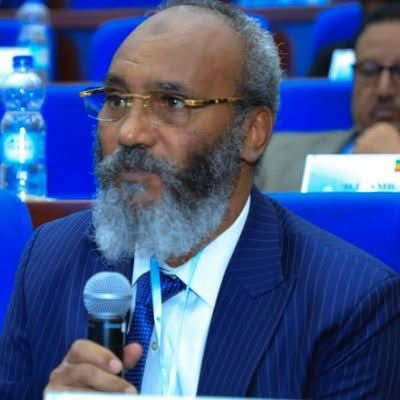
In the volatile landscape of the Horn of Africa, where alliances shift like desert sands and the embers of conflict never fully cool, a stark warning has been issued. Ambassador Suleiman Dedefo, Ethiopia’s top diplomat, has leveled a serious accusation against Eritrea: that it has committed a “grave violation” of Ethiopia’s sovereignty by sending an armed military delegation across their internationally recognized border into the Tigray region—without the consent of the Ethiopian government.
A Breach of Sovereign Borders
According to Ambassador Dedefo, Eritrea’s military delegation did not merely cross into Ethiopian territory; it was received by forces engaged in active military confrontation with the Ethiopian government—a “gang group” aligned with the Tigray People’s Liberation Front (TPLF). This, he argues, constitutes a direct and reckless act of alliance with a group waging war against Ethiopia.
“It is highly unusual and contrary to established principles of international law for an armed military delegation to cross the internationally recognized border of another sovereign state without the consent of its government,” Ambassador Dedefo stated, framing the incursion not as a diplomatic misstep but as a fundamental breach of the rules that govern relations between sovereign nations.
The Legal Framework: A Violation of the UN Charter
The Ambassador’s words carry the weight of international jurisprudence. Under the United Nations Charter and customary international law, the territorial integrity and political independence of sovereign states are inviolable. An armed incursion by one state into another, particularly to support an armed group hostile to the host government, is widely recognized as an act of aggression.
By receiving Eritrea’s military delegation in territory it does not control, the TPLF-aligned forces have, in Ambassador Dedefo’s view, effectively made Eritrea a party to the conflict. “This amounts to joining the war that TPLF is waging on Ethiopia,” he declared. Such an action erases any pretense of Eritrea acting as a neutral observer or a humanitarian partner—it positions Asmara as a belligerent.
A Reckless Alliance
The implications extend far beyond the battlefield. Ambassador Dedefo characterized Eritrea’s move as a “reckless act of alliance with a mercenary group” that jeopardizes not only Ethiopia’s sovereignty but also the stability of the entire region. In the Horn of Africa, where borders remain contested and historical grievances run deep, an act of this nature threatens to unravel the fragile peace.
By aligning with a group that the Ethiopian government has designated as hostile, Eritrea is gambling with regional security. The message sent to other nations in the region is deeply troubling: that borders can be crossed with impunity, and that external actors may choose sides in a neighbor’s internal conflict without consequence.
The Right to Self-Defense
Perhaps the most significant portion of Ambassador Dedefo’s statement is his assertion regarding Ethiopia’s legal recourse. “Such actions may give rise to Ethiopia’s rights under international law, including those recognized by the UN Charter,” he noted. He went further, stating unequivocally that “Eritrea becomes a legitimate target for any action that Ethiopia could take in self defense”.
This is not merely diplomatic rhetoric. Article 51 of the UN Charter enshrines the “inherent right of individual or collective self-defence if an armed attack occurs.” By framing Eritrea’s actions as an armed incursion in support of a hostile force, Ambassador Dedefo has laid the groundwork for a potential Ethiopian military response—one that would be legally justified under international law.
The Broader Context
Ambassador Suleiman Dedefo is no stranger to the complexities of Ethiopian diplomacy. Having served as Ethiopia’s ambassador to the United Arab Emirates and later as its top envoy to Somalia, he has been at the center of some of the region’s most sensitive negotiations. He has previously warned of external forces creating “political and strategic challenges” to Ethiopian interests and has been a vocal critic of those who threaten the nation’s sovereignty.
His latest warning comes at a time of heightened tensions in the Horn of Africa. Ethiopian Prime Minister Abiy Ahmed has spoken of “correcting” the historic loss of Red Sea access, a statement that has drawn sharp criticism from Eritrea. Meanwhile, Egypt has deployed troops to Somalia, further complicating an already fraught regional dynamic. Into this cauldron of competing interests, Eritrea’s alleged military incursion adds a volatile new element.
A Line That Cannot Be Uncrosed
Ambassador Dedefo’s words are a clear signal: Ethiopia views Eritrea’s actions as an act of war. Whether this leads to direct military confrontation between the two neighbors remains to be seen. What is certain is that the diplomatic landscape of the Horn of Africa has shifted.
The international community now faces a critical test. Will it condemn Eritrea’s violation of Ethiopian sovereignty and call for de-escalation? Or will it remain silent, allowing the precedent of armed incursion to take root? Ambassador Dedefo has drawn a line in the sand—a line that, once crossed, may prove impossible to uncross.
As the region holds its breath, one thing is clear: the principle of sovereign borders, hard-won over centuries of international law and diplomacy, hangs in the balance. And Ethiopia, through the voice of its ambassador, has made it known that it will not stand idly by while that principle is trampled.

The Irreechaa Protocol: From Ancient Healing to Modern Stroke Recovery
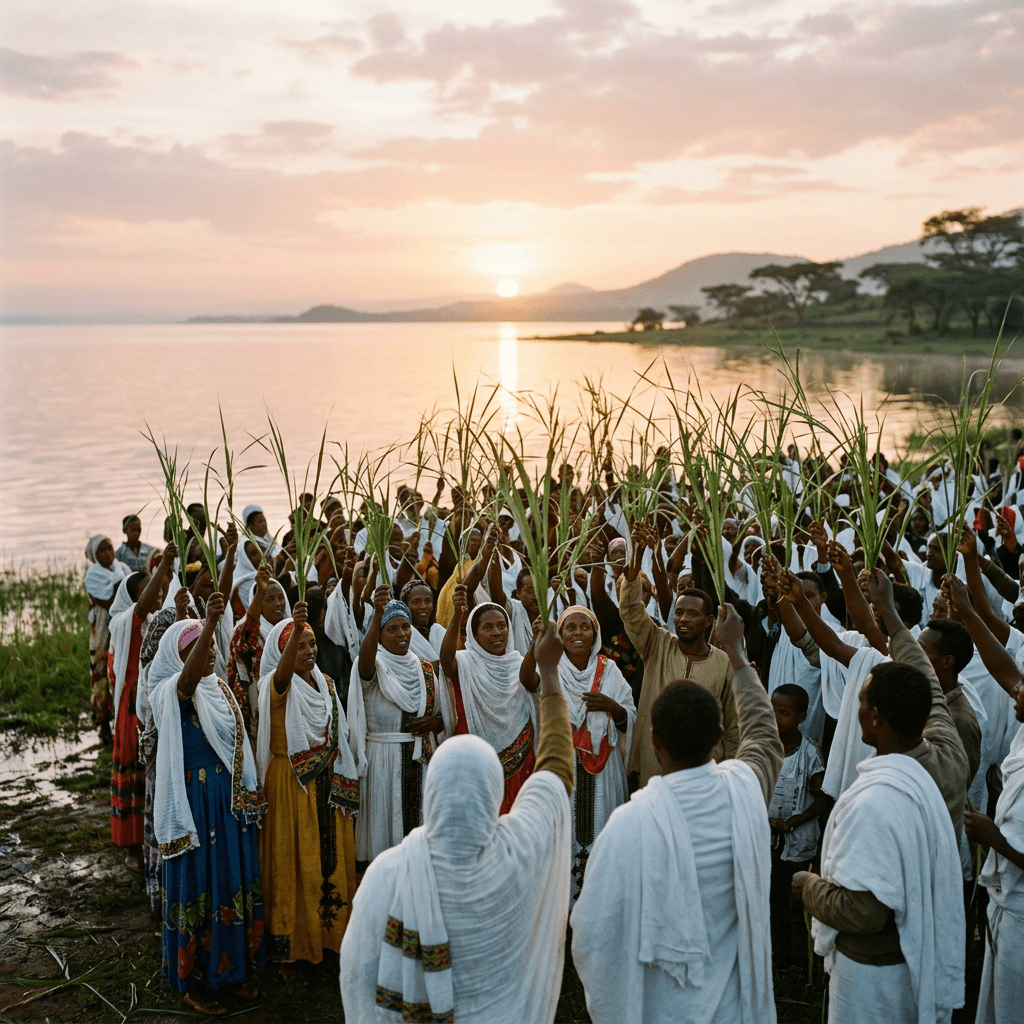
What if the path to physical recovery after a stroke lies not in isolation but in community, not in medicine alone but in the sacred rituals that have healed generations?
When we think of stroke rehabilitation, we typically imagine hospital beds, physical therapists, and repetitive exercises. The journey is often described as isolating—a solitary struggle against the body’s betrayal. But what if the most effective recovery intervention has been practiced for centuries, not in clinics, but at the water’s edge, surrounded by thousands of voices raised in song?
The Oromo people’s Irreechaa festival—a thanksgiving celebration held at sacred water bodies like Hora Arsadii and Hora Finfinnee—offers a blueprint for stroke recovery that transcends conventional rehabilitation. It is not merely a cultural festival; it is a sophisticated, community-driven healing protocol that addresses the physical, psychological, and spiritual dimensions of recovery.
The Foundation: Why Ritual Matters in Recovery
Stroke, as a form of brain tissue damage caused by a sudden disruption of blood supply, often results in muscle weakness or paralysis on one side of the body, known as hemiparesis or hemiplegia . Beyond the physical challenges, stroke profoundly affects patients’ psychological and spiritual well-being.
Conventional rehabilitation focuses on regaining motor function through physical therapy, strength training, and range-of-motion exercises. Yet research increasingly recognises that recovery is not purely mechanical. The emotional isolation, loss of identity, and spiritual questioning that accompany stroke require interventions that address the whole person.
This is where Irreechaa enters the picture. For the Oromo people, who have endured generations of political marginalisation and cultural suppression, Irreechaa has functioned as what scholars describe as “cultural therapy”—a cyclical, collective practice that restores dignity, cohesion, and hope . Its choreography—pilgrimage to sacred water, symbolic washing, public prayer, group singing and dancing—provides a template that can be adapted for physical rehabilitation.
The Three Therapeutic Pillars of Irreechaa for Stroke Recovery
1. Recognition: Reclaiming Identity and Agency
One of the most devastating effects of stroke is the loss of identity. A person who once moved freely, worked, and cared for family suddenly becomes dependent on others. This loss mirrors the experience of colonised peoples—the internalised devaluation that comes from being told, directly or indirectly, that you are less than what you were .
Irreechaa counters this through public, mass affirmation . When thousands gather in traditional white attire, singing and performing traditional dances, they are not just celebrating; they are visibly, collectively reclaiming dignity . For a stroke survivor, participation—even passive observation—reaffirms that they remain part of the community. Their identity is not erased by their condition.
The festival’s impact on psychological well-being is significant. Scholars document that the joyful atmosphere counters trauma, while participants see their culture celebrated, combating marginalisation and fostering confidence . For stroke survivors, this sense of belonging and self-worth is a powerful motivator for recovery.
2. Regulation: Movement, Music, and Healing the Body
The physical elements of Irreechaa serve a regulatory function that aligns precisely with evidence-based rehabilitation. Structured songs, rhythmic movement, and shared timing “calm bodies and synchronise emotion” . This mirrors approaches like EMDR (Eye Movement Desensitization and Reprocessing), where bilateral stimulation helps process traumatic material.
Traditional Oromo songs, known as geerarsa, have a particularly powerful healing function. One form of folksong is designed to “divert the thought of the distressed individual by persuading him through the intricate terminologies” . Even individuals with physical and cognitive impairments can be drawn into the healing experience through these songs.
Scientifically, the combination of water and sound creates immersive environments. Chanting reduces stress hormones and triggers dopamine, promoting transcendence . Movement—however limited—stimulates blood flow and helps maintain flexibility. When tens of thousands move and sing together, the result is a form of community-wide emotional and physical regulation that no individual therapist could replicate.
Research on spiritual practices in stroke rehabilitation supports this approach. One study found that dhikr therapy—practiced by flexing and moving the knuckles of the hand—can reduce stiffness in the joints of stroke patients, supporting muscle flexibility and strength . Irreechaa offers this same principle on a massive scale: repetitive, meaningful movement embedded in a spiritual and social context.
3. Reconnection: Healing the Social Wound
Historical trauma isolates; ritual reconnects . Anthropologists describe how public rituals generate “communitas”—an intense sense of togetherness that suspends everyday hierarchies . At Irreechaa, this communitas creates “prosocial bonds that reduce isolation and renew civic agency” .
For a stroke survivor, social isolation is a major barrier to recovery. Depression, anxiety, and loneliness compound physical limitations. The festival’s intergenerational participation—elders demonstrating rituals, children and youth participating actively—creates a continuity of social bonds that bridges generations . The stroke survivor is not left behind; they remain part of the living chain.
Irreechaa’s role in fostering inclusivity and national healing has been widely recognised, described as “a catalyst for inclusivity in Ethiopia” that “promotes a sense of togetherness” . For the individual survivor, the lesson is clear: recovery is not a solitary journey but a communal one.
The Water Blessing: Symbolic and Practical Healing
The most iconic Irreechaa ritual involves participants entering sacred water and symbolically washing away hardship . This act operates on multiple levels:
- Symbolically, it represents cleansing from past trauma and preparation for renewal.
- Psychologically, it provides a physical mechanism for emotional release.
- Communally, it creates a shared experience that binds participants together.
For a stroke survivor, water also offers practical therapeutic benefits. Hydrotherapy is a recognised rehabilitation technique that reduces joint stress, improves circulation, and provides gentle resistance for muscle strengthening. The sacred waters of Irreechaa offer this benefit within a context of profound meaning.
For diaspora Oromo communities, adaptations of these water rituals in park settings or hilltops serve similar functions . When a traditional water body is unavailable, communities transform other spaces into sacred gathering points. This adaptability suggests that the Irreechaa protocol can be adapted to any setting—including rehabilitation centres, community halls, or home environments.
A Blueprint for Stroke Recovery Intervention
What can the Irreechaa protocol teach rehabilitation professionals, caregivers, and stroke survivors?
1. Recovery Requires Community
The individualised model of rehabilitation misses a crucial element: the healing power of belonging. Interventions that create spaces for group participation, shared music, and collective movement may enhance outcomes.
2. Symbolism Matters
Water, music, movement, and traditional attire are not superficial decorations; they are therapeutic vehicles that engage the whole person—body, mind, and spirit.
3. Repetition Builds Strength
The cyclical, annual nature of Irreechaa mirrors the repetitive practice essential to stroke rehabilitation. Regularity, predictability, and ritualised practice build resilience.
4. Cultural Grounding Is Therapeutic
Cultural practices are not barriers to evidence-based approaches; they are themselves evidence-based approaches refined over generations . Adapting indigenous healing traditions to modern rehabilitation can improve engagement and outcomes.
5. Hope Is a Medicine
Irreechaa’s central message—that renewal is possible—is exactly what a stroke survivor needs to hear. Hope, meaning, and purpose are not sentimental extras; they are essential drivers of recovery.
Conclusion: The Quiet Work of Repair
Irreechaa demonstrates that healing is not only possible but has been practised for centuries. Its protocol—recognition, regulation, and reconnection through public ritual—provides a template that could be adapted for stroke recovery across cultures and contexts.
As scholars of historical trauma note, healing requires “shared remembrance, mourning, and culturally grounded practices that rebuild meaning and agency” . For stroke survivors, the same principle applies. Recovery is not just about regaining muscle strength; it is about rebuilding meaning, reconnecting with community, and reclaiming identity.
Irreechaa’s power is double-edged: the very practices that heal—public recognition, shared emotion, embodied solidarity—can also unsettle established systems of control . But for the stroke survivor seeking to recover, this is not a threat. It is an invitation to reclaim what was lost.
The path forward is not to shrink the wisdom of the ancestors but to secure it. Treat it as a healing asset, adapt its principles to modern practice, and let ritual do its quiet work of repair.
“Irreechaa’s power is double-edged: the very practices that heal—public recognition, shared emotion, embodied solidarity—also unsettle projects that rely on minimising Oromo visibility. The path forward is not to shrink Irreechaa but to secure it: treat it as a national asset, protect rights equally, and let ritual do its quiet work of repair” .

Reclaiming the Dawn: The Renaissance of Waaqeffannaa Civilisation

After centuries of suppression, the Oromo people’s ancient faith is rising from the shadows to reclaim its place in the spiritual and cultural landscape of the Horn of Africa
In the sprawling, colourful tapestry of Ethiopian cultural heritage, few stories are as compelling as the centuries-long journey of the Oromo people’s indigenous faith. For millennia, Waaqeffannaa—the belief in a single, supreme Creator—served as the spiritual bedrock of a proud, pastoral people who structured their lives around the principles of truth, balance, and harmony with nature.
Yet for over a century, this faith was forced underground, hidden from the public eye, its practitioners marginalised, and its sacred sites endangered. Today, however, a powerful renaissance is unfolding. Waaqeffannaa is not merely surviving—it is being reborn. This is the story of a faith that refused to die, and the people who are reclaiming their spiritual birthright.
The Ancient Foundations
Waaqeffannaa is the indigenous, monotheistic religion of the Oromo people of Ethiopia and parts of Kenya. It centres on the worship of Waaqa—the One True God—the creator and sustainer of life, often referred to as Waaqa Tokkicha . The name itself derives from Waaqa, meaning “believing in Waaqa, following Waaqa, and directing one’s life toward Waaqa” .
This faith predates the arrival of Christianity and Islam in the Horn of Africa, representing the Oromo people’s “own ancient and authentic faith” . It is a sophisticated spiritual system, defined by several core pillars :
- Ayyaana (Divine Spirits): Manifestations or intermediaries of Waaqa, linked to natural forces like rivers and mountains.
- Uumaa (Sacred Nature): A deep reverence for the environment, with trees like the sacred Odaa (sycamore fig), water, and land holding immense spiritual significance.
- Safuu (Moral Order): An ethical framework of truth (dhugaa) and balance that guides human behaviour and aligns it with the divine will .
- Rituals and Ceremonies: Led by spiritual leaders (Qallu and Qallitti), these include thanksgiving prayers and the famous Irreechaa festival at lakesides .
A Faith Suppressed, Not Destroyed
The survival of Waaqeffannaa is a story of resilience. For generations, the faith was systematically marginalised by successive Ethiopian governments and the influence of missionary religions . It was driven underground, its adherents pressured to convert, and its sacred sites neglected.
As the Oromo spiritual tradition known as Wayyuu explains:
“Waaqeffannaa was suppressed but not abolished… Waaqeffannaa was hidden but not destroyed. It was hidden because the people abandoned Waaqeffannaa and began to live under oppression.”
Despite this suppression, the faith survived—not as a public institution, but as an “enduring spiritual memory” preserved in the hearts, traditions, and hidden practices of those who refused to forget . Today, an estimated 1 to 1.5 million Oromo actively follow the faith, while many more who identify as Christians or Muslims continue to maintain Waaqeffannaa beliefs and practices .
The Struggle for Sacred Sites
The renaissance of Waaqeffannaa is intrinsically linked to the struggle for its physical spaces. For centuries, colonial and religious interventions have led to the erasure of these vital sites . One such place is Andoodee Tumaa, a sacred Oromo ritual site in the Akaki district, near Finfinne (Addis Ababa).
This site was a crucial part of the Tuulamaa Oromo Gadaa law-making process, where laws were proclaimed to the public every eight years . However, the site now faces an existential threat. The systematic expansion of Addis Ababa, driven by a controversial Master Plan that was halted only after a youth-led struggle, has encroached upon Andoodee Tumaa, shrinking it to a fraction of its original size. A water supply facility has been constructed in this sacred location, with further encroachment from a newly constructed church .
The threat is symbolic of a wider issue: the erasure of Oromo spiritual geography. But the local community remains steadfast. As one assessment notes, “The Oromo people have never accepted the abandonment of their sacred ritual sites, despite facing heavy suppression” . The fight to preserve sites like Andoodee Tumaa is not just a battle for land; it is a battle for cultural memory.
The Heartbeat of the Renaissance: Irreechaa
If the sacred sites are the geography of the renaissance, the annual festival of Irreechaa is its heartbeat.
Irreechaa is a thanksgiving festival, held to thank Waaqa for rain, harvest, and the gift of life . The ritual of Irreechaa, which includes prayers at water bodies, simultaneously affirms the distinctiveness of the Oromo while connecting them to broader ancient African cultural traditions . Once a forbidden event, Irreechaa has undergone a dramatic transformation. It has evolved from a suppressed celebration to a recognised element of national cultural heritage .
Today, it is a major public celebration, symbolising Oromo unity and identity . Tens of thousands of people, predominantly from the Oromo ethnic group, gather annually, often at Lake Hora Arsadi, dressed in traditional white attire to express their gratitude . While the festival is a joyful assertion of an identity suppressed for over a century, it has also become a stage for political expression . The 2016 festival, which was met with a violent crackdown, became a catalyst for political change that ultimately ushered in the current prime minister .
This evolution reflects the growing public recognition of Oromo culture, facilitated by national policies, the work of activists, and the resurgence of Waaqeffannaa itself .
A Philosophical Renaissance
The resurgence of Waaqeffannaa is also a philosophical revival. Oromo intellectuals and activists are working to reclaim the faith as part of a broader cultural identity, to lift the “darkness” that has hidden its truth for so long . Strategies for this cultural preservation include documenting oral traditions, integrating Waaqeffannaa into educational curricula, and advocating for official recognition of its religious rights .
This renaissance is a movement to restore the spiritual and moral principles that have guided the Oromo for millennia. It is a reclaiming of Safuu—the justice and balance that is fundamental to the Oromo worldview . The ultimate message is one of hope. As the Wayyuu tradition declares:
“The day the darkness that has hidden the truth of Waaqeffannaa is lifted, goodness will spread across this land. When humanity returns to the truth of Waaqa, all people will rejoice.”
Conclusion: Reclaiming the Dawn
The renaissance of Waaqeffannaa civilisation is a testament to the resilience of a people and their faith. It is a story of reclaiming an identity, of reviving sacred practices and spaces, and of giving voice to a spiritual heritage that has been hidden for too long.
It is not merely about reviving a religion; it is about the survival and flourishing of the Oromo people’s soul. The dawn of this new era promises to restore not just a faith, but also the principles of truth, justice, and harmony that form the bedrock of a truly liberated people.

Shashemene Welcomes U.S. Ambassador: A New Chapter in Partnership and Progress
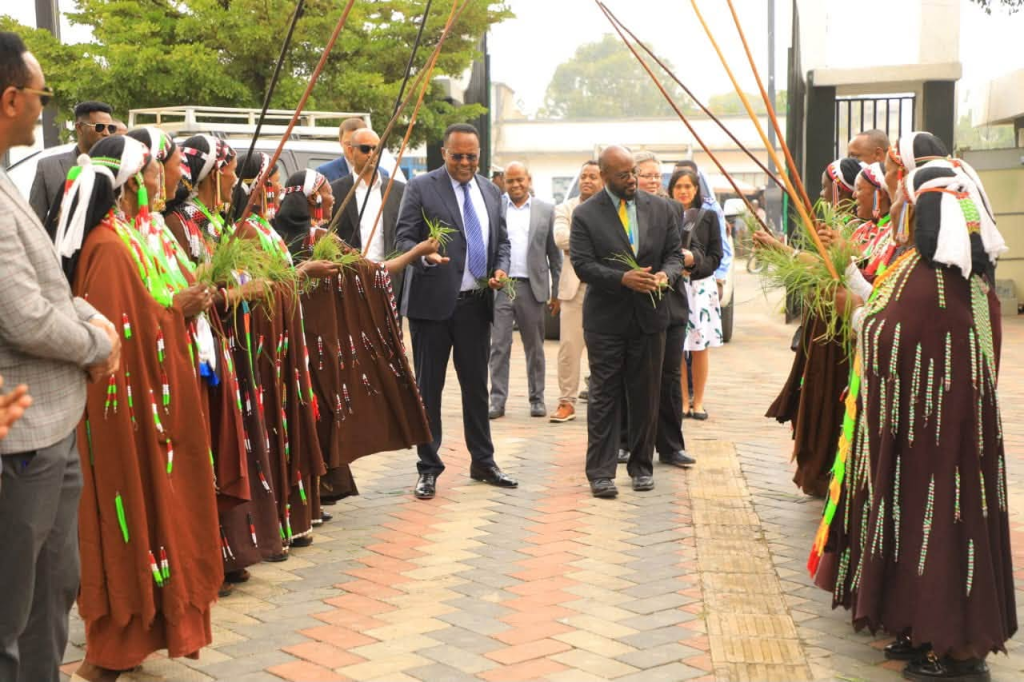
In a historic visit, the city of Shashemene opened its doors to the United States Ambassador, showcasing decades of resilience and a vision for transformative development.
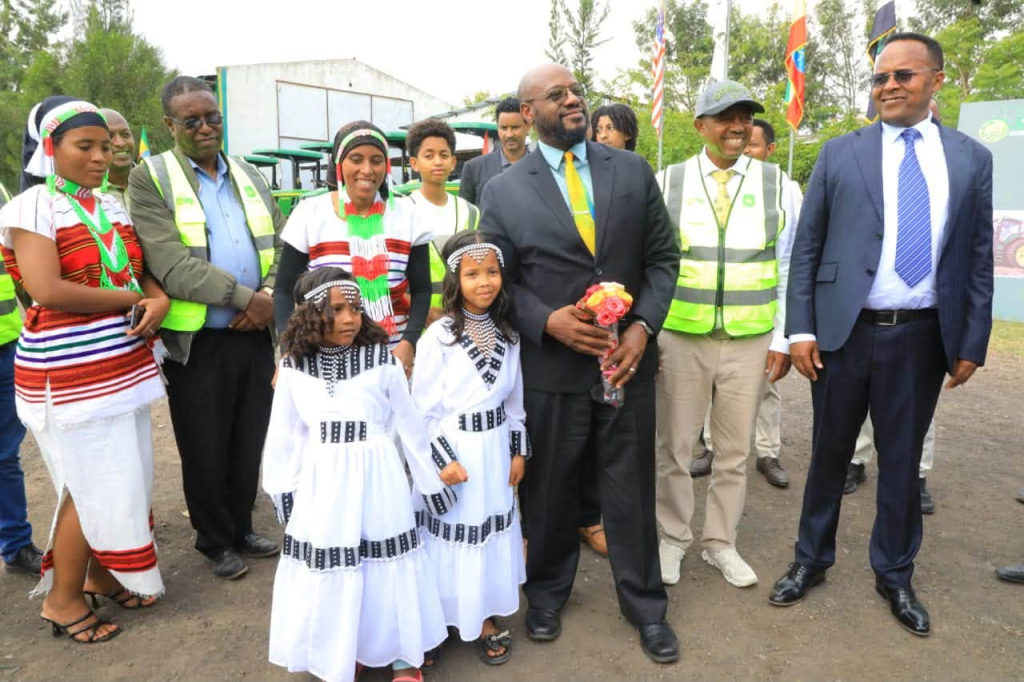
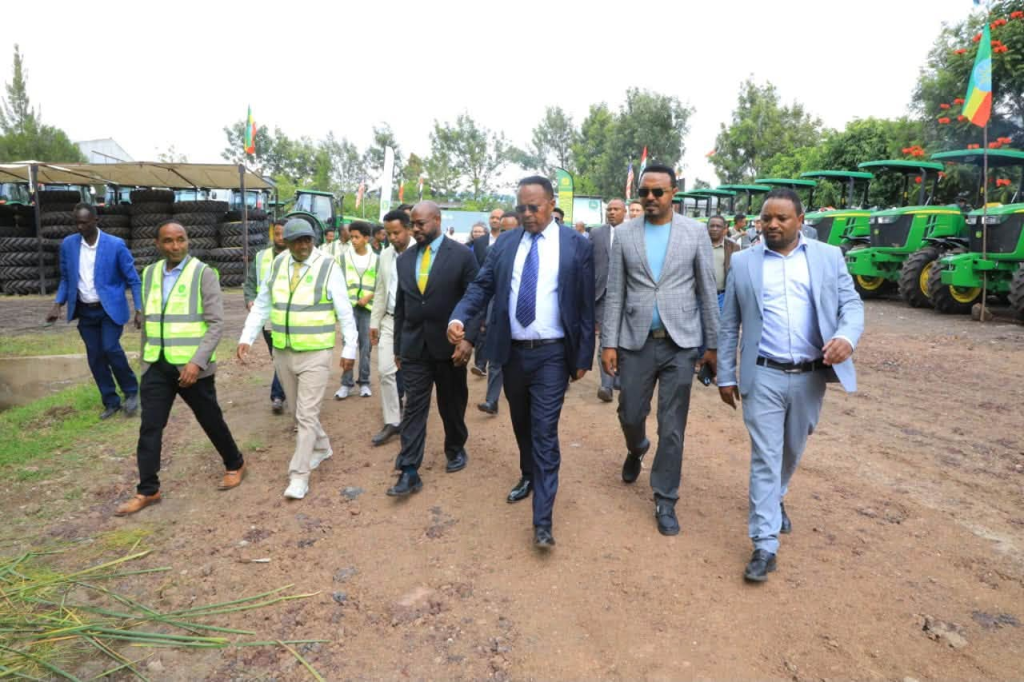
SHASHEMENE, OROMIA — Today, the city of Shashemene stood still to warmly welcome the Honorable Ambassador of the United States. The visit marked more than a formal diplomatic engagement; it was a powerful testament to the growing partnership, mutual respect, and shared aspirations between the United States and the people of Ethiopia .
The city, with its rich history of over 115 years, presented its developmental scenario to the Ambassador, covering key indicators in demographics, infrastructure, economic progress, and humanitarian efforts. The visit signals a strong message of cooperation as Ethiopia continues its journey of reform and transformation.
A City of Resilience and History
Shashemene is not just a city; it is a symbol of endurance and hope. Originally established in 1910/1911 (1903 E.C.), the name “Shashemene” is derived from a famous Oromo lady named “Shashe,” who operated a rest-stop called “Mene” in the area . For over a century, the city has served as a vital crossroads in the Rift Valley, connecting the southern regions of Ethiopia to the capital, Addis Ababa .
Shashemene gained international recognition in 1948 when Emperor Haile Selassie I granted 500 acres of fertile land to the Black people of the West as a token of appreciation for their support during the Italian occupation . This land grant led to the settlement of Rastafarian communities from Jamaica, the United States, and the Caribbean, making Shashemene a unique symbol of Pan-Africanism and diaspora repatriation .
As the city continues its journey, the resilience and hope of its people remain its greatest assets.
Presenting a Vision for Progress
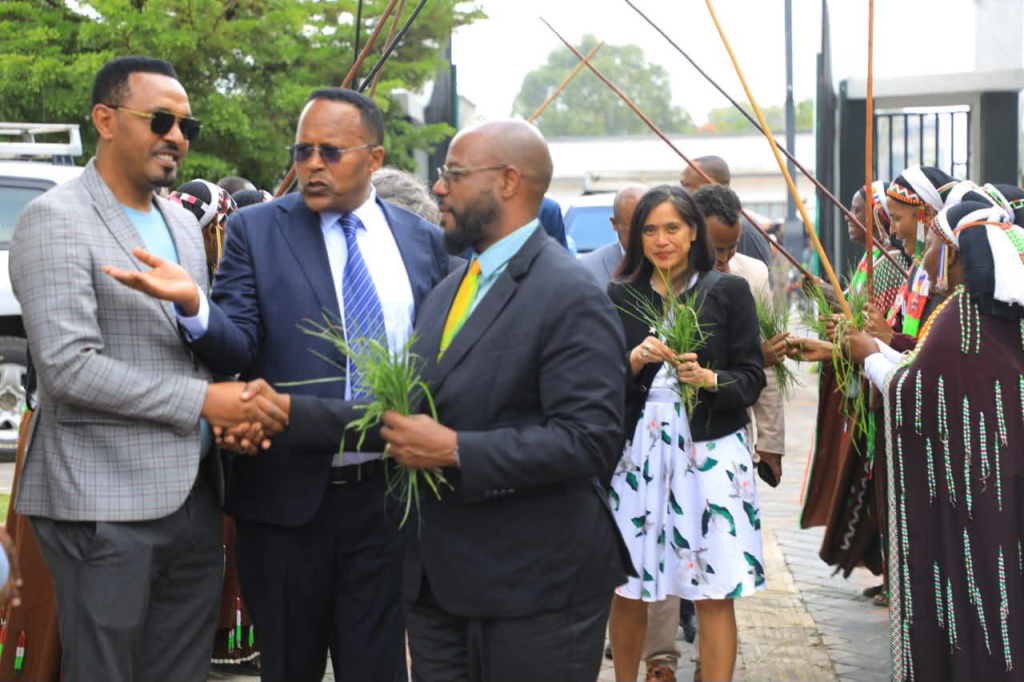
During the visit, local officials detailed the city’s developmental scenario, highlighting significant progress across multiple sectors. Key indicators shared with the Ambassador included:
Demographics: With a rapidly growing population, Shashemene is a city of young people. An estimated 65% of residents are under the age of 25 . This youth bulge presents both an opportunity and a challenge. Harnessing the energy and potential of this demographic is central to the city’s development strategy.
Infrastructure: The city is undergoing significant transformation. Under the national “Corridor Development” initiative, Shashemene is being upgraded into a smart city with modern transportation networks and improved public services . Recently, Shashemene was also upgraded to the status of a “Regiopolis” (a major regional urban center) .
Economic and Humanitarian Works: The city is seeing strong potential in revenue generation, economic development, and social services. There is real potential for job creation and attracting investment to improve livelihoods. Simultaneously, the city is focused on strengthening education, health, and security services for its families.
A Message of Partnership and Hope
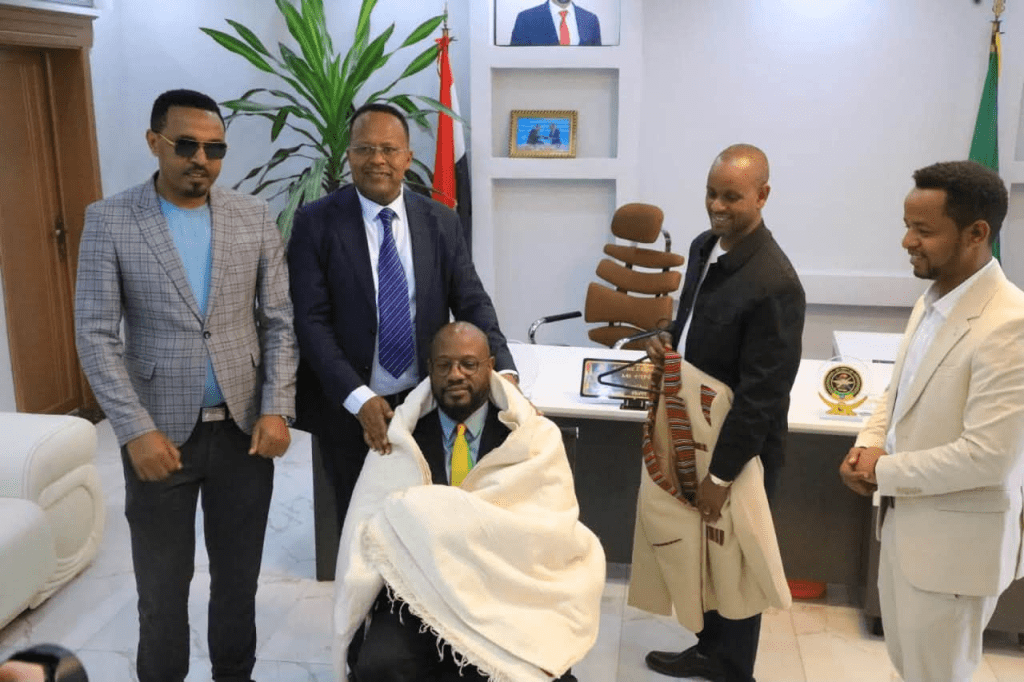
In welcoming the Ambassador, city officials expressed gratitude for the United States’ continued engagement and support. The Ambassador’s visit follows recent U.S. Embassy engagements in Oromia, where the focus has been on promoting inclusive economic development, improving health outcomes, and increasing the quality of education .
“Honorable Ambassador, we welcome your partnership and support as we continue building Shashemene into a safer, stronger, and more prosperous hub for many nations and nationalities.”
The officials noted that following the reform and prosperity government, meaningful transformation is not only possible but is already becoming real in communities across Ethiopia. The visit was described as a strong message of partnership, mutual respect, and shared goals.
The Power of Dialogue and Collaboration
As the visit concluded, the city offered its sincere gratitude and well wishes to the Ambassador.
“Honorable Ambassador, As a nation and transformative government all Ethiopians believe in the power of dialogue and collaboration. We hope your visit will deepen understanding, strengthen ties, and open new avenues for constructive support that benefits the people of Shashemene, Oromia and Ethiopia.”
The visit concluded with a reaffirmation of the commitment to build bridges of friendship between nations.
“Once again, welcome to Shashemene. We wish you a successful visit, and we thank you for your commitment to building bridges of friendship between nations. Thank you.”

Taaboree (Ukee): The Sacred Children’s Festival of the Oromo People
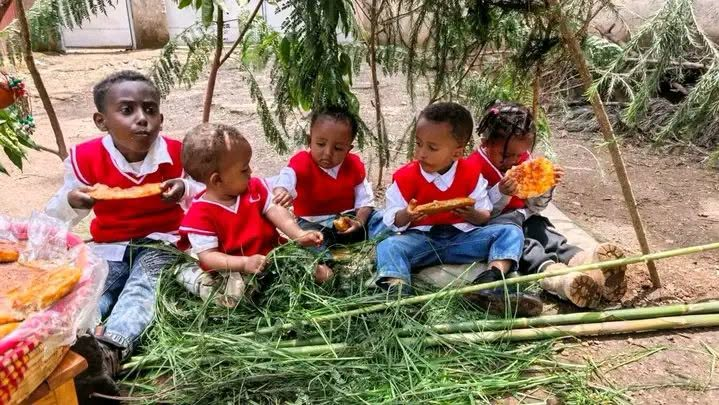
In the heart of the rainy season, a celebration of joy, freedom, and cultural continuity reminds us of the resilience of Oromo traditions
“Ayyaanni Taaboree, ayyaana ijoolleeti.”
The Taaboree festival is a festival for children. These simple words capture the essence of one of the most cherished celebrations in Oromo culture—a day when the voices of children fill the air, laughter echoes across the fields, and the community comes together to honour the youngest among them.
Taaboree (also known as Ukee) is celebrated primarily among the Maccaa and Tuulamaa Oromo communities. It is a festival that embodies the Oromo people’s deep reverence for children, their commitment to community, and their resilience in the face of cultural suppression.
The Season of Celebration
“Waqtii Gannaa kana keessa ji’a Adoolessaa kana keessa ayyaaneffatama.”
The Taaboree festival is celebrated during the rainy season, in the month of Adoolessa/July. The exact date varies from place to place, reflecting the diversity of Oromo communities and their local traditions.
“Guyyaan isaa bakkaa bakkatti gargar ta’uu mala.”
The timing of the festival is not fixed by a single calendar date but by the rhythms of nature and community life. When the rains have come, when the fields are green, when the earth is renewed—that is the time for Taaboree.
“Guyyaa kana ijoolleen hojiirraa bilisa.”
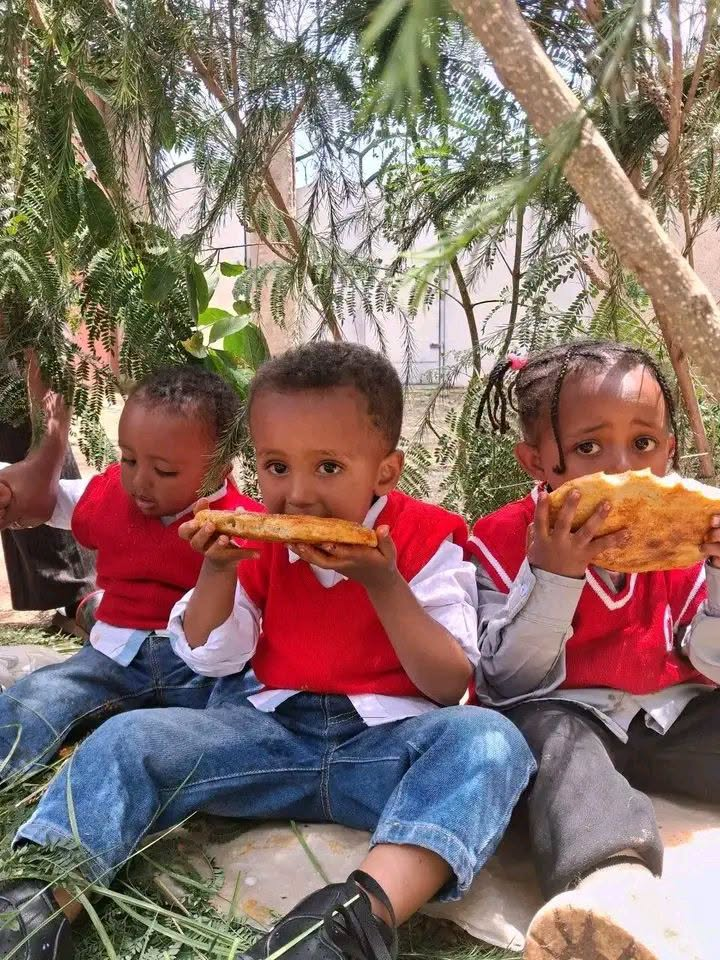
On this day, children are free from work. They are released from their chores, their responsibilities, and their daily duties. This is their day—a day of joy, of play, and of celebration.
“Nyaata mi’aawaa heddutu qophaaha; ijoolleen wal-geessee nyaatti.”
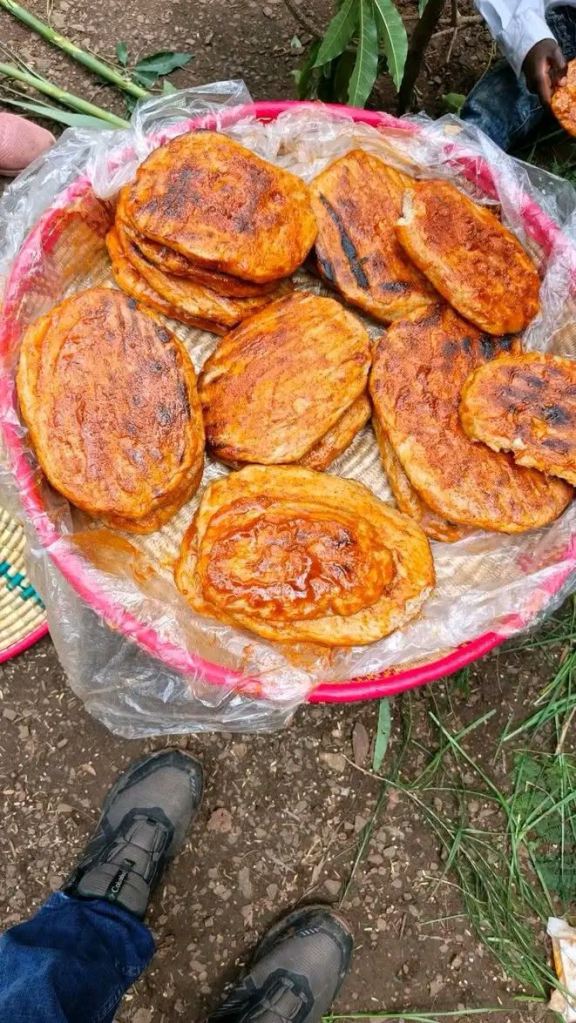
Delicious food is prepared, and the children gather together to eat. They share the meal in community, learning the values of generosity, togetherness, and mutual care.
“Ni dhiichisti.”
The community gathers around them, celebrating their youth, their energy, and their hope.
A Tapestry of Festivals
Taaboree is not the only festival in the Oromo calendar. The Oromo people have a rich tradition of seasonal celebrations, each with its own significance:
Ateetee: The women’s festival, celebrating the power and dignity of Oromo women.
Hingiccaa/Shinooyyee: The festival of young women, marking their transition to adulthood.
Booranticha: The father’s festival.
“Kana mara kan nurraa nyaate koloniidha.”
But all of these festivals have been eroded by colonialism. The colonial system that subjugated the Oromo people also sought to destroy their culture, their traditions, and their identity. The festivals that once united communities were suppressed, marginalized, and often forgotten.
The Nature of Colonization
“Qaamni si bituu fedhu, dursa waankee balleessa. Achii ofiikee gantee akka ati isa taatu godha.”
The one who seeks to buy you first destroys what you have. Then they offer you their own goods, making you believe that what they have is better.
This is a profound insight into the nature of colonization. The colonizer does not simply take what you have—they first destroy your culture, your traditions, your identity. They make you believe that your way of life is inferior, that your customs are primitive, that your identity is something to be ashamed of.
“Jarri dursa waan Oromoo, sirna isaa balleessuu irratti xiyyeeffatan.”
Those who came first were focused on destroying the Oromo identity and system. They understood that to control a people, you must first destroy their culture. You must make them forget who they are.
“Bakka baay’eetti waanti kun ta’eera.”
This has happened in many places. The suppression of Oromo culture, language, and traditions has been systematic and widespread.
The Resilience of Oromo Traditions
“Sirni Oromoo badee hin banne; cilaancilli isaa nu bira gaheera.”
The Oromo system has not been completely destroyed; only its shell has reached us. This is a statement of hope and resilience. While the colonial system has damaged Oromo traditions, the essence of Oromo culture survives.
“Amma aadaa babbareedaa daganne qorannee fuulduratti fiduu qabna.”
Now we must research the beautiful traditions we have forgotten and bring them back to life. This is a call to cultural revival—to remember, to reclaim, and to restore what was lost.
“Dhaloonni ammaa waan Oromoo bakkatti deebisuuf hojjachuu qaba.”
The current generation must work to restore Oromo culture. This is the responsibility of the present—to rebuild what was destroyed, to remember what was forgotten, and to pass on to future generations a living, thriving culture.
The Significance of Taaboree
The Taaboree festival is more than a celebration—it is an act of cultural resistance. In a world that has sought to erase Oromo identity, the celebration of Taaboree is a declaration that Oromo culture lives.
The festival teaches children:
- Their identity: They learn who they are and where they come from.
- Their community: They learn the values of sharing, togetherness, and mutual care.
- Their history: They learn the traditions of their ancestors.
- Their resilience: They learn that their culture has survived against the odds.
The Role of Children in Cultural Continuity
Children are not just the beneficiaries of culture—they are its carriers. The transmission of culture from one generation to the next depends on the active engagement of children in traditional practices.
Taaboree provides a space for children to experience their culture directly.
When children participate in the festival, they:
- Experience joy in their cultural identity
- Learn traditional songs and dances
- Share meals with their community
- Receive blessings from their elders
- Understand the rhythms of the natural world
These experiences become part of who they are. They shape their identity, their values, and their sense of belonging.
The Spiritual Dimension
The Taaboree festival, like all Oromo festivals, has a spiritual dimension. It is a time of giving thanks to Waaqa (God) for the blessings of life, for the rains, for the harvest, and for the children who carry the future.
The Oromo worldview recognizes the interconnectedness of all life. The spiritual, the human, and the natural are not separate—they are part of a single, harmonious whole.
When children participate in Taaboree, they are not just celebrating—they are connecting with the spiritual dimension of their culture. They are learning that their identity is not just about who they are now but about their place in a larger order.
The Challenge of Modernity
The Oromo cultural revival faces significant challenges. Modernity, urbanization, and the influence of external cultures have eroded traditional practices.
“Religious conversion and the influence of modernity have led to the decline of women’s institutions. Today’s generation, especially the young and educated ones, are viewing cultural institutions as a tradition of the past, not present.”
This is a challenge that the Oromo people must address. Cultural revival is not about rejecting modernity but about integrating traditional wisdom with contemporary life.
A Call to Cultural Revival
The Taaboree festival is not just a celebration—it is a call to action. It calls the Oromo people to:
Remember: Do not forget the traditions of the ancestors.
Reclaim: Take back what was taken.
Restore: Bring back what was destroyed.
Celebrate: Embrace your identity with pride.
The current generation has the responsibility to ensure that Taaboree—and all Oromo traditions—are passed on to the next generation.
Conclusion
“Ayyaanni Taaboree, ayyaana ijoolleeti.”
The Taaboree festival is a festival for children. But it is also a festival for the entire community—a celebration of identity, resilience, and hope.
In a world that has sought to erase Oromo culture, the Taaboree festival stands as a testament to the enduring spirit of the Oromo people. It is a reminder that culture cannot be destroyed by force—it lives in the hearts of those who remember, who celebrate, and who pass it on to the next generation.
“Amma aadaa babbareedaa daganne qorannee fuulduratti fiduu qabna.”
Now we must research the beautiful traditions we have forgotten and bring them back to life.
“Dhaloonni ammaa waan Oromoo bakkatti deebisuuf hojjachuu qaba.”
The current generation must work to restore Oromo culture.
In the children who celebrate Taaboree lies the hope of the Oromo nation. May their laughter echo through the generations, and may the traditions of the ancestors never be forgotten.

The Ya’a Gadaa of Arsii: Restoring the Sacred Assembly at Baldhaa
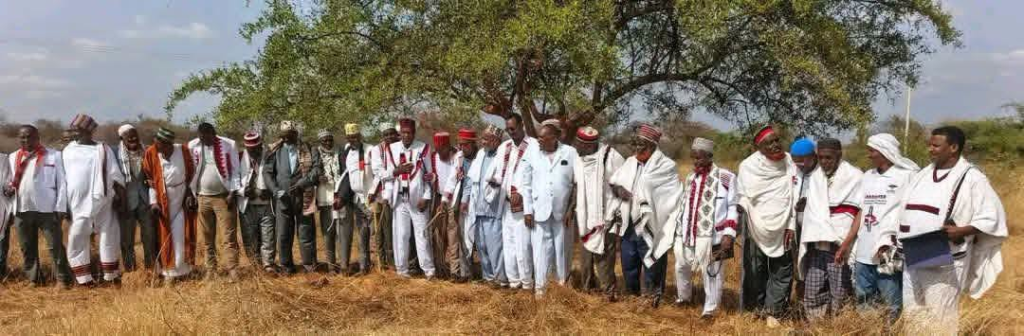
Thousands gather in East Bale Zone to revive the ancient Gadaa traditions and reclaim the cultural heritage of the Oromo people
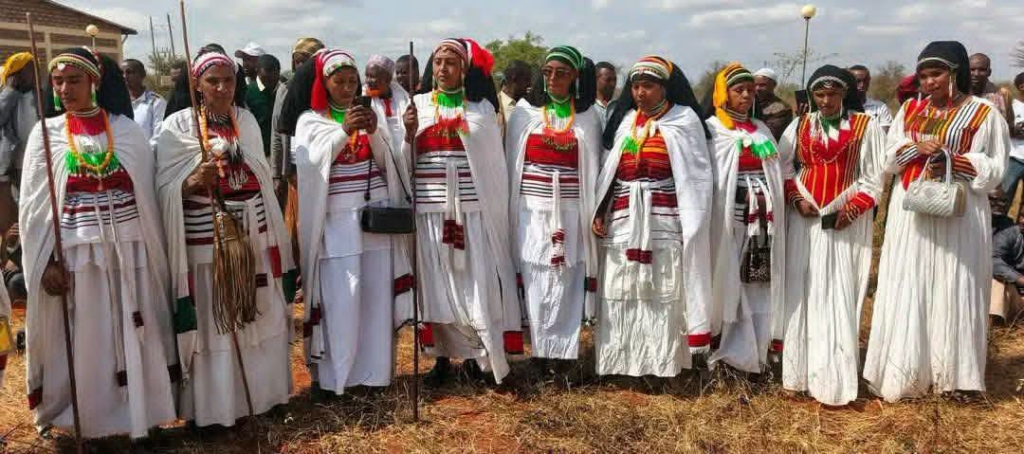
BALEE ZONE, OROMIYA — The ancient grounds of Dhaddacha Baldhaa have come alive with purpose. In a powerful display of cultural resilience, the Ya’a Gadaa (Gadaa Assembly) of Arsii has been formally inaugurated at Dhaddacha Baldhaa in Rayitu district of East Bale Zone. This historic gathering marks a significant milestone in the ongoing efforts to revive and restore the sacred traditions of the Oromo people.
The assembly, which began on Adoolessa 12-14 according to the traditional Oromo calendar, has brought together Abbootii Gadaa (Gadaa leaders), Haadholiin Siinqee (Siinqee women), and members of the broader Oromo community from across the region .
The Significance of the Gadaa System
“Sirni Gadaa Oromoo Hambaa Addunyaa hundagaleessa Uummatni Oromoo addunyaaf gumaachedha.”
The Oromo Gadaa system is a universal heritage that the Oromo people have contributed to the world. The Gadaa system is one of the most sophisticated indigenous governance structures in the world, encompassing political, cultural, economic, social, and other dimensions of life.
The Gadaa system, recognized by UNESCO as an Intangible Cultural Heritage of Humanity, has guided the Oromo people for centuries. It organizes society into generational classes that assume different responsibilities every eight years, ensuring democratic participation and peaceful succession.
“Sirni kun Sirna hundagaleessa hammattoowwan Siyaasaa, Aadaa, diinagdee, hawaasummaafi kanneen biroo of keessatti hammatee dhalootaa dhalootatti darbaa dhufe.”
This system has been passed down through generations, embodying the democratic principles of checks and balances, equality, and participatory governance. It integrates political, judicial, social, economic, cultural, and religious functions, making it a comprehensive framework for Oromo society.
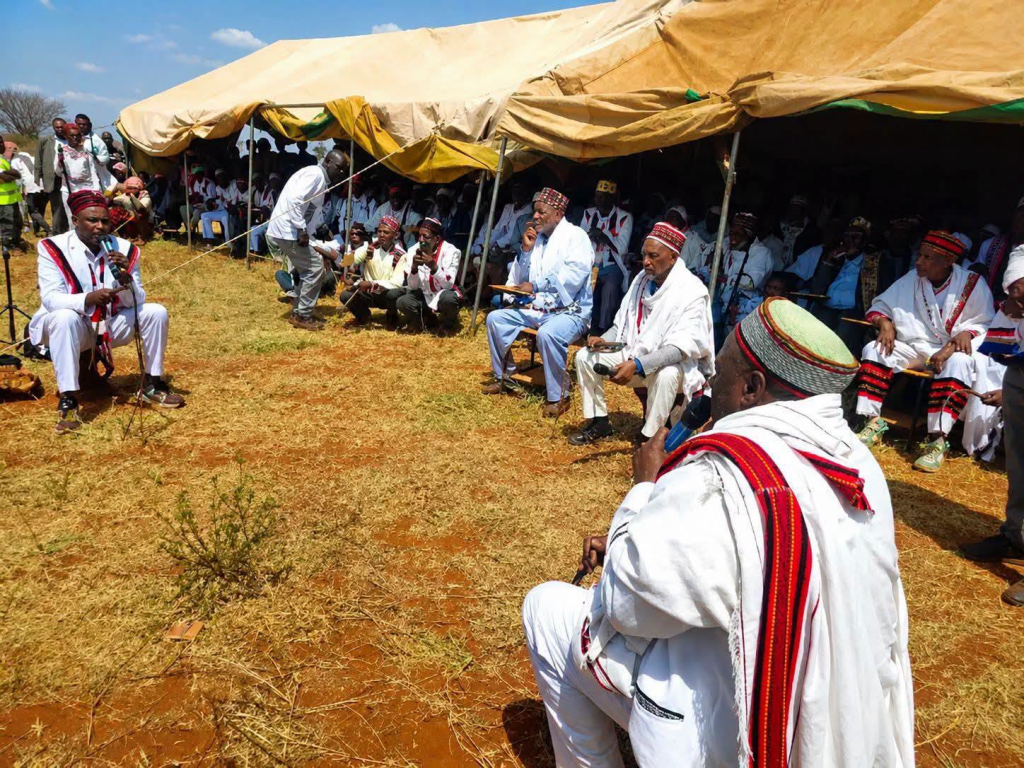
Cultural Revival and Restoration
“Mootummaan Naannoo Oromiyaa Misooma Aadaa uummatichaaaf kenneen hojiilee Haaromsa Aadaa keessaa tokko kan ta’e Aadaa ceesisuun dhalootaa dhalootatti dabarsuun uummaticha fayyadamaa taasisuun Uummata Aadaa isaan boonuufi eenyummaa isaatiin addunyaarratti dorgomaa ta’e uumuuf hojiilee hojjatameen Ardaaleen Jilaa ykn dhaddhachaaleen wiirtuuwwan Gadaa bakka isaanii ganamaatti deebisuuf hojii hojjatameen milkaa’inootni galmaa’aniiru.”
The Oromia Regional Government has given significant attention to cultural development. Among the cultural revival efforts, the restoration of traditional institutions and the transmission of cultural practices from generation to generation have been prioritized.
The revival of the Gadaa system is part of a broader movement to strengthen Oromo identity and enable the people to stand proudly in the world, competing through their culture and identity. The restoration of Dhaddachas (Gadaa class centres) represents a key achievement in this effort.
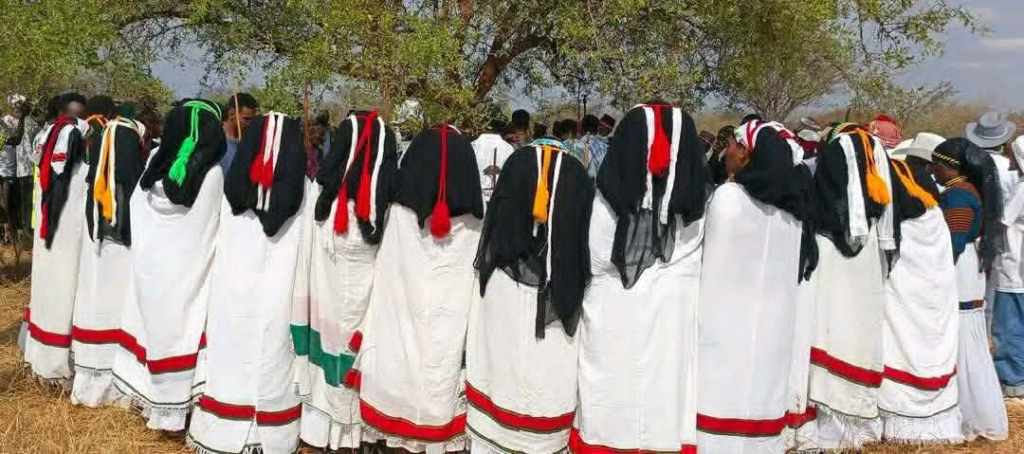
The Gathering at Baldhaa
“Qaama Haaromsa Aadaa kan ta’e Dhaddhachaaleen ykn Ardaaleen Jilaa akka saaqamaniifi bakka isaaniitti deebi’aniif hojiilee hojjatameen dhaddachoota Gadaa Arsii keessaa tokko kan ta’e Dhaddachi Bal’aa Godina Baale Bahaa Aanaa Raayituutti bakka Abbootiin Gadaa, Haadholiin Siinqeefi Uummatni bal’aan argametti gaggeeffamuun eegalee jira.”
The Dhaddacha Baldhaa, one of the Gadaa assembly centers of Arsii, has been formally re-established in Rayitu district of East Bale Zone. The ceremony is being held in the presence of Gadaa leaders, Siinqee women, and the broader Oromo community.
The Ya’a Gadaa at Dhaddacha Baldhaa is not merely a commemoration—it is an act of restoration. The Gadaa system, which faced significant challenges from colonial suppression and modern pressures, is being actively revitalized.
The gathering is a declaration of cultural survival—a statement that the Oromo people will not be erased, their culture will not be forgotten, and their identity will not be denied.
The Path Forward
“Haaromsi Aadaa Oromoo eenyummaafi duudhaa Oromoo cimsuun, aadaa, barnoota, teeknooloojii fi diinagdee waliin tarkaanfachuuf bu’uura ta’aa jira.”
The cultural revival of Oromo traditions is not merely about preserving the past—it is about creating a foundation that enables the Oromo people to move forward in step with education, technology, and economic development.
As the elders gather under the sacred sycamore tree, they are not just remembering the past—they are building the future. The Gadaa system is not a relic of history but a living, breathing system of governance that continues to guide the Oromo people into the 21st century.

Conclusion
“Odaa Robaa, Odduun Roobaaf Nagaya!”
May the Odaa Roobaa be blessed! May the news of Roobaa bring peace!
The Ya’a Gadaa of Arsii at Dhaddacha Baldhaa is a historic gathering—a reaffirmation of Oromo identity, a restoration of sacred traditions, and a declaration of cultural survival. Thousands have gathered, and the message is clear: the Gadaa system lives, the Oromo people endure, and the traditions of the ancestors will never be forgotten.
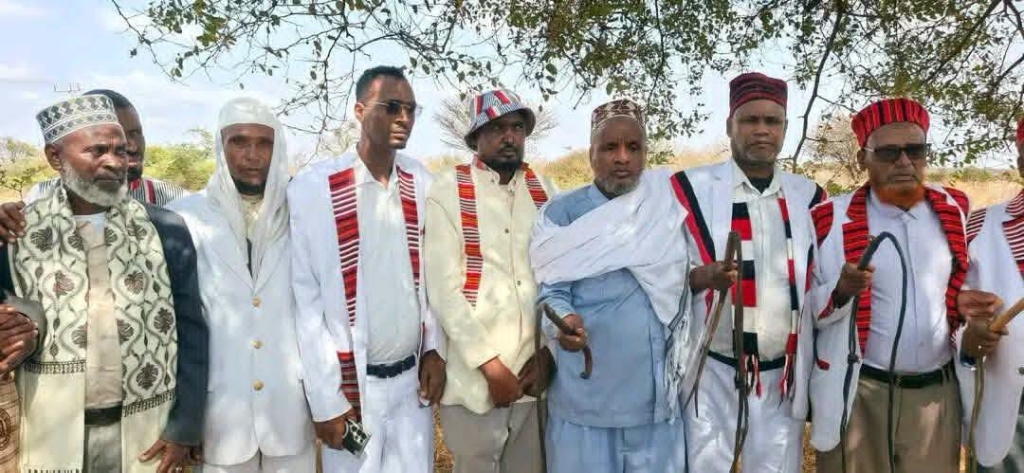
The Ya’a Gadaa at Dhaddacha Baldhaa stands as a testament to the resilience of the Oromo people and the enduring power of the Gadaa system.






