Category Archives: Waaqeffannaa

Oromo Cultural Renaissance: Reviving Ancient Traditions and Strengthening Identity
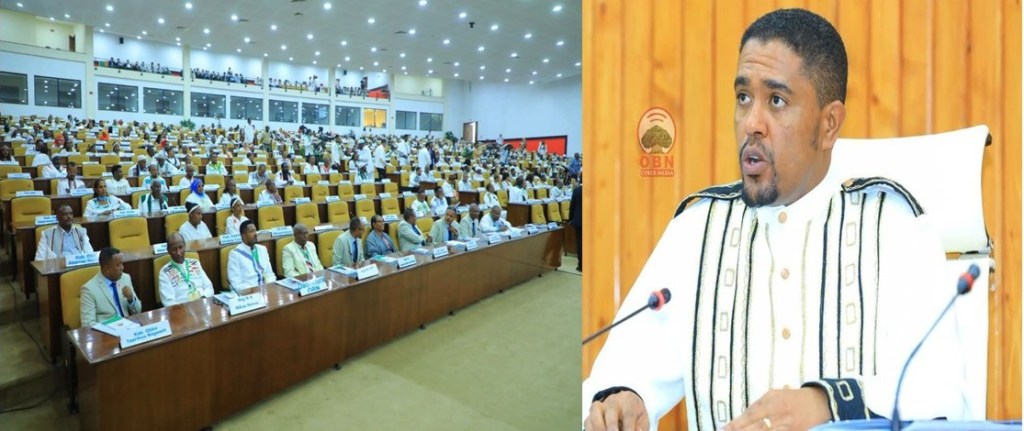
President Shimelis Abdisa outlines the progress and vision of Oromia’s cultural revival, emphasizing the restoration of traditional institutions and the celebration of indigenous heritage.
ADAMA, OROMIYA — In a powerful address to the 11th Regular Session of the 5th Year of the 6th Term of the Oromia Council, President Shimelis Abdisa declared that the Oromia Regional Government is actively pursuing cultural revival initiatives aimed at restoring the traditional morning customs and foundational practices of the Oromo people.
The President’s statement, “Haaromsi Aadaa Oromoo duudhaa ganamaa deebisaa jira” (The Oromo cultural revival is restoring the morning traditions), marks a significant milestone in the ongoing efforts to reclaim and celebrate the indigenous heritage of the Oromo nation.
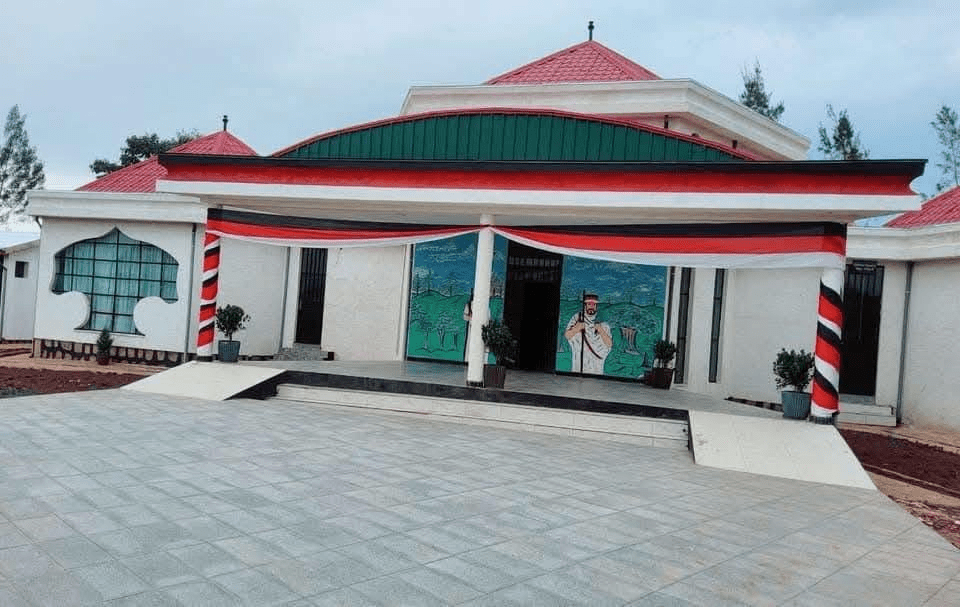
The Revival of Traditional Practices
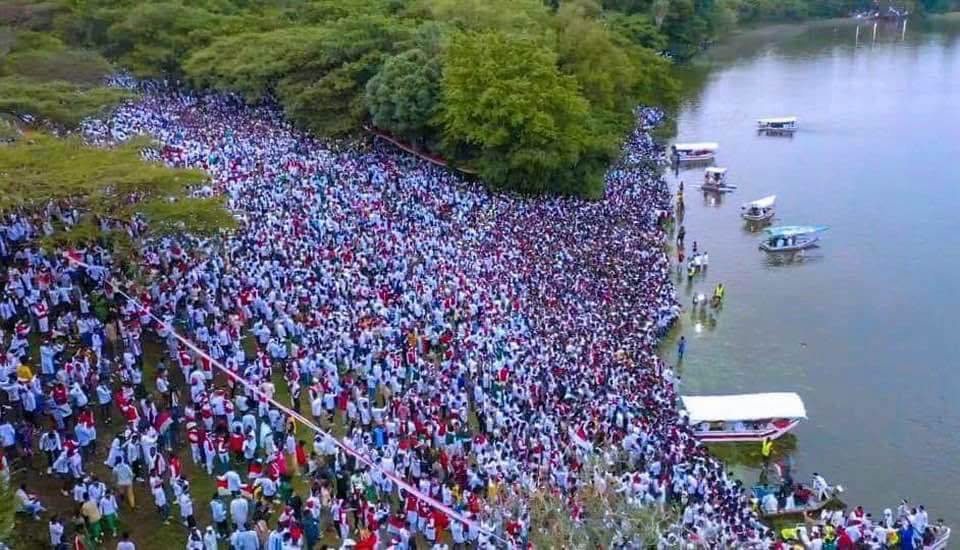
Reviving Festivals and Ceremonies: According to President Shimelis, the cultural revival initiatives have led to the resurgence of various traditional festivals and ceremonies that had been marginalized for extended periods due to historical suppression and neglect. These include the celebration of Irreechaa, the Oromo thanksgiving festival, which has grown in prominence not only within Oromia but also across the nation and in diaspora communities worldwide.
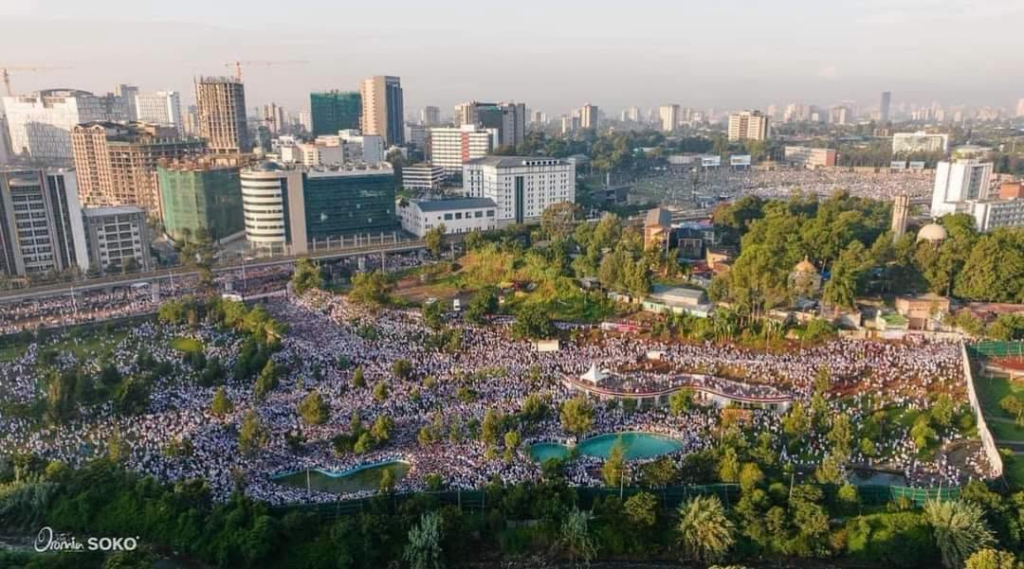
The revival of Irreechaa is viewed as more than a cultural celebration—it is a symbol of Oromo identity and resilience. The festival, which has attracted participants from across the region and beyond, is seen as evidence of the success of these cultural restoration efforts .
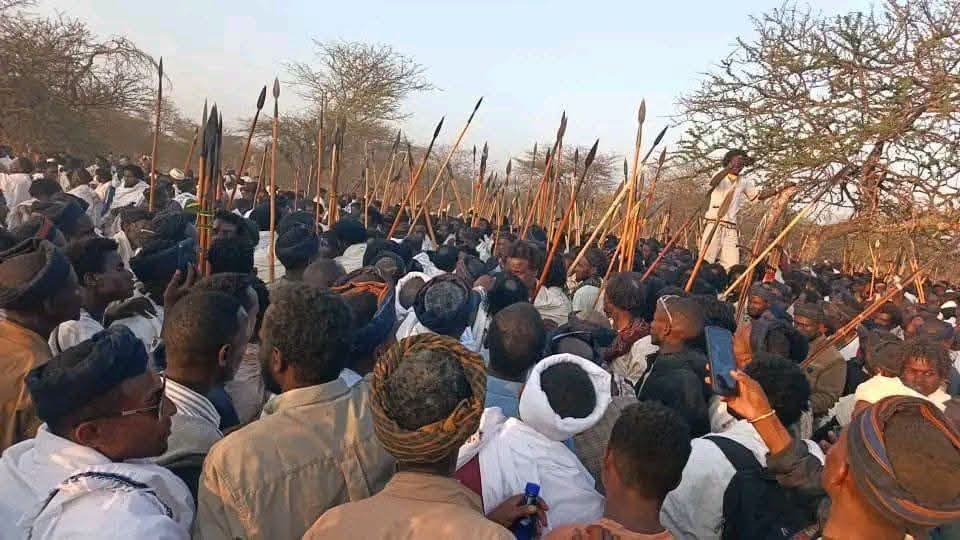
Restoration of the Gadaa System: The President also highlighted the peaceful power transfer ceremonies of the Gadaa system among the Karrayyu and Tulama Oromo communities. These ceremonies, conducted according to traditional protocol, demonstrate the enduring democratic principles of the Oromo Gadaa system. The Gadaa system, recognized by UNESCO as an Intangible Cultural Heritage of Humanity, continues to be a living example of indigenous governance and democratic participation.
Institutionalising Cultural Governance
Establishment of Traditional Courts: One of the most significant achievements of the cultural revival program has been the establishment of Traditional Courts. According to the President’s report, to date, 7,058 primary Traditional Courts and 373 appellate Traditional Courts have been established across the region. These courts play a vital role in enabling communities to seek justice according to their cultural norms and traditional customs.
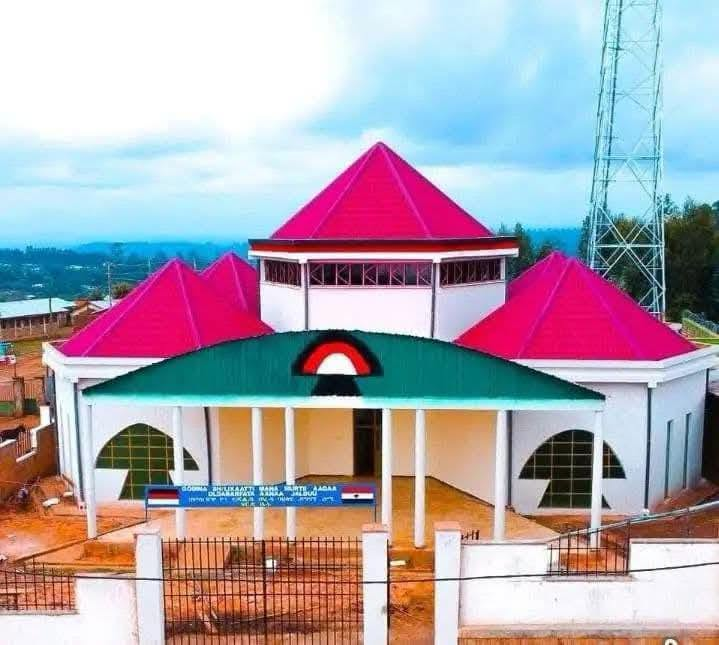
Conflict Resolution: The establishment of these traditional institutions has had a tangible impact on community harmony. The President highlighted that in 2018 alone, over 393 community conflict cases were resolved through these traditional structures. Of these, more than 370 cases were successfully resolved, demonstrating the effectiveness of culturally grounded approaches to peacebuilding and reconciliation .
A Foundation for the Future
Integrating Culture with Modern Development: President Shimelis emphasized that the cultural revival of Oromo traditions is not merely about preserving the past—it is about creating a foundation that enables the Oromo people to move forward in step with education, technology, and economic development. By strengthening cultural identity and traditional governance structures, the community is better positioned to navigate the challenges of modernisation while maintaining its unique heritage.
Calls for Continued Progress: Community responses to the President’s address have expressed support for the revival efforts while calling for ongoing progress. Some have raised issues in specific regions that require continued attention, demonstrating the ongoing dialogue between leadership and citizens regarding the implementation of these cultural initiatives.
A Broader Cultural Movement
The Oromo cultural revival is part of a broader movement across Africa to reclaim and celebrate indigenous cultures, languages, and governance systems. By reviving traditional institutions and practices, the Oromo people are reasserting their identity and contributing to the diverse cultural tapestry of the continent.
Conclusion
President Shimelis Abdisa’s address to the Oromia Council reaffirms the regional government’s commitment to cultural revival as a cornerstone of Oromo identity and development. The restoration of traditional festivals, the peaceful conduct of Gadaa power transfers, and the establishment of Traditional Courts reflect a concerted effort to strengthen the cultural foundations of the Oromo people.
“Haaromsi Aadaa Oromoo eenyummaafi duudhaa Oromoo cimsuun, aadaa, barnoota, teeknooloojii fi diinagdee waliin tarkaanfachuuf bu’uura ta’aa jira” —The President noted that the cultural revival, by strengthening Oromo identity and traditions, serves as a foundation for advancing alongside education, technology, and economic development .
As the Oromo people continue this journey of cultural renewal, the revival of their traditions stands as a testament to the resilience and enduring spirit of one of Africa’s largest ethnic groups.
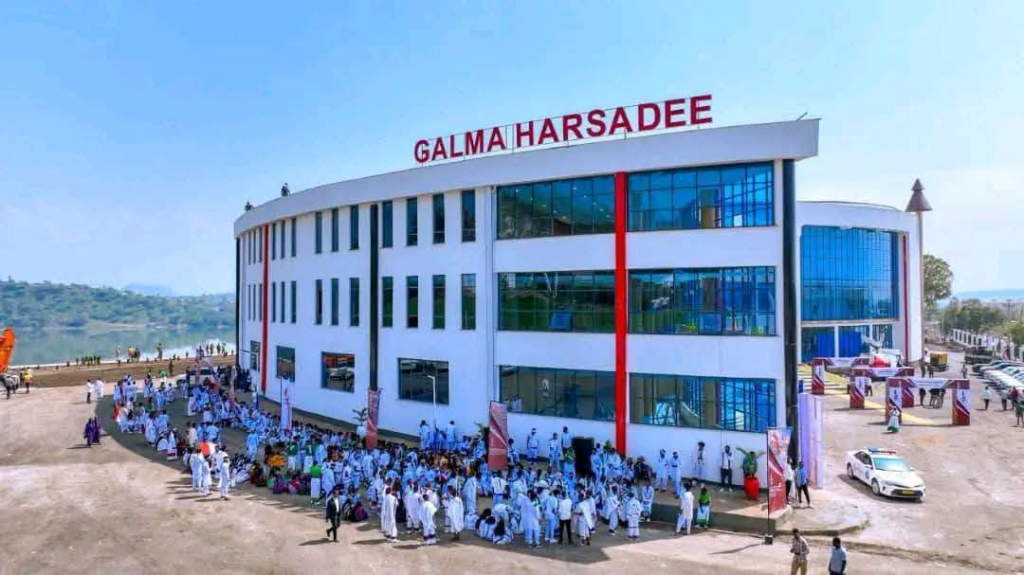
Cultural revival is not just about looking back—it’s about building a stronger foundation for the future.

FOUR DECADES OF SCHOLARSHIP, ONE ENDURING LEGACY
As the Oromo Studies Association marks 40 years, its Journal enters a new era — and a community reflects on how far it has come
—
The year was 1986. In exile, in meeting rooms scattered across the diaspora, a small group of Oromo and non-Oromo scholars gathered with a radical idea. They would build an independent academic home for the study of a people whose history, culture, and very existence had been systematically erased from mainstream scholarship. They would create a space where knowledge about the Oromo could be produced not by outsiders, but on its own terms.
They called it the Oromo Studies Association.
Four decades later, that audacious dream has become something far greater than its founders could have imagined. The OSA has grown into a global scholarly community spanning continents and disciplines. Its Journal of Oromo Studies, launched in 1993, has become the premier peer-reviewed publication for interdisciplinary scholarship on the Oromo people. And in a landmark achievement that signals the maturation of the field, the Journal has now been indexed in Scopus — one of the world’s most prestigious academic databases.
—
THE JOURNAL: A DREAM COME TRUE
When the first issue of the Journal of Oromo Studies rolled off the presses in the summer of 1993, it was described as “a dream come true”. For scholars who had labored in obscurity, publishing in venues that often dismissed or distorted Oromo realities, the Journal offered something revolutionary: a platform where Oromo scholarship could stand on its own.
The first volume featured foundational essays by scholars like Asafa Jalata, whose work on “The Oromo, Change and Continuity in Ethiopian Politics” helped define the contours of a new field. Over the decades that followed, the Journal would publish research on everything from the Gadaa system to diaspora studies, from economic development to cultural preservation, from historical linguistics to contemporary politics.
Now fully open-access, the Journal publishes articles, research notes, and scholarly book reviews in both English and Afaan Oromoo, welcoming contributions from emerging and established scholars alike. Its interdisciplinary scope offers readers a comprehensive view of the socioeconomic, political and cultural conditions of the Oromo people — now numbering over 40 million across the Horn of Africa and the global diaspora.
—
SCOPUS: A SEAL OF GLOBAL RECOGNITION
In June 2026, Scopus announced the addition of 242 new journals to its prestigious index. Among them was the Journal of Oromo Studies, bearing ISSN 1070-2202, published by the Oromo Studies Association.
For those unfamiliar with the world of academic publishing, Scopus indexing is not a minor achievement. It is the gold standard. It means the Journal has been vetted by an independent Content Selection and Advisory Board and found to meet the rigorous criteria for quality, peer review, and scholarly impact. It places JOS alongside publications from Springer, Elsevier, Wiley, and Cambridge University Press.
As Bonnie Holcomb, the Journal’s Editor-in-Chief, noted in a recent message to contributors and advisors: “This publication, and the indexing in Scopus, are notable achievements, all. We have come a long way together.”
The words carry weight. For those who have walked this road — who have submitted manuscripts, reviewed articles, edited copy, and advocated for Oromo scholarship in spaces where it was once unwelcome — this is validation of a lifetime of labor.
—
THE VISIONARIES BEHIND THE MOVEMENT
The Oromo Studies Association was not born in a vacuum. It was founded by a group of exiled activists in 1986, a direct response to a crackdown that had led to those campaigning for greater recognition of the Oromo people being murdered, tortured, jailed, or driven out of the country. The founding was a response to a void — a void in which Oromo heritage was not merely absent from academia and state narratives, but actively suppressed.
Among the founders was Sisai Ibssa, a scholar-activist whose intellectual journey shaped the trajectory of Oromo studies for decades. A special issue of the Journal was devoted to honoring his contributions, examining his role in the Oromo liberation movement and his philosophical commitment to self-determination.
Another towering figure was Professor Asmarom Legesse, whose landmark work Gada: Three Approaches to the Study of African Society (1973) brought the Oromo democratic system to international scholarly attention. Legesse passed away on January 31, 2026, just weeks before OSA’s 40th anniversary year. His legacy, and the generations of scholars he inspired, will be honored at this year’s conference.
—
FORTY YEARS: ONE FULL GADAA CYCLE
In Oromo tradition, the Gadaa system operates on eight-year cycles, with a full generational transition spanning forty years. This year’s anniversary is therefore not merely a milestone — it is a symbolic completion of a full Gadaa cycle, representing generational renewal, continuity, and the orderly transfer of knowledge and responsibility.
The 2026 Annual Conference, themed “Oromo on the Global Landscape: Honoring Asmarom Legesse as OSA Turns 40,” will be held July 31 through August 2 in Minneapolis, Minnesota, at Augsburg University’s Hagfors Center.
The conference will bring together scholars, researchers, students, and community members from across the diaspora and the continent for three days of panels, roundtables, keynote addresses, and community dialogue. It will feature diaspora-connected parallel panels abroad, reflecting the conference’s commitment to centering Oromo communities wherever they are.
An opening night and dinner will be held on Friday evening, July 31, at the Oromo Community Center in Saint Paul. Registration is open to all — whether presenting research, attending for the first time, or returning as a longtime member of the OSA community.
—
THE WORK THAT REMAINS
For all the achievements, the road has not been easy. As Holcomb reminded the Journal’s contributors: “It has been a long and sometimes a difficult road to reveal evidence and build knowledge which shift the narrative in the region and globally.”
The work of the OSA and the Journal has always been more than academic. It has been an act of intellectual resistance — a refusal to accept the erasure of a people’s history and a determination to tell stories that had been silenced. It has been about shifting narratives, not just in Ethiopia but across the global scholarly landscape.
Now, with Scopus indexing and forty years of institutional life behind it, the OSA stands at a moment of both celebration and renewed commitment. The Journal’s entire archive — decades of scholarship — is now posted to the OSA website at oromostudies.org. The institutional memory is preserved. The foundation is stronger than ever.
—
A CALL TO THE COMMUNITY
Holcomb’s message to the Journal’s contributors and advisors is also a call to action:
“Please remember that it is the Oromo Studies Association that has conceived, designed, hosted, nurtured, upheld and published the research and scholarship represented in JOS. I urge you all to continue to support OSA, and by extension, its Journal, with donations, membership in OSA and engagement as well as submissions.”
The invitation is extended to all: fellow scholars, colleagues, and community members. Attend the conference, in person or virtually. Submit your research. Join the membership. Support the work.
As the OSA enters its fifth decade, the question is not whether it has achieved something remarkable — it has. The question is whether the next generation will carry the torch forward. Whether the scholarship will continue. Whether the Journal will remain the premier asset of a community that has fought for its voice.
—
CONCLUSION: A LEGACY WORTH CELEBRATING
Forty years ago, a small group of exiled scholars dared to imagine a world in which Oromo knowledge was recognized as a contribution to the full breadth of human civilization. Today, that vision is reality.
The Journal of Oromo Studies, indexed in Scopus, stands as a monument to their courage and their persistence. The annual conference, now in its 40th year, brings together a global community of scholars and advocates. The website, with its full open-access archive, makes decades of scholarship available to anyone with an internet connection.
But the work is not finished. The narratives continue to shift. The knowledge continues to grow. The community continues to build.
As Holcomb wrote, with a warmth that reflects decades of dedication: “Congratulations, one and all.”
The celebration is earned. The legacy is enduring. And the future — if the community continues to support it — is bright.
—
The 40th Annual Conference of the Oromo Studies Association will take place July 31 – August 2, 2026, at Augsburg University, Hagfors Center, 700 21st Ave S, Minneapolis, MN 55454. Details at www.oromostudies.org/conference. The opening night and dinner will be held on Friday, July 31, at the Oromo Community Center, 465 Mackubin Street, Saint Paul, MN 55103.

The Wonders of Creation: A Reflection on the Divine Order and Human Understanding

Exploring the mysteries of the universe and the pursuit of wisdom through the story of Daaniyaa.
There are moments in life when we are called to pause—to step back from the noise of our daily existence and contemplate the grandeur of creation. These moments of reflection are not merely intellectual exercises; they are acts of spiritual and psychological renewal that nourish the soul and expand the mind.
“Yeroo tokko tokko waan Uumaa-uumamaa xiinxaluu fi abuuruun fayyaa fi qalbii keenyaaf gaarii dha.”
Sometimes, contemplating the wonders of creation and being amazed by them is good for our health and our hearts. This simple truth carries profound wisdom. In a world that constantly demands our attention, our energy, and our productivity, we are rarely encouraged simply to wonder—to gaze at the stars, to marvel at the complexity of life, to ponder the mystery of existence itself.
The Wisdom of Contemplation
“Uumaan akkamitti akka uumama uumee fi akka jiraatu godhe, akkasumas akkamitti akka itti fufsiisaa jiru qorachuun beekumsaa fi hayyummaa olaanaa namaaf dabala.”
Studying how the Creator has created creation, how He has made it exist, and how He continues to sustain it adds to a person’s knowledge and elevates their wisdom.
This is a profound insight into the nature of wisdom itself. Wisdom is not merely the accumulation of facts; it is the ability to see the connections between things, to understand the patterns that underlie reality, and to recognize the hand of the Creator in all that exists.
When we study creation, we are not just learning about the world—we are learning about the Creator. We are glimpsing the divine wisdom that has ordered the universe.
The natural world is a book of signs, a revelation of divine artistry. The cycles of the seasons, the complexity of the human body, the vastness of the cosmos—all speak of a Creator whose wisdom and power are beyond human comprehension.
The Quest for Knowledge
“Raajii fi dinqii kana beekuuf tattaaffii gochuunis qalbii namaa haaromsa.”
Striving to know these prophecies and wonders renews the human spirit. The pursuit of knowledge is not a dry, academic exercise—it is a spiritual journey that enriches the soul and refreshes the mind.
This is why humanity has always been drawn to the mysteries of existence. From the earliest philosophers to the greatest scientists, the quest to understand the nature of reality has been a driving force of human civilization.
When we seek to understand the wonders of creation, we are engaging in an act of worship. We are using the minds that the Creator has given us to appreciate the beauty and complexity of what He has made.
Daaniyaa: A Model of Wisdom and Knowledge
“Daaniyaan beekumsaa fi hayyummaa jabaa ofkeessaa qaba.”
Daaniyaa possesses strong knowledge and wisdom. The figure of Daaniyaa, known from ancient scripture and tradition, stands as a model of the integration of wisdom and faith.
Daaniyaa was a man who, despite being taken into exile in a foreign land, maintained his faith in the Creator. He was known for his wisdom, his integrity, and his ability to interpret visions and dreams. He was a man of prayer who sought understanding from God.
Daaniyaan beekumsaa fi hayyummaa jabaa ofkeessaa qaba. Daaniyaa embodies the kind of wisdom that comes not merely from human learning but from divine revelation. He was a man who understood the mysteries of creation because he was in relationship with the Creator.
The Questions and Answers
“Waa’ee Daaniyaa beekuuf gaaffii fi deebii kana daaw’achuun mishaa dha.”
To know about Daaniyaa, watching this question and answer is excellent. The story of Daaniyaa offers us a model of what it means to pursue wisdom in a world that often values power over understanding.
Daaniyaa’s wisdom was not a secret he kept to himself; it was a gift he used to serve others. He interpreted dreams for kings, provided counsel to rulers, and gave glory to God for the wisdom he had received.
The questions we ask about Daaniyaa are really questions about ourselves. How can we cultivate wisdom in our own lives? How can we maintain our faith in the midst of challenges? How can we use our knowledge to serve others?
The Call to Wonder
In a world that often values certainty over curiosity, the call to wonder is a radical act. It is an acknowledgment that there is always more to learn, always more to discover, always more to understand.
The pursuit of wisdom is a lifelong journey. It requires humility, curiosity, and a willingness to be amazed. It requires us to recognize that we are not the center of the universe but are part of a larger creation that points beyond itself to its Creator.
Conclusion
“Yeroo tokko tokko waan Uumaa-uumamaa xiinxaluu fi abuuruun fayyaa fi qalbii keenyaaf gaarii dha.”
Sometimes, contemplating the wonders of creation and being amazed by them is good for our health and our hearts.
As we contemplate the wonders of creation, as we study the works of the Creator, and as we strive to understand the mysteries of existence, we grow in wisdom and in health. We are renewed in spirit and refreshed in mind.
Let us never lose the capacity for wonder. Let us always seek to understand. Let us follow the example of Daaniyaa, who combined strong knowledge and wisdom with unwavering faith.
—
The wonders of creation are all around us, waiting to be discovered. May we have the eyes to see them, the hearts to be amazed by them, and the minds to understand them.

What Makes Waaqeffanna Different from Other Religions?

In the highlands and lowlands of Oromia, where the Oromo people have lived for millennia, an ancient faith endures. Waaqeffanna—the indigenous religion of the Oromo—represents one of Africa’s oldest continuous monotheistic traditions. But in a world where Christianity and Islam dominate the religious landscape, what truly sets Waaqeffanna apart?
The Core Belief: One God, No Idols
At its heart, Waaqeffanna is a monotheistic religion. Followers, known as Waaqeffataa, believe in Waaqa Tokkicha—the one God. Waaqa, meaning “the God of heaven” in the Oromo language, is the creator of the universe and all life within it.
Yet here lies the first distinction: unlike many other faiths, Waaqeffanna has no temples, no idols, and no anthropomorphic representations of the Divine. As one French missionary observed in 1901, the Oromo “repudiate all anthropomorphic representation of the Divinity. Their temple, which is the universe with the star-studded arch; their altar, the surface of the earth”. Where other religions build cathedrals, mosques, and synagogues, Waaqeffanna worshippers find the sacred in creation itself.
Worshipping Through Creation
The slogan of Waaqeffanna captures its essence: “Uumamaan Uumaa galateeffanna” —”We praise the Creator by His creation”. This principle shapes everything about the faith. Followers see Waaqa’s deeds in the coming of rains, the sprouting of new life, and the changing of seasons. Nature is not worshipped itself but serves as the primary material through which God is praised.
This stands in stark contrast to religions that emphasise revealed scriptures or prophetic traditions. Waaqeffanna has no holy book. A legend tells that Waaqa once gave the Oromo a sacred book, but a cow ate it, and God—in his anger—never provided another. Whether myth or metaphor, the story reveals something profound: in Waaqeffanna, God’s presence is encountered not in written words but in the living world.
The Three Pillars: Ayyaana, Uuma, and Safuu
Waaqeffanna rests on three foundational concepts:
Ayyaana are intermediary spirits that serve as manifestations of Waaqa, connecting the divine with the human world. Through Ayyaana, Waaqa can communicate with chosen individuals who become religious leaders known as Qaallu (male) or Qaafitti (female).
Uuma refers to creation itself—the entire universe as the handiwork of God.
Safuu forms the moral and ethical foundation, guiding right conduct and maintaining cosmic order.
This trinity of spirit, creation, and morality provides a comprehensive worldview without the rigid dogmas or institutional hierarchies found in many other religions.
The Gadaa Connection: Religion as Governance
Perhaps the most distinctive feature of Waaqeffanna is its intimate connection with the Gadaa system—the traditional Oromo democratic governance structure. Unlike other religions that often separate spiritual and political authority, Waaqeffanna is woven into the fabric of Oromo social organisation. Religious leaders play spiritual and political roles within the Gadaa system. This integration of faith and governance is rare among world religions and reflects a holistic approach to life where the sacred and the civic are inseparable.
Tolerance Without Compromise
Remarkably, Waaqeffanna has demonstrated extraordinary religious tolerance throughout its history. Many Oromo today practice Christianity or Islam alongside elements of their ancestral faith—a phenomenon known as syncretism. This compatibility stems from Waaqeffanna’s focus on natural patterns of life and right conduct rather than exclusive doctrinal claims.
Yet this tolerance does not diminish the faith’s distinct identity. Whether Oromo become Christians or Muslims, “a true belief in one God (Waaqeffanna dhugaa) remains the basic tenet of Oromo identity”. The Oromo never substituted other gods or carved statues for their Waaqa. This steadfastness in monotheism, combined with openness to other traditions, creates a unique religious posture.
Similarities and Distinctions
Like Christianity and Islam, Waaqeffanna affirms belief in one supreme God. But where Abrahamic religions centre on prophets, scriptures, and institutional structures, Waaqeffanna centres on the natural world, moral order (Safuu), and spirit intermediaries (Ayyaana).
Where other religions build physical sacred spaces, Waaqeffanna finds the sacred everywhere. Where others seek divine revelation in texts, Waaqeffanna finds it in the rhythm of seasons, the fertility of the earth, and the moral conscience of the community.
A Living Tradition
Today, approximately 3% of the Oromo population—roughly 1.1 million people—actively practice Waaqeffanna. The annual Irreechaa festival, a thanksgiving ritual held at riversides or mountaintops, draws thousands who gather with fresh green grass to pray to Waaqa Gurraacha (the Black God).
In an era of globalisation and religious homogenisation, Waaqeffanna stands as a testament to the diversity of human spiritual expression. It reminds us that faith need not be confined to books or buildings, that the divine can be encountered in a blade of grass or the turning of the seasons, and that monotheism has many faces—not all of them shaped by the deserts of the Middle East.
Waaqeffanna is not merely a religion; it is a way of seeing the world—where every creature, every river, every sunrise is a prayer, and the universe itself is the temple.
The Sacred Feast: Guyyoo Gobba Community Gathers for the Nyaachisaa Ceremony
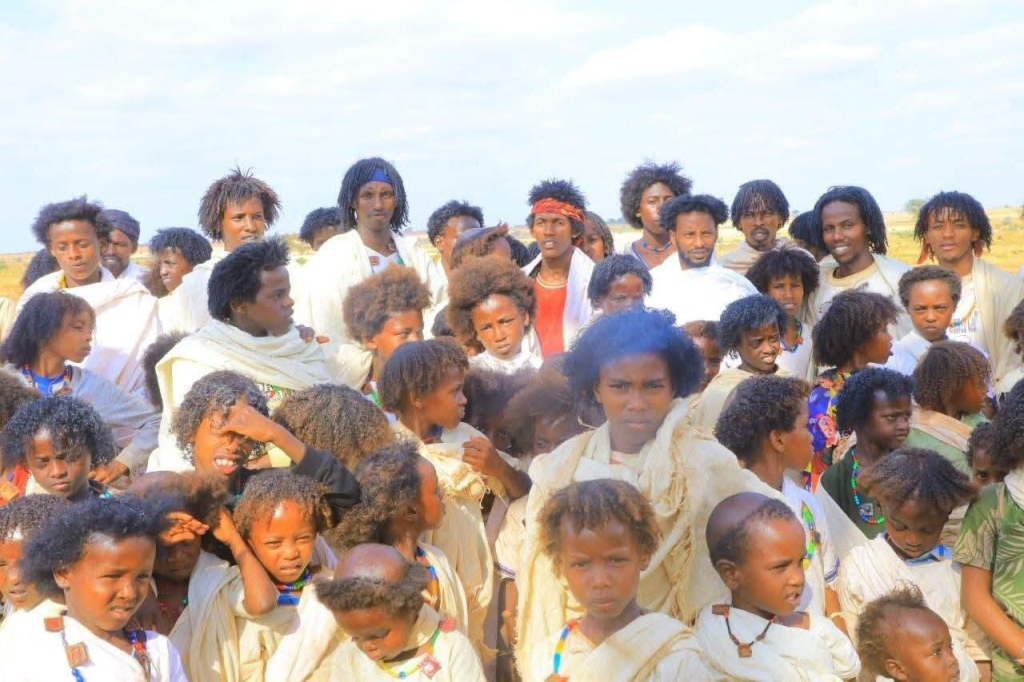
Under the leadership of the 70th Abbaa Gadaa, the Oromo people come together to honour their ancient traditions and celebrate the bonds that unite generations
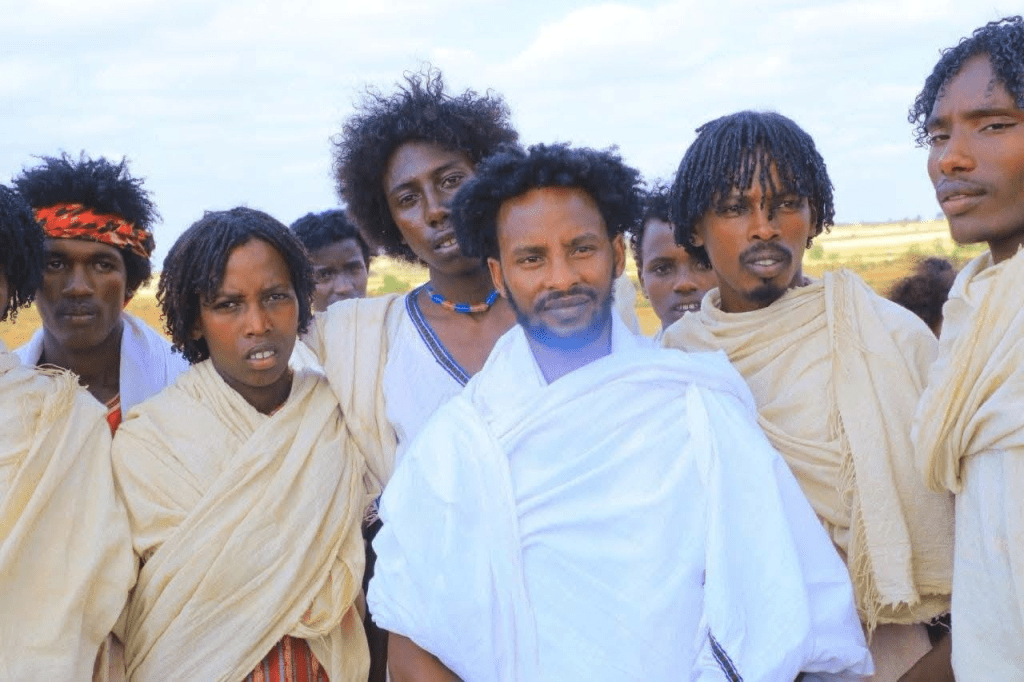
BORANA ZONE, OROMIYA — As the sun begins its descent over the vast plains of Borana, a sacred gathering is taking place. The sons of Guyyoo Gobba, descendants of the 70th Abbaa Gadaa, are converging at Ardaa Gaayoo, the ancestral seat of their leader. The air is filled with anticipation, for tonight marks the beginning of the Nyaachisaa ceremony—a ritual of profound significance in the Gadaa tradition.
The ceremony, known as “Jala Bultii Nyaachisaa,” is a sacred feast that brings the community together to honour their heritage, celebrate their unity, and strengthen the bonds that connect past, present, and future.
“Ilmaan Guyyoo Gobbaa Ardaa Gaayootti Jala Bultii Nyaachisaa Irra Jiru!”
The sons of Guyyoo Gobba are at Ardaa Gaayoo, engaged in the Nyaachisaa overnight ceremony!
The Gathering
“Ilmaan Abbaa Gadaa Boorana 70ffaa, Yuubaa Guyyoo Gobbaa, galgala kana Ardaa Gaayoo, qe’ee Abbaa Gadaatti walitti dhufaa jiru.”
The descendants of the 70th Abbaa Gadaa of Borana, the Yuubaa of Guyyoo Gobba, are gathering this evening at Ardaa Gaayoo, at the seat of the Abbaa Gadaa. This is not a casual meeting—it is a sacred assembly, a coming together of a community bound by blood, tradition, and shared destiny.
The Yuubaa are the elders of the Gadaa system—those who have passed through all the stages of life and now serve as the wise guardians of tradition. Their presence at this gathering signifies the continuity of the Gadaa system and the transmission of wisdom from one generation to the next.
“Sirna jala bultii nyaachisaa kabajuun sangaa qalanii eebbifachuuf qophii isaanii xumuraa jiru.”
They are making their final preparations to honour the Nyaachisaa overnight ceremony by slaughtering an ox and seeking blessings. The sacrifice of the ox is not a mere act of slaughter—it is a sacred ritual, a symbol of gratitude, a recognition of the interconnectedness of all life, and a petition for divine blessing.
The Significance of Nyaachisaa
“Sirni nyaachisaa kun Aadaa fi duudhaa Gadaa keessatti bakka olaanaa Kan qabu yoo ta’u, walitti dhufeenya hawaasaa, kabaja Aadaa fi dhaloota itti aanutti dabarsuuf taasifamu keessaa isa tokkodha.”
The Nyaachisaa ceremony holds a place of great importance in Gadaa culture and tradition. It is one of the key expressions of community solidarity, cultural reverence, and the transmission of heritage to future generations.
In the Gadaa system, the Nyaachisaa is more than a feast—it is a ritual of renewal and reaffirmation. Through the sharing of food, the community reaffirms its bonds of kinship and solidarity. Through the observance of tradition, the community honours the wisdom of the ancestors. Through the involvement of the younger generation, the community ensures the continuity of its culture.
The Nyaachisaa represents the sacred relationship between the people and their Creator, between the community and its traditions, and between the present and the future.
The Overnight Ceremony
“Jiltii Nyaachisaa kun Ardaa Gaayootti haala gammachuu, wal kabajuu fi aadaa leellisuun guutamee kan jiru yoo ta’u, sirni nyaachisaa kun bor ganama eebbaa fi sirna aadaatiin itti fufa.”
The Nyaachisaa night at Ardaa Gaayoo is filled with joy, mutual respect, and the celebration of culture. The ceremony will continue tomorrow morning with blessings and traditional rituals.
The overnight gathering is a time of singing, storytelling, and sharing. It is a time when the community comes together to remember their history, to honour their ancestors, and to reaffirm their commitment to each other. The fires burn bright, the voices rise in song, and the bonds of community are strengthened.
Tomorrow morning, the ceremony will continue with prayers and traditional rituals. The elders will bless the community, the younger generation will receive the wisdom of their elders, and the entire community will go forward strengthened by the experience.
The Gadaa Tradition
The Gadaa system is one of the most sophisticated indigenous governance structures in the world. It is a system that has guided the Oromo people for centuries—organizing their society, managing their resources, resolving their conflicts, and preserving their culture.
The Gadaa system is built on a foundation of values:
- Respect for Elders: The wisdom of the elders is recognized and honoured. They are the keepers of tradition, the guides for the community.
- Community Solidarity: The well-being of the individual is inseparable from the well-being of the community. Everyone has a role to play, and everyone is valued.
- Cultural Continuity: The traditions of the ancestors are preserved and passed on to the next generation. The past is not forgotten but honoured.
- Spiritual Connection: The relationship with the Creator is central to the Gadaa system. Rituals and ceremonies are expressions of gratitude and petitions for blessing.
- Justice and Equality: The Gadaa system is a democratic system that values fairness, justice, and the participation of all members of the community.
The Role of the Abbaa Gadaa
The Abbaa Gadaa is the leader of the Gadaa system—a figure who embodies the wisdom, authority, and responsibility of the community. The 70th Abbaa Gadaa of Borana holds a position of immense significance, representing the continuity of a tradition that stretches back centuries.
“Ilmaan Abbaa Gadaa Boorana 70ffaa…”
The sons of the 70th Abbaa Gadaa are gathering to honour their father’s legacy, to participate in the rituals of their culture, and to prepare themselves to carry forward the tradition into the future.
The Abbaa Gadaa is not merely a political leader—he is a spiritual leader, a cultural guardian, and a symbol of the community’s identity. His leadership is rooted not in force but in wisdom, not in coercion but in consensus, not in self-interest but in service.
A Community United
The gathering at Ardaa Gaayoo is a powerful expression of Oromo unity. It brings together:
- Elders who carry the wisdom of the ages
- Adults who are actively engaged in the life of the community
- Youth who are being prepared to take on their responsibilities
- Children who are learning the traditions that will guide their lives
Together, they form a single community, bound by their shared heritage and their common destiny.
The Meaning of the Feast
The Nyaachisaa ceremony is a feast of gratitude. It is a celebration of the abundance that the Creator has provided—the livestock, the land, the harvest, and the health of the community. It is an expression of thanks for the blessings of the past year and a petition for the blessings of the year to come.
But it is also a feast of community. The sharing of food is a powerful act of solidarity. When we eat together, we are not just nourishing our bodies—we are nourishing our relationships. We are saying to each other: “We are one. We share the same table. We share the same destiny.”
The feast is a reminder that we are not alone—that we are part of something larger than ourselves.
Looking to the Future
As the community gathers at Ardaa Gaayoo, they are not just honouring the past—they are preparing for the future. The younger generation is present, learning the traditions, absorbing the wisdom, and preparing to carry the culture forward.
The Nyaachisaa ceremony is a bridge between generations. It connects the ancestors who established the tradition to the children who will carry it forward. It ensures that the culture is not lost but preserved, not forgotten but renewed, not diminished but strengthened.
“Ilmaan Guyyoo Gobbaa Ardaa Gaayootti Jala Bultii Nyaachisaa Irra Jiru!”
A Blessing for All
As the dawn breaks over Ardaa Gaayoo and the ceremony continues with prayers and blessings, the community will go forward strengthened and renewed. They will carry the spirit of the Nyaachisaa with them—the spirit of gratitude, community, and cultural pride.
May the blessings of the ceremony extend to all who participate.
- May the elders continue to guide the community with wisdom.
- May the youth carry the culture forward with pride.
- May the community remain united in solidarity.
- May the traditions of the Gadaa system continue to flourish.
Conclusion
“Jiltii Nyaachisaa kun Ardaa Gaayootti haala gammachuu, wal kabajuu fi aadaa leellisuun guutamee kan jiru yoo ta’u, sirni nyaachisaa kun bor ganama eebbaa fi sirna aadaatiin itti fufa.”
The Nyaachisaa night at Ardaa Gaayoo is filled with joy, mutual respect, and the celebration of culture. The ceremony will continue tomorrow morning with blessings and traditional rituals.
The sons of Guyyoo Gobba, descendants of the 70th Abbaa Gadaa of Borana, have gathered to honour their heritage and celebrate their unity. Through the Nyaachisaa ceremony, they have reaffirmed the bonds that connect them to each other, to their ancestors, and to their Creator.
The tradition lives on. The community endures. And the Oromo people continue to celebrate their culture with pride.
“Ilmaan Guyyoo Gobbaa Ardaa Gaayootti Jala Bultii Nyaachisaa Irra Jiru!”
The sons of Guyyoo Gobba are at Ardaa Gaayoo, engaged in the Nyaachisaa overnight ceremony!
May the blessings of the ceremony be upon them all.

The Unseen Work and the Unyielding Bloom: How the Oromo Struggle Flourishes Beyond the Enemy’s Gaze
By Daandii Ragabaa
While the enemies of Oromia may have closed their eyes and convinced themselves that the OLF/ABO had faded into irrelevance, the ground beneath their feet has been shifting all along. The struggle for Oromo liberation has never been a spectacle performed for the approval of adversaries; it is a quiet, relentless tide that reshapes the landscape even when the world is not watching. Today, as the movement reflects on its journey, one truth stands undeniable: the work has continued, the fruits have multiplied, and the foundation of Oromo nationhood has never been stronger.
The Myth of Stagnation
There is a dangerous assumption that silence equals surrender. For years, the detractors of Oromo freedom have pointed to periods of tactical recalibration and claimed that the cause was dead. They were wrong. As the reflection reminds us, “Diinonni Oromoo otuu hin beekiin hojiilee ABO hojjataa ture”—the enemies were unaware of the work being done. The OLF/ABO did not vanish; it adapted. It built. It planted seeds that are now breaking through the concrete of oppression.
The struggle is not a straight line; it is a winding river that carves canyons over time. There have been moments of setback, times when the fighters themselves stumbled into unfamiliar terrain. “Yeroo garii qabsaa’oti waan muuxannoo itti hin qabneef danqamuun ifaa dha.” To be hindered, to face the unknown, is a natural and illuminating part of any liberation journey. But the reflection makes a critical distinction: “Danqamuun garuu qabsoo irraa yeroof duubatti deebi’uu malee qabsoo dhiisuu jechuu miti.”
Setbacks are not stop signs; they are detours. Retreating for a moment to assess, regroup, and strike with greater intelligence is not defeat—it is the hallmark of a movement that intends to win, not just to survive.
The Tangible Fruits of an Unyielding Will
While critics focused on imagined weaknesses, the Oromo struggle was quietly accumulating victories that cannot be erased. The reflection catalogs these achievements with a quiet, earned pride:
Oromia has risen. No longer can the oppressor pretend that Oromia is an abstraction. It is a recognized entity, a homeland with a name that commands respect and a history that demands justice. “Oromiyaan bobaa diinaa jalaa bahee beekamee jira.” The nation has emerged from under the shadow of denial into the light of international and domestic recognition.
The language has taken its rightful place. Afaan Oromoo, once relegated to the margins of private life, now stands tall as a language of instruction and government work. “Afaan Oromoo afaan barnootaa fi hojii mootummaa ta’eera.” This is not a small concession; it is a revolutionary shift. When a people’s tongue becomes the language of the classroom and the office, the soul of that people is officially acknowledged.
The script lives. “Qubeen Afaan Oromoo kan Afaan Oromoo ittiin barsiisan ta’eera.” The Oromo alphabet—once banned, once erased—is now actively used to teach children the beauty of their own heritage. Alphabetization is liberation. To read in one’s mother tongue is to reclaim the mind from colonial subjugation.
The flag waves undefeated. “Alaabaan Oromoo mallattoo diddaa fi bilisummaa qabsoo Oromoo ta’ee beekamee jira.” The Oromo flag is no longer a secret symbol of insurgency; it is a recognized emblem of resistance and freedom. It flies at gatherings, in diaspora halls, and in the hearts of millions. It is the colors of a nation that refuses to be renamed.
The Bloom of the Seed
The reflection speaks of a beautiful and profound transformation: “Akkanaan sanyiin bilisummaa facaafamee daraaree hundee sabboonummaa Oromoo fi Oromummaa ta’aa jira.”
The seeds of freedom, scattered across the difficult soil of the struggle, are now blossoming. They are taking root in the very foundations of Oromo identity and nationhood. This is not a fleeting victory; it is a generational shift. The Oromo people are witnessing the flowering of what their ancestors sacrificed for. The identity is no longer just a memory—it is a living, breathing reality that grows stronger with each passing day.
The Sacred Duty of Continuation
Yet, the reflection is not a song of complacency. It carries a sobering and determined promise: “Kun haga hireen murteeffannaa ummata Oromoo dhugoomutti jabaatee kan itti fufu ta’a.”
This journey will continue—vigorously, unapologetically, and with increasing momentum—until the fundamental rights of the Oromo people are fully realized. Until self-determination is not a demand but a fact. Until the land of Oromia is governed by the will of its own children.
The current chapter of the struggle is not an anomaly; it is the direct product of that unyielding resolve. “Waanti amna qabsoo keessatti argaa jirrus dhugaadhuma kana.” What we see today is the pure, unadulterated truth of a people who refused to kneel.
A Legacy of Resistance, A Future of Justice
“Qabsoon Bilisummaa fi haqa Oromoo kabachiisuuf yoomiyyuu jabatee itti fufa; hireen murteeffannaa ummata Oromoof godhamus kan wareegama keenyaan dhugoomuu dha.”
The struggle to honor the freedom and justice of Oromia will continue with unwavering strength—forever and always. The rights that the Oromo people are fighting for are not gifts to be begged for; they are inherent truths to be realized. And the fulfillment of those rights is not merely a political ambition; it is a sacred trust, a responsibility that falls upon the shoulders of every Oromo, whether in the homeland or in the far reaches of the diaspora.
The enemies may have looked away. They may have assumed the work had stopped. But the Oromo people are digging deeper than ever, planting seeds that will outlast the oppressors, and building a nation that will stand for millennia.
The unseen work is now visible. The planted seeds are blooming. And the struggle, tested by fire and tempered by patience, marches ever forward—determined, consistent, and invincible.
IUOf!

Building a Nation: The Long Walk to Freedom and Unity
By Dhabessa Wakjira
—
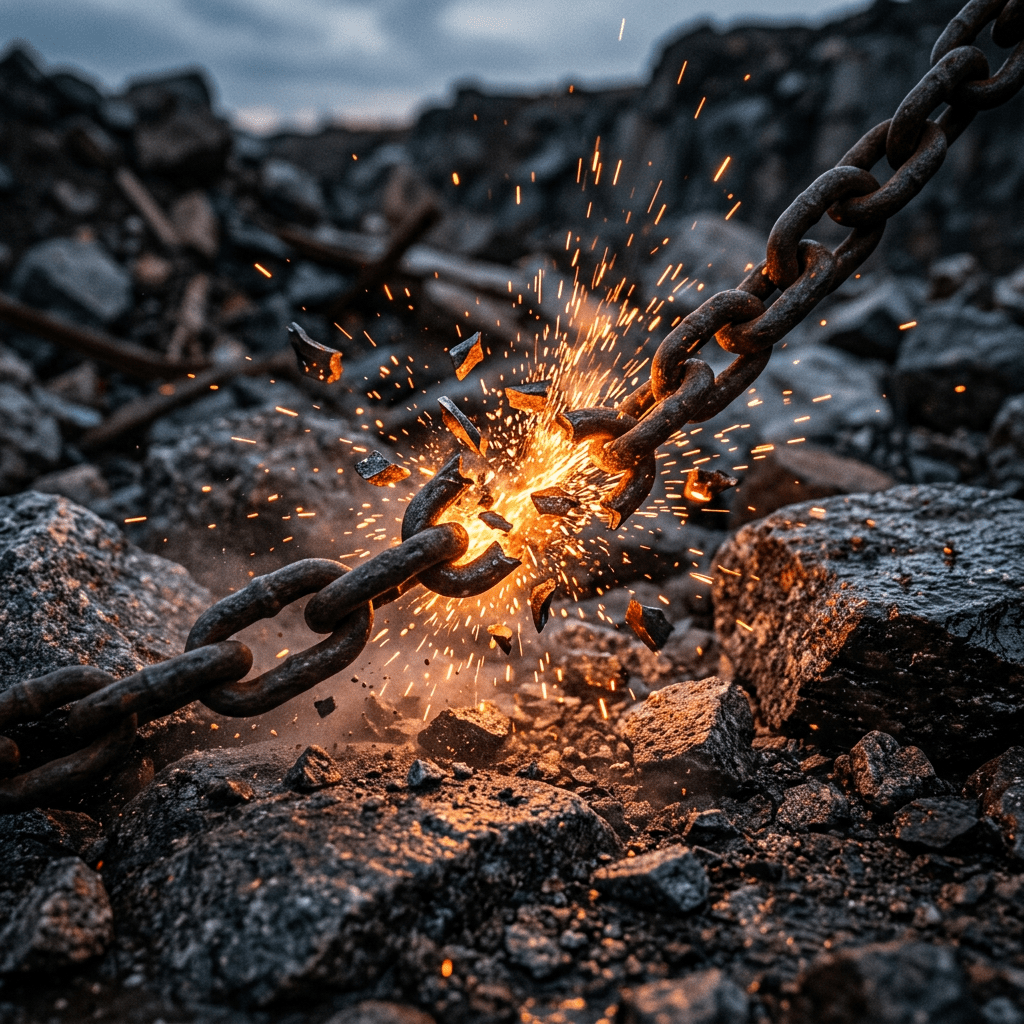
Nation-building is no simple task. It is a long, arduous journey that demands relentless commitment, profound sacrifice, and an unyielding spirit. To build a nation is to weave knowledge, courage, and resilience into an unbreakable fabric—a shield strong enough to stand firm against any enemy. It is to reject the chains of servitude, to organize with urgency, and to play one’s part in the collective march toward liberation. No nation that has endured the crushing weight of subjugation has ever emerged free without a determined struggle.
This truth resonates deeply in the heart of Oromia.
The Anatomy of Struggle
Throughout history, the path to freedom has been paved with the blood, sweat, and tears of those who refused to bow. Nation-building is not merely about constructing roads, schools, or hospitals—though these are vital—it is about constructing a collective identity, a shared purpose, and an unwavering belief in the possibility of a better tomorrow. It demands the fusion of knowledge and courage, transforming passive hope into active resistance against all forces that seek to diminish a people’s dignity.
Every nation that has broken free from the shackles of oppression has done so through a conscious, deliberate, and sustained struggle. There are no shortcuts. There are no handouts. Freedom, history teaches us, is never given—it is taken. It is earned through the willingness to pay the full price of liberation, to endure hardship, and to press forward even when the odds seem insurmountable.
The Call to Unity
Oromia belongs to all Oromo people—this is an undeniable truth. But belonging alone is not enough. To truly claim what is rightfully theirs, the Oromo people must stand united. Division is the weapon of the oppressor; unity is the shield of the oppressed. When hands are joined in common purpose, no force can break the spirit of a people determined to be free.
The struggle for liberation is not a spectator sport. It demands active participation from every son and daughter of Oromia. It requires setting aside differences, overcoming internal conflicts, and rallying around a singular vision: a free, prosperous, and dignified Oromia where every citizen can thrive.
The Price of Freedom
There is no free nation that has not paid the ultimate price. Liberation comes at a cost, and that cost must be borne collectively. It is not enough to hope for freedom; one must be prepared to fight for it. The struggle is not for the faint of heart, nor is it for those who seek comfort in the status quo. It is for the brave, the determined, and the unwavering.
The road ahead is long and fraught with challenges. There will be setbacks, disappointments, and moments of doubt. But history shows that those who persist, those who refuse to give up in the face of adversity, are the ones who ultimately triumph. The Oromo people have everything to gain and nothing to lose by standing together in this fight.
The Final Victory
Unity is not just a strategy—it is the very soul of the struggle. When the Oromo people stand together, hand in hand, shoulder to shoulder, they become an unstoppable force. Their collective strength lies not in weapons or wealth, but in their shared determination to overcome.
The struggle is long, and the challenges are immense. But the spirit of the Oromo people is indomitable. With unity as their foundation, courage as their guide, and the dream of freedom as their destination, they will prevail.
Oromiyaan ni bilisooma!

Carrying the Torch: 50 Years of the Oromo Freedom Struggle
Reflecting on half a century of resistance, resilience, and the unbreakable spirit of a people
—
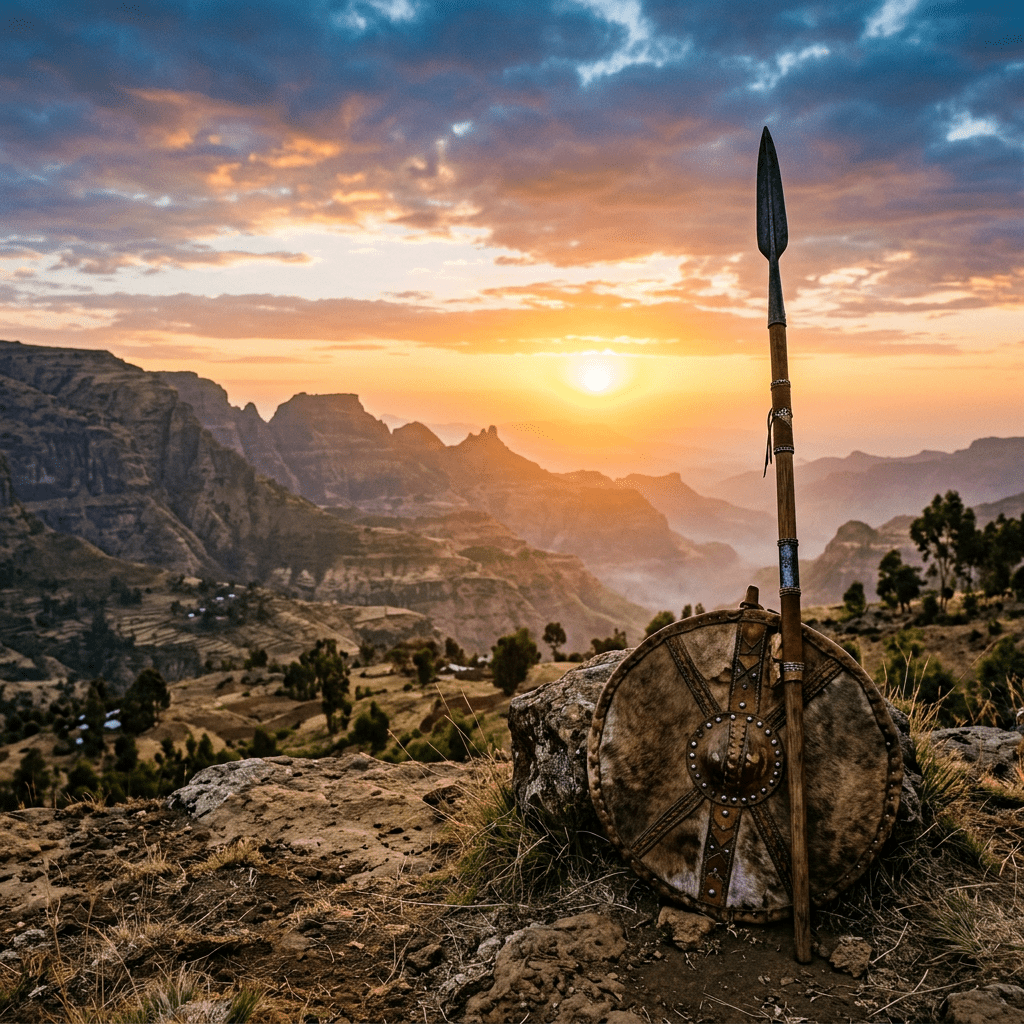
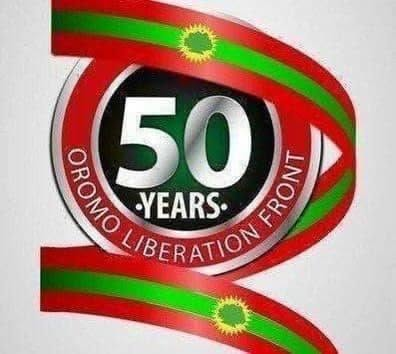
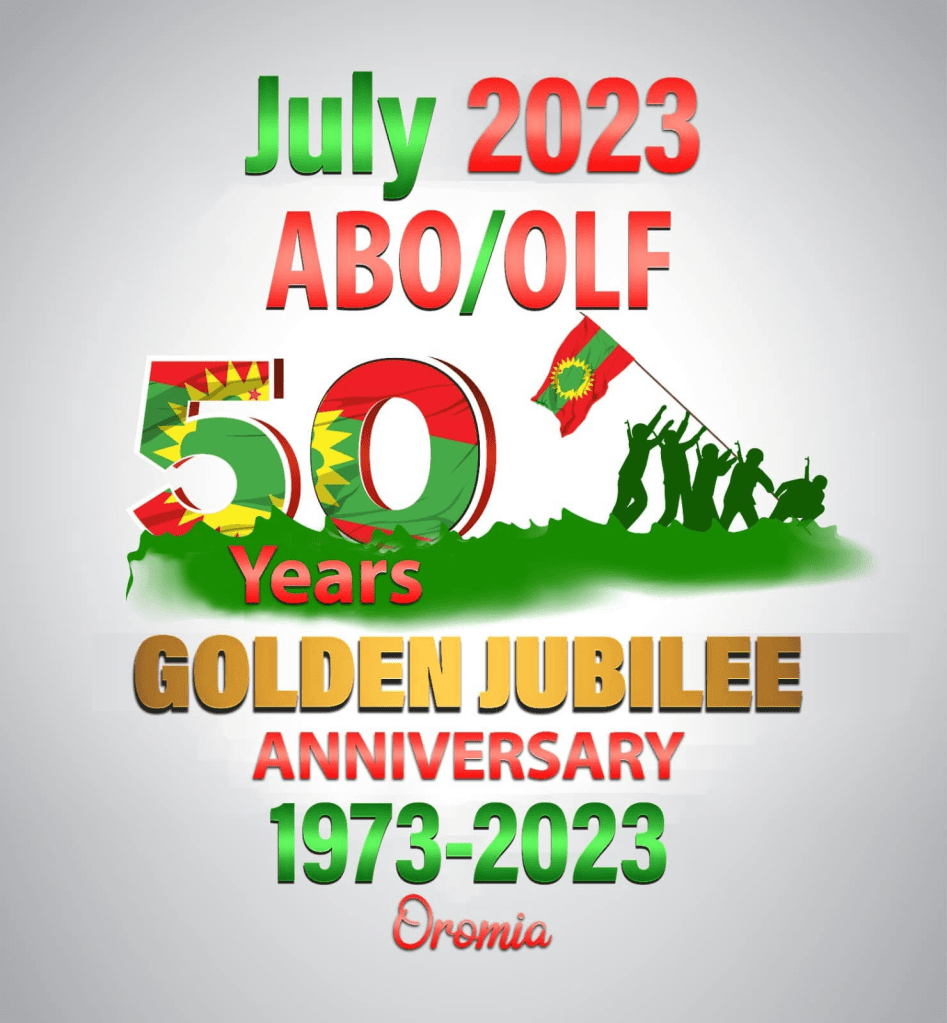
On a quiet day in 2023, as the world continues to spin through its cycles of change and upheaval, the Oromo people pause to mark a profound milestone. Fifty years have passed since the Oromo Liberation Struggle formally began its modern political and armed phase. The commemoration, held under the theme “50 Years of Oromo Freedom Struggle,” is not merely a glance backward at the pages of history. It is a declaration—a powerful affirmation that the strength of the past must be carried forward into the future.
As the saying goes, “Kunis waan nu ibsuu fi nu boonsu tokko akka baatee jiru mirkaneessa” —this confirms that there is something that defines us and makes us proud. Indeed, there is.
—
A People of Ancient Heritage
To understand the significance of this fifty-year mark, one must first appreciate the depth from which the Oromo struggle springs. The Oromo are not a recent invention of political convenience; they are the custodians of one of the oldest and most sophisticated cultural civilizations in the world.
The Gadaa system, a traditional democratic governance structure that has guided Oromo society for centuries, stands as a testament to their organizational genius. Long before modern democracies adopted the principles of checks and balances, term limits, and participatory governance, the Oromo had perfected these ideals through Gadaa. Every eight years, power would transfer peacefully from one generation to the next—a cycle of leadership renewal that ensured accountability and collective decision-making.
Then there is Waaqeffannaa, the indigenous Oromo belief system that reveres a single supreme being, Waaqa (God), and emphasizes harmony with nature, truth, and justice. The annual Irreecha festival, celebrated at sacred lakes and hilltops, is not merely a cultural event but a spiritual renewal—a thanksgiving for life, health, and the blessings of creation. Millions gather to raise their hands in prayer, adorned in traditional attire, singing songs that have echoed across the ages.
This is the Oromo identity: ancient, proud, and resilient. A civilization that has survived empires, invasions, and attempts at erasure. It is this identity that the freedom struggle seeks to protect and restore.
—
The Unfinished Story
The Oromo freedom struggle, as formally recognized in its modern phase over the past fifty years, is not a story of violence for its own sake. It is a story of a people demanding what is rightfully theirs: recognition, dignity, self-determination, and a place at the table of nations.
The archives of this struggle are filled with names that will never be forgotten. Some are written in blood, others in ink, but all are etched in the collective memory of the Oromo people. This struggle has chronicled a history of heroism that refuses to conclude—a narrative that continues to unfold with each passing year.
What makes this struggle unique is its deeply rooted cultural foundation. The Oromo are not fighting to create something new; they are fighting to reclaim something old. They are fighting to ensure that the Gadaa principles of justice, the Waaqeffannaa values of truth, and the Irreecha spirit of thanksgiving are not confined to textbooks or tourist brochures but are lived realities for future generations.
“Qabsoon Bilisummaa Oromoo seenaa boonsaa himamee hin dhumne galmeessee jira” —The Oromo liberation struggle has recorded a history of heroism that has not yet concluded. Indeed, it is a living document, written anew with every act of courage, every song of resistance, and every child raised to know their heritage.
—
A Story for All Generations
Perhaps the most beautiful aspect of this commemoration is its recognition that the struggle transcends any single generation. It is a legacy passed down from grandparents to parents, from parents to children. It is a story that is sung in lullabies, debated in classrooms, and whispered in prayers.
“Kun barayyuu dhalootaan kan leellifamuu fi faarfamuu dha” —This is a story that will be praised and sung by future generations. It is not a chapter to be closed but an anthem to be repeated, a lesson to be taught, and a flame to be kept alive.
The young Oromo today carry the weight of this legacy, but they also carry the hope. They are the ones who will take the baton from the veterans of the struggle and run the next lap. They are the ones who will ensure that the dream of a free, dignified, and prosperous Oromia becomes more than a slogan—it becomes reality.
—
Looking Ahead with Strength
As the Oromo people mark fifty years, they do so with a clear-eyed understanding of the road ahead. Challenges remain immense. The struggle is far from over. But the very act of commemorating half a century is itself an act of defiance—a declaration that the Oromo are still standing, still resisting, and still believing.
The world has witnessed the resilience of the Oromo. From the highlands to the lowlands, from the cities to the countryside, the spirit of Oromia remains indomitable. The freedom struggle is not merely a political movement; it is a cultural renaissance, a spiritual awakening, and a moral imperative.
—
Conclusion
Fifty years. It is a number that carries weight—the weight of sacrifice, the weight of hope, and the weight of an unfinished journey. The Oromo freedom struggle has been a long and arduous road, paved with both tears and triumphs. But as the Oromo gather to reflect on this milestone, they do not do so with bitterness or despair. They do so with the quiet confidence of a people who know who they are and what they deserve.
The theme “50 Years of Oromo Freedom Struggle” is not just about honouring the past. It is about carrying that strength forward, about ensuring that the next fifty years will be marked by even greater progress and eventual victory. It is about making sure that the Gadaa, the Waaqeffannaa, and the Irreecha remain not just memories but living traditions that guide the Oromo into a brighter tomorrow.
The Oromo story is one of the great epics of human history—a story of endurance, culture, and the unquenchable thirst for freedom. And as long as there are Oromo to tell it, sing it, and live it, that story will never end. It will be praised and sung by future generations, as it deserves to be.
—
“Qabsoon keenya bilisummaa fi mirga namaa kan mata keenyaati. Kun hidhannoo keenyatti amanuufi dhaloota dabarsuuti.”
“Our struggle is for freedom and human rights. This is our commitment to the future and to the generations to come.”

Waaqeffannaa: The Ancient Oromo Faith and the Resurgence of Indigenous Spirituality
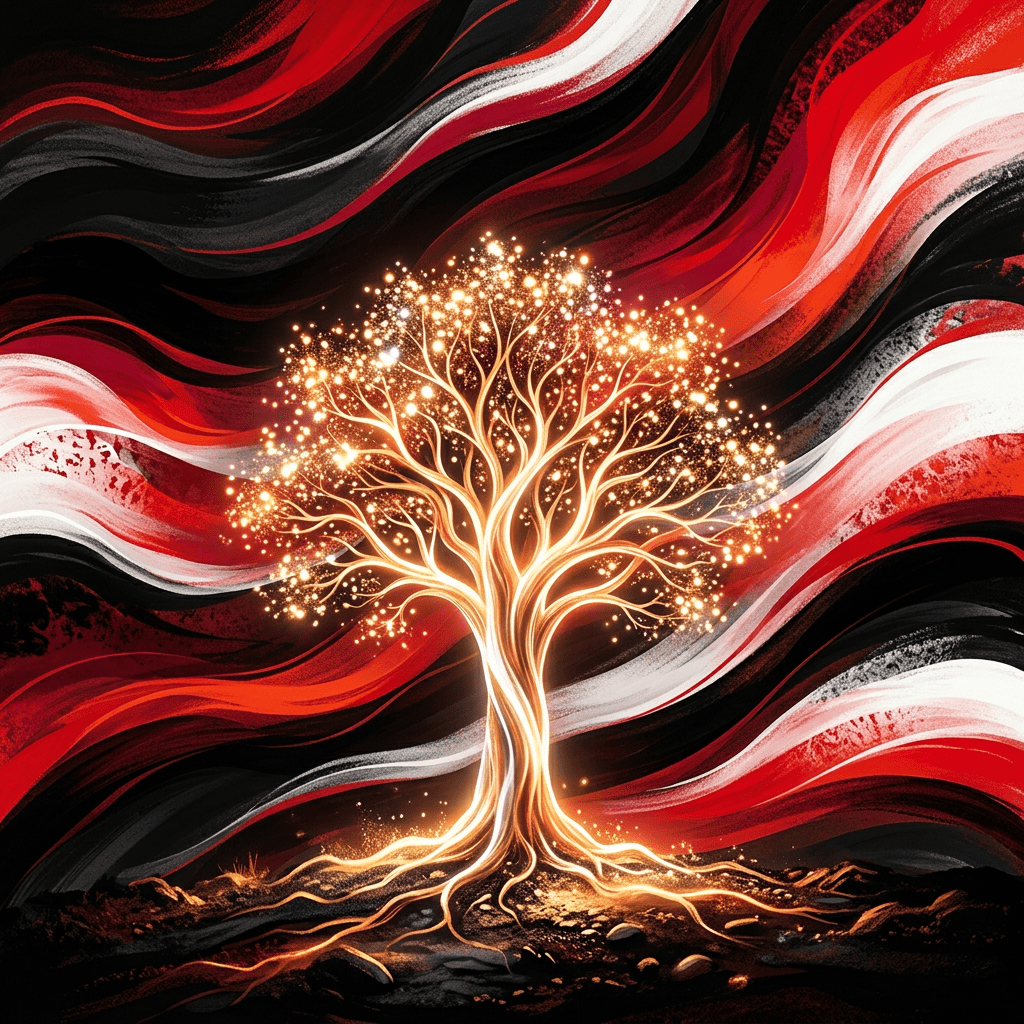
A profound exploration of the Oromo people’s original faith—Waaqeffannaa—reveals a sophisticated spiritual system that has survived centuries of suppression and is now experiencing a powerful renaissance.
The Foundation of Oromo Identity
“Amantiin mala dhugeeffannaa dhalli namaa ittiin Uumaafi uumama isaa hubatu, ittiin buluufi ittiin jiraatuudha.”
Religion is the lens through which humanity understands its Creator and creation—the framework through which people live, govern, and find meaning. For the Oromo people, this spiritual foundation is Waaqeffannaa, the indigenous belief system that has guided Oromo society for millennia.
Like every people, the Oromo possess their own ancient and authentic faith—a system through which they understand the divine truth, order their lives, and align themselves with the will of the Creator. Waaqeffannaa is the belief in the One True God, Waaqa, and the way of life that follows from that conviction.
“Waaqeffannaan amantii Waaqa Tokkicha jiruufi jireenya ofiitti aanfatanii ittiin qajeelfamaniidha.”
Waaqeffannaa is the faith of those who believe in the One Waaqa and are guided by a life lived in accordance with His will. The term itself—Waaqeffannaa—means “believing in Waaqa,” “following Waaqa,” and “directing one’s life toward Waaqa.” The Oromo, more than any other, direct themselves toward Waaqa, the Creator of all things.
The Core Belief: One Waaqa, Infinite Wisdom
The foundational text of Waaqeffannaa, Daaniyaa, declares:
“Waaqni tokkicha qofaadha; hiriyyaa hinqabu; hindhalu; hindhalchu; hindhalatu; hindulloomu; hindu’u. Jiraataa fula’aa’dha. Waaqa gochaan malee ijaan arguun hindanda’amu. Waaqaanis waanti qixxaatu hinjiru.”
“Waaqa is one alone; He has no partner; He does not beget; He is not begotten; He is not born; He does not die; He is eternal and ever-living. Waaqa cannot be seen with the eyes, but through His works. Nothing is equal to Waaqa.”
This conception of the divine is strikingly monotheistic, emphasising the absolute unity, transcendence, and uniqueness of Waaqa. It is a vision of God that resonates with the deepest currents of human spiritual longing—a God who is beyond human comprehension yet intimately present in creation.
The Suppression and Survival of Waaqeffannaa
The Oromo people’s original faith was not destroyed—it was hidden. As the Oromo spiritual tradition known as Wayyuu explains:
“Waaqeffannaan nigaadi’ame malee hinbanne; gaafa dhugaan Oromoo gale, aadaan, amantiin, duudhaafi safuun Oromoo homa deebi’ee gala. Waaqeffannaan nidhokate malee hinbanne; kan gaadi’ame waan dhalli namaa Waaqeffannaa dhiisee waan dhibiin buluu jalqabeef.”
“Waaqeffannaa was suppressed but not abolished. The day the truth of the Oromo returns, the culture, faith, traditions, and ethics of the Oromo will be restored. Waaqeffannaa was hidden but not destroyed. It was hidden because the people abandoned Waaqeffannaa and began to live under oppression.”
This is the central narrative of Waaqeffannaa’s survival—a faith that was not eradicated but driven underground, preserved in the hearts and practices of those who refused to forget. It survived not as a public institution but as an enduring spiritual memory, waiting for the day when it would be called back into the light.
The Pillars of Waaqeffannaa
The foundational pillars of Waaqeffannaa are:
Waaqa (The Creator)
The One True God, eternal and all-powerful, who is known through creation. As the Oromo say: “Waaqa Uumaa, Waaqa uumamaa; Tokkicha maqaa dhibbaa”—”Waaqa the Creator, Waaqa of creation; One with a hundred names.”
Ayyaana (The Divine Spirit)
The spiritual force that connects the individual to Waaqa. Ayyaana is the divine spark within each person, the means through which humans experience the presence of the divine in their lives.
Nama (Humanity)
Human beings are the crown of creation, entrusted with the responsibility to live in harmony with Waaqa’s will. The Oromo understanding of humanity is one of dignity, purpose, and accountability.
Wayyuu (The Spiritual Tradition)
The body of spiritual knowledge, practices, and wisdom passed down through generations. Wayyuu is the custodian of Oromo spiritual heritage, preserving the teachings that guide Waaqeffannaa adherents.
Safuu (Moral Order)
The ethical framework that governs Oromo society—principles of justice, respect, and harmony that reflect the divine order. Safuu is the moral compass that aligns human behaviour with divine will.
The Role of the Odaa Tree
Central to Waaqeffannaa practice is the Odaa tree—the sacred sycamore fig. The Odaa is not merely a tree; it is a symbol of the connection between heaven and earth, a gathering place for prayer, community deliberation, and spiritual renewal.
Beneath the Odaa, the Oromo:
- Offer prayers to Waaqa
- Resolve disputes through dialogue and reconciliation
- Conduct the sacred Gadaa ceremonies
- Renew their commitment to Safuu and communal harmony
The Odaa stands as a living witness to the continuity of Waaqeffannaa tradition, a place where the spiritual and the social are united.
The Meaning of Daaniyaa
At the heart of Waaqeffannaa spiritual literature is Daaniyaa—a sacred text that serves as a guide to understanding the divine and living a life of righteousness.
The name Daaniyaa itself carries profound meaning:
“Daaniyaan warra Waaqaan bulu; sanyiin isaanii Ayyaantuudha; Hiddi dhaloota keenyaas warra Daaniyaati; Qe’een isaanii ganamaa Haroo Mormor ture; achirraa ka’anii walaabuu keessa guuta; warri kun warra Waaqaan bulaniidha.”
“Daaniyaa are those who live under Waaqa; their lineage is Ayyaantuu; The root of our generations is the people of Daaniyaa; Their origin was ancient Haroo Mormor; from there they spread throughout the world; these are the people who live under Waaqa.”
Daaniyaa is not merely a text—it is a people, a tradition, and a way of life. It embodies the lived experience of the Oromo who have remained faithful to Waaqa throughout the centuries.
The Colours of Faith: A Spiritual Code
The sacred colours associated with Daaniyaa and Waaqeffannaa carry deep spiritual significance:
Black (Gurraacha)
- Represents Waaqummaa—the divine presence
- Symbolises the qulqullummaa (purity) of Waaqa
- Holds the highest place in Oromo spiritual perception
- As the Oromo say: “Gurraacha garaa garbaa”—”Black like the dark night”—a sign of Waaqa’s mystery and majesty
Red (Diimaa)
- Represents life and humanity
- Symbolises the blood that connects all Oromo people
- Placed adjacent to black, signifying humanity’s closeness to Waaqa
- Represents the dignity and worth of every human being
White (Adii)
- Represents the light and wisdom Waaqa gives to humanity
- Symbolises the path out of darkness, falsehood, and oppression
- Guides the faithful back to the truth of Waaqa
The Odaa tree, rendered in white, stands at the centre—a symbol of the sacred connection between the divine and the human.
The Calendar of Renewal: Birboo
Waaqeffannaa has its own calendar, marking the passage of time in accordance with divine order. The new year, known as Birboo, is celebrated with thanksgiving and renewal—a time to leave behind the old and embrace the new.
According to the sacred calendar, the current year is 6401 ALW (After the Liberation of Waaqa)—a chronology that traces the faith’s resilience across millennia. The year begins with the month of Amajjii, and Birboo marks the celebration of renewal, a time when the faithful give thanks for the blessings of the past and prepare for the challenges and opportunities of the future.
The Resurgence of Waaqeffannaa
In recent decades, there has been a remarkable resurgence of Waaqeffannaa among the Oromo people, both in the homeland and across the diaspora. This revival is not merely a cultural trend—it is a spiritual homecoming, a return to the ancestral faith that sustained the Oromo people for generations.
The message of this resurgence is clear:
“Waaqeffannaan nidhokate malee hinbanne; gaadiin Waaqeffannaa dhokse gaafa hiikamu, gaarummaan dachii kana nidhuunfata; gaafa dhalli namaa Dhugaa Waaqaatti deebi’e, namni cufti nigammada.”
“Waaqeffannaa was hidden but not destroyed. The day the darkness that has hidden the truth of Waaqeffannaa is lifted, goodness will spread across this land. When humanity returns to the truth of Waaqa, all people will rejoice.”
Conclusion: The Return of Indigenous Truth
For too long, the Oromo people’s spiritual heritage has been marginalised, misunderstood, and misrepresented. But the truth cannot be silenced forever.
As the spiritual tradition of the Oromo, Waaqeffannaa is not merely a religion—it is a comprehensive way of life. It is the lens through which the Oromo understand creation, the path through which they seek justice, and the foundation upon which they build their future.
“Wayyuun Oromoo, kan argaa-dhageettii himuuf aangoma Waaqaa muudaman tokkos kanuma ragaa bahu.”
“Wayyuu, the Oromo spiritual tradition, is the one that has been chosen to be the witness, the one that has the divine authority to speak what it sees and hears.”
The time has come for this ancient faith to be seen, heard, and respected once more. For in the return to Waaqeffannaa lies not only the healing of the Oromo people but also a profound contribution to humanity’s understanding of the divine.
“Waaqeffannaan hinbanne, nidhokate malee! Gaadiin gaafa hiikame Waaqeffannaan huma deebi’a!”
“Waaqeffannaa has not been destroyed—only hidden! When the darkness is lifted, Waaqeffannaa will return!”






