Irreechaa: A Heritage That Endures, Evolves, and Lives
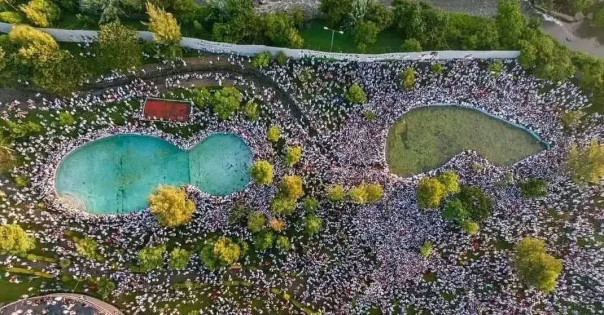
A festival of gratitude becomes a call to responsibility for nature and future generations
Every year, millions of Oromo people gather along the banks of rivers and lakes, dressed in white, carrying fresh green grass and yellow daisies. They come to give thanks. They come to pray. They come to remember.
But according to a new reflection by Worku Burayu (PhD), Irreechaa is far more than a colorful annual gathering. It is a living heritage — one that endures, evolves, and lives.
“Irreechaa should not be reduced to an annual article, a speech, a public gathering, or a cultural display,” Burayu writes. “It is a living heritage whose meaning continues to guide, teach, and connect generations.”
The article, titled “Irreechaa: A Heritage That Endures, Evolves, and Lives,” continues a reflection begun in 2025 with “Irreechaa: From Nature to Nation, Core Values of Oromo Culture.” This year’s piece, written after an invitation from the Irreechaa Event Ad Hoc Committee of the Atlanta Metropolitan Area, takes a different perspective — examining Irreechaa not just as a celebration, but as a relationship between memory and responsibility.
More Than a Ceremony
Irreechaa is widely known as the Oromo thanksgiving festival, celebrated at the end of the rainy season near rivers and lakes. Participants give thanks to Waaqaa (God) for life, health, peace, rain, harvest, family, and community. They sing, dance, and sprinkle water as a blessing of renewal.
Scholars have long recognized Irreechaa as an expression of Oromo identity and unity. UNESCO describes it as closely associated with the Gadaa system, the indigenous democratic sociopolitical system of the Oromo people.
But Burayu argues that its significance cannot be fully understood by viewing it only as a ritual performed at a particular time of year. Irreechaa is part of a broader Oromo worldview in which human beings exist within relationships involving Waaqaa, nature, community, ancestors, and future generations.
“The natural environment is not simply a backdrop for cultural practice,” he writes. “Soil, water, air, forests, grass, flowers, animals, and agricultural landscapes are part of the living world through which life is sustained and gratitude is expressed.”
Gratitude Must Become Responsibility
At the heart of Irreechaa is gratitude. But Burayu asks a challenging question: If water, forests, soil, grass, and flowers are gifts of Waaqaa, how should we treat them?
“The answer cannot be limited to words of thanksgiving,” he writes. “Genuine gratitude creates responsibility.”
If water is a gift, it must be protected. Lakes, rivers, springs, and wetlands associated with Irreechaa are not merely ceremonial locations — they are living ecosystems. Respect for water means preventing pollution, protecting riverbanks, safeguarding springs, and managing waste responsibly.
If forests are a gift, they must be conserved and renewed. Natural materials used during ceremonies should be gathered without unnecessary destruction of living trees. Irreechaa can become an opportunity for tree planting and forest restoration.
If soil is a gift, its fertility must be maintained. “We cannot celebrate the fruits of the land while destroying the soil that must produce those fruits in the future,” Burayu warns.
If grass and flowers are used in celebration, they should be gathered in ways that allow natural regeneration. Plants should not be unnecessarily uprooted when only their flowers or leaves are needed.
“The gift of nature does not belong to human beings alone,” Burayu writes. “It sustains an entire community of life.”
Water as a Sacred Responsibility
The relationship between Irreechaa and water is particularly significant. Many celebrations take place beside rivers, lakes, and springs. The symbolism of water, Burayu argues, should never be separated from its ecological reality.
“When people approach water during Irreechaa, touch it, sprinkle it, or gather beside it in prayer, they encounter one of the fundamental conditions of life,” he writes.
The act of approaching water should awaken responsibility. “If we pray beside a river, we should not pollute it. If we regard water as a blessing, we should not waste it carelessly. If we gather around a spring, we should protect the spring and its surrounding vegetation.”
His message is simple: “We should not pollute what we have come to honor.”
Safuu: An Indigenous Ethic of Restraint
Burayu grounds these responsibilities in Safuu, the Oromo concept of appropriate conduct and responsible relationships. Safuu asks a deeper question than whether a person is technically able to do something. It asks whether an action is appropriate, responsible, and respectful.
“A person may be physically able to cut a tree, but that does not mean the tree should be cut unnecessarily,” Burayu explains.
He points to the Odaa tree as a powerful cultural example. Odaa trees have long held deep cultural, social, and spiritual significance in Oromo society. Traditionally, those associated with important communal spaces were treated with particular respect and were not to be cut at will.
“The question is not simply ‘Can I take it?’ but ‘Should I take it, and what responsibility follows from taking it?'” Burayu writes.
This principle, he argues, extends to rivers, forests, grasslands, and wetlands. “The ability to use nature does not create an unlimited right to consume it. Safuu calls for restraint, responsibility, and respect for the conditions that make life possible.”
The Challenge of Modern Celebration
Contemporary Irreechaa celebrations can involve very large gatherings. Their growth creates opportunities for cultural visibility and community connection, but it also creates environmental responsibilities.
Large gatherings require transportation, food, water, sanitation, energy, and waste management. They can place pressure on grasslands, riverbanks, and trees.
“The success of an Irreechaa gathering should not be measured solely by attendance, visibility, or cultural performance,” Burayu writes. “It should also be measured by what remains after the gathering.”
A celebration that leaves a river polluted, vegetation damaged, and the landscape covered in waste contradicts the relationship with nature that Irreechaa seeks to express. By contrast, a celebration that leaves the environment protected, clean, and renewed demonstrates that gratitude has been translated into responsibility.
From Survival to Renewal
Irreechaa has survived because generations before us carried it through difficult circumstances. But Burayu argues that survival alone is not enough.
“A tradition can survive as a ceremony while losing its deeper values,” he warns. “It can become something repeated annually without being understood, or a cultural performance detached from everyday conduct.”
For Irreechaa to remain a living heritage, it must continually be renewed through learning. Renewal means documenting cultural knowledge before it disappears, creating opportunities for elders to share knowledge with younger generations, and connecting traditional ecological knowledge with contemporary scientific understanding.
“Renewal does not require abandoning tradition,” Burayu writes. “It requires understanding tradition deeply enough to distinguish enduring principles from the particular historical forms through which those principles have been expressed.”
Cultural Confidence Without Self-Denigration
The continuity of cultural heritage also depends on how a people understands itself. Burayu notes that Oromo history, culture, and identity have often been interpreted through external frameworks — political, religious, and colonial.
“Before rejecting what is ours, we have a responsibility to understand it,” he writes. “Before repeating judgments made about our culture, we have a responsibility to study the culture itself.”
This is not an argument for romanticizing the past. Cultural confidence does not require believing that everything inherited is perfect. A living culture must be capable of self-examination.
“There is an important difference between critical reflection and cultural self-denigration,” Burayu explains. “Critical reflection seeks to understand, improve, and strengthen. Self-denigration simply reproduces the judgment of others.”
Intergenerational Responsibility
Every generation inherits things it did not create — language, stories, values, songs, landscapes, rivers, forests, and soils. Burayu argues that we therefore have a responsibility to think of ourselves not merely as owners, but as custodians.
“A river that exists today will be needed by children who have not yet been born,” he writes. “A forest standing today may provide shade, water protection, biodiversity, and livelihoods for generations we will never meet. Soil fertility lost today may take decades to restore.”
Irreechaa makes this relationship between generations visible. “Our ancestors carried it. We received it. Our children will inherit whatever we choose to preserve, change, or neglect.”
Irreechaa in the Diaspora
For Oromo communities living outside Oromia — including in the United States, Europe, Australia, and Asia — Irreechaa carries additional significance. In the diaspora, cultural continuity requires deliberate and sustained transmission because younger generations may grow up in environments where Afaan Oromo, Oromo customs, and traditional practices are not part of everyday life.
“In this context, Irreechaa can serve as an intergenerational bridge,” Burayu writes. “That bridge, however, must carry knowledge as well as ceremony.”
Community gatherings can become spaces for learning as much as celebration. Elders can transmit knowledge, younger people can ask questions, and cultural organizations can create educational programs connecting history, language, ecology, ethics, and contemporary life.
From Ceremony to Everyday Life
The deepest measure of Irreechaa, Burayu argues, is what happens after the celebration.
“If a person gathers beside a river in thanksgiving and subsequently becomes more conscious of protecting water, the ceremony has produced an enduring value,” he writes. “If a young person learns about the significance of grass and flowers and becomes more responsible in the use of natural resources, the tradition has been transmitted meaningfully.”
A cultural tradition is truly alive when its principles enter everyday behavior. “Irreechaa should therefore not be understood merely as something people attend. It is something whose values can be lived.”
It Endures. It Evolves. It Lives.
Burayu concludes with a powerful summary of his argument.
“Irreechaa endures because it has roots in the historical and cultural experience of the Oromo people. Irreechaa evolves because every generation encounters different circumstances. Irreechaa lives when its underlying values remain meaningful within those changing circumstances.”
Its living character can be seen when gratitude becomes responsibility, identity becomes confidence, celebration becomes stewardship, tradition becomes learning, and cultural memory becomes preparation for the future.
“The question is not simply whether Irreechaa will survive,” Burayu writes. “The deeper question is whether we will understand it well enough to help it live.”
Irreechaa is not merely a heritage of the past. It is a responsibility of the present and a promise to the future.
It endures. It evolves. It lives.

Posted on September 28, 2026, in Aadaa, Afaan, AMES, Diaspora, Events, family violence, freedom, gadaa, health, Information, Irreechaa, Kindness, Language, Media, mental health, News, Oromia, Oromo diaspora, Press Release, Promotion, SBS. Bookmark the permalink. Leave a comment.






Leave a comment
Comments 0