The Poisoned Feast: The Unbroken Spirit of Jaal Daawud Ibsaa
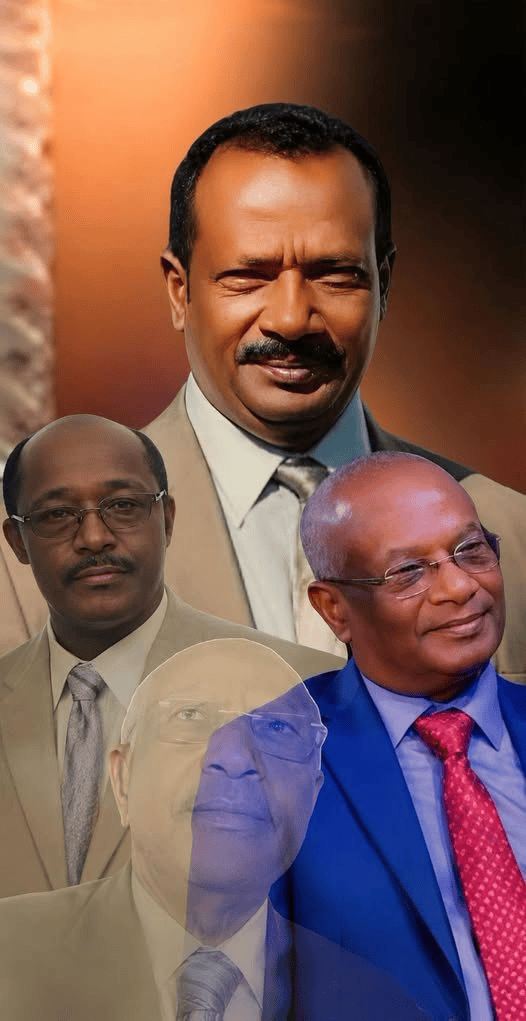
A Feature Article on Sacrifice, Betrayal, and the Silence That Defeated Torture
—
In the annals of the Oromo national struggle, certain stories refuse to fade. They are passed down not through official archives but through whispered testimonies, through the memories of those who survived, and through the written records of security officials who once sought to erase them. One such story belongs to Jaal Daawud Ibsaa, a name that resonates in the Horro Guduruu heartland and beyond—a man whose journey from student activist to underground fighter to silent prisoner embodies the most harrowing dimensions of resistance.
This account draws from a security report authored by Nugusee Fantaa, head of the Wollega administrative security, and Tasfaayee W/Sillasee, head of Information and National Security, as documented by journalist Abbaa Duulaa Gammada. The journalist himself was granted unusual access, recalling that when he sought to research this history, the security archives of both the Derg’s peace and wartime offices were opened to him. “Abbaa Duulaa told me,” the journalist recounts, “‘You are the only one who has ever asked me to research this story.'”
Roots of Resistance
Jaal Daawud Ibsaa was born in Horro Guduruu, in the western highlands of Oromia. Like many young Oromos of his generation, he pursued education with determination, attending Wingate—the same institution that shaped Mallas Zeenaawii, a student two years his senior. Daawud then entered Kilo 4 University, where he studied statistics. But his formal name tells only part of the story: while the struggle knew him as Daawud, his family called him Firew—a detail preserved in the security records that now serve as historical testimony.
His political consciousness crystallized during the student movements of the early Derg years. For two years, he was imprisoned for his involvement in student activism. Upon his release, he did not retreat. Instead, he joined the underground armed struggle of the ONLF—the Oromo National Liberation Front—immersing himself in a movement that would define the rest of his short life.
The Seventeen Who Crossed the Border
In 1968, when the ONLF elected its central committee of twenty-eight members, Daawud was among those chosen. Three years later, in 1971, the Front made a strategic decision to expand its armed operations into western Ethiopia. Jaal Daawud and Abbaa Caalaa Lataa were appointed to lead and coordinate the western struggle. In total, seventeen fighters—most from the Wallagga and Beegii regions—crossed the Sudanese border to begin operations.
The Derg regime took notice. The suppression of this western ONLF initiative became a priority, with officials including Gidaamii district chief Hiikaa Masaadii and Wollega provincial administrator Nugusee Fantaa devising plans to crush the movement.
Among the seventeen fighters was Obboleessi Zakkaariyaas Shoroo, a native of the region. The security apparatus saw in him a tool for betrayal. Zakkaariyaas was summoned and given his orders: “Feed your brother and his comrades. We will supply you with poison to add to the food. If you refuse, you and your family will be killed, your property confiscated, your land taken, your livestock seized.”
Zakkaariyaas recoiled. “How can I kill my own brother?”
The response was cold and absolute: “If you can, separate your brother so he does not eat. If you cannot—then let them die together.” The security report notes that Zakkaariyaas, under duress, eventually agreed.
The Feast
The fighters, dressed in peasant clothing to blend into the countryside, had gathered in the area. Zakkaariyaas was watched to ensure he did not falter. The poison, sent from Finfinnee through Nugusee Fantaa to Hiikaa Masaadii, was passed to Zakkaariyaas.
On the evening of the planned betrayal, Zakkaariyaas slaughtered a sheep and prepared a feast, claiming to honor his brother and comrades. The seventeen ONLF fighters had split into two groups; Abbaa Caalaa was moving with nine men in another direction, and thus was not present at the meal. But Daawud and the remaining fighters accepted Zakkaariyaas’s invitation and gathered at his home that evening.
Zakkaariyaas could not bring himself to separate his brother. “You will eat later,” he urged. But Daawud refused and joined the meal. As his brother and comrades ate the poisoned food, Zakkaariyaas stood by, trembling, watching.
Daawud ate only a little. When he finished, he rose and went to the door to relieve the comrade who had been standing guard. The others continued eating. Then the convulsions began. Their bodies burned as if on fire. Screams filled the night as one by one they collapsed. Zakkaariyaas clutched his brother’s corpse to his chest.
Daawud had eaten less, but the poison did not spare him. Standing guard outside, he drank large quantities of water, then began convulsing, vomiting blood and bile. The pain in his stomach was unbearable. Yet he did not fall where he stood—he staggered back inside and collapsed among his fallen comrades in Zakkaariyaas’s compound.
Survival and Silence
The fighters in peasant disguise, waiting for the signal, arrived at Zakkaariyaas’s house as planned. They found seven comrades dead—and Daawud, gravely ill but still breathing.
He was rushed toward Dambidoolloo, then to Naqamte, as the ONLF sought both to extract intelligence and to save his life. But the Derg’s security apparatus had other plans. At Naqamte, once he had partially recovered, he was transferred to prison and the beatings began.
The Wollega security report is explicit: no intelligence was ever extracted from Jaal Daawud. Unable to break him through interrogation, they transferred him to Ma’ikelawwii Prison in Finfinnee. There, he was placed in a container filled with benzene and dirty water as interrogation intensified. The report details repeated searches and various forms of torture applied to him.
Daawud chose death over betrayal. Not a single word of intelligence escaped his lips. He endured until the end, and then he passed—unbroken, unbroken in spirit, unbroken in loyalty to the cause he had embraced as a student and carried to his final breath.
The Meaning of Nyaata Summaa’ee
The story of Daawud Ibsaa and the poisoned feast is more than a historical account of betrayal and heroism. It is a meditation on the impossible choices that colonial and authoritarian regimes force upon communities. Zakkaariyaas was not a willing traitor; he was a man crushed between the love of his brother and the threat to his family, his land, his very existence. The regime understood that the most effective weapons are not always guns—sometimes they are the bonds of kinship turned into instruments of destruction.
And yet, in the figure of Daawud Ibsaa, the story offers something else: the possibility of a fidelity that cannot be purchased, tortured, or poisoned away. He ate the food, drank the water, endured the benzene, and carried his secrets to the grave.
The security report that documents these events was never meant to celebrate him. It was meant to record the success of a suppression campaign. But in recording the methods of his torturers, it inadvertently preserved the evidence of his resistance. The archive of oppression became, in the end, a monument to the oppressed.
—
This article is based on the security report authored by Nugusee Fantaa and Tasfaayee W/Sillasee, as documented by journalist.

Posted on September 29, 2026, in Aadaa, Afaan, AMES, AU, Bokkkuu, Daaniyaa, Diaspora, Election, Events, family violence, Finfinne, freedom, gadaa, gender, health, Information, Irreechaa, Kindness, Language, Media, News, Oromia, Oromo diaspora, Oromo truth telling, Press Release, Promotion, SBO, SBS, Seenaa, Sirna Oromo, VMC. Bookmark the permalink. Leave a comment.






Leave a comment
Comments 0