Category Archives: freedom

Irreechaa Celebration Honors Fallen Heroes at ABO Gullallee Headquarters
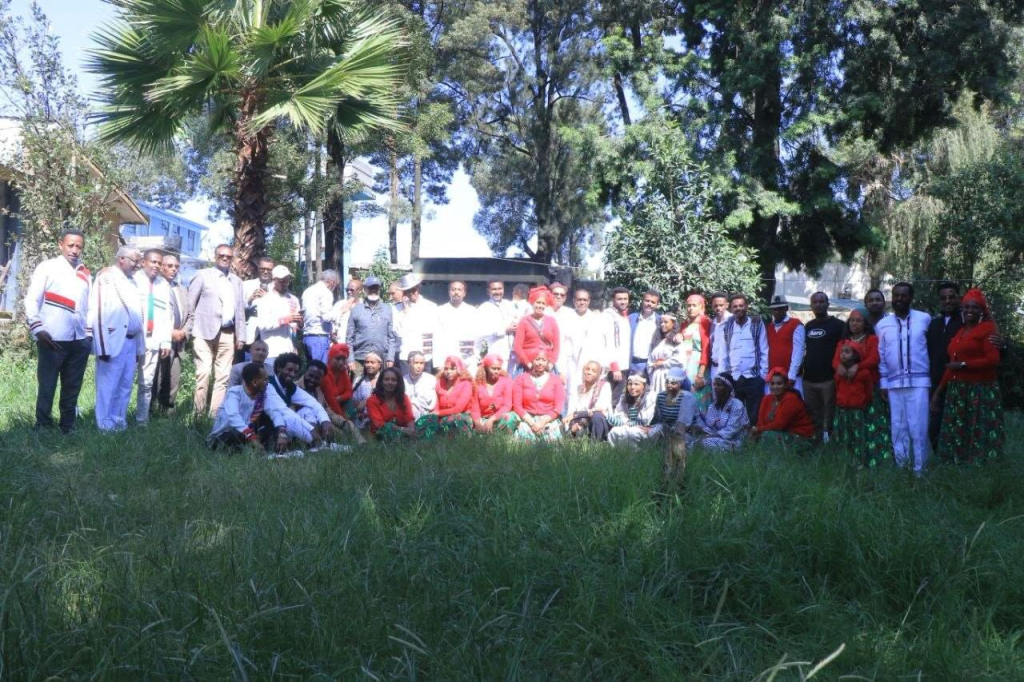
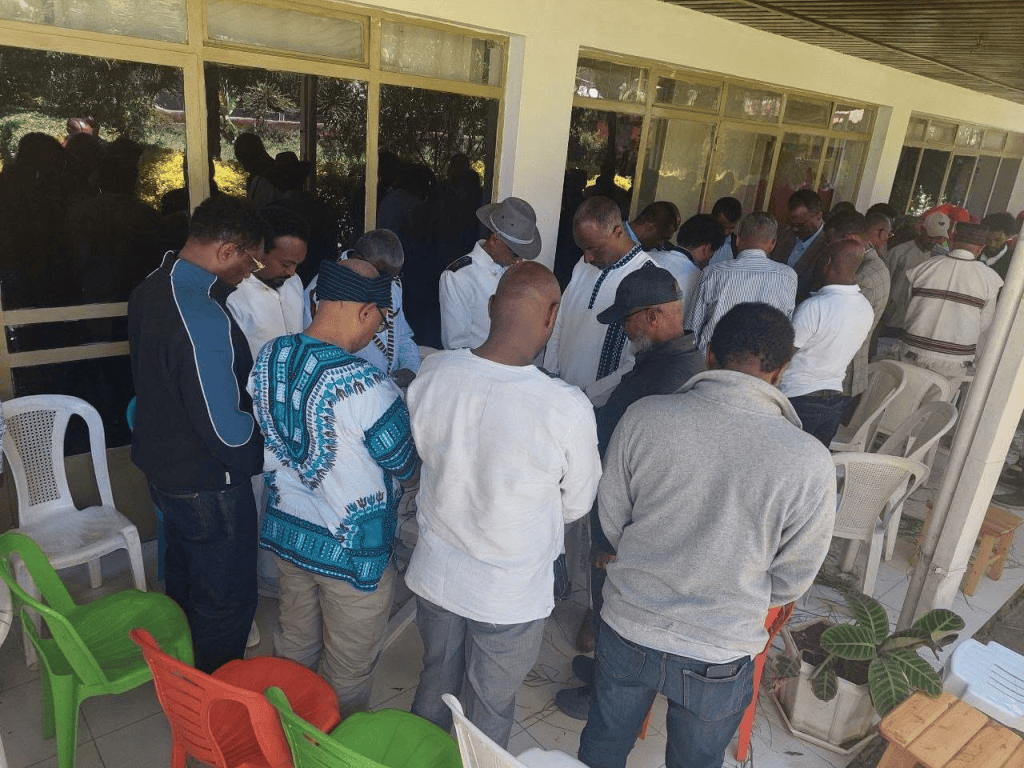
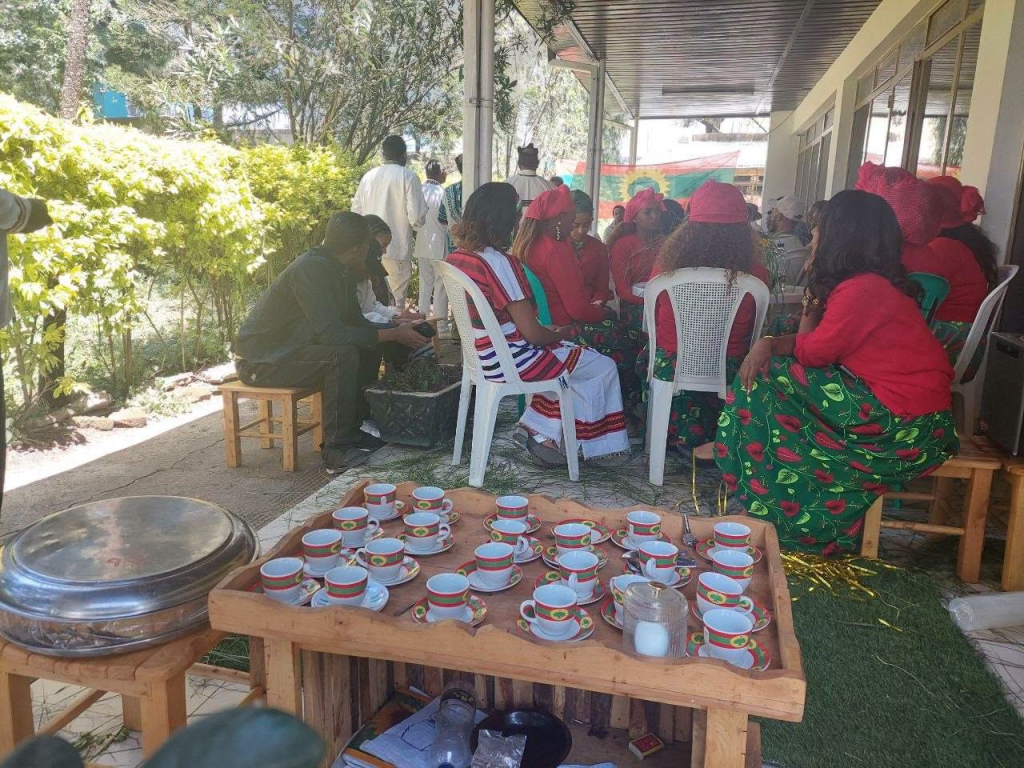
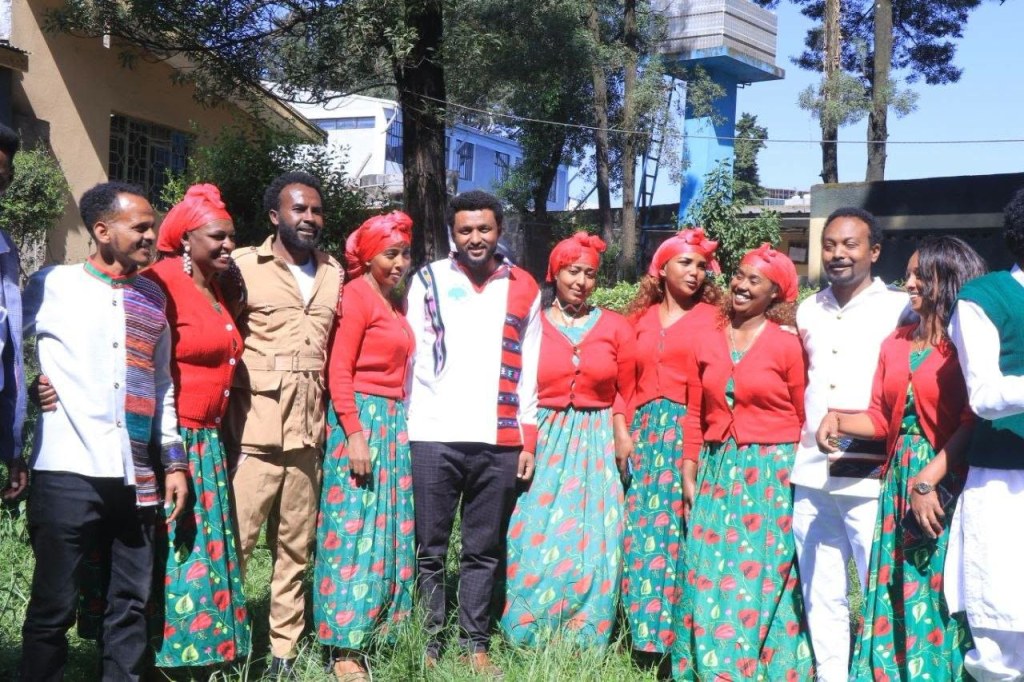
(Gullallee, OROMIA — October 1, 2026) — In a solemn yet joyful observance of tradition, members of the Oromo Liberation Army (ABO) gathered today at the organization’s Central Office in Gullallee to celebrate Irreechaa, the ancient Oromo thanksgiving festival marking the transition from the dark rainy season to the bright season of Birraa.
The celebration, held under the theme of remembrance and renewal, brought together members and leaders in a ceremony that honored both the spiritual foundations of Irreechaa and the sacrifices of Oromo heroes who have fallen in the struggle for freedom and dignity.
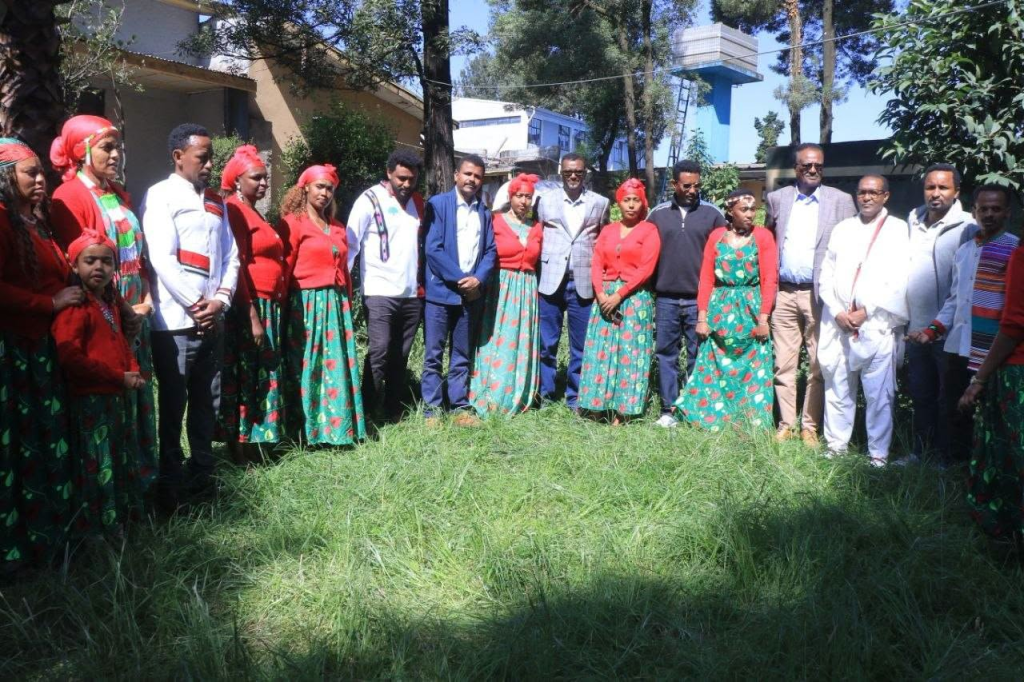
A Ceremony Rooted in Tradition
The day’s events unfolded in accordance with longstanding Oromo custom, beginning with Eebba Manguddootaa — the blessings of elders and community leaders. These blessings, central to any Irreechaa observance, invoked peace, prosperity, and divine favor upon the gathering and upon the broader Oromo nation.
Following the traditional blessings, participants turned their hearts and minds to remembrance. A memorial tribute was offered for the gootota wareegamtoota Oromoo — the martyred heroes of Oromia who gave their lives in the pursuit of freedom. The solemn moment served as a reminder that Irreechaa is not only a celebration of life and abundance but also an occasion to honor those who sacrificed everything for the generations that followed.
“From Where Did Irreechaa Rise, and Where Has It Arrived?”
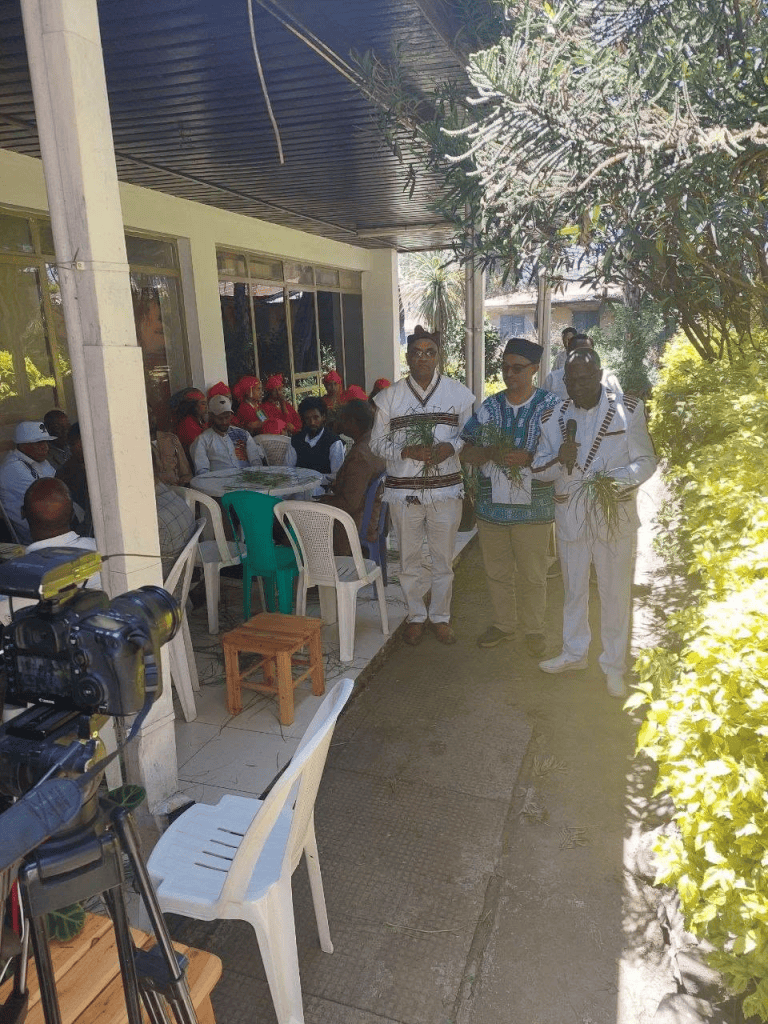
The ceremonial program featured a keynote address delivered by a scholar on the theme: “Irreechi eessaa ka’ee eessa gahe?” — “From where did Irreechaa rise, and where has it arrived?”
The reflection traced the historical and spiritual journey of Irreechaa from its ancient origins in Oromo cosmology and the Gadaa system to its contemporary significance as a pan-Oromo cultural and political touchstone. The speaker explored how the festival has survived centuries of suppression, adapted to changing circumstances, and emerged today as one of the most powerful expressions of Oromo identity and unity.
A Feast of Fellowship
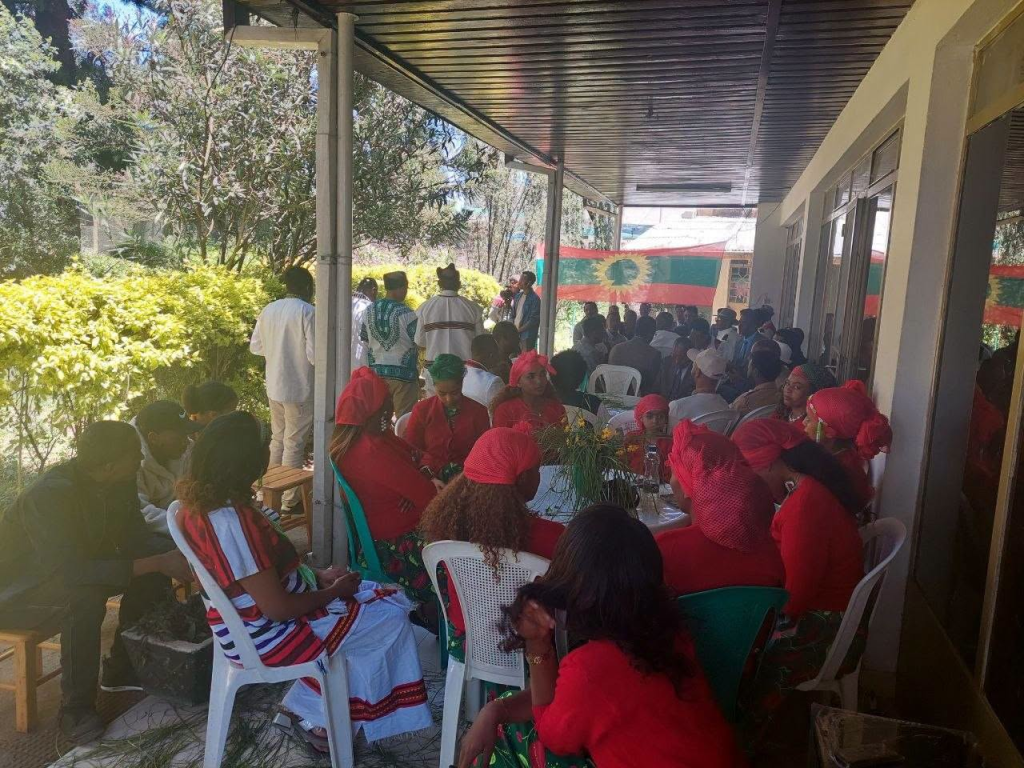
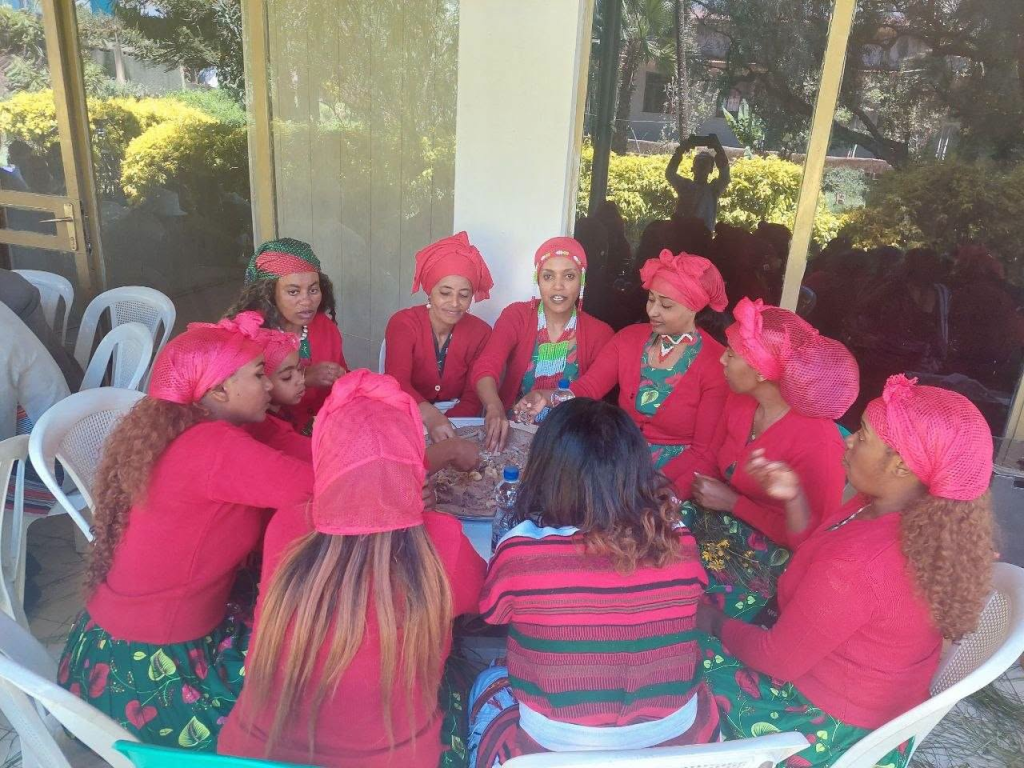
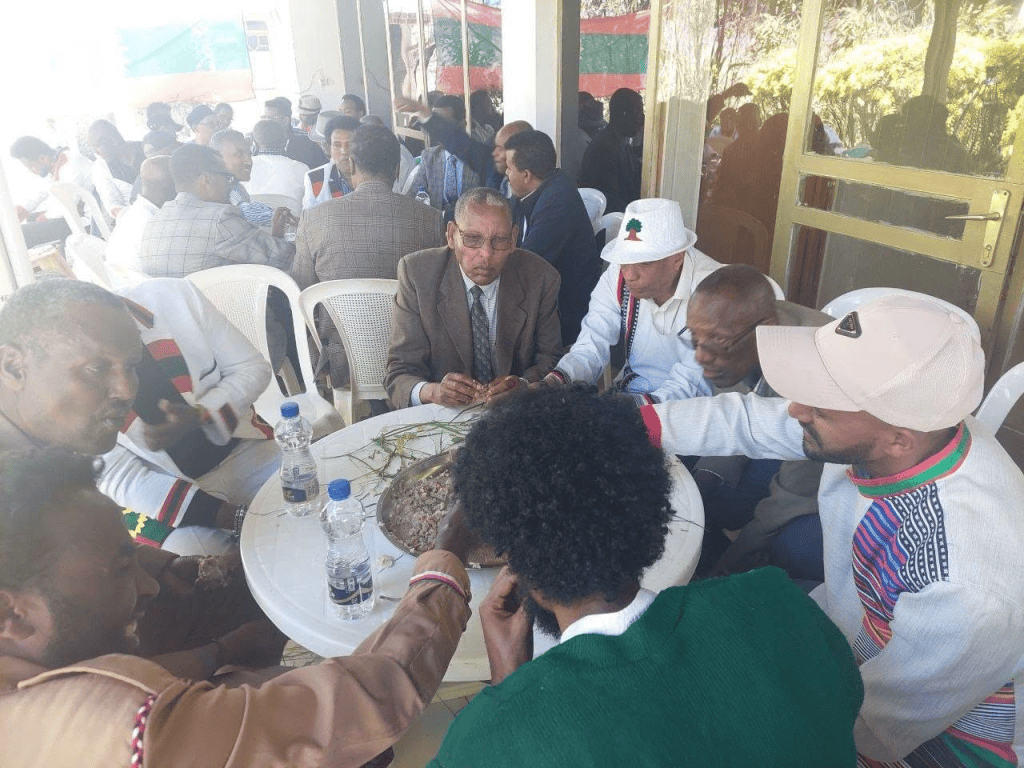
The formal proceedings concluded with a communal meal — a tradition that has marked Irreechaa celebrations for generations. Members shared food and drink in an atmosphere of brotherhood and solidarity, reinforcing the bonds that unite them in purpose and commitment.
The gathering was described as having concluded “with success and victory,” a phrase that resonated with the day’s dual themes of thanksgiving and resolve.
Irreechaa in Context
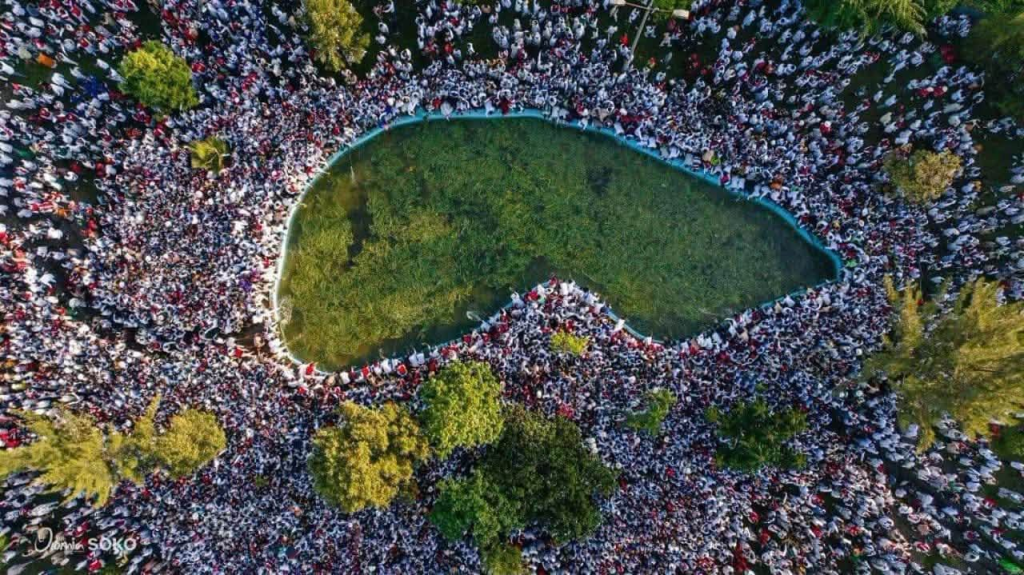
Irreechaa remains the most significant cultural and spiritual event on the Oromo calendar. Traditionally celebrated twice annually — at spring on hilltops (Irreechaa Tulluu) and after the rains at riversides and lakeshores (Irreechaa Malkaa) — the festival draws millions of participants from across Oromia and the global diaspora.
This year’s celebration at the ABO Gullallee headquarters reflects the enduring importance of Irreechaa as both a religious observance and a statement of cultural and national identity. For communities that have faced decades of marginalization and conflict, the festival serves as a vital space for gathering, remembrance, and the reaffirmation of shared values.
Looking Forward
As the Oromo people across Ethiopia and the world continue to observe Irreechaa celebration in the year 1959, the celebration at Gullallee stands as a testament to the resilience of tradition and the power of collective memory.
In honoring the past — both the ancient heritage of Irreechaa and the recent sacrifices of those who fought for freedom — participants looked toward a future of peace, unity, and the fulfillment of the Oromo people’s long-held aspirations.
Irreechi keenyas injifannoo keenya.

Irreechaa: The Festival of Bright Seasons Over the Dark Rainy Seasons
By Dhabessa Wakjira
Irreechaa, known as the Festival of bright seasons over the dark rainy seasons, is a major transition festival celebrated with great joy and enthusiasm. For the Oromo people, it is more than a celebration; it is a spiritual journey from darkness to light, from hardship to hope, and from isolation to unity.
Meaning and Significance
The word “Irreechaa” means fresh grasses. It symbolizes the triumph of good over evil and brightness over darkness. This ancient festival, rooted in the Oromo Gadaa system, is a profound expression of gratitude to Waaqa (God) for the blessings of life, peace, and prosperity. It marks the end of the long, dark rainy season known as Ganna and the beginning of the bright, sunny season called Birraa. During this time, rivers overflow with life, fields turn green, and the land is renewed. The fresh grass carried by celebrants is not merely a symbol; it is a living prayer, a gesture of blessing, and a sign of purification.
Celebrations and Traditions
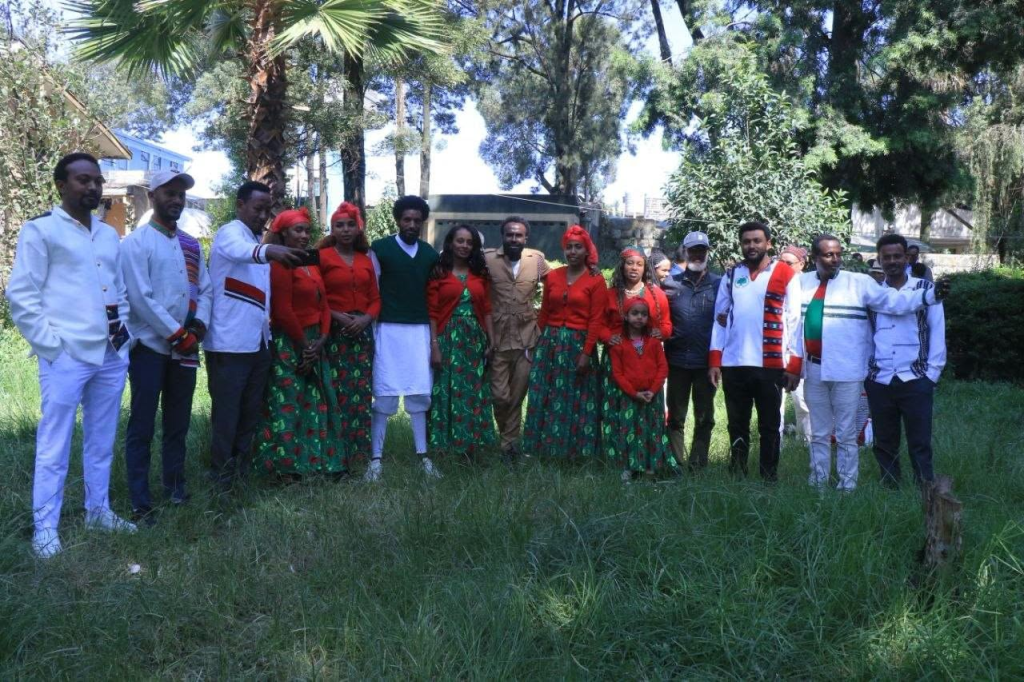
The celebration of Irreechaa is a vibrant tapestry of culture, faith, and community. People clean and decorate their homes with fresh grasses and daisy flowers, transforming their surroundings into spaces of beauty and welcome. Families wear new traditional clothes, adorned with colorful beads and intricate patterns, reflecting the richness of Oromo heritage.
On the day of the festival, communities gather at riversides and hilltops, the sacred places where Waaqa is believed to be closest to the people. Elders offer blessings for families, nations, and the country, praying for peace, wealth, and prosperity. The air fills with songs of praise, the rhythm of drums, and the joyful ululation of women. People share delicious Oromo foods, including cuukkoo, marqaa, and buna (coffee), strengthening bonds of kinship and friendship.
Children also enjoy the day with their friends and surroundings, running through the green fields, playing games, and learning the traditions of their ancestors. The festival brings love, unity, and happiness to everyone, regardless of age or background. It is a time when differences are set aside, and the community stands together as one, united by a shared identity and a common hope for the future.
A Festival of Transition and Triumph
Irreechaa is not just a seasonal event; it is a celebration of resilience and renewal. It reminds the Oromo people—and all who witness it—that after every dark season comes a season of light, and that gratitude, community, and faith are the pillars of a flourishing life. As the green grass is sprinkled and the blessings are spoken, Irreechaa carries forward an ancient legacy of hope, unity, and the enduring triumph of good over evil.
Irreechaa is celebrated annually by Oromo communities in Ethiopia and around the world, and is recognized as a symbol of cultural identity, peace, and shared humanity.

የአዲሲቷ የኦሮሚያ ዞኖች ከፍተኛ የመሪነት ኮሚቴ ተሹሟል
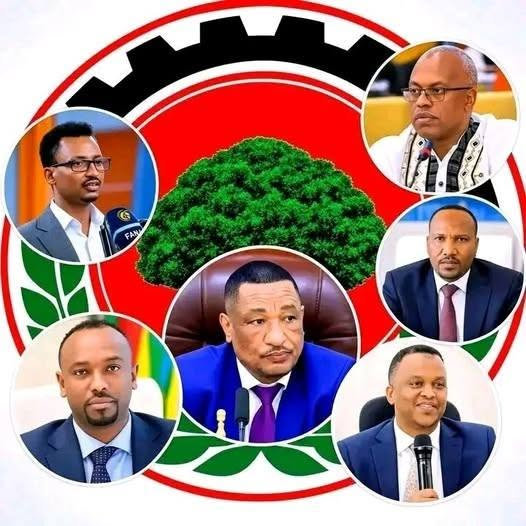
ፊንፊኔ — የኦሮሚያ ክልል መንግሥት የሕዝብ ባለቤትነትን የሚያረጋግጥ ታሪካዊ ውሳኔ ለማስተላለፍ፣ ጠንካራ ሥርዓትና ጠንካራ መንግሥት ለመገንባት የሚያገለግል አዲስ ሪፎርም በማድረግ የኦሮሚያን የዞን መዋቅር ከ21 ወደ 6 ዞኖች በማምጣት አቋቁሟል። በዚህ መሠረት የእነዚህ አዲስ ዞኖች ከፍተኛ የመሪነት ኮሚቴ ተሹሟል።
የኦሮሚያ ኮሙኒኬሽን አገልግሎት ይህንን መረጃ አስታውቋል። ሪፎርሙ የአስተዳደር ሥርዓቱን ለማሻሻልና ለሕዝቡ የሚቀርበውን አገልግሎት ለማፋጠን የተዘጋጀ መሆኑ ተገልጿል።
የምሥራቅ ኦሮሚያ ዞን
መቀመጫው ሐረር የሆነው የምሥራቅ ኦሮሚያ ዞን፣ ኦቦ አብዱራህማን አብደላ በምክትል ፕሬዚዳንትነት ደረጃ የምሥራቅ ኦሮሚያ ዞን አስተዳዳሪ ሆነው ተሹመዋል።
አዴ ሚስኪ ሙሐመድ በቢሮ ኃላፊነት ደረጃ የምሥራቅ ኦሮሚያ ዞን የልማት ጉዳዮች ምክትል ኃላፊ ሆነው፣ መቀመጫቸው ጭሮ ነው። ኦቦ አነስ አሊዪ በቢሮ ኃላፊነት ደረጃ የምሥራቅ ኦሮሚያ ዞን የሰላምና ፍትሕ ጉዳዮች ምክትል ኃላፊ ሆነው፣ መቀመጫቸው ገላምሶ ነው።
ኦቦ ጃርሶ ቦሩ በቢሮ ኃላፊነት ደረጃ የምሥራቅ ኦሮሚያ ዞን አስተዳዳሪ ከፍተኛ አማካሪ ሆነው፣ መቀመጫቸው ጉራዋ ነው። ኦቦ ፊቃዱ ሚሊዮን እና አዴ ሳሚያ አብደላ በቢሮ ኃላፊነት ደረጃ የምሥራቅ ኦሮሚያ ዞን አስተዳዳሪ አማካሪዎች ሆነው ተሹመዋል።
የመካከለኛው ኦሮሚያ ዞን
መቀመጫው ሸገርና አዳማ የሆነው የመካከለኛው ኦሮሚያ ዞን፣ ዶክተር መንግሥቱ በቀላ በምክትል ፕሬዚዳንትነት ደረጃ የመካከለኛው ኦሮሚያ ዞን አስተዳዳሪ ሆነው ተሹመዋል።
ኦቦ አባቡ ዋቆ በቢሮ ኃላፊነት ደረጃ የመካከለኛው ኦሮሚያ ዞን የልማት ጉዳዮች ምክትል ኃላፊ ሆነው፣ መቀመጫቸው ወሊሶ ነው። ኦቦ ክፍለው አዳሬ በቢሮ ኃላፊነት ደረጃ የመካከለኛው ኦሮሚያ ዞን የሰላምና ፍትሕ ጉዳዮች ምክትል ኃላፊ ሆነው፣ መቀመጫቸው ፊቼ ነው።
ኦቦ መኮንን ባይሳ በቢሮ ኃላፊነት ደረጃ የመካከለኛው ኦሮሚያ ዞን አስተዳዳሪ ከፍተኛ አማካሪ ሆነው፣ መቀመጫቸው አምቦ ነው። ኦቦ አሸናፊ አጃማ እና ኦቦ ታደለ ድርሳ በቢሮ ኃላፊነት ደረጃ የመካከለኛው ኦሮሚያ ዞን አስተዳዳሪ አማካሪዎች ሆነው ተሹመዋል።
የደቡብ ምዕራብ ኦሮሚያ ዞን
መቀመጫው ጅማ የሆነው የደቡብ ምዕራብ ኦሮሚያ ዞን፣ ዶክተር ራሻድ ካማል በምክትል ፕሬዚዳንትነት ደረጃ የደቡብ ምዕራብ ኦሮሚያ ዞን አስተዳዳሪ ሆነው ተሹመዋል።
ኦቦ ኢንዳልካቻው ተፈሪ በቢሮ ኃላፊነት ደረጃ የደቡብ ምዕራብ ኦሮሚያ ዞን የልማት ጉዳዮች ምክትል ኃላፊ ሆነው፣ መቀመጫቸው በደሌ ነው። ኦቦ አማን ዳኑ በቢሮ ኃላፊነት ደረጃ የደቡብ ምዕራብ ኦሮሚያ ዞን የሰላምና ፍትሕ ጉዳዮች ምክትል ኃላፊ ሆነው፣ መቀመጫቸው ሊሙ ጋናት ነው።
ኦቦ ድዳ ጉዳታ በቢሮ ኃላፊነት ደረጃ የደቡብ ምዕራብ ኦሮሚያ ዞን አስተዳዳሪ ከፍተኛ አማካሪ ሆነው፣ መቀመጫቸው መቱ ነው። ኦቦ ሙሐመድሻህ አባ ፊሳ እና ኦቦ ሙሴ ለመሳ በቢሮ ኃላፊነት ደረጃ የደቡብ ምዕራብ ኦሮሚያ ዞን አስተዳዳሪ አማካሪዎች ሆነው ተሹመዋል።
የደቡብ ኦሮሚያ ዞን
መቀመጫው ያቤሎ የሆነው የደቡብ ኦሮሚያ ዞን፣ ኦቦ አህመድ ሐጂ በምክትል ፕሬዚዳንትነት ደረጃ የደቡብ ኦሮሚያ ዞን አስተዳዳሪ ሆነው ተሹመዋል።
ኦቦ አዱላ ህርባዬ በቢሮ ኃላፊነት ደረጃ የደቡብ ኦሮሚያ ዞን የልማት ጉዳዮች ምክትል ኃላፊ ሆነው፣ መቀመጫቸው አዶላ ነው። ኦቦ ሊባን አረሮ በቢሮ ኃላፊነት ደረጃ የደቡብ ኦሮሚያ ዞን የሰላምና ፍትሕ ጉዳዮች ምክትል ኃላፊ ሆነው፣ መቀመጫቸው ናጌሌ ቦራና ነው።
ኦቦ ዋንዲሙ ሮቤ በቢሮ ኃላፊነት ደረጃ የደቡብ ኦሮሚያ ዞን አስተዳዳሪ ከፍተኛ አማካሪ ሆነው፣ መቀመጫቸው ቡሌ ሆራ ነው። ኦቦ ኢብራሂም አብዲ እና ኦቦ ኢሳቅ ሻቾ በቢሮ ኃላፊነት ደረጃ የደቡብ ኦሮሚያ ዞን አስተዳዳሪ አማካሪዎች ሆነው ተሹመዋል።
የምዕራብ ኦሮሚያ ዞን
መቀመጫው ነቀምት የሆነው የምዕራብ ኦሮሚያ ዞን፣ ኦቦ መስፍን መላኩ በምክትል ፕሬዚዳንትነት ደረጃ የምዕራብ ኦሮሚያ ዞን አስተዳዳሪ ሆነው ተሹመዋል።
ኦቦ ምረሳ ፊሴ በቢሮ ኃላፊነት ደረጃ የምዕራብ ኦሮሚያ ዞን የልማት ጉዳዮች ምክትል ኃላፊ ሆነው፣ መቀመጫቸው ጊምቢ ነው። ኦቦ ጋማቹ ጉርመሳ በቢሮ ኃላፊነት ደረጃ የምዕራብ ኦሮሚያ ዞን የሰላምና ፍትሕ ጉዳዮች ምክትል ኃላፊ ሆነው፣ መቀመጫቸው ሻምቡ ነው።
ኦቦ ታሊላ ተራፋ በቢሮ ኃላፊነት ደረጃ የምዕራብ ኦሮሚያ ዞን አስተዳዳሪ ከፍተኛ አማካሪ ሆነው፣ መቀመጫቸው ዳምቢ ዶሎ ነው። ኦቦ ባዳሳ ዳባ እና ኦቦ ዳሱ ለሚ በቢሮ ኃላፊነት ደረጃ የምዕራብ ኦሮሚያ ዞን አስተዳዳሪ አማካሪዎች ሆነው ተሹመዋል።
የደቡብ ምሥራቅ ኦሮሚያ ዞን
መቀመጫው ሮቤ የሆነው የደቡብ ምሥራቅ ኦሮሚያ ዞን፣ ኦቦ አህመድ ኢድሪስ በምክትል ፕሬዚዳንትነት ደረጃ የደቡብ ምሥራቅ ኦሮሚያ ዞን አስተዳዳሪ ሆነው ተሹመዋል።
ኦቦ አሳፋ ቶላሳ በቢሮ ኃላፊነት ደረጃ የደቡብ ምሥራቅ ኦሮሚያ ዞን የልማት ጉዳዮች ምክትል ኃላፊ ሆነው፣ መቀመጫቸው ጊንዲር ነው። ኦቦ አብዱረዛቅ ሁሴን በቢሮ ኃላፊነት ደረጃ የደቡብ ምሥራቅ ኦሮሚያ ዞን የሰላምና ፍትሕ ጉዳዮች ምክትል ኃላፊ ሆነው፣ መቀመጫቸው አሳላ ነው።
ኦቦ ኢብራሂም ካድር በቢሮ ኃላፊነት ደረጃ የደቡብ ምሥራቅ ኦሮሚያ ዞን አስተዳዳሪ ከፍተኛ አማካሪ ሆነው፣ መቀመጫቸው ሻሸመኔ ነው። ኦቦ ኢዛዲን አቡበከር እና ኦቦ ብርሃኑ አርፋሳ በቢሮ ኃላፊነት ደረጃ የደቡብ ምሥራቅ ኦሮሚያ ዞን አስተዳዳሪ አማካሪዎች ሆነው ተሹመዋል።
የኦሮሚያን የዞን መዋቅር ከ21 ወደ 6 ዞኖች በማምጣት የተደረገው ሪፎርም የአስተዳደር ሥርዓቱን ለማሻሻልና ለሕዝቡ የሚቀርበውን አገልግሎት ለማፋጠን የተዘጋጀ መሆኑን የኦሮሚያ ኮሙኒኬሽን አገልግሎት ገልጿል። የእነዚህ አዲስ ዞኖች ከፍተኛ የመሪነት ኮሚቴም አሁን ተሹሟል።
High Leadership Committee for the Newly Established Oromia Zones Assigned
Finfinnee — The Oromia Regional Government has established a new reform by restructuring the administrative structure of Oromia from 21 zones to 6 zones, with the aim of building a strong system and government that can ensure the historic decision of people’s ownership. Accordingly, the high leadership committee for these newly established zones has been assigned.
The Oromia Communication Service has announced this information. The reform is said to be prepared to improve the administrative system and expedite services delivered to the people.
East Oromia Zone
For East Oromia Zone, whose seat is Harar, Obbo Abdurrahmaan Abdallaa has been assigned as Chief Administrator of East Oromia Zone at the rank of Deputy President.
Aadde Miski Muhammad has been assigned as Deputy Head of Development Affairs for East Oromia Zone at the rank of Bureau Head, with her seat at Ciroo. Obbo Anas Aliyyii has been assigned as Deputy Head of Peace and Justice Affairs for East Oromia Zone at the rank of Bureau Head, with his seat at Galamsoo.
Obbo Jaarsoo Boruu has been assigned as Senior Advisor to the Administrator of East Oromia Zone at the rank of Bureau Head, with his seat at Gurawaa. Obbo Fiqaaduu Miiliyoon and Aadde Saamiyaa Abdallaa have been assigned as Advisors to the Administrator of East Oromia Zone at the rank of Bureau Head.
Central Oromia Zone
For Central Oromia Zone, whose seat is Shaggar and Adaamaa, Dr. Mangistuu Baqqalaa has been assigned as Chief Administrator of Central Oromia Zone at the rank of Deputy President.
Obbo Abbaabbuu Waaqoo has been assigned as Deputy Head of Development Affairs for Central Oromia Zone at the rank of Bureau Head, with his seat at Waliso. Obbo Kifalaw Adaree has been assigned as Deputy Head of Peace and Justice Affairs for Central Oromia Zone at the rank of Bureau Head, with his seat at Fiichee.
Obbo Makkonnin Baay’isaa has been assigned as Senior Advisor to the Administrator of Central Oromia Zone at the rank of Bureau Head, with his seat at Ambo. Obbo Ashannaafii Ajjamaa and Obbo Taaddalaa Diriirsaa have been assigned as Advisors to the Administrator of Central Oromia Zone at the rank of Bureau Head.
South West Oromia Zone
For South West Oromia Zone, whose seat is Jimma, Dr. Rashaad Kamaal has been assigned as Chief Administrator of South West Oromia Zone at the rank of Deputy President.
Obbo Indaalkaachaw Tafarii has been assigned as Deputy Head of Development Affairs for South West Oromia Zone at the rank of Bureau Head, with his seat at Beddellee. Obbo Amaan Danuu has been assigned as Deputy Head of Peace and Justice Affairs for South West Oromia Zone at the rank of Bureau Head, with his seat at Limmuu Gannat.
Obbo Didhaa Guddataa has been assigned as Senior Advisor to the Administrator of South West Oromia Zone at the rank of Bureau Head, with his seat at Mattuu. Obbo Muhaammadxaahaa Abbaa Fiixaa and Obbo Moosisaa Lammeessaa have been assigned as Advisors to the Administrator of South West Oromia Zone at the rank of Bureau Head.
South Oromia Zone
For South Oromia Zone, whose seat is Yaabeelloo, Obbo Ahmad Haajii has been assigned as Chief Administrator of South Oromia Zone at the rank of Deputy President.
Obbo Adulaa Hirbaayyee has been assigned as Deputy Head of Development Affairs for South Oromia Zone at the rank of Bureau Head, with his seat at Adoolaa. Obbo Liiban Areeroo has been assigned as Deputy Head of Peace and Justice Affairs for South Oromia Zone at the rank of Bureau Head, with his seat at Nageellee Booranaa.
Obbo Wandimmuu Roobee has been assigned as Senior Advisor to the Administrator of South Oromia Zone at the rank of Bureau Head, with his seat at Bulee Horaa. Obbo Ibraahim Abdii and Obbo Isaaq Xaachoo have been assigned as Advisors to the Administrator of South Oromia Zone at the rank of Bureau Head.
West Oromia Zone
For West Oromia Zone, whose seat is Naqamte, Obbo Masfin Malaakuu has been assigned as Chief Administrator of West Oromia Zone at the rank of Deputy President.
Obbo Mirreessaa Fiixee has been assigned as Deputy Head of Development Affairs for West Oromia Zone at the rank of Bureau Head, with his seat at Gimbii. Obbo Gammachuu Gurmeessaa has been assigned as Deputy Head of Peace and Justice Affairs for West Oromia Zone at the rank of Bureau Head, with his seat at Shaambuu.
Obbo Taliilaa Tarrafaa has been assigned as Senior Advisor to the Administrator of West Oromia Zone at the rank of Bureau Head, with his seat at Dambii Doolloo. Obbo Badhaasaa Dhaabaa and Obbo Dassuu Lammii have been assigned as Advisors to the Administrator of West Oromia Zone at the rank of Bureau Head.
South East Oromia Zone
For South East Oromia Zone, whose seat is Roobee, Obbo Ahimad Idriis has been assigned as Chief Administrator of South East Oromia Zone at the rank of Deputy President.
Obbo Asaffaa Tolasaa has been assigned as Deputy Head of Development Affairs for South East Oromia Zone at the rank of Bureau Head, with his seat at Gindhiir. Obbo Abdurrazaaq Huseen has been assigned as Deputy Head of Peace and Justice Affairs for South East Oromia Zone at the rank of Bureau Head, with his seat at Asallaa.
Obbo Ibraahim Kadiir has been assigned as Senior Advisor to the Administrator of South East Oromia Zone at the rank of Bureau Head, with his seat at Shaashamannee. Obbo Izzaddiin Abuubakar and Obbo Birhaanuu Arfaasaa have been assigned as Advisors to the Administrator of South East Oromia Zone at the rank of Bureau Head.
The reform restructuring Oromia’s zones from 21 to 6 has been described by the Oromia Communication Service as being prepared to improve the administrative system and expedite services delivered to the people. The high leadership committee for these newly established zones has now been assigned.

Addis Ababa Security Task Force Finalizes Preparations for Peaceful Irreecha Hora Finfinne Festival
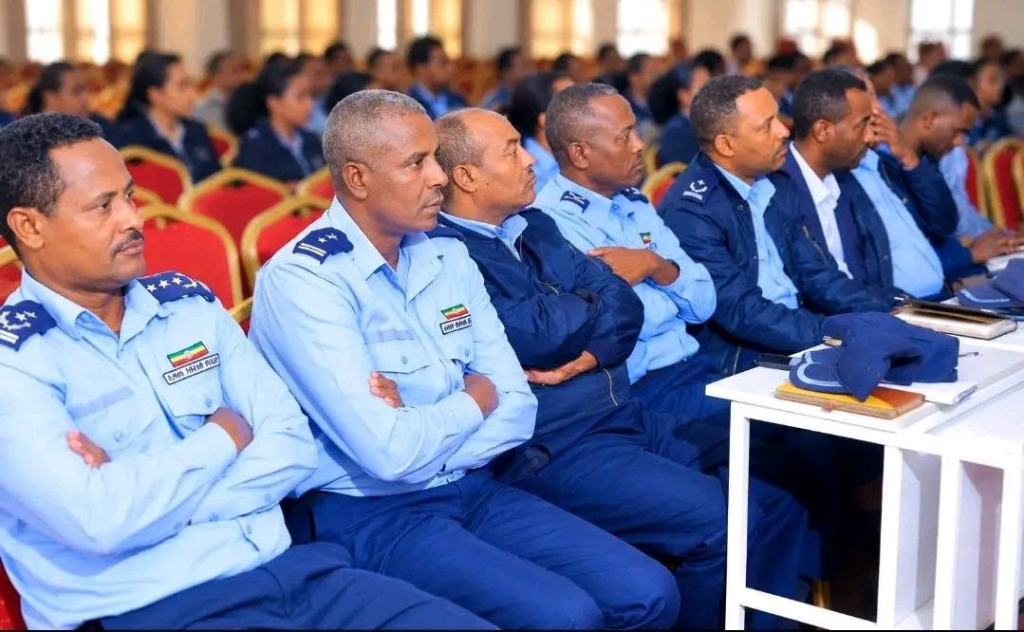
By Deputy Inspector Dawit Ergete
ADDIS ABABA — The Addis Ababa Integrated Security Task Force announced Wednesday that all necessary preparations have been completed to ensure the peaceful conclusion of the upcoming Irreecha Hora Finfinne festival, following a high-level security coordination meeting held at the Addis Ababa Police Headquarters.
The discussion, convened on September 30, 2026, brought together senior leadership from across Ethiopia’s security and safety institutions to finalize a comprehensive security plan for one of the capital’s most significant cultural celebrations.
Senior Leadership in Attendance
The meeting was attended by Lt. Gen. Asrat Denero, Commander of the Addis Ababa Police Headquarters; Ms. Lidiya Girma, Head of the Addis Ababa Peace and Security Administration Bureau; Deputy Commissioner Tofik Meded, Commander for Crime Prevention; Deputy Commissioner Erzik Essa, Commander for Crime Investigation; Major Zerihun Tefera, Director General of the Addis Ababa City Administration Regulation Enforcement Authority; and Assistant Commissioner Dereje Shiferaw, Commander of Sheger City Police.
Also present were senior leadership from central and sub-city police commands, the heroic National Defense Force, Federal Police, National Intelligence and Security Service, Fire and Disaster Risk Management Commission, Sheger City Administration Police, and high-ranking officials from various other security and safety institutions.
24/7 Operations Emphasized
Lt. Gen. Asrat Denero, Commander of the Addis Ababa Police Headquarters, attributed the successful and incident-free conclusion of past events in Addis Ababa to the commitment of security forces at all levels and the city’s peace-loving residents.
He emphasized the need for round-the-clock operations—beyond the usual routine—to ensure the upcoming Irreecha Hora Finfinne festival proceeds peacefully.
“Our security forces should welcome and serve guests arriving in our city for the holiday with a spirit of hospitality, while also noting that our screening procedures must be strict and professional,” Lt. Gen. Asrat stated.
Sustaining Momentum from Meskel-Demera
Ms. Lidiya Girma, Head of the Addis Ababa Peace and Security Administration Bureau, stressed that given the need for exceptional coordination during this period, the rigorous security measures implemented during the Meskel-Demera festival must be sustained and further strengthened for the Irreechaa festival and the government formation assembly.
She called for robust deployment of security forces, urging that it be “consistent and proven effective.”
Vigilance Against Infiltration
Deputy Commissioner Abera Hunde, Head of the Ethiopian Federal Police’s Security Institutions Protection Directorate, warned that strict security checks must be conducted, as individuals intending to cause security disruptions could infiltrate the crowds entering holiday celebration venues.
He further explained that monitoring and control measures would be implemented against individuals selling unauthorized emblems and flags incorporated into decorations and clothing.
Joint Coordination with Oromia Security Structures
Security officials participating in the meeting stated that they are working jointly with the Oromia Sheger City Administration’s police and security structures—including by organizing in shifts—to ensure the festival concludes in complete peace, much like the Meskel Demera celebration.
Public Advisory Issued
The Addis Ababa Police Headquarters has advised that to ensure the event concludes peacefully, the possession of banned or unauthorized flags, as well as T-shirts or materials bearing inflammatory slogans, is prohibited.
The headquarters further urged the public to report any suspicious activity via the “Citizen Engagement Application” (EFPApp) or by calling the toll-free lines 990 and 991, or 0111110111.
The Irreecha Hora Finfinne festival, a vibrant cultural and thanksgiving celebration of the Oromo people, draws hundreds of thousands of attendees to the capital annually. Authorities have expressed confidence that this year’s event will proceed smoothly, building on the successful security outcomes of recent national celebrations.

The Forgotten Treasure: Why Illu Abba Boora Deserves to Be Seen
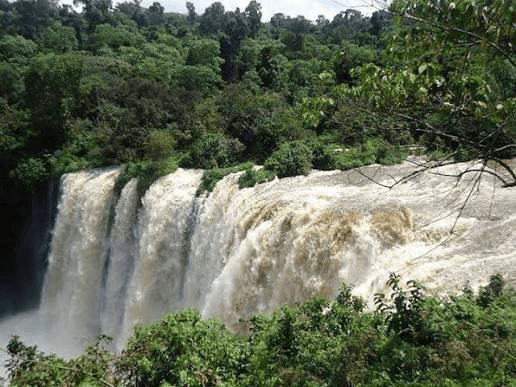
In southwestern Ethiopia lies a land rich in history, culture, and natural beauty—yet for decades, it has remained on the margins of national attention. Illu Abba Boora Zone is a place that has given so much to its communities, to the Oromia region, and to Ethiopia as a whole, but has received far too little in return.
A Land of Exceptional People
Illu Abba Boora has produced some of the most influential figures in Oromo and Ethiopian history. Among its distinguished sons and daughters are:
- Lifa Abba Jorga (Mettu)
- Onesimos Nasib or Hika Awaj (Hurumu) — also known as “The Father of Oromo Literature”
- Abba Gadaa Chali Shono or Abba Bora (Yayo)
- Writer Baalu Girma (Alge Sachi)
- Colonel Goshu Wolde (Gore)
- Captain Solomon Gizaw (Gore)
- Yasin Mohammed Rufo (Mettu)
- Itefa Gobena Molte (Mettu)
- Dr. Dima Negewo (Gore)
- Professor Jemal Abdulkedir (Gore)
- Kuma Demeksa (Bure)
- Zeleke Gesesse (Gore)
- Dr. Mekonnen Dinko Ejjerso
- Melba Biftu and Fetense Illu, among others
These are not merely names. They are architects of Oromo identity, contributors to Ethiopian letters and politics, and leaders whose impact reverberates far beyond their birthplace.
And yet, we must ask ourselves honestly: What have we done with these legacies? Have we mobilized their stories to shape public opinion and narrative about the Oromo people and Oromia? Have we honored them in ways that inspire new generations? The uncomfortable answer is that we have not done enough.
The Uncelebrated Victory of Sambe
Perhaps the most glaring omission in Ethiopia’s collective memory is the Battle of Sambe—also known as the Victory of Sambe.
When Italian forces, equipped with modern weaponry, attempted to invade Ethiopia through western Ethiopia, Ethiopian patriots made their stand in Illu Abba Boora, around Gore—which briefly served as the temporary capital of Ethiopia. With strategic support from local heroes, the patriots destroyed a 12-meter-high bridge over the Qeber River, cutting off the Italian army’s entry and exit routes. Trapped and defeated at Sambe Mountain, the enemy was routed.
This was a pivotal moment in Ethiopia’s anti-fascist resistance. And yet:
- It is barely known.
- It is rarely spoken of.
- It has not been commercialized.
- It has not been sung about.
- It has not been commemorated.
- It has not received national recognition.
- No monument stands in its honor.
The Victory of Sambe deserves rigorous research, publication, and celebration. It belongs in textbooks, in national commemorations, and in the broader story of Ethiopia’s independence. This is not merely a regional issue—it is a national gap in historical memory.
Natural Wealth Without Development
Illu Abba Boora is endowed with remarkable natural assets:
- Soor Waterfall
- Becho Waterfall
- Yayo Forest — a UNESCO Biosphere Reserve and World Heritage Site since 2010
- Wild Arabica coffee forests — a globally significant genetic treasure
- Mineral resources including coal
These are not minor endowments. They represent potential engines of tourism, business, and employment. Yet they remain unknown, unpopular, underdeveloped, and therefore unutilized.
The same is true of the zone’s biodiversity, historical sites, cultural heritage, and human capital. They have not received the attention they merit. They have not been properly studied, managed, or leveraged for the benefit of the people.
A Stable Zone Left Behind
Here is the paradox: Illu Abba Boora is widely regarded as one of the more peaceful and stable zones in Oromia. And yet, stability has not translated into investment. The zone remains, in many ways, a neglected periphery—far from the center of attention, resources, and opportunity.
The people of Illu Abba Boora deserve better. They deserve:
- Coordinated, accountable leadership
- Rapid, comprehensive, and broad-based development
- Partnership from government, investors, regional authorities, zone and district administrations, and city leaders
A Beginning, Not an End
There are encouraging signs. Recent initiatives to promote the zone’s natural, historical, and cultural attractions—including guided tours and infrastructure improvements—are welcome. But they are only a beginning.
This is a call to action:
- Research and publish the history of the Victory of Sambe.
- Commemorate the battle with monuments, annual events, and national recognition.
- Develop and package Illu Abba Boora’s natural and cultural assets into sustainable tourism and business opportunities.
- Honor the zone’s exceptional figures in schools, public narratives, and national memory.
- Invest in a stable region that has waited far too long for its share of development.
Illu Abba Boora does not need to be discovered. Its value has always been there. What it needs is to be seen, respected, and invested in.
As we celebrate Irreecha and Oromia Tourism Week, let us remember the forgotten heroes, the uncelebrated victories, and the untapped beauty of Illu Abba Boora. The time to act is now.

Adanech Abiebie Appointed Mayor of Addis Ababa: A New Chapter for Ethiopia’s Capital
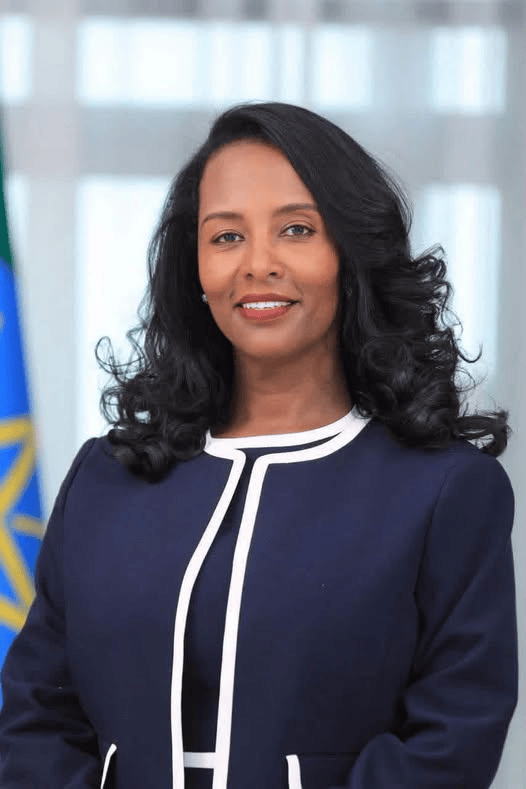
Congratulations pour in as a seasoned leader takes the helm of Africa’s diplomatic hub
(Addis Ababa, 30 September 2026)-In a moment that has captured the attention and hopes of millions, Mrs. Adanech Abiebie has been appointed Mayor of Addis Ababa — a city that stands as both the political heart of Ethiopia and the diplomatic capital of Africa.
The announcement has sparked an outpouring of congratulations and goodwill from citizens, colleagues, and observers across the nation and beyond.
A Leader for a Rising City
Addis Ababa is not just any city. It is home to the African Union headquarters, a growing hub for international diplomacy, and a metropolis undergoing rapid transformation. Its mayor carries a responsibility that extends far beyond municipal boundaries — shaping the experience of residents, visitors, and the global community alike.
With her appointment, Adanech Abiebie steps into a role that demands vision, resilience, and an unwavering commitment to public service. Those who have followed her career describe her as a leader who understands the complexities of urban governance and the aspirations of everyday Ethiopians.
A Wave of Congratulations
The response to her appointment has been swift and heartfelt.
“Congratulations! May you have a blessed term of service, outstanding success, and a fruitful journey ahead!”
These words, echoed across social media and community gatherings, reflect a deep well of hope. For many, this is not simply a political appointment — it is an opportunity to see leadership that listens, delivers, and inspires.
The Weight of the Moment
Addis Ababa faces no shortage of challenges: rapid urbanization, infrastructure demands, housing needs, and the task of ensuring that development benefits all residents, not just a few. Yet within these challenges lie extraordinary opportunities.
The city is emerging as a center of innovation, commerce, and culture. Its streets pulse with the energy of a young population eager for progress. Its markets, universities, and cultural institutions tell a story of a city on the move.
The question that now rests before the new mayor is simple yet profound: How can Addis Ababa become a city that works for everyone?
A Prayer and a Promise
For those who offered their congratulations, the sentiment was clear: this is a moment for prayer as much as celebration.
“May God guide your steps, grant you wisdom, and bless your service to our beloved city and nation.”
Such words carry the weight of a community that understands the gravity of leadership. They are not merely formalities but genuine expressions of hope — that this new chapter will bring not only progress but also fairness, compassion, and lasting change.
Looking Ahead
As Adanech Abiebie takes office, the eyes of the nation — and indeed the continent — are upon her. The road ahead is long, and the expectations are high. But if the enthusiasm surrounding her appointment is any indication, she does not walk it alone.
A city is not built by one leader. It is built by a people united in purpose. And in this moment, there is a palpable sense that Addis Ababa is ready to rise — together.
Congratulations, Mayor Adanech Abiebie. May your term be marked by achievement, may your leadership be a blessing to all, and may the city you serve flourish in the years to come.

What is the significance of Irreechaa Celebrations in Diaspora?
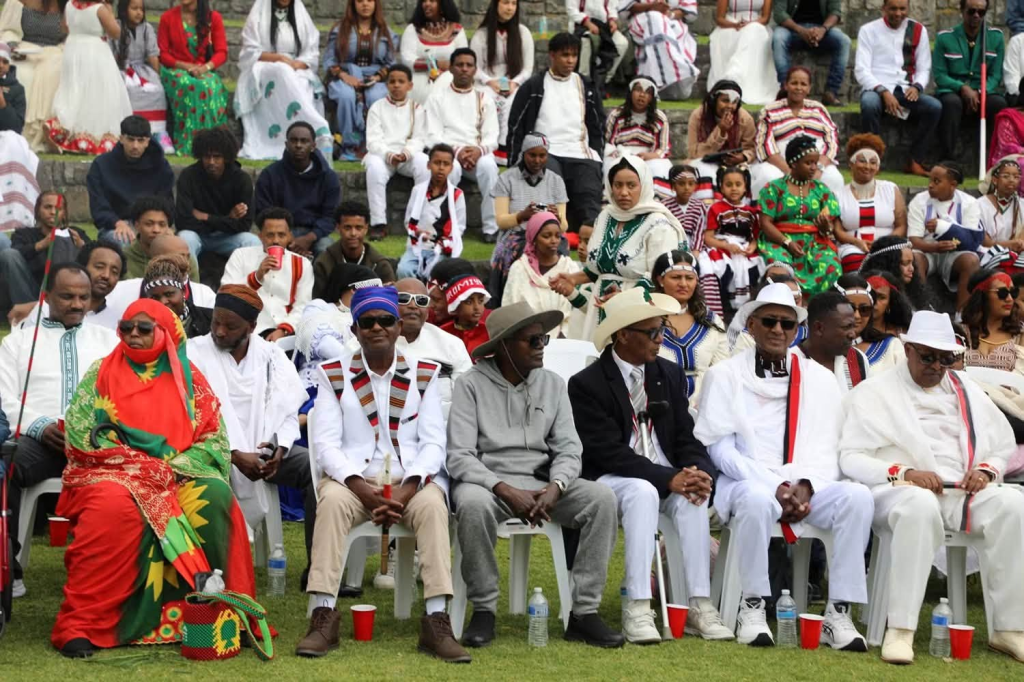
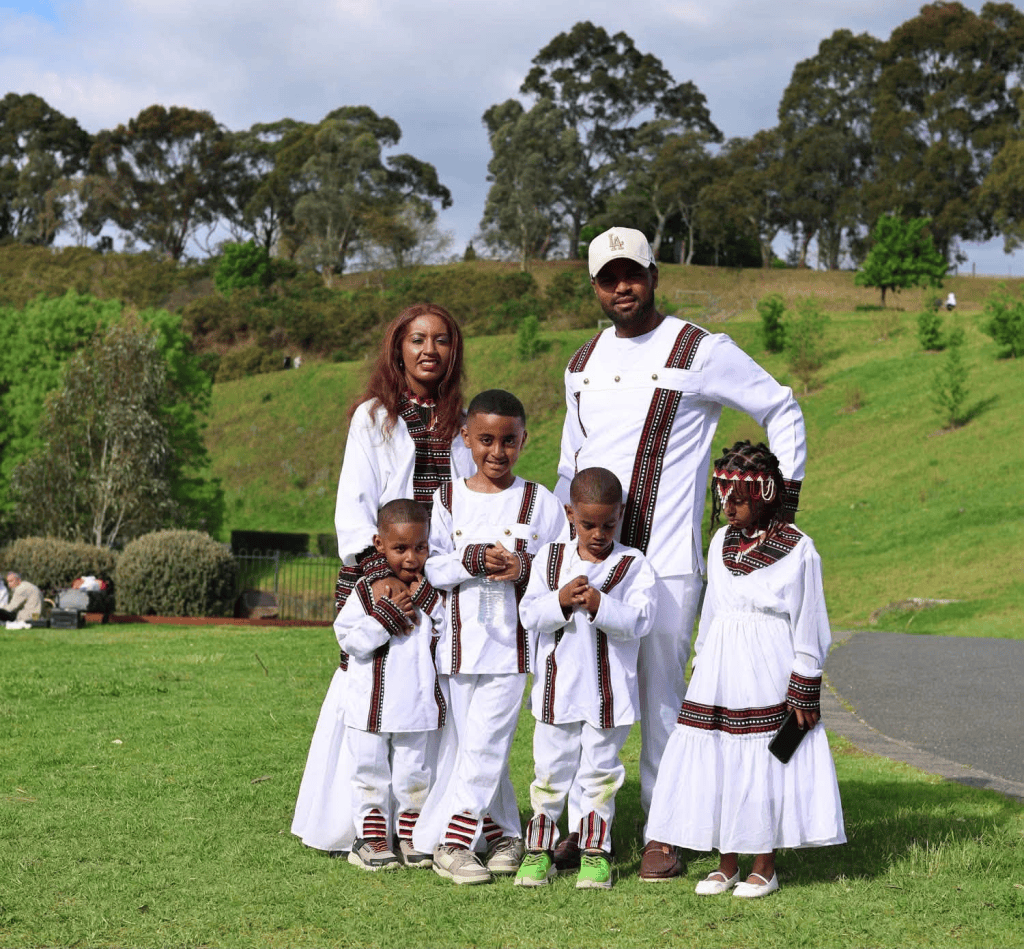
For the Oromo diaspora, Irreechaa serves as a vital cultural anchor—far more than a festival, it is an act of identity preservation, a bridge across generations, and a powerful statement of resilience. It connects Oromos living far from their ancestral homeland to their ancestors, their language, and one another, ensuring that a tradition preserved through centuries of suppression continues to thrive on foreign soil.
🌍 A Home Away from Home
Irreechaa provides a sacred space where the diaspora can recreate the spiritual and communal essence of the homeland. In cities like Melbourne, Toronto, and Minneapolis, the ritual structure remains remarkably intact:
- Traditional Rituals: Participants carry fresh green grass and yellow daisies to the water’s edge, dipping them in as an offering of gratitude—the same act performed by millions at Hora Arsadi and Hora Finfinnee.
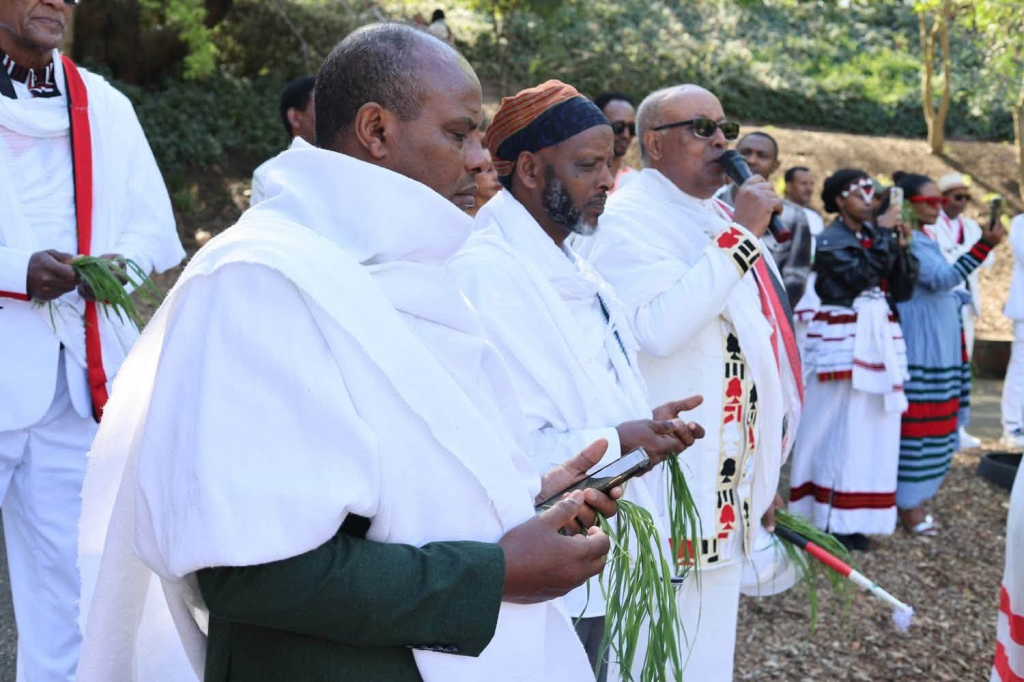
- Spiritual Continuity: Elders lead blessings and prayers to Waaqa (God), maintaining the spiritual essence of the festival even in a foreign landscape.
- Processions and Songs: Communities walk together toward water bodies or parks, singing traditional faaruu (songs of praise), with women often walking in front—a practice rooted in the Siinqee institution symbolizing women as sacred agents of peace.
🔗 Forging Unity and Identity
Irreechaa transcends religious and political divisions, functioning as a transreligious symbol of Oromummaa (Oromo identity). As one analysis notes, attendees include Christians, Muslims, non-believers, and Waaqeffatas alike—all united by a shared cultural heritage. This unity is particularly significant for a diaspora that fled political marginalization, as it allows diverse Oromo communities to come together under a single, proud identity.
🛡️ Resilience Through Remembrance
The diaspora celebration carries a profound weight of survival. Irreechaa was historically suppressed and forced underground, making its public, joyful observance abroad an act of cultural resistance. In Minnesota, for instance, the festival is explicitly framed as a symbol of resilience—a tradition that was “looked down upon” for about a century but is now celebrated openly and proudly. For the Melbourne community, it is a “living prayer” that refuses to become a mere memory.
🌱 Passing the Torch to the Next Generation
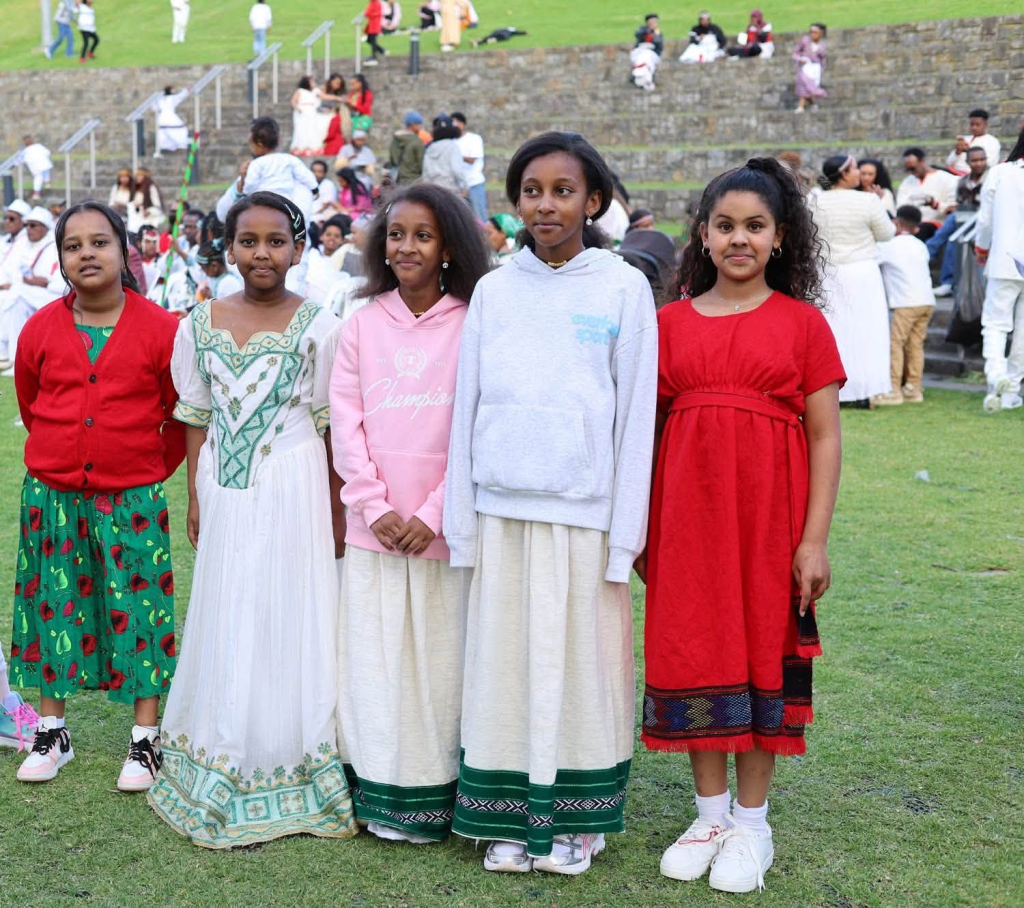
A central mission of diaspora Irreechaa organizations is youth engagement and cultural transmission. In Melbourne, “Irrecha Australia” emphasizes empowering young people to carry traditions forward with pride. In Minnesota, youth are described as a driving force behind the festival’s growing popularity, even teaching non-Oromos about its meaning. By involving children in rituals—from dressing in traditional wandaboo to learning the steps of cultural dances—the diaspora ensures that Irreechaa remains a living tradition, not a distant memory.
🤝 A Bridge to the Wider World
Beyond the Oromo community, diaspora Irreechaa celebrations serve as an open invitation for intercultural exchange. In Toronto, the festival has attracted visitors from Germany and the United States. In Dubai, celebrations have included local Emiratis and other Ethiopian ethnic groups. These events showcase Oromo values of peace, gratitude, and harmony with nature, fostering understanding within the broader multicultural societies where Oromos now live.
In essence, Irreechaa in the diaspora is not a diminished version of the homeland celebration—it is an amplified testament to a people’s unbreakable connection to their roots. It is where identity is renewed, community is strengthened, and the flame of Oromummaa is passed on, undimmed, to the next generation.

Ethiopia Launches E-Passport Service at Its Embassy in Canberra
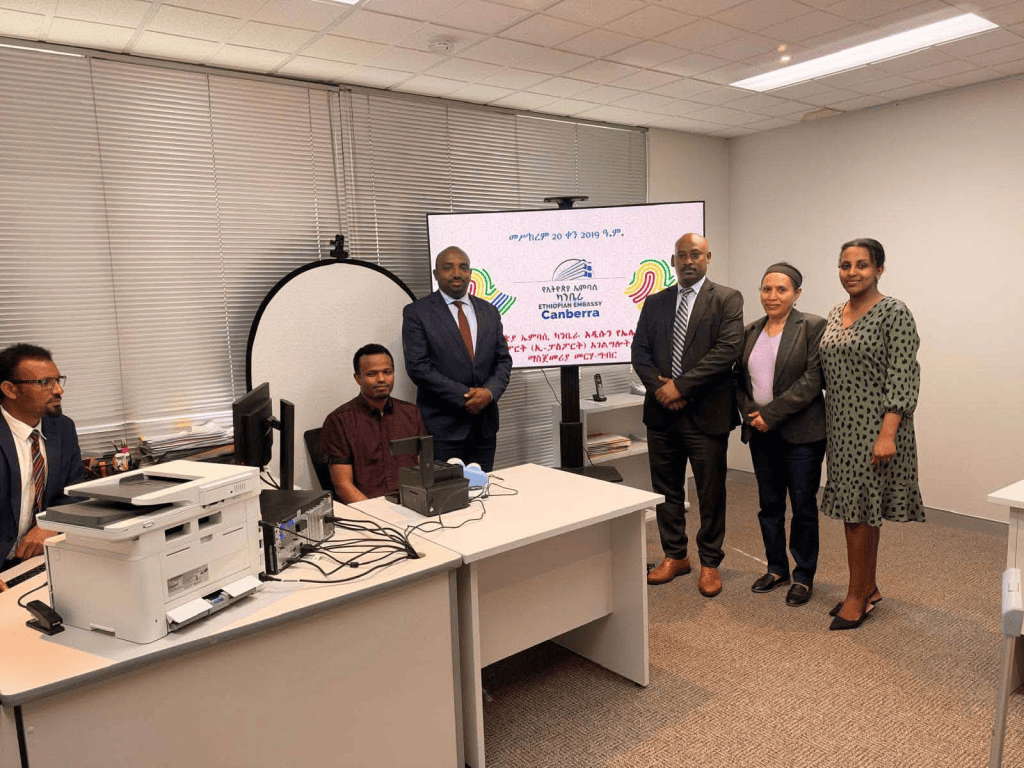
A new era of consular service begins as Ethiopian citizens in Australia gain access to biometric passport processing closer to home.
(CANBERRA, 30 September 2026)-The Embassy of the Federal Democratic Republic of Ethiopia in Canberra has officially launched its E-Passport service, marking a significant milestone in the country’s efforts to modernize consular services and better serve its citizens abroad.
The inauguration ceremony took place today, September 20, 2019 E.C. (Ethiopian Calendar), with Mr. Yalalet Getachew, the mission’s Chargé d’Affaires, officially opening the service to the public.
Meeting International Standards
The new electronic passport is designed to comply with the standards set by the International Civil Aviation Organization (ICAO). This compliance ensures that Ethiopian travelers benefit from enhanced service at international airports worldwide, reducing the inconveniences that have long plagued citizens traveling with older document formats.
The E-Passport represents a leap forward in both security and efficiency, aligning Ethiopia with global best practices in travel documentation.
A Breakthrough for Citizens Abroad
Perhaps the most transformative aspect of this development is what it means for Ethiopians living in Australia and the surrounding region. Previously, the biometric data collection service — a mandatory step in the passport application process — was only available at the headquarters of the Immigration and Citizenship Service in Addis Ababa.
This meant that citizens abroad faced the burdensome prospect of traveling back to Ethiopia simply to complete a procedural requirement.
Now, with the service available at the embassy level, citizens can:
- Submit their passport applications online from the comfort of their current location
- Provide their biometric data at the embassy in Canberra
- Avoid the expense and hardship of international travel solely for administrative purposes
This shift represents a fundamental change in how the Ethiopian government approaches diaspora services — moving from a centralized model to one that meets citizens where they are.
Expanding Access Across Australia
The embassy has indicated that this is only the beginning. In its announcement, the mission stated that additional information regarding the service will be shared in due course, and that preparations are already underway to extend the service to other cities where Ethiopian citizens reside.
This commitment to reaching communities beyond the capital signals a broader strategy to make consular services more accessible and responsive to the needs of the Ethiopian diaspora across the continent.
A Step Forward in Diplomacy
The launch of the E-Passport service in Canberra is more than an administrative upgrade — it is a statement about the relationship between Ethiopia and its citizens abroad. By investing in accessible, modern consular services, the government is acknowledging the importance of its diaspora and the role they play in the nation’s global presence.
For Ethiopians in Australia, this development brings not only practical benefits but also a sense of connection and recognition. The distance between home and abroad just became a little shorter.
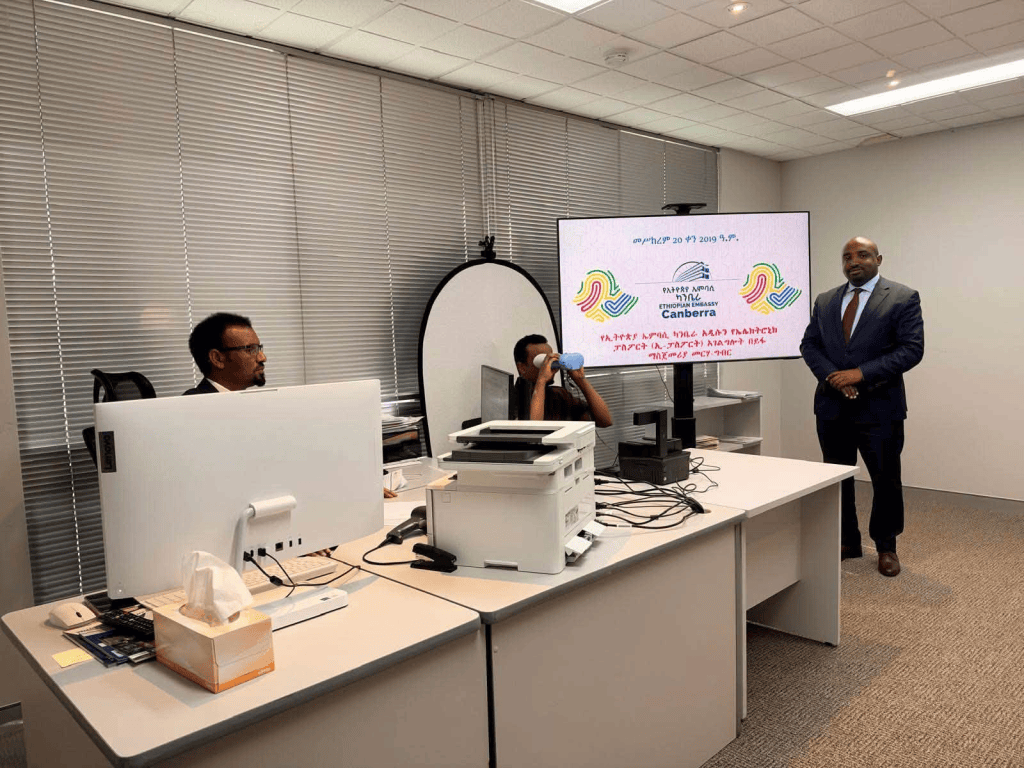
For more information about the E-Passport service, citizens are encouraged to follow the embassy’s official channels for updates.
#Ethiopia #EPassport #Canberra #Diplomacy #EthiopianDiaspora #ConsularServices
Inside Oromia’s New Map: The Six Clusters and the Leaders Who Will Run Them
From Hararghe to Jimma, from Borana to Wollega, Oromia’s historic restructuring has redrawn the administrative landscape. Here is who leads each cluster — and which zones fall under their command
FINFINNE — Oromia has redrawn its map. In one of the most consequential administrative reforms in the region’s modern history, Ethiopia’s largest regional state has collapsed its 21 zonal administrations into six powerful clusters, each led by a chief holding the rank of deputy president.
The reform, approved by the Oromia Regional State Council during its first regular session of the seventh term, is designed to consolidate functions, eliminate duplication, and bring government closer to the people. But beyond the policy language lies a simple question every citizen wants answered: Who is in charge, and of what?
Here is the full breakdown of the six clusters, their leaders, and the zones under their authority.
1. East Oromia Cluster — Two Zones
Chief: Obbo Abdurrahman Abdalla
- Hararghe West (West Hararghe)
- Hararghe East (East Hararghe)
This eastern cluster brings together the two Hararghe zones, a region historically defined by trade routes, Islamic scholarship, and the rugged beauty of the Chercher Mountains. Its headquarters sit in the ancient walled city of Harar, with deputy offices in Chiro, Galamso, and Gurawa.
2. Southeast Oromia Cluster — Four Zones
Chief: Obbo Ahimad Haji
- Arsi
- Bale
- Arsi West (West Arsi)
- Bale East (East Bale)
Spanning the Rift Valley and the towering Bale Mountains, this cluster is one of the largest by landmass. It encompasses Ethiopia’s most productive agricultural heartlands, including the wheat fields of Arsi and the coffee and forest zones of Bale. Its administrative center is Robe, with deputy offices in Ginir, Asella, and Shashemene.
3. South Oromia Cluster — Four Zones
Chief: Obbo Ahimad Idris
- Guji
- Guji West (West Guji)
- Borana
- Borana East (East Borana)
This southern cluster stretches toward the Kenyan border and is home to Ethiopia’s most iconic pastoralist cultures. The Borana people, renowned for their gadaa system of governance — a UNESCO-recognized intangible cultural heritage — anchor this region. Its hub is Yabelo, with deputies based in Adola, Nageelle Borana, and Bule Hora.
4. West Oromia Cluster — Four Zones
Chief: Obbo Masfin Melaku
- Wollega East (East Wollega)
- Wollega West (West Wollega)
- Qellem Wollega
- Horro Guduru Wollega (Horro Guduru)
Western Oromia is gold country — literally. This cluster is home to some of Ethiopia’s richest mineral deposits, alongside vast coffee forests and fertile farmland. It is also a region that has endured significant security challenges in recent years. Its headquarters is Nekemte, with deputies in Gimbi, Shambu, and Dambi Dollo.
5. Southwest Oromia Cluster — Three Zones
Chief: Dr. Rashad Kamal
- Illu Abba Boor (Iluababor)
- Bunnoo Bedelle (Buno Bedele)
- Jimma
This cluster is the birthplace of Ethiopian coffee. Jimma, its administrative heart, is celebrated worldwide for the Arabica beans that grow in its surrounding forests. The region is also rich in history, home to the ancient Kingdom of Limmu-Ennarea and a center of Oromo scholarship and Islamic learning. Deputy offices are located in Bedele, Limmu Gannat, and Mattu.
6. Central Oromia Cluster — Four Zones
Chief: Dr. Mengistu Bekele
- Shewa East (East Shewa)
- Shewa North (North Shewa)
- Shewa Southwest (S.W. Shewa)
- Shewa West (West Shewa)
Encircling the capital, Addis Ababa, Central Oromia is the political and economic engine of the region. It includes Adama, one of Ethiopia’s largest industrial cities; Ambo, a university town known for its mineral springs; and the fertile plains of North Shewa. Its leadership is shared between Shaggar and Adama, with deputies in Waliso, Fitche, and Ambo.
A Reform Built on Coordination
Under the new structure, each cluster chief holds the rank of deputy president — a designation that signals their weight in the regional hierarchy. Alongside each chief sit two deputies: one for development, one for peace and justice. Senior advisors complete the leadership team, mirroring the executive architecture of the regional government itself.
Officials say the consolidation addresses a long-standing problem: Oromia, at over 350,000 square kilometers and more than 27 million people, was simply too vast to be governed effectively through 21 separate zones. By grouping related zones under unified cluster leadership, the government hopes to improve coordination, reduce bureaucratic overlap, and make services more accessible.
What Comes Next
The appointments are made. The headquarters are set. The structures are operational. What remains to be seen is whether the new architecture delivers on its promise — or whether it simply adds another layer of administration between the people and their government.
For now, Oromia has chosen consolidation over fragmentation. It has bet that six strong clusters will serve its people better than twenty-one scattered zones. And it has placed its trust in a new generation of leaders to make that bet pay off.
The map has changed. The work has just begun.
#Oromia #AdministrativeReform #Ethiopia






