Category Archives: gadaa

Gadaa Elders Announce Irreechaa 2019 Dates: A Call for Unity, Tradition, and Peaceful Celebration
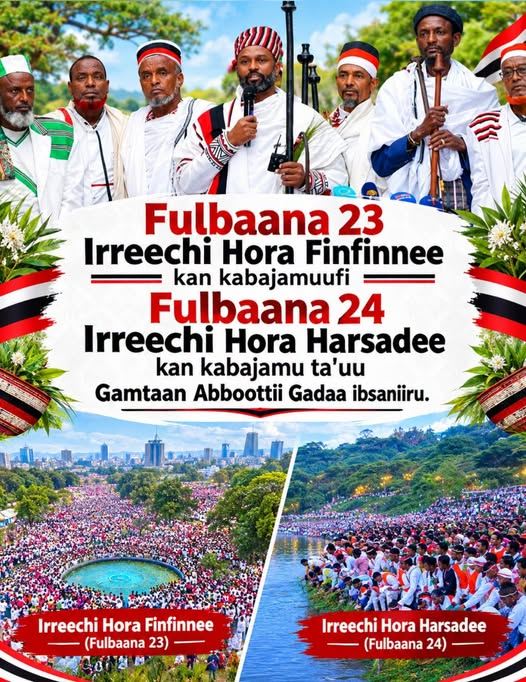
Finfinnee, Oromia — The Assembly of Gadaa Elders of Oromia has officially announced the dates for the celebration of Irreechaa in 2019, confirming that the festival at Hora Finfinnee will be celebrated on September 23, while the celebration at Hora Harsadee will take place on September 24.
The announcement was made through an official statement issued by the Assembly of Gadaa Elders, the traditional custodians of Oromo cultural and spiritual life, who oversee the proper observance of the festival in accordance with ancient customs, traditions, and sacred norms.
A Festival That Reflects the Greatness of a People
In their statement, the Gadaa elders emphasized that Irreechaa is not merely a seasonal celebration but a profound expression of the greatness of the Oromo nation. The festival, they noted, must be observed in a manner that honors the culture, traditions, and sacred norms (safuu) of the Oromo people, preserving the customs handed down from their ancestors.
The elders stressed that Irreechaa should serve as an occasion to strengthen the bonds of brotherhood and unity among all people, regardless of their faith or political outlook. The festival, they affirmed, belongs to all — and its celebration must transcend differences of religion and political opinion.
A Call for a United, Orderly Observance
The Assembly issued a call to all sectors of society to support the proper and orderly observance of Irreechaa. The festival, they said, must be conducted according to its established rules and procedures, with a spirit of oneness and shared purpose. No difference of faith or political perspective should divide the community during this sacred time.
The elders’ call underscores the deep significance of Irreechaa as a unifying force in Oromo society. The festival draws together millions of people from across Oromia and the diaspora, gathering at sacred water sites to give thanks to Waaqa (God), seek reconciliation, and welcome the new season of Birraa (spring).
A Tradition Preserved Through Generations
The announcement by the Gadaa elders reflects the continued vitality of the Gadaa system, the ancient democratic and social governance structure of the Oromo people. Recognized by UNESCO as an Intangible Cultural Heritage of Humanity, the Gadaa system organizes Oromo society into age sets and generational grades, each with its own roles, rights, and responsibilities. The elders’ role in announcing and overseeing Irreechaa is a testament to the enduring strength of this institution.
A Festival of Thanksgiving and Renewal
Irreechaa is the annual Oromo thanksgiving festival, celebrated at the banks of rivers and lakes across Oromia. It marks the end of the rainy season (Ganna) and the beginning of spring (Birraa), a time of renewal, gratitude, and hope. Participants carry fresh green grass and yellow daisies to the water’s edge, dipping them into the water as an offering of thanks for the blessings of the past year and a prayer for peace and abundance in the year to come.
The festival’s requirement for reconciliation before participation creates a powerful, community-enforced deadline for resolving disputes. There is a widespread belief that Waaqa will not accept the prayers of those who carry grievances. Irreechaa is thus not only a time of celebration but also a time of healing and reconciliation.
A Call to All
As the dates for Irreechaa 2019 approach, the Gadaa elders’ message is clear: Irreechaa is a festival for all Oromo people and for all who wish to join in the spirit of gratitude and unity. It is a time to set aside differences, to come together as one community, and to give thanks to Waaqa for the blessings of life, peace, and abundance.
The Assembly’s call for support from all sectors of society reflects the communal nature of the festival. Irreechaa is not organized by any single institution or group — it is a collective expression of the Oromo people’s faith, culture, and identity.
Baga Irreechaa! Baga Birraa!
Source: Assembly of Gadaa Elders of Oromia

The Psychological Power of Ritual Sound, Fresh Grass, and Water in Irreechaa
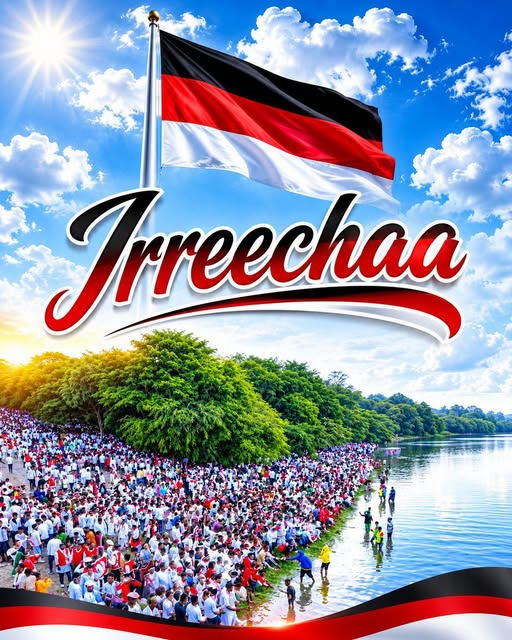
Oromia, Ethiopia — Irreechaa is the annual Oromo thanksgiving festival celebrated at the banks of rivers and lakes across Oromia. Its rituals — communal chanting, the dipping of fresh green grass into water, and the gathering of communities at the water’s edge — are not merely symbolic acts of cultural identity. A growing body of scientific research reveals that these elements engage powerful psychophysiological mechanisms that promote mental well-being, reduce stress, and foster social connection.
The Sound of Chanting: Reducing Stress and Anxiety
Chanting, a central practice in Irreechaa’s riverside ceremonies, has been shown to produce measurable reductions in stress and anxiety. A randomized controlled trial conducted in Australia found that just twelve minutes of group chanting — whether vocal or silent — resulted in significant decreases in cortisol levels and self-reported anxiety . The reduction in cortisol, the body’s primary stress hormone, was similar for both vocal and silent chanting. However, self-reported anxiety decreased more following vocal chanting, suggesting that the act of voicing — singing the Marewoo songs of Irreechaa — amplifies the psychological benefit .
The study also found that altruism scores increased following both vocal and silent chanting, indicating that the ritual practice fosters pro-social tendencies . Group synchronisation, a feature of communal chanting, is thought to promote cooperation and feelings of connection to others . This aligns with the experience of Irreechaa participants, who sing together in a shared expression of gratitude and hope.
Research specifically examining Irreechaa notes that “chanting reduces stress hormones and triggers dopamine, promoting transcendence” . The sonic dimensions of the ritual, combined with its setting at the water’s edge, create what researchers describe as an immersive environment that unites communities and reinforces cultural identity .
The Touch of Fresh Grass: Tactile Contact and Relaxation
The fresh green grass carried by Irreechaa participants — dipped into the water as an offering and symbol of renewal — also carries documented psychological benefits when touched. A 2024 study published in the Journal of Urban Health investigated the effects of tactile interaction with real grass versus artificial grass among older adults. The findings showed that touching real grass produced a heightened sense of relaxation and calmness, increased mean systolic blood pressure reduction, and upward trends in brainwave patterns associated with relaxation .
A separate study involving young adults found that five minutes of tactile stimulation with real landscape grass, applied through the palm of the hand, produced significant reductions in diastolic blood pressure, increased alpha brainwave activity (a marker of relaxed alertness), and alleviation of anxiety compared to a control condition . The researchers concluded that “palming grass — the act of touching grass with one’s hand — has a calming effect on both physiological and psychological responses to stress” .
For Irreechaa participants, the act of holding grass and dipping it into the water is thus not only a spiritual gesture but a tactile experience with measurable calming effects on the nervous system.
The Presence of Water: Blue Space and Restoration
Irreechaa’s setting at rivers and lakes — Irreechaa Malkaa — places participants in what researchers call “blue spaces,” environments featuring water. A systematic evidence map of blue space research confirms that contact with water environments is associated with mental health benefits, including reduced stress and enhanced well-being .
A landmark 19-country study involving over 17,000 participants found that all blue space settings were recalled as restorative, with rural rivers and canals among the most restorative . Perceived safety was the quality most strongly associated with restoration, and actively engaging with the water was associated with greater restoration than remaining on land . The study also found a reciprocal relationship between restoration and nature connectedness — the more restored an individual felt, the more connected to nature they became, and vice versa .
Research specifically examining Irreechaa notes that “water’s acoustic properties (transmitting sound four times faster than air) create immersive ritual environments,” and that the natural water setting “engages biophilia, enhancing mental well-being” . The riverside location of Irreechaa thus amplifies both the sonic and the restorative dimensions of the festival.
The Synergy of Sound, Grass, and Water
What makes Irreechaa psychologically powerful is not any single element in isolation, but their combination. The ritual brings together vocal chanting, tactile contact with fresh grass, and immersion in a water environment — a multisensory experience that engages multiple pathways to well-being simultaneously.
Research on Irreechaa explicitly describes this synergy: “water’s fluidity and reflectivity, paired with the resonance of sound, create multisensory rituals that deepen spiritual engagement” . The study notes that “psychologically, chanting and singing reduce stress and trigger dopamine release, fostering emotional uplift and communal bonding,” while “natural water settings engage biophilia, enhancing mental well-being and aligning with the spiritual clarity sought in rituals” .
The communal dimension is equally important. Group chanting, being a synchronous activity, promotes feelings of social connection and altruistic tendencies . For a community gathering after the isolating rainy season, this reconnection — through shared sound, shared touch of grass, and shared presence at the water — serves as a collective psychological renewal.
A Culturally Rooted Pathway to Well-Being
For the Oromo people, Irreechaa is a spiritual and cultural celebration. The scientific evidence now confirms what generations have experienced intuitively: the ritual’s elements — sound, grass, and water — are also powerful tools for mental health. In a context where formal mental health services are scarce, Irreechaa offers an accessible, culturally meaningful pathway to stress relief, emotional restoration, and social connection.
The psychological power of Irreechaa lies in its integration of body, mind, and community — a holistic approach to well-being that modern research is only beginning to fully understand.

Sons of Maccaa Celebrate Buttaa Ceremony: A Milestone of Generational Passage
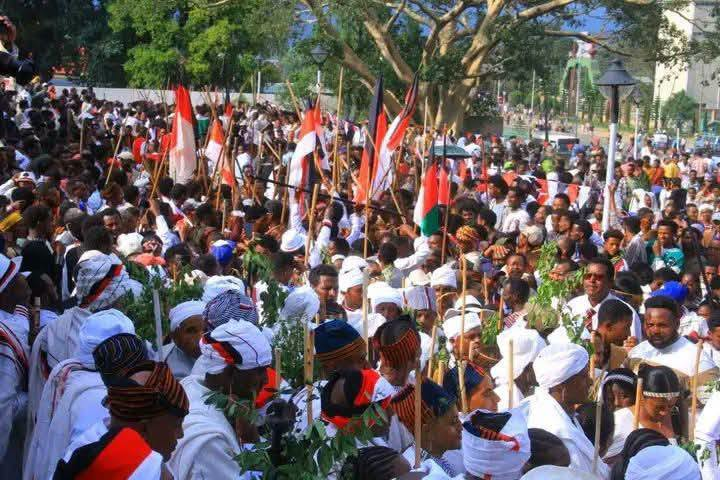
Oromia, Ethiopia — In a powerful display of cultural continuity and ancestral reverence, the Gadaa-Hortee sons of Maccaa — members of the Gadaa Birmajii grade — have successfully completed the sacred Buttaa ceremony, marking a significant milestone in their journey through the ancient Oromo Gadaa system.
The occasion was marked with blessings and congratulations: “Baga 80 akaakayyuu fi 40 abbaa keessanii geessanii sirna buttaa qaluu nagaan oofkaltan!” — Congratulations on safely reaching the Buttaa ceremony, having honored the eighty grandfathers and forty fathers who came before you.
The Significance of Buttaa
The Buttaa ceremony is a pivotal ritual within the Gadaa system, symbolizing the formal transition of power and responsibility from one generation to the next. For the sons of Maccaa in the Birmajii grade, this ceremony represents their readiness to assume leadership roles and carry forward the duties entrusted to them by their ancestors.
The numbers referenced — eighty grandfathers and forty fathers — speak to the deep ancestral lineage that the Gadaa system honors. Each generation stands on the shoulders of those who came before, and the Buttaa ceremony is a moment of connection between past, present, and future.
Honoring the Sacred Elements
The congratulatory message continues with a blessing that honors the visible and invisible elements of the ceremony:
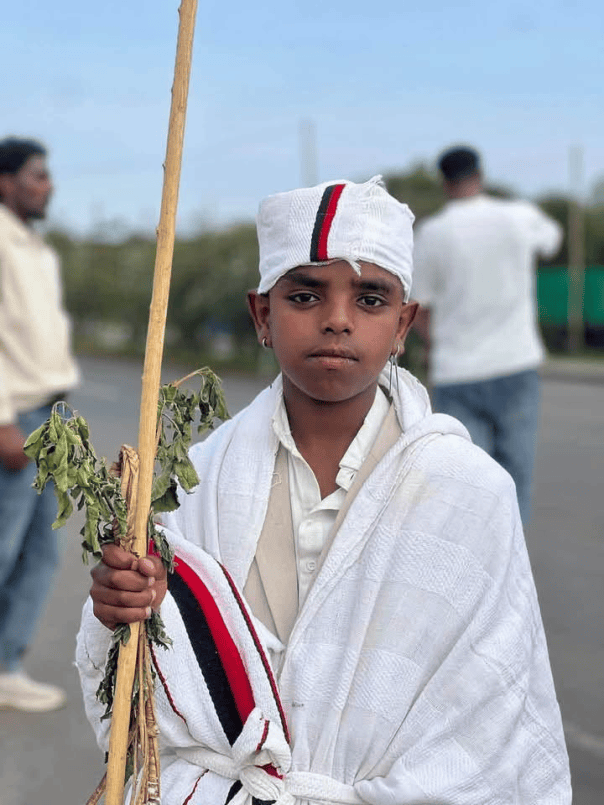
“Haaduu kofa keessanii, dhugoo gurra keessanii fi ruufa mataa keessanii hunda baga oofkaltan!”
This translates to: “Congratulations on all — the grass at your door, the grass in your ears, and the grass on your head!”
These elements — haaduu kofa (grass at the door), dhugoo gurra (grass in the ears), and ruufa mataa (grass on the head) — are sacred symbols within the Gadaa system. Fresh green grass represents life, renewal, and the presence of Waaqa (God). Wearing or carrying grass during Gadaa ceremonies signifies that the individual is in a state of peace, purity, and readiness to receive blessings.
The reference to grass at different parts of the body and home also reflects the holistic nature of the Gadaa system — it encompasses every aspect of life, from the threshold of one’s home to the crown of one’s head.
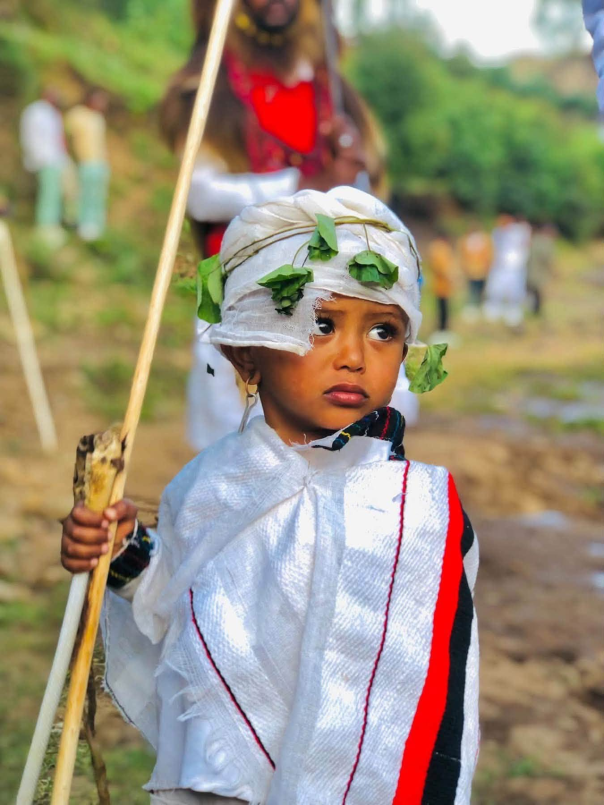
A Community Celebration
The Buttaa ceremony is not merely an individual achievement — it is a communal celebration. The Gadaa-Hortee sons of Maccaa have completed this rite together, reinforcing the bonds of brotherhood and shared responsibility that define the Gadaa system.
The ceremony involved the ritual cutting of the buttaa (a symbolic act of clearing and preparing the way), the enactment of laws that will govern the next eight years, and the formal transfer of authority from the outgoing Gadaa grade to the incoming one.
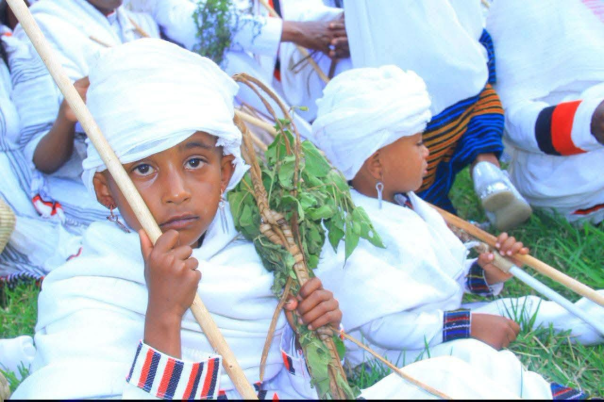
Blessings for Abundance
The message concludes with a powerful blessing:
“Gadaan quufa fi gabbina! Gabbis Waaq!”
“May Gadaa bring fullness and abundance! May Waaq bless!”
This prayer invokes the dual blessings of material prosperity and spiritual completeness. In the Oromo worldview, quufa (fullness) and gabbina (abundance) are not merely economic concepts — they represent a state of harmony in which the community is whole, at peace, and aligned with divine will.
A Living Tradition
The successful completion of the Buttaa ceremony by the Gadaa-Hortee sons of Maccaa is a testament to the resilience and vitality of the Gadaa system. Despite centuries of suppression and the pressures of modernization, the Oromo people continue to pass down this ancient tradition from generation to generation, unbroken and undiminished.
As the sons of Maccaa step into their new roles, they carry with them the blessings of eighty grandfathers and forty fathers — a lineage of wisdom, courage, and commitment that stretches back through time.
Baga oofkaltan! Gadaan quufa fi gabbina! Gabbis Waaq!
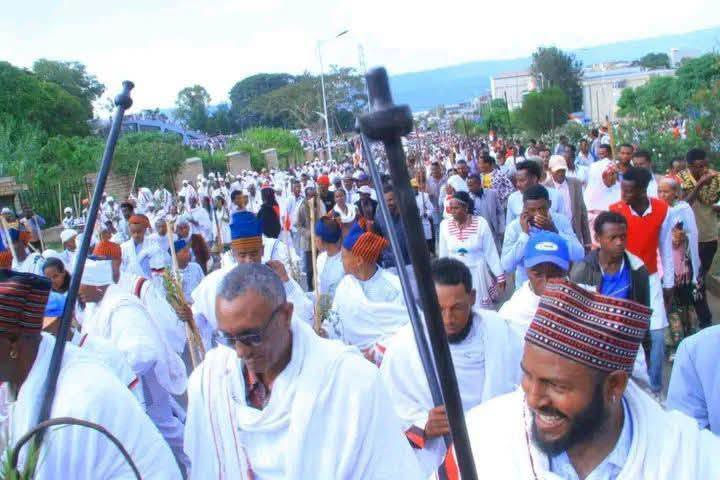
Gadaa: The Living System That Raises Generations Through Word and Deed
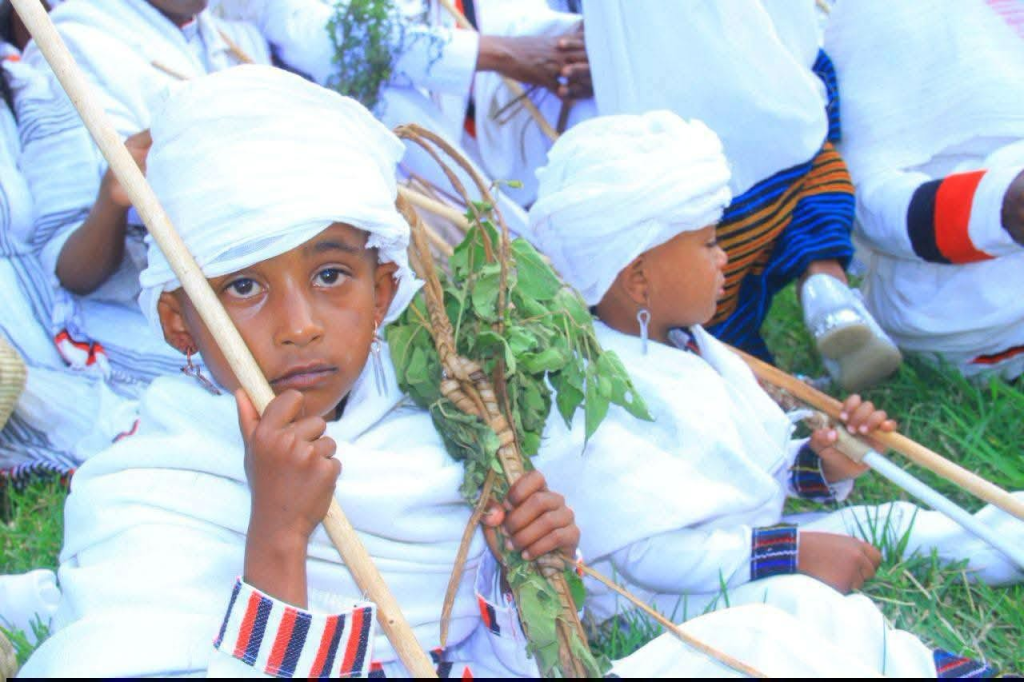
West Shawa, Oromia — In a world where ancient traditions often fade beneath the weight of modernity, the Gadaa system of the Oromo people stands as a testament to endurance, democracy, and cultural resilience. As the Oromo saying goes: “Gadaan sirna ittiin jechaa fi gochaan dhaloota guddisanii dha” — Gadaa is the system through which generations are raised by word and by deed. And today, that system has emerged from the threat of extinction and reached the present generation, unbroken and vibrant.
Sons of Liiban Maccaa Carry the Torch
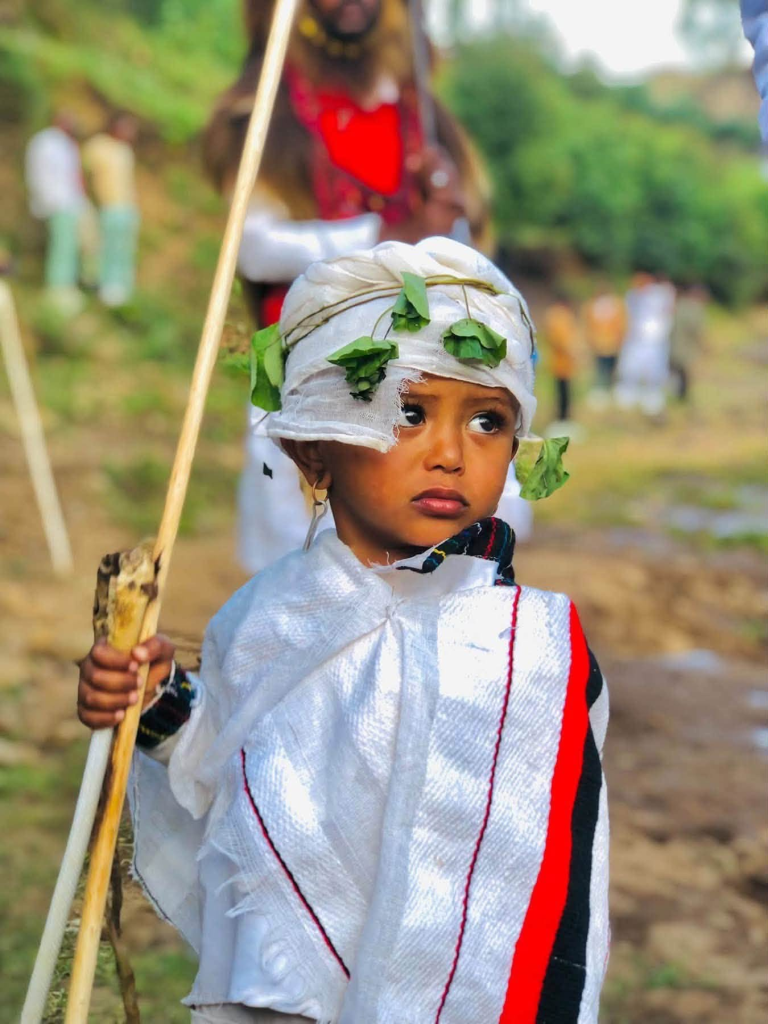
The sons of Liiban Maccaa — Walisoo, Amayyaa, and Kuttaayee — are actively fulfilling their duties within Gadaa Birmajii, ensuring that the ancient Oromo Gadaa system is passed down from generation to generation, unbroken and undiminished. Their commitment is not merely ceremonial; it is a living covenant with their ancestors and their descendants.
These communities, located across Central Oromia, West Shawa, and Southwest Shawa, have preserved the Gadaa system without interruption. From father to son, from elder to youth, the sacred knowledge and responsibilities of Gadaa are transmitted with reverence and precision.
A Model of Democracy Without Conflict
“Gadaan Mallattoo Dimokiraasii Morkii tokko malee Aangoo Waliif dabarsanii kennanidha” — Gadaa is the symbol of democracy, a system in which power is transferred peacefully, without conflict or bloodshed.
This principle lies at the heart of the Gadaa system. Every eight years, leadership transitions from one Gadaa grade to the next — a process rooted in consensus, ritual, and mutual respect. There are no coups, no violence, no contested successions. There is only the orderly, sacred transfer of responsibility from one generation to the next.
It is a democratic tradition that predates many modern political systems, and it continues to function today, guided by the wisdom of elders and the participation of the community.
Preparation for the Transfer of Power
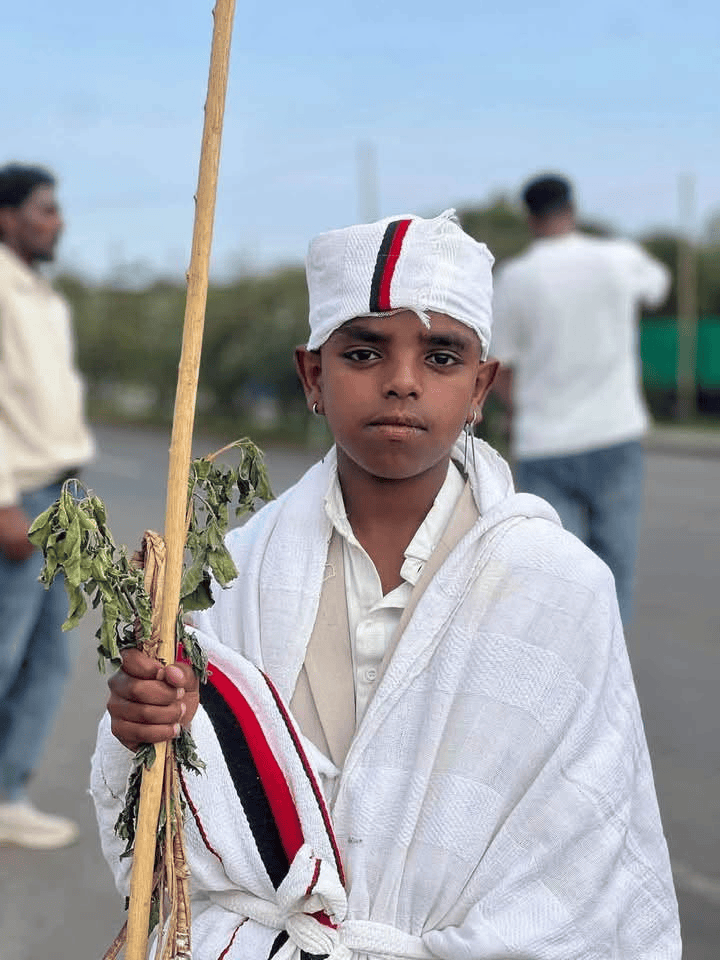
The Sirna Oofkaltii Tumaa Gadaa Birmajii is currently in full preparation across various locations in the West Shawa Zone. Over the coming eight years, those in the Birmajii grade will prepare to receive authority from the Gadaa Roobalee — the outgoing grade — and assume the responsibilities of leadership.
The purpose of this program is clear: “Kaayyoon Sirna Sagantaa Kanaas Gadaan Birmajii Gadaa Roobalee irraa Aangoo fudhachuun Waggoottan 8 itti Aanu Bulchuuf ofkaltii keessa darbaa jiraachuu ibsameera.” The Birmajii Gadaa is preparing to take power from the Roobalee Gadaa and to govern for the next eight years. This preparation is not merely administrative — it is spiritual, cultural, and communal.
The Journey to the River
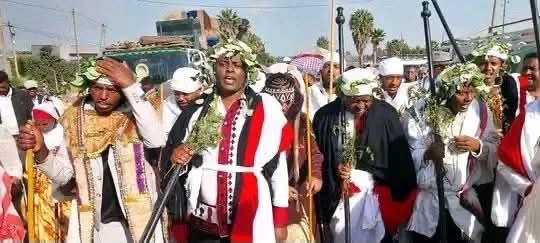
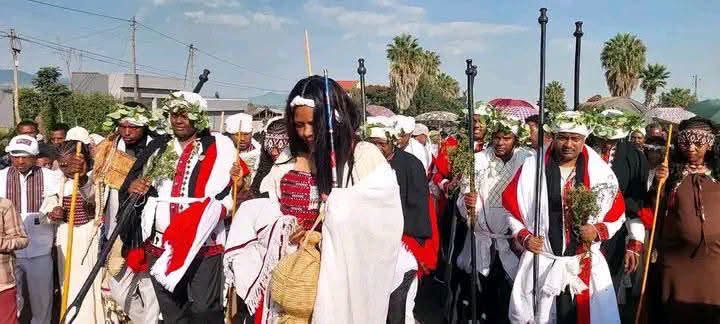
The process has now reached a significant milestone. “Imalli gara malkaa deemuun tumaa ittiin bulmaata waggoota 8 dhufanii adeemsifameera.” The delegation has journeyed to the river, where the laws and rituals that will govern the next eight years have been formally enacted.
The journey to the water — the malkaa — is rich with symbolism. Water represents purification, renewal, and the continuity of life. By enacting the laws at the river’s edge, the community affirms that the Gadaa system is rooted in nature itself, in the eternal rhythms of the earth and the heavens.
A Blessing of Abundance
The message concludes with a powerful blessing: “Gadaan Quufaa Gabbina Oofkalchi Waaq.” May Gadaa bring fullness, abundance, and prosperity. May Waaqa bless the work of those who uphold this sacred tradition.
It is a prayer not only for material prosperity but for spiritual completeness — for a community that is whole, united, and at peace with itself and its Creator.
A Heritage That Endures
The Gadaa system is more than a cultural relic. It is a living, breathing institution that continues to shape the lives of millions of Oromo people. It teaches democracy, accountability, environmental stewardship, and respect for elders. It binds generations together in a chain of duty and blessing.
The sons of Liiban Maccaa — Walisoo, Amayyaa, and Kuttaayee — are not merely preserving the past. They are building the future, one ritual at a time, one generation at a time.
Baga oofkaltan!
Source: Community Report

Gadaa Elders Announce Dates for Irreechaa 2019: A Call for Unity, Gratitude, and Peace
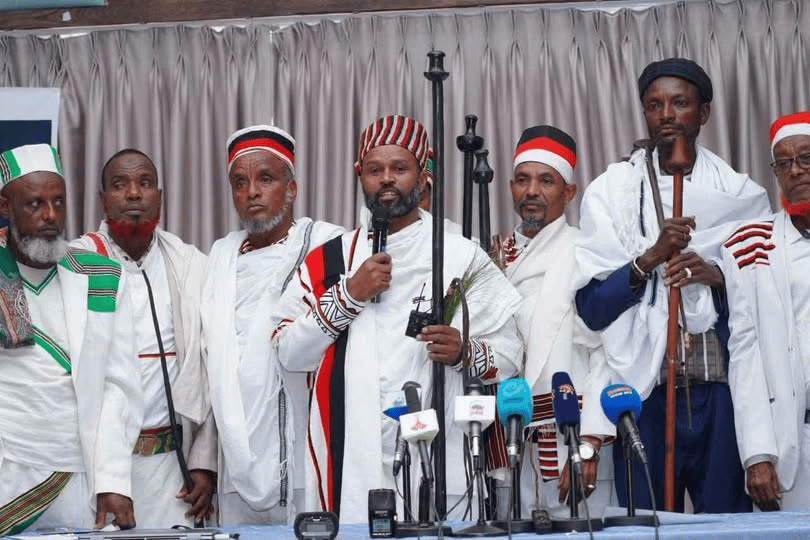
Finfinnee, Oromia — The Assembly of Gadaa Elders of Oromia has officially announced the dates for the celebration of Irreechaa, one of the most sacred and widely observed festivals of the Oromo people. In a statement released to the public, the elders confirmed that Irreechaa at Hora Finfinnee will be celebrated on September 23, while Irreechaa at Hora Harsadee will take place on September 24, 2019.
Irreechaa is a centuries-old thanksgiving festival celebrated at the banks of rivers and lakes, most notably at Hora Finfinnee (Lake Finfinnee) and Hora Harsadee (Lake Harsadee). It marks the end of the rainy season and the beginning of a new year in the Oromo calendar — a time of renewal, reflection, and communal gratitude to Waaqa (God) for blessings received.
A Festival of Thanksgiving and Hope
In their statement, the Gadaa elders emphasized the profound meaning of Irreechaa, describing it as a celebration of thanksgiving, hope, unity, love, reconciliation, and renewal. “Irreechaa is a festival of gratitude, hope, unity, love, reconciliation, and rebirth,” the elders declared. “Therefore, all Oromo people, as well as all nations, nationalities, and peoples of our country and the entire world, are invited to honor Irreechaa together with the Oromo people.”
The invitation extends beyond the Oromo nation itself, reflecting the festival’s universal message of peace and togetherness. Irreechaa has long served as a gathering point for people of all backgrounds — a day when differences are set aside and communities join hands in celebration and prayer.
A Call to Preserve Tradition
The elders also stressed the importance of observing Irreechaa according to its longstanding customs, traditions, and sacred norms (safuu). “Irreechaa at Hora Finfinnee and Hora Harsadee will be celebrated on September 23 and 24, 2019, respectively,” the statement read. “Like other Irreechaa celebrations, it will be observed in accordance with the culture, tradition, and sacred order of Irreechaa.”
The Gadaa system, a traditional democratic governance structure of the Oromo people recognized by UNESCO as intangible cultural heritage, plays a central role in organizing and preserving the festival’s rituals. The elders’ announcement underscores their continued role as custodians of Oromo culture and tradition.
A Warm Invitation to All
In closing, the Assembly of Gadaa Elders extended a heartfelt invitation to all Oromo people to welcome visitors with the warmth and hospitality for which the Oromo are known. “Therefore, we call upon all Oromo people to receive every guest who comes to them with the culture, tradition, and hospitality of our people,” the elders urged.
The message is clear: Irreechaa is not merely a festival — it is a living expression of Oromo identity, faith, and community. As the dates approach, anticipation is building across Oromia and beyond, with preparations underway at Hora Finfinnee and Hora Harsadee.
For the Oromo people, Irreechaa 2019 promises to be a time of collective renewal — a moment to give thanks, seek reconciliation, and reaffirm the bonds that unite them as one people.
Source: Assembly of Gadaa Elders of Oromia

Sons of Liiban Maccaa Carry the Gadaa Birmajii Torch: A Legacy Passed from Generation to Generation
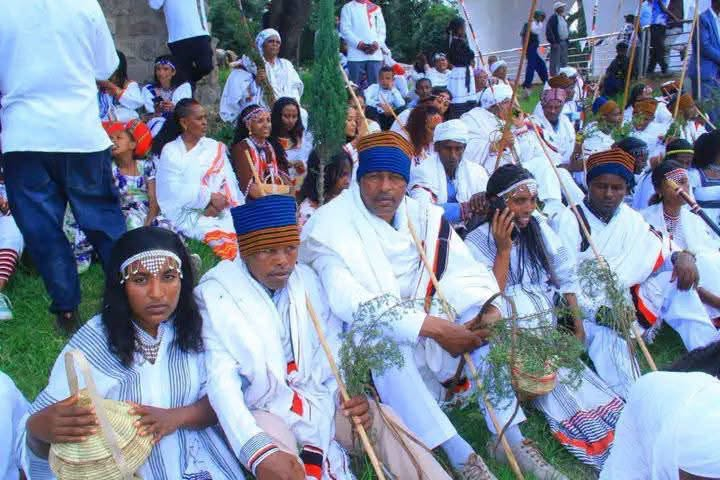
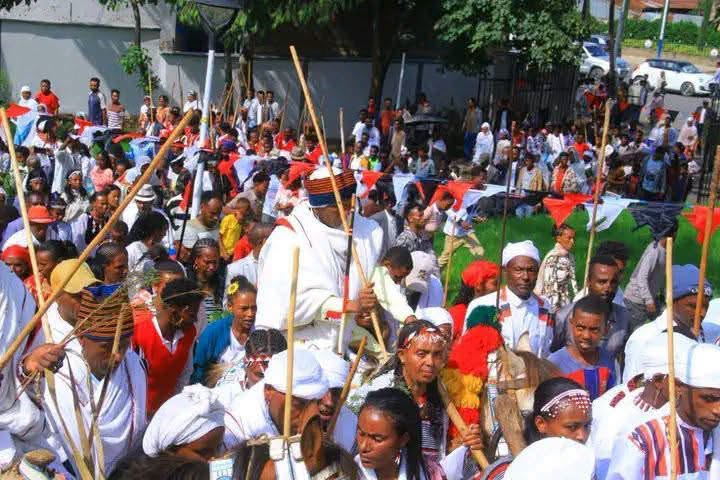
Central Oromia— In the heartlands of Central Oromia, across the highlands of West Shawa and Southwest Shawa, a sacred flame continues to burn. The sons of Liiban Maccaa — Walisoo, Amayyaa and Kuttaayee — are actively fulfilling their duties within Gadaa Birmajii, ensuring that the ancient Oromo Gadaa system is passed down from generation to generation, unbroken and undiminished.
A System That Never Sleeps
The Gadaa system, recognized by UNESCO as an Intangible Cultural Heritage of Humanity, is the traditional democratic, social, and spiritual governance structure of the Oromo people. It organizes society into age sets and generational grades, each with distinct roles, responsibilities, and rights. Among these, the Birmajii grade represents a critical stage — a time when young men prepare for leadership, defend their community, and uphold the sacred norms of Oromo life.
What sets the sons of Liiban Maccaa apart is their unwavering dedication. In Central Oromia, West Shawa, and Southwest Shawa, these communities have preserved the Gadaa system without interruption, carrying it forward across generations with reverence and pride.
The Seven Who Hold the Jila
Among the three sons of Liiban, it is the seven from the Horii lineage of Kuttaayee who hold the Jila Gadaa — the sacred leadership and ritual responsibility of the grade. Their duty is profound and their journey demanding.
The Gadaa group of Roobalee sets out to receive Baallii (Alangee) — the symbolic transfer of power and responsibility that marks the transition into Birmajii. This transfer is not merely ceremonial; it is a covenant. It binds the incoming generation to the duties of leadership, protection, and service to the community.
Rain, Blessing, and Endurance
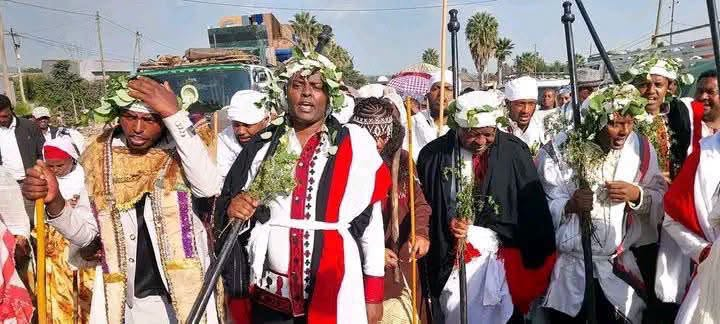
In the Oromo worldview, rain is a sign of blessing — a gift from Waaqa (God) that nourishes the land and its people. Yet even when the rains come, the Roobalee do not rest. They sing in the rain, and they do not allow the abundance of milk and prosperity to distract them from their sacred mission.
“The Roobalee sing along with the rain, and the abundance of milk and success has not made us forget our duty,” the report recounts. “Whether in good times or hard times, they have seen it through.”
The message is clear: Birmajii is not a fair-weather calling. It demands endurance, sacrifice, and faithfulness — in seasons of plenty and in seasons of want.
A Call of Honor and Blessing
The words of the community ring with pride and blessing:
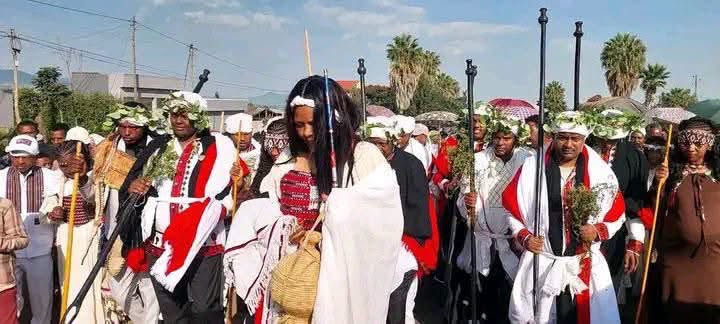
“The Birmajii have taken the Alangee and are preparing to complete their covenant — today they have cut the buttaa. May the news of your deeds reach the ears of those who need to hear it. Congratulations on reaching the fourfold blessing of your fathers and the eightfold blessing of your grandfathers. You have accomplished what was asked of you — and you make us proud.”
The “fourfold blessing of the fathers” and the “eightfold blessing of the grandfathers” speak to the deep ancestral roots of the Gadaa system — a chain of blessing and responsibility that stretches back through time, linking each generation to those who came before.
The closing blessing, “Ginna milkii ciisaa” — a wish for peace, prosperity, and rest — crowns the message with the hope that the labor of the Birmajii will bring abundance and tranquility to the community.
A Living Heritage
The sons of Liiban Maccaa are not merely preserving a tradition — they are living it. Every ritual, every journey, every song in the rain is an act of cultural survival and spiritual renewal. In a world that often pressures communities to abandon their heritage, these young men stand firm, proving that the Gadaa system remains a vibrant and vital force.
Their story is a reminder that culture is not a museum piece. It is alive — carried in the feet that walk to receive the Alangee, in the voices that sing with the rain, and in the hearts of a generation determined to honor its ancestors.
Baga oofkaltan!
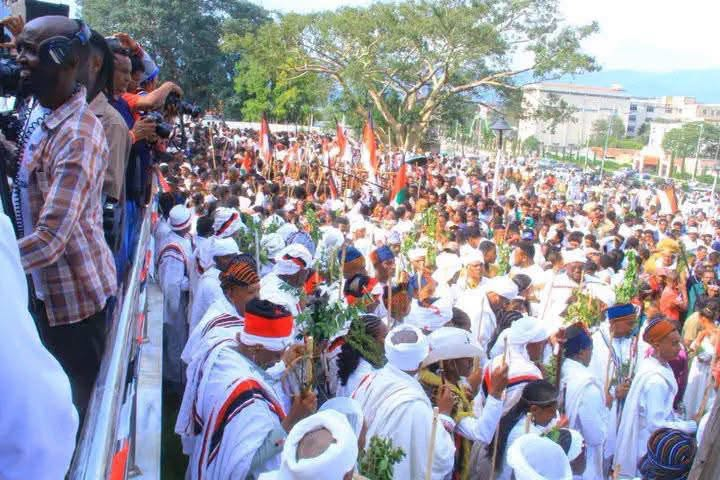

Edmonton Oromo Community Celebrates Irreecha Malkaa in Vibrant Cultural Splendor
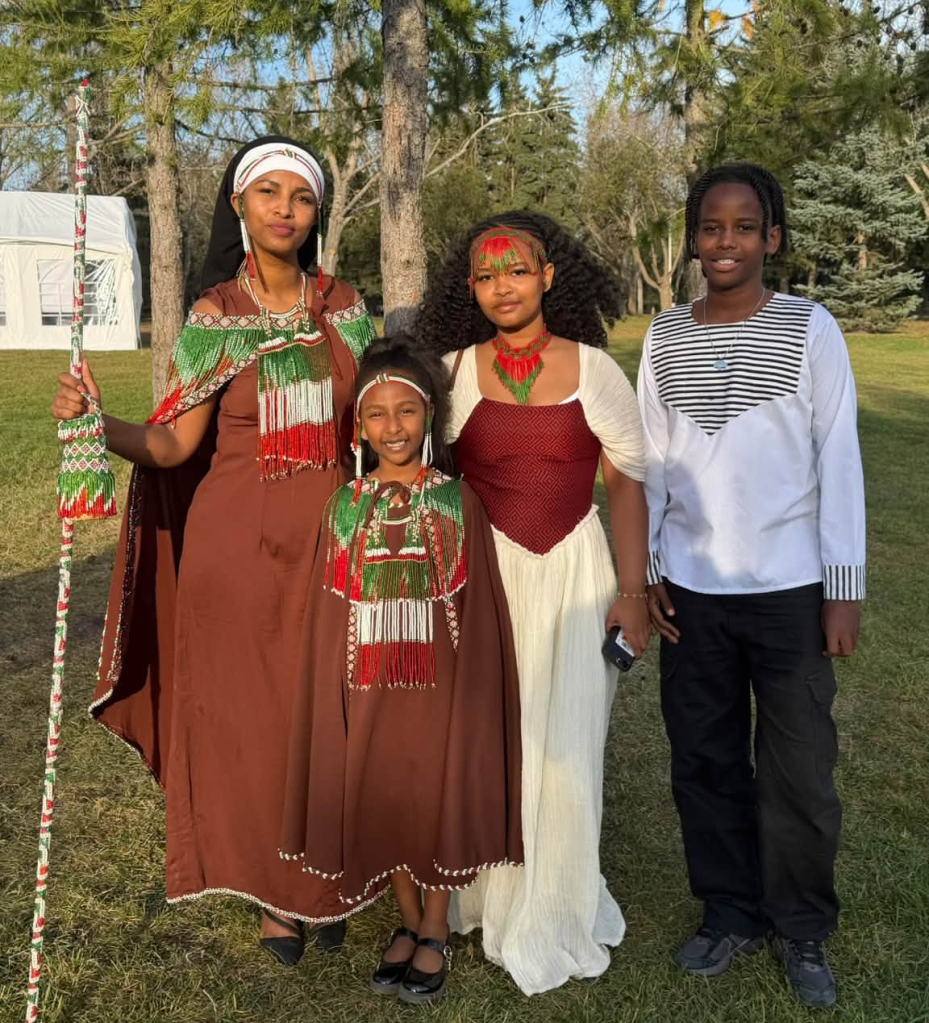
(ONA, Edmonton, 19 September 2026) The Oromo community in Edmonton, Canada, came together in joyous celebration of Irreecha Malkaa – Edmonton, honoring their cherished cultural festival with traditional attire, symbolic greenery, and messages of renewal, peace, and hope.
The celebration, held with great warmth and enthusiasm, saw community members adorned in beautifully decorated traditional Oromo clothing, proudly displaying the cultural heritage that binds them together across generations and continents. Participants carried fresh green grass and blooming flowers — the treasured symbols of Irreecha — bringing the essence of the ancestral festival to life in the heart of Canada.
A Message of Renewal and Growth
At the heart of the gathering was the exchange of heartfelt blessings marking the transition from the rainy season to spring. Community members greeted one another with the beloved Irreecha salutation:
“Baga bacaqii gannaa keessaa baatanii booqaa birraa geessan!” — congratulations on emerging from the rains and reaching the blossoming of spring — a message that carries profound meaning of renewal, resilience, and hope for growth and prosperity in the year ahead.
Prayers for Peace, Unity, and New Hope
Beyond the colorful attire and ceremonial symbols, participants shared prayers and good wishes for the community and the wider world:
“Irreechi nagaa, tokkummaa, galata, jaalalaafi abdii haaraa nuuf haa fidu,” they declared — may Irreecha bring us peace, unity, gratitude, love, and new hope.
The message resonated deeply among those gathered, reinforcing the festival’s enduring role as a source of spiritual strength and communal solidarity.
A Celebration of Oromo Identity in the Diaspora
The Edmonton celebration stands as part of a broader global observance of Irreecha by Oromo communities worldwide. Far from their homeland, diaspora communities continue to preserve and nurture their traditions, passing them to new generations and sharing the beauty of Oromo culture with the wider Canadian society.
The vibrant colors of the Oromo flag — green, red, and white — adorned the celebration, and the sounds of traditional songs and blessings echoed through the gathering, creating a space of belonging and pride for all who attended.
A Blessing for All Oromo People
As the celebration concluded, one message rang out clearly for Oromo people everywhere:
“Baga Ayyaana Irreechaa geessan! Happy Irreecha! May this season bring blessings and joy to all Oromo people.”
The Edmonton Irreecha Malkaa celebration was more than a festival — it was a reaffirmation of identity, a bridge between generations, and a testament to the enduring spirit of the Oromo people, united across borders by culture, faith, and hope.

A Nation Mourns: The Passing of a Giant—Adde Ilfinesh Qannoo (1962-2026)
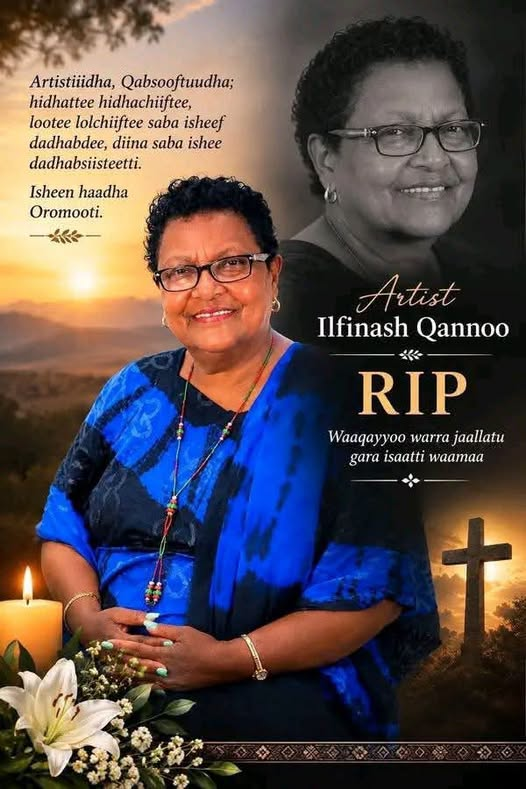
A Voice of Freedom Falls Silent, But Her Legacy Echoes Eternally
Finfinne, Oromia — Our nation lost a giant today. Adde Ilfinesh Qannoo, the renowned artist whose voice became the heartbeat of a people’s struggle, has passed from this world, leaving behind a legacy etched in the soul of the Oromo nation. Her departure marks the end of an era, but her spirit, her music, and her unyielding commitment to the Qabsoo Bilisummaa Oromoo (Oromo Liberation Struggle) will resonate for generations to come.
An Indelible Mark on History
Ilfinesh Qannoo was more than an artist; she was a monument to resilience, a symbol of identity, and a mother to a movement. Through her music, she gave voice to the joys, sorrows, and aspirations of her people, becoming a living archive of their history. Her songs, imbued with the deep cultural motifs of the Oromo, served as both a comfort and a call to action, reminding her listeners of their dignity, their heritage, and their unalienable right to freedom.
Her contributions to the Qabsoo Bilisummaa Oromoo were not merely artistic but deeply personal and sacrificial. She understood that the struggle for liberation was fought not only in the forests and on the battlefields but also in the hearts and minds of the people. Through her music, she fortified the spirit of the movement, offering hope in moments of despair and courage in the face of oppression.
A Faithful and Loyal Contributor
Throughout her life, Ilfinesh Qannoo remained steadfast in her dedication to the Oromo cause. She was a loyal contributor to the liberation struggle, using her platform to amplify the voices of the marginalized and to challenge the systems of injustice that sought to silence her people. Her courage in the face of censorship, persecution, and hardship stands as a testament to her character and her unwavering commitment to justice.
Even when her body grew frail and her steps grew slow, her spirit remained an unyielding force. Her presence at gatherings of the Oromo Liberation Front (OLF) and other movement events was a source of inspiration and moral clarity. She was the living embodiment of the Oromo proverb “Ilkaan socho’e buqqa’uun isaa hin oolamu”—a seed that moves does not rot. She was that moving seed, ensuring that the dream of liberation never decayed.
A Legacy That Lives Forever
Though her physical journey has ended, the essence of Ilfinesh Qannoo—her music, her symbolism, her love—is a permanent inheritance for the Oromo people. Her life continues to resonate, to inspire, and to fortify those who hold her memory dear. She may have left this world, but her voice remains, echoing in the songs that will be sung, the stories that will be told, and the hearts that will never forget.
Her legacy exists at a powerful intersection: the intimate space of a family mourning a beloved matriarch, and the public sphere honoring an artist who channeled a people’s soul. As flowers are laid and her songs are played anew, the Oromo nation is not just saying goodbye. They are affirming that the struggle she gave voice to continues, the identity she symbolized remains unbroken, and the love she embodied is eternal.
A Message of Condolence from Advocacy for Oromia (A4O)
The Advocacy for Oromia (A4O) joins the global Oromo community in mourning this profound loss. In a statement released today, the organization extended its heartfelt condolences to Ilfinesh Qannoo’s family and the entire Oromo nation:
“Our nation lost a giant today. Adde Ilfineesh Qannoo, a renowned artist and loyal contributor to the Qabsoo Bilisummaa Oromoo, has left an indelible mark on our people and our history. Her legacy will live on forever. The Advocacy for Oromia (A4O) extends its sincere condolences to her family and the entire Oromo nation. May she rest in peace, and may her memory continue to inspire us all.”
An Eternal Prayer
And so, we offer our unending prayer: that Adde Ilfinesh Qannoo’s soul finds the eternal comfort and peace it so deeply deserves. May her spirit rest gently, knowing that her life was a masterpiece of love, labor, and liberation. For her family, her friends, and her people, we wish the warmth of her memory, the strength of her example, and the profound solace that comes from knowing her legacy is in the most capable hands: the hands of a people who will never forget.
Rest in peace, Adde Ilfinesh Qannoo. Your struggle is over, but your victory is assured in the hearts of those you loved and who loved you in return.
—
“A name is above the grave, and your name, Ilfinesh Qannoo, is etched in gold in the annals of Oromo history.”
—
This tribute is offered by Advocacy for Oromia (A4O) and the global Oromo community in loving memory of Adde Ilfinesh Qannoo.

Oromo Literacy Day: Celebrating the Power of Stories Held in Oromia
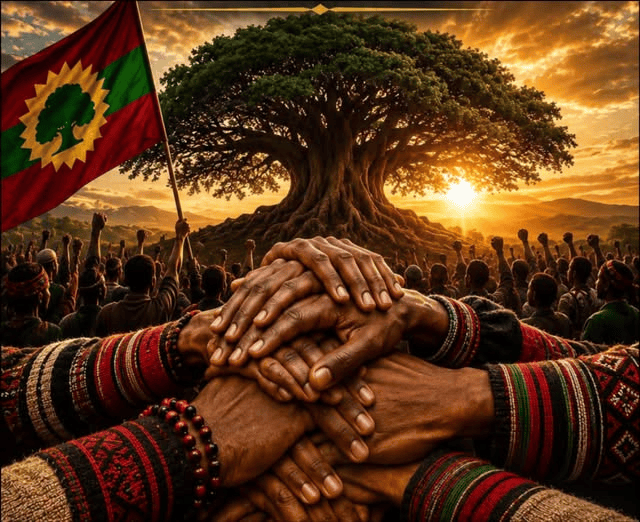
By Maatii Sabaa
—
Every year, Oromo Literacy Day is more than a date on a calendar—it’s a living tribute to the resilience of a people and their language. It celebrates Afaan Oromoo, a language that carries the weight of history, the songs of ancestors, and the dreams of a nation. But how did the Oromo people arrive at this moment, where their stories can finally be written, read, and shared with the world? The answer lies in a long and courageous journey toward literacy.
A Written History of Resistance and Revival
The story of Oromo literacy is one of relentless struggle. The Oromo people have long possessed a rich oral tradition, but for much of Ethiopia’s modern history, their language was marginalized. It was a household language—spoken, sung, and whispered—but rarely seen on paper . The first major push to change this came in the late 19th and early 20th centuries.
A pivotal figure was Onesimos Nasib, an Oromo freed from slavery who trained as a teacher in Sweden. Upon his return, he and his colleague Aster Ganno worked with an almost missionary zeal to promote literacy in Afaan Oromoo. Onesimos created the Oromo Reader, a book filled with stories that were “short and funny” and designed to be both accessible and engaging. His aim was not just religious instruction but to cultivate a love for reading itself . He would famously ask young people he met, “Can you read and write?” and persuade them of its immense value .
However, their work met fierce opposition from the imperial government. In the mid-1940s, the Haile Selassie regime placed a total ban on Oromo literature . The language was effectively erased from public life, becoming a symbol of defiance.
The Quest for the Perfect Script
The suppression only intensified the desire for a written Oromo. The question of how to write the language became a central point of debate. Early works, like those of Onesimos, used the Ge’ez alphabet. But many activists and intellectuals believed this script was inadequate for Oromo sounds, failing to represent vowel length and consonant gemination—features that change a word’s meaning .
In the 1960s, the movement for a new script gained momentum. At Addis Ababa University, Oromo students began printing the first newspaper in Afaan Oromoo, Kana Beektaa? (“Do you know this?”), in 1968. The paper was a bold act of cultural preservation, collecting “Oromo songs, proverbs, war and grievance chants, Oromo prophecies, nuptials, baby lullabies, and others” . This was more than journalism—it was a declaration of identity. The paper was short-lived, forced to cease publication in 1971 .
Simultaneously, Oromo students in Europe were rigorously debating the script question. In 1968, a study group led by figures like Haile Fidaa concluded that a modified Latin alphabet was the most practical and linguistically sound choice for Oromo . This decision was not just technical; it was a political act of resistance, rejecting a script associated with the establishment.
A New Dawn: The Adoption of Qubee
After years of struggle, the fall of the military Derg regime in 1991 brought a turning point. The new Ethiopian constitution granted greater autonomy to regional states. Oromo was finally made the official language of the Oromia Regional State .
The Latin-based alphabet, known as Qubee, was officially adopted for writing Oromo . This was a victory decades in the making. The script’s simplicity and adaptability to modern technology made it a practical choice for a language finally stepping into the digital age. As one study noted, Qubee “enabled the language to grow faster as the script can be learned easily” .
However, the adoption was not without controversy. For some, the Ethiopic script held deep cultural significance, and the switch to a Latin alphabet was seen as an emotional and political break . Yet for the majority, Qubee represented liberation.
The Stories That Endure
The adoption of Qubee unlocked a literary explosion. Oromo youth and intellectuals began producing “newspapers, magazines, novels, translations and plays that describe their nation and their state in Afaan Oromoo” . Stories once confined to memory were now printed, preserved, and shared.
The journey has also involved recovering alternative scripts. A fascinating chapter is the story of Sheek Bakrii Saphaloo, a scholar who created a unique indigenous Oromo script. He developed an abugida, a writing system where each base glyph has multiple vocalic components, making it distinct from both the Ge’ez and Latin alphabets . This script has been used for over 70 years and is now being considered for digital preservation and inclusion in Unicode, highlighting the deep connection between literacy and cultural identity .
Why Oromo Literacy Day Matters
Oromo Literacy Day is a celebration of this entire journey. It honors the tenacity of Onesimos Nasib, the courage of student activists, and the vision of scholars who fought to give their language a written form. It is a day to recognize that literacy is not just about reading and writing; it is about power, identity, and survival.
The stories held in Oromia are now written down for the world to see. This day celebrates their liberation and their enduring power.
—
“The stories, with the exception of a couple of martyr stories, are short and funny, and the subjects vary in order to attract.” — Onesimos Nasib on the Oromo Reader
—
 Maatii Sabaa is a writer and advocate of the Oromo stories.

The Vanished Voice: Remembering Ob Dabbasaa Guyyoo and the Unfinished Work of Cultural Custodians
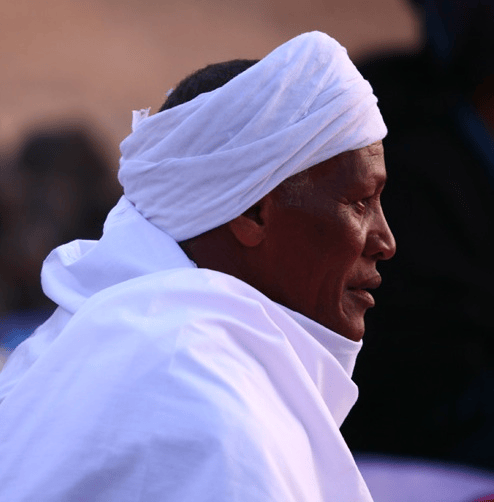
On the 27th of September in the year 2015, a quiet tragedy unfolded in the bustling streets of Nairobi. Ob Dabbasaa Guyyoo, an elder in his late seventies, disappeared. He was not a politician, nor a celebrity. He was something rarer and perhaps more precious: a living archive, a walking library of Oromo knowledge, a custodian of Gadaa—the indigenous democratic system that has governed Oromo society for centuries.
The United Nations (UN) has declared the 30th of Hagayya (August) as the International Day of the Victims of Enforced Disappearances. It is a day to remember those who have been forcibly taken, their fates unknown, their families left in a purgatory of uncertainty. For the family and students of Ob Dabbasaa Guyyoo, the 27th of Fulbaana is their personal day of reckoning.
The Life Before the Silence
To understand the weight of this loss, one must understand the life that was lived. Ob Dabbasaa Guyyoo’s world was not shaped by textbooks or university lectures. It was shaped by the Gadaa system, an ancient Oromo institution that governs everything from politics to social conduct, from justice to spirituality. He grew up in its embrace, was nurtured by its principles, and graduated into its senior councils.
But Ob Dabbasaa did not keep this knowledge for himself. He was a teacher, an arsaa-dhageettii—one who uses his eyes and ears to interpret the world and pass it on to others. His mission was profound and urgent: to teach the Oromo people that they possess a civilization of their own. He traveled through villages, and across borders into neighboring countries, preaching a message of cultural pride and historical awareness.
His teaching was a quiet resistance against the forces of erasure. He did not teach with a rod or a weapon; he taught with stories, with proverbs, and with the weight of lived experience. He reminded his people, whether they were Muslim, Christian, or followers of the indigenous Waaqeffannaa faith, that their identity was a gift, not a curse.
A Philosophy of Transmission
There is a profound Oromo philosophy that underpinned his work: a person who does not know their own history is like someone who cannot cross a river without clinging to another. They are dependent, lost, and vulnerable.
Ob Dabbasaa dedicated his life to ensuring that the Oromo would cross that river on their own strength. He took the abstract knowledge of the elders—the norms, the laws, the spiritual ties—and translated it into a curriculum for the youth. He educated and blessed countless students, sowing seeds of self-awareness across the land.
He understood that identity is not inherited automatically; it must be taught, discussed, and practiced. A person must learn who they are, and having learned, they must teach others. It is a duty, an unbroken chain. For as long as he was free, Ob Dabbasaa held that chain steady.
The Day the Chain Broke
On that fateful day in Fulbaana, the chain broke.
While traveling in Nairobi, Ob Dabbasaa Guyyoo vanished. The circumstances remain shrouded in the same ambiguity that haunts so many disappearances across the region. His family suspects the hand of the state, alleging that the authorities know his whereabouts. They live in the cruel limbo of enforced disappearance, clinging to hope while bracing for grief.
He was a man who had already known displacement. In the 1970s, as a refugee fleeing political turmoil in Ethiopia, he had crossed into Kenya, settling in the Machakos and Mlolongo areas with his family. He built a life there, far from his ancestral lands, yet he carried his homeland in his mind and heart. He was already a survivor of one kind of exile; now he has become a victim of another.
Why His Story Matters Now
In an age of information overload, where attention is fleeting, the story of Ob Dabbasaa Guyyoo might seem like a relic of a specific ethnic struggle. But it is not.
His story is a universal lesson about the power of cultural custodians. Every community, from the highlands of Oromia to the islands of the Pacific, relies on individuals who bridge the gap between the ancestors and the youth. When those individuals are silenced, a vital frequency is lost.
The UN’s call for the protection of human rights must include the protection of indigenous knowledge. It is not just a matter of political justice; it is a matter of cultural survival. The Oromo people have a saying: “Jiraachuun seenaa qabaachuudha”—To exist is to have a history.
Today, the whereabouts of Ob Dabbasaa Guyyoo remain unknown. His voice is silent. But the wisdom he imparted lingers in the minds of his students, in the stories told at the Gadaa centers, and in the prayers of his family.
The hope is that his fate will not remain hidden forever. The hope is that the UN’s resolutions against forced disappearances will transform from ink on paper into living justice. And the hope is that the work he started—the work of cultural reclamation—will continue, louder and more determined than before.
Because as long as one Oromo remembers the lessons of the elders, the chain of knowledge is not entirely broken. It is merely waiting for the next voice to pick it up.






