Category Archives: Information

Ethiopia’s Media Regulator Under Fire: Ambassador Redwan Hussein’s Warning Remarks Spark Debate

By Daandii Ragabaa
ADDIS ABABA — Ethiopia’s top media regulator has sparked debate after stating that no media outlet has ever been warned more than five times without being told what it did wrong, what damage it caused, or which law it violated. The remarks, made by Ambassador Redwan Hussein, Board Chairperson of the Ethiopian Media Authority (EMA), came in a speech at the Media Excellence Center graduation ceremony on October 26, 2026.
A Warning Without a Wrongdoing?
Ambassador Redwan’s comments centered on the country’s media landscape—its problems, its challenges, and the ways some outlets operate. He stated that no media outlet has ever been warned more than five times without being told what it did wrong, what damage it caused, or which law it violated. The remark appeared to suggest that the regulatory body has been transparent and patient in its dealings with media organizations.
The comments came just days after the Authority announced that the registration certificate of the Media and Communication Center—the publisher of Reporter, a newspaper that has been in print for 30 years, and its English-language counterpart The Reporter—had been suspended “for an indefinite period.” The Authority stated that the newspapers published under the institution would remain “completely barred from printing and broadcasting.”
The EMA said it had monitored Reporter‘s content for over a year and confirmed repeated violations of “the law and professional ethics.” Among the accusations leveled against the newspaper were: disseminating content contrary to national interest; amplifying topics with significant negative impact on the political, social, and economic context; creating suspicion and confusion among the public through misleading reports; and transmitting information that undermines the unity and values of the people.
A Call for Responsible Media
Ambassador Redwan, who also serves as Director of National Intelligence and Security, said the government “encourages responsible media” and noted that the number of media outlets has increased since Prime Minister Abiy Ahmed came to power.
However, he also acknowledged that print media is declining—not only in Ethiopia but globally. He warned that no one can live above the law. “No matter how many embassies know me, how many foreigners speak for me, how much money I have, or how many years I have lived,” he said, “one cannot live above the law.”
He noted that some outlets had been advised as many as 15 times, and that each time they had been shown what they did wrong and had promised to correct it. The media, he said, had agreed to rectify its mistakes.
International Criticism
The suspension of Reporter has drawn criticism from international human rights organizations. Human Rights Watch condemned the move, describing it as part of the Ethiopian government’s “attack on the country’s media and civil space.” HRW called Reporter “one of the few independent institutions remaining in the country” and urged the government to reverse its decision immediately, calling on the country’s partners to pressure the government.
The Challenges of Ethiopia’s Media Landscape
Ambassador Redwan also addressed the broader challenges facing Ethiopian media. He noted that some individuals have launched media outlets simply because they have money, without knowing anything about journalism. “They don’t even know the identity of the person they hired,” he said.
He emphasized that a journalist has a professional responsibility beyond the owner of the outlet. While some “deliberately work to incite the country,” he said, the vast majority make mistakes out of ignorance. He cited Al Jazeera as an example of foreign media that “treats Ethiopia’s affairs in a balanced way” comparable to the BBC.
He warned that a media outlet with a license should not appear to be above both the country’s parliament and its government. “Media can be criticized and questioned,” he said. “There is no need for a campaign. There must be cooperation through procedure.”
A Warning Against Victimhood
In a pointed remark, Ambassador Redwan said: “If you are advised forty times, make forty mistakes, and then, when you are warned once, you campaign about it, you are thinking you have more power than Ethiopia.”
He emphasized the importance of knowing the country’s laws, its interests, and one’s own role. “When we make mistakes, we need to correct them,” he said.
He recalled that there have been media outlets that made mistakes and were corrected. “If they make mistakes five times, they will be corrected five times,” he said. “The main thing is whether they are ready to be corrected.”
The Road Ahead
The suspension of Reporter and the remarks of Ambassador Redwan have reignited debate about press freedom in Ethiopia—a debate that has intensified in recent years as the government has taken action against media outlets it accuses of violating the law. Last year, the licenses of Addis Standard and Wazema were revoked, and the reporting credentials of foreign media were cancelled.
For the Ethiopian government, the actions are a matter of enforcing the law and protecting national interests. For critics, they represent a narrowing of the space for independent journalism in a country where access to information is already constrained. What is clear is that the relationship between the Ethiopian state and its media remains fraught—and the debate over where the line between regulation and repression lies is far from resolved.
Source: BBC Amharic, Ethiopian Media Authority, Human Rights Watch

Eight Black Women Who Rose to the Highest Levels of Political Power in America
By Dhabessa Wakjira
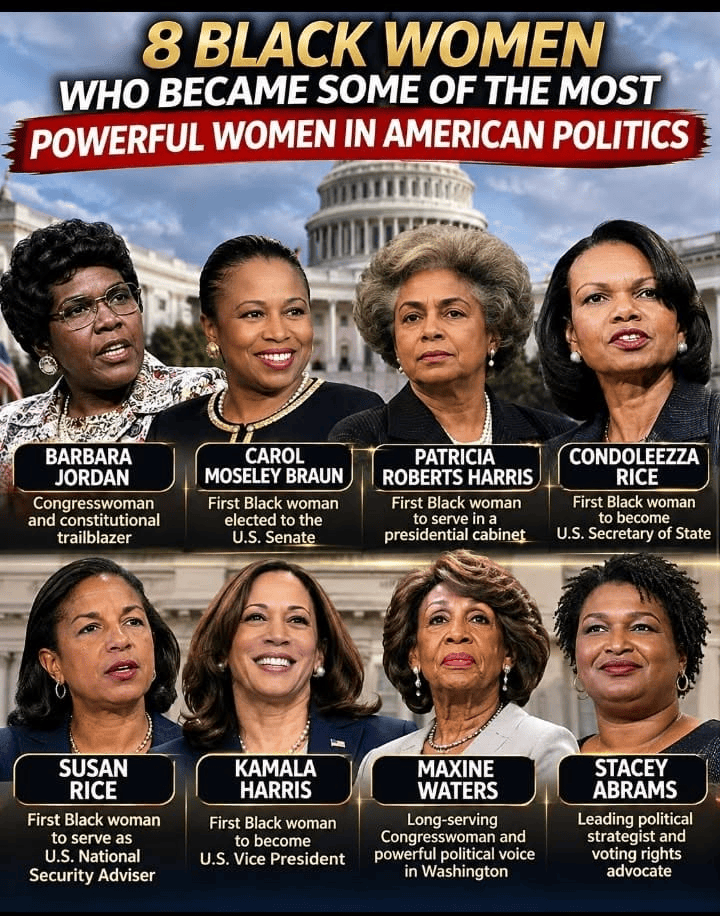
From the halls of Congress to the White House, the U.S. Senate, and the highest levels of national security, eight Black women have broken barriers, challenged political traditions, and become some of the most influential figures in American political history. Their journeys remind us that Black women have not simply participated in American politics—they have helped shape its direction.
1. Barbara Jordan (1936–1996): The Congresswoman Who Challenged a President
Barbara Jordan was one of the most respected political figures in American history. In 1966, she became the first Black woman elected to the Texas Senate. In 1972, she made history again by becoming the first Black woman elected to Congress from a Southern state since Reconstruction.
Her greatest national moment came during the Watergate scandal in 1974. As a member of the House Judiciary Committee, she delivered a powerful speech during the impeachment proceedings against President Richard Nixon. She defended the U.S. Constitution and argued that no president should stand above the law. Her speech established her as one of America’s most respected political orators.
2. Carol Moseley Braun (1947– ): The First Black Woman Elected to the U.S. Senate
In 1992, Carol Moseley Braun achieved a historic political breakthrough. She defeated Republican incumbent Alan Dixon in Illinois, becoming the first Black woman ever elected to the United States Senate. She served from 1993 to 1999.
During her time in the Senate, she advocated for education, civil rights, and women’s equality. In 1999, President Bill Clinton appointed her U.S. Ambassador to New Zealand and Samoa. She also sought the Democratic presidential nomination in 2004. Her achievement opened another important door for Black women in American political leadership.
3. Patricia Roberts Harris (1924–1985): The First Black Woman in a Presidential Cabinet
Patricia Roberts Harris was a lawyer, diplomat, educator, and government official. In 1965, she became the first Black woman appointed as a U.S. ambassador, serving in Luxembourg.
Her achievements continued under President Jimmy Carter. In 1977, she became Secretary of Housing and Urban Development (HUD), making her the first Black woman to serve as a U.S. cabinet secretary. In 1979, she became Secretary of Health, Education, and Welfare. When that department was reorganised in 1980, she became the first Secretary of the newly established Department of Health and Human Services. She occupied some of the most influential positions in the American federal government.
4. Condoleezza Rice (1954– ): The First Black Woman to Become U.S. Secretary of State
Condoleezza Rice became one of the most influential women in American foreign policy. In 2001, President George W. Bush appointed her National Security Adviser—the first Black woman to hold that position. In January 2005, she made history again when she became the 66th U.S. Secretary of State, the first Black woman ever to occupy the office.
Her responsibilities included international diplomacy, foreign policy negotiations, and America’s relationships with other countries. She served until January 2009. Her decisions, particularly concerning the Iraq War era, remain subjects of political debate. Nevertheless, her appointment represented a historic breakthrough in American government.
5. Susan Rice (1964– ): The First Black Woman to Become U.S. National Security Adviser
Susan Rice became one of the most influential foreign policy officials in President Barack Obama’s administration. Before becoming National Security Adviser, she served as U.S. Ambassador to the United Nations from 2009 to 2013. In 2013, she became the first Black woman appointed National Security Adviser.
The position placed her at the centre of presidential decision-making on international relations, intelligence, defence, and national security. She served until 2017. In 2021, President Joe Biden appointed her Director of the Domestic Policy Council. Her career demonstrates the growing influence of Black women in America’s most sensitive government institutions.
6. Kamala Harris (1964– ): The First Black Woman to Become Vice President
Kamala Harris made American political history. She previously served as District Attorney of San Francisco, California Attorney General, and U.S. Senator. In 2020, Joe Biden selected her as his running mate. After winning the presidential election, Harris was sworn in on January 20, 2021.
She became the first woman to serve as U.S. Vice President, the first Black person to hold the office, and the first South Asian American to become Vice President. In 2024, she became the first Black woman nominated for president by a major American political party. Although she lost the 2024 presidential election, her place in American political history remains significant.
7. Maxine Waters (1938– ): The Long-Serving Congresswoman
Maxine Waters is one of the most prominent Black women in contemporary American politics. Born in St. Louis, Missouri, she moved to Los Angeles, California, where she became involved in community organising and politics. She was elected to the California State Assembly in 1976. In 1990, she was elected to the U.S. House of Representatives.
Waters became nationally recognised for her outspoken positions on racial justice, economic inequality, housing, financial regulation, and government accountability. She chaired the powerful House Financial Services Committee from 2019 to 2023. Her influence has made her one of the most recognisable Black women in American congressional politics.
8. Stacey Abrams (1973– ): The Political Strategist
Stacey Abrams is a lawyer, former Georgia legislator, and voting rights advocate. She served in the Georgia House of Representatives from 2007 to 2017 and became the chamber’s Democratic minority leader.
In 2018, she became the first Black woman nominated for governor by a major political party in the United States. Although she narrowly lost the election to Brian Kemp, her political influence grew nationally. She became widely recognised for her work on voter registration, voting access, and electoral participation. Through organisations including Fair Fight Action, she helped bring national attention to voting rights debates. She ran for governor again in 2022 but lost to Kemp. Although she has never served as governor, her influence on modern American electoral politics is undeniable.
What These Eight Women Have in Common
Their political journeys demonstrate how much American politics has changed. Barbara Jordan became a powerful defender of constitutional accountability. Carol Moseley Braun broke the racial and gender barrier in the U.S. Senate. Patricia Roberts Harris opened the door to Black women’s leadership in presidential cabinets. Condoleezza Rice reached the highest levels of American foreign policy. Susan Rice became the first Black woman National Security Adviser. Kamala Harris became America’s first female and first Black Vice President. Maxine Waters became one of the most recognisable voices in Congress. Stacey Abrams became a major force in modern electoral organising.
They did not all share the same political beliefs, strategies, or backgrounds. But each made a significant contribution to the history of Black political representation in America. Their stories remind us that Black women have not simply participated in American politics. They have helped shape its direction.

Gadaa System Revived in Shaggar: Nine Gadaa Leaders Inaugurated in Gafarsa Gujee District
By Dhabessa Wakjira
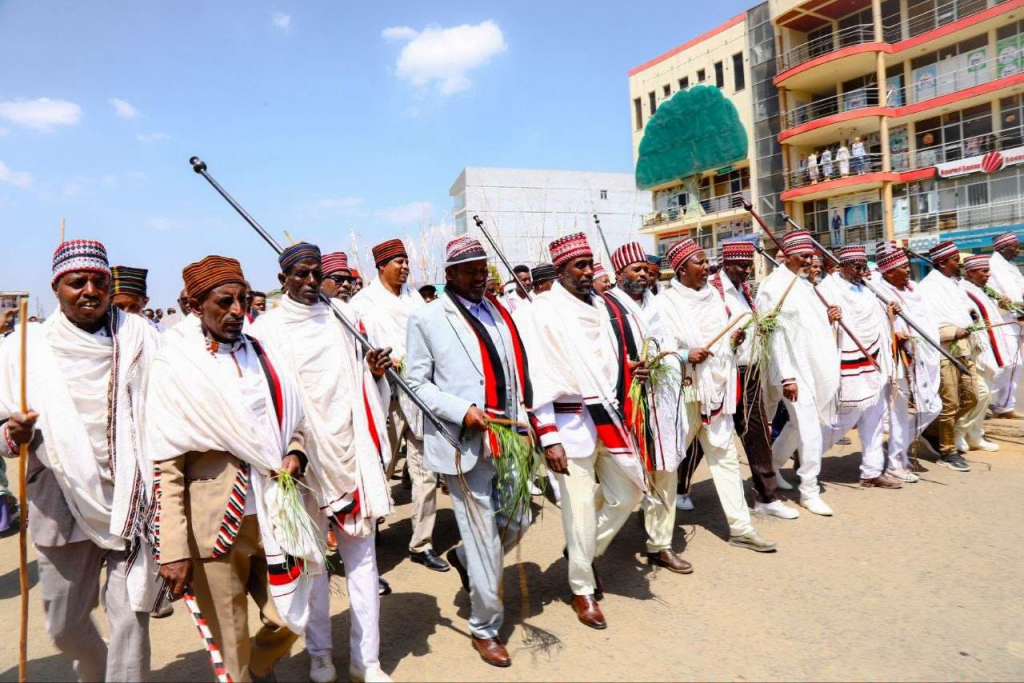
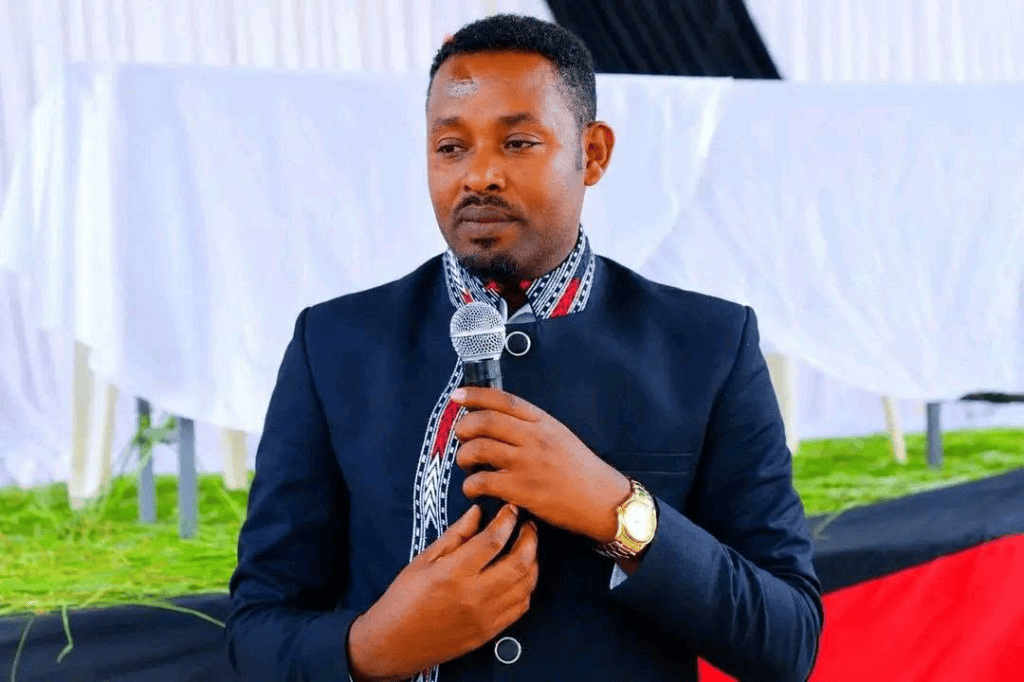
SHAGGAR, Oromia — In a ceremony rich with cultural significance and democratic symbolism, the Gadaa system has been formally revived in Gafarsa Gujee District of Shaggar City Administration, with nine Gadaa leaders (Abbootii Gadaa) inaugurated in a peaceful transfer of power that reaffirms one of Africa’s oldest democratic traditions.
A Democratic Heritage Reclaimed
The Gadaa system, described in the announcement as “a democratic governance system through which the Oromo people govern themselves and a foundation for modern democracy worldwide,” has been a central pillar of Oromo identity for centuries. The system regulates political, economic, and social life through a rotating leadership structure that ensures accountability, balance, and the peaceful transfer of power.
In Shaggar City Administration, efforts are underway to revitalize the cultural heritage and identity of the Oromo people, which had been systematically marginalized under previous administrative arrangements. The Tuulama Oromo community has been actively supporting the completion of the Gadaa power transfer through peaceful and orderly means, in accordance with the traditions of the system.
The Ceremony in Gafarsa Gujee
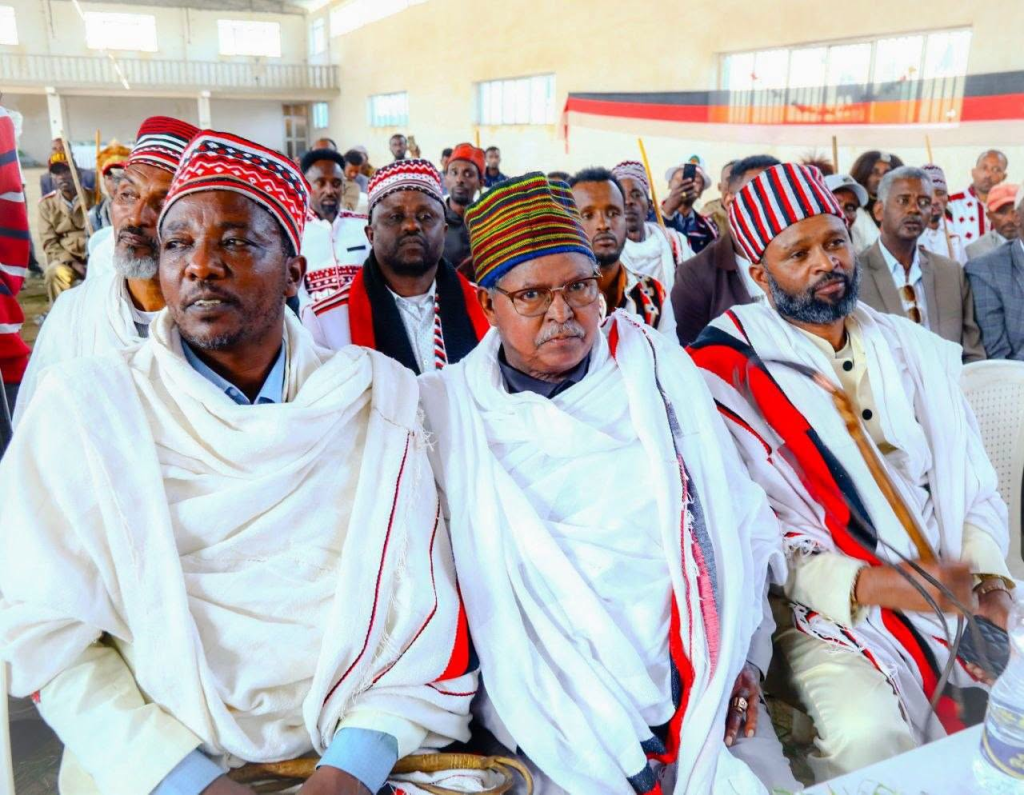
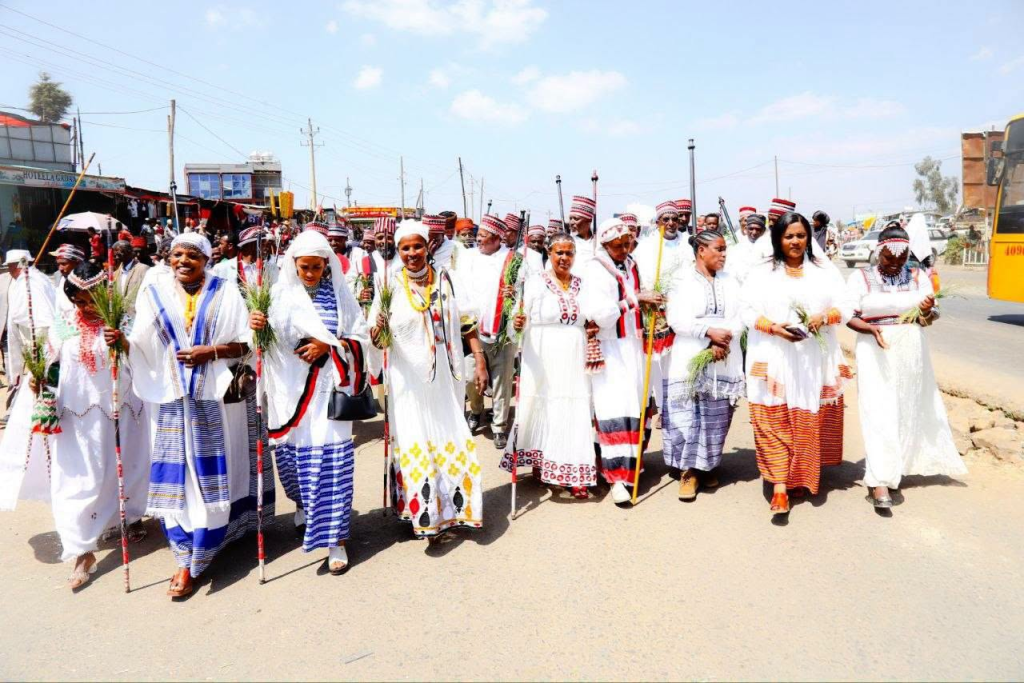
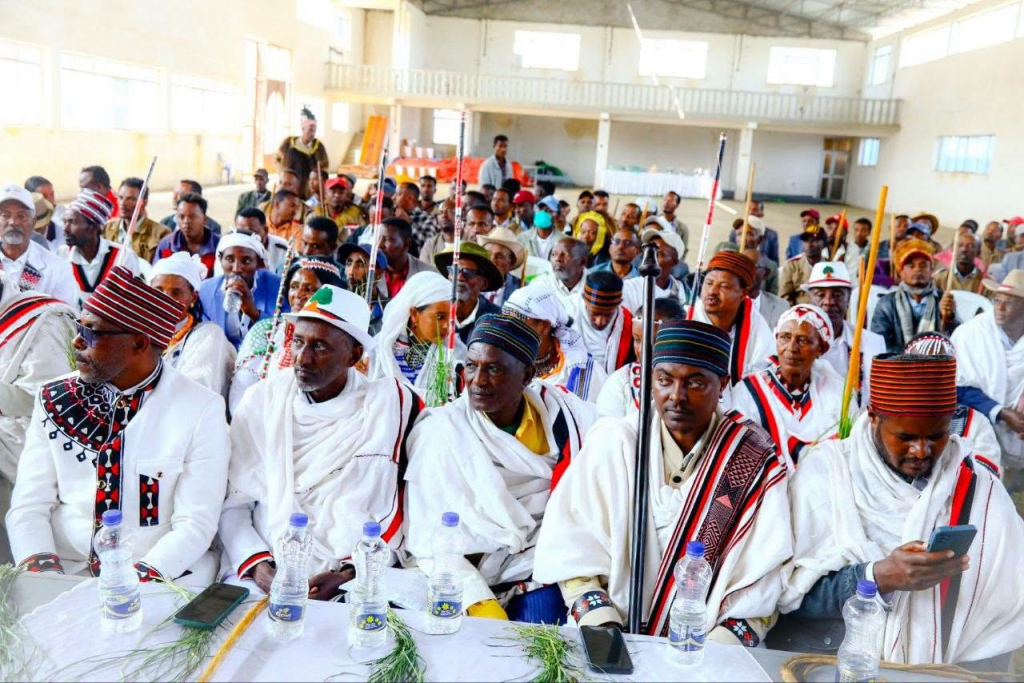
The inauguration ceremony, held in Gafarsa Gujee District, was attended by Gadaa leaders, Haadholii Siinqee (women elders), and members of the community. The Gadaa Muudanaa—the incoming Gadaa leadership—formally assumed power from the outgoing Gadaa Meelbaa, marking the completion of the transition cycle.
Abbaa Gadaa Tuulamaa Geetuu Taliilaa addressed the gathering, emphasizing that the Oromo people govern themselves through the Gadaa system by transferring authority peacefully and in accordance with tradition. The Gadaa Muudanaa leaders confirmed that they have assumed authority from Gadaa Meelbaa and are now organizing their structures.
The nine newly inaugurated Gadaa leaders were entrusted with the responsibility of preserving and strengthening Oromo culture and traditions during their term, and of passing this heritage on to future generations.
A Model of True Democracy
Injiinar Yirdaaw Nagaash, the administrator of Gafarsa Gujee District, praised the revival of the Gadaa system as a demonstration of the Oromo people’s commitment to genuine democracy based on social equality. He stated that the Oromo people governing themselves through Gadaa serves as a model for the world and a testament to the greatness of the Oromo nation.
The administrator also noted that the Oromia Regional Government has been working with a focus on cultural renewal and the promotion of Oromo culture and traditions. He called on various stakeholders to support efforts to elevate and showcase the culture and traditions of the Oromo people.
A Living Tradition
The revival of Gadaa in Shaggar is part of a broader movement across Oromia to reclaim and revitalize indigenous governance systems that were suppressed under centralized rule. The Gadaa system, inscribed by UNESCO as Intangible Cultural Heritage in 2016, is recognized globally as a sophisticated democratic framework that predates many modern democratic institutions.
The inauguration of nine Gadaa leaders in Gafarsa Gujee is not merely a ceremonial event. It is a statement that the Oromo people’s democratic traditions are alive, that their cultural identity is being restored, and that the peaceful transfer of power—the hallmark of true democracy—is being practiced according to the wisdom of their ancestors.
Source: ENA (Ethiopian News Agency), Shaggar City Administration Communications

Four Women, One Heritage: Ethiopian American Women Make History in 2026 Elections
By Dhabessa Wakjira
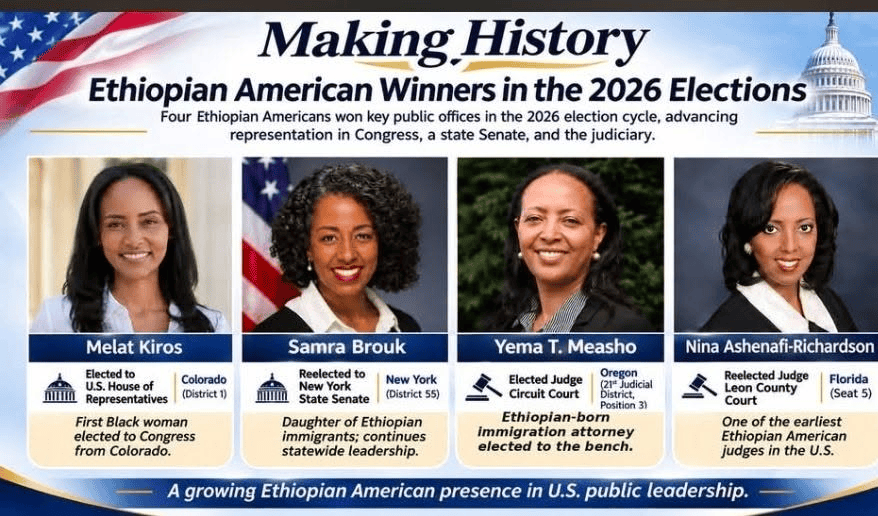
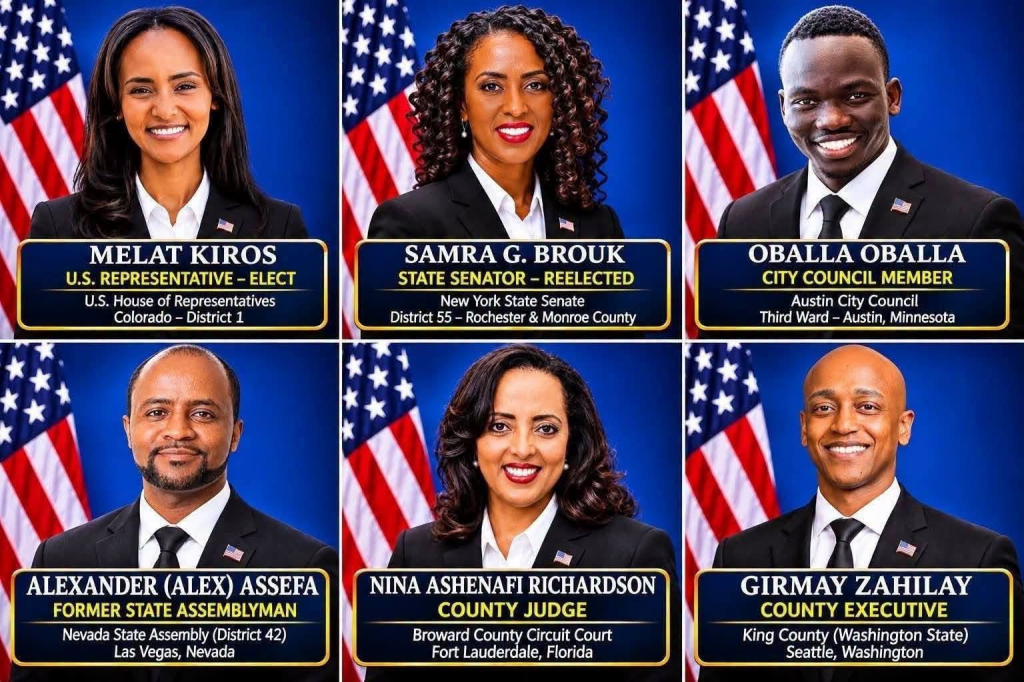
WASHINGTON, D.C. — Based on 2026 U.S. election results confirmed so far, four women of Ethiopian heritage have won seats in Congress, state government, and the judiciary—a milestone that reflects the growing political representation of Ethiopian Americans across the United States.
Melat Kiros: A Historic First in Colorado
Melat Kiros has been elected to the U.S. Congress from Colorado’s 1st Congressional District, becoming the state’s first Black woman elected to Congress. At 29 years old, Kiros is also the first Gen Z woman ever elected to the House of Representatives. Born in Addis Ababa before moving to America to study law, she defeated a 15-term incumbent in the primaries before winning the general election. Her victory is a testament to the rising influence of a new generation of Ethiopian American leadership.
Samra Brouk: Re-elected to the New York State Senate
Samra Brouk has been re-elected to the New York State Senate, continuing her service as a voice for her constituents in Rochester and the surrounding region. Brouk, who has been a prominent advocate for mental health reform and community investment, represents the deepening roots of Ethiopian American political engagement in New York.
Yema T. Measho: Elected Circuit Court Judge in Oregon
Yema T. Measho has been elected as a circuit court judge in Oregon, bringing her legal expertise and commitment to justice to the bench. Her election reflects the growing presence of Ethiopian Americans in the judicial system—a crucial arena where representation matters for ensuring fairness and equity.
Nina Ashenafi-Richardson: Securing Another Judicial Term in Florida
Nina Ashenafi-Richardson has secured another judicial term in Florida, continuing her distinguished career on the bench. Her re-election is a vote of confidence in her service and a reminder that Ethiopian American women are shaping the legal landscape in states across the country.
A Growing Presence
These four women represent different journeys—from Congress to state senate to the judiciary, from Colorado to New York to Oregon to Florida. But they share one thing: Ethiopian heritage. Their achievements reflect the growing representation of Ethiopian Americans in the political and civic life of the United States.
The 2026 elections have been described as a watershed moment for diversity in American politics. The election of Black women to Congress, the rise of Gen Z leadership, and the growing presence of immigrant communities in elected office all point to a changing political landscape—one that is more reflective of the country’s demographics and more responsive to its diversity.
Congratulations
To Melat Kiros, Samra Brouk, Yema T. Measho, and Nina Ashenafi-Richardson: congratulations. Your victories are not only personal achievements but milestones for the Ethiopian American community and for all who believe in the promise of representative democracy.
Four women. Different journeys. One shared Ethiopian heritage.
#EthiopianAmerican #Election2026 #WomenInPolitics #RepresentationMatters

Melat Kiros: 29-Year-Old Ethiopian-Born Trailblazer Elected to Congress
By Dhabessa Wakjira
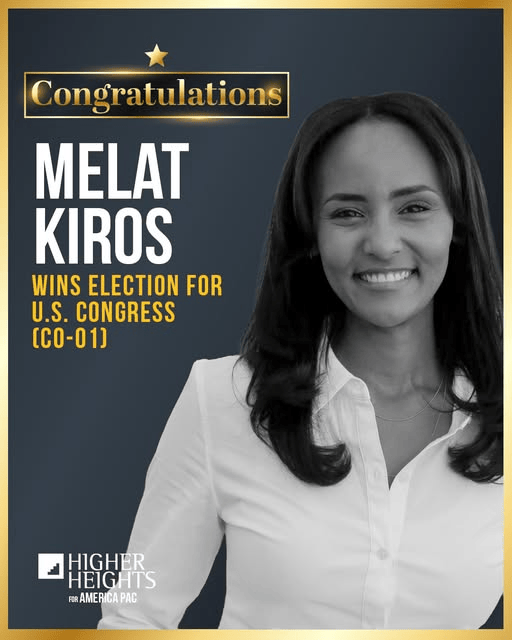
DENVER, Colorado — In a political season that has already made history, one victory stands out as particularly remarkable. Melat Kiros, a 29-year-old Democrat, has been elected to Congress from Colorado’s 1st Congressional District—becoming the first Gen Z woman ever elected to the United States House of Representatives.
From Addis Ababa to the Halls of Congress
Kiros was born in Addis Ababa, Ethiopia, before moving to America to study law. Her journey from the Ethiopian capital to the chambers of Congress is a testament to the possibilities that education, determination, and public service can unlock. She is a member of the Democratic Party and brings with her a legal background that has prepared her for the rigors of legislative work.
A Historic First
Kiros is the first Gen Z woman elected to Congress and the second Gen Z member elected to the House of Representatives, following Maxwell Frost. At 29 years old, she represents a new generation of leadership—one that has come of age in a time of profound social and political change and is now stepping into the institutions that shape the future.
The Road to Victory
Her path to Congress was not an easy one. In the primaries, Kiros defeated Diana DeGette, a 15-term incumbent—a stunning upset that signaled voters’ appetite for fresh leadership and new voices. She then went on to face Republican Christy Peterson in the general election, emerging victorious.
The victory is not only a personal triumph but a milestone for Ethiopian Americans and for the broader diaspora community. As one supporter put it: “Ethiopia to the world.”
A New Generation Takes Its Seat
Kiros’s election comes at a moment when American democracy is being tested and renewed. Her presence in Congress will bring a perspective shaped by her immigrant experience, her legal training, and her generation’s commitment to addressing the challenges of the 21st century—from climate change to economic inequality to the defense of democratic norms.
She joins a historic class of Black women elected to Congress in 2026, a group that includes Nikema Williams, Lucy McBath, Jasmine Clark, Ayanna Pressley, and many others. Together, they represent a transformation of American political representation—one that is younger, more diverse, and more reflective of the country’s changing demographics.
Congratulations
Melat Kiros’s victory is a moment of pride not only for Colorado and the United States but for Ethiopia and the global Ethiopian diaspora. Her story—from Addis Ababa to the U.S. Congress—is a reminder that the distance between struggle and leadership is often smaller than it appears, and that the children of immigrants can rise to the highest levels of public service.
Congratulations, Congresswoman-elect Melat Kiros.
#AmericaDecides #Election2026 #MelatKiros #EthiopiaToTheWorld

Unity Beyond Borders: What the Oromo Nation Can Learn from a Community That Organized and Won
By Dhabessa Wakjira
There is a lesson that every oppressed people must eventually learn: a community united is never powerless. When a people organize—not only at home but across borders—and build collective strength, they can bring their voice to the seat of power itself. This is not a theory. It is a demonstrated truth, and it stands as an example for every nation that aspires to freedom.
The Oromo people, the largest ethnic group in Ethiopia and the Horn of Africa, are no exception. The lesson is clear: however heavy the burden, disciplined work and principled action are what lead to success. A nation does not win its rights through despair or division; it wins them through patience, integrity, and unwavering unity.
The Power of Organized Community
History is filled with examples of communities that were dismissed as powerless until they organized. When people who share a common identity and a common grievance come together—when they build institutions, pool resources, coordinate action, and speak with one voice—they become a force that no government can ignore. This is true within a country’s borders, and it is equally true across the diaspora.
The Oromo diaspora, particularly in North America, Europe, and Australia, has built structures explicitly designed for collective action: fundraising, advocacy, political mobilization, and cultural preservation. These networks sustain the struggle across borders and generations. They demonstrate that distance is not a barrier to solidarity—and that a community that organizes abroad can amplify the voice of those who cannot speak freely at home.
Lessons for the Oromo Struggle
The lesson for the Oromo nation is both simple and demanding. It requires patience (obsa)—the willingness to endure hardship without losing sight of the goal. It requires integrity (naamusaa)—the commitment to act with moral clarity and consistency, even when it is inconvenient. And it requires diligence (cichoomina)—the disciplined, sustained effort that turns aspiration into achievement.
These are not abstract virtues. They are the practical foundations of any successful movement. A people that works together, acts with principle, and refuses to be divided can achieve what seems impossible to those who underestimate them.
A Responsibility to the Next Generation
But the lesson is not only about the present. It is about the future. The generation that inherits the struggle must be equipped to carry it further—to bring about change that is better than what came before. That requires commitment and courage. It requires the willingness to learn from the past while refusing to be imprisoned by it. And it requires the conviction that the sacrifices of those who came before will not be in vain.
The Oromo struggle is not a sprint. It is a marathon that spans generations. Each generation must do its part: to preserve what has been gained, to push forward where progress has stalled, and to hand to those who follow a stronger, more united, and more determined nation.
The Example That Inspires
Communities that have organized and won—whether in the struggle for civil rights, for independence, or for democratic self-governance—share a common pattern. They did not wait for power to be handed to them. They built power from the ground up. They organized in their neighborhoods, their workplaces, their places of worship, and their diaspora communities. They spoke with one voice. And when the moment came, they were ready.
The Oromo nation has the numbers, the resources, the cultural heritage, and the diaspora networks to do the same. What remains is the will to act—with patience, integrity, and unity—and the determination to ensure that the next generation inherits not only the struggle but also the tools to win it.
A united community is never powerless. A people that organizes, endures, and acts with principle will be heard—at home and abroad.

Seventeen Women, One House: Black Women Make History in the 2026 Midterms
By Dhabessa Wakjira
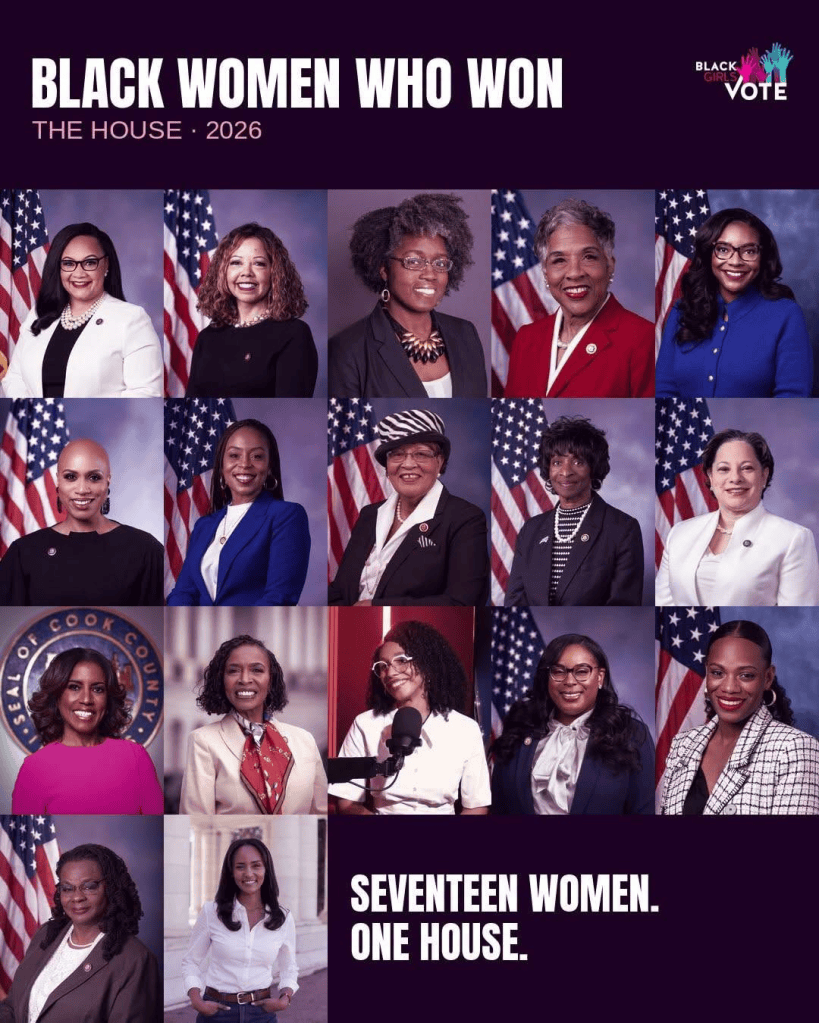
In a political season defined by uncertainty and division, a quiet but powerful transformation took place at the ballot box: seventeen Black women were elected to the United States House of Representatives in the 2026 midterm elections. Their victories span from Georgia to Colorado, from Ohio to Washington—and together, they represent one of the most significant concentrations of Black women’s political power in American history.
A Historic Class
The list of newly elected and re-elected representatives reads like a roll call of resilience and ambition: Nikema Williams, Lucy McBath, and Jasmine Clark in Georgia; Joyce Beatty and Emilia Sykes in Ohio, with Sykes holding one of the toughest seats in the country; and Ayanna Pressley, Shontel Brown, Alma Adams, Valerie Foushee, Jennifer McClellan, Donna Miller, Yvette Clarke, Darializa Avila Chevalier, LaMonica McIver, Summer Lee, and Gwen Moore across the nation.
But perhaps the most striking story comes from Colorado, where Melat Kiros made history twice over: she became the first Black woman to represent her state in Congress and the first Gen Z woman ever elected to the House. Her victory is not only a milestone for Colorado but a signal that a new generation of leadership has arrived—one that is younger, more diverse, and unafraid to claim space in institutions that have historically excluded them.
The Significance of Seventeen
Seventeen may sound like a modest number in a chamber of 435. But representation is not merely arithmetic. Each of these women carries with them the experiences of communities that have been underserved, underestimated, and overlooked. Their presence in Congress matters—not just for symbolism, but for the substance of policy: for the issues they will champion, the perspectives they will bring to debates, and the doors they will open for those who come after them.
The hashtag that accompanied the announcement—#BlackGirlsVote—captures something essential: this is not only about the women who won, but about the movement that elected them. Black women have long been the backbone of the Democratic Party and of progressive movements across the country. In 2026, that labor translated into a visible, undeniable presence in the halls of power.
A New Generation, A New Chapter
Melat Kiros’s dual firsts—first Black woman from Colorado, first Gen Z woman in Congress—are a reminder that history is not only made by those who have waited their turn, but by those who arrive ready to transform the institution itself. Gen Z has come of age in a time of crisis and possibility, and its entry into Congress signals that the fight for representation is not over—it is only being reimagined.
The women elected in 2026 are not newcomers to struggle. They are attorneys, community organizers, state legislators, and advocates who have spent their careers fighting for the vulnerable. Their victories are the result of years of organizing, coalition-building, and the steadfast belief that American democracy works best when it looks like America itself.
What Comes Next
The 119th Congress will convene with more Black women than ever before in its history. The work ahead is formidable—from protecting voting rights to addressing economic inequality, from healthcare access to criminal justice reform. But the class of 2026 enters with a mandate: to lead, not just to be present; to legislate, not just to represent; and to ensure that the promises of democracy are extended to all.
Seventeen women. One House. A nation watching.

When Those in Power Refuse to Listen: Martin Luther King Jr. and the Power of Nonviolent Dialogue
By Daandii Ragabaa
What happens when those in power refuse to listen?
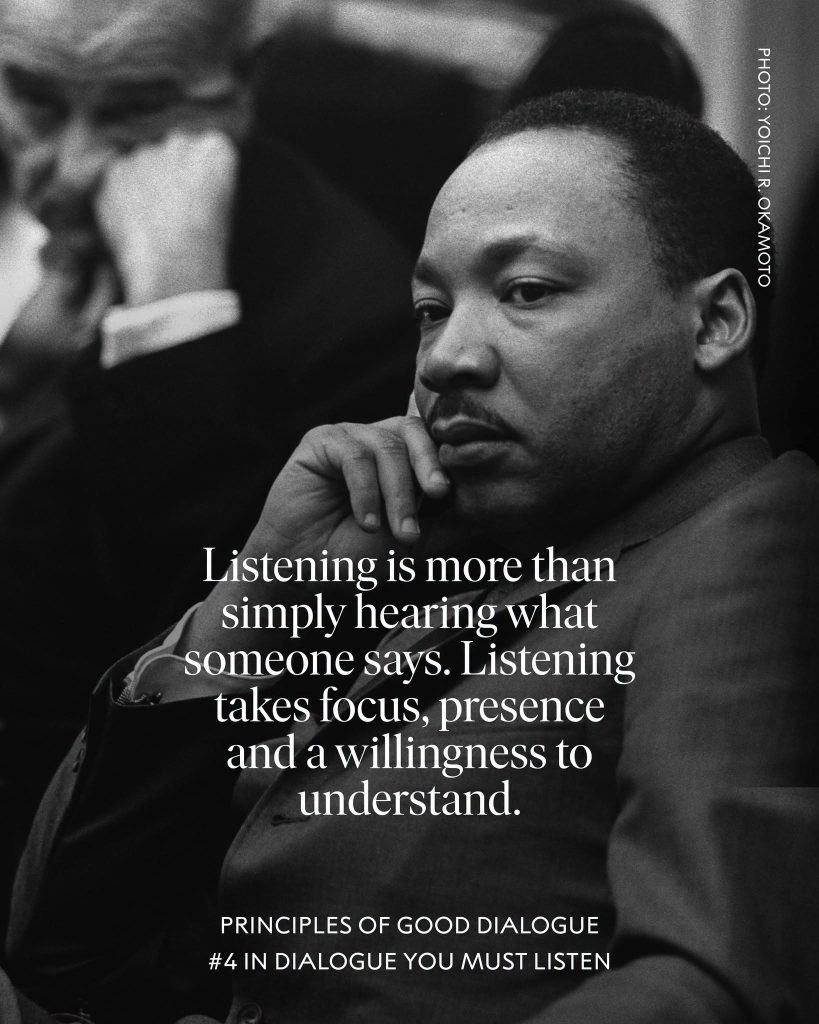
Martin Luther King Jr. grew up in a segregated United States, where Black Americans were denied a voice and risked threats and violence for speaking out. The institutions of government, the courts, the police, and much of the public square were closed to them. To speak was to risk one’s life. To be heard was almost unimaginable.
Yet King chose not to answer silence with silence. He chose nonviolent resistance.
The Strategy of Peaceful Protest
King understood that the refusal to listen is itself a form of violence—a denial of the other’s humanity. His response was not to mirror that denial but to expose it. Through peaceful protests, sit-ins, marches, and boycotts, he helped make the situation of Black Americans impossible to ignore. The point was not merely to disrupt but to reveal: to show the nation and the world what segregation actually looked like, and to force those in power to confront what they had chosen not to see.
In 1963, 250,000 people joined the March on Washington, where King delivered his famous “I Have a Dream” speech. It made people listen. The following year, legislation prohibiting racial discrimination was passed—the Civil Rights Act of 1964—and King was awarded the Nobel Peace Prize.
Principle 4: In Dialogue, You Must Listen
The Nobel Peace Center identifies this as an example of Principle 4 of good dialogue: In dialogue, you must listen. The principle is deceptively simple, but it carries profound implications. Listening is more than merely hearing. It requires focus and presence. It requires the willingness to set aside one’s own prejudices and judgments long enough to actually receive what another person is saying.
The Nobel Peace Center offers practical guidance on what this looks like:
- Listen to what is being said. Do not let your own thoughts and prejudices interfere with your ability to listen.
- Do not give advice unless it is requested.
- Do not interrupt. Let the other person finish talking.
- Do not capture the conversation by drawing parallels to your own experiences.
- Be empathic and show understanding for the other person’s situation.
- Do not presume to know other people’s opinions.
These are not abstract ideals. They are disciplines—habits of attention that must be practiced, especially by those who hold power.
The Courage to Make Listening Impossible to Avoid
King’s genius was in understanding that when those in power refuse to listen, the response is not to shout louder but to create conditions in which listening becomes unavoidable. The March on Washington was not merely a protest; it was an invitation—a demand—for the nation to hear what it had spent generations trying to drown out.
The Nobel Peace Center notes that King “used Principle 4: In dialogue, you must listen to find a solution.” This is a crucial insight. King did not abandon dialogue; he insisted on it. He did not seek to destroy his opponents; he sought to awaken them. His nonviolent resistance was, in its deepest logic, an act of faith in the possibility of dialogue—even with those who had shown no willingness to engage.
Listening as a Moral Practice
The lesson for our own time is clear. In a world where political leaders often speak past one another, where social media rewards outrage over understanding, and where the powerful routinely dismiss the grievances of the marginalized, Principle 4 remains a radical challenge. Listening is not a passive act. It is a moral practice—a recognition that the other person has something to say that we need to hear.
King’s life is a testament to this truth. He listened to the pain of his community. He listened to the conscience of the nation. And he forced those in power to listen to him—not through violence, but through the disciplined, peaceful insistence that their humanity and his were bound together.
A Legacy That Still Speaks
More than half a century after his death, King’s example continues to teach. When those in power refuse to listen, the answer is not to abandon dialogue but to practice it more faithfully—to create the conditions, through peaceful means, in which listening becomes inevitable. That is the lesson of the March on Washington. That is the lesson of the Civil Rights Act. And that is the lesson of Martin Luther King Jr.’s extraordinary life.
The Nobel Peace Center’s eight principles of dialogue—of which listening is the fourth—are not merely a framework for conflict resolution. They are a way of being in the world. And as King showed, they have the power to change history.
Principle 4: In dialogue, you must listen.
Read more about the Nobel Peace Center’s dialogue principles: https://www.nobelpeacecenter.org/en/dialogue/principle-4

From Food Stamps to the Governor’s Mansion: Deb Haaland Makes American History
By Dhabessa Wakjira
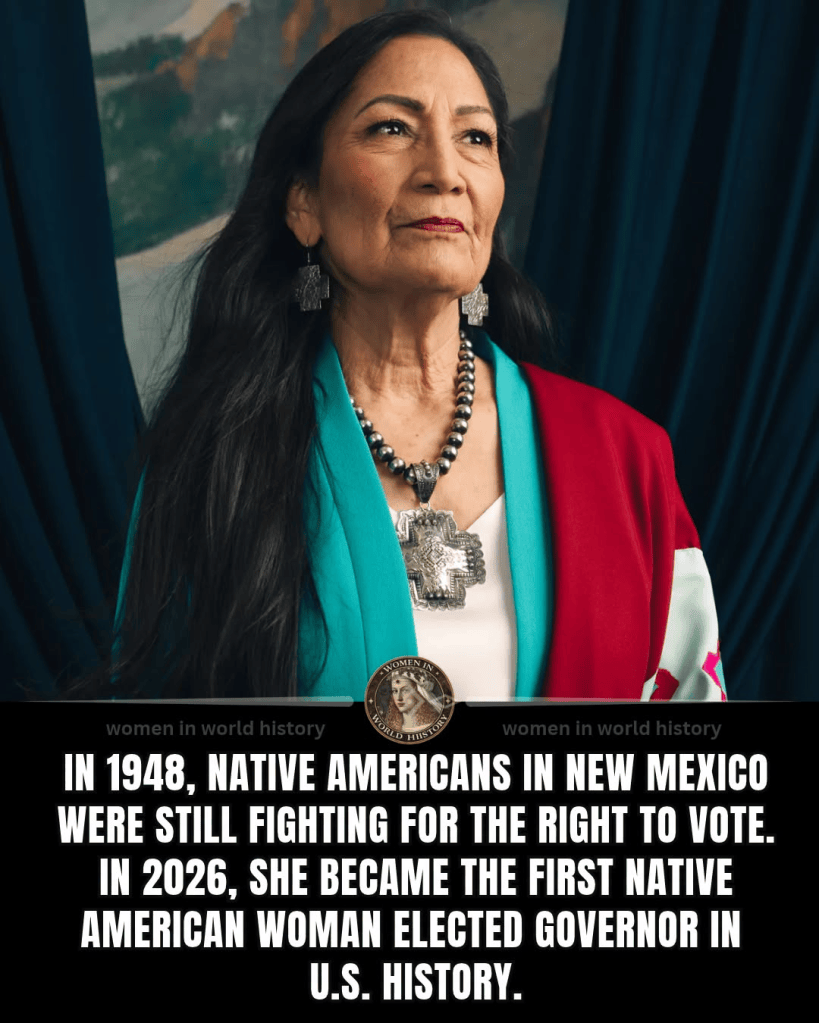
SANTA FE, New Mexico — Seventy-eight years ago, Native Americans in New Mexico were still fighting for the right to vote. Last night, a Native American woman was elected to lead the entire state.
Her name is Deb Haaland. And her journey to becoming the first Native American woman elected governor in United States history is extraordinary.
A Life Forged in Struggle
Haaland is 65 years old, a member of Laguna Pueblo, a mother, a grandmother, and a woman who knows what it means to struggle. Before Washington, before Congress, before making history, she was a single mother trying to keep food on the table.
She relied on food stamps. She lived paycheck to paycheck. At times, she and her child had no permanent home, staying with relatives or sleeping on friends’ couches. She went back to college at 28, graduated while nine months pregnant, and later earned a law degree. She sold homemade salsa to support her family.
And she kept going.
A Trail of Firsts
In 2018, she became one of the first two Native American women elected to Congress. In 2021, she became the first Native American to serve as a United States Cabinet secretary. As Secretary of the Interior, she confronted one of America’s darkest chapters: the government-run system of boarding schools that separated Indigenous children from their families, languages, and cultures.
This history was personal. Her own grandmother had been taken from home as a child and sent to one of those schools.
November 3, 2026: A Historic Night
During National Native American Heritage Month, voters in New Mexico elected Haaland as their next governor. For generations, Indigenous people had been denied political rights in a land their ancestors inhabited long before the United States existed. Haaland describes herself as a 35th-generation New Mexican.
Standing before a cheering crowd last night, she spoke about being a single mother, overcoming poverty, and working toward a future she once could scarcely have imagined.
“Here in New Mexico, we can do anything,” she said. “And I know this because I am living proof.”
From Struggle to Leadership
A woman who once struggled to afford groceries will now lead a state of more than two million people. Her victory is not merely a personal triumph—it is a milestone in the long, unfinished struggle for Indigenous political rights in the United States. It comes in a state where, less than eight decades ago, Native Americans were still denied the ballot.
Haaland’s story is one of resilience, determination, and the refusal to accept the limits that poverty and circumstance impose. She did not inherit power; she built it from the ground up, one step at a time, while raising a child, earning degrees, and selling salsa to make ends meet.
A Symbol of What Is Possible
Her election sends a message that resonates far beyond New Mexico. It speaks to single mothers, to Native communities, to anyone who has ever been told that the odds are too great. Haaland’s life is proof that the distance between struggle and leadership is not as vast as it sometimes seems—and that the people who have lived through hardship often make the most committed public servants.
As she takes office, Haaland will carry with her the experiences of a life lived on the margins and the perspective of a people who have endured centuries of dispossession. Her governorship will be watched closely—not only for what she does, but for what she represents.
A Historic First
Her name is Deb Haaland. And on November 3, 2026, she made American history.
Deb Haaland — Governor-elect of New Mexico. First Native American woman elected governor in United States history. A 35th-generation New Mexican. Living proof.

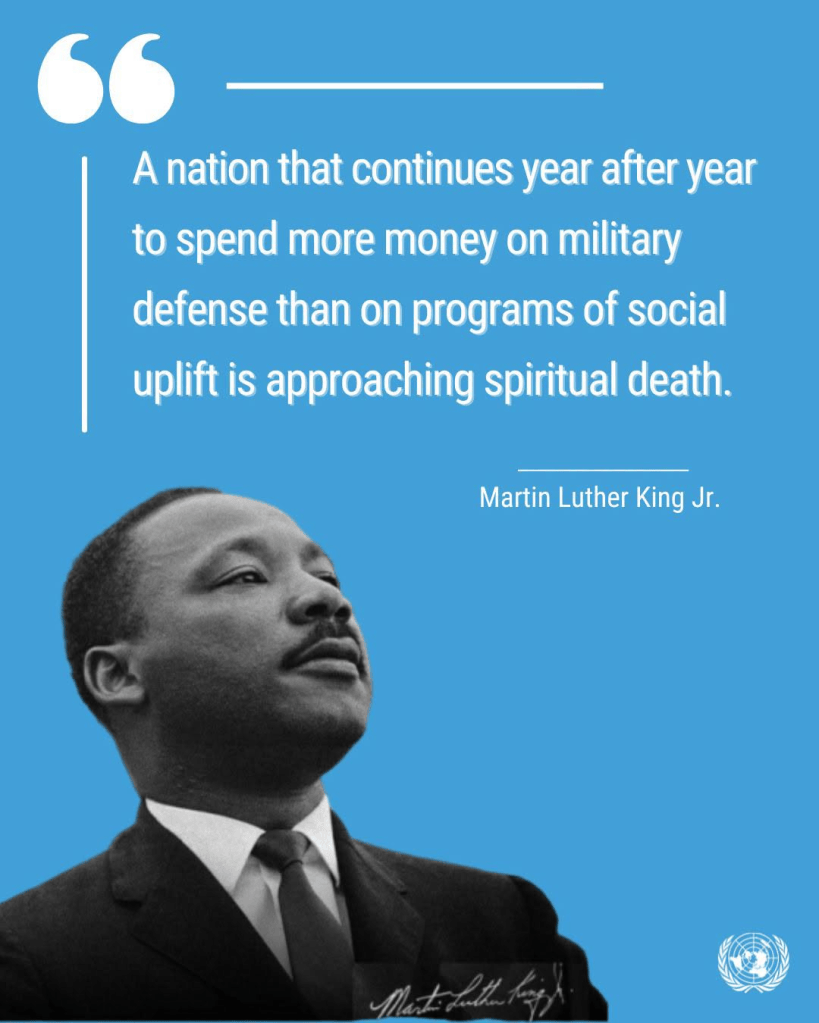
“A Nation Approaching Spiritual Death”: MLK’s Warning and the Moral Case for Social Justice Over Military Spending
By Dhabessa Wakjira
More than half a century after his death, Martin Luther King Jr.’s words continue to cut through the noise of political debate with unsettling clarity. “A nation that continues year after year to spend more money on military defense than on programs of social uplift is approaching spiritual death,” King declared in 1967, in a speech that would prove to be one of his most prophetic. His message reminds us that building peace through social justice is not a policy preference—it is a moral responsibility.
The Context of a Prophetic Warning
King spoke these words at a moment of profound national tension. The United States was deep in the Vietnam War, spending billions on military operations abroad while poverty, inequality, and racial injustice continued to ravage communities at home. King had come to see the connection between the two—what he called the “giant triplets of racism, extreme materialism, and militarism.” For King, these were not separate problems but interlocking systems of oppression. A nation that could find endless resources for war but not for the poor was a nation that had lost its moral compass.
His warning was not merely about budgets. It was about priorities, values, and the soul of a nation. “Spiritual death” was King’s way of describing what happens when a society becomes so invested in violence and domination that it can no longer recognize the humanity of its own people—when the means of destruction are funded more generously than the means of life.
The Relevance Today
King’s words resonate with uncomfortable force in 2026. Global military spending has reached record levels, with nations around the world pouring trillions into defense budgets while social programs—education, healthcare, housing, and poverty alleviation—remain chronically underfunded. The gap between what societies spend on war and what they spend on peace is not merely a fiscal statistic; it is a moral indictment.
In Ethiopia and across the Horn of Africa, the consequences of this imbalance are visible. Resources that could be used to build schools, hospitals, and infrastructure are diverted to conflict. Communities that have suffered from war and displacement continue to wait for the “peace dividend” that never arrives. The lesson King articulated—that a nation cannot bombs its way to security while neglecting the well-being of its people—is as true today as it was in 1967.
Peace Through Social Justice
King’s message was not merely a critique of military spending; it was a vision of what true peace requires. “True peace is not merely the absence of tension; it is the presence of justice,” he famously said. Peace cannot be built on the backs of the poor, the marginalized, or the dispossessed. It requires a commitment to social uplift—to ensuring that all people have access to the basic conditions of a dignified life.
This is the moral responsibility that King’s words place before us. To build peace through social justice means to prioritize the well-being of communities over the projection of power. It means to invest in education, healthcare, and economic opportunity as seriously as nations invest in weapons. It means to recognize that the true measure of a society’s strength is not the size of its military but the quality of life it provides for its most vulnerable members.
A Call to Conscience
King’s warning is not a call to naivety. He understood that the world is dangerous and that nations must defend themselves. But he insisted that the pursuit of security through military means alone is self-defeating. A nation that continues to choose guns over butter, bombs over books, and war over welfare is not strong—it is slowly dying from the inside.
His words challenge us to ask uncomfortable questions: What are our true priorities? Who benefits from the current arrangement? And what would it take to build a society where the needs of the many are not sacrificed for the ambitions of the few?
Conclusion
Martin Luther King Jr.’s message is not a relic of the past. It is a living challenge to every generation. His warning about spiritual death is a reminder that the choices we make about how we spend our resources are not merely political decisions—they are moral ones. Building peace through social justice is not optional. It is our responsibility. And it is the only path to a future that honors the dignity of all people.
“A nation that continues year after year to spend more money on military defense than on programs of social uplift is approaching spiritual death.” — Martin Luther King Jr.






