Category Archives: Siinqee

A Milestone Achieved: The ABO Diaspora Structure Council Successfully Concludes
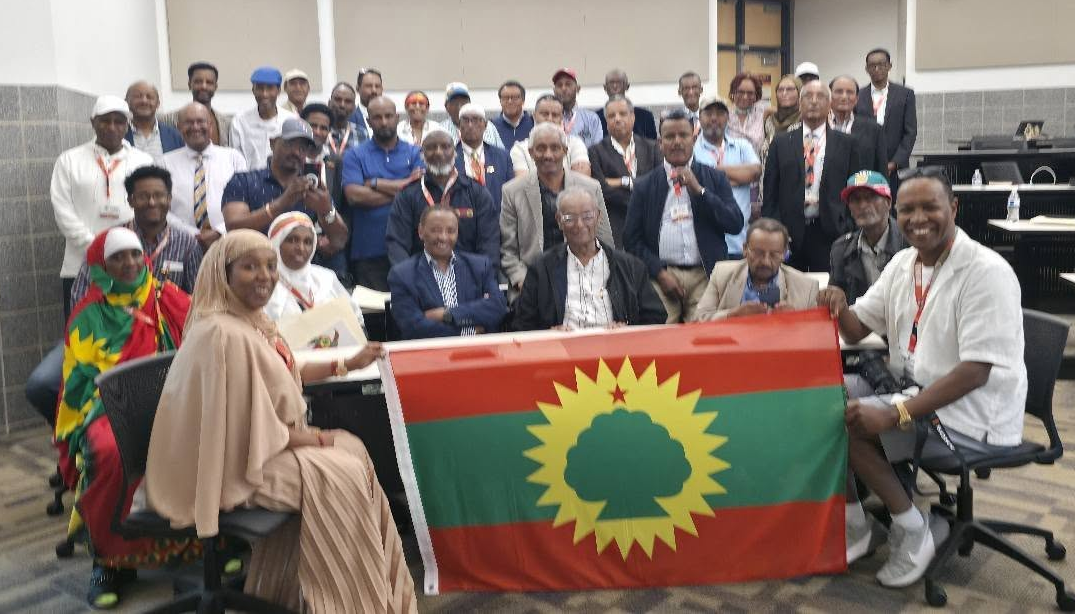
A Historic Gathering in Minneapolis Marks a New Chapter for the Oromo Liberation Front’s Global Organization
By Daandii Ragabaa
Minneapolis, MN — August 6, 2026
In a significant development for the Oromo liberation movement, the Korri Caasaa ABO Biyyoota Alaa —the Diaspora Structure Council of the Oromo Liberation Front (OLF/ABO)—has successfully concluded its proceedings. The event, held in Minneapolis, Minnesota, marks a pivotal moment in the organizational consolidation of the Oromo struggle beyond the borders of Oromia.
The council’s conclusion, announced on August 6, 2026, represents more than a routine organizational meeting. It signals the maturation of the diaspora as a structured, institutional pillar of the liberation movement—a recognition that the struggle for Oromo self-determination is not confined to the homeland but spans continents, uniting Oromo people wherever they reside.
Why Minneapolis? The Heart of the Oromo Diaspora
The choice of Minneapolis as the host city for this historic gathering is no accident. Over the past three decades, Minnesota has become a sanctuary and a springboard for Oromo activism, earning the affectionate title “Little Oromia” for hosting one of the largest Oromo populations outside of East Africa .
From the bustling neighborhoods of Minneapolis to the suburban cities of St. Paul, Oromo culture thrives—through language, music, faith, and political organization. Holding the Diaspora Structure Council here acknowledges the diaspora not as a distant bystander but as a vital pillar of the liberation project .
In this space, the past meets the present. Elders who witnessed the early days of the OLF sit alongside youth born in the West, forging an intergenerational bond that strengthens the movement’s resilience. It is a living classroom where history is taught, grievances are voiced, and hope is rekindled .
The Significance of Institutional Strength
The successful conclusion of the Diaspora Structure Council underscores a central theme that has emerged in the Oromo movement’s recent history: the strength of the institution.
As emphasized at the Oromo New Year celebrations in Edmonton, the focus is increasingly on “jabeenya jaarmiyaa”—the strength of the institution . This represents a mature evolution in diaspora political consciousness: the understanding that liberation requires not just passion or grievance, but organizational resilience, strategic continuity, and the mechanisms required to sustain a movement across decades and continents .
The Diaspora Structure Council’s work, meticulously prepared and executed, was itself a direct, tangible contribution to the struggle. It ensured that “deeggarsii fi tumsi qabsoo bilisummaa akka itti fufiinsa argatu”—that “support and sustenance for the freedom struggle continues to receive continuity” .
The OLF/ABO’s Vision: Building Oromia Without Borders
The successful conclusion of this council aligns with the broader vision of the OLF/ABO leadership, who have consistently emphasized that the work of building Oromia extends beyond Ethiopia’s borders.
As senior OLF leader Jaal Abdii Raggaasaa stated at a February 2026 consultative meeting in Gullallee: “Our foundational organizing must begin at the grassroots level, starting from the village” . This principle applies equally to the diaspora. Wherever Oromos reside—in the villages of Oromia, the refugee camps of Kenya, the community centers of North America and Europe—the work of building Oromo consciousness, organization, and national identity continues .
The council’s successful conclusion demonstrates that the diaspora is not merely a source of financial support or cultural preservation. It is an active, organized, and strategic component of the liberation project.
A Foundation of Truth and Integrity
Throughout its proceedings, the Diaspora Structure Council was guided by the principles that have defined the OLF/ABO’s decades-long struggle. As Abdii Raggaasaa declared: “If we are people of truth, our people will never abandon us under any circumstances. But if we are people of falsehood, even if we hold something, we will lose it” .
This commitment to truth and integrity was central to the council’s work. The diaspora structure is not built on empty rhetoric or political opportunism. It is built on the sacrifice of generations—on the “struggle of blood and bone” that has defined the Oromo liberation movement .
The Cry That Echoes: IUOf!
As the Diaspora Structure Council concluded its work, the hall undoubtedly echoed with the rallying cry that unites Oromo people across continents: “IUOf!” —Victory to the Oromo people .
The abbreviation, derived from the Oromo phrase for victory, resonates across generations, declaring the unshakable belief in the Oromo nation’s future . It is a cry that has been heard in the hidden clearings of Oromia, in the community halls of the diaspora, and now, in the organized structures of the OLF/ABO abroad.
A New Chapter: Consistency and Determination
The flyer circulating for the conclusion of the Diaspora Structure Council carried a powerful mantra: “As always, consistency and determination remain the foundation of lasting progress and success” .
These words are not empty rhetoric. In the long and often brutal struggle for Oromo self-determination, fads and fleeting passions have no place. What sustains the movement is the dogged, day-in and day-out commitment of a people who refuse to be erased. The successful conclusion of the Diaspora Structure Council is the embodiment of this ethic—a ritual of endurance, a moment to recalibrate, to reaffirm, and to recommit .
Consistency means showing up, year after year, regardless of the political winds. Determination means turning setbacks into stepping stones. The OLF/ABO has weathered imprisonment, exile, and state-sponsored repression, yet here it stands, its diaspora structure organized and functioning in the heart of America. That is the quiet power of persistence .
Looking Forward: The Seventh Round and Beyond
The successful conclusion of the Diaspora Structure Council arrives at a crucial moment. As the OLF/ABO prepares for the upcoming 7th round elections, the diaspora structure will play a vital role in mobilization, advocacy, and organizational strengthening .
The council’s work ensures that the diaspora is not a passive observer of political developments in Oromia but an active participant. As one OLF official stated: “OLF is the center of Oromo peace” . The diaspora structure, now successfully organized and concluded, extends that center across the globe.
Conclusion: A Milestone, Not an End
The conclusion of the Korri Caasaa ABO Biyyoota Alaa is not an end but a beginning. It marks the formalization of a structure that will continue to serve the Oromo people’s aspirations for self-determination, dignity, and democratic rights.
As participants departed Minneapolis, the message was clear: the diaspora is organized, the structure is in place, and the work continues. The struggle for Oromo liberation is not confined to the homeland—it is a global movement, sustained by a global community, guided by a global organization.
ABO haa waaru!
Injifannoon Ummata Oromoo!
Korri Caasaa ABO Biyyoota Alaa
Milkiin Xumurameera
Hag. 08/06/2026
Minneapolis, MN
This feature article is dedicated to all those who built the diaspora structures of the Oromo Liberation Front—from the founders to the newest members—and to the generations yet to come who will carry forward the torch of liberation.

The Architects of Tomorrow: The Role of Oromo Youth in Building Oromia
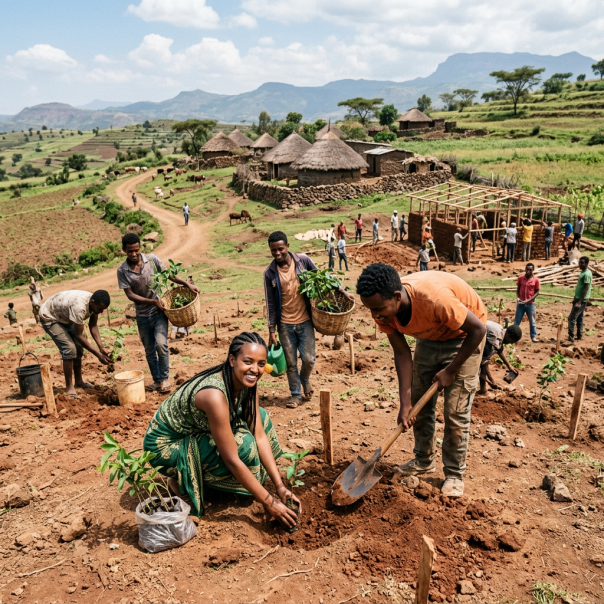
In the sweeping highlands of Oromia, beneath a sky that has witnessed centuries of both triumph and turmoil, a quiet but powerful transformation is taking root. It is not being driven by politicians in distant capitals, nor by the decrees of aging elders alone. Instead, it is being shaped by the hands, minds, and unyielding spirits of the young—the Qeerroo (young men) and Qarree (young women) of Oromia.
For generations, Oromo youth have been the backbone of their nation’s resistance. Today, however, they are stepping into a new role: not merely as protesters against oppression, but as architects of a new Oromia. They are builders of infrastructure, pioneers of technology, guardians of culture, and the driving force behind a national renaissance that is redefining what it means to be Oromo in the 21st century.
A Legacy of Resistance, A Future of Building
The term Qeerroo traditionally described an unmarried young man, but over the past decade, it has evolved into a powerful symbol of generational awakening. The Oromo youth political movement, which gained significant momentum between 2014 and 2018, was driven by deep-seated concerns: youth unemployment, the consequences of rapid urbanization, and a profound sense of marginalization. They were excluded from a rural future through land grabbing and population growth, and equally shut out from a modernist development that unequally distributed the fruits of economic growth.
Yet, frustration has given way to construction. As Minister Deetan, speaking at a youth forum in Bole Sub-City, recently affirmed, the role of young people in nation-building is paramount. The youth are no longer waiting for change to be handed to them; they are actively shaping it. “Dargaggoonni jijjiiramni siyaasaa biyya keenyatti akka dhufu taasisuu qofa osoo hin taanee, jijjiiraamichi qormaatawwan hedduu keessa darbee milkaa’inoota hedduu akka galmeessuuf gahee isaan irraa eegamu bahachaa jira” (The youth are not only bringing political change but are expected to register many successes through numerous challenges).
Pillars of Unity and National Cohesion
One of the most significant contributions of Oromo youth has been their role in fostering national unity and building a cohesive Ethiopian identity. For too long, young people were confined to their regional identities, but this is changing. Minister of Peace Binnaalif Andu’aleem has emphasized that young people have a duty to participate in building the country and fostering national consensus.
Through a new national volunteer service program, youth from various universities—armed with diverse skills—are being deployed across the country to serve communities beyond their own regions. This initiative is breaking down regional barriers and forging a sense of shared destiny. As Minister Andu’aleem noted, for the past 30 years, Ethiopia’s political landscape focused more on division than unity. Today’s youth are actively reversing that trend, stepping out of their regional silos to build a unified national identity through service and collaboration.
The Economic Engine: Creating Dignified Work
Perhaps nowhere is the youth’s impact more visible than in the economic sphere. The challenge of unemployment has been a primary driver of youth activism, but it has also sparked a wave of entrepreneurial and employment initiatives.
The Agricultural Dignified Employment for Youth (ADEY) Program, funded by the Mastercard Foundation and implemented in partnership with organizations like HUNDEE, aims to create 611,000 dignified jobs for youth—80% of them women—across eight Ethiopian regional states, including Oromia. This is not just about filling positions; it is about creating meaningful, dignified livelihoods that empower young people to build their futures with pride.
In addition, massive industrial projects, such as the Busa Gonofa Oromia Integrated Food Industry, are being launched with a clear focus on generating large-scale employment for the youth. These initiatives represent a fundamental shift: the recognition that the nation’s economic future rests squarely on the shoulders of its young population.
The Classroom and the Laboratory: Building Minds
Education is the cornerstone of any nation’s development, and Oromo youth are at the forefront of a revolution in learning. In a powerful act of giving back, world-renowned Oromo scientist Professor Gabbisaa Ejjetaa funded and built the “Mootuu Ayyaanoo Secondary School” in his hometown of Oolankomii, naming it after his late mother. “This is not just a building; it is a beacon of hope,” said one elder at the inauguration. The school is a testament to the idea that true development begins with education and that the youth must be empowered through rigorous academics grounded in cultural identity.
Furthermore, the establishment of the Shaggar Institute of Technology (SIT) in Oromia marks a monumental leap forward. This new institution is dedicated to training elite students in cutting-edge fields such as Space Science, Artificial Intelligence, Nuclear Science, Biotechnology, and various engineering disciplines. The institute, built with a multi-billion birr budget, is designed to produce a generation of Oromo and Ethiopian youth capable of competing on the global stage.
A Cultural Renaissance: Reclaiming Identity
Beyond politics and economics, Oromo youth are leading a profound cultural renaissance. Across Oromia, young people are reclaiming their names, their language, and their heritage with a pride that their parents could scarcely have imagined.
They are celebrating Irreechaa, the ancient Oromo thanksgiving festival, not just as a religious ritual but as a powerful assertion of national identity. The festival serves as a vital platform for youth engagement and community identity. Young people are also at the forefront of efforts to have Irreechaa recognized by UNESCO as a world heritage, ensuring its preservation for future generations.
This cultural awakening extends to the digital realm as well. Young Oromo innovators are developing learning platforms in Afaan Oromoo, and initiatives like the “Gadaa Eco Builder” game are using interactive play to teach the UNESCO-recognized Oromo Gadaa system while funding real-world reforestation in Oromia. The youth are ensuring that their culture is not a relic of the past but a living, breathing force for the future.
The Challenges Ahead
Despite these remarkable contributions, the path forward is not without obstacles. Many Oromo youth still face significant challenges: educated unemployment, landlessness, and the persistent pull of migration, both internal and international. Research shows that youth in Oromia often migrate to larger towns or even abroad in search of better opportunities.
The government and various organizations are actively working to address these issues through economic empowerment projects, skills development, and job creation programs. However, the scale of the challenge requires sustained effort and a continued commitment to placing youth at the center of the development agenda.
Conclusion: The Architects of Tomorrow
The Oromo youth of today are not waiting for a future to be given to them; they are building it with their own hands. They are engineers building infrastructure, entrepreneurs creating jobs, scientists pushing the boundaries of knowledge, and cultural guardians preserving their heritage.
As Minister of Culture and Sport Nafiisaa Almahaadii recently stated, “Dargaggoonni birmadummaa fi tokkummaa biyyaasaanii eegsisuuf ejjennoo waliinii qabachuu qaban” (Youth must have a unified stance to protect the freedom and unity of their country).
From the battlefields of political struggle to the classrooms of cutting-edge institutes, from the economic hubs of industry to the spiritual grounds of Irreechaa, the youth of Oromia are proving that they are not just the leaders of tomorrow—they are the architects of today.
The foundation they are laying now will determine the shape of Oromia for generations to come. And if their current trajectory is any indication, that future is bright, resilient, and undeniably Oromo.
S

Four Decades of Scholarship, One Enduring Legacy: The Oromo Studies Association at 40

From Exile to Global Recognition — How a Diaspora Institution Reclaimed a People’s History
By Dhabessa Wakjira
The year was 1986. In meeting rooms scattered across the diaspora, in the United States and Europe, a small group of Oromo and non-Oromo scholars gathered with a radical idea . They would build an independent academic home for the study of a people whose history, culture, and very existence had been systematically erased from mainstream scholarship. They would create a space where knowledge about the Oromo could be produced not by outsiders, but on its own terms.
They called it the Oromo Studies Association .
Four decades later, that audacious dream has become something far greater than its founders could have imagined. As the OSA marks its 40th anniversary in 2026, it stands as a global scholarly community spanning continents and disciplines—a testament to the power of knowledge as a form of justice.
The Birth of a Movement: Founding in Exile
The OSA was not born in a vacuum. It was founded in direct response to a crackdown that had led to those campaigning for greater recognition of the Oromo people being murdered, tortured, jailed, or driven out of the country. The founding was a response to a void—a void in which Oromo heritage was not merely absent from academia and state narratives but actively suppressed.
Under successive Ethiopian regimes, the Oromo—despite being the largest ethnolinguistic group in Ethiopia, numbering over 40 million people across the Horn of Africa—were systematically marginalized. They were deprived of their expropriated lands, their freedom through enslavement, their identity, and even the right to speak their own language. In Ethiopia, the history of the Oromo people was effectively written out of the national narrative.
Among the founders was Sisai Ibssa, a scholar-activist whose intellectual journey shaped the trajectory of Oromo studies for decades. Reflecting on the early days, one founding figure recalled attending an international Oromo conference in Berlin in 1984—”It was then that we started to think about organizing an Oromo studies association. A few years later, OSA was formally organized” .
Another towering figure was Professor Asmarom Legesse, whose landmark work Gada: Three Approaches to the Study of African Society (1973) brought the Oromo democratic system to international scholarly attention. Legesse passed away on January 31, 2026, just weeks before OSA’s 40th anniversary year—a loss deeply felt by the community he helped build.
A Full Gadaa Cycle: 40 Years of Scholarship
In Oromo tradition, the Gadaa system operates on eight-year cycles, with a full generational transition spanning forty years. This year’s anniversary is therefore not merely a milestone—it is a symbolic completion of a full Gadaa cycle, representing generational renewal, continuity, and the orderly transfer of knowledge and responsibility.
The OSA’s work over these four decades has been nothing short of transformative:
Before OSA, Oromo heritage was systematically erased. The Oromo language, Afaan Oromoo—the third most widely spoken language in Africa—was banned in schools and public life until 1992, and students were punished for speaking it or using Oromo names. A state ideology of “Ethiopianism” promoted Orthodox Christianity, the Amharic language, and Abyssinian culture as the sole legitimate national identity.
After four decades of OSA scholarship, the Oromo Gadaa system—a millennia-old democratic governance structure based on generational age sets, egalitarian principles, and rotating leadership—has been recognized by UNESCO as part of the Intangible Cultural Heritage of Humanity . Oromo studies is now a respected field in global academia. And the Journal of Oromo Studies, launched in 1993, has been indexed in Scopus—one of the world’s most prestigious academic databases.
The Journal of Oromo Studies: A Dream Come True
When the first issue of the Journal of Oromo Studies rolled off the presses in the summer of 1993, it was described as “a dream come true” . For scholars who had labored in obscurity, publishing in venues that often dismissed or distorted Oromo realities, the Journal offered something revolutionary: a platform where Oromo scholarship could stand on its own.
The first volume featured foundational essays by scholars like Asafa Jalata, whose work on “The Oromo, Change and Continuity in Ethiopian Politics” helped define the contours of a new field . Over the decades that followed, the Journal would publish research on everything from the Gadaa system to diaspora studies, from economic development to cultural preservation, from historical linguistics to contemporary politics.
Now fully open-access, the Journal publishes articles, research notes, and scholarly book reviews in both English and Afaan Oromoo, welcoming contributions from emerging and established scholars alike . The Journal’s entire archive—decades of scholarship—is now posted to the OSA website, making it available to anyone with an internet connection.
In June 2026, Scopus announced the addition of 242 new journals to its prestigious index. Among them was the Journal of Oromo Studies. For those unfamiliar with the world of academic publishing, Scopus indexing is the gold standard. It places JOS alongside publications from Springer, Elsevier, Wiley, and Cambridge University Press.
As Bonnie Holcomb, the Journal’s Editor-in-Chief, wrote to contributors and advisors: “This publication, and the indexing in Scopus, are notable achievements, all. We have come a long way together” .
Reclaiming Oromummaa: The Core of the Mission
Central to OSA’s four-decade effort is the concept of Oromummaa—a term embodying the collective values, institutions, and worldview of the Oromo people. Once dismissed, Oromummaa has been meticulously restored by OSA scholars through research that has redrawn the map of Horn of Africa studies.
The OSA’s scholarship has focused on three core institutions of Oromo indigenous democracy:
- The Gadaa System: A complex socio-political system featuring an eight-year leadership cycle, checks and balances, and principles of accountability and rule of law. Its global significance was recognized by UNESCO in 2016.
- Siinqee (Siiqee): A women’s institution that ensures gender balance and social justice .
- The Qaalluu: The spiritual authority maintaining harmony between society, nature, and the spiritual realm.
Together, these institutions embody values of democracy, peace (nagaa), and ecological stewardship that OSA argues offer lessons of “global relevance”.
Breaking the Silence: OSA in the Diaspora
For many years, the OSA could not hold its annual meetings on home ground. Meetings were held in the diaspora, usually in the United States. The Association promoted research and scholarship across the full range of Oromo studies, but the doors of Ethiopia remained closed.
Under successive regimes, protesting Oromo people were increasingly subject to widespread repression, arbitrary arrests, detention without charge, enforced disappearance, torture, and even death . Like all authoritarian regimes, the authorities sought to silence protesters, initially targeting intellectuals, journalists, and students. All exiles, international commentators, media representatives, and human rights movements were denied entry to the country—including the OSA.
The most significant change came in 2018 with the election of Dr. Abiy Ahmed, himself an Oromo, to the position of Prime Minister of Ethiopia. As one scholar observed: “He opened the doors of Ethiopia to the Oromo in exile, some of whom had not seen their homeland for 40 years or more, and whose children had never been allowed to set foot on Ethiopian soil“. Even the Oromo Liberation Front operatives were given the green light to fly back into the country.
The 2026 Conference: Honoring the Past, Investing in the Future
The OSA’s 40th Annual Conference, themed “Oromo on the Global Landscape: Honoring Asmarom Legesse as OSA Turns 40,” will be held July 31 – August 2, 2026, in Minneapolis, Minnesota .
The conference will bring together scholars, researchers, students, and community members from across the diaspora and the continent for three days of panels, roundtables, keynote addresses, and community dialogue . It will feature diaspora-connected parallel panels abroad, reflecting the conference’s commitment to centring Oromo communities wherever they are.
An opening night celebration will be held on Friday evening, July 31, at the Oromo Community Centre in Saint Paul—an evening of inspiration, culture, and community, featuring video greetings from former OSA presidents, cultural dance performances, live cultural music, and a delicious meal catered by Dilla Restaurant.
Challenges and the Road Ahead
This hard-won scholarly recognition is not without its challenges. The OSA has warned of “renewed attacks on Oromo scholars and scholarship” from actors seeking to “restore inequitable power relations” . These attacks have evolved from formal complaints accusing scholars of “hate speech” to coordinated social media campaigns that vilify Oromummaa itself as a dangerous ideology.
The OSA’s statement declares: “These attacks do not represent scholarly debate grounded in evidence. Rather, they reflect a politicized rejection of any scholarship that challenges centralized authoritarian narratives” . It draws a stark warning: “History demonstrates that vilification of a people’s identity is often a precursor to mass violence”.
Despite these challenges, the OSA remains committed to its mission. As the Association’s “Who We Are” page states: “We believe that knowledge is a form of justice“.
Conclusion: A Legacy Worth Celebrating
Forty years ago, a small group of exiled scholars dared to imagine a world in which Oromo knowledge was recognized as a contribution to the full breadth of human civilization. Today, that vision is reality .
The Journal of Oromo Studies, indexed in Scopus, stands as a monument to their courage and their persistence. The annual conference, now in its 40th year, brings together a global community of scholars and advocates. The website, with its full open-access archive, makes decades of scholarship available to anyone with an internet connection.
As Bonnie Holcomb wrote, with warmth that reflects decades of dedication: “Congratulations, one and all“.
The celebration is earned. The legacy is enduring. And the work continues.
The 40th Annual Conference of the Oromo Studies Association
July 31 – August 2, 2026
Augsburg University, Hagfors Center
Minneapolis, Minnesota
Details at www.oromostudies.org
Injifannoon Ummata Oromoo!
OSA haa jabaattu!
Four decades of scholarship, community, and the enduring pursuit of justice for the Oromo people.

A Line Crossed: Ambassador Suleiman Dedefo Warns of Eritrea’s Grave Violation of Ethiopian Sovereignty
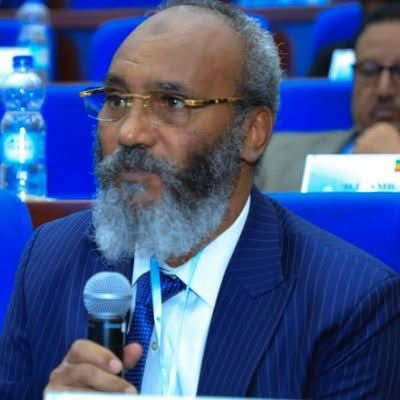
In the volatile landscape of the Horn of Africa, where alliances shift like desert sands and the embers of conflict never fully cool, a stark warning has been issued. Ambassador Suleiman Dedefo, Ethiopia’s top diplomat, has leveled a serious accusation against Eritrea: that it has committed a “grave violation” of Ethiopia’s sovereignty by sending an armed military delegation across their internationally recognized border into the Tigray region—without the consent of the Ethiopian government.
A Breach of Sovereign Borders
According to Ambassador Dedefo, Eritrea’s military delegation did not merely cross into Ethiopian territory; it was received by forces engaged in active military confrontation with the Ethiopian government—a “gang group” aligned with the Tigray People’s Liberation Front (TPLF). This, he argues, constitutes a direct and reckless act of alliance with a group waging war against Ethiopia.
“It is highly unusual and contrary to established principles of international law for an armed military delegation to cross the internationally recognized border of another sovereign state without the consent of its government,” Ambassador Dedefo stated, framing the incursion not as a diplomatic misstep but as a fundamental breach of the rules that govern relations between sovereign nations.
The Legal Framework: A Violation of the UN Charter
The Ambassador’s words carry the weight of international jurisprudence. Under the United Nations Charter and customary international law, the territorial integrity and political independence of sovereign states are inviolable. An armed incursion by one state into another, particularly to support an armed group hostile to the host government, is widely recognized as an act of aggression.
By receiving Eritrea’s military delegation in territory it does not control, the TPLF-aligned forces have, in Ambassador Dedefo’s view, effectively made Eritrea a party to the conflict. “This amounts to joining the war that TPLF is waging on Ethiopia,” he declared. Such an action erases any pretense of Eritrea acting as a neutral observer or a humanitarian partner—it positions Asmara as a belligerent.
A Reckless Alliance
The implications extend far beyond the battlefield. Ambassador Dedefo characterized Eritrea’s move as a “reckless act of alliance with a mercenary group” that jeopardizes not only Ethiopia’s sovereignty but also the stability of the entire region. In the Horn of Africa, where borders remain contested and historical grievances run deep, an act of this nature threatens to unravel the fragile peace.
By aligning with a group that the Ethiopian government has designated as hostile, Eritrea is gambling with regional security. The message sent to other nations in the region is deeply troubling: that borders can be crossed with impunity, and that external actors may choose sides in a neighbor’s internal conflict without consequence.
The Right to Self-Defense
Perhaps the most significant portion of Ambassador Dedefo’s statement is his assertion regarding Ethiopia’s legal recourse. “Such actions may give rise to Ethiopia’s rights under international law, including those recognized by the UN Charter,” he noted. He went further, stating unequivocally that “Eritrea becomes a legitimate target for any action that Ethiopia could take in self defense”.
This is not merely diplomatic rhetoric. Article 51 of the UN Charter enshrines the “inherent right of individual or collective self-defence if an armed attack occurs.” By framing Eritrea’s actions as an armed incursion in support of a hostile force, Ambassador Dedefo has laid the groundwork for a potential Ethiopian military response—one that would be legally justified under international law.
The Broader Context
Ambassador Suleiman Dedefo is no stranger to the complexities of Ethiopian diplomacy. Having served as Ethiopia’s ambassador to the United Arab Emirates and later as its top envoy to Somalia, he has been at the center of some of the region’s most sensitive negotiations. He has previously warned of external forces creating “political and strategic challenges” to Ethiopian interests and has been a vocal critic of those who threaten the nation’s sovereignty.
His latest warning comes at a time of heightened tensions in the Horn of Africa. Ethiopian Prime Minister Abiy Ahmed has spoken of “correcting” the historic loss of Red Sea access, a statement that has drawn sharp criticism from Eritrea. Meanwhile, Egypt has deployed troops to Somalia, further complicating an already fraught regional dynamic. Into this cauldron of competing interests, Eritrea’s alleged military incursion adds a volatile new element.
A Line That Cannot Be Uncrosed
Ambassador Dedefo’s words are a clear signal: Ethiopia views Eritrea’s actions as an act of war. Whether this leads to direct military confrontation between the two neighbors remains to be seen. What is certain is that the diplomatic landscape of the Horn of Africa has shifted.
The international community now faces a critical test. Will it condemn Eritrea’s violation of Ethiopian sovereignty and call for de-escalation? Or will it remain silent, allowing the precedent of armed incursion to take root? Ambassador Dedefo has drawn a line in the sand—a line that, once crossed, may prove impossible to uncross.
As the region holds its breath, one thing is clear: the principle of sovereign borders, hard-won over centuries of international law and diplomacy, hangs in the balance. And Ethiopia, through the voice of its ambassador, has made it known that it will not stand idly by while that principle is trampled.

The Tenth Anniversary of the Grand Oromo Rally: A Defining Moment in the Struggle for Justice
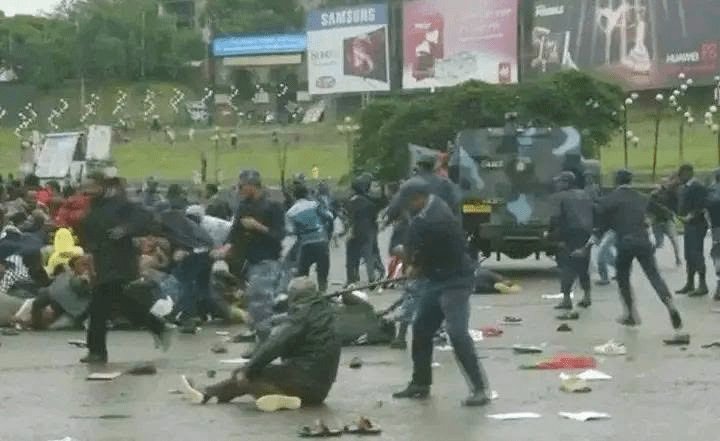
Remembering August 6, 2016, and Its Enduring Legacy for Unity, Identity, and Transformation
By Daandii Ragabaa
When a people understand their history correctly, they are able to learn from past mistakes, draw strength from previous achievements, and chart a clearer course for the future. History is not merely a record of what has passed—it is a compass for what lies ahead. It is a teacher, a witness, and a foundation upon which the dreams of generations are built.
For this reason, the commemoration of the Grand Oromo Rally of August 6, 2016, occupies a significant and sacred place in the history of the Oromo struggle. It is not simply a date on a calendar. It is a milestone, a turning point, and a testament to the power of collective action. As the tenth anniversary approaches, it is time to reflect deeply on what that day meant, what it achieved, and what it continues to teach us today.
A Day That Shook the Nation
The Grand Oromo Rally of August 2016 was not a spontaneous outburst of anger. It was the culmination of years of sustained public mobilization—a peaceful yet powerful resistance against decades of systemic oppression, marginalization, and denial of basic rights. It was one of the largest and most widely recognized demonstrations ever organized across Oromia, drawing participation from every corner of the region.
What made this rally extraordinary was its sheer scale and simultaneity. On that day, Oromo people from all walks of life—young and old, men and women, urban and rural, educated and uneducated—rose together as one. They filled the streets not with weapons, but with voices. They carried not arms, but banners of justice. They demanded not revenge, but recognition.
The world watched. International media covered the events. Global human rights organizations took notice. The Oromo people, long silenced and ignored, had made their voices heard in a way that could no longer be dismissed. The rally became one of the most significant events to attract international attention to the Oromo cause.
More Than a Protest: A Turning Point in History
Although different perspectives exist regarding its causes, results, processes, and consequences, the Grand Oromo Rally is widely regarded as a defining event in both the political history of the Oromo movement and the modern political history of Ethiopia.
It was a moment when the Oromo people declared, with unmistakable clarity, that they would no longer accept invisibility. They would no longer accept the theft of their land. They would no longer accept the denial of their language, culture, and identity. They would no longer accept a political system that treated them as second-class citizens in their own homeland.
The events of that day laid an important foundation for the political changes that unfolded in 2018. The rally was a catalyst—a spark that ignited a broader movement for reform across the country. It demonstrated that when a people are united and determined, even the most entrenched systems of power can be challenged. It showed that peaceful resistance, when organized and sustained, can produce real change.
The Tenth Anniversary: More Than Remembrance
The tenth anniversary of the Grand Oromo Rally is more than a remembrance of a historical event. It is an opportunity—a vital and necessary opportunity—to learn from history, to recognize that today’s achievements were not attained easily, and to appreciate the value of unity and collective strength.
This commemoration serves multiple purposes:
First, it reinforces social cohesion. When a people gather to remember a shared struggle, they affirm their bonds to one another. They recognize that they are part of something larger than themselves.
Second, it educates younger generations. Many of those who will mark this anniversary were too young to participate in the events of 2016—or were not yet born. They must learn what happened, why it happened, and what it means for their future. The history of the Oromo struggle must not be forgotten, distorted, or erased.
Third, it creates space for constructive dialogue. Commemorations should not be occasions for division or recrimination. They should be opportunities for thoughtful discussion about addressing present and future challenges, for examining both achievements and shortcomings, and for building a peaceful, inclusive, and prosperous future.
The Power of Collective Participation
One of the defining characteristics of the Grand Oromo Rally was the remarkable level of collective public participation in confronting oppression. Regardless of age, gender, social status, or place of residence, Oromo people united at the same moment and participated in the historic protest with determination, shared purpose, and a strong sense of solidarity.
The enduring lesson from that experience is clear: unity is our greatest strength.
Standing together around common goals and shared interests, strengthening collective unity, building public trust, and fostering strong social bonds are essential for overcoming complex challenges. The rally taught us that dialogue and coordination play indispensable roles in achieving change.
However, sustaining unity requires effort. It requires respecting differences of opinion. It requires listening to one another. It requires maintaining continuous dialogue. Unity does not mean everyone must hold identical views. True unity means respecting differing opinions while working together toward common objectives. It means recognizing that agreement on common goals can coexist with different views regarding the methods of achieving them.
Lessons for the Present and Future
Political and social circumstances inevitably change over time. What worked yesterday may not work tomorrow. The challenges of today are not identical to those of 2016. Yet the lessons of that historic rally remain as relevant as ever.
Remembering our history helps us to avoid repeating past mistakes while preserving and building upon our strengths. It reminds us that:
- Difficult challenges are most effectively resolved through dialogue and mutual understanding.
- Agreement on common objectives can coexist with different views on methods.
- Differences of opinion should never be mistaken for hostility.
- Current generations must study the past through evidence-based research and objective historical inquiry.
The tenth anniversary is not an invitation to dwell in the past but to draw wisdom from it. It is a chance to critically examine both achievements and shortcomings, and to engage in thoughtful discussions about building a peaceful, inclusive, politically stable, and socially prosperous future.
Strengthening Identity and Social Solidarity
By remembering historic events such as the Grand Oromo Rally, the Oromo people strengthen both their collective identity and their social solidarity. Such remembrance plays a vital role in:
- Learning from history
- Honouring those who made sacrifices
- Preventing the repetition of past mistakes
- Passing historical knowledge to future generations
These commemorations should be inclusive of people with diverse viewpoints. They should promote mutual respect, reconciliation, and lasting peace within society. Although we may hold different political perspectives, sharing a common historical experience reminds us that unity remains essential both today and in addressing our common challenges in the future.
To sustain this spirit, it is important to continue commemorating collective events such as the Grand Rally every year. Annual commemoration ensures that the memory remains alive, that the lessons remain fresh, and that the unity forged in struggle remains strong.
A Call to Remember, Reflect, and Renew
As we approach the tenth anniversary of August 6, 2016, let us remember what that day meant. Let us honour those who stood firm in the face of oppression. Let us recognize the sacrifices that were made—the lives lost, the freedoms curtailed, the dreams deferred. Let us also celebrate what was achieved: a renewed sense of identity, a strengthened movement for justice, and a foundation for the political transformation that followed.
The commemoration of the Grand Oromo Rally should not merely be an occasion to remember the event. It should be an opportunity to draw lessons that strengthen unity, mutual trust, respect, and dialogue in order to address today’s and tomorrow’s challenges through peaceful means.
Above all, the greatest lesson it offers is the importance of working together toward shared goals and common interests, respecting differences of opinion, and learning from history to build a better future for all.
Conclusion: A Legacy for Generations
The Grand Oromo Rally of August 6, 2016, stands as one of the most remarkable demonstrations of broad-based Oromo public participation in history. It is remembered as an important foundation for the political transformation that followed in 2018. Its tenth anniversary is not just a date to mark on the calendar—it is a moment to reflect, to renew, and to recommit.
Therefore, commemorating the Grand Oromo Rally annually plays a vital role in strengthening Oromo identity, social cohesion, and unity while ensuring that an accurate understanding of history is passed on to future generations. It is through such remembrance that we honour the past, navigate the present, and build a future worthy of the sacrifices made.
The memory of August 6, 2016, lives on.
The spirit of unity endures.
The struggle for justice continues.
Oromo Qeerroo Union—forever united!
Gamtaa Qeerroo Oromoo—the strength of the people!
#Silencing_the_Gun_Among_Brothers
#Oromo_Qeerroo_Union
#Gamtaa_Qeerroo_Oromoo
August 6, 2026

Beyond the Direct Translation: Asebe Regassa’s Reflection on the True Meaning of Gabrummaa

By Maatii Sabaa
—
In the wake of a recent interview with Biqilaa Amanuu, a storm of interpretation has swept through Oromo intellectual circles. The subject? A word that carries the weight of centuries: gabrummaa.
To the casual observer, the translation seems straightforward. “Slavery.” “Enslavement.” A direct, uncomplicated rendering into English that fits neatly into Western frameworks of oppression. But as Asebe Regassa provocatively argues, this superficial translation does profound violence to the concept’s true meaning—and, more critically, misdirects our understanding of what the Oromo struggle has always been about.
The Misinterpretation That Misses the Mark
Following the interview, many commentators rushed to frame the discussion within a familiar narrative: Oromos were sold as slaves under Menelik’s system. They wrote it boldly, confidently, reducing a complex historical reality to a single, devastating equation. And while the historical record does indeed document the exploitation of Oromo peoples during that period, Regassa insists that this framing fundamentally misunderstands both the nature of the system and the nature of the resistance.
“The history is true,” Regassa acknowledges, “but the struggle against gabrummaa and the system of gabrummaa is not that.”
What Regassa identifies is a dangerous reductionism—the tendency of both scholars and activists to reach for the most emotionally resonant translation without interrogating whether that translation captures the full scope of what gabrummaa actually represents. The result, as he notes, has been confusion and controversy among those who engaged with the interview.
Unpacking the Concept: More Than Chains and Whips
So what does gabrummaa truly mean?
Regassa is unequivocal: “Gabrummaa does not mean enslavement/slavery. Enslavement is only a rough and direct translation.”
Instead, gabrummaa encompasses something far more systematic and insidious—”subjugation, servitude, and being kept under the yoke of oppression.” This is not merely a semantic distinction. It is a fundamental reorientation of how we understand both historical injustice and contemporary struggle.
Slavery implies a particular legal and social status—the ownership of one human being by another. It conjures images of chains, auctions, and plantations. But gabrummaa speaks to an entire architecture of domination: political, economic, cultural, and psychological. It is a system designed not merely to exploit but to subjugate, to render entire peoples subordinate through structures that penetrate every aspect of existence.
The General’s Vision: Dismantling the System
General Waaqoo Guutuu’s powerful declaration illuminates this distinction: “Gabrummaa iddaan buqqifna yoo dadhabne ilmaan itti guddifna”—”We shall dismantle gabrummaa at its place; if we fail, we shall raise our children upon it.”
When Regassa interprets this statement, he insists: the General was not speaking of ending slavery in the narrow sense. He was speaking of dismantling an oppressive system—a comprehensive project that requires nothing less than decolonizing the entire structure of power to emancipate the people from such subjugation.
This is a revolutionary vision, not a reformist one. It recognizes that gabrummaa is not a historical aberration or a set of discrete injustices that can be addressed piecemeal. It is a total system that demands total transformation. To merely end chattel slavery while leaving the underlying structures of subjugation intact would be to mistake the symptom for the disease.
The Intellectual Burden
Regassa’s reflection carries a pointed challenge for those who study Oromo history and society: “Warri ogbarruu Oromoo qorattanimmoo yaada itti kennaa, ulfaadhaa!”—”For those who study Oromo affairs, pay attention to this: it is weighty!”
The weight he speaks of is both intellectual and ethical. It is the burden of getting it right—of refusing the easy translation that flattens complexity, of resisting the temptation to map Oromo experience onto Western categories of oppression that may not fully apply. It is the responsibility of scholars and commentators to engage with the full richness of Oromo concepts rather than reducing them to the most convenient English equivalent.
This is not academic navel-gazing. The distinction between slavery and subjugation has real-world implications for how movements organize, how demands are articulated, and how the ultimate goals of liberation are conceived. A movement that aims only to end slavery might fight for legal reforms. A movement that aims to dismantle gabrummaa must fight to transform everything.
A Call for Deeper Engagement
Regassa’s intervention is ultimately a call for deeper engagement—with language, with history, and with the lived experience of Oromo people across generations. It is a reminder that the most powerful concepts resist easy translation, that the struggle for liberation is not served by reaching for the most familiar vocabulary but by insisting on the specificity and integrity of Oromo thought.
The controversy sparked by the interview was, in Regassa’s analysis, born of this very failure—the attempt by both interviewer and subject to explain gabrummaa through its most superficial rendering, generating confusion among audiences who deserved better.
As Oromo intellectual traditions continue to develop and engage with global conversations about justice, liberation, and decolonization, Regassa’s reflection stands as a crucial reminder: the words we use matter. The translations we choose shape the struggles we imagine. And the most profound acts of resistance may begin not with protests or declarations, but with the patient, painstaking work of getting the meaning right.
Gabrummaa is not slavery. It is something more fundamental, more encompassing, and more challenging to uproot. And recognizing that distinction may be the first step toward the genuine emancipation that General Waaqoo Guutuu envisioned—the dismantling of the entire oppressive system, at its very place.
—
This article draws from Asebe Regassa’s reflections on the meaning of gabrummaa and its implications for Oromo historical understanding and contemporary struggle.

“A Warning from the Grave”: Dr. Negasso Gidada’s 2014 Prophecy on the Addis Ababa Master Plan – and Why It Was Ignored

As Ethiopia reels from the aftermath of the 2014 Oromo protests, a newly surfaced document reveals that one of the Constitution’s architects had foreseen the catastrophe – and offered a roadmap to avoid it. His advice went unheeded.
By Our Staff Reporter
In May 2014, just weeks after violent protests erupted across Oromia over the “10th Addis Ababa Integrated Development Master Plan,” Dr. Negasso Gidada – a key intellectual and co-architect of Ethiopia’s 1995 Constitution – sat down to write a sobering analysis. He titled it: “A Tragic Consequence of the ‘10th Addis Ababa Integrated Development Master Plan’: A Warning for the Future.”
The document, now circulating widely, reads like a dispatch from a man who saw the storm coming. In it, Dr. Negasso dissects the historical grievances, constitutional failures, and political miscalculations that ignited the unrest – and warns that if the root causes were not addressed, the federal system itself could unravel.
Nearly a decade later, his words carry a haunting resonance. The protests that began in Adaamaa University on April 29, 2014, spread to dozens of towns, leaving dozens dead, property destroyed, and ethnic tensions inflamed. The government’s response – a mix of repression and belated appeasement – did little to quell the anger. And, as Dr. Negasso predicted, the underlying issues remain unresolved.
A City Built on Conquest, a Constitution Unfulfilled
Dr. Negasso begins by grounding the crisis in history. Addis Ababa, founded in 1887 by Emperor Menelik and Empress Taitu around the hot spring of Finfinnee, was established on land that belonged to the Oromo of Shawa. He cites British envoy Harris, who in 1844 witnessed King Sahle Sellasie’s forces – armed with European guns – “destroy the Oromo life and resources,” burning homes, capturing women, and slaughtering men. The Oromo of Gulalle, he notes, still remember leaders like Tufa Mona and Birraatuu Goolee who died in those wars.
This historical memory, he argues, is not ancient grievance – it is living pain. And it has been compounded by three modern failures:
1. The Constitution of 1995, which promised Oromia a “special interest” in Addis Ababa (Article 49/5) but never defined it in law.
2. The 2003/2004 decision to move Oromia’s capital to Adaamaa, which sparked student protests and led to mass expulsions and imprisonments.
3. The broken promises of 2005, when OPDO, after losing the election, re-declared Finfinnee as the capital and vowed to build Oromo cultural centres and language schools in the city’s ten districts – none of which materialised.
“Nine years have passed,” Dr. Negasso wrote, “and nothing from the decisions and promises were implemented.”
The Master Plan: A Spark on Dry Tinder
When the “Integrated Master Plan” – which proposed integrating surrounding Oromo towns into Addis Ababa – was publicly announced in March 2014, it struck at this accumulated trauma. The plan was presented as a development initiative, but for Oromo farmers on the city’s fringes, it meant eviction. For Oromo intellectuals, it meant the erasure of their territorial rights. For the youth, it was the final straw.
“Here lies the root cause of the current incident and the tragic consequence,” Dr. Negasso wrote.
The protests were swift and fierce. They began at Adaamaa University, then spread to Haroo Maayaa, Dire Dawa, Bale, Guji, and beyond. By the time Dr. Negasso penned his note, the death toll was mounting – two students killed in a TV room explosion at Haroo Maayaa, others thrown into rivers, and reports of mutilation and ethnic violence. Security forces responded with live fire, and the government issued statements defending the plan while blaming “outside forces.”
A Constitutional Crisis in Plain Sight
Dr. Negasso’s most incisive contribution is his legal analysis. He walks through the Constitution article by article, showing how both the ruling party and nationalist forces were undermining it.
He quotes Article 49/5: “The special interest of the State of Oromia in Addis Ababa… shall be respected. Particulars shall be determined by law.” That law, he notes, has never been enacted.
He cites Article 40/4, which guarantees peasants the right to land and protection from eviction – a right routinely violated in the suburbs of Addis.
And he warns that if the Constitution is not respected, the federal system could collapse into ethnic conflict. “The end result could also mean the disintegration of Ethiopia which no one of us wants to see.”
What He Prescribed – and What Was Ignored
Dr. Negasso did not merely diagnose; he offered a cure. His recommendations were clear:
· Apologise for the failures: the unfulfilled constitutional provision, the broken promises, the violence by security forces.
· Investigate human rights violations by both state and individual actors, and bring perpetrators to justice.
· Immediately implement Article 49/5 – define Oromia’s special interest, demarcate the boundary, and affirm the jurisdiction of surrounding towns.
· Stop hate propaganda from both “Ethiopianist” and “Oromummaa” camps.
· Launch a national dialogue on the Constitution, the national question, land policy, federalism, and the role of the media.
“We can only try to mend the damage by taking corrective measures based on what we have learnt from the mistakes done,” he wrote.
The Unheeded Warning
Dr. Negasso concluded his note with a plea: “If we want to live together and save our people and country, we should either respect the Constitution as it is or create a situation in which it could be amended and ratified by the people through a referendum.”
The TPLF-led government did neither. The master plan was shelved – but the underlying issues were never resolved. The protests of 2014 would echo in the 2015 elections, and again in the 2016–2018 Oromo uprisings that ultimately reshaped the country’s political landscape.
Dr. Negasso Gidada passed away in 2019. But his note from May 2014 remains a haunting artifact – a warning written in ink, delivered from the grave, and largely ignored by those who had the power to act.
Today, as Ethiopia navigates yet another national dialogue, his words serve as a stark reminder: tragedy is not inevitable, but it is the price of constitutional neglect.
—
This feature is based on Dr. Negasso Gidada’s unpublished note dated May 2014, titled “A Tragic Consequence of the ‘10th Addis Ababa Integrated Development Master Plan’: A Warning for the Future.”

The Two Humiliations of TPLF: A Reflection on Power, Pride, and the Oromo Awakening
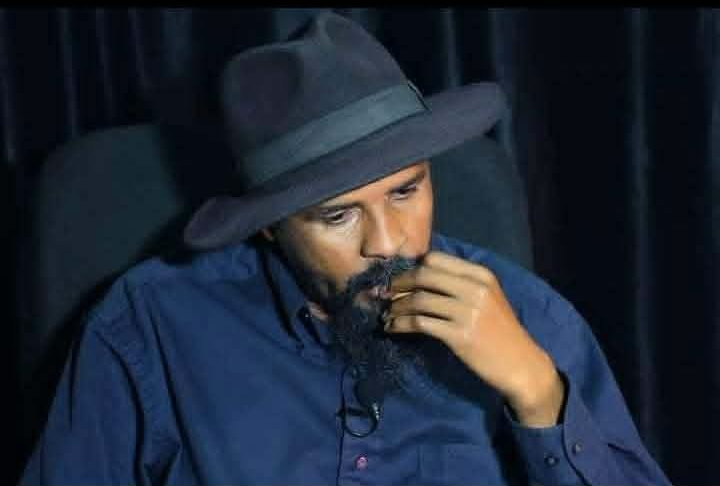
In the shifting sands of Ethiopian politics, the Tigrayan People’s Liberation Front has suffered wounds that time has not healed—and the Oromo people remain the central characters in this unfolding drama
In the annals of Ethiopian political history, few organizations have risen as high or fallen as dramatically as the Tigrayan People’s Liberation Front (TPLF). For nearly three decades, it dominated the political landscape of the Ethiopian Empire, ruling with an iron fist while projecting an image of revolutionary legitimacy. Yet today, the TPLF finds itself nursing wounds that history will not allow it to forget—wounds inflicted not by foreign enemies but by the very people it sought to subjugate.
The reflection of Abba Ebba offers a searing analysis of what he calls the “two humiliations” of the TPLF—humiliations that, in his view, are inextricably linked to the Oromo people and their awakening. These are not merely military defeats but moral and political reckonings that the TPLF has been unable to accept or process.
The First Humiliation: The Fall of Mekelle
“For 27 years, like the saying ‘the hare’s skin cannot cover the elephant,’ the TPLF tried to stretch its hide over an empire too vast for its frame. In the final hour, it was the sons and daughters of Oromo—the Qeerroo and Qarree—who stood before tanks with empty hands and brought down the regime. They made the TPLF retreat to Mekelle, dragging its ill-gotten wealth behind it. This is the first humiliation that remains unhealed to this day.”
The 2018 Oromo protests were not merely a political uprising—they were a seismic shift in the Ethiopian political landscape. The Oromo youth, known as the Qeerroo and Qarree, rose in a wave of popular resistance that the TPLF could not contain. The protests were decentralized, leaderless, and yet remarkably unified in their demands for justice, equality, and an end to the TPLF’s domination .
The TPLF, which had ruled Ethiopia for 27 years, was forced to abandon power and retreat to its northern stronghold of Mekelle. This was not a defeat by a rival military force but a collapse in the face of unarmed civilian resistance. The humiliation was profound and, according to Abba Ebba, has never been truly accepted by the TPLF leadership.
“The TPLF was defeated by the popular wave that ignited from one end of Oromia to the other—a wave that was part of the Oromo liberation struggle. This is an undeniable truth. The Oromo is an elephant; when it tramples, it crushes. The TPLF was forced to swallow this reality, whether it liked it or not.”
The Second Humiliation: The Retreat to Mekelle
The second humiliation followed the first. After initially retreating to Mekelle, the TPLF sought to reassert its influence on the national stage. It formed alliances with various forces—including some within the Amhara political spectrum—and attempted to challenge the Prosperity Party government.
However, this effort ended in another defeat. The TPLF was forced to retreat once again to Mekelle, leaving behind its ambitions and its allies, having consumed itself in the fires it had ignited. This second retreat, Abba Ebba argues, is the other humiliation that remains raw and unprocessed .
“When the TPLF was about to return to Addis Ababa, it found itself burned by the fire it had started. It was forced to retreat to Mekelle—another humiliation that has not faded.”
The Unlearned Lesson
Despite these humiliations, the TPLF has not learned its lesson. Instead, it continues to prepare for a new war, this time under the cover of the Prosperity Party government’s own challenges. After four years of uninterrupted military preparation, the TPLF is once again positioning itself for conflict .
Abba Ebba warns that this preparation is driven by a desire for revenge—a desire to settle scores with the Oromo people who, in the TPLF’s view, are responsible for its humiliations. “Under the cover of the Prosperity Party government, the TPLF is seeking to take revenge on our people for its past humiliations.”
The Unnecessary Price
Abba Ebba poses a pointed question: why must the Oromo people pay the price for the TPLF’s ambitions? Why must Oromia become a battlefield for conflicts that are not of its making?
“The TPLF did not need to travel 600 kilometres into the heart of the country, into the breadbasket of Ethiopia—Oromia. It could have declared Eritrea-style independence when the Derg fell, and it could do so today. All it needs is to settle its accounts and secure the consent of its people.”
The TPLF’s refusal to accept defeat has left the Oromo people caught between multiple threats. On one hand, there is the TPLF’s continued military preparations and its desire for revenge. On the other, there are forces like Fano and other armed groups that have also targeted Oromo communities.
The Oromo Elite’s Responsibility
Abba Ebba also points a finger at the Oromo elite, accusing them of failing to fulfill their responsibilities. The Oromo people, who have paid the heaviest price in the struggle against the Ethiopian Empire, now face a dual threat: the TPLF’s revanchism and the Oromo elite’s failure to protect the gains of the struggle.
“The Oromo elite has failed to protect the historic victory achieved by the Oromo popular struggle. It has also failed to protect the constitutional right to self-determination—the right to democracy, justice, and self-rule—from being undermined.”
This failure, Abba Ebba argues, has allowed the Oromo people to be marginalized and treated with suspicion by their neighbours. The Oromo elite’s failure to step up has left the people vulnerable to manipulation and exclusion.
A Call to Vigilance
Abba Ebba concludes with a call to the Oromo people:
“Our people must prepare themselves for the danger of the approaching war and actively monitor the situation. The war that is being prepared—whether by TPLF or by the Fano forces—poses a threat to the next generation of Oromo. Decisive action must be taken to find a lasting solution.”
He insists that Oromia must not become a doormat for the ambitions of others. “Oromia will not be a doormat for Fano or the TPLF! With its determined sons and daughters, it will stand, honoured and respected, and it will endure forever.”
A Historical Warning
The reflection of Abba Ebba is not merely a commentary on contemporary politics—it is a historical warning. It reminds the Oromo people that the TPLF, despite its humiliations, has not abandoned its ambitions. The two humiliations remain unhealed, and the TPLF continues to seek revenge.
But the reflection also carries a message of hope and resolve. The Oromo people, having risen once, can rise again. The elephant has crushed its enemies before, and it can do so again.
Conclusion
The two humiliations of the TPLF are more than military or political defeats—they are symbolic wounds that the organization has not been able to accept. The TPLF’s refusal to learn from its past has left the Oromo people facing a renewed threat. But the Oromo people, having already demonstrated their power, are not powerless.
As Abba Ebba declares: “Oromia will not be a doormat for Fano or the TPLF! With its determined sons and daughters, it will stand, honoured and respected, and it will endure forever.”
The elephant has crushed its enemies before, and it can do so again.

The Debate Over Finfinne: Citizenship, Nationality, and the Right to Self-Determination
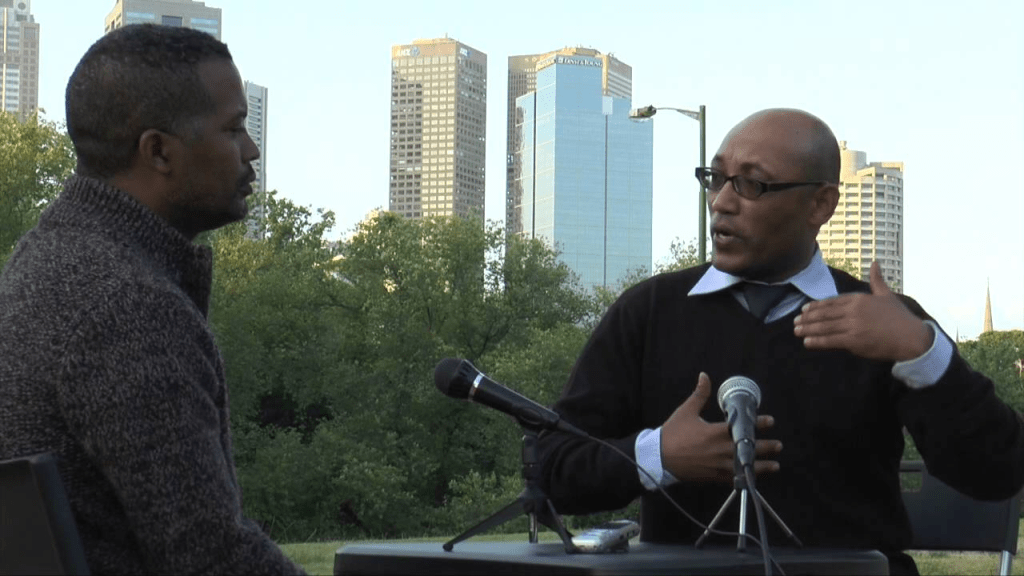
In Ethiopia’s complex federal system, the status of the capital city has become a flashpoint for competing visions of identity, rights, and constitutional interpretation
FINFINNE, ETHIOPIA — A provocative statement by Dr. Tsegaye Ararssa has reignited debate over the status of Finfinne (Addis Ababa) and the rights of its residents, challenging what he describes as “baseless” calls for the city’s self-determination while affirming the constitutional framework that places it within Oromia.
“Finfinne is one of the cities of Oromia” , Dr. Tsegaye asserts, grounding his argument in Ethiopia’s federal constitution and the regional constitution of Oromia . The statement has drawn both support and criticism in a country where the status of the capital city remains a sensitive political issue.
A City of Many Peoples
Finfinne, with its population estimated at between 3 and 4 million, is a microcosm of Ethiopia’s remarkable diversity. People from all regions of the country have made the city their home, bringing with them their languages, cultures, and traditions .
“Their coming is a blessing. Their presence is beautiful. It is beauty itself,” Dr. Tsegaye writes, acknowledging the contributions of migrants who have enriched the capital’s social and cultural fabric.
These residents, he emphasizes, are full rights-bearing citizens of both the country and the region. Their rights are guaranteed under Ethiopia’s constitution (Chapter 3), the Oromia constitution, and other relevant laws. State and regional governments are constitutionally obligated to protect and fulfill these rights .
Residents, Not a Nation
Despite the rich diversity of its population, Dr. Tsegaye draws a sharp legal distinction: “The residents of Finfinne are residents, citizens—not a nation.”
While each individual citizen retains their ethnic identity—with many having ties to their regions of origin—the residents of Finfinne collectively do not constitute a “nation” as defined under Ethiopia’s constitutional framework .
The Ethiopian constitution grants the right to self-determination to “nations, nationalities, and peoples,” defined in Article 39(5) as groups with shared culture, language, identity, and a sense of common history . Residents of Finfinne, however diverse, do not meet these criteria as a collective group.
Individual Rights vs. Collective Rights
Dr. Tsegaye draws a crucial distinction between two types of rights:
Individual rights that accrue to all citizens—including the right to education in one’s language, cultural expression, religious freedom, and preservation of identity—are fully guaranteed to residents of Finfinne .
Collective rights—specifically, the right of a group to self-determination—are reserved for groups that constitute “nations” under Ethiopian law. Such groups must meet the constitutional criteria defined in Article 39(5) .
According to Dr. Tsegaye, residents of Finfinne do not meet this constitutional threshold. They are not a “nation” but rather a diverse collection of individuals from various nations. Therefore, any movement seeking self-determination for the city of Finfinne as a collective entity is constitutionally baseless .
As he states, “If they were to be properly settled according to this criterion, they would be Oromo, and their region would be Oromia.”
The Call for Self-Determination
The debate over Finfinne’s status is not merely academic. In recent years, some voices have called for the city to exercise self-determination, either as an independent federal city or through other arrangements.
Dr. Tsegaye characterizes these calls as “baseless and anti-Oromo” . The phrase “anti-Oromo” likely reflects the perspective that these efforts threaten Oromo rights and the territorial integrity of Oromia.
However, the debate cuts multiple ways. Those advocating for Finfinne’s self-determination argue that the city’s residents have distinct interests that may not be fully represented by either the federal or regional government.
The Constitutional Framework
The Ethiopian constitution is one of the few in Africa that explicitly recognizes the right of nations, nationalities, and peoples to self-determination, including the right to secession .
The constitution also establishes Finfinne (Addis Ababa) as a special city, with its status and boundaries determined by the federal government. This has been a source of tension between the federal government and Oromia, with some Oromo nationalists arguing that the city rightfully belongs to Oromia.
Dr. Tsegaye’s argument is grounded in the constitutional text as he interprets it, but the constitution’s provisions on Finfinne’s status have been subject to multiple interpretations.
A Citizen, Not a Nation
The heart of Dr. Tsegaye’s argument is that Ethiopian citizenship must be distinguished from nationality. All Ethiopians are citizens, but they belong to nations, nationalities, or peoples as defined in the constitution. Residents of Finfinne are citizens first, and their ethnic identity is separate from their status as residents of the capital .
In a country where ethnic federalism is both a constitutional principle and a political reality, the distinction matters. It shapes access to resources, political representation, and even legal status.
His final counsel to residents of Finfinne is clear: “Leave this ‘Addis Ababa should determine its own destiny’ noise, and protect your citizenship rights. It is counsel” .
Conclusion
Dr. Tsegaye Ararssa’s intervention enters a contentious and evolving debate with significant political and legal implications. His emphasis on the constitutional text, the distinction between individual and collective rights, and the specific status of Finfinne as a city within Oromia reflects one interpretation of Ethiopia’s complex federal framework.
Yet the status of Finfinne remains one of the most sensitive and unresolved issues in Ethiopian politics. The debate over whether the city is the capital of Ethiopia, the seat of the Oromo people, or something else entirely continues to shape political discourse.
“The residents of Finfinne are residents, citizens—not a nation.”

Why Unity Remains a Constant Theme in the Oromo Freedom Struggle
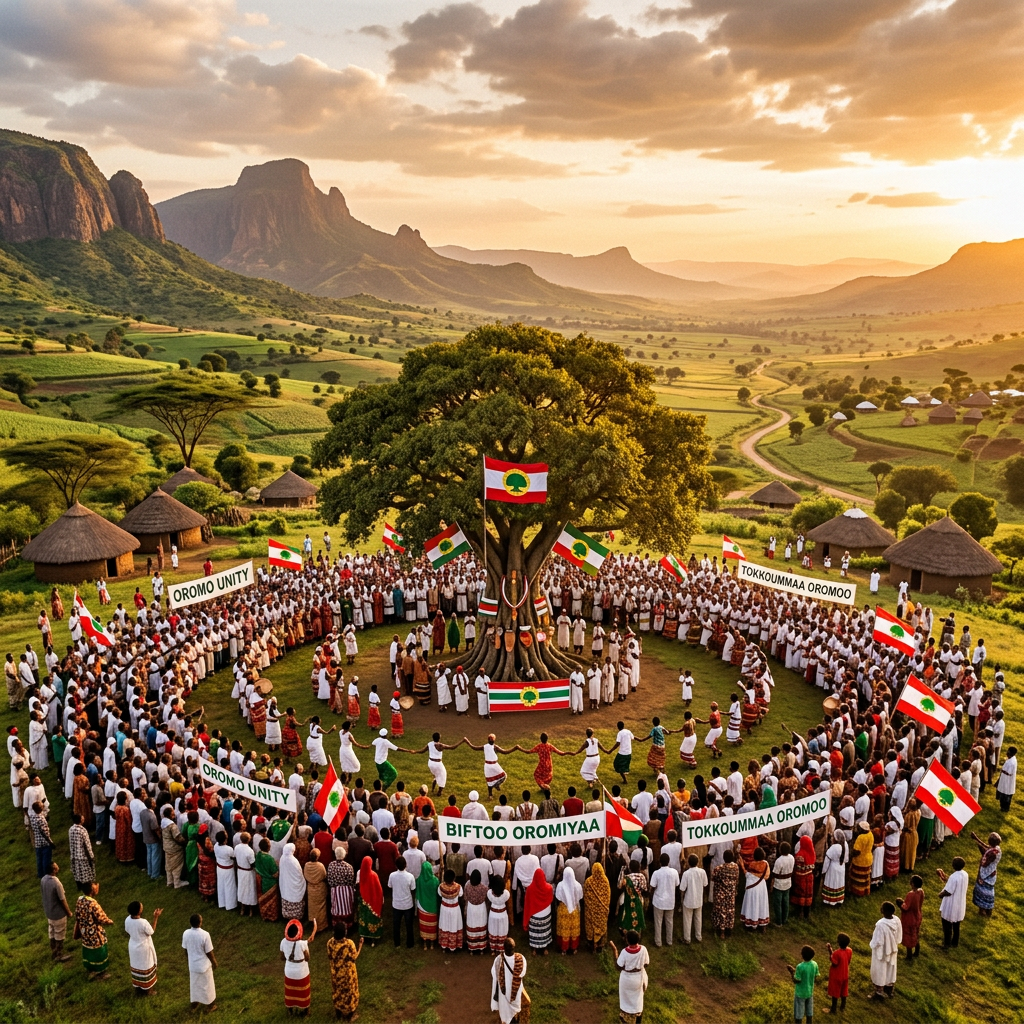
In the face of colonial domination and systemic oppression, the call for Oromo unity is not just a political slogan—it is a survival strategy, a moral imperative, and the foundation of a centuries-old struggle for liberation
The Oromo freedom struggle is one of the longest-running national liberation movements in Africa. For over a century, the Oromo people have resisted colonial domination, cultural suppression, and political marginalisation within the Ethiopian Empire. Throughout this long and arduous journey, one theme has remained constant: the call for unity.
Unity is not merely a rhetorical device in Oromo political discourse. It is a practical necessity, a moral principle, and a historical lesson that has been learned through generations of struggle. To understand why unity remains so central to the Oromo cause, we must look at the history of oppression, the nature of colonial strategy, and the lessons learned from both successes and failures.
The Colonial Strategy: Divide and Rule
The Ethiopian Empire was built through conquest. In the late 19th century, Emperor Menelik II’s armies, armed with European rifles, swept through the Oromo territories, confiscating land, imposing a feudal system of tribute and forced labor, and suppressing Oromo institutions such as the Gadaa system. The neftegna-gabbar system was not a metaphor—it was a system of land confiscation, tribute extraction, and forced labour that persisted for generations .
“When Menelik’s armies swept through what is now Oromia in the 1880s and 1890s, they did not arrive as liberators. They arrived with rifles purchased from European powers, with a feudal ideology that viewed the southern peoples as pagans to be civilised and their land as empty territory to be claimed” .
To maintain control over a conquered population that vastly outnumbered the colonisers—Oromos comprise roughly 35% of Ethiopia’s population —the imperial state employed a classic colonial strategy: divide and rule. Oromo society was fragmented, regional differences were exploited, and some Oromo elites were co-opted into the colonial administration. This strategy of fragmentation served the coloniser’s interests by preventing the emergence of a unified Oromo national consciousness .
The suppression of Oromo unity was not incidental to colonial rule—it was essential to it. A united Oromo nation posed an existential threat to the colonial system. This is why successive Ethiopian governments have sought to undermine Oromo unity, whether through direct repression or through the co-optation of Oromo elites into the state structure .
The Birth of National Consciousness
The 1960s marked a turning point in Oromo political consciousness. Oromo intellectuals and artists began to articulate their dissatisfaction with socio-economic deprivation and what was seen by some as ethnic oppression . The Macha-Tulama Self-Help Association (MTA), founded in the 1960s, represented one of the first organised attempts to build Oromo unity across regional and clan divisions .
The Haile Selassie government, recognising the threat posed by this emerging unity, crushed the MTA. Its destruction was the immediate catalyst for the founding of the Oromo Liberation Front (OLF) in the early 1970s . The establishment of the OLF represented a decisive shift: for the first time, a unified political organisation was created to lead the Oromo struggle for self-determination .
“The effort to bring together a few Oromo nationalists of diverse backgrounds from all over Oromia” to establish the OLF was itself an act of unity . The founders understood that only through a unified national movement could the Oromo people overcome the colonial system.
The Weapon of Culture
Oromo culture has been a powerful force for unity. While the Ethiopian state banned the Oromo language from public contexts and prevented it from being printed, Oromo musicians and artists developed creative forms of cultural resistance that sustained Oromo identity and consciousness .
“Afaan Oromo song (music) was used as the most powerful form of chimerical power in speaking across age, class, region, sex, power, and even ideology in resisting the domination of Imperial rule while striving to sustain common Oromo unity” .
Oromo musical icons such as Ali Birra, Abitaw Kebede, Nuho Gobana, Umar Suleyman, Ebbisa Adunya, and Kadir Said played an indispensable role in creating a social space wherein the Oromo struggle for equality and self-emancipation is articulated and debated . Songs like Haacaaluu Hundeessaa’s Maalan Jiraa became anthems of resistance, weaving together stories of pain and pride, hope and despair, and reminding Oromos of their shared identity and destiny .
“It is here, in this reservoir of songs, in the unruly dances and heart-breaking ballads, that one finds the story of the Oromo nation and its struggle for self-determination, not in the official archives and historiographies of the Ethiopian state” .
These artists became targets of state repression because their songs threatened the colonial order by building Oromo unity and consciousness .
Lessons from History
The Oromo people have a long memory of both the costs of disunity and the power of unity. The 16th-century Oromo campaigns, which successfully reclaimed territories from both Christian and Islamic imperial forces, were made possible by the sophisticated organisation of the Gadaa system—a system built on unity of purpose and collective action .
“The successes of the Oromo were not due to sheer numbers or migratory luck—but stemmed from an internally sophisticated and morally grounded civilisational system anchored in the Gadaa democratic order” .
Factors such as the Gadaa system, age-set institutions (Cibra), the unifying goal of reclaiming ancestral land (Galma), spiritual conviction (Kaawoo), and inclusive sociopolitical integration (Moggaasaa) all contributed to Oromo military success .
Conversely, the weakness of the Oromo movement has often been attributed to disunity. As one analysis notes, within the Oromo nationalist movement there are “lots of varieties, units, political agendas, and goals” . This diversity, while reflective of the Oromo people’s richness, has at times been exploited by the state to undermine the movement.
The recognition that disunity serves the coloniser is a constant theme in Oromo political discourse. “The colonizers and their agents have vilified and attacked” the OLF “to make the Oromo society leaderless” . A leaderless, fragmented society is easier to control.
Unity in Contemporary Struggles
The theme of unity remains urgent today. Recent efforts by the Oromo Liberation Front (OLF) and the Oromo Federalist Congress (OFC) to establish a “Transitional National Unity Government of Oromia” reflect this ongoing imperative . These groups have called on “all genuine Oromo forces, regardless of their method of struggle, to resolve their political differences and galvanize their unity” .
The call for unity is not merely political—it is a response to the dire situation facing the Oromo people. Across all 22 zones of Oromia, conflict between government forces and the Oromo Liberation Army (OLA) has led to arrests, beatings, displacement, mass burning of civilian houses, and other atrocities . The Oromo people face a crisis that demands unified action .
Yet the path to unity is not simple. The Oromo nation is divided by class, region, religion, and political orientation. As one analysis notes, “the Oromo nation is not a monolith. It is divided by class” . At the top is the Oromo comprador bourgeoisie—elites integrated into the state structure who benefit from the existing system . At the bottom is the Oromo working class—peasants, agricultural labourers, industrial workers, unemployed youth, and the urban poor .
This class division has led to a recognition that “nationalism alone cannot deliver what the Oromo masses actually need” . The Oromo peasant displaced from their land does not care whether the displacer is Amhara or Oromo—the displacement is the same . The Oromo worker paid starvation wages does not care whether the boss is based in Addis or abroad—the exploitation is the same .
This insight has led some to argue that the Oromo struggle must move beyond nationalism to class politics, building alliances with other oppressed peoples across Ethiopia . “Your ally is the Amhara worker who also wants land. Your ally is the Tigrayan worker who also wants a living wage” .
The Role of the Gadaa System
The Gadaa system continues to be a source of unity for the Oromo people. Its principles of regular rotation of leadership, checks and balances, and consensus-building mechanisms are considered “one of the most sophisticated pre-capitalist socio-political systems ever developed” . The Gadaa system is not merely a cultural artefact—it offers lessons in democratic governance that are relevant to the contemporary struggle .
“A liberated Ethiopia would not erase Oromo culture. It would draw on it. It would recognise that the Gadaa system offers lessons in democratic governance that the European liberal tradition cannot teach” .
The revival of the Gadaa system and the celebration of the Irreechaa festival have become powerful symbols of Oromo unity and cultural renaissance.
Conclusion
Unity remains a constant theme in the Oromo freedom struggle because it is both a necessity and a lesson learned through generations of experience. The colonial state has sought to divide the Oromo people because a united Oromo nation poses an existential threat to the colonial system. The Oromo people have learned, through both victory and defeat, that unity is the foundation of successful resistance.
But unity is not merely a political strategy—it is a moral principle rooted in the Oromo worldview. The concept of Safuu, the moral order that maintains balance and harmony, applies to the Oromo nation as well. Disunity is a breach of Safuu, a disruption of the natural order that brings suffering to the community .
As the Oromo struggle continues, the call for unity remains urgent. Whether through political organisation, cultural expression, or class solidarity, the Oromo people must find ways to overcome the divisions that have been imposed upon them and build the unity necessary for genuine liberation.
“The full restoration of the Oromo people’s freedom and rights is essential for lasting peace” . And that restoration will only be achieved through unity.
The struggle for Oromo liberation is the struggle for Oromo unity. And the struggle continues.






