
Lallaba Galataa fi Yaadannoo: Maatiin Ahmad Gishee Hawaasa Oromootti Dhaamsa Garaawaa Ergate
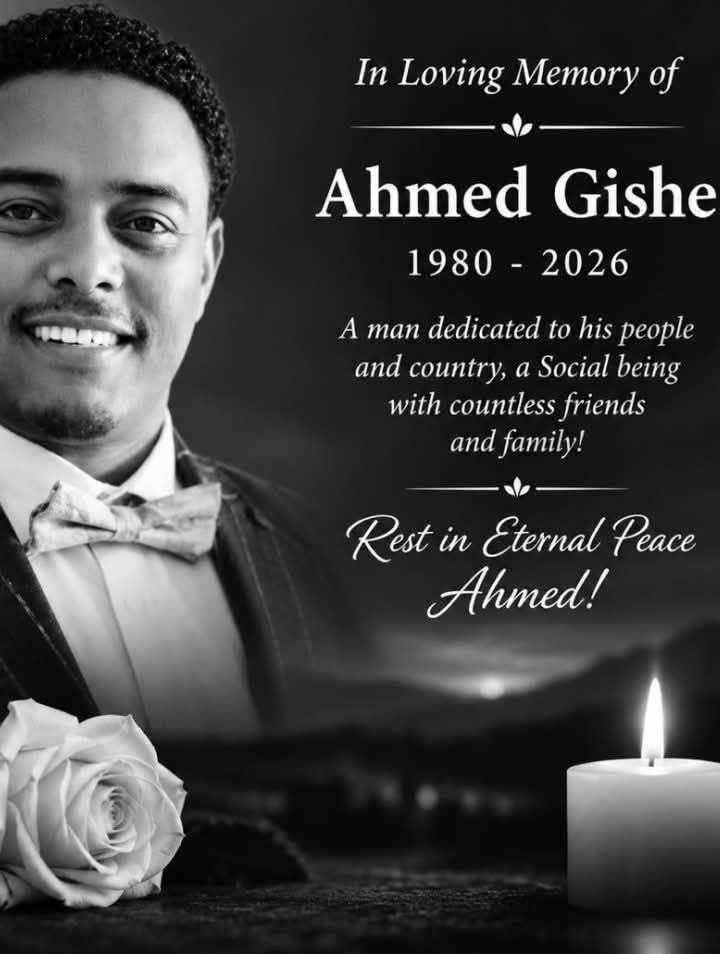
(Onkololeessa 31, Bara 2026) Aartii fi aadaa Oromoo keessatti, duuti nama jaallatamaa fi kabajamaa ta’e gadda cimaa hawaasa keessatti uuma. Ahmad Gishee—ilma saba Oromoo, jaalala fi kabajaa guddaa qabu—lubbuu dhabuun isaatiin maatiin isaa fi hawaasni bal’aan gadda onnee nama cabsu keessa jiraatu. Yeroo kana keessatti maatiin Ahmad Gishee lallaba galataa fi yaadannoo hawaasa Oromootti erganii jiran.
Galata Hawaasaaf
Lallabni maatii keessaa, duraan duraan, hiriyoota Ahmad, jaalalloo, darabootaa fi hawaasa bal’aa Oromootiif galata guddaa dhiyeesseera. “Gadda onnee nama cabsu yeroo keessa jiru kanatti, nu bira dhaabattanii, nu jajjabeessuu fi miidhama keenna nu waliin hirachuu keessaniif, ulfaadhaa, wayyamaa,” jedhanii maatiin ibsaniiru.
Maatiin Ahmad akka jedhetti, “Gargaarsinii fi ergaan gara-nyaattoo, tumsinii fi dhaamsi keessan madda obsaa nuu ta’ee jira; kanaafillee galata guddaa nu biraa qabdani.” Yeroo Ahmad gargaarsa barbaadetti, firaa fi hiriyyoon uduu hin hifatin isa bira dhaabbatanii jiran. “Haga inni darbellee, fageenna dheeraa irraa imaluun geegessaa isaa tolchitan. Ahmad ka saba bal’aa Oromoo ta’uu isaa maatii fi aanaa maratti argisiiftan. Gadda ulfaata kana akka obsinuuf humna jabaa nuu taatan. Ulfinni keessan dacha, dachaadha!”
Jireenya Gabaabduu Garuu Hiikkaa Guddaa Qabu
Ahmad jireenya isaa keessatti milkii hedduu arge, jaalalloo baay’ee horate. Ummata Oromoo bal’aan wal-baratee, waan haga humna isaa gumaachee lufe. “Yeroon Ahmad lafa tana irra jiraatee baay’ee gabaabduudha. Garuu inni haalaa fi akkaataa jiruu dabarse irraa gaabbii hin qabu,” jedhanii maatiin ibsaniiru.
Inni gara fuula akeraa deemuun duratti warra bira turaniif dhaamsa darbee jira. “Jireenna isaa akka fedhii isaatti jiraateera. Waan tokkollee jijjiiruu akka hin barbaanne, waan jiruu isa kessatti godhuu fi arguu fedhu hedduu isaa akka godhee fi arge dubbate. Hireen du’aa yoo isa geette, akka qophaa’aa ture nuuf mirkaneesseera. Kun haga tokko tasgabbii sammuu nuuf kennee jira.”
Dhaamsa Hawaasaaf: Oduu Soba irraa Of Qusachuu
Maatiin Ahmad hawaasa Oromootti dhaamsa guddaa erganii jiran—oduu dharaa fi soba miidiyaa hawaasaa irratti tamsa’aa jiru irraa of qusachuu. “Oduu dharaa, hamaa fi hasaassaa daangaa hin qabnetu marsaa hawaasummaa irratti tamsa’aa jira. Wanti gariin, maatii, firaa fi jaalalloo miira tuqaa jira. Kun ammoo maatii obsa dhooggaa jira.”
“Odeeffannoo ragaa hin qabne, oduu sobaa ykn tilmaama adda addaa, keessattuu miidiyaa hawaasaa irratti, akka hin tamsaafne cimsinee kabajaan isin gaafanna. Yeroo ammaa kanatti wanti Ahmadii fi nullee nu gargaaru, isaaf araarama kadhatuu; ka jiruuf ammoo jajjabinna kennuu callaadha. Isaa fi maatii isaatiillee, yaadaa, kabaja namoomaa kennaa. Ardha irraa kaasaatii, waan qabatama hin qabne, facaasuu, maxxansuu fi himuu irraa of qusadhaa—walillee ittisaa!”
Yaadannoo fi Dhaala
Maatiin Ahmad namoonni hedduun, biyya keessaa fi alaa, gadda callaa uduu hin taane; jireenya Ahmad waliin kabajuu fi gumaata isaa yaadachuuf qophii godhuu qabu jedhanii yaada nuun geettanii jirtan. “Kanaaf wayyamaa! Yaadni keessan, guddisee nu jajjabeessaa jira. Carraaqiiwwan keessan kanaaf galata guddaa isinif qabna.”
Nutis dhaala inni nuuf dhiisee darbe kana akka eeggamuuf waliin hojjechuu waan barbaanuuf, deeggarsa fi yaada, akkasumas hirmaannaa keessan garaa gutuun feena. “Waliin taanee, jireenya inni jiraate, duudhaalee inni itti amanee dhaabateef, dhaalootaaf dabarsuun waan aaga jennee amanna.”
Murtii Maatii: Deeggarsa Maallaqaa Hin Barbaadan
Maatiin Ahmad hubachiisuu barbaade, yeroo ammaa kana deeggarsa maallaqaa yookaan gargaarsa bifa biraa kamiyyuu akka walitti qabamu hayyama akka hin kennin. “Odeeffannoo dabalataa hanga isinitti himamutti, murtii fi ejjennoo maatiin qabate kana akka hubattan kabajaa guddaan isin gaafanna.”
Galata Xumuraa
“Gaarummaa, gara-laafina, kadhannaa fi deeggarsa nuuf gootaniif irra deebi’uun galata guddaa maqaa Ahmadiitiin isiiniif galchuu barbaanna. Deeggarsi keessan maatii keennaaf jechootaan ibsuu caalaa hiika guddaa qaba. Mara keessanuu ammallee irra deebinee galatoomaa isiniin jenna.”
Maatiin Ahmad Gishee, Onkololeessa 31, Bara 2026.
Maatii Ahmad Gishee — Lallaba galataa fi yaadannoo hawaasa Oromootti erganii jiran.

Ethiopia’s Leaders Trade Suits for Uniforms: A Wartime Cabinet in Training
By ONA Staff Reporter
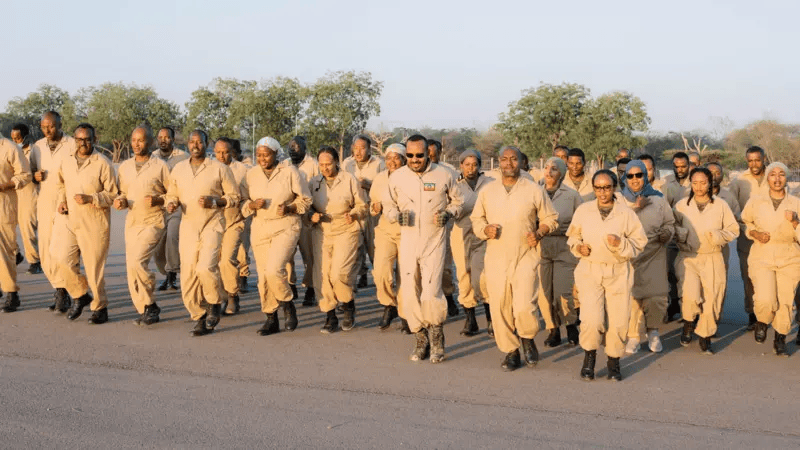
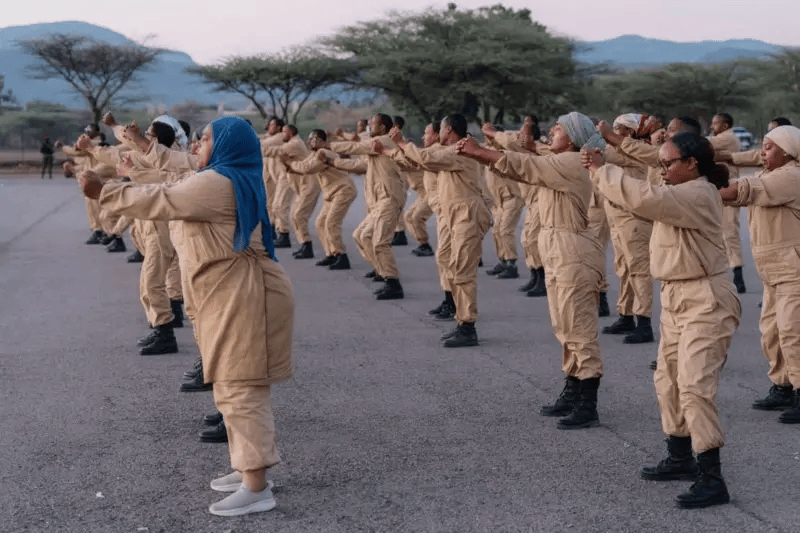
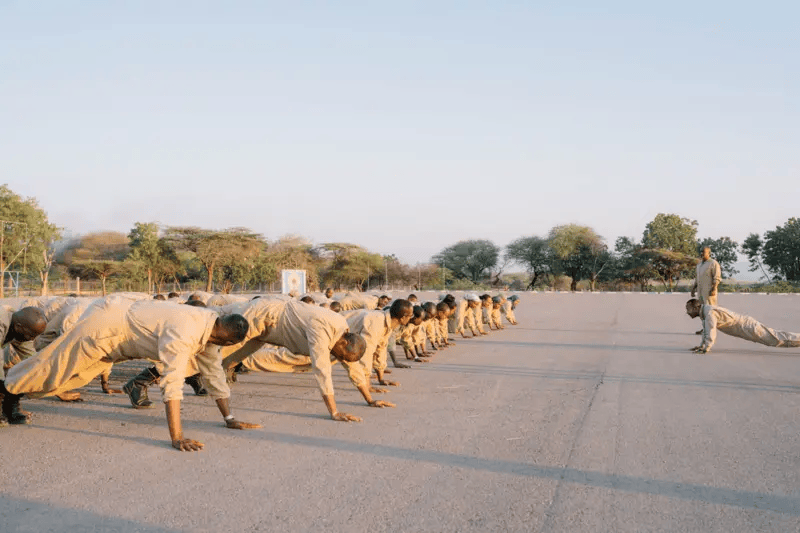
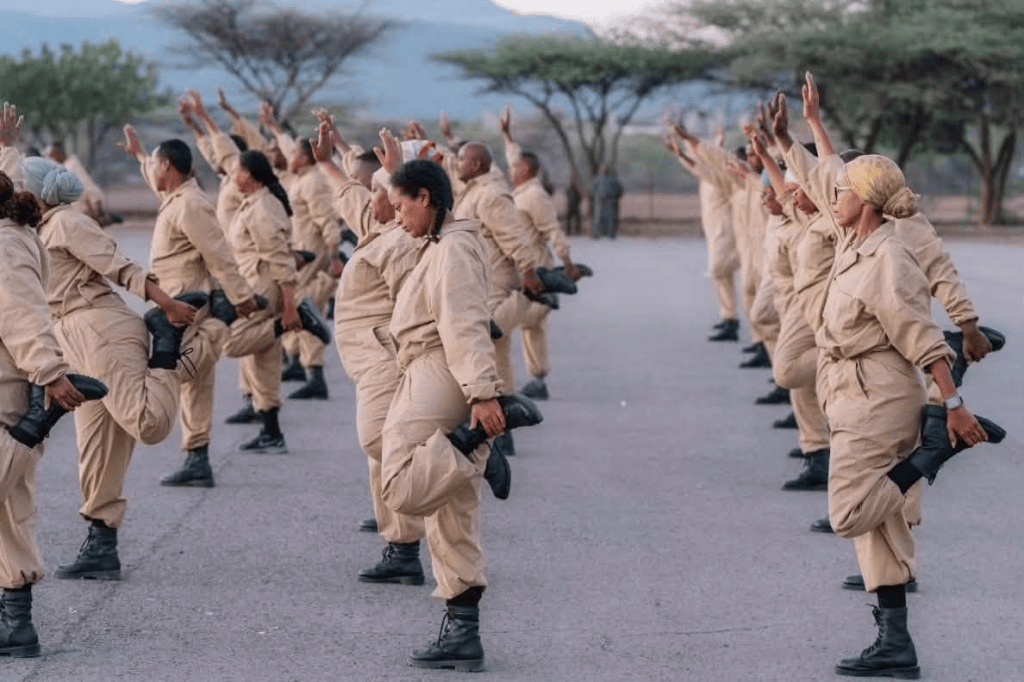
ADDIS ABABA — In a striking image that has circulated widely across Ethiopian social media, Prime Minister Abiy Ahmed stands shoulder to shoulder with his cabinet members and senior officials, not in the dark suits of governance but in the olive-green fatigues of military trainees. The photographs, shared on the Prime Minister’s own social media pages on Saturday, October 31, 2026, reveal a government preparing for war—and framing that preparation as a strategic necessity.
A Cabinet in Uniform
Among those pictured in military training gear at the Hurso facility were Mufrihat Kamil, Speaker of the Federation Council; Dr. Fitsum Assefa, Minister of Finance; and Dr. Mekdes Daba, Minister of Health. They were not observing exercises from a distance. They were participating in them.
According to the Prime Minister’s statement, the officials are undergoing military training at Hurso, a site that has become synonymous with the government’s increasingly militarized approach to statecraft. The training, Abiy explained, is designed to help officials “properly understand and implement” the ideas contained in what he calls the “Great Strategy of Additive Civilization” (Ye Medemer Siltenie Talaku Strategy).
The “Additive Civilization” Doctrine
The strategy, as articulated by the Prime Minister, contains principles that read as much like a wartime manifesto as a governance blueprint: “ensuring national security at all times,” “building a strong country that cannot be bent by anyone or anything,” and “mobilizing the structure from bottom to top for a national purpose.”
Military science, Abiy wrote, “has no competitor in shaping the purpose and humanity of a person.” He described it as a discipline that makes people “physically, spiritually, morally, and in execution disciplined.” The knowledge, skills, and experience drawn “from military science and life,” he argued, are essential to implementing the strategy.
“Leaders of the Additive government are taking military training at the Hurso military training camp,” Abiy wrote. “Soldiers have targets; civilians have objectives. The goal of both is to register victory. By combining both disciplines, we will create a generation that hits the target and achieves the objective.”
The Context: A Region on Edge
The timing of the training is not incidental. It comes as the Ethiopian National Defense Force (ENDF) has moved closer to the border with Eritrea, amid mounting fears that the two countries—locked in a diplomatic freeze over accusations of supporting insurgents and a dispute over sea access—could be drawn into war. The two nations have severed diplomatic relations, and the threat of renewed conflict hangs over the Horn of Africa.
The training also comes as the government continues to consolidate its military posture. This week, during a visit to Russia, Prime Minister Abiy announced that Ethiopia had received Su-35 fighter jets—advanced aircraft that would make Ethiopia the first sub-Saharan African nation to operate them. The delivery represents a significant escalation in the country’s aerial capabilities.
The Prime Minister has repeatedly stated that strengthening Ethiopia’s military capacity across all sectors is among his objectives. The images of his cabinet in uniform are not merely symbolic; they are a signal that the government’s approach to governance has become inseparable from its approach to war.
A Government at War with Itself?
The photographs raise uncomfortable questions. A finance minister in fatigues, a health minister in combat gear—what does it mean for a government to train its civilian leadership for battle? The Prime Minister’s framing suggests a belief that military discipline is the antidote to the indiscipline of civilian governance, that the battlefield’s clarity of purpose should be brought to the messy work of running a state.
But critics may see something else: a government that has increasingly turned to military solutions for political problems. The training at Hurso, the procurement of advanced fighter jets, the escalating rhetoric—all of this unfolds against a backdrop of internal conflict, including renewed fighting with forces in northern Ethiopia and ongoing unrest in Oromia.
The government has not disclosed when the training began or how long it will last. What is clear is that the image of a cabinet in uniform is intended to convey a message: Ethiopia’s leadership is preparing for something. Whether that something is defense, deterrence, or the prosecution of war remains to be seen.
The Image That Speaks
In a region where symbols carry enormous weight, the photograph of Abiy and his officials in military fatigues is more than a social media post. It is a declaration of intent. The “Great Strategy of Additive Civilization” is being taught at a military camp, to a cabinet, in a country on the brink. The soldiers have targets; the civilians have objectives. And the Prime Minister has made clear that he expects both to hit them.
As Ethiopia navigates a precarious moment in its history, the sight of its leaders in uniform offers a glimpse of how they see the road ahead: not as a path of diplomacy and civilian governance, but as a campaign to be won.
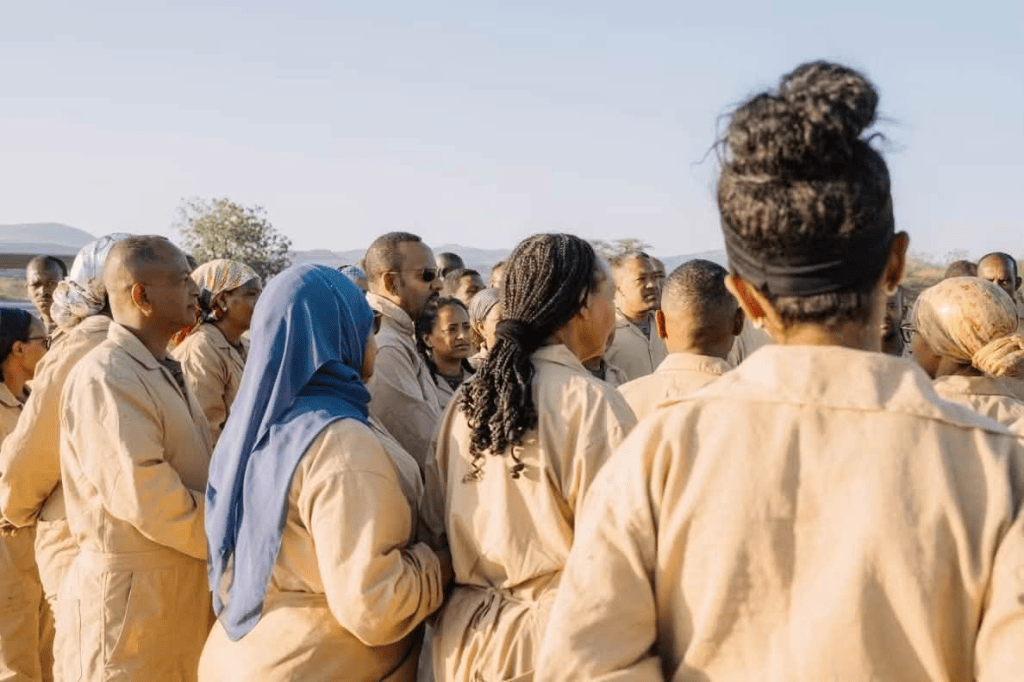
Source: EBC (Ethiopian Broadcasting Corporation) and the Prime Minister’s official social media pages.

Reflections on Professor Beyene’s Essay: A Call for Evidence, Clarity, and Intellectual Honesty in the Oromo Nationalist Discourse
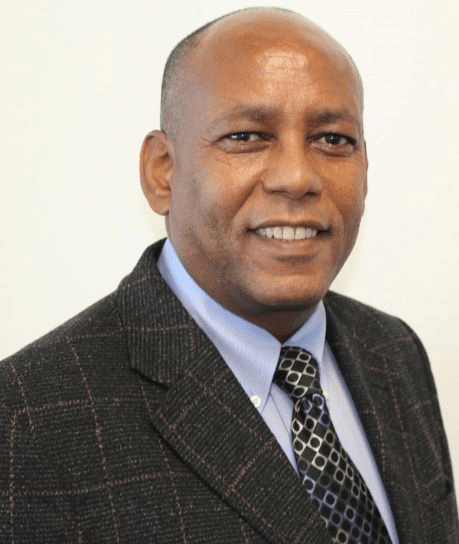
By Hambisa Belina, Morgan State University
In a political landscape too often shaped by rhetoric and presumption, Professor Beyene’s recent essay stands out as a model of what rigorous intellectual engagement should look like. As a scholar reading his work, I found the piece both eloquently written and intellectually engaging—a rare combination that invites readers not merely to agree or disagree, but to think more carefully about the contested narratives shaping political discourse across Ethiopia and the wider Horn of Africa.
Situating the Debate in Historical and Regional Context
What makes Professor Beyene’s contribution particularly valuable is his skill in exploring the historical circumstances and political happenstances that evoke our collective memory. He does not treat contemporary debates as isolated phenomena but situates them within a broader historical and regional context, encouraging readers to grapple with enduring questions of identity, power, historical justice, and political legitimacy. This contextual approach is essential. Too often, discussions about nationalism and self-determination are conducted in a historical vacuum, as if the grievances and aspirations of today emerged from nowhere. Professor Beyene resists that tendency, reminding us that the present is always in conversation with the past.
The Insistence on Evidence
One of the article’s most compelling contributions is its insistence on evidence-based argumentation. Professor Beyene rightly questions the frequent assertion that Oromo nationalism has somehow crossed the line from demanding its own rights to infringing upon the rights of others. This is a serious accusation, and as he argues, it should be supported by concrete evidence rather than broad claims or political rhetoric. His call for a more rigorous examination of these allegations is both justified and necessary.
I concur with Professor Beyene’s observation that I have not seen any Oromo political party or prominent Oromo politician advocate for the repression, subjugation, or denial of the rights of other societies. This is not a claim of perfection—all political movements should be subject to scrutiny and criticism. But such criticism must rest on verifiable facts rather than assumptions or unfounded characterizations. The distinction matters, not only for the sake of fairness but for the integrity of public debate itself.
The Responsibility of Clarity
At the same time, I believe it is important for Oromo nationalists to continue articulating clearly what Oromo nationalism stands for and what it seeks to achieve. Greater clarity regarding its principles, objectives, and vision for coexistence can help dispel misconceptions, strengthen public understanding, and foster more constructive dialogue among Ethiopia’s diverse communities and the peoples of the wider Horn of Africa. This is not a concession to critics but a strengthening of the movement’s own foundation. A nationalism that knows what it stands for is better equipped to withstand misrepresentation and to build the alliances necessary for lasting peace.
Vigilance Against Misrepresentation
Moreover, Oromo political thinkers, legal experts, intellectuals, and political organizations should remain vigilant against efforts to misrepresent, delegitimize, or slander Oromo aspirations. They have an important responsibility to defend and explain the legitimacy of Oromo efforts to restore political authorship over their land, resources, laws, institutions, culture, and language. Such vigilance is necessary not only to counter mischaracterizations but also to ensure that the movement remains anchored in democratic principles, justice, equality, and respect for the rights of all peoples and all individuals. The struggle for Oromo rights is, at its core, a struggle for the right to define one’s own future—and that right must be exercised with the same commitment to justice that the movement demands for itself.
A Timely and Important Contribution
Ultimately, Professor Beyene’s essay raises an important challenge: political accusations should be assessed on the basis of evidence, not presumption. His thoughtful intervention serves as a valuable reminder that discussions about nationalism, self-determination, political rights, and historical justice are best advanced through careful historical analysis, intellectual honesty, and a commitment to factual debate. In that regard, his essay is a timely and important contribution to an ongoing conversation about the future of Ethiopia and the broader Horn of Africa.
As scholars and citizens alike continue to navigate these contested questions, the standard Professor Beyene sets—evidence over assumption, clarity over ambiguity, and intellectual honesty over political convenience—offers a path toward more constructive dialogue. It is a standard worth upholding.
Hambisa Belina
Morgan State University
ORCID | Google Scholar | LinkedIn

The Man Who Would Redefine Ethiopia
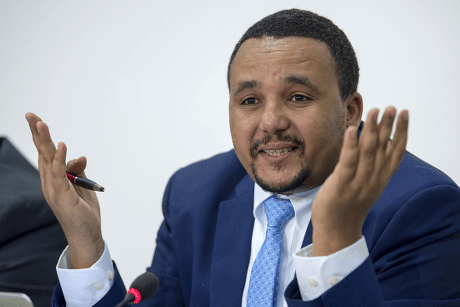
Jawar Mohammed’s “Progressive Patriotism” and the Oromo Question: A New Chapter in Ethiopia’s National Story
By Sultan Abda Neja, Ph.D.
—
For much of modern Ethiopian history, the question of who owns the nation has been answered in blood, in policy, and in silence. It is a question that has haunted the Oromo people—Ethiopia’s largest ethnolinguistic community—for generations. Their relationship with the modern Ethiopian state has been shaped by conquest, land dispossession, political exclusion, and cultural marginalization. Yet something is shifting. The old binary of Oromo resistance versus Ethiopian state nationalism is being challenged—not by a soldier, not by a separatist, but by a media-savvy activist-turned-thinker named Jawar Mohammed.
At the heart of this shift is a deceptively simple concept: Progressive Patriotism. It is Jawar’s attempt to articulate a political framework in which Oromo identity and Ethiopian national belonging are not mutually exclusive. It asks a new question: Can Oromo nationalism help redefine Ethiopian nationalism from within?
—
The Long Road from Resistance
To understand the weight of Jawar’s proposition, one must first understand the weight of history. Oromo nationalism did not emerge in a vacuum. It grew out of the expansion and consolidation of the modern Ethiopian state, the incorporation of Oromo territories, and subsequent struggles over land, language, religion, and political representation.
The Ethiopian state-building project, for much of its history, was associated with centralized authority, cultural homogenization, and the marginalization of groups whose languages and political identities differed from those of the ruling elite. The Oromo Liberation Front (OLF), founded in 1973, became the most prominent expression of Oromo resistance. But even then, Oromo nationalism was never monolithic. Some advocated independence; others supported multinational federalism, stronger regional autonomy, or a democratic Ethiopian state.
The 1995 Constitution, which formally recognized the rights of nations, nationalities, and peoples—including the right to self-determination up to secession—represented a significant shift. Yet constitutional recognition did not automatically produce democratic governance. The political crisis that culminated in the 2014–2018 protests exposed the limits of the existing order. Oromo protesters mobilized against political exclusion, human rights abuses, and the proposed expansion of Addis Ababa into surrounding Oromia.
Then came 2018. Abiy Ahmed, an Oromo politician, became prime minister. It was a moment of symbolic triumph—an Oromo had reached the highest office in the land. But symbolism, as Jawar would later argue, is not transformation.
—
Jawar’s Intervention: From Resistance to Governance
Jawar Mohammed’s political trajectory—from a fiery activist and media owner to a prominent voice in the debate over Ethiopia’s future—mirrors the broader evolution of Oromo political consciousness. His call for a transition from resistance politics to governance politics, and from ethnonationalism to broader nation-building, represents a significant shift.
In his writings and interviews, Jawar argues that Oromo politics must evolve beyond its traditional oppositional orientation. A movement that has historically defined itself through resistance must now demonstrate its capacity to govern, build institutions, deliver public services, and contribute to national stability. Political legitimacy cannot be sustained indefinitely through historical grievances alone.
This is not to suggest that Jawar asks Oromos to abandon their identity or their legitimate demands. Rather, he challenges the assumption that protecting Oromo interests and building a common Ethiopian political future are mutually exclusive. Given the Oromo people’s demographic significance, geographical position, cultural influence, and historical role in Ethiopia, their political participation is essential to any sustainable project of national reconstruction.
In a recent interview on Kallatti Media, Jawar explained that Ethiopian nationalism should not be understood as an identity or political project owned exclusively by historically dominant groups. Oromos, like other peoples of Ethiopia, have an equal right to define, shape, and participate in the national project. An Oromo can embrace Ethiopian citizenship, contribute to national unity, and take pride in a shared political identity without surrendering Oromo cultural identity or constitutional rights.
From this standpoint, Progressive Patriotism challenges the historical tendency to associate Ethiopian nationalism with cultural assimilation, political centralization, or the dominance of one group. It opens the possibility of an inclusive nationalism in which belonging to Ethiopia does not require becoming less Oromo.
—
The Goobana Question: Heroes, Traitors, and the Politics of Memory
Jawar’s concept of Progressive Patriotism extends beyond constitutional arrangements. It also engages with the politics of memory—specifically, the way political movements construct historical narratives that distinguish heroes from traitors.
In his text, Goobana: The Hero-Traitor Narrative in the Oromo Struggle, Jawar examines how the figure of Goobana Daacee—a historical Oromo figure remembered as a collaborator with Emperor Menelik II and, consequently, a traitor—has been used within the Oromo national movement. The narrative of betrayal, Jawar argues, can serve important political purposes: it mobilizes communities, establishes collective memory, and defines political loyalties.
But when a movement moves from resistance to governance, such narratives become liabilities. A movement operating in opposition can organize its political identity around a clear distinction between the oppressed and the oppressor, resistance and collaboration, liberation and betrayal. A political movement that enters government, however, must negotiate competing interests, govern citizens with different identities, and build institutions that extend beyond its original constituency.
Jawar suggests that political movements may need to move from a resistance narrative toward a governing narrative. Figures previously condemned may be reassessed; figures celebrated may be subjected to new scrutiny. The task, he argues, is not to replace every hero with a traitor, but to create a political culture in which historical disagreements can be examined without becoming grounds for denying citizenship, identity, or political legitimacy.
—
The Abiy Paradox: An Oromo Leader, but an Oromo-Empowering Government?
The question of Oromo ownership of Ethiopian nationalism cannot be separated from the political trajectory of Abiy Ahmed. His rise to power in 2018 symbolized the opportunity to translate Oromo political mobilization into democratic transformation at the national level.
His early reform agenda generated expectations of political liberalization, reconciliation, and greater openness. His government’s peace initiative with Eritrea further strengthened the image of a leader seeking to move beyond longstanding regional hostility. But the subsequent political project—associated with the formation of the Prosperity Party in 2019 and the language of Medemer—proved contentious.
Supporters interpreted Medemer as an attempt to overcome political fragmentation and the limitations of ethnic-based party organization. Critics, including Oromo nationalists, argued that it weakened the political and institutional protections established under multinational federalism. The war in Tigray, the subsequent armed conflicts in other regions, political polarization, and serious allegations of abuses by state and non-state actors exposed the limitations of a political transition that did not produce a broadly accepted democratic settlement.
The broader lesson is that an Oromo’s accession to the center of Ethiopian power does not automatically mean that Oromo nationalism has achieved its democratic objectives. An Oromo-led government is not necessarily an Oromo-empowering government, just as an Ethiopian national identity is not necessarily an exclusionary identity. The decisive issue is the character of the institutions and policies through which political power is exercised.
—
The Critics Speak: Progressive Patriotism Under the Microscope
Jawar’s Progressive Patriotism has not gone unchallenged. Critics from across the political spectrum have raised important questions about its conceptual clarity, its practical implications, and its relationship to the status quo.
Moges Zewdu Teshome argues that Jawar conflates multinational federalism, multicultural federalism, and a multicultural unitary state—distinct institutional arrangements that cannot be resolved simply by democratizing an allegedly flawed constitutional structure. He advocates revisiting the constitutional order, strengthening an inclusive civic identity, and building a political community in which citizenship is not subordinated to ethnic affiliation.
Professor Messay Kebede challenges Jawar’s claim that ethnonationalism has become effectively irreversible, reasoning that political identities and institutions are historically constructed and can therefore change. He proposes democratic or civic nationalism as a more coherent alternative, arguing that inclusive democratic institutions can protect cultural diversity without making ethnic political sovereignty the organizing principle of the state.
Benti Geleta Buli, through a sentiment analysis of Jawar’s proposal, notes that the term “progressive” remains inadequately defined and could become a rhetorical framework that preserves the status quo rather than resolving Ethiopia’s political divisions. He presents constitutional patriotism as a more constructive alternative grounded in shared constitutional values, democratic participation, and inclusive citizenship.
And in my own earlier critique, I argued that Jawar’s distinction between “centripetal” and “centrifugal” political forces unfairly portrays ethnonationalist movements while underemphasizing the historical injustices, assimilationist policies, and authoritarian practices that gave rise to them. Appealing to right-wing Ethiopian nationalists by equating their historical responsibilities with those of ethnonationalist movements risks undermining the legitimate struggles and sacrifices of nations and nationalities, including the Oromo people.
These critiques are not dismissive. They are, in fact, a sign of the seriousness with which Jawar’s intervention is being taken. They demand that Progressive Patriotism move beyond slogan and toward institutional specificity.
—
Toward a Constitutional Patriotism: The Roadmap
If Progressive Patriotism is to become more than a rhetorical compromise, it must be grounded in concrete institutional commitments. One possible way to clarify it is to connect it to constitutional patriotism—attachment to a political community based on shared constitutional principles, democratic institutions, equal citizenship, and fundamental rights rather than ethnic or cultural uniformity.
For Ethiopia, such a framework would require at least five commitments:
1. Meaningful regional self-government and the rights of nations, nationalities, and peoples must be constitutionally protected.
2. Federal and regional governments must be accountable through genuinely competitive political processes and an independent judiciary.
3. Minorities within regional states must enjoy equal citizenship, cultural rights, security, and political participation.
4. National institutions must be accessible to citizens regardless of language, ethnicity, religion, or political affiliation.
5. Disputes over federal authority, regional boundaries, resources, and political representation must be resolved through credible constitutional procedures rather than coercion.
Beyond these constitutional commitments, a pragmatic roadmap for Oromo ownership of Ethiopian nationalism requires several practical steps: protecting political pluralism within Oromo society, democratizing multinational federalism, establishing credible national dialogue, creating effective mechanisms for accountability, promoting an inclusive national historical narrative, and defining Progressive Patriotism institutionally.
It also requires a crucial conceptual separation: national unity must be separated from unconditional support for a government. Citizens should be able to oppose a prime minister, criticize the federal government, or demand constitutional change without being branded enemies of Ethiopia. Likewise, support for Oromo rights should not require unconditional loyalty to an Oromo political organization.
—
The Future of Ethiopian Nationalism: A Shared Project
The most important question, ultimately, is not whether Oromo nationalism should disappear into Ethiopian nationalism or remain permanently opposed to it. It is whether both can be transformed through democratic institutions so that neither requires the political subordination of the other.
Jawar Mohammed’s Progressive Patriotism is an attempt to articulate a framework in which ethnic identity and shared national belonging can coexist. Its credibility depends on democratic institutions, constitutional protections, political pluralism, and an explicit rejection of coercive assimilation. Abiy Ahmed’s experience illustrates the dangers of attempting to build national cohesion by weakening the political forces and constitutional guarantees through which historically marginalized communities sought recognition.
The future of Ethiopian nationalism will depend on whether the country can build a political community in which unity is freely sustained rather than coercively imposed, ethnic identities are protected rather than demonized, and national citizenship is shared rather than monopolized.
Oromo nationalism’s most consequential contribution to Ethiopia may ultimately be its capacity to help transform Ethiopian nationalism from an inherited claim of state authority into a genuinely shared project of democratic citizenship. That is the promise of Progressive Patriotism. Whether it becomes a reality depends not on the eloquence of its advocates, but on the institutions through which it is enacted—and on the willingness of all Ethiopians, Oromo and non-Oromo alike, to engage in the difficult, patient work of democratic negotiation.
The question is no longer whether the Oromo belong to Ethiopia. The question is what kind of Ethiopia can belong equally to Oromos and all other citizens. The answer, if it comes, will not be found in slogans or in the shadow of a single leader. It will be found in the constitution, in the ballot box, and in the everyday practice of citizenship.
—
Sultan Abda Neja, Ph.D., is a political analyst and author specializing in Ethiopian politics, federalism, and ethnonationalism. His work has appeared in Borkena and other outlets.
The full article can be accessed:

The Irony of Faisal Roble’s Attack on Oromo Nationalism: A History of Somali Expansionism
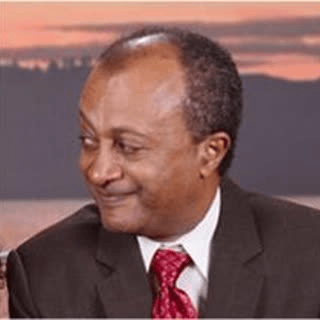
By Asfaw Beyene
I was taken aback by recent comments from two prominent political commentators of Somali ethnicity, Farah Maalim and Faisal Roble, both associated with Nairobi’s political circles. My focus here is on the remarks made by Faisal Roble.
In an interview with a media outlet unfamiliar to me, Faisal Roble expressed concern about what he described as the growing number of “ultra-nationalists” among the Oromo. He claimed that these nationalists had become so numerous, indeed, “huge” in number, that the phenomenon posed a danger to Ethiopia.
He then asked why Oromo nationalists had become so radicalized, suggesting that the movement’s supposed extremism might be explained by its being relatively new and youthful. As evidence of what he called the “pervasive” nature of Oromo nationalism, he alleged that Oromo nationalists were making territorial claims extending as far as Mogadishu, Djibouti, Yemen, Kenya, and Eritrea.
By the time I finished listening to the interview, I found myself wondering whether Faisal Roble had confused Somali ultra-nationalists with Oromo nationalists. Nearly every characteristic he attributed to Oromo nationalism seemed far more applicable to the historical record of Somali expansionist nationalism.
His argument deserves careful examination.
The Contradictions in Faisal Roble’s Argument
First, the history of radical nationalism in the Horn of Africa cannot be discussed without examining Somali expansionism. Somali nationalism has a long and complicated history. Its expansionist manifestations, particularly the ideology of Greater Somalia, contributed to regional wars, territorial disputes, and political instability. Somalia’s own experience with authoritarian rule, civil war, and state collapse demonstrates the destructive potential of nationalism when it becomes inseparable from territorial ambition and political exclusion.
It would be simplistic to attribute Somalia’s decades of instability entirely to nationalism. Nevertheless, the historical consequences of expansionist and pervasive Somali nationalism are too significant to ignore.
Second, Faisal Roble describes Oromo nationalism as a danger to Ethiopia. This assertion raises a fundamental question: a danger to which Ethiopia? If Oromo nationalism seeks equality, self-determination, political representation, and the protection of Oromo rights, it can be considered a danger only to a political order that refuses to recognize those rights.
A political movement demanding justice for a historically marginalized people should not automatically be characterized as extremist. The distinction between legitimate national aspirations and exclusionary ultra-nationalism is essential.
Third, Faisal portrays Oromo nationalism as a new and youthful phenomenon.
This reflects a troubling misunderstanding of Oromo history. The historical roots of Oromo collective identity, political institutions, resistance, and struggles over sovereignty extend back centuries. The Oromo played a major role in the political transformations of the Horn of Africa during the sixteenth century, long before the emergence of the modern Ethiopian state.
Modern Oromo nationalism took shape through subsequent historical experiences, particularly the incorporation of Oromo territories into the expanding Ethiopian Empire during the nineteenth century. To describe Oromo nationalism simply as a new movement is to overlook this long historical trajectory.
Fourth, Faisal alleges that Oromo nationalists claim territories extending to Mogadishu, Djibouti, Yemen, Kenya, and Eritrea. This is perhaps the most extraordinary part of his argument. I have yet to encounter a credible statement by a recognized Oromo political party, organization, or prominent nationalist leader asserting territorial claims over Mogadishu, Yemen, Eritrea, or Djibouti.
If Faisal possesses such evidence, he should present it. Which Oromo political organization has made these claims? When were they made? In what official document or public statement? Without such evidence, these allegations amount to a sweeping and potentially inflammatory misrepresentation of Oromo nationalism.
The irony is striking: the territorial ambitions he attributes to Oromo nationalists bear a much closer resemblance to the historically documented ideology of Greater Somalia. This leads to a more important question: Why has Faisal Roble chosen this moment to launch such an attack on Oromo nationalism? To explore that question, we must examine the emerging political connections between Nairobi, Mogadishu, and Jijjiga.
The Nairobi–Mogadishu–Jijjiga Nexus
Recent political developments in the Horn of Africa raise questions about the relationships among Somali nationalist networks, political actors in Somalia, and political movements operating within Ethiopia’s Somali Region. Nairobi has long served as an important center for Somali political, commercial, and diaspora activity. Its significance as a meeting place for politicians, businesspeople, and opposition figures is well established. However, the existence of these networks does not, by itself, establish that they operate under a coordinated political agenda.
What concerns me is the possibility that certain political actors are attempting to exploit regional tensions, territorial disputes, and opposition alliances to advance a renewed expansionist agenda. This concern becomes particularly important when viewed alongside recent political developments in Ethiopia and the changing alliances among armed and opposition movements.
The Minnesota Fraud Cases and the Nairobi Connection
Recent federal fraud prosecutions in Minnesota have also drawn attention to the movement of stolen public funds into overseas investments, including real estate in Kenya. Among the individuals named in connection with these cases, several of them have investments in Nairobi realestate. The diversion of funds intended to feed vulnerable children is deeply disturbing. Such misconduct betrays taxpayers’ trust, harms the communities these programs were designed to serve, and unfairly tarnishes the reputation of the many honest, hardworking Somali Americans who have contributed to their communities and American society. Criminal responsibility rests with the individuals involved and should never be generalized to an entire ethnic or immigrant community. Nevertheless, for Oromos and Kenyans, reports of property acquisitions by individuals indicted in the Minnesota fraud cases, in a city (Nairobi) where allegations of a nonexistent Oromo ultranationalist movement have suddenly surfaced, raise legitimate concerns. This does not imply any connection between those implicated in Minnesota and political figures in Nairobi. Rather, the broader question is whether illicit financial networks, political influence, and regional nationalist agendas intersect in ways that warrant further investigation.
The ONLF and the Changing Political Alliances in Ethiopia
In September 2026, the Ogaden National Liberation Front (ONLF) was reported to have joined a coalition known as the Ethiopian Peoples’ Forces Alliance for Survival, bringing together seven armed and opposition organizations opposed to Prime Minister Abiy Ahmed’s administration.
The ONLF has historically pursued Somali self-determination in Ethiopia’s Somali Region. Its political trajectory must also be understood in the context of the broader history of Somali nationalism and the territorial disputes that have shaped relations between Ethiopia and Somalia. The changing fortunes of opposition alliances, including those associated with the TPLF, may have created opportunities for other political movements to reposition themselves.
I am particularly concerned that some advocates of Somali expansionist nationalism may see these developments as an opportunity to revive older territorial ambitions. Faisal Roble’s political commentary and Farah Maalim’s reported statements about support for the ONLF deserve examination in this context, despite political sympathy for an organization should not be confused with proof of operational involvement in its activities. The critical issue is whether opposition to the Ethiopian government is being used to advance legitimate political demands or to reopen territorial conflicts between neighboring communities.
Moyale, Borana, and the Politics of Territorial Expansion
Recent tensions around Moyale and Borana territory have intensified these concerns. Moyale lies in a historically sensitive borderland where Oromo and Somali communities, including Borana and Garri populations, have longstanding relationships shaped by trade, migration, political competition, and periodic conflict.
Reports of violence, including the alleged killing of a 13-year-old girl and the reported refusal to return her body to her family, are deeply disturbing. These allegations demand an independent investigation, accountability, and justice for the victim’s family. No territorial or political dispute can justify the killing of a child. This is extreme nationalism in action.
Of particular concern are reports that a Somali national flag, rather than the flag of Ethiopia’s Somali Regional State, was raised in contested territory. If verified, such an act would carry political significance extending beyond an ordinary local dispute. It would raise questions about whether the conflict was being framed in terms of Somali national territorial ambitions rather than local administrative boundaries. This is why I do not believe the tensions should be dismissed simply as a dispute between the Garri and Borana communities both of whom are Oromos and both of whom speak Oromo language. There is a larger historical and political context that deserves examination.
The timing of Faisal Roble’s remarks, following heightened tensions and Oromo reactions to events in the area, is striking. His criticism of Oromo nationalism appears to reflect a broader political anxiety about Oromo resistance to territorial encroachment. Whether this interpretation is correct requires further evidence. Nevertheless, it provides a compelling reason to examine the historical record of Somali expansionist nationalism.
Greater Somalia: The Historical Irony
Perhaps the greatest irony in Faisal Roble’s accusations is that the territorial expansionism he attributes to Oromo nationalists closely resembles the ideology of Greater Somalia. The Greater Somalia project was not an imaginary accusation invented by political opponents. It was an explicit political objective promoted by extreme Somali nationalist movements and successive Somali governments. Its central ambition was to unite Somali-inhabited territories across the Horn of Africa under a single political entity. This included the Somali Republic, the Ogaden and other Somali-inhabited territories of Ethiopia, the Northern Frontier District of Kenya, and Djibouti. The five-pointed star on Somalia’s flag historically symbolized these five Somali territories.
Under Siad Barre, this ideology became closely associated with military expansionism and the attempt to alter established international borders by force. Thus, the history of Somali ultra-nationalism is not merely a history of territorial ambition. It is also a warning about the destructive consequences of authoritarianism, militarization, and exclusionary political identity.
Against this historical background, Faisal Roble’s portrayal of Oromo nationalism as uniquely expansionist becomes especially difficult to understand.
The Western Somali Liberation Front and the Ogaden War
The Western Somali Liberation Front (WSLF) provides one of the clearest historical examples of ultra nationalism and the territorial objectives associated with Greater Somalia. Supported by the Somali government, the WSLF operated in eastern Ethiopia and played a significant role in the conflict that culminated in the 1977 – 1978 Ogaden War. The name Western Somali Liberation Front itself reflected a territorial conception in which parts of internationally recognized Ethiopian territory were regarded as belonging to a broader Somali nation.
During the war, Somali forces advanced into substantial portions of eastern Ethiopia before being defeated by Ethiopian forces. The conflict had devastating consequences for the region and its civilian populations, the broader military campaign and associated political movements affected Oromo communities and territories. But the central point is undeniable: territorial revisionism was an explicit component of the Greater Somalia project, manifested as ultra nationalism. These fanatical adventures to alter boarders by force led to the disintegration of the Somali state apparatus and the mushrooming of warlords.
Where, then, is the equivalent documented Oromo nationalist program claiming Mogadishu, Yemen, or Eritrea? If Faisal Roble wishes to make that comparison, the burden of evidence rests with him.
From the WSLF to the ONLF
The decline of the WSLF and the emergence of the ONLF marked an important transformation in Somali nationalist politics in Ethiopia. The ONLF emerged in the 1980s and eventually became a major political and armed organization advocating self-determination for ethnic Somalis in Ethiopia. Although the ONLF and WSLF differed in their organizational structures, political circumstances, and stated objectives, their histories are connected to the broader question of Somali national identity and political sovereignty in the Horn of Africa.
The relationship between Somali nationalist movements and Oromo liberation organizations has also been complex. At different times, their interests have converged around opposition to Ethiopian central governments. At other times, territorial competition, political rivalry, and conflicting national aspirations have generated serious tensions. Historical attacks of Somali extremists on Oromo liberation figures, including the 10 massacred at Shinniga in 1980 have deeply saddened the Oromo people, leaving a historical scar. Faisal shall pour no more fuel to these historic wounds and respect the brotherly sentiment that existed between Oromos and Somalis for centuries.
The Somali Abo Liberation Front and the Struggle Over Oromo Territory
During the 1970s, the Somali government supported extremist Somali movements operating in southern Ethiopia, including areas historically associated with the provinces of Bale, Sidamo, and Arsi. These regions were primarily inhabited by Oromo populations. The SALF mobilized some communities in these areas to suit Somalia’s regional political and military objectives. Unlike the WSLF, which focused primarily on Somali national claims in eastern Ethiopia, the SALF’s activities extended into areas where Oromo identity and political aspirations were central. It was a clear expansionist and extremist move to annex some Oromo territories including the Garri.
Following Somalia’s defeat in the Ogaden War, the Oromo Abo Liberation Front (OALF) emerged reflecting changing political identities and alliances. The precise organizational relationship between the SALF and OALF, including claims about formal renaming and changes in political affiliation, remain beyond the scope of this paper. Nevertheless, the broader history illustrates an important point: Somali state-sponsored political and military movements were active in territories inhabited by Oromo communities, and the growing national aspirations of Somali extremism was already evident decades ago.
This is the historical context in which false accusations of Oromo territorial expansionism must be evaluated. It is important to note that out of such piles of political extremism was born Al-Shabaab, whose emergence was also shaped by a different mix of ideology, state collapse, and extremist politics. There simply are no parallels to such extremism in the Oromo body politics, reason why Faisal’s statement itself comes as extreme.
Who Is Really Promoting Expansionist Nationalism?
Faisal Roble’s comments raise questions that cannot be avoided. Why are political commentators such as Faisal Roble and Farah Maalim devoting so much attention to the alleged dangers of Oromo nationalism while appearing less concerned about the documented history of Somali territorial expansionism? Why portray Oromo demands for political rights and territorial security as extremist while failing to apply the same scrutiny to the ideology of Greater Somalia? And why should Oromo opposition to perceived territorial encroachment be interpreted as radicalization rather than as a legitimate concern about security, identity, and political rights?
These questions are especially important given the continuing challenges facing Somalia itself.
Somalia has struggled for decades with state fragmentation, armed insurgency, political instability, and the difficulty of establishing effective authority across its territory. Regional and international assistance, including sacrifices made by Ethiopian forces, has played a significant role in efforts to restore security. I have no doubt that many of these forces come from Oromia.
Rather than reopening old territorial disputes, political leaders and commentators should devote greater attention to peace, accountable governance, economic development, and cooperation among the peoples of the Horn of Africa.
This is not an argument against Somali nationalism as an expression of cultural identity or legitimate political aspiration. Nor is it a criticism of Somali people, whose communities have suffered enormously from war, displacement, and political instability. It is an argument against expansionist ultra-nationalism, regardless of who promotes it.
Conclusion: The Danger of Historical Amnesia
Faisal Roble’s criticism of Oromo nationalism suffers from a fundamental contradiction. He warns against an alleged Oromo expansionist movement without identifying credible evidence of the extraordinary territorial claims he attributes to it. Yet the historical record contains extensive documentation of Somali nationalist movements that openly pursued territorial revisionism across the Horn of Africa.
The Greater Somalia project, the WSLF, the Ogaden War, and the history of Somali-backed political movements in southern Ethiopia are not matters of speculation. They are part of the region’s political history.
None of this means that Oromo nationalism should be exempt from criticism. Any nationalist movement can become intolerant, exclusionary, or extremist. Oromo nationalism, like every other political movement, should be judged by its principles, conduct, and respect for the rights of others. But criticism must be grounded in evidence, not sweeping accusations or historical distortions.
If Faisal Roble believes that Oromo nationalists are claiming Mogadishu, Yemen, Djibouti, Eritrea, and Kenya, he should identify the organizations, leaders, statements, and documents that substantiate his allegations. Until then, his claims remain unsupported.
The peoples of the Horn of Africa have suffered enough from territorial wars, political manipulation, and competing nationalist ambitions. They deserve a future based on mutual recognition, historical honesty, and respect for one another’s rights. The real danger to Ethiopia and the wider Horn of Africa is not the legitimate expression of Oromo or Somali national identity. It is the revival of expansionist ideologies that treat the territories and rights of neighboring peoples as objects of political conquest. That is the danger Faisal Roble should be addressing rather than projecting onto Oromo nationalism the very expansionist tendencies that have already caused so much suffering in the region.

The Pen and the Sword: Remembering Jaal Kumsaa Buraayyuu, a Titan of the Oromo Struggle
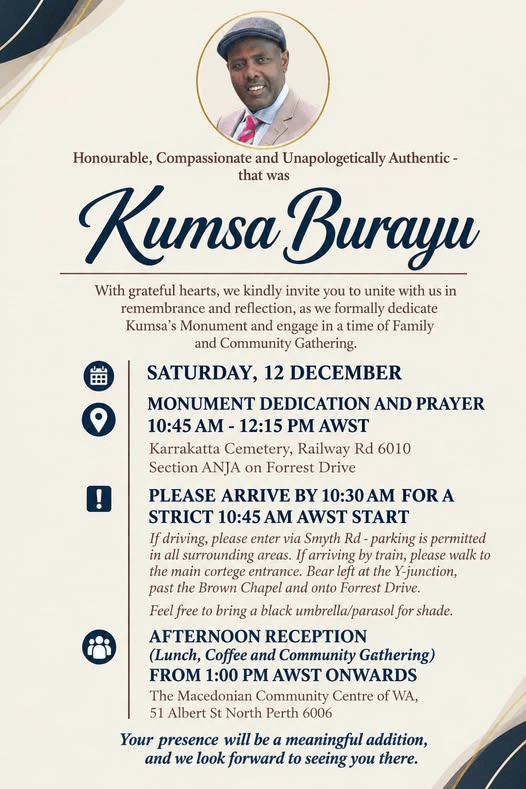
By Dhabessa Wakjira
In the long and arduous history of the Oromo people’s struggle for self-determination, the weapons of resistance have not only been rifles and guerrilla tactics; they have also been the pen, the novel, and the printing press. On July 15, 2025, the Oromo nation lost one of its most formidable intellectual warriors. Jaal Kumsaa Buraayyuu (Kumsa Burayu Balo)—a prominent nationalist, author, journalist, and political activist—passed away, leaving behind a monumental legacy that fundamentally shaped Oromo literature and political consciousness.
His life was a testament to the power of words in the face of state repression. From the rural heartlands of East Wallagga to the global stage of international exile, Kumsaa Buraayyuu dedicated his life to ensuring that the Oromo story was not just preserved, but weaponized for liberation.
Forging a Cultural Renaissance
Born in November 1969 in the Horro Guduru zone of East Wallagga, Oromia, Kumsaa grew up immersed in the rich oral traditions and cultural heritage of his people. This early exposure to indigenous knowledge would become the bedrock of his later work.
The 1990s were a pivotal time for Ethiopia. As the brutal Derg regime collapsed, Kumsaa Buraayyuu emerged as a pioneering voice in the Oromo cultural recovery movement. In 1993, he authored Suuraa Abdii (The Picture of Hope), one of the earliest and most influential novels written in Afaan Oromo. The novel was not just a work of fiction; it was a searing, critical examination of the oppressive realities of the Derg regime. For a people whose language and history had been systematically marginalized, Suuraa Abdii was a radical act of reclaiming identity.
Furthermore, Kumsaa was an early and fierce advocate for the expansion of Afaan Oromo literacy using the Qubee (Latin) script. Recognizing that a language is the lifeblood of a culture, he championed the written word as the primary vehicle for Oromo emancipation.
The Cost of Truth
Kumsaa’s literary brilliance was matched by his journalistic courage. In 1993, he co-founded the Madda Walaabuu publishing and advertisement organization, which became a vital hub for Oromo intellectual thought. He also served as an editor for early Oromo political and cultural magazines, most notably Odolee.
Through these platforms, Kumsaa provided a space for Oromo voices that the state wanted silenced. But speaking truth to power in Ethiopia carries a heavy price. Because of his relentless work and his advocacy for Oromo rights, Kumsaa faced severe political persecution and imprisonment under the incoming EPRDF regime. The state recognized what many already knew: his ideas were a threat to their centralized, hegemonic control.
Exile and the Unyielding Struggle
Faced with the impossibility of continuing his work safely within Ethiopia, Kumsaa was forced to flee in 1996. After a brief period in Djibouti, he resettled in Australia in 1997. Yet, for a true patriot, exile is not a retreat; it is merely a change of battleground.
From his new home in the Global South, Kumsaa Buraayyuu remained highly active in the political struggle. He joined the Oromo Liberation Front (OLF/ABO), dedicating his strategic mind to the cause. From 1998 to 2009, he served as a senior OLF official and led the OLF South Pacific branches, organizing and mobilizing the Oromo diaspora across Australia and New Zealand.
In an era where the Ethiopian government and its allies actively abused their influence in international media and institutions to demonize the Oromo people and their organizations, Kumsaa’s diplomatic and journalistic work in the Pacific region became an essential counter-narrative. He understood that the struggle for Oromia had to be fought simultaneously in the homeland and in the halls of international opinion.
A Legacy that Breathes
Jaal Kumsaa Buraayyuu was a bridge between the traditional oral historians of the past and the modern, globalized digital activists of the future. He understood that the Gadaa system, the ancient democratic governance model of the Oromo, was not just a relic of history, but a guiding philosophy for a better future—one rooted in human security, compromise, and consensus.
His passing on July 15, 2025, is a profound loss to the Oromo nation. He leaves behind a generation of writers, readers, and activists who were inspired by Suuraa Abdii and who learned the Qubee script through his advocacy.
Though Kumsaa Buraayyuu is gone, the “picture of hope” he painted through his life’s work remains. He proved that while the state can imprison the body, it can never imprison the Afaan Oromo language, nor the indomitable spirit of the people who speak it.
May his memory be a blessing, and may his legacy continue to fuel the fight for freedom, justice, and self-determination for generations of Oromos to come.

From Refugee Roots to Leadership: Louise Perry to Lead Victoria’s Multicultural Commission
By Dhabessa Wakjira
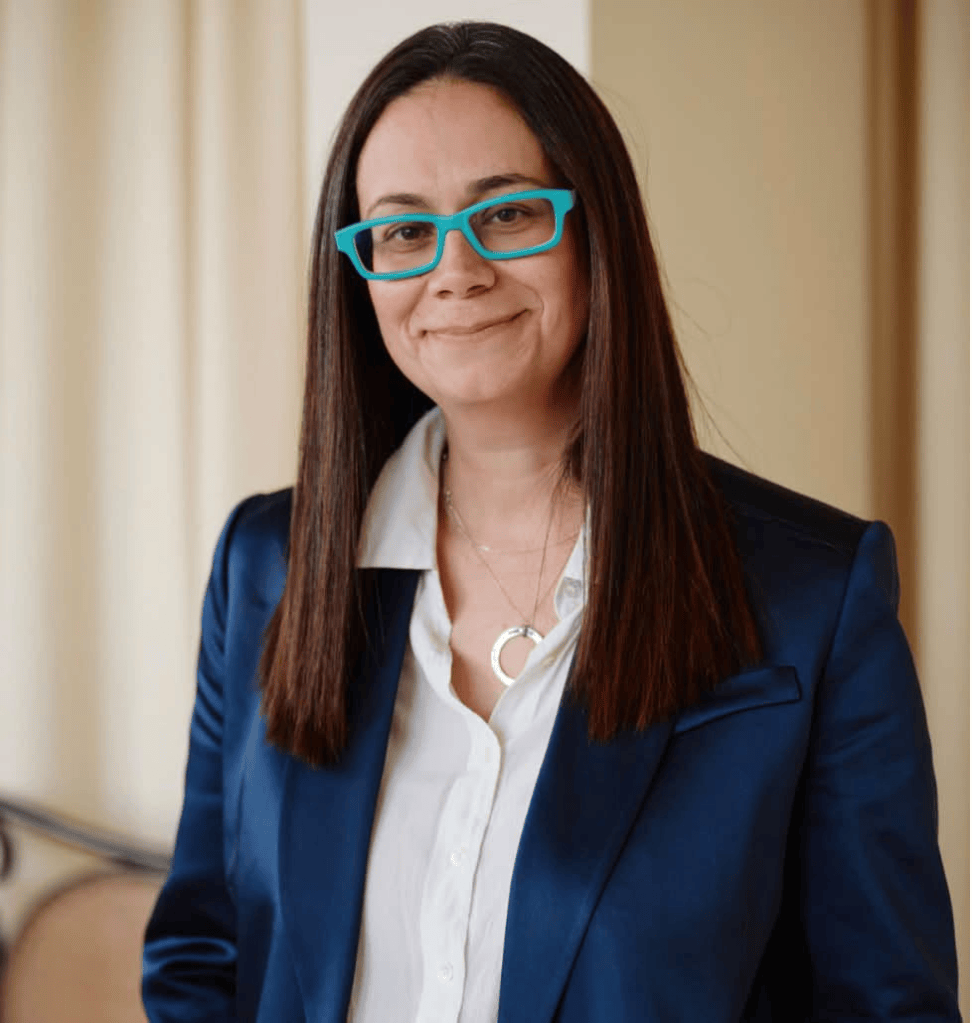
MELBOURNE – Victoria’s commitment to fostering an inclusive and harmonious society has found a steadfast champion. Multicultural and Multifaith Victoria (MMV) has announced that Ms. Louise Perry will continue her tenure as the Interim Multicultural Coordinator General.
While the title is long, the mission is deeply personal. For Perry, the role is not just a bureaucratic appointment, but a culmination of a life shaped by migration, resilience, and a profound dedication to human rights.
As a Burmese woman, a migrant, and the daughter of a refugee, Perry brings a unique duality to the position. She merges her lived experience with significant professional expertise across the public, development, and human rights sectors. It is this combination of personal insight and professional acumen that MMV leadership believes will be instrumental in driving the organization forward.
“Louise brings extensive experience across government, human rights, and international development, along with a lifelong commitment to strengthening inclusion and opportunity for diverse communities,” MMV said in a statement announcing her continued appointment.
Having traversed the complex landscapes of international development and public service, Perry is acutely aware of the challenges and opportunities facing Victoria’s diverse populace. Her career has been defined by a drive to ensure that systemic barriers are dismantled and that opportunity is accessible to all, regardless of background.
In her role as Interim Coordinator General, Perry is tasked with positioning MMV as a trusted, effective, and robust institution. She is passionate about ensuring the organization builds strong, meaningful partnerships across a wide spectrum of stakeholders—from grassroots community groups and government bodies to businesses and the broader Victorian public.
Her vision for MMV is one of active engagement and tangible results. By fostering these cross-sector alliances, Perry aims to deliver meaningful change, ensuring that the voices of multicultural and multifaith communities are not just heard, but are integral to the shaping of policy and public life in Victoria.
As she continues to lead the organization through its establishment phase, Perry stands as a testament to the very values MMV seeks to uphold: that diversity is a strength, and that leadership is often most powerful when informed by the journey of those who have lived it.

The Lion of Borana: Remembering Guyyoo Boruu Galmaa, the Abbaa Gadaa Who Defied Empires
By Dhabessa Wakjira
In the annals of Oromo history, there are leaders who govern, and then there are those who become the embodiment of a people’s resistance. Guyyoo Boruu Galmaa, who served as the Abbaa Gadaa of the Borana Oromo from 1944 to 1952, belongs unequivocally to the latter. He was not merely a custodian of the ancient Gadaa system; he was a shield against the encroaching empires of the 20th century—a man whose defiance of both Italian invaders and the Ethiopian imperial state preserved the soul of the Borana people.
His story, deeply intertwined with the fate of the sacred wells and the contested borders of Moyale, offers a masterclass in indigenous diplomacy and unyielding sovereignty.
A Legacy Born in the Shadow of Partition
The roots of Guyyoo Boruu’s leadership stretch back to a defining tragedy for the Borana nation. In 1907, the British and Ethiopian empires signed the Anglo-Ethiopian Boundary Agreement, a colonial decree that arbitrarily carved the Borana homeland in two, dividing the people of Moyale.
At that time, it was Boruu Galmaa Dooyyoo—the father of Guyyoo—who served as the Abbaa Gadaa. He was among the first to openly reject the treaty, recognizing it not as a legal boundary, but as an existential threat to the unity and sovereignty of the Borana. The son inherited the father’s fire.
In 1944, when Guyyoo Boruu Galmaa took the Baallii (the ritual transfer of power) and assumed the mantle of Abbaa Gadaa, he stepped into a region rife with external pressure. The Borana were not only facing the legacy of the 1907 partition but were also navigating the chaotic fallout of global wars and shifting imperial ambitions in the Horn of Africa.
Defying the Italian War Machine
Historical records reveal that Guyyoo Boruu’s leadership did not begin in 1944; his journey as a freedom fighter started much earlier. Between 1936 and 1945, he was actively leading the Borana Oromo in resistance against the Italian occupation.
When the Italians invaded, they brought not just armies, but a strategy of land seizure. As the historical account notes, the Italian forces attempted to annex vast tracts of Handaraa land, claiming everything except the sacred Arddaa and Tula (water wells). Guyyoo Boruu responded by building the Borana Gadaa structures and waging a relentless war against the Italians.
His struggle was not just about repelling a foreign army; it was about defending the sacred ecology of Borana life. The Tula wells were the lifeblood of the cattle and the people. Guyyoo Boruu understood that to lose the land was to lose the wells, and to lose the wells was to lose the Borana identity itself.
Standing Against the Imperial Crown
Following the defeat of the Italians, the Borana faced a new, more insidious threat: the expanding centralization of Emperor Haile Selassie’s government. Between 1947 and 1950, the imperial regime sought to impose its administrative and cultural dominance on the southern frontiers.
Guyyoo Boruu Galmaa became the primary obstacle to this encroachment. He did not merely resist the political pressures of the imperial state; he actively protected the Gadaa system, ensuring that traditional laws, democratic consensus, and indigenous governance continued to thrive despite the centralizing forces of Addis Ababa.
His defiance culminated in a moment of profound historical significance. In 1950, the Haile Selassie government, seeking to co-opt local leaders, offered Guyyoo Boruu the title of “Giraazmach”—a high-ranking imperial military and administrative honor.
He refused.
In rejecting the title, Guyyoo Boruu Galmaa made a definitive statement of Oromo autonomy. He rejected the legitimacy of an empire that had partitioned his people and threatened their customs. By turning his back on imperial honors, he affirmed that his authority came not from a distant emperor, but from the Gadaa, the Borana people, and the land itself.
The Enduring Wisdom of the Elders
The legacy of Guyyoo Boruu Galmaa is not confined to the history books; it is a living, breathing testament to the resilience of Oromo culture.
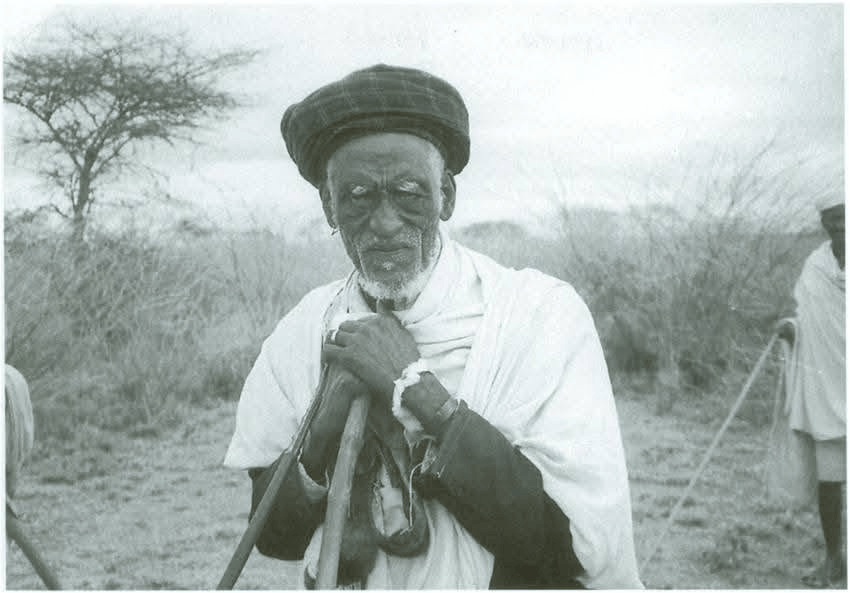
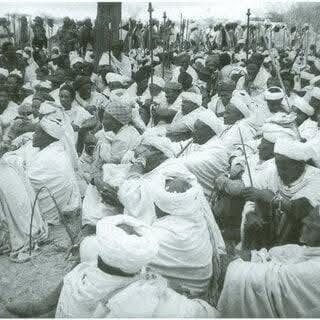
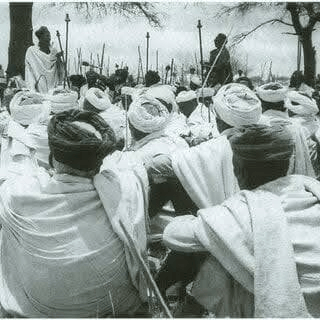
His life was meticulously documented by Western anthropologists who recognized the profound nature of the Borana political system. The renowned scholar Eike Haberland photographed him in 1952—the year he completed his term as Abbaa Gadaa. Decades later, in 1986, anthropologist Günther Schlee captured another historic moment: Guyyoo Boruu, then approximately 95 years old, was photographed at the Gumii Gaayyoo (the great assembly) as his son, Boruu Guyyoo Boruu, took the Baallii and assumed the leadership of the Gadaa.
That photograph, showing the aged father watching his son take the reins of power, is a powerful visual metaphor. It represents the unbroken chain of the Gadaa system—a system that Guyyoo Boruu fought to protect with weapons, diplomacy, and sheer moral courage.
A Beacon for the Present
As the Oromo people today face a renewed crisis of state violence, displacement, and the ongoing political capture of their sacred resources—including the Tuula Saglan Booranaa—the legacy of Guyyoo Boruu Galmaa serves as a vital beacon.
He stands as a reminder that Oromo sovereignty is ancient, sophisticated, and deeply rooted in a democratic culture that predates modern statehood. He proved that true leadership is not measured by the titles bestowed by empires, but by the courage to defend one’s people against them.
Nearly a century after he began his resistance, the spirit of Guyyoo Boruu Galmaa still echoes across the plains of Borana, flowing like the waters of the sacred wells he fought to protect: undivided, unbroken, and eternally free.
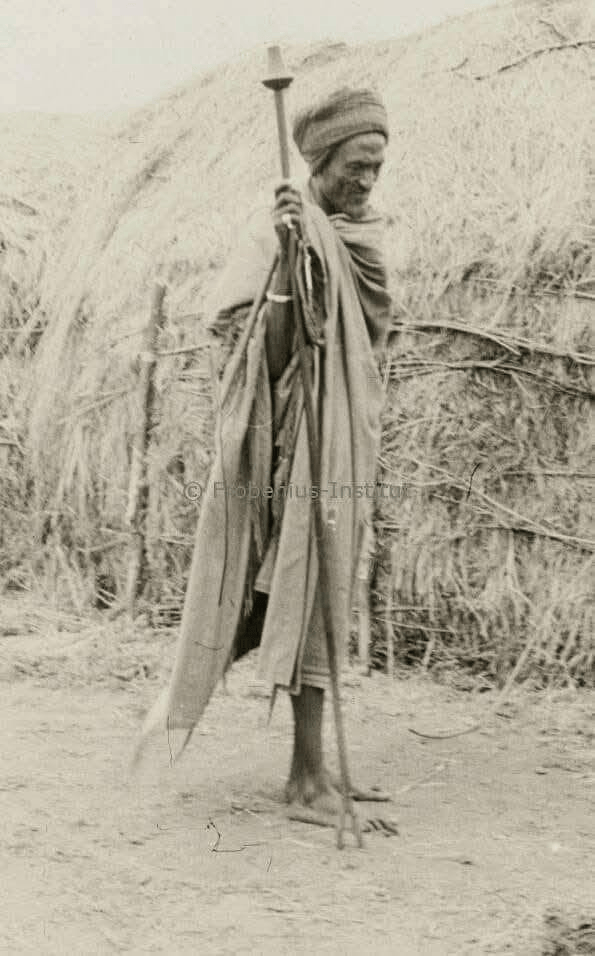
Photos: Guyyoo Boruu Galmaa, photographed by Eike Haberland (1952) and Günther Schlee (1986).

Terror in Mandera: Ethiopian Oromos Seek Refuge After Fatal Stabbing Amid Rising Border Tensions
By Daandii Ragabaa
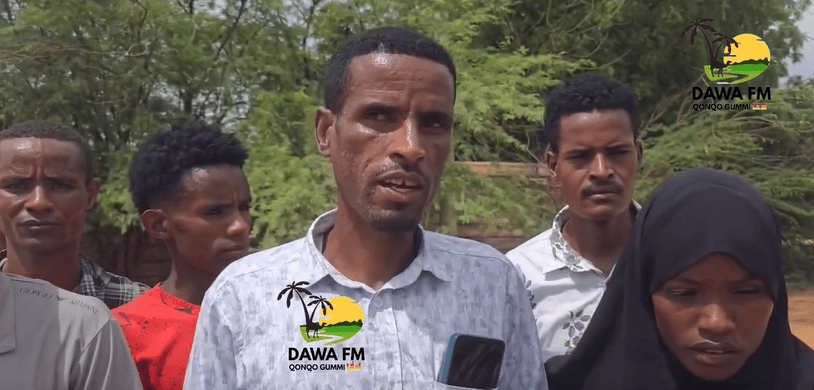
Fear has gripped the Ethiopian Oromo community in Mandera town, Kenya, following the brutal stabbing to death of one of their colleagues. In a desperate bid for survival, several members of the community have reportedly sought refuge at the Mandera Police Station, appealing to the Kenyan government and security agencies for urgent protection.
The killing, which has sent shockwaves through the cross-border community, highlights the precarious reality facing Ethiopian nationals living and working in Kenya, many of whom are fleeing the devastating conflict in their home country.
According to community members, the victim was targeted simply for being an Ethiopian Oromo. The group is insisting they are innocent civilians who should not be forced to pay the price for the ongoing political violence and tensions linked to events across the border.
“We are appealing to the authorities to intervene and guarantee our protection,” a community representative said. “We should not be held responsible for tensions or violence linked to events across the border. We are here to work and live in peace.”
The fatal stabbing has raised serious concerns about the security of Ethiopian nationals in Mandera, a town that sits squarely on the Ethiopia-Kenya border—a region already deeply scarred by arbitrary colonial borders, resource-based conflicts, and the spillover effects of the Ethiopian government’s military campaigns in Oromia.
For many Oromos, crossing into Kenya is a matter of survival. As documented by human rights organizations, Oromo civilians displaced by government forces and state-aligned militias constitute the bulk of Ethiopian refugees fleeing to neighboring countries. Yet, as the tragedy in Mandera demonstrates, the search for safety often leads them into new environments of hostility and xenophobia, where they are scapegoated for broader geopolitical tensions.
The situation in Mandera remains highly volatile. The affected individuals are now calling on community leaders, the Kenyan government, and security agencies to step in immediately to prevent any retaliatory attacks and ensure calm and restraint among residents.
They emphasize a fundamental principle of human dignity: that all residents, regardless of their nationality or ethnic background, must be able to live and work without fear.
As the community mourns the loss of their colleague and huddles in police stations for safety, the incident serves as a stark reminder of the regional fallout of the crisis in the Horn of Africa. It is a humanitarian emergency that ignores national borders, demanding urgent attention and protection for vulnerable civilians caught in the crossfire of a conflict they did not choose.
Video credit: Dawa FM

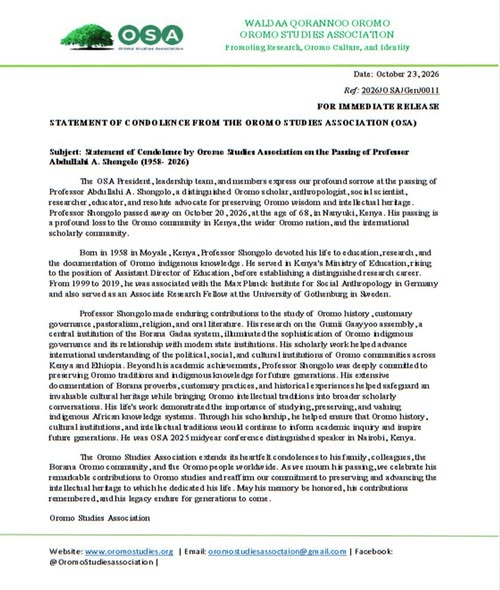
The Passing of a Pillar: Professor Abdullahi A. Shongolo and the Enduring Legacy of Oromo Indigenous Knowledge
By Dhabessa Wakjira
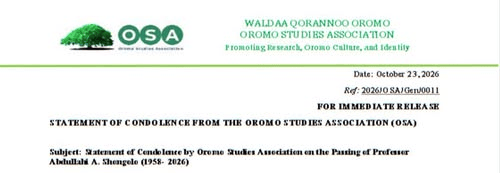
On October 20, 2026, the scholarly and cultural world lost a towering figure. In Nanyuki, Kenya, Professor Abdullahi A. Shongolo—a distinguished anthropologist, social scientist, and resolute advocate for Oromo intellectual heritage—passed away at the age of 68. In a formal statement of condolence released on October 23, the Oromo Studies Association (OSA) announced his passing, describing it as “a profound loss to the Oromo community in Kenya, the wider Oromo nation, and the international scholarly community.”
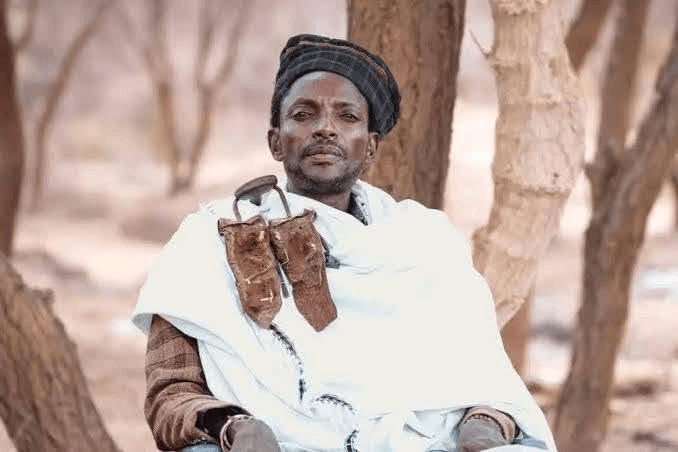
For those who knew his work, Professor Shongolo was not merely an academic; he was a bridge. Born in 1958 in Moyale—the very border town where the sacred wells of the Borana have faced generations of political siege—he spent his life ensuring that the sophisticated governance, oral literature, and customary laws of his people were not just preserved, but globally recognized as vital contributions to human civilization.
From the Classroom to the Global Stage
Professor Shongolo’s journey began in education. Before establishing a distinguished research career, he served in Kenya’s Ministry of Education, eventually rising to the position of Assistant Director of Education. This foundational experience shaped a career defined by a dual commitment: rigorous academic inquiry and the practical upliftment of his community.
From 1999 to 2019, his intellectual home was the Max Planck Institute for Social Anthropology in Germany. He also served as an Associate Research Fellow at the University of Gothenburg in Sweden. Yet, despite his extensive international footprint, his research gaze never strayed far from the Horn of Africa.
His scholarship was deeply rooted in the lived realities of the Oromo people. He made enduring contributions to the study of Oromo history, pastoralism, religion, and oral literature. His meticulous research on the Gumii Gaayyoo assembly—a central institution of the Borana Gadaa system—illuminated the remarkable sophistication of Oromo indigenous governance. At a time when colonial and post-colonial narratives often dismissed African traditional systems as primitive, Shongolo’s work provided irrefutable evidence of a highly structured, democratic, and consensus-based political order, and he expertly examined how this system interacted with modern state institutions.
Safeguarding the “River of Blessings”
Professor Shongolo understood that a culture survives through its language and its stories. Beyond his formal academic publications, he was deeply committed to the meticulous documentation of Borana proverbs, customary practices, and historical experiences.
In recent years, as the Oromo people have faced systemic marginalization and violence, Shongolo’s work served as a vital anchor. By archiving the intellectual traditions of the Oromo, he ensured that future generations would inherit a robust cultural identity. His life’s work demonstrated the absolute necessity of studying, preserving, and valuing indigenous African knowledge systems.
His dedication to the Oromo nation was recognized just a year prior to his passing. In 2025, he served as the distinguished speaker at the OSA’s midyear conference in Nairobi, where he continued to challenge and inspire a new generation of Oromo scholars and activists.
A Legacy That Endures
The passing of Professor Shongolo comes at a critical juncture for the Oromo people. As the Oromo Studies Association fights to center Oromo voices in global human rights discussions—often countering biased narratives promoted by state-aligned institutions—the loss of a scholar of Shongolo’s stature is deeply felt.
Yet, as the OSA noted in their statement, his work has laid a foundation that cannot be erased. “His extensive documentation of Borana proverbs, customary practices, and historical experiences helped safeguard an invaluable cultural heritage,” the statement reads, “while bringing Oromo intellectual traditions into broader scholarly conversations.”
The Oromo Studies Association extended its heartfelt condolences to his family, colleagues, the Borana Oromo community, and the Oromo people worldwide. In mourning his passing, the organization reaffirmed its commitment to preserving and advancing the intellectual heritage to which Professor Shongolo dedicated his life.
Professor Abdullahi A. Shongolo is gone, but the Gumii Gaayyoo he studied, the proverbs he recorded, and the dignity of the Gadaa system he brought to the world’s attention will continue to echo. He ensured that the intellectual wealth of the Oromo nation is no longer a hidden treasure, but a beacon for generations to come.
May his memory be honored, his contributions remembered, and his legacy endure.
Dhabessa Wakjira is a writer covering Horn of Africa affairs and Oromo cultural heritage.