Dandenong Harmony Square: Oromo Community Honors Ilfinash Qanno with Love and Reverence
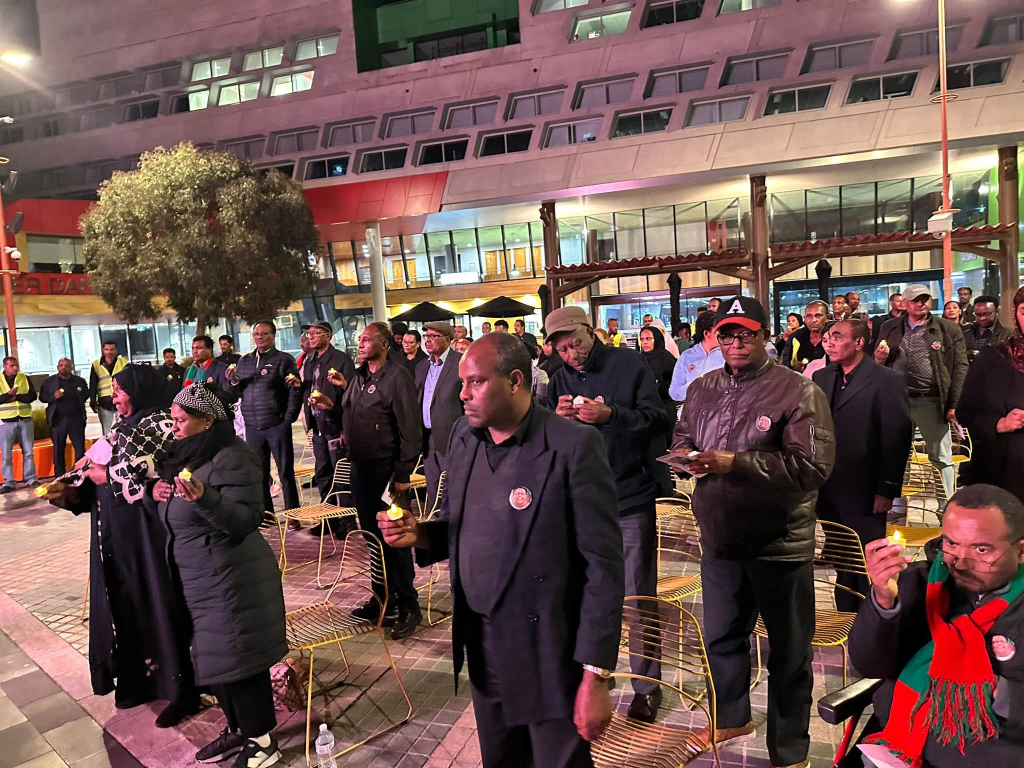
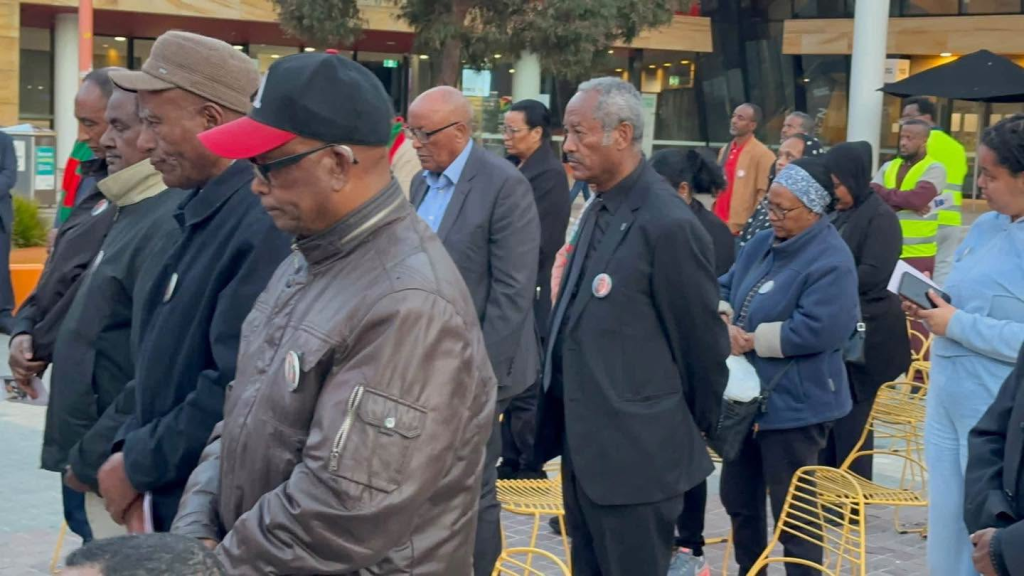
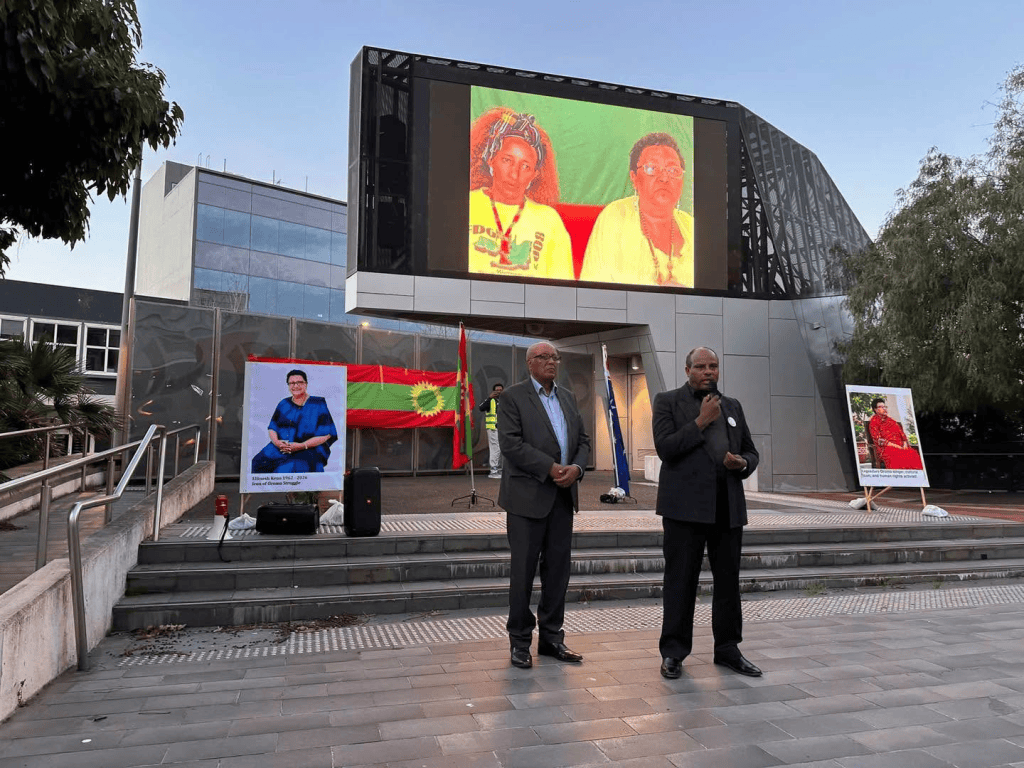
DANDENONG, Victoria — At 5 PM on September 12, 2026, Dandenong Harmony Square became the emotional heart of Melbourne’s Oromo diaspora. The Oromo Community in Melbourne Australia convened a solemn and deeply affectionate commemorative gathering to mourn the passing of legendary artist and freedom fighter Ilfinash Qanno, who died in Finfinnee on September 6. Hundreds of community members and friends assembled to express their profound respect and enduring remembrance for the woman known as “the voice of resistance.”
Grief Transformed into Celebration
From the outset, the commemoration was invested with a meaning that transcended mere mourning. In the days leading up to the event, Oromo advocacy groups in Melbourne called upon the community to transform sorrow into a celebration of Ilfinash’s life. “What she left us is not despair, but a radiant legacy,” the organizers wrote in a statement. “We must draw strength from her and from the spirit of those who came before us, and renew our commitment to the cause she defended throughout her life.”
That spirit permeated the entire gathering at Harmony Square. Participants wove together song, recitation, and remembrance to sketch the portrait of a woman who belonged not only to the stage but to the deepest conscience of a people. As the Oromo community in Minnesota expressed in its own condolence message, Ilfinash “dedicated her extraordinary talents throughout her life to expressing Oromo identity, history, language, aspiration, and resilience — often at tremendous personal cost.”
From Nekemte to Finfinnee: A Voice That Would Not Be Silenced
Ilfinash Qanno was born in 1962 in Nekemte, Oromia, and later moved to Finfinne. Her artistic career began amid the cultural revival of the Oromo renaissance, but it quickly became inseparable from political awakening. In 1976, at a historic cultural performance in Finfinnee, she electrified the audience with a single line: “Qawwee malee maaltu bilisa nu baasa?” — “Without a gun, what will set us free?” From that moment, she bound her destiny irrevocably to the Oromo liberation struggle.
Her music was never merely entertainment. In an era when Afaan Oromo expression and Oromo identity were brutally suppressed, her songs became vessels of memory, defiance, and collective aspiration. She drew on Oromo oral traditions, proverbs, and geerarsa — the traditional praise poetry of Oromo warriors — fusing cultural roots with political consciousness in songs such as “WBO Koo Maaloo Ree,” “Yaa Lammii Koo,” and “Geerarsa.”
The price was devastating. She was imprisoned multiple times under the Derg regime and subsequent governments. According to Oromo human rights documentation and accounts from fellow prisoners, she endured extraordinarily brutal treatment in detention — including having her head forcibly shaved with broken glass. This violence was not merely physical torture; it was a calculated assault on a woman who stood through her voice. Yet as she later reflected, her physical frailty could not simply be attributed to age — the prison gates had opened, but the imprisonment never truly left her body.
She Opened the Road for Oromo Women
Ilfinash’s significance extends far beyond the label of “protest singer.” The Oromo community in Melbourne emphasized in its tribute her role as a pioneer of Oromo women in public life: in an era when restrictive expectations severely constrained women’s participation in public affairs, she challenged both political oppression and social convention, carving out space for those who would follow. “Her courage created possibilities for generations of Oromo artists and women,” the organization wrote.
This dimension was invoked repeatedly at the Harmony Square gathering. For many young Oromo women present, Ilfinash was not merely a name to be honored but a stance to be inherited: the conviction that women have the right not only to sing but to stand at the forefront of struggle.
A Final Resting Place: Ambo’s Loyalty Repaid
Ilfinash Qanno ultimately chose Ambo as her final resting place. It was not an arbitrary decision. In 1992, she was captured alongside comrades in fighting near Ambo and detained at the Kerchele detention center. When elements within the regime discussed whether to execute her, the people of Ambo answered with collective action: they pooled money to bribe the prison commander, and the weight of popular will made the authorities afraid to act.
She never forgot. When her life approached its end, she did not choose to return to her birthplace but to the city whose people had once ransomed her life through their courage. Ambo’s people had refused to let her die; she answered that debt with eternal rest among them.
The Voice Has Fallen Silent; The Song Endures
Ilfinash Qanno left behind more than ten albums and an auditory archive dispersed across Oromo diaspora communities worldwide. Her cassette tapes once crossed borders she herself could not cross; her melodies passed from mouth to mouth through the cracks of prohibition and imprisonment.
The commemoration at Dandenong Harmony Square was the echo of that archive on another continent. When Oromo diaspora members sing her songs in a public square in a foreign land, they are doing more than remembering a person. They are enacting the very truth Ilfinash proved with her life: that a people’s language, memory, and identity are worth defending — and can be defended.
The voice has fallen silent. The song endures.

Posted on September 12, 2026, in Aadaa, Afaan, Events, freedom, Grief Support, Information, Kindness, Language, Media, News, Oromia. Bookmark the permalink. Leave a comment.






Leave a comment
Comments 0