From Refugee to Trailblazer: How Dr Melika Yassin Sheikh-Eldin Is Reshaping Australia’s Approach to Settlement
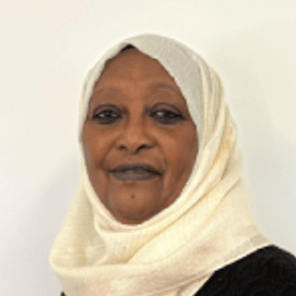
By Dhabessa Wakjira
When Dr Melika Yassin Sheikh-Eldin fled war in Eritrea in the late 1970s, she could not have known that her journey would one day help shape how an entire nation welcomes its newest arrivals. But that is precisely what happened. Over four decades, Melika has transformed her lived experience as a refugee into world-leading models for community integration and social cohesion — models now studied and adopted far beyond Australia’s shores.
She has helped thousands of new arrivals settle successfully. She has disrupted gender stereotypes and challenged public perceptions of what refugees can achieve. And she has done so while raising three children, completing a PhD, and representing Australia on the global stage as a “Refugee Voice” at United Nations consultations in Geneva.
Her story is not simply one of personal triumph. It is a blueprint for what is possible when refugees are recognized not as recipients of aid, but as stakeholders, leaders, and architects of their own futures.
A Journey Forged in Service
Melika’s path to Australia was neither short nor simple. After fleeing Eritrea, she volunteered in Sudanese refugee camps and later in Cairo. Her dedication drew the attention of some of the world’s most respected humanitarian organizations. She volunteered for the United Nations High Commissioner for Refugees (UNHCR) , the Red Cross, and Save the Children — gaining frontline experience that would later inform her professional approach.
She resettled in Australia in 1992, bringing with her not only the scars of displacement but also an unshakeable commitment to service. That commitment found its home at AMES Australia, where she has been a pivotal leader since 2001 and has served as Manager of Settlement Support Services since 2006.
Since 2007, she has sat on the board of the Refugee Council of Australia and represented the nation as a “Refugee Voice” at annual UNHCR consultations in Geneva. In that role, she has advocated relentlessly for policy shifts that recognize refugees as stakeholders rather than passive recipients of aid — a principle that has guided every project she has led.
Three World-Leading Models
Melika’s work at AMES Australia has produced initiatives that are now considered global blueprints for settlement and integration. Three stand out in particular.
1. The Nhill Rural Settlement Project
In western Victoria, the small town of Nhill was facing economic decline. Melika’s project settled Karen refugees in the community — and the results were transformative. The town’s economy was revitalized, and the model is now regarded internationally as a global blueprint for rural settlement. It demonstrated that refugee settlement is not a burden but an opportunity — for the newcomers and for the host community alike.
2. The Werribee Park Gardening Program
Isolation and mental wellbeing are critical challenges facing many refugee women, particularly those who arrive without established community networks. Melika’s program engaged isolated Karen women in gardening at Werribee Park. The initiative directly addressed these challenges, and its success was so evident that the model has since been adopted by other organizations.
3. The Community Guides Program
Perhaps Melika’s most influential innovation is the Community Guides Program, which recruits former refugees to use their lived experience to assist new arrivals. The logic is elegant: those who have walked the path themselves are uniquely positioned to guide others along it. The program has proven so effective that Melika has traveled to Sweden, New Zealand, and Japan to help international organizations establish programs based on the AMES Community Guides model.
Challenging Stereotypes, Championing Two-Sided Education
Melika’s impact extends beyond program design. She has been a powerful voice in disrupting gender stereotypes and challenging the public perception of what refugees can achieve. At a time when refugee women are often portrayed as passive or dependent, Melika’s leadership — and the leadership she cultivates in others — tells a different story.
Central to her philosophy is the concept of “two-sided education.” Integration, she argues, is not a one-way process. Both host communities and new arrivals must learn about one another for true integration to occur. This mutual learning, she explains, helps mitigate the fear of the unknown — the anxiety that so often fuels resistance to newcomers.
It is a simple but profound insight: integration is not something done to refugees, but something built with them, and with the communities that receive them.
A Scholar and a Mother
Melika’s achievements are all the more remarkable given the circumstances in which she pursued them. While raising three children as a refugee in a small Australian town, she completed a PhD in aquatic science — a testament to her intellectual rigor and her refusal to be defined by the limitations others might have placed upon her.
Her academic background in science may seem distant from her work in settlement, but both reflect the same qualities: careful observation, systematic thinking, and a commitment to understanding complex systems — whether ecosystems or communities.
A Legacy Still Being Written
Dr Melika Yassin Sheikh-Eldin’s story is a reminder that refugee experiences are not only stories of loss. They are also stories of contribution, innovation, and leadership. Her work has reshaped how Australia approaches settlement, and her models continue to influence practice internationally.
But perhaps her most enduring legacy is the principle she has championed throughout her career: that refugees are not problems to be solved, but partners to be engaged. They are not merely recipients of aid, but stakeholders in their own futures — and, as Melika’s own life demonstrates, architects of the futures of others.
From a young woman fleeing war to a world-leading voice in settlement and integration, Melika’s journey is a testament to what becomes possible when refugees are given the opportunity — and the respect — to lead.
Dr Melika Yassin Sheikh-Eldin is the Manager of Settlement Support Services at AMES Australia and a board member of the Refugee Council of Australia.

Posted on September 25, 2026, in Aadaa, Afaan, AMES, Asylum Seekers, Bokkkuu, Census, Election, Events, family violence, Finfinne, freedom, gadaa, gender, Gumaa, health, Information, Irreechaa, Kindness, Language, Media, mental health, News, Obituary, Oromia, Oromo diaspora, Press Release, Promotion, SBO, SBS. Bookmark the permalink. Leave a comment.






Leave a comment
Comments 0