Category Archives: Bokkkuu

Irreecha: A Festival for National Unity and Patriotic Covenant
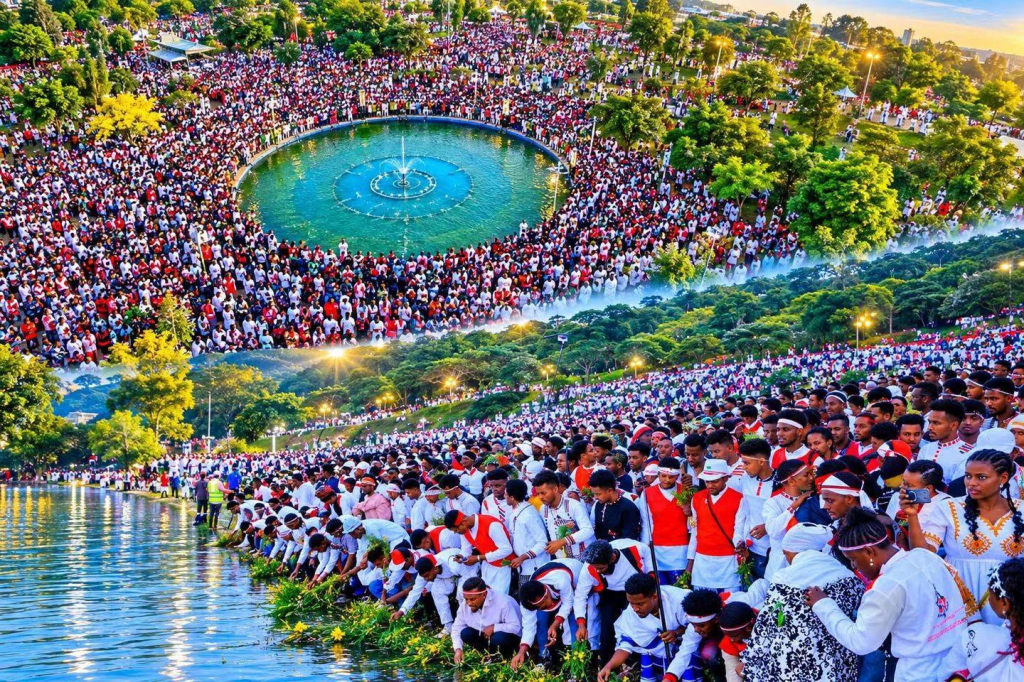
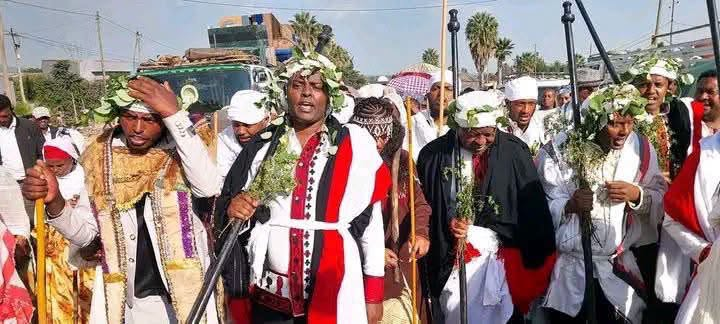
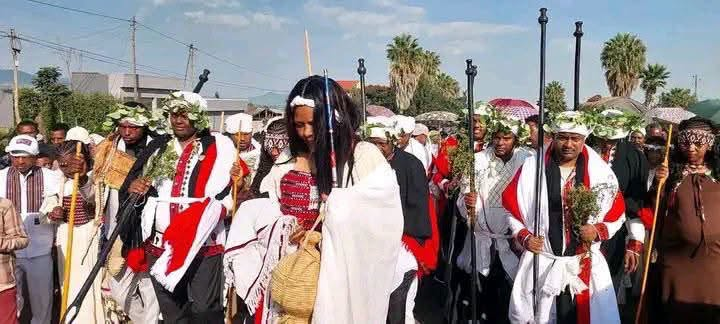
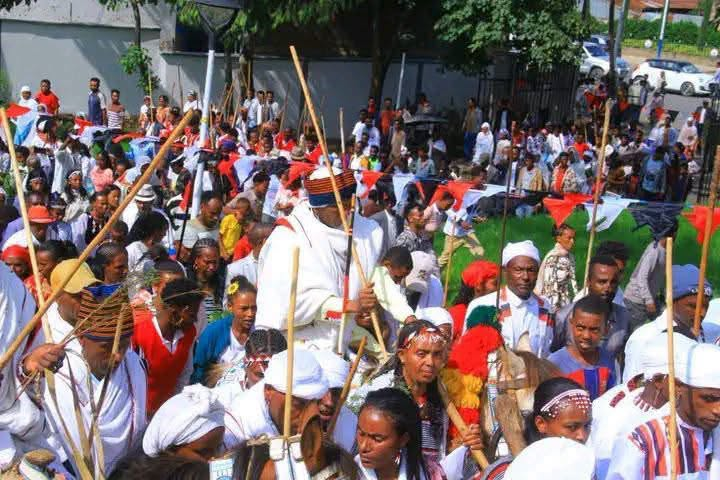
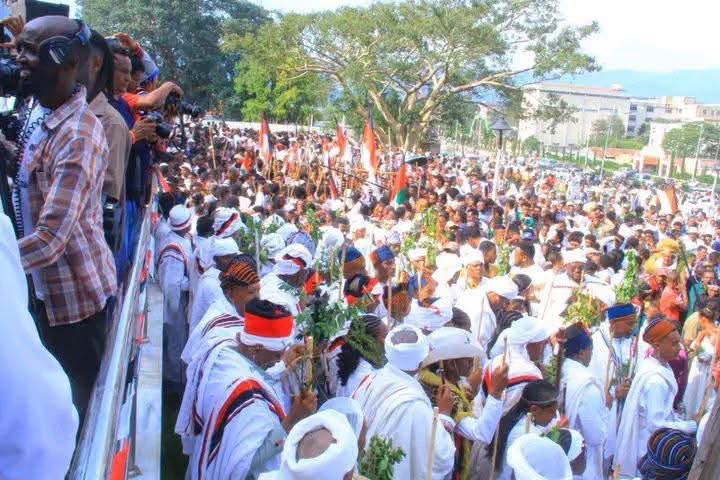
Oromia, Ethiopia — National festivals play a vital role in accelerating peace, love, unity, and shared development. Among the festivals that exemplify peace, love, and solidarity, Irreecha stands as one of the most significant. Rooted in the Gadaa system, Irreecha embodies the ancient Oromo traditions of working together, eating together, supporting one another, standing side by side, reconciliation, holding good wishes for one another and the country, and translating unity into action.
Irreecha is celebrated as a festival that manifests the spirit of togetherness and brotherhood among peoples. It serves as a source of collective strength, a fountain of love, a spring of friendship, and a foundation for living together in harmony.
A Festival That Embraces All Humanity
This grand festival holds a special place in fostering a national covenant because it is enriched with values that enable people to see one another with equal respect, to understand one another, and to draw closer together. Irreecha teaches that every human being deserves dignity and honor, regardless of their background.
That is why the Oromo people celebrate this festival of thanksgiving and gratitude to the Creator with unwavering unity. No distinction is made based on appearance, gender, age, religion, or any other criterion. Everyone is welcome. Everyone is equal. Everyone belongs.
A Unifying Force for All Nations and Nationalities
Because of this inclusive and unifying character, Irreecha has today become a celebration that brings together nations, nationalities, and peoples of Ethiopia. What began as a traditional Oromo thanksgiving festival has grown into a national event that transcends ethnic boundaries, drawing participants from all walks of life who wish to share in its message of peace, gratitude, and togetherness.
The festival’s ability to unite diverse communities is not accidental. It flows from the core values embedded in the Gadaa system — values of consensus, mutual respect, and collective responsibility. These values have been passed down through generations and remain as relevant today as they were centuries ago.
A Call to Celebrate in Unity
The message is clear: all people are invited to come out in unity to celebrate this festival of Irreecha and to give thanks to the Creator. The festival belongs to everyone — not to any single group, region, or faith. It is a shared heritage, a common treasure, and a living expression of Ethiopia’s diversity and unity.
In a time when divisions often dominate public discourse, Irreecha offers a powerful counter-narrative. It reminds us that our shared humanity is greater than our differences, that our collective strength lies in our unity, and that our future depends on our ability to stand together.
A Covenant for the Nation
For these reasons, Irreecha holds an elevated role in strengthening national unity and fostering a patriotic covenant. It is not merely a festival — it is a declaration that peace, love, and togetherness are not abstract ideals but lived realities. It is a promise that the bonds between peoples are stronger than the forces that seek to divide them.
As millions gather at the banks of rivers and lakes to dip fresh grass into the water and lift their voices in song, they do more than celebrate a tradition. They renew a covenant — with Waaqa, with one another, and with the nation they share.
Baga Irreecha! Baga Tokkummaa!
Source: Oromo Cultural Heritage

Irreecha Falls on Meskerem 23 and 24, and Finfinne Has Two Mass Gatherings in Two Weeks
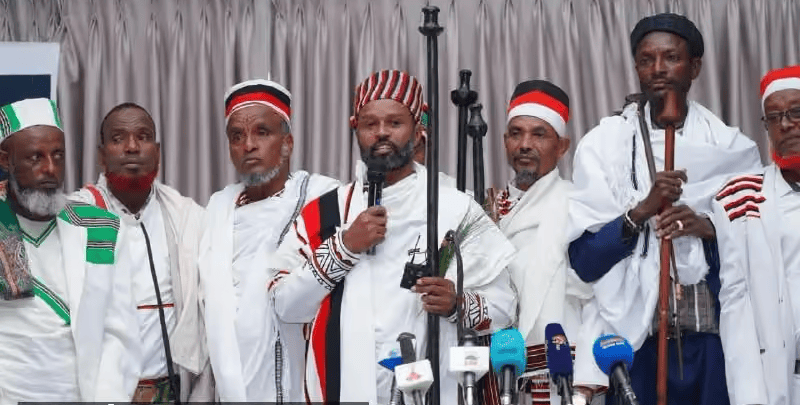
The union of Oromo Abbaa Gadaas has set this year’s Irreecha for Meskerem 23 and 24 — Hora Finfinne first, Bishoftu the next day. Addis Abeba police say preparations for the Meskel Demera are also complete.
This year’s Irreecha will be observed on Meskerem 23 and 24 on the Ethiopian calendar — 3 and 4 October — the union of Oromo Abbaa Gadaas has announced. Hora Finfinne, in Finfinne, is marked on the 23rd; Hora Harsadi, at Bishoftu, on the 24th. The union has framed this year’s observance around national consensus.
Separately, Lt. Gen. Asrat Denero, head of the Addis Abeba Police Commission, said preparations are complete for the Meskel Demera to be observed in the capital. He described the arrangements as coordinated between the Addis Abeba Peace and Security Office, the city’s assembly of religious institutions, the Ethiopian Orthodox Tewahedo Church, the Addis Abeba diocesan office and city police.
A note on the date, because the translation gets it wrong
Amharic reports of this announcement are routinely rendered into English as “September 23 and 24”. The original says Meskerem 23 and 24, which is the Ethiopian calendar’s first month. Meskerem 1 of 2019 E.C. fell on 11 September 2026, so Meskerem 23 and 24 are 3 and 4 October 2026 — a fortnight later than the machine translation implies.
If a calendar, a delivery schedule or a staff roster in your organisation was built from an English-language feed, it is worth checking which date it took.
What businesses in the capital should plan for
Two mass public observances land inside two weeks, both centred on Addis Abeba, with the second spilling into Bishoftu on the Sunday.
- Road closures and diverted transport around Meskel Square and, on 3 October, the Hora Finfinne site.
- The Bishoftu leg on 4 October draws heavy outbound traffic on the road southeast — relevant to anyone routing freight or staff that way.
- Staffing. Both observances draw employees out of the capital as well as into it.
Open
Neither announcement carried road-closure details, security arrangements or a crowd estimate, and the city has not published a traffic plan for either day. The Meskel Demera date was not stated in the police commission’s remarks as reported.
Sources: Fana Television, 22 September 2026, Fana Television, 22 September 2026, Tikvah Ethiopia, 22 September 2026

Sons of Maccaa Celebrate Buttaa Ceremony: A Milestone of Generational Passage
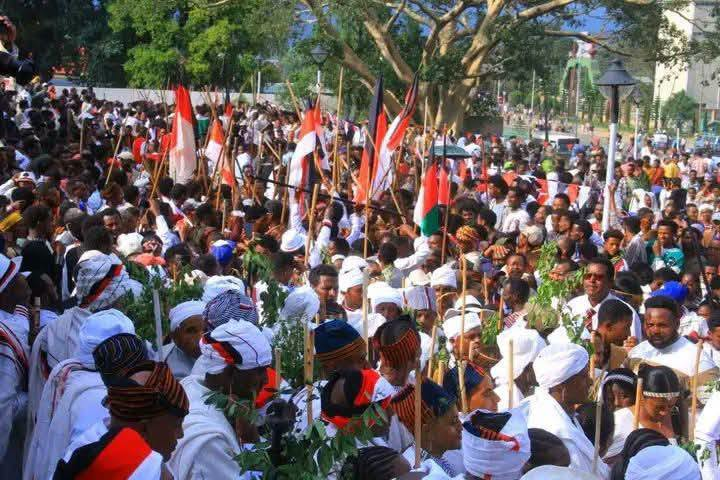
Oromia, Ethiopia — In a powerful display of cultural continuity and ancestral reverence, the Gadaa-Hortee sons of Maccaa — members of the Gadaa Birmajii grade — have successfully completed the sacred Buttaa ceremony, marking a significant milestone in their journey through the ancient Oromo Gadaa system.
The occasion was marked with blessings and congratulations: “Baga 80 akaakayyuu fi 40 abbaa keessanii geessanii sirna buttaa qaluu nagaan oofkaltan!” — Congratulations on safely reaching the Buttaa ceremony, having honored the eighty grandfathers and forty fathers who came before you.
The Significance of Buttaa
The Buttaa ceremony is a pivotal ritual within the Gadaa system, symbolizing the formal transition of power and responsibility from one generation to the next. For the sons of Maccaa in the Birmajii grade, this ceremony represents their readiness to assume leadership roles and carry forward the duties entrusted to them by their ancestors.
The numbers referenced — eighty grandfathers and forty fathers — speak to the deep ancestral lineage that the Gadaa system honors. Each generation stands on the shoulders of those who came before, and the Buttaa ceremony is a moment of connection between past, present, and future.
Honoring the Sacred Elements
The congratulatory message continues with a blessing that honors the visible and invisible elements of the ceremony:
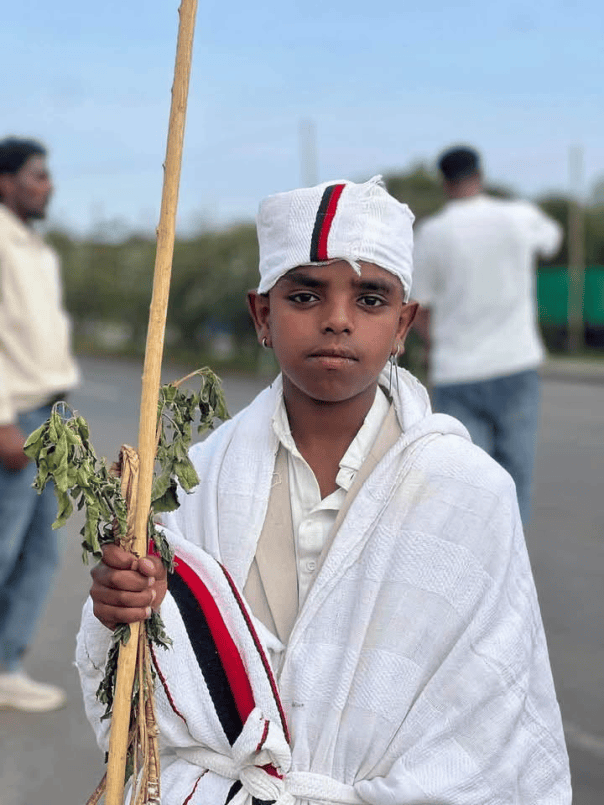
“Haaduu kofa keessanii, dhugoo gurra keessanii fi ruufa mataa keessanii hunda baga oofkaltan!”
This translates to: “Congratulations on all — the grass at your door, the grass in your ears, and the grass on your head!”
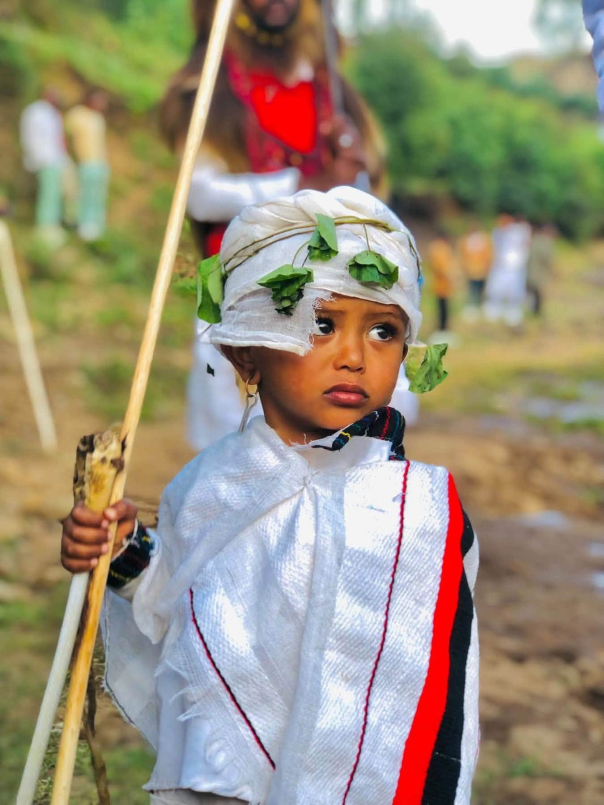
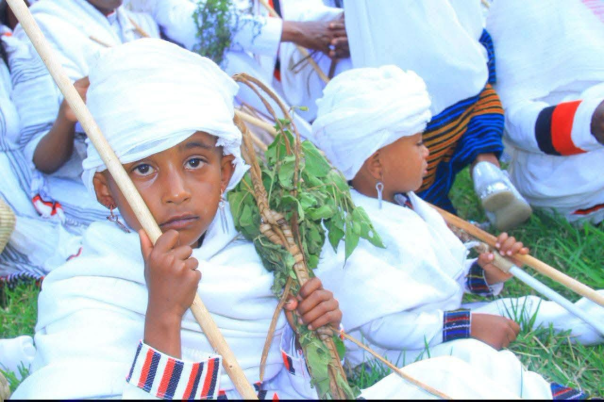
These elements — haaduu kofa (grass at the door), dhugoo gurra (grass in the ears), and ruufa mataa (grass on the head) — are sacred symbols within the Gadaa system. Fresh green grass represents life, renewal, and the presence of Waaqa (God). Wearing or carrying grass during Gadaa ceremonies signifies that the individual is in a state of peace, purity, and readiness to receive blessings.
The reference to grass at different parts of the body and home also reflects the holistic nature of the Gadaa system — it encompasses every aspect of life, from the threshold of one’s home to the crown of one’s head.
A Community Celebration
The Buttaa ceremony is not merely an individual achievement — it is a communal celebration. The Gadaa-Hortee sons of Maccaa have completed this rite together, reinforcing the bonds of brotherhood and shared responsibility that define the Gadaa system.
The ceremony involved the ritual cutting of the buttaa (a symbolic act of clearing and preparing the way), the enactment of laws that will govern the next eight years, and the formal transfer of authority from the outgoing Gadaa grade to the incoming one.
Blessings for Abundance
The message concludes with a powerful blessing:
“Gadaan quufa fi gabbina! Gabbis Waaq!”
“May Gadaa bring fullness and abundance! May Waaq bless!”
This prayer invokes the dual blessings of material prosperity and spiritual completeness. In the Oromo worldview, quufa (fullness) and gabbina (abundance) are not merely economic concepts — they represent a state of harmony in which the community is whole, at peace, and aligned with divine will.
A Living Tradition
The successful completion of the Buttaa ceremony by the Gadaa-Hortee sons of Maccaa is a testament to the resilience and vitality of the Gadaa system. Despite centuries of suppression and the pressures of modernization, the Oromo people continue to pass down this ancient tradition from generation to generation, unbroken and undiminished.
As the sons of Maccaa step into their new roles, they carry with them the blessings of eighty grandfathers and forty fathers — a lineage of wisdom, courage, and commitment that stretches back through time.
Baga oofkaltan! Gadaan quufa fi gabbina! Gabbis Waaq!
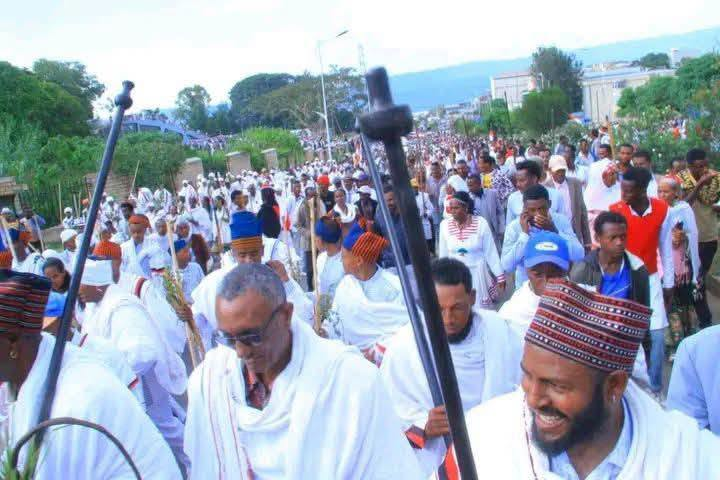
Gadaa: The Living System That Raises Generations Through Word and Deed
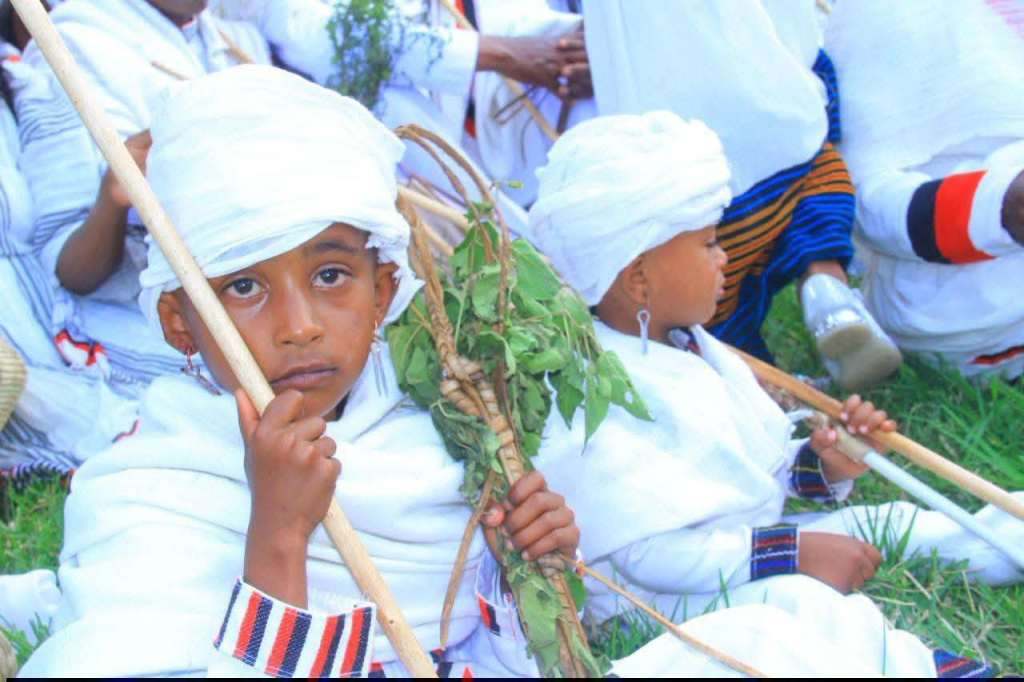
West Shawa, Oromia — In a world where ancient traditions often fade beneath the weight of modernity, the Gadaa system of the Oromo people stands as a testament to endurance, democracy, and cultural resilience. As the Oromo saying goes: “Gadaan sirna ittiin jechaa fi gochaan dhaloota guddisanii dha” — Gadaa is the system through which generations are raised by word and by deed. And today, that system has emerged from the threat of extinction and reached the present generation, unbroken and vibrant.
Sons of Liiban Maccaa Carry the Torch
The sons of Liiban Maccaa — Walisoo, Amayyaa, and Kuttaayee — are actively fulfilling their duties within Gadaa Birmajii, ensuring that the ancient Oromo Gadaa system is passed down from generation to generation, unbroken and undiminished. Their commitment is not merely ceremonial; it is a living covenant with their ancestors and their descendants.
These communities, located across Central Oromia, West Shawa, and Southwest Shawa, have preserved the Gadaa system without interruption. From father to son, from elder to youth, the sacred knowledge and responsibilities of Gadaa are transmitted with reverence and precision.
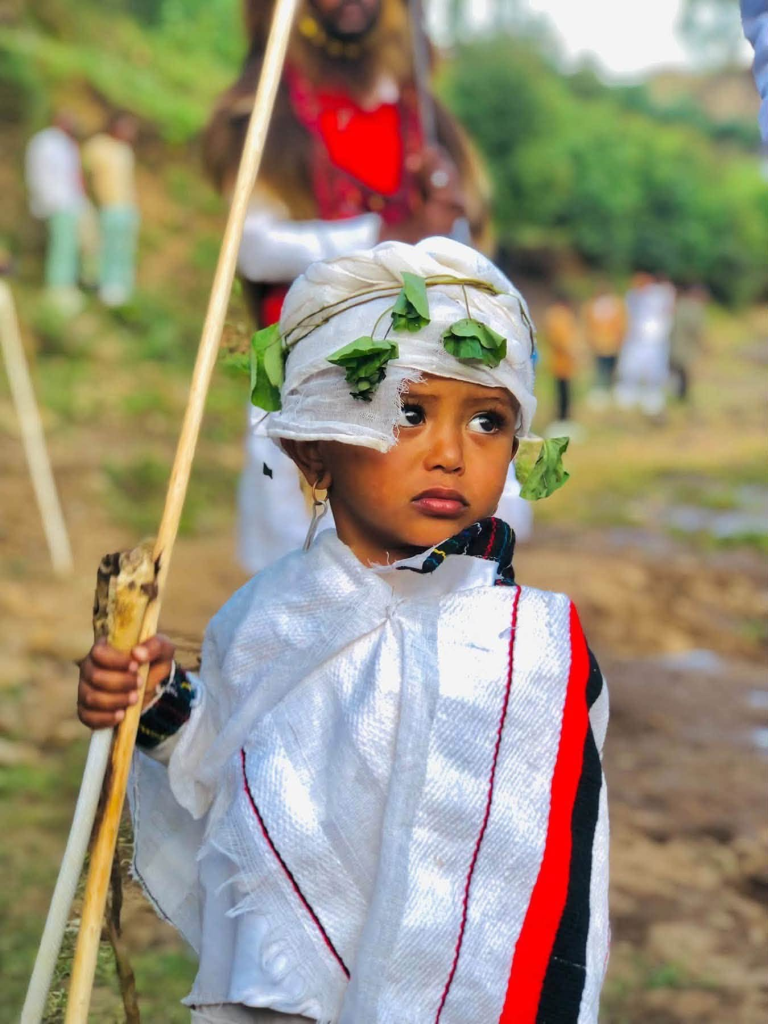
A Model of Democracy Without Conflict
“Gadaan Mallattoo Dimokiraasii Morkii tokko malee Aangoo Waliif dabarsanii kennanidha” — Gadaa is the symbol of democracy, a system in which power is transferred peacefully, without conflict or bloodshed.
This principle lies at the heart of the Gadaa system. Every eight years, leadership transitions from one Gadaa grade to the next — a process rooted in consensus, ritual, and mutual respect. There are no coups, no violence, no contested successions. There is only the orderly, sacred transfer of responsibility from one generation to the next.
It is a democratic tradition that predates many modern political systems, and it continues to function today, guided by the wisdom of elders and the participation of the community.
Preparation for the Transfer of Power
The Sirna Oofkaltii Tumaa Gadaa Birmajii is currently in full preparation across various locations in the West Shawa Zone. Over the coming eight years, those in the Birmajii grade will prepare to receive authority from the Gadaa Roobalee — the outgoing grade — and assume the responsibilities of leadership.
The purpose of this program is clear: “Kaayyoon Sirna Sagantaa Kanaas Gadaan Birmajii Gadaa Roobalee irraa Aangoo fudhachuun Waggoottan 8 itti Aanu Bulchuuf ofkaltii keessa darbaa jiraachuu ibsameera.” The Birmajii Gadaa is preparing to take power from the Roobalee Gadaa and to govern for the next eight years. This preparation is not merely administrative — it is spiritual, cultural, and communal.
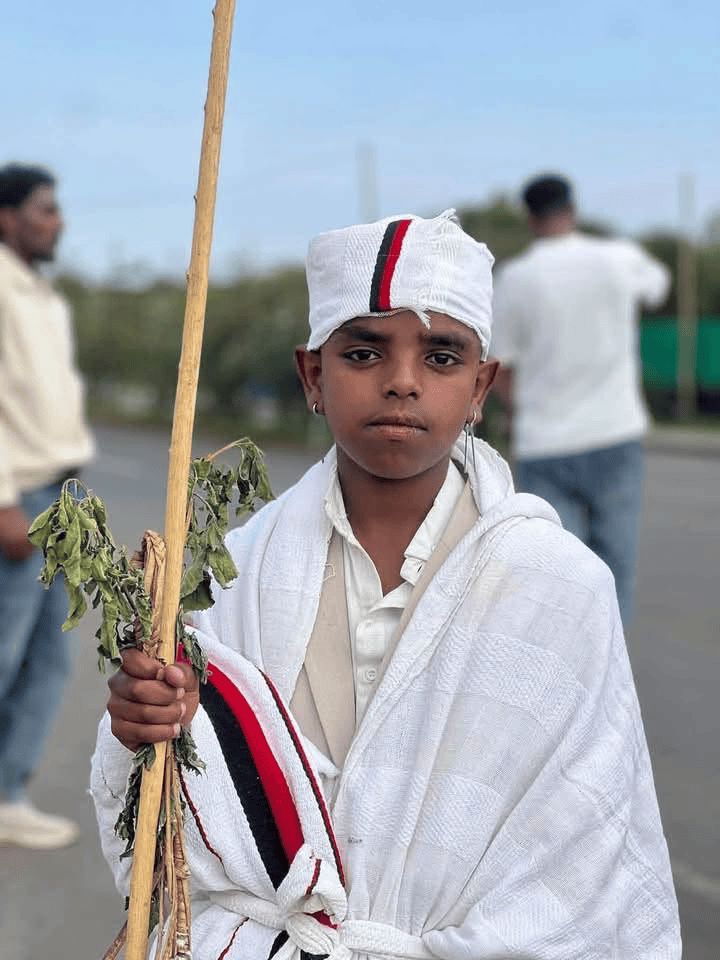
The Journey to the River
The process has now reached a significant milestone. “Imalli gara malkaa deemuun tumaa ittiin bulmaata waggoota 8 dhufanii adeemsifameera.” The delegation has journeyed to the river, where the laws and rituals that will govern the next eight years have been formally enacted.
The journey to the water — the malkaa — is rich with symbolism. Water represents purification, renewal, and the continuity of life. By enacting the laws at the river’s edge, the community affirms that the Gadaa system is rooted in nature itself, in the eternal rhythms of the earth and the heavens.
A Blessing of Abundance
The message concludes with a powerful blessing: “Gadaan Quufaa Gabbina Oofkalchi Waaq.” May Gadaa bring fullness, abundance, and prosperity. May Waaqa bless the work of those who uphold this sacred tradition.
It is a prayer not only for material prosperity but for spiritual completeness — for a community that is whole, united, and at peace with itself and its Creator.
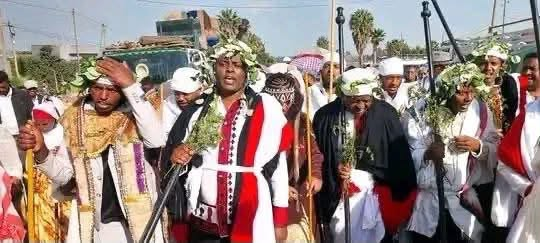
A Heritage That Endures
The Gadaa system is more than a cultural relic. It is a living, breathing institution that continues to shape the lives of millions of Oromo people. It teaches democracy, accountability, environmental stewardship, and respect for elders. It binds generations together in a chain of duty and blessing.
The sons of Liiban Maccaa — Walisoo, Amayyaa, and Kuttaayee — are not merely preserving the past. They are building the future, one ritual at a time, one generation at a time.
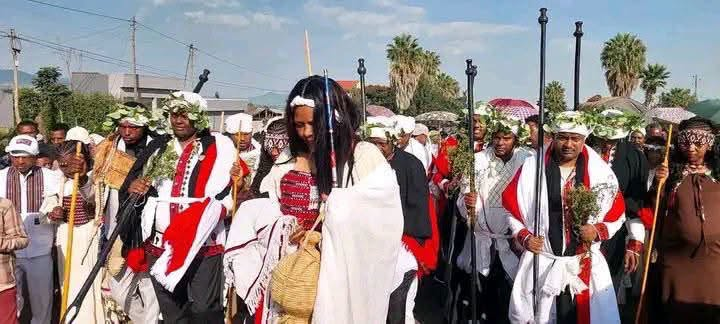
Baga oofkaltan!
Source: Community Report

Gadaa Elders Announce Dates for Irreechaa 2019: A Call for Unity, Gratitude, and Peace
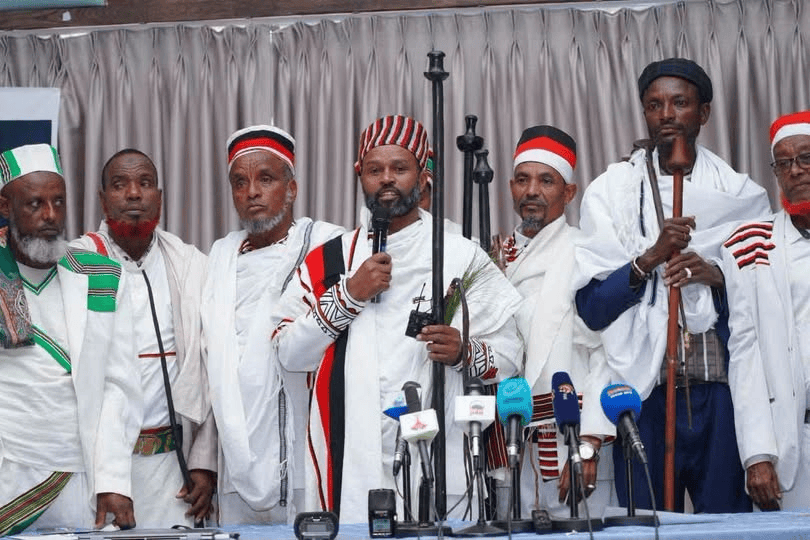
Finfinnee, Oromia — The Assembly of Gadaa Elders of Oromia has officially announced the dates for the celebration of Irreechaa, one of the most sacred and widely observed festivals of the Oromo people. In a statement released to the public, the elders confirmed that Irreechaa at Hora Finfinnee will be celebrated on September 23, while Irreechaa at Hora Harsadee will take place on September 24, 2019.
Irreechaa is a centuries-old thanksgiving festival celebrated at the banks of rivers and lakes, most notably at Hora Finfinnee (Lake Finfinnee) and Hora Harsadee (Lake Harsadee). It marks the end of the rainy season and the beginning of a new year in the Oromo calendar — a time of renewal, reflection, and communal gratitude to Waaqa (God) for blessings received.
A Festival of Thanksgiving and Hope
In their statement, the Gadaa elders emphasized the profound meaning of Irreechaa, describing it as a celebration of thanksgiving, hope, unity, love, reconciliation, and renewal. “Irreechaa is a festival of gratitude, hope, unity, love, reconciliation, and rebirth,” the elders declared. “Therefore, all Oromo people, as well as all nations, nationalities, and peoples of our country and the entire world, are invited to honor Irreechaa together with the Oromo people.”
The invitation extends beyond the Oromo nation itself, reflecting the festival’s universal message of peace and togetherness. Irreechaa has long served as a gathering point for people of all backgrounds — a day when differences are set aside and communities join hands in celebration and prayer.
A Call to Preserve Tradition
The elders also stressed the importance of observing Irreechaa according to its longstanding customs, traditions, and sacred norms (safuu). “Irreechaa at Hora Finfinnee and Hora Harsadee will be celebrated on September 23 and 24, 2019, respectively,” the statement read. “Like other Irreechaa celebrations, it will be observed in accordance with the culture, tradition, and sacred order of Irreechaa.”
The Gadaa system, a traditional democratic governance structure of the Oromo people recognized by UNESCO as intangible cultural heritage, plays a central role in organizing and preserving the festival’s rituals. The elders’ announcement underscores their continued role as custodians of Oromo culture and tradition.
A Warm Invitation to All
In closing, the Assembly of Gadaa Elders extended a heartfelt invitation to all Oromo people to welcome visitors with the warmth and hospitality for which the Oromo are known. “Therefore, we call upon all Oromo people to receive every guest who comes to them with the culture, tradition, and hospitality of our people,” the elders urged.
The message is clear: Irreechaa is not merely a festival — it is a living expression of Oromo identity, faith, and community. As the dates approach, anticipation is building across Oromia and beyond, with preparations underway at Hora Finfinnee and Hora Harsadee.
For the Oromo people, Irreechaa 2019 promises to be a time of collective renewal — a moment to give thanks, seek reconciliation, and reaffirm the bonds that unite them as one people.
Source: Assembly of Gadaa Elders of Oromia

Sons of Liiban Maccaa Carry the Gadaa Birmajii Torch: A Legacy Passed from Generation to Generation
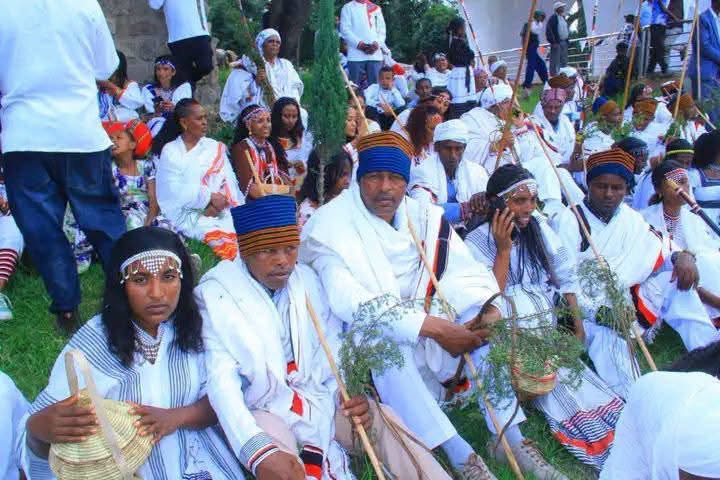
Central Oromia— In the heartlands of Central Oromia, across the highlands of West Shawa and Southwest Shawa, a sacred flame continues to burn. The sons of Liiban Maccaa — Walisoo, Amayyaa and Kuttaayee — are actively fulfilling their duties within Gadaa Birmajii, ensuring that the ancient Oromo Gadaa system is passed down from generation to generation, unbroken and undiminished.
A System That Never Sleeps
The Gadaa system, recognized by UNESCO as an Intangible Cultural Heritage of Humanity, is the traditional democratic, social, and spiritual governance structure of the Oromo people. It organizes society into age sets and generational grades, each with distinct roles, responsibilities, and rights. Among these, the Birmajii grade represents a critical stage — a time when young men prepare for leadership, defend their community, and uphold the sacred norms of Oromo life.
What sets the sons of Liiban Maccaa apart is their unwavering dedication. In Central Oromia, West Shawa, and Southwest Shawa, these communities have preserved the Gadaa system without interruption, carrying it forward across generations with reverence and pride.
The Seven Who Hold the Jila
Among the three sons of Liiban, it is the seven from the Horii lineage of Kuttaayee who hold the Jila Gadaa — the sacred leadership and ritual responsibility of the grade. Their duty is profound and their journey demanding.
The Gadaa group of Roobalee sets out to receive Baallii (Alangee) — the symbolic transfer of power and responsibility that marks the transition into Birmajii. This transfer is not merely ceremonial; it is a covenant. It binds the incoming generation to the duties of leadership, protection, and service to the community.
Rain, Blessing, and Endurance
In the Oromo worldview, rain is a sign of blessing — a gift from Waaqa (God) that nourishes the land and its people. Yet even when the rains come, the Roobalee do not rest. They sing in the rain, and they do not allow the abundance of milk and prosperity to distract them from their sacred mission.
“The Roobalee sing along with the rain, and the abundance of milk and success has not made us forget our duty,” the report recounts. “Whether in good times or hard times, they have seen it through.”
The message is clear: Birmajii is not a fair-weather calling. It demands endurance, sacrifice, and faithfulness — in seasons of plenty and in seasons of want.
A Call of Honor and Blessing
The words of the community ring with pride and blessing:
“The Birmajii have taken the Alangee and are preparing to complete their covenant — today they have cut the buttaa. May the news of your deeds reach the ears of those who need to hear it. Congratulations on reaching the fourfold blessing of your fathers and the eightfold blessing of your grandfathers. You have accomplished what was asked of you — and you make us proud.”
The “fourfold blessing of the fathers” and the “eightfold blessing of the grandfathers” speak to the deep ancestral roots of the Gadaa system — a chain of blessing and responsibility that stretches back through time, linking each generation to those who came before.
The closing blessing, “Ginna milkii ciisaa” — a wish for peace, prosperity, and rest — crowns the message with the hope that the labor of the Birmajii will bring abundance and tranquility to the community.
A Living Heritage
The sons of Liiban Maccaa are not merely preserving a tradition — they are living it. Every ritual, every journey, every song in the rain is an act of cultural survival and spiritual renewal. In a world that often pressures communities to abandon their heritage, these young men stand firm, proving that the Gadaa system remains a vibrant and vital force.
Their story is a reminder that culture is not a museum piece. It is alive — carried in the feet that walk to receive the Alangee, in the voices that sing with the rain, and in the hearts of a generation determined to honor its ancestors.
Baga oofkaltan!

Under the Odaa Tree: The Living Legacy of the Ituu Oromo
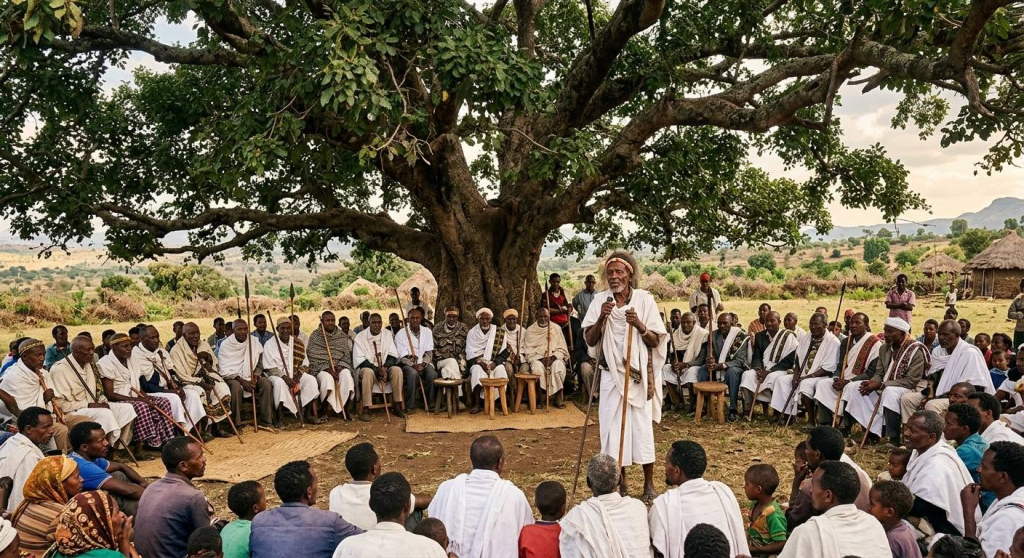
In the highlands of eastern Oromia, the roots of the Odaa tree (sycamore fig) stretch deep into the earth, just as the traditions of the Oromo people extend into the fabric of history. Among the most storied branches of the Oromo nation is the Ituu, a community whose identity is woven from the threads of ancient lineage, a sophisticated socio-political system, and a resilient spirit of justice. To understand the Ituu is to journey into the heart of the Oromo civilization, where the past is not merely remembered but lived.
The Ancestral Tree: From Murawwaa to Ituu
The Ituu are not a people without a past; they are a clear and significant branch on the vast Oromo genealogical tree. According to both oral tradition and contemporary scholarship, the lineage flows from Oromoo to Bareentuu (or Bareentuma), then to Murawwaa, and from Murawwaa springs the Ituu. A 2026 study by Jimma University confirms this ancestral link, placing Ituu firmly within the Murawwaa Barentuu family.
The Ituu themselves are divided into two primary clans, forming the backbone of their social structure:
- Galaan, with sub-clans such as Baabboo, Gaadullaa, and Elelle.
- Kurraa (Kuraa), with sub-clans such as Baayee, Addaayyo, Arroojjii, and Waayyee.
This is just one layer of a complex organizational system. Under the Gulantaa Odaa or Tumaa Heeraa (customary law), the Ituu are further organized into two major houses: Mana-Ituu (the House of Ituu) and Mana-Baabboo (the House of Baabboo). This dual structure underscores that for the Ituu, identity is a multi-faceted concept, governed by both bloodline and law.
Gadaa: The Soul of Oromo Governance
For the Ituu, as for all Oromo, the Gadaa system is the lifeblood of their society. It is far more than a political structure; it is a comprehensive philosophy that governs every aspect of life. It provides a framework for:
- Political Leadership: A system of elected officials with fixed terms, ensuring a democratic transfer of power.
- Justice (Heera): A legal system that predates modern courts, offering a way to resolve disputes and maintain order.
- Peace (Araara): A defined process for reconciliation and conflict resolution.
- Social Organization: A structure that defines the roles and responsibilities of individuals within the community.
- Spiritual Life: A connection to the divine and the natural world through rituals.
Odaa Bultum: The Parliament of the People
Central to the Ituu and wider Barentuu Oromo history is Odaa Bultum. This site in Hararghe served as a colossal Gadaa assembly center, a place where the community would gather to make laws, elect leaders, and settle disputes. It was the “parliament” under the shade of the Odaa tree, where the echoes of debate and the spirit of democracy were cultivated for generations.
Here, the voices of the people were heard through the Caffee (assembly), and the foundation of their society—Heera (law)—was debated and set. It was a place where the spiritual and the political converged to build a cohesive society.
Gumaa: A Path from Bloodshed to Brotherhood
Perhaps the most profound expression of Ituu culture is the institution of Gumaa. Often translated simply as “blood compensation,” Gumaa is actually a complex, restorative justice system. A 2026 Jimma University study highlights its true purpose: it is not solely about retribution but about reconciliation.
Gumaa is a process that transforms conflict, seeking to stop the cycle of violence and reintegrate offenders back into the community. It is a testament to the Ituu belief that even in the face of grave wrongs, the ultimate goal is peace and social harmony. The system includes specific legal frameworks such as Heera Diinoo, Heera Amboo, and Heera Danuu.
The Rituals and the Voices of the People
The cultural life of the Ituu is rich with ceremony. The Korbeessaa–Goromtii ritual, for instance, involved the sacrifice of goats to invoke peace, seek victory in conflict, and predict social and natural outcomes. It was a way of seeking divine guidance for the community’s journey.
Importantly, the Ituu social structure also features a powerful institution for women: Siiqqee. This is not merely a tradition but a social force that gave women a formal voice in matters of justice, peace, and reconciliation. It stands as a powerful testament to the Oromo society’s recognition of the vital role of women in maintaining social order and integrity.
A Living Tradition
Today, the Ituu Oromo stand at a crossroads of history. Their traditional systems—the Gadaa, the Heera, and the Gumaa—are not relics of a bygone era. They are living institutions that continue to provide a framework for justice and identity in a rapidly changing world. The genealogy from Murawwaa to Ituu is not just a list of names but a testament to a civilization that built a sophisticated society rooted in democracy, justice, and a profound respect for community.
The story of the Ituu is a story of resilience—a reminder that the roots of the Odaa tree, and the culture it represents, are deep and enduring.
Sources:
- Boru Musa Burka & Jira Mekonnen Choroke, “Gumaa beyond Compensation,” Gadaa Journal, 2026.
- Boru Musa Burqa & Dejene Gemechu Chala, “Korbeessaa-Goromtii Ritual,” Gadaa Journal, 2022.
- Admasu Feleke & Deressa Debu, “Oromo Historical Heritage: Historical Significance of Odaa Bultum Gadaa Assembly,” Jimma University.

OLF Leadership Engages in High-Stakes Consultations Amid Oromo Unity Push
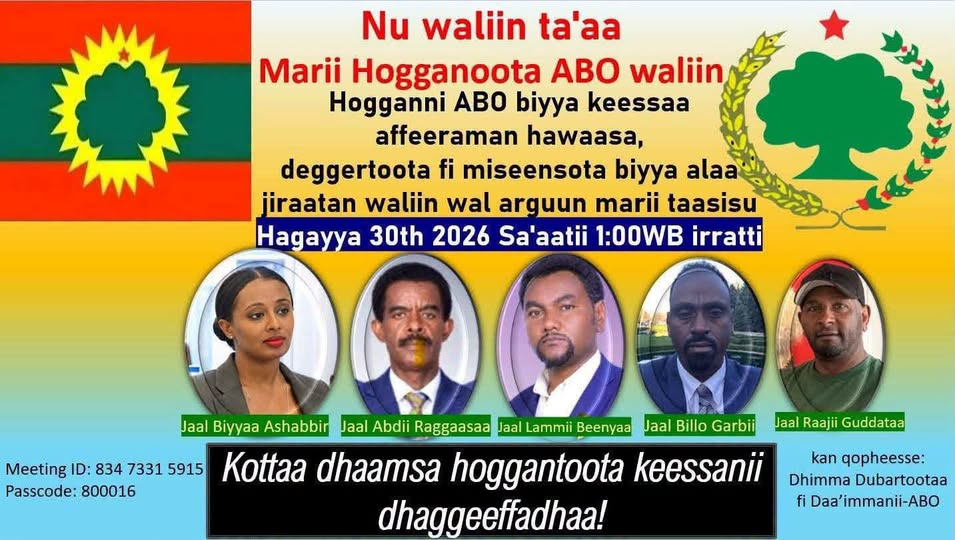
(Finfinne, Oromia)– As Ethiopia’s political landscape grows increasingly volatile, the Oromo Liberation Front (OLF) has convened a series of high-level meetings with its leadership cadres, grassroots members, and traditional institutions—a strategic push to consolidate Oromo unity in the face of mounting security threats and political uncertainty.
A Call for Unity and Vigilance
The most recent consultations, held at the party’s headquarters in Gullalle, brought together Qondaaltota (junior leaders), Dabballoota (cadres), and the general membership for extensive deliberations. Senior OLF leader Jaal Abdii Raggaasaa—who also serves as Member Secretary-General—addressed members with a stark message on the nature of the struggle: that commitment, not temporary strength, determines victory .
“Some individuals enter the organization (Irbuu) but then exploit it—seeking personal benefit rather than serving the people’s cause. When such people exist, it is they themselves who suffer the consequences, not ABO and not others.”
— Jaal Abdii Raggaasaa, OLF Senior Leader
Abdii emphasized that the work of building the Oromo nation extends beyond Ethiopia’s borders—stretching into the diaspora wherever Oromos reside . He stressed that grassroots organizing, beginning “from the village level,” remains essential to lasting political change .
Leadership’s Resolve: “We Must Speak as ABO”
Reflecting on the inevitable challenges facing liberation movements, Abdii offered a sobering reflection:
“In the struggle ABO is waging, even if we face extinction—if we are reduced to just one person—we must speak as ABO. We must not hide ourselves. We may face extinction, but we must not retreat into silence.”
Jaal Yaasoo Kabbabaa Hordofa, another OLF official, reinforced this determination, declaring that “OLF is the center of Oromo peace.” He noted that if OLF participates in elections this year, it will mark the first and largest chapter in Oromo electoral history—an opportunity that must be seized, not as a preference but as an obligation for all members .
Political Prisoners and the Demand for Justice
The OLF has consistently demanded the immediate release of political prisoners who continue to suffer in detention without due process, calling upon both Abbaa Gadaas and religious authorities to actively work toward restoring security in Oromia .
Following the announcement of the 7th General Election results—which saw the ruling Prosperity Party secure a parliamentary majority and OLF fail to win any seats despite fielding 163 candidates—the party issued a pointed critique .
“The OLF once again firmly reiterates that the situation in Oromia and across Ethiopia cannot be resolved merely by declaring an election victory; rather, to prevent worse outcomes, an inclusive, genuine, and transparent dialogue must be conducted without wasting further time.”
The front noted that while it had filed formal grievances with the National Election Board regarding electoral infractions, it does not believe the board investigated these appeals “with the necessary depth, fairness, and justice” .
A Call for Oromo Political Unity
The OLF’s leadership has also renewed its call for all Oromo political organizations to work together to shorten the path to liberation, stating that this is “the most important time” for coordinated action . The executive committee has emphasized that while some previously allied groups have disrupted cooperation due to shifting political dynamics, they must realize that their moves should serve the broader Oromo interest .
The OLF also reiterated its support for the People’s Alliance for Freedom and Democracy (PAFD) and the transitional roadmap presented at the February 2018 London conference. The party calls on all stakeholders—including political elites, academics, and the international community—to contribute to an all-inclusive transitional process that offers a long-term political solution .
The Broader Context: Conflict and Fragility
The leadership’s renewed unity push comes as violence escalates in western Oromia. ACLED data shows that Fano militias—linked to the Amhara Fano National Movement—have increased their activities in Oromia’s Horo Guduru, Kellem, East, and West Wollega zones by 80% since January 2026 . This follows the establishment of the Wollega Fano Bizamo Command in December 2024, which has since fallen under the broader Tsimdo movement—a coalition reportedly aligned with the Tigray People’s Liberation Front (TPLF) and Eritrea, aiming to remove the Ethiopian government.
Amnesty International released a report in August 2026 titled “Because I am Oromo,” alleging that Ethiopia’s government has “ruthlessly targeted” its largest ethnic group—subjecting thousands of Oromos to unlawful killings, torture, and enforced disappearance . The government has denied the allegations.
Looking Forward
The OLF’s consultations reflect a movement at a crossroads—seeking to navigate electoral rejection, internal cohesion, and external threats while maintaining its decades-long commitment to self-determination. As one participant at the February meeting put it: “An awakened nation is built, and the built is united.”
Whether that unity can withstand the mounting pressures—from state security forces, inter-ethnic violence, and international geopolitical maneuvering—remains the central question facing the Oromo struggle today.

Goobee and Shinooyyee: A Dual Model of Prevention and Intervention for Social Problems

How Ancient Oromo Festivals Build Peace, Unity, and Social Cohesion
By Dhabessa Gemelal
In an era of deepening social divisions, political polarisation, and youth disengagement, the Oromo people possess a powerful and ancient resource: their own cultural traditions. The festivals of Goobee and Shinooyyee—celebrations marking the transition from the rainy season to spring—are not merely expressions of cultural identity. They are sophisticated mechanisms for social cohesion, conflict prevention, and youth engagement that offer a model for addressing some of the most pressing social challenges of our time.
Understanding Goobee and Shinooyyee
Goobee: A Festival of Light and Freedom for Young Men
Goobee is a festival where young men welcome the light of Spring with joy, hope, and good wishes. It represents “the bliss of spring, the joy of the dawn of the earth”—a light that sprouts for youth with green hope and courage . It is a time when young men declare their freedom and independence, marking their transition toward adulthood.
Shinooyyee: A Festival of Freedom and Identity for Young Women
Shinooyyee is a unique festival celebrated by young unmarried girls . During this festival, girls “plait their hair in fantastic styles and dress up and decorate with ornaments of their choice. They chant, sing, and dance with friends and peers for up to 3 weeks” . They collect fragrant grass and give it to neighbours as a symbol of abundance and blessing, receiving food and butter in return. It provides “young girls with absolute freedom to enjoy outside of their family’s home” .
Both festivals are celebrated in the weeks leading up to Irreechaa, the grand Oromo thanksgiving festival, and are part of the wider Gadaa system recognised by UNESCO as an Intangible Cultural Heritage of Humanity .
Prevention: Addressing Root Causes of Social Problems
1. Preventing Conflict Through Reconciliation
The Gadaa system, of which Goobee and Shinooyyee are a part, is built on a fundamental principle: “as much as possible, conflict should be prevented from occurring” . Should conflict occur, “everything should be done to prevent it from escalating and all institutions should work together to manage the conflict” .
This preventive philosophy is embedded in the festivals. Irreechaa, the culminating festival, requires participants to resolve conflicts before attending. As one Abba Gadaa explained, “if anyone who attends the festival has a conflict even with a close person, he should first reconcile with himself or with the other persons” . This principle of pre-festival reconciliation prevents conflicts from festering and escalating.
2. Preventing Youth Disengagement Through Meaningful Participation
Shinooyyee and Goobee provide structured, meaningful activities that engage youth during a critical transition period. The festivals offer young people “absolute freedom” to express themselves, build social bonds, and develop confidence . This engagement prevents the alienation and disconnection that often lead to social problems.
Social Anthropologist Daniel Deressa noted that the festivals “promote love and unity to uphold peaceful coexistence in the society” . By providing positive outlets for youth energy and creativity, Goobee and Shinooyyee prevent the frustration and disengagement that can fuel social unrest.
3. Preventing Cultural Erosion Through Intergenerational Transmission
Goobee and Shinooyyee serve as mechanisms for transmitting cultural knowledge, values, and ethics from elders to youth. The festivals ensure that young people learn “the culture and morals of the people and teaching them the truth” . This intergenerational transmission prevents the loss of cultural identity that can leave communities vulnerable to social breakdown.
Intervention: Addressing Existing Social Problems
1. Healing Divisions Through Reconciliation
For those already in conflict, Goobee and Shinooyyee provide a structured pathway to reconciliation. The festivals are described as “a time for reconciliation,” where “hatred and revenge are removed and solidarity is strengthened” . The requirement of pre-festival reconciliation serves as a direct intervention for existing conflicts.
The festivals create an environment where “peace is preached and love is praised; disagreement, grievance and discontent are condemned” . This public affirmation of peace values directly counters the narratives that fuel conflict.
2. Building Social Bonds Across Communities
Goobee and Shinooyyee bring together young people from different communities, strengthening “their love and unity” . The festivals are not exclusive—they are inclusive gatherings that promote understanding and solidarity across diverse groups.
Irreechaa, the culminating festival, has become “an important ritual festival that attracts visitors” and “has been becoming a cultural nationalism not only for the people of Oromo but also the nations and nationalities of the country” . This inclusivity makes the festivals a direct intervention against ethnic division.
3. Strengthening Community Resilience
The festivals contribute to community resilience by reinforcing social bonds and shared values. As scholars have noted, “Irreechaa brings people closer to each other and strengthen social bonds” . This strengthening of social cohesion makes communities more resilient to the stresses that can lead to social problems.
The Dual Model in Action
Goobee and Shinooyyee operate through a dual model of prevention and intervention:
Prevention:
- Engaging youth through meaningful participation
- Transmitting cultural values and ethics
- Resolving conflicts before they escalate
- Building social cohesion through inclusive participation
Intervention:
- Healing existing conflicts through reconciliation rituals
- Strengthening social bonds across communities
- Reinforcing shared values of peace and unity
Conclusion: A Model for Our Times
In a world facing deepening social divisions, youth alienation, and conflict, Goobee and Shinooyyee offer a powerful model. They demonstrate that cultural traditions are not merely nostalgic artifacts—they are living resources for building peace, strengthening communities, and engaging youth.
By preserving and promoting these festivals, the Oromo people are not only celebrating their heritage—they are investing in a more peaceful, cohesive, and resilient society. As one young participant noted, Goobee and Shinooyyee are “a festival of success, history, restoration of lost culture and expression of the Oromo people” .
In a fractured world, this ancient tradition offers a blueprint for healing.
This feature article is dedicated to the youth of Oromia who carry these traditions forward, and to all communities seeking models of peace and unity.


More Than an Ancient Civilization: The Kingdom of Kush—A Powerful Empire of Land and Sea
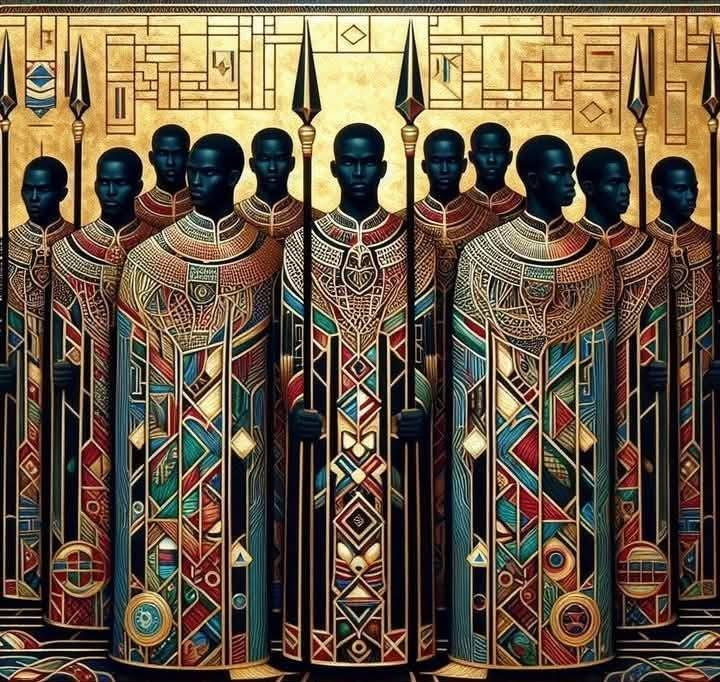
A people whose legacy challenges the very foundations of African history
When we speak of the great civilisations of antiquity, our minds often turn to Egypt, Greece, or Rome. But long before the Persian Empire rose to dominance, there existed in the heart of Africa a kingdom of extraordinary power, wealth, and sophistication—the Kingdom of Kush.
The Kingdom of Kush, with its three major cities of Meroe, Kerma, and Napata, emerged in the Nubian Desert south of Egypt along the Upper Nile River Valley from the 2nd millennium B.C. to the fourth century A.D. . For over a thousand years, Kush was a major power in the Nile valley, controlling an empire that at its height stretched from Central Sudan to the Mediterranean .
The achievements of this ancient civilisation challenge long-held beliefs that Egypt was the sole centre of advancement in the region. As renowned archaeologist Charles Bonnet’s excavations have revealed, Kush was not a mere vassal state of Egypt but a powerful and independent kingdom with its own distinctively indigenous culture . This sophisticated political state organised trade to the Mediterranean basin and built up a military strong enough to resist Egyptian forces .
The Black Pharaohs: A Legacy of Power
The Kushite rulers of Egypt’s 25th Dynasty, often referred to as the “Black Pharaohs,” represent a pivotal moment in the history of the Nile Valley. Emerging from the Kingdom of Kush at Napata in Nubia, these rulers not only unified Egypt after centuries of fragmentation but also reinvigorated pharaonic traditions .
The first major figure of this dynasty, King Piye, launched a campaign into Egypt during a period of political fragmentation known as the Third Intermediate Period. His Victory Stela records the subjugation of Delta rulers and proclaims his role as restorer of order . By 730 BCE, Piye had conquered Lower Egypt, establishing Kushite authority over both Upper and Lower Egypt .
The dynasty reached its zenith under Taharqa (690–664 BCE), whose reign is remembered for monumental building projects and ambitious foreign policy. Taharqa sponsored extensive temple construction at Karnak, Kawa, and Jebel Barkal, reinforcing his devotion to Amun and his claim to pharaonic legitimacy . He intervened in the Levant, supporting coalitions against Assyrian expansion, and is mentioned in both Biblical and Assyrian sources .
One of the most remarkable features of Meroitic civilisation was its powerful queens. The title “Candace,” meaning “sister,” was given to Kushite queens . Queens such as Amanirenas—who signed a peace treaty with the emperor Augustus—and Amanishakheto, whose treasure was looted in 1834, demonstrate the prominent role of women in Kushite society .
Kush: More Than a Footnote
The Kingdom of Kush was more than a civilisation; it was a power that commanded both land and sea. Kushite armies were formidable, and their military prowess allowed them to conquer and control Egypt itself . Kush also boasted a powerful navy, controlling trade routes along the Nile and beyond .
The economy of the ancient Kushites relied on trade in exotic African goods with Egypt and beyond. As middlemen, Kushite traders passed along ivory, ebony, incense, and other exotic goods from the South to the Egyptians, who then traded with other Mediterranean peoples . The city of Kerma, with its strategic location on the Nile River, controlled this crucial trade route .
Kush produced more gold than anywhere in the world at that time . Archaeologists have uncovered massive gold-processing operations at sites like Hosh el-Guruf, revealing the scale of Kush’s wealth . Minerals and high-quality stone were also mined for trade, and the Kushites introduced and developed iron metallurgy to the region .
A Sophisticated Society
The art and architecture of the Kushites reveal a sophisticated society of innovative craftsmen who constantly assimilated new artistic techniques from other lands . Notable architecture includes stone temple complexes such as the Lion Temple at Naqa and the steep-sided, solid pyramids found at Meroe and Jebel Barkal .
In fact, Sudan has more pyramids than all of Egypt—a testament to the grandeur of the Kushite civilisation . These tall, slender, graceful monuments bear witness to the lasting splendour of Kush .
Kushite art includes narrative tomb wall paintings and unique, eggshell-thin pottery with geometric patterns traded all over the Mediterranean . Stoic granite and bronze statues of gods and kings convey the religious beliefs of this ancient people .
The Question of Cush
The name “Kush” has been connected since at least the time of Josephus with the biblical character Cush, son of Ham (Genesis 10:6). Ham had four sons: Cush, Put, Canaan, and Mizraim (Egypt) . According to the Bible, Nimrod, a son of Cush, was the founder and king of Babylon, Erech, Akkad, and Calneh .
The Cushitic-speaking peoples, who are the ethnolinguistic groups speaking Cushitic languages natively, are today found primarily in the Horn of Africa, with minorities in Egypt, Sudan, Kenya, and Tanzania . Proto-Cushitic was spoken on the Ethiopian Highlands by 5000–4000 BC .
A Civilisation Worthy of Recognition
The Kingdom of Kush is not merely a footnote in the history of Africa—it is a testament to the power, ingenuity, and resilience of the peoples of the Nile Valley. As the American Journal of Archaeology notes in its review of The Nubian Pharaohs of Egypt, the term “Black Pharaohs” has sometimes been used to market exhibits, but the historical significance of Kush extends far beyond its interaction with Egypt . Sudanese colleagues and community members rightly resent the idea that the kings of ancient Sudan are only important because they ruled over Egypt . The Kingdom of Kush deserves to be remembered on its own terms.