Category Archives: Daaniyaa

The Sacred Journey of Gadaa: Oromo Community Gathers for Ancient ‘Wal-Argii’ Naming Ceremony
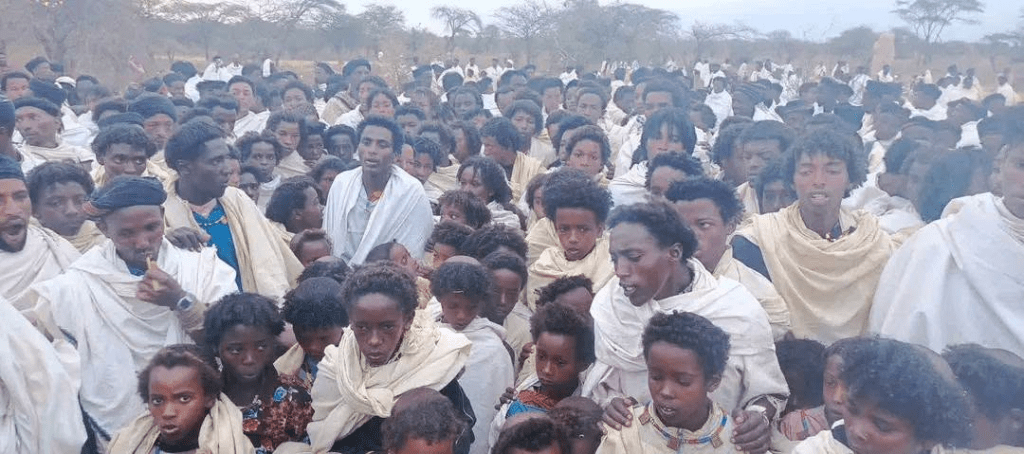
As the sun rises over Guyyoo Gobba, elders and youth come together to celebrate the timeless traditions that have guided Oromo society for generations
BORANA ZONE, OROMIA — In the heart of Oromia, where the ancient rhythms of tradition still pulse through the land, the community of Guyyoo Gobba is preparing for a ceremony that connects the present to centuries of ancestral wisdom. The occasion is the sacred “Wal-Argii” ritual—a ceremony of recognition and naming that marks a significant transition in the Gadaa system, the indigenous democratic governance structure that has guided Oromo society for over 500 years.
The Gadaa system, recognized by UNESCO as an Intangible Cultural Heritage of Humanity, is a complex and sophisticated framework that organizes Oromo society into distinct life stages. Each stage carries specific responsibilities, rituals, and ceremonies that prepare individuals for their roles within the community. At the heart of this system lies a profound truth: every child born into this tradition begins a journey of transformation, moving through carefully defined stages toward becoming a full participant in their society.
The Journey Begins: Dabballee
In the Gadaa system, when a male child is born, he enters the world as a Dabballee. This is the foundational stage of life, recognized without question—a male child is Dabballee, never female. The Dabballee period spans the first eight years of life. It is a time of innocence and learning, where the child is nurtured and prepared for the journey ahead.
On the eighth year, the child undergoes the Maqbaasa Ritual—the Ceremony for Naming. This is the child’s first formal recognition within the community, a moment when his identity is publicly acknowledged and celebrated.
The Second Stage: Gammee
Emerging from Dabballee, the child enters the Gammee stage. This period lasts for sixteen years and is divided into two parts: Gammee Gugurdoo and Gammee Didiqqoo. It is during this stage that the community gathers for the “Wal-Argii Ritual”—also known as the Nyaachisa Ritual, or the Ritual of Eating.
The Nyaachisa is sacred. As elders explain, “Without Nyaachisa, one cannot become Kuusa.” The ritual of eating together is not merely about consuming food—it is about entering into community, about sharing in the collective identity that binds Oromo society together.
During this stage, the community gathers to witness and celebrate the growth of their children. The foods prepared are not random; they carry deep cultural significance. Young people learn the importance of communal sharing and the responsibilities that come with becoming full members of society.
The Third Stage: Kuusa
After experiencing the Nyaachisa and emerging from Gammee, individuals enter the Kuusa stage, which lasts another eight years. The Kuusa stage is marked by a significant ritual: the Goodiyyaa Ritual, during which six officials are chosen from among the group. These six will take on leadership responsibilities within the community, learning the arts of governance and decision-making.
The selection of officials at this stage is critical—it identifies those who will carry forward the wisdom of their elders and guide their peers through the challenges ahead.
The Fourth Stage: Raaba
From Kuusa, individuals transition to Raaba, an eight-year period filled with important rituals that mark the transition to adulthood. During this stage, young men undergo the Muusoo Ritual and the Dhokhisuu Ritual—ceremonies that grant men permission to marry.
These rituals are about more than marriage; they signify readiness to take on adult responsibilities, to build families, and to contribute fully to the community. The Raaba stage teaches young men the importance of commitment, partnership, and the continuation of the Oromo lineage.
The Fifth Stage: Doorii
The Doorii stage is a five-year period marked by profound rituals, including the Buttaa Ritual and the Daannisa Ritual. The Daannisa is particularly significant—it is the ceremony that gives men permission to have children.
This stage represents the culmination of the reproductive and familial responsibilities that individuals will carry forward. It is during Doorii that men demonstrate their readiness to become fathers and to raise the next generation of Oromo society.
The Sixth Stage: Gadaa
The Gadaa stage itself lasts eight years and is perhaps the most recognized and celebrated period in the entire system. It is during this stage that leaders are inaugurated and governance structures are fully realized. The rituals of this period include:
- Baallii Ritual: The Inauguration Ceremony of the Leader of Gadaa
- Gindaa Ritual/Gumii Gaayoo: The assembly of the community
- Guutuu Ritual: A ceremony of completion and fulfillment
- Odaa Ritual: The dissolution of the Yaa’a Village and retirement of Gadaa officials
The Seventh Stage: Yuuba
Emerging from Gadaa, individuals enter the Yuuba stage, which lasts for twenty-seven years. This is a period of wisdom and mentorship, where elders guide the younger generations. The Yuuba are the custodians of knowledge, the keepers of the tradition, and the guides who ensure that the Gadaa system continues to thrive.
The Eighth Stage: Gadaammojjii
Finally, individuals enter the Gadaammojjii stage, an eight-year period that represents the final phase of the life cycle. The Gadaammojjii is the stage of elders—those who have passed through all previous stages and now serve as the ultimate authority. The Mataa Buufattu (the leader of the Gadaammojjii) presides over the Gadaammojjii Ritual, ensuring that the traditions are passed down correctly.
A Living Tradition
The journey from Dabballee through Gammee, Kuusa, Raaba, Doorii, Gadaa, Yuuba, and finally to Gadaammojjii represents the complete arc of human life in Oromo society. As elders say, “Ilmii Namaa Dabballee tahee Gammeetti dabra”—the child who was Dabballee has now passed through all stages.
None of these stages are bypassed; none are skipped. Each is essential to the formation of a complete person, a responsible community member, and a faithful steward of Oromo heritage.
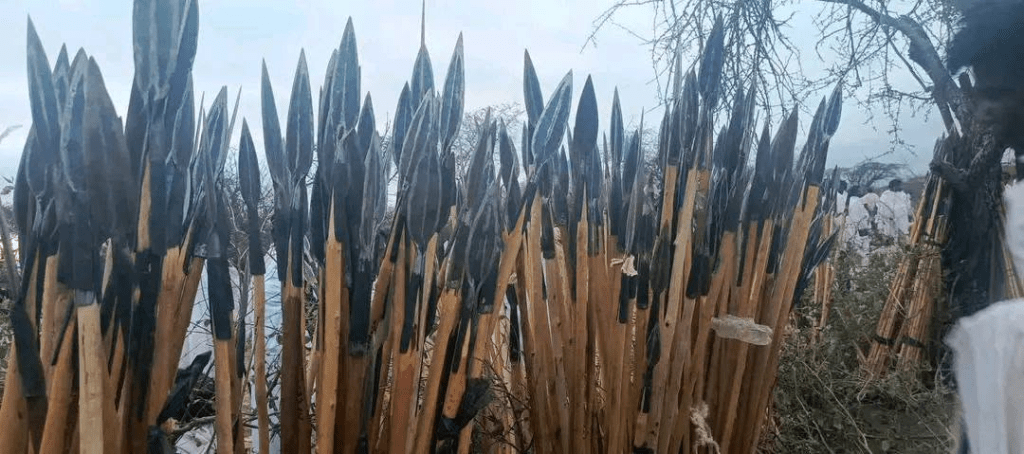
The Gathering at Guyyoo Gobba
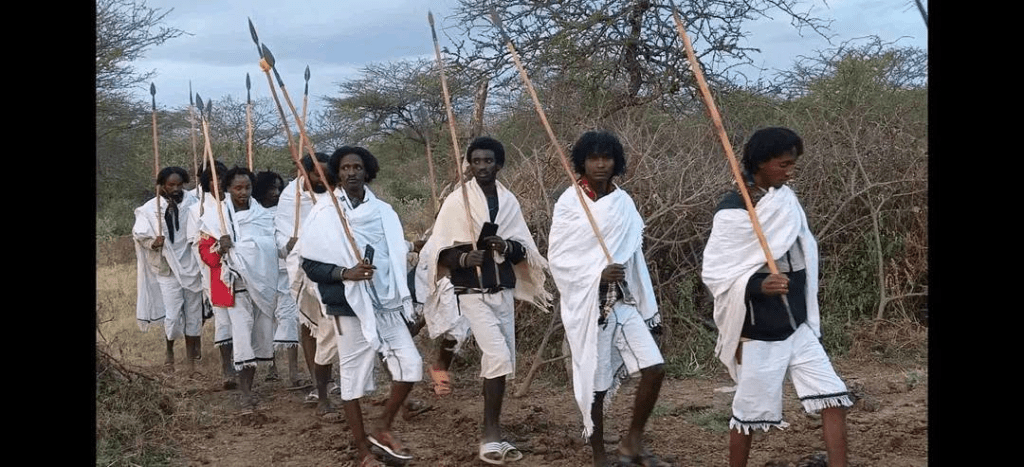
Today, the community of Guyyoo Gobba in the Borana Zone, within the Dhaas Ardaa (district) at Gumii Gaayoo, has gathered to continue this sacred tradition. Under the guidance of Abba Gadaa Guyyoo Gobba Bulee, they are conducting the Wal-Argii ceremony—the ritual of recognition and naming.
The celebration is taking place in stages, each day marking a different aspect of the ceremony. Tomorrow, the community will gather on the eastern side, entering Ardaa Hiigootti to perform the traditional Miloo (community assembly). The following day, they will move to the western side, entering Ardaa Borborii, where they will prepare the ceremonial foods that the children will share and receive blessings.
In the month of Adoolleessa, as the community continues to gather at Gumii Gaayoo under the leadership of Abba Gadaa Guyyoo Gobba, the Wal-Argii ceremony will continue to unfold, connecting the present generation to the wisdom of their ancestors.
A Ceremony of Unity
As the gathering begins, elders lead the community in prayers and rituals. The air fills with the sounds of traditional songs, the rhythmic movement of dances, and the joyful laughter of children who understand—even at their young age—that something sacred is taking place.
“Nagaan Gooroo marmaaraa ga’aa gammee buufadha!” the elders proclaim. “Peace has arrived in our gathering; we have begun our ceremony!”
The food prepared during these celebrations is not merely nourishment—it is a symbol of community, of sharing, and of the bonds that tie Oromo society together. When the children eat together, they are not simply satisfying hunger; they are entering into a sacred covenant with their community, their ancestors, and their future.
The Significance of Wal-Argii
The Wal-Argii ceremony represents the heart of Oromo identity. It is where children learn who they are, where families come together to celebrate their heritage, and where the community reaffirms its commitment to the values that have sustained Oromo society for centuries.
In a rapidly changing world, where globalization threatens to erase ancient traditions, the Oromo people hold fast to their Gadaa system. It is not merely a relic of the past—it is a living, breathing system of governance that continues to guide communities across Oromiya.
Looking to the Future
As the sun sets over Guyyoo Gobba and the families return to their homes, they carry with them the blessings of the ceremony. The children who have been named and recognized will remember this day—the songs, the dances, the foods, and the wisdom shared by their elders.
The Gadaa system teaches that each person has a role to play, a stage to fulfill, and a responsibility to the community. From the youngest Dabballee to the most respected Gadaammojjii, every individual matters. Every life has meaning. Every ritual connects the present to the past and prepares the way for the future.
A Message for the World
The Gadaa system offers a model of governance that the world might learn from—a system that values consensus, respects elders, nurtures youth, and recognizes the sacredness of life itself. It is a testament to the wisdom of the Oromo people and their contribution to the heritage of humanity.
As the community of Guyyoo Gobba continues its ceremonies, they invite all who would listen to witness and learn. The Wal-Argii is not just an Oromo celebration—it is a celebration of what it means to be human, to belong, and to carry forward the traditions of those who came before.
The journey continues. The ceremonies endure. And the Oromo people—their traditions, their wisdom, and their resilience—shine as a light in a world that desperately needs to remember the value of community, tradition, and shared humanity.


THE GENERATION OF THE BOOK: How the Keepers of Knowledge Forged a Living Purpose for Their Nation

They did not pick up arms alone; they picked up pens, manuscripts, and the dusty archives of memory—and in doing so, they gave their people a future worth fighting for.
—
By Our Staff Writer
There is a generation that walks among us—unassuming, often overlooked, yet carrying the weight of centuries upon their shoulders. They are not soldiers in the conventional sense. They do not stand on barricades with rifles. Their weapons are older, sharper, and far more enduring: books, scrolls, oral epics, and the sacred duty of remembrance.
This is the generation that read the book of knowledge not for personal glory, not for academic titles, but for their nation and their country. They understood that a people who forget their past are a people condemned to wander in the darkness of others’ narratives. So they opened their eyes, their ears, and their hearts to the whispers of their ancestors, and they transcribed those whispers into a living, breathing blueprint for the future.
They have set a Living Purpose—a compass not carved in stone, but etched into the very soul of the Oromo nation.
—
The Archive of Silence No More
For decades, the history of Oromia was a forbidden text. Colonial anthropologists wrote of the Oromo as a “stateless” people, a footnote to Ethiopian imperial narratives. State-sponsored textbooks erased the Gadaa system, reducing a 500-year-old democracy to a “primitive” custom. The language itself was relegated to the shadows, its beautiful rhythms and proverbs deemed too dangerous for the public sphere.
Then came the generation of the book.
They began in secret—under the flickering light of kerosene lamps, in the basements of diaspora homes, in the prayerful silence of elders’ huts. They transcribed oral histories that had survived the swords of conquerors. They translated ancient poems and legal codes. They documented the names of heroes whose graves had been deliberately unmarked. They studied the sciences of agriculture, linguistics, law, and political theory, not as abstract disciplines, but as tools for liberation.
This was not merely academic curiosity. It was archaeology of the soul. Every recovered manuscript, every restored lineage, every corrected historical distortion was a brick laid in the foundation of a nation that had been told it had no foundation at all.
—
The Book as the Blueprint
But this generation did not stop at remembrance. They were forward-looking—future-casting visionaries who understood that the past, no matter how glorious, is only the starting line.
They read, yes. But they also interpreted. They asked: What does the Gadaa system teach us about governance today? How can the Oromo philosophy of Nagaa (peace) inform conflict resolution in a fractured region? What economic models are sustainable for the pastoralists of the Borana and the farmers of Arsi? How can the Oromo diaspora, scattered across the globe, remain connected to the homeland without losing their hard-won international solidarity?
The generation of the book synthesized these questions into a Living Purpose—a dynamic, evolving vision that adapts to changing circumstances while remaining rooted in eternal values. They did not propose a rigid ideology, but a method: a way of being Oromo that is simultaneously ancient and modern, particular and universal, rooted and reaching.
This purpose is not a document gathering dust on a shelf. It is a living will, passed from elder to youth, from rural village to urban university, from the highlands to the diaspora. It grows, it breathes, it argues with itself—and in that self-critique, it becomes stronger.
—
The Pedagogy of the Rising Sun
How do you teach a nation to read its own future?
The generation of the book understood that literacy is not merely the ability to decode letters; it is the capacity to decode power. They established schools where none existed—underground classrooms beneath the shade of the Odaa tree, where children learned their mother tongue while the state listened for whispers of sedition. They published pamphlets, newsletters, and eventually, fully-fledged books that laid bare the mechanisms of their oppression and the pathways to their emancipation.
They also taught critical reading. They encouraged their students to question, to cross-reference, to recognize bias in official narratives. They did not want obedient subjects; they wanted sovereign minds—citizens capable of discerning truth from propaganda, justice from ritualized injustice.
In this way, the book became a liberation pedagogy. Every page read, every footnote examined, every historical contradiction exposed, was an act of resistance more potent than any weapon. Because an army can be defeated; a regime can fall; but a generation that knows how to think? That is a force no tyranny can suppress.
—
The Living Purpose in Action
Today, we see the fruits of that labor.
In the global forums of human rights advocacy, Oromo intellectuals cite their own traditions of democratic governance to challenge international observers. In the digital corridors of social media, a new generation of Oromo writers, poets, and meme-makers use their ancestors’ wit to dismantle contemporary prejudice. In the universities of the diaspora, students majoring in Oromo studies reclaim a heritage that was once “impractical” and “irrelevant” to Western academia.
The Living Purpose is materialized in the Oromo flag—that trinity of black, red, and white—which is not just a piece of cloth, but a summary of the book they read: black for the land, red for the sacrifice, white for the dawn to come. It is manifested in the Irreechaa festival, where thousands gather to give thanks, not as a ritualistic relic, but as a vibrant, contemporary expression of ecological spirituality.
And it is embodied in the quiet dignity of an Oromo mother who, despite the threat of arrest, teaches her child to say, “Ani Oromoo”—I am Oromo—with the same natural, unbreakable pride with which she breathes.
—
The Unfinished Chapter
Yet, the book is not complete. This generation knows that their task is not finished. The Living Purpose is not a destination; it is an open road.
There are still histories to recover, languages to revive, and systems to redesign. There are still young minds, especially in rural communities, who lack access to the very books that could set them free. There are still regimes that burn libraries and persecute poets, believing that if they destroy the words, they destroy the nation.
But they have already lost. Because the generation of the book has ensured that the words live within the people. No fire can burn a book that has been committed to memory. No censorship can silence a story that is carried on the tongue and passed through the blood.
—
A Final Leaf
As the sun descends over the Oromo homeland, casting its long shadows across the Rift Valley, one can almost hear the turning of pages—the rustle of a billion hopes, inscribed not in ink, but in action.
The generation that read for their nation has set a purpose that will outlive them. They have planted a forest of knowledge, and though they may not sit in its final shade, they have ensured that their children, and their children’s children, will.
They read the book. They understood the mission. And they passed it on—not as a relic, but as a flame.
The pages turn. The purpose lives. And the nation, at last, begins to write its own destiny.


Waaqeffannaa: The Ancient Oromo Faith and the Resurgence of Indigenous Spirituality
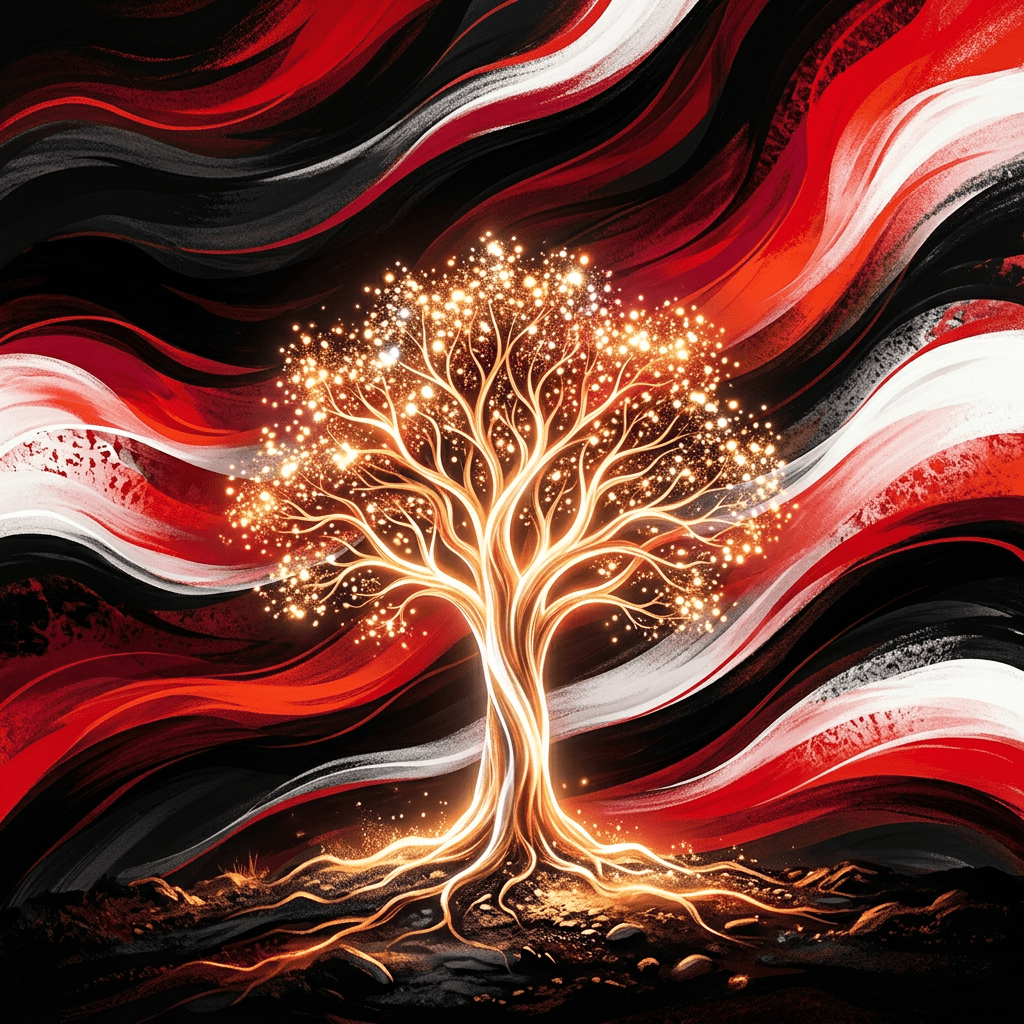
A profound exploration of the Oromo people’s original faith—Waaqeffannaa—reveals a sophisticated spiritual system that has survived centuries of suppression and is now experiencing a powerful renaissance.
The Foundation of Oromo Identity
“Amantiin mala dhugeeffannaa dhalli namaa ittiin Uumaafi uumama isaa hubatu, ittiin buluufi ittiin jiraatuudha.”
Religion is the lens through which humanity understands its Creator and creation—the framework through which people live, govern, and find meaning. For the Oromo people, this spiritual foundation is Waaqeffannaa, the indigenous belief system that has guided Oromo society for millennia.
Like every people, the Oromo possess their own ancient and authentic faith—a system through which they understand the divine truth, order their lives, and align themselves with the will of the Creator. Waaqeffannaa is the belief in the One True God, Waaqa, and the way of life that follows from that conviction.
“Waaqeffannaan amantii Waaqa Tokkicha jiruufi jireenya ofiitti aanfatanii ittiin qajeelfamaniidha.”
Waaqeffannaa is the faith of those who believe in the One Waaqa and are guided by a life lived in accordance with His will. The term itself—Waaqeffannaa—means “believing in Waaqa,” “following Waaqa,” and “directing one’s life toward Waaqa.” The Oromo, more than any other, direct themselves toward Waaqa, the Creator of all things.
The Core Belief: One Waaqa, Infinite Wisdom
The foundational text of Waaqeffannaa, Daaniyaa, declares:
“Waaqni tokkicha qofaadha; hiriyyaa hinqabu; hindhalu; hindhalchu; hindhalatu; hindulloomu; hindu’u. Jiraataa fula’aa’dha. Waaqa gochaan malee ijaan arguun hindanda’amu. Waaqaanis waanti qixxaatu hinjiru.”
“Waaqa is one alone; He has no partner; He does not beget; He is not begotten; He is not born; He does not die; He is eternal and ever-living. Waaqa cannot be seen with the eyes, but through His works. Nothing is equal to Waaqa.”
This conception of the divine is strikingly monotheistic, emphasising the absolute unity, transcendence, and uniqueness of Waaqa. It is a vision of God that resonates with the deepest currents of human spiritual longing—a God who is beyond human comprehension yet intimately present in creation.
The Suppression and Survival of Waaqeffannaa
The Oromo people’s original faith was not destroyed—it was hidden. As the Oromo spiritual tradition known as Wayyuu explains:
“Waaqeffannaan nigaadi’ame malee hinbanne; gaafa dhugaan Oromoo gale, aadaan, amantiin, duudhaafi safuun Oromoo homa deebi’ee gala. Waaqeffannaan nidhokate malee hinbanne; kan gaadi’ame waan dhalli namaa Waaqeffannaa dhiisee waan dhibiin buluu jalqabeef.”
“Waaqeffannaa was suppressed but not abolished. The day the truth of the Oromo returns, the culture, faith, traditions, and ethics of the Oromo will be restored. Waaqeffannaa was hidden but not destroyed. It was hidden because the people abandoned Waaqeffannaa and began to live under oppression.”
This is the central narrative of Waaqeffannaa’s survival—a faith that was not eradicated but driven underground, preserved in the hearts and practices of those who refused to forget. It survived not as a public institution but as an enduring spiritual memory, waiting for the day when it would be called back into the light.
The Pillars of Waaqeffannaa
The foundational pillars of Waaqeffannaa are:
Waaqa (The Creator)
The One True God, eternal and all-powerful, who is known through creation. As the Oromo say: “Waaqa Uumaa, Waaqa uumamaa; Tokkicha maqaa dhibbaa”—”Waaqa the Creator, Waaqa of creation; One with a hundred names.”
Ayyaana (The Divine Spirit)
The spiritual force that connects the individual to Waaqa. Ayyaana is the divine spark within each person, the means through which humans experience the presence of the divine in their lives.
Nama (Humanity)
Human beings are the crown of creation, entrusted with the responsibility to live in harmony with Waaqa’s will. The Oromo understanding of humanity is one of dignity, purpose, and accountability.
Wayyuu (The Spiritual Tradition)
The body of spiritual knowledge, practices, and wisdom passed down through generations. Wayyuu is the custodian of Oromo spiritual heritage, preserving the teachings that guide Waaqeffannaa adherents.
Safuu (Moral Order)
The ethical framework that governs Oromo society—principles of justice, respect, and harmony that reflect the divine order. Safuu is the moral compass that aligns human behaviour with divine will.
The Role of the Odaa Tree
Central to Waaqeffannaa practice is the Odaa tree—the sacred sycamore fig. The Odaa is not merely a tree; it is a symbol of the connection between heaven and earth, a gathering place for prayer, community deliberation, and spiritual renewal.
Beneath the Odaa, the Oromo:
- Offer prayers to Waaqa
- Resolve disputes through dialogue and reconciliation
- Conduct the sacred Gadaa ceremonies
- Renew their commitment to Safuu and communal harmony
The Odaa stands as a living witness to the continuity of Waaqeffannaa tradition, a place where the spiritual and the social are united.
The Meaning of Daaniyaa
At the heart of Waaqeffannaa spiritual literature is Daaniyaa—a sacred text that serves as a guide to understanding the divine and living a life of righteousness.
The name Daaniyaa itself carries profound meaning:
“Daaniyaan warra Waaqaan bulu; sanyiin isaanii Ayyaantuudha; Hiddi dhaloota keenyaas warra Daaniyaati; Qe’een isaanii ganamaa Haroo Mormor ture; achirraa ka’anii walaabuu keessa guuta; warri kun warra Waaqaan bulaniidha.”
“Daaniyaa are those who live under Waaqa; their lineage is Ayyaantuu; The root of our generations is the people of Daaniyaa; Their origin was ancient Haroo Mormor; from there they spread throughout the world; these are the people who live under Waaqa.”
Daaniyaa is not merely a text—it is a people, a tradition, and a way of life. It embodies the lived experience of the Oromo who have remained faithful to Waaqa throughout the centuries.
The Colours of Faith: A Spiritual Code
The sacred colours associated with Daaniyaa and Waaqeffannaa carry deep spiritual significance:
Black (Gurraacha)
- Represents Waaqummaa—the divine presence
- Symbolises the qulqullummaa (purity) of Waaqa
- Holds the highest place in Oromo spiritual perception
- As the Oromo say: “Gurraacha garaa garbaa”—”Black like the dark night”—a sign of Waaqa’s mystery and majesty
Red (Diimaa)
- Represents life and humanity
- Symbolises the blood that connects all Oromo people
- Placed adjacent to black, signifying humanity’s closeness to Waaqa
- Represents the dignity and worth of every human being
White (Adii)
- Represents the light and wisdom Waaqa gives to humanity
- Symbolises the path out of darkness, falsehood, and oppression
- Guides the faithful back to the truth of Waaqa
The Odaa tree, rendered in white, stands at the centre—a symbol of the sacred connection between the divine and the human.
The Calendar of Renewal: Birboo
Waaqeffannaa has its own calendar, marking the passage of time in accordance with divine order. The new year, known as Birboo, is celebrated with thanksgiving and renewal—a time to leave behind the old and embrace the new.
According to the sacred calendar, the current year is 6401 ALW (After the Liberation of Waaqa)—a chronology that traces the faith’s resilience across millennia. The year begins with the month of Amajjii, and Birboo marks the celebration of renewal, a time when the faithful give thanks for the blessings of the past and prepare for the challenges and opportunities of the future.
The Resurgence of Waaqeffannaa
In recent decades, there has been a remarkable resurgence of Waaqeffannaa among the Oromo people, both in the homeland and across the diaspora. This revival is not merely a cultural trend—it is a spiritual homecoming, a return to the ancestral faith that sustained the Oromo people for generations.
The message of this resurgence is clear:
“Waaqeffannaan nidhokate malee hinbanne; gaadiin Waaqeffannaa dhokse gaafa hiikamu, gaarummaan dachii kana nidhuunfata; gaafa dhalli namaa Dhugaa Waaqaatti deebi’e, namni cufti nigammada.”
“Waaqeffannaa was hidden but not destroyed. The day the darkness that has hidden the truth of Waaqeffannaa is lifted, goodness will spread across this land. When humanity returns to the truth of Waaqa, all people will rejoice.”
Conclusion: The Return of Indigenous Truth
For too long, the Oromo people’s spiritual heritage has been marginalised, misunderstood, and misrepresented. But the truth cannot be silenced forever.
As the spiritual tradition of the Oromo, Waaqeffannaa is not merely a religion—it is a comprehensive way of life. It is the lens through which the Oromo understand creation, the path through which they seek justice, and the foundation upon which they build their future.
“Wayyuun Oromoo, kan argaa-dhageettii himuuf aangoma Waaqaa muudaman tokkos kanuma ragaa bahu.”
“Wayyuu, the Oromo spiritual tradition, is the one that has been chosen to be the witness, the one that has the divine authority to speak what it sees and hears.”
The time has come for this ancient faith to be seen, heard, and respected once more. For in the return to Waaqeffannaa lies not only the healing of the Oromo people but also a profound contribution to humanity’s understanding of the divine.
“Waaqeffannaan hinbanne, nidhokate malee! Gaadiin gaafa hiikame Waaqeffannaan huma deebi’a!”
“Waaqeffannaa has not been destroyed—only hidden! When the darkness is lifted, Waaqeffannaa will return!”






