Category Archives: freedom

Gadaa Elders Announce Dates for Irreechaa 2019: A Call for Unity, Gratitude, and Peace
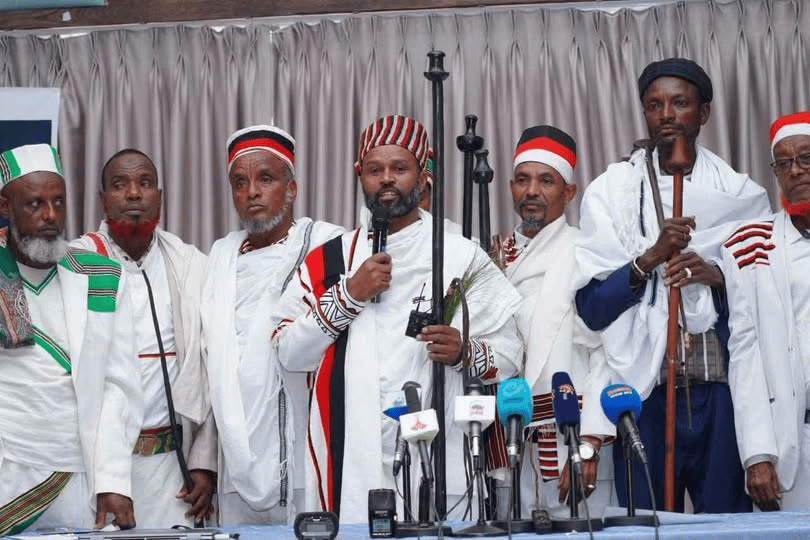
Finfinnee, Oromia — The Assembly of Gadaa Elders of Oromia has officially announced the dates for the celebration of Irreechaa, one of the most sacred and widely observed festivals of the Oromo people. In a statement released to the public, the elders confirmed that Irreechaa at Hora Finfinnee will be celebrated on September 23, while Irreechaa at Hora Harsadee will take place on September 24, 2019.
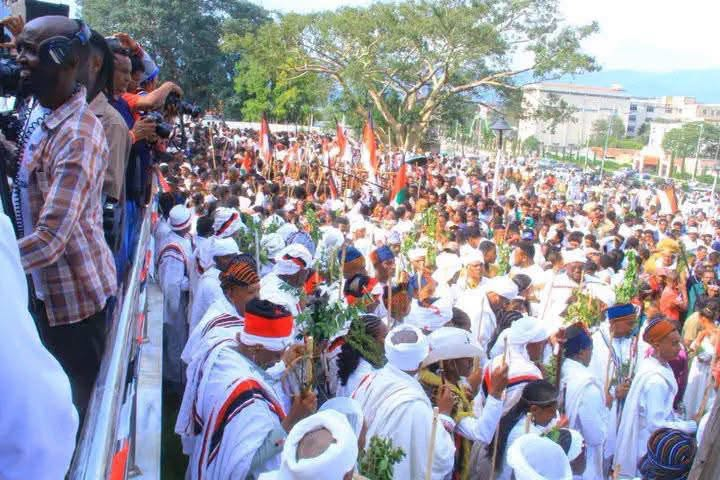
Irreechaa is a centuries-old thanksgiving festival celebrated at the banks of rivers and lakes, most notably at Hora Finfinnee (Lake Finfinnee) and Hora Harsadee (Lake Harsadee). It marks the end of the rainy season and the beginning of a new year in the Oromo calendar — a time of renewal, reflection, and communal gratitude to Waaqa (God) for blessings received.
A Festival of Thanksgiving and Hope
In their statement, the Gadaa elders emphasized the profound meaning of Irreechaa, describing it as a celebration of thanksgiving, hope, unity, love, reconciliation, and renewal. “Irreechaa is a festival of gratitude, hope, unity, love, reconciliation, and rebirth,” the elders declared. “Therefore, all Oromo people, as well as all nations, nationalities, and peoples of our country and the entire world, are invited to honor Irreechaa together with the Oromo people.”
The invitation extends beyond the Oromo nation itself, reflecting the festival’s universal message of peace and togetherness. Irreechaa has long served as a gathering point for people of all backgrounds — a day when differences are set aside and communities join hands in celebration and prayer.
A Call to Preserve Tradition
The elders also stressed the importance of observing Irreechaa according to its longstanding customs, traditions, and sacred norms (safuu). “Irreechaa at Hora Finfinnee and Hora Harsadee will be celebrated on September 23 and 24, 2019, respectively,” the statement read. “Like other Irreechaa celebrations, it will be observed in accordance with the culture, tradition, and sacred order of Irreechaa.”
The Gadaa system, a traditional democratic governance structure of the Oromo people recognized by UNESCO as intangible cultural heritage, plays a central role in organizing and preserving the festival’s rituals. The elders’ announcement underscores their continued role as custodians of Oromo culture and tradition.
A Warm Invitation to All
In closing, the Assembly of Gadaa Elders extended a heartfelt invitation to all Oromo people to welcome visitors with the warmth and hospitality for which the Oromo are known. “Therefore, we call upon all Oromo people to receive every guest who comes to them with the culture, tradition, and hospitality of our people,” the elders urged.
The message is clear: Irreechaa is not merely a festival — it is a living expression of Oromo identity, faith, and community. As the dates approach, anticipation is building across Oromia and beyond, with preparations underway at Hora Finfinnee and Hora Harsadee.
For the Oromo people, Irreechaa 2019 promises to be a time of collective renewal — a moment to give thanks, seek reconciliation, and reaffirm the bonds that unite them as one people.
Source: Assembly of Gadaa Elders of Oromia

Sons of Liiban Maccaa Carry the Gadaa Birmajii Torch: A Legacy Passed from Generation to Generation
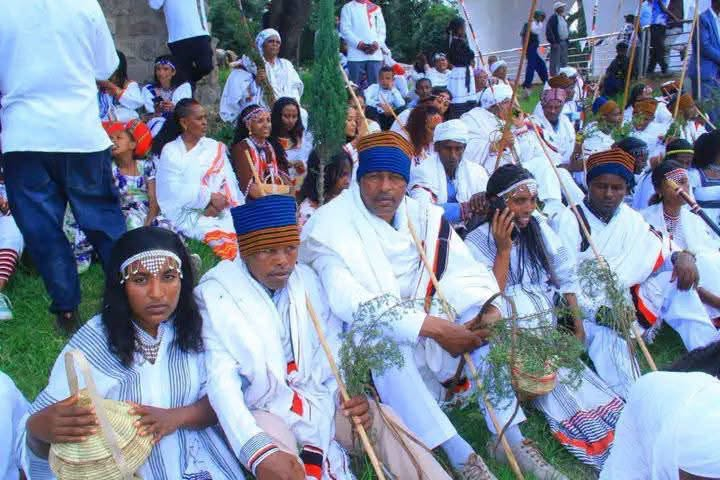
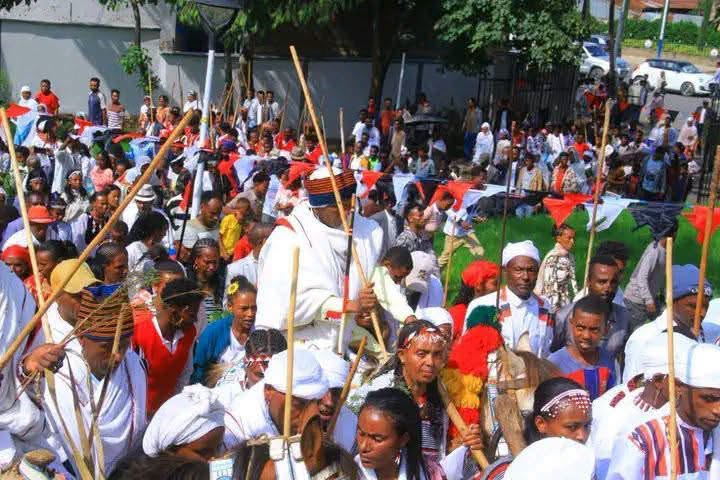
Central Oromia— In the heartlands of Central Oromia, across the highlands of West Shawa and Southwest Shawa, a sacred flame continues to burn. The sons of Liiban Maccaa — Walisoo, Amayyaa and Kuttaayee — are actively fulfilling their duties within Gadaa Birmajii, ensuring that the ancient Oromo Gadaa system is passed down from generation to generation, unbroken and undiminished.
A System That Never Sleeps
The Gadaa system, recognized by UNESCO as an Intangible Cultural Heritage of Humanity, is the traditional democratic, social, and spiritual governance structure of the Oromo people. It organizes society into age sets and generational grades, each with distinct roles, responsibilities, and rights. Among these, the Birmajii grade represents a critical stage — a time when young men prepare for leadership, defend their community, and uphold the sacred norms of Oromo life.
What sets the sons of Liiban Maccaa apart is their unwavering dedication. In Central Oromia, West Shawa, and Southwest Shawa, these communities have preserved the Gadaa system without interruption, carrying it forward across generations with reverence and pride.
The Seven Who Hold the Jila
Among the three sons of Liiban, it is the seven from the Horii lineage of Kuttaayee who hold the Jila Gadaa — the sacred leadership and ritual responsibility of the grade. Their duty is profound and their journey demanding.
The Gadaa group of Roobalee sets out to receive Baallii (Alangee) — the symbolic transfer of power and responsibility that marks the transition into Birmajii. This transfer is not merely ceremonial; it is a covenant. It binds the incoming generation to the duties of leadership, protection, and service to the community.
Rain, Blessing, and Endurance
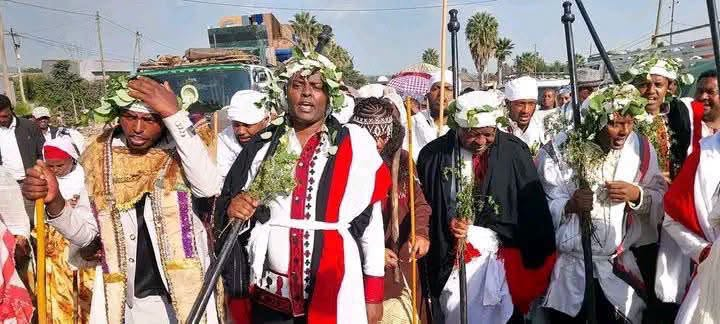
In the Oromo worldview, rain is a sign of blessing — a gift from Waaqa (God) that nourishes the land and its people. Yet even when the rains come, the Roobalee do not rest. They sing in the rain, and they do not allow the abundance of milk and prosperity to distract them from their sacred mission.
“The Roobalee sing along with the rain, and the abundance of milk and success has not made us forget our duty,” the report recounts. “Whether in good times or hard times, they have seen it through.”
The message is clear: Birmajii is not a fair-weather calling. It demands endurance, sacrifice, and faithfulness — in seasons of plenty and in seasons of want.
A Call of Honor and Blessing
The words of the community ring with pride and blessing:
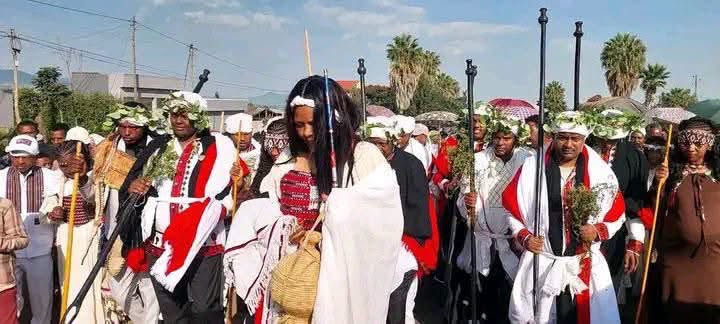
“The Birmajii have taken the Alangee and are preparing to complete their covenant — today they have cut the buttaa. May the news of your deeds reach the ears of those who need to hear it. Congratulations on reaching the fourfold blessing of your fathers and the eightfold blessing of your grandfathers. You have accomplished what was asked of you — and you make us proud.”
The “fourfold blessing of the fathers” and the “eightfold blessing of the grandfathers” speak to the deep ancestral roots of the Gadaa system — a chain of blessing and responsibility that stretches back through time, linking each generation to those who came before.
The closing blessing, “Ginna milkii ciisaa” — a wish for peace, prosperity, and rest — crowns the message with the hope that the labor of the Birmajii will bring abundance and tranquility to the community.
A Living Heritage
The sons of Liiban Maccaa are not merely preserving a tradition — they are living it. Every ritual, every journey, every song in the rain is an act of cultural survival and spiritual renewal. In a world that often pressures communities to abandon their heritage, these young men stand firm, proving that the Gadaa system remains a vibrant and vital force.
Their story is a reminder that culture is not a museum piece. It is alive — carried in the feet that walk to receive the Alangee, in the voices that sing with the rain, and in the hearts of a generation determined to honor its ancestors.
Baga oofkaltan!

Oromo Advocacy Group Rejects Pan-Ethiopian Alliance, Citing Historical Erasure and Political Opportunism

By Staff Reporter
A prominent Oromo advocacy organization has formally rejected the newly formed “Ethiopian Peoples’ Forces Alliance for Survival,” accusing the coalition of failing to acknowledge the historical suffering of the Oromo people and of engaging in political opportunism rather than genuine problem-solving.
In a detailed statement released on 21 September 2026, Advocacy for Oromia outlined its objections to the alliance, which was established on 10/2019 E.C. (Ethiopian Calendar) and claims to represent a broad coalition of Ethiopian peoples against the current government.
The Alliance’s Platform
The Ethiopian Peoples’ Forces Alliance for Survival presents itself as a unified front against what it describes as a regime that has institutionalized national and religious divisions. Its stated objectives include removing the current government through “any means necessary,” establishing a transitional government, ensuring security for all citizens, and rebuilding the economy. The alliance explicitly calls for the right to self-determination for seven major national groups: Oromo, Amhara, Tigray, Afar, Somali, Benishangul-Gumuz, and Gambella.
The alliance’s rhetoric is sweeping: “We have reached a point where we must unite to save ourselves and our country,” reads its preamble, which accuses the current regime of fueling conflicts, engaging in widespread human rights violations, and pushing the country to the brink of disaster.
The Oromo Rejection
Advocacy for Oromia, however, sees the alliance as fundamentally flawed. In its statement, the organization argues that the coalition’s generic language about “immense suffering” and “widespread displacement” deliberately avoids naming the Oromo people as specific victims of systemic oppression.
“The harm includes, but is not limited to, land dispossession, political marginalization, cultural suppression, and economic exploitation under successive Ethiopian regimes—the imperial era, the Derg regime, the EPRDF administration, and continuing under the current government,” the statement reads. “This omission is not accidental; it reflects a deliberate refusal to centre Oromo historical trauma within the alliance’s political framework.”
The advocacy group further accuses the alliance of refusing to accept the reality of systemic oppression inflicted upon the Oromo people by past regimes. Rather than demanding accountability for historical wrongs, the alliance frames the current crisis as a departure from an otherwise acceptable trajectory—a framing that Advocacy for Oromia rejects outright.
A Question of Strategy
At the heart of the dispute lies a fundamental strategic disagreement within Ethiopian opposition politics: whether to prioritize unity against a common enemy or to insist upon historical justice as a precondition for any alliance.
The alliance positions itself as a broad-based coalition, calling for unity among Ethiopia’s diverse national groups to confront a shared adversary. Its document lists self-determination for multiple peoples and declares that “the unity of the Ethiopian peoples is paramount.”
Advocacy for Oromia, however, argues that without acknowledging past wrongs, any coalition risks reproducing the same structural injustices that have historically subjugated the Oromo people. “Formal recognition of Oromo rights within a reformed Ethiopian state is insufficient,” the statement asserts. “What is required is transformative justice that addresses the structural legacy of Oromo dispossession and abuses.”
The “Survival” Critique
The advocacy group also takes issue with the alliance’s very name. In the original Oromo statement, Advocacy for Oromia notes that the alliance is called “Survival”—a designation the group argues reveals its limited and inadequate scope.
“The alliance is named ‘Survival,’ which reveals its limited and inadequate scope,” the statement reads. “It is not founded to genuinely resolve the country’s problems, but rather to engage in political maneuvering and gamesmanship.”
This critique suggests that the alliance’s focus on mere survival—bare existence—falls far short of the Oromo struggle for liberation, justice, and systemic transformation.
Political Opportunism Alleged
The most serious charge leveled by Advocacy for Oromia is that the alliance is a vehicle for political opportunism. The group points to the alliance’s inclusion of multiple ethnic groups and its call for armed struggle as evidence of a framework that “superficially accommodates Oromo demands while failing to address the fundamental historical injustice against the Oromo people.”
“This framework offers only formal recognition, not substantive transformation,” the statement argues.
Advocacy for Oromia explicitly rejects any pan-Ethiopian initiative that does not subordinate itself to Oromo nationalist priorities, describing the alliance’s refusal to do so as exposing it “as a vehicle for political opportunism rather than a genuine instrument for liberating the Oromo people.”
An Unresolved Contradiction
The advocacy group also highlights what it sees as a contradiction within the alliance’s logic. The alliance’s stated objective is to remove the current regime—which Advocacy for Oromia notes is itself a product of past systems of Oromo oppression.
“If the alliance succeeds in dismantling the current order, does that not constitute a form of accountability?” the statement asks rhetorically. “Removal without acknowledgment and redress is insufficient. True liberation requires not merely a change of personnel but a reckoning with the structural foundations of Oromo subjugation.”
The Broader Context
The rejection of the alliance reflects long-standing tensions within Ethiopian opposition politics. The Oromo people, Ethiopia’s largest national group, have historically experienced marginalization and dispossession under successive regimes. The emergence of Oromo nationalist movements—both peaceful and armed—has challenged the centralized Ethiopian state, demanding greater autonomy, self-determination, and historical justice.
The Ethiopian Peoples’ Forces Alliance for Survival appears to be an attempt to bridge these divides, bringing together diverse national groups under a common banner. But Advocacy for Oromia’s rejection suggests that such efforts will face significant obstacles, particularly when they require subordinating specific historical grievances to a broader, more generic narrative of national suffering.
The Unanswered Question
The statement from Advocacy for Oromia leaves an important question unresolved: can Oromo liberation be achieved through alliance with other Ethiopian peoples, or does it require a separate, Oromo-centred path?
The group clearly leans toward the latter, but does not fully grapple with the strategic costs of that position—including potential isolation, the difficulty of achieving liberation without allies, and the risk of perpetuating the very divisions that have historically weakened Ethiopian opposition movements.
For now, Advocacy for Oromia’s rejection of the alliance stands as a clear statement of its position: any coalition that does not explicitly centre Oromo historical suffering and commit to its redress cannot be trusted.
Advocacy for Oromia formally rejects the “Ethiopian Peoples’ Forces Alliance for Survival” as an unsuitable vehicle for the liberation and advancement of the Oromo people.
Rejection of the “Ethiopian Peoples’ Forces Alliance for Survival” from an Oromo Nationalist View
Advocacy for Oromia hereby issues this formal statement to articulate its categorical rejection of the so-called “Ethiopian Peoples’ Forces Alliance for Survival.” This rejection is grounded in a thorough analysis of the alliance’s foundational assumptions, its treatment of Oromo historical grievances, and its strategic objectives. Advocacy for Oromia concludes that the aforementioned alliance is not beneficial for the Oromo people, and this statement sets forth the reasons for that conclusion.
I. Failure to Acknowledge the Historical Suffering of the Oromo People
The alliance does not genuinely believe in or acknowledge the harm that has persisted for years against the Oromo people. This harm includes, but is not limited to, land dispossession, political marginalization, cultural suppression, and economic exploitation under successive Ethiopian regimes—the imperial era, the Derg regime, the EPRDF administration, and continuing under the current government.
While the alliance document employs generic language regarding “immense suffering,” “widespread displacement,” and “destruction and death,” it conspicuously avoids naming the Oromo people as a specific victim of systemic oppression. This omission is not accidental; it reflects a deliberate refusal to centre Oromo historical trauma within the alliance’s political framework.
Advocacy for Oromia maintains that any political coalition that does not explicitly acknowledge and centre the specific historical grievances of the Oromo people is inherently suspect and cannot be trusted to advance Oromo national interests.
II. Refusal to Accept the Wounds of Past Systems of Oppression
The alliance refuses to accept the reality of systemic oppression inflicted upon the Oromo people by and current regimes. This refusal manifests in the alliance’s framing of the current crisis as a departure from an otherwise acceptable historical trajectory, rather than as the culmination of centuries of Oromo subjugation.
The alliance positions itself as a broad-based coalition against the current regime, while declining to demand accountability for past systems. This approach reflects a fundamental strategic disagreement within Ethiopian opposition politics: whether to prioritize unity against a common enemy or to insist upon historical justice as a precondition for any alliance.
Advocacy for Oromia unequivocally adopts the latter position. Without acknowledging past wrongs, any coalition risks reproducing the same structural injustices that have historically subjugated the Oromo people. Formal recognition of Oromo rights within a reformed Ethiopian state is insufficient; what is required is transformative justice that addresses the structural legacy of Oromo dispossession and abuses.
III. Political Opportunism Rather Than Genuine Problem-Solving
The alliance is not founded to solve the empire’s problems but rather to play political games. This is the most serious charge against the alliance, and Advocacy for Oromia asserts it without equivocation.
The alliance’s inclusion of multiple national groups, its call for armed struggle, and its specific demands for self-determination for various peoples—Amhara, Oromo, Tigray, Afar, Somali, Benishangul-Gumuz, and Gambella—collectively constitute an ethnic-federal framework that superficially accommodates Oromo demands while failing to address the fundamental historical injustice against the Oromo people. This framework offers only formal recognition, not substantive transformation.
Advocacy for Oromia rejects any pan-Ethiopian initiative that does not recognize Oromo nationalist priorities. The alliance’s refusal to do so exposes it as a vehicle for political opportunism rather than a genuine instrument for liberating the Oromo people.
IV. The Contradiction Within the Alliance’s Logic
The alliance’s stated objective is to remove the current regime—which is itself a product of past systems of Oromo oppression. If the alliance succeeds in dismantling the current order, does that not constitute a form of accountability?
Advocacy for Oromia answers unequivocally: removal without acknowledgment and redress is insufficient. True liberation requires not merely a change of personnel but a reckoning with the structural foundations of Oromo subjugation. The alliance’s failure to commit to such a reckoning renders its objectives inadequate for the Oromo struggle.
V. Conclusion
Advocacy for Oromia articulates a coherent Oromo nationalist position: any political alliance that does not explicitly centre Oromo historical suffering and commit to its redress cannot be trusted.
The critique is strongest in its insistence on historical specificity—generic calls for “survival” and “democracy” can obscure rather than address ethnic-specific oppression. However, the statement is weakest in its lack of concrete evidence for the “political games” charge and in its implicit rejection of broad-based coalition politics.
The underlying question remains unresolved: can Oromo liberation be achieved through alliance with other Ethiopian peoples, or does it require a separate, Oromo-cantered path? Advocacy for Oromia clearly leans toward the latter, but does not fully grapple with the strategic costs of that position.
Therefore, Advocacy for Oromia formally rejects the “Ethiopian Peoples’ Forces Alliance for Survival” as an unsuitable vehicle for the liberation and advancement of the Oromo people.
Advocacy for Oromia
21 September: 2026

African Union Sounds Alarm Over Red Sea Escalation, Warns of Regional Fallout
The African Union Commission has expressed deep concern over the recent military escalation in the Red Sea region, condemning attacks on Saudi Arabian territory and international maritime navigation while warning that the crisis threatens to engulf the African continent.
In a strongly worded statement issued from its headquarters in Addis Ababa, the Commission condemned attacks carried out by the Houthis against civilian targets and economic infrastructure in Saudi Arabia, as well as attacks and threats against commercial shipping in the Red Sea.
Holy Sites Must Be Protected
The Commission expressed particular concern over reports of attempted attacks targeting Makkah and other holy cities of the Kingdom of Saudi Arabia.
“It stresses that holy sites, as well as civilians and pilgrims visiting them, must be fully protected and must under no circumstances become targets of military action,” the statement read.
The warning underscores the gravity of a conflict that has already disrupted one of the world’s most critical maritime corridors and now threatens sites of immense religious significance to millions of Muslims worldwide.
Freedom of Navigation at Risk
The Commission strongly reaffirmed the principle of freedom of navigation in the Red Sea and through the Bab el-Mandeb Strait, in accordance with international law.
“Any action aimed at obstructing or threatening navigation along this strategic maritime route poses a serious risk not only to the littoral States, but also to international trade, global supply chains, energy security and African economies,” the Commission warned.
The Bab el-Mandeb Strait is a narrow waterway between Yemen and the Horn of Africa that serves as a gateway for a substantial portion of global trade — including oil shipments and commercial goods — traveling between Europe, Asia, and Africa. Disruption to this route has far-reaching consequences for economies worldwide.
A Strategic Interest for Africa
The Commission underscored that the security of the Red Sea and the Bab el-Mandeb Strait is a major strategic interest for Africa, particularly for the States of the Horn of Africa and the Red Sea littoral States.
For countries such as Djibouti, Eritrea, Somalia, Sudan, and Egypt, the stability of this waterway is not merely a matter of international concern but a direct national interest. These nations rely on the Red Sea for trade, energy imports, and economic connectivity.
Warning Against Regionalization
The Commission warned against the risk of a further regionalization of the ongoing confrontations in the Middle East, whose security, humanitarian, and economic consequences would directly affect the African continent.
This warning reflects growing fears that what began as a localized conflict could spiral into a broader regional confrontation, drawing in multiple actors and destabilizing an already fragile neighborhood.
Call for Immediate De-escalation
The Commission called for:
- The immediate cessation of attacks against civilians, civilian and economic infrastructure, and commercial shipping
- Respect for freedom of navigation in accordance with international law
- Urgent de-escalation to prevent further hostilities
The Commission reiterated the need to prioritize dialogue and political avenues in order to prevent a further expansion of hostilities and preserve peace, security, and stability throughout the Red Sea region.
A Continent Watching Closely
The African Union’s intervention highlights the continent’s deep stake in the stability of the Red Sea corridor. With global supply chains already strained by multiple crises, any prolonged disruption to this strategic route would have severe implications for African economies — from soaring import costs to delayed humanitarian aid.
The Commission’s statement serves as both a warning and a call to action, urging all parties to step back from the brink and pursue diplomatic solutions before the situation escalates beyond control.
As the world watches the Red Sea with growing anxiety, the African Union has made its position clear: peace, stability, and respect for international law must prevail.
Media Inquiries
For media inquiries, please contact:
Mr. Nuur Mohamud Sheekh
Spokesperson of the AUC Chairperson
African Union Commission
Email: SheekhN@AfricanUnion.org
Addis Ababa, Ethiopia

Multicultural and Multifaith Victoria: A New Independent Voice for Diverse Communities
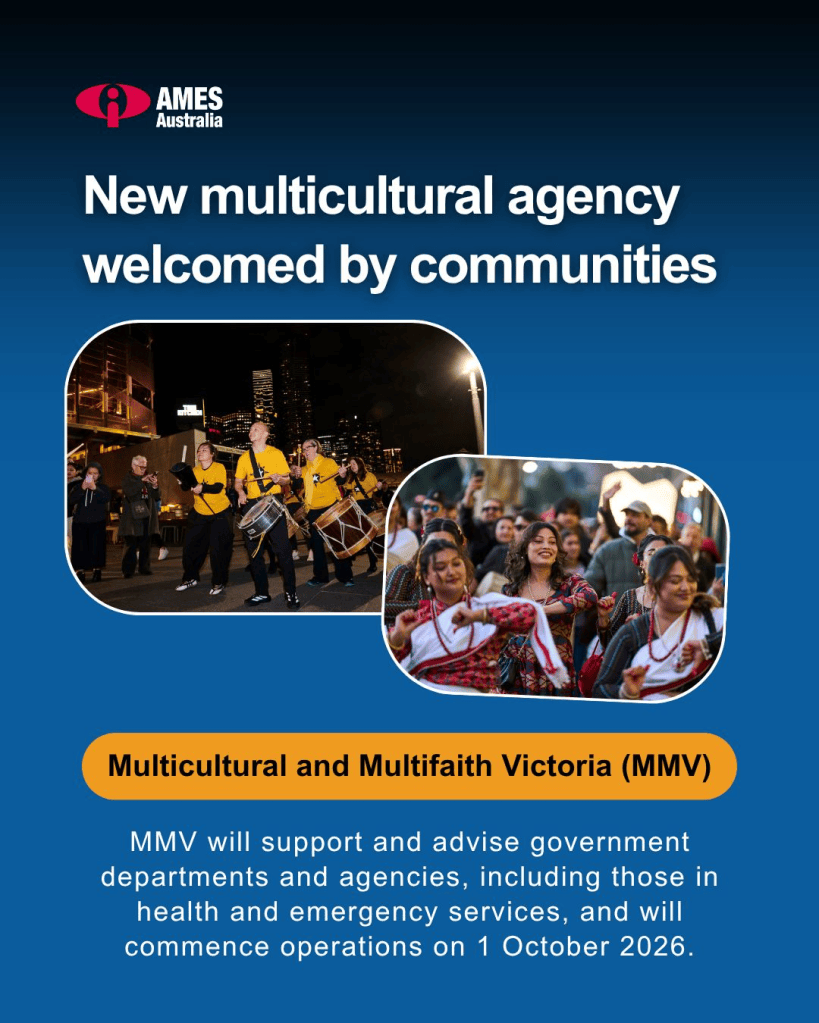
Victoria’s multicultural groups and communities have welcomed the creation of Multicultural and Multifaith Victoria, a new agency aimed at giving diverse communities a stronger voice in government, according to AMES Australia.
The government says the new agency will ensure diverse communities have an independent voice in government to influence policies and programs. Multicultural and Multifaith Victoria will support and advise government departments and agencies, including health and emergency services, and it will commence operations on 1 October 2026.
A Significant Step for Multicultural Victoria
The establishment of Multicultural and Multifaith Victoria marks a major development in how the Victorian Government engages with its diverse communities. For decades, multicultural communities have sought greater representation and a more direct channel to influence the decisions that affect their lives. This new agency is designed to be that channel.
The agency will serve as an independent body, providing advice and support to government departments and agencies across a range of portfolios. Its mandate includes ensuring that the needs and perspectives of multicultural and multifaith communities are considered in the development and delivery of policies and programs — particularly in critical areas such as health and emergency services.
What the Agency Will Do
Multicultural and Multifaith Victoria is expected to play a central role in:
- Advising government on policies and programs affecting diverse communities
- Ensuring independent representation for multicultural and multifaith voices within government
- Supporting government departments and agencies, including health and emergency services, to better serve diverse communities
- Strengthening community engagement and participation in civic life
By embedding these functions within a dedicated agency, the government aims to move beyond consultation toward genuine partnership with the communities it serves.
Commencing 1 October 2026
The agency will officially commence operations on 1 October 2026, a date that marks the beginning of a new chapter in Victoria’s approach to multicultural affairs. Communities and stakeholders are encouraged to stay informed as the agency takes shape and begins its work.
A Welcome Development
The creation of Multicultural and Multifaith Victoria has been welcomed by Victoria’s multicultural groups and communities, who see it as a positive step toward greater inclusion and representation. AMES Australia, a longstanding advocate for multicultural communities, has highlighted the significance of this development.
For communities that have long called for a stronger voice in government, the new agency represents both recognition and opportunity — a chance to shape the policies and programs that impact their daily lives.
Looking Ahead
As Victoria continues to grow as one of the world’s most diverse societies, the establishment of Multicultural and Multifaith Victoria signals a commitment to ensuring that diversity is not only celebrated but actively represented in the corridors of power.
The agency’s success will ultimately be measured by how well it amplifies community voices, influences meaningful change, and helps build a Victoria where every community feels seen, heard, and valued.
To read more about Multicultural and Multifaith Victoria, visit the link shared by AMES Australia.
#AMES #AMESAustralia #Victoria #MMV #VictorianGovernment

Irrecha Australia: Celebrating Culture, Community and Gratitude Across a Continent
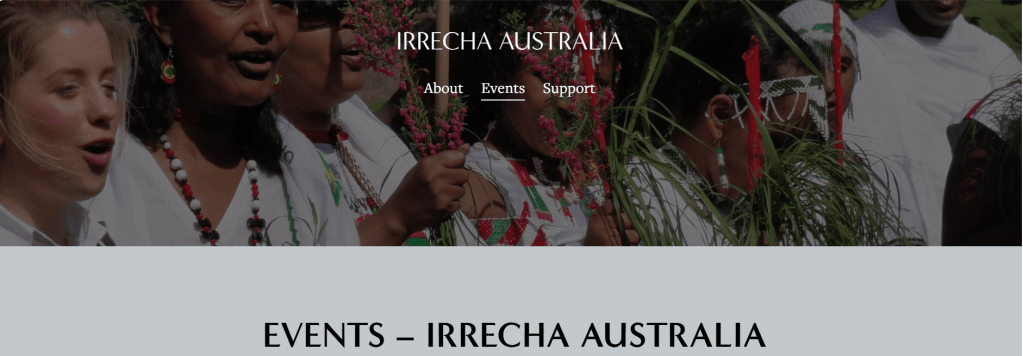
What began as small community gatherings among Oromo families in Australia has blossomed into vibrant national festivals that now draw together elders, youth, and friends from across multicultural Australia — all in the spirit of thanksgiving.
At the heart of this growing movement is Irrecha Australia, a registered non-profit organization dedicated to honoring the Oromo people’s cherished thanksgiving tradition. Rooted in a deep reverence for nature, gratitude, and unity, the celebration has traveled thousands of kilometers from East Africa to find new life on Australian soil.
A Tradition of Thanksgiving Carried Across Continents
Irrecha is one of the most significant cultural and spiritual traditions of the Oromo people, celebrated as an expression of gratitude for nature’s bounty, peace, and community well-being. For Oromo Australians, the festival serves as both a connection to their ancestral homeland and a living, breathing practice passed down through generations.
What was once observed in modest gatherings has expanded into large-scale national festivals, reflecting the growth and vitality of the Oromo diaspora in Australia. These events have become cherished occasions where culture, faith, and community intersect.
Building an Inclusive Home for Culture
As a registered non-profit, Irrecha Australia has committed itself to preserving and promoting Oromo cultural heritage while creating inclusive spaces for learning and celebration. The organization places particular emphasis on empowering young people, equipping the next generation to carry traditions forward with pride and confidence.
Through its work, Irrecha Australia ensures that Oromo culture is not merely remembered but actively practiced, shared, and celebrated — in classrooms, community halls, and festival grounds alike.
A Vision for Multicultural Australia
The organization’s vision extends beyond the Oromo community itself. Irrecha Australia envisions a nation where Oromo culture thrives as an integral part of Australia’s diverse identity — a culture that enriches the broader society and contributes to the country’s multicultural fabric.
“Through festivals, education, and community initiatives, we strengthen connections, honour our heritage, and celebrate a way of life rooted in gratitude, resilience, and unity,” the organization states.
Gratitude, Resilience, and Unity
At a time when cultural preservation and community cohesion are increasingly valued, Irrecha Australia’s mission resonates with a wider Australian audience. Its festivals serve as a bridge — connecting generations, welcoming neighbors of all backgrounds, and demonstrating how heritage can flourish in a new home while remaining faithful to its roots.
For Oromo Australians and their friends across the country, Irrecha is more than a festival. It is a statement of identity, a celebration of survival and resilience, and an invitation to share in a tradition built on gratitude.
To learn more about Irrecha Australia’s festivals, educational initiatives, and community programs, follow the organization’s official channels or contact its team directly. Irrecha Australia

Dandenong Harmony Square: Oromo Community Honors Ilfinash Qanno with Love and Reverence
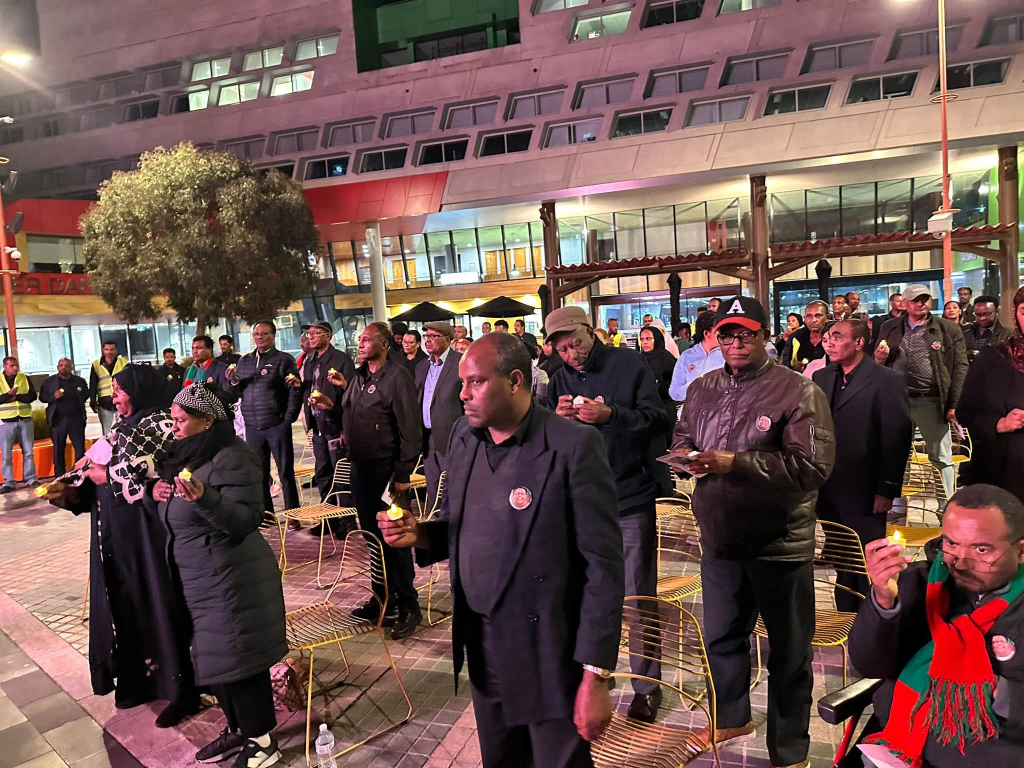
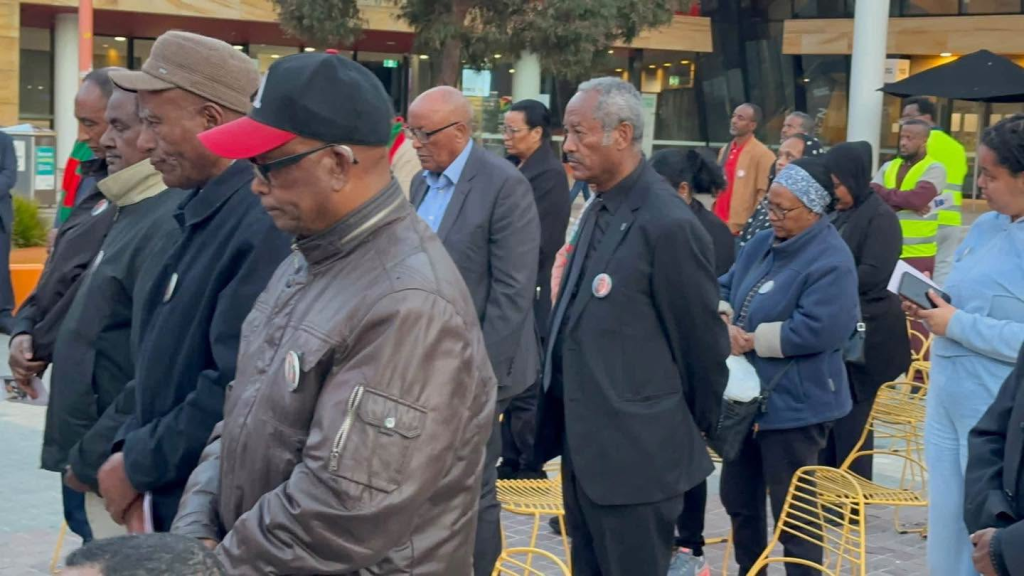
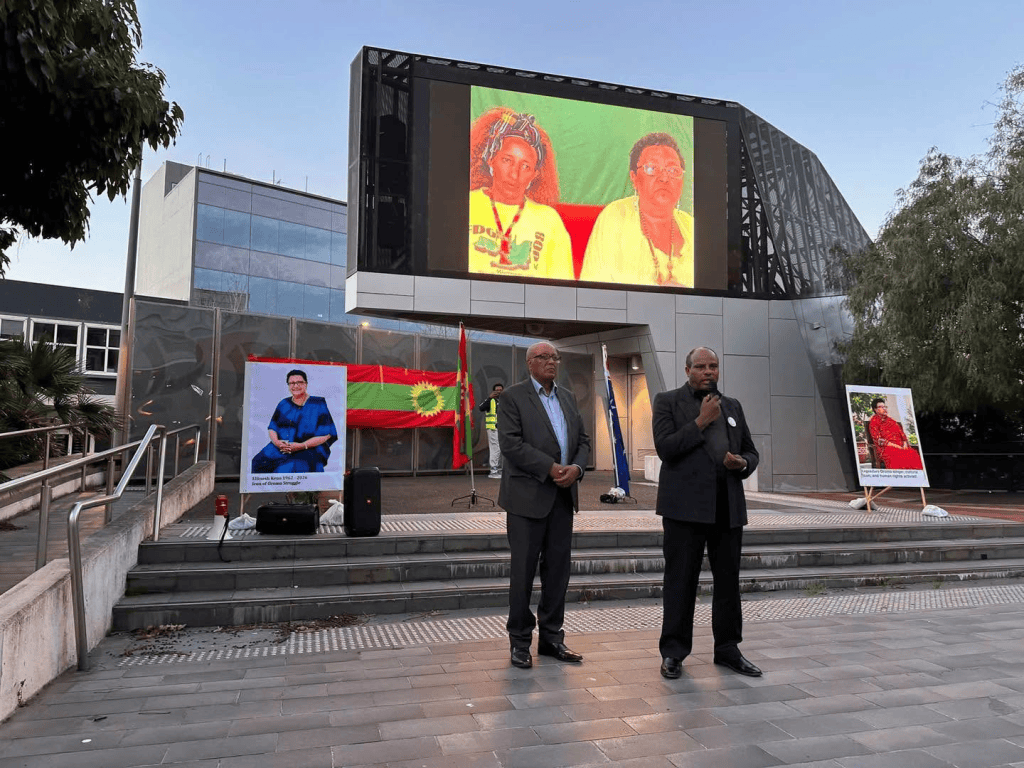
DANDENONG, Victoria — At 5 PM on September 12, 2026, Dandenong Harmony Square became the emotional heart of Melbourne’s Oromo diaspora. The Oromo Community in Melbourne Australia convened a solemn and deeply affectionate commemorative gathering to mourn the passing of legendary artist and freedom fighter Ilfinash Qanno, who died in Finfinnee on September 6. Hundreds of community members and friends assembled to express their profound respect and enduring remembrance for the woman known as “the voice of resistance.”
Grief Transformed into Celebration
From the outset, the commemoration was invested with a meaning that transcended mere mourning. In the days leading up to the event, Oromo advocacy groups in Melbourne called upon the community to transform sorrow into a celebration of Ilfinash’s life. “What she left us is not despair, but a radiant legacy,” the organizers wrote in a statement. “We must draw strength from her and from the spirit of those who came before us, and renew our commitment to the cause she defended throughout her life.”
That spirit permeated the entire gathering at Harmony Square. Participants wove together song, recitation, and remembrance to sketch the portrait of a woman who belonged not only to the stage but to the deepest conscience of a people. As the Oromo community in Minnesota expressed in its own condolence message, Ilfinash “dedicated her extraordinary talents throughout her life to expressing Oromo identity, history, language, aspiration, and resilience — often at tremendous personal cost.”
From Nekemte to Finfinnee: A Voice That Would Not Be Silenced
Ilfinash Qanno was born in 1962 in Nekemte, Oromia, and later moved to Finfinne. Her artistic career began amid the cultural revival of the Oromo renaissance, but it quickly became inseparable from political awakening. In 1976, at a historic cultural performance in Finfinnee, she electrified the audience with a single line: “Qawwee malee maaltu bilisa nu baasa?” — “Without a gun, what will set us free?” From that moment, she bound her destiny irrevocably to the Oromo liberation struggle.
Her music was never merely entertainment. In an era when Afaan Oromo expression and Oromo identity were brutally suppressed, her songs became vessels of memory, defiance, and collective aspiration. She drew on Oromo oral traditions, proverbs, and geerarsa — the traditional praise poetry of Oromo warriors — fusing cultural roots with political consciousness in songs such as “WBO Koo Maaloo Ree,” “Yaa Lammii Koo,” and “Geerarsa.”
The price was devastating. She was imprisoned multiple times under the Derg regime and subsequent governments. According to Oromo human rights documentation and accounts from fellow prisoners, she endured extraordinarily brutal treatment in detention — including having her head forcibly shaved with broken glass. This violence was not merely physical torture; it was a calculated assault on a woman who stood through her voice. Yet as she later reflected, her physical frailty could not simply be attributed to age — the prison gates had opened, but the imprisonment never truly left her body.
She Opened the Road for Oromo Women
Ilfinash’s significance extends far beyond the label of “protest singer.” The Oromo community in Melbourne emphasized in its tribute her role as a pioneer of Oromo women in public life: in an era when restrictive expectations severely constrained women’s participation in public affairs, she challenged both political oppression and social convention, carving out space for those who would follow. “Her courage created possibilities for generations of Oromo artists and women,” the organization wrote.
This dimension was invoked repeatedly at the Harmony Square gathering. For many young Oromo women present, Ilfinash was not merely a name to be honored but a stance to be inherited: the conviction that women have the right not only to sing but to stand at the forefront of struggle.
A Final Resting Place: Ambo’s Loyalty Repaid
Ilfinash Qanno ultimately chose Ambo as her final resting place. It was not an arbitrary decision. In 1992, she was captured alongside comrades in fighting near Ambo and detained at the Kerchele detention center. When elements within the regime discussed whether to execute her, the people of Ambo answered with collective action: they pooled money to bribe the prison commander, and the weight of popular will made the authorities afraid to act.
She never forgot. When her life approached its end, she did not choose to return to her birthplace but to the city whose people had once ransomed her life through their courage. Ambo’s people had refused to let her die; she answered that debt with eternal rest among them.
The Voice Has Fallen Silent; The Song Endures
Ilfinash Qanno left behind more than ten albums and an auditory archive dispersed across Oromo diaspora communities worldwide. Her cassette tapes once crossed borders she herself could not cross; her melodies passed from mouth to mouth through the cracks of prohibition and imprisonment.
The commemoration at Dandenong Harmony Square was the echo of that archive on another continent. When Oromo diaspora members sing her songs in a public square in a foreign land, they are doing more than remembering a person. They are enacting the very truth Ilfinash proved with her life: that a people’s language, memory, and identity are worth defending — and can be defended.
The voice has fallen silent. The song endures.

Addis Standard Wins NED Democracy Award 2026

WASHINGTON — The National Endowment for Democracy (NED) honored the Addis Standard, Ethiopia’s leading independent news outlet, with its 2026 Democracy Award for Freedom of the Press at a ceremony held Wednesday evening at George Washington’s Mount Vernon estate.
The award, presented as part of NED’s commemoration of America’s 250th anniversary, recognized the publication’s founder and editor-in-chief, Tsedale Lemma, for a career defined by telling the stories of overlooked communities, reporting on abuses others would prefer hidden, and preserving evidence of crimes that could one day lead to accountability.
“When conflict and repression made independent reporting both dangerous and difficult, Addis Standard continued to pursue the truth—bringing vital coverage from Ethiopia to readers at home and around the world,” NED said in its citation .
National Democratic Institute Board Member Alice Albright presented the award to Lemma on behalf of the newsroom, honoring journalists who, in NED’s words, “give citizens the trusted information they need to understand their country and help shape its future” .
The recognition comes after a year of intensifying pressure on the outlet. In April 2025, Ethiopian police raided its office and the home of a senior staff member, briefly detaining three managers and confiscating electronic equipment. In February 2026, the Ethiopian Media Authority revoked the publication’s online media registration certificate, citing “repeated violations” of media laws. The publisher, JAKENN Publishing PLC, has contested the decision as unlawful, and the case remains before the Federal High Court.

Lemma founded Addis Standard in February 2011 as a monthly magazine, building it into one of the most influential independent voices in Ethiopian media history . She began her journalism career in 2000, working as a senior reporter at the now-defunct Addis Tribune before leaving the field in 2005 amid post-election turmoil to serve as a communications and political advisor at the Israeli Embassy in Addis Ababa. She returned to journalism in 2011 with the launch of Addis Standard .
In 2014, The Africa Report named her one of the continent’s 50 Rising Stars .
NED’s Democracy Award is presented annually to individuals and organizations advancing democratic freedoms in the face of repression. Other 2026 recipients included the Syrian Center for Media and Freedom of Expression, Russian anti-war clergy initiative Friede Allen, Burma’s Spring Revolution organizers, and imprisoned Cuban dissidents Félix Navarro, Luis Manuel Otero Alcántara, and Maykel Castillo Pérez .
“The yearning for freedom that launched our nation 250 years ago remains one of the most powerful forces in the world today,” said NED Board Chairman Peter Roskam. “This year’s honorees embody the courage and persistence required to defend those rights in their own communities” .

Birraa: The Oromo Season of Hope, Renewal, and Prosperity

In Oromo culture, Birraa is more than a season—it is a symbol of hope, renewal, and prosperity. It is a time when the land awakens, communities gather, and hearts are filled with optimism for what lies ahead.
As the rains ease and the fields turn green, Oromos across the homeland and the diaspora are welcoming Birraa — the season of renewal and abundance. It is a time deeply rooted in Oromo tradition, culture, and spirituality, marking the transition from the rainy season to a period of growth, flowering, and new beginnings.
A Season Rooted in Tradition
For generations, Birraa has held a special place in Oromo life. It is the season when the land is at its most fertile, when crops begin to flourish, and when communities come together in celebration of nature’s bounty. It is a time of hope—a reminder that after every rainy season, the sun returns, and with it, new life.
In Oromo culture, Birraa represents:
Hope – The promise of a brighter tomorrow and renewed possibilities.
Renewal – The awakening of nature and the human spirit alike.
Prosperity – The abundance that follows patience, hard work, and faith.
“Baga Birraan Isiniif Barihe!”
This beautiful Oromo greeting captures the essence of the season:
“Baga Birraan isiniif barihe!”
It is a wish that the Birraa season may dawn brightly upon you—bringing hope, blessings, and prosperity. It is a phrase exchanged among family, friends, and neighbours, carrying with it the warmth and generosity that define Oromo culture.
A Time of Community and Connection
Birraa is not only a celebration of nature—it is a celebration of community. Families gather, stories are shared, and traditions are passed down from generation to generation. It is a time to strengthen bonds, express gratitude, and look forward together.
For Oromos in the diaspora, Birraa is also a moment of connection to the homeland—a reminder of the land, the people, and the culture that shaped them, no matter how far they may be from home.
Celebrating Birraa Around the World
From the highlands of Oromia to cities across Australia and beyond, Oromos are marking the season with joy and pride. Whether through gatherings, cultural performances, or simple acts of sharing, the spirit of Birraa transcends borders and unites Oromos wherever they are.
A Message of Hope for All
In a world often marked by challenges and uncertainty, Birraa offers a powerful message: that hope endures, that renewal is always possible, and that prosperity follows those who persevere.
May this Birraa season bring blessings to all Oromos and to all who celebrate the beauty of nature’s cycles.
Happy Birraa season!
Baga Birraan isiniif barihe!






