Category Archives: Gumaa

Inside Oromia’s New Map: The Six Clusters and the Leaders Who Will Run Them
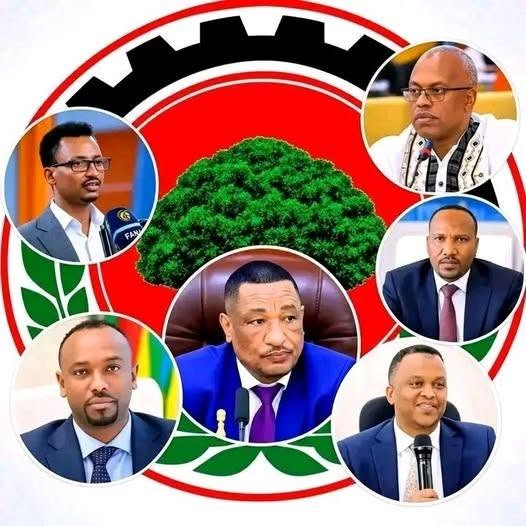
From Hararghe to Jimma, from Borana to Wollega, Oromia’s historic restructuring has redrawn the administrative landscape. Here is who leads each cluster — and which zones fall under their command
FINFINNE — Oromia has redrawn its map. In one of the most consequential administrative reforms in the region’s modern history, Ethiopia’s largest regional state has collapsed its 21 zonal administrations into six powerful clusters, each led by a chief holding the rank of deputy president.
The reform, approved by the Oromia Regional State Council during its first regular session of the seventh term, is designed to consolidate functions, eliminate duplication, and bring government closer to the people. But beyond the policy language lies a simple question every citizen wants answered: Who is in charge, and of what?
Here is the full breakdown of the six clusters, their leaders, and the zones under their authority.
1. East Oromia Cluster — Two Zones
Chief: Obbo Abdurrahman Abdalla
- Hararghe West (West Hararghe)
- Hararghe East (East Hararghe)
This eastern cluster brings together the two Hararghe zones, a region historically defined by trade routes, Islamic scholarship, and the rugged beauty of the Chercher Mountains. Its headquarters sit in the ancient walled city of Harar, with deputy offices in Chiro, Galamso, and Gurawa.
2. Southeast Oromia Cluster — Four Zones
Chief: Obbo Ahimad Haji
- Arsi
- Bale
- Arsi West (West Arsi)
- Bale East (East Bale)
Spanning the Rift Valley and the towering Bale Mountains, this cluster is one of the largest by landmass. It encompasses Ethiopia’s most productive agricultural heartlands, including the wheat fields of Arsi and the coffee and forest zones of Bale. Its administrative center is Robe, with deputy offices in Ginir, Asella, and Shashemene.
3. South Oromia Cluster — Four Zones
Chief: Obbo Ahimad Idris
- Guji
- Guji West (West Guji)
- Borana
- Borana East (East Borana)
This southern cluster stretches toward the Kenyan border and is home to Ethiopia’s most iconic pastoralist cultures. The Borana people, renowned for their gadaa system of governance — a UNESCO-recognized intangible cultural heritage — anchor this region. Its hub is Yabelo, with deputies based in Adola, Nageelle Borana, and Bule Hora.
4. West Oromia Cluster — Four Zones
Chief: Obbo Masfin Melaku
- Wollega East (East Wollega)
- Wollega West (West Wollega)
- Qellem Wollega
- Horro Guduru Wollega (Horro Guduru)
Western Oromia is gold country — literally. This cluster is home to some of Ethiopia’s richest mineral deposits, alongside vast coffee forests and fertile farmland. It is also a region that has endured significant security challenges in recent years. Its headquarters is Nekemte, with deputies in Gimbi, Shambu, and Dambi Dollo.
5. Southwest Oromia Cluster — Three Zones
Chief: Dr. Rashad Kamal
- Illu Abba Boor (Iluababor)
- Bunnoo Bedelle (Buno Bedele)
- Jimma
This cluster is the birthplace of Ethiopian coffee. Jimma, its administrative heart, is celebrated worldwide for the Arabica beans that grow in its surrounding forests. The region is also rich in history, home to the ancient Kingdom of Limmu-Ennarea and a center of Oromo scholarship and Islamic learning. Deputy offices are located in Bedele, Limmu Gannat, and Mattu.
6. Central Oromia Cluster — Four Zones
Chief: Dr. Mengistu Bekele
- Shewa East (East Shewa)
- Shewa North (North Shewa)
- Shewa Southwest (S.W. Shewa)
- Shewa West (West Shewa)
Encircling the capital, Addis Ababa, Central Oromia is the political and economic engine of the region. It includes Adama, one of Ethiopia’s largest industrial cities; Ambo, a university town known for its mineral springs; and the fertile plains of North Shewa. Its leadership is shared between Shaggar and Adama, with deputies in Waliso, Fitche, and Ambo.
A Reform Built on Coordination
Under the new structure, each cluster chief holds the rank of deputy president — a designation that signals their weight in the regional hierarchy. Alongside each chief sit two deputies: one for development, one for peace and justice. Senior advisors complete the leadership team, mirroring the executive architecture of the regional government itself.
Officials say the consolidation addresses a long-standing problem: Oromia, at over 350,000 square kilometers and more than 27 million people, was simply too vast to be governed effectively through 21 separate zones. By grouping related zones under unified cluster leadership, the government hopes to improve coordination, reduce bureaucratic overlap, and make services more accessible.
What Comes Next
The appointments are made. The headquarters are set. The structures are operational. What remains to be seen is whether the new architecture delivers on its promise — or whether it simply adds another layer of administration between the people and their government.
For now, Oromia has chosen consolidation over fragmentation. It has bet that six strong clusters will serve its people better than twenty-one scattered zones. And it has placed its trust in a new generation of leaders to make that bet pay off.
The map has changed. The work has just begun.
#Oromia #AdministrativeReform #Ethiopia

Oromia Consolidates 21 Zonal Administrations into Six Powerful Regional Clusters
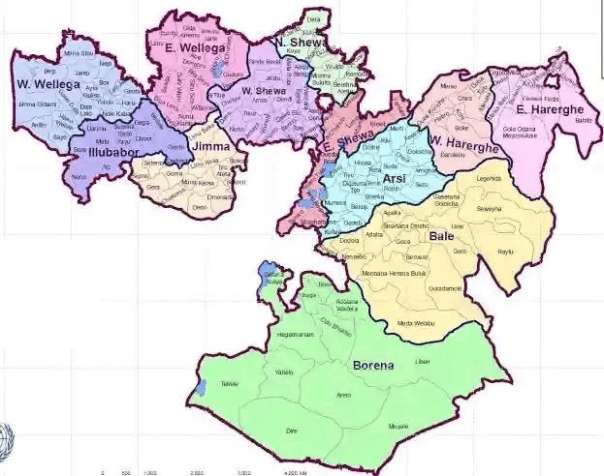
A historic restructuring aims to streamline governance, strengthen service delivery, and bring the state closer to its people
FINFINNE — In a decision described as historic and far-reaching, the Government of Oromia Regional State has approved a major restructuring of its administrative architecture, reducing the region’s 21 zonal administrations to six powerful regional clusters. The reform is designed to build a stronger, more efficient government and to ensure that public services genuinely reach the people they are meant to serve.
The decision, ratified through a draft proclamation by the Oromia Regional State Council during its first-year, seventh-term regular session, consolidates related administrative functions into unified structures. At its core, the reform emphasizes coordination, complementarity, and the effective delivery of services to the public.
With the new structure now in force, the senior leadership of each of the six clusters has been officially assigned.
East Oromia Cluster
Headquarters: Harar
- Abdurrahman Abdalla — Cluster Chief, rank of Deputy President. Office: Harar.
- Miski Muhammad — Deputy Cluster Chief for Development, rank of Bureau Head. Office: Chiro.
- Anas Aliyi — Deputy Cluster Chief for Peace and Justice, rank of Bureau Head. Office: Galamso.
- Jaarso Boru — Senior Advisor to the Cluster Chief, rank of Bureau Head. Office: Gurawa.
- Fiqadu Miliyoon — Advisor to the Cluster Chief, rank of Bureau Head.
- Samia Abdalla — Advisor to the Cluster Chief, rank of Bureau Head.
Central Oromia Cluster
Headquarters: Shaggar and Adama
- Dr. Mengistu Bekele — Cluster Chief, rank of Deputy President. Office: Shaggar and Adama.
- Abbabu Waqo — Deputy Cluster Chief for Development, rank of Bureau Head. Office: Waliso.
- Kifalaw Adare — Deputy Cluster Chief for Peace and Justice, rank of Bureau Head. Office: Fitche.
- Makonnen Bayisa — Senior Advisor to the Cluster Chief, rank of Bureau Head. Office: Ambo.
- Ashannafi Ajjama — Advisor to the Cluster Chief, rank of Bureau Head.
- Taddasa Dirriba — Advisor to the Cluster Chief, rank of Bureau Head.
Southwest Oromia Cluster
Headquarters: Jimma
- Dr. Rashad Kamal — Cluster Chief, rank of Deputy President. Office: Jimma.
- Indalkachaw Tafari — Deputy Cluster Chief for Development, rank of Bureau Head. Office: Bedele.
- Aman Danu — Deputy Cluster Chief for Peace and Justice, rank of Bureau Head. Office: Limu Gannat.
- Didha Guddata — Senior Advisor to the Cluster Chief, rank of Bureau Head. Office: Mattu.
- Muhammadxahaa Abba Fixaa — Advisor to the Cluster Chief, rank of Bureau Head.
- Mosisa Lammessa — Advisor to the Cluster Chief, rank of Bureau Head.
South Oromia Cluster
Headquarters: Yabelo
- Ahmad Haji — Cluster Chief, rank of Deputy President. Office: Yabelo.
- Adula Hirbayye — Deputy Cluster Chief for Development, rank of Bureau Head. Office: Adola.
- Liban Areero — Deputy Cluster Chief for Peace and Justice, rank of Bureau Head. Office: Nageelle Borana.
- Wandimmu Robe — Senior Advisor to the Cluster Chief, rank of Bureau Head. Office: Bule Hora.
- Ibrahim Abdi — Advisor to the Cluster Chief, rank of Bureau Head.
- Isaaq Xaachoo — Advisor to the Cluster Chief, rank of Bureau Head.
West Oromia Cluster
Headquarters: Nekemte
- Masfin Melaku — Cluster Chief, rank of Deputy President. Office: Nekemte.
- Mirressa Fixee — Deputy Cluster Chief for Development, rank of Bureau Head. Office: Gimbi.
- Gammachu Gurmeessa — Deputy Cluster Chief for Peace and Justice, rank of Bureau Head. Office: Shambu.
- Talila Tarrafa — Senior Advisor to the Cluster Chief, rank of Bureau Head. Office: Dambi Dollo.
- Badhasa Dhaba — Advisor to the Cluster Chief, rank of Bureau Head.
- Dassu Lammi — Advisor to the Cluster Chief, rank of Bureau Head.
Southeast Oromia Cluster
Headquarters: Robe
- Ahimad Idris — Cluster Chief, rank of Deputy President. Office: Robe.
- Asaffa Tolasa — Deputy Cluster Chief for Development, rank of Bureau Head. Office: Ginir.
- Abdurrazaq Huseen — Deputy Cluster Chief for Peace and Justice, rank of Bureau Head. Office: Asella.
- Ibrahim Kadir — Senior Advisor to the Cluster Chief, rank of Bureau Head. Office: Shashemene.
- Izzaddin Abuubakar — Advisor to the Cluster Chief, rank of Bureau Head.
- Birhanu Arfasa — Advisor to the Cluster Chief, rank of Bureau Head.
What the Reform Means
The restructuring reduces Oromia’s sprawling 21-zonal system to six consolidated clusters, each led by a chief holding the rank of deputy president. Each cluster also has dedicated deputies for development and for peace and justice, along with senior advisors — a structure that mirrors the executive architecture of the regional government itself.
Officials say the reform is rooted in a simple principle: government should not be distant or fragmented. By grouping similar functions under one coordinated structure, the new system aims to eliminate duplication, improve efficiency, and make public services more accessible to ordinary citizens.
Oromia is Ethiopia’s largest regional state, spanning more than 350,000 square kilometers with a population estimated at over 27 million. For years, analysts and citizens alike have questioned whether a 21-zone structure could effectively serve such a vast and diverse population. The new six-cluster model is presented as the answer.
A Historic Decision With High Stakes
The proclamation was approved during the Council’s first regular session of its seventh term — a detail that underscores the political weight of the decision. The reform is not merely administrative; it is a reimagining of how Oromia governs itself.
Supporters see it as a bold step toward a stronger, more responsive state. Critics, however, have raised questions about political motivations, wondering whether consolidation could weaken the influence of individual zones or shift power in ways that are not immediately visible.
What is certain is that the six clusters are now operational, their leaders appointed, and their headquarters designated. For the people of Oromia, the real test will be felt in the everyday: faster permits, closer services, and a government that listens.
As the region embarks on this new chapter, one thing is clear — Oromia has chosen to reorganize not by dismantling its diversity, but by uniting it under a stronger, more coordinated whole.
#OromiaPresidentOffice2026

🩸 THREE MOMENTS. ONE PEOPLE. ONE NAME. 🩸
They tried to split us by faith. We chose to die as OROMO.
1️⃣ ARSII — 1966
📍 Hundee Tokkummaa Oromoo
In the mountains of Arsii, the foundation was laid. In 1966, brave Oromo sons — Muslim and Christian together — raised the banner of Oromo unity. The enemy’s plan was simple: use religion to break us. They failed. They dug deep foundations that no conspiracy could shake. From Arsii, the root of Oromo unity was planted in blood and fire. 🔥
“Hundee Tokkummaa Oromoo — Arsii, 1966”
2️⃣ SHINNIGAA — 1980
📍 Tokkummaa Oromoo Shinnigaa
In 1980, at Shinnigaa, they came with the same weapon — religion. “Separate yourselves,” they said. “Die apart.” But our heroes looked at the pit, looked at each other, and said:
“Maqaa amantaan gargar hin baanu.”
We do not divide the name by religion.
They refused to separate. They were massacred together, as one people, under one name. Their blood soaked the same ground. Their sacrifice became our foundation. 🕯️
“Tokkummaa Oromoo Shinnigaa — 1980”
3️⃣ BISHOOFTUU — 2016
📍 Walgaltee Ilmaan Oromiyaa
Thirty-six years later, in Bishooftuu Harsadii, the enemy tried again. Same tactic. Same lie. Separate the Muslim from the Christian. Divide the youth. Break the unity.
They failed again.
The youth of Oromiyaa refused to be divided. They were buried together — in one place, under one identity. They became the pillars of our identity (utubaa eenyummaa). We will never forget them. Not today. Not ever. ✊
“Walgaltee Ilmaan Oromiyaa — Bishooftuu Harsadii, 2016”
⚡ THE MESSAGE ⚡
From Arsii 1966 → Shinnigaa 1980 → Bishooftuu 2016
The enemy’s strategy never changed:
Use religion to divide. Use division to destroy.
Our answer never changed either:
We are OROMO first. We die together. We rise together.
They built pits expecting us to fall apart.
We built monuments of unity from our bones.
🔥 “Seenaa keenya keessatti barayyuu cululuqee jiraata.” 🔥
In our history, it lives forever — shining.
🔁 SHARE if you refuse to be divided.
❤️ LIKE if you honor their sacrifice.
💬 COMMENT the name of your hero.
📌 SAVE this. Teach it. Never forget.
#Oromo #Oromia #Arsii1966 #Shinnigaa1980 #Bishooftuu2016 #MaqaaAmantaanGargarHinBaanu #TokkummaaOromoo #NeverForget #OromoUnity #SeenaaKeenya #Qeerroo #OromoIdentity #OnePeopleOneName
“Those who tried to bury them did not know: a people who refuse to be divided have found something stronger than death.” 🩸✊

The Legacy Written in Blood and Bone: Three Historical Moments When Oromos Refused to Be Divided by Religion
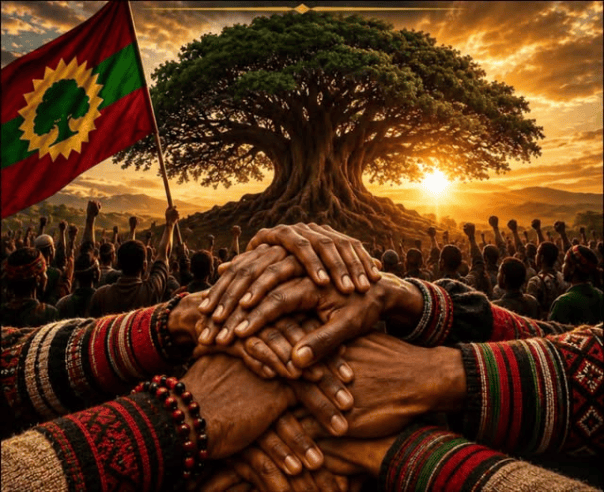
When the executioners thought faith could split them, they chose the same name: Oromo.
In Oromo collective memory, three moments spanning half a century—from 1966 to 2016—are repeatedly told, sung, and etched into stone. They occurred in different eras, different places, with participants from different generations. Yet their inner logic is strikingly identical: whenever external forces tried to tear Oromo unity apart using religious identity, someone always stood up and proved with their life that “Maqaa amantaan gargar hin baanu”—the name is not divided by faith.
From Arsi to Shinnigaa, and then to Bishooftuu, three locations form a blood-red thread, telling the story of how an oppressed people forged “refusal to be divided” into the core of their identity.
Arsi: The Resurrection of a Name
In 1966 Ethiopia, publicly using the word “Oromo” was itself a dangerous provocation. The empire’s narrative machine had erased the name from official discourse, replacing it with derogatory labels. It was precisely in this era that an Islamic scholar named Ahmed Taqi Sheikh Mohammed Rashid made a decision that would change the trajectory of history.
Taqi, later known as “Hundee” (meaning root or foundation), was born into a family of Islamic scholars in Harargee. He studied the Qur’an, Hadith, and Oromo history from childhood. By his early twenties, he was a successful merchant, but what truly defined him was his encounter with General Tadesse Birru, founder of the Macha-Tulama Self-Help Association. After Tadesse was placed under house arrest in Galamsoo, Taqi befriended him and began spreading an idea that was nearly heretical at the time: being Oromo was not a curse but a virtue worth loving.
In 1966, Taqi and Elemo Qiltu—another revolutionary who had returned from Syria—launched an armed struggle in the Guba Koricha mountains. This was the starting point of the modern Oromo national liberation movement. Their organization had no religious threshold, no sectarian conditions. Muslim scholars and Christian warriors fought under the same banner.
On September 6, 1974, Taqi and Elemo were executed in Hirroo. But the resurrection of a name had already become irreversible. The singer Ali Birra, with the help of Abubakar Musa, set Taqi’s memory to music in “Yaa Hundee Bareedaa” (Beautiful Hundee). The song played on radio, was sung at weddings, and hummed at funerals. Taqi’s “root” sank into the deepest layers of Oromo mass consciousness—a consciousness shared by Muslims, Christians, and Waaqeffataa alike.
Shinnigaa: Refusing to Separate at the Edge of the Pit
If 1966 planted the seed, then 1980 was its most tragic flowering.
On April 15, 1980, eleven top leaders of the Oromo Liberation Front were ambushed by Somali militia in Shinnigaa (located in the Ogaden region). This was not a chance encounter—they were captured alive. The militia dug a large pit, then did what they thought was the most lethal thing: they classified the prisoners by religion.
“You see,” a commander reportedly told the bound prisoners, “you fought together. But you will die separately. Let each one pray to his own god before falling into the pit.”
The executioners expected fear. They expected a scramble for last rites. They expected a tiny fracture that would prove the Oromo cause was nothing but a lie.
The answer they received came from Jar Magarsa Bari, then chairman of the OLF. He did not ask for a priest, did not ask for a Sheikh. He turned to his comrades and spoke the words that would later be repeated countless times:
“Maqaa amantaan gargar hin baanu. We do not divide the name by religion. Dig the pit wider, or throw us in together. We are Oromo first.”
Eleven men—Chairman Barisoo Wabee, Vice Chairman Gadaa Gamada, Abbaa Shikii, Dori Bari, Farmata, Fafam Doyo, Ilana Kachale, Dhadhacho Boruu, Dhadhacho Murata, Mari Galaan—arms bound together, stepped forward. According to Oromo oral tradition, Gadaa Gamada turned to the executioners and smiled: “You want to see us pray? Watch this.”
This day was written into history. Not as a massacre, but as an oath.
Bishooftuu: Another Generation’s Choice
Thirty-six years later, the same scene played out with almost identical logic.
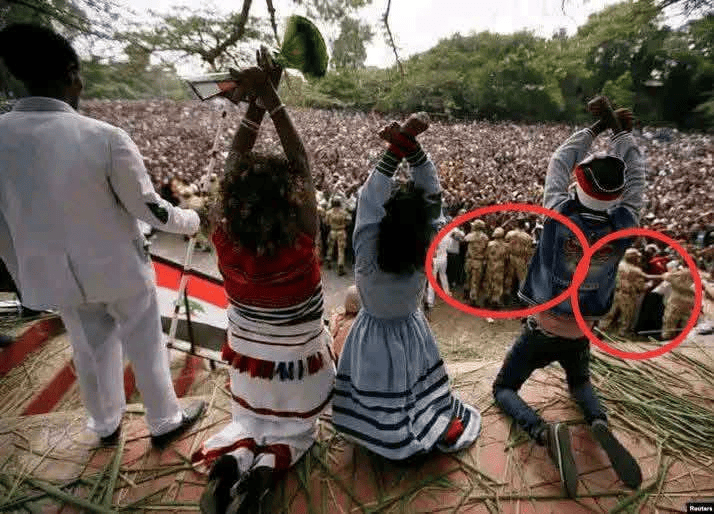
2016, Bishooftuu-Harsadi. A new wave of Oromo protests was sweeping across the region, triggered by the so-called “Addis Ababa and Surrounding Oromia Master Plan”—a plan widely seen as an attempt to annex Oromo land. Young activists known as “Qeerroo” confronted security forces in city streets and rural roads.
In Bishooftuu, a group of Oromo youth were surrounded. According to circulated accounts, security forces once again tried to exploit religious identity—separating Muslims from Christians, persuading some to deny their Oromo identity in exchange for their lives. The result was refusal once again.
They died together, buried in the same place. Their names were repeatedly invoked by Oromo social media, poetry, and song. They became “utubaa eenyummaa”—pillars of identity.
Oromo activists framed this event as “dying for Oromo identity, refusing to be divided by religion.” The words spoken at Shinnigaa thirty-six years earlier were re-spoken with bodies by a new generation at Bishooftuu.
Why This Matters
These three events—Arsi, Shinnigaa, Bishooftuu—form a clear pattern. Religion is indeed a real line of difference within Oromo society. Arsi Oromos are predominantly Muslim, partly because in the nineteenth century they chose Islam as a cultural fortress against Amhara Orthodox colonial conquest. The Orthodox Church’s role in Oromo territories was tightly bound to conquest: priests arrived alongside Menelik’s generals, “blessed” massacres, and then received land and serfs. Thus religious difference in Oromo society is not a small matter—it carries the full weight of colonial violence history.
Precisely because of this, external forces repeatedly tried to exploit this fracture. The Somali militia of 1980 tried. The security forces of 2016 tried. Each time, they lost.
But the reason they lost is not that religious differences didn’t exist. The reason is that Oromo nationalism, in its most decisive figures, developed a priority that transcends religion: We are Oromo first. This is not a denial of faith but an insistence on order. When the core logic of oppression is the denial of your very existence, any internal division that makes that oppression more effective is betrayal.
The eleven at Shinnigaa did not become “Muslim martyrs” and “Christian martyrs.” They became one thing: Oromo martyrs. The youth of Bishooftuu likewise.
“Seenaa keenya keessatti barayyuu cululuqee jiraata”
Those who wanted to bury them failed to understand one fundamental thing: a people who refuse to be divided have found something stronger than death. The pit at Shinnigaa did not end Oromo unity—it became a monument to unity. The repetition at Bishooftuu did not prove that history repeats—it proved that memory endures.
From the moment Taqi and Elemo raised weapons in 1966, to the afternoon of 1980 when eleven men walked arm-in-arm to the edge of the pit, to the streets of Bishooftuu in 2016, what runs through it all is not an abstract slogan but a concrete, testable promise: When others try to kill you using the differences within you, you choose to define yourself by what you share.
This choice has been remembered. Has been sung. Has been re-lived with life after life by generation after generation.
“Seenaa keenya keessatti barayyuu cululuqee jiraata”—in our history, it lives forever, shining.

Irreechaa in Edmonton: How One Diaspora Community Turned a Sacred Tradition into a Recognized Civic Celebration
By Daandii Ragabaa
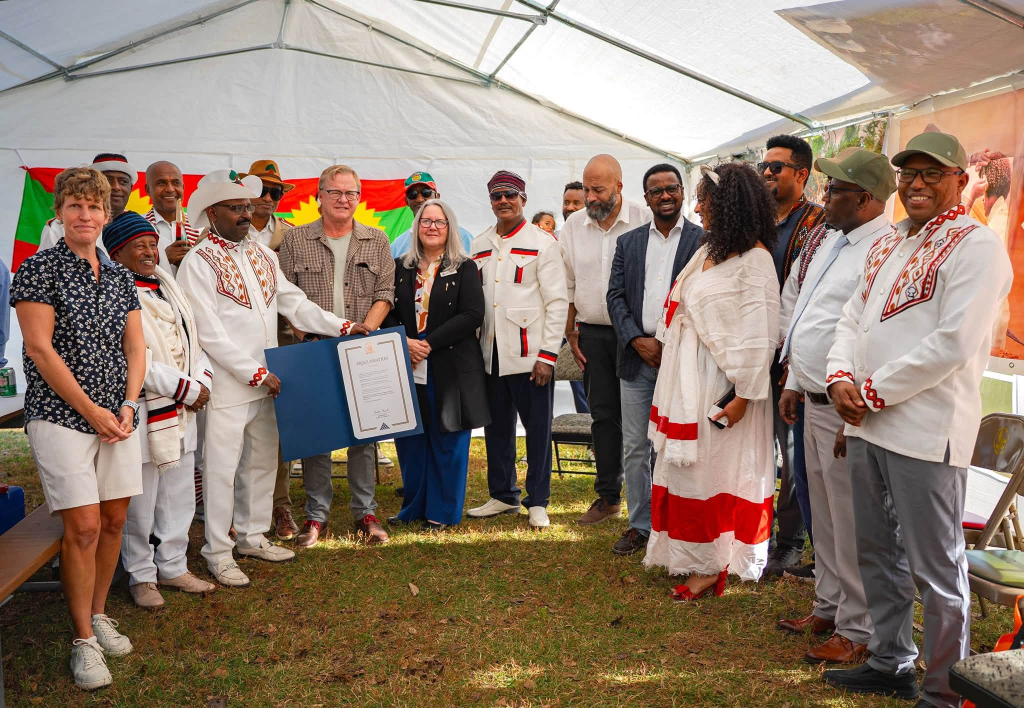
EDMONTON, Alberta — When the Oromo community of Edmonton gathered for Irreechaa Malkaa this year, they were not simply marking a religious holiday. They were making a statement — to themselves, to their children, and to the wider Canadian society — that Oromo culture, identity, and heritage deserve to be seen, respected, and celebrated at the highest levels of public life.
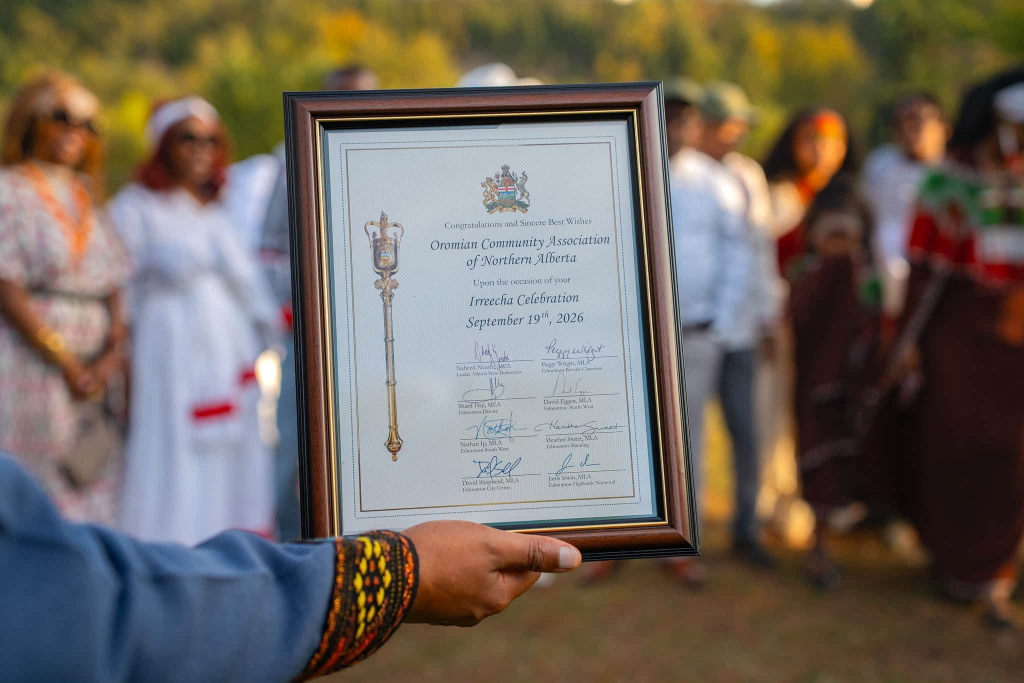
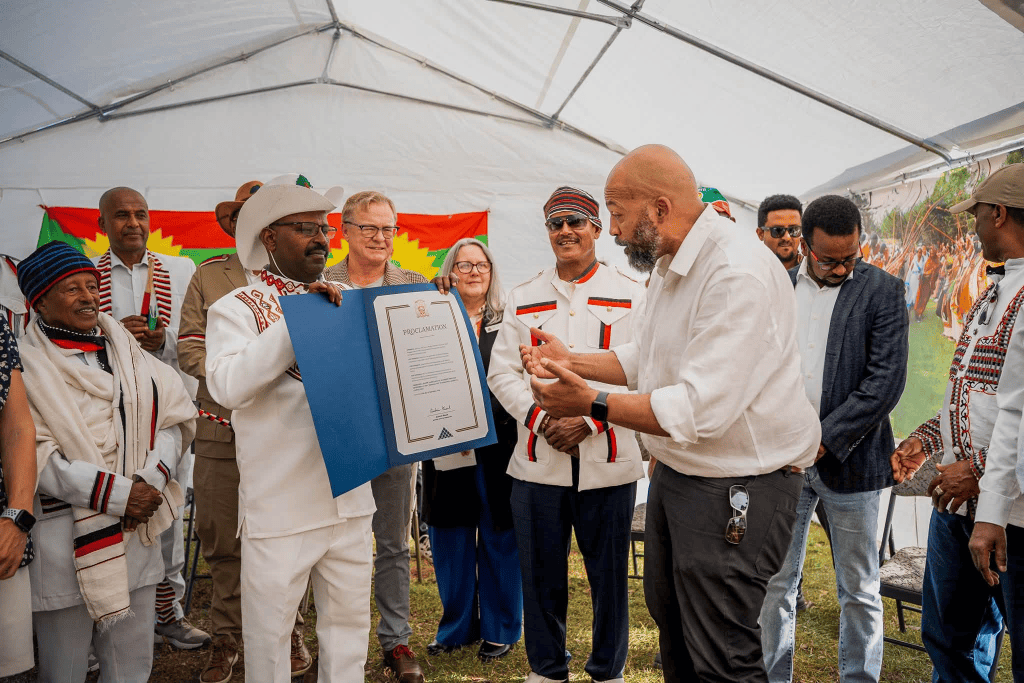
The celebration, held a week ago, was honored with an official Certificate of Recognition from the Government of Alberta, presented by representatives of the city and the provincial and federal governments who stood alongside the Oromo community in celebration. The recognition was not a casual gesture. As the community noted, this acknowledgment did not come easily or by accident. It was the result of years of persistent advocacy and grassroots organizing.
A Celebration That Speaks for Itself
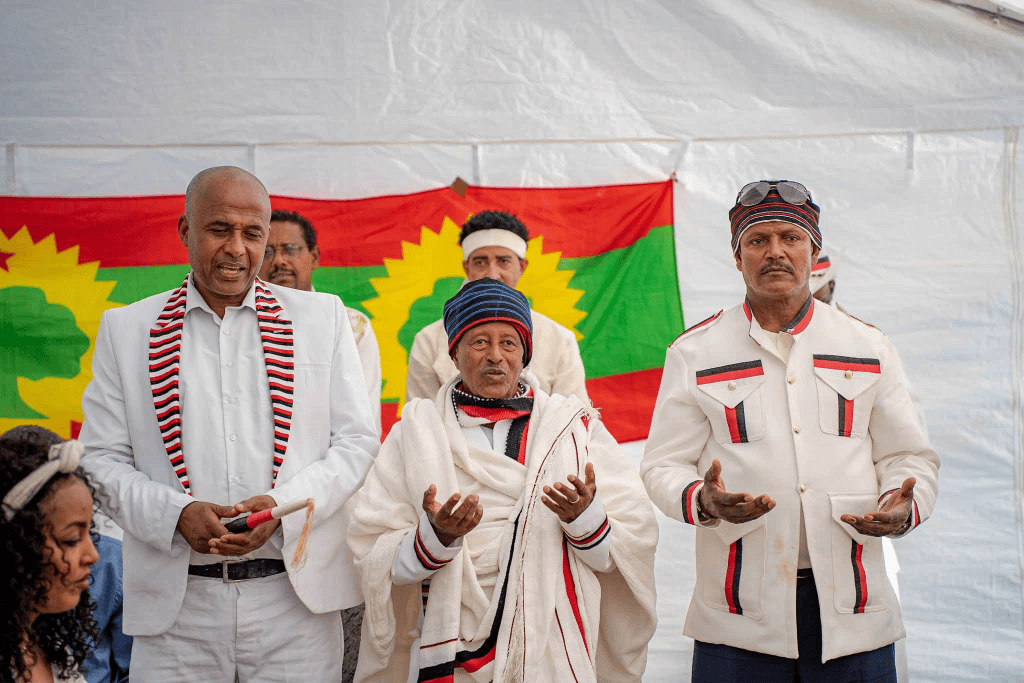
The symbolism of Irreechaa is powerful, and the Edmonton community was intentional about ensuring it was understood. Irreechaa is not simply a “Thanksgiving” festival. It is rooted in Waaqeffannaa, the traditional Oromo belief in one God, and in the Gadaa system — the ancient democratic governance structure that UNESCO has recognized as Intangible Cultural Heritage.
For Oromos in the diaspora, Irreechaa is a spiritual act of gratitude to Waaqa for the blessings of the past year, a moment of reconciliation, and a prayer for peace in the year ahead. It is also a public declaration of identity — a refusal to be invisible.
As the community statement put it, the presence of elected officials and the presentation of the certificate of recognition was not simply an act of kindness by those in power. It was the product of sustained effort and organized advocacy by OCANA (the Oromo Community Association of Northern Alberta) and the broader Oromo community of the region.
The Leadership Behind the Recognition
The statement is clear that this achievement belongs to the community’s leadership and its collective will. “For our culture to flourish, for Oromos to be honored, and for Oromia to be viewed as a nation, the leadership of the Oromo Community Association of Northern Alberta played a lion’s share — and this is where it came from.”
That acknowledgment matters. In diaspora communities, recognition rarely arrives on its own. It must be cultivated — through relationship-building with local governments, through participation in multicultural events, through education, and through the persistence of community organizations.
A Model for Others
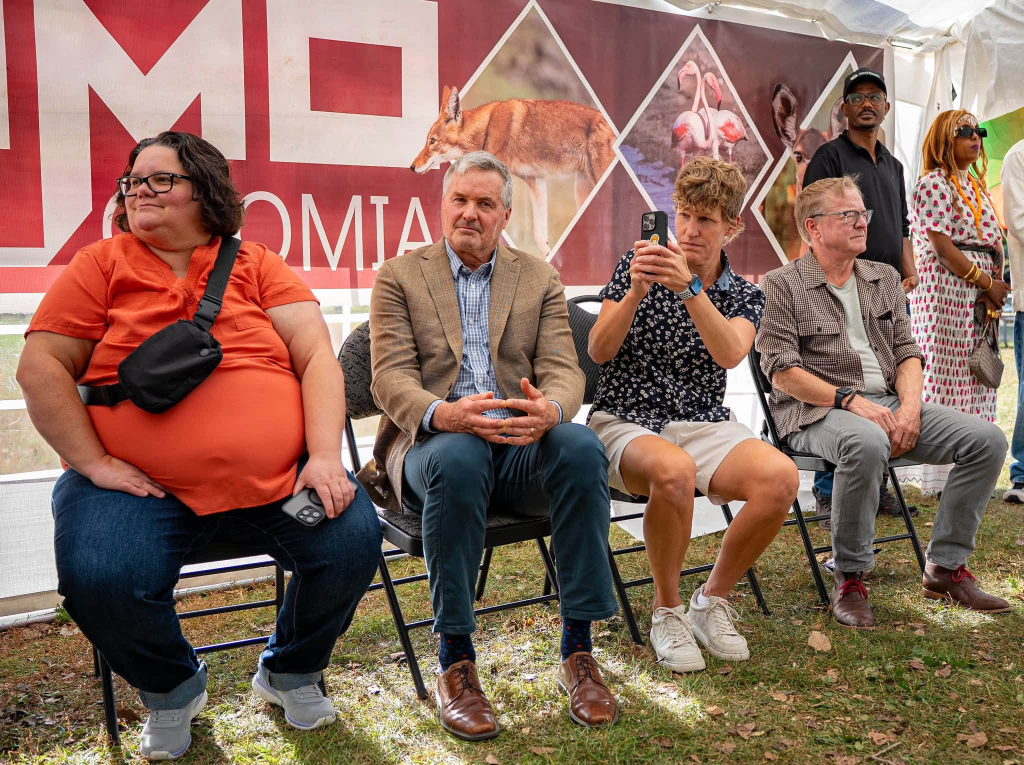
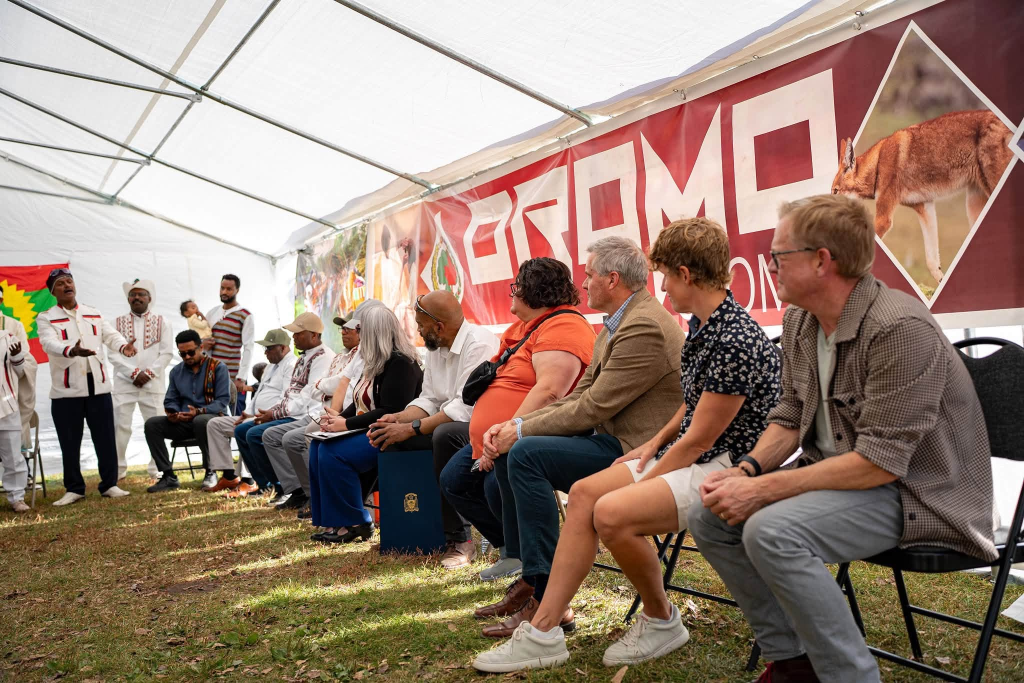
The Edmonton community also highlighted a striking achievement: at God-Hambaalee Edmonton, one of the city’s major multicultural festivals featuring over 90 countries, Oromia participated as a nation in its own right — complete with its own displays and presentations, which finished among the top ranks of participants.
For a community whose homeland has often been marginalized, denied recognition, and subjected to systemic oppression, this is no small thing. It is a reversal of the invisibility that has too often been imposed on Oromo people.
The statement also noted that many multicultural associations exist across Canada, but none has demonstrated the same strength, diplomatic skill, and ability to articulate the Oromo experience as this one. The community did not celebrate in isolation — it celebrated in public, with recognition, and with dignity.
Gratitude and Looking Forward
The message closes with gratitude — to the Oromo community of the region, to OCANA’s leadership, and to everyone who contributed to making Irreechaa 2026 a success. It also issues a challenge to other Oromo communities: learn from this example. The community intends to build on this momentum, and future plans are already taking shape.
To those who are honoring their country and culture, the community offers its blessing: Irreecha milkii — may your Irreechaa be fruitful and blessed.
Why This Matters
Irreechaa in Edmonton is not just a local story. It is a template for how diaspora communities can transform sacred traditions into civic recognition — without compromising the spiritual essence of the festival. It shows that cultural preservation and public engagement are not mutually exclusive. And it demonstrates that when a community organizes, advocates, and speaks with one voice, governments listen.
For Oromos across Australia, North America, Europe, and beyond, the Edmonton example offers both inspiration and a challenge: celebrate proudly, organize strategically, and ensure that Irreechaa is not only a memory carried from home, but a living tradition recognized by the nations in which it is celebrated.
Baga Irreecha milkiin geessan!
#Irreecha_Edmonton #Irreechaa #Oromo #Oromia #OCANA #Edmonton #Alberta #Diaspora #CulturalHeritage #Waaqeffannaa #Oromummaa

Irreechaa 2026 celebrations in the global cultural event.
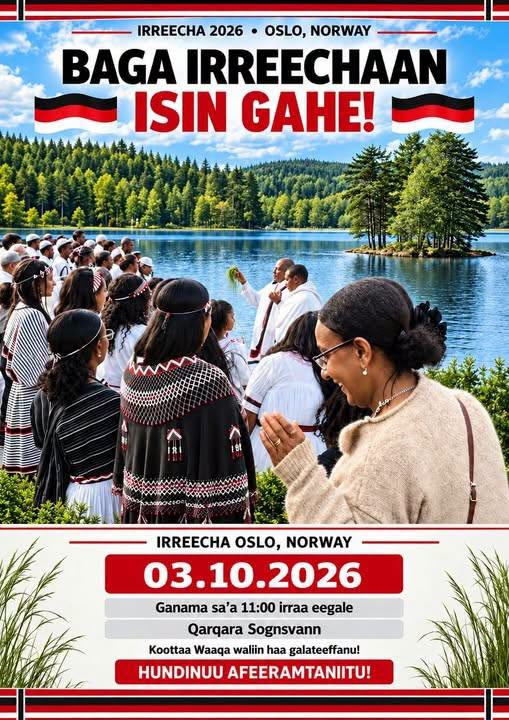
Irreechaa, the Oromo Thanksgiving Festival, is a global celebration of gratitude, unity, and cultural heritage for the Oromo people, with major events scheduled across North America, Europe, and Australia in 2026.
Here is a summary of the major 2026 celebrations:
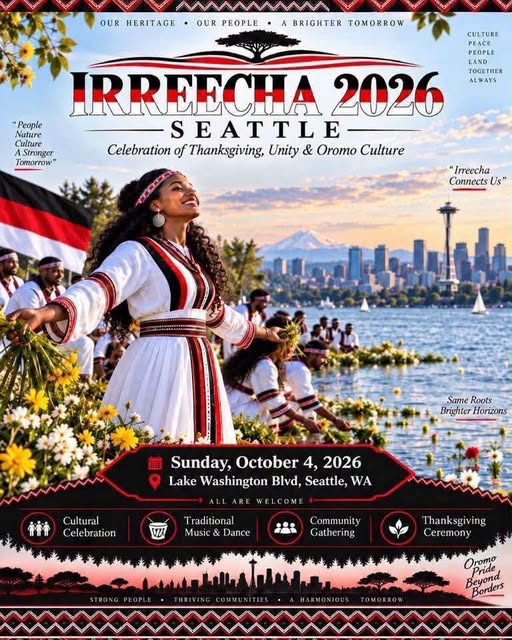
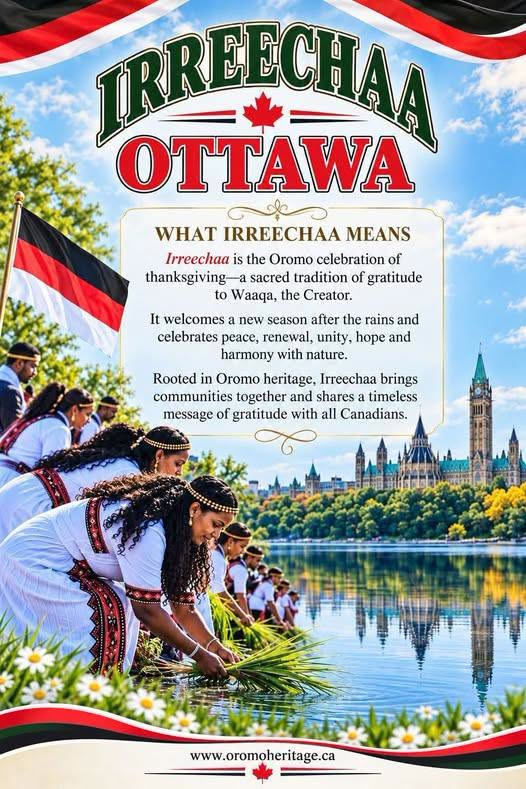
- North America: Seattle (Oct 4), Washington, DC (Oct 2-4), Portland (Oct 3), Winnipeg (Sept 26), Ottawa (Sept 26), Edmonton (Sept 19), Minneapolis (Sept 19), Calgary (Sept 26).
- Europe: Rome, Italy (Oct 10), Oslo, Norway (Oct 3).
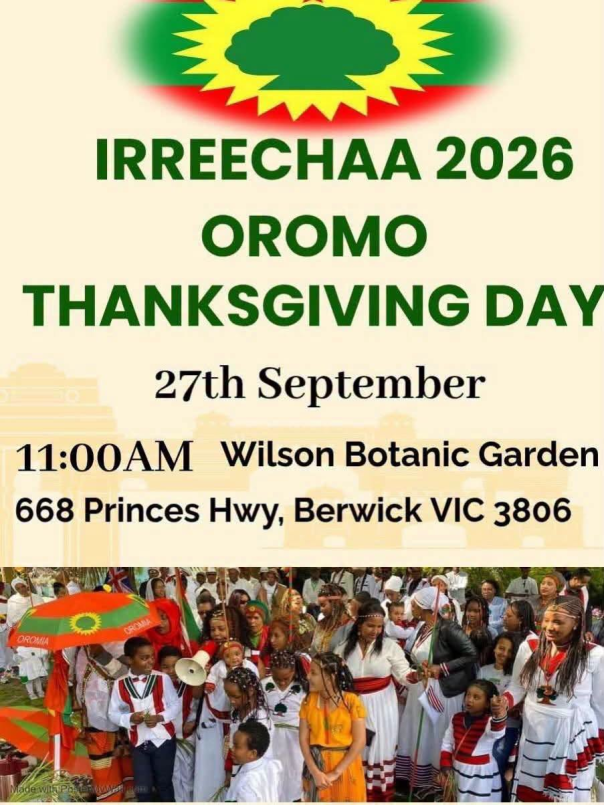
- Australia: Berwick, VIC (Sept 27).
🌳 Themes & Significance
The festival is often described as a “celebration of Thanksgiving, Unity & Oromo Culture”. Its core themes include:
- Gratitude: Giving thanks for blessings and peace (“Galateeffannaa”).
- Unity: Fostering togetherness among the Oromo community and beyond (“Tokkummaa”).
- Culture: Honoring traditional practices, music, dance, and attire (“Aadaa”).
- Symbolism: The Odaa tree plays a central role, symbolizing peace, reconciliation, and the connection between the community and nature.
The Ethio-Canadian Connection
A major related event is the 26th Annual Ethio-Canadian Day in Toronto, scheduled for September 5-6, 2026 at Christie Pits Park. This is a two-day celebration that highlights Ethiopian heritage in Canada, contributing to the broader cultural mosaic of the region.
📅 Planning Your Attendance
If you plan to attend, please double-check the final dates and locations with local organizers, as some schedules may be subject to change.

A Trailblazer Honoured: Dr Melika Sheikh-Eldin Inducted into the Victorian Honour Roll of Women
By Dhabessa Wakjira
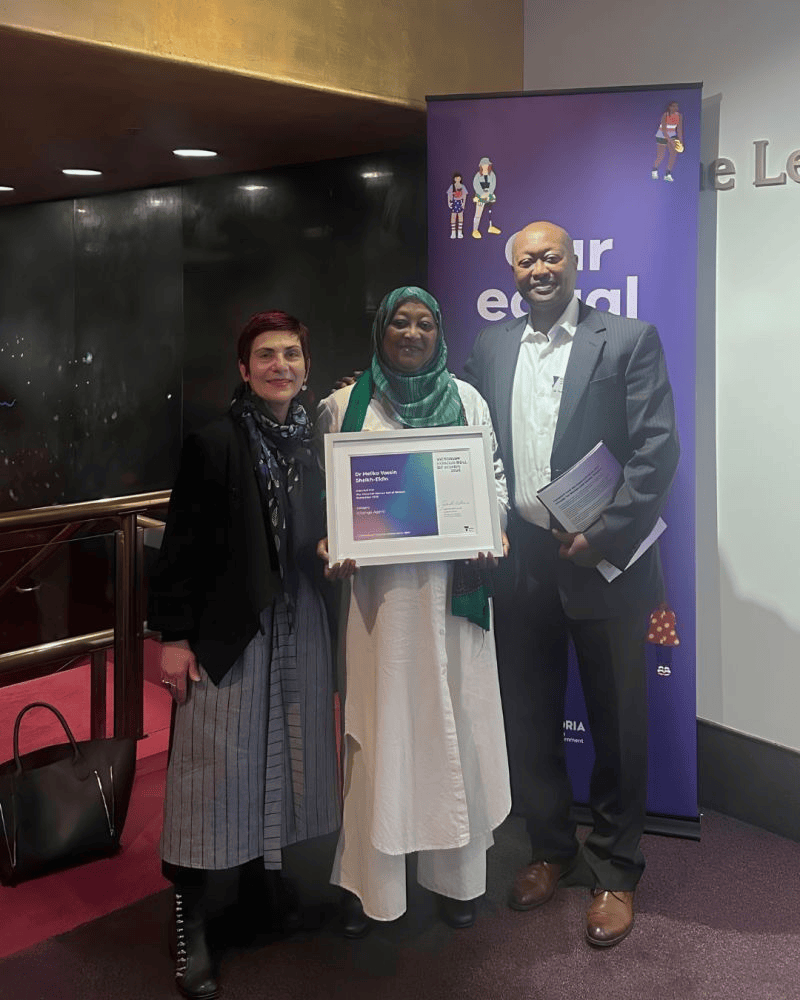
In a moment that celebrates both personal achievement and the power of lived experience, Dr Melika Sheikh-Eldin — Manager of International and Community Development at AMES Australia — has been inducted into the Victorian Honour Roll of Women, one of the state’s most prestigious recognitions of women’s contributions to their communities and the nation.
The announcement was met with pride and joy across AMES Australia and the broader settlement sector, where Dr Melika has been a guiding force for more than two decades.
“Congratulations to Dr Melika Sheikh-Eldin, our Manager of International and Community Development, on being inducted into the Victorian Honour Roll of Women,” AMES Australia shared in a statement. “This well-deserved recognition celebrates Melika’s outstanding leadership and commitment to creating opportunities for multicultural communities.”
A Journey from Refugee to World-Leading Innovator
Dr Melika’s story is one of remarkable transformation — and of turning personal hardship into a force for systemic change. She fled war in Eritrea in the late 1970s, volunteering in Sudanese refugee camps and in Cairo for organisations including the United Nations High Commissioner for Refugees (UNHCR) , the Red Cross, and Save the Children. She resettled in Australia in 1992.
Since joining AMES Australia in 2001, she has dedicated her career to settlement, community development, capacity building, and advocacy. Her work has helped thousands of new arrivals settle successfully in Australia and has influenced settlement policy and practice both nationally and internationally.
At the Victorian Honour Roll of Women ceremony, it was recognised that Dr Melika Sheikh-Eldin has transformed her lived experience as a refugee into world-leading approaches to community integration and social cohesion.
Three World-Leading Models
Dr Melika’s impact at AMES Australia is perhaps best illustrated by the innovative programs she has led — programs that have become blueprints for others:
1. The Nhill Rural Settlement Project
In western Victoria, the small town of Nhill was facing economic decline. Dr Melika’s project settled Karen refugees in the community, revitalising the town’s economy and creating a model now considered a global blueprint for rural settlement.
2. The Werribee Park Gardening Program
Engaging isolated Karen women in gardening, this program addressed critical issues of isolation and mental wellbeing. Its success was so evident that the model has been adopted by other organisations.
3. The Community Guides Program
Perhaps her most influential innovation, the Community Guides Program recruits former refugees to use their lived experience to assist new arrivals. Dr Melika has travelled to Sweden, New Zealand, and Japan to help international organisations establish programs based on this model.
Challenging Stereotypes, Championing Two-Sided Education
Throughout her career, Dr Melika has disrupted gender stereotypes and challenged the public perception of what refugees can achieve. Central to her philosophy is the concept of “two-sided education” — the idea that both host communities and new arrivals must learn about one another for true integration to occur.
This mutual learning, she explains, helps mitigate the fear of the unknown — the anxiety that so often fuels resistance to newcomers. It is a simple but profound insight: integration is not something done to refugees, but something built with them, and with the communities that receive them.
A Scholar and a Mother
Dr Melika’s achievements are all the more remarkable given the circumstances in which she pursued them. While raising three children as a refugee in a small Australian town, she completed a PhD in aquatic science — a testament to her intellectual rigor and her refusal to be defined by the limitations others might have placed upon her.
Since 2007, she has also sat on the board of the Refugee Council of Australia and represented the nation as a “Refugee Voice” at annual UNHCR consultations in Geneva, advocating for policy shifts that recognise refugees as stakeholders rather than recipients of aid.
A Well-Deserved Recognition
The Victorian Honour Roll of Women celebrates women who have made exceptional contributions to Victoria and beyond. Inductees are recognised for their leadership, courage, and lasting impact on their communities.
Dr Melika’s induction places her among a distinguished group of women who have shaped the state’s social, cultural, and political landscape. For the Oromo community and for refugees and migrants across Australia, her recognition is a moment of immense pride.
“Congratulations, Melika. We are incredibly proud of you,” AMES Australia said. 💙
Learn More
To read Dr Melika Yassin Sheikh-Eldin’s full profile on the Victorian Honour Roll of Women, visit:
🔗 https://www.vic.gov.au/dr-melika-yassin-sheikh-eldin
#AMESAustralia #AMES #Award #VictorianHonourRoll

Melbourne Irreechaa Festival 2026: The Ultimate Guide to Celebrating Oromo Thanksgiving in Australia
By Dhabessa Wakjira
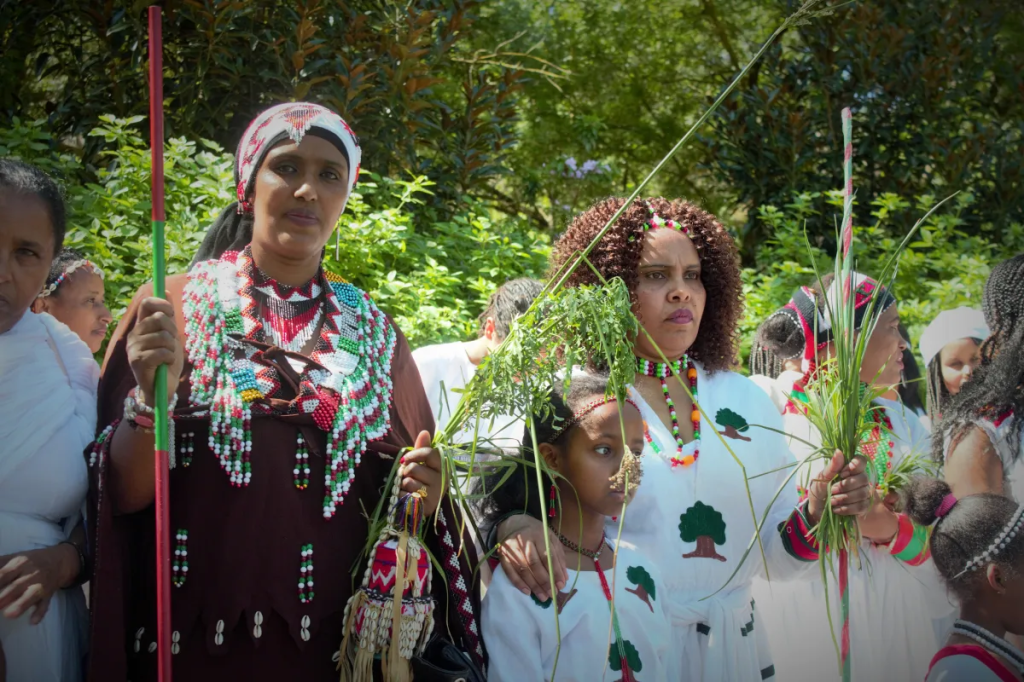
For the Oromo diaspora in Melbourne, Irreechaa is more than a festival. It is a sacred homecoming — a chance to gather by the water, give thanks to Waaqa, and pass the flame of Oromummaa to the next generation. In 2026, the Melbourne Oromo community will once again celebrate this ancient tradition on Australian soil, welcoming all who wish to share in its beauty, meaning, and joy.
This guide covers everything you need to know about the 2026 celebrations, from dates and locations to the rituals, etiquette, and cultural significance of Irreechaa in the diaspora.
What Is Irreechaa?
Irreechaa is the annual Oromo thanksgiving festival, celebrated at the banks of rivers and lakes across Oromia. It marks the end of the rainy season (Ganna) and the beginning of a new year of hope, renewal, and abundance. Rooted in Waaqeffannaa, the traditional Oromo belief in one God (Waaqa), the festival predates Christianity and Islam and has been passed down through generations for thousands of years.
Participants carry fresh green grass and yellow daisies (daraaraa keelloo) to the water’s edge, dip them into the water as an offering of gratitude, and sing ancient songs of praise and blessing. The festival is also a time of reconciliation — disputes are settled before participation, and communities come together in peace.
For the diaspora, Irreechaa is a vital cultural anchor. It connects Oromos in Australia to their homeland, their ancestors, and one another .
2026 Melbourne Irreechaa Events
The Melbourne Oromo community typically celebrates two major Irreechaa festivals each year: Irreechaa Arfaasaa (the spring celebration) and Irreechaa Malkaa (the main thanksgiving at the water’s edge).
Irreechaa Arfaasaa 2026
Date: Sunday, April 26, 2026
Location: Dandenong Mountain (Tulluu Dandenong), Melbourne
Time: Morning (exact time to be announced)
Organizers: Oromo Irreecha Association and Melbourne Oromo community
Irreechaa Arfaasaa marks the end of the dry season and the beginning of the rainy season. It is a spring celebration that follows traditional Oromo customs, beginning with the blessing of elders .
Irreechaa Malkaa 2026
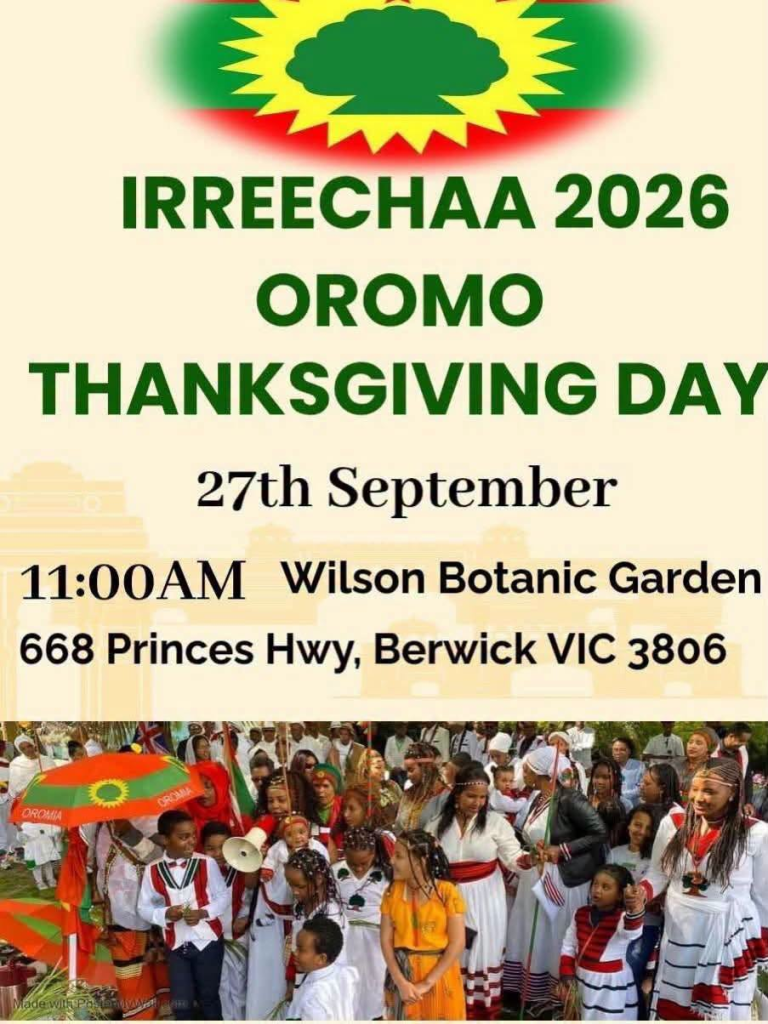
Irreechaa Malkaa, the main thanksgiving festival, is typically celebrated in September or October, corresponding with the end of the rainy season in Ethiopia. Past Melbourne Irreechaa Malkaa celebrations have been held at locations such as Wilson Botanic Park in Berwick.
The 2026 date and location for Melbourne will be announced by community organizers as follows closer to the time.
Date: Sunday, September 27, 2026
Location: Wilson Botanic Park in Berwick, Melbourne
Time: 11:00am
Organizers: Oromo Irreecha Association and Melbourne Oromo community
What to Bring
Organizers have specified the following items for attendees :
| Item | Purpose |
|---|---|
| Water | For personal use and the ritual |
| Flowers | For the Irreechaa tradition (yellow daisies if available) |
| Fresh green grass | Symbol of life, fertility, and gratitude |
| A spirit of gratitude | The heart of Irreechaa |
Wear traditional Oromo clothing if you have it. The vibrant colors and styles are a beautiful expression of cultural pride and identity.
What to Expect: The Rituals and Traditions
Irreechaa follows a structured, reverent sequence of events. Here is what you can expect at a Melbourne celebration:
1. Blessing of Elders
The celebration begins with blessings and prayers led by community elders (Abbaa Gadaa, Hadhasiinqee, and respected community members). These blessings focus on peace, prosperity, and remembering those who sustained the tradition .
2. The Procession
Participants walk together toward the water (or the designated sacred area). In traditional Irreechaa, women walk in front of the elders — a practice rooted in the Siinqee institution that symbolizes women as sacred and as agents of peace.
3. Carrying Grass and Flowers
Attendees carry fresh green grass and yellow flowers to the water’s edge. The grass is a symbol of life, fertility, and the connection between the Oromo people and the earth .
4. Dipping and Sprinkling
Upon reaching the water, participants dip the grass and flowers into the water and sprinkle water on themselves and others as a blessing. This act symbolizes purification, renewal, and the washing away of the past year’s hardships .
5. Songs and Prayers
The air fills with the sounds of traditional Oromo songs (faaruu) — songs of gratitude, hope, and blessing. Women sing “Maariyoo… Maareyoo…” (“your mercy on us”), while men chant the Irreechaa songs alongside them. The communal singing is a powerful expression of unity and shared emotion .
6. Cultural Performances and Food
After the rituals, the celebration continues with traditional music, dances (such as the Siiqqee and Gumii dances), and communal meals featuring Oromo food. It is a time for storytelling, laughter, and strengthening community bonds .
Irreechaa Etiquette: How to Participate Respectfully
Irreechaa is a sacred festival, not merely a cultural event. If you are attending for the first time — whether you are Oromo or from another background — here are important guidelines to ensure your participation is respectful and meaningful:
Do:
- Wear traditional clothing if you have it. It is a sign of respect and pride.
- Follow the lead of elders and community organizers.
- Carry grass and flowers to the water as an offering.
- Sing along if you know the songs — or simply listen and absorb the moment.
- Respect the natural environment. Leave no waste behind. The Oromo value of caring for nature is central to Irreechaa.
- Be present with gratitude. Irreechaa is a time of thanksgiving, reconciliation, and peace.
Don’t:
- Don’t splash water indiscriminately. The water ritual has specific traditional meaning.
- Don’t preach or distribute religious materials of other faiths at the Malkaa (water site). Irreechaa is rooted in Waaqeffannaa, and the sacred space should be respected.
- Don’t make noise or ululate during the solemn moments of the ceremony before the water ritual is complete.
- Don’t block the path with vehicles. Irreechaa is a communal pilgrimage — walk with the community if you are able.
These guidelines are not restrictions on participation. They are invitations to engage more deeply, with the reverence that Irreechaa deserves.
Why Irreechaa Matters in the Diaspora
For Oromos in Melbourne, Irreechaa serves several vital functions:
Cultural preservation. It ensures that younger generations born or raised in Australia learn about their heritage, language, and traditions. The festival is a living classroom for Oromummaa .
Community cohesion. It brings together families and individuals scattered across Victoria, strengthening social bonds and creating a sense of belonging .
Connection to homeland. It bridges the physical distance between Australia and Oromia, allowing the diaspora to maintain a profound spiritual and cultural connection to their ancestral land .
Intercultural exchange. Melbourne Irreechaa events often welcome local government officials, multicultural organizations, and curious residents, fostering mutual respect and understanding between communities.
The Spiritual Meaning of Irreechaa
At its heart, Irreechaa is an act of thanksgiving to Waaqa for the blessings of the past year and a prayer for peace and abundance in the year to come. It is a time of reconciliation — when those in conflict bury the hatchet and communities heal.
The festival is also a celebration of the Gadaa system, which upholds national unity, reconciliation, and solidarity. Irreechaa is one of the mammoth outdoor cultural festivals that showcase Ethiopia’s wealth of cultural heritage .
As one community message beautifully expressed:
“Irreecha is not a memory. It is a living prayer. And you are the ones who keep it alive.”
Practical Information
Getting There: Dandenong Mountain and other past venues are accessible by public transport and car. Check with organizers for specific directions and parking information.
Weather: Melbourne weather is unpredictable. Dress in layers and bring sun protection. April can be cool and changeable.
Accessibility: Contact organizers in advance if you have accessibility needs.
Staying Updated: Follow Advocacy for Oromia and local Oromo community associations on social media for the latest announcements about Irreechaa Malkaa 2026 and any changes to Irreechaa Arfaasaa details.
Baga Irreechaa Nagaan Geessan!
Whether you are Oromo, a friend of the Oromo community, or simply someone who wishes to witness a beautiful and meaningful cultural tradition, you are welcome at Melbourne Irreechaa 2026.
Come with an open heart. Come with gratitude. Come ready to sing, to celebrate, and to honor a tradition that has survived centuries of suppression and continues to thrive in every corner of the world where Oromo people gather.
Irreechaa keessan haa fudhatamu. May your thanksgiving be accepted. 🌿💚
Source information: Advocacy for Oromia, Oromia Communication Bureau, and the Melbourne Oromo community

From Refugee to Trailblazer: How Dr Melika Yassin Sheikh-Eldin Is Reshaping Australia’s Approach to Settlement
By Dhabessa Wakjira
When Dr Melika Yassin Sheikh-Eldin fled war in Eritrea in the late 1970s, she could not have known that her journey would one day help shape how an entire nation welcomes its newest arrivals. But that is precisely what happened. Over four decades, Melika has transformed her lived experience as a refugee into world-leading models for community integration and social cohesion — models now studied and adopted far beyond Australia’s shores.
She has helped thousands of new arrivals settle successfully. She has disrupted gender stereotypes and challenged public perceptions of what refugees can achieve. And she has done so while raising three children, completing a PhD, and representing Australia on the global stage as a “Refugee Voice” at United Nations consultations in Geneva.
Her story is not simply one of personal triumph. It is a blueprint for what is possible when refugees are recognized not as recipients of aid, but as stakeholders, leaders, and architects of their own futures.
A Journey Forged in Service
Melika’s path to Australia was neither short nor simple. After fleeing Eritrea, she volunteered in Sudanese refugee camps and later in Cairo. Her dedication drew the attention of some of the world’s most respected humanitarian organizations. She volunteered for the United Nations High Commissioner for Refugees (UNHCR) , the Red Cross, and Save the Children — gaining frontline experience that would later inform her professional approach.
She resettled in Australia in 1992, bringing with her not only the scars of displacement but also an unshakeable commitment to service. That commitment found its home at AMES Australia, where she has been a pivotal leader since 2001 and has served as Manager of Settlement Support Services since 2006.
Since 2007, she has sat on the board of the Refugee Council of Australia and represented the nation as a “Refugee Voice” at annual UNHCR consultations in Geneva. In that role, she has advocated relentlessly for policy shifts that recognize refugees as stakeholders rather than passive recipients of aid — a principle that has guided every project she has led.
Three World-Leading Models
Melika’s work at AMES Australia has produced initiatives that are now considered global blueprints for settlement and integration. Three stand out in particular.
1. The Nhill Rural Settlement Project
In western Victoria, the small town of Nhill was facing economic decline. Melika’s project settled Karen refugees in the community — and the results were transformative. The town’s economy was revitalized, and the model is now regarded internationally as a global blueprint for rural settlement. It demonstrated that refugee settlement is not a burden but an opportunity — for the newcomers and for the host community alike.
2. The Werribee Park Gardening Program
Isolation and mental wellbeing are critical challenges facing many refugee women, particularly those who arrive without established community networks. Melika’s program engaged isolated Karen women in gardening at Werribee Park. The initiative directly addressed these challenges, and its success was so evident that the model has since been adopted by other organizations.
3. The Community Guides Program
Perhaps Melika’s most influential innovation is the Community Guides Program, which recruits former refugees to use their lived experience to assist new arrivals. The logic is elegant: those who have walked the path themselves are uniquely positioned to guide others along it. The program has proven so effective that Melika has traveled to Sweden, New Zealand, and Japan to help international organizations establish programs based on the AMES Community Guides model.
Challenging Stereotypes, Championing Two-Sided Education
Melika’s impact extends beyond program design. She has been a powerful voice in disrupting gender stereotypes and challenging the public perception of what refugees can achieve. At a time when refugee women are often portrayed as passive or dependent, Melika’s leadership — and the leadership she cultivates in others — tells a different story.
Central to her philosophy is the concept of “two-sided education.” Integration, she argues, is not a one-way process. Both host communities and new arrivals must learn about one another for true integration to occur. This mutual learning, she explains, helps mitigate the fear of the unknown — the anxiety that so often fuels resistance to newcomers.
It is a simple but profound insight: integration is not something done to refugees, but something built with them, and with the communities that receive them.
A Scholar and a Mother
Melika’s achievements are all the more remarkable given the circumstances in which she pursued them. While raising three children as a refugee in a small Australian town, she completed a PhD in aquatic science — a testament to her intellectual rigor and her refusal to be defined by the limitations others might have placed upon her.
Her academic background in science may seem distant from her work in settlement, but both reflect the same qualities: careful observation, systematic thinking, and a commitment to understanding complex systems — whether ecosystems or communities.
A Legacy Still Being Written
Dr Melika Yassin Sheikh-Eldin’s story is a reminder that refugee experiences are not only stories of loss. They are also stories of contribution, innovation, and leadership. Her work has reshaped how Australia approaches settlement, and her models continue to influence practice internationally.
But perhaps her most enduring legacy is the principle she has championed throughout her career: that refugees are not problems to be solved, but partners to be engaged. They are not merely recipients of aid, but stakeholders in their own futures — and, as Melika’s own life demonstrates, architects of the futures of others.
From a young woman fleeing war to a world-leading voice in settlement and integration, Melika’s journey is a testament to what becomes possible when refugees are given the opportunity — and the respect — to lead.
Dr Melika Yassin Sheikh-Eldin is the Manager of Settlement Support Services at AMES Australia and a board member of the Refugee Council of Australia.

“A Generation Like This Is Hope for Oromo! A Promise for Oromia!”
By Dhabessa Wakjira
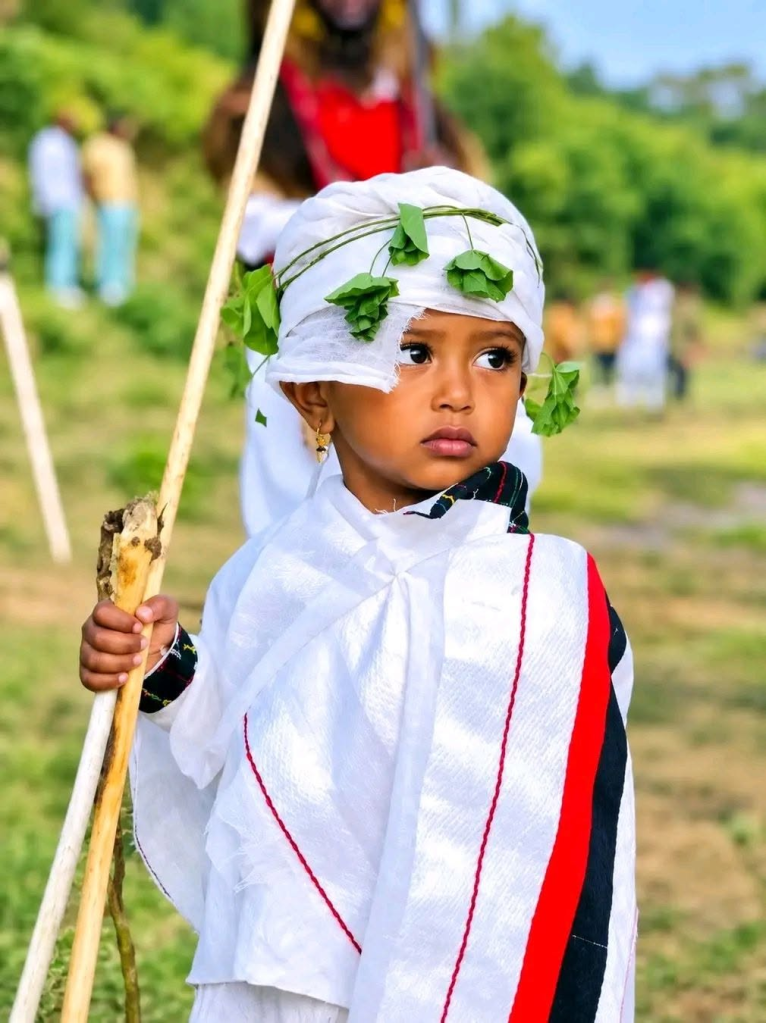
There is a saying among the Oromo people that captures something profound about the relationship between a community and its youth: “Dhaloota akkanaatu, Oromoof abdiidha! Oromiyaaf wabiidha!” — “A generation like this is hope for Oromo! A promise for Oromia!”
It is more than a slogan. It is a declaration of faith in the future, spoken by elders who have witnessed both the pain of suppression and the resilience of a people who refused to disappear. It is a recognition that the young people rising today — educated, conscious, connected, and proud — carry within them the seeds of everything the Oromo struggle has long been working toward.
The Weight of History, The Light of Tomorrow
The Oromo people have endured centuries of marginalization, land dispossession, cultural suppression, and political exclusion. Through the imperial era, the Derg regime, and subsequent administrations, the flame of Oromummaa was kept alive in the hearts of the people — in the songs sung at Irreechaa, in the wisdom passed down through the Gadaa system, in the quiet defiance of families who spoke their language at home when the world outside forbade it.
That flame did not survive by accident. It survived because generation after generation refused to let it die.
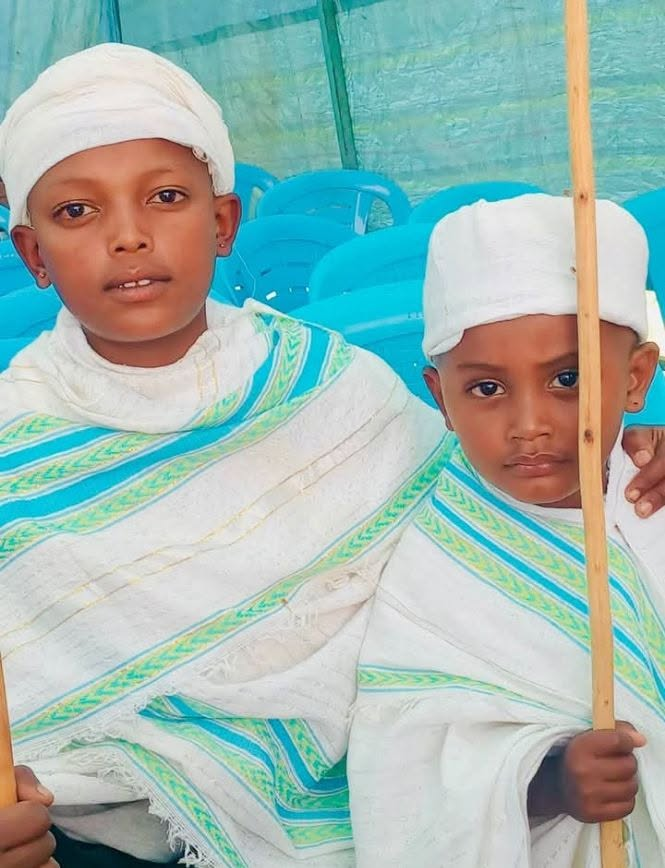
Today, a new generation stands at the threshold. They are the children and grandchildren of those who carried the flame. But they are also something new: they are the first generation in modern Oromo history with broad access to education, to global networks, to digital platforms that amplify their voices beyond any border. They are the generation that can look back at history with clear eyes and forward to the future with determined hearts.
When elders say “Dhaloota akkanaatu, Oromoof abdii dha,” they are acknowledging this. They are saying: We endured so that you could rise. And you are rising.
What Makes This Generation Different?
Every generation believes it is special. But there are concrete reasons why this moment in Oromo history feels different — why the phrase “Oromiyaaf wabiidha” carries such weight.
They are educated. Oromo youth are pursuing higher education in unprecedented numbers — in Ethiopia and across the diaspora. They are becoming doctors, engineers, lawyers, teachers, social workers, journalists, and leaders. Knowledge, once denied to their ancestors, is now their weapon and their tool.
They are connected. Social media has given Oromo youth a global platform. They organize, they inform, they advocate, and they build solidarity across continents. A student in Melbourne can exchange ideas with a student in Addis Ababa in real time. The isolation that once silenced Oromo voices has been shattered.
They are proud. Unlike previous generations who were sometimes forced to hide their identity to survive, this generation wears Oromummaa openly. They sing in Afaan Oromoo. They celebrate Irreechaa with millions. They carry the yellow daisies not as a secret symbol but as a public declaration of who they are.
They are global and local at once. They understand the world beyond Oromia — human rights, international law, digital advocacy, multiculturalism — while remaining deeply rooted in Oromo values of community, respect for elders, and connection to land and Waaqa.
They are bridge-builders. This generation navigates multiple worlds: tradition and modernity, Oromia and the diaspora, local struggles and global movements. They are learning to carry their heritage into new contexts without losing its essence.
Hope Is Not Passive
It is important to be clear: “Dhaloota akkanaatu, Oromoof abdii dha” is not a statement of complacency. It is not a declaration that the future will simply take care of itself because the youth are impressive.
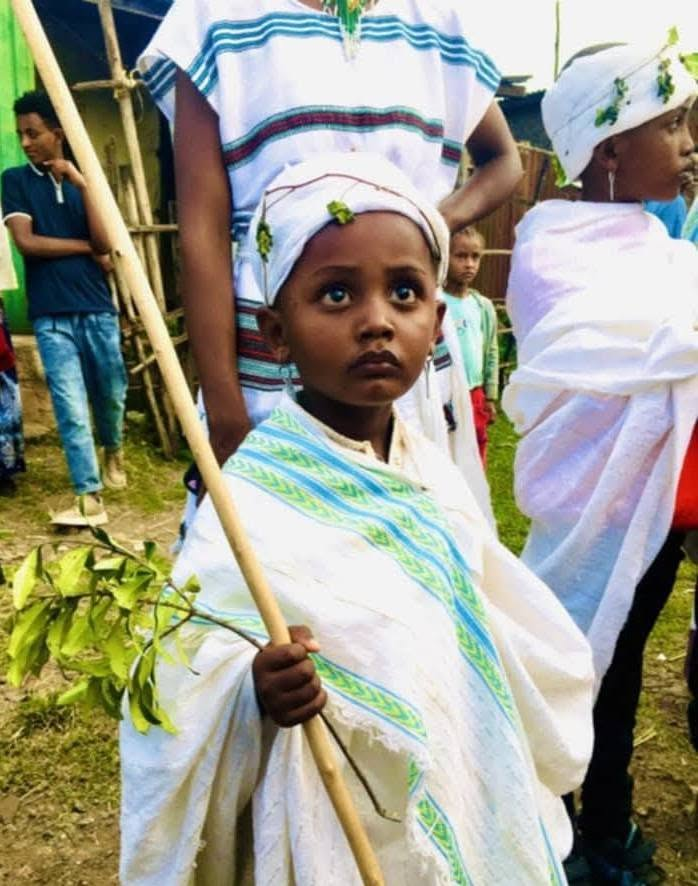
Hope, in the Oromo understanding, is active. It is the hope of the farmer who plants seeds and tends them. It is the hope of the marcher who walks toward the water carrying fresh grass. It is the hope that requires discipline, sacrifice, and unity.
For this generation to truly be the hope of Oromo, it must:
- Learn — from elders, from history, from education, and from one another.
- Preserve — the language, the traditions, the Gadaa wisdom, the sacred rituals of Irreechaa.
- Build — institutions, networks, and platforms that serve the community.
- Unite — across regions, across diaspora communities, across generations.
- Stay rooted — in Oromo values of respect, community, and connection to Waaqa and the land.
A Promise to Oromia
“Oromiyaaf wabiidha” — a promise for Oromia.
A promise is not a guarantee. It is a commitment. It is a covenant between a generation and the land that birthed it. It says: We will not forget where we came from. We will not squander what our ancestors sacrificed for. We will not let the flame go out.
This generation carries the dreams of every Oromo who came before — the farmer who lost his land, the mother who sang lullabies in a language she was told to abandon, the student who was punished for speaking the truth, the elder who kept the traditions alive in secret.
They also carry the hopes of every Oromo yet to be born — children who will one day ask, What did you do when it was your turn?
The answer being written today, by this generation, is this: We rose. We learned. We built. We stayed united. We honored those who came before us, and we prepared the way for those who will come after.
The Question That Remains
When elders look at the youth of today and say “Dhaloota akkanaatu, Oromoof abdiidha! Oromiyaaf wabiidha!”, they are offering both a blessing and a challenge.
The blessing is this: You are enough. You are capable. You are the ones we have been waiting for.
The challenge is this: Now prove it. Not with words alone, but with action. Not for a moment, but for a lifetime.
Every generation is given a choice. This generation — educated, connected, conscious, and proud — has been given the opportunity to be the generation that turns centuries of struggle into a future of dignity, justice, and flourishing for all Oromo people.
That is the hope.
That is the promise.
Dhaloota akkanaatu, Oromoof abdii dha! Oromiyaaf wabii dha!