Category Archives: health

Bonnie Holcomb: The Mother of Oromo Studies
A lifetime of scholarship, sacrifice, and service in the pursuit of Oromo dignity and truth
MINNEAPOLIS, MINNESOTA — For forty years, one name has stood at the centre of Oromo scholarship, guiding the field from its exiled beginnings to global academic recognition. Bonnie Holcomb, co-founder of the Oromo Studies Association (OSA) and Editor-in-Chief of its Journal, has dedicated her life to ensuring that Oromo history, culture, and identity are studied on their own terms.
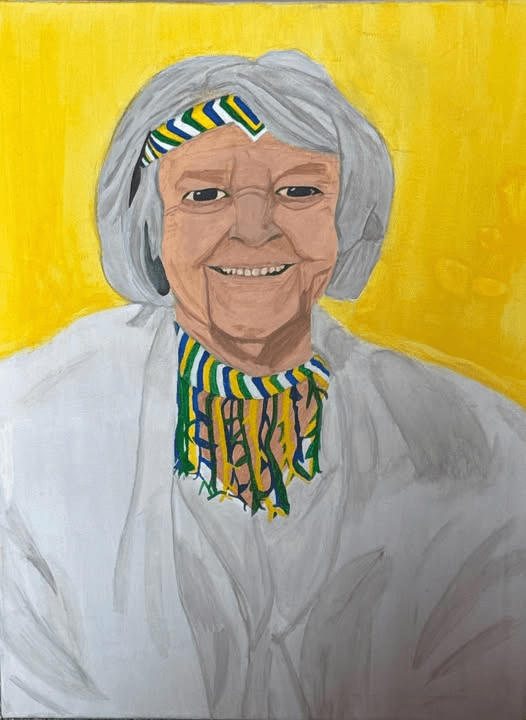
This year, as the OSA marks its 40th anniversary , the community celebrates not just an organisation, but the extraordinary vision and persistence of one woman—affectionately known as “The Mother of OSA” . In recognition of her lifetime service, a portrait of Holcomb was commissioned from a 15-year-old artist, Qabbanne, reflecting the intergenerational impact of her work .
The Founding of a Movement
The year was 1986 . In exile, scattered across meeting rooms in the diaspora, a small group of Oromo and non-Oromo scholars gathered with a radical idea: to build an independent academic home for the study of a people whose history, culture, and very existence had been systematically erased from mainstream scholarship . They would create a space where knowledge about the Oromo could be produced not by outsiders, but on its own terms .
Bonnie Holcomb was among them.
The OSA was born in direct response to a brutal crackdown—a void in which Oromo heritage was not merely absent from academia and state narratives, but actively suppressed . Those campaigning for greater recognition of the Oromo people were being murdered, tortured, jailed, or driven into exile . The founding of the OSA was an act of intellectual resistance: a refusal to accept erasure and a determination to tell stories that had been silenced .
The Invention of Ethiopia and Other Landmarks
In 1990, Holcomb, alongside fellow founder Sisai Ibssa, co-authored The Invention of Ethiopia: The Making of a Dependent Colonial State in North Africa . The book was a landmark work, offering a radical critique of how Ethiopian history had been represented and exposing a broader set of readers to Oromo history and ethnicity in the Horn of Africa . At its heart was a concern with inequality and a fundamental challenge to dominant state narratives .
The 1990s marked a productive period for Oromo studies, with diaspora intellectuals becoming key actors in the field . The Journal of Oromo Studies (JOS), launched in 1993, grew into the premier peer-reviewed publication for interdisciplinary scholarship on the Oromo people .
A Long and Difficult Road
Holcomb has described the journey as “a long and sometimes a difficult road to reveal evidence and build knowledge which shift the narrative in the region and globally” . This is not hyperbole. For decades, Oromo scholarship faced suppression, neglect, and active hostility. The OSA and its Journal have been more than academic endeavours; they have been an act of intellectual resistance—a refusal to accept the erasure of a people’s history and a determination to tell stories that had been silenced .
Despite these obstacles, the OSA has grown into a global scholarly community spanning continents and disciplines . In a landmark achievement, the Journal of Oromo Studies was recently indexed in Scopus, the gold standard of academic databases—placing it alongside publications from Springer, Elsevier, and Cambridge University Press . Holcomb’s message to contributors and advisors on this achievement reflected both pride and humility: “This publication, and the indexing in Scopus, are notable achievements, all. We have come a long way together” .
The Mother of OSA
The affectionate title “The Mother of OSA” is a testament to Holcomb’s foundational role and her ongoing commitment to the community . She has served as a Board Director and co-chair of the organising team for the 2026 annual conference, continuing to guide the organisation she helped build . Her work has been recognised with an OSA lifetime achievement award .
The theme for the 2026 conference, “Oromo on the Global Landscape: Honoring Asmarom Legesse as OSA Turns 40” , honours another visionary scholar whose work shaped Oromo studies . Asmarom Legesse, author of the landmark Gada: Three Approaches to the Study of African Society (1973), passed away in early 2026 . The conference will take place from July 31 to August 2, 2026, in Minneapolis .
Passing the Torch
In a touching tribute to Holcomb’s legacy, a portrait of her was commissioned from a 15-year-old artist, Qabbanne . This act is itself symbolic: it reflects the intergenerational impact of Holcomb’s work and the future she has invested in. As the OSA enters its fifth decade, the question is whether the next generation will carry the torch forward . Holcomb’s message to the community is also a call to action:
“Please remember that it is the Oromo Studies Association that has conceived, designed, hosted, nurtured, upheld and published the research and scholarship represented in JOS. I urge you all to continue to support OSA, and by extension, its Journal, with donations, membership in OSA and engagement as well as submissions” .
Conclusion
Four decades ago, a small group of exiled scholars dared to imagine a world in which Oromo knowledge was recognised as a contribution to the full breadth of human civilization . Today, that vision is reality . Bonnie Holcomb has been central to that journey. Her legacy is not just the Journal, the conferences, or the Scopus indexing—it is the community of scholars, activists, and artists who continue the work.
As Holcomb wrote, with a warmth that reflects decades of dedication: “Congratulations, one and all” .
The celebration is earned. The legacy is enduring. And the future—if the community continues to support it—is bright.
“Bonnie Holcomb is more than a scholar; she is the architect of a field and the mother of a movement.”

A New Chapter for Victoria’s Multicultural Communities: Louise Perry Welcomes Reform and Community Leadership
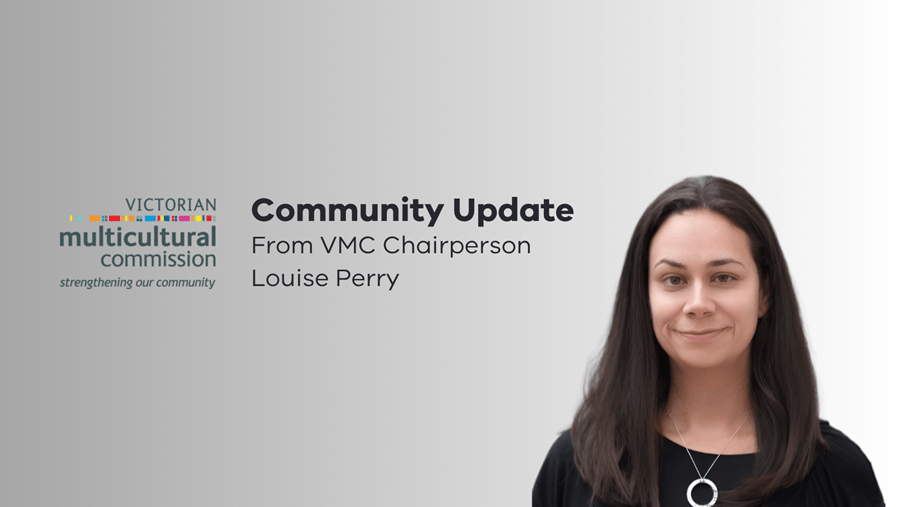
As the VMC transitions to Multicultural Victoria, the new interim Chairperson invites community participation in shaping the state’s diverse future.
MELBOURNE, VICTORIA — In her inaugural address as the interim Chairperson of the Victorian Multicultural Commission (VMC), Louise Perry has struck a tone of optimism and collaboration, heralding a “new era” for Victoria’s multicultural and multifaith communities.
Perry’s appointment marks a critical transitional period for the state, as the Victorian Government introduces legislation to establish Multicultural Victoria, a new statutory body designed to strengthen the way government listens to, engages with, and supports its diverse population.
“It is a privilege to write to you for the first time as Chairperson,” Perry stated. “I am honoured to have the opportunity to serve our multicultural and multifaith communities“.
A Leader with Deep Community Roots
A Victorian woman of Burmese heritage, Perry brings a wealth of experience to the role, including a background in journalism, leadership in community organisations, and a distinguished career in international development and human rights. Her recent role as Deputy Secretary for Fairer Victoria at the Department of Families, Fairness and Housing saw her lead landmark strategies on anti-racism, youth, and gender equality.
“This is an exciting time for multicultural Victoria,” Perry wrote, reflecting on the week’s developments, which saw the introduction of the Bill to amend the Multicultural Victoria Act into Parliament. The proposed legislation seeks to dissolve the VMC and replace it with Multicultural Victoria, a move that aims to modernise how the state engages with its migrant and refugee communities.
Building a More Inclusive Future
The new body is designed to bring together the community engagement functions of the VMC with the policy responsibilities of Multicultural Affairs, creating a more integrated and effective approach. It will be led by a newly created Multicultural Coordinator General, supported by two Deputy Coordinators, one of whom will be dedicated to regional Victoria, and a diverse advisory group.
Perry has emphasised her commitment to building an organisation that reflects the aspirations of the communities it serves, prioritising a “recalibrated and coordinated approach” that promotes cohesion, equity, and inclusion.
“I look forward to working with communities, VMC staff and government as we prepare for legislative changes,” Perry said.
A Call for Community Leadership
As part of the transition, applications are now open for a range of leadership opportunities, including membership of the new Multicultural Community Advisory Group. This is a unique opportunity for community leaders to contribute their experience and insights, ensuring community voices remain central to the future direction of Multicultural Victoria.
Perry encouraged anyone with passion and commitment to shaping Victoria’s multicultural future to consider applying. “I encourage anyone with the passion and commitment for shaping Victoria’s multicultural future to consider applying“. Applications close on Sunday, 9 August.
Looking Ahead
As Perry begins her journey, she has committed to getting out into communities across Victoria, meeting people in person, and learning about their work, aspirations, and the issues that matter most to them.
“Together, we can continue building a Victoria where every community feels heard, valued and connected,” she concluded.
The establishment of Multicultural Victoria is subject to the passage of legislation.

The Gumaa Reconciliation Process
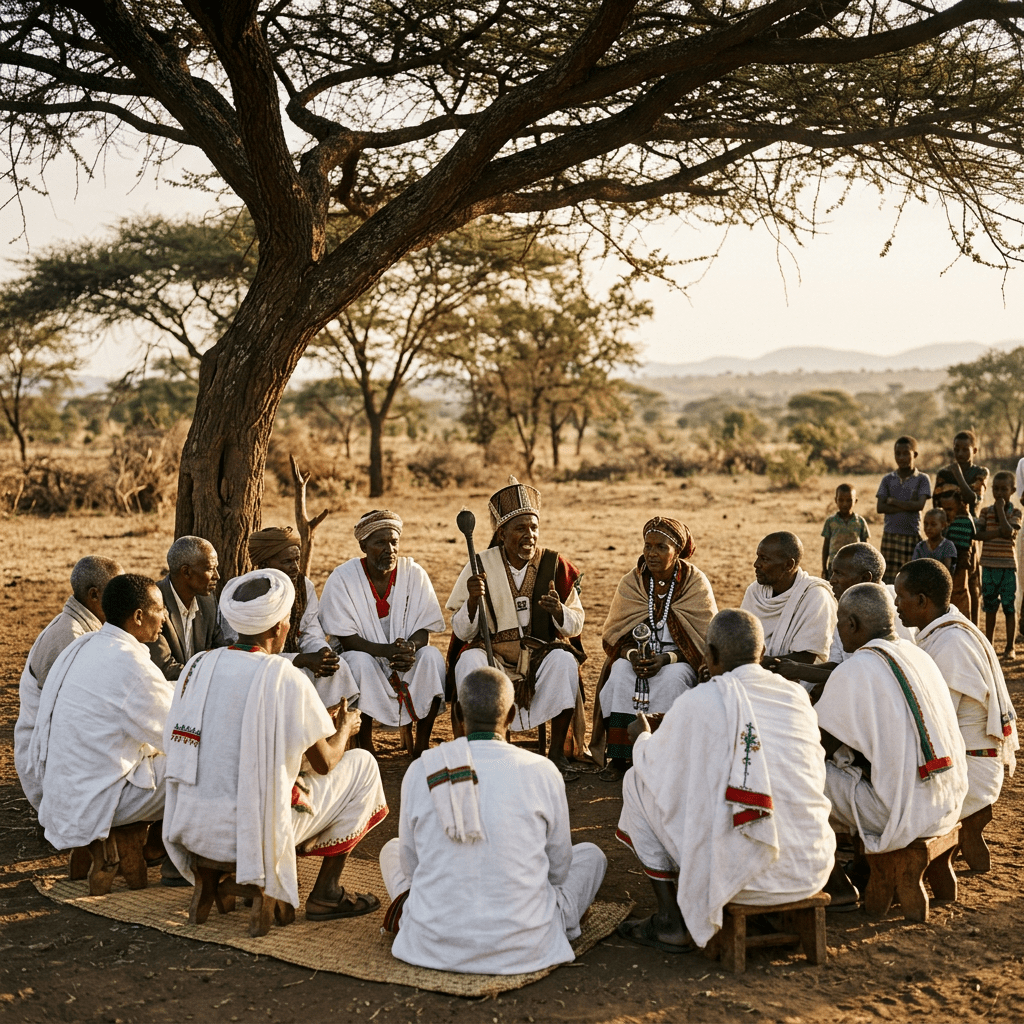
Gumaa is a sophisticated indigenous institution for resolving blood feuds, aiming to restore social harmony and reintegrate an offender back into the community. The process follows several key stages:
1. Collective Responsibility: The killer’s entire lineage is held corporately liable for the act. The group, not just the individual, is responsible for compensation and initiating the purification ritual. The goal is to restore social ties, not just punish an individual.
2. Negotiation & Compensation: Elders from both sides negotiate a “blood price” (gumaa), traditionally paid in cattle. The amount is determined by the nature of the offense (intentional vs. unintentional) and the severity of the injury, but does not vary based on the age or sex of the victim.
3. The Purification Ritual: This highly symbolic ceremony serves to cleanse the offender and the community.
· Preparation: The offender arrives with face covered, wearing the clothes from the day of the murder, symbolizing their unclean state.
· The Sacrifice: A lamb is sacrificed. The parties stand facing each other, signifying readiness to forgive and be forgiven.
· Symbolic Acts: Elders guide the parties to place their hands inside the sacrificed animal’s stomach to shake hands, symbolizing the “washing away” of the sin. The offender’s face is then uncovered, old clothes are removed, and new ones are put on, marking full reintegration.
4. Covenant & Reintegration: The process often concludes with a waadaa (covenant). The ritual concludes with a shared meal, publicly signifying the end of the feud and the offender’s full return to the community.
—
 The Irreecha Thanksgiving Festival
Irreecha is a vibrant bi-annual festival of thanksgiving, renewal, and unity, deeply rooted in the Oromo worldview.
· Timing and Types: It is celebrated twice a year:
· Irreecha Malkaa: Celebrated in September/October at lakesides or rivers to thank Waaqa for the end of the rainy season and the coming harvest.
· Irreecha Tulluu: Celebrated in Spring (around March) on hilltops to pray for rain and blessings for the upcoming planting season.
· Key Rituals and Symbols:
· Fresh Grass and Flowers: Participants carry freshly cut green grass and flowers to the sacred site, symbolizing fertility, life, and renewal.
· Water: Rituals are performed near bodies of water considered holy and pure. The grass is dipped in the water, and participants may sprinkle themselves with it as a blessing.
· Prayers and Songs: The festival features communal prayers, songs, and dances led by Qaalluu elders or Abba Gadaa leaders. It is a time to thank Waaqa for blessings and ask for peace (nagaa) and prosperity for the year ahead.
· Prohibitions: Participants are forbidden from attending with resentment or hatred in their hearts.
· Social and Cultural Significance: Beyond its religious roots, Irreecha is a powerful symbol of Oromo identity, unity, and cultural pride. It fosters social bonds and reinforces collective identity. While rooted in Waaqeffannaa, it is now celebrated by many Oromo people regardless of their religion.

The Role of Waaqeffannaa in Peacemaking
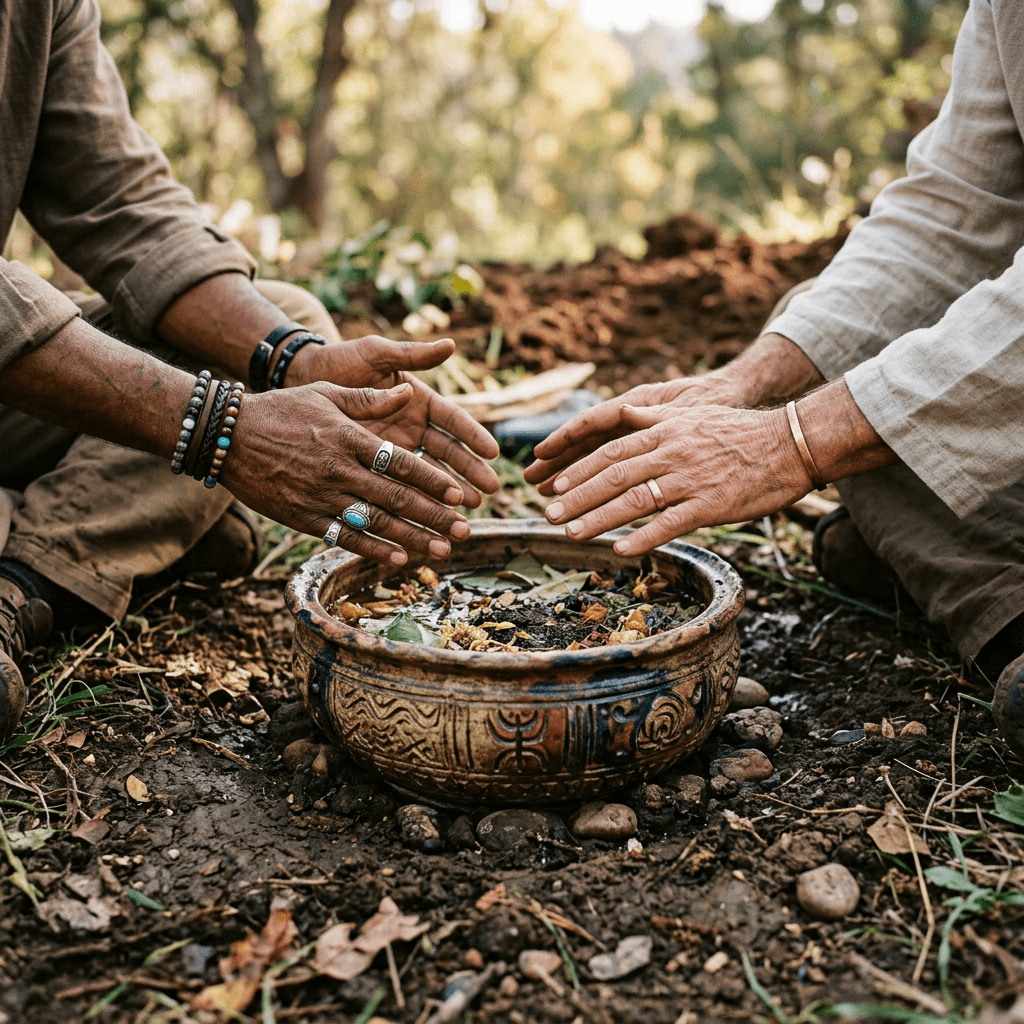
Waaqeffannaa, the indigenous monotheistic religion of the Oromo people, plays a profound and multifaceted role in peacemaking that is deeply embedded in its theology, rituals, and social institutions. Its approach to peace is not merely the absence of conflict but a state of holistic harmony with Waaqa (God), fellow humans, and the natural environment.
 Theological Foundation: Peace as a Divine Mandate
Peace (nagaa) is a core spiritual value in Waaqeffannaa. Waaqa is believed to be peace itself, and human beings are expected to be peacemakers who do not disturb this divine order. This is embedded in daily life, from the common greeting “Nagaa dha?” (Are you at peace?) to prayers like “Nagaan nu oolchi” (Lead us in peace).
 Key Peacemaking Principles: Gumaa and Waadaa
Two central traditional mechanisms for conflict resolution are Gumaa and Waadaa:
· Gumaa: A ritual process of reconciliation, particularly for serious offenses like bloodshed, intended to restore broken relationships and bring peace.
· Waadaa: A covenant or oath that establishes a binding agreement between parties to maintain peace.
Rituals, Festivals, and Community Practices
Peacemaking is reinforced through collective rituals:
· Irreecha: The annual thanksgiving festival where thousands gather to thank Waaqa and publicly preach peace and unity. A central chant is “Nagaa, nagaa!” (Peace, peace!), affirming the community’s collective desire for balance.
· Dhibaayyuu: A thanksgiving ritual that plays a pivotal role in inter-community peacebuilding and sustaining social solidarity.
 Institutional Mechanisms: The Gadaa System and Qaalluu Leaders
Waaqeffannaa is closely linked to the Gadaa system, a traditional Oromo governance structure that serves as a viable conflict resolution and peace-building mechanism. Within this system, Qaalluu leaders, as custodians of the faith, often act as mediators, using traditional reconciliation methods to resolve disputes.
 Contemporary Relevance and Challenges
While its values align with modern peacebuilding, Waaqeffannaa faces challenges in modern Ethiopia, including historical marginalization and limited freedoms for its adherents. Despite this, its principles offer a powerful, locally-grounded framework for building lasting peace from the community level upward.
In essence, Waaqeffannaa provides a comprehensive blueprint for peace, integrating spiritual belief with practical action to foster reconciliation and social harmony.

The Irreechaa Protocol: From Ancient Healing to Modern Stroke Recovery
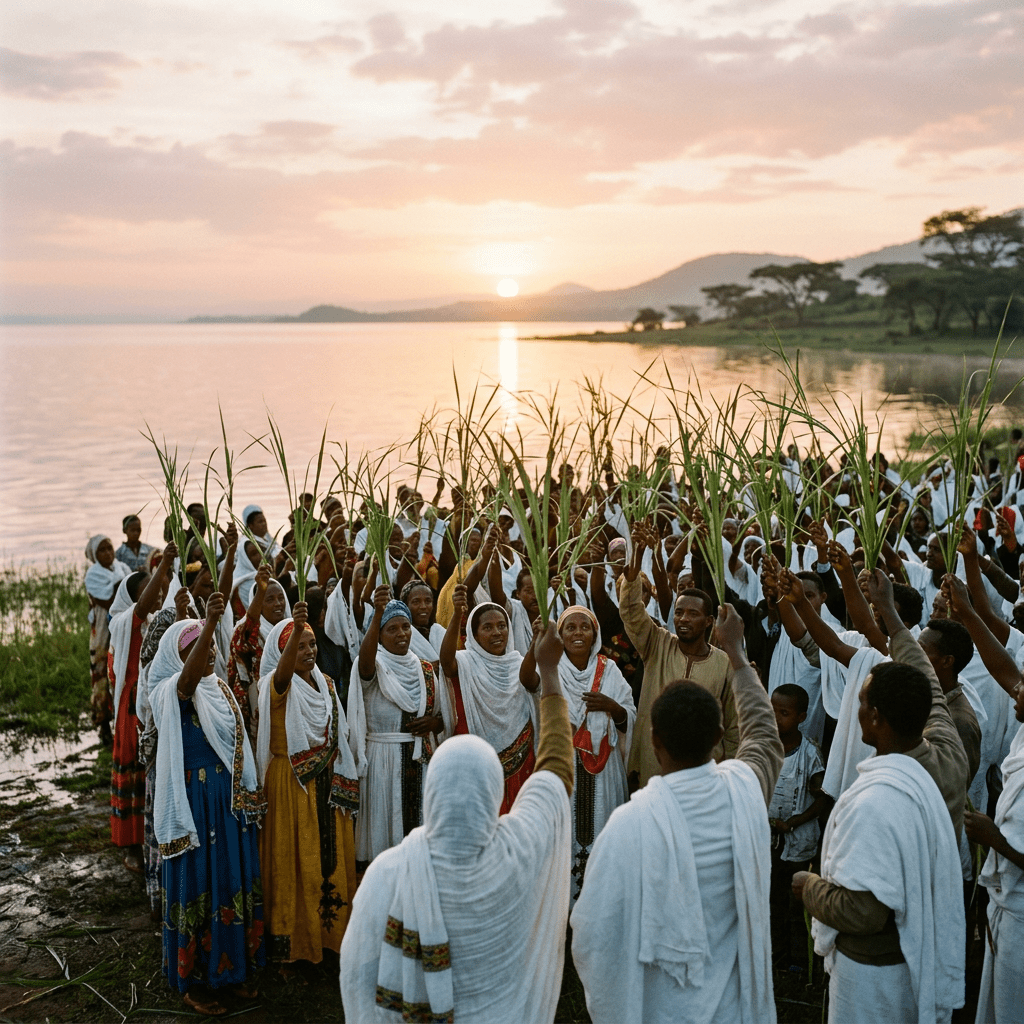
What if the path to physical recovery after a stroke lies not in isolation but in community, not in medicine alone but in the sacred rituals that have healed generations?
When we think of stroke rehabilitation, we typically imagine hospital beds, physical therapists, and repetitive exercises. The journey is often described as isolating—a solitary struggle against the body’s betrayal. But what if the most effective recovery intervention has been practiced for centuries, not in clinics, but at the water’s edge, surrounded by thousands of voices raised in song?
The Oromo people’s Irreechaa festival—a thanksgiving celebration held at sacred water bodies like Hora Arsadii and Hora Finfinnee—offers a blueprint for stroke recovery that transcends conventional rehabilitation. It is not merely a cultural festival; it is a sophisticated, community-driven healing protocol that addresses the physical, psychological, and spiritual dimensions of recovery.
The Foundation: Why Ritual Matters in Recovery
Stroke, as a form of brain tissue damage caused by a sudden disruption of blood supply, often results in muscle weakness or paralysis on one side of the body, known as hemiparesis or hemiplegia . Beyond the physical challenges, stroke profoundly affects patients’ psychological and spiritual well-being.
Conventional rehabilitation focuses on regaining motor function through physical therapy, strength training, and range-of-motion exercises. Yet research increasingly recognises that recovery is not purely mechanical. The emotional isolation, loss of identity, and spiritual questioning that accompany stroke require interventions that address the whole person.
This is where Irreechaa enters the picture. For the Oromo people, who have endured generations of political marginalisation and cultural suppression, Irreechaa has functioned as what scholars describe as “cultural therapy”—a cyclical, collective practice that restores dignity, cohesion, and hope . Its choreography—pilgrimage to sacred water, symbolic washing, public prayer, group singing and dancing—provides a template that can be adapted for physical rehabilitation.
The Three Therapeutic Pillars of Irreechaa for Stroke Recovery
1. Recognition: Reclaiming Identity and Agency
One of the most devastating effects of stroke is the loss of identity. A person who once moved freely, worked, and cared for family suddenly becomes dependent on others. This loss mirrors the experience of colonised peoples—the internalised devaluation that comes from being told, directly or indirectly, that you are less than what you were .
Irreechaa counters this through public, mass affirmation . When thousands gather in traditional white attire, singing and performing traditional dances, they are not just celebrating; they are visibly, collectively reclaiming dignity . For a stroke survivor, participation—even passive observation—reaffirms that they remain part of the community. Their identity is not erased by their condition.
The festival’s impact on psychological well-being is significant. Scholars document that the joyful atmosphere counters trauma, while participants see their culture celebrated, combating marginalisation and fostering confidence . For stroke survivors, this sense of belonging and self-worth is a powerful motivator for recovery.
2. Regulation: Movement, Music, and Healing the Body
The physical elements of Irreechaa serve a regulatory function that aligns precisely with evidence-based rehabilitation. Structured songs, rhythmic movement, and shared timing “calm bodies and synchronise emotion” . This mirrors approaches like EMDR (Eye Movement Desensitization and Reprocessing), where bilateral stimulation helps process traumatic material.
Traditional Oromo songs, known as geerarsa, have a particularly powerful healing function. One form of folksong is designed to “divert the thought of the distressed individual by persuading him through the intricate terminologies” . Even individuals with physical and cognitive impairments can be drawn into the healing experience through these songs.
Scientifically, the combination of water and sound creates immersive environments. Chanting reduces stress hormones and triggers dopamine, promoting transcendence . Movement—however limited—stimulates blood flow and helps maintain flexibility. When tens of thousands move and sing together, the result is a form of community-wide emotional and physical regulation that no individual therapist could replicate.
Research on spiritual practices in stroke rehabilitation supports this approach. One study found that dhikr therapy—practiced by flexing and moving the knuckles of the hand—can reduce stiffness in the joints of stroke patients, supporting muscle flexibility and strength . Irreechaa offers this same principle on a massive scale: repetitive, meaningful movement embedded in a spiritual and social context.
3. Reconnection: Healing the Social Wound
Historical trauma isolates; ritual reconnects . Anthropologists describe how public rituals generate “communitas”—an intense sense of togetherness that suspends everyday hierarchies . At Irreechaa, this communitas creates “prosocial bonds that reduce isolation and renew civic agency” .
For a stroke survivor, social isolation is a major barrier to recovery. Depression, anxiety, and loneliness compound physical limitations. The festival’s intergenerational participation—elders demonstrating rituals, children and youth participating actively—creates a continuity of social bonds that bridges generations . The stroke survivor is not left behind; they remain part of the living chain.
Irreechaa’s role in fostering inclusivity and national healing has been widely recognised, described as “a catalyst for inclusivity in Ethiopia” that “promotes a sense of togetherness” . For the individual survivor, the lesson is clear: recovery is not a solitary journey but a communal one.
The Water Blessing: Symbolic and Practical Healing
The most iconic Irreechaa ritual involves participants entering sacred water and symbolically washing away hardship . This act operates on multiple levels:
- Symbolically, it represents cleansing from past trauma and preparation for renewal.
- Psychologically, it provides a physical mechanism for emotional release.
- Communally, it creates a shared experience that binds participants together.
For a stroke survivor, water also offers practical therapeutic benefits. Hydrotherapy is a recognised rehabilitation technique that reduces joint stress, improves circulation, and provides gentle resistance for muscle strengthening. The sacred waters of Irreechaa offer this benefit within a context of profound meaning.
For diaspora Oromo communities, adaptations of these water rituals in park settings or hilltops serve similar functions . When a traditional water body is unavailable, communities transform other spaces into sacred gathering points. This adaptability suggests that the Irreechaa protocol can be adapted to any setting—including rehabilitation centres, community halls, or home environments.
A Blueprint for Stroke Recovery Intervention
What can the Irreechaa protocol teach rehabilitation professionals, caregivers, and stroke survivors?
1. Recovery Requires Community
The individualised model of rehabilitation misses a crucial element: the healing power of belonging. Interventions that create spaces for group participation, shared music, and collective movement may enhance outcomes.
2. Symbolism Matters
Water, music, movement, and traditional attire are not superficial decorations; they are therapeutic vehicles that engage the whole person—body, mind, and spirit.
3. Repetition Builds Strength
The cyclical, annual nature of Irreechaa mirrors the repetitive practice essential to stroke rehabilitation. Regularity, predictability, and ritualised practice build resilience.
4. Cultural Grounding Is Therapeutic
Cultural practices are not barriers to evidence-based approaches; they are themselves evidence-based approaches refined over generations . Adapting indigenous healing traditions to modern rehabilitation can improve engagement and outcomes.
5. Hope Is a Medicine
Irreechaa’s central message—that renewal is possible—is exactly what a stroke survivor needs to hear. Hope, meaning, and purpose are not sentimental extras; they are essential drivers of recovery.
Conclusion: The Quiet Work of Repair
Irreechaa demonstrates that healing is not only possible but has been practised for centuries. Its protocol—recognition, regulation, and reconnection through public ritual—provides a template that could be adapted for stroke recovery across cultures and contexts.
As scholars of historical trauma note, healing requires “shared remembrance, mourning, and culturally grounded practices that rebuild meaning and agency” . For stroke survivors, the same principle applies. Recovery is not just about regaining muscle strength; it is about rebuilding meaning, reconnecting with community, and reclaiming identity.
Irreechaa’s power is double-edged: the very practices that heal—public recognition, shared emotion, embodied solidarity—can also unsettle established systems of control . But for the stroke survivor seeking to recover, this is not a threat. It is an invitation to reclaim what was lost.
The path forward is not to shrink the wisdom of the ancestors but to secure it. Treat it as a healing asset, adapt its principles to modern practice, and let ritual do its quiet work of repair.
“Irreechaa’s power is double-edged: the very practices that heal—public recognition, shared emotion, embodied solidarity—also unsettle projects that rely on minimising Oromo visibility. The path forward is not to shrink Irreechaa but to secure it: treat it as a national asset, protect rights equally, and let ritual do its quiet work of repair” .

Irreechaa as a Model for Community Mental Health Interventions
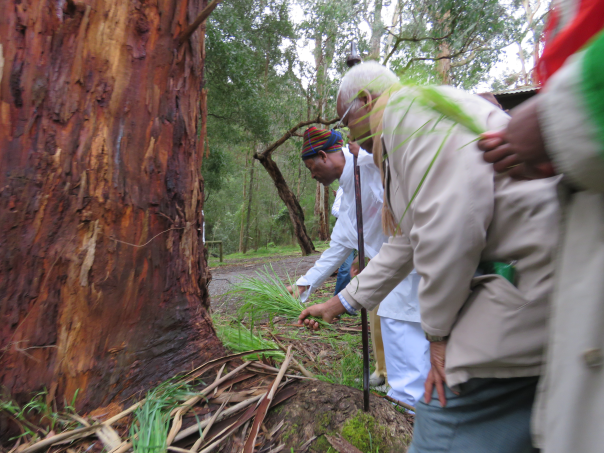
Irreechaa as Ritual Repair: How an Ancient Thanksgiving Festival Became a Blueprint for Collective Mental Health Intervention
Far more than a seasonal celebration, the Oromo festival’s water blessings, songs, and communal rituals function as a sophisticated, community-driven therapy for generations of historical trauma
In an era where mental health professionals increasingly recognise the limitations of individual therapeutic models for addressing collective trauma, an ancient festival offers an unexpected but profoundly effective blueprint. For the Oromo people, the Irreechaa celebration—held at sacred water bodies like Hora Arsadii (Bishoftu) and Hora Finfinnee—operates as what scholars describe as “cultural therapy”: a cyclical, collective practice that restores dignity, cohesion, and hope after generations of political marginalisation .
For a people whose late-19th-century imperial incorporation, linguistic suppression, and systematic cultural erasure represent textbook “cumulative, collective wounding,” Irreechaa has become far more than a seasonal celebration . It is a sophisticated, community-based mental health intervention that has sustained Oromo resilience for centuries. By examining the Irreechaa protocol—its structure, its symbols, and its therapeutic mechanisms—we may find a model for collective healing that transcends cultural boundaries.
The Foundation of Collective Trauma
The Oromo experience of historical trauma is severe and systematic. Late-19th-century imperial expansion violently incorporated Oromo homelands into the Ethiopian Empire, followed by over a century of political and cultural subordination . Oromo institutions, including aspects of the Gadaa governance system, were constrained or suppressed, and the public status of Afaan Oromoo was systematically diminished.
This represents what scholars term “cumulative, collective wounding”—mass harms that echo across generations through families and institutions . The result is not merely individual psychological distress but a community-wide experience of internalised devaluation, social fragmentation, and disconnection.
Conventional mental health approaches—individual therapy, medication, and cognitive interventions—can address symptoms but often fail to heal the underlying collective wounds. Irreechaa offers an alternative: a community-based intervention designed to restore what was broken collectively.
The Therapeutic Structure of Irreechaa
Irreechaa’s choreography follows a remarkably consistent pattern: pilgrimage to sacred water, symbolic washing, public prayer, group singing and dancing, and the leadership of elders . This structure aligns precisely with what anthropologists identify as the key elements of “ritual repair” .
Recognition: Countering Internalised Devaluation
One of the most insidious effects of historical oppression is internalised inferiority—members of marginalised groups absorb the dominant society’s negative messages about their identity. Irreechaa counters this through public, mass affirmation . When millions gather in traditional white attire, singing and performing traditional dances, they are not just celebrating; they are visibly, collectively reclaiming dignity .
The festival’s impact on psychological well-being is significant. Scholars document that the joyful atmosphere counters trauma from oppression, displacement, or recent conflicts, while youth see their culture celebrated, combating marginalisation and fostering confidence . The sense of pride and self-worth cultivated at Irreechaa is particularly important for younger generations, who carry the Oromo legacy forward .
Regulation: Choreographing Healing through Music and Movement
The physical elements of Irreechaa serve a regulatory function that echoes evidence-based trauma interventions. Structured songs, rhythmic movement, and shared timing “calm bodies and synchronise emotion” . This mirrors approaches like EMDR (Eye Movement Desensitization and Reprocessing), where bilateral stimulation helps process traumatic material.
Traditional Oromo songs, known as geerarsa, have a particularly powerful healing function. One form of folksong is designed to “divert the thought of the distressed individual by persuading him through the intricate terminologies” and has “strong power of meeting the requirements or to draw attention of the listener” . Even individuals with mental illness can be drawn into the healing experience through these songs .
Scientifically, the combination of water and sound creates immersive ritual environments. Chanting reduces stress hormones and triggers dopamine, promoting transcendence . When tens of thousands move, sing, and splash in sacred waters together, the result is a form of community-wide emotional regulation that no individual therapist could replicate.
Reconnection: Rebuilding Social Bonds
Historical trauma isolates; ritual reconnects. Anthropologists have long described how public rituals generate what they call “communitas”—an intense sense of togetherness that suspends everyday hierarchies . At Irreechaa, this communitas creates “prosocial bonds that reduce isolation and renew civic agency” .
The festival’s intergenerational participation reinforces this reconnection. Elders demonstrate rituals like eebba (blessings) and traditional dances, while children and youth participate actively, creating a continuity of social bonds that bridges generations . This is not simply a pleasant experience; it is a vital antidote to the social fragmentation that oppression produces.
Irreechaa’s role in fostering inclusivity and national healing has been widely recognised, with the festival described as “a catalyst for inclusivity in Ethiopia” that “promotes a sense of togetherness and fosters a spirit of inclusivity, reminding us that despite our differences, we are all part of the same human family” .
The Water Blessing: Symbolic Washing Away
The most iconic Irreechaa ritual involves participants entering sacred water and symbolically washing away hardship, or performing libation rituals using water and fresh grass (Birraa) . This act operates on multiple levels:
- Symbolically, it represents cleansing from past trauma and preparation for renewal .
- Psychologically, it provides a physical mechanism for emotional release.
- Communally, it creates a shared experience that binds participants together.
For diaspora Oromo communities, adaptations of these water rituals in park settings or hilltops serve similar functions, connecting a community separated by geography to the healing practices of their ancestors . The Melbourne community, for example, transformed Dandenong Hill into a sacred gathering point when a traditional water body was unavailable . Planting trees alongside these symbolic rituals extends the theme of renewal to ecological consciousness .
The Shadow: When Healing Attracts Threat
The very power that makes Irreechaa therapeutic also makes it threatening to forces seeking to maintain dominance . The 2016 Bishoftu tragedy—where security forces’ crowd control triggered a stampede that killed scores—etched a deep collective trauma into Oromo memory . This event reinforced fears that peaceful cultural gatherings can be violently disrupted.
Subsequent Irreechaa celebrations have often featured heavy policing, preemptive arrests, and restrictions that rights groups criticise as disproportionate . The “securitisation” of Irreechaa reflects a fundamental reality: visible, unified collective identity threatens projects that rely on minimising that group’s visibility and power .
The festival’s security challenges are well-documented. As one analysis notes, “this pattern sustains a feedback loop: securitisation communicates distrust of Oromo mass assembly; participants experience retraumatisation; organisers double down on the festival’s identity-affirming message, which authorities then read as political mobilisation” .
A Blueprint for Collective Intervention
What can the Irreechaa protocol teach mental health practitioners, community organisers, and policymakers?
1. Collective Healing Requires Collective Ritual
Individual therapy cannot fully address historical trauma because the wound is communal. Interventions must create spaces where communities can heal together .
2. Symbolism Matters
Water, music, movement, and traditional attire are not superficial decorations; they are therapeutic vehicles that engage the whole person .
3. Intergenerational Participation Is Essential
Children and elders healing together creates continuity that individual approaches cannot achieve .
4. Regularity Builds Resilience
Irreechaa’s cyclical nature—held annually, marking seasonal change—provides ongoing, predictable support that communities can rely on .
5. Cultural Grounding Is Strength
Cultural practices adapted to trauma healing are not barriers to evidence-based approaches; they are themselves evidence-based approaches refined over generations .
Conclusion: Ritual as Quiet Repair
Irreechaa demonstrates that collective healing is not only possible but has been practised for centuries. Its protocol—recognition, regulation, and reconnection through public ritual—provides a template that could be adapted across cultures and contexts .
As scholars of historical trauma note, healing requires “shared remembrance, mourning, and culturally grounded practices that rebuild meaning and agency” . The Irreechaa protocol provides exactly that: a culturally grounded practice that rebuilds meaning and agency for millions.
The path forward, as one analysis concludes, is “not to shrink Irreechaa but to secure it: treat it as a national asset, protect rights equally, and let ritual do its quiet work of repair” . For mental health professionals, the lesson is clear: the best interventions may not be found in clinical manuals but in the living traditions of communities that have survived and thrived despite centuries of attempted erasure.
Irreechaa’s power is double-edged: the very practices that heal—public recognition, shared emotion, embodied solidarity—also unsettle projects that rely on minimising Oromo visibility. The path forward is not to shrink Irreechaa but to secure it.

The Irreechaa Protocol: How an Ancient Festival Provides a Blueprint for Collective Mental Health Intervention
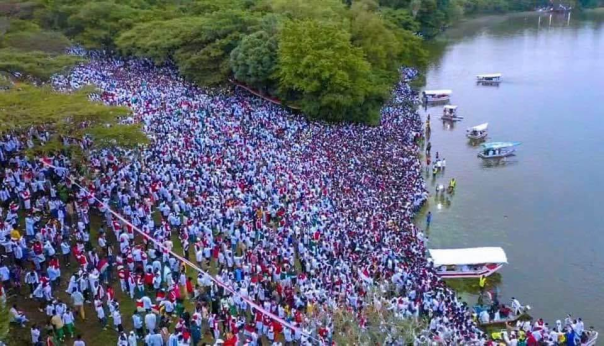
What if healing from trauma is not meant to be a solitary journey but a communal ritual—one that has been practised for centuries?
In an era where mental health professionals increasingly recognise the limitations of individual therapeutic models for addressing collective trauma, a centuries-old festival offers an unexpected but profoundly effective blueprint. The Oromo people’s Irreechaa—an annual thanksgiving celebration held at sacred water bodies like Hora Arsadii (Bishoftu) and Hora Finfinnee—functions as what scholars describe as “cultural therapy”: a cyclical, collective practice that restores dignity, cohesion, and hope after generations of political marginalisation .
For a people who have endured conquest, linguistic suppression, and systematic cultural erasure, Irreechaa is far more than a seasonal celebration. It is a sophisticated, community-based mental health intervention that has sustained Oromo resilience for centuries. By examining the Irreechaa protocol—its structure, its symbols, and its therapeutic mechanisms—we may find a model for collective healing that transcends cultural boundaries.
The Foundation of Collective Trauma
The Oromo experience of historical trauma is textbook in its severity. Late-19th-century imperial expansion violently incorporated Oromo homelands into the Ethiopian Empire, followed by over a century of political and cultural subordination . Oromo institutions, including aspects of the Gadaa governance system, were constrained or suppressed, and the public status of Afaan Oromoo was systematically diminished .
This represents what scholars term “cumulative, collective wounding”—mass harms that echo across generations through families and institutions . The result is not merely individual psychological distress but a community-wide experience of internalised devaluation, social fragmentation, and disconnection.
Conventional mental health approaches—individual therapy, medication, and cognitive interventions—can address symptoms but often fail to heal the underlying collective wounds. The Irreechaa protocol offers an alternative: a community-based intervention designed to restore what was broken collectively.
The Therapeutic Structure of Irreechaa
Irreechaa’s choreography follows a remarkably consistent pattern: pilgrimage to sacred water, symbolic washing, public prayer, group singing and dancing, and the leadership of elders . This structure is not accidental; it aligns precisely with what anthropologists identify as the key elements of “ritual repair.”
Recognition: Countering Internalised Devaluation
One of the most insidious effects of historical oppression is internalised inferiority—members of marginalised groups absorb the dominant society’s negative messages about their identity. Irreechaa counters this through public, mass affirmation . When millions gather in traditional white attire, singing Dhaanto, and performing the Shaggooyee dance, they are not just celebrating; they are visibly, collectively reclaiming dignity .
For Oromo youth—particularly those in the diaspora—this public celebration of their culture combats marginalisation and fosters confidence . It tells them that their identity is not something to hide but something to celebrate with pride.
Regulation: Choreographing Healing
The physical elements of Irreechaa serve a regulatory function that echoes evidence-based trauma interventions. Structured songs, rhythmic movement, and shared timing “calm bodies and synchronise emotion” . This mirrors approaches like EMDR (Eye Movement Desensitization and Reprocessing), where bilateral stimulation helps process traumatic material.
Psychologically, this is “psycho-bio-social regulation” . The body and mind work together to process emotional material, with collective synchrony amplifying the therapeutic effect. When tens of thousands move and sing together, the result is a form of community-wide emotional regulation that no individual therapist could replicate.
Reconnection: Rebuilding Social Bonds
Historical trauma isolates; ritual reconnects. Anthropologists have long described how public rituals generate what they call “communitas”—an intense sense of togetherness that suspends everyday hierarchies . At Irreechaa, this communitas creates “prosocial bonds that reduce isolation and renew civic agency” .
The festival’s multi-generational participation reinforces this reconnection . Elders demonstrate rituals like the Eebba (blessings) and traditional dances , while children and youth participate actively, creating a continuity of social bonds that bridges generations. This is not simply a pleasant experience; it is a vital antidote to the social fragmentation that oppression produces.
The Water Blessing: Symbolic Washing Away
The most iconic Irreechaa ritual involves participants entering sacred water and symbolically washing away hardship . This act operates on multiple levels simultaneously:
Symbolically, it represents cleansing from past trauma and preparation for renewal. Psychologically, it provides a physical mechanism for emotional release. Communally, it creates a shared experience that binds participants together.
For diaspora Oromo, adaptations of this water ritual in park settings serve similar functions, connecting a community separated by geography to the healing practices of their ancestors . Planting trees alongside these symbolic water rituals extends the theme of renewal to ecological consciousness .
The Shadow: When Healing Attracts Threat
The very power that makes Irreechaa therapeutic also makes it threatening to forces seeking to maintain dominance. The 2016 Bishoftu tragedy—where security forces’ crowd control triggered a stampede that killed scores—etched a deep collective trauma into Oromo memory . This event reinforced fears that peaceful cultural gatherings can be violently disrupted.
Subsequent Irreechaa celebrations have often featured heavy policing, preemptive arrests, and restrictions that rights groups criticise as disproportionate . The “securitisation” of Irreechaa reflects a fundamental reality: visible, unified collective identity threatens projects that rely on minimising that group’s visibility and power .
Yet the festival continues to grow. In 2025, tens of thousands gathered in Addis Ababa and Bishoftu, with Prime Minister Abiy Ahmed addressing the crowd . The celebration has become a complex space where cultural resurgence, political symbolism, and community grievance intersect .
A Blueprint for Collective Intervention
What can the Irreechaa protocol teach mental health practitioners, community organisers, and policymakers?
1. Collective Healing Requires Collective Ritual
Individual therapy cannot fully address historical trauma because the wound is communal. Interventions must create spaces where communities can heal together.
2. Symbolism Matters
Water, music, movement, and traditional attire are not superficial decorations; they are therapeutic vehicles that engage the whole person.
3. Intergenerational Participation Is Essential
Children and elders healing together creates continuity that individual approaches cannot achieve.
4. Regularity Builds Resilience
Irreechaa’s cyclical nature—held annually, marking seasonal change—provides ongoing, predictable support.
5. Cultural Grounding Is Strength
Cultural practices adapted to trauma healing are not barriers to evidence-based approaches; they are themselves evidence-based approaches refined over generations.
Conclusion
Irreechaa demonstrates that collective healing is not only possible but has been practised for centuries. Its protocol—recognition, regulation, and reconnection through public ritual—provides a template that could be adapted across cultures and contexts.
As scholars of historical trauma note, healing requires “shared remembrance, mourning, and culturally grounded practices that rebuild meaning and agency” . The Irreechaa protocol provides exactly that: a culturally grounded practice that rebuilds meaning and agency for millions.
For mental health professionals, the lesson is clear: the best interventions may not be found in clinical manuals but in the living traditions of communities that have survived and thrived despite centuries of attempted erasure. The Irreechaa protocol is not just a festival; it is a toolkit for collective mental health, refined over generations and proven effective by the very survival of the Oromo people.
“Irreechaa’s power is double-edged: the very practices that heal—public recognition, shared emotion, embodied solidarity—also unsettle projects that rely on minimising Oromo visibility. The path forward is not to shrink Irreechaa but to secure it: treat it as a national asset, protect rights equally, and let ritual do its quiet work of repair” .

The Two Humiliations of TPLF: A Reflection on Power, Pride, and the Oromo Awakening
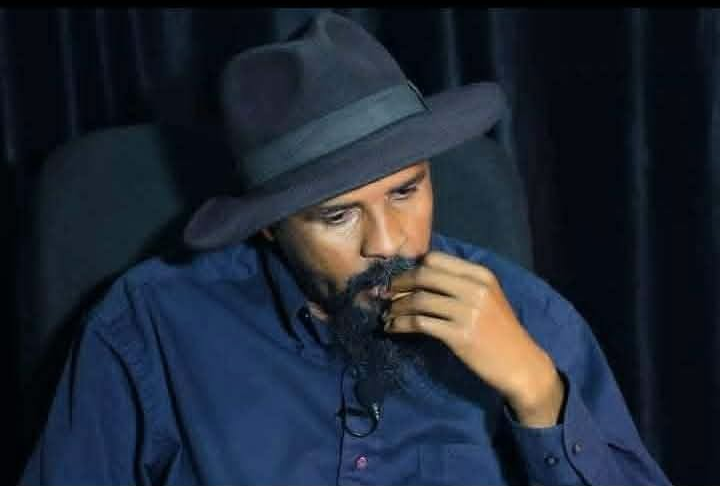
In the shifting sands of Ethiopian politics, the Tigrayan People’s Liberation Front has suffered wounds that time has not healed—and the Oromo people remain the central characters in this unfolding drama
In the annals of Ethiopian political history, few organizations have risen as high or fallen as dramatically as the Tigrayan People’s Liberation Front (TPLF). For nearly three decades, it dominated the political landscape of the Ethiopian Empire, ruling with an iron fist while projecting an image of revolutionary legitimacy. Yet today, the TPLF finds itself nursing wounds that history will not allow it to forget—wounds inflicted not by foreign enemies but by the very people it sought to subjugate.
The reflection of Abba Ebba offers a searing analysis of what he calls the “two humiliations” of the TPLF—humiliations that, in his view, are inextricably linked to the Oromo people and their awakening. These are not merely military defeats but moral and political reckonings that the TPLF has been unable to accept or process.
The First Humiliation: The Fall of Mekelle
“For 27 years, like the saying ‘the hare’s skin cannot cover the elephant,’ the TPLF tried to stretch its hide over an empire too vast for its frame. In the final hour, it was the sons and daughters of Oromo—the Qeerroo and Qarree—who stood before tanks with empty hands and brought down the regime. They made the TPLF retreat to Mekelle, dragging its ill-gotten wealth behind it. This is the first humiliation that remains unhealed to this day.”
The 2018 Oromo protests were not merely a political uprising—they were a seismic shift in the Ethiopian political landscape. The Oromo youth, known as the Qeerroo and Qarree, rose in a wave of popular resistance that the TPLF could not contain. The protests were decentralized, leaderless, and yet remarkably unified in their demands for justice, equality, and an end to the TPLF’s domination .
The TPLF, which had ruled Ethiopia for 27 years, was forced to abandon power and retreat to its northern stronghold of Mekelle. This was not a defeat by a rival military force but a collapse in the face of unarmed civilian resistance. The humiliation was profound and, according to Abba Ebba, has never been truly accepted by the TPLF leadership.
“The TPLF was defeated by the popular wave that ignited from one end of Oromia to the other—a wave that was part of the Oromo liberation struggle. This is an undeniable truth. The Oromo is an elephant; when it tramples, it crushes. The TPLF was forced to swallow this reality, whether it liked it or not.”
The Second Humiliation: The Retreat to Mekelle
The second humiliation followed the first. After initially retreating to Mekelle, the TPLF sought to reassert its influence on the national stage. It formed alliances with various forces—including some within the Amhara political spectrum—and attempted to challenge the Prosperity Party government.
However, this effort ended in another defeat. The TPLF was forced to retreat once again to Mekelle, leaving behind its ambitions and its allies, having consumed itself in the fires it had ignited. This second retreat, Abba Ebba argues, is the other humiliation that remains raw and unprocessed .
“When the TPLF was about to return to Addis Ababa, it found itself burned by the fire it had started. It was forced to retreat to Mekelle—another humiliation that has not faded.”
The Unlearned Lesson
Despite these humiliations, the TPLF has not learned its lesson. Instead, it continues to prepare for a new war, this time under the cover of the Prosperity Party government’s own challenges. After four years of uninterrupted military preparation, the TPLF is once again positioning itself for conflict .
Abba Ebba warns that this preparation is driven by a desire for revenge—a desire to settle scores with the Oromo people who, in the TPLF’s view, are responsible for its humiliations. “Under the cover of the Prosperity Party government, the TPLF is seeking to take revenge on our people for its past humiliations.”
The Unnecessary Price
Abba Ebba poses a pointed question: why must the Oromo people pay the price for the TPLF’s ambitions? Why must Oromia become a battlefield for conflicts that are not of its making?
“The TPLF did not need to travel 600 kilometres into the heart of the country, into the breadbasket of Ethiopia—Oromia. It could have declared Eritrea-style independence when the Derg fell, and it could do so today. All it needs is to settle its accounts and secure the consent of its people.”
The TPLF’s refusal to accept defeat has left the Oromo people caught between multiple threats. On one hand, there is the TPLF’s continued military preparations and its desire for revenge. On the other, there are forces like Fano and other armed groups that have also targeted Oromo communities.
The Oromo Elite’s Responsibility
Abba Ebba also points a finger at the Oromo elite, accusing them of failing to fulfill their responsibilities. The Oromo people, who have paid the heaviest price in the struggle against the Ethiopian Empire, now face a dual threat: the TPLF’s revanchism and the Oromo elite’s failure to protect the gains of the struggle.
“The Oromo elite has failed to protect the historic victory achieved by the Oromo popular struggle. It has also failed to protect the constitutional right to self-determination—the right to democracy, justice, and self-rule—from being undermined.”
This failure, Abba Ebba argues, has allowed the Oromo people to be marginalized and treated with suspicion by their neighbours. The Oromo elite’s failure to step up has left the people vulnerable to manipulation and exclusion.
A Call to Vigilance
Abba Ebba concludes with a call to the Oromo people:
“Our people must prepare themselves for the danger of the approaching war and actively monitor the situation. The war that is being prepared—whether by TPLF or by the Fano forces—poses a threat to the next generation of Oromo. Decisive action must be taken to find a lasting solution.”
He insists that Oromia must not become a doormat for the ambitions of others. “Oromia will not be a doormat for Fano or the TPLF! With its determined sons and daughters, it will stand, honoured and respected, and it will endure forever.”
A Historical Warning
The reflection of Abba Ebba is not merely a commentary on contemporary politics—it is a historical warning. It reminds the Oromo people that the TPLF, despite its humiliations, has not abandoned its ambitions. The two humiliations remain unhealed, and the TPLF continues to seek revenge.
But the reflection also carries a message of hope and resolve. The Oromo people, having risen once, can rise again. The elephant has crushed its enemies before, and it can do so again.
Conclusion
The two humiliations of the TPLF are more than military or political defeats—they are symbolic wounds that the organization has not been able to accept. The TPLF’s refusal to learn from its past has left the Oromo people facing a renewed threat. But the Oromo people, having already demonstrated their power, are not powerless.
As Abba Ebba declares: “Oromia will not be a doormat for Fano or the TPLF! With its determined sons and daughters, it will stand, honoured and respected, and it will endure forever.”
The elephant has crushed its enemies before, and it can do so again.

Why Unity Remains a Constant Theme in the Oromo Freedom Struggle
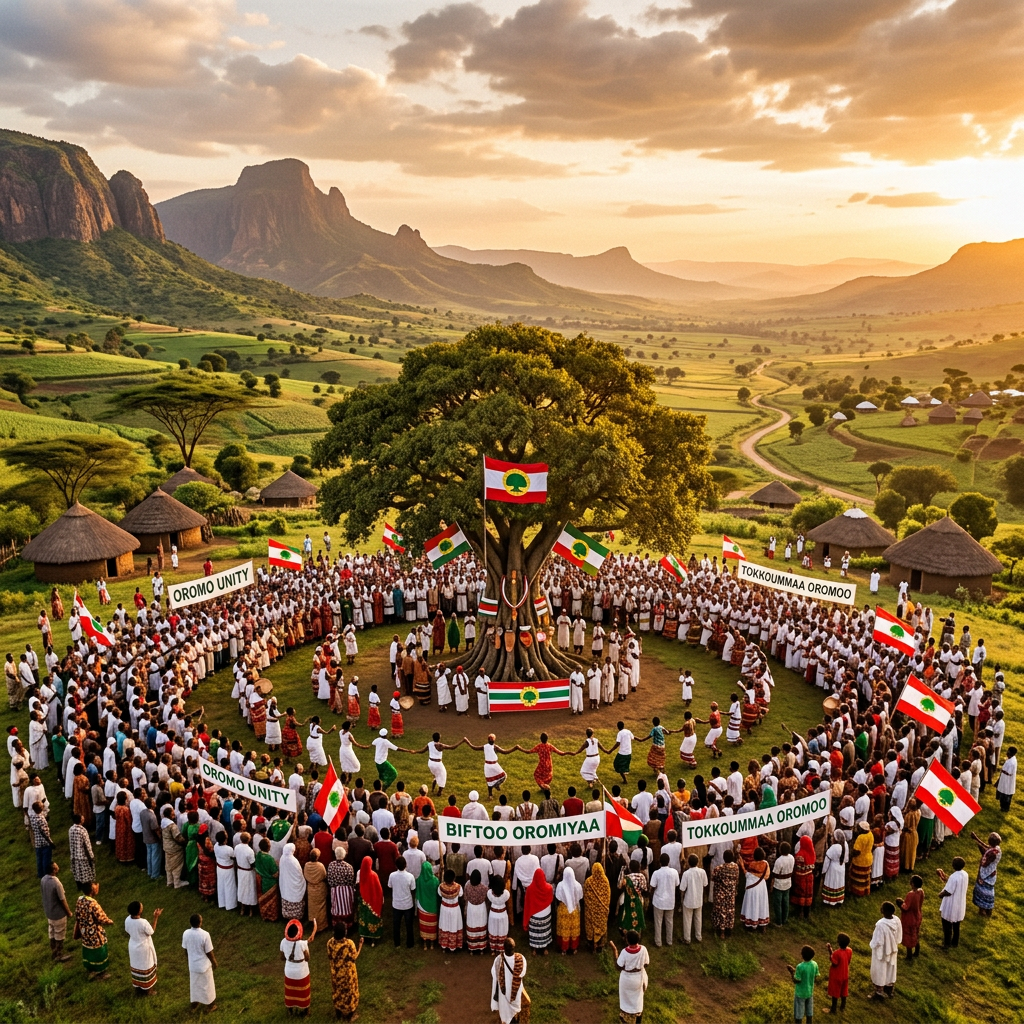
In the face of colonial domination and systemic oppression, the call for Oromo unity is not just a political slogan—it is a survival strategy, a moral imperative, and the foundation of a centuries-old struggle for liberation
The Oromo freedom struggle is one of the longest-running national liberation movements in Africa. For over a century, the Oromo people have resisted colonial domination, cultural suppression, and political marginalisation within the Ethiopian Empire. Throughout this long and arduous journey, one theme has remained constant: the call for unity.
Unity is not merely a rhetorical device in Oromo political discourse. It is a practical necessity, a moral principle, and a historical lesson that has been learned through generations of struggle. To understand why unity remains so central to the Oromo cause, we must look at the history of oppression, the nature of colonial strategy, and the lessons learned from both successes and failures.
The Colonial Strategy: Divide and Rule
The Ethiopian Empire was built through conquest. In the late 19th century, Emperor Menelik II’s armies, armed with European rifles, swept through the Oromo territories, confiscating land, imposing a feudal system of tribute and forced labor, and suppressing Oromo institutions such as the Gadaa system. The neftegna-gabbar system was not a metaphor—it was a system of land confiscation, tribute extraction, and forced labour that persisted for generations .
“When Menelik’s armies swept through what is now Oromia in the 1880s and 1890s, they did not arrive as liberators. They arrived with rifles purchased from European powers, with a feudal ideology that viewed the southern peoples as pagans to be civilised and their land as empty territory to be claimed” .
To maintain control over a conquered population that vastly outnumbered the colonisers—Oromos comprise roughly 35% of Ethiopia’s population —the imperial state employed a classic colonial strategy: divide and rule. Oromo society was fragmented, regional differences were exploited, and some Oromo elites were co-opted into the colonial administration. This strategy of fragmentation served the coloniser’s interests by preventing the emergence of a unified Oromo national consciousness .
The suppression of Oromo unity was not incidental to colonial rule—it was essential to it. A united Oromo nation posed an existential threat to the colonial system. This is why successive Ethiopian governments have sought to undermine Oromo unity, whether through direct repression or through the co-optation of Oromo elites into the state structure .
The Birth of National Consciousness
The 1960s marked a turning point in Oromo political consciousness. Oromo intellectuals and artists began to articulate their dissatisfaction with socio-economic deprivation and what was seen by some as ethnic oppression . The Macha-Tulama Self-Help Association (MTA), founded in the 1960s, represented one of the first organised attempts to build Oromo unity across regional and clan divisions .
The Haile Selassie government, recognising the threat posed by this emerging unity, crushed the MTA. Its destruction was the immediate catalyst for the founding of the Oromo Liberation Front (OLF) in the early 1970s . The establishment of the OLF represented a decisive shift: for the first time, a unified political organisation was created to lead the Oromo struggle for self-determination .
“The effort to bring together a few Oromo nationalists of diverse backgrounds from all over Oromia” to establish the OLF was itself an act of unity . The founders understood that only through a unified national movement could the Oromo people overcome the colonial system.
The Weapon of Culture
Oromo culture has been a powerful force for unity. While the Ethiopian state banned the Oromo language from public contexts and prevented it from being printed, Oromo musicians and artists developed creative forms of cultural resistance that sustained Oromo identity and consciousness .
“Afaan Oromo song (music) was used as the most powerful form of chimerical power in speaking across age, class, region, sex, power, and even ideology in resisting the domination of Imperial rule while striving to sustain common Oromo unity” .
Oromo musical icons such as Ali Birra, Abitaw Kebede, Nuho Gobana, Umar Suleyman, Ebbisa Adunya, and Kadir Said played an indispensable role in creating a social space wherein the Oromo struggle for equality and self-emancipation is articulated and debated . Songs like Haacaaluu Hundeessaa’s Maalan Jiraa became anthems of resistance, weaving together stories of pain and pride, hope and despair, and reminding Oromos of their shared identity and destiny .
“It is here, in this reservoir of songs, in the unruly dances and heart-breaking ballads, that one finds the story of the Oromo nation and its struggle for self-determination, not in the official archives and historiographies of the Ethiopian state” .
These artists became targets of state repression because their songs threatened the colonial order by building Oromo unity and consciousness .
Lessons from History
The Oromo people have a long memory of both the costs of disunity and the power of unity. The 16th-century Oromo campaigns, which successfully reclaimed territories from both Christian and Islamic imperial forces, were made possible by the sophisticated organisation of the Gadaa system—a system built on unity of purpose and collective action .
“The successes of the Oromo were not due to sheer numbers or migratory luck—but stemmed from an internally sophisticated and morally grounded civilisational system anchored in the Gadaa democratic order” .
Factors such as the Gadaa system, age-set institutions (Cibra), the unifying goal of reclaiming ancestral land (Galma), spiritual conviction (Kaawoo), and inclusive sociopolitical integration (Moggaasaa) all contributed to Oromo military success .
Conversely, the weakness of the Oromo movement has often been attributed to disunity. As one analysis notes, within the Oromo nationalist movement there are “lots of varieties, units, political agendas, and goals” . This diversity, while reflective of the Oromo people’s richness, has at times been exploited by the state to undermine the movement.
The recognition that disunity serves the coloniser is a constant theme in Oromo political discourse. “The colonizers and their agents have vilified and attacked” the OLF “to make the Oromo society leaderless” . A leaderless, fragmented society is easier to control.
Unity in Contemporary Struggles
The theme of unity remains urgent today. Recent efforts by the Oromo Liberation Front (OLF) and the Oromo Federalist Congress (OFC) to establish a “Transitional National Unity Government of Oromia” reflect this ongoing imperative . These groups have called on “all genuine Oromo forces, regardless of their method of struggle, to resolve their political differences and galvanize their unity” .
The call for unity is not merely political—it is a response to the dire situation facing the Oromo people. Across all 22 zones of Oromia, conflict between government forces and the Oromo Liberation Army (OLA) has led to arrests, beatings, displacement, mass burning of civilian houses, and other atrocities . The Oromo people face a crisis that demands unified action .
Yet the path to unity is not simple. The Oromo nation is divided by class, region, religion, and political orientation. As one analysis notes, “the Oromo nation is not a monolith. It is divided by class” . At the top is the Oromo comprador bourgeoisie—elites integrated into the state structure who benefit from the existing system . At the bottom is the Oromo working class—peasants, agricultural labourers, industrial workers, unemployed youth, and the urban poor .
This class division has led to a recognition that “nationalism alone cannot deliver what the Oromo masses actually need” . The Oromo peasant displaced from their land does not care whether the displacer is Amhara or Oromo—the displacement is the same . The Oromo worker paid starvation wages does not care whether the boss is based in Addis or abroad—the exploitation is the same .
This insight has led some to argue that the Oromo struggle must move beyond nationalism to class politics, building alliances with other oppressed peoples across Ethiopia . “Your ally is the Amhara worker who also wants land. Your ally is the Tigrayan worker who also wants a living wage” .
The Role of the Gadaa System
The Gadaa system continues to be a source of unity for the Oromo people. Its principles of regular rotation of leadership, checks and balances, and consensus-building mechanisms are considered “one of the most sophisticated pre-capitalist socio-political systems ever developed” . The Gadaa system is not merely a cultural artefact—it offers lessons in democratic governance that are relevant to the contemporary struggle .
“A liberated Ethiopia would not erase Oromo culture. It would draw on it. It would recognise that the Gadaa system offers lessons in democratic governance that the European liberal tradition cannot teach” .
The revival of the Gadaa system and the celebration of the Irreechaa festival have become powerful symbols of Oromo unity and cultural renaissance.
Conclusion
Unity remains a constant theme in the Oromo freedom struggle because it is both a necessity and a lesson learned through generations of experience. The colonial state has sought to divide the Oromo people because a united Oromo nation poses an existential threat to the colonial system. The Oromo people have learned, through both victory and defeat, that unity is the foundation of successful resistance.
But unity is not merely a political strategy—it is a moral principle rooted in the Oromo worldview. The concept of Safuu, the moral order that maintains balance and harmony, applies to the Oromo nation as well. Disunity is a breach of Safuu, a disruption of the natural order that brings suffering to the community .
As the Oromo struggle continues, the call for unity remains urgent. Whether through political organisation, cultural expression, or class solidarity, the Oromo people must find ways to overcome the divisions that have been imposed upon them and build the unity necessary for genuine liberation.
“The full restoration of the Oromo people’s freedom and rights is essential for lasting peace” . And that restoration will only be achieved through unity.
The struggle for Oromo liberation is the struggle for Oromo unity. And the struggle continues.

Borana National Park: A Sanctuary of Endangered Wonders in Southern Oromia
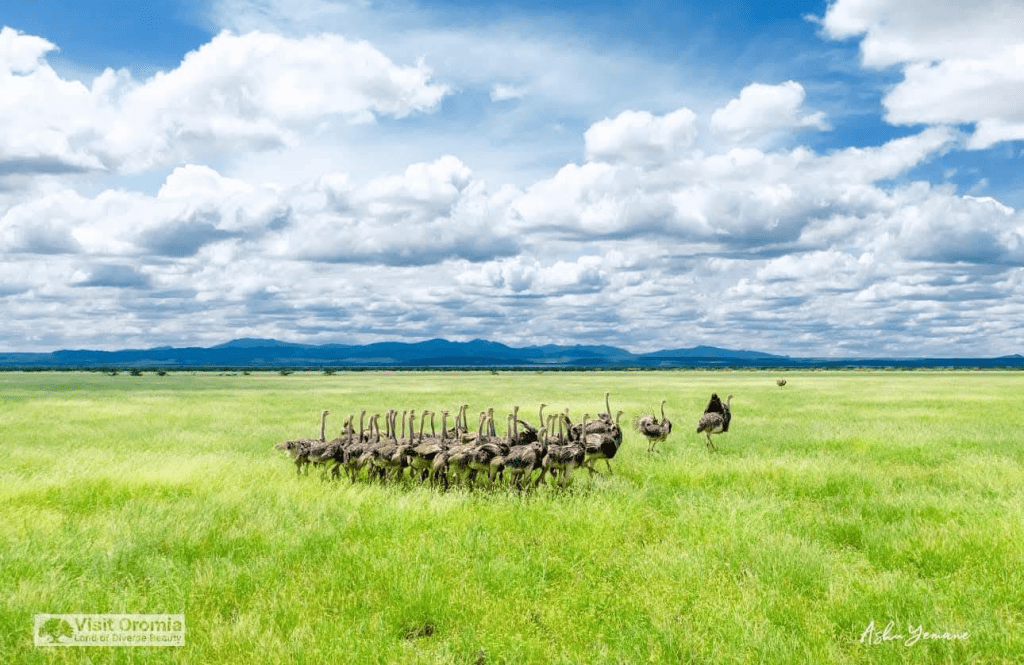
Home to rare zebras, endemic birds, and volcanic mysteries, this protected area stands as a beacon of biodiversity and cultural heritage
BORANA ZONE, OROMIA — Deep in the southern reaches of Oromia, where the highlands give way to vast savannas and the horizon stretches endlessly toward the Kenyan border, lies one of the country’s most extraordinary natural treasures. Borana National Park, established in 2017, is a protected area of immense ecological significance, spanning 45,366 square kilometres across the Borana Zone of Oromia and extending into the Liben Zone of the Somali Region.
The park sits roughly 565 to 570 kilometres south of Addis Ababa along the road to Moyale, with the town of Yabelo serving as the primary gateway and headquarters, located approximately 10 kilometres from the main entry points. Its conservation blocks—Yabello, Saarite, Dire Dida Soda, Danbala Dibayu, and Gammedo Mountain—encompass open acacia grasslands, rolling savannas, and the dramatic volcanic crater lake of El Sod.
A Refuge for Rare Species
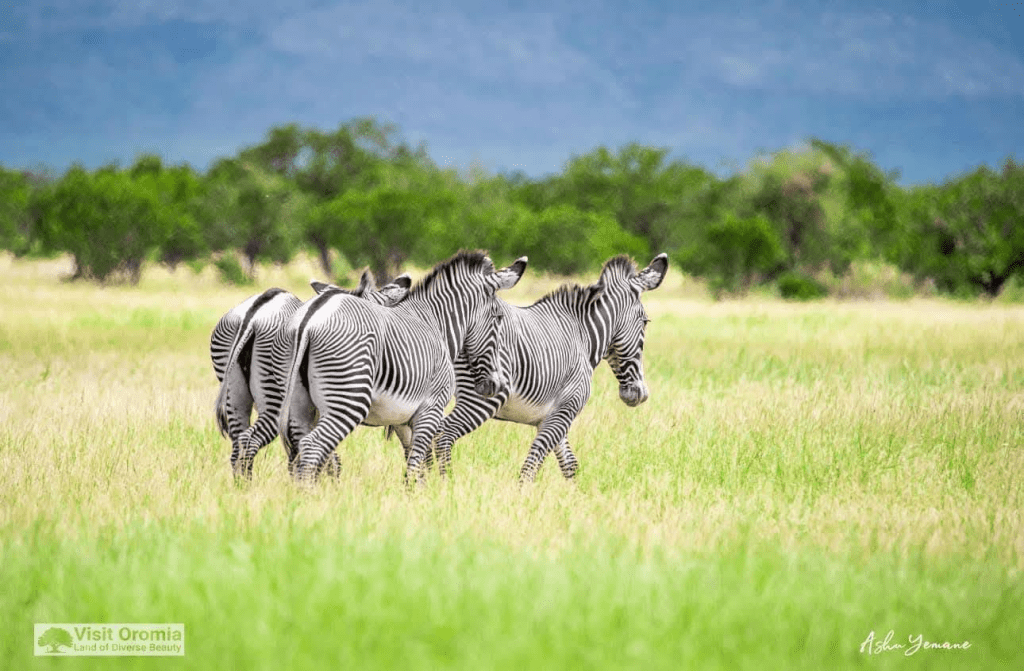
Borana National Park is perhaps best known as one of the few places on Earth where two zebra species coexist: the endangered Grevy’s zebra and the more common Burchell’s zebra. The Grevy’s zebra, distinguished by its narrower stripes and larger size, has experienced dramatic population declines across its range. In Ethiopia, aerial surveys in the 1990s revealed a sharp drop in numbers, with only approximately 130 individuals counted nationwide by 2003. The park’s conservation efforts focus on repopulating zebra species and protecting their habitat from threats such as drought and overgrazing.
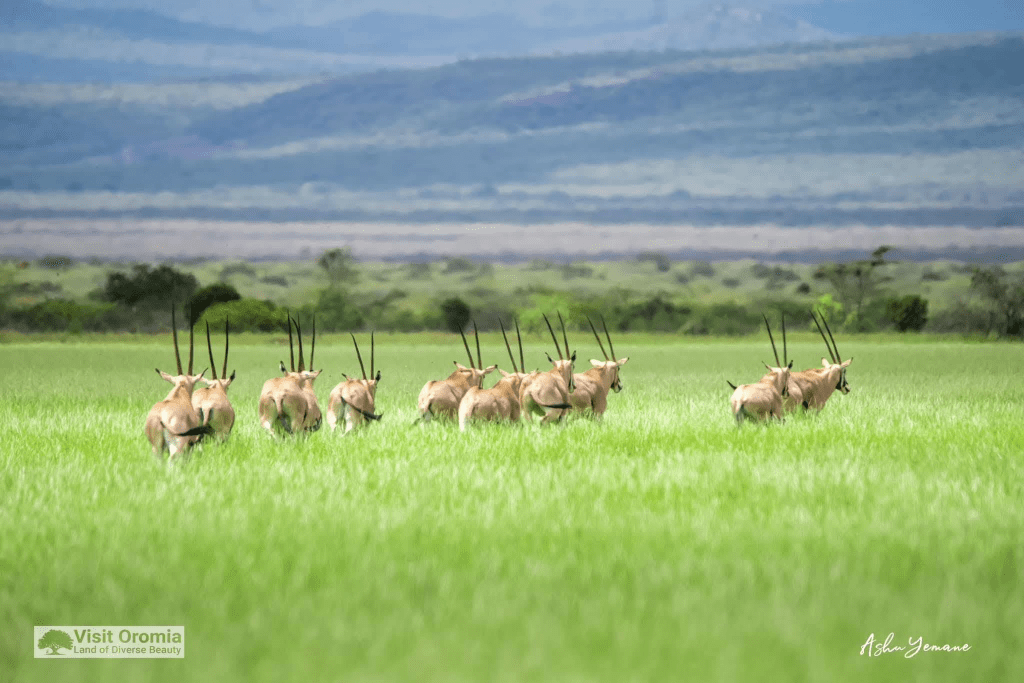
Beyond zebras, the park shelters a remarkable diversity of wildlife. Visitors may encounter Beisa oryx, Grant’s gazelle, greater and lesser kudu, gerenuk, cheetahs, leopards, and ostriches. The park is home to 327 plant species and 40 mammal species, making it a biodiversity hotspot in the Horn of Africa.
A Paradise for Birdwatchers
For bird enthusiasts, Borana National Park is nothing short of legendary. Over 280 bird species have been recorded, including several rare and endemic birds that exist nowhere else on Earth. Among the most remarkable is the endangered Ethiopian bush crow (Zavattariornis stresemanni), a charismatic corvid confined to a distinct climate pocket in the Borana zone.
The Ethiopian bush crow, also known as Stresemann’s bush-crow, is a pale grey bird measuring approximately 28 centimetres long. It prefers open short-grass savannas of grazed pasturelands with scattered stands of taller trees, particularly acacia species. With a range extending only 160 kilometres from north to south and less than 100 kilometres from east to west, the species is extremely vulnerable to habitat loss and climate change. Recent severe droughts in 2021, 2022, and early 2023 have raised fears that the species may face extinction much earlier than previously predicted.
Other rare birds found in the area include the white-tailed swallow and Prince Ruspoli’s turaco, which can be spotted in the nearby Arero forest.
The Volcanic Crater of El Sod
One of the park’s most unique attractions is El Sod, a volcanic salt-crater lake whose name means “the house of salt”. This inactive volcano, approximately 1.8 kilometres wide, contains a black lake that holds a deposit of raw salt crystals beneath its dark, slimy waters.
For centuries, the Borana herders have harvested salt from El Sod, a tradition steeped in legend. According to local lore, a shepherd discovered the crater a thousand years ago after noticing his ox had become physically different from the rest of the herd after tasting the salt. Today, a cooperative of expert salt extractors continues this ancient practice, producing three distinct qualities of black salt, with the finest, called ilkole, used in cooking.
The extraction process is arduous and requires exceptional skill. Miners descend a narrow 2.5-kilometre path, dropping 340 metres to the crater lake. When water levels recede at the end of the rainy season, experienced divers submerge to dig up the muddy salt, which is then washed, crushed, and dried in the sun. This salt remains largely unknown outside the Borana area and neighbouring communities.
Challenges and Conservation
Despite its ecological significance, Borana National Park faces numerous threats. Recurrent and severe droughts, exacerbated by climate change, are disrupting the delicate ecological balance that sustains the park’s wildlife. Invasive species, overgrazing by livestock, and road collisions also pose significant challenges.
The Ethiopian bush crow, with its highly restricted climatic requirements, is particularly at risk. Studies suggest that the species requires very specific average temperatures between 15 and 30 degrees Celsius, making it extremely vulnerable to the temperature fluctuations brought about by climate change. Researchers have called for urgent species-specific action plans at the national level to address the ever-increasing conservation challenges.
A Place of Wonder
Borana National Park is more than a protected area—it is a living testament to the natural and cultural heritage of the Oromo people. Its landscapes, from the acacia-dotted savannas to the volcanic crater of El Sod, tell stories of ancient traditions, endangered species, and the enduring relationship between the Borana people and their environment.
As the park continues to face the pressures of climate change and human activity, its preservation remains a shared responsibility. Whether for the rare Grevy’s zebras, the endangered Ethiopian bush crow, or the timeless salt harvest of El Sod, Borana National Park stands as a sanctuary of wonder in the heart of southern Ethiopia.
“Borana National Park is home to Booqee Sadeen, three maar lakes that were introduced as the main tourist attraction, including El Sod which is known for providing access to mineral water and salt varieties for the locals”.