Galateeffannaa fi Kadhannaa: The Sacred Dialogue Between Humanity and the Divine in Oromo Spirituality
Introduction
In the spiritual landscape of the Oromo people, few concepts carry as much depth and significance as Galateeffannaa fi Kadhannaa — Thanksgiving and Prayer. These twin pillars of Oromo faith represent far more than mere religious rituals; they constitute a profound dialogue between humanity and the divine, a sacred conversation that weaves through every aspect of life, from the heights of joy to the depths of sorrow.
The Essence of Irreecha
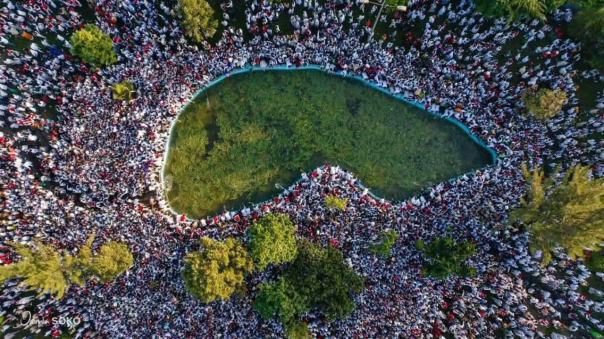
At the heart of this spiritual tradition lies Irreecha, the great Oromo festival that serves as the ultimate expression of gratitude and supplication. Irreecha is not merely a celebration — it is a sacred occasion where the community gathers to acknowledge the boundless blessings of Waaqa (God) and to seek divine guidance through life’s uncertainties.
The true essence of Irreecha is beautifully captured in the understanding that it represents:
“A time when people give thanks to Waaqa for what they have received and achieved, and when they pray with pure hearts for what they lack and worry about.”
This dual nature of Irreecha — simultaneously celebrating abundance and seeking provision — reflects the holistic Oromo worldview that recognizes life as an intricate balance of joy and challenge, plenty and want, certainty and doubt.
Irreecha Birraa: The Thanksgiving Festival
The most prominent manifestation of this sacred tradition occurs during Irreecha Birraa, the spring thanksgiving festival celebrated at the transition from the dark, rainy season of Gannaa to the bright, flourishing season of Birraa.
During this sacred time, the Oromo people gather in massive numbers at riversides, lakeshores, and other sacred sites to offer their collective gratitude to Waaqa. The prayers offered during Irreecha Birraa carry a specific and powerful intention:
Thanksgiving for Divine Protection
Participants thank Waaqa for having safely guided them through the arduous months of Gannaa — the heavy rainy season characterized by difficult travel, limited movement, and numerous hardships. The prayer acknowledges that it is only through divine protection that the community has emerged from this challenging period intact.
“Waaqa booruu Gannaa ofkalchee booqaa Birraan gahe galateeffatu.”
This profound statement captures the essence of the thanksgiving: Waaqa, who has cared for His people throughout the difficult journey of Gannaa, is thanked as they arrive at the beautiful season of Birraa. The imagery evokes a traveler who has traversed a long, perilous road and now arrives at a place of rest and beauty — and who pauses to express heartfelt gratitude to the Guide who brought them safely through.
Prayer for Those Still on the Journey
The communal nature of Irreecha means that prayers extend beyond individual concerns to embrace the entire community. Those who have arrived safely at Birraa do not forget their brothers and sisters who remain scattered or who are still navigating difficult circumstances.
“Kan gara fuuladuraafis eegumsi isaa akka itti fufu ni kadhatu.”
The community prays that Waaqa’s protection may continue for those who are still on the path — those who have not yet reached safety, those who are still struggling, those whose journey remains uncertain. This intercessory prayer reflects the deep communal bonds that define Oromo society, where no one is truly free until all are free, and no one truly arrives until all have arrived.
Prayer for Those Who Have Sown
The agricultural rhythms of Oromo life are deeply intertwined with spiritual practice. Many community members have sown seeds — literally in their fields and metaphorically in their endeavors — and now wait anxiously for the harvest.
“Kan faca’ee biqile akka nagaan laatuuf ni kadhatu.”
The community prays that what has been scattered may sprout and grow, and that the harvest may be gathered in peace. This prayer encompasses not only agricultural concerns but all the hopes, efforts, and investments that community members have made throughout the year. It is a prayer for fruition, for success, for the peaceful realization of dreams and labors.
The Pure Heart: Garaa Qulqulluu
Central to the practice of Galateeffannaa fi Kadhannaa is the requirement of garaa qulqulluu — a pure heart. The Oromo understanding of prayer emphasizes that what matters most is not the eloquence of words or the grandeur of ritual, but the sincerity and purity of the heart that offers them.
A pure heart, in Oromo spirituality, means:
- Sincerity — praying without hidden agendas or selfish motives
- Humility — approaching Waaqa with recognition of one’s limitations
- Gratitude — acknowledging blessings even in difficult times
- Compassion — remembering others in prayer, not only oneself
- Trust — believing that Waaqa hears and responds according to divine wisdom
This emphasis on inner purity reflects the broader Oromo ethical framework, where integrity, honesty, and compassion are considered the highest virtues. The one who prays with a pure heart stands in right relationship with Waaqa, with the community, and with the natural world.
The Rhythm of Thanksgiving and Prayer
The genius of Galateeffannaa fi Kadhannaa lies in its recognition that thanksgiving and prayer are not separate activities but interconnected aspects of a single spiritual practice. Gratitude for past blessings naturally flows into prayer for future needs. Acknowledgment of what has been received opens the heart to request what is still needed.
This rhythm mirrors the cycles of nature itself:
- Gannaa (rainy season) → Birraa (spring) → Bona (dry season) → Gannaa (return of rains)
Just as the seasons cycle endlessly, so too does the human journey move through periods of difficulty and ease, scarcity and abundance, sorrow and joy. Through it all, Galateeffannaa fi Kadhannaa provides a constant — a sacred practice that anchors the community in gratitude and hope regardless of circumstances.
Community and Continuity
Irreecha is fundamentally a communal celebration. While individuals may pray privately, the power of this tradition emerges when the community gathers as one — elders and youth, men and women, rich and poor, all standing together before Waaqa.
This communal dimension serves several vital functions:
Social Cohesion
The shared experience of prayer and thanksgiving strengthens bonds between community members, creating a sense of unity and mutual responsibility.
Cultural Transmission
Through participation in Irreecha, younger generations learn the values, beliefs, and practices that have sustained the Oromo people for centuries. The festival becomes a living classroom where cultural identity is forged and reinforced.
Collective Voice
When the community prays together, their unified voice carries a power that individual prayers cannot match. The Oromo believe that Waaqa hears and responds to the collective supplication of His people.
Mutual Support
The prayers offered at Irreecha remind community members of their obligations to one another. Those who have received blessings are called to share with those in need; those who have arrived safely are called to help those still struggling.
Irreecha in the Modern World
In the contemporary era, Galateeffannaa fi Kadhannaa continues to thrive, adapting to new circumstances while maintaining its essential character. Whether celebrated in rural Oromia or in diaspora communities around the world, the spirit of Irreecha remains alive and vital.
Modern celebrations of Irreecha often incorporate:
- Traditional prayers and blessings led by elders and spiritual leaders
- Cultural performances including music, dance, and poetry
- Community gatherings that strengthen social bonds
- Reflection on contemporary challenges facing the Oromo people
- Renewal of commitment to cultural values and communal solidarity
The festival has also become a platform for addressing contemporary issues, including political representation, environmental protection, and cultural preservation. In this way, Irreecha demonstrates its relevance and resilience, speaking to the needs of each generation while honoring the wisdom of those who came before.
Theological Dimensions
The practice of Galateeffannaa fi Kadhannaa reveals profound theological insights within Oromo spirituality:
The Nature of Waaqa
Waaqa is understood as the supreme being, the creator and sustainer of all life. Waaqa is:
- Omniscient — knowing all things, including the hidden intentions of the heart
- Merciful — responding to prayers with compassion and generosity
- Just — rewarding righteousness and calling for accountability
- Present — intimately involved in the affairs of individuals and communities
The Human Condition
Oromo theology recognizes the human condition as one of:
- Dependence — humans rely on Waaqa for all things
- Responsibility — humans are accountable for their choices and actions
- Potential — humans can grow in virtue and wisdom through prayer and gratitude
- Connection — humans exist in relationship with Waaqa, community, and nature
The Purpose of Prayer
Prayer in Oromo spirituality serves multiple purposes:
- Worship — acknowledging the greatness of Waaqa
- Thanksgiving — expressing gratitude for blessings received
- Supplication — requesting divine assistance for needs
- Intercession — praying on behalf of others
- Transformation — being changed through encounter with the divine
Conclusion
Galateeffannaa fi Kadhannaa represents one of the most beautiful and profound expressions of Oromo spirituality. Through Irreecha, the Oromo people maintain a living connection with their ancestors, their community, and their God. They give thanks for what they have received and pray for what they still need. They remember those who have fallen behind and those who struggle. They acknowledge their dependence on Waaqa and their responsibility to one another.
In a world marked by division, materialism, and spiritual hunger, the practice of Galateeffannaa fi Kadhannaa offers a powerful alternative vision — one rooted in gratitude, community, and faith. It reminds us that true fulfillment comes not from accumulating more, but from appreciating what we have; not from independence, but from interdependence; not from self-reliance, but from trust in the divine.
As the Oromo people gather once again at the rivers and sacred sites, raising their voices in prayer and thanksgiving, they embody the timeless truth that in gratitude there is grace, in prayer there is power, and in community there is hope. Waaqa is great, and His blessings endure forever.
“Irreechi bakka waan argataniifi milkaa’aniif itti galateeffataniifi waan dhabaniifi yaadda’aniif garaa qulqulluun Waaqa itti kadhatanidha.”
“Irreecha is the place where people give thanks to Waaqa for what they have found and achieved, and where they pray with pure hearts for what they lack and worry about.”

Posted on September 30, 2026, in Aadaa, Afaan, Events, Finfinne, gadaa, Information, Irreechaa, Kindness, Language, Media, News, Oromia, Oromo diaspora. Bookmark the permalink. Leave a comment.






Leave a comment
Comments 0