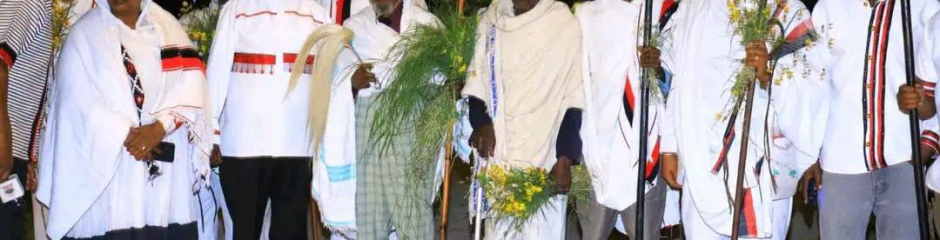

🔥 JUST RELEASED: The First Written Sacred Text of Waaqeffannaa
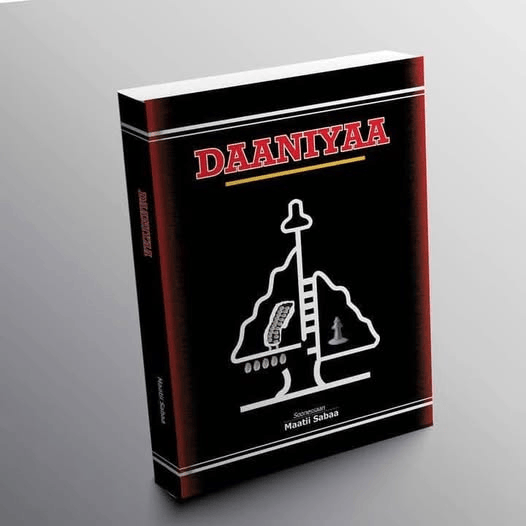
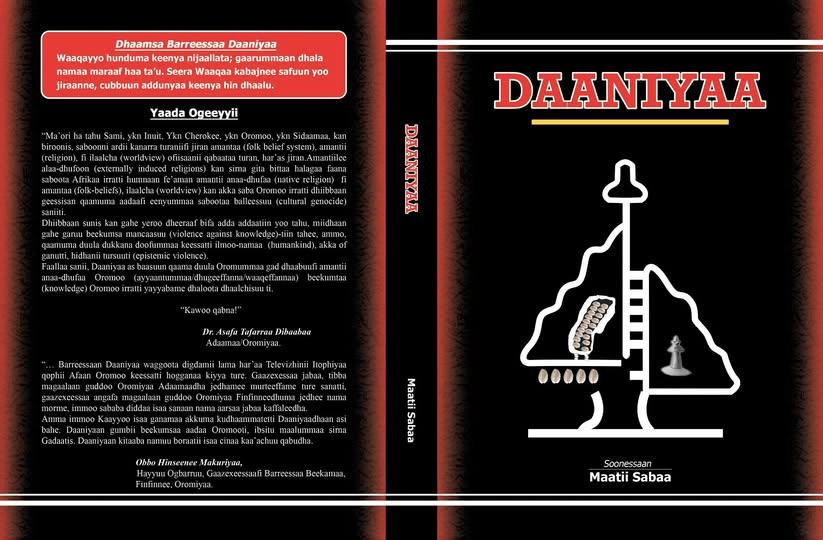
DAANIYAA — The Spiritual Constitution of the Oromo People Has Arrived
✨ A Historic Moment for Oromo Spirituality, Culture & Identity ✨
For generations, the sacred teachings of Waaqeffannaa — the indigenous religion of the Oromo people — lived in the hearts of elders, in the rhythm of prayers facing the rising sun, in the whispers of the Odaa tree, and in the waters of Hora Arsadi.
Now, for the first time, these teachings are written.
📖 DAANIYAA — authored by Maatii Sabaa — is the foundational written sacred text of Waaqeffannaa. It is more than a book. It is a spiritual constitution. It is a cultural treasure. It is a declaration of identity.
🌍 WHAT IS DAANIYAA?
Daaniyaa is the first written sacred text of Waaqeffannaa — the ancient, monotheistic faith of the Oromo people. It preserves and codifies:
✅ Belief in Waaqa Tokkicha — The One God, omnipresent, omnipotent, directly accessible to every believer without intermediaries
✅ Safuu — The moral and spiritual order; ethical conduct, social justice, and spiritual balance
✅ Ayyaana — The divine spirit and ancestral connection that binds the Oromo people to Waaqa and to their heritage
✅ Reverence for Nature — The eco-theology of Waaqeffannaa; stewardship of land, water, and all creation
✅ Sacred Rituals — Irreechaa, daily prayers (Kadhaa Waaqaa), rites of passage (Mokii), and sacred oath-taking (Arfaasaa)
✅ Prohibitions — Against killing sacred animals, cutting sacred trees, and breaking oaths
📚 WHY DAANIYAA MATTERS
Daaniyaa is not just a religious text. It is a tool of preservation, education, and decolonization.
🔹 Preserves Oral Traditions — Documents rituals, philosophy, and teachings that were passed down orally for millennia
🔹 Strengthens Oromo Identity — Promotes Afaan Oromo in religious practice and connects spirituality to cultural pride
🔹 Educates Future Generations — A foundation for scholars, students, and all who seek to understand Waaqeffannaa’s ethics and philosophy
🔹 Counters Historical Suppression — A powerful act of cultural resistance and spiritual reclamation
🔹 Environmental Stewardship — Teaches ecological balance and respect for the natural world
🌿 THE RITUALS WITHIN
Daaniyaa describes the sacred practices that have sustained the Oromo people for thousands of years:
🌊 Irreechaa — The thanksgiving festival celebrated twice a year at sacred waters like Hora Arsadi; offerings of milk, honey, and water; prayers led by Qallu (priests) and elders; communal dancing symbolizing unity
🌅 Kadhaa Waaqaa — Daily prayers facing east at sunrise, with raised hands and chanted prayers
🌳 Sacred Symbols — The Odaa (sycamore tree), water, and the colors green and white, signifying peace and divinity
🤝 Arfaasaa — Sacred oath-taking to resolve conflicts and restore harmony
💚 WHO IS THIS BOOK FOR?
Daaniyaa is for:
📌 Oromo people seeking to reconnect with their spiritual roots
📌 Students and scholars researching indigenous African religions
📌 Followers of Waaqeffannaa who want a written foundation for their faith
📌 Anyone interested in African spirituality, decolonization, and cultural preservation
📌 Future generations who deserve to inherit their heritage in written form
🗣️ A MESSAGE TO THE OROMO PEOPLE
For too long, our spiritual heritage was passed down only through spoken word. For too long, our traditions were at risk of being lost. For too long, we were told our religion had no scripture.
That changes now.
Daaniyaa is here. It is written. It is ours.
This is not just a book. It is a homecoming. It is a reclamation. It is a gift to our children and our children’s children.
📖 GET YOUR COPY TODAY
DAANIYAA — The Foundational Written Sacred Text of Waaqeffannaa
Author: Maatii Sabaa
Available now.
🔗 Elellee bookstore, located in front of the bus station in Finfinne
📧 +251 91 164 1066
🙏 GALATOOMAA — THANK YOU
We give thanks to Waaqa Tokkicha for this moment.
We give thanks to Maatii Sabaa for this work.
We give thanks to all who have preserved our traditions through generations.
And we give thanks to you — for being part of this historic moment.
📢 SHARE THIS POST
Help us spread the word. Share this announcement with your family, your friends, your community.
Let the world know: Waaqeffannaa has a written text. The Oromo people have a spiritual constitution. And its name is DAANIYAA.
#Daaniyaa #Waaqeffannaa #Oromo #Oromia #Ethiopia #Irreechaa #Safuu #Ayyaana #WaaqaTokkicha #OromoSpirituality #IndigenousFaith #AfricanSpirituality #Decolonization #CulturalPreservation #MaatiiSabaa #NewBook #SacredText #SpiritualConstitution #OromoHeritage #AfaanOromo
🌟 BAGA DAANIYAA GEENYE! 🌟
The written word of Waaqeffannaa has arrived!
📌 PIN THIS POST
📌 TAG A FRIEND WHO NEEDS TO SEE THIS
📌 FOLLOW US FOR MORE UPDATES
Daaniyaa: Preserving the past. Empowering the present. Guiding the future.

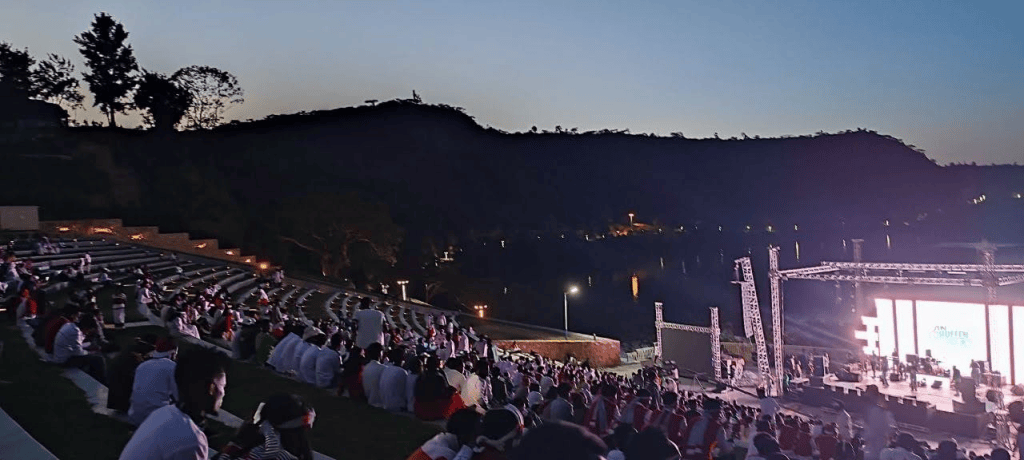
A City Adorned in Splendor: Bishooftuu Prepares to Welcome Irreechaa on October 4, 2026
By Dhabessa Wakjira
BISHOOFTUU — There is a palpable rhythm in the air of Bishooftuu these days, a heartbeat that grows louder and more resonant with each passing sunrise. The city, located in the heart of Oromia, has undergone a breathtaking transformation. The streets are lined with fresh greenery, the roundabouts are manicured to perfection, and the vibrant colors of the Oromo flag— black, red, and white—flutter proudly from every corner.
Bishooftuu is not just preparing for a holiday; it is dressing for a grand reunion. The city is adorning itself in its finest attire to welcome the vibrant, spiritual, and cultural phenomenon that is Irreechaa.
With the grand celebration slated for Onkoloolessa 4, 2026 (October 4, 2026), a spirit of anticipation and joy has gripped the local community. The phrase on everyone’s lips is one of optimism and peace: “Bishooftuu, Harsadiin bifa kanaan miidhagdee Irreechaa gaafa Onkoloolessa 4, 2026 simachuuf eeggachaa jirti. Nagaan itti dhiyaadha!” (Bishooftuu, adorned in this beauty, is waiting to welcome Irreechaa on October 4, 2026. May it approach us in peace!)
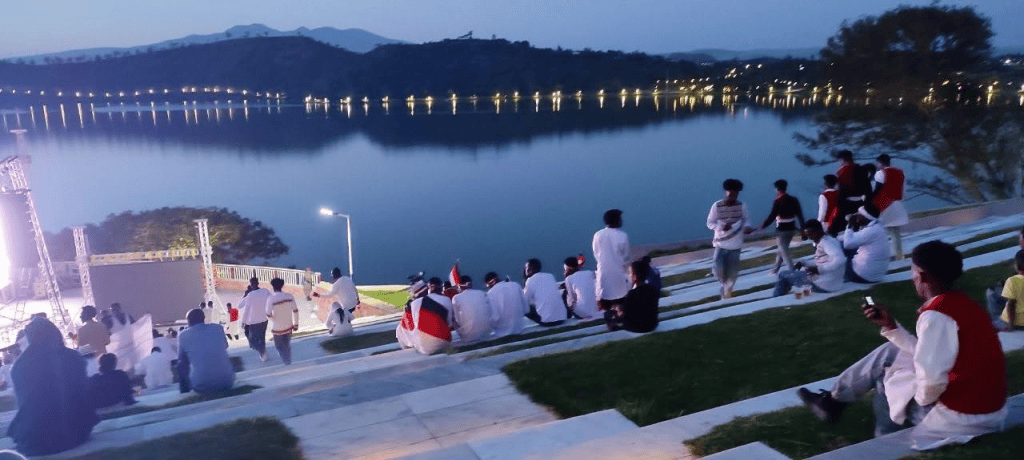
A City Transformed
The physical beauty of Bishooftuu is currently a sight to behold. The local administration and community members have joined hands in a massive beautification campaign. The “Harsadiin” (beautification) efforts are evident in the blooming flowers along the main arteries, the newly painted curbstones, and the meticulous cleaning of public spaces.
It is a visual embrace of the values that Irreechaa represents: gratitude, renewal, and the celebration of life. Elders sit under the shade of trees discussing the history of the festival, while the youth engage in the energetic preparations for the Shaggooyyee (the traditional songs and dances performed during the Thanksgiving).
The Significance of Irreechaa
Irreechaa is more than just a festival for the Oromo people; it is a sacred Thanksgiving ceremony. Celebrated at the end of the rainy season, it marks the transition from the dark, wet months (Bona) to the bright, fertile season of harvest and blooming flowers (Birraa). It is a time to thank Waaqa (God) for the blessings of the past year and to ask for peace and prosperity in the year to come.
While the main celebration at Hora Arsadi (Lake Arsadi) in Bishooftuu is the focal point for many, it is a spiritual journey that unites millions. The waters of Lake Arsadi are considered sacred, and the act of dipping greenery into the water symbolizes cleansing and renewal.
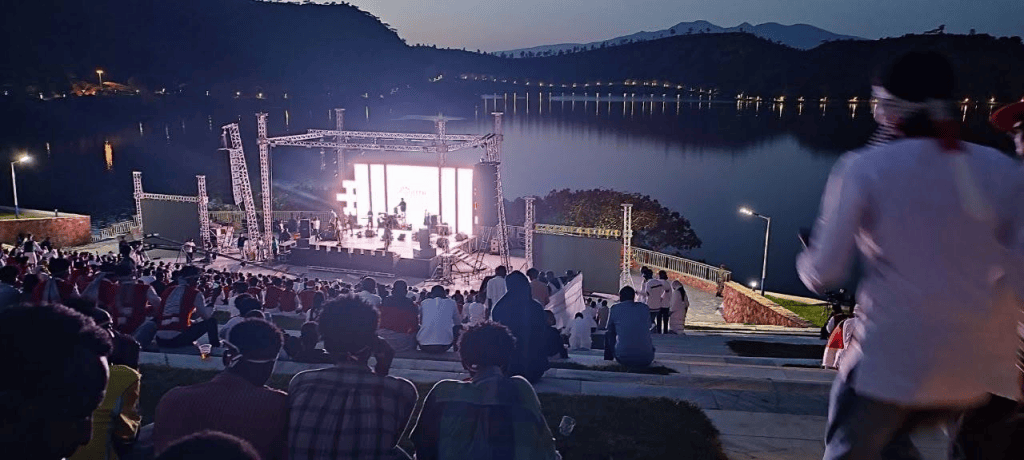
A Call for Peace
The upcoming celebration in 2026 carries a profound message. As the city waits with open arms, the underlying prayer is for harmony. The slogan, “Nagaan itti dhiyaadha!” (May it approach in peace), serves as a reminder that the true beauty of Irreechaa lies not just in the physical decorations, but in the safety and unity of the people.
Community leaders are emphasizing that Bishooftuu is ready to host the world. Hotels are refurbishing their rooms, transport networks are being optimized, and cultural troupes are rehearsing their best routines. The city is extending an invitation to all Oromos and friends of Oromia to come and witness a celebration that honors tradition while looking toward a bright future.
A Date with Destiny
As the sun sets over Bishooftuu, casting a golden glow on the newly adorned streets, the anticipation is palpable. The city has opened its heart. It has put on its best clothes.
The stage is set for October 4, 2026. Bishooftuu is ready. Are you?
Nagaan itti dhiyaadha!
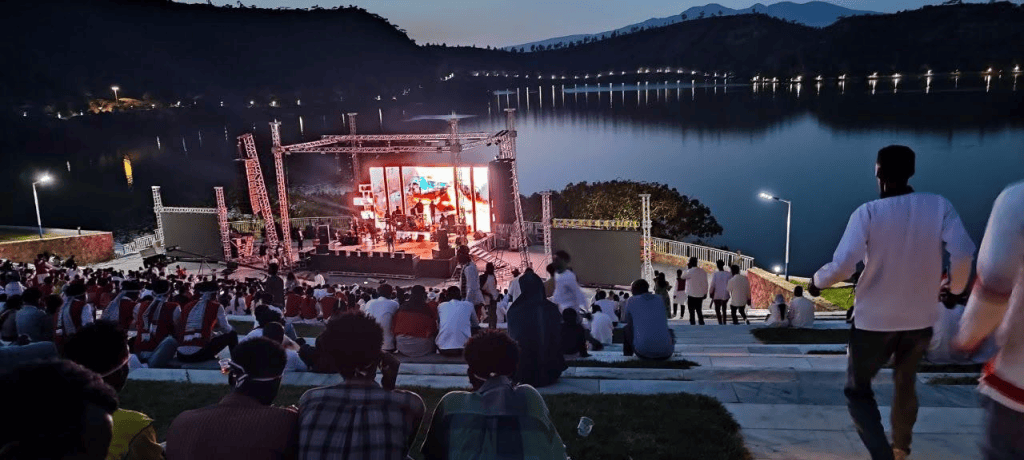

The Sacred Rite of Irreechaa: Fresh Grass, Yellow Flowers and the Waters of Blessing
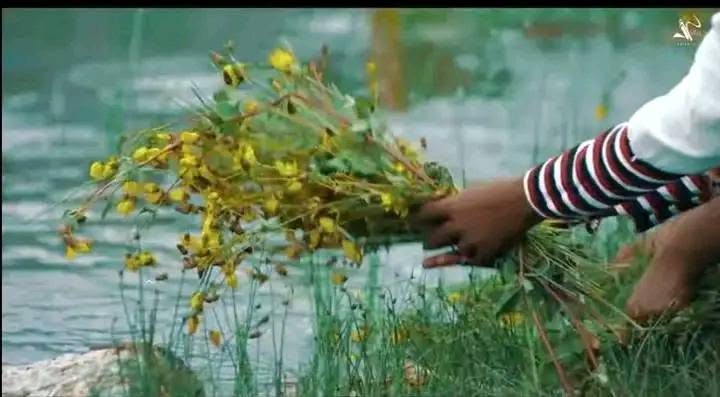
How Oromos carry keelloo and fresh grass to the riverbanks, dip them into the water, and renew their covenant with Waaqa
By Staff Writer
At the heart of the Irreechaa festival lies a ritual of profound simplicity and immense spiritual depth. Long before the songs reach their peak and the crowds swell along the riverbanks, Oromo elders, mothers and youth begin their journey toward the water. In their hands they carry daraaraa keelloo — yellow flowers — and marga jiidhaa — fresh, green grass.
These are not decorative items. They are sacred emblems of life, fertility, peace and gratitude. And when they are dipped into the flowing water as part of the irreeffannaa rite, they become instruments of blessing for the entire community.
Daraaraa Keelloo: The Yellow Flower of Blessing
The keelloo — a bright yellow flower that blooms in the Oromo landscape, particularly in the season surrounding Irreechaa — holds a special place in Oromo spiritual and cultural life. Its yellow color symbolizes light, hope, warmth and the radiance of the sun after the long, dark rainy season. It is the color of ayyaana — blessing and divine favor.
During Irreechaa, the keelloo is gathered with care. Young men and women often collect the flowers in the early morning, singing traditional songs as they go. The flowers are then carried to the riverside, where they will be used in the central act of the celebration. The keelloo is also used in other Oromo rituals and is associated with joy, celebration and the beauty of creation.
For Oromos, the keelloo is more than a flower. It is a visible sign of Waaqa’s goodness — a reminder that after hardship comes renewal, and that the earth itself rejoices with the people.
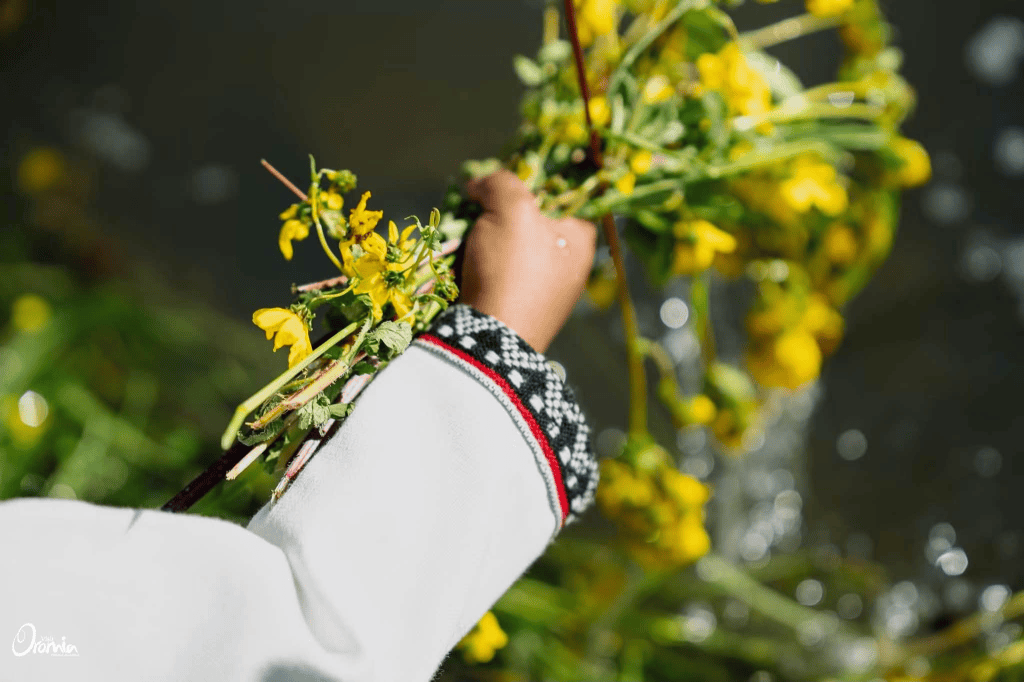
Marga Jiidhaa: Fresh Grass as the Symbol of Life
Marga jiidhaa — fresh, moist grass — is equally central to the Irreechaa ritual. In Oromo culture, green grass is the universal symbol of peace, life, fertility and well-being. It is used in ceremonies of reconciliation, in blessings, and in prayers for abundance. When elders wish to bless someone, they may sprinkle fresh grass or hold it as they speak words of peace.
At Irreechaa, the grass is gathered in bundles. It is often mixed with the keelloo flowers, creating a combined emblem of life and blessing. The grass must be fresh and green — a sign that the land has received rain and that the season of abundance has arrived.
The Journey to the Malkaa: Walking Together to the Water
When the time comes, the community moves toward the malkaa — the riverbank, lakeshore or sacred water body. This journey is itself a ritual. People walk together, often dressed in their finest traditional attire, singing songs of praise and gratitude. The movement toward the water is a movement toward purification, renewal and encounter with Waaqa.
The choice of water is significant. In Oromo cosmology, water is the source of life, a symbol of purity and a channel of blessing. Rivers and lakes are understood as sacred spaces where the spiritual and physical worlds meet. To stand by the water during Irreechaa is to stand at the threshold of the divine.
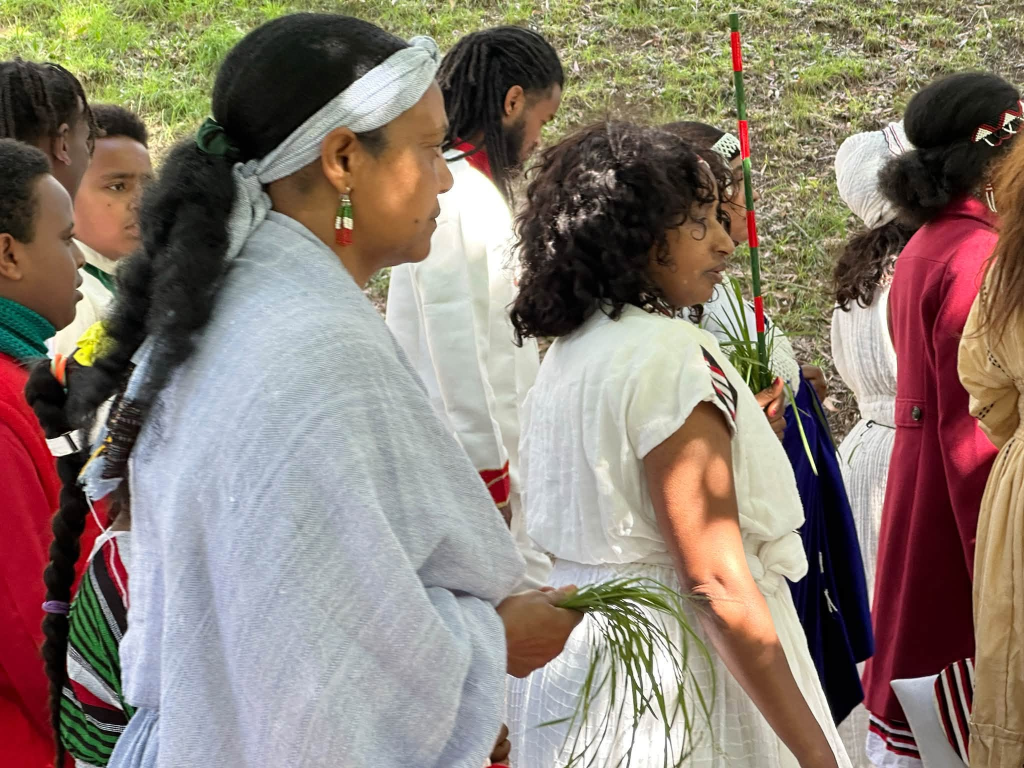
Cuuphaa: Dipping the Grass and Flowers into the Water
At the water’s edge, the central rite unfolds. The participants — often led by the Haadha Siinqee, Qaalluu figures, elders and the Abbaa Gadaa — approach the water with the keelloo and fresh grass in hand.
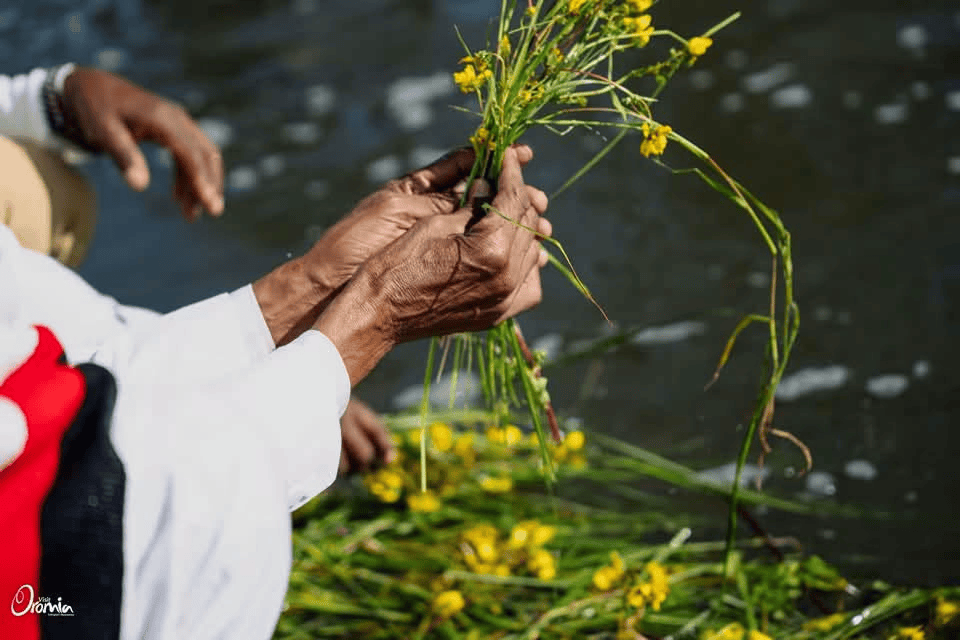
They then dip the grass and flowers into the water (cuuphaa). This act of immersion is rich with meaning:
- Thanksgiving: It is an offering of gratitude to Waaqa for the gift of rain, fertility and life. The water is the visible blessing, and the grass and flowers are the visible response of the people.
- Purification: The dipping represents a cleansing of the community — a washing away of the impurities, grievances and misfortunes of the past year.
- Renewal of Covenant: It symbolizes the renewal of the covenant between Waaqa, the people and the earth. The relationship is restored and made fresh for the coming season.
- Blessing and Sprinkling: After dipping, the participants often sprinkle the water from the grass and flowers upon themselves, upon others, and upon the ground. This sprinkling is a gesture of blessing, conveying peace and fertility to all present.
Some accounts describe the water being sprinkled on the participants’ heads and faces, a ritual act that marks them with divine favor. Others describe the grass being passed through the water and then carried back to the community as a sign of peace.
The Irreeffannaa Prayer: Words Said Over the Water
The dipping is accompanied by prayer and invocation. The irreeffannaa — the act of giving thanks and blessing — is spoken aloud by elders and ritual leaders. Words of gratitude are offered for the rains, for the harvest, for the health of families and livestock, for the peace of the land. Prayers are also lifted for the year ahead: for continued fertility, for protection from disaster, and for harmony among all peoples.
The community responds with “Irreechaa!” — a joyful affirmation and invocation of blessing. The sound of the word itself carries the meaning of “thank you” and “may it be blessed.”
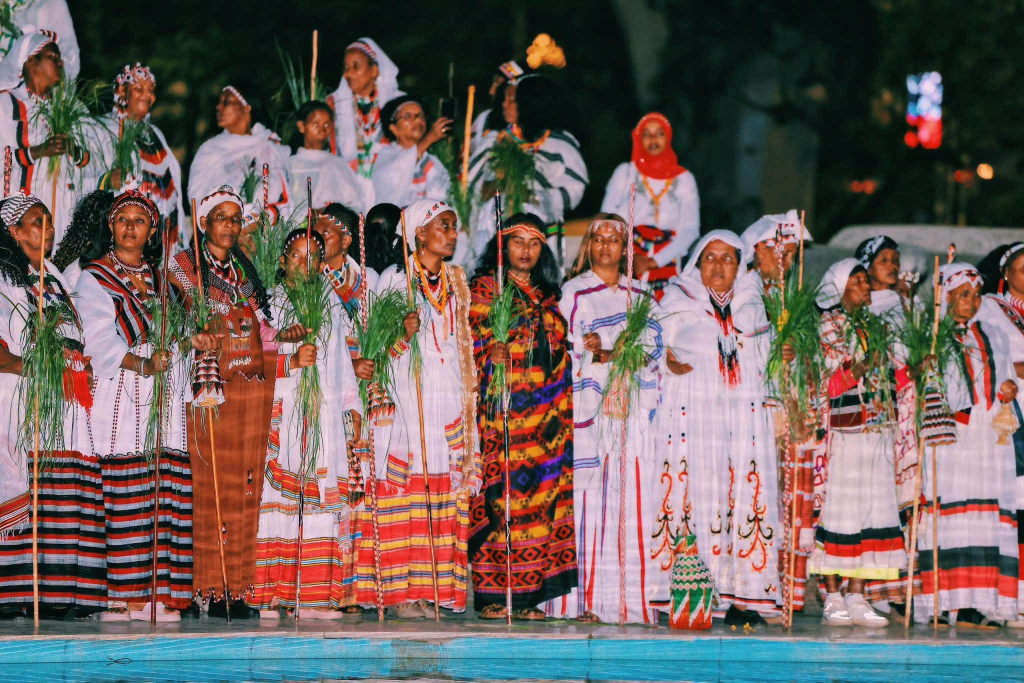
A Ritual That Connects All Creation
The Irreechaa water rite is a profound expression of Oromo cosmology — the understanding that human beings, the earth, the waters, the plants and the divine are all interconnected. By carrying the flowers and grass to the water, dipping them in, and offering them up, the Oromo people enact their belief that gratitude, peace and life itself flow from the sacred relationship between Waaqa and creation.
The daraaraa keelloo and the marga jiidhaa are therefore not merely objects. They are prayers made visible. The water is not merely water; it is the medium of blessing. And the act of dipping is not merely a gesture; it is a covenant renewed — a promise of peace, a plea for abundance, and a song of thanks to the source of all life.
At the riverbank, with flowers in hand and water flowing, the Oromo people stand as they have stood for generations: grateful, humble and connected to the sacred rhythm of the earth. And when they raise their voices and dip the green grass into the water, they declare to the world that life is a gift — and that gratitude is the way to honor it.
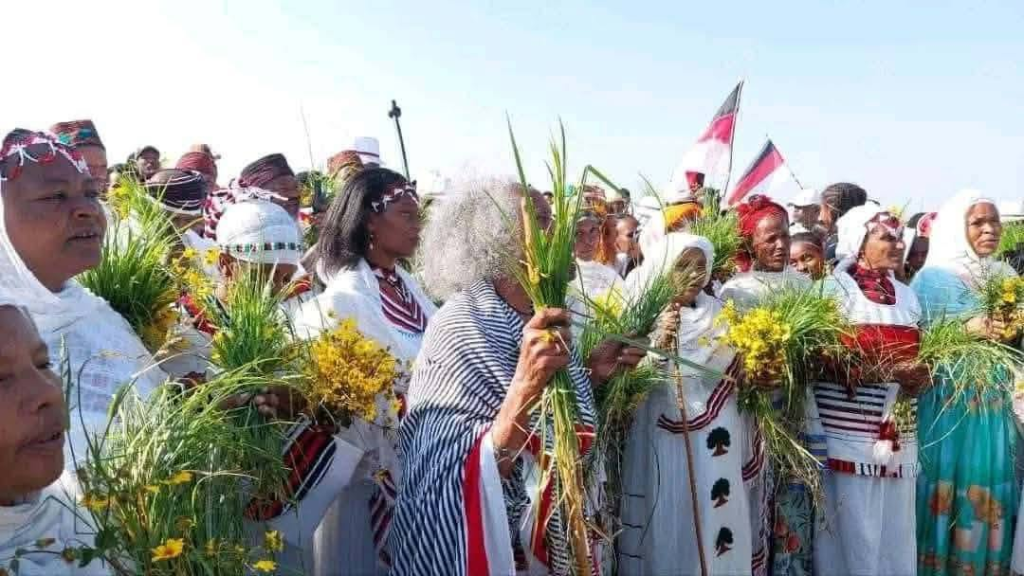

Irreechaa: The Power of Oromia Has Arrived — This Year’s and Forever
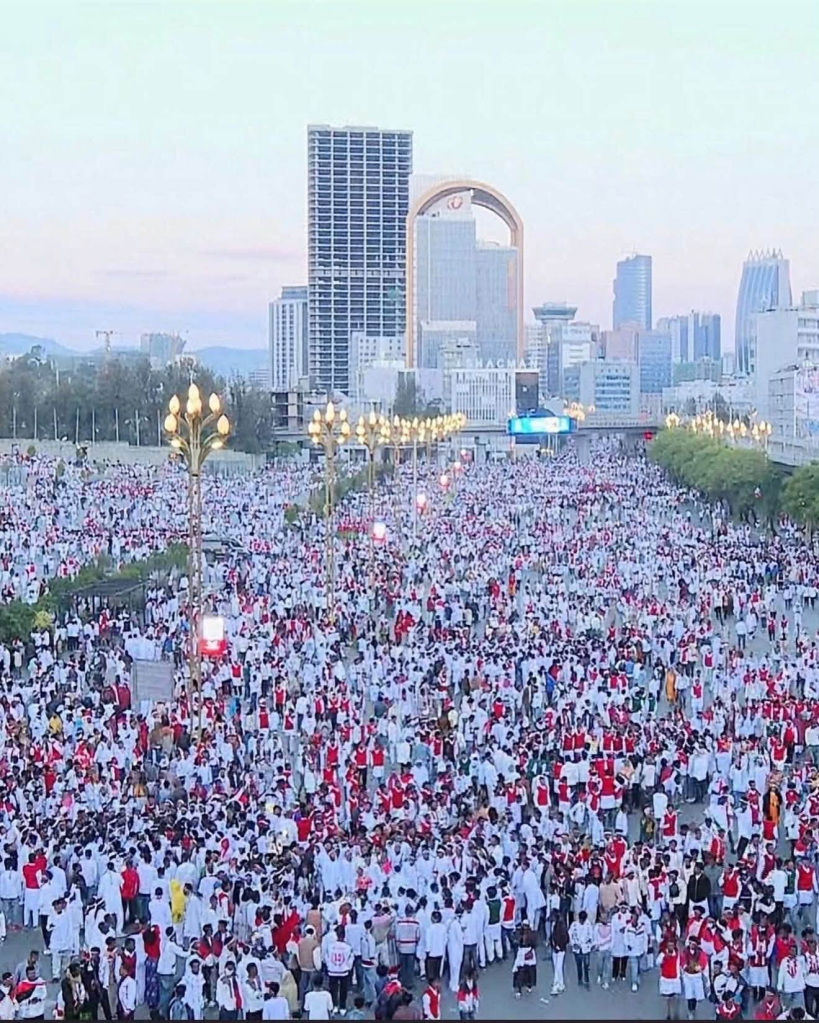
In a passionate reflection on the 2019 E.C. Irreechaa celebration at Hora Finfinnee, one voice captures what millions felt: a festival that is not merely thanksgiving but the very power of a people — their unity, their identity, their unbreakable spirit.
“Irreechaa is IRREE — the POWER of Oromia. And it has arrived. This year’s. And forever.”
A Voice from the Water’s Edge
There are testimonies that transcend reporting. They are not journalism, not analysis, not commentary. They are witness — the raw, unfiltered voice of someone who was there, who saw, who felt, who was changed.
What follows is such a testimony. Shared in the aftermath of the 2019 E.C. Irreechaa celebration at Hora Finfinnee, it is a reflection on what Irreechaa means — not in theory, but in lived experience. Not as a cultural artifact, but as a living force.
The author writes not as a detached observer but as a participant, a beneficiary, a son of Oromia who found in Irreechaa something he had been searching for his entire life.
This is his testimony.
“Irreechaa — The Power of Oromia! We Have Arrived!”
The message begins with a declaration — not a greeting, not a description, but a proclamation:
“Irree/Humna Oromoo! Baga geenye! Kan baranaa-kan bara egeree!!!!!”
“Irree — the Power of Oromia! We have arrived! This year’s — and forever’s!!!!!”
This is the language of victory. Not victory over an enemy, but victory over erasure. Victory over silence. Victory over the forces that sought to sever a people from their sacred traditions.
The author continues:
“Irreecha Bara kanaa kan Hora Finfinnee Irreeffannee Ofkolleerra! Galata Waaqaa!”
“This year’s Irreechaa at Hora Finfinnee — we celebrated it and we found ourselves! Thanks be to Waaqa!”
Ofkolleerra — “we found ourselves.” This is the heart of the testimony. Irreechaa is not just a festival one attends. It is a place where a people rediscover who they are. At the sacred waters of Hora Finfinnee, in the heart of what is now Addis Ababa, the Oromo people reclaimed not just a celebration but their own identity.
“Galata warra waan kana asiin gahaniif, warra kanaaf gumaachan hundumaaf!!!!!”
“Thanks to all who made this possible, to all who sacrificed for this!!!!!”
Gratitude extends in every direction — to Waaqa, to the ancestors, to those who struggled and sacrificed so that Irreechaa could be celebrated freely at its ancestral site.
A Teacher’s Prophecy
The testimony then turns to memory — a story from a classroom, years ago:
“Gaafan kutaa 9 baradhu — waggaa 26n har’aa dura, bariisaan Seenaa tokko, barsiisaa Tameen, ‘Yoo ofbaruu feetani Irreeessa Hora Harsadii dhaqaa; Waldaa Maaccaa fi Tuulamaa dhaqaa’ nuun jedhu ture!”
“When I was in Grade 9 — 26 years ago — a History teacher, Teacher Tame, used to tell us: ‘If you want to know yourselves, go to Irreechaa at Hora Arsadi; go to the Maaccaa and Tuulama assemblies!'”
Twenty-six years ago, in a classroom in Oromia, a teacher planted a seed. He told his students that if they wanted to understand who they were, they needed to go to Irreechaa. They needed to go to the traditional assemblies. They needed to encounter their own culture, their own history, their own people.
That teacher understood something profound: identity is not taught in textbooks alone. It is experienced. It is felt. It is lived in community, at sacred sites, in rituals that stretch back thousands of years.
And now, twenty-six years later, his student testifies:
“Dhuguma waan Oromoo fi Oromummaa baay’eesaa bakka tokkotti dubbatu waraabamees dubbatamees hindhumnetu Irreeessan ifa: Gootummaa, jaalala, Huyyummaa, Safuu, Tokkummaa, xiiqii, Miidhagina, Walqixxummaa, Abdii, …”
“Truly, what speaks of Oromia and Oromummaa in one place — written and spoken — is nowhere else but Irreechaa: Heroism, love, abundance, Safuu (moral order), unity, excitement, beauty, equality, hope, …”
This is the curriculum of Irreechaa. Not subjects to be studied, but virtues to be embodied. At the water’s edge, the Oromo people do not learn about heroism — they become heroes. They do not study love — they practice it. They do not read about unity — they experience it.
“Anis isan hanga har’aa DHEEBOTAA turef argadheen LAMMATA dhaladhera!”
“I, too, found what I had been searching for until today — and I was born twice!”
LAMMATA dhaladhera — “I was born twice.” This is the language of conversion, of transformation, of rebirth. Irreechaa is not just an event one attends. It is an experience that changes you. The author came to Irreechaa searching. He left reborn.
“Waan ofii argachuu maaltu namaaf gaharee? Galaana Gammachuu daakeen quufaa oole!”
“What is greater than finding oneself? I have been satisfied by an ocean of joy!”
There is no greater gift, the author suggests, than self-discovery. And Irreechaa, for the Oromo people, is the place where that discovery happens. It is an ocean of joy — galaana gammachuu — that satisfies the deepest human longing.
The Grief of Loss and the Joy of Return
The testimony then takes a poignant turn — a memory of what was lost:
“‘EE AADAAN BADDE GALTE…’ kanammoo bara Yuunivarsiitii Gondaritti Irreeffanne waggaa 20n dura ittiin weedifne.”
“‘Oh, culture, you are lost…’ — that was the song we sang when we celebrated Irreechaa 20 years ago at Gondar University.”
Twenty years ago, Irreechaa was celebrated in exile — far from the sacred waters, far from the ancestral sites, in a university far from home. The song they sang was a lament: “Oh, culture, you are lost.”
It was a cry of grief. A recognition that something precious had been taken. A people separated from their sacred traditions, forced to celebrate in foreign places, singing songs of loss.
But now — now the tone has changed. The same people who sang “culture is lost” are now singing “we have arrived.” The same people who celebrated in exile are now celebrating at Hora Finfinnee. The same people who mourned are now rejoicing.
This is the arc of the Oromo story. Grief transformed into joy. Exile transformed into return. Loss transformed into reclamation.
Irreechaa as the Power of Existence
The testimony then expands into a philosophical reflection on the nature of power and existence:
“Irreechi IRREE/HUMNA Oromooti!”
“Irreechaa is the IRREE — the POWER — of Oromia!”
This is the central claim. Irreechaa is not just a festival. It is power. It is the force that holds a people together, that sustains them through hardship, that enables them to survive and thrive in a world that often seeks their destruction.
The author continues:
“Eeyyeen, Dhimmi ijoon addunyaa lubbuu qabeeyyii tokko dhimma JIRAACHUUti.”
“Yes, the fundamental issue for all living beings in the world is the matter of EXISTENCE.”
This is the philosophical foundation. Before anything else — before politics, before economics, before culture — there is the question of existence. Will we survive? Will we continue? Will we be here tomorrow?
“Addunyaa dorgommii fi butee/kuffisee darbaa kana keessatti kuun jiraachuuf kuunimmoo daangaa darbee kaan dhaalee/balleessee dhuunfachuuf kaata.”
“In this world of competition and struggle, some strive to live, while others seek to cross boundaries, destroy others, and possess exclusively.”
The world is divided, the author observes. There are those who seek simply to live — to exist, to survive, to thrive in peace. And there are those who seek to dominate — to cross boundaries, to destroy others, to possess what is not theirs.
“Kan madaalaan jiraachuuf jedhus kan daangaa darbuun dhaalee ofittummaan jiraachuu fedhus mala ittisaa fi mala irra aanu garagaraa fayyadamu.”
“Those who seek to live in balance and those who seek to live by crossing boundaries and possessing selfishly use different means of defense and offense.”
This is the human condition. The struggle between those who seek harmony and those who seek domination. The struggle between madaala — balance, justice, proportionality — and daangaa darbuu — boundary-crossing, transgression, domination.
“Kanneen keessa tokko, inni guddaa-guddichi HUMNA/IRREE dha.”
“Among these means, the greatest of the great is POWER — IRREE.”
Power is the fundamental currency of existence. Without power, a people cannot defend themselves. Without power, a people cannot survive. Without power, a people cannot thrive.
“Humni waan baay’ee qaba: … Tokkummaanis Humna- Isa amma Oromoon Irreechaan dhimma itti bahaa jiru kana.”
“Power has many dimensions: … And unity is power — the power that Oromia is now utilizing through Irreechaa.”
This is the insight. Irreechaa is not just a celebration of unity. It is the mechanism of unity. It is the technology by which a scattered, fragmented, oppressed people become one. And in becoming one, they become powerful.
“Irreechi dirree barnootaati, kan Abdiitis, kunneenis humna, sanuu warra BU’UURAA fi HUNDEE ta”ani.”
“Irreechaa is a field of learning, of hope, and these are power — the power of the ROOT and the FOUNDATION.”
Irreechaa is education. It is hope. It is the root and foundation of Oromo identity. And these things — learning, hope, identity — are not soft, abstract ideals. They are power. They are the force that enables a people to survive, to resist, to thrive.
“Irreechi kanaaf tikfama, kanaafiis leellifama!”
“Irreechaa is planned for this, and for this it is beloved!”
Irreechaa is not spontaneous. It is tikfama — planned, organized, intentional. It is a deliberate act of community-building. And because of this, it is leellifama — beloved, cherished, celebrated.
The Weapon of War and Peace
The testimony now turns to one of its most powerful images:
“Meeshaa LOLAA fi ARAARAA keenyadha- HAADUU QARA LAMAA!”
“It is our weapon of WAR and PEACE — a DOUBLE-EDGED SWORD!”
Irreechaa is a weapon. This is not a metaphor to be taken lightly. In a world of struggle, a people needs weapons. But Irreechaa is a unique weapon — a double-edged sword that serves both war and peace.
“Diina Oromootti gamu ni cira, waan Oromoo fi Oromummaaf tolummoo ni gabbisa!”
“It destroys what is harmful to Oromia, and it strengthens what is beneficial for Oromia and Oromummaa!”
The sword cuts both ways. It destroys the enemy — not necessarily a human enemy, but the forces that harm Oromia: division, self-hatred, cultural erasure, despair. And it strengthens the friend — the forces that benefit Oromia: unity, pride, cultural revival, hope.
Irreechaa is a weapon that heals as it cuts. It destroys what is harmful and cultivates what is beneficial. It is a sword that serves both war and peace.
The Enemy’s Strategy and Irreechaa’s Defense
The testimony then offers a profound analysis of how enemies destroy a people:
“Diinni gaafa Saba tokko nyaachuuf abbalu dura qorqalbii sabichaaf tolu kanneen akka aadaa/Galaana jiruu fi jireenyaa cabsee afaanfajjeessa, jaamaa ulee jalaa fuudhan godha, waan sabichaaf tolu xureessee itti ajeessee madda saalfii/kan itti qaanfatan godheeti kan isaa waan ajaa’ibaa fakkeessee gowwoomsa-kanaan sakaalee/gaadi’ee garboomfata/ergamtuu godhata!”
“When an enemy wants to devour a people, it first destroys the spirit of the people — it breaks their culture, their way of life, their language; it makes them blind and takes away their staff; it turns what is beneficial for the people into something harmful, a source of suffering; it makes what belongs to the people seem strange, and by deception it turns them into tools, riding them and making them serve!”
This is a devastating analysis of cultural imperialism. The enemy does not attack with weapons first. It attacks with culture. It destroys language. It breaks traditions. It blinds the people to their own heritage. It takes away their staff — their support, their foundation, their means of walking upright.
Then, having blinded them, the enemy turns what was beneficial into something harmful. It makes the people’s own culture seem strange to them. It deceives them into serving the enemy’s purposes. It rides them like animals.
This is how a people is destroyed — not by armies, but by the erasure of identity. Not by violence, but by cultural annihilation.
“Irreechi keenya kana nurraa cabsuuf/ittisuuf Dawaa/qorsa ta”an keessaa isa tokkodha. …”
“Our Irreechaa is one of the remedies/preventions against this breaking and prevention. …”
Irreechaa is the antidote. It is the medicine — dawaa — that heals the wounds of cultural erasure. It is the prevention — qorsa — that stops the enemy’s strategy before it succeeds.
When a people gathers at the sacred waters, when they sing the ancient songs, when they speak their language, when they practice their traditions, when they remember who they are — the enemy’s strategy fails. The blindness is lifted. The staff is restored. The people see again.
This is why Irreechaa is so important. It is not just a festival. It is resistance. It is survival. It is power.
The Final Proclamation
And so the testimony ends as it began — with a declaration:
“Ammas BAGA GEENYE, KAN BARANAA KAN BARA EGEREE!!!!!”
“Again, WE HAVE ARRIVED — THIS YEAR’S AND FOREVER’S!!!!!”
The repetition is intentional. This is not just a report. It is a proclamation. It is a declaration of victory. It is a statement of faith.
The Oromo people have arrived. Not just this year, but forever. Irreechaa has been celebrated. Not just at Hora Finfinnee, but in the hearts of millions. The power of Oromia has been renewed. Not just for a season, but for all time.
The Testimony of a People
This testimony — raw, passionate, unpolished — is not just one person’s reflection. It is the voice of a people.
It is the voice of those who were told their culture was lost and found it again at the water’s edge.
It is the voice of those who were taught in classrooms twenty-six years ago to seek their identity at Irreechaa — and who finally found it.
It is the voice of those who celebrated in exile, singing songs of grief, and now celebrate at home, singing songs of joy.
It is the voice of those who understand that Irreechaa is not just a festival but a weapon — a double-edged sword that destroys what harms and strengthens what heals.
It is the voice of those who know that existence itself is the fundamental struggle, and that unity is power, and that Irreechaa is the mechanism by which a scattered people become one.
It is the voice of those who have been reborn at the water’s edge and cannot stop testifying to what they have seen.
Baga Geenye — We Have Arrived
The Oromo proclamation echoes across the waters:
Baga geenye! Kan baranaa — kan bara egeree!
We have arrived! This year’s — and forever’s!
Irreechaa is the power of Oromia.
Irreechaa is the unity of a people.
Irreechaa is the weapon of war and peace.
Irreechaa is the medicine against cultural erasure.
Irreechaa is the place where a people finds itself.
Irreechaa is the ocean of joy that satisfies the deepest longing.
Irreechaa is the double-edged sword that destroys harm and cultivates good.
Irreechaa is the root and foundation of identity.
Irreechaa is the field of learning and hope.
Irreechaa is the power that enables a people to exist, to survive, to thrive.
Irreechaa is the testimony of a people who were told they were lost and found themselves at the water’s edge.
Baga geenye! Kan baranaa — kan bara egeree!
We have arrived! This year’s — and forever’s!
#Irreechaa #Oromia #IrreeHumnaOromoo #BagaGeenye #PowerOfUnity #CulturalResistance #HoraFinfinnee #Thanksgiving #Renewal

Culture Without Borders: Beautiful Messages from World Embassies for Irreechaa
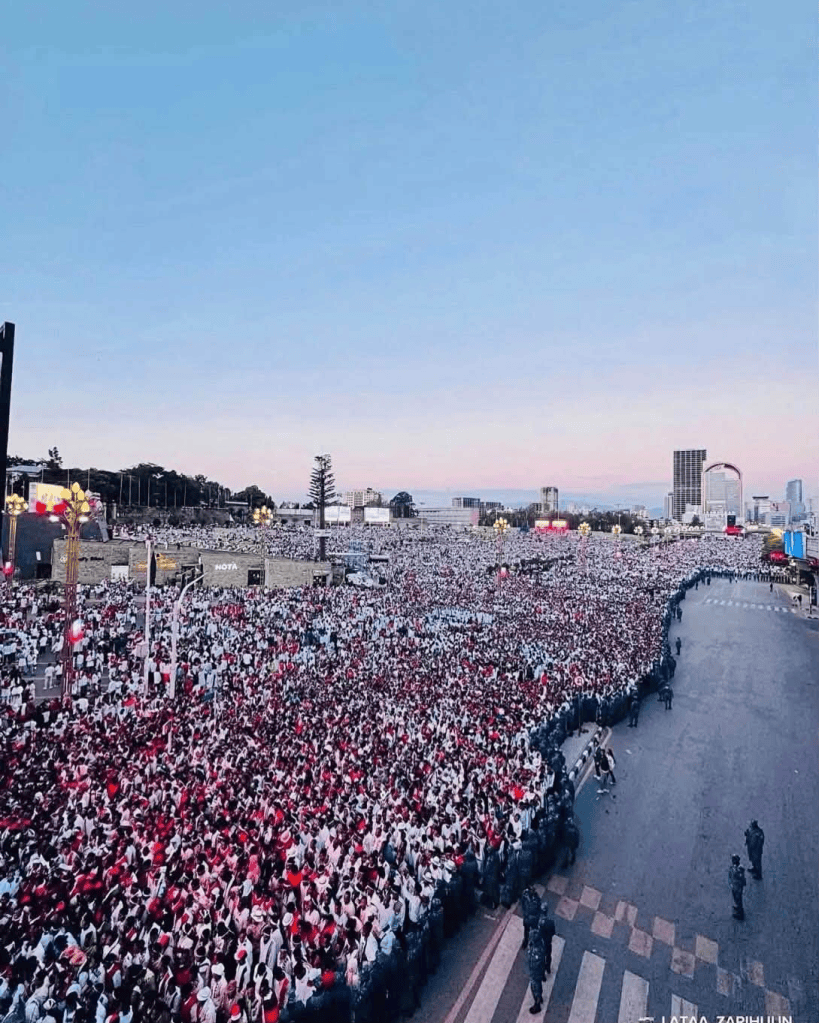
From Paris to Delhi, from Washington to Canberra, diplomatic missions across Ethiopia send warm wishes to the Oromo people and all who celebrate the ancient festival of thanksgiving — proof that Irreechaa’s beauty now resonates far beyond the waters of Hora Arsadi.
Finfinnee, Ethiopia — October 3, 2026
The Colors of Celebration, the Voices of the World
The fields have shimmered with the colors of the season. The grass glistens with moisture. All of creation has been adorned with the richness of the harvest — and now, the Irreechaa festival has raised its head high.
Irreechaa is the reflection of gratitude to creation, the sign of reconciliation, and the expression of the unity of the Oromo people. On this day, the Oromo people, adorned in traditional dress, gather at the water’s edge with songs and prayers to give thanks to Waaqa, the Creator.
But this year, something remarkable has happened. The beauty of this tradition, the hospitality of this season, has been recognized far beyond Oromia’s borders. Diplomats and ambassadors from various countries stationed in Ethiopia have expressed their love and respect by extending messages of welcome and congratulations.
These diplomatic messages are testimony that the development, growth, and reach of Oromo culture has crossed national boundaries and is now receiving international recognition and honor.
Here are the beautiful messages that have arrived from embassies around the world.
Part One: European Embassies
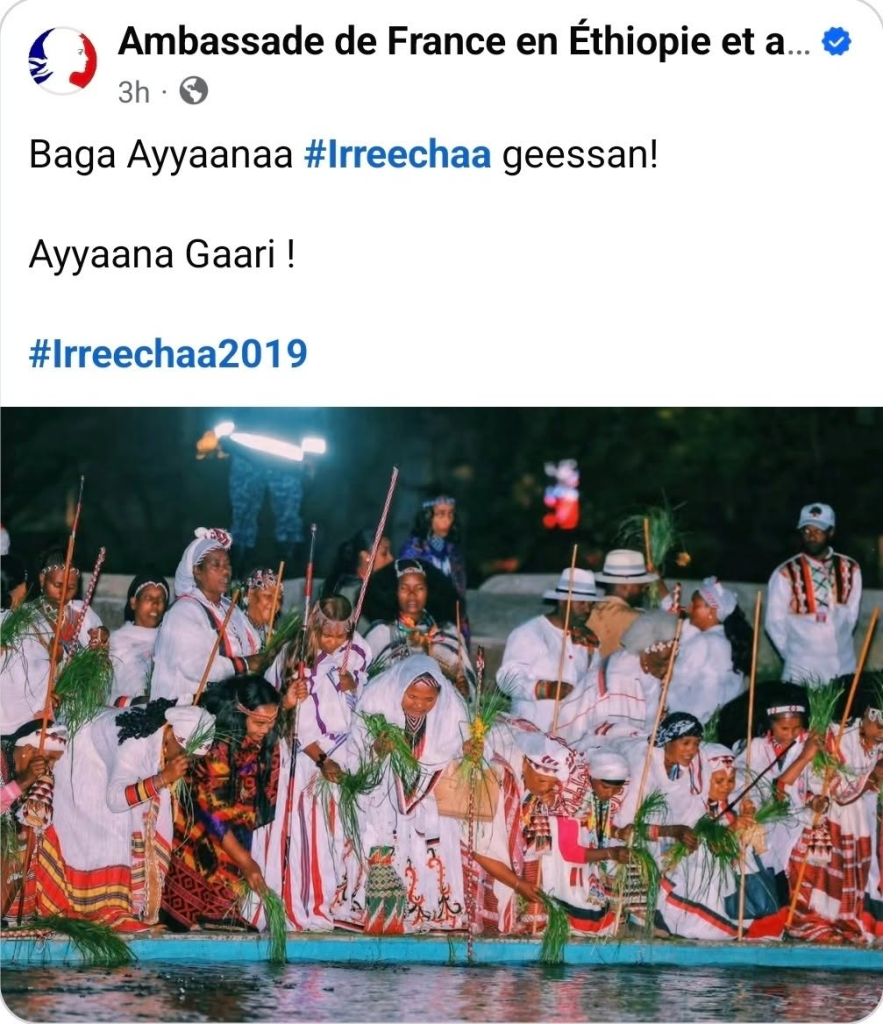
France: “Baga Ayyaanaa Irreechaa Geessan!”
The French Embassy opened its message in the Oromo language itself — a gesture of profound respect that did not go unnoticed.
“Baga Ayyaanaa Irreechaa geessan! Ayyaana Gaari!”
“May you arrive at the Irreechaa festival in peace! Good celebration!”
By beginning in Afaan Oromo, the French diplomatic mission demonstrated not merely courtesy but genuine cultural reverence. To speak to a people in their own language is to honor them. To greet them in their own tongue on their most sacred day is to say: We see you. We respect you. We celebrate with you.
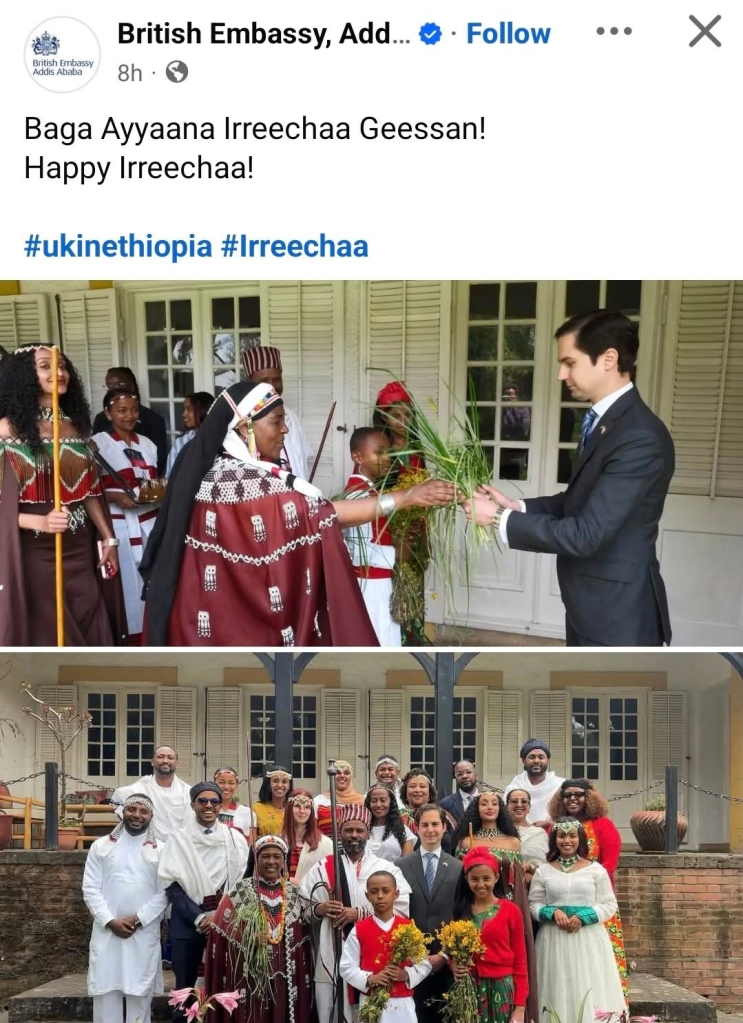
British Embassy: “Happy Irreechaa!”
The British Embassy offered a message both concise and concrete:
“Baga Ayyaana Irreechaa Geessan! Happy Irreechaa!”
The dual-language greeting — Oromo and English — reflects the bridge-building nature of the festival itself. Brief, warm, and direct, the message shared in the joy of a people celebrating their heritage.
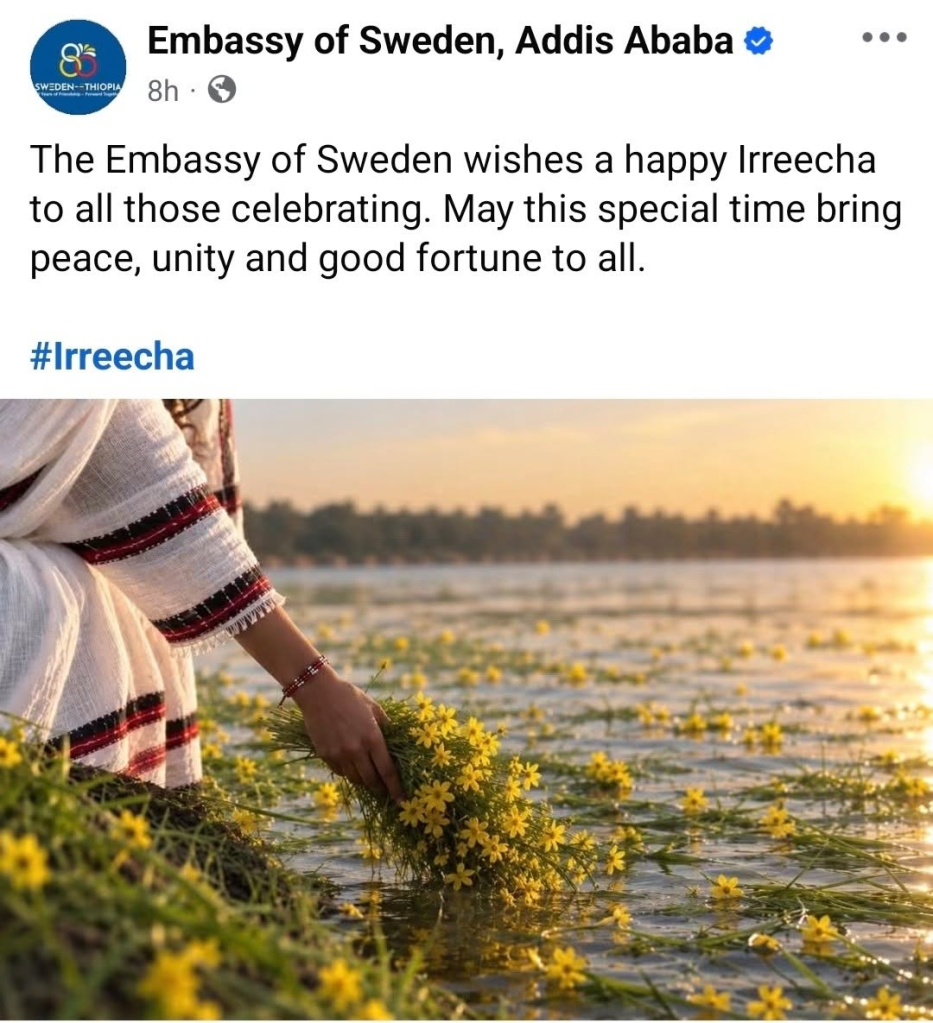
Sweden: A Wish for Peace and Unity
The Swedish Embassy conveyed its respects through a written message, expressing its hope that this time may bring peace, unity, and good fortune to all. Sweden’s message reflected the values that Irreechaa itself embodies — nagaa (peace), tokkummaa (unity), and carraa gaarii (good fortune).
Germany: “May Irreechaa Fill Your Hearts”
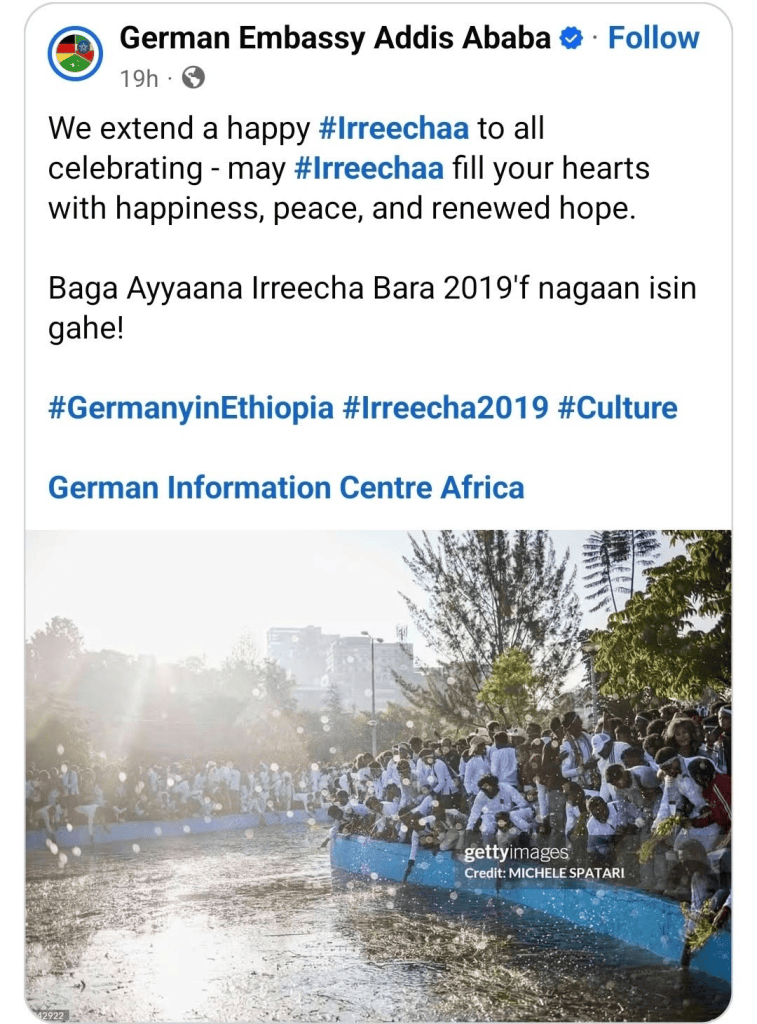
The German Embassy shared a message of remarkable beauty:
“May #Irreechaa fill your hearts with happiness, peace, and renewed hope.”
The German message captured the essence of the festival — not merely a celebration of the past, but a renewal of hope for the future. Happiness, peace, and renewed hope — this is what Irreechaa offers, not only to the Oromo people but to all who encounter it.
Part Two: North American and Australian Embassies
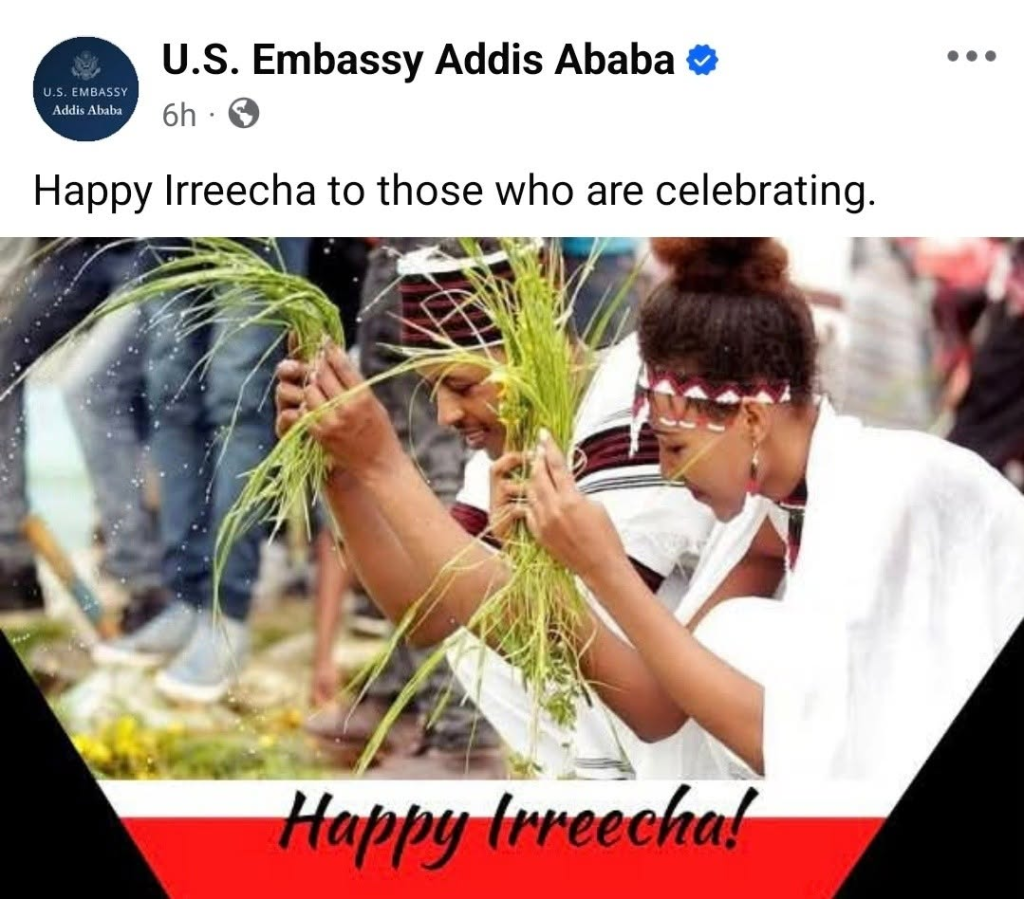
United States: “Happy Irreecha to Those Who Are Celebrating”
The United States Embassy extended its wishes to all citizens and communities honoring the festival:
“Happy Irreecha to those who are celebrating.”
The American message was inclusive and direct — acknowledging the festival and extending goodwill to all who participate. It is a recognition that Irreechaa belongs not only to the Oromo people but to all who value gratitude, community, and renewal.
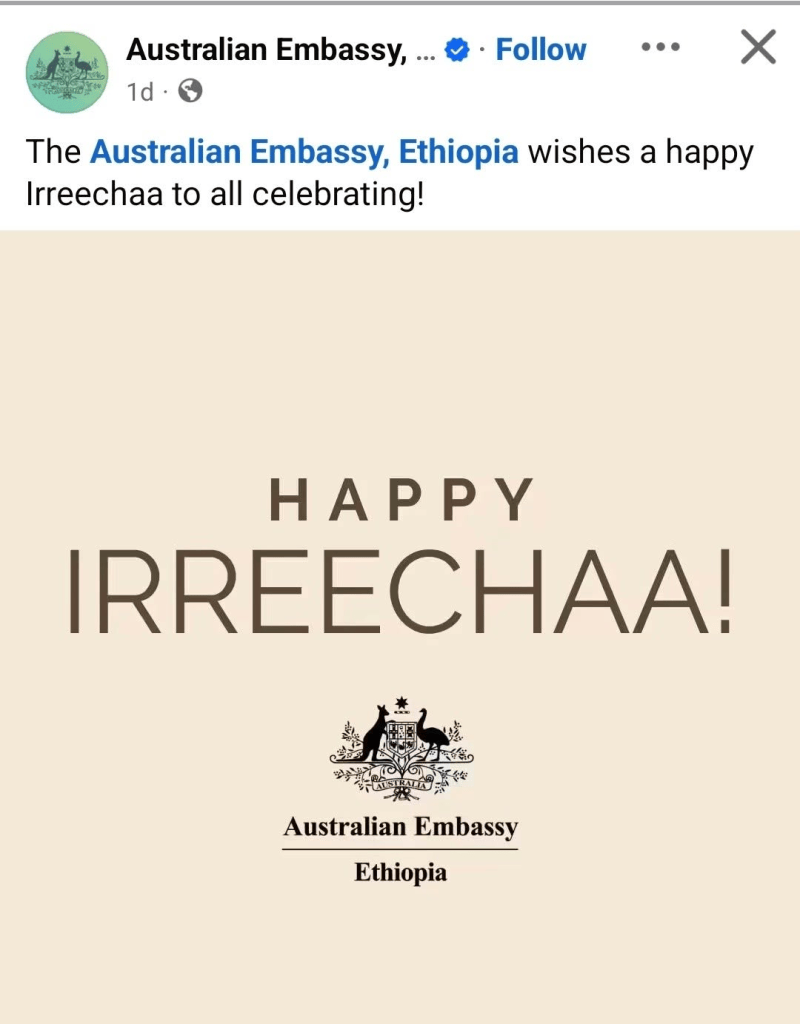
Australian Embassy: A Warm Wish from the Southern Hemisphere
The Australian Embassy in Ethiopia shared its message on its social media page:
“The Australian Embassy, Ethiopia wishes a happy Irreechaa to all celebrating!”
Short, warm, and heartfelt — the Australian message joined the chorus of international voices honoring the festival. From the southern hemisphere, a wish of joy traveled north to the waters of Hora Arsadi.
Part Three: Asian Embassies
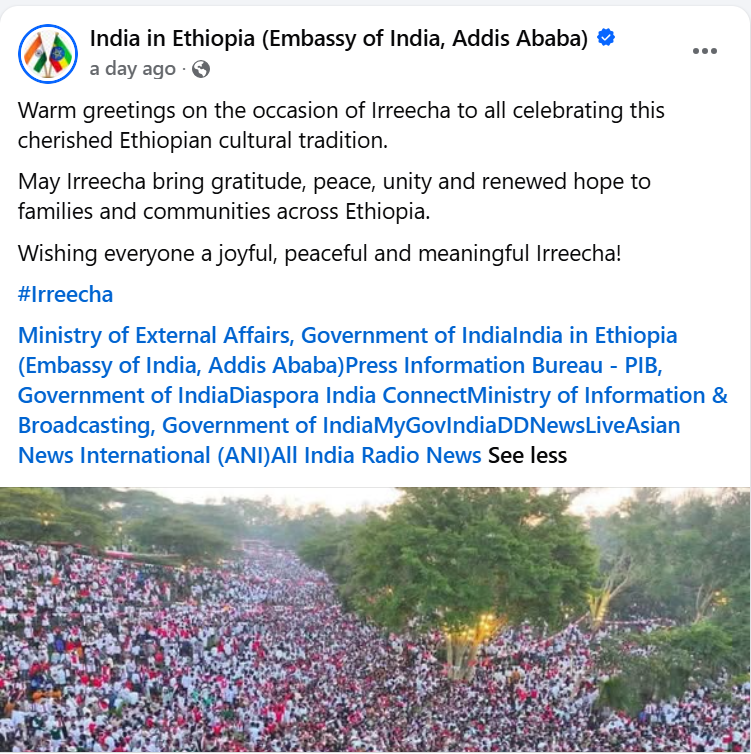
India: Honoring the Beautiful Culture of Ethiopia
The Embassy of India expressed its profound respect for Ethiopia’s beautiful culture, wishing that Irreechaa may bring gratitude, peace, unity, and new hope to all families and communities.
“Irreechaa bring gratitude, peace, unity, and new hope to all families and communities.”
India’s message demonstrated how much it values the culture and traditions of its neighbor — a recognition that transcends geography and speaks to the universal language of respect.
The Meaning of These Messages
What do these diplomatic messages tell us? Two profound truths emerge.
International Recognition: Irreechaa Has Crossed Borders
Irreechaa has now transcended national boundaries. It has reached the status of a great cultural and traditional festival honored by the world.
This is not a small thing. For a festival that was once suppressed, that was once forbidden, that was once celebrated in exile with songs of grief — to now receive official recognition and warm wishes from embassies around the world is a testament to the resilience of the Oromo people and the universal beauty of their traditions.
Irreechaa belongs to the Oromo people. But its message — gratitude, reconciliation, unity, peace — belongs to all humanity. And the world is beginning to recognize this.
The Message of Unity: Words That Repeat
In all the messages, words like peace, unity, gratitude, and new hope are repeated. This repetition confirms that the meaning of this festival is profound.
These are not random diplomatic formalities. They are the recognition of something real. When embassy after embassy, from different continents and different cultures, uses the same words — peace, unity, gratitude, hope — they are testifying to something they have seen and admired in Irreechaa.
Irreechaa is not just a festival of the Oromo people. It is a festival of values that the world needs. And the world is taking notice.
The Warmth of Recognition
There is something deeply moving about these messages. They are not required. No one compelled these embassies to send greetings. They did so because they wanted to — because they recognized something beautiful and wanted to honor it.
From France, speaking in Oromo. From Germany, wishing renewed hope. From India, honoring the culture of Ethiopia. From Australia, sending joy across continents.
These messages are more than diplomatic courtesy. They are a form of recognition — the acknowledgment that Irreechaa is a treasure, not just for the Oromo people, but for the world.
And for a people who have so often been marginalized, so often been told that their culture was lost, so often been forced to celebrate in exile — this recognition means everything.
A Festival Without Borders
The title of the original report captures it perfectly: “Aadaa Daangaa Hin Qabne” — Culture Without Borders.
Irreechaa has no borders. It cannot be contained within national boundaries. It cannot be limited to a single people or a single language. Its message — gratitude to the Creator, reconciliation with one another, unity as a people, peace as a way of life — speaks to something universal in the human heart.
And now the world is speaking back. From embassies on every continent, the message is coming: We see you. We honor you. We celebrate with you.
Your Turn: Share Your Thoughts
The original report ends with questions for the reader — and we extend them to you:
Which of these messages from the various embassies created the most special feeling in you? Which one impressed you most?
Where and how are you celebrating this year’s Irreechaa?
Share your thoughts with us. Share your stories. Share your joy.
Because Irreechaa is not just a festival to be observed. It is a festival to be lived. And when we share our experiences of it — with our neighbors, with our nation, with the world — we participate in the very unity that Irreechaa creates.
Irreechaa Without Borders
The festival has arrived. The embassies have spoken. The world has recognized.
Irreechaa is no longer a local celebration. It is a global testimony. It is a declaration that the Oromo people — their culture, their traditions, their values — are here to stay, and that what they offer the world is something the world desperately needs.
Gratitude. Reconciliation. Unity. Peace. Hope.
These are the gifts of Irreechaa. And this year, the world has said thank you.
Baga Ayyaana Irreechaa Geessan!
Happy Irreechaa to all who are celebrating!
Irreechaan nagaa, jaalalaa fi tokkummaa haa ta’u!
May this year’s Irreechaa be one of peace, love, and unity!
#Irreechaa #AadaaDaangaaHinQabne #CultureWithoutBorders #Irreechaa2026 #Oromia #Ethiopia #Diplomacy #GlobalRecognition #PeaceAndUnity
Source: Sofumer Media ·

Irreechaa: The Festival That Renews Humanity, Reconciles Creation, and Reclaims Time Itself
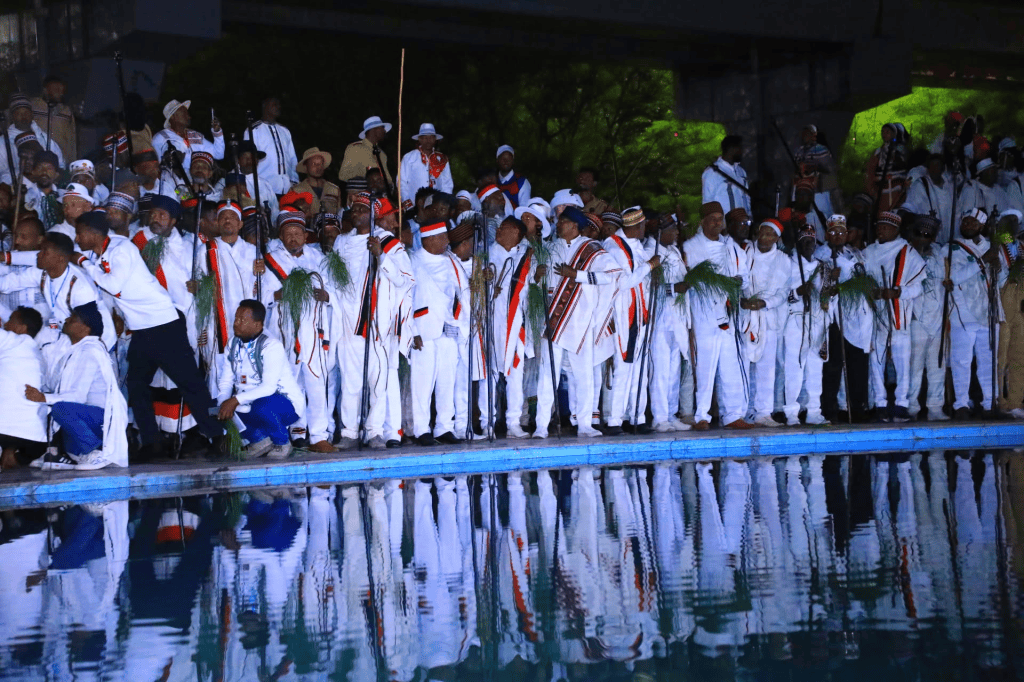
In the Oromo language, nineteen sacred phrases capture the full magnitude of Irreechaa — a celebration that is not merely cultural but cosmic, not merely annual but eternal, not merely human but divine.
Beneath the sycamores, beside the sacred waters, a people gather to become whole — and to remind the universe what wholeness means.
A Litany of Renewal
There are sentences that function as scripture. The Oromo people have such a sentence about Irreechaa:
“Irreechaan humneessaa namummaa, lachiisaa namummaa, marabeessaa namummaa, nageessaa namummaa, araarsaa namummaa, waloomsaa uumaa-uumamaa, sirna galateeffannaa, yaadannoo uumamaa, hulluuqoo hameenyaa, mallattoo ulfoo, yeroo dhiifamaa, ce’umsaa baraa, damboobsaa namummaa, fooyyessaa namummaa, fufsiisaa namummaa, fineessaa namummaa, guutessaa namummaa, kadhannaa gaarummaa, fi haaromsaa namummaa ti.”
This is not a description. It is a declaration. It is the Oromo people’s theological testimony about what Irreechaa is — not what it symbolizes, not what it represents, but what it accomplishes in the world.
Nineteen phrases. Nineteen dimensions of one reality. Nineteen ways of saying: Irreechaa renews humanity, reconciles creation, and reclaims time itself.
Part One: The Renewal of Humanity
The first five phrases focus on the human person — what Irreechaa does to the individual soul.
Humneessaa Namummaa — The Empowerment of Humanity
Irreechaan humneessaa namummaa. Irreechaa is the empowering of humanity.
Before the festival, participants are asked to reconcile. They set aside grudges. They release resentment. This is not weakness — it is the most difficult form of strength. To forgive is to be liberated from the prison of grievance.
The person who has made peace is not just morally superior. They are empowered. They have reclaimed energy that was being spent on resentment. They stand at the water’s edge lighter, freer, more capable of gratitude.
This is the first renewal: the empowerment that comes from letting go.
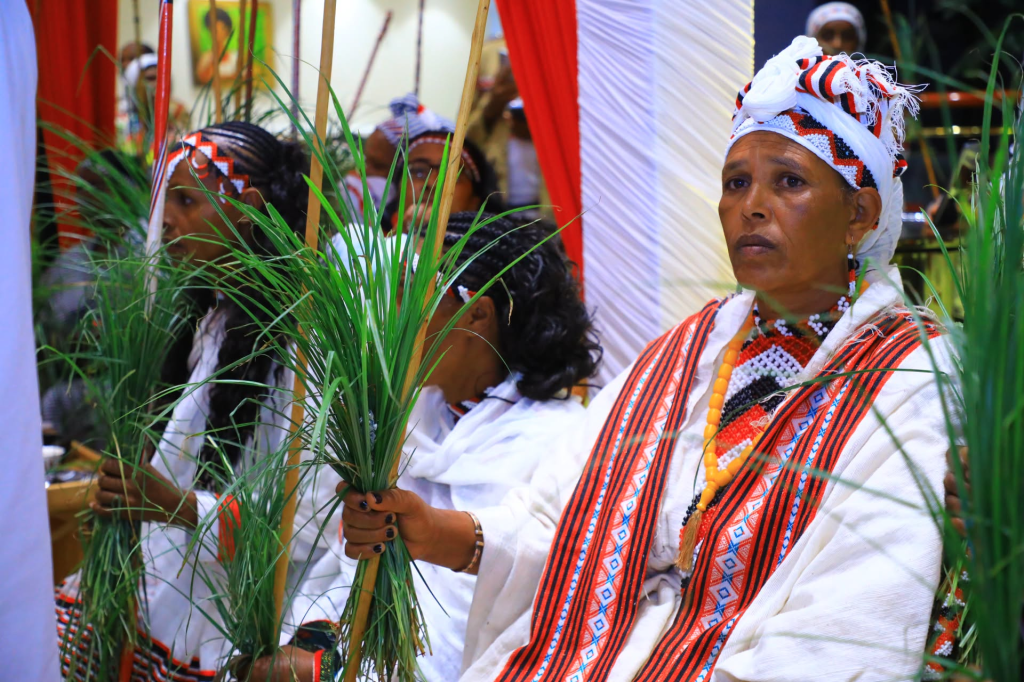
Lachiisaa Namummaa — The Reconciliation of Humanity
Irreechaan lachiisaa namummaa. Irreechaa is the reconciling of humanity.
This is Irreechaa’s beating heart. Without araara — reconciliation — the festival cannot proceed. The tradition is explicit: you cannot participate while holding a grudge. The water will not receive your thanks if your heart is still at war.
In a world that profits from division, this requirement is revolutionary. Irreechaa says: Before you celebrate, reconcile. Before you give thanks, make peace. Before you approach the sacred, heal the human relationships that have been broken.
The Oromo do not pretend that reconciliation is easy. They simply insist that the work of peace must be done — deliberately, consciously, before the community gathers.
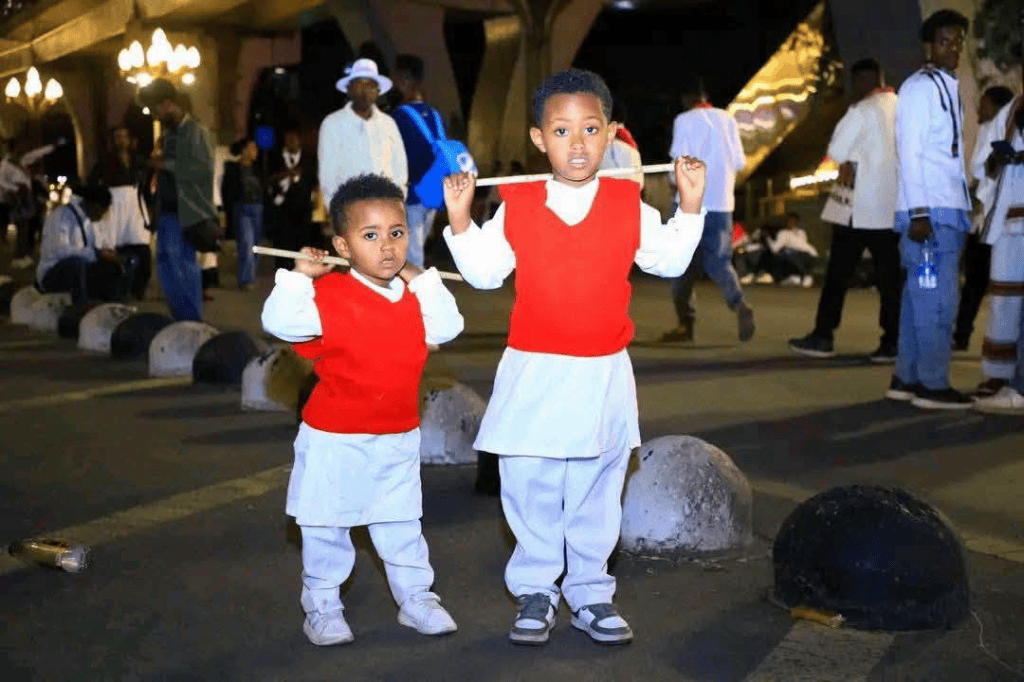
Marabeessaa Namummaa — The Unification of Humanity
Irreechaan marabeessaa namummaa. Irreechaa is the unifying of humanity.
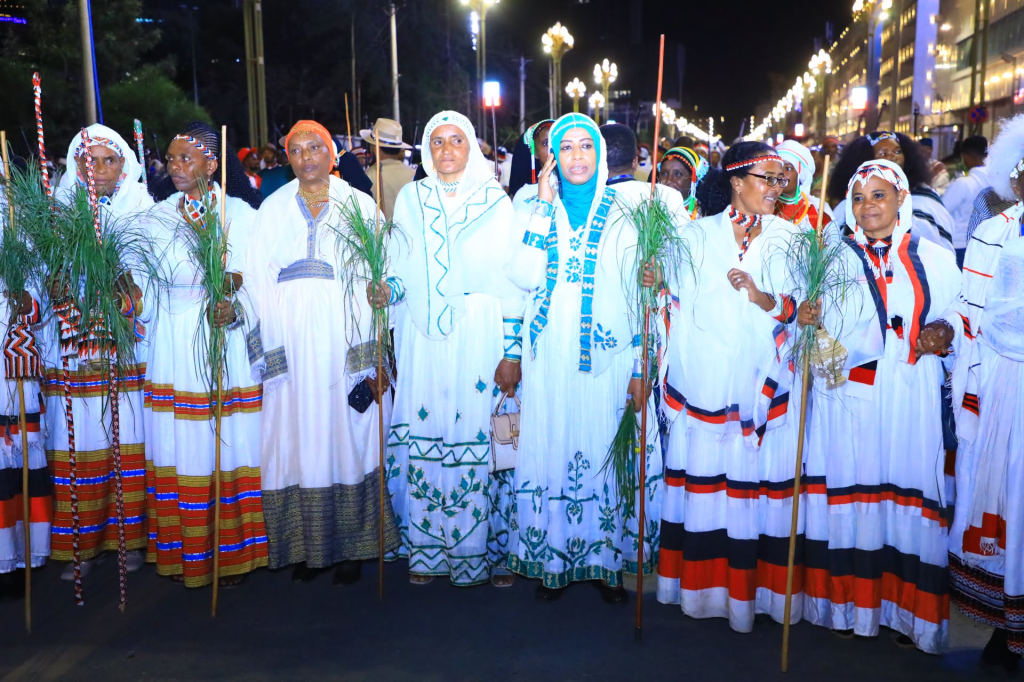
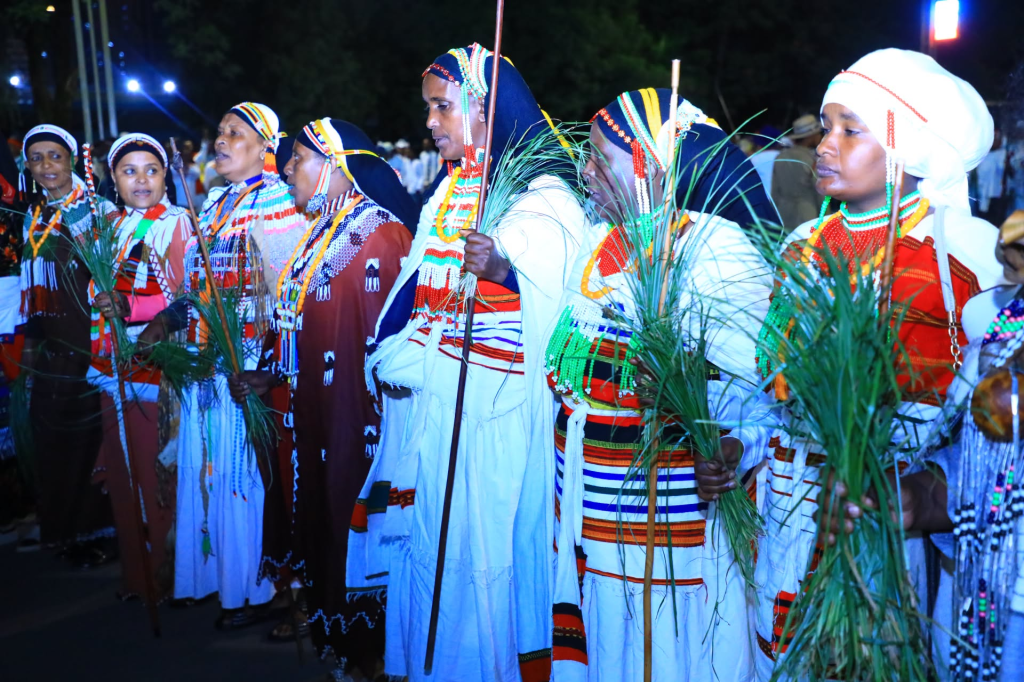
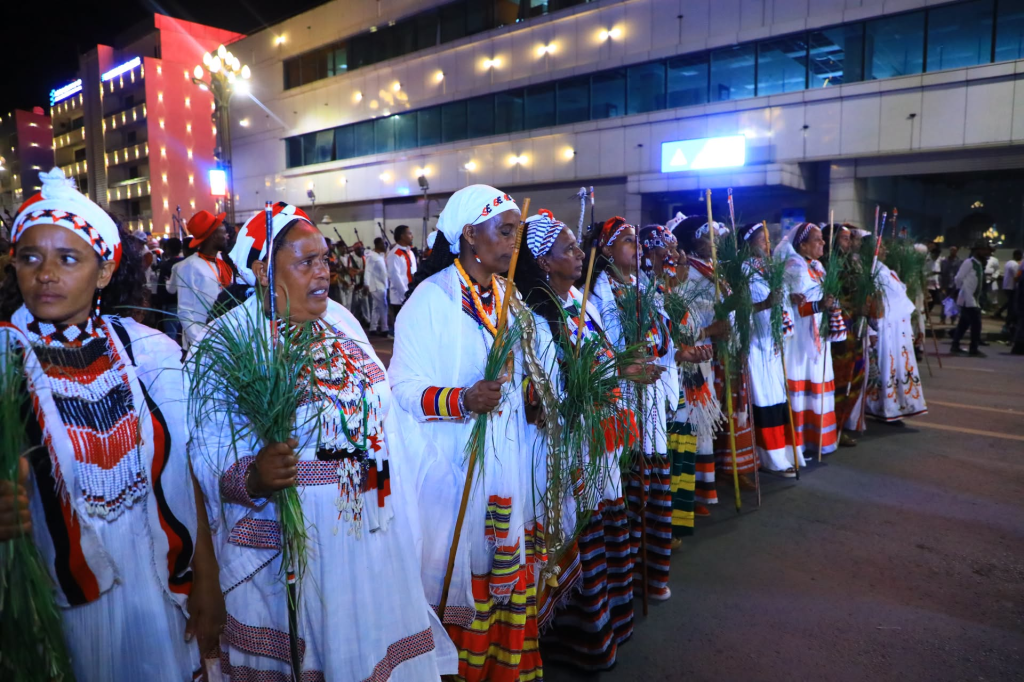
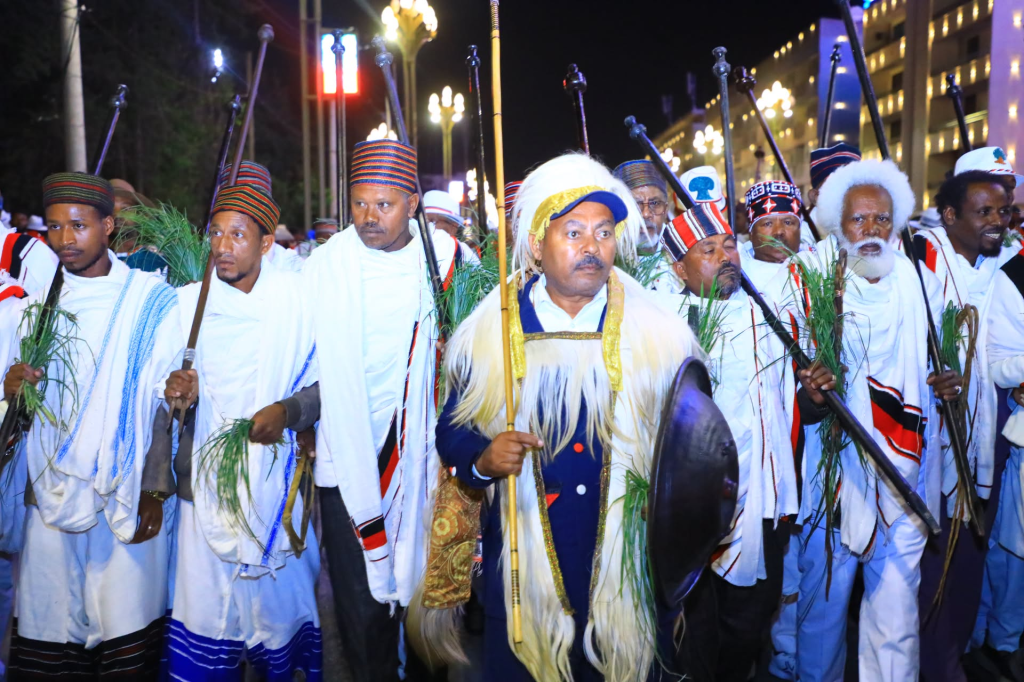
Millions arrive from across Ethiopia, from the diaspora, from every walk of life. Farmers and professors. Mothers and students. Elders and children. Muslims and Christians and practitioners of the old faith. They dress in white — a sea of unity that visually overwhelms the eye.
But the unification is not mere numbers. It is spiritual. It is the experience of dissolving the boundaries that separate human beings from one another. For one day, the Oromo people are not many. They are one.
This is tokkummaa — unity — and it is not an abstract ideal. It is a lived experience at the water’s edge. The person standing beside you is not a stranger. They are your brother. They are your sister. They are yourself.
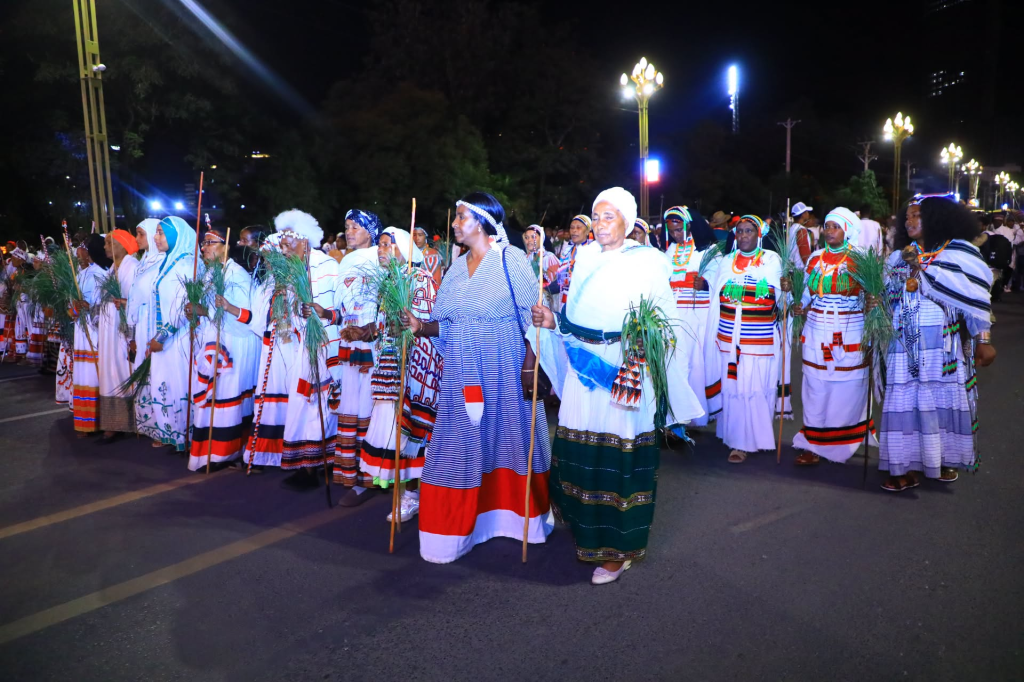
Nageessaa Namummaa — The Peace-Bringing of Humanity
Irreechaan nageessaa namummaa. Irreechaa is the peace-bringing of humanity.
The Oromo greeting for the festival is “Baga Irreechaa nagaan geessan” — May the Irreechaa arrive in peace. This is not a casual wish. It is a declaration of intent.
Irreechaa does not merely celebrate peace. It produces it. The festival is a peace-making technology, an ancient ritual that creates the conditions for harmony between individuals, communities, and the divine.
Consider what happens when millions of people gather in a single place and commit, together, to reconciliation. Consider what happens when a nation’s largest cultural event is built on the requirement that participants set aside their conflicts. Peace is not the absence of conflict. It is the presence of araara. And Irreechaa makes that presence visible, tangible, and real.
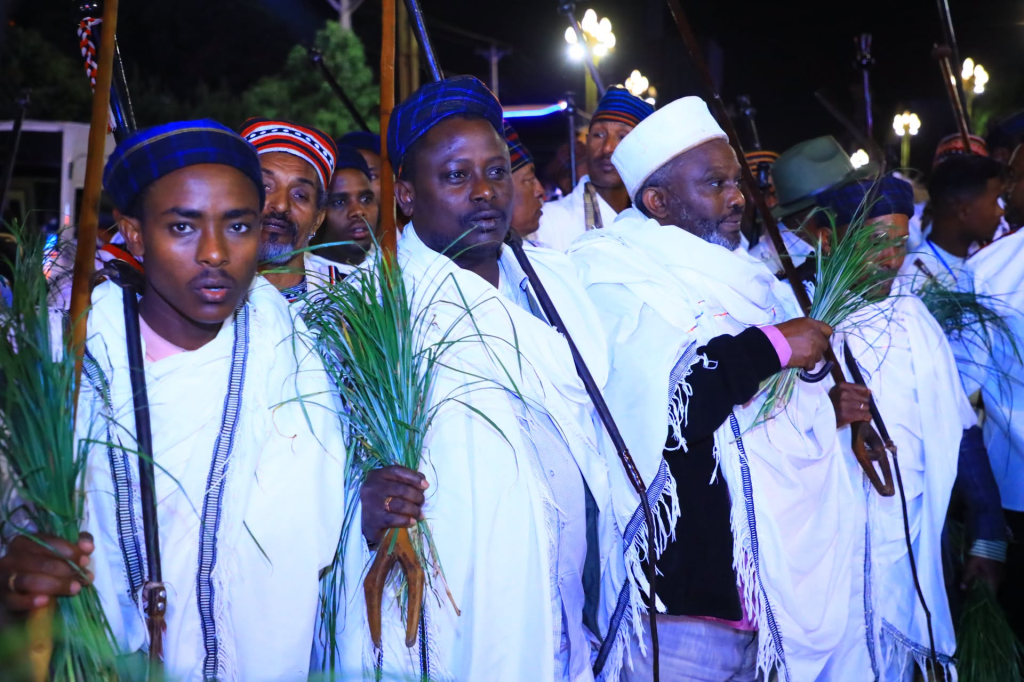
Araarsaa Namummaa — The Forgiveness of Humanity
Irreechaan araarsaa namummaa. Irreechaa is the forgiving of humanity.
Araara is the Oromo word for reconciliation, but it carries a deeper meaning: the restoration of relationship, the healing of rupture, the return to wholeness. At Irreechaa, forgiveness is not a suggestion. It is a prerequisite.
The person who comes to the water carrying resentment is not participating in Irreechaa. They are merely present. True participation requires the internal work of forgiveness — the decision to release the debt, to let go of the grievance, to choose relationship over righteousness.
This is the fifth renewal: the forgiveness that makes all other renewal possible.
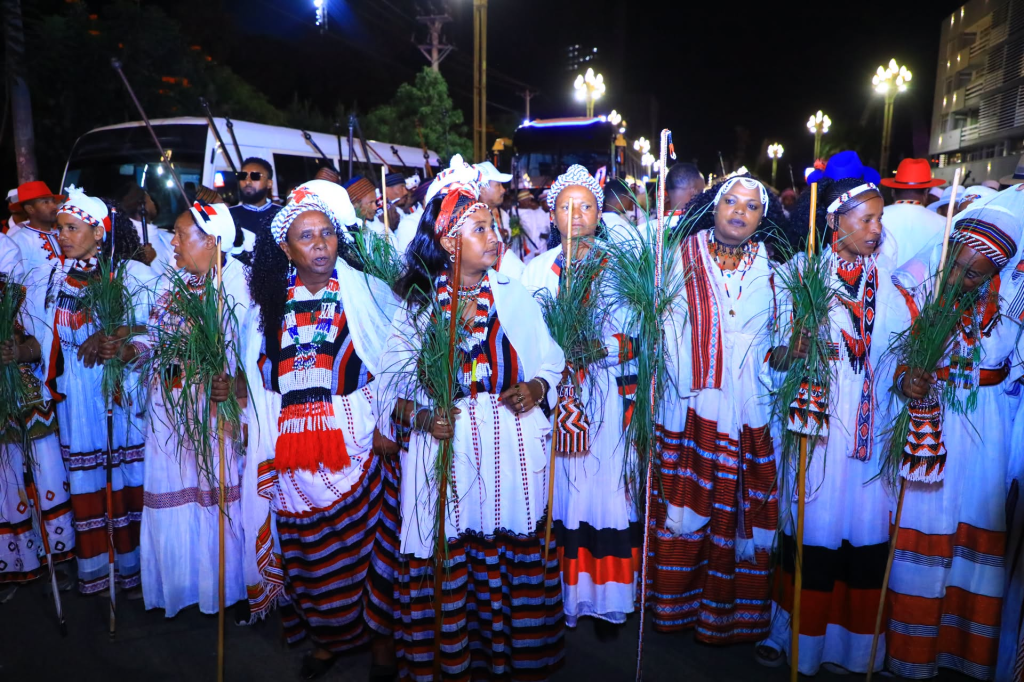
Part Two: The Reconciliation of Creation
The next several phrases expand beyond the human person to encompass the entire created order.
Waloomsaa Uumaa-Uumamaa — The Harmony of Creation
Irreechaan waloomsaa uumaa-uumamaa. Irreechaa is the harmonizing of creation.
The Oromo understanding of Irreechaa is not limited to human community. The festival reconciles the entire cosmos — uumaa (the Creator) and uumamaa (creation) — in a single act of thanksgiving.
When the Oromo gather at the water, they are not just repairing human relationships. They are restoring the primal harmony between the divine, the human, and the natural. The water is sacred. The grass is sacred. The sky, the earth, the trees, the animals — all are participants in the festival.
This is waloomaa — harmony — and it is the original condition of creation. Irreechaa returns what was broken to what it was meant to be.
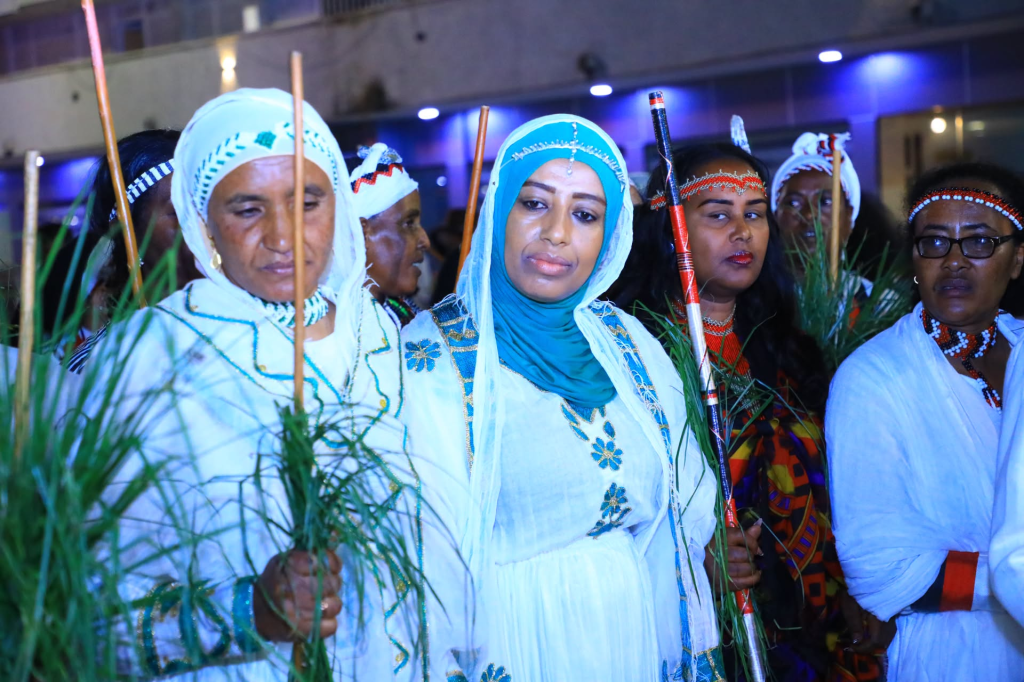
Sirna Galateeffannaa — The Order of Thanksgiving
Irreechaan sirna galateeffannaa. Irreechaa is the order of thanksgiving.
Sirna means order, system, institution, ceremony. Irreechaa is not spontaneous emotion. It is structured ritual — a carefully preserved system of thanksgiving that has been practiced for thousands of years.
The Gadaa system organizes Oromo society by age grades, each with defined responsibilities. Irreechaa is woven into this system. It is not just a festival. It is an institution — a sirna — that orders the relationship between the human community and the divine.
Thanksgiving, in Oromo cosmology, is not optional. It is the fundamental posture of the creature toward the Creator. To give thanks is to acknowledge reality: that we did not create ourselves, that we depend on forces beyond our control, that life is a gift.
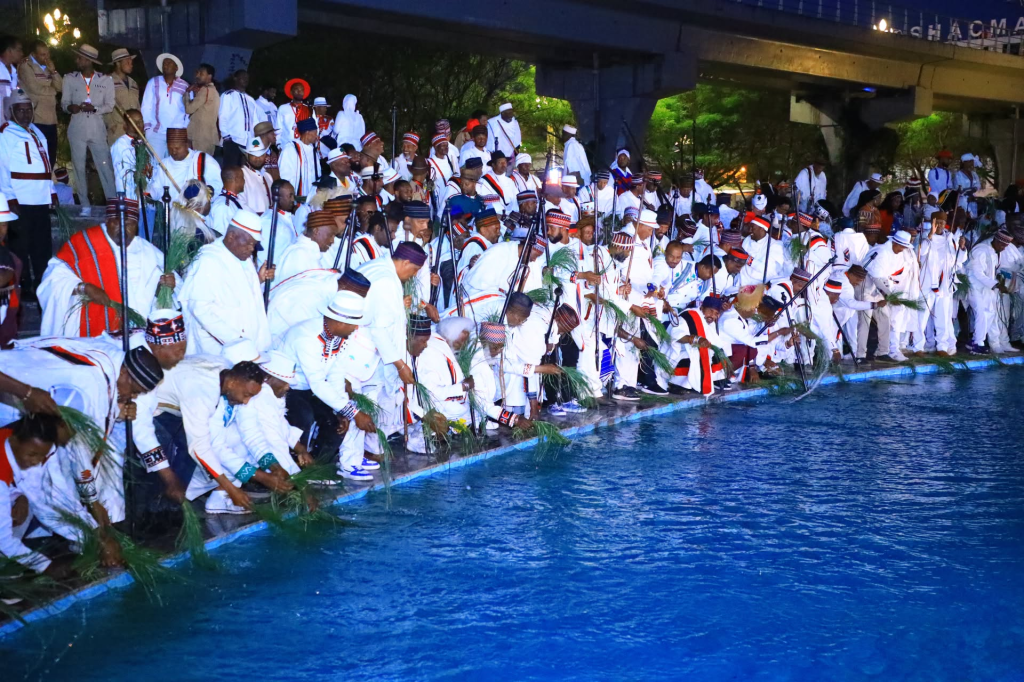
Yaadannoo Uumamaa — The Memory of Creation
Irreechaan yaadannoo uumamaa. Irreechaa is the memory of creation.
Yaadannoo means memorial, remembrance, commemoration. At Irreechaa, the Oromo people remember not just the harvest of the past year but the creation of the world itself.
This is sacred memory — not nostalgia, not sentimentality, but the deliberate act of recalling what is fundamental. The Oromo remember that they are creatures. They remember that the earth is sacred. They remember that water is the source of life. They remember that gratitude is the proper response to existence.
In a modern world that so often forgets the sacred, Irreechaa is a collective act of remembrance. It says: We have not forgotten who we are. We have not forgotten where we came from. We have not forgotten what we owe.
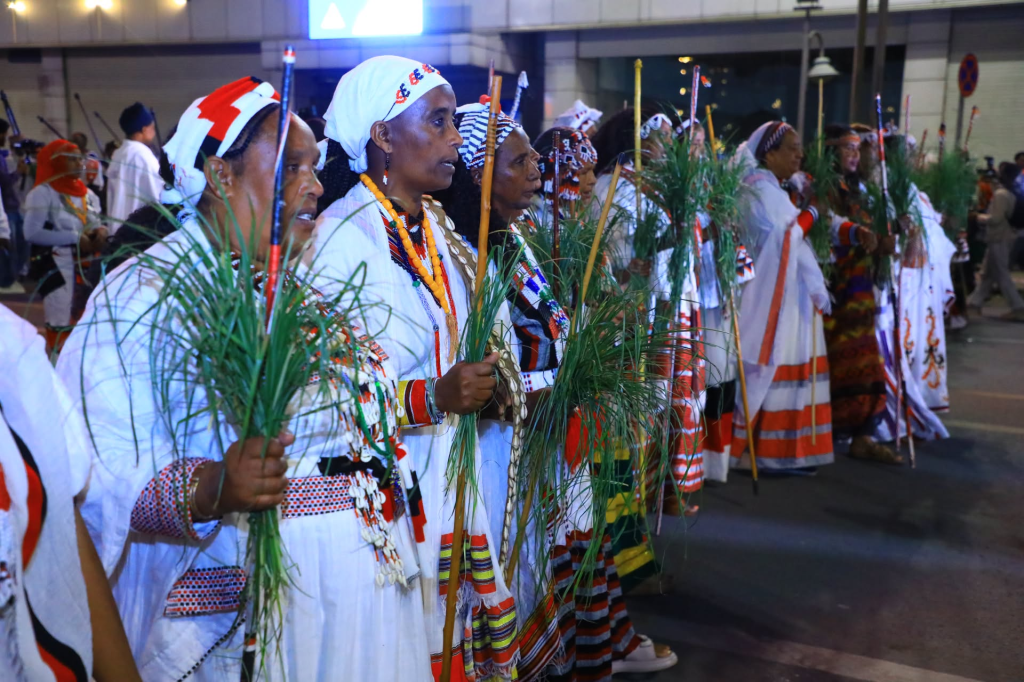
Hulluuqoo Hameenyaa — The Rejection of Evil
Irreechaan hulluuqoo hameenyaa. Irreechaa is the rejection of evil.
Hulluuqoo means that which is rejected, refused, cast out. Hameenyaa means evil, wickedness, malice. Irreechaa is not just the affirmation of good. It is the explicit rejection of evil.
At the water’s edge, the Oromo people collectively renounce the forces that destroy human community: hatred, jealousy, greed, violence, deception. They name these forces and cast them out. They declare that these things have no place in the renewed humanity they are creating.
This is spiritual warfare — not against flesh and blood, but against the principalities and powers that corrupt the human heart. And it is fought not with weapons but with water, grass, and words of prayer.
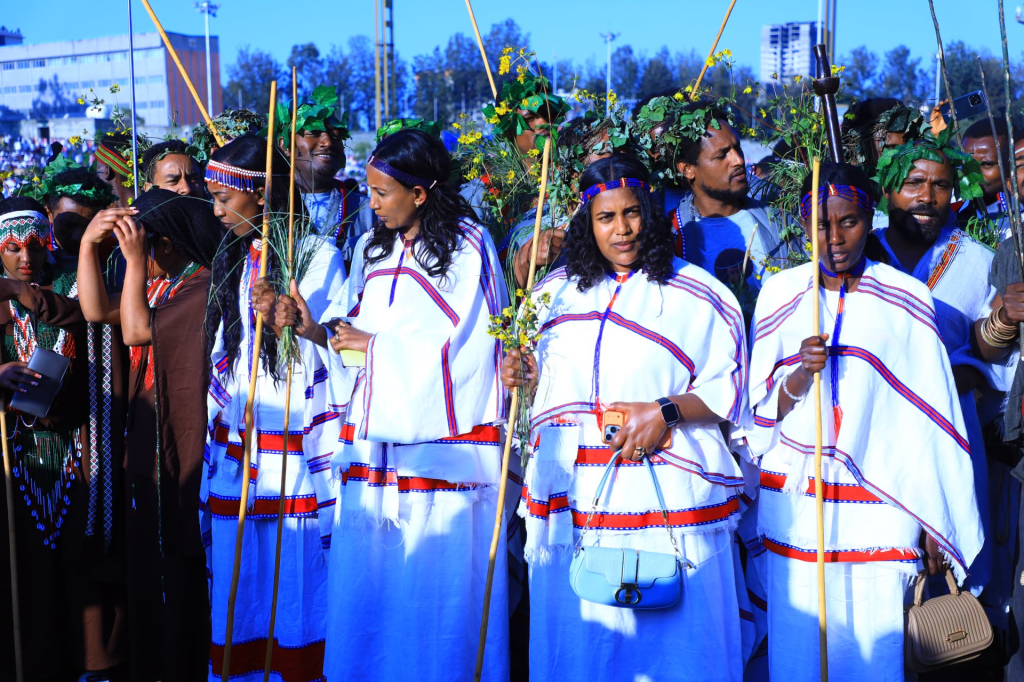
Mallattoo Ulfoo — The Sign of Love
Irreechaan mallattoo ulfoo. Irreechaa is the sign of love.
Ulfoo means love, compassion, mercy. Irreechaa is not just a festival of gratitude. It is a sign — a visible, tangible, public demonstration — of divine love.
The Oromo believe that Waaqa (God) loves humanity. The rains come. The harvest arrives. The sun returns after the darkness. These are not accidents of nature. They are expressions of divine love.
And Irreechaa is the human response to that love. It is the sign that the relationship is mutual. God gives; the people give thanks. God loves; the people love in return.
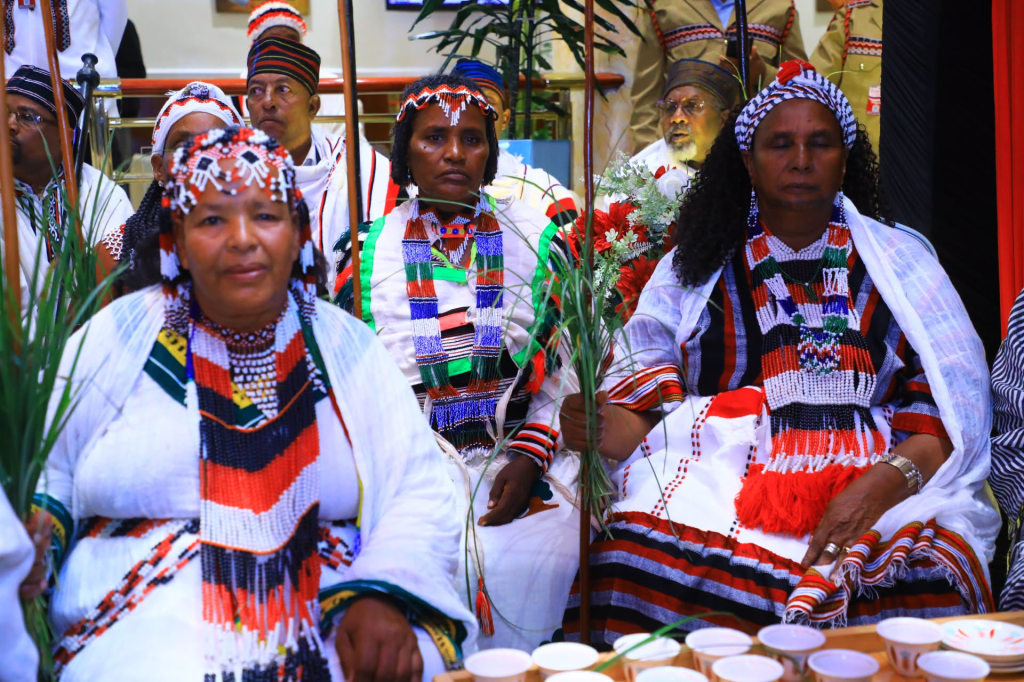
Part Three: The Reclamation of Time
The next phrases focus on Irreechaa’s relationship to time itself — its power to forgive the past, transform the present, and renew the future.
Yeroo Dhiifamaa — The Time of Forgiveness
Irreechaan yeroo dhiifamaa. Irreechaa is the time of forgiveness.
Yeroo means time, season, moment. Dhiifamaa means forgiveness, pardon, release. Irreechaa is not just a festival. It is a time — a specific, sacred season set apart for the work of forgiveness.
In the rhythm of the Oromo year, Irreechaa is the moment when the community pauses and says: Now is the time to make peace. Now is the time to release grievances. Now is the time to forgive.
This is the ritualization of forgiveness. It is not left to chance or whim. It is scheduled. It is expected. It is required.
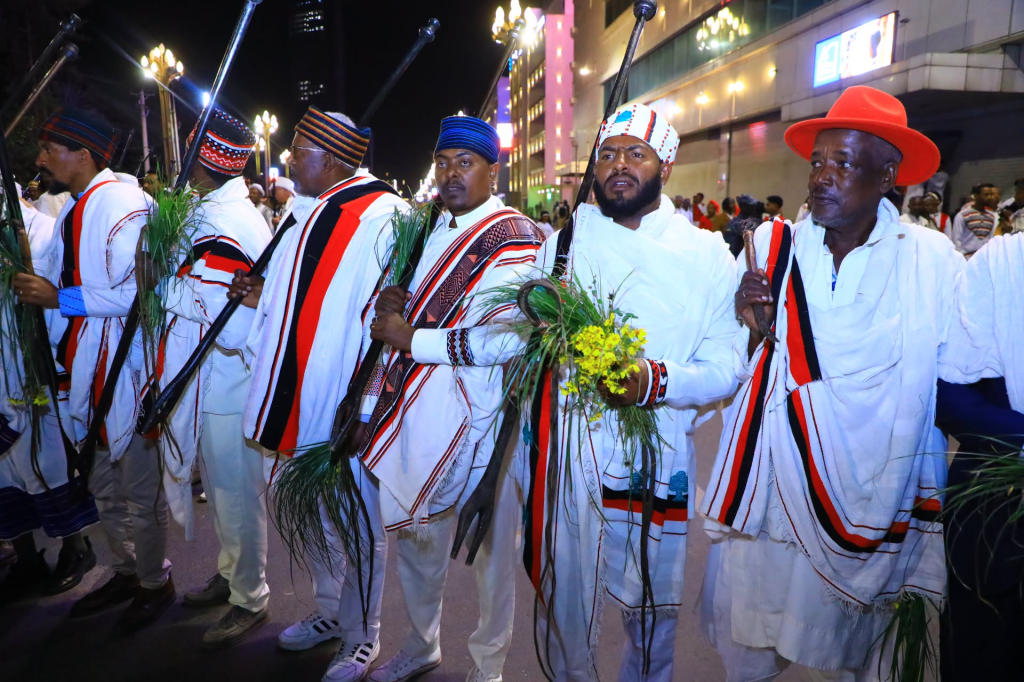
Ce’umsaa Baraa — The Turning of the Year
Irreechaan ce’umsaa baraa. Irreechaa is the turning of the year.
Ce’umsaa means transition, passage, crossing over. Irreechaa marks the turning point of the year — the end of the rainy season Ganna and the beginning of spring Birraa. It is a threshold, a liminal moment between what was and what will be.
At this threshold, the old year dies and the new year is born. The mistakes of the past are released. The possibilities of the future are welcomed. The community stands at the hinge of time and chooses to move forward.
This is ce’umsaa baraa — the turning of the year. And it is not just a calendar event. It is a spiritual one.
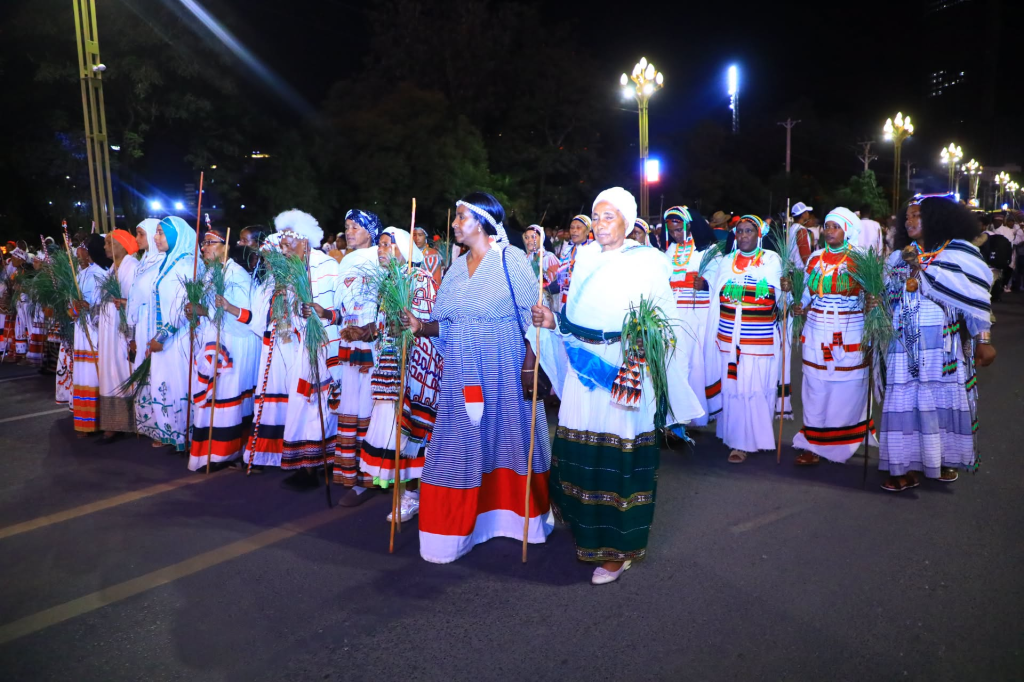
Damboobsaa Namummaa — The Restoration of Humanity
Irreechaan damboobsaa namummaa. Irreechaa is the restoring of humanity.
The rainy season destroys. Rivers swell. Roads wash out. Crops are lost. The land itself seems to be in mourning.
Then the rains end. The sun returns. The harvest begins. The people gather at the water to give thanks.
Irreechaa is the celebration after the suffering. It is the moment when the community pauses and says: We made it through. We survived. We are still here.
This is restoration — not the erasure of hardship, but the transformation of hardship into gratitude. The floods came, and we endured. The darkness came, and we waited. The sun returned, and we give thanks.
Part Four: The Perfection of Humanity
The final phrases describe Irreechaa’s ultimate purpose: the perfection of the human person and community.
Fooyyessaa Namummaa — The Improvement of Humanity
Irreechaan fooyyessaa namummaa. Irreechaa is the improving of humanity.
Irreechaa is not content with survival. It seeks flourishing. The festival is not merely about maintaining what exists but about becoming more than you were.
Fooyya’uu means progress, development, growth. The person who participates in Irreechaa is not the same person who entered the festival. They have been improved — refined by the discipline of reconciliation, elevated by the experience of unity, deepened by the practice of gratitude.
Fufsiisaa Namummaa — The Fulfillment of Humanity
Irreechaan fufsiisaa namummaa. Irreechaa is the fulfilling of humanity.
There is a deep longing in the human heart for completion — for the sense that life is not fragmented, that it has meaning, that it is going somewhere. Irreechaa answers that longing.
At the water’s edge, surrounded by millions of people who share your language, your faith, your hope, you experience a sense of completeness that modern life so often denies. You are not alone. You are not meaningless. You are part of something larger than yourself.
Fineessaa Namummaa — The Refinement of Humanity
Irreechaan fineessaa namummaa. Irreechaa is the refining of humanity.
Water is the medium of purification. At Irreechaa, participants dip sacred grass into the water and sprinkle it upon themselves and others. The Kormoomsaa — the blessing of the young men — cleanses and consecrates.
The refinement Irreechaa offers is the refinement of character. At the water’s edge, the layers of resentment, pride, and grievance are stripped away. What remains is the essential human being — vulnerable, grateful, connected, at peace.
Guutessaa Namummaa — The Completion of Humanity
Irreechaan guutessaa namummaa. Irreechaa is the completing of humanity.
There is a difference between fulfillment and completion. Fulfillment is the experience of meaning. Completion is the achievement of wholeness. Irreechaa offers both.
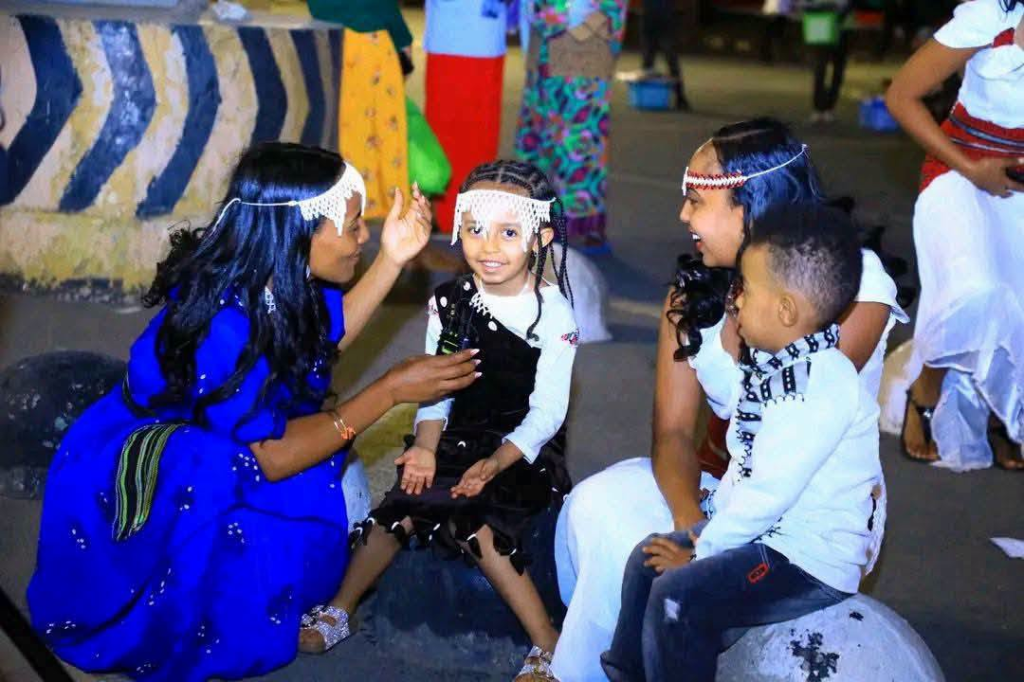
The festival completes the cycle of the year. It completes the work of reconciliation. It completes the process of purification. It completes the community — bringing together all its members, from the youngest child to the oldest elder.
At Irreechaa, nothing is left out. No one is excluded. The festival is guutuu — complete, full, entire. The sea of white garments is not just a visual image. It is a theological statement: this is what wholeness looks like.
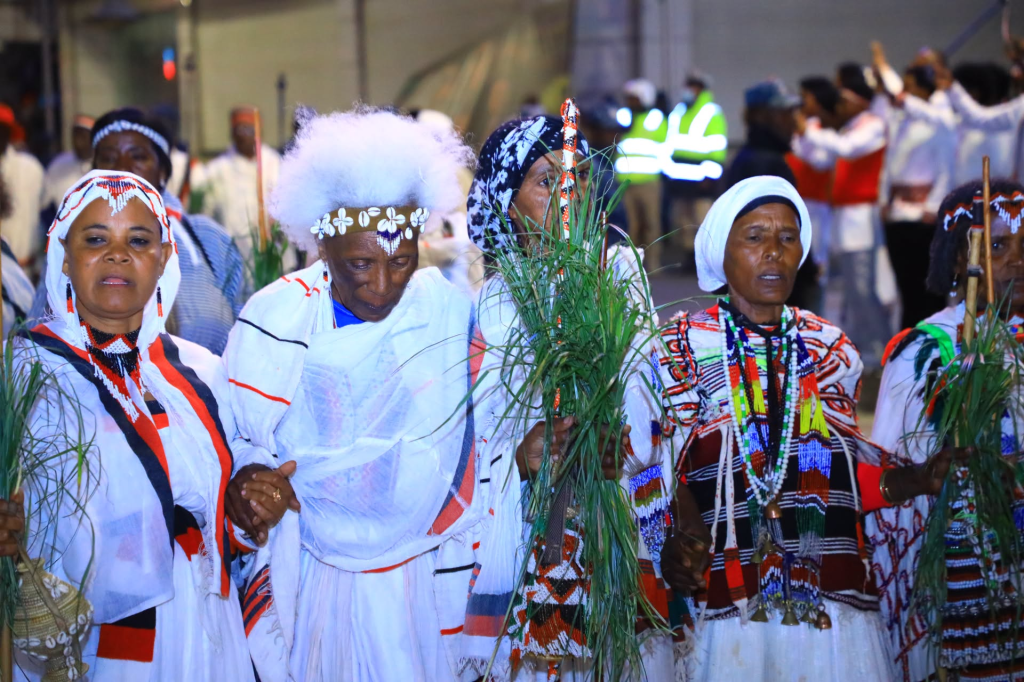
Kadhannaa Gaarummaa — The Prayer of Goodness
Irreechaan kadhannaa gaarummaa. Irreechaa is the prayer of goodness.
Kadhannaa means prayer, supplication, petition. Gaarummaa means goodness, virtue, excellence. Irreechaa is not just a festival of the past. It is a prayer for the future.
At the water’s edge, the Oromo people pray for goodness — for themselves, for their families, for their communities, for their nation, for the world. They ask Waaqa to make them good, to keep them good, to use them for good.
This is the prayer that summarizes all the others. It is the request that the renewal that has begun at Irreechaa will continue throughout the year.
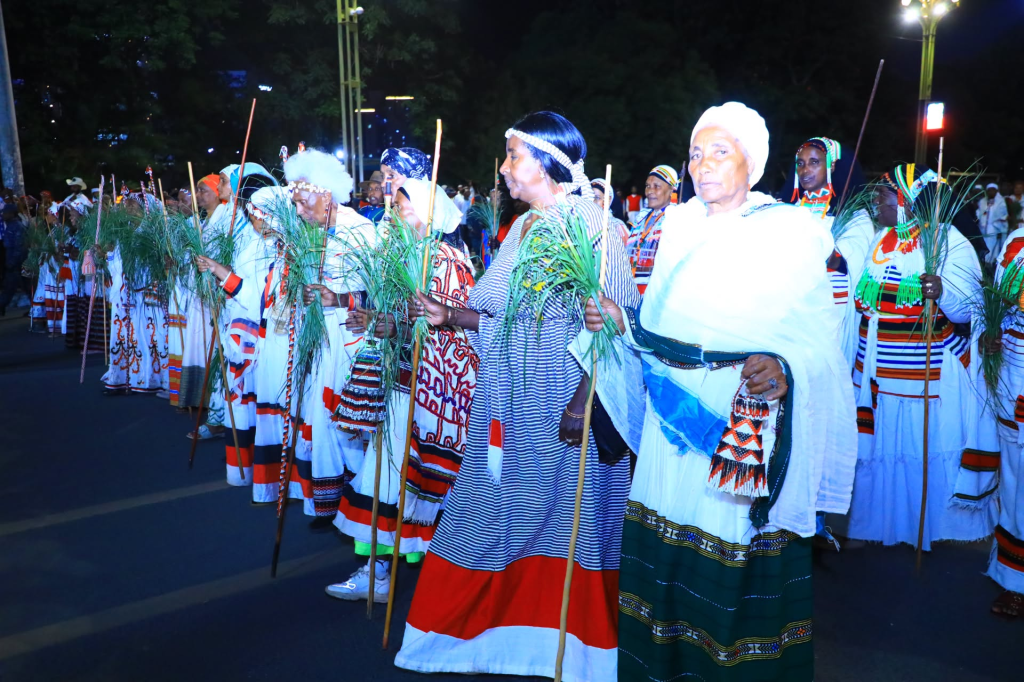
Haaromsaa Namummaa — The Renewal of Humanity
Irreechaan haaromsaa namummaa. Irreechaa is the renewing of humanity.
And so we arrive at the final phrase — the culmination of all the others.
Empowerment leads to reconciliation. Reconciliation leads to unity. Unity brings peace. Peace enables forgiveness. Forgiveness restores creation. Creation remembers its Creator. Evil is rejected. Love is affirmed. Time is redeemed. Humanity is restored, improved, fulfilled, refined, completed. And then — haaromsaa namummaa — humanity is renewed.
Irreechaa is not just a festival. It is a process — a spiritual technology that takes human beings as they are and transforms them into what they can become. It takes fractured people and makes them whole. It takes divided communities and makes them one. It takes a broken world and makes it new.
This is what the Oromo people have known for thousands of years. This is what they celebrate at the water’s edge every year. This is what they offer to Ethiopia, to Africa, and to the world.
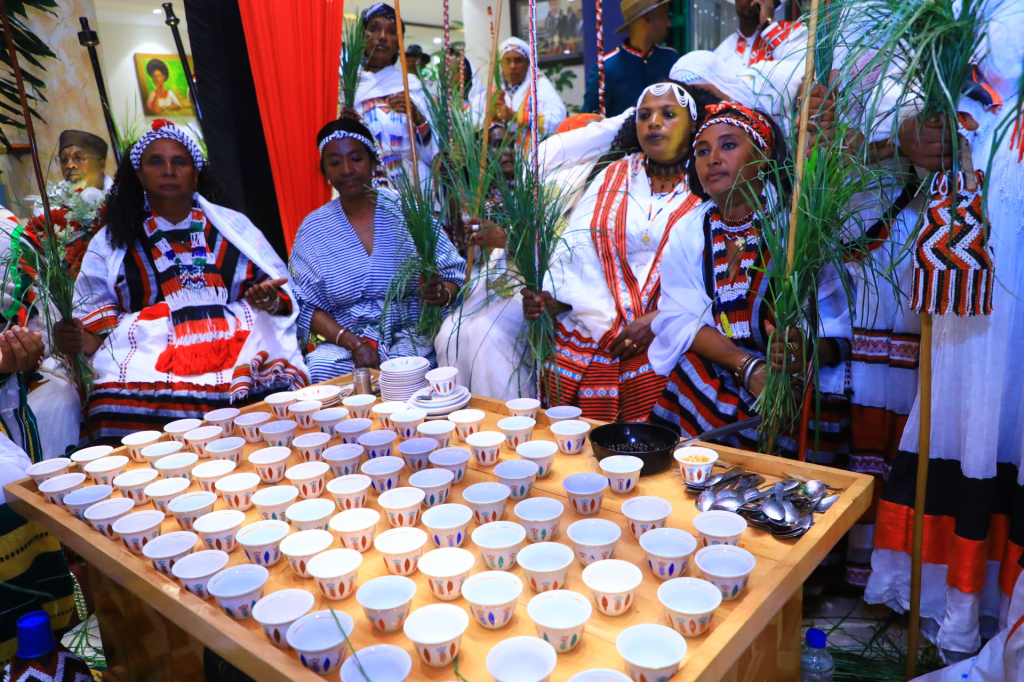
The Full Testimony
Let us read the sentence again — the full sentence — and hear it now with understanding:
“Irreechaan humneessaa namummaa, lachiisaa namummaa, marabeessaa namummaa, nageessaa namummaa, araarsaa namummaa, waloomsaa uumaa-uumamaa, sirna galateeffannaa, yaadannoo uumamaa, hulluuqoo hameenyaa, mallattoo ulfoo, yeroo dhiifamaa, ce’umsaa baraa, damboobsaa namummaa, fooyyessaa namummaa, fufsiisaa namummaa, fineessaa namummaa, guutessaa namummaa, kadhannaa gaarummaa, fi haaromsaa namummaa ti.”
Irreechaa is the empowering of humanity, the reconciling of humanity, the unifying of humanity, the peace-bringing of humanity, the forgiving of humanity, the harmonizing of creation, the order of thanksgiving, the memory of creation, the rejection of evil, the sign of love, the time of forgiveness, the turning of the year, the restoring of humanity, the improving of humanity, the fulfilling of humanity, the refining of humanity, the completing of humanity, the prayer of goodness, and the renewing of humanity.
This is not poetry. This is testimony. This is the Oromo people’s declaration of what Irreechaa does in the world.
Humanity can be renewed. Not through politics or economics or technology alone, but through the ancient practices of reconciliation, gratitude, purification, and community. Not through grand ideological projects, but through the simple, profound act of gathering at the water with your people, setting down your grudges, and giving thanks.
Irreechaa is the renewal of humanity. And it happens every year, at the water’s edge, one person at a time.
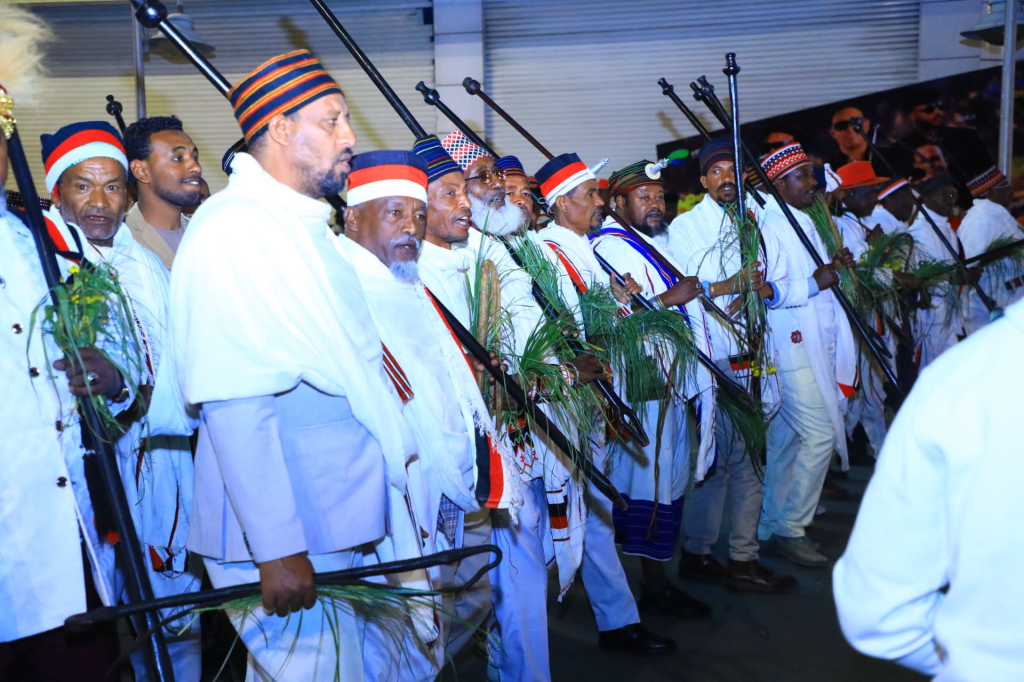
Baga Irreechaa Nagaan Geessan
The Oromo greeting says it all:
Baga Irreechaa nagaan geessan.
May the Irreechaa arrive in peace.
May the festival be empowering, reconciling, unifying, peace-bringing, forgiving, harmonizing, thanksgiving, memorial, rejecting of evil, sign of love, time of forgiveness, turning of the year, restoring, improving, fulfilling, refining, completing, prayerful, and renewing of humanity.
May the waters receive your gratitude.
May the grass carry your prayers.
May the nation, like the earth after the rains, emerge greener and stronger than before.
And may you — and all of us — be renewed.
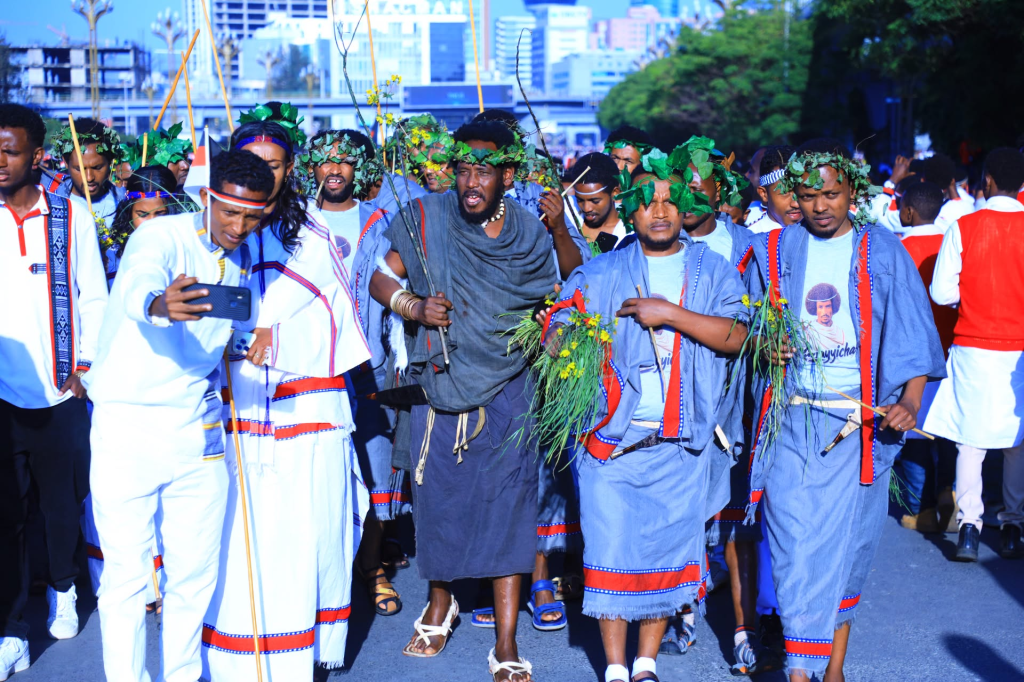
#Irreechaa #Oromia #Ethiopia #RenewalOfHumanity #HaaromsaaNamummaa #PeaceAndReconciliation #Thanksgiving #KadhannaaGaarummaa
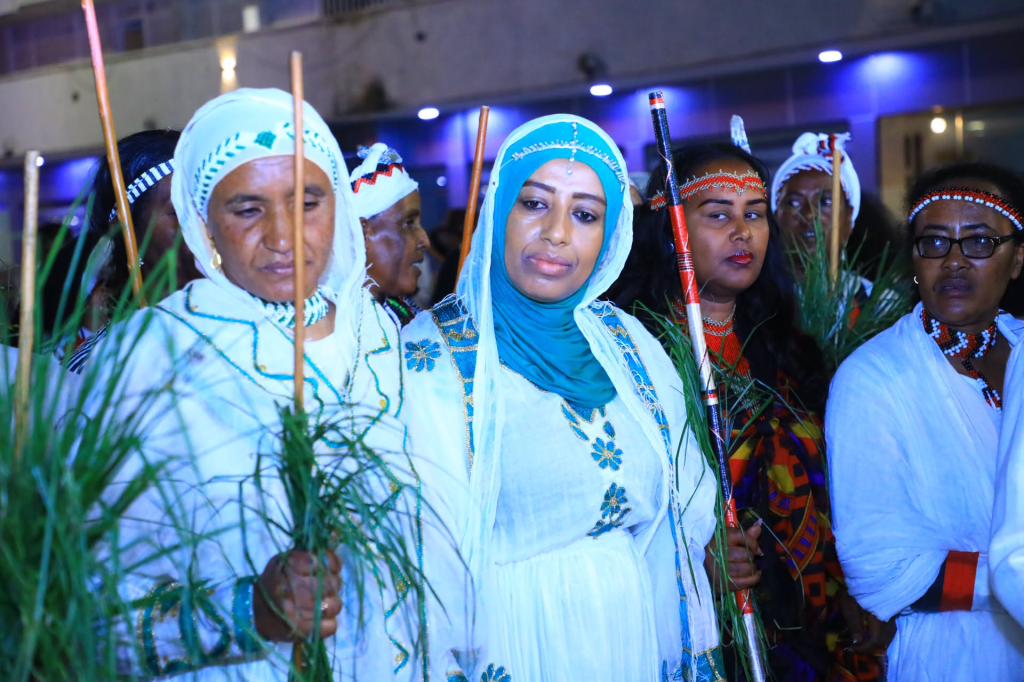
photos credit: OBN

Irreechaa: The Festival That Renews Humanity Itself
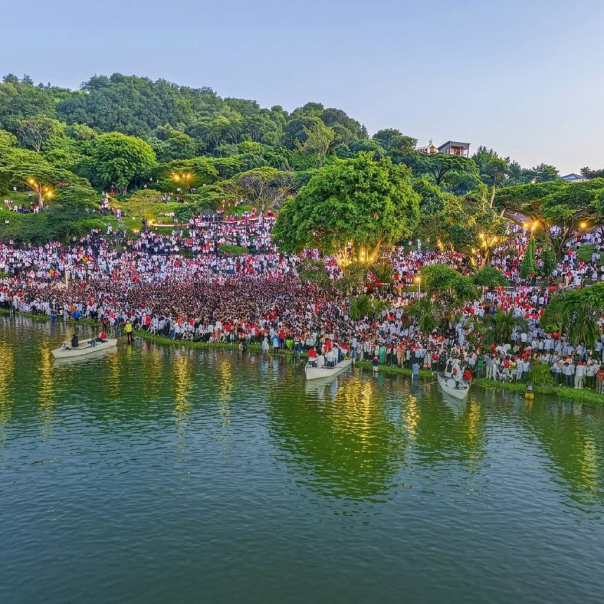
In the Oromo language, ten words capture what no single English phrase can hold: Irreechaa is empowering, reconciling, unifying, peace-bringing, restorative, improving, fulfilling, refining, completing, and renewing of humanity.
Beneath the sycamore trees, beside the sacred waters, a people gather not merely to celebrate — but to become whole again.
Ten Words, One Truth
There are moments when a single sentence carries the weight of an entire civilization’s wisdom. The Oromo people have such a sentence about Irreechaa:
“Irreechaan humneessaa, lachiisaa, marabeessaa, nageessaa, damboobsaa, fooyyessaa, fufsiisaa, fineessaa, guutessaa fi haaromsaa namummaa ti.”
Translated, it means: “Irreechaa is empowering, reconciling, unifying, peace-bringing, restorative, improving, fulfilling, refining, completing, and renewing of humanity.”
This is not poetry for its own sake. It is a theological statement, a philosophical declaration, and a psychological insight — all compressed into ten carefully chosen Oromo words. Each word describes not merely what Irreechaa does, but what it is. The festival is not a symbol of these things. It is the mechanism through which they happen.
To understand Irreechaa is to understand that humanity — fractured, exhausted, divided, grieving — can be regenerated. And the Oromo people have been practicing that regeneration for thousands of years.
Humneessaa: The Empowerment
Irreechaa begins with empowerment — humneessaa.
Before the festival, participants are asked to reconcile with themselves and with others. They set aside grudges. They release resentment. This is not weakness. It is the most difficult form of strength: the strength to lay down your weapons, to open your hands, to approach the sacred water without the armor of grievance.
The Oromo understand something that modern psychology is only now catching up to: unresolved conflict is a form of imprisonment. It binds the spirit. It drains the soul. To forgive — to seek araara — is to be liberated.
At Irreechaa, the person who has reconciled is not just morally superior. They are empowered. They have reclaimed energy that was being spent on resentment. They stand at the water’s edge lighter, freer, more capable of gratitude. This is the first regeneration: the empowerment that comes from letting go.
Lachiisaa: The Reconciliation
The second word is lachiisaa — reconciliation.
This is Irreechaa’s beating heart. Without araara, the festival cannot proceed. The tradition is explicit: you cannot participate in Irreechaa while holding a grudge. The water will not receive your thanks if your heart is still at war.
In a world that profits from division — where political parties, media ecosystems, and social platforms thrive on grievance — this requirement is revolutionary. Irreechaa says: Before you celebrate, reconcile. Before you give thanks, make peace. Before you approach the sacred, heal the human relationships that have been broken.
The Oromo do not pretend that reconciliation is easy. They do not suggest that pain should be ignored or injustice forgotten. They simply insist that the work of peace must be done — deliberately, consciously, before the community gathers. This is not naive optimism. It is disciplined spiritual practice.
At Hora Arsadi, at Hora Finfinne, at watersides across Oromia, millions of people perform this practice every year. They come as individuals carrying private wounds. They leave as a community bound by shared peace.
Marabeessaa: The Unification
Marabeessaa — unification. Gathering. Coming together as one.
Irreechaa is the largest gathering of Oromo people in the world. Millions arrive from across Ethiopia, from the diaspora, from every walk of life. Farmers and professors. Mothers and students. Elders and children. Muslims and Christians and practitioners of the old faith. They dress in white — a sea of unity that visually overwhelms the eye.
But the unification is not mere numbers. It is spiritual. It is the experience of dissolving the boundaries that separate human beings from one another. For one day, the Oromo people are not many. They are one.
This is what the Oromo call tokkummaa — unity — and it is not an abstract ideal. It is a lived experience at the water’s edge. The person standing beside you is not a stranger. They are your brother. They are your sister. They are yourself, reflected in the sacred waters.
In a nation and a world where ethnic, religious, and political identities so often divide, Irreechaa offers a different possibility: a unity that does not erase difference but transcends it. Everyone is welcome. Everyone is included. Everyone belongs.
Nageessaa: The Peace-Bringing
Nageessaa — peace-bringing.
The Oromo greeting for the festival is “Baga Irreechaa nagaan geessan” — May the Irreechaa arrive in peace. This is not a casual wish. It is a declaration of intent. Peace is not something that happens to you. It is something you arrive at, together, at the water, with your hands open and your grudges surrendered.
Irreechaa does not merely celebrate peace. It produces it. The festival is a peace-making technology, an ancient ritual that creates the conditions for harmony between individuals, communities, and the divine.
Consider what happens when millions of people gather in a single place and commit, together, to reconciliation. Consider what happens when a nation’s largest cultural event is built on the requirement that participants set aside their conflicts. Consider what happens when the sacred water receives only the prayers of those who have made peace with their neighbors.
Peace is not the absence of conflict. It is the presence of araara. And Irreechaa makes that presence visible, tangible, and real.
Damboobsaa: The Restoration
Damboobsaa — restorative. Renewing. Returning what was lost.
The rainy season in Oromia is long and hard. Rivers swell. Roads wash out. Crops are destroyed. Families are separated. The land itself seems to be in mourning.
Then the rains end. The sun returns. The harvest begins. And the people gather at the water to give thanks.
Irreechaa is the celebration after the suffering. It is the moment when the community pauses and says: We made it through. We survived. We are still here.
This is restoration — not the erasure of hardship, but the transformation of hardship into gratitude. The floods came, and we endured. The darkness came, and we waited. The sun returned, and we give thanks.
The Oromo understanding of restoration is deeply wise. It does not pretend that pain did not happen. It does not rush past grief. It simply insists that pain and grief are not the end of the story. The water is still there. The grass is still green. The community is still gathered. And the harvest, despite everything, has come.
Fooyyessaa: The Improvement
Fooyyessaa — improving. Making better.
Irreechaa is not content with survival. It seeks flourishing. The festival is not merely about maintaining what exists but about becoming more than you were.
This is the Oromo concept of fooyya’uu — progress, development, growth. The festival is connected to the harvest, to the productivity of the land, to the prosperity of the community. It celebrates not just what has been given but what has been built.
But the improvement Irreechaa seeks is not only material. It is moral, spiritual, and communal. The person who participates in Irreechaa is not the same person who entered the festival. They have been improved — refined by the discipline of reconciliation, elevated by the experience of unity, deepened by the practice of gratitude.
Irreechaa makes people better. Not through lectures or commandments, but through participation in a ritual that embodies the values it teaches.
Fufsiisaa: The Fulfillment
Fufsiisaa — fulfilling. Completing what was promised. Making whole.
There is a deep longing in the human heart for completion — for the sense that life is not fragmented, that it has meaning, that it is going somewhere. Irreechaa answers that longing.
The festival marks the fulfillment of a cycle. The rains came, and the harvest followed. The prayers were offered, and the blessings arrived. The year turns, and the community moves forward, not into emptiness, but into the next season of hope.
But fufsiisaa is more than seasonal. It is existential. At the water’s edge, surrounded by millions of people who share your language, your faith, your hope, you experience a sense of completeness that modern life so often denies. You are not alone. You are not meaningless. You are part of something larger than yourself — a people, a tradition, a story that stretches back thousands of years and forward into an unknown but blessed future.
This is fulfillment: the knowledge that you are exactly where you are supposed to be.
Fineessaa: The Refinement
Fineessaa — refining. Purifying. Making fine.
Water is the medium of purification in Oromo cosmology. At Irreechaa, participants dip sacred grass into the lake or river and sprinkle the water upon themselves and others. The Kormoomsaa — the blessing of the young men — is a ritual sprinkling that cleanses and consecrates.
This is not merely symbolic. The Oromo believe that water is the source of purity and the foundation of creation. To be sprinkled with sacred water is to be washed — not just physically, but spiritually, morally, and communally.
The refinement Irreechaa offers is the refinement of the human character. At the water’s edge, the layers of resentment, pride, and grievance are stripped away. What remains is the essential human being — vulnerable, grateful, connected, at peace.
The festival does not make people perfect. It makes them fine — purified of the things that separate them from themselves, from each other, and from the divine.
Guutessaa: The Completion
Guutessaa — completing. Making full. Filling up what was empty.
There is a difference between fulfillment and completion. Fulfillment is the experience of meaning. Completion is the achievement of wholeness. Irreechaa offers both.
The festival completes the cycle of the year. It completes the work of reconciliation. It completes the process of purification. It completes the community — bringing together all its members, from the youngest child to the oldest elder, from the nearest village to the farthest diaspora.
At Irreechaa, nothing is left out. No one is excluded. The festival is guutuu — complete, full, entire. The sea of white garments is not just a visual image. It is a theological statement: this is what wholeness looks like. This is what humanity becomes when it gathers in gratitude and peace.
The Oromo understanding of completion is radical. It insists that human beings are not complete as individuals. We are complete only in community. We are complete only in relationship with the divine. We are complete only when we gather at the water, together, with hands open and hearts reconciled.
Haaromsaa Namummaa: The Renewal of Humanity
And so we arrive at the final and greatest word: haaromsaa namummaa — the renewal of humanity.
This is the culmination of all the others. Empowerment leads to reconciliation. Reconciliation leads to unity. Unity brings peace. Peace enables restoration. Restoration opens the way for improvement. Improvement leads to fulfillment. Fulfillment demands refinement. Refinement produces completion. And completion is renewal.
Irreechaa is not just a festival. It is a process — a spiritual technology that takes human beings as they are and transforms them into what they can become. It takes fractured people and makes them whole. It takes divided communities and makes them one. It takes a broken world and makes it new.
This is what the Oromo people have known for thousands of years. This is what they celebrate at the water’s edge every year. This is what they offer to Ethiopia, to Africa, and to the world.
Humanity can be renewed. Not through politics or economics or technology alone, but through the ancient practices of reconciliation, gratitude, purification, and community. Not through grand ideological projects, but through the simple, profound act of gathering at the water with your people, setting down your grudges, and giving thanks.
Irreechaa is the renewal of humanity. And it happens every year, at the water’s edge, one person at a time.
Baga Irreechaa Nagaan Geessan
The Oromo greeting for the festival says it all:
Baga Irreechaa nagaan geessan.
May the Irreechaa arrive in peace.
May the festival be empowering, reconciling, unifying, peace-bringing, restorative, improving, fulfilling, refining, completing, and renewing of humanity.
May the waters receive your gratitude.
May the grass carry your prayers.
May the nation, like the earth after the rains, emerge greener and stronger than before.
And may you — and all of us — be renewed.
#Irreechaa #Oromia #Ethiopia #RenewalOfHumanity #PeaceAndReconciliation #Thanksgiving #HaaromsaaNamummaa
Irreechaa: The Regeneration of Humanity
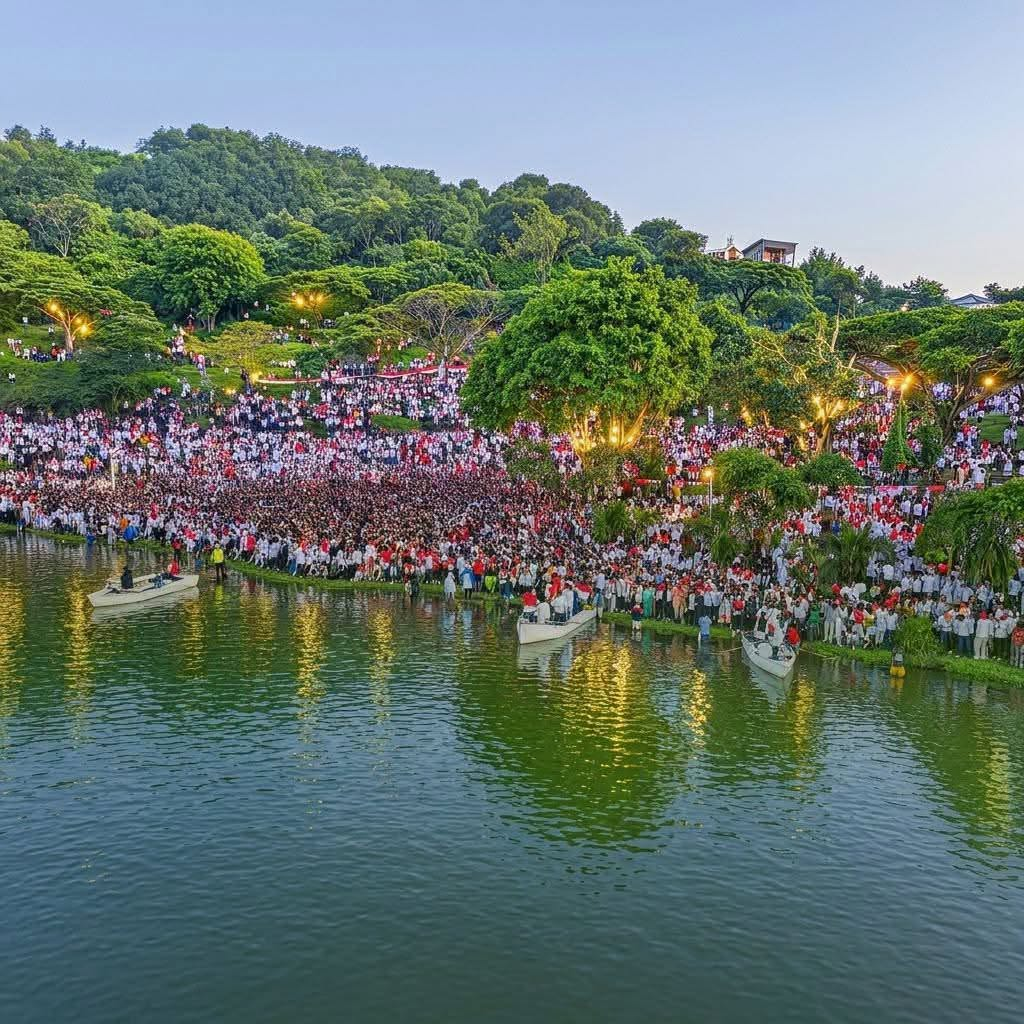
Beneath the sacred sycamores at Hora Arsadi, millions gather not merely to give thanks, but to become something new. In a world fractured by grievance and division, the Oromo thanksgiving festival offers a radical proposition: you cannot thank God while holding a grudge.
BISHOFTU, Ethiopia — The waters of Hora Arsadi do not discriminate.
They receive the freshly cut grass from the hands of a university student in her first traditional dress. They receive the prayers of an elder whose grandfather was forbidden from approaching this shore. They receive the flowers from a mother who buried a son in last year‘s conflict. And they receive the sprinkled droplets — Kormoomsaa, the blessing of the young men — upon the heads of strangers who arrived here as enemies and will leave as something else entirely.
This is Irreechaa. And to understand why it is the regeneration of humanity, you must first understand what the Oromo people have always known: that the human spirit, like the earth itself, needs a season to renew.
The Rejection of Resentment
There is a rule at Irreechaa that might strike the modern observer as impossibly naive. According to tradition, a person cannot participate unless they have resolved their disputes with others. Holding onto resentment is not permitted. You cannot come to the water carrying a grudge.
In an era where grievance has become identity, where political and social media economies thrive on division, where forgiveness is often mocked as weakness, this ancient requirement lands like a thunderclap.
“Before attending the festival, participants reconcile with themselves and others, setting aside grudges, anger, or resentment,” writes Girma Mirgisa of the Ethiopian News Agency. “This cleansing of the spirit gives the festival its essence as the festival of peace and reconciliation, where forgiveness, unity, and brotherhood take center stage”.
The Oromo word for this is araara — reconciliation. It is not merely a suggestion. It is the prerequisite. The water will not accept your thanks if your heart is still at war.
This is not a festival that asks you to feel grateful while ignoring pain. It asks you to set the pain down first — deliberately, consciously, as a spiritual discipline — and then approach the sacred.
Water as Origin, Water as Renewal
The Oromo philosophy of water is not ornamental. It is cosmological.
“The ancient Oromo philosophy regarding water views it as the source of purity and the foundation of creation and life,” Prime Minister Abiy Ahmed noted in his Irreechaa message this year. Water is where life begins. It is where life returns. It is the medium through which gratitude flows.
The Oromo proverb says it plainly: “A people without Melka — a river, a water source — is like a people without a head”.
At Irreechaa Melka, celebrated at the close of the rainy season (Ganna) as Ethiopia enters spring (Birraa), participants carry green grass and daisies to the water‘s edge. They dip the grass into the lake or river. They sprinkle the water upon themselves and one another. They lift their hands in prayer.
The grass is not a symbol in the shallow sense. It is the thing itself: fertility, life, renewal, the stubborn persistence of green in a world that so often tends toward brown. The water is not just water. It is the medium of regeneration.
“The sown seed dies and is resurrected to bear fruit,” Abiy said, describing the Oromo understanding of harvest and divine providence. This is not a metaphor for the religious. It is the pattern of the cosmos. Death and resurrection. Rain and spring. Grief and gratitude. You cannot have one without the other.
The Dark Season and the Return of the Sun
To understand Irreechaa, you must understand Ganna.
The rainy season in Oromia is not a gentle drizzle. It is months of heavy downpour, swollen rivers, destroyed crops, impassable roads, isolation. Families cannot visit one another. Communities are physically separated by water that has become dangerous rather than life-giving.
The Oromo do not detest rain. But they recognize Ganna as a demanding season — a time of endurance, of waiting, of trusting that the sun will return.
“As the winter darkness clears, the Oromo people gather in unity at the river for traditional thanksgiving rituals,” Abiy said this year, drawing an explicit parallel between the natural season and Ethiopia’s long struggles with “economic, political, and administrative challenges”.
The Prime Minister’s comparison is worth noting, but it is the deeper spiritual parallel that matters. Irreechaa is the celebration after the suffering. It is the moment when the community pauses at the water‘s edge and says: we made it through. We survived. We are still here.
“The heavy rain brings with it lots of things like swelling rivers and floods that can destroy lives, cattle, crop, and homes,” notes the Ethiopian Herald. “The Oromo celebrate Irreechaa not only to thank Waaqa but also to welcome the new season of plentiful harvests following the dark and rainy winter season”.
This is regeneration: not the erasure of hardship, but the transformation of hardship into gratitude.
A Festival Older Than Empires
Irreechaa’s roots run deeper than any institution that currently exists on the African continent. Estimates place its origins at over 6,000 years, connected to the ancient Cushitic civilizations that predate the rise of modern empires and religions. Some accounts suggest the tradition has been celebrated in this part of Africa for 12,000 years.
The festival is intimately connected to the Gadaa system, the traditional Oromo governance structure recognized by UNESCO as an Intangible Cultural Heritage of Humanity. The Gadaa system organizes society by age grades, each with defined responsibilities and transition periods. Irreechaa is woven into this system — a spiritual punctuation mark in the rhythm of community life.
“When Europe is still in the Dark Ages, Africans were conducting a colorful, passionate, and heartfelt thanksgiving celebration,” writes Solomon Dibaba of the Ethiopian News Agency, “spiritually outsmarting the ‘civilizing’ mission of the European colonizers”.
This is not merely historical pride. It is the living proof that African civilizations developed sophisticated spiritual and philosophical systems long before colonial encounter — systems that understood gratitude, reconciliation, and renewal as the foundational architecture of human community.
The Reclamation of Space
For decades, Irreechaa was banned.
Under successive regimes, the Oromo people were denied the right to celebrate at their own sacred sites. Public gatherings were suppressed. The geography of the capital — the very place whose name Finfinne derives from the sacred lake around which it was built — was overwritten by imperial and colonial logics.
The revival of Irreechaa at Hora Finfinne, in the heart of Addis Ababa, is therefore not just a cultural event. It is an act of reclamation.
“Celebrating Irreechaa here is not just a cultural act,” writes Advocacy for Oromia. “It is a powerful reclamation of space, identity, and dignity”.
Prime Minister Abiy’s message this year acknowledged this directly: “The restoration and institutionalization of Hora Finfinnee Irreecha to its river site and the grand gatherings at Hora Harsadi in Bishoftu” are proof that “long-standing cultural questions regarding language and heritage have been fully answered”.
For the Oromo people, space is not abstract. The water is not interchangeable. Hora Arsadi is not simply a convenient lake. It is a specific, sacred geography where generations have come to pour out their gratitude and their grief. To ban Irreechaa is to sever the people from their own spiritual lungs.
To restore it is to allow them to breathe again.
The White Sea and the Dissolution of Difference
On the day of Irreechaa at Hora Arsadi, millions of people dress in white.
The image is overwhelming. A sea of white garments, traditional habesha kemis and gorro, moving toward the water. White turbans. White shawls. The white of purity, of peace, of renewal.
But the white does not erase difference. It holds it.
Women wear the caaccuu, beads of different colors. They carry the siiqqee, the stick traditionally held by Oromo women, a symbol of their agency and their role in preserving moral order. Men carry the haroresa, a traditional stick designated by the Gadaa system. The Abba Gadaas — fathers of the Gadaa system — lead prayers. The Haadha Sinqees — women entrusted with justice and peace — lift their siiqqee sticks, representing balance and protection.
There are Muslims here. There are Christians. There are practitioners of the old faith, the belief in Waaqa, the one God who created the heavens and the earth. They come together not because their differences have disappeared, but because something larger than difference calls them to the water.
“Irreechaa is not exclusively an Oromo festival,” says Yusus Omar Bocha, a Kenyan attendee. “Many Africans, Asians, and individuals from various nationalities also partake”.
Claire, a visitor from Belfast, Northern Ireland, described her experience to the BBC: “It is amazing. Everybody wants to say hello, everyone wants to give you a kiss and say welcome”.
This is regeneration: the ability to recognize oneself in the stranger, to offer blessing to those who do not share your language or your history, to become, for a moment, something larger than your own small identity.
Gratitude as Resistance
There is a tendency in modern discourse to treat gratitude as passive. To give thanks is to accept one’s circumstances. To express contentment is to abandon the struggle for change.
Irreechaa rejects this dichotomy.
The festival is, at its core, a profound act of seeing — of recognizing that despite the floods, despite the oppression, despite the losses, there is still something worth gathering by the water for. The harvest came. The rains ended. The sun returned. The community survived.
“We believe that a country without a sea outlet is a country without life,” Abiy said this year, connecting the Oromo philosophy of water to Ethiopia’s national quest for maritime access. The analogy is instructive: water is not just spiritual in Oromo cosmology. It is strategic. It is the foundation of prosperity. To be without it is to be incomplete.
But the deeper lesson of Irreechaa is that gratitude does not mean complacency. It means grounding. It means remembering what you have, what you have survived, what you have been given — and then moving forward from that foundation.
The 2025 Irreechaa theme, “Irreecha: For National Renewal,” captured this perfectly. The festival is not a retreat from the future. It is a ritual that prepares the community to build it.
The Regeneration of Humanity
To say that Irreechaa is the regeneration of humanity is not to claim that the festival makes humans biologically new. It is to claim something more radical: that the practices embedded in this ancient celebration — reconciliation, gratitude, purification, community, forgiveness — are the very mechanisms by which human beings become capable of living together again after fracture.
Every year, millions of people gather at the water. Every year, they are asked to set down their grudges. Every year, they dip the grass, sprinkle the water, lift their hands, and sing the songs their ancestors sang.
And something happens.
“Irreechaa has the potential to contribute significantly to national dialogue and national consensus,” writes the Ethiopian Herald. “It brings people from various ethnic backgrounds together. This inclusivity creates a space where diverse voices can be heard, perspectives can be shared, and different communities can engage in meaningful dialogue”.
This is regeneration: the slow, annual, ritual work of becoming a people again. Not a people defined by ethnicity or politics or grievance, but a people defined by their willingness to stand at the water‘s edge together and say: we give thanks.
The Oromo have a greeting for this festival: Baga Irreechaa nagaan geessan — May the Irreechaa have arrived in peace.
It is not a wish. It is an instruction. Peace is not something that happens to you. It is something you arrive at, together, at the water, with your hands open and your grudges surrendered.
That is the regeneration. That is Irreechaa.

Irreechaa: A Festival of Peace, Reconciliation, and Ethiopia’s Renaissance
A Feature Address Delivered by Prime Minister Abiy Ahmed Ali
FINFINNEE, October 2026 — As the dark clouds of the rainy season give way to the bright sunshine of spring, millions of Oromo people across Ethiopia and the world are celebrating Irreechaa — the ancient thanksgiving festival that marks the transition from darkness to light, from hardship to hope, and from isolation to unity.
This year’s celebration carries a message that resonates far beyond the Oromo community: Irreechaa is peace. Change is prosperity. And Ethiopia’s prosperity has not yet arrived.
A Season of Transition
Irreechaa is rooted in the agricultural and spiritual rhythms of Oromo life. The festival marks the end of Ganna — the dark, rainy season — and the beginning of Birraa, the bright spring season. During the rains, movement is restricted, roads become impassable, and daily life slows. When the rains end, the land blooms, rivers fill, and the people emerge to give thanks.
The Oromo people gather at riversides and lakeshores — at Hora Finfinnee in Addis Ababa and Hora Har-sadee in Bishoftu — to thank Waaqa (God) for bringing them safely through the darkness. Elders offer blessings. Mothers pray for peace. The green grass of the season is dipped into the water and sprinkled as a blessing for the land, the cattle, and the people.
The Symbolism of Darkness and Light
The text of this year’s celebration draws a powerful parallel between the natural seasons and Ethiopia’s political and economic journey.
For generations, Ethiopia has been a country of immense potential — rich in natural resources, strategically located, and home to diverse peoples. Yet, as the message notes, “Ethiopia, though a great country, has not been able to reach its potential.” The darkness of the rainy season serves as a metaphor for the decades of struggle, underdevelopment, and political turmoil that have held the nation back.
But just as the rains must eventually end, so too must the darkness of Ethiopia’s past give way to a new dawn. The message declares: “The sun of Ethiopia’s prosperity is beginning to rise.”
A Call for Unity and Reconciliation
Central to the Irreechaa message is a call for peace, reconciliation, and national unity.
The text invokes the Oromo proverb: “Bakka oolan irra bakka bulantu caala” — meaning that where one spends the night is better than where one grazes. In other words, reconciliation and return are preferable to prolonged conflict and estrangement.
The message extends an olive branch to those who have taken up arms against the state: if they return to peace, “the door of peace remains open.” It emphasizes that the Oromo struggle has been resolved through peaceful means, and that there is no longer any reason for armed conflict.
At the same time, the message reaffirms Ethiopia’s sovereignty and territorial integrity, invoking the legacy of Adwa — the historic victory of Ethiopian forces over colonial invaders in 1896. “We are continuing the heroism of our fathers at Adwa, protecting Ethiopia from enemies,” the text declares.
A Vision of Prosperity
The message outlines a vision of Ethiopia’s future built on the foundations of its ancient heritage and modern development.
It points to ongoing national projects — the completion of the Grand Ethiopian Renaissance Dam (GERD), the convening of the National Dialogue, the construction of fertilizer and fuel factories, and the development of Bishoftu International Airport — as signs that “the sun of Ethiopia’s prosperity is beginning to shine.”
The message also emphasizes the importance of the Gadaa system, the traditional Oromo governance structure recognized by UNESCO as intangible cultural heritage. It calls for the integration of Gadaa principles — including Safuu (moral code), customary courts, and community service — into modern governance.
“We are building a system that builds on our ancient traditions,” the text states. “Knowledge for all through Gadaa and Safuu education; justice for all through customary courts; service for all through public administration; and security for all through institutional protection.”
Irreechaa as a National Festival
This year’s Irreechaa celebration at Hora Finfinnee and Hora Har-sadee has drawn particular attention as a symbol of Oromo cultural revival and national unity.
The return of Irreechaa to Hora Finfinnee — the original sacred site in the heart of Addis Ababa — is seen as a historic reclamation of cultural space. For decades, public celebrations of Irreechaa were suppressed, and the Oromo people were denied the right to gather at their sacred sites.
The celebration at Hora Har-sadee in Bishoftu, attended by millions, has become one of the largest annual gatherings in Africa. The festival has also been celebrated by Oromo communities around the world — from Melbourne to Amsterdam to Minneapolis — where the diaspora gathers to maintain their cultural heritage.
A Message of Hope
The Irreechaa message concludes with a call to action and a prayer:
“Irreechaa is peace! Change is prosperity! Ethiopia’s prosperity has not yet arrived! May the green grass and flowers flourish! May Ethiopia be honored by the efforts of its children and live forever! May God bless Ethiopia and its people!”
As the green grass is sprinkled and the blessings are spoken, Irreechaa serves as a powerful reminder that after every dark season comes a season of light, and that the enduring spirit of a people — rooted in tradition, united in purpose, and committed to peace — can overcome any obstacle.
Irreechi Nagaadha! Gadaan Qaroomina! Qaroominni Itoophiyaa hin oolleedha!
Finfinnee, Ethiopia
October 2026

Irreechaa Celebration Honors Fallen Heroes at ABO Gullallee Headquarters
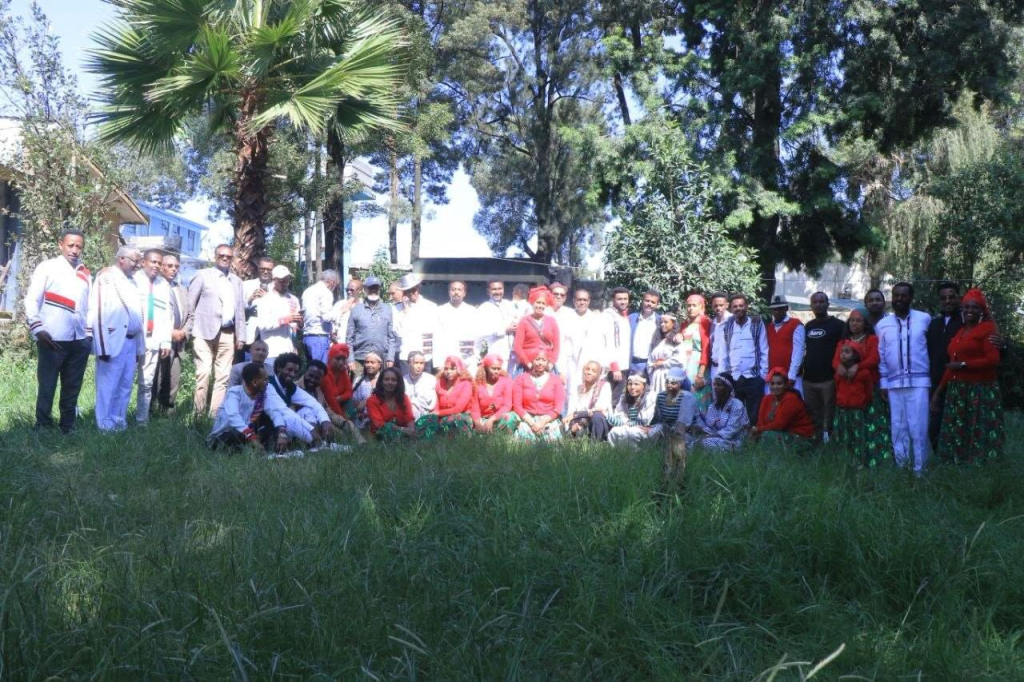
(Gullallee, OROMIA — October 1, 2026) — In a solemn yet joyful observance of tradition, members of the Oromo Liberation Army (ABO) gathered today at the organization’s Central Office in Gullallee to celebrate Irreechaa, the ancient Oromo thanksgiving festival marking the transition from the dark rainy season to the bright season of Birraa.
The celebration, held under the theme of remembrance and renewal, brought together members and leaders in a ceremony that honored both the spiritual foundations of Irreechaa and the sacrifices of Oromo heroes who have fallen in the struggle for freedom and dignity.
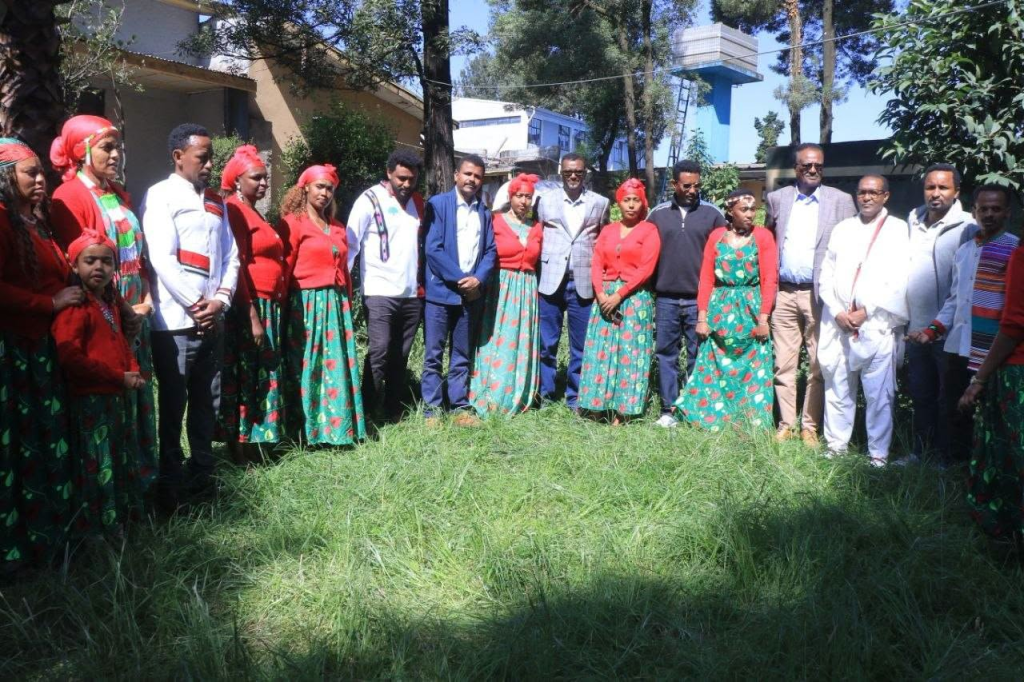
A Ceremony Rooted in Tradition
The day’s events unfolded in accordance with longstanding Oromo custom, beginning with Eebba Manguddootaa — the blessings of elders and community leaders. These blessings, central to any Irreechaa observance, invoked peace, prosperity, and divine favor upon the gathering and upon the broader Oromo nation.
Following the traditional blessings, participants turned their hearts and minds to remembrance. A memorial tribute was offered for the gootota wareegamtoota Oromoo — the martyred heroes of Oromia who gave their lives in the pursuit of freedom. The solemn moment served as a reminder that Irreechaa is not only a celebration of life and abundance but also an occasion to honor those who sacrificed everything for the generations that followed.
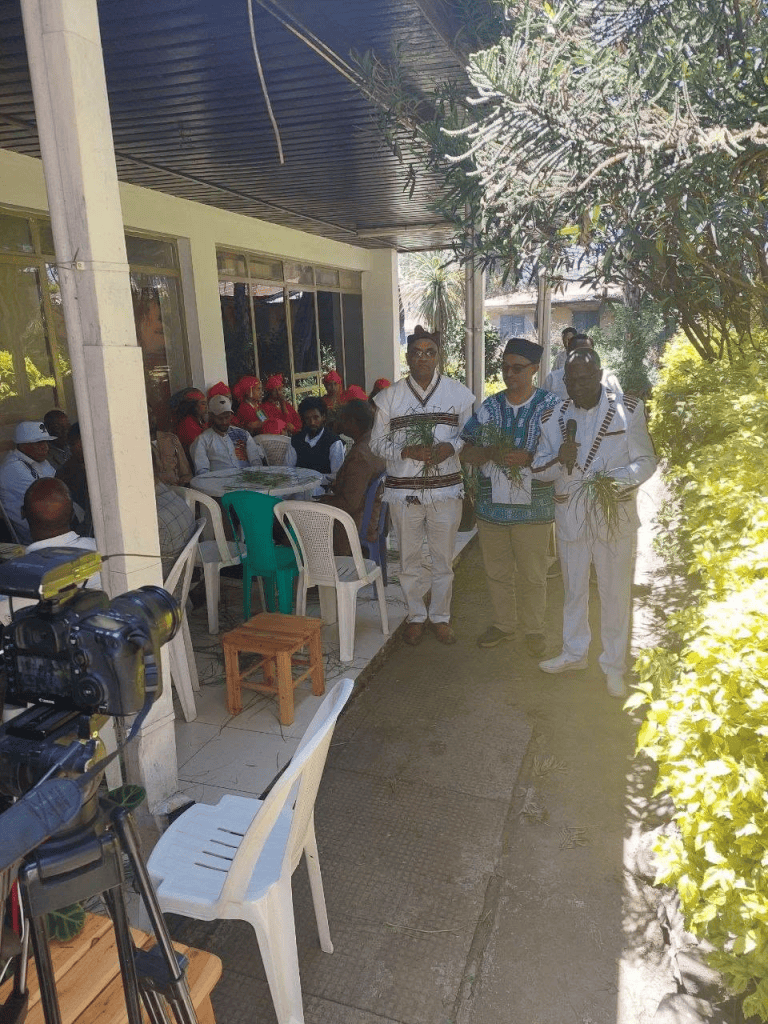
“From Where Did Irreechaa Rise, and Where Has It Arrived?”
The ceremonial program featured a keynote address delivered by a scholar on the theme: “Irreechi eessaa ka’ee eessa gahe?” — “From where did Irreechaa rise, and where has it arrived?”
The reflection traced the historical and spiritual journey of Irreechaa from its ancient origins in Oromo cosmology and the Gadaa system to its contemporary significance as a pan-Oromo cultural and political touchstone. The speaker explored how the festival has survived centuries of suppression, adapted to changing circumstances, and emerged today as one of the most powerful expressions of Oromo identity and unity.
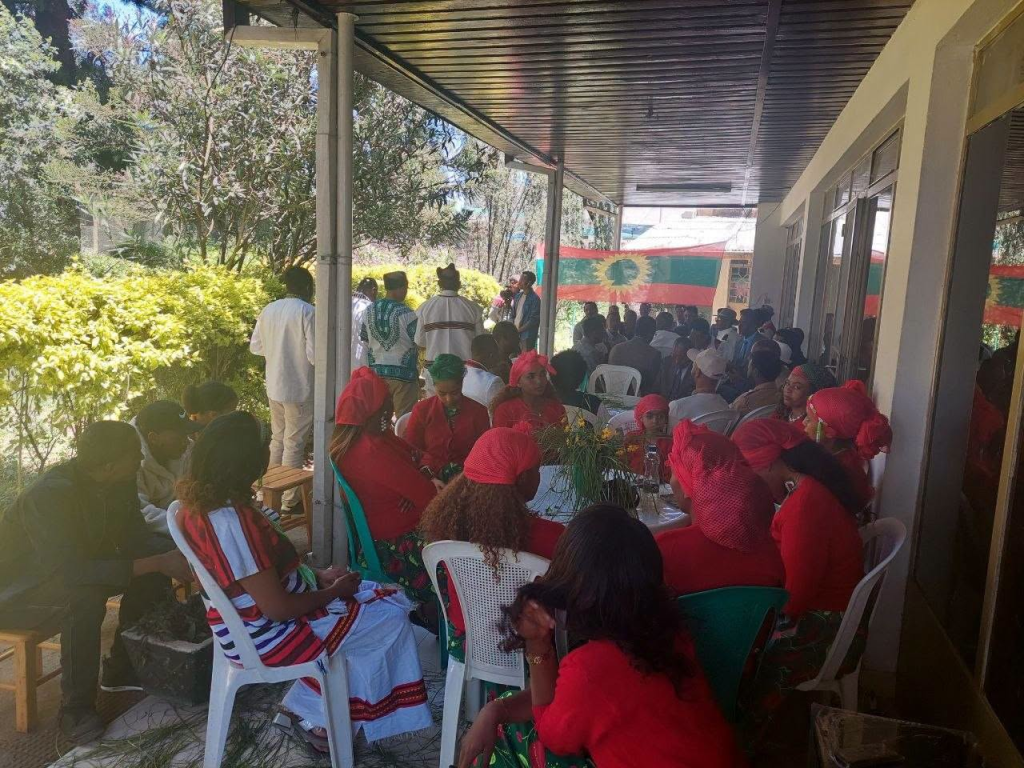
A Feast of Fellowship
The formal proceedings concluded with a communal meal — a tradition that has marked Irreechaa celebrations for generations. Members shared food and drink in an atmosphere of brotherhood and solidarity, reinforcing the bonds that unite them in purpose and commitment.
The gathering was described as having concluded “with success and victory,” a phrase that resonated with the day’s dual themes of thanksgiving and resolve.
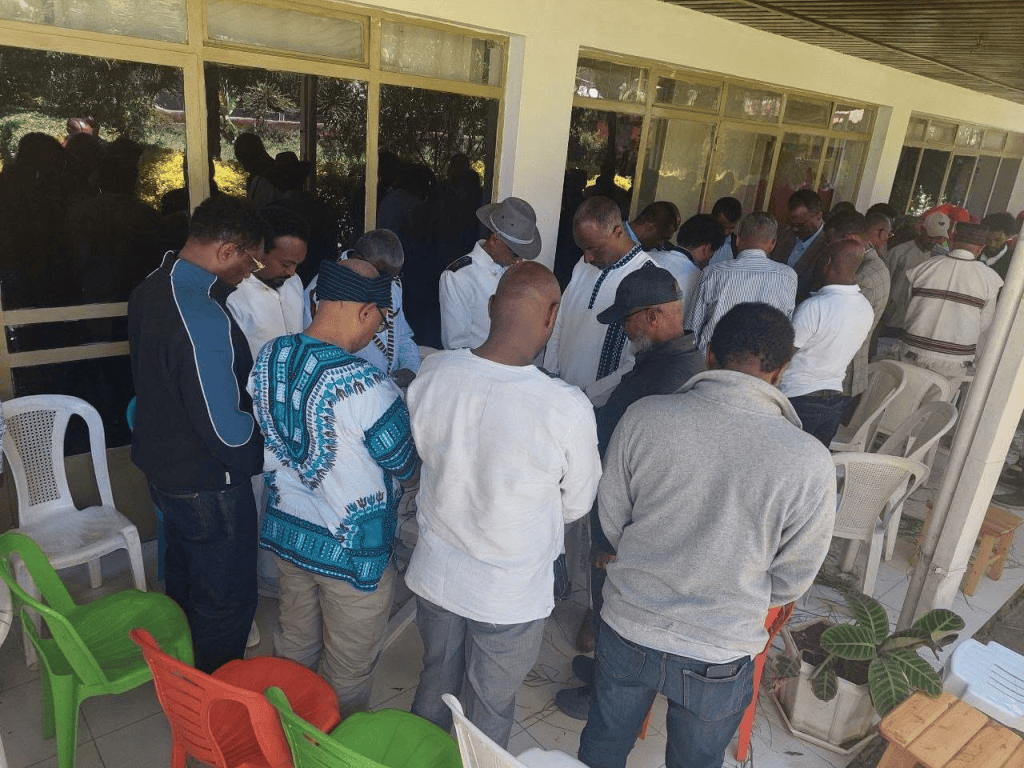
Irreechaa in Context
Irreechaa remains the most significant cultural and spiritual event on the Oromo calendar. Traditionally celebrated twice annually — at spring on hilltops (Irreechaa Tulluu) and after the rains at riversides and lakeshores (Irreechaa Malkaa) — the festival draws millions of participants from across Oromia and the global diaspora.
This year’s celebration at the ABO Gullallee headquarters reflects the enduring importance of Irreechaa as both a religious observance and a statement of cultural and national identity. For communities that have faced decades of marginalization and conflict, the festival serves as a vital space for gathering, remembrance, and the reaffirmation of shared values.
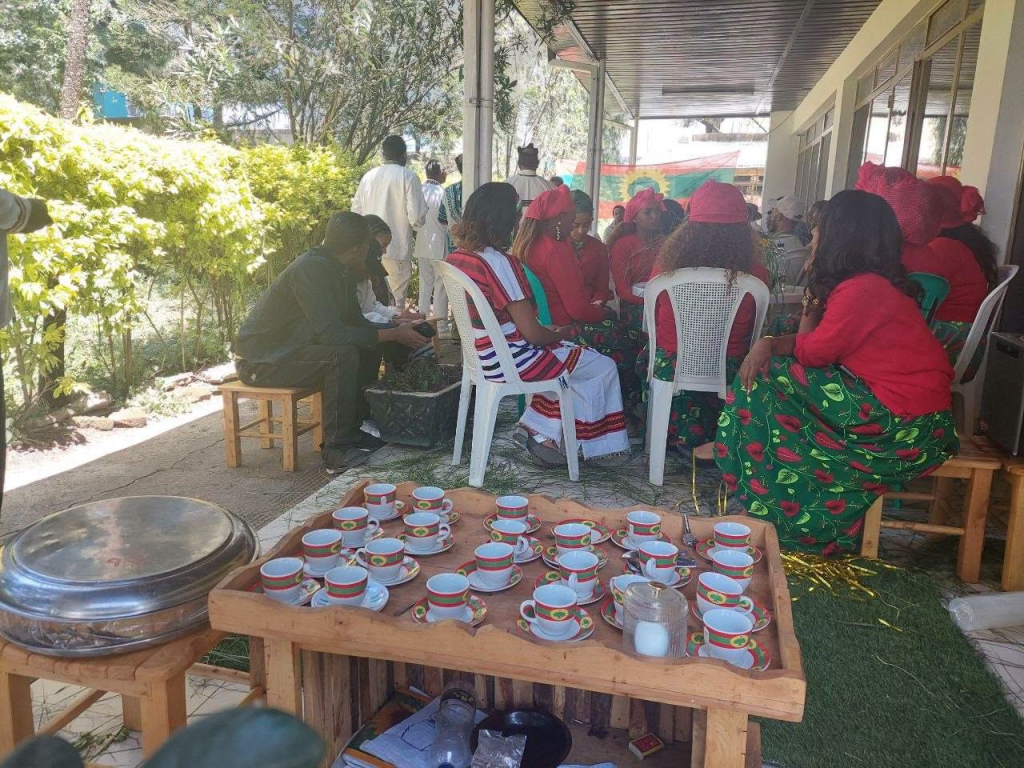
Looking Forward
As the Oromo people across Ethiopia and the world continue to observe Irreechaa celebration in the year 1959, the celebration at Gullallee stands as a testament to the resilience of tradition and the power of collective memory.
In honoring the past — both the ancient heritage of Irreechaa and the recent sacrifices of those who fought for freedom — participants looked toward a future of peace, unity, and the fulfillment of the Oromo people’s long-held aspirations.
Irreechi keenyas injifannoo keenya.
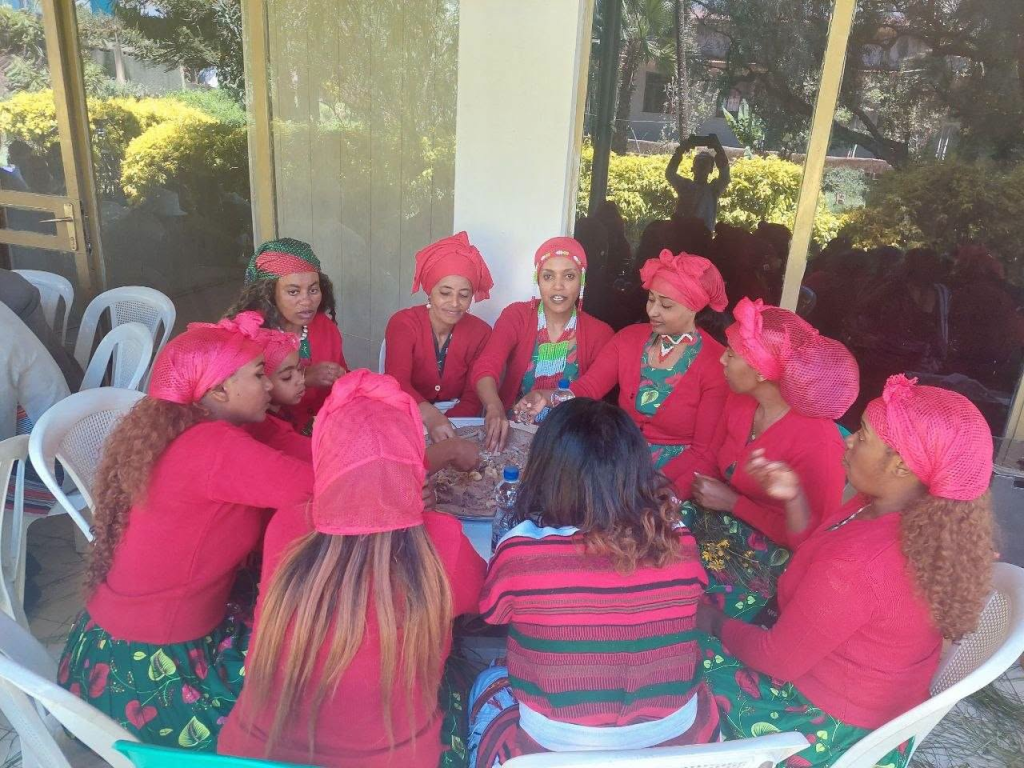
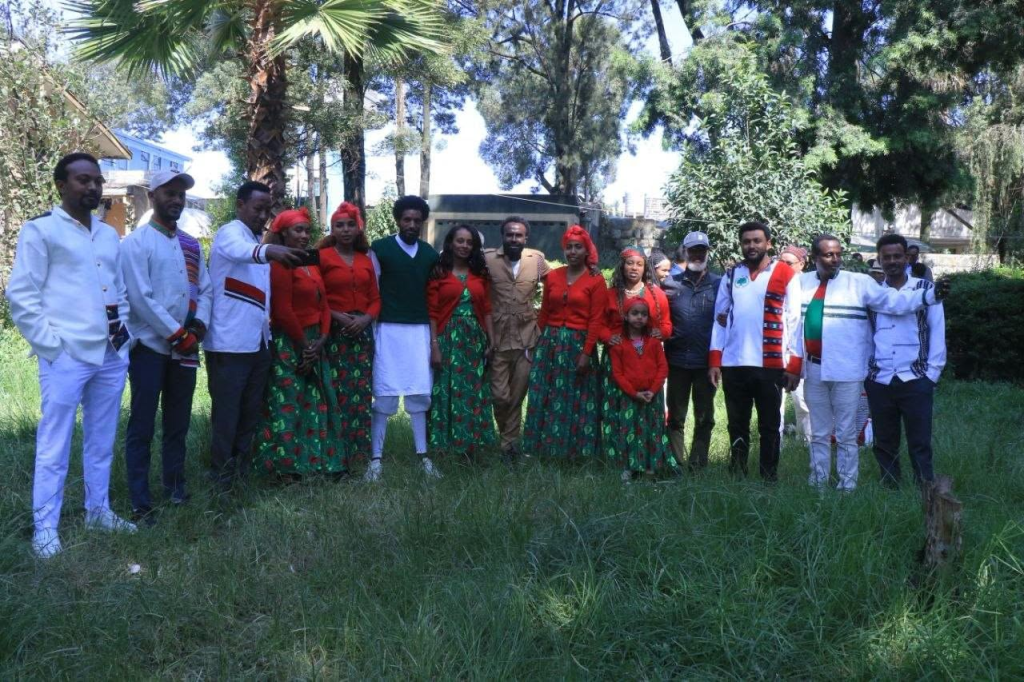
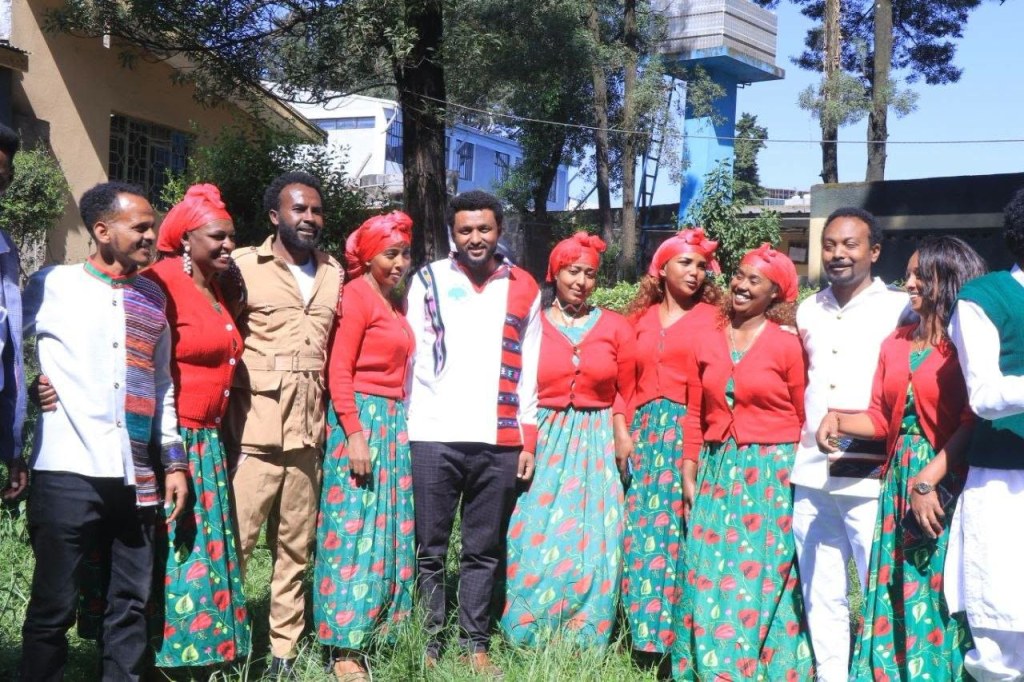
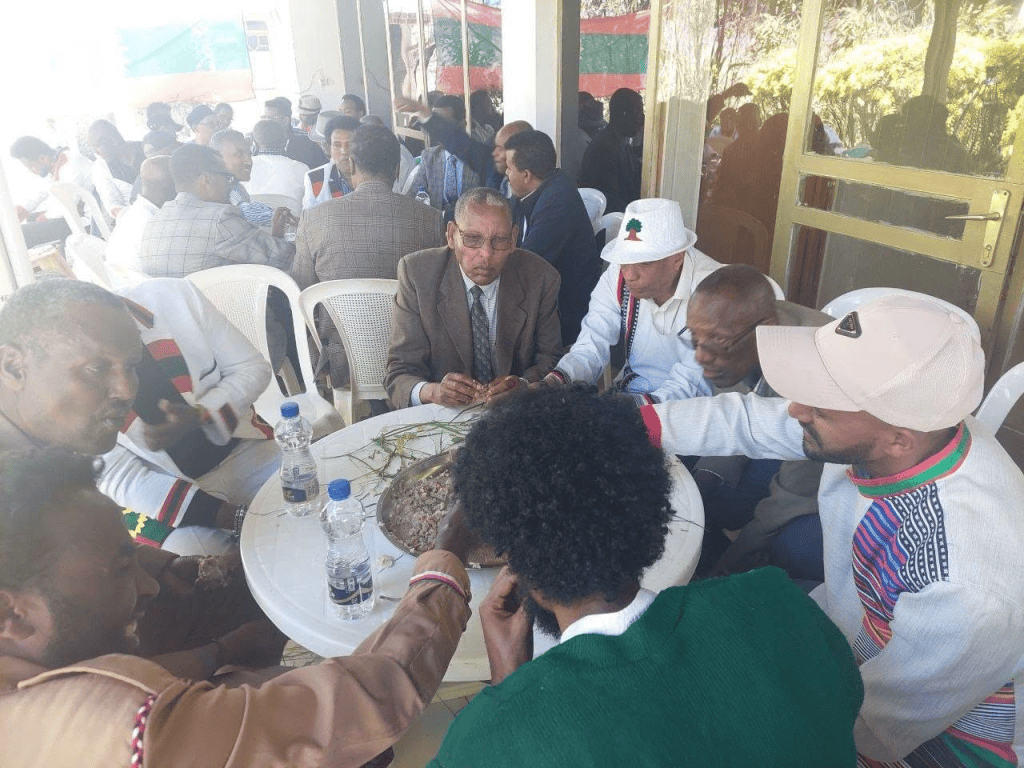

Irreechaa celebration in 1959: From Sacred Waters to a Global Stage
By Maatii Sabaa
The green grass that floated on the sacred waters of Hora Arsadi this week carried more than prayers for the harvest. It carried the weight of a people’s history — and a future still being written.
As the spring sun broke through the receding clouds of Ganna, millions of Oromo people gathered across Ethiopia and the world to celebrate Irreechaa celebration in 1959, the ancient thanksgiving festival marking the transition from the dark rainy season to the bright season of Birraa. From the shores of Lake Harsadi in Bishoftu to community parks in Melbourne and Amsterdam, the festival unfolded as both a spiritual ritual and a declaration of cultural resilience.
The Festival of Light Over Darkness
Irreechaa — sometimes spelled Irreechaa or Irrecha — is the Oromo thanksgiving to Waaqa (God) for protection through the rainy season and for the blessings of the year ahead. The festival is deeply rooted in the Gadaa system, the traditional Oromo governance structure recognized by UNESCO as an Intangible Cultural Heritage of Humanity.
The word itself carries profound meaning. Irreechaa is described as a “sign of reciprocating Waaqaa in the form of providing praise for what they got in the past, and is also a forum of prayer for the future”. It is not merely a celebration of a season’s turn — it is the moral heartbeat of a people.
Two Sacred Days, One Unifying Spirit
This year’s observance followed the traditional two-day structure set by the union of Oromo Abbaa Gadaa leaders:
Hora Finfinne: Reclaiming the Heart of the Capital
On Saturday, October 3, 2026, the celebration began at Hora Finfinne in Addis Ababa, marking a significant historical moment. For decades, public celebrations of Irreechaa were banned under successive regimes, and the Oromo people were denied the right to give thanks at their own sacred sites. The site now known as Finfinne was originally named for this very lake — a sacred geography that the construction of the capital attempted to overwrite.
Celebrating Irreechaa at Hora Finfinne is, in the words of one observer, “not just a cultural act; it is a powerful reclamation of space, identity, and dignity”.
Hora Arsadi: The World’s Stage
On Sunday, October 4, the festival moved to its grandest location: Hora Arsadi in Bishoftu, approximately 45 kilometers south of Finfinne. This crater lake has been the central site of Irreechaa for generations, drawing millions of participants from across Oromia and the global diaspora.
The scale of the gathering is staggering. In recent years, international media have broadcast images of hundreds of thousands — sometimes millions — of people dressed in traditional white attire moving with purpose and joy toward the water. It is recognized as one of the largest annual human gatherings on the African continent.
The Rituals of Renewal
At the heart of Irreechaa lies a simple yet profound act: the dipping of fresh green grass and yellow daisies into sacred waters.
Participants carry bundles of freshly cut grass — symbols of fertility, life, and renewal — to the lakeshore. At the water’s edge, they dip the grass into the lake, sprinkle themselves and those around them, and leave the offerings in the water. The shallows fill with green, a visible testament to collective prayer.
The grass itself carries deep symbolism. Green represents life and vitality; yellow daisies represent the joy of survival through the hardship of the rains. Water represents purification — the washing away of the past year’s difficulties.
Traditional songs, known as sirba, echo across the valley. Elders lead prayers in Afaan Oromoo. Women, adorned in traditional caaccuu beads and cultural dress, walk in procession. Youth sprinkle water as a gesture of blessing.
Reconciliation as Moral Requirement
One of the most striking aspects of Irreechaa is its demand for araaraa — reconciliation.
“Critical to Irreechaa is the requirement of reconciliation,” wrote one commentator observing the diaspora celebrations. “A person carrying a grudge, a dispute, or an unresolved conflict is not permitted to participate fully in the festival”.
This is not merely social etiquette. It is a profound statement of the Oromo moral order: gratitude and grievance cannot coexist. One cannot approach the sacred with a heavy heart. One cannot give thanks while holding anger. The festival enforces a communal ethic that prioritizes harmony over division.
The social roles of Irreechaa extend beyond the spiritual. The festival plays a “pivotal role in strengthening the unity of the people, promoting and exchanging cultures among the society, forcing elders to keep peace in the community”. Social rules are confirmed on the Irreechaa stage, and those who engage in evil are blamed and cursed while those who do good are appreciated and accepted.
A Nation in Transition
This year’s Irreechaa unfolded against a backdrop of significant national developments.
In Addis Ababa, the city has undergone dramatic transformation through urban corridor development projects. Expanded pedestrian and vehicle roads now welcome millions to the sacred sites, and Hora Arsadi Lake has been enhanced to make it more comfortable and accessible for festival-goers.
Genet Mekonnen, Head of the Bishoftu City Culture and Tourism Office, emphasized that Irreechaa “stands as a core symbol of brotherhood, peace, unity, freedom, and equality.” She noted that the festival’s inclusion of various Ethiopian nations, nationalities, and peoples — all participating in vibrant traditional attire — is “crucial for fostering people-to-people connection, strengthening solidarity, and enhancing a deep sense of national togetherness”.
The city’s goal, she added, is to become a major tourism destination, with comprehensive development efforts underway to accommodate the influx of visitors for this cultural landmark.
Beyond Borders: Irreechaa in the Diaspora
The Oromo diaspora ensured that Irreechaa celebration in 1959 was celebrated far beyond the Horn of Africa.
In Melbourne, Australia, hundreds gathered at the Botanical Gardens on September 27, 2026. Dressed in beautiful cultural attire, community members carried fresh green grass and flowers to the water’s edge, dipping them in the traditional manner — giving thanks that they had passed through the past year safely.
“The sight of families in their finest cultural dress, the sound of traditional songs, and the shared prayers created an atmosphere of joy and reverence that echoed celebrations back home in Oromia,” reported one attendee.
In Amsterdam, the Oromo community of the Netherlands gathered at Gaasperplas. Women in traditional dresses carried fresh green grass and yellow daisies; elders led prayers in Afaan Oromoo; and the sound of faaruu — traditional songs of gratitude — echoed across the park grounds.
For the diaspora, Irreechaa serves as a vital cultural anchor. “Irreechaa is a reminder that the Oromo system is portable. It travels across oceans. It survives in new climates and new languages. It does not require the soil of Oromia to flourish — only the hearts of Oromo people who refuse to forget”.
The Enduring Symbol
As the celebrations drew to a close and the green grass settled on the waters of Hora Arsadi, the meaning of Irreechaa celebration in 1959 resonated beyond the rituals.
The festival represents the “triumph of light over darkness” — not merely the seasonal transition from rainy Ganna to bright Birraa, but the enduring resilience of a people who have preserved their traditions through centuries of suppression.
The words of the Abbaa Gadaa leaders framed this year’s observance around national consensus — a theme that echoed across the lakeshores and diaspora gatherings alike.
For the Oromo people, Irreechaa is more than a festival. It is an expression of identity, a bond of unity, and a living link between generations. It is the moment when the past and present meet — where children learn the songs their grandparents sang, where elders see their traditions carried forward, and where a people remember, together, who they are.
As one celebrant in Addis Ababa put it: “What makes this year’s Irreechaa festival special is the completion of the Grand Ethiopian Renaissance Dam and the various development projects across the country. The ceremony in Addis Ababa city with wide roads and shining streets makes it special”.
But beyond the infrastructure and the politics, the heart of Irreechaa remains unchanged: a people giving thanks to Waaqa, carrying green grass to sacred waters, and reaffirming the bonds that have held them together for millennia.
Irreechi irree keenya — Irreechaa is our unity.
Irreechaa celebration in 1959
October 3-4, 2026
Finfinne & Bishoftu

“Peace is the Only Solution”: Global Peace 2030 Leader Issues Urgent Call for Ceasefire as Violence Escalates Across Ethiopia
By Dhabessa Wakjira
ADDIS ABABA — As explosions rock the Ethiopian capital and armed conflict intensifies across multiple regions, a prominent international peace advocate has issued an urgent appeal for all parties to lay down their arms and return to the negotiating table.
In a statement released on October 1, 2026, Mr. KC Kum, representing Global Peace 2030 and the European Peace Foundation, expressed deep concern over the deteriorating security situation in Ethiopia—citing reports of explosions in Addis Ababa alongside renewed fighting in Tigray and the neighboring Amhara and Afar regions.
“The developments raise grave concerns for civilian safety,” the statement read. “I call on all parties to cease hostilities immediately, protect civilians and come to the peace table.”
A Region on Edge
The statement comes at a perilous moment for Ethiopia, a nation already scarred by years of conflict and grappling with multiple overlapping crises. The reported explosions in the capital represent a significant escalation—one that threatens to destabilize the political heart of the country.
Meanwhile, renewed fighting in Tigray and the neighboring Amhara and Afar regions signals that the violence is neither contained nor resolved. These developments, taken together, paint a picture of a nation sliding backward into widespread conflict.
For ordinary Ethiopians, the consequences are immediate and devastating: loss of life, displacement, and the constant fear that accompanies living in a war zone.
“There Can Be No Justification for Continued Violence”
Mr. KC’s message was unequivocal in its condemnation of continued hostilities.
“I have repeatedly called for dialogue,” he stated. “Today, I renew my invitation to Ethiopia to join the ‘Peaceful Nation’ roadmap under Global Peace 2030. There can be no justification for continued violence when people seek peace, stability and national unity.”
This appeal to shared values—peace, stability, and unity—reflects a broader philosophy that underpins the Global Peace 2030 initiative. The organization positions itself as a neutral facilitator, ready to support dialogue and assist in mediation between parties.
Mr. KC made clear that his position is not one of partisanship but of principle.
“My position is clear: peace in Ethiopia is possible,” he affirmed. “All parties involved must agree to a ceasefire and engage in meaningful peace talks. I stand ready to support dialogue and assist in mediation with the agreement of the parties.”
The Path Forward
The statement offered a clear roadmap: cease hostilities, protect civilians, come to the table. It called on all parties to embrace dialogue over violence, negotiation over confrontation.
“The people of Ethiopia deserve lasting peace, stability and national unity,” Mr. KC emphasized. “Let us work together to achieve these goals.”
His concluding words were both a plea and a prescription: “Peace is the only solution.”
The International Dimension
The involvement of international organizations like Global Peace 2030 and the European Peace Foundation reflects the global community’s growing concern over Ethiopia’s trajectory. While the primary responsibility for ending the violence lies with Ethiopian actors, the willingness of external mediators to assist suggests that avenues for peaceful resolution remain open—if the parties are willing to pursue them.
Mr. KC’s offer to “support dialogue and assist in mediation with the agreement of the parties” is a reminder that peace processes require both local ownership and international support. The invitation to join the “Peaceful Nation” roadmap under Global Peace 2030 represents a concrete mechanism through which dialogue could be structured and sustained.
A Nation’s Crossroads
Ethiopia stands at a crossroads. The path of continued conflict leads to further destruction, deeper divisions, and untold suffering. The path of dialogue leads—however imperfectly—toward reconciliation, stability, and the possibility of a shared future.
The choice, ultimately, belongs to the parties engaged in the fighting. But the consequences extend far beyond their ranks.
For the mothers who fear for their children, for the families displaced from their homes, for the young people whose futures are being sacrificed to violence—the call for peace is not abstract. It is a matter of survival.
The World Is Watching
As explosions echo in Addis Ababa and guns fire in Tigray, Amhara, and Afar, the world is watching. The question is not whether Ethiopia can find peace—Mr. KC insists that it can—but whether its leaders will have the courage to choose it.
“The people of Ethiopia deserve lasting peace, stability and national unity.”
They do. And they deserve leaders who will prioritize that peace over power, dialogue over destruction, and unity over division.
The offer is on the table. The roadmap exists. The mediator is ready.
What remains is the will to take the first step.
Statement by Mr. KC Kum
Global Peace 2030 | European Peace Foundation
October 1, 2026
For more updates on peace initiatives and developments in Ethiopia, follow: https://t.me/addisreporter2
Contact Information:
Press/Media: +34 910 231 214
press@europeofoundation.org | press@gp2030.org
www.gp2030.org | www.globalpeace2030.org
Fundación Europa Peace
CIF: G87803852
Calle Oca, Número 63, Pasillo, Local 3, 28025, Madrid, España
Email: info@europeofoundation.org | www.europeofoundation.org
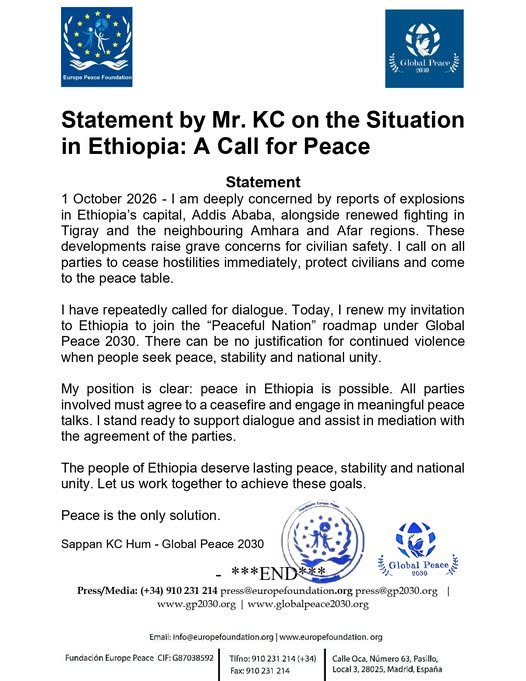

Ethiopia Closes Embassy in Asmara, Expels Ten Eritrean Diplomats in Escalating Diplomatic Rupture

By Daandii Ragabaa
ADDIS ABABA — In a dramatic escalation of diplomatic tensions in the Horn of Africa, the Ethiopian Ministry of Foreign Affairs announced on October 1, 2026, that it has decided to close its Embassy in Asmara, Eritrea, and has declared ten Eritrean diplomats in Addis Ababa persona non grata.
The sweeping move, detailed in an official press statement released for immediate distribution, marks a severe deterioration in relations between the two neighboring states—a relationship already fraught with historical complexity and recent political friction.
A Direct Response to “Hostility and Belligerence”
The Ministry’s statement was unambiguous in its justification. The closure of the Ethiopian Embassy in Asmara comes “in response to Eritrea’s direct and indirect acts of hostility and belligerence against Ethiopia.”
This language signals a significant shift from previous diplomatic posturing to concrete, punitive action. The expulsion of ten Eritrean diplomats—accused of involvement in activities that “pose a direct threat to Ethiopia’s national security”—adds a sharp edge to the announcement.
Citing the Vienna Convention on Diplomatic Relations, the Ministry declared the diplomats persona non grata, a formal designation under international law that renders them unwelcome in the host country. They have been given a strict 48-hour ultimatum to leave Ethiopia.
A Breach of Diplomatic Norms
The reference to the Vienna Convention is significant. By invoking this foundational treaty governing diplomatic relations, Ethiopia is framing Eritrea’s alleged activities not merely as unfriendly, but as violations of established international norms.
The expulsion of diplomats is among the most serious actions a state can take short of severing relations entirely. It signals that Ethiopia believes Eritrean diplomatic personnel were using their official positions to undermine Ethiopian security—an accusation that, if substantiated, represents a profound breach of trust between nations.
Ethiopia’s Message: Strength and Restraint
Despite the severity of the measures, the statement struck a dual tone: firm in action, yet measured in rhetoric.
Ethiopia urged the Eritrean government to “cease all acts that are contrary to the principles governing relations between sovereign states.” This appeal to international principles positions Ethiopia as the party seeking adherence to established norms, even as it takes decisive action.
The Ministry further emphasized Ethiopia’s “strong historical, cultural, and people-to-people ties with Eritrea”—a deliberate acknowledgment of the deep bonds that transcend political disputes. It reaffirmed Ethiopia’s consistent prioritization of “peaceful coexistence, regional stability, and integration.”
Notably, the statement concluded with a commitment to “peaceful resolution of disputes and to working with all countries in the Horn of Africa to advance lasting peace, security, and regional integration.” This olive branch, extended alongside the punitive measures, suggests Ethiopia is leaving the door open for de-escalation—should Eritrea alter its course.
Regional Implications: A Horn in Flux
The Horn of Africa has long been a region where diplomatic ruptures carry outsized consequences. Ethiopia and Eritrea share a deeply intertwined history—one marked by both fraternal solidarity and devastating conflict.
The closure of an embassy is not merely a bureaucratic decision; it severs a primary channel of communication between governments. In a region already grappling with multiple armed conflicts, political instability, and humanitarian crises, the loss of this diplomatic lifeline raises serious questions about the trajectory of bilateral relations.
For Eritrea, the expulsion of ten diplomats represents a significant blow to its diplomatic presence in Ethiopia. For Ethiopia, the closure of its embassy in Asmara removes its ability to directly engage with Eritrean authorities on the ground—a decision that signals Addis Ababa’s assessment that such engagement has become either futile or dangerous.
What Comes Next?
The 48-hour ultimatum for the expelled diplomats adds a ticking clock to the crisis. How Eritrea responds in the coming days will determine whether this remains a serious but contained diplomatic incident or escalates into a broader rupture.
Ethiopia’s statement leaves room for both possibilities. Its firm action, coupled with its expressed commitment to peace and regional integration, suggests a strategy of calibrated pressure—demonstrating seriousness of purpose while maintaining the moral high ground.
For now, the Horn of Africa watches and waits. The closure of an embassy is a loud statement. The question is whether anyone in Asmara is listening.
Ministry of Foreign Affairs
Federal Democratic Republic of Ethiopia
October 1, 2026
For more updates and in-depth coverage of Horn of Africa affairs, follow: https://t.me/addisreporter2
Contact Information:
Office of the Spokesperson
Email: spokesperson@mfa.gov.et
Website: WWW.MFA.GOV.ET
Follow: @MFAEthiopia | #MFAEthiopia

Irreechaa: The Festival of Bright Seasons Over the Dark Rainy Seasons
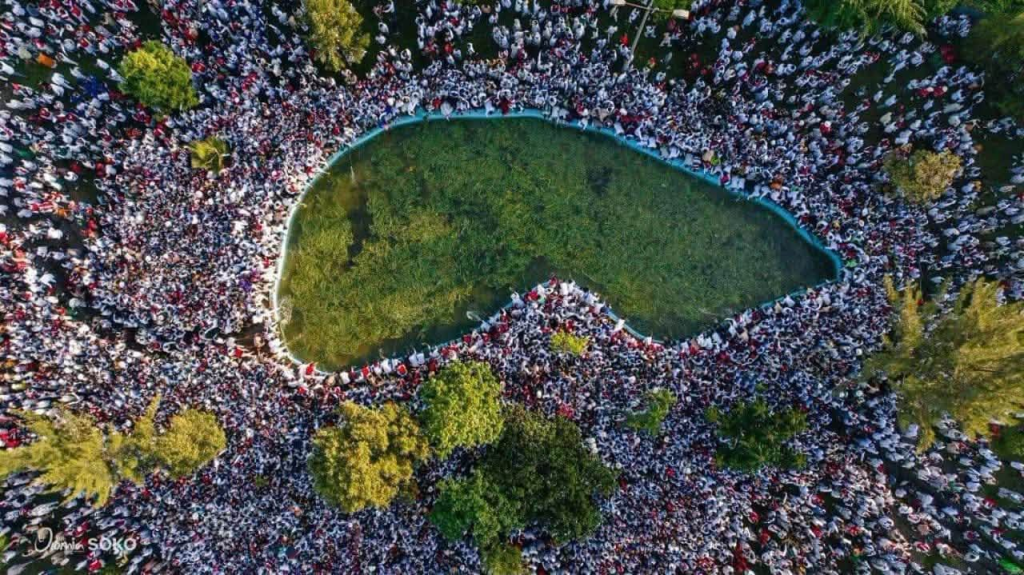
By Dhabessa Wakjira
Irreechaa, known as the Festival of bright seasons over the dark rainy seasons, is a major transition festival celebrated with great joy and enthusiasm. For the Oromo people, it is more than a celebration; it is a spiritual journey from darkness to light, from hardship to hope, and from isolation to unity.
Meaning and Significance
The word “Irreechaa” means fresh grasses. It symbolizes the triumph of good over evil and brightness over darkness. This ancient festival, rooted in the Oromo Gadaa system, is a profound expression of gratitude to Waaqa (God) for the blessings of life, peace, and prosperity. It marks the end of the long, dark rainy season known as Ganna and the beginning of the bright, sunny season called Birraa. During this time, rivers overflow with life, fields turn green, and the land is renewed. The fresh grass carried by celebrants is not merely a symbol; it is a living prayer, a gesture of blessing, and a sign of purification.
Celebrations and Traditions
The celebration of Irreechaa is a vibrant tapestry of culture, faith, and community. People clean and decorate their homes with fresh grasses and daisy flowers, transforming their surroundings into spaces of beauty and welcome. Families wear new traditional clothes, adorned with colorful beads and intricate patterns, reflecting the richness of Oromo heritage.
On the day of the festival, communities gather at riversides and hilltops, the sacred places where Waaqa is believed to be closest to the people. Elders offer blessings for families, nations, and the country, praying for peace, wealth, and prosperity. The air fills with songs of praise, the rhythm of drums, and the joyful ululation of women. People share delicious Oromo foods, including cuukkoo, marqaa, and buna (coffee), strengthening bonds of kinship and friendship.
Children also enjoy the day with their friends and surroundings, running through the green fields, playing games, and learning the traditions of their ancestors. The festival brings love, unity, and happiness to everyone, regardless of age or background. It is a time when differences are set aside, and the community stands together as one, united by a shared identity and a common hope for the future.
A Festival of Transition and Triumph
Irreechaa is not just a seasonal event; it is a celebration of resilience and renewal. It reminds the Oromo people—and all who witness it—that after every dark season comes a season of light, and that gratitude, community, and faith are the pillars of a flourishing life. As the green grass is sprinkled and the blessings are spoken, Irreechaa carries forward an ancient legacy of hope, unity, and the enduring triumph of good over evil.
Irreechaa is celebrated annually by Oromo communities in Ethiopia and around the world, and is recognized as a symbol of cultural identity, peace, and shared humanity.

Irreechaa: The Oromo Thanksgiving Festival as a Living Heritage of Identity, Unity, and Spiritual Renewal
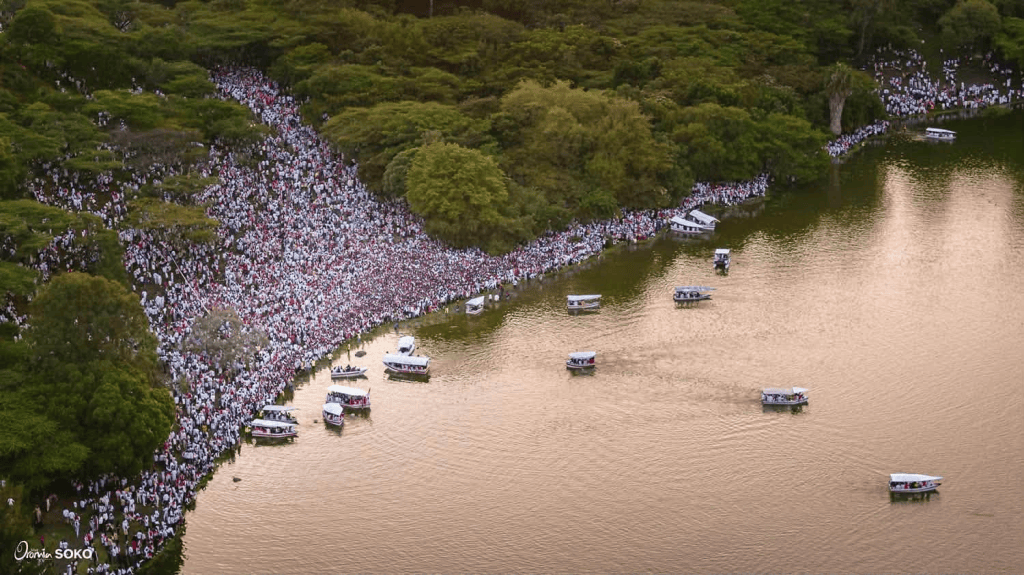
Introduction
Irreechaa stands as one of the most significant and vibrant cultural celebrations not only for the Oromo people but for the entire Horn of Africa region. As an annual thanksgiving festival that marks the end of the rainy season and the beginning of the harvest, Irreechaa embodies a deep spiritual connection between the Oromo people, their Creator, and the natural world that sustains them. This ancient tradition, rooted in the indigenous Oromo belief system known as Waaqeffannaa, has survived centuries of political upheaval, social transformation, and religious change to emerge today as a powerful symbol of cultural identity, social cohesion, and spiritual resilience. With millions of participants gathering at sacred sites across Ethiopia and the global diaspora, Irreechaa represents one of the largest annual human gatherings on the African continent and serves as a living testament to the enduring vitality of Oromo civilization.
This comprehensive essay explores the multifaceted dimensions of Irreechaa, examining its historical origins, spiritual significance, cultural expressions, social functions, and contemporary relevance. By analyzing the festival through multiple lenses—historical, theological, sociological, and political—this essay seeks to illuminate the profound meaning that Irreechaa holds for the Oromo people and its broader significance for understanding indigenous African religious traditions, cultural preservation, and national identity in contemporary Ethiopia.
Historical Origins and Evolution
The historical roots of Irreechaa extend deep into antiquity, with scholars tracing the festival’s origins back thousands of years to the Cushitic civilizations that inhabited the Horn of Africa . According to historical estimates, the Oromo people have celebrated Irreechaa for approximately 12,000 years, making it potentially one of the oldest continuously observed traditions on the African continent . This remarkable continuity speaks to the fundamental importance of the festival in Oromo spiritual and cultural life, as well as the resilience of indigenous religious practices in the face of external pressures and historical transformations.
The festival is intrinsically linked to the Gadaa system, the traditional Oromo socio-political and governance structure that UNESCO recognized as an Intangible Cultural Heritage of Humanity . The Gadaa system, with its age-based hierarchical organization and democratic principles of power rotation, provided the structural framework within which Irreechaa emerged and flourished. As a celebration embedded within this comprehensive system of social organization, Irreechaa served not merely as a religious observance but as a mechanism for reinforcing social cohesion, transmitting cultural values across generations, and maintaining the cosmic order that the Gadaa system sought to uphold .
Throughout its long history, Irreechaa has undergone periods of both flourishing and suppression. During the twentieth century, particularly under previous Ethiopian governments that sought to promote national unity through cultural homogenization, traditional Oromo religious practices including Irreechaa faced significant challenges . Attempts were made to confine the celebration to village levels and to discourage public observance of what was sometimes dismissively characterized as backward superstition. However, these efforts to suppress Irreechaa ultimately failed, as the tradition’s deep roots in Oromo consciousness and its fundamental role in cultural identity proved resistant to external pressures. Instead of disappearing, Irreechaa emerged from periods of suppression strengthened and more widely embraced, particularly by younger generations who increasingly view participation in the festival as an assertion of cultural pride and identity .
The contemporary history of Irreechaa has been marked by both triumph and tragedy. A pivotal moment occurred in 2016 when the festival became the site of political protests that resulted in a deadly stampede, causing the deaths of more than fifty participants . This tragic event became a catalyst for significant political change in Ethiopia, contributing to the emergence of new leadership that included the country’s first Oromo prime minister. Since then, Irreechaa has experienced a remarkable revival, with the festival being celebrated in Addis Ababa for the first time in 150 years and drawing unprecedented numbers of participants . This resurgence reflects broader changes in Ethiopia’s political landscape and the growing recognition of cultural diversity as a source of national strength rather than a threat to unity.
Spiritual and Religious Significance
At its core, Irreechaa is a profoundly spiritual event that expresses the Oromo people’s relationship with the divine through the natural world. The festival is rooted in Waaqeffannaa, the traditional Oromo religion that worships a single supreme Creator known as Waaqa . This monotheistic belief system, which some scholars describe as one of the oldest forms of monotheism, holds that Waaqa is the source of all life, blessing, and abundance . The Oromo people understand themselves as intimately connected to their Creator through a complex system of spiritual intermediaries called ayyaana, who convey human prayers and needs to the divine .
The timing of Irreechaa reflects its deep connection to agricultural cycles and the natural world. The festival is celebrated twice annually: Irreechaa Malkaa (or Irreechaa Hiyyessa) occurs in the spring at the edges of rivers and lakes, while Irreechaa Tulluu (or Irreechaa Guddaa) takes place in autumn on hilltops . The spring celebration marks the end of the dark, rainy season (Ganna) and the beginning of the bright, fertile season (Birraa), while the autumn observance occurs as the harvest season concludes. This dual celebration reflects the Oromo people’s dependence on agriculture and their deep reverence for the natural forces that sustain their way of life.
The spiritual significance of Irreechaa extends beyond simple thanksgiving to encompass themes of purification, renewal, and reconciliation. Water plays a central role in the rituals, with participants dipping green grass and yellow daisies into sacred lakes and rivers, then sprinkling the water upon themselves as a symbol of spiritual cleansing . Green grass represents life and fertility, while the yellow daisies symbolize the joy of survival after the hardship of the rainy season. These symbolic acts express the Oromo people’s understanding of their relationship with nature as one of mutual care and respect, rather than domination or exploitation.
A critical spiritual dimension of Irreechaa is its emphasis on reconciliation and the resolution of conflicts. Traditional Oromo beliefs hold that it is forbidden to participate in the festival while harboring resentment, anger, or unresolved grievances . Before approaching the sacred sites, participants are expected to make peace with those with whom they have disputes, seeking forgiveness and offering compensation where necessary. This requirement reflects the Oromo philosophical principle of safuu, which establishes boundaries and responsibilities governing relations between humans, the natural world, and the divine . The insistence on reconciliation before thanksgiving underscores the Oromo understanding that gratitude and grievance cannot coexist—that one cannot approach the sacred with a heavy heart.
The prayers offered during Irreechaa encompass both gratitude for past blessings and supplication for future needs. Elders and spiritual leaders known as Abbaa Gadaas lead the community in prayer, giving thanks to Waaqa for protection during the difficult rainy season and asking for continued blessings in the coming year . The prayers typically request peace, health, fertility for both people and livestock, abundant harvests, and prosperity for the entire community . These prayers are not merely ritualistic formulas but represent the genuine spiritual aspirations of a people who understand their well-being as dependent on divine favor and the maintenance of cosmic balance.
Cultural Expressions and Ritual Practices
Irreechaa is a vibrant celebration that engages all the senses and encompasses a rich array of cultural expressions. The festival brings together people of all ages, genders, and social statuses in a collective expression of identity and gratitude . The visual splendor of the celebration is striking, with participants adorned in traditional white attire known as wandaboo or uffannaa aadaa, often decorated with colorful embroidery and accessories . Women wear intricately woven dresses and carry baskets of fresh grass and flowers, while men dress in traditional garments that reflect their regional identities.
The ritual practices of Irreechaa are replete with symbolic meaning. The central act involves the sprinkling of water from sacred lakes and rivers, accompanied by prayers and blessings. Participants carry green grass called cuquliisa, which represents the renewal of life and the fertility of the land . The grass is dipped into the water and then sprinkled upon participants as a blessing. This ritual connects the community to the life-giving properties of water and the fertility of the earth, expressing gratitude for the abundance that sustains them.
Music, song, and dance are integral to the Irreechaa celebration, with traditional songs of praise and thanksgiving filling the air. Women sing special melodies such as the Mareehoo, which express themes of gratitude, forgiveness, and hope for the future . The lyrics of these songs often reference the agricultural cycle, the blessings of the Creator, and the shared identity of the Oromo people. Traditional dances performed during the festival serve both as expressions of joy and as markers of cultural identity, with specific dances associated with different regions and communities.
The ceremonial processions of Irreechaa are carefully structured according to traditional social hierarchies and Gadaa principles. Elders and spiritual leaders lead the procession, followed by women, then youth and children . This ordering reflects the Oromo understanding of social organization, in which age and spiritual wisdom confer authority and responsibility. The Abbaa Gadaas, as custodians of tradition, play a particularly important role, leading prayers, offering blessings, and ensuring that the rituals are performed according to ancestral custom .
The festival also features the exchange of greetings and blessings among participants, with the traditional greeting “Happy Irreechaa” exchanged widely . Families and friends who may not have seen each other during the rainy season reunite, sharing meals and stories. The communal aspect of the celebration reinforces social bonds and strengthens the sense of belonging to a larger community. For the Oromo diaspora, Irreechaa celebrations in cities such as Melbourne, Minneapolis, London, and Amsterdam serve as vital connections to their cultural roots, allowing them to maintain their identity and transmit traditions to younger generations born far from the ancestral homeland .
Social Functions and Community Impact
Beyond its spiritual and cultural dimensions, Irreechaa serves crucial social functions that contribute to the cohesion and well-being of Oromo communities. The festival provides an annual opportunity for the Oromo people to come together, transcending regional, religious, and social divisions to celebrate their shared identity . Participants include Oromos from all religious backgrounds—Christians, Muslims, and followers of traditional Waaqeffannaa—demonstrating the festival’s capacity to unite people across religious boundaries . This inclusivity reflects the Oromo cultural value of tolerance and the understanding that Irreechaa belongs to all Oromos, regardless of their individual religious affiliations.
The reconciliation function of Irreechaa is particularly significant in a region that has experienced recurrent conflicts and social tensions. The requirement that participants resolve their disputes before joining the celebration provides a powerful mechanism for conflict resolution and social healing . The presence of arbitration systems within the Gadaa framework, including the Gumi or Coffee assemblies, ensures that disputes can be addressed through dialogue and mutual agreement rather than through violence or permanent estrangement . By mandating reconciliation as a precondition for participation, Irreechaa creates an annual opportunity for communities to heal divisions, forgive grievances, and renew social bonds.
Irreechaa also plays a vital role in preserving and transmitting cultural heritage. The festival serves as a living museum of Oromo culture, where traditional songs, dances, attire, and rituals are performed and passed down to younger generations . In a world of rapid globalization and cultural change, Irreechaa provides a space where ancestral traditions remain vibrant and meaningful. The participation of large numbers of young people in contemporary celebrations is particularly encouraging, suggesting that the festival continues to resonate with new generations and will remain a vital part of Oromo identity for years to come .
The economic dimensions of Irreechaa have become increasingly significant, particularly in recent years. The festival generates substantial economic activity, from the production and sale of traditional clothing and accessories to the provision of food, transportation, and accommodation for millions of participants . For many small businesses and artisans, Irreechaa represents a major economic opportunity, with demand for traditional garments and festival-related goods spiking in the weeks leading up to the celebration. The Ethiopian government has recognized the tourism potential of Irreechaa, promoting it as a major cultural attraction that can draw international visitors and contribute to local economic development .
Political Dimensions and Contemporary Controversies
As Irreechaa has grown in scale and visibility, it has also become entangled in political dynamics that reflect broader tensions in Ethiopian society. The festival has historically been viewed with suspicion by some political actors who see in its celebration a potential vehicle for Oromo nationalism or opposition to central authority . Conversely, Oromo political movements have sometimes sought to harness the symbolism of Irreechaa for their own purposes, using the festival as a platform for articulating grievances and demands . This politicization of Irreechaa has created tensions between those who view it primarily as a religious and cultural observance and those who see it as a vehicle for political mobilization.
The 2016 Irreechaa tragedy, when protests at the festival led to a deadly stampede, marked a watershed moment in Ethiopian politics . The event galvanized opposition to the government and contributed to political changes that ultimately brought Abiy Ahmed, Ethiopia’s first Oromo prime minister, to power. Since then, Irreechaa has been celebrated with greater official recognition and support, including the first celebration in Addis Ababa in 150 years . However, tensions remain, with some Oromo activists arguing that the government’s embrace of Irreechaa is superficial and does not address deeper grievances regarding political representation and economic opportunity.
Contemporary debates about Irreechaa also touch on questions of religious identity and interfaith relations. Some Christian and Muslim leaders have expressed concern about the festival’s association with Waaqeffannaa, the traditional Oromo religion, viewing it as incompatible with their own faith traditions . However, many religious leaders have adopted a more inclusive stance, recognizing Irreechaa as a cultural celebration that can be embraced by Oromos of all faiths . This ongoing dialogue about the relationship between traditional religious practices and revealed religions reflects broader questions about religious pluralism and cultural identity in contemporary Ethiopia.
Global Diaspora and Transnational Dimensions
The Oromo diaspora, numbering in the millions across North America, Europe, the Middle East, and Australia, has played an increasingly important role in the celebration and perpetuation of Irreechaa. In cities around the world, Oromo communities organize annual Irreechaa celebrations that replicate the rituals and traditions of the homeland while adapting to local contexts . These diaspora celebrations serve multiple functions: they maintain cultural identity among dispersed communities, transmit traditions to younger generations born abroad, and raise awareness of Oromo culture and concerns among host populations.
In Melbourne, Australia, for example, the Oromo community gathers annually at local parks to celebrate Irreechaa with traditional songs, prayers, and rituals . Similar celebrations occur in Washington, D.C., Toronto, Berlin, Amsterdam, and Dubai, among other cities . These events often attract participation from non-Oromo Ethiopians and curious locals, providing opportunities for cross-cultural exchange and dialogue. For many diaspora Oromos, Irreechaa represents a vital connection to their ancestral homeland and a reaffirmation of their cultural identity in contexts where they may feel marginalized or invisible.
The globalization of Irreechaa has also contributed to the festival’s growing international recognition. International media coverage of Irreechaa celebrations has increased, and the festival has been featured in tourism promotions and cultural exchange programs . This international visibility has both positive and negative implications. On one hand, it brings attention to Oromo culture and can foster greater understanding and appreciation. On the other hand, there are concerns about the commercialization and decontextualization of the festival, as well as the potential for political exploitation of its symbolism.
Irreechaa and the Politics of Recognition
The recognition of Irreechaa as a significant cultural heritage has been a long-standing goal of Oromo cultural advocates and scholars. The inscription of the Gadaa system on UNESCO’s Representative List of Intangible Cultural Heritage of Humanity in 2016 represented a major milestone in this effort, providing international recognition for the Oromo socio-political system within which Irreechaa is embedded . Scholars and historians have called for Irreechaa itself to receive UNESCO recognition, arguing that the festival merits acknowledgment as a unique and valuable expression of human cultural heritage .
The politics of recognition surrounding Irreechaa reflect broader questions about the place of Oromo culture and history within Ethiopian national identity. For much of the twentieth century, Ethiopian national narratives marginalized or suppressed Oromo contributions, presenting the country’s history through the lens of Solomonic dynasty and Amhara-centric perspectives. The revival of Irreechaa and other Oromo cultural practices represents a challenge to these narratives, asserting the centrality of Oromo civilization to Ethiopian history and identity. This assertion has been met with both support and resistance, reflecting ongoing contests over historical memory and national belonging.
The contemporary Ethiopian government has adopted a more positive stance toward Irreechaa, with officials participating in celebrations and promoting the festival as a symbol of national unity . The theme of recent Irreechaa celebrations, “Irreechaa for National Renaissance,” reflects this official framing of the festival as a contributor to broader national development and unity . However, some Oromo activists view such official embrace with skepticism, seeing it as an attempt to co-opt Oromo cultural expression for political purposes while failing to address fundamental issues of political representation and economic justice.
Conclusion
Irreechaa stands as a remarkable testament to the resilience, vitality, and spiritual depth of Oromo civilization. From its ancient origins in the Cushitic past to its contemporary celebration by millions across Ethiopia and the global diaspora, the festival has maintained its essential character as a thanksgiving to Waaqa while adapting to changing historical circumstances. It embodies the Oromo people’s profound connection to the natural world, their commitment to reconciliation and social harmony, and their determination to preserve and transmit their cultural heritage across generations.
The significance of Irreechaa extends far beyond the Oromo community, offering valuable insights into the nature of indigenous African religious traditions, the dynamics of cultural preservation in the face of globalization, and the role of cultural festivals in building social cohesion and national identity. In a world marked by division, conflict, and the erosion of traditional cultures, Irreechaa provides a powerful example of how ancient traditions can remain vibrant and meaningful, connecting communities to their ancestors while addressing the challenges of contemporary life.
As Irreechaa continues to grow in scale and visibility, it faces both opportunities and challenges. The festival’s increasing international recognition brings potential for greater understanding and appreciation of Oromo culture but also risks of commercialization and political exploitation. The ongoing debates about the relationship between Irreechaa and religious identity, its political dimensions, and its place in Ethiopian national life reflect the complexity of navigating cultural diversity in contemporary societies. Yet through all these challenges, the essential spirit of Irreechaa—gratitude, renewal, and unity—remains intact, offering hope and inspiration to all who participate in its celebration.
Ultimately, Irreechaa is more than a festival; it is a living philosophy, a way of understanding and relating to the world that has sustained the Oromo people for millennia. It teaches that gratitude and generosity are fundamental to human flourishing, that reconciliation and forgiveness are necessary for social harmony, and that respect for the natural world is essential for survival. As the Oromo people continue their journey through history, Irreechaa will remain a guiding light, illuminating the path forward while connecting them to the wisdom of their ancestors. In its celebration, we witness not merely the preservation of tradition but the ongoing creation of culture—a dynamic process through which the Oromo people affirm their identity, express their values, and envision their future.

Irreecha: The Fountain of Oromo Unity
A Celebration of Identity, Brotherhood, and Renewal at the Dawn of a New Era
Finfinne, Ethiopia — As the first rays of sunlight pierce through the morning mist over the waters of Hora Finfinne, thousands upon thousands of Oromo people gather along the shores, their voices rising in unison to chant prayers of gratitude and hope. This is Irreecha — the Thanksgiving festival that has, for centuries, served as the beating heart of Oromo cultural and spiritual life. But this year, under the banner “Irreechi Waliigaltee Biyyooleessaa” (Irreecha: The Covenant of Reconciliation), the celebration carries a weight and meaning unlike any that has come before.
A Festival Rooted in Tradition
Irreecha, celebrated annually at the end of the rainy season when the Oromo people transition from the dark, wet months of Bona to the bright, abundant season of Birraa, is far more than a harvest festival. It is a profound expression of Oromo spirituality, a moment when the community gathers at the water’s edge to offer thanks to Waaqa (God) for protection, fertility, and the blessings of life.
The festival is a living testament to the resilience of Oromo culture. For generations, Irreecha has been a symbol of unity, brotherhood, love, and reconciliation — values that have sustained the Oromo people through centuries of challenge and change. At its core, Irreecha is a celebration of tokkummaa — unity — the fundamental principle that binds the Oromo nation together as one people with one destiny.
Reclaiming Sacred Ground
This year’s celebration holds particular significance as attention turns to the historic restoration of Hora Finfinne (Finfinnee Lake) and Hora Harsadee in Bishoftu, two of the most sacred sites for Irreecha observances. These water bodies, which have witnessed countless generations of Oromo prayer and celebration, have long been central to the spiritual geography of the Oromo people.
The government has been working with focused determination to ensure that Irreecha celebrations at these sacred sites are conducted with the dignity, grandeur, and respect that befit the Oromo nation’s rich heritage. The restoration of Hora Finfinne is particularly symbolic — a lake that had suffered from decades of political manipulation and environmental degradation under successive regimes that sought to erase Oromo presence from the capital’s landscape.
Now, with the lake’s rehabilitation, Finfinne is reclaiming its rightful place as a gathering point for Oromo from all corners of the region. The city, which sits at the heart of Oromia, is once again adorned with the beauty of Irreecha celebrations, welcoming Oromo pilgrims from every district and every walk of life. The sight of tens of thousands of Oromo gathered at the water’s edge, dressed in traditional wandaboo and calanchi, singing faaruu (songs of praise) and ululating in joy, is a testament to the enduring power of Oromo identity.
A New Chapter Under Dr. Abiy Ahmed
The transformation of Irreecha’s public observance cannot be separated from the broader political changes that have swept Ethiopia since 2018. Under the leadership of Prime Minister Dr. Abiy Ahmed, himself an Oromo, the government has undertaken sweeping reforms aimed at correcting historical injustices and creating space for the full expression of Ethiopia’s diverse cultural identities.
For the Oromo people, these reforms have meant the freedom to celebrate Irreecha openly and proudly, without fear of repression. The festival, once a site of state violence and tragedy, has become a beacon of hope and a symbol of what is possible when a nation embraces its diversity rather than suppressing it.
The Prime Minister’s vision of medemer — togetherness — resonates deeply with the spirit of Irreecha. The festival’s message of reconciliation and unity aligns with the broader national project of building a more inclusive Ethiopia, one where all nations and nationalities can thrive while celebrating their unique heritage.
A Cultural Renaissance
The revival of Irreecha has sparked a broader cultural renaissance among the Oromo people. The festival has become a catalyst for the revitalization of Oromo language, music, dance, and traditional arts. Young Oromo, many of whom grew up in urban environments disconnected from their cultural roots, are rediscovering the beauty and depth of their heritage through Irreecha.
The festival has also become a major tourist attraction, drawing visitors from across Ethiopia and around the world. The colorful processions, the haunting melodies of Oromo hymns, the intricate beauty of traditional attire, and the profound spirituality of the ceremonies — all contribute to making Irreecha one of the most captivating cultural experiences in the Horn of Africa.
The Road Ahead
As the sun sets on this year’s Irreecha celebrations and the waters of Hora Finfinne and Hora Harsadee reflect the golden light of evening, the Oromo people look to the future with hope and determination. The festival’s message of unity, brotherhood, love, and reconciliation is not merely a celebration of the past — it is a roadmap for the future.
In a world that often seeks to divide and fragment, Irreecha stands as a powerful reminder that a people united by common purpose, shared history, and collective aspiration can overcome any obstacle. The Oromo nation, with its ancient traditions and vibrant culture, is rising — not in opposition to others, but in celebration of all that makes it unique.
Irreechi Irree Keenya — Irreecha is our collective response — Hundee Tokkummaa Ummata Oromooti — the foundation of Oromo unity.
As the festival concludes for another year, the words of the elders echo across the waters: “Let us come together, let us remember who we are, let us celebrate our oneness. For in our unity lies our strength, and in our culture lies our future.”
The fountain of Oromo unity flows on — ever renewing, ever strengthening, ever reminding the world of the beauty and resilience of a people who have never forgotten their roots.
Irreecha is an annual Oromo thanksgiving festival celebrated at the end of the rainy season. It is the largest gathering of Oromo people, drawing millions of participants to sacred sites across Oromia and beyond.

Interim Coordinator General Louise Perry Shares Vision for Multicultural and Multifaith Victoria
Melbourne, Victoria — In a landmark moment for the state, Interim Multicultural Coordinator General Louise Perry has outlined her vision for Multicultural and Multifaith Victoria — the newly established body created to ensure that the experiences, perspectives, and aspirations of Victoria’s diverse communities actively shape government policies, programs, and services.
A New Chapter for Victoria
Established today, Multicultural and Multifaith Victoria brings together three critical functions — community engagement, policy, and grants delivery — under one unified structure. This integrated approach is designed to strengthen the relationship between government and the state’s multicultural and multifaith communities, ensuring their voices are not only heard but embedded in the decisions that affect their lives.
A Vision Rooted in Community
Interim Coordinator General Louise Perry shared her vision for the new organisation, highlighting the opportunities it creates for communities across Victoria. Her message underscores a commitment to meaningful engagement — one that moves beyond consultation to genuine partnership.
The establishment of Multicultural and Multifaith Victoria represents a significant step forward in how the Victorian Government engages with its culturally and religiously diverse communities. By bringing together engagement, policy, and grants under one roof, the organisation is positioned to deliver more coordinated, responsive, and impactful outcomes.
Watch and Learn More
Community members, stakeholders, and partners are invited to watch the official video to learn more about this new chapter for Victoria’s multicultural and multifaith communities. The video provides insight into the organisation’s mission, its approach to engagement, and the opportunities it will create for communities across the state.
A Shared Future
The launch of Multicultural and Multifaith Victoria signals a renewed commitment to building a more inclusive, connected, and representative Victoria — one where every community has a seat at the table and a role in shaping the future.
For more information about Multicultural and Multifaith Victoria and to watch the video, visit the official website at https://www.multicultural.vic.gov.au/
Stay connected by following Multicultural and Multifaith Victoria on LinkedIn for updates, announcements, and opportunities to engage.

Karrayyuu: A People of Culture, Heritage, and Enduring Gadaa Tradition
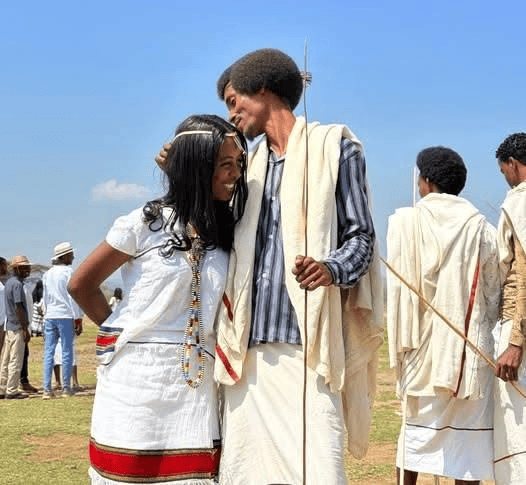
Fantaallee, East Shawa, Oromia — Nestled in Fantaallee District of East Shawa Zone in Oromia, the Karrayyuu people stand as one of the most culturally vibrant and traditionally rooted communities in Ethiopia — a people who love, honor, and proudly preserve their heritage.
A Pastoralist People with Deep Roots
The Karrayyuu community is widely known as a pastoralist people 🐄🐂🐐, renowned for their cattle-rearing way of life. More than that, they are a community of elders who live by their customs, traditions, and the ancient Gadaa system — one of Africa’s oldest democratic governance structures, still actively practiced among the Karrayyuu to this day.
A Culture That Captivates the Heart
There is something deeply moving about the Karrayyuu — particularly the famed Dardarri Karrayyuu Dunfuraa (Goofaree). To watch a Karrayyuu youth prepare and perform the dunfuraa is an experience that captures the heart and refuses to let go.
As the saying goes: “Atiin tiyya marmaartuu qe’ee Fantaallee taatee haftaa” — meaning the love of one’s own land, its hills and valleys, never fades. It is a sentiment that speaks to the unbreakable bond between the Karrayyuu and their homeland.
A Warm and Generous People
The Karrayyuu are famous for their hospitality. Visitors are welcomed with marqaa — traditional porridge prepared with butter — served generously and offered with open hearts. The sweetness of marqaa urgeechaa is something words struggle to capture. 😋
Their warmth, their humor, and their pride in their identity shine through in everyday speech and celebration. The Karrayyuu say with confidence: “Warri warruma hanga himanii san gahuun sin je’a gaa” 👑 — a proud declaration of self-worth and dignity.
Celebrating Strength and Beauty
The Karrayyuu are equally celebrated for their striking cultural expression — from the vibrant bohaartii adornments to the powerful, dignified manner in which they carry themselves. The energy and pride of Karrayyuu youth, especially during cultural celebrations, is a sight to behold. 💪🏽
Traditional songs and verses passed down through generations capture the essence of Karrayyuu identity:
“Wayyaa manoo manoo
Mukanaa sin muruu
Daallee godaa malee
Dhufte lafa galtu hoo
Gaangee gosaa malee”
These verses carry messages of respect, love, and the importance of maintaining one’s heritage — a treasure passed from generation to generation.
A Land Blessed with Natural Beauty
The Karrayyuu homeland is not only rich in culture but also in natural wonders. Geographically, the Karrayyuu are bordered by:
- East: Harargee lowlands
- West: Arsii
- North: Communities of the Afar region and Amhara region communities to the northwest
- South: The Argoobbaa people
The Karrayyuu are located approximately 200 km from Finfinnee (Addis Ababa), Oromia’s great capital, and just 100 km from Adaamaa — making their homeland remarkably accessible despite its rich, distinct cultural character.
A Tourism Destination Waiting to Be Discovered
The Karrayyuu area is home to several stunning tourist attractions, including:
- Hawaas/Awaash Park
- Hara Nogobaa (Basaqaa) Lake
- Gaara Fantaallee (Mount Fantaallee)
- Ardaalee Jiilaa and other breathtaking landscapes
These sites offer visitors a rare blend of natural beauty, cultural richness, and living heritage.
A Living Heritage
The Karrayyuu are more than a community — they are a living testament to the endurance of Oromo culture, tradition, and the Gadaa system. Their way of life, their love for their land, and their unwavering commitment to their heritage make them one of Ethiopia’s most treasured cultural communities.
Cidha milana gaafa gawoo nuun haa gahu. — May we all live to see the day of celebration and peace.
For those who wish to experience authentic Oromo culture, the Karrayyuu homeland in Fantaallee offers a journey into a world where tradition lives on — vibrant, proud, and unbroken.

Multicultural and Multifaith Victoria Officially Launches, Ushering in a New Era of Community Engagement
Melbourne, Victoria — Victoria has entered a new chapter in how it engages with its diverse communities, with the official launch of Multicultural and Multifaith Victoria — a body dedicated to ensuring that communities across the state are heard, engaged, and represented in the decisions that shape their lives.
Announcing the launch, the organisation declared: “The future of multicultural and multifaith engagement in Victoria starts today.”
A New Voice for Victoria’s Diverse Communities
The launch marks a significant step forward in the state’s approach to multicultural and multifaith affairs, creating fresh opportunities for communities to have a genuine say in government decision-making.
In its founding statement, Multicultural and Multifaith Victoria outlined its core mission: to bring people closer to government, strengthen participation, build connections, and help create a more inclusive future for all Victorians.
“We look forward to working alongside communities across Victoria, bringing people closer to government, strengthening participation, building connections, and helping create a more inclusive future for all,” the organisation said.
Bringing People Closer to Government
At the heart of the new body’s vision is a commitment to closing the distance between communities and the institutions that serve them. By fostering stronger participation and meaningful engagement, Multicultural and Multifaith Victoria aims to ensure that the voices of Victoria’s culturally and religiously diverse communities are not only heard but actively reflected in policy and decision-making.
The organisation has signalled its intention to work collaboratively with communities across the state — building partnerships, nurturing connections, and championing an inclusive future that benefits all Victorians.
A Digital Transition
As part of the launch, Multicultural and Multifaith Victoria has announced that its LinkedIn presence will shortly be updated to reflect the new name and identity, ensuring its digital platforms align with its renewed mandate.
Community members, stakeholders, and partners are encouraged to follow the organisation’s journey and stay informed about upcoming initiatives.
More Information
For further details about Multicultural and Multifaith Victoria and its work, visit the official website at https://www.multicultural.vic.gov.au/
The launch of Multicultural and Multifaith Victoria represents a renewed commitment by the Victorian Government to fostering an inclusive, connected, and representative society — one where every community has a place at the table.

የአዲሲቷ የኦሮሚያ ዞኖች ከፍተኛ የመሪነት ኮሚቴ ተሹሟል
ፊንፊኔ — የኦሮሚያ ክልል መንግሥት የሕዝብ ባለቤትነትን የሚያረጋግጥ ታሪካዊ ውሳኔ ለማስተላለፍ፣ ጠንካራ ሥርዓትና ጠንካራ መንግሥት ለመገንባት የሚያገለግል አዲስ ሪፎርም በማድረግ የኦሮሚያን የዞን መዋቅር ከ21 ወደ 6 ዞኖች በማምጣት አቋቁሟል። በዚህ መሠረት የእነዚህ አዲስ ዞኖች ከፍተኛ የመሪነት ኮሚቴ ተሹሟል።
የኦሮሚያ ኮሙኒኬሽን አገልግሎት ይህንን መረጃ አስታውቋል። ሪፎርሙ የአስተዳደር ሥርዓቱን ለማሻሻልና ለሕዝቡ የሚቀርበውን አገልግሎት ለማፋጠን የተዘጋጀ መሆኑ ተገልጿል።
የምሥራቅ ኦሮሚያ ዞን
መቀመጫው ሐረር የሆነው የምሥራቅ ኦሮሚያ ዞን፣ ኦቦ አብዱራህማን አብደላ በምክትል ፕሬዚዳንትነት ደረጃ የምሥራቅ ኦሮሚያ ዞን አስተዳዳሪ ሆነው ተሹመዋል።
አዴ ሚስኪ ሙሐመድ በቢሮ ኃላፊነት ደረጃ የምሥራቅ ኦሮሚያ ዞን የልማት ጉዳዮች ምክትል ኃላፊ ሆነው፣ መቀመጫቸው ጭሮ ነው። ኦቦ አነስ አሊዪ በቢሮ ኃላፊነት ደረጃ የምሥራቅ ኦሮሚያ ዞን የሰላምና ፍትሕ ጉዳዮች ምክትል ኃላፊ ሆነው፣ መቀመጫቸው ገላምሶ ነው።
ኦቦ ጃርሶ ቦሩ በቢሮ ኃላፊነት ደረጃ የምሥራቅ ኦሮሚያ ዞን አስተዳዳሪ ከፍተኛ አማካሪ ሆነው፣ መቀመጫቸው ጉራዋ ነው። ኦቦ ፊቃዱ ሚሊዮን እና አዴ ሳሚያ አብደላ በቢሮ ኃላፊነት ደረጃ የምሥራቅ ኦሮሚያ ዞን አስተዳዳሪ አማካሪዎች ሆነው ተሹመዋል።
የመካከለኛው ኦሮሚያ ዞን
መቀመጫው ሸገርና አዳማ የሆነው የመካከለኛው ኦሮሚያ ዞን፣ ዶክተር መንግሥቱ በቀላ በምክትል ፕሬዚዳንትነት ደረጃ የመካከለኛው ኦሮሚያ ዞን አስተዳዳሪ ሆነው ተሹመዋል።
ኦቦ አባቡ ዋቆ በቢሮ ኃላፊነት ደረጃ የመካከለኛው ኦሮሚያ ዞን የልማት ጉዳዮች ምክትል ኃላፊ ሆነው፣ መቀመጫቸው ወሊሶ ነው። ኦቦ ክፍለው አዳሬ በቢሮ ኃላፊነት ደረጃ የመካከለኛው ኦሮሚያ ዞን የሰላምና ፍትሕ ጉዳዮች ምክትል ኃላፊ ሆነው፣ መቀመጫቸው ፊቼ ነው።
ኦቦ መኮንን ባይሳ በቢሮ ኃላፊነት ደረጃ የመካከለኛው ኦሮሚያ ዞን አስተዳዳሪ ከፍተኛ አማካሪ ሆነው፣ መቀመጫቸው አምቦ ነው። ኦቦ አሸናፊ አጃማ እና ኦቦ ታደለ ድርሳ በቢሮ ኃላፊነት ደረጃ የመካከለኛው ኦሮሚያ ዞን አስተዳዳሪ አማካሪዎች ሆነው ተሹመዋል።
የደቡብ ምዕራብ ኦሮሚያ ዞን
መቀመጫው ጅማ የሆነው የደቡብ ምዕራብ ኦሮሚያ ዞን፣ ዶክተር ራሻድ ካማል በምክትል ፕሬዚዳንትነት ደረጃ የደቡብ ምዕራብ ኦሮሚያ ዞን አስተዳዳሪ ሆነው ተሹመዋል።
ኦቦ ኢንዳልካቻው ተፈሪ በቢሮ ኃላፊነት ደረጃ የደቡብ ምዕራብ ኦሮሚያ ዞን የልማት ጉዳዮች ምክትል ኃላፊ ሆነው፣ መቀመጫቸው በደሌ ነው። ኦቦ አማን ዳኑ በቢሮ ኃላፊነት ደረጃ የደቡብ ምዕራብ ኦሮሚያ ዞን የሰላምና ፍትሕ ጉዳዮች ምክትል ኃላፊ ሆነው፣ መቀመጫቸው ሊሙ ጋናት ነው።
ኦቦ ድዳ ጉዳታ በቢሮ ኃላፊነት ደረጃ የደቡብ ምዕራብ ኦሮሚያ ዞን አስተዳዳሪ ከፍተኛ አማካሪ ሆነው፣ መቀመጫቸው መቱ ነው። ኦቦ ሙሐመድሻህ አባ ፊሳ እና ኦቦ ሙሴ ለመሳ በቢሮ ኃላፊነት ደረጃ የደቡብ ምዕራብ ኦሮሚያ ዞን አስተዳዳሪ አማካሪዎች ሆነው ተሹመዋል።
የደቡብ ኦሮሚያ ዞን
መቀመጫው ያቤሎ የሆነው የደቡብ ኦሮሚያ ዞን፣ ኦቦ አህመድ ሐጂ በምክትል ፕሬዚዳንትነት ደረጃ የደቡብ ኦሮሚያ ዞን አስተዳዳሪ ሆነው ተሹመዋል።
ኦቦ አዱላ ህርባዬ በቢሮ ኃላፊነት ደረጃ የደቡብ ኦሮሚያ ዞን የልማት ጉዳዮች ምክትል ኃላፊ ሆነው፣ መቀመጫቸው አዶላ ነው። ኦቦ ሊባን አረሮ በቢሮ ኃላፊነት ደረጃ የደቡብ ኦሮሚያ ዞን የሰላምና ፍትሕ ጉዳዮች ምክትል ኃላፊ ሆነው፣ መቀመጫቸው ናጌሌ ቦራና ነው።
ኦቦ ዋንዲሙ ሮቤ በቢሮ ኃላፊነት ደረጃ የደቡብ ኦሮሚያ ዞን አስተዳዳሪ ከፍተኛ አማካሪ ሆነው፣ መቀመጫቸው ቡሌ ሆራ ነው። ኦቦ ኢብራሂም አብዲ እና ኦቦ ኢሳቅ ሻቾ በቢሮ ኃላፊነት ደረጃ የደቡብ ኦሮሚያ ዞን አስተዳዳሪ አማካሪዎች ሆነው ተሹመዋል።
የምዕራብ ኦሮሚያ ዞን
መቀመጫው ነቀምት የሆነው የምዕራብ ኦሮሚያ ዞን፣ ኦቦ መስፍን መላኩ በምክትል ፕሬዚዳንትነት ደረጃ የምዕራብ ኦሮሚያ ዞን አስተዳዳሪ ሆነው ተሹመዋል።
ኦቦ ምረሳ ፊሴ በቢሮ ኃላፊነት ደረጃ የምዕራብ ኦሮሚያ ዞን የልማት ጉዳዮች ምክትል ኃላፊ ሆነው፣ መቀመጫቸው ጊምቢ ነው። ኦቦ ጋማቹ ጉርመሳ በቢሮ ኃላፊነት ደረጃ የምዕራብ ኦሮሚያ ዞን የሰላምና ፍትሕ ጉዳዮች ምክትል ኃላፊ ሆነው፣ መቀመጫቸው ሻምቡ ነው።
ኦቦ ታሊላ ተራፋ በቢሮ ኃላፊነት ደረጃ የምዕራብ ኦሮሚያ ዞን አስተዳዳሪ ከፍተኛ አማካሪ ሆነው፣ መቀመጫቸው ዳምቢ ዶሎ ነው። ኦቦ ባዳሳ ዳባ እና ኦቦ ዳሱ ለሚ በቢሮ ኃላፊነት ደረጃ የምዕራብ ኦሮሚያ ዞን አስተዳዳሪ አማካሪዎች ሆነው ተሹመዋል።
የደቡብ ምሥራቅ ኦሮሚያ ዞን
መቀመጫው ሮቤ የሆነው የደቡብ ምሥራቅ ኦሮሚያ ዞን፣ ኦቦ አህመድ ኢድሪስ በምክትል ፕሬዚዳንትነት ደረጃ የደቡብ ምሥራቅ ኦሮሚያ ዞን አስተዳዳሪ ሆነው ተሹመዋል።
ኦቦ አሳፋ ቶላሳ በቢሮ ኃላፊነት ደረጃ የደቡብ ምሥራቅ ኦሮሚያ ዞን የልማት ጉዳዮች ምክትል ኃላፊ ሆነው፣ መቀመጫቸው ጊንዲር ነው። ኦቦ አብዱረዛቅ ሁሴን በቢሮ ኃላፊነት ደረጃ የደቡብ ምሥራቅ ኦሮሚያ ዞን የሰላምና ፍትሕ ጉዳዮች ምክትል ኃላፊ ሆነው፣ መቀመጫቸው አሳላ ነው።
ኦቦ ኢብራሂም ካድር በቢሮ ኃላፊነት ደረጃ የደቡብ ምሥራቅ ኦሮሚያ ዞን አስተዳዳሪ ከፍተኛ አማካሪ ሆነው፣ መቀመጫቸው ሻሸመኔ ነው። ኦቦ ኢዛዲን አቡበከር እና ኦቦ ብርሃኑ አርፋሳ በቢሮ ኃላፊነት ደረጃ የደቡብ ምሥራቅ ኦሮሚያ ዞን አስተዳዳሪ አማካሪዎች ሆነው ተሹመዋል።
የኦሮሚያን የዞን መዋቅር ከ21 ወደ 6 ዞኖች በማምጣት የተደረገው ሪፎርም የአስተዳደር ሥርዓቱን ለማሻሻልና ለሕዝቡ የሚቀርበውን አገልግሎት ለማፋጠን የተዘጋጀ መሆኑን የኦሮሚያ ኮሙኒኬሽን አገልግሎት ገልጿል። የእነዚህ አዲስ ዞኖች ከፍተኛ የመሪነት ኮሚቴም አሁን ተሹሟል።
High Leadership Committee for the Newly Established Oromia Zones Assigned
Finfinnee — The Oromia Regional Government has established a new reform by restructuring the administrative structure of Oromia from 21 zones to 6 zones, with the aim of building a strong system and government that can ensure the historic decision of people’s ownership. Accordingly, the high leadership committee for these newly established zones has been assigned.
The Oromia Communication Service has announced this information. The reform is said to be prepared to improve the administrative system and expedite services delivered to the people.
East Oromia Zone
For East Oromia Zone, whose seat is Harar, Obbo Abdurrahmaan Abdallaa has been assigned as Chief Administrator of East Oromia Zone at the rank of Deputy President.
Aadde Miski Muhammad has been assigned as Deputy Head of Development Affairs for East Oromia Zone at the rank of Bureau Head, with her seat at Ciroo. Obbo Anas Aliyyii has been assigned as Deputy Head of Peace and Justice Affairs for East Oromia Zone at the rank of Bureau Head, with his seat at Galamsoo.
Obbo Jaarsoo Boruu has been assigned as Senior Advisor to the Administrator of East Oromia Zone at the rank of Bureau Head, with his seat at Gurawaa. Obbo Fiqaaduu Miiliyoon and Aadde Saamiyaa Abdallaa have been assigned as Advisors to the Administrator of East Oromia Zone at the rank of Bureau Head.
Central Oromia Zone
For Central Oromia Zone, whose seat is Shaggar and Adaamaa, Dr. Mangistuu Baqqalaa has been assigned as Chief Administrator of Central Oromia Zone at the rank of Deputy President.
Obbo Abbaabbuu Waaqoo has been assigned as Deputy Head of Development Affairs for Central Oromia Zone at the rank of Bureau Head, with his seat at Waliso. Obbo Kifalaw Adaree has been assigned as Deputy Head of Peace and Justice Affairs for Central Oromia Zone at the rank of Bureau Head, with his seat at Fiichee.
Obbo Makkonnin Baay’isaa has been assigned as Senior Advisor to the Administrator of Central Oromia Zone at the rank of Bureau Head, with his seat at Ambo. Obbo Ashannaafii Ajjamaa and Obbo Taaddalaa Diriirsaa have been assigned as Advisors to the Administrator of Central Oromia Zone at the rank of Bureau Head.
South West Oromia Zone
For South West Oromia Zone, whose seat is Jimma, Dr. Rashaad Kamaal has been assigned as Chief Administrator of South West Oromia Zone at the rank of Deputy President.
Obbo Indaalkaachaw Tafarii has been assigned as Deputy Head of Development Affairs for South West Oromia Zone at the rank of Bureau Head, with his seat at Beddellee. Obbo Amaan Danuu has been assigned as Deputy Head of Peace and Justice Affairs for South West Oromia Zone at the rank of Bureau Head, with his seat at Limmuu Gannat.
Obbo Didhaa Guddataa has been assigned as Senior Advisor to the Administrator of South West Oromia Zone at the rank of Bureau Head, with his seat at Mattuu. Obbo Muhaammadxaahaa Abbaa Fiixaa and Obbo Moosisaa Lammeessaa have been assigned as Advisors to the Administrator of South West Oromia Zone at the rank of Bureau Head.
South Oromia Zone
For South Oromia Zone, whose seat is Yaabeelloo, Obbo Ahmad Haajii has been assigned as Chief Administrator of South Oromia Zone at the rank of Deputy President.
Obbo Adulaa Hirbaayyee has been assigned as Deputy Head of Development Affairs for South Oromia Zone at the rank of Bureau Head, with his seat at Adoolaa. Obbo Liiban Areeroo has been assigned as Deputy Head of Peace and Justice Affairs for South Oromia Zone at the rank of Bureau Head, with his seat at Nageellee Booranaa.
Obbo Wandimmuu Roobee has been assigned as Senior Advisor to the Administrator of South Oromia Zone at the rank of Bureau Head, with his seat at Bulee Horaa. Obbo Ibraahim Abdii and Obbo Isaaq Xaachoo have been assigned as Advisors to the Administrator of South Oromia Zone at the rank of Bureau Head.
West Oromia Zone
For West Oromia Zone, whose seat is Naqamte, Obbo Masfin Malaakuu has been assigned as Chief Administrator of West Oromia Zone at the rank of Deputy President.
Obbo Mirreessaa Fiixee has been assigned as Deputy Head of Development Affairs for West Oromia Zone at the rank of Bureau Head, with his seat at Gimbii. Obbo Gammachuu Gurmeessaa has been assigned as Deputy Head of Peace and Justice Affairs for West Oromia Zone at the rank of Bureau Head, with his seat at Shaambuu.
Obbo Taliilaa Tarrafaa has been assigned as Senior Advisor to the Administrator of West Oromia Zone at the rank of Bureau Head, with his seat at Dambii Doolloo. Obbo Badhaasaa Dhaabaa and Obbo Dassuu Lammii have been assigned as Advisors to the Administrator of West Oromia Zone at the rank of Bureau Head.
South East Oromia Zone
For South East Oromia Zone, whose seat is Roobee, Obbo Ahimad Idriis has been assigned as Chief Administrator of South East Oromia Zone at the rank of Deputy President.
Obbo Asaffaa Tolasaa has been assigned as Deputy Head of Development Affairs for South East Oromia Zone at the rank of Bureau Head, with his seat at Gindhiir. Obbo Abdurrazaaq Huseen has been assigned as Deputy Head of Peace and Justice Affairs for South East Oromia Zone at the rank of Bureau Head, with his seat at Asallaa.
Obbo Ibraahim Kadiir has been assigned as Senior Advisor to the Administrator of South East Oromia Zone at the rank of Bureau Head, with his seat at Shaashamannee. Obbo Izzaddiin Abuubakar and Obbo Birhaanuu Arfaasaa have been assigned as Advisors to the Administrator of South East Oromia Zone at the rank of Bureau Head.
The reform restructuring Oromia’s zones from 21 to 6 has been described by the Oromia Communication Service as being prepared to improve the administrative system and expedite services delivered to the people. The high leadership committee for these newly established zones has now been assigned.

Addis Ababa Security Task Force Finalizes Preparations for Peaceful Irreecha Hora Finfinne Festival
By Deputy Inspector Dawit Ergete
ADDIS ABABA — The Addis Ababa Integrated Security Task Force announced Wednesday that all necessary preparations have been completed to ensure the peaceful conclusion of the upcoming Irreecha Hora Finfinne festival, following a high-level security coordination meeting held at the Addis Ababa Police Headquarters.
The discussion, convened on September 30, 2026, brought together senior leadership from across Ethiopia’s security and safety institutions to finalize a comprehensive security plan for one of the capital’s most significant cultural celebrations.
Senior Leadership in Attendance
The meeting was attended by Lt. Gen. Asrat Denero, Commander of the Addis Ababa Police Headquarters; Ms. Lidiya Girma, Head of the Addis Ababa Peace and Security Administration Bureau; Deputy Commissioner Tofik Meded, Commander for Crime Prevention; Deputy Commissioner Erzik Essa, Commander for Crime Investigation; Major Zerihun Tefera, Director General of the Addis Ababa City Administration Regulation Enforcement Authority; and Assistant Commissioner Dereje Shiferaw, Commander of Sheger City Police.
Also present were senior leadership from central and sub-city police commands, the heroic National Defense Force, Federal Police, National Intelligence and Security Service, Fire and Disaster Risk Management Commission, Sheger City Administration Police, and high-ranking officials from various other security and safety institutions.
24/7 Operations Emphasized
Lt. Gen. Asrat Denero, Commander of the Addis Ababa Police Headquarters, attributed the successful and incident-free conclusion of past events in Addis Ababa to the commitment of security forces at all levels and the city’s peace-loving residents.
He emphasized the need for round-the-clock operations—beyond the usual routine—to ensure the upcoming Irreecha Hora Finfinne festival proceeds peacefully.
“Our security forces should welcome and serve guests arriving in our city for the holiday with a spirit of hospitality, while also noting that our screening procedures must be strict and professional,” Lt. Gen. Asrat stated.
Sustaining Momentum from Meskel-Demera
Ms. Lidiya Girma, Head of the Addis Ababa Peace and Security Administration Bureau, stressed that given the need for exceptional coordination during this period, the rigorous security measures implemented during the Meskel-Demera festival must be sustained and further strengthened for the Irreechaa festival and the government formation assembly.
She called for robust deployment of security forces, urging that it be “consistent and proven effective.”
Vigilance Against Infiltration
Deputy Commissioner Abera Hunde, Head of the Ethiopian Federal Police’s Security Institutions Protection Directorate, warned that strict security checks must be conducted, as individuals intending to cause security disruptions could infiltrate the crowds entering holiday celebration venues.
He further explained that monitoring and control measures would be implemented against individuals selling unauthorized emblems and flags incorporated into decorations and clothing.
Joint Coordination with Oromia Security Structures
Security officials participating in the meeting stated that they are working jointly with the Oromia Sheger City Administration’s police and security structures—including by organizing in shifts—to ensure the festival concludes in complete peace, much like the Meskel Demera celebration.
Public Advisory Issued
The Addis Ababa Police Headquarters has advised that to ensure the event concludes peacefully, the possession of banned or unauthorized flags, as well as T-shirts or materials bearing inflammatory slogans, is prohibited.
The headquarters further urged the public to report any suspicious activity via the “Citizen Engagement Application” (EFPApp) or by calling the toll-free lines 990 and 991, or 0111110111.
The Irreecha Hora Finfinne festival, a vibrant cultural and thanksgiving celebration of the Oromo people, draws hundreds of thousands of attendees to the capital annually. Authorities have expressed confidence that this year’s event will proceed smoothly, building on the successful security outcomes of recent national celebrations.
Galateeffannaa fi Kadhannaa: The Sacred Dialogue Between Humanity and the Divine in Oromo Spirituality
Introduction
In the spiritual landscape of the Oromo people, few concepts carry as much depth and significance as Galateeffannaa fi Kadhannaa — Thanksgiving and Prayer. These twin pillars of Oromo faith represent far more than mere religious rituals; they constitute a profound dialogue between humanity and the divine, a sacred conversation that weaves through every aspect of life, from the heights of joy to the depths of sorrow.
The Essence of Irreecha
At the heart of this spiritual tradition lies Irreecha, the great Oromo festival that serves as the ultimate expression of gratitude and supplication. Irreecha is not merely a celebration — it is a sacred occasion where the community gathers to acknowledge the boundless blessings of Waaqa (God) and to seek divine guidance through life’s uncertainties.
The true essence of Irreecha is beautifully captured in the understanding that it represents:
“A time when people give thanks to Waaqa for what they have received and achieved, and when they pray with pure hearts for what they lack and worry about.”
This dual nature of Irreecha — simultaneously celebrating abundance and seeking provision — reflects the holistic Oromo worldview that recognizes life as an intricate balance of joy and challenge, plenty and want, certainty and doubt.
Irreecha Birraa: The Thanksgiving Festival
The most prominent manifestation of this sacred tradition occurs during Irreecha Birraa, the spring thanksgiving festival celebrated at the transition from the dark, rainy season of Gannaa to the bright, flourishing season of Birraa.
During this sacred time, the Oromo people gather in massive numbers at riversides, lakeshores, and other sacred sites to offer their collective gratitude to Waaqa. The prayers offered during Irreecha Birraa carry a specific and powerful intention:
Thanksgiving for Divine Protection
Participants thank Waaqa for having safely guided them through the arduous months of Gannaa — the heavy rainy season characterized by difficult travel, limited movement, and numerous hardships. The prayer acknowledges that it is only through divine protection that the community has emerged from this challenging period intact.
“Waaqa booruu Gannaa ofkalchee booqaa Birraan gahe galateeffatu.”
This profound statement captures the essence of the thanksgiving: Waaqa, who has cared for His people throughout the difficult journey of Gannaa, is thanked as they arrive at the beautiful season of Birraa. The imagery evokes a traveler who has traversed a long, perilous road and now arrives at a place of rest and beauty — and who pauses to express heartfelt gratitude to the Guide who brought them safely through.
Prayer for Those Still on the Journey
The communal nature of Irreecha means that prayers extend beyond individual concerns to embrace the entire community. Those who have arrived safely at Birraa do not forget their brothers and sisters who remain scattered or who are still navigating difficult circumstances.
“Kan gara fuuladuraafis eegumsi isaa akka itti fufu ni kadhatu.”
The community prays that Waaqa’s protection may continue for those who are still on the path — those who have not yet reached safety, those who are still struggling, those whose journey remains uncertain. This intercessory prayer reflects the deep communal bonds that define Oromo society, where no one is truly free until all are free, and no one truly arrives until all have arrived.
Prayer for Those Who Have Sown
The agricultural rhythms of Oromo life are deeply intertwined with spiritual practice. Many community members have sown seeds — literally in their fields and metaphorically in their endeavors — and now wait anxiously for the harvest.
“Kan faca’ee biqile akka nagaan laatuuf ni kadhatu.”
The community prays that what has been scattered may sprout and grow, and that the harvest may be gathered in peace. This prayer encompasses not only agricultural concerns but all the hopes, efforts, and investments that community members have made throughout the year. It is a prayer for fruition, for success, for the peaceful realization of dreams and labors.
The Pure Heart: Garaa Qulqulluu
Central to the practice of Galateeffannaa fi Kadhannaa is the requirement of garaa qulqulluu — a pure heart. The Oromo understanding of prayer emphasizes that what matters most is not the eloquence of words or the grandeur of ritual, but the sincerity and purity of the heart that offers them.
A pure heart, in Oromo spirituality, means:
- Sincerity — praying without hidden agendas or selfish motives
- Humility — approaching Waaqa with recognition of one’s limitations
- Gratitude — acknowledging blessings even in difficult times
- Compassion — remembering others in prayer, not only oneself
- Trust — believing that Waaqa hears and responds according to divine wisdom
This emphasis on inner purity reflects the broader Oromo ethical framework, where integrity, honesty, and compassion are considered the highest virtues. The one who prays with a pure heart stands in right relationship with Waaqa, with the community, and with the natural world.
The Rhythm of Thanksgiving and Prayer
The genius of Galateeffannaa fi Kadhannaa lies in its recognition that thanksgiving and prayer are not separate activities but interconnected aspects of a single spiritual practice. Gratitude for past blessings naturally flows into prayer for future needs. Acknowledgment of what has been received opens the heart to request what is still needed.
This rhythm mirrors the cycles of nature itself:
- Gannaa (rainy season) → Birraa (spring) → Bona (dry season) → Gannaa (return of rains)
Just as the seasons cycle endlessly, so too does the human journey move through periods of difficulty and ease, scarcity and abundance, sorrow and joy. Through it all, Galateeffannaa fi Kadhannaa provides a constant — a sacred practice that anchors the community in gratitude and hope regardless of circumstances.
Community and Continuity
Irreecha is fundamentally a communal celebration. While individuals may pray privately, the power of this tradition emerges when the community gathers as one — elders and youth, men and women, rich and poor, all standing together before Waaqa.
This communal dimension serves several vital functions:
Social Cohesion
The shared experience of prayer and thanksgiving strengthens bonds between community members, creating a sense of unity and mutual responsibility.
Cultural Transmission
Through participation in Irreecha, younger generations learn the values, beliefs, and practices that have sustained the Oromo people for centuries. The festival becomes a living classroom where cultural identity is forged and reinforced.
Collective Voice
When the community prays together, their unified voice carries a power that individual prayers cannot match. The Oromo believe that Waaqa hears and responds to the collective supplication of His people.
Mutual Support
The prayers offered at Irreecha remind community members of their obligations to one another. Those who have received blessings are called to share with those in need; those who have arrived safely are called to help those still struggling.
Irreecha in the Modern World
In the contemporary era, Galateeffannaa fi Kadhannaa continues to thrive, adapting to new circumstances while maintaining its essential character. Whether celebrated in rural Oromia or in diaspora communities around the world, the spirit of Irreecha remains alive and vital.
Modern celebrations of Irreecha often incorporate:
- Traditional prayers and blessings led by elders and spiritual leaders
- Cultural performances including music, dance, and poetry
- Community gatherings that strengthen social bonds
- Reflection on contemporary challenges facing the Oromo people
- Renewal of commitment to cultural values and communal solidarity
The festival has also become a platform for addressing contemporary issues, including political representation, environmental protection, and cultural preservation. In this way, Irreecha demonstrates its relevance and resilience, speaking to the needs of each generation while honoring the wisdom of those who came before.
Theological Dimensions
The practice of Galateeffannaa fi Kadhannaa reveals profound theological insights within Oromo spirituality:
The Nature of Waaqa
Waaqa is understood as the supreme being, the creator and sustainer of all life. Waaqa is:
- Omniscient — knowing all things, including the hidden intentions of the heart
- Merciful — responding to prayers with compassion and generosity
- Just — rewarding righteousness and calling for accountability
- Present — intimately involved in the affairs of individuals and communities
The Human Condition
Oromo theology recognizes the human condition as one of:
- Dependence — humans rely on Waaqa for all things
- Responsibility — humans are accountable for their choices and actions
- Potential — humans can grow in virtue and wisdom through prayer and gratitude
- Connection — humans exist in relationship with Waaqa, community, and nature
The Purpose of Prayer
Prayer in Oromo spirituality serves multiple purposes:
- Worship — acknowledging the greatness of Waaqa
- Thanksgiving — expressing gratitude for blessings received
- Supplication — requesting divine assistance for needs
- Intercession — praying on behalf of others
- Transformation — being changed through encounter with the divine
Conclusion
Galateeffannaa fi Kadhannaa represents one of the most beautiful and profound expressions of Oromo spirituality. Through Irreecha, the Oromo people maintain a living connection with their ancestors, their community, and their God. They give thanks for what they have received and pray for what they still need. They remember those who have fallen behind and those who struggle. They acknowledge their dependence on Waaqa and their responsibility to one another.
In a world marked by division, materialism, and spiritual hunger, the practice of Galateeffannaa fi Kadhannaa offers a powerful alternative vision — one rooted in gratitude, community, and faith. It reminds us that true fulfillment comes not from accumulating more, but from appreciating what we have; not from independence, but from interdependence; not from self-reliance, but from trust in the divine.
As the Oromo people gather once again at the rivers and sacred sites, raising their voices in prayer and thanksgiving, they embody the timeless truth that in gratitude there is grace, in prayer there is power, and in community there is hope. Waaqa is great, and His blessings endure forever.
“Irreechi bakka waan argataniifi milkaa’aniif itti galateeffataniifi waan dhabaniifi yaadda’aniif garaa qulqulluun Waaqa itti kadhatanidha.”
“Irreecha is the place where people give thanks to Waaqa for what they have found and achieved, and where they pray with pure hearts for what they lack and worry about.”

The Forgotten Treasure: Why Illu Abba Boora Deserves to Be Seen
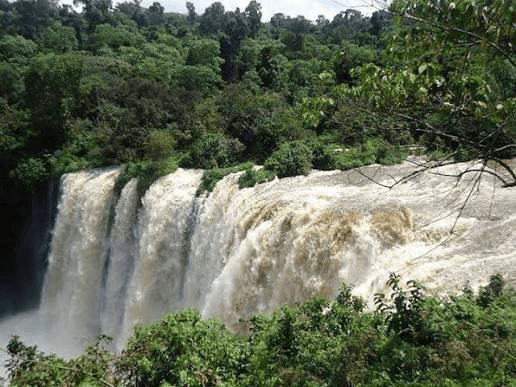
In southwestern Ethiopia lies a land rich in history, culture, and natural beauty—yet for decades, it has remained on the margins of national attention. Illu Abba Boora Zone is a place that has given so much to its communities, to the Oromia region, and to Ethiopia as a whole, but has received far too little in return.
A Land of Exceptional People
Illu Abba Boora has produced some of the most influential figures in Oromo and Ethiopian history. Among its distinguished sons and daughters are:
- Lifa Abba Jorga (Mettu)
- Onesimos Nasib or Hika Awaj (Hurumu) — also known as “The Father of Oromo Literature”
- Abba Gadaa Chali Shono or Abba Bora (Yayo)
- Writer Baalu Girma (Alge Sachi)
- Colonel Goshu Wolde (Gore)
- Captain Solomon Gizaw (Gore)
- Yasin Mohammed Rufo (Mettu)
- Itefa Gobena Molte (Mettu)
- Dr. Dima Negewo (Gore)
- Professor Jemal Abdulkedir (Gore)
- Kuma Demeksa (Bure)
- Zeleke Gesesse (Gore)
- Dr. Mekonnen Dinko Ejjerso
- Melba Biftu and Fetense Illu, among others
These are not merely names. They are architects of Oromo identity, contributors to Ethiopian letters and politics, and leaders whose impact reverberates far beyond their birthplace.
And yet, we must ask ourselves honestly: What have we done with these legacies? Have we mobilized their stories to shape public opinion and narrative about the Oromo people and Oromia? Have we honored them in ways that inspire new generations? The uncomfortable answer is that we have not done enough.
The Uncelebrated Victory of Sambe
Perhaps the most glaring omission in Ethiopia’s collective memory is the Battle of Sambe—also known as the Victory of Sambe.
When Italian forces, equipped with modern weaponry, attempted to invade Ethiopia through western Ethiopia, Ethiopian patriots made their stand in Illu Abba Boora, around Gore—which briefly served as the temporary capital of Ethiopia. With strategic support from local heroes, the patriots destroyed a 12-meter-high bridge over the Qeber River, cutting off the Italian army’s entry and exit routes. Trapped and defeated at Sambe Mountain, the enemy was routed.
This was a pivotal moment in Ethiopia’s anti-fascist resistance. And yet:
- It is barely known.
- It is rarely spoken of.
- It has not been commercialized.
- It has not been sung about.
- It has not been commemorated.
- It has not received national recognition.
- No monument stands in its honor.
The Victory of Sambe deserves rigorous research, publication, and celebration. It belongs in textbooks, in national commemorations, and in the broader story of Ethiopia’s independence. This is not merely a regional issue—it is a national gap in historical memory.
Natural Wealth Without Development
Illu Abba Boora is endowed with remarkable natural assets:
- Soor Waterfall
- Becho Waterfall
- Yayo Forest — a UNESCO Biosphere Reserve and World Heritage Site since 2010
- Wild Arabica coffee forests — a globally significant genetic treasure
- Mineral resources including coal
These are not minor endowments. They represent potential engines of tourism, business, and employment. Yet they remain unknown, unpopular, underdeveloped, and therefore unutilized.
The same is true of the zone’s biodiversity, historical sites, cultural heritage, and human capital. They have not received the attention they merit. They have not been properly studied, managed, or leveraged for the benefit of the people.
A Stable Zone Left Behind
Here is the paradox: Illu Abba Boora is widely regarded as one of the more peaceful and stable zones in Oromia. And yet, stability has not translated into investment. The zone remains, in many ways, a neglected periphery—far from the center of attention, resources, and opportunity.
The people of Illu Abba Boora deserve better. They deserve:
- Coordinated, accountable leadership
- Rapid, comprehensive, and broad-based development
- Partnership from government, investors, regional authorities, zone and district administrations, and city leaders
A Beginning, Not an End
There are encouraging signs. Recent initiatives to promote the zone’s natural, historical, and cultural attractions—including guided tours and infrastructure improvements—are welcome. But they are only a beginning.
This is a call to action:
- Research and publish the history of the Victory of Sambe.
- Commemorate the battle with monuments, annual events, and national recognition.
- Develop and package Illu Abba Boora’s natural and cultural assets into sustainable tourism and business opportunities.
- Honor the zone’s exceptional figures in schools, public narratives, and national memory.
- Invest in a stable region that has waited far too long for its share of development.
Illu Abba Boora does not need to be discovered. Its value has always been there. What it needs is to be seen, respected, and invested in.
As we celebrate Irreecha and Oromia Tourism Week, let us remember the forgotten heroes, the uncelebrated victories, and the untapped beauty of Illu Abba Boora. The time to act is now.

Adanech Abiebie Appointed Mayor of Addis Ababa: A New Chapter for Ethiopia’s Capital
Congratulations pour in as a seasoned leader takes the helm of Africa’s diplomatic hub
(Addis Ababa, 30 September 2026)-In a moment that has captured the attention and hopes of millions, Mrs. Adanech Abiebie has been appointed Mayor of Addis Ababa — a city that stands as both the political heart of Ethiopia and the diplomatic capital of Africa.
The announcement has sparked an outpouring of congratulations and goodwill from citizens, colleagues, and observers across the nation and beyond.
A Leader for a Rising City
Addis Ababa is not just any city. It is home to the African Union headquarters, a growing hub for international diplomacy, and a metropolis undergoing rapid transformation. Its mayor carries a responsibility that extends far beyond municipal boundaries — shaping the experience of residents, visitors, and the global community alike.
With her appointment, Adanech Abiebie steps into a role that demands vision, resilience, and an unwavering commitment to public service. Those who have followed her career describe her as a leader who understands the complexities of urban governance and the aspirations of everyday Ethiopians.
A Wave of Congratulations
The response to her appointment has been swift and heartfelt.
“Congratulations! May you have a blessed term of service, outstanding success, and a fruitful journey ahead!”
These words, echoed across social media and community gatherings, reflect a deep well of hope. For many, this is not simply a political appointment — it is an opportunity to see leadership that listens, delivers, and inspires.
The Weight of the Moment
Addis Ababa faces no shortage of challenges: rapid urbanization, infrastructure demands, housing needs, and the task of ensuring that development benefits all residents, not just a few. Yet within these challenges lie extraordinary opportunities.
The city is emerging as a center of innovation, commerce, and culture. Its streets pulse with the energy of a young population eager for progress. Its markets, universities, and cultural institutions tell a story of a city on the move.
The question that now rests before the new mayor is simple yet profound: How can Addis Ababa become a city that works for everyone?
A Prayer and a Promise
For those who offered their congratulations, the sentiment was clear: this is a moment for prayer as much as celebration.
“May God guide your steps, grant you wisdom, and bless your service to our beloved city and nation.”
Such words carry the weight of a community that understands the gravity of leadership. They are not merely formalities but genuine expressions of hope — that this new chapter will bring not only progress but also fairness, compassion, and lasting change.
Looking Ahead
As Adanech Abiebie takes office, the eyes of the nation — and indeed the continent — are upon her. The road ahead is long, and the expectations are high. But if the enthusiasm surrounding her appointment is any indication, she does not walk it alone.
A city is not built by one leader. It is built by a people united in purpose. And in this moment, there is a palpable sense that Addis Ababa is ready to rise — together.
Congratulations, Mayor Adanech Abiebie. May your term be marked by achievement, may your leadership be a blessing to all, and may the city you serve flourish in the years to come.

What is the significance of Irreechaa Celebrations in Diaspora?
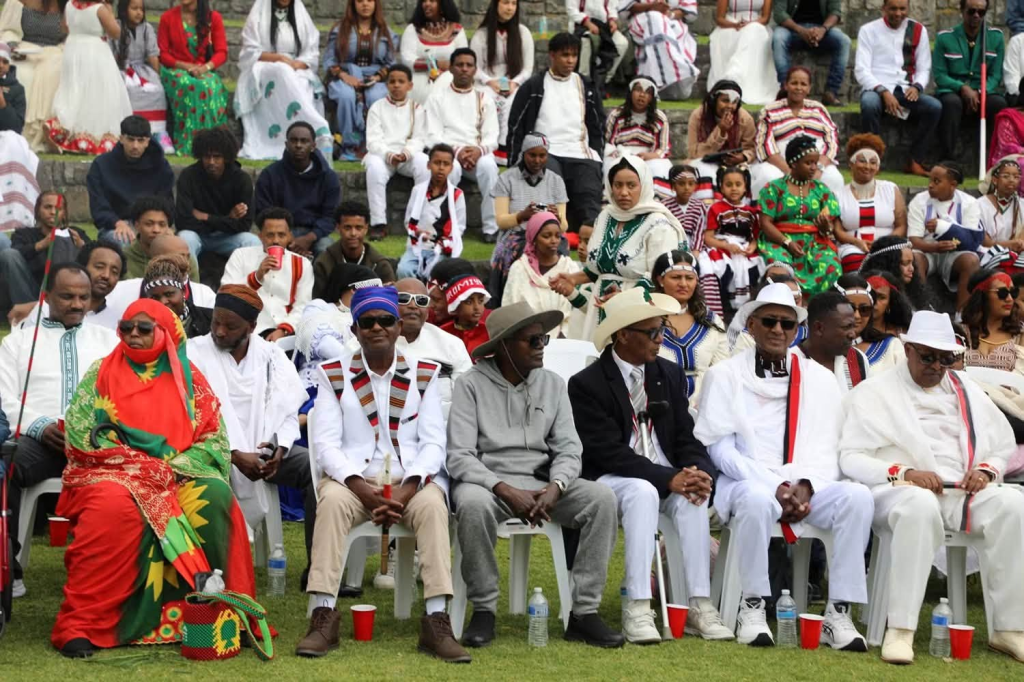
For the Oromo diaspora, Irreechaa serves as a vital cultural anchor—far more than a festival, it is an act of identity preservation, a bridge across generations, and a powerful statement of resilience. It connects Oromos living far from their ancestral homeland to their ancestors, their language, and one another, ensuring that a tradition preserved through centuries of suppression continues to thrive on foreign soil.
🌍 A Home Away from Home
Irreechaa provides a sacred space where the diaspora can recreate the spiritual and communal essence of the homeland. In cities like Melbourne, Toronto, and Minneapolis, the ritual structure remains remarkably intact:
- Traditional Rituals: Participants carry fresh green grass and yellow daisies to the water’s edge, dipping them in as an offering of gratitude—the same act performed by millions at Hora Arsadi and Hora Finfinnee.
- Spiritual Continuity: Elders lead blessings and prayers to Waaqa (God), maintaining the spiritual essence of the festival even in a foreign landscape.
- Processions and Songs: Communities walk together toward water bodies or parks, singing traditional faaruu (songs of praise), with women often walking in front—a practice rooted in the Siinqee institution symbolizing women as sacred agents of peace.
🔗 Forging Unity and Identity
Irreechaa transcends religious and political divisions, functioning as a transreligious symbol of Oromummaa (Oromo identity). As one analysis notes, attendees include Christians, Muslims, non-believers, and Waaqeffatas alike—all united by a shared cultural heritage. This unity is particularly significant for a diaspora that fled political marginalization, as it allows diverse Oromo communities to come together under a single, proud identity.
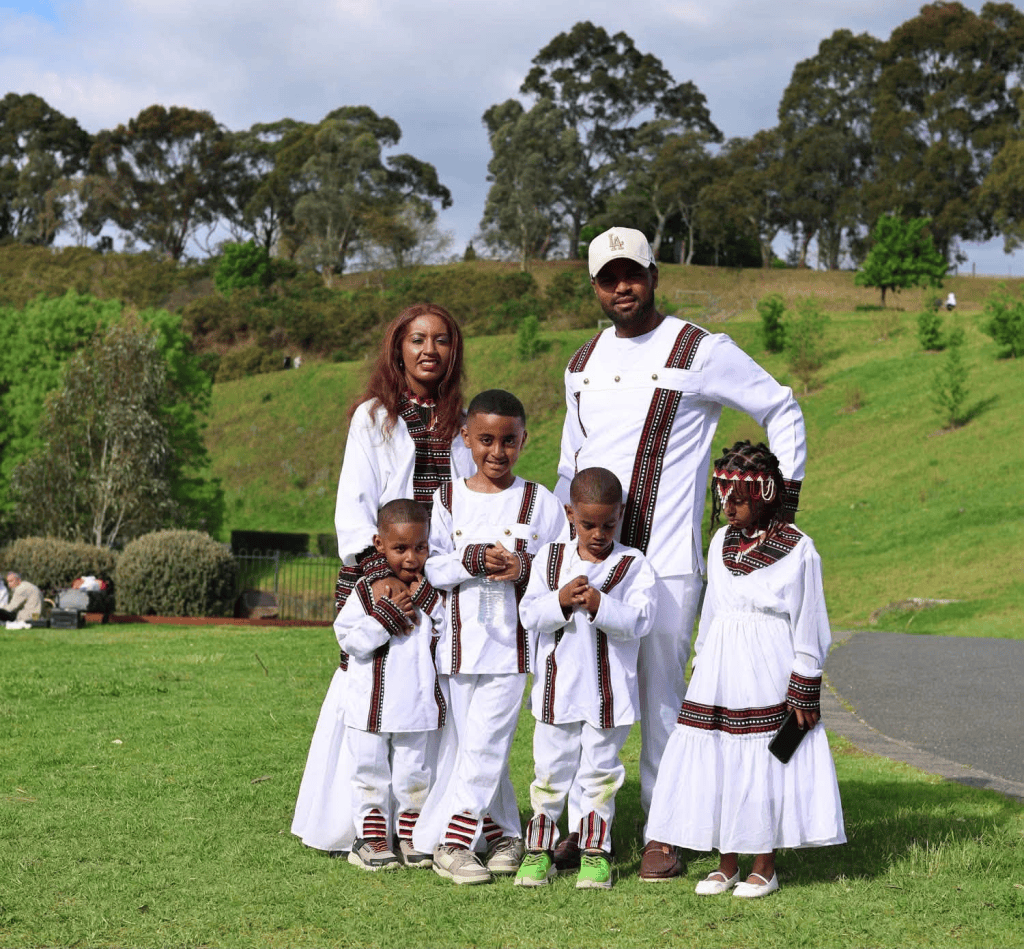
🛡️ Resilience Through Remembrance
The diaspora celebration carries a profound weight of survival. Irreechaa was historically suppressed and forced underground, making its public, joyful observance abroad an act of cultural resistance. In Minnesota, for instance, the festival is explicitly framed as a symbol of resilience—a tradition that was “looked down upon” for about a century but is now celebrated openly and proudly. For the Melbourne community, it is a “living prayer” that refuses to become a mere memory.
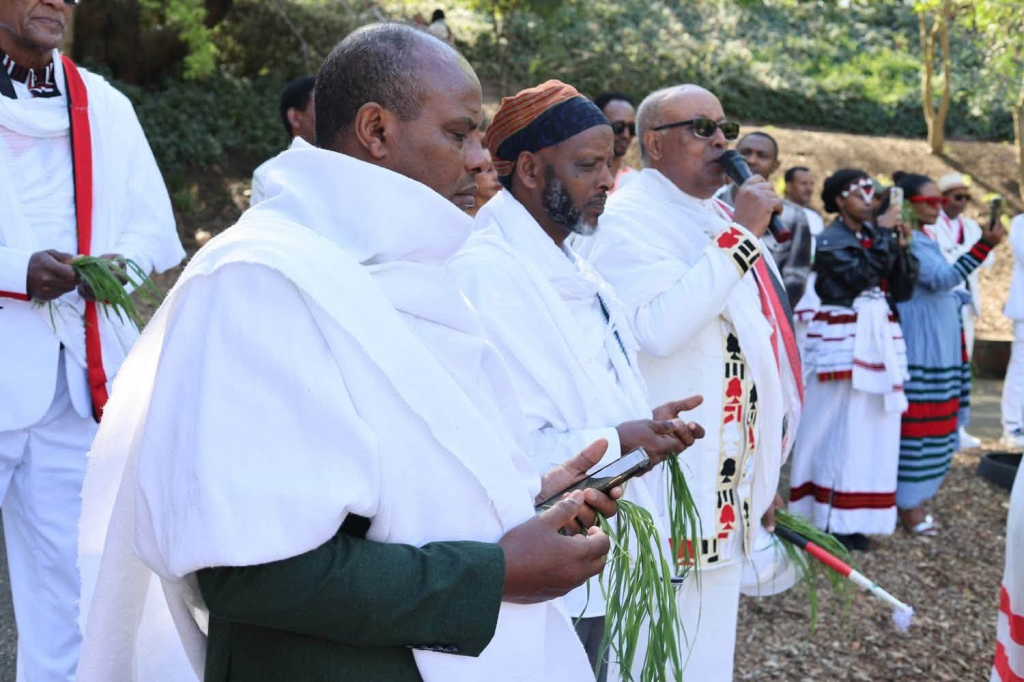
🌱 Passing the Torch to the Next Generation
A central mission of diaspora Irreechaa organizations is youth engagement and cultural transmission. In Melbourne, “Irrecha Australia” emphasizes empowering young people to carry traditions forward with pride. In Minnesota, youth are described as a driving force behind the festival’s growing popularity, even teaching non-Oromos about its meaning. By involving children in rituals—from dressing in traditional wandaboo to learning the steps of cultural dances—the diaspora ensures that Irreechaa remains a living tradition, not a distant memory.
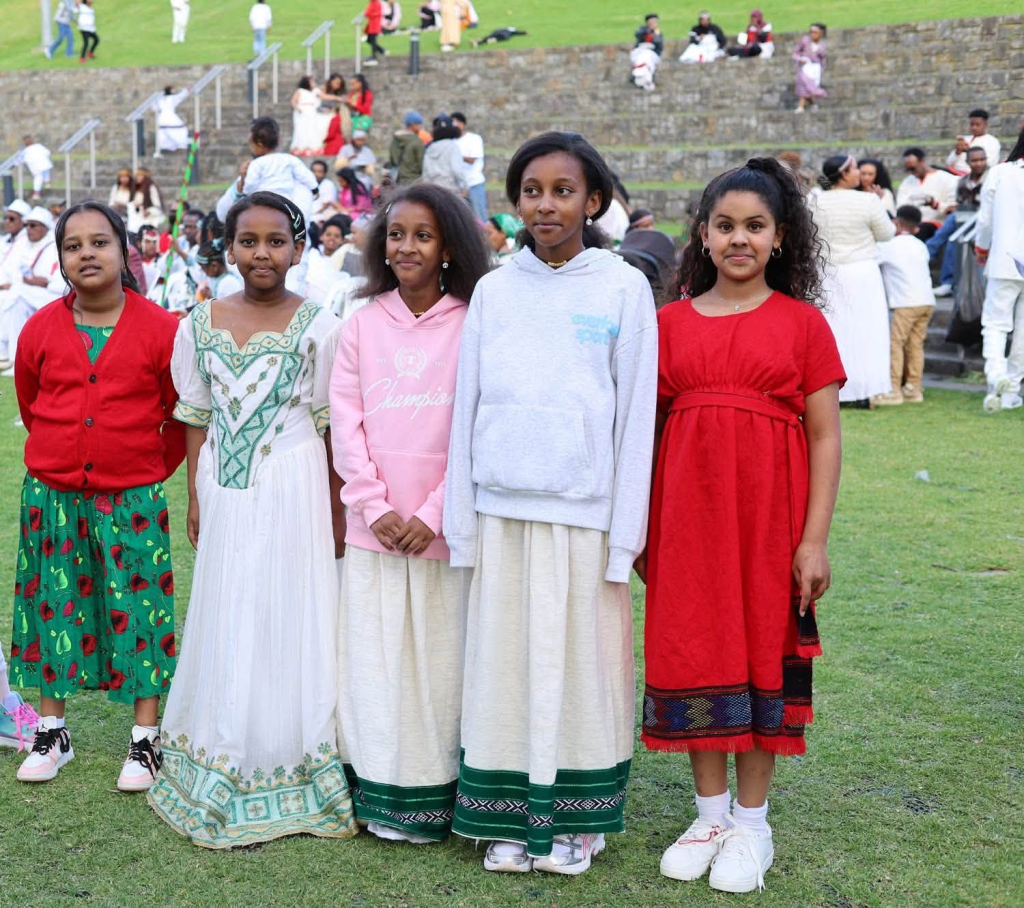
🤝 A Bridge to the Wider World
Beyond the Oromo community, diaspora Irreechaa celebrations serve as an open invitation for intercultural exchange. In Toronto, the festival has attracted visitors from Germany and the United States. In Dubai, celebrations have included local Emiratis and other Ethiopian ethnic groups. These events showcase Oromo values of peace, gratitude, and harmony with nature, fostering understanding within the broader multicultural societies where Oromos now live.
In essence, Irreechaa in the diaspora is not a diminished version of the homeland celebration—it is an amplified testament to a people’s unbreakable connection to their roots. It is where identity is renewed, community is strengthened, and the flame of Oromummaa is passed on, undimmed, to the next generation.

Ethiopia Launches E-Passport Service at Its Embassy in Canberra
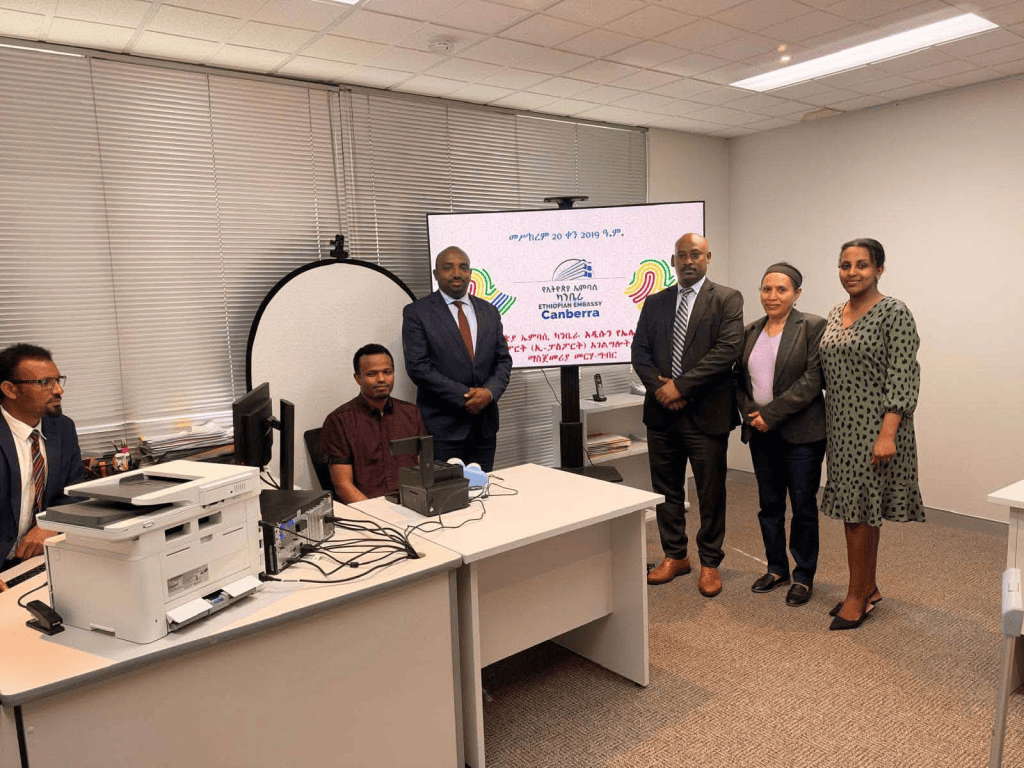
A new era of consular service begins as Ethiopian citizens in Australia gain access to biometric passport processing closer to home.
(CANBERRA, 30 September 2026)-The Embassy of the Federal Democratic Republic of Ethiopia in Canberra has officially launched its E-Passport service, marking a significant milestone in the country’s efforts to modernize consular services and better serve its citizens abroad.
The inauguration ceremony took place today, September 20, 2019 E.C. (Ethiopian Calendar), with Mr. Yalalet Getachew, the mission’s Chargé d’Affaires, officially opening the service to the public.
Meeting International Standards
The new electronic passport is designed to comply with the standards set by the International Civil Aviation Organization (ICAO). This compliance ensures that Ethiopian travelers benefit from enhanced service at international airports worldwide, reducing the inconveniences that have long plagued citizens traveling with older document formats.
The E-Passport represents a leap forward in both security and efficiency, aligning Ethiopia with global best practices in travel documentation.
A Breakthrough for Citizens Abroad
Perhaps the most transformative aspect of this development is what it means for Ethiopians living in Australia and the surrounding region. Previously, the biometric data collection service — a mandatory step in the passport application process — was only available at the headquarters of the Immigration and Citizenship Service in Addis Ababa.
This meant that citizens abroad faced the burdensome prospect of traveling back to Ethiopia simply to complete a procedural requirement.
Now, with the service available at the embassy level, citizens can:
- Submit their passport applications online from the comfort of their current location
- Provide their biometric data at the embassy in Canberra
- Avoid the expense and hardship of international travel solely for administrative purposes
This shift represents a fundamental change in how the Ethiopian government approaches diaspora services — moving from a centralized model to one that meets citizens where they are.
Expanding Access Across Australia
The embassy has indicated that this is only the beginning. In its announcement, the mission stated that additional information regarding the service will be shared in due course, and that preparations are already underway to extend the service to other cities where Ethiopian citizens reside.
This commitment to reaching communities beyond the capital signals a broader strategy to make consular services more accessible and responsive to the needs of the Ethiopian diaspora across the continent.
A Step Forward in Diplomacy
The launch of the E-Passport service in Canberra is more than an administrative upgrade — it is a statement about the relationship between Ethiopia and its citizens abroad. By investing in accessible, modern consular services, the government is acknowledging the importance of its diaspora and the role they play in the nation’s global presence.
For Ethiopians in Australia, this development brings not only practical benefits but also a sense of connection and recognition. The distance between home and abroad just became a little shorter.
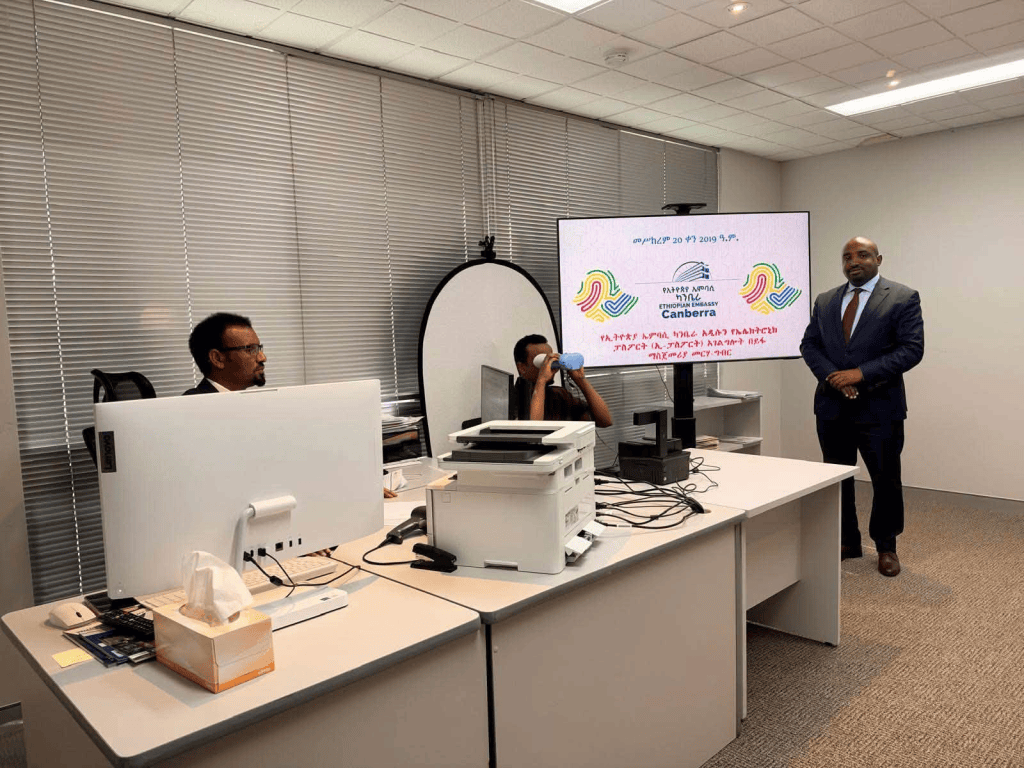
For more information about the E-Passport service, citizens are encouraged to follow the embassy’s official channels for updates.
#Ethiopia #EPassport #Canberra #Diplomacy #EthiopianDiaspora #ConsularServices
Inside Oromia’s New Map: The Six Clusters and the Leaders Who Will Run Them
From Hararghe to Jimma, from Borana to Wollega, Oromia’s historic restructuring has redrawn the administrative landscape. Here is who leads each cluster — and which zones fall under their command
FINFINNE — Oromia has redrawn its map. In one of the most consequential administrative reforms in the region’s modern history, Ethiopia’s largest regional state has collapsed its 21 zonal administrations into six powerful clusters, each led by a chief holding the rank of deputy president.
The reform, approved by the Oromia Regional State Council during its first regular session of the seventh term, is designed to consolidate functions, eliminate duplication, and bring government closer to the people. But beyond the policy language lies a simple question every citizen wants answered: Who is in charge, and of what?
Here is the full breakdown of the six clusters, their leaders, and the zones under their authority.
1. East Oromia Cluster — Two Zones
Chief: Obbo Abdurrahman Abdalla
- Hararghe West (West Hararghe)
- Hararghe East (East Hararghe)
This eastern cluster brings together the two Hararghe zones, a region historically defined by trade routes, Islamic scholarship, and the rugged beauty of the Chercher Mountains. Its headquarters sit in the ancient walled city of Harar, with deputy offices in Chiro, Galamso, and Gurawa.
2. Southeast Oromia Cluster — Four Zones
Chief: Obbo Ahimad Haji
- Arsi
- Bale
- Arsi West (West Arsi)
- Bale East (East Bale)
Spanning the Rift Valley and the towering Bale Mountains, this cluster is one of the largest by landmass. It encompasses Ethiopia’s most productive agricultural heartlands, including the wheat fields of Arsi and the coffee and forest zones of Bale. Its administrative center is Robe, with deputy offices in Ginir, Asella, and Shashemene.
3. South Oromia Cluster — Four Zones
Chief: Obbo Ahimad Idris
- Guji
- Guji West (West Guji)
- Borana
- Borana East (East Borana)
This southern cluster stretches toward the Kenyan border and is home to Ethiopia’s most iconic pastoralist cultures. The Borana people, renowned for their gadaa system of governance — a UNESCO-recognized intangible cultural heritage — anchor this region. Its hub is Yabelo, with deputies based in Adola, Nageelle Borana, and Bule Hora.
4. West Oromia Cluster — Four Zones
Chief: Obbo Masfin Melaku
- Wollega East (East Wollega)
- Wollega West (West Wollega)
- Qellem Wollega
- Horro Guduru Wollega (Horro Guduru)
Western Oromia is gold country — literally. This cluster is home to some of Ethiopia’s richest mineral deposits, alongside vast coffee forests and fertile farmland. It is also a region that has endured significant security challenges in recent years. Its headquarters is Nekemte, with deputies in Gimbi, Shambu, and Dambi Dollo.
5. Southwest Oromia Cluster — Three Zones
Chief: Dr. Rashad Kamal
- Illu Abba Boor (Iluababor)
- Bunnoo Bedelle (Buno Bedele)
- Jimma
This cluster is the birthplace of Ethiopian coffee. Jimma, its administrative heart, is celebrated worldwide for the Arabica beans that grow in its surrounding forests. The region is also rich in history, home to the ancient Kingdom of Limmu-Ennarea and a center of Oromo scholarship and Islamic learning. Deputy offices are located in Bedele, Limmu Gannat, and Mattu.
6. Central Oromia Cluster — Four Zones
Chief: Dr. Mengistu Bekele
- Shewa East (East Shewa)
- Shewa North (North Shewa)
- Shewa Southwest (S.W. Shewa)
- Shewa West (West Shewa)
Encircling the capital, Addis Ababa, Central Oromia is the political and economic engine of the region. It includes Adama, one of Ethiopia’s largest industrial cities; Ambo, a university town known for its mineral springs; and the fertile plains of North Shewa. Its leadership is shared between Shaggar and Adama, with deputies in Waliso, Fitche, and Ambo.
A Reform Built on Coordination
Under the new structure, each cluster chief holds the rank of deputy president — a designation that signals their weight in the regional hierarchy. Alongside each chief sit two deputies: one for development, one for peace and justice. Senior advisors complete the leadership team, mirroring the executive architecture of the regional government itself.
Officials say the consolidation addresses a long-standing problem: Oromia, at over 350,000 square kilometers and more than 27 million people, was simply too vast to be governed effectively through 21 separate zones. By grouping related zones under unified cluster leadership, the government hopes to improve coordination, reduce bureaucratic overlap, and make services more accessible.
What Comes Next
The appointments are made. The headquarters are set. The structures are operational. What remains to be seen is whether the new architecture delivers on its promise — or whether it simply adds another layer of administration between the people and their government.
For now, Oromia has chosen consolidation over fragmentation. It has bet that six strong clusters will serve its people better than twenty-one scattered zones. And it has placed its trust in a new generation of leaders to make that bet pay off.
The map has changed. The work has just begun.
#Oromia #AdministrativeReform #Ethiopia

Ethiopia’s Embassy e-Passport Rollout: A New Era for Citizens Abroad
The launch of e-passport services at Ethiopian embassies marks a historic shift in how the diaspora connects with home — faster, safer, and closer than ever
CANBERRA— For millions of Ethiopians living abroad, a trip to the embassy has long meant queues, paperwork, and uncertainty. That era is ending.
This week, Ethiopia’s Immigration and Citizenship Service (ICS) officially launched e-passport services at the nation’s embassies, extending the country’s biometric passport revolution to its citizens overseas. The initiative, announced under the banner #ICSEthiopia #ePassport, represents the latest phase of a sweeping modernization effort that began with the domestic rollout in early 2025.
For a diaspora that sends home billions in remittances and serves as Ethiopia’s most visible global ambassadors, the message is clear: the distance between home and abroad just got shorter.
From Addis to the World
The journey to this moment began on February 21, 2025, when Ethiopia unveiled its first-ever electronic passport at a ceremony at the Science Museum in Addis Ababa. President Taye Atske Selassie attended, receiving one of the first copies as senior government officials, diplomats, and international partners looked on .
The new passport was not merely an upgrade — it was a statement. Produced locally through a joint venture between the Ethiopian government and Japanese technology firm Toppan Security, the e-passport embedded biometric data including fingerprints and facial images, employed advanced encryption, and met the highest international security standards .
ICS Director General Selamawit Dawit called it a “game changer” at the time. “With improved security, faster processing, and internationally recognized standards, this passport will significantly enhance the travel experience for Ethiopians while strengthening our global recognition and border control” .
By August 2026, the service was ready to cross borders.
The Embassy Rollout: What It Means
The global expansion relies on a newly designed digital platform that allows overseas Ethiopians to handle passport applications, renewals, and administrative consular processes directly from their host countries. Public Relations Director Ambo Mekassa explained that the platform is engineered to eliminate geographical hurdles and remove the long-standing requirement for citizens abroad to travel back to Ethiopia for basic documentation .
For the diaspora, the implications are profound:
- New passport issuance can now be initiated from abroad
- Renewals and replacements for lost or damaged passports are available through embassies
- Corrections and updates to existing passports can be processed without returning home
The system builds on domestic reforms that already decentralized passport services across Ethiopia, expanding service centers from 12 to 23 locations nationwide .
A Passport That Tells Ethiopia’s Story
What sets Ethiopia’s e-passport apart is not only its technology but its artistry. The document earned international acclaim in 2026, receiving the prestigious Red Dot Award for Brands and Communication — a recognition rarely bestowed on government travel documents.
The award cited the passport’s “robust security features, advanced technological integration, and its ability to securely store comprehensive user identification data.” But it was the visual design — intricate depictions of Ethiopia’s historical landmarks, cultural heritage, and natural wonders on the visa pages — that captured the judges’ imagination .
The passport carries Ethiopia’s story to every border it crosses. For a nation with a civilization spanning millennia, it is a fitting ambassador.
Local Production, African Ambition
Perhaps the most significant dimension of Ethiopia’s e-passport story is where it is made. Historically, Ethiopian passports were ordered from abroad, leaving the country dependent on foreign suppliers for a critical sovereign document.
That changed with the establishment of a state-of-the-art printing facility in Addis Ababa — a joint venture between the Ethiopian government and Toppan Security, with Ethiopian Investment Holdings holding a 49 percent stake . The facility has the capacity to produce passports entirely on Ethiopian soil: designed, printed, and personalized locally .
“This is a matter of trust, pride, and regional capability,” said Selamawit Dawit. “The facility will create skilled jobs, build local expertise, and support other African nations with secure, African-made identity and travel documents” .
The ambition extends beyond Ethiopia’s borders. Toppan has signaled plans to produce passports and IDs for neighboring countries, positioning Ethiopia as a hub for secure document production in Africa .
The Road Ahead
The embassy rollout coincides with a broader push to integrate the e-passport system with Ethiopia’s Fayda National Digital ID, allowing domestic applicants to complete biometric verification online. Officials say this integration will eventually support remote applications, strengthen fraud prevention, and further reduce the need for in-person visits .
For the diaspora, the agency has also clarified the legal standing of foreign nationals of Ethiopian descent. Holders of the Ethiopian Origin ID Card — commonly known as the Yellow Card — retain full statutory rights under Proclamation 270/2002, including the right to invest as domestic entities, own immovable property, and enter or reside in Ethiopia without work permits .
Meanwhile, domestic production has stabilized supply. The days of passport shortages and backlogs — which once numbered over 350,000 applications — appear to be receding . During the 2025-2026 fiscal year alone, ICS issued approximately 1,633,104 passports, a milestone that strengthened both tourism and international connectivity .
A Bridge, Not a Barrier
For too long, bureaucratic distance has separated Ethiopians abroad from the document that connects them to home. The embassy e-passport rollout changes that equation. It transforms the embassy from a place of queues into a gateway of service. It replaces uncertainty with predictability. And it tells every Ethiopian abroad that their country sees them — not as an afterthought, but as an integral part of the national story.
As one official put it, the platform is designed to “eliminate geographical hurdles.” In practice, that means a mother in Melbourne can renew her passport without flying to Addis. A student in Washington can replace a lost document without months of waiting. A businessperson in Dubai can keep their travel credentials current without interrupting their work.
These are not small conveniences. They are acts of recognition. They say: you belong here, even when you are far away.
The Bigger Picture
Ethiopia’s e-passport journey reflects a broader truth about modern governance: the most meaningful reforms are often the ones citizens feel in their daily lives. High-level diplomacy and macroeconomic policy matter, but so does the ability to renew a passport without losing weeks of work and thousands of dollars in travel.
By investing in local production, embracing biometric technology, and extending services to embassies worldwide, Ethiopia is doing more than issuing documents. It is building trust. It is signaling that the state exists to serve its people — wherever they may be.
The passport itself, with its Red Dot-winning design and embedded chip, carries Ethiopia’s image abroad. But the service behind it carries something equally important: the promise that no Ethiopian is too far to be served.
#ICSEthiopia #ePassport #Ethiopia

Oromia Consolidates 21 Zonal Administrations into Six Powerful Regional Clusters
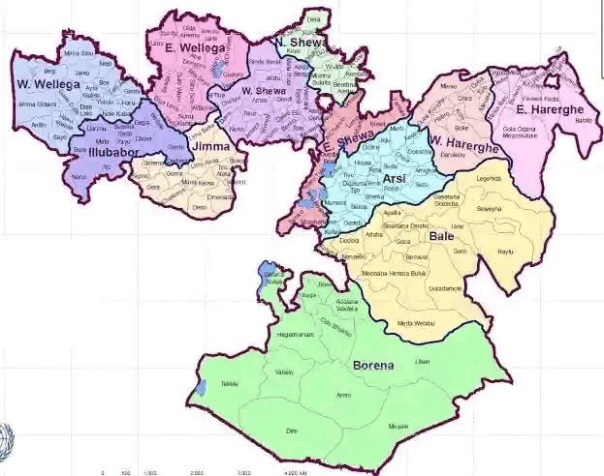
A historic restructuring aims to streamline governance, strengthen service delivery, and bring the state closer to its people
FINFINNE — In a decision described as historic and far-reaching, the Government of Oromia Regional State has approved a major restructuring of its administrative architecture, reducing the region’s 21 zonal administrations to six powerful regional clusters. The reform is designed to build a stronger, more efficient government and to ensure that public services genuinely reach the people they are meant to serve.
The decision, ratified through a draft proclamation by the Oromia Regional State Council during its first-year, seventh-term regular session, consolidates related administrative functions into unified structures. At its core, the reform emphasizes coordination, complementarity, and the effective delivery of services to the public.
With the new structure now in force, the senior leadership of each of the six clusters has been officially assigned.
East Oromia Cluster
Headquarters: Harar
- Abdurrahman Abdalla — Cluster Chief, rank of Deputy President. Office: Harar.
- Miski Muhammad — Deputy Cluster Chief for Development, rank of Bureau Head. Office: Chiro.
- Anas Aliyi — Deputy Cluster Chief for Peace and Justice, rank of Bureau Head. Office: Galamso.
- Jaarso Boru — Senior Advisor to the Cluster Chief, rank of Bureau Head. Office: Gurawa.
- Fiqadu Miliyoon — Advisor to the Cluster Chief, rank of Bureau Head.
- Samia Abdalla — Advisor to the Cluster Chief, rank of Bureau Head.
Central Oromia Cluster
Headquarters: Shaggar and Adama
- Dr. Mengistu Bekele — Cluster Chief, rank of Deputy President. Office: Shaggar and Adama.
- Abbabu Waqo — Deputy Cluster Chief for Development, rank of Bureau Head. Office: Waliso.
- Kifalaw Adare — Deputy Cluster Chief for Peace and Justice, rank of Bureau Head. Office: Fitche.
- Makonnen Bayisa — Senior Advisor to the Cluster Chief, rank of Bureau Head. Office: Ambo.
- Ashannafi Ajjama — Advisor to the Cluster Chief, rank of Bureau Head.
- Taddasa Dirriba — Advisor to the Cluster Chief, rank of Bureau Head.
Southwest Oromia Cluster
Headquarters: Jimma
- Dr. Rashad Kamal — Cluster Chief, rank of Deputy President. Office: Jimma.
- Indalkachaw Tafari — Deputy Cluster Chief for Development, rank of Bureau Head. Office: Bedele.
- Aman Danu — Deputy Cluster Chief for Peace and Justice, rank of Bureau Head. Office: Limu Gannat.
- Didha Guddata — Senior Advisor to the Cluster Chief, rank of Bureau Head. Office: Mattu.
- Muhammadxahaa Abba Fixaa — Advisor to the Cluster Chief, rank of Bureau Head.
- Mosisa Lammessa — Advisor to the Cluster Chief, rank of Bureau Head.
South Oromia Cluster
Headquarters: Yabelo
- Ahmad Haji — Cluster Chief, rank of Deputy President. Office: Yabelo.
- Adula Hirbayye — Deputy Cluster Chief for Development, rank of Bureau Head. Office: Adola.
- Liban Areero — Deputy Cluster Chief for Peace and Justice, rank of Bureau Head. Office: Nageelle Borana.
- Wandimmu Robe — Senior Advisor to the Cluster Chief, rank of Bureau Head. Office: Bule Hora.
- Ibrahim Abdi — Advisor to the Cluster Chief, rank of Bureau Head.
- Isaaq Xaachoo — Advisor to the Cluster Chief, rank of Bureau Head.
West Oromia Cluster
Headquarters: Nekemte
- Masfin Melaku — Cluster Chief, rank of Deputy President. Office: Nekemte.
- Mirressa Fixee — Deputy Cluster Chief for Development, rank of Bureau Head. Office: Gimbi.
- Gammachu Gurmeessa — Deputy Cluster Chief for Peace and Justice, rank of Bureau Head. Office: Shambu.
- Talila Tarrafa — Senior Advisor to the Cluster Chief, rank of Bureau Head. Office: Dambi Dollo.
- Badhasa Dhaba — Advisor to the Cluster Chief, rank of Bureau Head.
- Dassu Lammi — Advisor to the Cluster Chief, rank of Bureau Head.
Southeast Oromia Cluster
Headquarters: Robe
- Ahimad Idris — Cluster Chief, rank of Deputy President. Office: Robe.
- Asaffa Tolasa — Deputy Cluster Chief for Development, rank of Bureau Head. Office: Ginir.
- Abdurrazaq Huseen — Deputy Cluster Chief for Peace and Justice, rank of Bureau Head. Office: Asella.
- Ibrahim Kadir — Senior Advisor to the Cluster Chief, rank of Bureau Head. Office: Shashemene.
- Izzaddin Abuubakar — Advisor to the Cluster Chief, rank of Bureau Head.
- Birhanu Arfasa — Advisor to the Cluster Chief, rank of Bureau Head.
What the Reform Means
The restructuring reduces Oromia’s sprawling 21-zonal system to six consolidated clusters, each led by a chief holding the rank of deputy president. Each cluster also has dedicated deputies for development and for peace and justice, along with senior advisors — a structure that mirrors the executive architecture of the regional government itself.
Officials say the reform is rooted in a simple principle: government should not be distant or fragmented. By grouping similar functions under one coordinated structure, the new system aims to eliminate duplication, improve efficiency, and make public services more accessible to ordinary citizens.
Oromia is Ethiopia’s largest regional state, spanning more than 350,000 square kilometers with a population estimated at over 27 million. For years, analysts and citizens alike have questioned whether a 21-zone structure could effectively serve such a vast and diverse population. The new six-cluster model is presented as the answer.
A Historic Decision With High Stakes
The proclamation was approved during the Council’s first regular session of its seventh term — a detail that underscores the political weight of the decision. The reform is not merely administrative; it is a reimagining of how Oromia governs itself.
Supporters see it as a bold step toward a stronger, more responsive state. Critics, however, have raised questions about political motivations, wondering whether consolidation could weaken the influence of individual zones or shift power in ways that are not immediately visible.
What is certain is that the six clusters are now operational, their leaders appointed, and their headquarters designated. For the people of Oromia, the real test will be felt in the everyday: faster permits, closer services, and a government that listens.
As the region embarks on this new chapter, one thing is clear — Oromia has chosen to reorganize not by dismantling its diversity, but by uniting it under a stronger, more coordinated whole.
#OromiaPresidentOffice2026

Six Clusters, One Oromia: A Guide to the New Administrative Map and Its Key Cities
FINFINNE — Oromia, Ethiopia’s largest federal state, is undergoing a profound administrative restructuring. Under a newly approved plan by the Oromia Regional State Council, the region has been reorganized into six major administrative clusters, each led by a vice president. This transformation not only reshapes governance structures but also brings the roles of each cluster’s key cities into sharper focus.
Based on the officially released administrative divisions, here is a breakdown of the six regions and their serving hub cities.
1. East Oromia: Harar and Chiro
The East Oromia cluster encompasses West Hararghe and East Hararghe zones, overseen by Vice President Abdurehman Abdullah.
Key service cities in this region include:
- Harar: The administrative center of East Hararghe Zone. A historic walled city, Harar plays a vital role in regional trade and cultural exchange.
- Chiro: The capital of West Hararghe Zone and a key administrative and commercial node on the western side of the cluster.
- Galamso and Gurawa are also important towns within this region.
2. Central Oromia: Shaggar and Adama
The Central Oromia cluster surrounds the capital, Addis Ababa, and includes East Shewa, North Shewa, Southwest Shewa, and West Shewa zones. It is overseen by Vice President Mengistu Bekele.
Main service hub cities:
- Shaggar: The name is closely tied to Oromia’s governance center and serves as a critical node for regional administrative coordination.
- Adama: The capital of East Shewa Zone, located southeast of Addis Ababa, and a major industrial and transport hub.
- Waliso: The administrative center of Southwest Shewa Zone.
- Fitche: The capital of North Shewa Zone.
- Ambo: The administrative center of West Shewa Zone, known for its hot springs and university.
3. Southwest Oromia: Jimma and Bedele
The Southwest Oromia cluster covers Ilu Ababor, Buno Bedele, and Jimma zones, overseen by Vice President Reshad Kemal.
- Jimma: The core city of the cluster, known as Ethiopia’s “coffee capital,” with rich agricultural and forestry resources.
- Bedele: The administrative center of Buno Bedele Zone.
- Limu Gannat and Mattuu are also important towns in the region.
4. South Oromia: Yabelo and Nageelle
The South Oromia cluster includes Guji, West Guji, Borana, and East Borana zones, overseen by Vice President Ahmed Haji.
- Yabelo: The capital of Borana Zone, located on the major transport route to Kenya in the south.
- Nageelle Borana: The administrative center of Guji Zone.
- Adola and Bule Hora are key towns in East Borana and West Guji zones, respectively.
5. West Oromia: Nekemte and Gimbi
The West Oromia cluster comprises East Wollega, West Wollega, Kellem Wollega, and Horo Guduru Wollega zones, overseen by Vice President Melaku Melaku.
- Nekemte: The capital of East Wollega Zone and the economic and cultural center of the western region.
- Gimbi: The administrative center of West Wollega Zone.
- Shambu: The capital of Horo Guduru Wollega Zone.
- Dambi Dollo: The administrative center of Kellem Wollega Zone.
6. Southeast Oromia: Robe and Shashemene
The Southeast Oromia cluster covers Arsi, Bale, West Arsi, and East Bale zones, overseen by Vice President Ahmed Idris. This region spans the Rift Valley and is home to important ecological resources, including Bale Mountains National Park.
- Robe: The capital of Bale Zone and the administrative center of the cluster’s southeastern section.
- Ginir: An important town in Bale Zone.
- Asella: The capital of Arsi Zone.
- Shashemene: The administrative center of West Arsi Zone, located about 200 kilometers south of Addis Ababa.
The Significance of the Restructuring
Oromia’s administrative reorganization represents a major shift in the state’s governance model. Supporters argue that dividing the vast Oromia region into smaller management units brings government closer to the people, improving administrative efficiency and service delivery. Oromia spans over 350,000 square kilometers with a population of more than 27 million — a single layer of management does indeed face enormous challenges.
However, critics have also raised concerns. Some analysts suggest the restructuring may carry political motives, potentially aimed at weakening Oromia’s cohesion and bargaining power as a single political entity.
Regardless, the six cluster vice presidents are now in place, and coordination mechanisms are being established. For ordinary citizens, the most direct impact will be on the accessibility and efficiency of administrative services. For observers, this “quiet administrative revolution” in Oromia may have implications that extend far beyond the list of appointments itself.

Irreechaa: A Billion Hearts, One Festival of Light
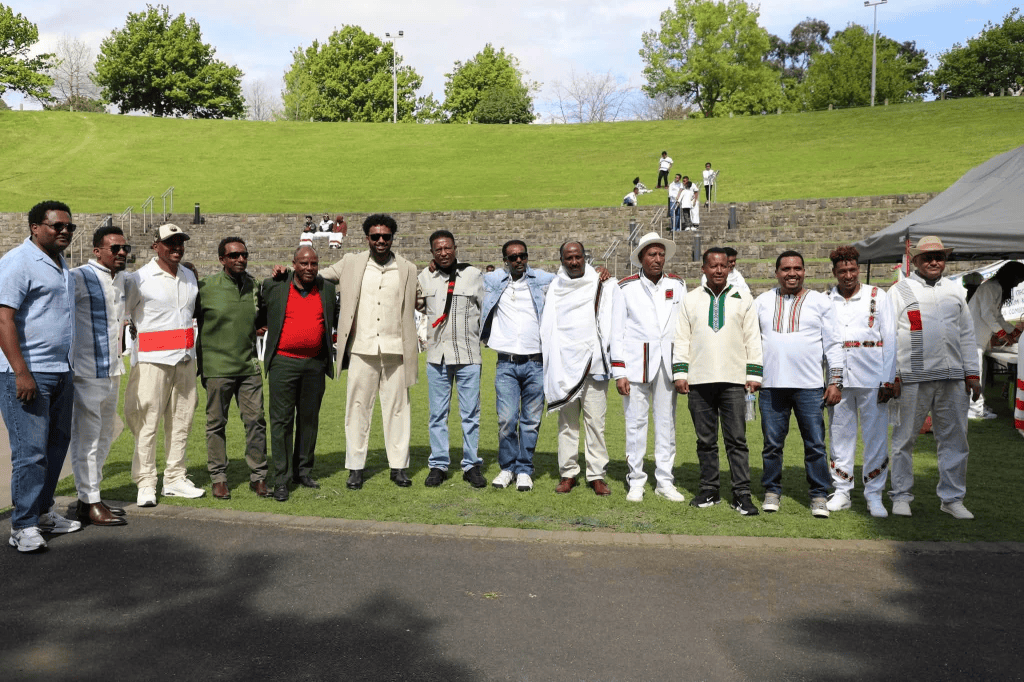
Across continents and generations, the Oromo nation celebrates the victory of light over darkness — a festival that unites, sustains, and inspires
(MELBOURNE, AUSTRALIA, 27 September 2026) — This week, more than a billion people around the world are celebrating Irreechaa, the cultural festival celebrating the victory of light over darkness. It’s an important time for the Oromo nation. Across states, regions and cities, it fostered unity, sustainability, and joy, illuminating paths to prosperity and peace.
From the sacred shores of Hora Arsadi in Bishoftu to the riverbanks of the Awash, from the bustling streets of Addis Ababa to the quiet parks of Melbourne, Minneapolis, and London, the sounds of shaggooyyee and the colors of calanchi have once again filled the air. Irreechaa has returned — and with it, a message that transcends borders, generations, and circumstances.
A Festival Rooted in Gratitude
At its heart, Irreechaa is a thanksgiving. It marks the end of the rainy season and the beginning of the harvest, a moment when the Oromo people gather at the water’s edge to offer thanks to Waaqa (God) for the gift of life, fertility, and renewal. The festival is celebrated twice a year: Irreechaa Hiyyessa (the small Irreechaa) and Irreechaa Guddaa (the great Irreechaa), with the latter drawing millions to sacred sites across Oromia and beyond.
But Irreechaa is more than a ritual. It is a philosophy. The triumph of light over darkness is not merely a seasonal metaphor — it is a declaration of hope. It reminds us that even after the longest night, the sun rises. Even after the heaviest rain, the land blooms. Even in the face of adversity, a people united by faith and tradition can find their way forward.
Unity Across Divides
This year’s celebrations carried particular weight. In a world often divided by politics, religion, and geography, Irreechaa stood as a powerful counter-narrative. In cities across Ethiopia and the diaspora, people of all ages, backgrounds, and walks of life gathered side by side. Elders passed down blessings. Mothers sang songs of gratitude. Children danced in celebration. And for a moment, the divisions that so often define modern life seemed to dissolve.
In Melbourne, where the Oromo community has grown into a vibrant and organized presence, Irreechaa was celebrated with the same reverence as it is in the homeland. Families dressed in traditional wandaboo and uffannaa aadaa, exchanged greetings of “Happy Irreechaa!” and shared meals that tasted of home. The event was a testament to the resilience of a people who, even thousands of miles from their ancestral land, refuse to let their culture fade.
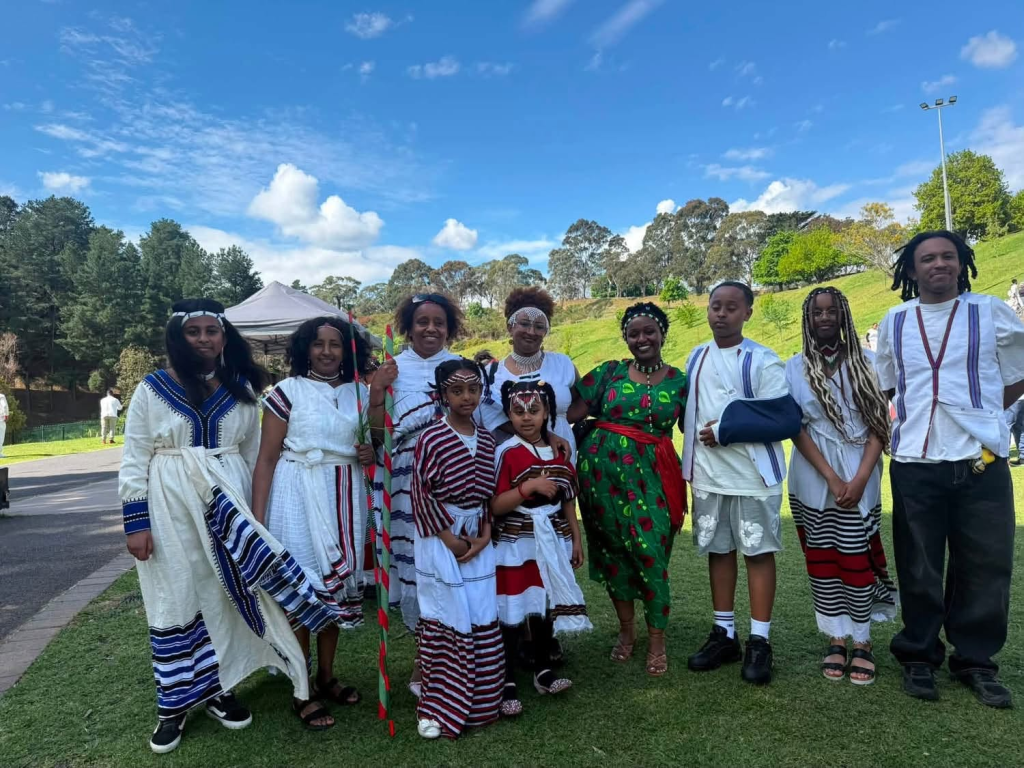
Sustainability: A Legacy of Respect for the Earth
Irreechaa is also a reminder of humanity’s relationship with nature. The festival is intrinsically tied to the land, the rivers, and the changing seasons. It teaches that gratitude must be accompanied by stewardship — that the earth is not ours to exploit but to protect.
In an era of climate crisis, this message could not be more urgent. The Oromo people’s reverence for water, land, and life offers a model of sustainability that the world would do well to heed. Irreechaa is not just a celebration of what we have received; it is a commitment to preserve it for those who come after us.
Joy as Resistance
Perhaps most powerfully, Irreechaa is a celebration of joy. In a world that often demands we focus on what divides us, the festival insists on what unites us. It is a reminder that joy is not frivolous — it is revolutionary. To celebrate in the face of hardship is to declare that hardship will not have the final word.
The images emerging from this year’s celebrations tell that story. A grandmother teaching her granddaughter the steps of a traditional dance. A young man helping an elder across the river. A group of friends laughing as they share a meal under the open sky. These are the moments that define Irreechaa. These are the memories that will be passed down.
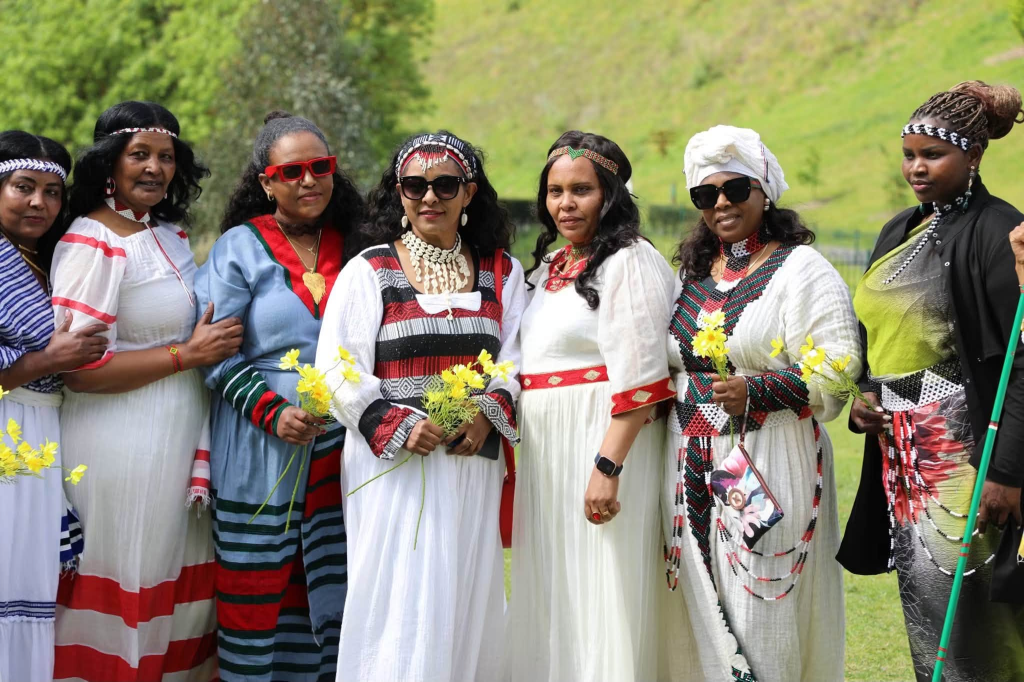
Illuminating Paths to Prosperity and Peace
As the celebrations draw to a close, the message of Irreechaa lingers. Light has triumphed over darkness. Gratitude has triumphed over despair. Unity has triumphed over division.
For the Oromo nation, Irreechaa is not just a festival — it is a compass. It points toward a future built on peace, prosperity, and mutual respect. It reminds us that the path forward is illuminated not by the brightness of any single star, but by the collective light of a people who refuse to be extinguished.
And as the sun rises on another year, that light shines on — in Bishoftu, in Melbourne, in Minneapolis, and in every corner of the world where the Oromo spirit lives.
Baga Irreechaa Nagayaan Geessan! Baga Bara Haaraa Geessan!
May the light of Irreechaa guide us all toward a year of peace, unity, and abundance.
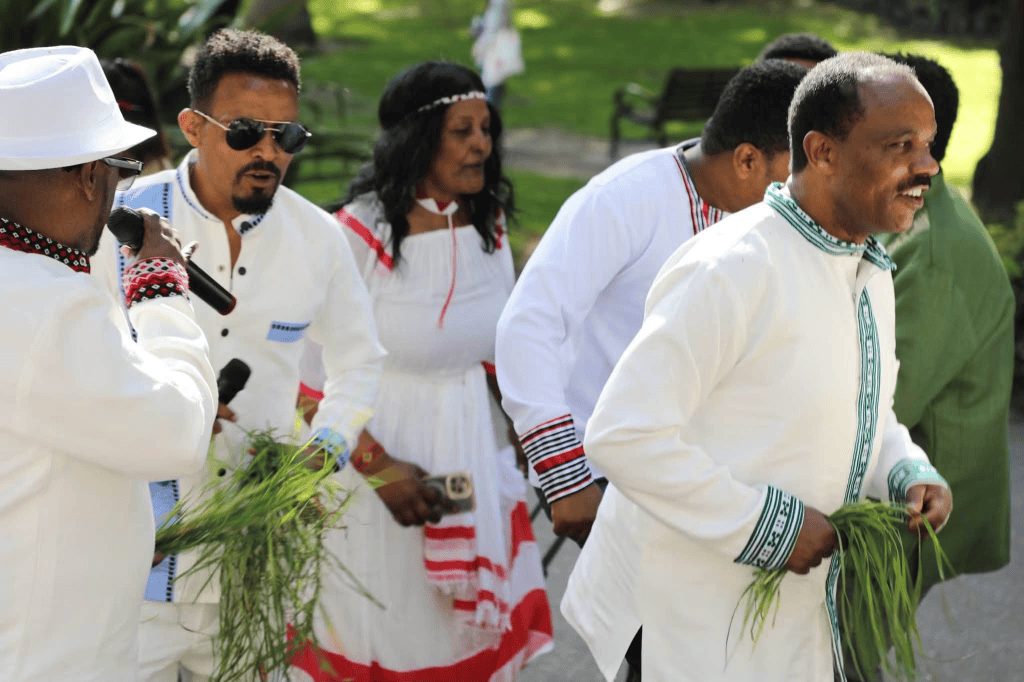
Irreechaa: A Living Memory Across Generations
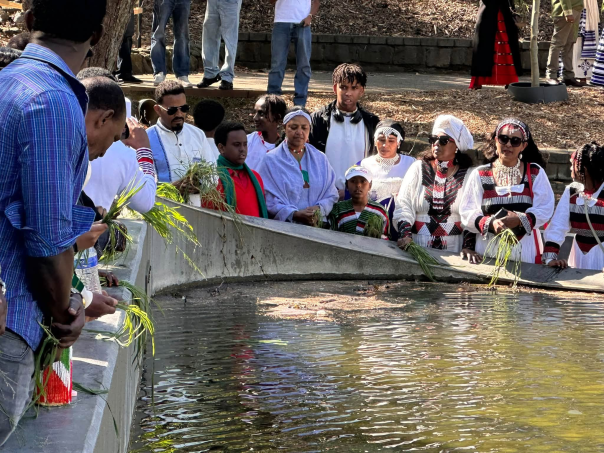
“Irreechaa waggaatti naanna’e dhufa; ayyaana kana irratti yaadannoo barayyuu jiraatu dhalootaaf kahanii darbuu waanti fakkaatu hin jiru.”
Irreechaa returns year after year; there is nothing that seems to pass beyond the reach of generations when the memory of this festival lives on and is preserved.
This profound truth captures the essence of Irreechaa — a festival that refuses to be confined to a single moment in time. It is a celebration that travels with its people, crossing rivers, mountains, and oceans, carrying with it the sacred duty of remembrance.
A Festival That Travels With Its People
Irreechaa is more than a thanksgiving ceremony. It is a living testament to the resilience, faith, and unity of the Oromo people. Celebrated at the banks of rivers and lakes, it marks the transition from the rainy season to the harvest, a moment of gratitude to Waaqa (God) for the blessings of life, fertility, and community.
But when Irreechaa travels — as it has with the Oromo diaspora to cities like Melbourne — it does not lose its meaning. Instead, it multiplies. Each celebration in a new land becomes a bridge between the homeland and the heart, between ancestors and descendants, between memory and hope.
Melbourne: A New Chapter in an Ancient Story
The Irreechaa celebrations in Melbourne are a vivid reminder that distance does not diminish devotion. Under the open sky of a foreign land, Oromo families gather in their traditional attire, sing songs of praise, and perform the sacred rituals that have been passed down for centuries. The colors of the calanchi and the rhythm of the shaggooyyee echo the same spirit that fills the banks of the Hora Arsadi and the Awash River.
These gatherings are not merely cultural events; they are acts of survival. They are declarations that no matter where life takes a people, their identity remains rooted in their traditions.
The Power of Shared Memories
“Suuraalee Irreechaa Melbourne kana waliif qooduunis yaadannoo keenyatti lubbuu haa horru!”
Sharing the photos of this Irreechaa in Melbourne breathes life into our memory!
In the age of digital connection, every photograph, every video, every shared post becomes a vessel of memory. When we share these images, we are not simply documenting an event — we are breathing life into our collective story. We are telling the next generation: This is who we are. This is where we come from. This is what we carry with us.
For those who could not attend, these shared moments become a lifeline. For those who were present, they become anchors of joy. For those yet to be born, they become a legacy.
A Call to Keep the Flame Alive
We extend our deepest gratitude to Yadeta Lemu, Kasahun Soboka, Aliye Geleto, Dhabessa Wakjira, and Yadesa Bedhasa for their dedication in capturing and sharing the spirit of Irreechaa Melbourne. Their efforts ensure that the memory of this celebration does not fade with time but grows stronger with each passing year.
Their work reminds us that preserving culture is not a passive act. It requires effort, commitment, and love. It requires people who understand that when we share our traditions, we are not just looking back — we are building forward.
Conclusion: Irreechaa as a Bridge
Irreechaa is a bridge. It spans the distance between generations, between homelands, between hearts. It teaches us that as long as we remember, we are never truly far from home. As long as we celebrate, we are never truly alone.
So let us continue to share. Let us continue to remember. Let us continue to breathe life into our memories — for in doing so, we ensure that Irreechaa will indeed return, year after year, carrying our stories to generations yet to come.
Irreechaa fi yaadannoo keenya — dhalootaaf kahanii darbuu hin danda’u!
Irreechaa and our memory — they cannot pass beyond the reach of generations!
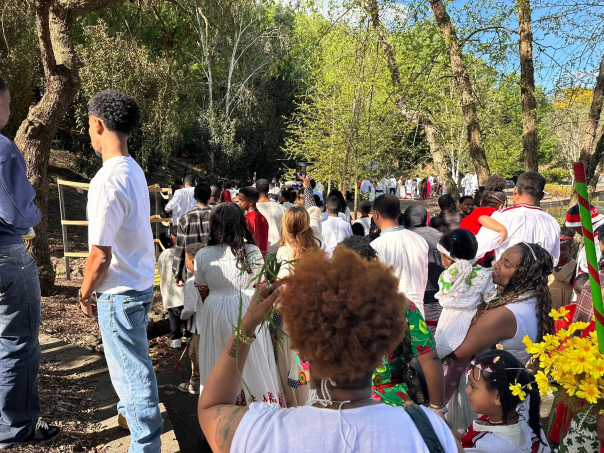
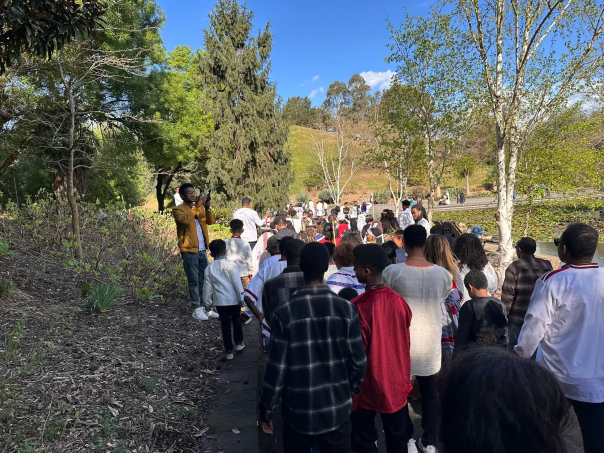
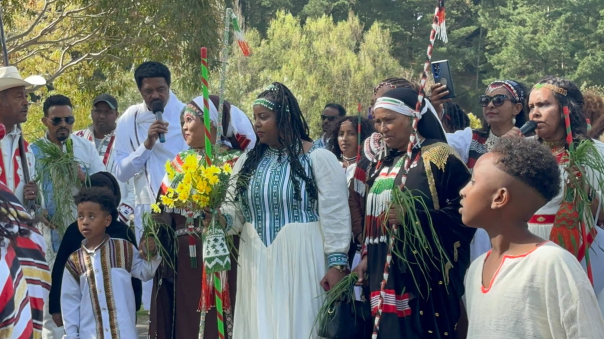
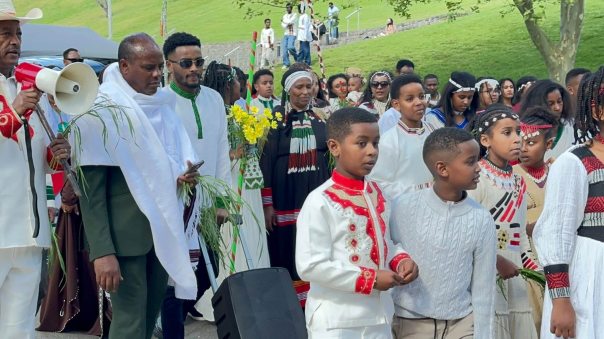
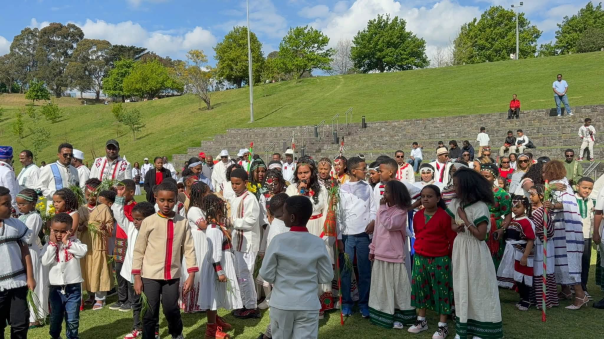
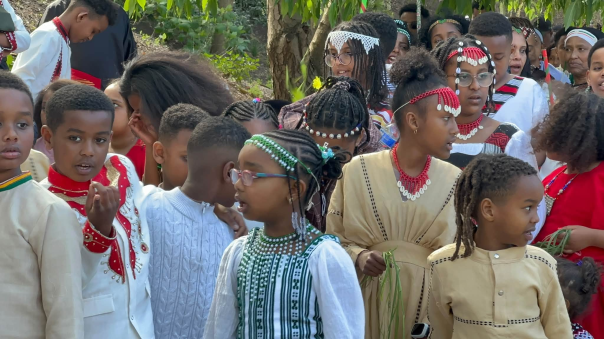
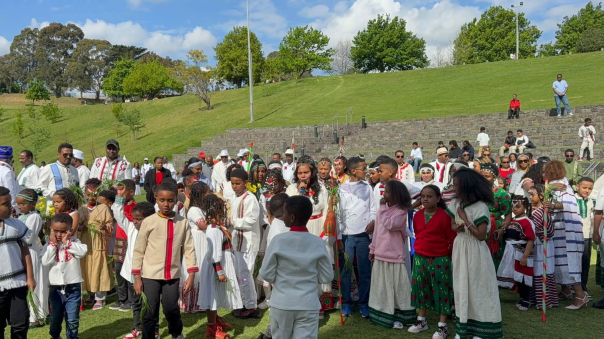
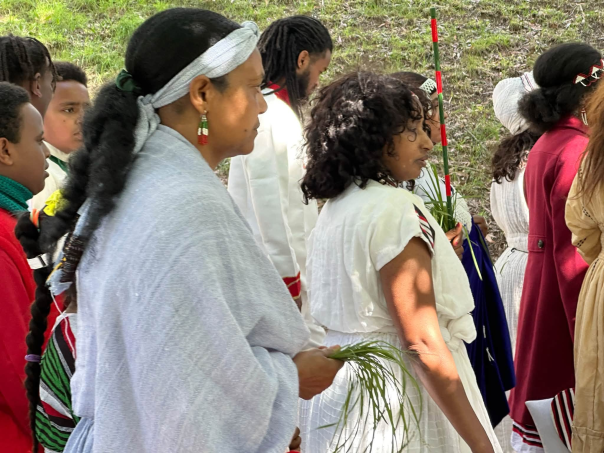
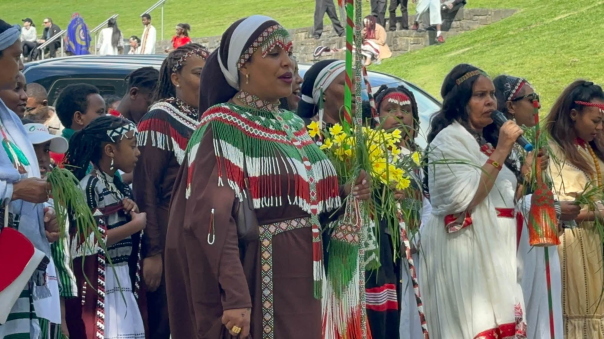
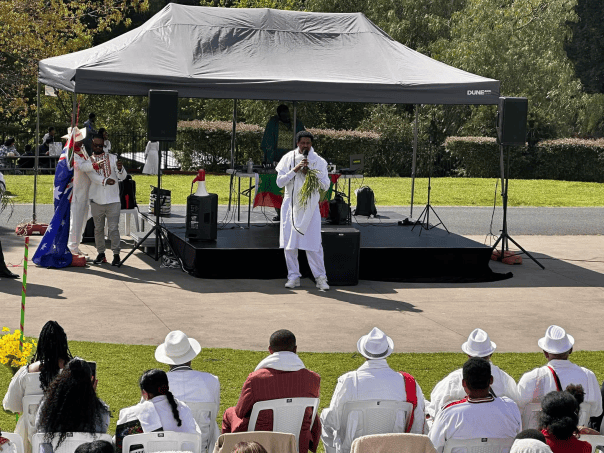
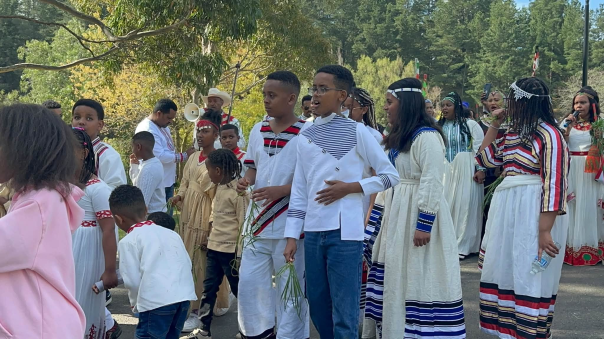
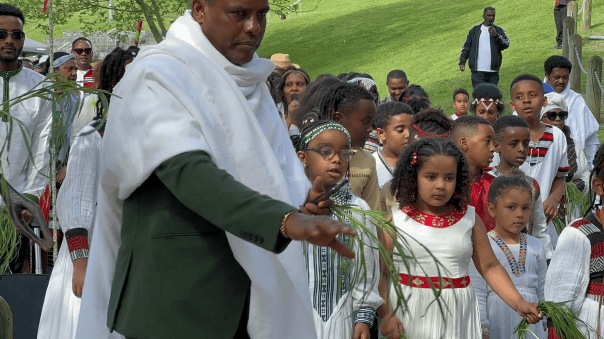
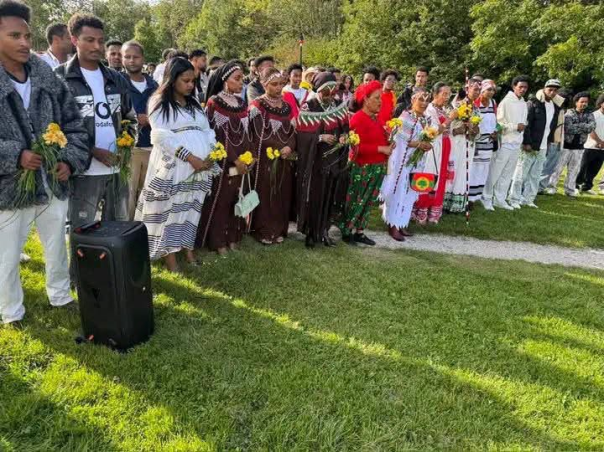

🩸 THREE MOMENTS. ONE PEOPLE. ONE NAME. 🩸

They tried to split us by faith. We chose to die as OROMO.
1️⃣ ARSII — 1966
📍 Hundee Tokkummaa Oromoo
In the mountains of Arsii, the foundation was laid. In 1966, brave Oromo sons — Muslim and Christian together — raised the banner of Oromo unity. The enemy’s plan was simple: use religion to break us. They failed. They dug deep foundations that no conspiracy could shake. From Arsii, the root of Oromo unity was planted in blood and fire. 🔥
“Hundee Tokkummaa Oromoo — Arsii, 1966”
2️⃣ SHINNIGAA — 1980
📍 Tokkummaa Oromoo Shinnigaa
In 1980, at Shinnigaa, they came with the same weapon — religion. “Separate yourselves,” they said. “Die apart.” But our heroes looked at the pit, looked at each other, and said:
“Maqaa amantaan gargar hin baanu.”
We do not divide the name by religion.
They refused to separate. They were massacred together, as one people, under one name. Their blood soaked the same ground. Their sacrifice became our foundation. 🕯️
“Tokkummaa Oromoo Shinnigaa — 1980”
3️⃣ BISHOOFTUU — 2016
📍 Walgaltee Ilmaan Oromiyaa
Thirty-six years later, in Bishooftuu Harsadii, the enemy tried again. Same tactic. Same lie. Separate the Muslim from the Christian. Divide the youth. Break the unity.
They failed again.
The youth of Oromiyaa refused to be divided. They were buried together — in one place, under one identity. They became the pillars of our identity (utubaa eenyummaa). We will never forget them. Not today. Not ever. ✊
“Walgaltee Ilmaan Oromiyaa — Bishooftuu Harsadii, 2016”
⚡ THE MESSAGE ⚡
From Arsii 1966 → Shinnigaa 1980 → Bishooftuu 2016
The enemy’s strategy never changed:
Use religion to divide. Use division to destroy.
Our answer never changed either:
We are OROMO first. We die together. We rise together.
They built pits expecting us to fall apart.
We built monuments of unity from our bones.
🔥 “Seenaa keenya keessatti barayyuu cululuqee jiraata.” 🔥
In our history, it lives forever — shining.
🔁 SHARE if you refuse to be divided.
❤️ LIKE if you honor their sacrifice.
💬 COMMENT the name of your hero.
📌 SAVE this. Teach it. Never forget.
#Oromo #Oromia #Arsii1966 #Shinnigaa1980 #Bishooftuu2016 #MaqaaAmantaanGargarHinBaanu #TokkummaaOromoo #NeverForget #OromoUnity #SeenaaKeenya #Qeerroo #OromoIdentity #OnePeopleOneName
“Those who tried to bury them did not know: a people who refuse to be divided have found something stronger than death.” 🩸✊

The Legacy Written in Blood and Bone: Three Historical Moments When Oromos Refused to Be Divided by Religion
When the executioners thought faith could split them, they chose the same name: Oromo.
In Oromo collective memory, three moments spanning half a century—from 1966 to 2016—are repeatedly told, sung, and etched into stone. They occurred in different eras, different places, with participants from different generations. Yet their inner logic is strikingly identical: whenever external forces tried to tear Oromo unity apart using religious identity, someone always stood up and proved with their life that “Maqaa amantaan gargar hin baanu”—the name is not divided by faith.
From Arsi to Shinnigaa, and then to Bishooftuu, three locations form a blood-red thread, telling the story of how an oppressed people forged “refusal to be divided” into the core of their identity.
Arsi: The Resurrection of a Name
In 1966 Ethiopia, publicly using the word “Oromo” was itself a dangerous provocation. The empire’s narrative machine had erased the name from official discourse, replacing it with derogatory labels. It was precisely in this era that an Islamic scholar named Ahmed Taqi Sheikh Mohammed Rashid made a decision that would change the trajectory of history.
Taqi, later known as “Hundee” (meaning root or foundation), was born into a family of Islamic scholars in Harargee. He studied the Qur’an, Hadith, and Oromo history from childhood. By his early twenties, he was a successful merchant, but what truly defined him was his encounter with General Tadesse Birru, founder of the Macha-Tulama Self-Help Association. After Tadesse was placed under house arrest in Galamsoo, Taqi befriended him and began spreading an idea that was nearly heretical at the time: being Oromo was not a curse but a virtue worth loving.
In 1966, Taqi and Elemo Qiltu—another revolutionary who had returned from Syria—launched an armed struggle in the Guba Koricha mountains. This was the starting point of the modern Oromo national liberation movement. Their organization had no religious threshold, no sectarian conditions. Muslim scholars and Christian warriors fought under the same banner.
On September 6, 1974, Taqi and Elemo were executed in Hirroo. But the resurrection of a name had already become irreversible. The singer Ali Birra, with the help of Abubakar Musa, set Taqi’s memory to music in “Yaa Hundee Bareedaa” (Beautiful Hundee). The song played on radio, was sung at weddings, and hummed at funerals. Taqi’s “root” sank into the deepest layers of Oromo mass consciousness—a consciousness shared by Muslims, Christians, and Waaqeffataa alike.
Shinnigaa: Refusing to Separate at the Edge of the Pit
If 1966 planted the seed, then 1980 was its most tragic flowering.
On April 15, 1980, eleven top leaders of the Oromo Liberation Front were ambushed by Somali militia in Shinnigaa (located in the Ogaden region). This was not a chance encounter—they were captured alive. The militia dug a large pit, then did what they thought was the most lethal thing: they classified the prisoners by religion.
“You see,” a commander reportedly told the bound prisoners, “you fought together. But you will die separately. Let each one pray to his own god before falling into the pit.”
The executioners expected fear. They expected a scramble for last rites. They expected a tiny fracture that would prove the Oromo cause was nothing but a lie.
The answer they received came from Jar Magarsa Bari, then chairman of the OLF. He did not ask for a priest, did not ask for a Sheikh. He turned to his comrades and spoke the words that would later be repeated countless times:
“Maqaa amantaan gargar hin baanu. We do not divide the name by religion. Dig the pit wider, or throw us in together. We are Oromo first.”
Eleven men—Chairman Barisoo Wabee, Vice Chairman Gadaa Gamada, Abbaa Shikii, Dori Bari, Farmata, Fafam Doyo, Ilana Kachale, Dhadhacho Boruu, Dhadhacho Murata, Mari Galaan—arms bound together, stepped forward. According to Oromo oral tradition, Gadaa Gamada turned to the executioners and smiled: “You want to see us pray? Watch this.”
This day was written into history. Not as a massacre, but as an oath.
Bishooftuu: Another Generation’s Choice
Thirty-six years later, the same scene played out with almost identical logic.
2016, Bishooftuu-Harsadi. A new wave of Oromo protests was sweeping across the region, triggered by the so-called “Addis Ababa and Surrounding Oromia Master Plan”—a plan widely seen as an attempt to annex Oromo land. Young activists known as “Qeerroo” confronted security forces in city streets and rural roads.
In Bishooftuu, a group of Oromo youth were surrounded. According to circulated accounts, security forces once again tried to exploit religious identity—separating Muslims from Christians, persuading some to deny their Oromo identity in exchange for their lives. The result was refusal once again.
They died together, buried in the same place. Their names were repeatedly invoked by Oromo social media, poetry, and song. They became “utubaa eenyummaa”—pillars of identity.
Oromo activists framed this event as “dying for Oromo identity, refusing to be divided by religion.” The words spoken at Shinnigaa thirty-six years earlier were re-spoken with bodies by a new generation at Bishooftuu.
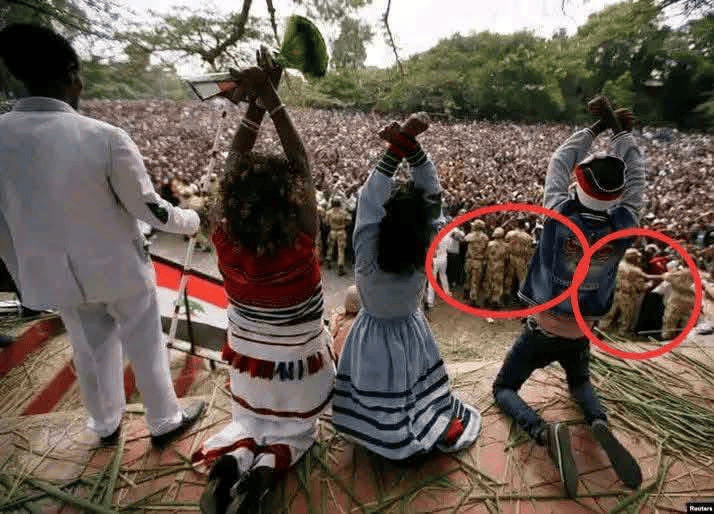
Why This Matters
These three events—Arsi, Shinnigaa, Bishooftuu—form a clear pattern. Religion is indeed a real line of difference within Oromo society. Arsi Oromos are predominantly Muslim, partly because in the nineteenth century they chose Islam as a cultural fortress against Amhara Orthodox colonial conquest. The Orthodox Church’s role in Oromo territories was tightly bound to conquest: priests arrived alongside Menelik’s generals, “blessed” massacres, and then received land and serfs. Thus religious difference in Oromo society is not a small matter—it carries the full weight of colonial violence history.
Precisely because of this, external forces repeatedly tried to exploit this fracture. The Somali militia of 1980 tried. The security forces of 2016 tried. Each time, they lost.
But the reason they lost is not that religious differences didn’t exist. The reason is that Oromo nationalism, in its most decisive figures, developed a priority that transcends religion: We are Oromo first. This is not a denial of faith but an insistence on order. When the core logic of oppression is the denial of your very existence, any internal division that makes that oppression more effective is betrayal.
The eleven at Shinnigaa did not become “Muslim martyrs” and “Christian martyrs.” They became one thing: Oromo martyrs. The youth of Bishooftuu likewise.
“Seenaa keenya keessatti barayyuu cululuqee jiraata”
Those who wanted to bury them failed to understand one fundamental thing: a people who refuse to be divided have found something stronger than death. The pit at Shinnigaa did not end Oromo unity—it became a monument to unity. The repetition at Bishooftuu did not prove that history repeats—it proved that memory endures.
From the moment Taqi and Elemo raised weapons in 1966, to the afternoon of 1980 when eleven men walked arm-in-arm to the edge of the pit, to the streets of Bishooftuu in 2016, what runs through it all is not an abstract slogan but a concrete, testable promise: When others try to kill you using the differences within you, you choose to define yourself by what you share.
This choice has been remembered. Has been sung. Has been re-lived with life after life by generation after generation.
“Seenaa keenya keessatti barayyuu cululuqee jiraata”—in our history, it lives forever, shining.
Oromia Restructures: Six New Administrative Clusters and Their Administrators
Ethiopia’s largest federal state moves to a clustered governance model, appointing six vice presidents to oversee regional zones
(ONA, Finfinne — Oromia)– Ethiopia’s largest and most populous federal state, is undergoing a significant administrative restructuring. Under a newly approved arrangement, the state will be organized into six administrative “clusters,” each led by a vice president responsible for coordinating the zones within their region.
The plan was approved during the first session of the Oromia Regional Council (Caffee Oromia) held in Adama. Governor Shimelis Abdisa was successfully reelected, and he subsequently nominated six vice presidents, all of whom were confirmed by the council.
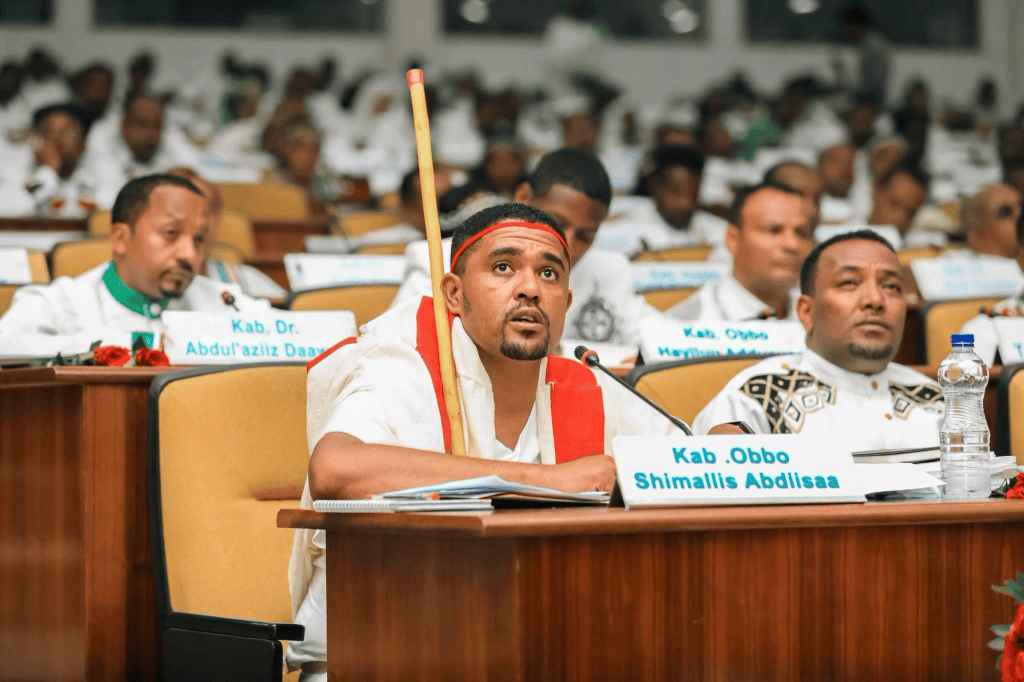
The Six Clusters and Their Administrators
According to the approved plan, Oromia will be divided into the following six administrative regions:
1. East Oromia (2 Zones) — Administrator Ato Abdurahman Abdela
Oversees West Hararghe and East Hararghe. These zones are located in eastern Oromia, bordering the Somali Region and the Harari region.
2. Southeast Oromia (4 Zones) — Administrator Ato Ahmed Idris
Oversees Arsi, Bale, West Arsi, and East Bale. This cluster spans the Rift Valley area and includes important ecological resources such as Bale Mountains National Park.
3. South Oromia (4 Zones) — Administrator Ato Ahmed Haji
Oversees Guji, West Guji, Borena, and East Borena. These areas border Kenya and are primarily characterized by pastoralism and cross-border trade.
4. West Oromia (4 Zones) — Administrator Ato Melaku Melaku
Oversees East Wollega, West Wollega, Kellem Wollega, and Horro Guduru Wollega. This region is one of Ethiopia’s important coffee-producing areas.
5. Southwest Oromia (3 Zones) — Administrator Dr. Reshad Kemal
Oversees Iluababor, Buno Bedele, and Jimma. Jimma is known as Ethiopia’s coffee capital, and the region is rich in agricultural and forestry resources.
6. Central Oromia (4 Zones) — Administrator Dr. Mengistu Bekele
Oversees East Shewa, North Shewa, Southwest Shewa, and West Shewa. This cluster surrounds the capital, Addis Ababa, and includes important cities such as Adama.
Background and Controversy
This administrative restructuring comes at a time of profound change in Ethiopia’s political landscape. Reports suggest that the ruling Prosperity Party is considering a broader “clusterization” reform of the federal system nationwide, and Oromia’s six-cluster plan may be part of that larger blueprint.
Supporters argue that dividing a vast administrative region into smaller management units can bring government closer to the people, improve administrative efficiency, and enhance public service delivery. Oromia covers an area of 353,600 square kilometers with a population of over 27 million, and single-tier management indeed faces enormous challenges.
However, criticism is equally strong. Some analysts suggest the restructuring may carry political motives — weakening Oromia’s cohesion and negotiating power as a single political entity by dividing it. Some commentators have described it as “a systematic weakening of Oromo political power.”
Human rights observers also worry that pushing through such a major administrative reform while security conditions in parts of Oromia remain unstable could exacerbate tensions at the local level.
What Comes Next
With the six vice presidents now in place, they are expected to begin forming coordination bodies for each cluster. However, the specific division of powers, financial arrangements, and relationships with existing zonal administrative units remain to be clarified.
In his address to the council, Governor Shimelis stated that the new term would “consolidate development gains and advance reforms,” but did not elaborate on the controversial aspects of the administrative reorganization.
For Oromia — a central player in Ethiopia’s political landscape — this quiet administrative revolution may have implications far beyond a single list of appointments.

The Poisoned Feast: The Unbroken Spirit of Jaal Daawud Ibsaa
A Feature Article on Sacrifice, Betrayal, and the Silence That Defeated Torture
—
In the annals of the Oromo national struggle, certain stories refuse to fade. They are passed down not through official archives but through whispered testimonies, through the memories of those who survived, and through the written records of security officials who once sought to erase them. One such story belongs to Jaal Daawud Ibsaa, a name that resonates in the Horro Guduruu heartland and beyond—a man whose journey from student activist to underground fighter to silent prisoner embodies the most harrowing dimensions of resistance.
This account draws from a security report authored by Nugusee Fantaa, head of the Wollega administrative security, and Tasfaayee W/Sillasee, head of Information and National Security, as documented by journalist Abbaa Duulaa Gammada. The journalist himself was granted unusual access, recalling that when he sought to research this history, the security archives of both the Derg’s peace and wartime offices were opened to him. “Abbaa Duulaa told me,” the journalist recounts, “‘You are the only one who has ever asked me to research this story.'”
Roots of Resistance
Jaal Daawud Ibsaa was born in Horro Guduruu, in the western highlands of Oromia. Like many young Oromos of his generation, he pursued education with determination, attending Wingate—the same institution that shaped Mallas Zeenaawii, a student two years his senior. Daawud then entered Kilo 4 University, where he studied statistics. But his formal name tells only part of the story: while the struggle knew him as Daawud, his family called him Firew—a detail preserved in the security records that now serve as historical testimony.
His political consciousness crystallized during the student movements of the early Derg years. For two years, he was imprisoned for his involvement in student activism. Upon his release, he did not retreat. Instead, he joined the underground armed struggle of the ONLF—the Oromo National Liberation Front—immersing himself in a movement that would define the rest of his short life.
The Seventeen Who Crossed the Border
In 1968, when the ONLF elected its central committee of twenty-eight members, Daawud was among those chosen. Three years later, in 1971, the Front made a strategic decision to expand its armed operations into western Ethiopia. Jaal Daawud and Abbaa Caalaa Lataa were appointed to lead and coordinate the western struggle. In total, seventeen fighters—most from the Wallagga and Beegii regions—crossed the Sudanese border to begin operations.
The Derg regime took notice. The suppression of this western ONLF initiative became a priority, with officials including Gidaamii district chief Hiikaa Masaadii and Wollega provincial administrator Nugusee Fantaa devising plans to crush the movement.
Among the seventeen fighters was Obboleessi Zakkaariyaas Shoroo, a native of the region. The security apparatus saw in him a tool for betrayal. Zakkaariyaas was summoned and given his orders: “Feed your brother and his comrades. We will supply you with poison to add to the food. If you refuse, you and your family will be killed, your property confiscated, your land taken, your livestock seized.”
Zakkaariyaas recoiled. “How can I kill my own brother?”
The response was cold and absolute: “If you can, separate your brother so he does not eat. If you cannot—then let them die together.” The security report notes that Zakkaariyaas, under duress, eventually agreed.
The Feast
The fighters, dressed in peasant clothing to blend into the countryside, had gathered in the area. Zakkaariyaas was watched to ensure he did not falter. The poison, sent from Finfinnee through Nugusee Fantaa to Hiikaa Masaadii, was passed to Zakkaariyaas.
On the evening of the planned betrayal, Zakkaariyaas slaughtered a sheep and prepared a feast, claiming to honor his brother and comrades. The seventeen ONLF fighters had split into two groups; Abbaa Caalaa was moving with nine men in another direction, and thus was not present at the meal. But Daawud and the remaining fighters accepted Zakkaariyaas’s invitation and gathered at his home that evening.
Zakkaariyaas could not bring himself to separate his brother. “You will eat later,” he urged. But Daawud refused and joined the meal. As his brother and comrades ate the poisoned food, Zakkaariyaas stood by, trembling, watching.
Daawud ate only a little. When he finished, he rose and went to the door to relieve the comrade who had been standing guard. The others continued eating. Then the convulsions began. Their bodies burned as if on fire. Screams filled the night as one by one they collapsed. Zakkaariyaas clutched his brother’s corpse to his chest.
Daawud had eaten less, but the poison did not spare him. Standing guard outside, he drank large quantities of water, then began convulsing, vomiting blood and bile. The pain in his stomach was unbearable. Yet he did not fall where he stood—he staggered back inside and collapsed among his fallen comrades in Zakkaariyaas’s compound.
Survival and Silence
The fighters in peasant disguise, waiting for the signal, arrived at Zakkaariyaas’s house as planned. They found seven comrades dead—and Daawud, gravely ill but still breathing.
He was rushed toward Dambidoolloo, then to Naqamte, as the ONLF sought both to extract intelligence and to save his life. But the Derg’s security apparatus had other plans. At Naqamte, once he had partially recovered, he was transferred to prison and the beatings began.
The Wollega security report is explicit: no intelligence was ever extracted from Jaal Daawud. Unable to break him through interrogation, they transferred him to Ma’ikelawwii Prison in Finfinnee. There, he was placed in a container filled with benzene and dirty water as interrogation intensified. The report details repeated searches and various forms of torture applied to him.
Daawud chose death over betrayal. Not a single word of intelligence escaped his lips. He endured until the end, and then he passed—unbroken, unbroken in spirit, unbroken in loyalty to the cause he had embraced as a student and carried to his final breath.
The Meaning of Nyaata Summaa’ee
The story of Daawud Ibsaa and the poisoned feast is more than a historical account of betrayal and heroism. It is a meditation on the impossible choices that colonial and authoritarian regimes force upon communities. Zakkaariyaas was not a willing traitor; he was a man crushed between the love of his brother and the threat to his family, his land, his very existence. The regime understood that the most effective weapons are not always guns—sometimes they are the bonds of kinship turned into instruments of destruction.
And yet, in the figure of Daawud Ibsaa, the story offers something else: the possibility of a fidelity that cannot be purchased, tortured, or poisoned away. He ate the food, drank the water, endured the benzene, and carried his secrets to the grave.
The security report that documents these events was never meant to celebrate him. It was meant to record the success of a suppression campaign. But in recording the methods of his torturers, it inadvertently preserved the evidence of his resistance. The archive of oppression became, in the end, a monument to the oppressed.
—
This article is based on the security report authored by Nugusee Fantaa and Tasfaayee W/Sillasee, as documented by journalist.
Irreechaa: Its Significance in the Context of Other Religions
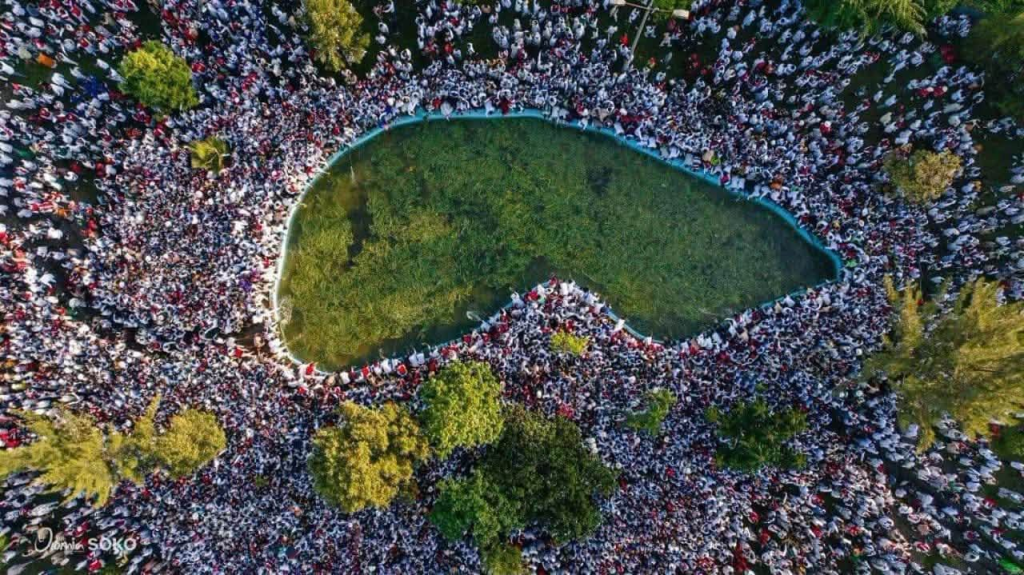
“Irreechaa is a Day of Thanksgiving!” — Why This Concept Embraces All Faiths
A study by Dr. Yoseph Mulugeta Baba (2024) examines the Irreechaa festival within the context of other religions and finds a central concept that cannot be logically wrong and carries a positive meaning. That concept is simply this: “Irreechaa is a Day of Thanksgiving.”
According to the paper, this concept carries the following meaning:
“Irreechaa is a day of thanksgiving where the gifts of the Creator are returned to the Creator in gratitude. Every individual who participates in the Irreechaa festival holds fresh green grass in both hands and gives thanks to their Creator. Fresh green grass is a symbol of peace and prosperity. Above all, they gather together to thank their great and holy Creator who saved them from the winter’s ice, heavy winds, floods, and storms. They also pray to their God to bless the harvest and the crops. Therefore, the Irreechaa festival is a tribute given to God who brought them from darkness to light.”
“Whom Are We Thanking?” — The Oromo Worldview’s Answer
A related question arises: “Whom are we thanking?” To answer this question correctly and unambiguously, we must clearly set out what the indigenous Oromo ontology (Oromo Ontology) teaches about the Creator, or Waaqa.
The indigenous Oromo understanding defines Waaqa with care, and its definition is as follows:
“Waaqa is the Creator of all things. Waaqa is omniscient, omnipresent, eternal, absolute, and infinite. Waaqa is absolutely one.”
Relationship with Christianity and Islam
Within this definition, there is no concept that directly contradicts the teachings of either Christianity or Islam regarding the Creator. Why?
The famous Catholic philosopher and theologian St. Thomas Aquinas, in his magnificent work Summa Theologica, correctly observes:
“That there exists one truth which every human being calls ‘God’ — the beginning and end of all creatures — the human creature can comprehend in many ways!”
This is why the Bible, when translated into different languages, does not give a new name to the Creator. A name already known in the indigenous religion and capable of correctly expressing the attributes of the Creator listed above is directly adopted. For example: Magano, Waa, Yeri, Waaqayo, Egziabher, Jowok, and so on.
Where Does the Difference Lie?
Therefore, the difference lies not in the attributes of God, but in the canon, tradition, and rules that each religion follows and teaches. The source of this difference may be historical or related to our use of language in theological interpretation.
As St. Thomas Aquinas says:
“Regarding God, what we can comprehend is not what He is, but what He is not, and what He resembles in comparison with other creatures.”
This is called the problem of religious language. God is above all creatures. Therefore, our human thought must adjust its limited, image-bound, and imperfect language about God so that it does not distort the identity of God — which has no expression, which cannot be fully known, which is invisible and intangible. The words we use will always fall short of expressing the mystery of God!
“Guracha” — The Name of Waaqa and Its Meaning
For example, in the Oromo indigenous religion, the word Waaqa, whether written or spoken, is accompanied by the adjective “Guracha.” Its literal translation is “black,” and in Oromo ontology, blackness is not only a symbol of supremacy but also expresses the originality of Waaqa. Blackness is a concept that expresses that the essence of Waaqa is an absolutely perfect mystery that cannot be reached by the human mind.
Irreechaa and the Universal Knowledge of the Creator
Therefore, when we celebrate the Irreechaa festival, we do so in a manner that takes into account the attributes of God. Since such knowledge of the Creator is universal, a follower of any religion can celebrate it with joy and in a true spirit, giving it a positive meaning.
The American Example: Thanksgiving Day
Above all, we must avoid actions that undermine the unity of a people under the guise of religion without properly understanding religious studies.
America is a country with a population of 340 million and five of the world’s major religions. When the people celebrate “Thanksgiving Day” every year, they have never once entered into a hair-splitting question or argument about “Whom are they thanking?”
The Human Being Is a Spiritual Creature
In the world in general, and in Ethiopia in particular, let us take the following ontological characteristics of human existence as an example to show that there is confusion regarding religious studies.
The human being is a spiritual being. Two faculties are given to human beings alone among all creatures, and other creatures intrinsically do not possess them at all: intellect and free will.
The human race knows and chooses to follow natural law because by nature it has the capacity to know universal truth and morality. For example, a Christian or a Muslim is able to know the natural law “Do not steal!” not because the commandment is written in the Bible or the Holy Quran, or because it exists in their faith’s teachings, but because the human being by nature and calling has the capacity and power to know this natural law.
Cultural Values Are Products of the Intellect
Cultural values are products of the human intellect. The intellect was created by God. God created the intellect for the primary purpose that we might investigate and understand the world. It must be emphasized that the cultural values that human beings have established since ancient times have their source in this faculty and tool of thought — the intellect — granted by the Creator. In human history, every society was able to establish its own culture and indigenous religion because of the intellect and free will given by God.
Human Limitation and the Need for Careful Interpretation
However, because the human being is limited by space and time, their knowledge is limited. The human intellect cannot reach absolute knowledge. The human being is a historical being. We are all products of history and geography!
Therefore, no society in human history has ever possessed absolutely perfect and error-free cultural values. This is why cultural values or indigenous religions must receive a careful interpretation (hermeneutics) that gives correct meaning within the context of time and place.
This article is based on the study by Dr. Yoseph Mulugeta Baba (2024).
Irreechaa: Core Values
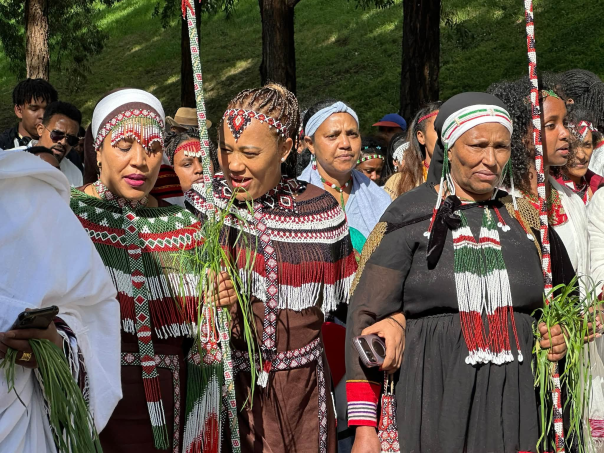
Core Values at a Glance: At its heart, Irreechaa is built on gratitude to Waaqa (God), which flows into four enduring pillars: peace, forgiveness and reconciliation, unity and inclusivity, and connection with nature.
Irreechaa is more than a harvest celebration in Oromo culture — it is a complete moral and spiritual framework. Here is a closer look at its core values.
🙏 Gratitude and Thanksgiving
This is the foundation of Irreechaa. The Oromo people gather to thank Waaqa (the Creator) for the blessings of the past year — life, peace, rain, harvest, health, family, and the fertility of livestock. It is not merely a celebration but a humble recognition that all life depends on the Creator’s generosity. Gratitude, in this sense, is not just spoken; it is felt and lived.
🤝 Forgiveness, Reconciliation, and Peace
Irreechaa carries a transformative power. Before taking part in the ceremony, participants are expected to let go of grudges, release anger, and seek reconciliation with others. Traditional belief holds that prayers offered with a pure and forgiving heart are the ones through which true peace can descend. Former Prime Minister Abiy Ahmed has repeatedly described Irreechaa as an occasion for reconciliation, forgiveness, and unity.
🕊️ Unity and Inclusivity
Irreechaa is radically inclusive. People of all ages, genders, religions, political views, and ethnic backgrounds are welcome to join. Scholars note that it unites not only Oromo people but also transcends language and territorial boundaries, bringing diverse communities together under the principles of peace, mutual respect, and coexistence. Participants dressed in white are themselves a symbol of that peace.
🌿 Connection with Nature
Irreechaa expresses a deep bond between humanity and the natural world. Ceremonies are held along riverbanks and lakeshores, where participants carry fresh green grass and flowers, dip them in water, and sprinkle the water as a blessing of renewal, hope, and purification. This ritual is not only an act of gratitude toward nature but also reflects the Oromo ethical principle of Safuu — the understanding that human beings are stewards of the earth, responsible for protecting water, soil, and the balance of life.
Together, these values form the spiritual core of Irreechaa, making it far more than a festival. It is a living heritage that continues to shape Oromo identity, moral life, and community bonds across generations.

Irreechaa: A Heritage That Endures, Evolves, and Lives
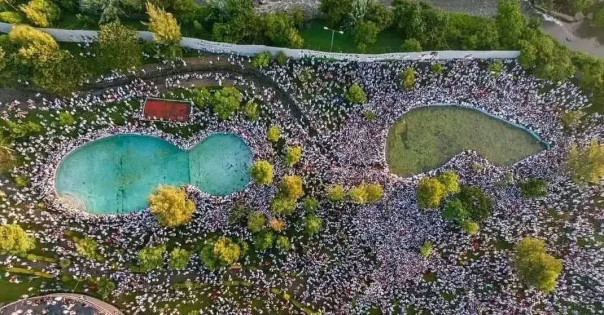
A festival of gratitude becomes a call to responsibility for nature and future generations
Every year, millions of Oromo people gather along the banks of rivers and lakes, dressed in white, carrying fresh green grass and yellow daisies. They come to give thanks. They come to pray. They come to remember.
But according to a new reflection by Worku Burayu (PhD), Irreechaa is far more than a colorful annual gathering. It is a living heritage — one that endures, evolves, and lives.
“Irreechaa should not be reduced to an annual article, a speech, a public gathering, or a cultural display,” Burayu writes. “It is a living heritage whose meaning continues to guide, teach, and connect generations.”
The article, titled “Irreechaa: A Heritage That Endures, Evolves, and Lives,” continues a reflection begun in 2025 with “Irreechaa: From Nature to Nation, Core Values of Oromo Culture.” This year’s piece, written after an invitation from the Irreechaa Event Ad Hoc Committee of the Atlanta Metropolitan Area, takes a different perspective — examining Irreechaa not just as a celebration, but as a relationship between memory and responsibility.
More Than a Ceremony
Irreechaa is widely known as the Oromo thanksgiving festival, celebrated at the end of the rainy season near rivers and lakes. Participants give thanks to Waaqaa (God) for life, health, peace, rain, harvest, family, and community. They sing, dance, and sprinkle water as a blessing of renewal.
Scholars have long recognized Irreechaa as an expression of Oromo identity and unity. UNESCO describes it as closely associated with the Gadaa system, the indigenous democratic sociopolitical system of the Oromo people.
But Burayu argues that its significance cannot be fully understood by viewing it only as a ritual performed at a particular time of year. Irreechaa is part of a broader Oromo worldview in which human beings exist within relationships involving Waaqaa, nature, community, ancestors, and future generations.
“The natural environment is not simply a backdrop for cultural practice,” he writes. “Soil, water, air, forests, grass, flowers, animals, and agricultural landscapes are part of the living world through which life is sustained and gratitude is expressed.”
Gratitude Must Become Responsibility
At the heart of Irreechaa is gratitude. But Burayu asks a challenging question: If water, forests, soil, grass, and flowers are gifts of Waaqaa, how should we treat them?
“The answer cannot be limited to words of thanksgiving,” he writes. “Genuine gratitude creates responsibility.”
If water is a gift, it must be protected. Lakes, rivers, springs, and wetlands associated with Irreechaa are not merely ceremonial locations — they are living ecosystems. Respect for water means preventing pollution, protecting riverbanks, safeguarding springs, and managing waste responsibly.
If forests are a gift, they must be conserved and renewed. Natural materials used during ceremonies should be gathered without unnecessary destruction of living trees. Irreechaa can become an opportunity for tree planting and forest restoration.
If soil is a gift, its fertility must be maintained. “We cannot celebrate the fruits of the land while destroying the soil that must produce those fruits in the future,” Burayu warns.
If grass and flowers are used in celebration, they should be gathered in ways that allow natural regeneration. Plants should not be unnecessarily uprooted when only their flowers or leaves are needed.
“The gift of nature does not belong to human beings alone,” Burayu writes. “It sustains an entire community of life.”
Water as a Sacred Responsibility
The relationship between Irreechaa and water is particularly significant. Many celebrations take place beside rivers, lakes, and springs. The symbolism of water, Burayu argues, should never be separated from its ecological reality.
“When people approach water during Irreechaa, touch it, sprinkle it, or gather beside it in prayer, they encounter one of the fundamental conditions of life,” he writes.
The act of approaching water should awaken responsibility. “If we pray beside a river, we should not pollute it. If we regard water as a blessing, we should not waste it carelessly. If we gather around a spring, we should protect the spring and its surrounding vegetation.”
His message is simple: “We should not pollute what we have come to honor.”
Safuu: An Indigenous Ethic of Restraint
Burayu grounds these responsibilities in Safuu, the Oromo concept of appropriate conduct and responsible relationships. Safuu asks a deeper question than whether a person is technically able to do something. It asks whether an action is appropriate, responsible, and respectful.
“A person may be physically able to cut a tree, but that does not mean the tree should be cut unnecessarily,” Burayu explains.
He points to the Odaa tree as a powerful cultural example. Odaa trees have long held deep cultural, social, and spiritual significance in Oromo society. Traditionally, those associated with important communal spaces were treated with particular respect and were not to be cut at will.
“The question is not simply ‘Can I take it?’ but ‘Should I take it, and what responsibility follows from taking it?'” Burayu writes.
This principle, he argues, extends to rivers, forests, grasslands, and wetlands. “The ability to use nature does not create an unlimited right to consume it. Safuu calls for restraint, responsibility, and respect for the conditions that make life possible.”
The Challenge of Modern Celebration
Contemporary Irreechaa celebrations can involve very large gatherings. Their growth creates opportunities for cultural visibility and community connection, but it also creates environmental responsibilities.
Large gatherings require transportation, food, water, sanitation, energy, and waste management. They can place pressure on grasslands, riverbanks, and trees.
“The success of an Irreechaa gathering should not be measured solely by attendance, visibility, or cultural performance,” Burayu writes. “It should also be measured by what remains after the gathering.”
A celebration that leaves a river polluted, vegetation damaged, and the landscape covered in waste contradicts the relationship with nature that Irreechaa seeks to express. By contrast, a celebration that leaves the environment protected, clean, and renewed demonstrates that gratitude has been translated into responsibility.
From Survival to Renewal
Irreechaa has survived because generations before us carried it through difficult circumstances. But Burayu argues that survival alone is not enough.
“A tradition can survive as a ceremony while losing its deeper values,” he warns. “It can become something repeated annually without being understood, or a cultural performance detached from everyday conduct.”
For Irreechaa to remain a living heritage, it must continually be renewed through learning. Renewal means documenting cultural knowledge before it disappears, creating opportunities for elders to share knowledge with younger generations, and connecting traditional ecological knowledge with contemporary scientific understanding.
“Renewal does not require abandoning tradition,” Burayu writes. “It requires understanding tradition deeply enough to distinguish enduring principles from the particular historical forms through which those principles have been expressed.”
Cultural Confidence Without Self-Denigration
The continuity of cultural heritage also depends on how a people understands itself. Burayu notes that Oromo history, culture, and identity have often been interpreted through external frameworks — political, religious, and colonial.
“Before rejecting what is ours, we have a responsibility to understand it,” he writes. “Before repeating judgments made about our culture, we have a responsibility to study the culture itself.”
This is not an argument for romanticizing the past. Cultural confidence does not require believing that everything inherited is perfect. A living culture must be capable of self-examination.
“There is an important difference between critical reflection and cultural self-denigration,” Burayu explains. “Critical reflection seeks to understand, improve, and strengthen. Self-denigration simply reproduces the judgment of others.”
Intergenerational Responsibility
Every generation inherits things it did not create — language, stories, values, songs, landscapes, rivers, forests, and soils. Burayu argues that we therefore have a responsibility to think of ourselves not merely as owners, but as custodians.
“A river that exists today will be needed by children who have not yet been born,” he writes. “A forest standing today may provide shade, water protection, biodiversity, and livelihoods for generations we will never meet. Soil fertility lost today may take decades to restore.”
Irreechaa makes this relationship between generations visible. “Our ancestors carried it. We received it. Our children will inherit whatever we choose to preserve, change, or neglect.”
Irreechaa in the Diaspora
For Oromo communities living outside Oromia — including in the United States, Europe, Australia, and Asia — Irreechaa carries additional significance. In the diaspora, cultural continuity requires deliberate and sustained transmission because younger generations may grow up in environments where Afaan Oromo, Oromo customs, and traditional practices are not part of everyday life.
“In this context, Irreechaa can serve as an intergenerational bridge,” Burayu writes. “That bridge, however, must carry knowledge as well as ceremony.”
Community gatherings can become spaces for learning as much as celebration. Elders can transmit knowledge, younger people can ask questions, and cultural organizations can create educational programs connecting history, language, ecology, ethics, and contemporary life.
From Ceremony to Everyday Life
The deepest measure of Irreechaa, Burayu argues, is what happens after the celebration.
“If a person gathers beside a river in thanksgiving and subsequently becomes more conscious of protecting water, the ceremony has produced an enduring value,” he writes. “If a young person learns about the significance of grass and flowers and becomes more responsible in the use of natural resources, the tradition has been transmitted meaningfully.”
A cultural tradition is truly alive when its principles enter everyday behavior. “Irreechaa should therefore not be understood merely as something people attend. It is something whose values can be lived.”
It Endures. It Evolves. It Lives.
Burayu concludes with a powerful summary of his argument.
“Irreechaa endures because it has roots in the historical and cultural experience of the Oromo people. Irreechaa evolves because every generation encounters different circumstances. Irreechaa lives when its underlying values remain meaningful within those changing circumstances.”
Its living character can be seen when gratitude becomes responsibility, identity becomes confidence, celebration becomes stewardship, tradition becomes learning, and cultural memory becomes preparation for the future.
“The question is not simply whether Irreechaa will survive,” Burayu writes. “The deeper question is whether we will understand it well enough to help it live.”
Irreechaa is not merely a heritage of the past. It is a responsibility of the present and a promise to the future.
It endures. It evolves. It lives.

Irreechaa in Edmonton: How One Diaspora Community Turned a Sacred Tradition into a Recognized Civic Celebration
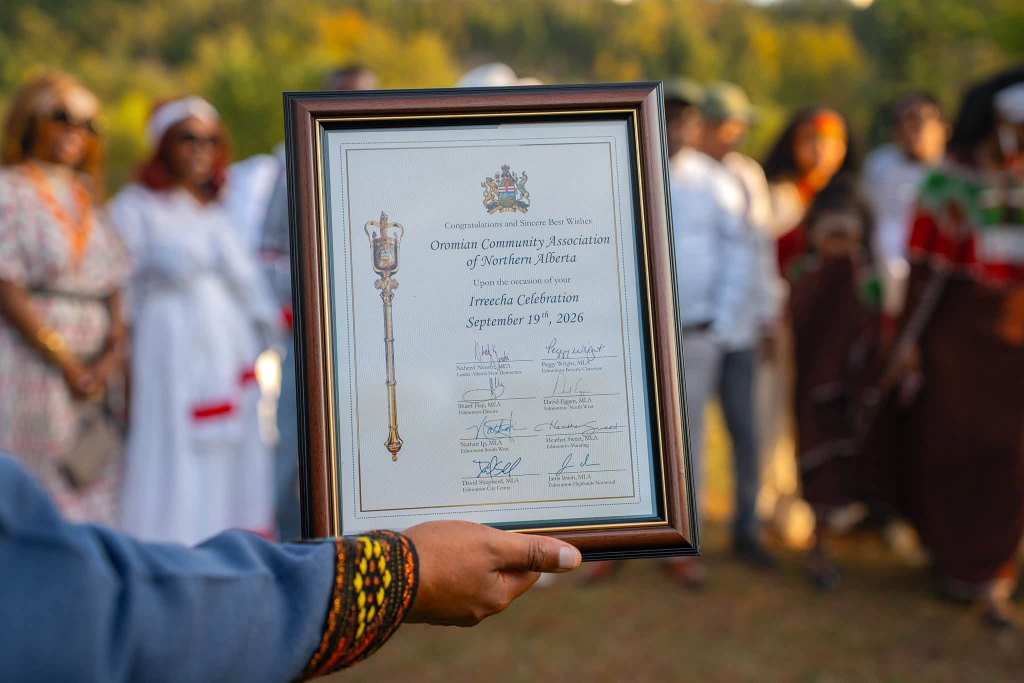
By Daandii Ragabaa
EDMONTON, Alberta — When the Oromo community of Edmonton gathered for Irreechaa Malkaa this year, they were not simply marking a religious holiday. They were making a statement — to themselves, to their children, and to the wider Canadian society — that Oromo culture, identity, and heritage deserve to be seen, respected, and celebrated at the highest levels of public life.
The celebration, held a week ago, was honored with an official Certificate of Recognition from the Government of Alberta, presented by representatives of the city and the provincial and federal governments who stood alongside the Oromo community in celebration. The recognition was not a casual gesture. As the community noted, this acknowledgment did not come easily or by accident. It was the result of years of persistent advocacy and grassroots organizing.
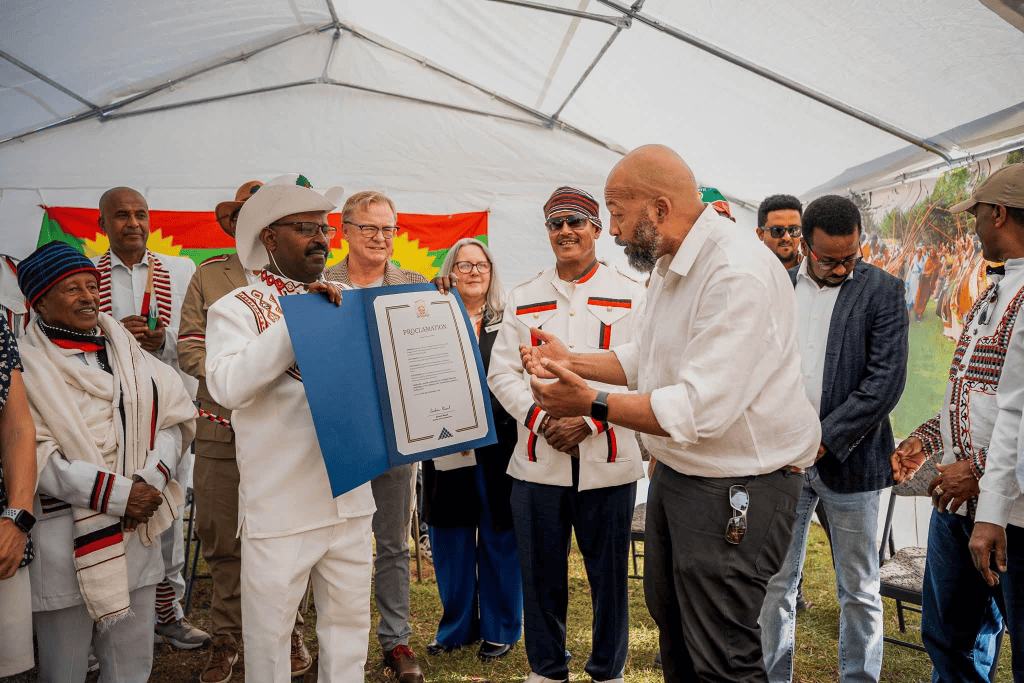
A Celebration That Speaks for Itself
The symbolism of Irreechaa is powerful, and the Edmonton community was intentional about ensuring it was understood. Irreechaa is not simply a “Thanksgiving” festival. It is rooted in Waaqeffannaa, the traditional Oromo belief in one God, and in the Gadaa system — the ancient democratic governance structure that UNESCO has recognized as Intangible Cultural Heritage.
For Oromos in the diaspora, Irreechaa is a spiritual act of gratitude to Waaqa for the blessings of the past year, a moment of reconciliation, and a prayer for peace in the year ahead. It is also a public declaration of identity — a refusal to be invisible.
As the community statement put it, the presence of elected officials and the presentation of the certificate of recognition was not simply an act of kindness by those in power. It was the product of sustained effort and organized advocacy by OCANA (the Oromo Community Association of Northern Alberta) and the broader Oromo community of the region.
The Leadership Behind the Recognition
The statement is clear that this achievement belongs to the community’s leadership and its collective will. “For our culture to flourish, for Oromos to be honored, and for Oromia to be viewed as a nation, the leadership of the Oromo Community Association of Northern Alberta played a lion’s share — and this is where it came from.”
That acknowledgment matters. In diaspora communities, recognition rarely arrives on its own. It must be cultivated — through relationship-building with local governments, through participation in multicultural events, through education, and through the persistence of community organizations.
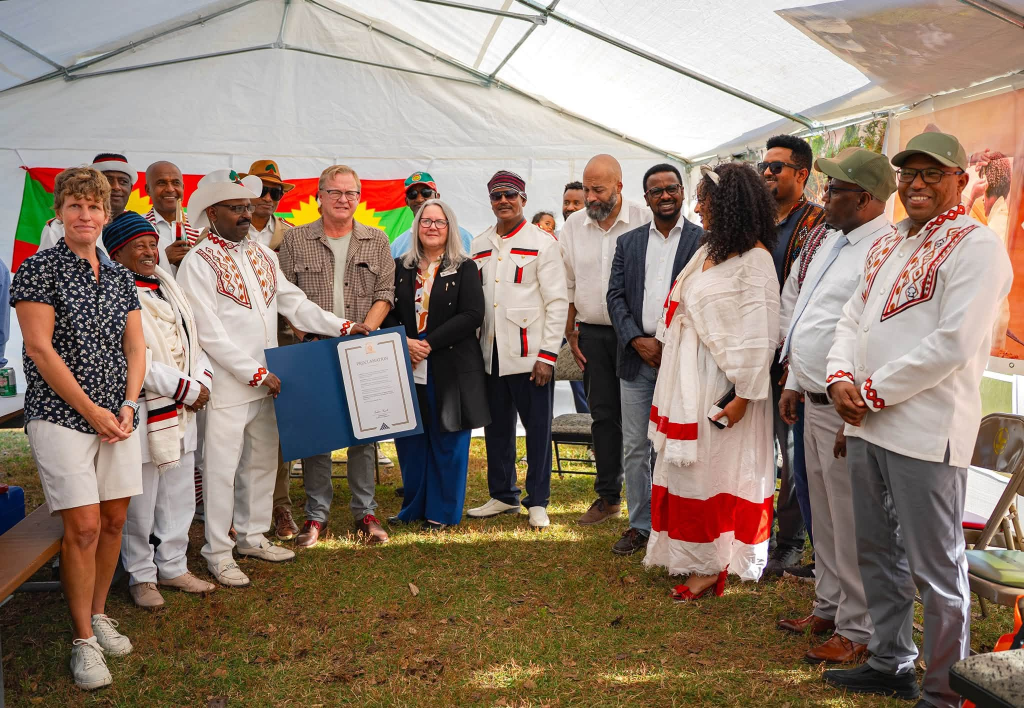
A Model for Others
The Edmonton community also highlighted a striking achievement: at God-Hambaalee Edmonton, one of the city’s major multicultural festivals featuring over 90 countries, Oromia participated as a nation in its own right — complete with its own displays and presentations, which finished among the top ranks of participants.
For a community whose homeland has often been marginalized, denied recognition, and subjected to systemic oppression, this is no small thing. It is a reversal of the invisibility that has too often been imposed on Oromo people.
The statement also noted that many multicultural associations exist across Canada, but none has demonstrated the same strength, diplomatic skill, and ability to articulate the Oromo experience as this one. The community did not celebrate in isolation — it celebrated in public, with recognition, and with dignity.
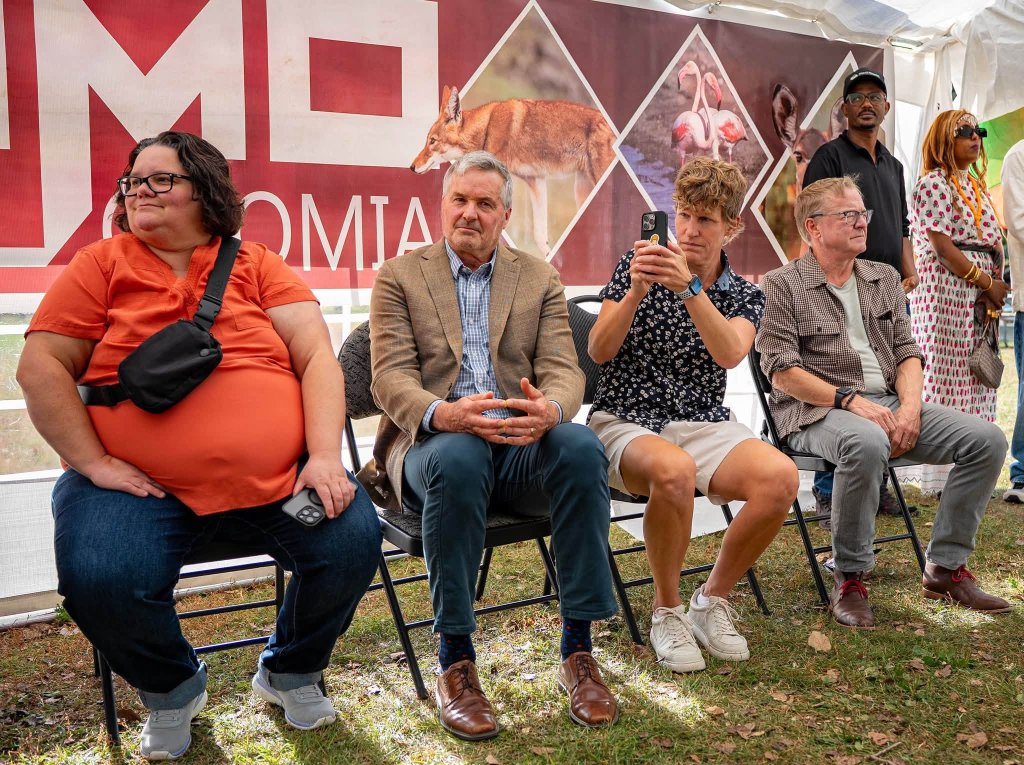
Gratitude and Looking Forward
The message closes with gratitude — to the Oromo community of the region, to OCANA’s leadership, and to everyone who contributed to making Irreechaa 2026 a success. It also issues a challenge to other Oromo communities: learn from this example. The community intends to build on this momentum, and future plans are already taking shape.
To those who are honoring their country and culture, the community offers its blessing: Irreecha milkii — may your Irreechaa be fruitful and blessed.
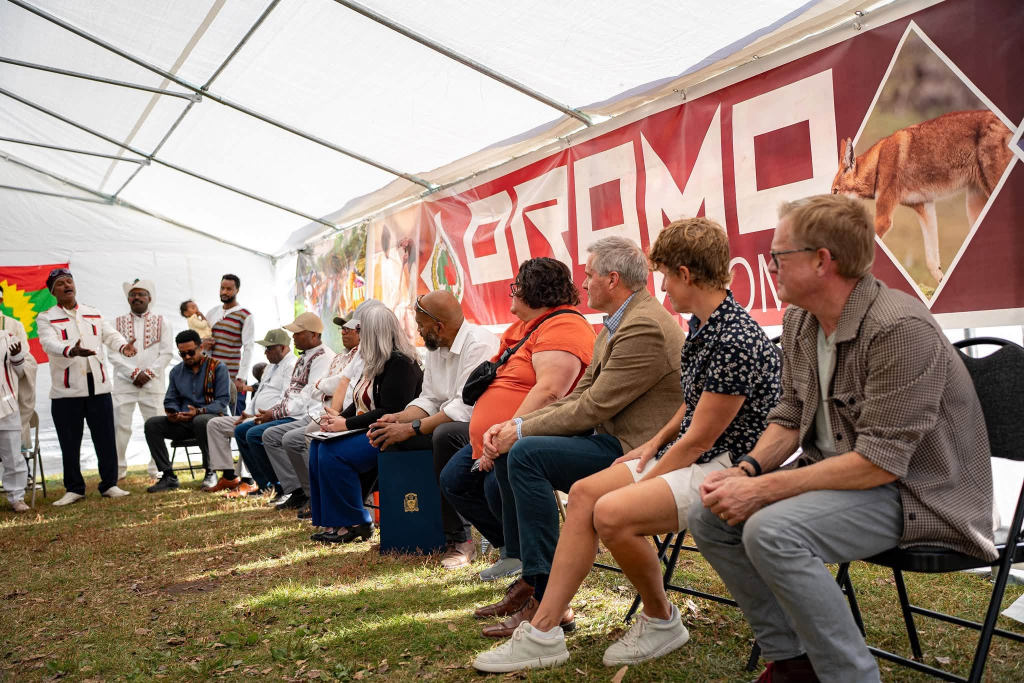
Why This Matters
Irreechaa in Edmonton is not just a local story. It is a template for how diaspora communities can transform sacred traditions into civic recognition — without compromising the spiritual essence of the festival. It shows that cultural preservation and public engagement are not mutually exclusive. And it demonstrates that when a community organizes, advocates, and speaks with one voice, governments listen.
For Oromos across Australia, North America, Europe, and beyond, the Edmonton example offers both inspiration and a challenge: celebrate proudly, organize strategically, and ensure that Irreechaa is not only a memory carried from home, but a living tradition recognized by the nations in which it is celebrated.
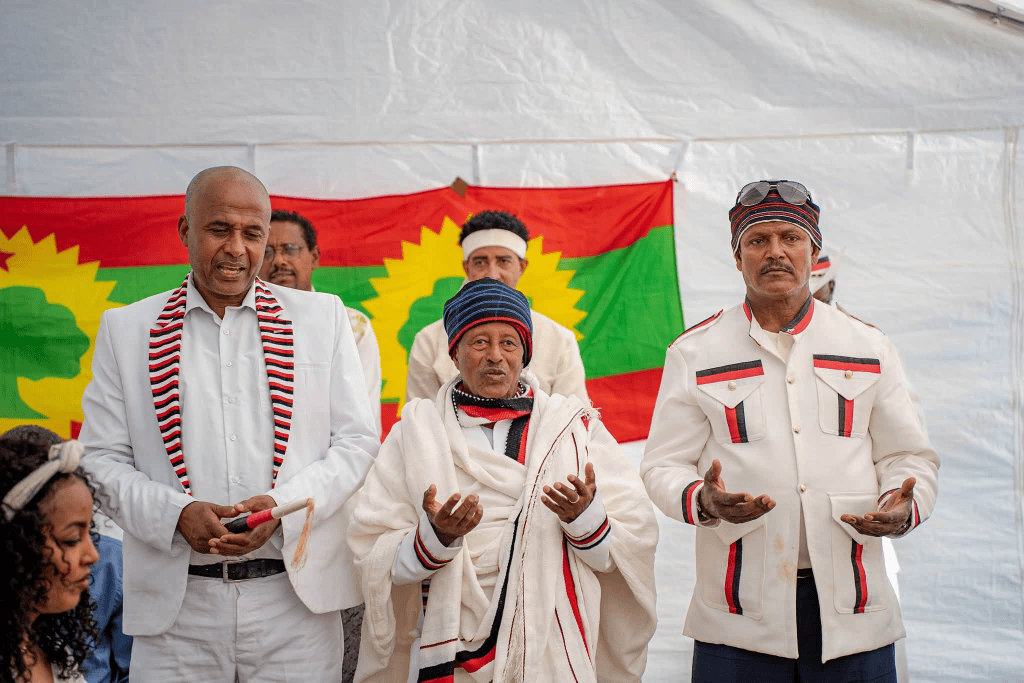
Baga Irreecha milkiin geessan!
#Irreecha_Edmonton #Irreechaa #Oromo #Oromia #OCANA #Edmonton #Alberta #Diaspora #CulturalHeritage #Waaqeffannaa #Oromummaa

What are 10 interesting facts about Irreechaa?
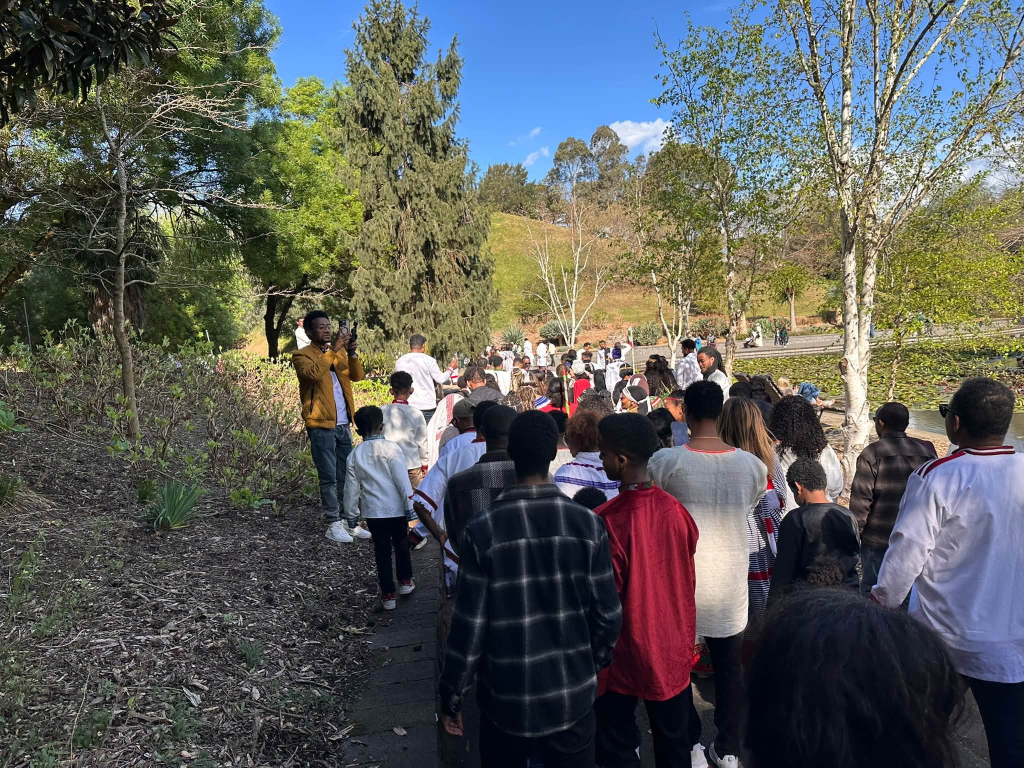
Here are 10 interesting facts about Irreechaa, drawn from its ancient origins, spiritual practices, and growing global reach.
1. It’s Not Just One Festival — It’s Two
Irreechaa is celebrated twice a year, marking two distinct seasonal transitions. The main festival, Irreechaa Malkaa, is held in autumn (September/October) at rivers and lakes to mark the end of the rainy season. The second, Irreechaa Tulluu (or Arfaasaa), is celebrated in spring on hilltops and mountains to welcome the rainy season .
2.  Its Roots Go Back Over 6,000 Years
This is not a recent tradition. Irreechaa is rooted in over 6,000 years of Cushitic civilization, making it one of the oldest continuous thanksgiving traditions in the world. It predates both Christianity and Islam in the region .
3.  It’s Recognized by UNESCO
The festival is intimately tied to the Gadaa system, the traditional Oromo governance structure. The Gadaa system was inscribed by UNESCO as an Intangible Cultural Heritage of Humanity, giving Irreechaa international recognition as a vital part of global cultural heritage .
4.  You Can’t Attend with a Grudge
One of the most striking rules of Irreechaa is that you cannot participate if you are holding resentment or hatred toward others. Disputes must be settled before the festival. It is believed that Waaqa will not accept the prayers and songs of those who come with unresolved conflict .
5. 👩🏾🤝👨🏾 Women Lead the Procession
In a powerful cultural tradition, women walk at the front of the Irreechaa procession, ahead of the Abbaa Gadaa (Gadaa leaders) and elders. If the women stop walking, the entire procession stops. Nobody passes before them. This is rooted in the Siinqee institution, which symbolizes women as sacred and as agents of peace .
6.  The Grass and Flowers Are Sacred Symbols
Participants carry fresh green grass and yellow daisies (daraaraa keelloo) to the water’s edge. The grass symbolizes life, fertility, and renewal, while the yellow flowers bloom specifically during the Birraa (spring) season. Dipping them into the water is an act of purification and gratitude .
7.  It’s Africa’s Largest Outdoor Gathering
The main celebration at Hora Arsadi in Bishoftu is one of the largest annual human gatherings in Africa, attracting millions of people. International media like the BBC, Al Jazeera, and CNN have covered the massive scale of the event .
8.  It Returned to Finfinne After 150 Years
In 2019, Irreechaa was celebrated at Hora Finfinne in Addis Ababa for the first time in 150 years. Under previous regimes, public celebrations had been banned. Its return to the capital was seen as a powerful act of cultural reclamation and identity .
9.  It’s a Global Diaspora Tradition
Irreechaa is not confined to Ethiopia. Oromo communities in the United States, Canada, Germany, Australia, the UAE, Saudi Arabia, and the UK organize their own celebrations. In cities like Melbourne, Washington D.C., Toronto, and Berlin, the diaspora gathers in parks and community centers to maintain their traditions and pass them to the next generation .
10.  It’s a Platform for Peace and Unity
Beyond thanksgiving, Irreechaa is a peace-building event. Scholars describe it as a festival that “sermonizes peace, reconciliation, and unity.” It brings together people of all ages, genders, religions, and social statuses, reinforcing the values of equality and social harmony.
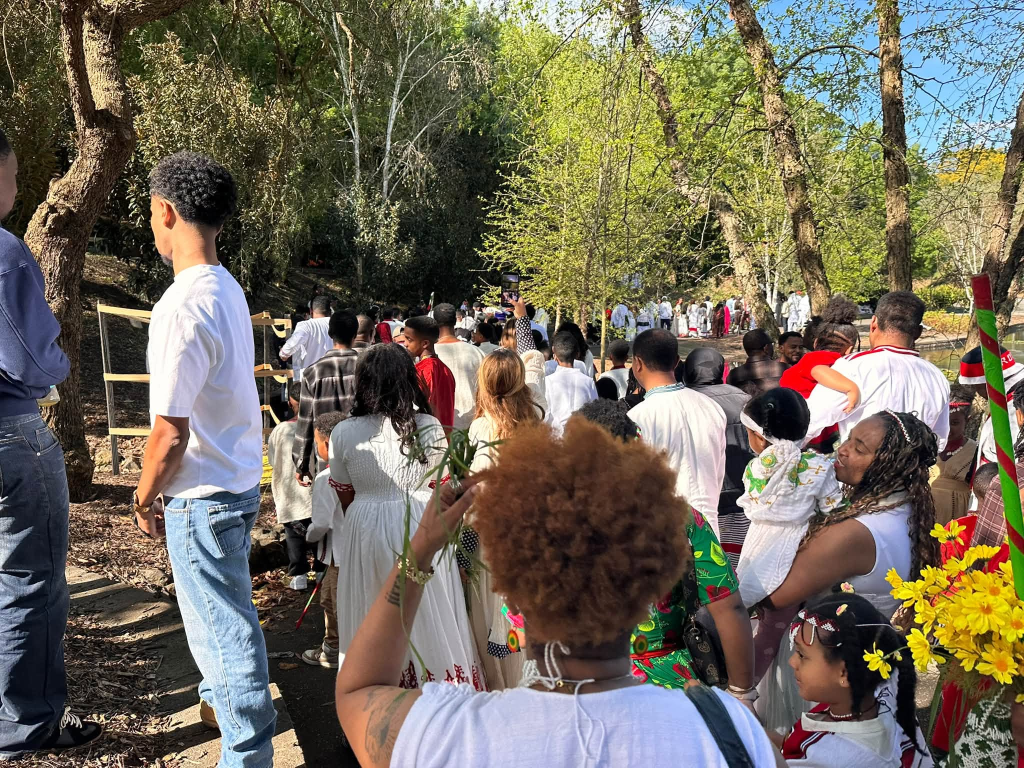

My Favourite Festival: Irreechaa
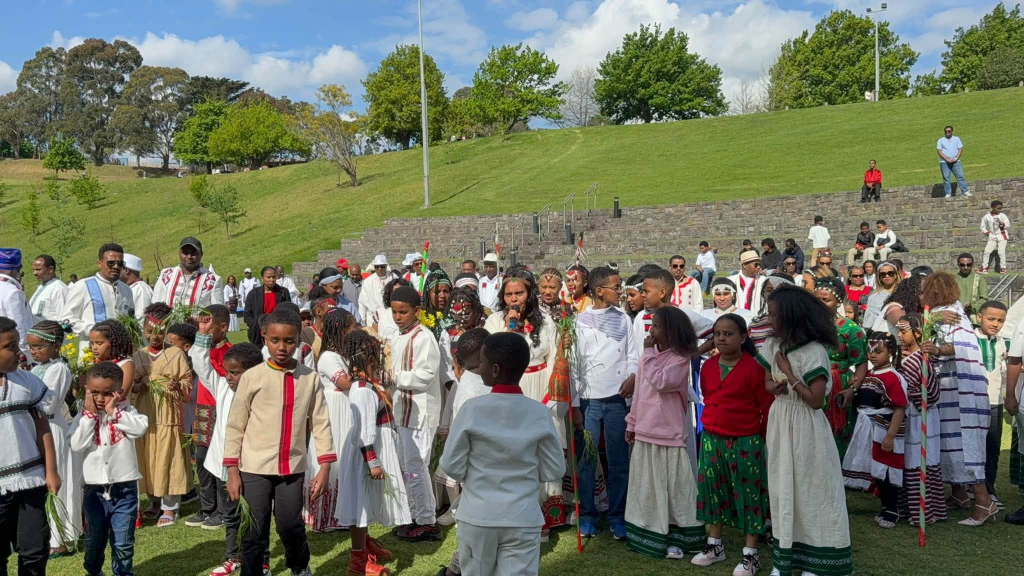
By Dhabessa Wakjira
—
There are festivals that entertain, and there are festivals that transform. Irreechaa belongs to the second category. For me, it is not simply my favourite festival — it is the most meaningful celebration I have ever known.
A Festival That Belongs to Everyone
What I love most about Irreechaa is its radical inclusivity. It does not matter who you are, where you come from, or what faith you follow. The festival is described as a “culture of inclusivity” where people of all backgrounds, languages, and religions are welcomed . When you stand at the water’s edge, surrounded by thousands of people carrying fresh green grass and yellow daisies, you realise you are part of something far bigger than yourself.
Gratitude at Its Purest
Irreechaa is, at its heart, an act of thanksgiving. It is a time to give thanks to Waaqa (God) for the rains, the harvest, the gift of life itself. In a world that often rushes past moments of gratitude, Irreechaa forces us to pause. To look back at the year that has passed. To acknowledge the blessings we have received. To welcome the new season with hope.
There is something profoundly grounding about this. The festival reminds us that we are part of nature, not separate from it — that the changing seasons, the flowing water, and the blooming flowers are all gifts worth celebrating.
A Time for Reconciliation
One of the most beautiful aspects of Irreechaa is its emphasis on reconciliation. You cannot fully participate if you are holding resentment or conflict in your heart. Disputes must be settled. Forgiveness must be offered. The festival creates a powerful, community-enforced deadline for healing broken relationships.
In a world so often divided by conflict, Irreechaa offers a different path — one rooted in peace, understanding, and the courage to let go of grievances.
A Living Link to My Heritage
For those of us in the diaspora, Irreechaa is more than a festival. It is a lifeline to our homeland. It connects us to our ancestors, our language, and our traditions. When I celebrate Irreechaa in Australia, I am not just remembering Oromia — I am keeping it alive within me.
The songs, the prayers, the procession, the grass, the flowers, the water — every element carries the weight of generations. And by participating, I become part of that unbroken chain.
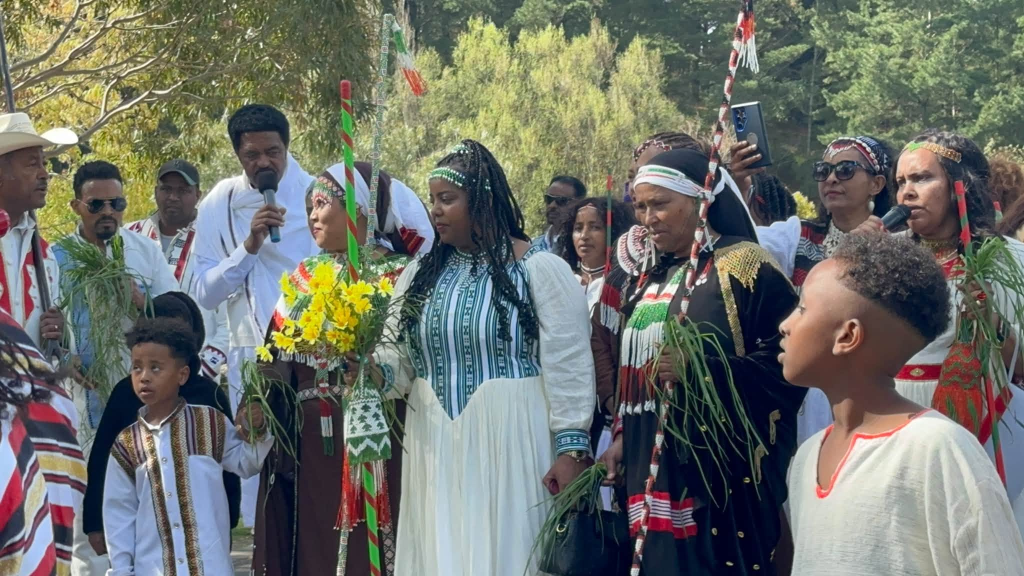
A Festival That Survived
Irreechaa has been celebrated for generations, preserved through years of oppression and systemic subjugation . That it survives today — and thrives — is a testament to the resilience of the Oromo people. Every celebration is a quiet victory. Every song is an act of defiance. Every gathering is a statement that our culture cannot be erased.
The Feeling You Can’t Explain
Ask me to describe what Irreechaa feels like, and I will struggle. It is the sound of thousands of voices singing together. It is the sight of elders leading prayers and children watching with wide eyes. It is the smell of fresh grass and flowers. It is the feeling of belonging — of being part of something ancient, sacred, and unbreakable.
It is joy. It is peace. It is home.
Why It’s My Favourite
Irreechaa is my favourite festival because it is not just a celebration. It is a spiritual homecoming. It is a time to give thanks, to reconcile, to reconnect, and to remember who I am.
In a world that moves too fast, Irreechaa invites us to slow down. To be present. To be grateful. To be together.
And that, to me, is the most beautiful thing a festival can offer.
Baga Irreechaa nagaan geessan! 

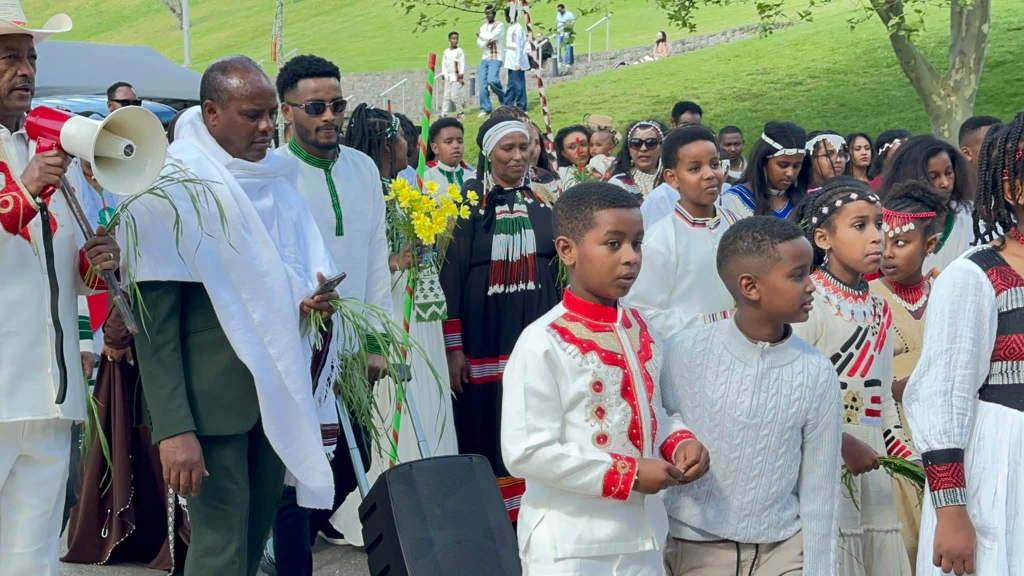

Irreechaa: A Special Festival for Kids
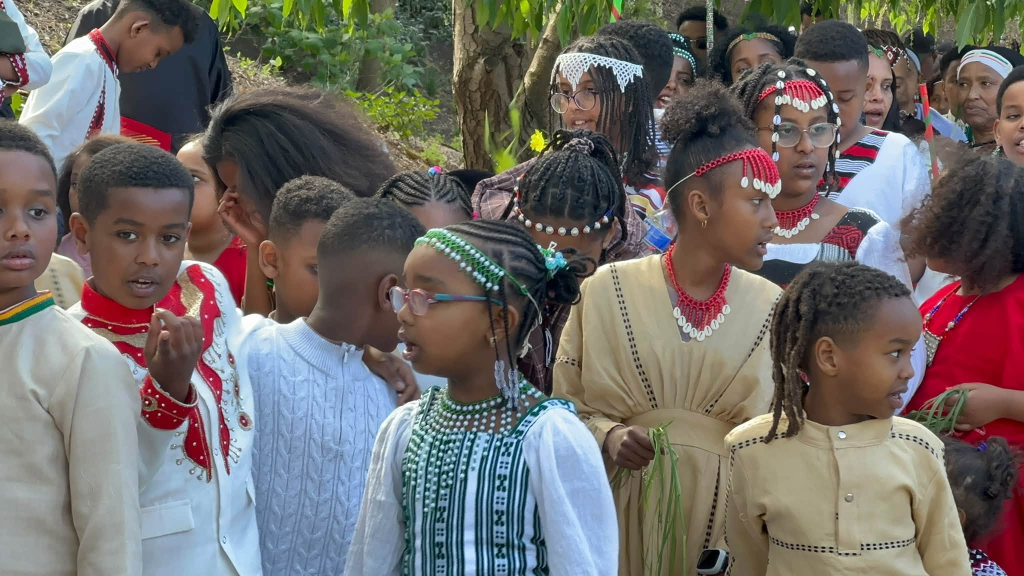
Irreechaa is a very special festival celebrated by the Oromo people. It is a time to say thank you to Waaqa (God) for all the good things in life — like rain, food, family, and friends.
Irreechaa happens when the rainy season ends and spring begins. Families dress in beautiful, colourful clothes and go to rivers or lakes. Everyone carries fresh green grass and yellow flowers. They dip the grass into the water and sprinkle a little water on themselves. This means saying goodbye to bad things and welcoming good things.
People sing songs, dance, and share food together. Elders give blessings and everyone prays for peace. It is also a time to say sorry and make friends again if someone was upset.
Irreechaa is celebrated in Ethiopia and all around the world, even in Australia! It teaches us to be grateful, to be kind, and to stay together.
It is a happy day full of colour, songs, and love. That is why Irreechaa is such a wonderful festival!
Baga Irreechaa nagaan geessan!

Irreechaa Birraa Celebrated in Amsterdam as Diaspora Reaffirms Identity and Tradition
Where the Oromo Are, There the Oromo Order Thrives
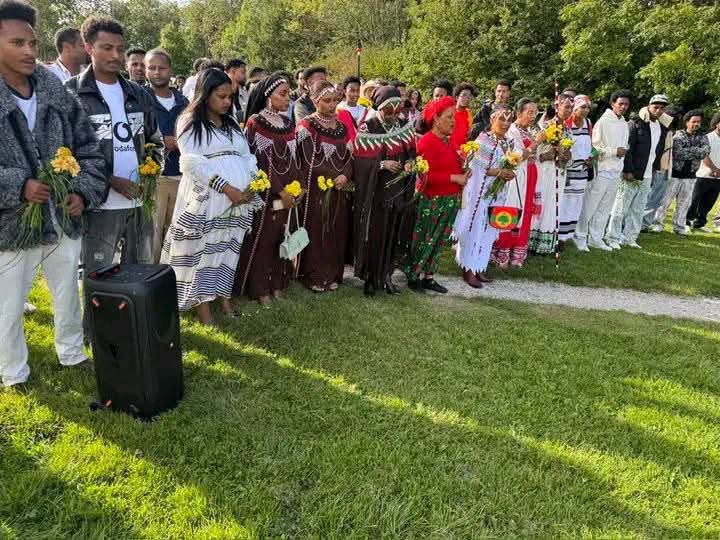
Amsterdam — Under the gray autumn skies of the Dutch capital, a sea of white, green, and yellow transformed Gaasperplas into a sacred Oromo landscape on Saturday, September 26, 2026. The Oromo community of the Netherlands gathered for Irreechaa Birraa, the ancient thanksgiving festival marking the end of the dark rainy season and the arrival of spring, in a powerful display of cultural continuity far from the Horn of Africa .
The celebration, organized by Hawaasa Oromo Nederland, drew Oromo families from across the Netherlands and neighboring European countries. Women in traditional dresses carried fresh green grass and yellow daisies; elders led prayers in Afaan Oromoo; and the sound of faaruu—traditional songs of gratitude—echoed across the park grounds .
For the Oromo diaspora, Irreechaa is more than a festival. It is a living declaration that the Oromo system—the sirna Oromoo—endures wherever the Oromo people are.
A Nation of Greatness
The Oromo are the largest ethnic group in Ethiopia and the Horn of Africa, numbering tens of millions and inhabiting a vast territory stretching from the central highlands to the southern lowlands . Their language, Afaan Oromoo, belongs to the Cushitic branch of the Afro-Asiatic family, and their traditional governance system, the Gadaa, was recognized by UNESCO as an Intangible Cultural Heritage of Humanity .
But numbers alone do not capture the depth of Oromo civilization. The Oromo possess a comprehensive philosophical and legal framework—safuu—that governs relations between humans, between humans and the natural world, and between humanity and the divine . Safuu establishes boundaries, rights, and responsibilities; it teaches that every created thing has its proper place and that violating these boundaries invites aadmalee—a profound moral transgression .
Central to this system is the land itself. For the Oromo, the earth is not merely property. She is haadha waan hunda—the mother of all things . Among the Boorana Oromo, the land is called Baattoo, a name that evokes her role as the sustainer who carries all life, both good and evil, upon her back . To farm sacred land—mountain slopes, water sources—without proper ritual is not merely an agricultural decision; it is a spiritual violation.
The Oromo are a people of profound religious tradition. Waaqeffannaa, the Oromo religion, worships one God—Waaqa—through a complex system of ayyaana, spiritual intermediaries who convey human needs to the Creator . The Oromo do not see themselves as a people without faith; they see themselves as a people with a very old faith, one that predates the arrival of Christianity and Islam in their lands.
Irreechaa: The Heartbeat of Oromo Life
No single institution better embodies the Oromo system than Irreechaa. Celebrated at the end of the rainy season (Ganna) and the beginning of spring (Birraa), Irreechaa is a national thanksgiving, a collective prayer of gratitude to Waaqa for protection, harvest, and peace .
The festival is celebrated in two principal forms. Irreechaa Malkaa takes place at the edges of rivers and lakes, where participants dip green grass and flowers into the water, sprinkling themselves as a symbol of purification and renewal . Irreechaa Tulluu is celebrated on hilltops, where the community gathers to pray for rain, fertility, and the well-being of the people . The largest celebrations occur at Hora Finfinne in Addis Ababa and Hora Arsadi in Bishoftu, where millions of Oromo gather each year—making it one of the largest annual human gatherings on the African continent .
The rituals of Irreechaa are rich with symbolism. Green grass represents life and fertility. Yellow daisies represent the joy of survival. Water represents purification and the washing away of hardship. The procession itself—elders leading, women walking in front, youth carrying flowers—is a living map of the Gadaa system’s social order .
Critical to Irreechaa is the requirement of reconciliation. A person carrying a grudge, a dispute, or an unresolved conflict is not permitted to participate fully in the festival . This is not merely a social nicety; it is a profound statement of the Oromo moral order. One cannot approach the sacred with a heavy heart. One cannot give thanks while holding anger. The Oromo system insists that gratitude and grievance cannot coexist.
The Diaspora Embraces the System
In Amsterdam, these traditions were not merely remembered—they were practiced. The Gaasperplas celebration followed the traditional structure: opening prayers led by community elders, a procession toward the water’s edge, the dipping of grass and flowers, and the sharing of food and coffee in a spirit of communal joy .
For diaspora Oromos, Irreechaa serves as a vital cultural anchor. In a world where the pressures of assimilation and the distance of migration threaten cultural continuity, Irreechaa is a reminder that the Oromo system is portable. It travels across oceans. It survives in new climates and new languages. It does not require the soil of Oromia to flourish—only the hearts of Oromo people who refuse to forget .
Community organizers emphasized the importance of the festival for younger generations. For Oromo children born in Europe, Irreechaa may be one of the few spaces where they hear prayers in Afaan Oromoo, see traditional caaccuu and siinqee carried by women, and witness elders acting in their traditional roles as Abbaa Gadaa and Hadhasiinqee .
The siinqee—the ritual stick carried by Oromo women—is itself a powerful symbol of the Oromo system’s treatment of gender. In traditional Oromo society, the siinqee represents the sacred power of women, particularly in their roles as peacemakers and protectors of life . A man who sees the siinqee planted in the ground knows that a woman has claimed her right to be heard, to demand justice, or to stop violence. That this institution survives and is honored in Amsterdam is a testament to the depth of the Oromo system.
A System That Endures
The Oromo say: Irreechi irree keenya—”Irreechaa is our unity” . The festival is not simply a religious observance or a cultural performance. It is a political and social statement: the Oromo system, with its Gadaa governance, its safuu ethics, its ayyaana spirituality, and its seasonal rhythms, is not a relic of the past. It is a living framework that continues to order Oromo life.
In Amsterdam, that framework was visible in every aspect of the celebration. It was visible in the respect shown to elders. It was visible in the equal participation of women, whose siinqee tradition remains one of the most distinctive aspects of Oromo society. It was visible in the focus on reconciliation and peace. It was visible in the integration of prayer and communal meal, ritual and celebration, solemnity and joy.
The Oromo system does not require an army to defend it. It does not require a state to enforce it. It requires only that Oromo people continue to live it. In Amsterdam, they did.
Source: Facebook page Gudisa Barbada

Irreechaa 2026 celebrations in the global cultural event.
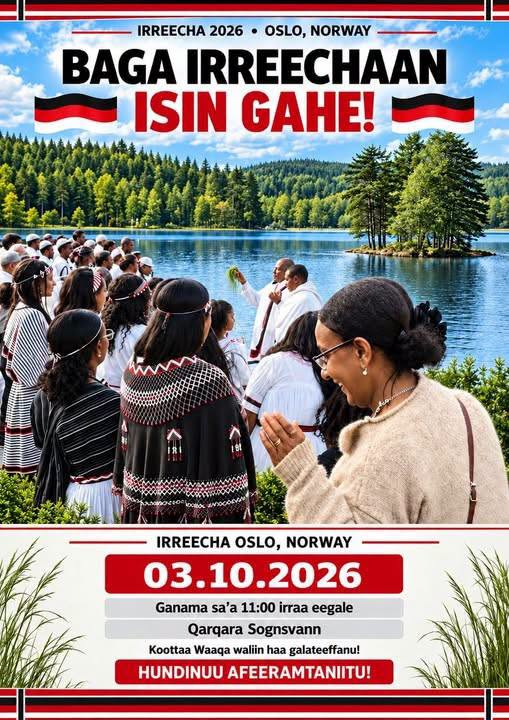
Irreechaa, the Oromo Thanksgiving Festival, is a global celebration of gratitude, unity, and cultural heritage for the Oromo people, with major events scheduled across North America, Europe, and Australia in 2026.
Here is a summary of the major 2026 celebrations:
- North America: Seattle (Oct 4), Washington, DC (Oct 2-4), Portland (Oct 3), Winnipeg (Sept 26), Ottawa (Sept 26), Edmonton (Sept 19), Minneapolis (Sept 19), Calgary (Sept 26).
- Europe: Rome, Italy (Oct 10), Oslo, Norway (Oct 3).
- Australia: Berwick, VIC (Sept 27).
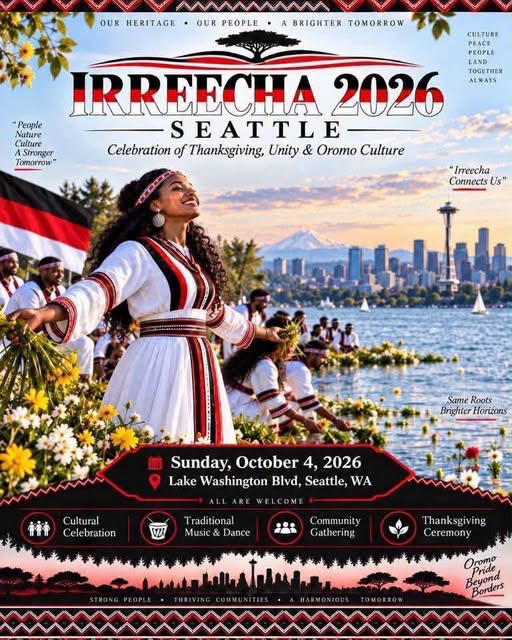
🌳 Themes & Significance
The festival is often described as a “celebration of Thanksgiving, Unity & Oromo Culture”. Its core themes include:
- Gratitude: Giving thanks for blessings and peace (“Galateeffannaa”).
- Unity: Fostering togetherness among the Oromo community and beyond (“Tokkummaa”).
- Culture: Honoring traditional practices, music, dance, and attire (“Aadaa”).
- Symbolism: The Odaa tree plays a central role, symbolizing peace, reconciliation, and the connection between the community and nature.
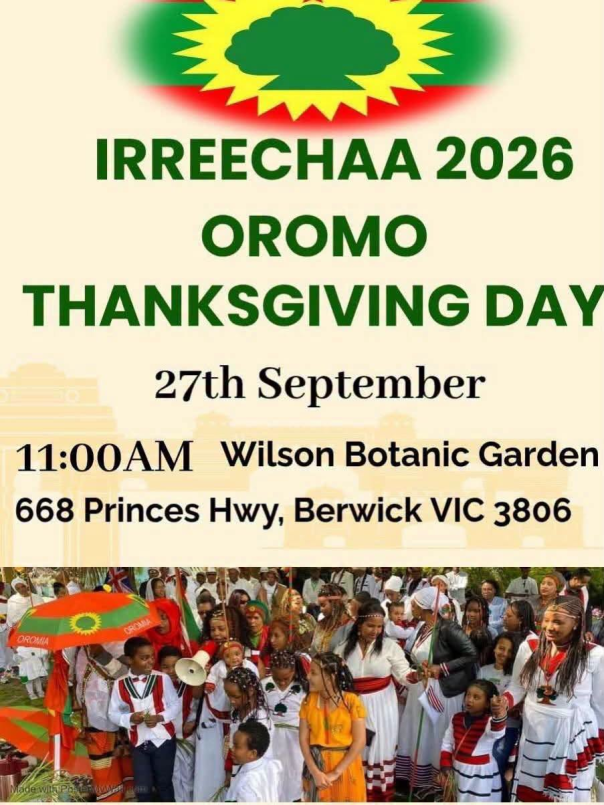
The Ethio-Canadian Connection
A major related event is the 26th Annual Ethio-Canadian Day in Toronto, scheduled for September 5-6, 2026 at Christie Pits Park. This is a two-day celebration that highlights Ethiopian heritage in Canada, contributing to the broader cultural mosaic of the region.
📅 Planning Your Attendance
If you plan to attend, please double-check the final dates and locations with local organizers, as some schedules may be subject to change.
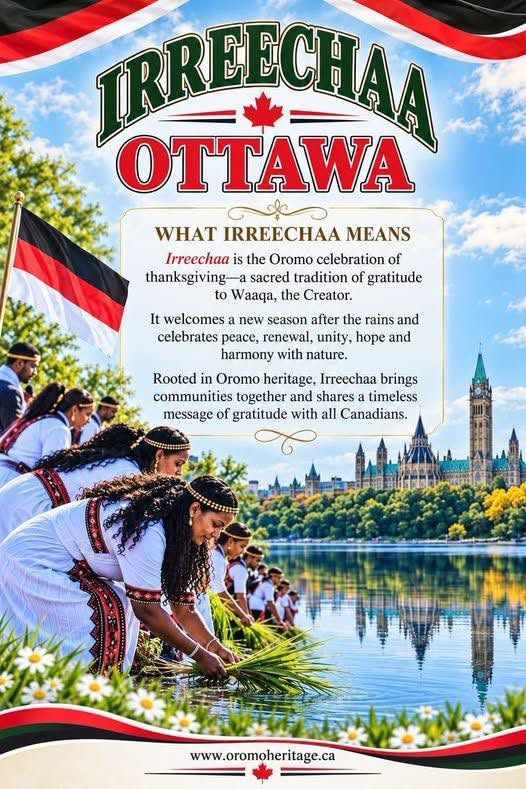

What is the significance of Irreechaa Celebrations in the global cultural event?
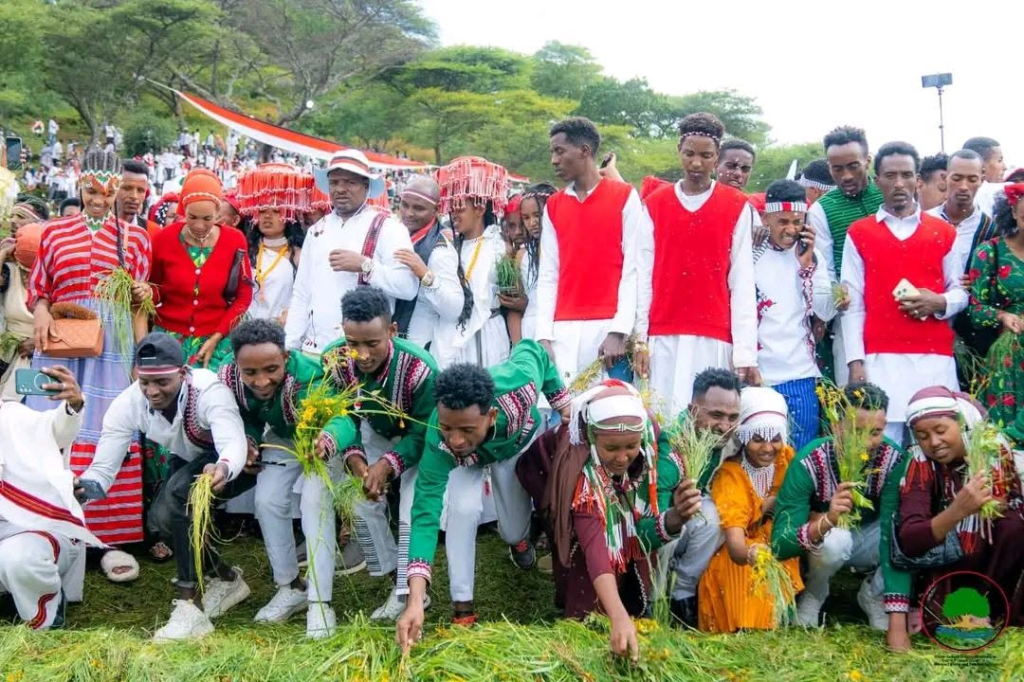
Irreechaa has grown far beyond its origins as a local Oromo thanksgiving festival. It is now a significant global cultural event that serves as a powerful symbol of unity, a major driver of tourism, and a living expression of a heritage recognized by UNESCO.
🕊️ A Global Symbol of Unity and Peace
Irreechaa’s core values of gratitude, reconciliation, and forgiveness resonate universally. It is described as a “culture of inclusivity” where people of all backgrounds, languages, and religions are welcomed. The festival is celebrated as a national treasure that strengthens brotherhood and solidarity, not just for the Oromo people but for all Ethiopians. Its message of peace and harmony has made it a platform for fostering understanding between diverse communities.
🌍 A Growing International Diaspora Tradition
The celebration has firmly taken root across the globe. Oromo communities in countries like the United States, Canada, Germany, the United Arab Emirates, and Australia organize their own Irreechaa events. These gatherings, held in cities like Washington, D.C., Toronto, and Berlin, bring together the diaspora and curious locals to preserve their heritage and pass it on to younger generations. The festival’s international appeal was highlighted in 2024 when visitors from the US and Canada described their experience in Ethiopia as “transformative,” praising the warmth and spiritual depth of the celebration.
🏛️ UNESCO-Recognized Heritage and Tourism Driver
Irreechaa is not just a cultural festival; it is a recognized part of world heritage. It is celebrated as part of the Gada system, which was inscribed by UNESCO as an Intangible Cultural Heritage. This status, combined with its massive scale—gatherings in Bishoftu can attract over 4 million people, making it one of the largest annual gatherings in Africa —has turned Irreechaa into a significant tourism draw. The Ethiopian government actively promotes the festival to attract international visitors, boosting the local economy.
✨ A Global Reminder of Shared Values
Ultimately, Irreechaa’s global significance lies in its universal message. It serves as a reminder of humanity’s connection to nature, the importance of expressing gratitude, and the power of community to heal and unite. Whether celebrated on the shores of Lake Hora in Ethiopia or in a park in Melbourne, Irreechaa embodies values that resonate far beyond Oromia.
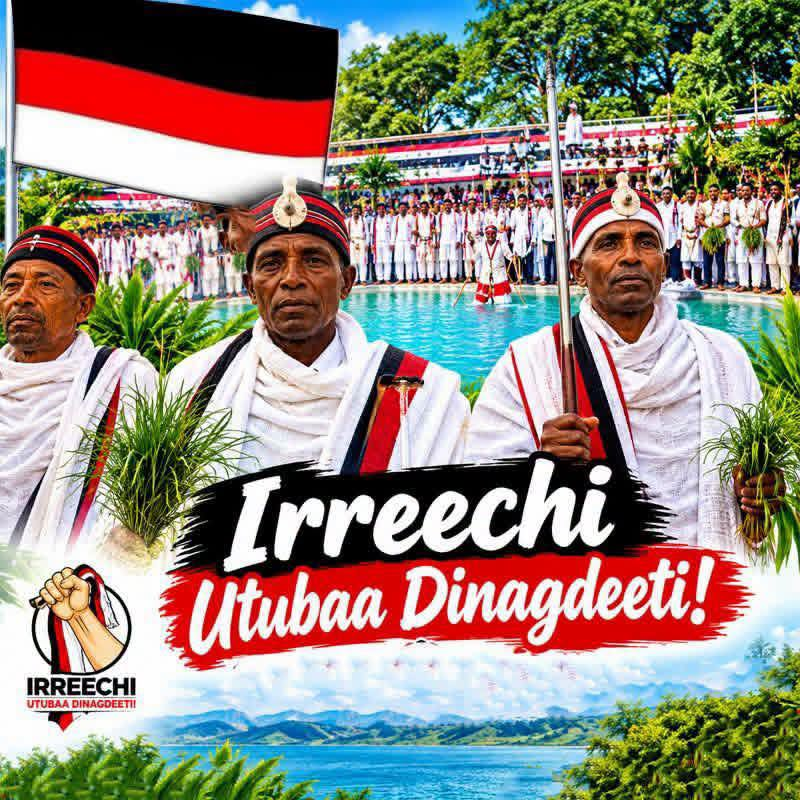

Irreechaa 2026: A Sacred Celebration Across Australia’s Oromo Communities
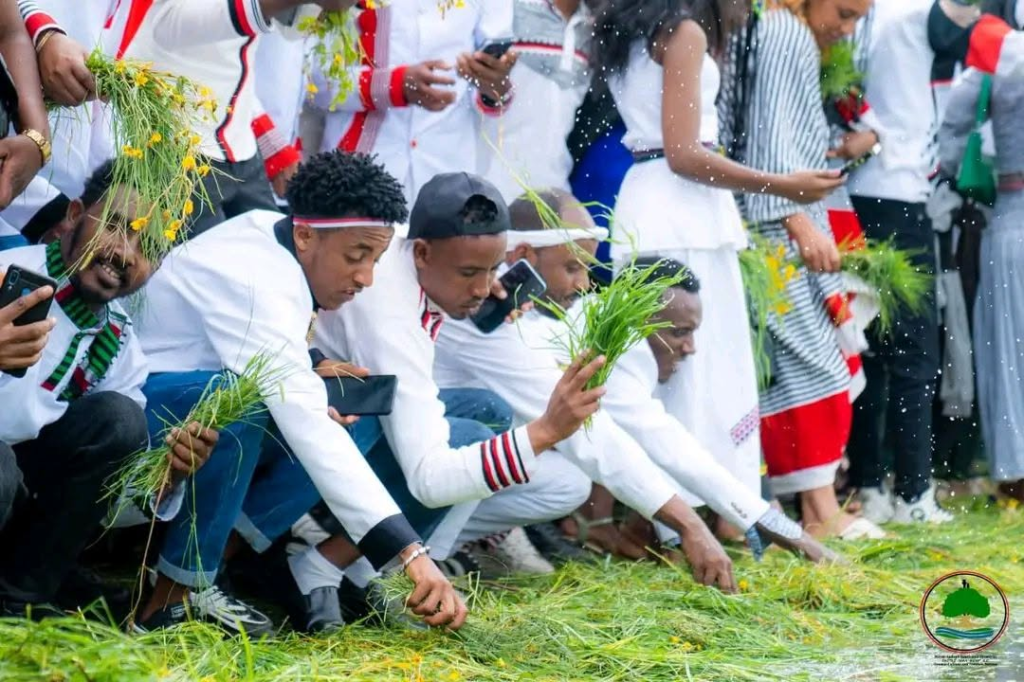
By Maatii Sabaa
MELBOURNE, 27 September 2026 — For Australia’s Oromo diaspora, this Sunday is far more than a date on the calendar. Irreechaa — the ancient Oromo thanksgiving festival — is being celebrated across the country in a powerful display of culture, faith, and unity. From the banks of Melbourne’s waterways to gatherings in other cities, the tradition that has survived centuries of suppression now thrives on Australian soil.
A Festival of Gratitude and Renewal
Irreechaa marks the end of the rainy season (Ganna) and the beginning of spring (Birraa) — a time of harvest, hope, and renewal. Rooted in Waaqeffannaa, the traditional Oromo belief in one God (Waaqa), the festival predates Christianity and Islam and has been passed down through generations for thousands of years .
Participants carry fresh green grass and yellow daisies (daraaraa keelloo) to the water’s edge, dipping them into the water as an offering of gratitude. This act symbolizes purification, renewal, and the washing away of the past year’s hardships .
The festival is also a time of reconciliation — disputes are settled before participation, and communities come together in peace .
Melbourne: Irreechaa Malkaa at Wilson Botanic Park
The Melbourne Oromo community is celebrating Irreechaa Malkaa 2026 on Sunday, 27 September at Wilson Botanic Park in Berwick, with festivities beginning at 11:00 AM .
The celebration follows the traditional structure of Irreechaa:
- Blessing of Elders: The event opens with prayers led by community elders (Abbaa Gadaa, Hadhasiinqee) .
- The Procession: Participants walk together toward the water, with women traditionally walking in front — a practice rooted in the Siinqee institution symbolizing women as sacred and as agents of peace .
- Carrying Grass and Flowers: Attendees carry fresh green grass and yellow flowers to the water’s edge, symbols of life, fertility, and connection to the earth .
- Dipping and Sprinkling: The grass and flowers are dipped into the water, and participants sprinkle water on themselves and others as a blessing .
- Songs and Prayers: Traditional Oromo songs (faaruu) fill the air — songs of gratitude, hope, and blessing, including the Marewoo songs sung during the procession .
Community members are encouraged to wear traditional Oromo clothing, bringing water, flowers, and a spirit of gratitude .
Irreechaa Arfaasaa: The Spring Celebration
Earlier in 2026, the Melbourne community gathered for Irreechaa Arfaasaa on Sunday, 26 April at Dandenong Mountain (Tulluu Dandenong) .
Irreechaa Arfaasaa marks the end of the dry season and the beginning of the rainy season — a spring celebration where communities pray to Waaqa for rain and good spirit. It is celebrated at hilltops and mountains, with elders leading blessings and the community gathering in traditional attire .
Organizers emphasized the importance of environmental protection at this year’s Arfaasaa celebration, reminding participants to respect the natural surroundings of Dandenong Mountain and leave no waste behind .
Irrecha Australia: A Growing National Movement
What began as small community gatherings among Oromo families in Australia has blossomed into vibrant national festivals. At the heart of this movement is Irrecha Australia, a registered non-profit organization dedicated to honoring the Oromo people’s cherished thanksgiving tradition .
The organization places particular emphasis on empowering young people, equipping the next generation to carry traditions forward with pride and confidence. Its vision extends beyond the Oromo community itself — envisioning a nation where Oromo culture thrives as an integral part of Australia’s diverse identity .
“Through festivals, education, and community initiatives, we strengthen connections, honour our heritage, and celebrate a way of life rooted in gratitude, resilience, and unity,” the organization states .
Why Irreechaa Matters in Australia
For Oromos living far from their homeland, Irreechaa serves as a vital cultural anchor. It connects the diaspora to their ancestors, their language, and one another .
The festival is also a powerful statement of resilience. Irreechaa has been celebrated by the Oromo for generations, preserved through years of oppression and systemic subjugation. That it now thrives in Australia — thousands of kilometres from Oromia — is a testament to the community’s determination to keep its traditions alive .
As one Oromo community message beautifully expressed: “Irreecha is not a memory. It is a living prayer. And you are the ones who keep it alive” .
A Message for All
Irreechaa is more than a festival. It is an expression of identity, a bond of unity, and a living link between generations. For the Oromo community in Australia, this weekend’s celebrations are a sacred homecoming — a chance to give thanks, to reconnect, and to pass the flame of Oromummaa to the next generation.
Baga Irreechaan nagaan geesse! — May the Irreechaa have arrived in peace.
Irreechaa is celebrated annually at the banks of rivers and lakes across Oromia, and by Oromo communities around the world.

A Trailblazer Honoured: Dr Melika Sheikh-Eldin Inducted into the Victorian Honour Roll of Women
By Dhabessa Wakjira
In a moment that celebrates both personal achievement and the power of lived experience, Dr Melika Sheikh-Eldin — Manager of International and Community Development at AMES Australia — has been inducted into the Victorian Honour Roll of Women, one of the state’s most prestigious recognitions of women’s contributions to their communities and the nation.
The announcement was met with pride and joy across AMES Australia and the broader settlement sector, where Dr Melika has been a guiding force for more than two decades.
“Congratulations to Dr Melika Sheikh-Eldin, our Manager of International and Community Development, on being inducted into the Victorian Honour Roll of Women,” AMES Australia shared in a statement. “This well-deserved recognition celebrates Melika’s outstanding leadership and commitment to creating opportunities for multicultural communities.”
A Journey from Refugee to World-Leading Innovator
Dr Melika’s story is one of remarkable transformation — and of turning personal hardship into a force for systemic change. She fled war in Eritrea in the late 1970s, volunteering in Sudanese refugee camps and in Cairo for organisations including the United Nations High Commissioner for Refugees (UNHCR) , the Red Cross, and Save the Children. She resettled in Australia in 1992.
Since joining AMES Australia in 2001, she has dedicated her career to settlement, community development, capacity building, and advocacy. Her work has helped thousands of new arrivals settle successfully in Australia and has influenced settlement policy and practice both nationally and internationally.
At the Victorian Honour Roll of Women ceremony, it was recognised that Dr Melika Sheikh-Eldin has transformed her lived experience as a refugee into world-leading approaches to community integration and social cohesion.
Three World-Leading Models
Dr Melika’s impact at AMES Australia is perhaps best illustrated by the innovative programs she has led — programs that have become blueprints for others:
1. The Nhill Rural Settlement Project
In western Victoria, the small town of Nhill was facing economic decline. Dr Melika’s project settled Karen refugees in the community, revitalising the town’s economy and creating a model now considered a global blueprint for rural settlement.
2. The Werribee Park Gardening Program
Engaging isolated Karen women in gardening, this program addressed critical issues of isolation and mental wellbeing. Its success was so evident that the model has been adopted by other organisations.
3. The Community Guides Program
Perhaps her most influential innovation, the Community Guides Program recruits former refugees to use their lived experience to assist new arrivals. Dr Melika has travelled to Sweden, New Zealand, and Japan to help international organisations establish programs based on this model.
Challenging Stereotypes, Championing Two-Sided Education
Throughout her career, Dr Melika has disrupted gender stereotypes and challenged the public perception of what refugees can achieve. Central to her philosophy is the concept of “two-sided education” — the idea that both host communities and new arrivals must learn about one another for true integration to occur.
This mutual learning, she explains, helps mitigate the fear of the unknown — the anxiety that so often fuels resistance to newcomers. It is a simple but profound insight: integration is not something done to refugees, but something built with them, and with the communities that receive them.
A Scholar and a Mother
Dr Melika’s achievements are all the more remarkable given the circumstances in which she pursued them. While raising three children as a refugee in a small Australian town, she completed a PhD in aquatic science — a testament to her intellectual rigor and her refusal to be defined by the limitations others might have placed upon her.
Since 2007, she has also sat on the board of the Refugee Council of Australia and represented the nation as a “Refugee Voice” at annual UNHCR consultations in Geneva, advocating for policy shifts that recognise refugees as stakeholders rather than recipients of aid.
A Well-Deserved Recognition
The Victorian Honour Roll of Women celebrates women who have made exceptional contributions to Victoria and beyond. Inductees are recognised for their leadership, courage, and lasting impact on their communities.
Dr Melika’s induction places her among a distinguished group of women who have shaped the state’s social, cultural, and political landscape. For the Oromo community and for refugees and migrants across Australia, her recognition is a moment of immense pride.
“Congratulations, Melika. We are incredibly proud of you,” AMES Australia said. 💙
Learn More
To read Dr Melika Yassin Sheikh-Eldin’s full profile on the Victorian Honour Roll of Women, visit:
🔗 https://www.vic.gov.au/dr-melika-yassin-sheikh-eldin
#AMESAustralia #AMES #Award #VictorianHonourRoll






