Category Archives: Bokkkuu

Irreecha at Hora Liqqimee: A Peaceful Thanksgiving in Debre Libanos
By Daandii Ragabaa
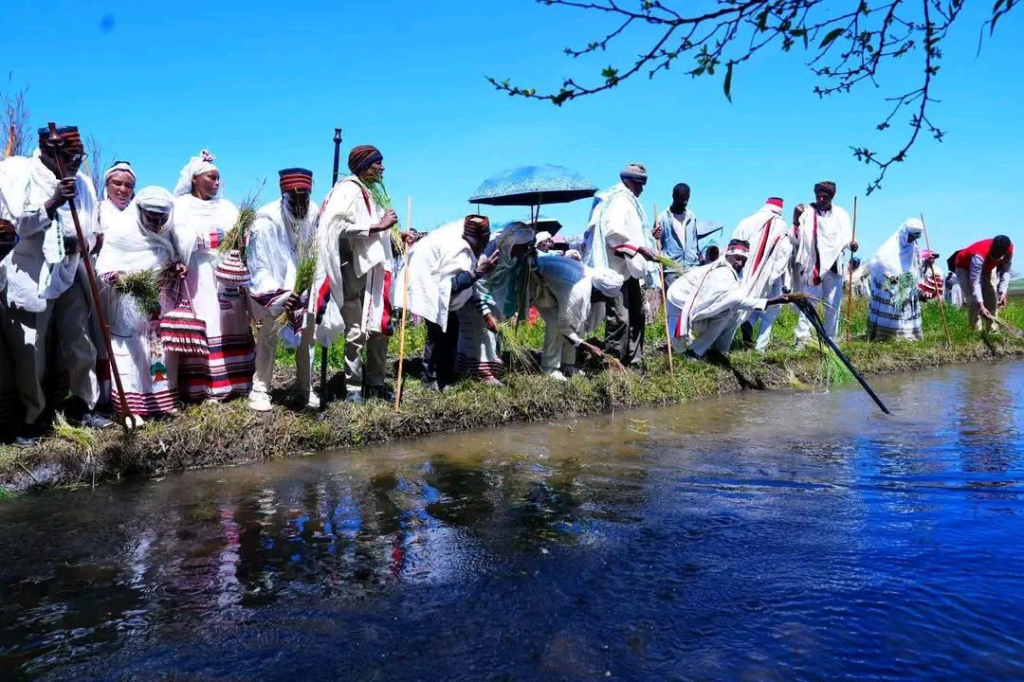
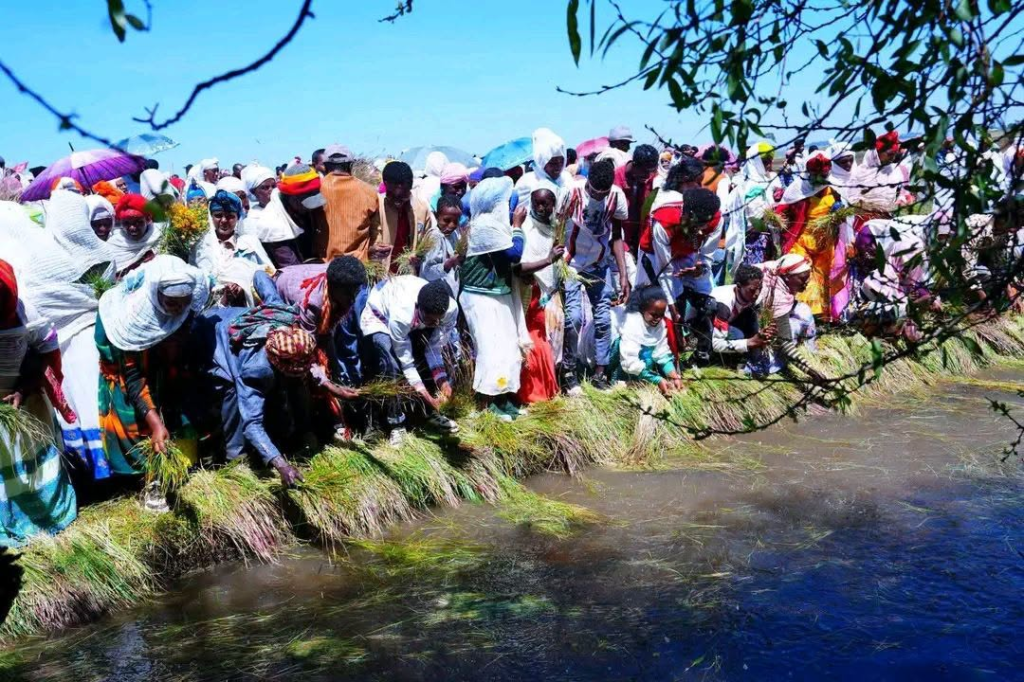
DEBRE LIBANOS, Central Oromia — In the heart of North Shewa, where the highlands roll toward the gorge of the Blue Nile and the ancient monastery of Debre Libanos has stood for over seven centuries, the Oromo community gathered at Hora Liqqimee to celebrate Irreecha. The festival, marking the end of the dark rainy season and the arrival of Birraa, was observed peacefully—a quiet but meaningful testament to the enduring power of Oromo tradition in a region known more for its religious history than for its Irreecha celebrations.
A Festival of Gratitude in a Sacred Landscape
Irreecha is, at its core, an act of thanksgiving. The Oromo people gather at water sources—malkaa—to offer gratitude to Waaqa for peace, health, a good harvest, and the well-being of family and livestock, while praying for blessings in the year to come . At Hora Liqqimee, participants carried fresh green grass and yellow keelloo flowers to the water’s edge, dipping them into the lake and sprinkling the water as a blessing—a ritual of renewal that connects the present generation to an unbroken chain of practice stretching back centuries .
The location itself carries layers of meaning. Debre Libanos is home to one of Ethiopia’s most significant Orthodox monasteries, founded in 1284 by Saint Tekle Haymanot, and the surrounding area is steeped in religious history . Yet the celebration of Irreecha here speaks to a different dimension of Oromo spiritual life—one rooted in the indigenous relationship between the people, the land, and the Creator. The peaceful coexistence of these traditions in the same landscape is itself a quiet statement about the pluralism that has long characterized Oromo society.
The Presence of Gadaa and Elders
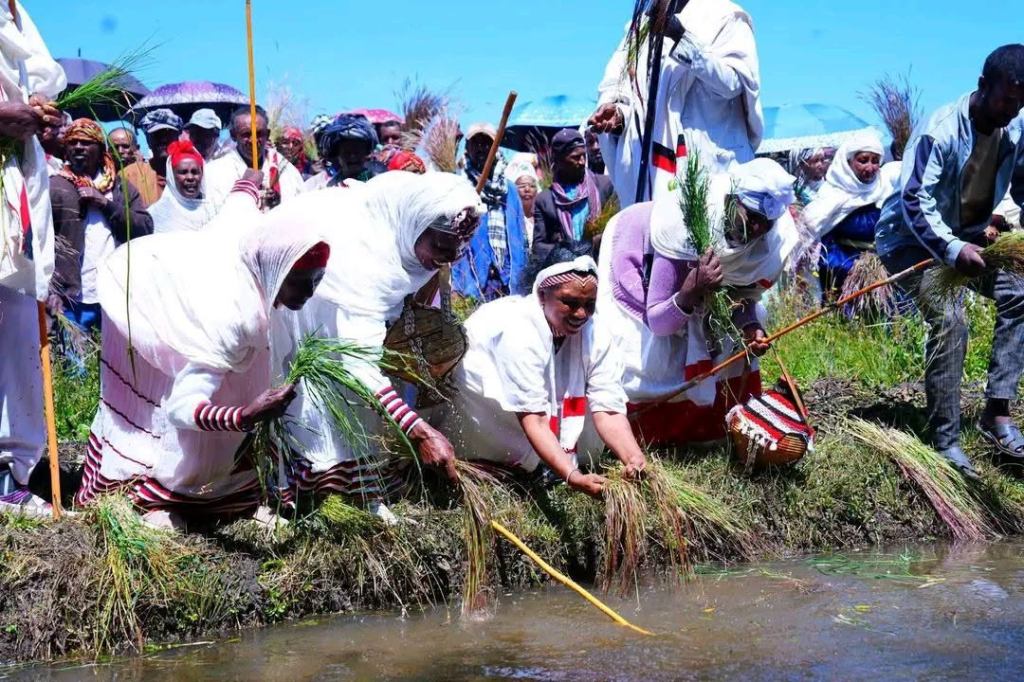
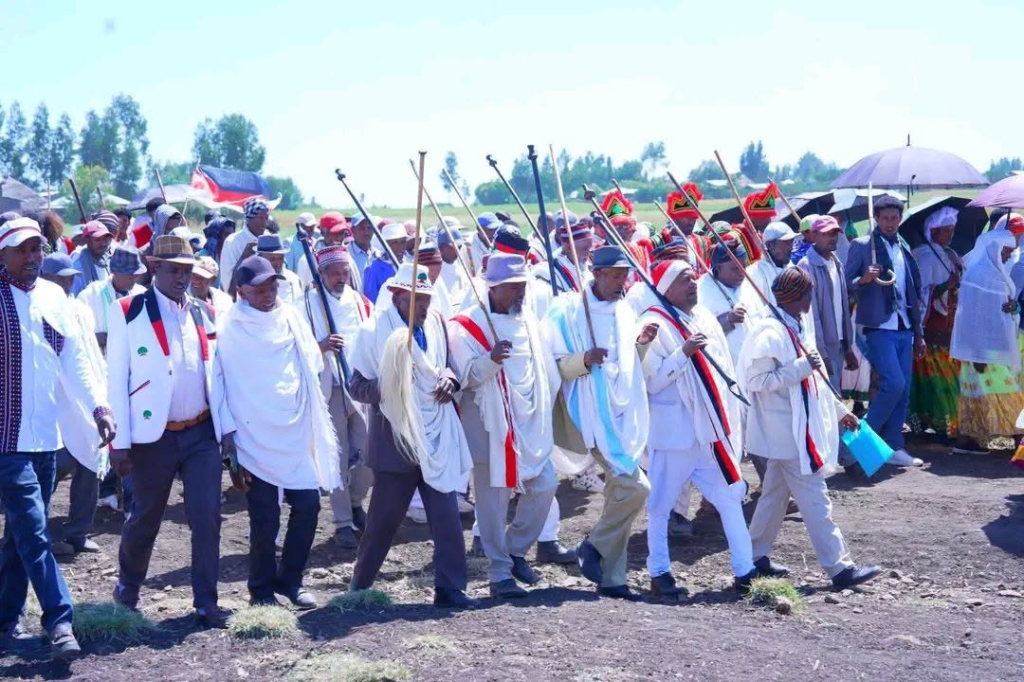
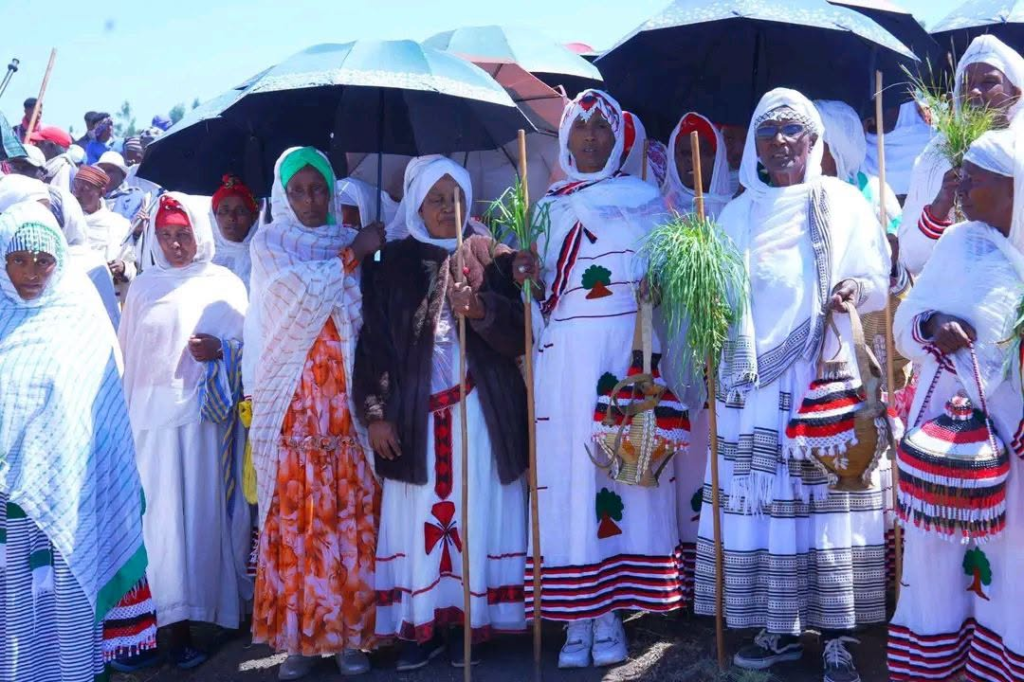
The celebration was honored by the presence of Abbootii Gadaa and Haadholii Siinqee, whose participation lends the festival its institutional and spiritual authority. In Oromo tradition, Irreecha is not merely a cultural event but a ritual embedded within the Gadaa system—the indigenous democratic order recognized by UNESCO as Intangible Cultural Heritage . The elders’ presence at the water’s edge is a living expression of a system that has regulated Oromo social, political, and spiritual life for generations.
The Abbaa Malkaa (father of the river) and the Abbaa Gadaa play central roles in the blessing that precedes the communal thanksgiving. Traditionally, the site is cleansed and blessed before the gathered community is blessed in turn. At Hora Liqqimee, this sequence unfolded as it has for countless seasons, grounding the celebration in a framework of legitimacy that no external authority can confer.
A Call for Peace and Reconciliation
Irreecha is not only about gratitude for the past; it is also about repairing relationships for the future. Traditional teachings emphasize that people should reconcile before entering the sacred gathering. Conflict, resentment, and division have no place at the water’s edge. The elders ask the gathered crowd: Are you at peace with each other? Are you at peace with the Creator? Only when the community affirms its peace does the thanksgiving officially begin.
The peaceful conduct of the celebration at Hora Liqqimee—described simply as having been held “in peace”—carries its own weight. In a region and a country where tensions often run high, the ability of a community to gather, give thanks, and disperse without incident is not a small achievement. It is a testament to the discipline and mutual respect that Irreecha cultivates among its participants.
A Tradition That Lives Beyond the Major Gatherings
While the largest Irreecha celebrations draw millions to Hora Finfinnee in Addis Ababa and Hora Arsadi in Bishoftu, the festival’s meaning is not diluted in smaller settings. Indeed, it is in places like Debre Libanos, at lakes like Hora Liqqimee, that the tradition remains most intimately connected to the land and the local community. The core elements are the same: the gathering at water, the carrying of fresh grass and flowers, the prayers of gratitude, and the reaffirmation of peace.
This year’s celebration at Hora Liqqimee may not have made headlines. But for the people who gathered there—elders in traditional attire, youth carrying keelloo, families reunited after the hardships of the rainy season—it was Irreecha in its fullest sense: a day of thanksgiving, a moment of community, and a reaffirmation of a identity that has survived and thrived for centuries.
Baga Irreecha Hora Liqqimee nagaan geenye!

A Family’s Gratitude and a Call for Dignity: The Ahmad Gishee Memorial Statement
By Dhabessa Wakjira
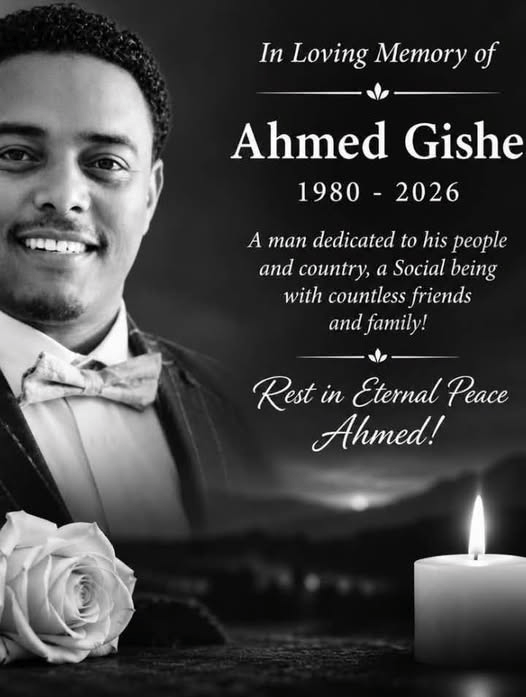
October 31, 2026 — In a statement released to the media, the family of the late Ahmad Gishee has expressed profound gratitude to friends, relatives, and the wider Oromo community for their support during a time of inconsolable grief, while also issuing a powerful call for responsible communication and respect for the family’s privacy.
The statement, titled “A Statement of Gratitude, Honour for a Life Lived, and a Pillar for the Legacy of Ahmad Gishee,” opens with a direct address to Ahmad’s friends, loved ones, relatives, and the broader Oromo public. “In this time of heart-breaking grief caused by Ahmad’s passing, we say thank you and we are grateful for standing with us, for encouraging us, and for sharing our pain,” the family writes.
Gratitude for a Community’s Support
The family’s gratitude is expansive and specific. They thank those who, “without hesitating,” stood by Ahmad when he needed help. They acknowledge those who traveled from far distances to attend his funeral and those who demonstrated that Ahmad was “a son of the broader Oromo nation” to the family and the district. “You have been a strong force for us to bear this heavy grief,” the statement reads. “Your honour is immense, immense!”
The family also requests that the community remember Ahmad in their prayers and supplications, and that they seek forgiveness and reconciliation on his behalf.
A Life Lived Without Regret
The statement offers a portrait of Ahmad as a man who lived his life fully and on his own terms. “The time Ahmad lived on this earth was very short. But he had no regret about the way and manner in which he lived his life,” the family writes. Before departing for the afterlife, Ahmad left a message for those he left behind: he had lived his life as he wished, he would not change anything, and he had done and seen much of what he wanted to do and see in his life.
When the time of death came to him, the family says, Ahmad confirmed to them that he was prepared. “This has given us some peace of mind,” they write. “The sorrow that struck us with his heart-breaking departure has shaken us. The wound created in our hearts has pained us.”
A Legacy of Achievement and Connection
In his short life, Ahmad achieved much and cultivated many friendships. He was a man who “embraced the Oromo nation broadly” and “sacrificed to the extent of his capacity.” His death revealed just how beloved and respected he was. The memorials and tributes being prepared for him, the family says, demonstrate not only that he was a strong man but that he was “a son of the entire Oromo nation.”
The family finds great comfort in knowing that Ahmad’s life held profound meaning for many people. They have resolved to honour his life, to respect the legacy he left behind, and to work to complete the tasks he had undertaken. “His work is foundational,” they write, “and this legacy must be passed from generation to generation.”
A Warning Against Misinformation
The statement takes a serious turn as the family addresses a troubling development: the spread of unverified information and harmful rumors about Ahmad’s life and death. “As people who have a responsibility to look after their community, we are seeing many who are opening empty spaces among these people,” the family writes. “Unverified, harmful, and baseless news is spreading without limit in the community’s social circles.”
Some of this information, the family says, has touched the emotions of family, relatives, and loved ones, and some displays a lack of respect for the family and for Ahmad himself. “This is putting pressure on the family,” they state. “We strongly and respectfully ask that unverified information, false news, or various speculations—especially on social media—not be spread.”
At this time, the family says, what helps Ahmad and them is to seek forgiveness for him and to offer encouragement to the living. “Give thought and human respect to him and his family. Refrain from raising irrelevant matters, spreading, publishing, and reporting things that have no basis—and prevent others from doing so!”
A Call for Responsibility
The family uses the statement to reflect on the power of words and actions. “We have great respect for those who, in this role, recognize that their words and actions have caused harm, and who apologize sincerely,” they write. “When we speak about the lives of other people, we want to remind each other that it is a great responsibility to weigh the good and the harm it carries.”
The way we live together and our relationships as a community must be characterized by compassion, respect, and self-restraint, the family argues. “Words create wounds that do not heal easily; actions bring harm that later requires correction. A painful experience must serve as a lesson for others, helping them understand emotions, and enabling them to cultivate kindness and humanity within themselves. We believe Ahmad’s passing must be a strong force for this.”
Honouring Ahmad’s Legacy
The family acknowledges the many people, both within the country and abroad, who have expressed their desire to honour Ahmad’s life and sacrifice together. “We are grateful for this! Your thoughts are greatly encouraging us. We have great gratitude for your efforts.”
The family extends an open invitation for support and participation in preserving Ahmad’s legacy. “Together, we believe we can pass on the life he lived and the principles he believed in to future generations. For the positive change he brought to the lives of many people, we have great hope that we can follow in his footsteps and honour him in a meaningful way.”
A memorial program for Ahmad will be organized in the near future, and a short-term committee is being established to coordinate it. Further information will be communicated promptly.
A Request for Privacy
In a pointed conclusion, the family states that it has not authorized the collection of any financial or other form of support at this time. “Until further information is communicated to you, we respectfully ask that you understand and respect the decision and direction the family has taken.”
The statement ends with renewed gratitude. “For the kindness, compassion, prayers, and support you have given us, we want to again express our great gratitude in Ahmad’s name. Your support has a meaning beyond words for our family. Thank you all once again.”
Maatii Ahmad Gishee (The Family of Ahmad Gishee)
October 31, 2026
This feature story is based on the family’s official statement. For further information about the memorial program, please await official communication from the family committee.

Ethiopia’s Leaders Trade Suits for Uniforms: A Wartime Cabinet in Training
By ONA Staff Reporter
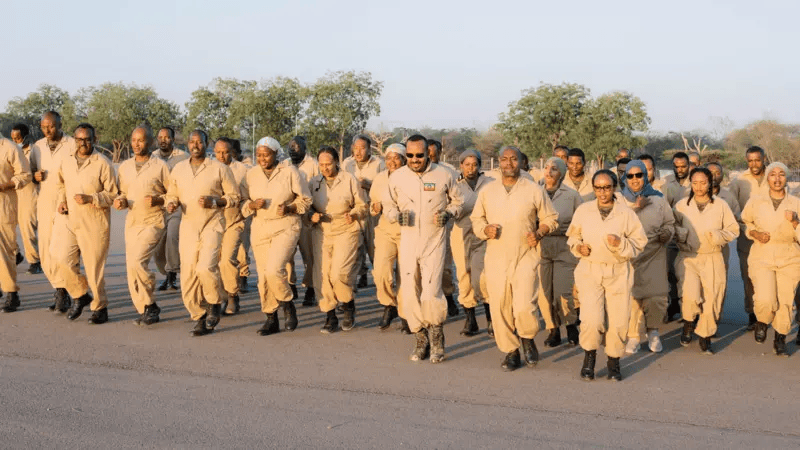
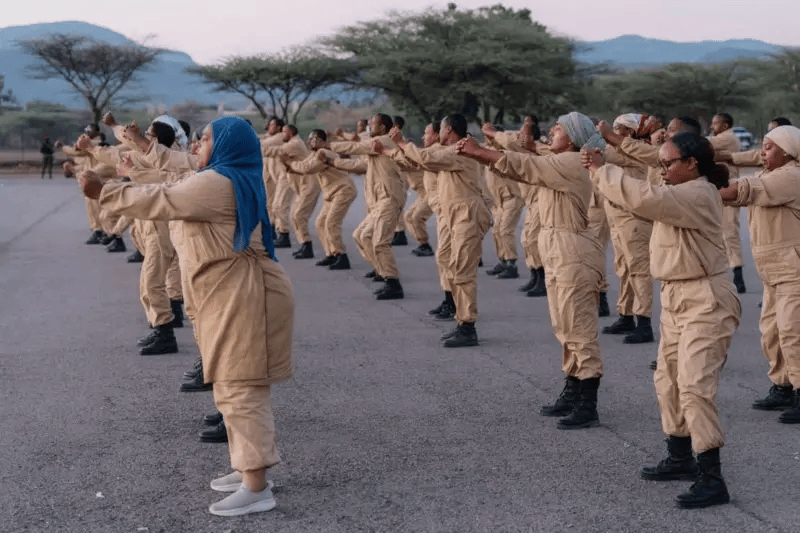
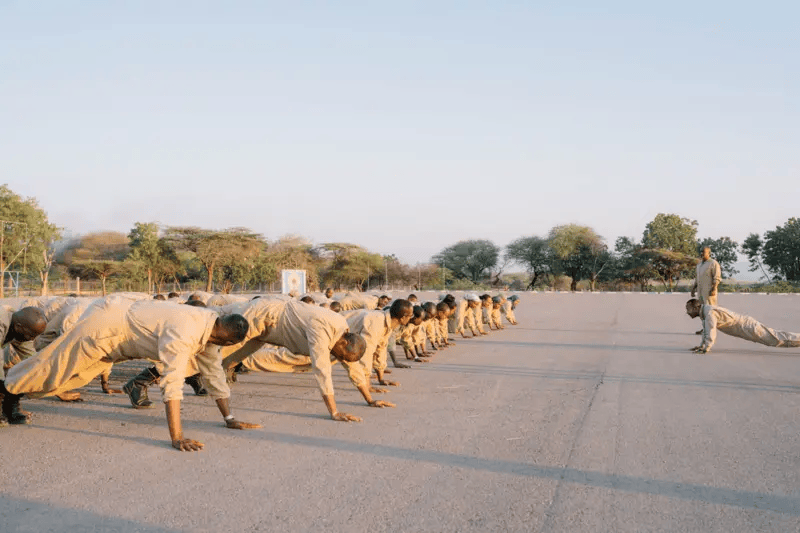
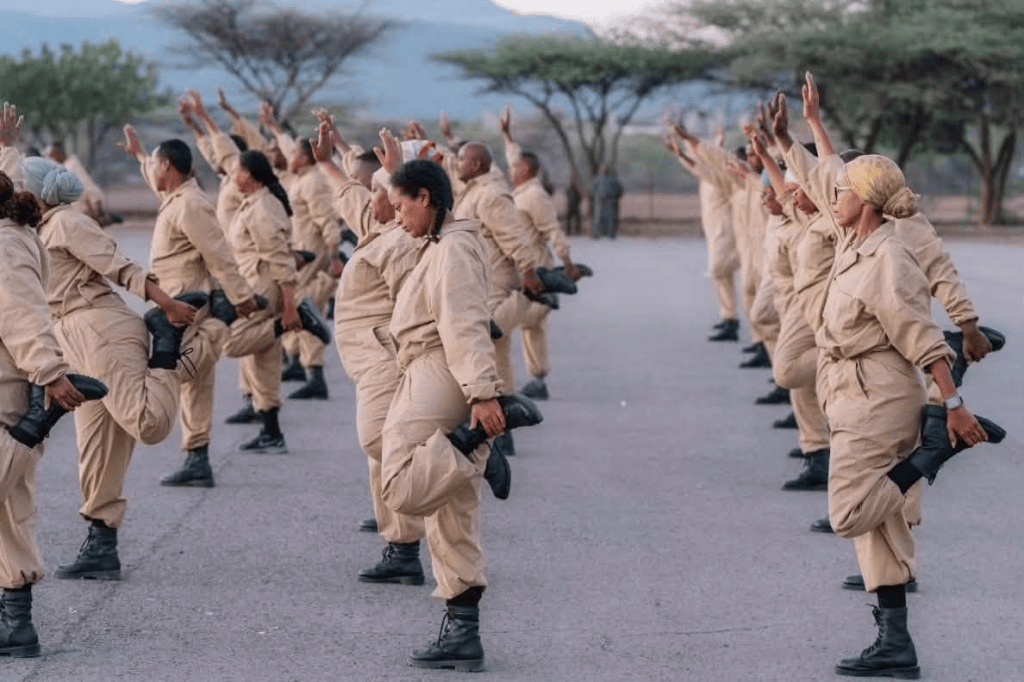
ADDIS ABABA — In a striking image that has circulated widely across Ethiopian social media, Prime Minister Abiy Ahmed stands shoulder to shoulder with his cabinet members and senior officials, not in the dark suits of governance but in the olive-green fatigues of military trainees. The photographs, shared on the Prime Minister’s own social media pages on Saturday, October 31, 2026, reveal a government preparing for war—and framing that preparation as a strategic necessity.
A Cabinet in Uniform
Among those pictured in military training gear at the Hurso facility were Mufrihat Kamil, Speaker of the Federation Council; Dr. Fitsum Assefa, Minister of Finance; and Dr. Mekdes Daba, Minister of Health. They were not observing exercises from a distance. They were participating in them.
According to the Prime Minister’s statement, the officials are undergoing military training at Hurso, a site that has become synonymous with the government’s increasingly militarized approach to statecraft. The training, Abiy explained, is designed to help officials “properly understand and implement” the ideas contained in what he calls the “Great Strategy of Additive Civilization” (Ye Medemer Siltenie Talaku Strategy).
The “Additive Civilization” Doctrine
The strategy, as articulated by the Prime Minister, contains principles that read as much like a wartime manifesto as a governance blueprint: “ensuring national security at all times,” “building a strong country that cannot be bent by anyone or anything,” and “mobilizing the structure from bottom to top for a national purpose.”
Military science, Abiy wrote, “has no competitor in shaping the purpose and humanity of a person.” He described it as a discipline that makes people “physically, spiritually, morally, and in execution disciplined.” The knowledge, skills, and experience drawn “from military science and life,” he argued, are essential to implementing the strategy.
“Leaders of the Additive government are taking military training at the Hurso military training camp,” Abiy wrote. “Soldiers have targets; civilians have objectives. The goal of both is to register victory. By combining both disciplines, we will create a generation that hits the target and achieves the objective.”
The Context: A Region on Edge
The timing of the training is not incidental. It comes as the Ethiopian National Defense Force (ENDF) has moved closer to the border with Eritrea, amid mounting fears that the two countries—locked in a diplomatic freeze over accusations of supporting insurgents and a dispute over sea access—could be drawn into war. The two nations have severed diplomatic relations, and the threat of renewed conflict hangs over the Horn of Africa.
The training also comes as the government continues to consolidate its military posture. This week, during a visit to Russia, Prime Minister Abiy announced that Ethiopia had received Su-35 fighter jets—advanced aircraft that would make Ethiopia the first sub-Saharan African nation to operate them. The delivery represents a significant escalation in the country’s aerial capabilities.
The Prime Minister has repeatedly stated that strengthening Ethiopia’s military capacity across all sectors is among his objectives. The images of his cabinet in uniform are not merely symbolic; they are a signal that the government’s approach to governance has become inseparable from its approach to war.
A Government at War with Itself?
The photographs raise uncomfortable questions. A finance minister in fatigues, a health minister in combat gear—what does it mean for a government to train its civilian leadership for battle? The Prime Minister’s framing suggests a belief that military discipline is the antidote to the indiscipline of civilian governance, that the battlefield’s clarity of purpose should be brought to the messy work of running a state.
But critics may see something else: a government that has increasingly turned to military solutions for political problems. The training at Hurso, the procurement of advanced fighter jets, the escalating rhetoric—all of this unfolds against a backdrop of internal conflict, including renewed fighting with forces in northern Ethiopia and ongoing unrest in Oromia.
The government has not disclosed when the training began or how long it will last. What is clear is that the image of a cabinet in uniform is intended to convey a message: Ethiopia’s leadership is preparing for something. Whether that something is defense, deterrence, or the prosecution of war remains to be seen.
The Image That Speaks
In a region where symbols carry enormous weight, the photograph of Abiy and his officials in military fatigues is more than a social media post. It is a declaration of intent. The “Great Strategy of Additive Civilization” is being taught at a military camp, to a cabinet, in a country on the brink. The soldiers have targets; the civilians have objectives. And the Prime Minister has made clear that he expects both to hit them.
As Ethiopia navigates a precarious moment in its history, the sight of its leaders in uniform offers a glimpse of how they see the road ahead: not as a path of diplomacy and civilian governance, but as a campaign to be won.
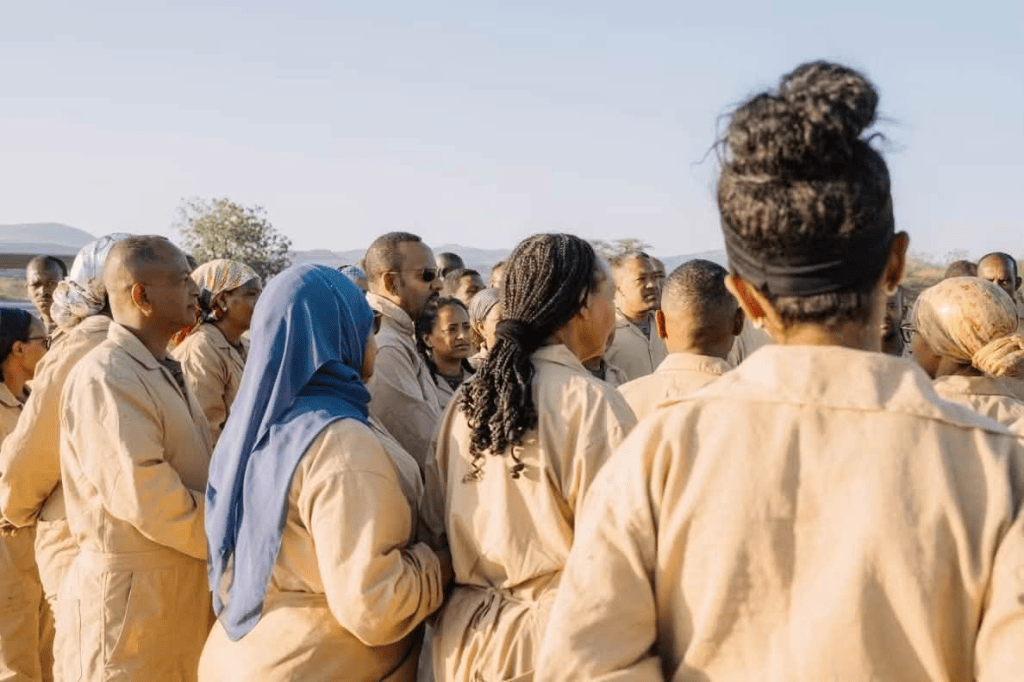
Source: EBC (Ethiopian Broadcasting Corporation) and the Prime Minister’s official social media pages.

Reflections on Professor Beyene’s Essay: A Call for Evidence, Clarity, and Intellectual Honesty in the Oromo Nationalist Discourse
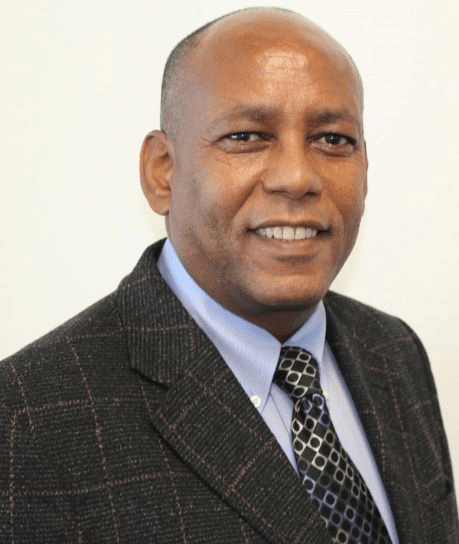
By Hambisa Belina, Morgan State University
In a political landscape too often shaped by rhetoric and presumption, Professor Beyene’s recent essay stands out as a model of what rigorous intellectual engagement should look like. As a scholar reading his work, I found the piece both eloquently written and intellectually engaging—a rare combination that invites readers not merely to agree or disagree, but to think more carefully about the contested narratives shaping political discourse across Ethiopia and the wider Horn of Africa.
Situating the Debate in Historical and Regional Context
What makes Professor Beyene’s contribution particularly valuable is his skill in exploring the historical circumstances and political happenstances that evoke our collective memory. He does not treat contemporary debates as isolated phenomena but situates them within a broader historical and regional context, encouraging readers to grapple with enduring questions of identity, power, historical justice, and political legitimacy. This contextual approach is essential. Too often, discussions about nationalism and self-determination are conducted in a historical vacuum, as if the grievances and aspirations of today emerged from nowhere. Professor Beyene resists that tendency, reminding us that the present is always in conversation with the past.
The Insistence on Evidence
One of the article’s most compelling contributions is its insistence on evidence-based argumentation. Professor Beyene rightly questions the frequent assertion that Oromo nationalism has somehow crossed the line from demanding its own rights to infringing upon the rights of others. This is a serious accusation, and as he argues, it should be supported by concrete evidence rather than broad claims or political rhetoric. His call for a more rigorous examination of these allegations is both justified and necessary.
I concur with Professor Beyene’s observation that I have not seen any Oromo political party or prominent Oromo politician advocate for the repression, subjugation, or denial of the rights of other societies. This is not a claim of perfection—all political movements should be subject to scrutiny and criticism. But such criticism must rest on verifiable facts rather than assumptions or unfounded characterizations. The distinction matters, not only for the sake of fairness but for the integrity of public debate itself.
The Responsibility of Clarity
At the same time, I believe it is important for Oromo nationalists to continue articulating clearly what Oromo nationalism stands for and what it seeks to achieve. Greater clarity regarding its principles, objectives, and vision for coexistence can help dispel misconceptions, strengthen public understanding, and foster more constructive dialogue among Ethiopia’s diverse communities and the peoples of the wider Horn of Africa. This is not a concession to critics but a strengthening of the movement’s own foundation. A nationalism that knows what it stands for is better equipped to withstand misrepresentation and to build the alliances necessary for lasting peace.
Vigilance Against Misrepresentation
Moreover, Oromo political thinkers, legal experts, intellectuals, and political organizations should remain vigilant against efforts to misrepresent, delegitimize, or slander Oromo aspirations. They have an important responsibility to defend and explain the legitimacy of Oromo efforts to restore political authorship over their land, resources, laws, institutions, culture, and language. Such vigilance is necessary not only to counter mischaracterizations but also to ensure that the movement remains anchored in democratic principles, justice, equality, and respect for the rights of all peoples and all individuals. The struggle for Oromo rights is, at its core, a struggle for the right to define one’s own future—and that right must be exercised with the same commitment to justice that the movement demands for itself.
A Timely and Important Contribution
Ultimately, Professor Beyene’s essay raises an important challenge: political accusations should be assessed on the basis of evidence, not presumption. His thoughtful intervention serves as a valuable reminder that discussions about nationalism, self-determination, political rights, and historical justice are best advanced through careful historical analysis, intellectual honesty, and a commitment to factual debate. In that regard, his essay is a timely and important contribution to an ongoing conversation about the future of Ethiopia and the broader Horn of Africa.
As scholars and citizens alike continue to navigate these contested questions, the standard Professor Beyene sets—evidence over assumption, clarity over ambiguity, and intellectual honesty over political convenience—offers a path toward more constructive dialogue. It is a standard worth upholding.
Hambisa Belina
Morgan State University
ORCID | Google Scholar | LinkedIn

The Lion of Borana: Remembering Guyyoo Boruu Galmaa, the Abbaa Gadaa Who Defied Empires
By Dhabessa Wakjira
In the annals of Oromo history, there are leaders who govern, and then there are those who become the embodiment of a people’s resistance. Guyyoo Boruu Galmaa, who served as the Abbaa Gadaa of the Borana Oromo from 1944 to 1952, belongs unequivocally to the latter. He was not merely a custodian of the ancient Gadaa system; he was a shield against the encroaching empires of the 20th century—a man whose defiance of both Italian invaders and the Ethiopian imperial state preserved the soul of the Borana people.
His story, deeply intertwined with the fate of the sacred wells and the contested borders of Moyale, offers a masterclass in indigenous diplomacy and unyielding sovereignty.
A Legacy Born in the Shadow of Partition
The roots of Guyyoo Boruu’s leadership stretch back to a defining tragedy for the Borana nation. In 1907, the British and Ethiopian empires signed the Anglo-Ethiopian Boundary Agreement, a colonial decree that arbitrarily carved the Borana homeland in two, dividing the people of Moyale.
At that time, it was Boruu Galmaa Dooyyoo—the father of Guyyoo—who served as the Abbaa Gadaa. He was among the first to openly reject the treaty, recognizing it not as a legal boundary, but as an existential threat to the unity and sovereignty of the Borana. The son inherited the father’s fire.
In 1944, when Guyyoo Boruu Galmaa took the Baallii (the ritual transfer of power) and assumed the mantle of Abbaa Gadaa, he stepped into a region rife with external pressure. The Borana were not only facing the legacy of the 1907 partition but were also navigating the chaotic fallout of global wars and shifting imperial ambitions in the Horn of Africa.
Defying the Italian War Machine
Historical records reveal that Guyyoo Boruu’s leadership did not begin in 1944; his journey as a freedom fighter started much earlier. Between 1936 and 1945, he was actively leading the Borana Oromo in resistance against the Italian occupation.
When the Italians invaded, they brought not just armies, but a strategy of land seizure. As the historical account notes, the Italian forces attempted to annex vast tracts of Handaraa land, claiming everything except the sacred Arddaa and Tula (water wells). Guyyoo Boruu responded by building the Borana Gadaa structures and waging a relentless war against the Italians.
His struggle was not just about repelling a foreign army; it was about defending the sacred ecology of Borana life. The Tula wells were the lifeblood of the cattle and the people. Guyyoo Boruu understood that to lose the land was to lose the wells, and to lose the wells was to lose the Borana identity itself.
Standing Against the Imperial Crown
Following the defeat of the Italians, the Borana faced a new, more insidious threat: the expanding centralization of Emperor Haile Selassie’s government. Between 1947 and 1950, the imperial regime sought to impose its administrative and cultural dominance on the southern frontiers.
Guyyoo Boruu Galmaa became the primary obstacle to this encroachment. He did not merely resist the political pressures of the imperial state; he actively protected the Gadaa system, ensuring that traditional laws, democratic consensus, and indigenous governance continued to thrive despite the centralizing forces of Addis Ababa.
His defiance culminated in a moment of profound historical significance. In 1950, the Haile Selassie government, seeking to co-opt local leaders, offered Guyyoo Boruu the title of “Giraazmach”—a high-ranking imperial military and administrative honor.
He refused.
In rejecting the title, Guyyoo Boruu Galmaa made a definitive statement of Oromo autonomy. He rejected the legitimacy of an empire that had partitioned his people and threatened their customs. By turning his back on imperial honors, he affirmed that his authority came not from a distant emperor, but from the Gadaa, the Borana people, and the land itself.
The Enduring Wisdom of the Elders
The legacy of Guyyoo Boruu Galmaa is not confined to the history books; it is a living, breathing testament to the resilience of Oromo culture.
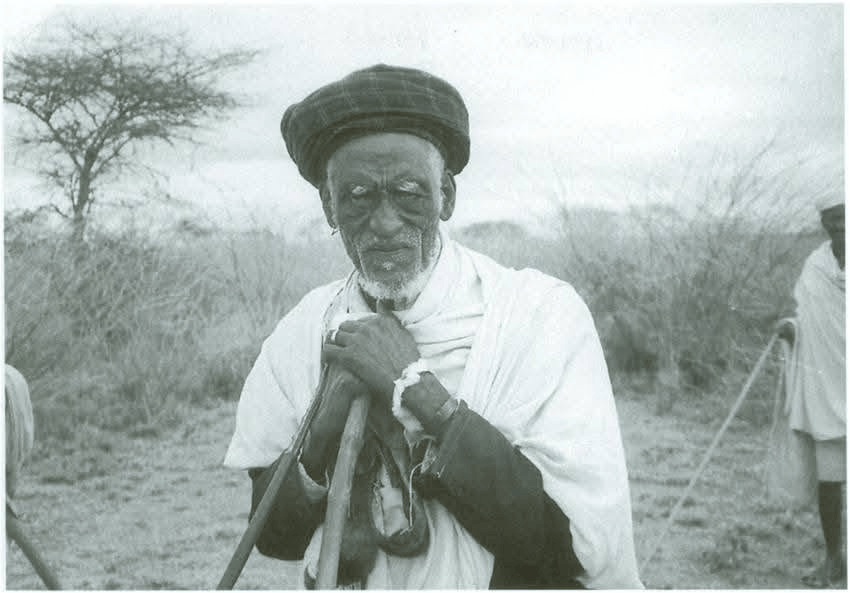
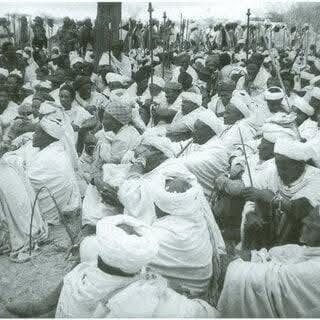
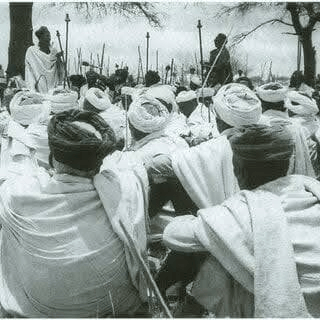
His life was meticulously documented by Western anthropologists who recognized the profound nature of the Borana political system. The renowned scholar Eike Haberland photographed him in 1952—the year he completed his term as Abbaa Gadaa. Decades later, in 1986, anthropologist Günther Schlee captured another historic moment: Guyyoo Boruu, then approximately 95 years old, was photographed at the Gumii Gaayyoo (the great assembly) as his son, Boruu Guyyoo Boruu, took the Baallii and assumed the leadership of the Gadaa.
That photograph, showing the aged father watching his son take the reins of power, is a powerful visual metaphor. It represents the unbroken chain of the Gadaa system—a system that Guyyoo Boruu fought to protect with weapons, diplomacy, and sheer moral courage.
A Beacon for the Present
As the Oromo people today face a renewed crisis of state violence, displacement, and the ongoing political capture of their sacred resources—including the Tuula Saglan Booranaa—the legacy of Guyyoo Boruu Galmaa serves as a vital beacon.
He stands as a reminder that Oromo sovereignty is ancient, sophisticated, and deeply rooted in a democratic culture that predates modern statehood. He proved that true leadership is not measured by the titles bestowed by empires, but by the courage to defend one’s people against them.
Nearly a century after he began his resistance, the spirit of Guyyoo Boruu Galmaa still echoes across the plains of Borana, flowing like the waters of the sacred wells he fought to protect: undivided, unbroken, and eternally free.
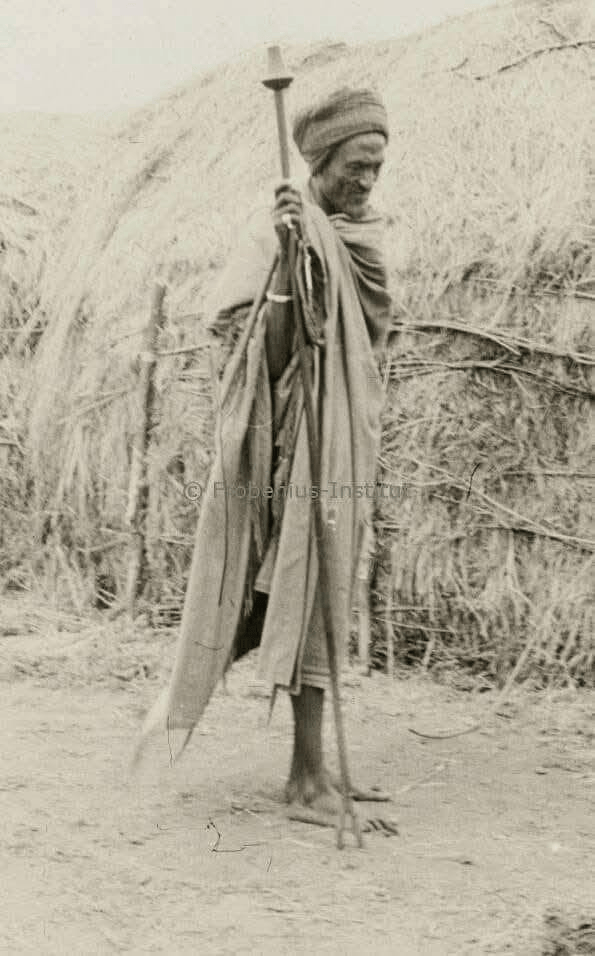
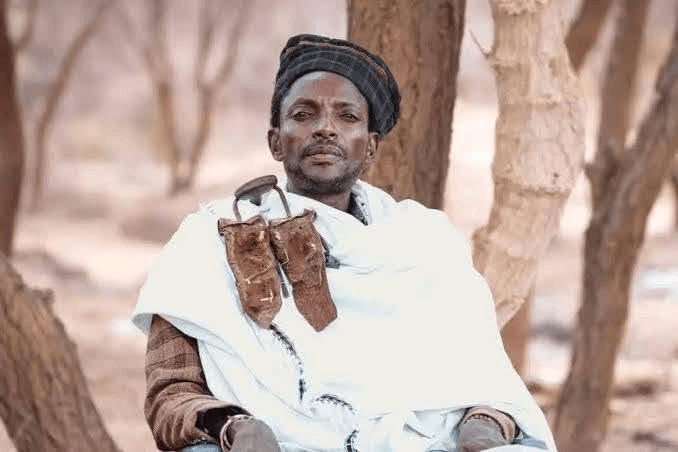
Photos: Guyyoo Boruu Galmaa, photographed by Eike Haberland (1952) and Günther Schlee (1986).

Dr. Taaddasaa Eebbaa (Gadaa Meelbaa): The Visionary Who Breathed Life into Ethiopia’s Biodiversity Legacy
By Dhabessa Wakjira
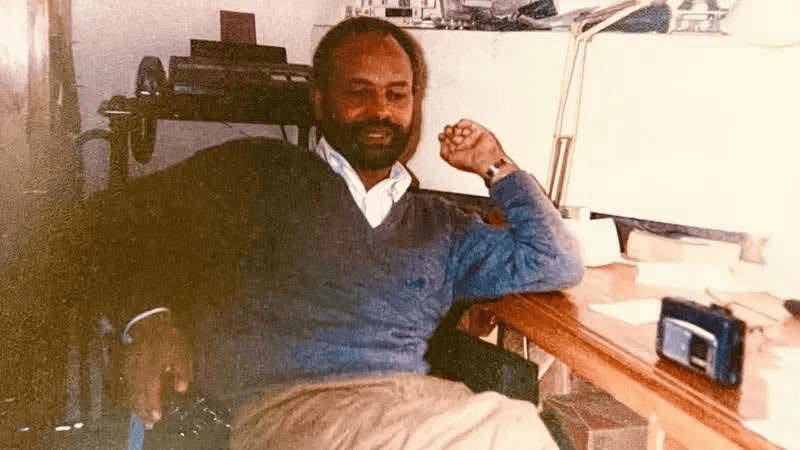
In the annals of Ethiopian and Oromo history, few figures embody the rare combination of scientific brilliance, political conviction, and unwavering sacrifice as profoundly as Dr. Taaddasaa Eebbaa. Known affectionately by many names—Dr. Fidoo, Doktoree, and most famously in literary circles as Gadaa Meelbaa—this remarkable scholar, freedom fighter, and author left an indelible mark on his nation’s scientific and political landscape before his passing on May 1, 2022, in Washington, D.C.
Humble Beginnings, Extraordinary Vision
Born in Najjoo, in the West Wallagga region, Dr. Taaddasaa’s journey from a young student in his hometown to an internationally recognized geneticist reads like a testament to the power of determination. He completed his primary education in Najjoo before pursuing his secondary studies in Jimma—a journey that would set the stage for an extraordinary academic career.
His first degree in agriculture from Alemaya College (now Haramaya University) marked the beginning of a lifelong dedication to understanding and preserving Ethiopia’s natural wealth. Not content with domestic excellence, Dr. Taaddasaa pursued his master’s and doctoral degrees at universities in the United States and the United Kingdom, specializing in genetics—a field that would become central to his life’s work.
The Architect of Ethiopia’s Biodiversity Conservation
The 1970s found Dr. Taaddasaa teaching at Haramaya University before joining the Ministry of Agriculture as a researcher. It was during this period that his visionary leadership would leave an enduring legacy on Ethiopian science.
As the director of a groundbreaking research project dedicated to studying Ethiopia’s plant genetic resources, Dr. Taaddasaa didn’t merely participate in scientific inquiry—he fundamentally shaped it. The institution that would eventually become the Ethiopian Biodiversity Institute (EBI) stands as a monument to his foresight and dedication.
According to historical accounts, Dr. Taaddasaa was not just a founding member but the intellectual force behind the establishment of this crucial institution in 1978, initially named the Plant Genetic Resource Centre of Ethiopia. Professor Endashaw, a former colleague, emphasizes this point with conviction: “Everything was initiated by Taaddasaa. Nothing was added. They removed him from the institution’s history. From all of us, they bought it from there.”
The institution’s original location near present-day Embasi, Kenya, was selected under Dr. Taaddasaa’s guidance—a decision that reflected his deep understanding of Ethiopia’s ecological diversity and its importance for global food security.
When Science Met Politics
Dr. Taaddasaa’s brilliance extended beyond the laboratory. His passion for Oromo culture and identity led him to help organize the first Oromo cultural showcase at the National Theatre in the 1970s—an act of cultural preservation that foreshadowed his later political engagement.
The political repression of the Derg regime did not spare this distinguished scientist. Historical accounts document that he was imprisoned twice in 1979 for his activities. The political pressure became unbearable, forcing Dr. Taaddasaa to make the heart-wrenching decision to leave his work and family behind in Finfinne, escaping through Assosa to Sudan at the end of 1979. From there, he joined the Oromo Liberation Front (OLF), beginning a new chapter in his life of service.
Dr. Shuggux Galataa Qondaalaa, a former OLF leader who knew Dr. Taaddasaa intimately, recalls his political journey: “He was among those who participated in founding the OLF. He took part in the secret meeting held in Finfinne on June 11, 1976. Everyone who participated in that meeting continued as members of the central committee, and Dr. Taaddasaa continued the struggle from then on.”
Sacrifices Beyond Measure
The personal cost of Dr. Taaddasaa’s commitment to freedom was staggering. His wife, Aadde Addisaalem Gannat, was imprisoned for over ten years during the Derg regime, finally released in 1988. His young son, barely two years old, died from neglect—a tragedy that haunts the pages of his life story. His daughter Urjii remains as a testament to a family that paid dearly for their convictions.
“Taaddasaa is not just someone with a good mind, but someone who thinks of others. Someone who thinks of his country,” reflects Professor Endashaw. “If he had stayed in science, he would have been a star researcher. What is past cannot be returned.”
Within the OLF, Dr. Taaddasaa’s contributions were equally significant. He served as a member of the Political Bureau after the 1988 leadership transition and contributed to the Biree Diplomaasii—a foundational document for the organization’s diplomatic strategy. His journey of exile took him through Khartoum, Germany, and finally to the United States, where he lived until his death.
The Pen That Awakened a Nation
Perhaps Dr. Taaddasaa’s most enduring contribution to Oromo consciousness came not through politics or science, but through literature. In 1988, while in Khartoum, he published “Oromia”—a book that would become a cornerstone of Oromo national awakening.
Published under the pseudonym Gadaa Meelbaa, the book’s authorship remained a mystery to many for years. The text, later translated into both Afaan Oromoo and Amharic, comprehensively addressed Oromia’s resources, culture, traditions, historical oppression, and the challenges facing the Oromo people.
Bulii Ejjetaa, who was a university student when the book was published, recalls its transformative impact: “We saw that book as a ‘pill of freedom.’ It asked us clearly: What is Oromia? Where is it located? What does it have? What has it been through? We shared it and discussed it at university. After joining the struggle, we used it to educate our people.”
The book served as a consciousness-raising tool for countless young Oromos, many of whom had been disconnected from their cultural identity. “For students who didn’t know their Oromummaa, we would say, ‘Give this child that pill,'” Bulii remembers. “That book was a pill for strengthening Oromummaa and nationalism.”
Years after its publication, when Dr. Taaddasaa’s authorship became known, he transferred the book’s rights to the Oromo people and the OLF—a final act of generosity from a man who had given everything.
An Unacknowledged Legacy
Despite his monumental contributions, Dr. Taaddasaa’s role in founding the Ethiopian Biodiversity Institute has been systematically erased from official narratives. Five years after he established the institution, records began crediting someone else with its founding.
This erasure of his legacy represents a broader pattern of historical amnesia that has obscured the contributions of Oromo intellectuals to Ethiopian national development. Yet those who knew him and benefited from his work ensure his memory endures.
A Life of Purpose, A Legacy of Inspiration
Dr. Taaddasaa Eebbaa’s life represents the intersection of scientific excellence and political conviction—a rare combination that produced lasting change in multiple spheres. He was a geneticist who understood that preserving Ethiopia’s biodiversity was essential for the nation’s future. He was a freedom fighter who believed that the Oromo people deserved dignity, self-determination, and cultural recognition. And he was an author whose words awakened a generation.
In his final years, Dr. Taaddasaa returned to Ethiopia briefly when the OLF transitioned to peaceful political participation, serving as an advisor to the organization. His journey had come full circle—from a young student in Najjoo to an internationally recognized scientist, from a political prisoner to a freedom fighter, from an exiled author to a respected elder statesman.
He passed away on May 1, 2022, in Washington, D.C., after a long illness, leaving behind his daughter Urjii and a legacy that transcends the boundaries of science, politics, and literature.
Dr. Taaddasaa Eebbaa—Gadaa Meelbaa—reminds us that true greatness lies not in what we accumulate but in what we give. He gave his scientific genius to Ethiopia’s biodiversity, his political passion to Oromo liberation, and his literary gift to a people hungry for self-knowledge. In doing so, he became more than a scholar or a revolutionary—he became a pillar of Oromo memory, a testament to what one person can accomplish when guided by love for people and country.
His story deserves to be told, retold, and never forgotten—not merely as a historical record, but as an inspiration for generations yet to come. For in remembering Dr. Taaddasaa Eebbaa, we remember what it means to live with purpose, to sacrifice with dignity, and to leave the world better than we found it.
—
This feature article honors the life and legacy of Dr. Taaddasaa Eebbaa (Gadaa Meelbaa), whose contributions to Ethiopian science, Oromo liberation, and literature continue to inspire.

Irreechaa 2026: “For National Consensus” — A Festival Beyond Celebration
The ancient Oromo thanksgiving festival has become the unlikely centerpiece of Ethiopia’s most ambitious political project: building a nation where dialogue replaces division, and where the discipline of reconciliation practiced at the water’s edge becomes the model for governance itself.
FINFINNE — The theme says it all: “Irreechaa: For National Consensus!”
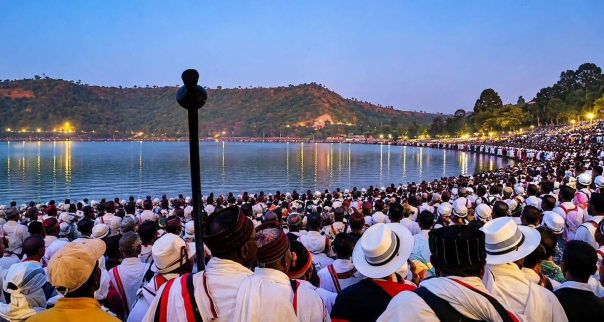
As hundreds of thousands gathered at Hora Finfinnee in Addis Ababa this weekend, dressed in white and carrying fresh green grass and yellow Adey Abeba flowers, the traditional rituals of thanksgiving took on a meaning that extends far beyond the Oromo community. In a nation that has spent years navigating deep political and ethnic divisions, the 2026 Irreechaa has become a powerful symbol of a broader national journey — one that seeks to transform conflict into consensus, and grievance into gratitude.
A Festival With a Mission
The Irreechaa Forum, held annually in Addis Ababa ahead of the main celebrations, set the tone for this year’s observance. Under the theme “Irreechaa: For National Consensus,” the forum highlighted the festival’s values of unity, togetherness, forgiveness, and reconciliation — and explicitly connected these values to the national conversation about Ethiopia’s future.
Addis Ababa Mayor Adanech Abiebie, speaking at the forum, emphasized that Irreechaa “promotes unity, togetherness, forgiveness, and reconciliation, and carries great value for national understanding”. The mayor’s words were not merely ceremonial. They reflected a deliberate effort to position Irreechaa not just as a cultural celebration for the Oromo people, but as a national resource — a living tradition whose spiritual disciplines might offer a model for how Ethiopians can learn to live together again.
The 2026 celebrations, held on October 3 and 4, brought together Abbaa Gadaas (traditional Oromo leaders), Haadha Sinqees (women entrusted with moral order), elders, youth, and guests from across Ethiopia and beyond. At Hora Finfinnee in the heart of the capital and Hora Arsadi in Bishoftu, the sea of white garments and the sound of traditional chants created what one observer described as a “spectacle of color, culture, and togetherness”.
The Prerequisite of Peace
What makes Irreechaa unusual — and what makes its 2026 theme so resonant — is that reconciliation is not merely a value the festival celebrates. It is a requirement for participation.
Before attending Irreechaa, participants are expected to reconcile with themselves and with others, setting aside grudges, anger, and resentment. The festival’s essence as a gathering of peace and reconciliation depends on this prior work of the spirit. You cannot approach the sacred waters carrying a grievance. You cannot give thanks while your heart remains at war.
This discipline — the deliberate, conscious setting aside of conflict before approaching the sacred — is precisely what Ethiopia’s National Dialogue process has sought to institutionalize at the national level. And the timing of this year’s Irreechaa is no coincidence.
A National Dialogue Concludes, a Festival Begins
Just weeks before millions gathered at Hora Finfinnee, Ethiopia reached a historic milestone: the conclusion of its National Dialogue Conference in Addis Ababa.
The dialogue, which formally opened on July 15, 2026, brought together more than 4,000 delegates from across the country — representatives of civil society, religious groups, youth, women, and historically marginalized communities. Over 46 days of deliberations, participants undertook extensive discussions on foundational pillars of state-building, national identity, social cohesion, and the structure and form of government.
The National Dialogue Commission had spent years conducting grassroots consultations, engaging Ethiopians at home and abroad, and identifying eight core agenda pillars that reflected priorities raised during these discussions. The process was built on a deliberate departure from past political gatherings dominated by urban elites — a grassroots approach that sought to give voice to communities that had long been excluded from national conversations.
At the closing ceremony, former Nigerian President Olusegun Obasanjo delivered a keynote address in which he described Ethiopia’s national dialogue as “a historic achievement and an example for the rest of Africa.” He stressed that peace must be “comprehensive, inclusive, and complete” if it is to be sustainable, and expressed confidence that a “peaceful, secure, stable, predictable, and united Ethiopia” could double its GDP within seven years and emerge as Africa’s largest economy.
The message was clear: Ethiopia has chosen dialogue over division, consensus over conflict. And now, Irreechaa 2026 arrives to reinforce that choice.
The Prime Minister’s Message
Prime Minister Abiy Ahmed, in his Irreechaa message, drew explicit parallels between the festival’s spiritual disciplines and the nation’s political journey.
Speaking under the theme “Irreechaa is Peace! Gada is Civilization! Ethiopia’s Civilization is Inevitable!”, the Prime Minister congratulated citizens on “safely passing through the difficult rainy season and entering a period of hope.” He described how, as the winter darkness clears, the Oromo people gather at the river for traditional thanksgiving rituals — fathers reciting “Marehoo” and mothers reciting “Araaroo” — offering gratitude to the Creator.
But Abiy went further. He drew a direct comparison between the heavy rains, floods, and restricted movement of the winter season and Ethiopia’s “long-standing economic, political, and administrative struggles.” Just as the rains must eventually end and the sun must eventually return, so too must Ethiopia’s period of difficulty give way to a season of renewal.
The Prime Minister also cited an Oromo proverb — “the house where one sleeps is better than the one where one merely spends the evening” — in a call for armed groups to choose stability over uncertainty and peace over prolonged conflict. He reaffirmed the government’s commitment to peace and national consensus, urging all Ethiopians to “embrace the core values of Irreechaa — peace, reconciliation, forgiveness, and brotherhood — with the aim of strengthening unity and advancing the nation’s path toward lasting prosperity”.
The Symbolism of Water and Grass
At the heart of Irreechaa are materials that carry profound meaning: water, grass, and flowers.
Participants arrive carrying fresh green grass and bright yellow Adey Abeba, the seasonal flower associated with the Ethiopian spring. They dip the grass into the sacred waters, sprinkle droplets over themselves and others, and place grass and flowers along the shoreline. Over the course of the celebration, thousands of individual offerings gather along the water’s edge, forming a temporary green-and-yellow border that transforms the landscape.
As one participant, Guddissa Geda, who traveled from Sululta to celebrate at Hora Finfinnee, explained: “The movement of grass to water creates a connection between community practice and the landscape, embodying reconciliation, love, unity, and the relationship between people and nature”.
This ritual act — the dipping of grass into water — is not decorative. It is the physical embodiment of the festival’s spiritual logic. Water is the source of purity and the foundation of creation in Oromo cosmology. Grass is the symbol of fertility and renewal. To dip the grass into the water is to enact, in miniature, the reconciliation between the human and the divine, between the community and the earth, between the past and the future.
At a moment when Ethiopia seeks to reconcile its own divisions, the symbolism is unmistakable.
The Gadaa System and National Renewal
Irreechaa is inseparable from the Gadaa system, the traditional Oromo socio-political system recognized by UNESCO as an Intangible Cultural Heritage of Humanity. The Gadaa system organizes society by age grades, each with defined responsibilities and transition periods, and encompasses customary law, environmental knowledge, and mechanisms for conflict resolution.
Prime Minister Abiy’s Irreechaa message emphasized the importance of the Gadaa system to Ethiopia’s national renewal. He cited “the restoration and institutionalization of Hora Finfinnee Irreechaa to its river site and the grand gatherings at Hora Harsadi in Bishoftu” as proof that “long-standing cultural questions regarding language and heritage have been fully answered”.
The return of Irreechaa to Hora Finfinnee — the sacred site in the heart of Addis Ababa from which the capital takes its Oromo name — is itself a powerful act of reclamation. For decades, public celebrations of Irreechaa at this site were suppressed. The Oromo people were denied the right to gather at their own sacred waters. The restoration of the festival to its ancestral site is, in the words of one analysis, “a powerful reclamation of space, identity, and dignity”.
But the Gadaa system offers more than historical symbolism. Its principles — Safuu (moral order), customary courts, community service, and environmental stewardship — represent an indigenous Ethiopian framework for governance and social organization that predates modern political structures. As Ethiopia seeks to build a system that draws on its own traditions while meeting contemporary challenges, the Gadaa system offers a model that is both authentically Ethiopian and profoundly relevant.
The Youth and the Future
One of the most striking features of this year’s Irreechaa was the prominent role of young people — not merely as participants but as organizers, protectors, and transmitters of tradition.
Nega Wodajo, deputy commissioner of the Oromia Tourism Bureau, explained that preparations for Irreechaa begin well before the main celebration days, with young people taking part in cultural performances, community projects, and activities marking the transition into the New Year. “The youth are taking responsibility by protecting their environment, promoting their culture and creating good relations among themselves,” Nega said. “The country belongs to the youth”.
This participation is not incidental. It is the mechanism by which tradition survives. Irreechaa is transmitted through participation — through the physical act of dipping grass into water, through the sound of chants rising at sunrise, through the experience of standing in a sea of white garments at the water’s edge. Young people who participate in Irreechaa today will carry its values into the future.
And those values — reconciliation, gratitude, unity, peace — are precisely what Ethiopia needs as it seeks to build a nation where consensus replaces conflict.
A Festival That Belongs to All
While deeply rooted in Oromo tradition, Irreechaa has increasingly become a national celebration embraced by Ethiopians of all backgrounds. This year’s gathering at Hora Finfinnee drew participants from across the country — from Oromia, from other regions, from the diaspora, and from the international community.
The festival has also attracted growing international attention. Visitors from across the globe come to witness its authenticity, the beauty of its traditions, and the collective joy of its people. Alongside iconic Ethiopian treasures such as Timket and Lalibela’s rock-hewn churches, Irreechaa showcases Ethiopia’s unique blend of cultural richness and natural wonder, offering the world an inspiring vision of harmony, heritage, and hope.
In a world that so often profits from division, Irreechaa offers a different model: a celebration that brings people together not despite their differences but because of the shared humanity that lies beneath them.
The Consensus That Begins at the Water
As the 2026 Irreechaa celebrations concluded peacefully at Hora Finfinnee, Mayor Adanech Abiebie offered a closing message that captured the spirit of the occasion: “Irreecha for National Consensus! Irreecha for Peace and Unity!”
The theme of this year’s festival is not just a slogan. It is a charge — a call to action that extends far beyond the shores of sacred waters.
The National Dialogue has concluded. Its recommendations have been presented. The hard work of implementation lies ahead. But the spiritual foundation for that work has been laid — not in conference halls or parliamentary chambers, but at the water’s edge, where millions of Ethiopians have practiced, for thousands of years, the disciplines of reconciliation, gratitude, and unity.
Irreechaa teaches that consensus is not merely a political outcome. It is a spiritual discipline. It is the deliberate act of setting aside grievance, of choosing relationship over righteousness, of approaching the sacred with open hands and a reconciled heart.
If Ethiopia can carry that discipline from the water’s edge into its institutions, its communities, and its politics, then the theme of Irreechaa 2026 will have been more than words.
It will have been a prophecy fulfilled.
Baga Irreechaa nagaan geessan.
May the Irreechaa arrive in peace. May the consensus it inspires endure.
Irreechaa Celebrated in Peace and Unity, Advocacy for Oromia Says, Pledging to Nurture the Festival’s Message of Reconciliation
Advocacy group praises security forces, community members, and government structures for ensuring a peaceful celebration of the Oromo thanksgiving festival amid a national climate of conflict and hatred
(October 4, 2026)-Advocacy for Oromia has expressed deep satisfaction with the peaceful and beautiful celebration of Irreechaa, the revered Oromo thanksgiving festival, praising all parties who contributed to its success and vowing to continue nurturing the ancient tradition as a source of peace, reconciliation, and prosperity.
In a statement released on October 4, 2026, the advocacy group said it was “greatly delighted that the Irreechaa festival has been celebrated in a beautiful and peaceful manner,” and extended its gratitude to all those who played a role in ensuring the festival unfolded peacefully.
Irreechaa, one of the most significant cultural and spiritual festivals of the Oromo people, is widely recognized as a celebration of thanksgiving, reconciliation, love, peace, and unity. The statement noted that millions of people gathered in unity in Finfinnee (Addis Ababa), Bishoftu, and across the world, reaffirming the festival’s enduring power to bring communities together.
Gratitude Amid a Challenging National Climate
The statement placed particular emphasis on the significance of the peaceful celebration given the current situation in the country. “Above all, at a time when the situation in our country is filled with conflict and hatred, we wish to express our heartfelt gratitude to the security organs and police who participated, and to our community who provided support and assistance, in ensuring that the Irreechaa festival, which began in peace, was also concluded in peace in Oromia,” the group stated.
Advocacy for Oromia also extended its appreciation to government structures, community organizations, and individual community members who played a major role in facilitating the celebration.
A Festival That Has Endured Through Hardship
The statement highlighted the resilience of Irreechaa, noting that the festival has continued over the years “despite oppression and pressure from systems.” The group expressed hope that Irreechaa will continue to proclaim and sustain reconciliation, peace, love, and unity into the future.
“Advocacy for Oromia wishes to declare that it will work in every possible way to nurture and expand this Irreechaa festival, which is a source of peace and reconciliation, and a means of well-being and prosperity,” the statement read.
The group concluded with a prayer for the nation: “May reconciliation, restitution, and peace be upon our country and our people!”
A Continuing Commitment
The statement underscores Advocacy for Oromia’s ongoing commitment to promoting the cultural heritage of the Oromo people and advocating for peace and reconciliation in the region. As Irreechaa continues to draw millions of celebrants each year, the group’s pledge to protect and expand the festival reflects its broader mission of fostering unity and well-being among Oromo communities at home and abroad.
— Advocacy for Oromia, October 4, 2026
Africa’s Largest Oromo Cultural Festival Underway: Irreecha Draws Millions in a Celebration of Identity, Peace, and Unity
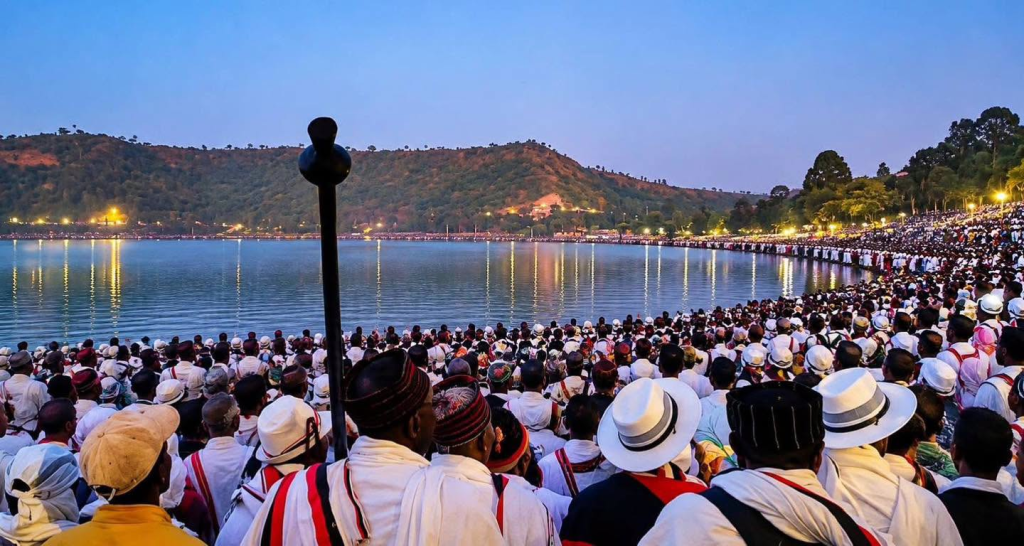
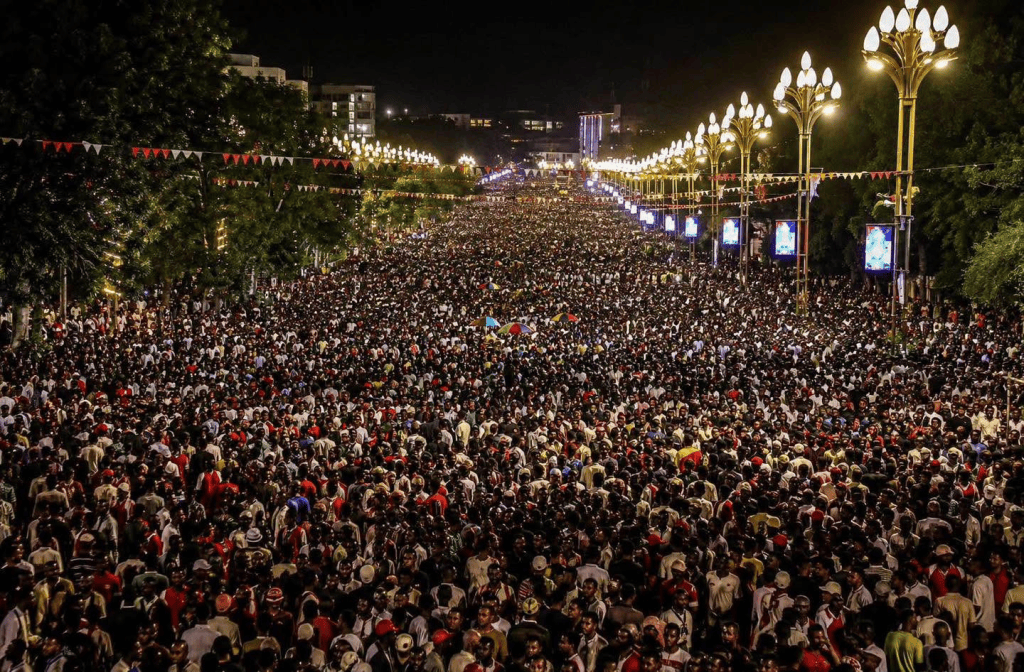
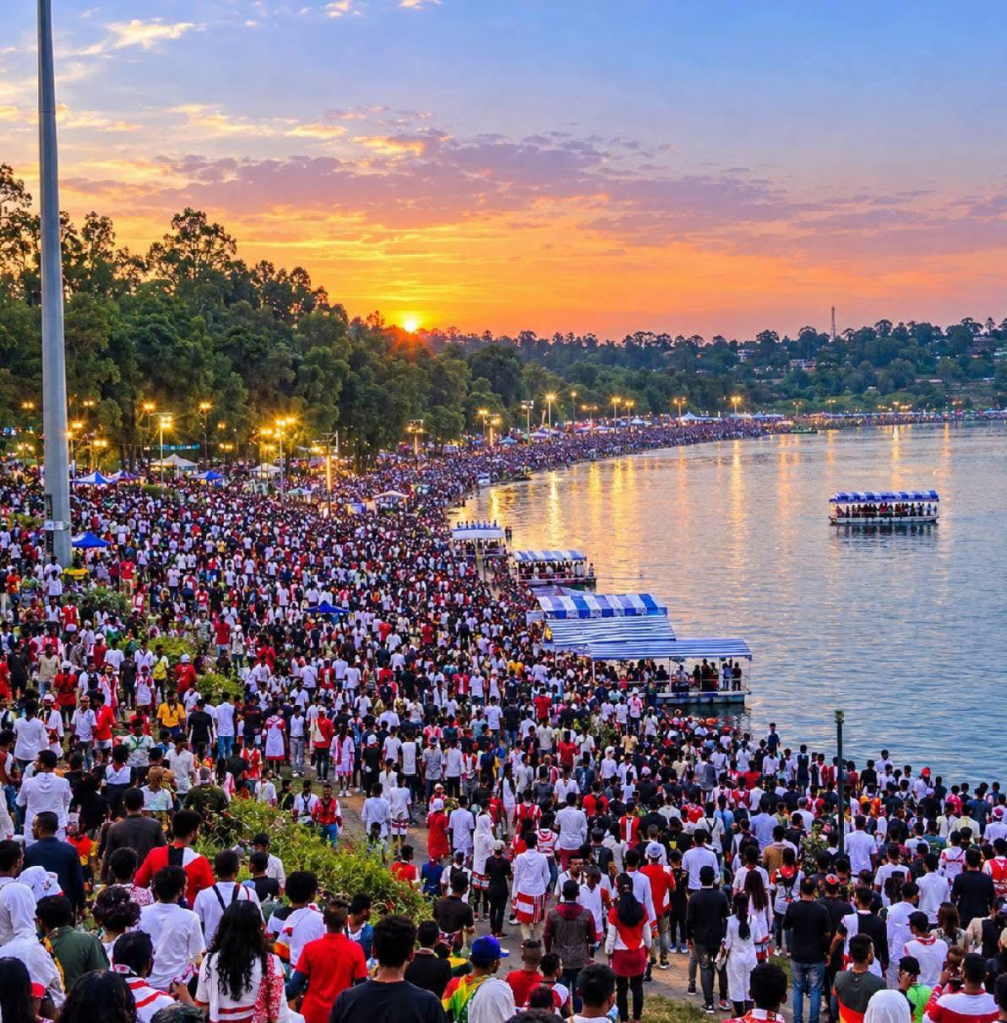
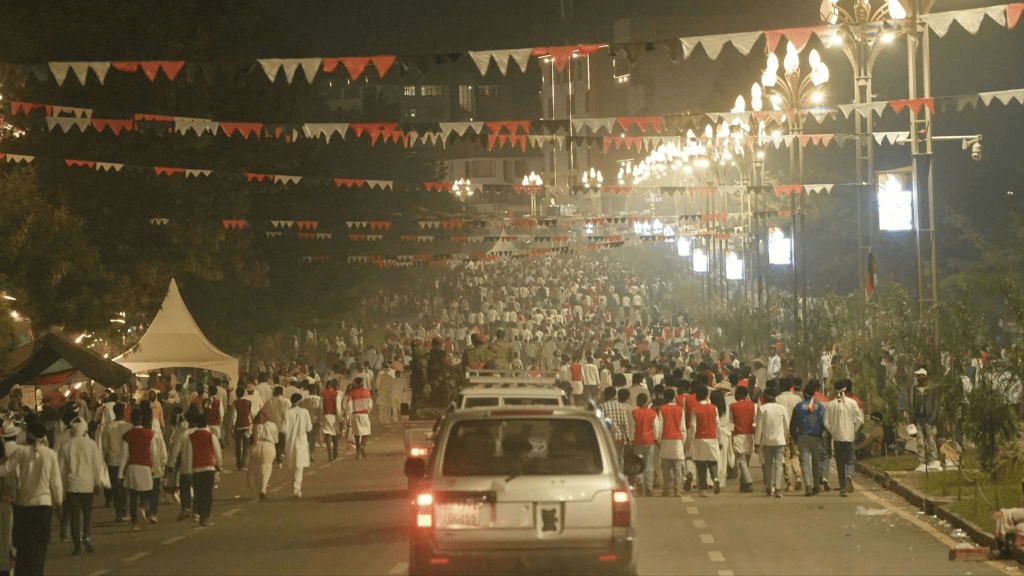
(ONA, HARSADII, OROMIA, 4 OCTOBER 2026) — The shores of Lake Harsadii have come alive once again. From the early hours of the morning, waves of people dressed in vibrant traditional attire have been converging on the celebration grounds, their voices rising in song, their hands lifted in gratitude. Africa’s largest Oromo cultural festival — Irreecha — is underway, and the scale of it is nothing short of breathtaking.
Millions have gathered for Irreecha Bishooftuu, the great thanksgiving festival that marks the end of the rainy season and the beginning of a new year in the Oromo calendar. The air is thick with the scent of fresh grass and flowers, the sound of drums, and the unmistakable energy of a people united in celebration.
More Than a Festival
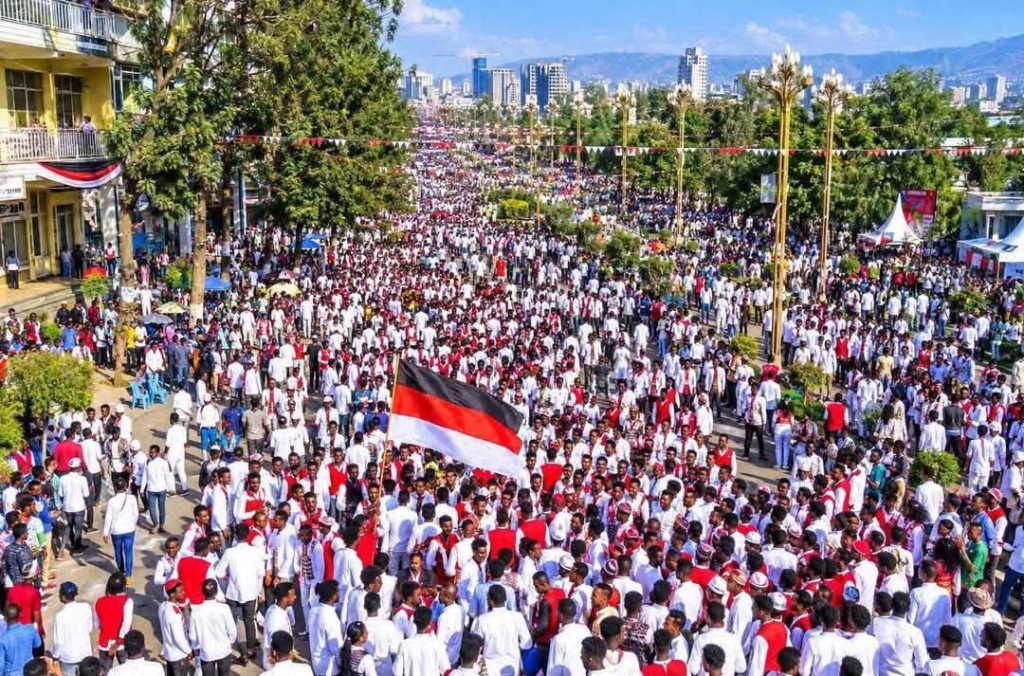
For the Oromo people, Irreecha carries a deeper meaning beyond celebration. It is a powerful symbol of peace, love, reconciliation and unity, bringing together people from different communities and generations.
It is a time to give thanks to Waaqa — God — for the blessings of the past year and to seek favour for the year ahead. It is a time to mend relationships, to forgive, and to renew the bonds that hold the community together. Old and young, rich and poor, from the cities and from the countryside — all stand side by side at the water’s edge, equal before their Creator.
Participants carry fresh green grass and flowers, traditional symbols associated with Irreecha, as they express gratitude and seek blessings for the year ahead. The green stems represent fertility, life, and the enduring hope of a people connected to the land of their ancestors. As they dip their offerings into the water and raise their hands to the sky, the collective prayer of millions rises as one voice.
A Living Heritage
The festival also provides an important platform for preserving and showcasing Oromo language, traditions, music, clothing and cultural heritage.
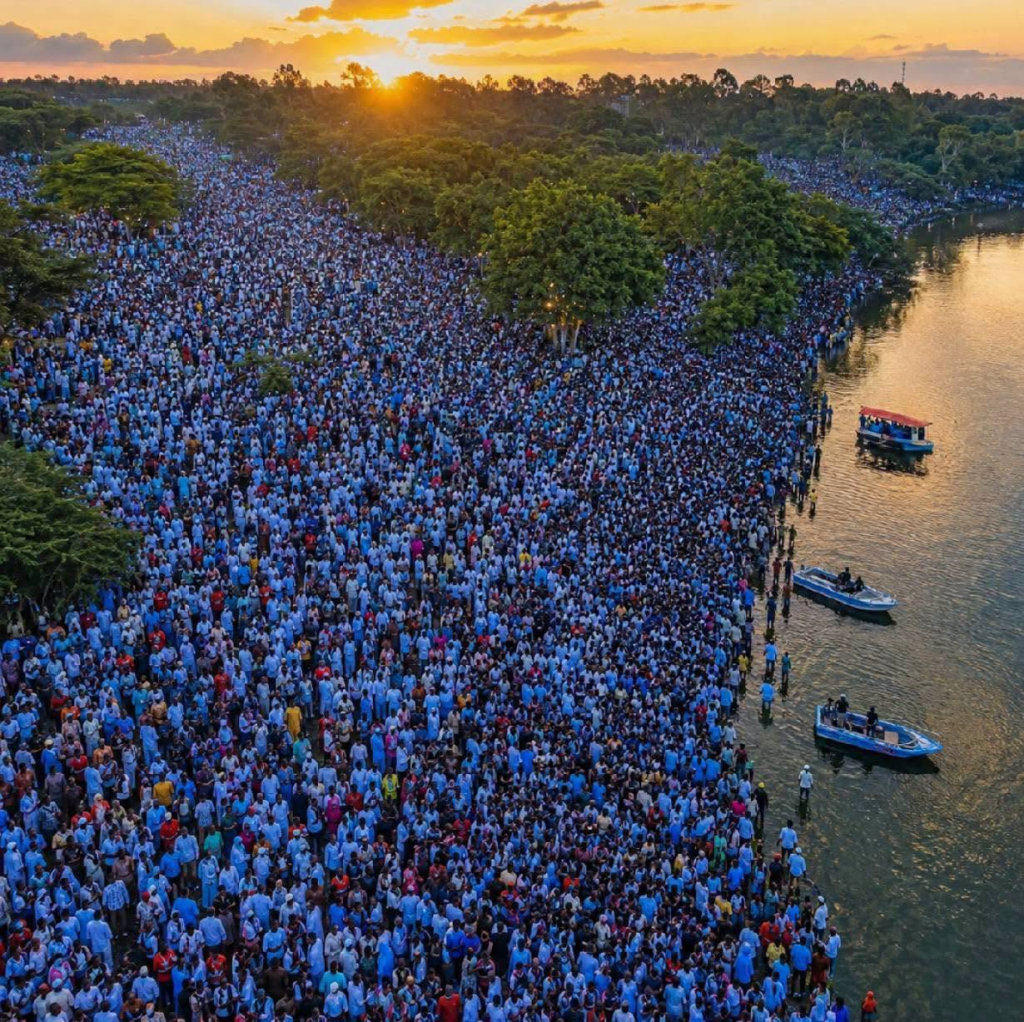
Throughout the celebration grounds, the richness of Oromo culture is on full display. Women in handwoven garments of red, white, and black walk gracefully through the crowds. Men in traditional shirts and shawls beat drums and blow horns that echo across the water. Poets recite verses in Afaan Oromo, singers perform songs passed down through generations, and elders share stories and wisdom with the young.
For many in the diaspora, Irreecha is a lifeline — a way to stay connected to their roots, to teach their children the language and customs of their people, and to feel part of something larger than themselves. This year, delegations have traveled from across Ethiopia and from countries around the world, including Kenya, the United States, Canada, Australia, and the Middle East, to take part in the celebration.
A Message of Peace
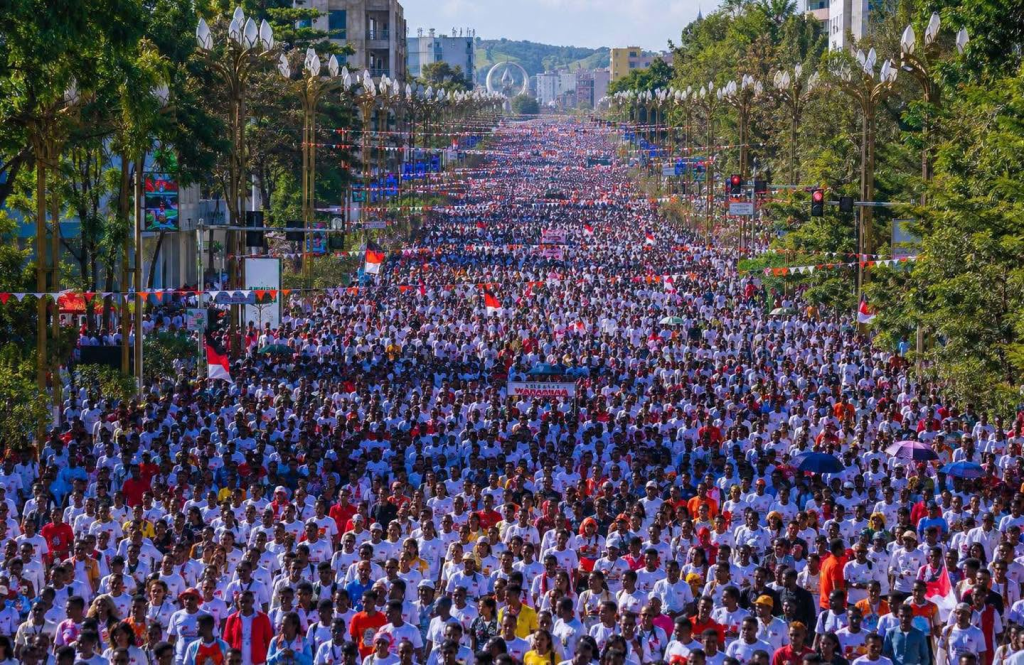
As colourful crowds fill the celebration grounds, Irreecha continues to stand as a powerful expression of Oromo identity and cultural pride, while promoting the values of peace, unity and togetherness.
In a region that has known its share of hardship, the message of Irreecha resonates more deeply than ever. The festival is a reminder that peace is not merely the absence of conflict, but the presence of justice and mutual respect. It is a call to reconciliation — between individuals, between communities, and between generations.
“We come here to give thanks, but also to recommit ourselves to peace,” said one elder, standing near the water’s edge. “Irreecha teaches us that we are one people. If we stand together, no force can divide us.”
Organizers emphasized that Irreecha belongs to all Oromo, regardless of where they live or their station in life. The festival’s message, they said, is one that the whole world can learn from: that gratitude, unity, and respect for one’s heritage are the foundations of a strong and peaceful society.
A Celebration That Continues to Grow
Each year, Irreecha grows larger. What began as a traditional thanksgiving ceremony has become a global symbol of Oromo identity and resilience. It is now recognized as one of the largest cultural gatherings in Africa, drawing millions to its shores and capturing the attention of the world.
Yet at its heart, Irreecha remains what it has always been — a simple act of gratitude. A people gathered by the water. Hands raised to the heavens. A prayer for peace.
As the sun sets over Lake Harsadii and the crowds begin their journey home, the spirit of Irreecha goes with them. The green grass may wither, but the blessings sought and the bonds forged will endure until the waters rise again next year.
Happy Irreecha Bishooftuu. May peace, unity, and blessings be upon us all.

Abbaa Gadaas Lead Grand Blessing Ceremony as They Begin Their Journey to Hora Arsadi: A Spectacle of National Significance
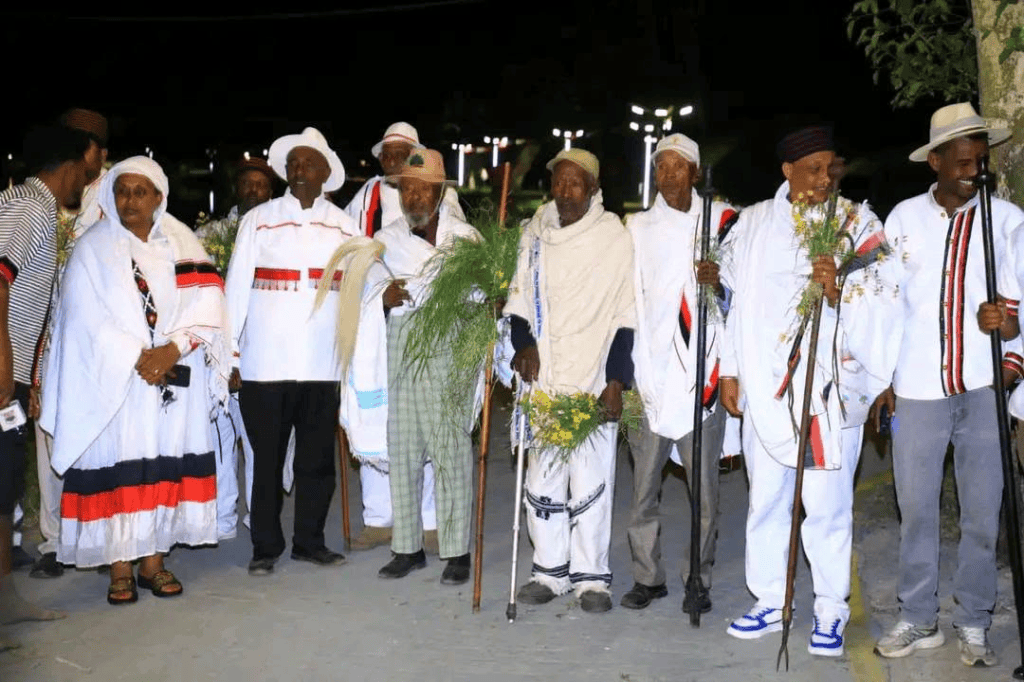
(Finfinnee, Oromia, 4 October 2026)-In a breathtaking display of spiritual devotion and cultural pride, the Abbaa Gadaas — the traditional leaders of the Oromo Gadaa system — performed their sacred blessing ritual and set off toward Hora Arsadi, transforming a festival procession into a profound statement of national unity, reconciliation, and hope.
The Procession Begins
The moment arrives. The Abbaa Gadaas — custodians of an ancient democratic and spiritual system recognized by UNESCO as an Intangible Cultural Heritage of Humanity — have completed their blessing ceremony. Now, they begin their journey toward Hora Arsadi, the sacred waters where millions will gather for Irreechaa.
But this is no ordinary procession. What unfolds is a spectacle that transcends celebration itself. It is a living testament to a deeper national meaning — one that speaks to every Ethiopian, regardless of ethnicity, language, or faith.
As the Abbaa Gadaas move toward the water, their qotee — the traditional staff of office — held high, their voices raised in prayer and blessing, they are not merely leading a festival. They are leading a nation toward reconciliation.
Irreechaa: More Than a Cultural Treasure
Irreechaa is the great festival of thanksgiving to Waaqa — the Creator — observed by the Oromo people for thousands of years. But to describe it as merely a cultural celebration would be to miss its profound significance.
Irreechaa is a banquet of peace, love, and reconciliation where all Ethiopians gather as one.
It is a time when divisions dissolve. When grievances are set aside. When the shared humanity of all people is recognized and honored. When the nation remembers that it is not a collection of separate peoples but a single family.
This is what makes Irreechaa exceptional. It is not just a festival of one people. It is a gathering of all peoples — a national moment of unity that transcends the boundaries of ethnicity and region.
The Blessing at Hora Arsadi
The image is unforgettable.
The Abbaa Gadaas stand at the edge of Hora Arsadi, their qotee held in their hands, their voices rising in a chorus of blessing. They are not just speaking to the crowd before them. They are speaking to the entire nation.
The message they declare is a call for forgiveness and unity directed at all the peoples of Ethiopia.
It is a call that echoes across the waters. It is a call that rises above the noise of politics and division. It is a call that says: We are one. Let us be reconciled. Let us forgive one another. Let us stand together.
When the Abbaa Gadaas invoke peace, they are not performing a ritual. They are issuing a national invitation. And the invitation is extended not only to the Oromo people but to every Ethiopian, of every background, in every corner of the country.
The Beauty of Ethiopia’s Diversity
The greatness of a nation is measured by the mosaic created when different cultures, languages, and values come together.
This is Ethiopia. A nation of extraordinary diversity. A nation of many peoples, many tongues, many traditions. And yet, a nation that finds its strength precisely in this diversity — in the beauty of its multicolored fabric.
When citizens from different corners of the country gather at Irreechaa, they do something remarkable. They transcend their differences. They clothe themselves in traditional garments. They stand together in unity.
This is what the festival shows. Not a nation divided by its diversity, but a nation strengthened by it. Not a people separated by their differences, but a people enriched by them.
At the water’s edge, the Ethiopian people demonstrate their unity and their strength. They show that they can overcome their differences and come together in a single act of thanksgiving. They show that the fabric of the nation is not frayed but woven — tightly, beautifully, inextricably.
Building a Prosperous and Peaceful Tomorrow
The national vision is clear. It is a vision of an Ethiopia that is prosperous and peaceful. An Ethiopia that has moved beyond division and conflict. An Ethiopia that has learned to love rather than hate, to unite rather than separate, to forgive rather than remember grievances.
The spirit of Irreechaa is part of this vision. It is a manifestation of this vision. It is the concrete expression of the national consensus and understanding that we must build together.
To build this tomorrow, we must first create national consensus. We must eliminate hatred. We must plant love. We must begin from a foundation of shared respect and mutual understanding.
The Irreechaa values — peace, reconciliation, brotherhood — are not abstract ideals. They are the building blocks of a new Ethiopia. And the Abbaa Gadaas, as they move toward the water, are the living embodiment of these values.
A Festival Where Grudges Are Forgotten and Enemies Reconcile
Among all Ethiopian festivals, Irreechaa holds a unique distinction.
It is a celebration where grudges are forgotten. Where revenge is abandoned. Where the quarrelsome are reconciled.
The festival requires that participants set aside their resentments before approaching the sacred waters. It demands that reconciliation be pursued before thanksgiving can be offered. It insists that love be chosen over hate.
This is why Irreechaa is not merely a celebration. It is a spiritual technology — an ancient mechanism for healing the wounds of a divided community.
And it is because of this that we need the values of this festival now more than ever.
Why We Need Irreechaa Now More Than Ever
Our nation has faced challenges. We have known conflict. We have known division. We have known the pain of fractured relationships and unhealed wounds.
But we also have a national vision — a vision of a great Ethiopia, a prosperous Ethiopia, a peaceful Ethiopia. And to achieve that vision, we need Irreechaa more than we ever have before.
We need its spirit of reconciliation. We need its call for forgiveness. We need its insistence on unity. We need its reminder that we are all one people, gathered at the same water, seeking the same blessings.
The challenges we face are not insurmountable. The division we experience is not permanent. The hatred we encounter is not the final word. But to overcome these things, we must embrace the values that Irreechaa embodies. We must practice reconciliation. We must choose forgiveness. We must build unity.
The Abbaa Gadaas, as they descend toward the water, show us the way.
The Lesson of Humility, Gratitude, and Peace
The Abbaa Gadaas demonstrate a path that is humility, gratitude, and peace.
They do not come with power. They come with humility.
They do not demand. They give thanks.
They do not divide. They unite.
The path they walk is a great lesson for all of us who seek to build national consensus. It teaches us that leadership is not about dominance but about service. It teaches us that gratitude is the foundation of community. It teaches us that peace is not simply the absence of war but the presence of reconciliation.
The Abbaa Gadaas, as they walk toward the water, are not just leading a ceremony. They are teaching a nation. They are showing us what leadership looks like. They are demonstrating what reconciliation requires.
Walking the Path of Peace
And now, the invitation comes to all of us.
The values of Irreechaa — peace, reconciliation, brotherhood — must penetrate our hearts. They must not remain at the water’s edge when the festival ends. They must travel home with us. They must enter our homes, our workplaces, our communities, our politics.
We must support one another. We must respect one another. We must receive our differences as gifts.
This is how we will show the greatness of Ethiopia in practice. Not through words, but through actions. Not through declarations, but through relationships.
The Abbaa Gadaas have shown us the way. They have walked the path of humility, gratitude, and peace. They have shown us that it is possible to set aside differences and come together in a common celebration of life.
Now, it is our turn.
A Nation United at the Water’s Edge
As the Abbaa Gadaas reach Hora Arsadi, as the blessings are pronounced and the prayers rise, as the waters receive the gratitude of millions, we are all witnesses.
We witness a festival that is more than a festival.
We witness a celebration that is more than a celebration.
We witness a nation, diverse and beautiful, coming together in a single act of thanks.
The Abbaa Gadaas have led the way. The invitation has been extended. The path is clear.
Now, we must all follow.
Let the spirit of Irreechaa enter every heart. Let reconciliation take root in every community. Let unity become the foundation of our national life.
Let us build a prosperous and peaceful Ethiopia together — one act of reconciliation at a time, one relationship at a time, one heart at a time.
Baga Irreechaa nagaan geessan.
May the Irreechaa arrive in peace.
#Irreechaa #AbbaaGadaa #HoraArsadi #Ethiopia #NationalUnity #Reconciliation #Peace #Forgiveness #GadaaSystem #OromoHeritage #NationalConsensus #ProsperousEthiopia #PeacefulEthiopia