Category Archives: health

A Defining Moment: Oromo Scholars Worldwide Called to Shape the Future of Their Academic Legacy
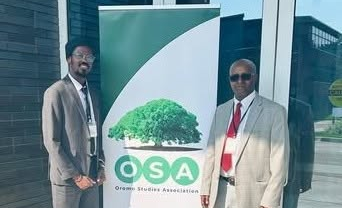
By Dhabessa Wakjira
Global – A clarion call is echoing across continents, from the bustling streets of Minneapolis to the academic halls of Europe, from the research centers of Australia to the universities of East Africa. It is a call for unity, for intellectual firepower, and for the collective reclamation of a people’s narrative.
The Oromo Studies Association (OSA) – the premier academic institution dedicated to the rigorous study and preservation of Oromo history, culture, and identity – has entered a historic new phase. And it is extending an urgent invitation to Oromo intellectuals, professionals, creatives, and visionaries around the globe: Your moment has arrived.
In an exclusive appeal, the President of OSA has issued a stirring call to action, urging the global Oromo diaspora to lend their minds, their skills, and their ambition to what he describes as a “defining moment” for the Association and for the Oromo people at large.
Bridging Generations, Building a Legacy
At the heart of this appeal lies a profound understanding of time and tradition. The OSA, guided by the democratic and intergenerational principles of the ancient Gadaa system, has just completed its first Gadaa cycle – a remarkable milestone in its institutional journey. Now, as it steps into its second cycle, the Association stands at a crossroads of immense potential.
“This is not merely a transition on paper,” the President stated in his message. “It is a historic milestone. We are moving from one era of scholarship into another, and we must carry with us the wisdom of our elders while embracing the energy and innovation of our youth.”
The vision is clear: to create a seamless bridge between the giants who laid the foundation of Oromo studies and the rising generation of thinkers who will carry that torch forward. The goal is to ensure that Oromo scholarship is not only preserved but also reimagined for a rapidly changing world.
More Than Scholarship: A Mission of Correction and Justice
The work of the OSA, however, extends far beyond the quiet confines of academic journals. It is a mission deeply rooted in the lived realities of the Oromo people. For decades, Oromo history and identity have been subject to distortion, erasure, and misrepresentation. The OSA has positioned itself as the vanguard of evidence-based scholarship, a bulwark against the tides of misinformation.
“In a world where narratives are often weaponized, our commitment is to intellectual tenacity and factual rigor,” the President emphasized. “We are not just studying history; we are correcting it. We are using scholarship as a tool for truth, for justice, and for the affirmation of Oromo human rights.”
The invitation is therefore a call to arms – but an intellectual one. The OSA is seeking more than just members; it is seeking partners in the pursuit of truth. It is calling on Oromo lawyers, historians, data scientists, economists, artists, and engineers to bring their professional expertise to bear on the challenges facing their people.
A Global Network of Excellence
The OSA’s ambition is as vast as the diaspora itself. By inviting Oromo elites from every corner of the world to participate, the Association is striving to create a decentralized, powerful network of intellectual excellence. The goal is to ensure that Oromo scholarship is not confined to a single geography but is enriched by the diverse experiences of a global community.
The President’s message underscores the importance of collective strength: “Your participation will strengthen our collective voice, enrich our scholarship, and ensure that OSA continues to serve as a beacon of Oromo knowledge, culture, and academic excellence.”
Whether it is a tenured professor in a Western university, a young entrepreneur in Nairobi, or a community organizer in the Horn of Africa, the OSA is opening its doors to all who are committed to advancing Oromo studies and the well-being of the Oromo people.
An Invitation for the Future
As the Association embarks on this new chapter, the call is clear: the time for passive observation is over. The OSA is not merely an institution to be admired from afar; it is a living, breathing movement that requires the active participation of every Oromo who dreams of a future where their identity is celebrated, their history is honored, and their potential is unleashed.
“This is a defining moment,” the President reiterated. “We invite you not just to join, but to lead, to innovate, and to build. Together, we can shape the next chapter of Oromo scholarship and ensure that our legacy endures for generations to come.”
For the Oromo people scattered across the globe, the message resonates with profound urgency and hope. The work of building a people’s academic legacy is arduous, but the invitation stands: the table is set, the mission is clear, and the world is waiting.
—
How to Get Involved:
The Oromo Studies Association welcomes scholars, professionals, and all individuals dedicated to Oromo scholarship and human rights. To learn more about membership, upcoming events, and contribution opportunities, visit the official OSA channels or reach out to your local chapter.
—
This is a featured opinion piece based on the official communication from the Oromo Studies Association.

THE RAINS HAVE CEASED, THE FLOWERS BLOOM: CELEBRATING IRREECHAA, THE OROMO THANKSGIVING
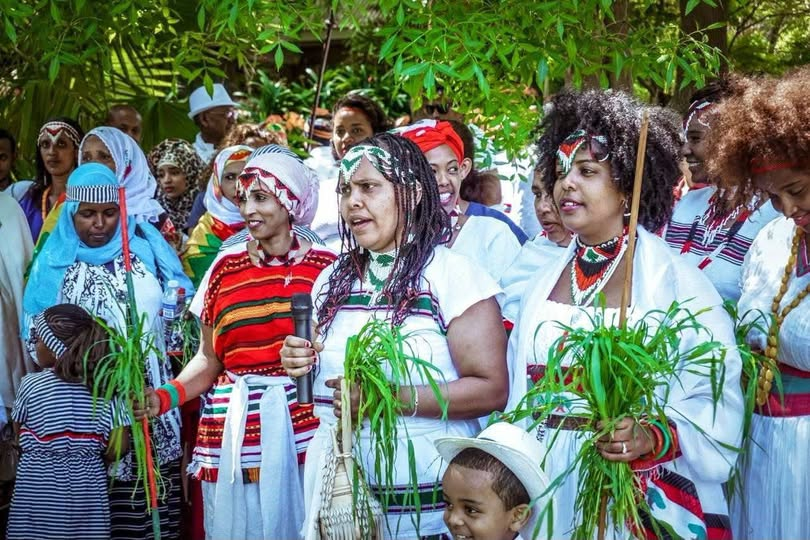
By Dhabessa Wakjira
In the highlands of Ethiopia, where the skies weep for months on end and the earth turns to mud, there comes a sacred morning when the clouds finally part. The sun, a golden orb of promise, kisses the damp grass, and a new season is born. This is the moment of Birraa—the spring—and for the Oromo people, it is a time to pause, breathe, and pour out their hearts in gratitude.
This is the spirit of Irreechaa, a festival that transcends mere celebration. It is the Oromo Thanksgiving, a profound spiritual and cultural touchstone that marks the end of the punishing rainy season and the beginning of a season of renewal, peace, and hope.
Held annually at the end of September or the beginning of October, Irreechaa is not a quiet affair of private reflection. It is a magnificent, vibrant explosion of life. Thousands, dressed in dazzling traditional attire, converge on sacred rivers, lakes, and hilltops. The air hums with the rhythm of drums, the melodic chants of elders, and the joyous ululations of the crowd. In their hands, they hold the symbols of the season: lush green grass and delicate yellow daisies, emblems of fertility, flourishing life, and the promise of a bountiful year.
The Heart of the Festival: Giving Thanks to Waaqa
At its core, Irreechaa is a dialogue with the divine. The Oromo people lift their prayers to Waaqa (God), offering thanks not for material wealth alone, but for the bedrock of their existence: a good harvest that fills the granaries, the health of their precious livestock, and the most precious gift of all—peace. It is a recognition that survival through the harsh, dark months was not by human effort alone, but by divine mercy.
“We come to the water to wash away our sorrows and our grudges,” explains an elder during a recent ceremony at Lake Hora Arsadi, near Addis Ababa. “The rain has stopped. Now, we cleanse our hearts and start anew.”
A Living Testament to the Gadaa System
Irreechaa is more than a religious observance; it is the vibrant pulse of the Gadaa System, the ancient, indigenous democratic governance structure of the Oromo people. Inscribed by UNESCO as an Intangible Cultural Heritage of Humanity, the Gadaa System organizes society into generations, guiding leadership, law, and morality. Irreechaa serves as a unifying moment for this system, reinforcing the social contracts and spiritual values that hold the community together.
Reconciliation and Unity
In a world often fractured by division, Irreechaa stands as a powerful advocate for unity. The festival is a designated time for reconciliation. It is a communal balm where feuds are set aside, misunderstandings are forgiven, and the bonds of kinship are strengthened. The shared experience of prayer and dance melts away social barriers, weaving a tapestry of harmony that includes not just the Oromo, but neighboring communities as well.
A Cultural Showcase
To witness Irreechaa is to witness the soul of Oromo culture. The hills become a runway of breathtaking fashion, with men and women adorned in intricately woven garments and vibrant beadwork. The music is hypnotic, with traditional songs that speak of heroism, love, and history. The dances are energetic, a physical manifestation of joy and liberation.
As the sun sets on the celebration, the green grass is often placed upon the heads of participants as a blessing, a final act of connection to the earth and the creator. The festival concludes, but its spirit lingers—a reminder that every ending is a new beginning, and that gratitude is the foundation upon which communities are built.
Irreechaa is not just a festival. It is a declaration: We have survived. We are thankful. We are one.
—
Key Aspects of Irreechaa at a Glance:
· Thanksgiving: Central purpose is to thank Waaqa (God) for blessings over the past year.
· End of Winter: Celebrates the conclusion of the rainy season and the dawn of spring (Birraa).
· Sacred Sites: Observed at rivers (Malkaa), lakes, and hilltops (Tulu).
· Symbols of Life: Participants carry wet grass and daisy flowers to represent fertility and flourishing.
· Cultural Expression: A vibrant display of traditional costumes, music, chants, and dances.
· Unity & Peace: A time for community bonding, spiritual reflection, and reconciliation.
· Gadaa System: An integral ritual within the traditional Oromo governance and social structure.

BEYOND THE RITUAL: A PLEA FOR UNITY AT THE HEART OF OROMIA’S SACRED DIALOGUE
By Daandii Ragabaa
—
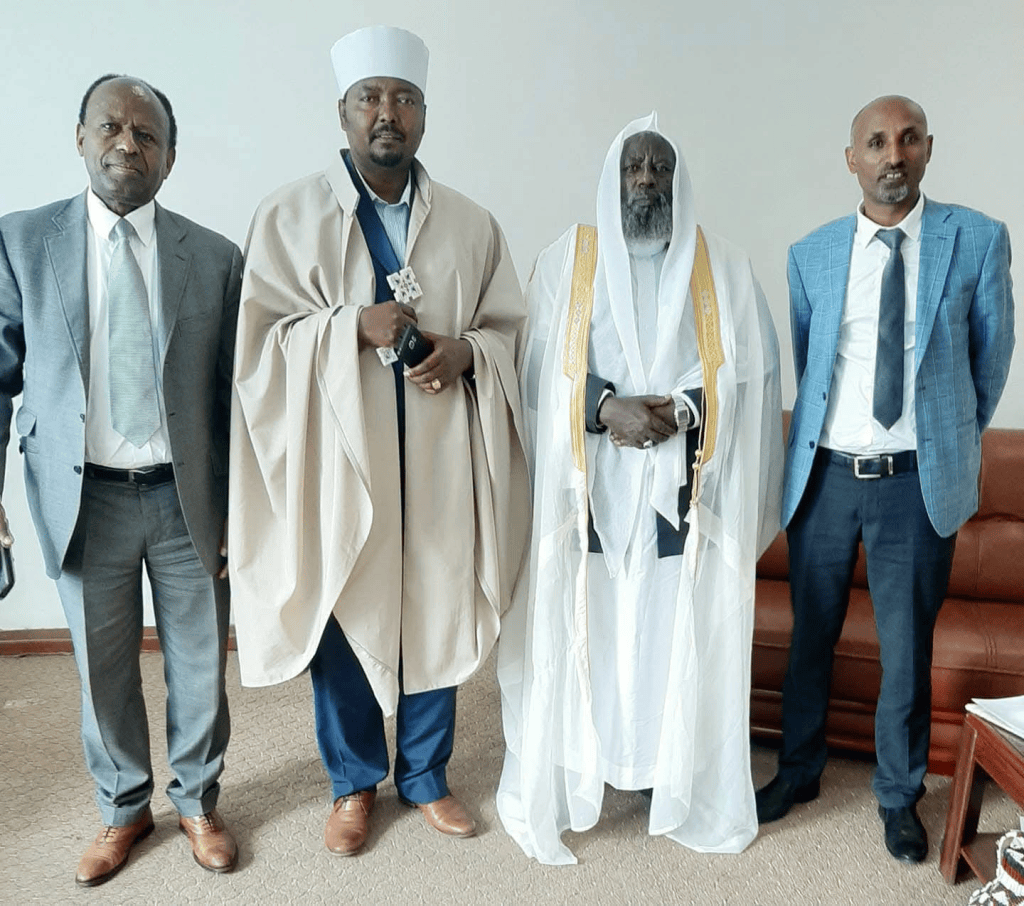
In the bustling city of Finfinne, where the hum of modernity often drowns out the whispers of ancient tradition, a different kind of gathering recently took place—one that carried the weight of history and the fragile hope of a shared future. It was not a political rally, nor a commercial event. It was a meeting of faiths, a rare and courageous roundtable where religious leaders from the three spiritual pillars of Oromo society—Waaqeffanna, Christianity, and Islam—sat together not as rivals, but as brothers.
This landmark dialogue, initiated under the momentum of the Waaqeffanna community, was spearheaded by prominent figures, including Obbo Asnake Irko, a respected elder and representative of the Waaqeffanna faith. But the true architect of this historic convergence, as acknowledged by all present, was Qesiis Balay Mekonnen, whose dedication to securing media coverage and a neutral venue ensured that the voices of faith would not be whispered in shadows, but broadcast to the world.
The meeting was not about theological supremacy. It was about survival—the survival of culture, language, and mutual respect in a land where faith has too often been used as a wedge rather than a bridge.
—
The Four Pillars of the Finfinne Accord
After hours of intense and heartfelt deliberation, the religious leaders reached a series of groundbreaking agreements that could reshape the spiritual landscape of Oromia. At the heart of these resolutions lay four core principles:
1. Mutual Respect for All Faiths
The leaders unanimously affirmed that no religion—whether indigenous Waaqeffanna, Orthodox or Protestant Christianity, or Islam—holds a monopoly on truth or dignity. They pledged to honor each tradition’s sacred practices, recognizing that the Creator, however named, desires reverence and love among His people.
2. Culture and Language as Unifying Tools
In a powerful declaration, the group committed to using the Oromo language and cultural heritage as vehicles for unity, not division. They agreed that songs, proverbs, and artistic expressions from all faiths could be shared to enrich the collective identity of the Oromo people, rather than to compete or exclude.
3. Standing Together in Times of Crisis
“Yoo rakkoon jiraate waliin dhaabbannee hiikuu”—”If trouble arises, we will stand together to resolve it.” This pledge was perhaps the most poignant. The leaders vowed that no community would face marginalization, violence, or discrimination alone. They would act as a unified bloc to mediate, protect, and advocate for justice, regardless of which faith was affected.
4. Defending the Oromo People from Religious Exploitation
In a bold stance against instrumentalization, the leaders condemned any attempt to use religious identity to sow discord or to harm the Oromo nation. They agreed to collectively denounce and counter any rhetoric or action that weaponizes faith against Oromo unity.
5. A Shared Vision for Irreechaa and Other Cultural Festivals
The dialogue also addressed the growing misunderstandings surrounding Oromo cultural celebrations, particularly Irreechaa. The leaders resolved to engage in ongoing consultations to ensure that these festivals are understood in their proper context—as expressions of thanksgiving and communal identity—and are respected by all faith communities.
—
A Word of Gratitude
In his closing remarks, Obbo Asnake Irko expressed deep appreciation for the spirit of openness shown by his fellow religious leaders. Yet, he reserved his most heartfelt thanks for Qesiis Balay Mekonnen, whose tireless efforts in organizing the venue and mobilizing media attention made the dialogue possible. “Without his vision,” Obbo Asnake stated, “this table would remain empty.”
The participants included:
1. Qees Dr. Bantii U. Teessoo – representing the Protestant Christian community
2. Qesiis Balay Mekonnen – representing the Orthodox Christian tradition
3. Sheek Hajjii – representing the Islamic faith
4. Obbo Asnake Irko – representing the Waaqeffanna tradition
—
What This Means for Tomorrow
This gathering in Finfinne is more than a news item. It is a testament to the maturity of Oromo society—a society that refuses to let religious difference become a source of conflict. In a region often scarred by sectarian strife, these leaders have lit a small but steady flame. They have shown that the green grass of Irreechaa, the cross of Christianity, and the crescent of Islam can coexist, not in uneasy tolerance, but in active solidarity.
The road ahead is long. Old suspicions do not vanish overnight. But as Obbo Asnake Irko reminded the gathering: “Our ancestors worshipped on the same hills, drank from the same rivers, and prayed to the same Creator under different names. Let us not be the generation that forgets that truth.”
As the media cameras packed up and the leaders departed with handshakes and embraces, one thing was clear—the spirit of Irreechaa, the spirit of thanksgiving and reconciliation, had found a new home. Not just on the lakeshores, but in the hearts of those who dare to listen.
—
IN SUMMARY:
Key Agreement Significance
Mutual respect for all faiths Ends religious hierarchy and promotes equality
Use Oromo culture and language for unity Strengthens identity without exclusion
Joint crisis resolution Creates a safety net for all communities
Defend Oromo people from religious abuse Prevents faith from being used as a weapon
Consult on Irreechaa and cultural events Fosters understanding and reduces misconceptions
This is not just a religious accord. It is a covenant of civilization—a promise that in Oromia, faith will build bridges, not burn them.

The Three Pillars of Tuulamaa: Unraveling the Genealogy of an Oromo Nation
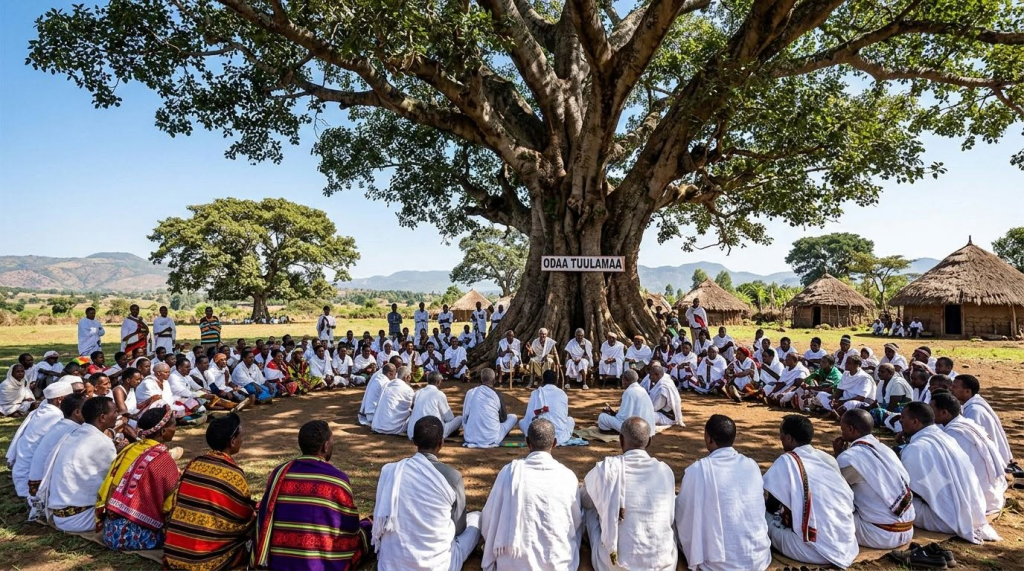
In the vast tapestry of Oromo history, few lineages carry the weight and significance of the Tuulamaa. As one of the major branches descending from the legendary Booranaa, the Tuulamaa Oromo represent a people whose ancestral roots run deep into the soil of eastern Africa, their branches spreading across generations, their leaves whispering the stories of a civilization that has thrived for centuries.
The Tuulamaa are not merely a name in the annals of history; they are a living, breathing community whose identity is encoded in the very structure of their genealogy. At the heart of this identity lies a simple yet profound framework: “Sadeen Tuulamaa” — the Three Tuulamaa.
The Sacred Three: Daaccii, Bachoo, and Jiillee
Just as the ancient world recognized the power of three—past, present, future; birth, life, death—the Tuulamaa trace their origins through three primary branches that form the foundation of their entire social and political structure:
BOORANAA │ ▼TUULAMAA │ ┌─────────────┼─────────────┐ │ │ │ DAACCII BACHOO JIILLEE
These three names are not simply labels; they are the pillars upon which the identity of the Tuulamaa people rests. Each branch carries its own distinct history, its own sub-clans, and its own contributions to the collective story of the Oromo nation.
Daaccii: The House of Many Branches
The Daaccii stands as the first and most expansive pillar of the Tuulamaa. Within its embrace, three major lineages emerge, each with its own constellation of sub-clans:
Galaan — The Six
The “Jahan Galaan,” or the Six Galaan, represents the intricate web of relationships that bind the Tuulamaa people. These six houses are:
- Jiddaa
- Liiban
- Abbuu
- Adaa
- Warra Jaarsoo
- Gadullaa
Each of these names carries the weight of history, representing families that have contributed to the economic, political, and cultural life of the Tuulamaa for generations.
Oboo — The Seven
The “Torban Oboo,” or the Seven Oboo, represents another crucial dimension of the Daaccii lineage:
- Gumbichuu
- Gullallee
- Oborrii
- Yaayyaa
- Eekkaa
- Diigaluu
- Gamuu
Historical studies have particularly highlighted Gullallee, Yaayyaa, and Gumbichuu as prominent Oboo descendants, their names echoing through the corridors of Oromo oral tradition.
Sooddoo — The Three
The “Sadeen Sooddoo,” or the Three Sooddoo, completes the Daaccii trilogy:
- Odituu
- Liiban
- Tum’ee
This tripartite structure reflects the Oromo love for order and categorization, a system that has enabled these communities to maintain their identity across centuries.
Bachoo: The Six Houses
The second pillar, Bachoo, embodies the concept of “Jahan Bachoo” — the Six Bachoo. This branch of the Tuulamaa lineage comprises:
- Iluu
- Mettaa
- Uruu
- Garasuu
- Waajituu
- Keekuu
These six houses represent a significant portion of the Tuulamaa population, their members scattered across the Oromo territories yet united by the common thread of shared ancestry. The consistency with which these names appear across various studies—from Haramaya University to contemporary Gadaa structures—testifies to the enduring nature of this genealogical framework.
Jiillee: The Third Pillar
The Jiillee branch, as the third pillar of the Sadeen Tuulamaa, presents a fascinating complexity. Unlike the clearly defined structures of Daaccii and Bachoo, Jiillee exhibits a more intricate pattern that has been documented by Haramaya University research.
The Jiillee-6 structure comprises:
- Goona (with 12 sub-clans)
- Guusa (with 5 sub-clans)
- Looyyaa (with 3 sub-clans)
- Siibaa (with 5 sub-clans)
- Gindoo (with 7 sub-clans)
- Warree (with 3 sub-clans)
The numbers accompanying each name represent the documented sub-divisions, highlighting the remarkable complexity of this genealogical system. This intricate structure demonstrates that for the Oromo, identity is not a simple matter of one name but a layered reality that encompasses multiple levels of belonging.
The Architecture of Society: Gosa → Mana → Balbala
Beyond the broad branches of genealogy, the Tuulamaa social structure follows a remarkably organized pattern. The hierarchy moves from:
- Gosa (the clan) at the broadest level
- Mana (the house or family) at the intermediate level
- Balbala (the door or household branch) at the most specific level
This tripartite structure reflects a society that values both collective identity and individual family ties. It is a system that has enabled the Tuulamaa to maintain social cohesion while allowing for the organic growth and diversification that comes with generations of expansion.
A Living Tradition
The genealogy of the Tuulamaa is not a relic of the past confined to dusty academic texts. As recent as 2026, reports and studies continue to reference Daaccii, Bachoo, and Jiillee as the “Ilmaan Tuulamaa Sadeen” — the Three Children of Tuulamaa. This ongoing recognition within the Gadaa structure demonstrates that these ancient lineages continue to shape contemporary Oromo identity.
In the modern context, the Tuulamaa genealogy serves as:
- A source of identity — connecting individuals to their ancestral heritage
- A framework for social organization — providing structure for community relations
- A foundation for governance — informing the Gadaa system that continues to play a role in Oromo society
- A bridge to the past — maintaining the continuity of Oromo culture across generations
The Deeper Meaning
The Tuulamaa genealogical structure is more than a list of names. It is a testament to the Oromo people’s sophisticated understanding of social organization, their commitment to preserving their heritage, and their ability to maintain cultural continuity across centuries of change.
Each name—from Daaccii to Jiillee, from Jiddaa to Tum’ee—represents not just a line of descent but a community of people with shared values, shared history, and shared destiny. The genealogy tells the story of migrations, of settlements, of alliances and divisions. It speaks of families that grew into clans, of clans that became nations.
In the shade of the Odaa tree, where Oromo elders have gathered for generations, these names are spoken with reverence. They are the vocabulary of identity, the grammar of belonging, the poetry of a people who have known that knowing who you are is the first step toward knowing where you are going.
A Call to Remember
As the Tuulamaa Oromo navigate the complexities of the modern world, their ancient genealogy remains a compass—a reminder of the roots that sustain them, the branches that connect them, and the tree of life that continues to grow.
For the Daaccii, the Bachoo, and the Jiillee, the story is still being written. New generations will add their names to the great genealogical tree, but they will never forget that they are branches of a mighty trunk: Tuulamaa, child of Booranaa, heir to a civilization that has weathered the storms of history and emerged still standing, still proud, still Oromo.
Sources and Further Reading:
- Haramaya University Studies on Tuulamaa Genealogy
- Gadaa Tuulamaa Structures (2026 AMN Reports)
- Oromo Oral Tradition
- Historical Research on Booranaa Lineages
“The tree that knows its roots can withstand any storm.” — Oromo Proverb
#Tuulamaa #Daaccii #Bachoo #Jiillee #Oromoo #Booranaa #Gadaa #OromoHistory #OromoGenealogy

The Pillar of Borana: A Tribute to Abbaa Gadaa Liiban Jaldeessaa (1967-2026)
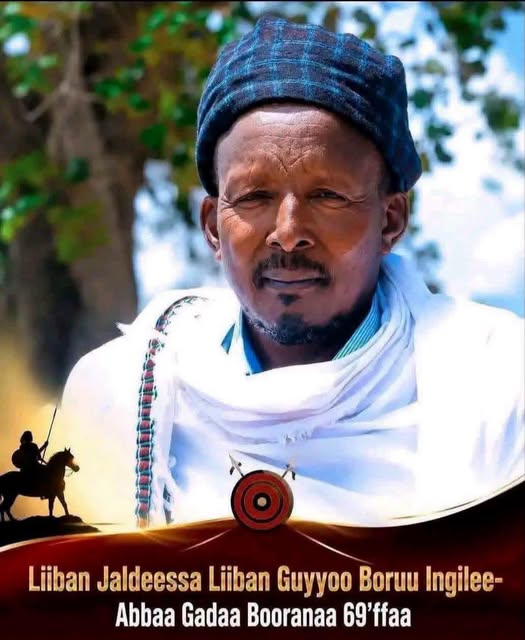
In the vast, sun-scorched plains of Borana, where the acacia trees stand as silent witnesses to centuries of tradition, a giant once walked among the people. He was not a king in the Western sense, nor a politician in the modern mold. He was an Abbaa Gadaa—a father, a judge, a living constitution for the Oromo people. His name was Liiban Jaldeessaa, and his life, from 1968 to 2026, was a testament to the enduring power of indigenous governance.
His story is not merely a biography; it is the history of a people’s resilience, a chronicle of justice, and a powerful reminder that true leadership is often found not in grand palaces, but in the dusty meeting grounds and under the shade of sacred trees.
A Son of the Soil: The Early Years
Born in 1967 to Jaldeessa Liiban and Tarrii Jaldeessa, in the Bur Busa area of Dheeda Booranaa, Liiban was a child of the Gadaa system from his first breath. He was the eldest of six siblings and would grow to be the father of fifty children—a patriarch in every sense of the word. Even in his youth, he was marked by a profound sense of duty. He was a “Tikaa,” a guardian of the cattle camps, learning the sacred responsibility of protecting the community’s lifeblood. He immersed himself in the traditions of his people, taking part in every rite of passage: from the Gammee (councils) to the Kuusa-Raabaa (age-grade gatherings), proving his dedication and worth at every step.
As a young man, Liiban distinguished himself through his unwavering commitment. He excelled in the crucial, often overlooked tasks of community life—the “hard work” that keeps society functioning. He was a man who understood the ancient ways, taking part in night-long vigils and traditional song and dance ceremonies (Olka Sirbuu) held at sacred sites like Dambii Dhedheertuu, Afuuraa, Areeroo, and Haroo Diimtuu. He earned a reputation for being tireless and principled, famously ensuring a great water reservoir (Gooroo) was properly filled, demonstrating his devotion to the community’s well-being even before he took on the highest office.
The Gauntlet of Leadership: A Gadaa in Action
In 1991, at a critical juncture for the Borana people, Liiban Jaldeessaa received the ultimate call to leadership. He took the Gooroo Gadoomaa—the sacred ceremonial staff—from the 68th Abbaa Gadaa, Boruu Madhaa. This was not a time of peace, but a time demanding strength, wisdom, and a firm hand.
His tenure as Abbaa Gadaa was defined by decisive action and a tireless defense of tradition and justice:
· Restoring Tradition: The great Gumii assembly of the Oromo, a cornerstone of democratic governance, had weakened and fractured. Liiban, understanding its vital importance, re-established the Gumii Dibbee Eldalloo, breathing new life into the ancient institution and ensuring the voice of the people could once again be heard.
· Uncompromising Justice: When elders attempted to use their authority to pass a decree without consulting the people, Liiban stood firm. His principle was clear: “An Abbaa Gadaa has no power to create a law by himself; the law is made by the Gumii.” He scrupulously upheld the rule of law, ensuring that power was accountable to the community.
· Protecting the Land: He was a fierce and unyielding defender of Oromo territory. At a time of great fear and uncertainty, he famously declared: “Fear should not cause the heartland of Oromo to be lost; fear should not cause the land of Oromo to be diminished.” He led land border expeditions (Lallaba) to assert territorial claims, confronting regional and federal authorities to protect the integrity of his people’s ancestral lands.
· The Ethiopian Renaissance Dam: When the issue of the Grand Ethiopian Renaissance Dam (GERD) arose, Gadaa Liiban gave a striking directive on how the Borana people should contribute to the national project. He proclaimed, “We will not support it with money from our pockets, but we will contribute with our hands and our labor,” reflecting a pragmatic and dignified approach to national duty.
· Diplomacy and Peacebuilding: He was a bridge-builder, working tirelessly with the Kenyan and Somali governments, and numerous NGOs to maintain peace and security in the volatile borderlands. He believed in the unity of all people, transcending clan, religion, and nation.
The Enduring Legacy: The “Dhaamsa” of a Great Man
On August 29, 2026, at the age of 59, Abbaa Gadaa Liiban Jaldeessaa passed away while receiving treatment in a Korean hospital. His death was a profound loss, a “Rifuu” (sorrow) felt from the savannahs of Ethiopia to the grasslands of Kenya.
But an Abbaa Gadaa does not simply die; he leaves a legacy—a Dhaamsa. This is not just a will, but a final message, a solemn charge to his people.
His legacy is twofold:
1. The Rifuu (The Sorrow and the Shield): He left behind a legacy of protection and strength. His memory is a shield, a “Jabaa Fulaa” (strong face) and a “Waardiyaa” (shield) that guards the community against its enemies and against division. The sorrow for his loss is immense, but it is a sorrow that binds the people together.
2. The Dhaamsa (The Final Charge): His final message is a call to action. It is a warning that the path he paved, the justice he upheld, and the unity he fostered must not be abandoned. His “Dhaamsa” is a reminder that the work of the Gadaa is never finished. It is a call to the community to remain steadfast, to support one another, and to continue the struggle for their rights and identity.
A Star That Still Guides
Abbaa Gadaa Liiban Jaldeessaa was more than a leader; he was the embodiment of the Gadaa system’s greatest ideals: justice, resilience, and unwavering dedication to the people. He was a “Fiixee Seeraa” (the pinnacle of the law), a “Tissaa Gooroo Gadaa” (the guardian of the Gadaa’s sacred staff), a man whose name will forever be etched in the annals of Borana history.
He passed into the next world, but for the Oromo people, he remains a star. His life is a lesson that the most profound leadership is born not of ambition, but of service. His legacy is a testament that a people’s strength lies not in their weapons, but in their traditions, their unity, and their unwavering commitment to justice.
As the Oromo people honor his memory, they are called to embody his final message: to be strong, to be united, and to ensure that the spirit of Gadaa Liiban Jaldeessaa lives on in every generation. He was a son of the soil, a pillar of his community, and a beacon of hope for all who believe in the power of indigenous wisdom.

Toki Be’a: The Dawro Nation’s Ancient Festival of Reconciliation, Forgiveness, and Hope
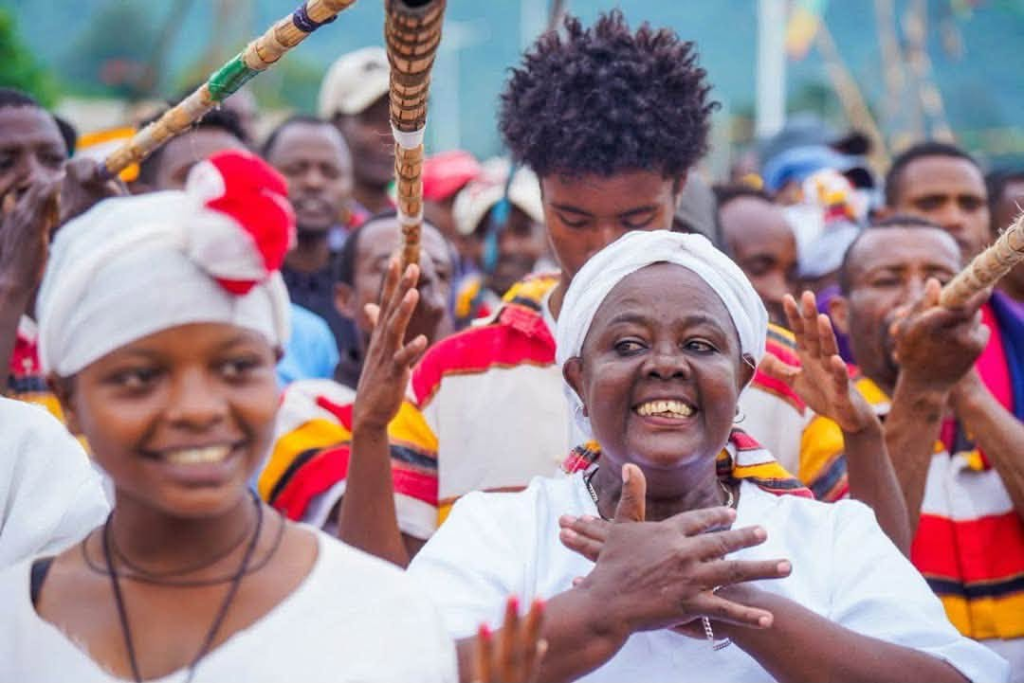
In the southwest of Ethiopia, as the rainy season draws to a close and the constellations begin their silent, celestial dance, a profound transformation occurs. The land, once drenched and dark, prepares for a new dawn. This is the season of renewal, a time when the Dawro people, keepers of an ancient and vibrant heritage, celebrate their most sacred tradition: Toki Be’a.
More than just a new year’s celebration, Toki Be’a is a profound cultural institution—a time for mending broken bonds, offering forgiveness, and embracing a future filled with hope. It is a festival that harmoniously weaves together spirituality, community, and the natural world.
A People of the Stars: The Calendar of the Ancestors
The Dawro nation is a community with a unique history, possessing its own indigenous governance system, complete with a “Kati” (a traditional king or chief) and a distinct calendar. This ancient calendar is not a rigid, mathematically fixed system. Instead, it is a living wisdom passed down through generations.
The date of Toki Be’a is not arbitrarily chosen. It is determined by the “cultural fathers”—wise elders who are master observers of the natural world. They meticulously study the movements of the stars, the moon, and the sun. They read the changing weather patterns and note the subtle transformations in local plant life. This profound understanding of astronomy and ecology allows them to pinpoint the exact day when the old season ends and the new one begins. It is a testament to a sophisticated indigenous knowledge system that has sustained the community for centuries.
When the final harvest is gathered and the fields lie fallow, the community knows it is time to give thanks to their Creator and prepare for the festival.
The Heart of the Festival: Reconciliation and Renewal
The true beauty of Toki Be’a lies in its powerful social values. It is, first and foremost, a festival of peace.
In the days leading up to the celebration, a remarkable process unfolds. Deep-seated grievances, old quarrels, and misunderstandings that have divided families, neighbors, and clans are brought before community elders. In a spirit of justice and compassion, these elders facilitate a process of reconciliation. Grudges are released, apologies are offered, and forgiveness is granted. It is a time when long-estranged family members are reunited at a shared table, and the community is knit back together as one.
This makes Toki Be’a a deeply emotional and transformative experience. It is a time when the weight of the past is lifted, and the community collectively chooses to move forward in unity and hope.
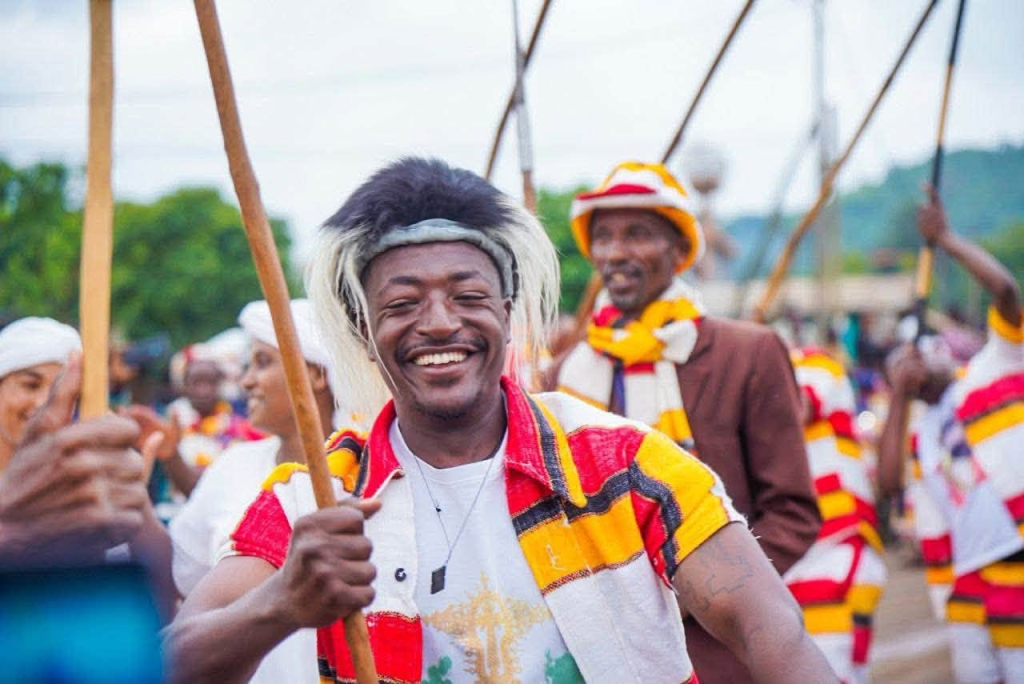
A Feast for All: Culture, Charity, and Nature’s Care
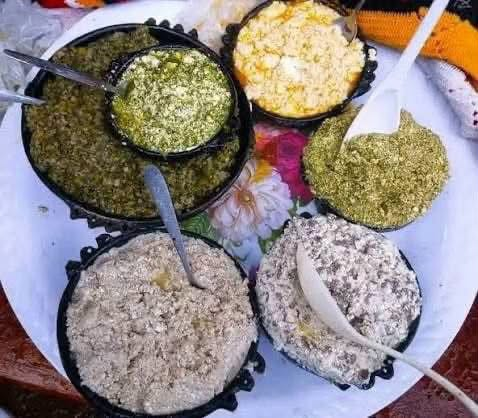
The celebration itself is a vibrant spectacle of Dawro culture. The air fills with the aroma of traditional feasts prepared with bula (false banana), qocho, and butter. People adorn themselves in their most beautiful cotton garments, complemented by intricate hand and neck ornaments. The occasion is brought to life with special Toki Be’a songs, whose melodies have been passed down through the ages, carrying the stories and wisdom of the ancestors.
The spirit of generosity is central to the celebration. Those who have are expected to share with those who have not, reinforcing the community’s strong social bonds.
What makes Toki Be’a truly unique is its deep respect for all living things. On the day of the festival, the community extends its care to animals. Domestic animals are given special, nourishing feed to ensure they are full and content. This act symbolizes the interconnectedness of human well-being with the health of the natural world.
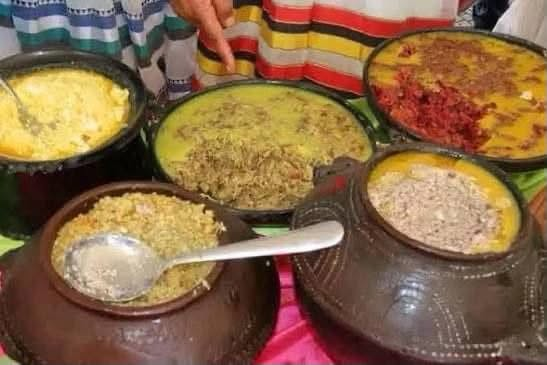
A Beacon for the Future
Toki Be’a is a magnificent testament to the rich cultural tapestry of Ethiopia. It represents a powerful, indigenous model of conflict resolution, social cohesion, and environmental stewardship.
Beyond its profound cultural and spiritual significance, the festival holds immense potential for cultural tourism. It has the power to attract visitors from around the world, eager to witness its unique ceremonies and learn from its ancient wisdom. Moreover, the seasonal gathering stimulates local trade and agricultural activity, providing an economic boost to the community.
In essence, Toki Be’a is the Dawro people’s magnificent connection between humanity, nature, and the cosmos. As the stars align and a new season begins, this ancient festival reminds the world that true renewal comes not just from the changing of the seasons, but from the strength of our communities, the depth of our forgiveness, and the power of our shared hope.
—
About the Author: This article is adapted from a feature by Sisay Debebe, highlighting the invaluable cultural heritage of Ethiopia’s Dawro nation.

The Name and the Narrative: Reclaiming Oromo Identity Beyond “Habesha”
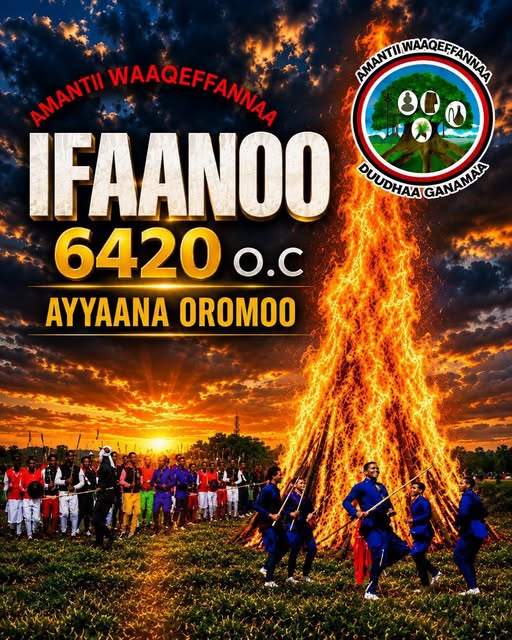
In the complex tapestry of the Horn of Africa, few threads are as deeply woven—or as fiercely contested—as the question of identity. For centuries, labels have been applied, histories have been written, and narratives have been constructed, often by those in power. But what happens when a people rise to say, “That name is not ours”?
A powerful statement from within the Oromo community cuts to the very heart of this question: “Habashaan jecha eenyummaa Oromoo ibsuu miti. Oromoon Habashaa miti.” This translates to: “‘Habesha’ does not express Oromo identity. An Oromo is not Habesha.” This is not a simple rejection of a label; it is a profound declaration of a distinct historical narrative, a reclamation of selfhood, and a bold assertion of a people’s independent journey through time and across the land they call home.
The Power of a Name
The term “Habesha” has historically served as a broad, unifying identifier for the peoples of the Ethiopian highlands, often associated with the ancient Aksumite civilization, the Orthodox Christian faith, and Semitic languages. For many, it is a term of pride, symbolizing a shared, ancient heritage.
However, for the Oromo people—the largest ethnic group in Ethiopia—this label often feels foreign and exclusionary. The assertion “Oromoon Habashaa miti” directly challenges the notion that “Habesha” is an all-encompassing term for all Ethiopians. Instead, it argues that the term is culturally and historically specific to a particular group and that it has been inaccurately and unfairly imposed upon the Oromo nation.
This rejection is a vital act of self-affirmation. It is a declaration that Oromo identity, with its own ancient traditions, its own language (Afaan Oromo), and its own sophisticated governance system (the Gadaa system), is independent and deserving of recognition on its own terms. It is a way of saying, “We are not a footnote in someone else’s history; we have our own story to tell.”
A Shared Journey: Revisiting the Origins
The second part of the statement offers a specific historical perspective on this shared geography: “Habashaan jecha Yaman irraa warra Abyssinia ofiin jedhan waliin gara biyya Oromoo-Oromiyaatti dhufee dha.” (“Habesha came to the land of Oromo-Oromia from Yemen together with those who call themselves Abyssinian.”)
This presents a powerful and deliberate counternarrative to the dominant historical accounts of the region. By asserting that both the ancestors of the “Abyssinians” and the Oromo people migrated into the region from a shared origin, this perspective challenges the traditional narrative that often places one group as indigenous and the other as later arrivals.
This framing redefines the historical relationship between the two communities. It moves the Oromo from a position of being perceived as “others” or “newcomers” in their own homeland to being co-architects of the region’s history. It suggests a shared, albeit not necessarily harmonious, arrival and cohabitation, thereby establishing an equal and ancient claim to the land of Oromia. This is a crucial point, as it aims to dismantle historical hierarchies and assert that the Oromo are not intruders but are, in fact, foundational to the region’s story.
The Land of Oromia: More Than a Place
This assertion of identity is intrinsically tied to a specific territory: Oromia. This vast and diverse region, stretching from the highlands to the lowlands, is the historic and ancestral homeland of the Oromo people. By connecting the narrative of arrival directly to “the land of Oromo-Oromia,” the statement anchors Oromo identity in a tangible, sacred geography.
It is a powerful reminder that identity is not an abstract concept; it is rooted in the mountains, rivers, and plains where a people’s history was lived and written. For the Oromo, the struggle for identity is inseparable from the struggle for their cultural, political, and territorial rights within Oromia. Declaring that the “Habesha” came to their land, and not the other way around, is a profound reclamation of both history and territory.
A Continuing Dialogue
The statement provided is a potent contribution to an ongoing and essential conversation about identity, history, and power in the Horn of Africa. It challenges the monolithic narratives that have often dominated the national discourse and demands a more inclusive, accurate, and multi-vocal understanding of the past.
For the Oromo people, the declaration “Oromoon Habashaa miti” is not an act of division, but one of definition. It is a call to be seen, understood, and respected on their own terms. It opens a vital dialogue about how history is written, who gets to write it, and how we can build a future that honors the full and complex story of all the peoples in the region. The debate over identity is far from settled, but it is a debate that is crucial for any nation seeking to forge a just and inclusive future.

UNDERSTANDING THE TRAUMA TREE
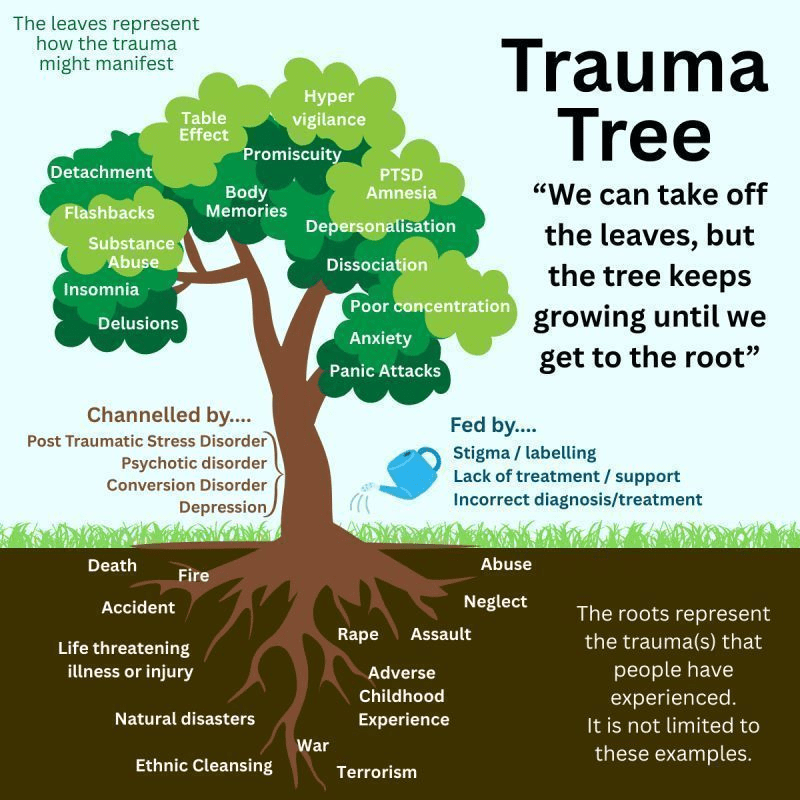
Why Addressing Symptoms Alone Isn’t Enough
🌳 “We can take off the leaves, but the tree keeps growing until we get to the root.”
This powerful metaphor reveals a truth that modern mental health care is only beginning to fully embrace: that true healing from trauma requires more than just managing symptoms. It demands that we dig deeper—right down to the roots.
The numbers tell a sobering story. Research shows that 70% of individuals experience trauma at some point in their lives. Yet for far too many, the path to recovery remains frustratingly elusive. Why? Because we have been treating the leaves while ignoring the roots.
THE LEAVES – HOW TRAUMA MANIFESTS
Trauma does not announce itself with a single, obvious signal. Instead, it manifests in a tangled canopy of symptoms that can be as bewildering as they are debilitating.
Hypervigilance and anxiety – The body remains on high alert, scanning for danger even in the safest environments. The nervous system, once triggered, struggles to return to calm.
Flashbacks and nightmares – The past refuses to stay in the past. Traumatic memories intrude without warning, forcing the individual to relive moments of terror again and again.
Panic attacks and dissociation – The mind and body disconnect. Some feel as though they are watching themselves from outside their own body. Others experience overwhelming waves of terror that seem to come from nowhere.
Depression and emotional numbing – Feeling nothing becomes a defence mechanism. The heart hardens to protect itself, but in doing so, it also loses the capacity for joy, connection, and hope.
Substance abuse and insomnia – Sleep becomes a battleground. Substances offer a temporary escape, but they also deepen the wound, creating a cycle of dependency that further obscures the underlying pain.
These are the leaves. They are visible. They are painful. And they demand attention.
But treating symptoms alone leads to temporary relief—not true healing. The leaves may be trimmed, but the tree continues to grow, fed by hidden forces beneath the surface.
WHAT FEEDS THE TREE – BARRIERS TO HEALING
If the leaves are symptoms, what nourishes the tree and keeps it alive? What prevents healing from taking root?
Stigma and labelling – Society often reduces trauma survivors to their symptoms. “You’re just anxious.” “You’re depressed.” “You need to get over it.” These labels, however well-intentioned, can become self-fulfilling prophecies. They define the person by their struggle rather than their resilience.
Lack of trauma-informed treatment – Many therapeutic approaches still focus on managing behaviour rather than understanding its origins. Without a framework that acknowledges the pervasive impact of trauma, treatment can feel like rearranging deck chairs on the Titanic.
Misdiagnosis and limited support – Trauma symptoms often mimic other conditions. Depression, anxiety disorders, and even ADHD can be misdiagnosed when the root cause—trauma—remains unidentified. Limited access to appropriate mental health services compounds the problem, leaving many to navigate their recovery alone.
These are the soil conditions that allow the trauma tree to thrive. Change the soil, and you change the tree.
THE ROOTS – ORIGINAL TRAUMA
To truly heal, we must go where the pain began.
Childhood abuse and neglect – The earliest wounds often cut the deepest. When a child’s developing brain is exposed to chronic stress or betrayal, it shapes the architecture of their nervous system, setting patterns that persist into adulthood.
Accidents and medical trauma – A single moment can change everything. Car crashes, serious injuries, and terrifying medical procedures can leave lasting psychological scars that are often overlooked.
War, terrorism, and violence – For survivors of conflict, the trauma is not a single event but a sustained assault on the sense of safety and humanity. The effects ripple across generations.
Natural disasters and grief – Loss on a massive scale, whether through earthquake, flood, or pandemic, shatters the illusion that we are safe in our world. Grief becomes complicated when it is intertwined with collective trauma.
Systemic oppression and discrimination – For marginalised communities, trauma is not an isolated experience but a chronic reality. Racism, sexism, homophobia, and other forms of oppression create ongoing wounds that demand healing at both the individual and societal levels.
These are the roots. They are deep. They are tangled. And they are often hidden from view.
But evidence shows trauma-informed interventions address both the symptoms AND the root causes, leading to real recovery and improved wellbeing for those struggling with PTSD, anxiety, and depression.
THE PATH TO ROOT-LEVEL HEALING
True healing requires a shift in perspective. It means moving from “What is wrong with you?” to “What happened to you?” It means recognising that symptoms are not weaknesses but adaptations—the mind’s way of protecting itself from overwhelming pain.
Trauma-informed care offers a different approach. It asks:
- Safety first – Healing cannot begin without a sense of physical and emotional safety.
- Choice and control – Trauma strips away agency. Recovery restores it.
- Collaboration – Healer and client walk together, not as expert and patient, but as partners.
- Trustworthiness – Transparency and consistency rebuild the trust that trauma shattered.
- Empowerment – The goal is not to fix the person but to help them reclaim their strength.
READY TO FINALLY ADDRESS TRAUMA AT THE ROOTS?
The journey to healing is not easy. It is not linear. But it is possible.
For those ready to begin, the “You Are Not Broken” Trauma Healing Workbook for Beginners offers a gentle, evidence-based guide to genuine emotional healing. Designed by trauma therapists, this workbook provides:
- Practical exercises for understanding trauma responses
- Grounding techniques for managing symptoms
- Guided reflections to explore the roots of pain
- A compassionate framework for self-discovery and recovery
The leaves can be trimmed. The soil can be nourished. The roots can be healed.
Start your journey today.
#TraumaHealing #TraumaInformedCare #MentalHealthRecovery #PTSD #EmotionalHealing
Image Credit – Unknown
📖 Featured Article
Understanding the Trauma Tree: A Clinical Perspective
The metaphor of the trauma tree is more than poetic imagery—it is grounded in neuroscience and clinical practice. When trauma occurs, it impacts the brain’s fear circuitry, particularly the amygdala, hippocampus, and prefrontal cortex. The “leaves” we see—hypervigilance, flashbacks, dissociation—are direct expressions of this rewired nervous system.
Treating only these symptoms without addressing the underlying trauma is like repeatedly taking painkillers for a broken leg. The pain may temporarily subside, but the bone remains unhealed.
Trauma-informed therapy, by contrast, works to rewire the brain’s response to threat. Through approaches such as EMDR, somatic experiencing, and cognitive processing therapy, individuals can process traumatic memories, integrate them into their life story, and reduce their power over the present moment.
The “roots” of trauma often lie in attachment wounds—relationships that should have been safe but were instead a source of danger. Healing these roots involves rebuilding the capacity for trust, connection, and self-compassion.
Remember: You are not broken. You are wounded. And wounds, with the right care, can heal.
This article is part of a series on trauma-informed mental health care. For more resources, follow our page and join the conversation on trauma recovery, resilience, and healing.

Candlelight vigil for Nepal flood victims
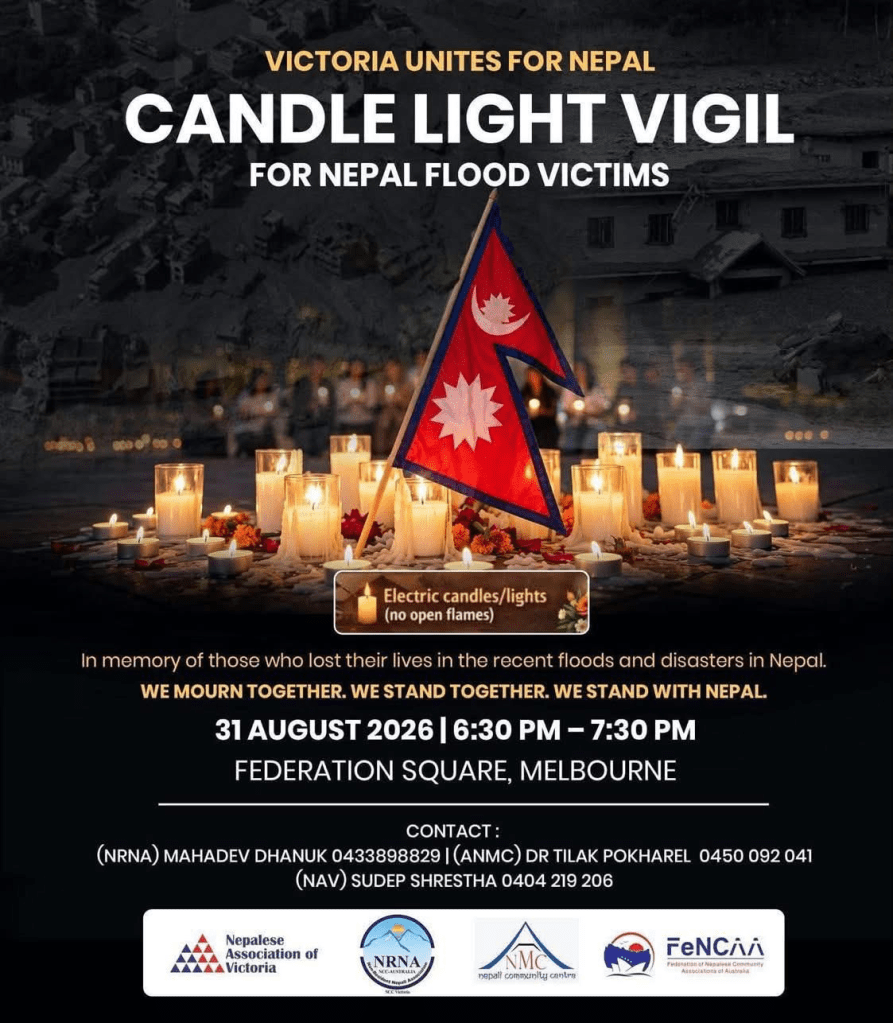
VICTORIA UNITES FOR NEPAL
Candlelight vigil for Nepal flood victims
(ONA, 31 August 2026)-Melbourne will tonight open its heart to the people of Nepal as the city hosts a candlelight vigil at Federation Square, honouring the hundreds of lives lost in the catastrophic floods that have devastated the Himalayan nation.
The vigil, organised with the support of the Victorian Multicultural Commission, will see Victorians of all backgrounds gather to remember those who have perished, pray for the missing, and stand in solidarity with the grieving Nepali community.
“WE MOURN TOGETHER. WE STAND TOGETHER.”
The recent flooding in Nepal and surrounding regions has unleashed an unimaginable tragedy. Flash floods and landslides tore through the Bhotekoshi and Trishuli river basins, sweeping away entire communities along the Nepal-China border . The death toll continues to mount—now exceeding 547 confirmed fatalities—with more than 1,473 injured and over 900 still unaccounted for .
For Victoria’s growing Nepali community, this is not a distant disaster. It is personal. It is family. It is home.
A COMMUNITY IN MOURNING
The Victorian Multicultural Commission, standing in solidarity with Victoria’s Nepali community and the people of Nepal, has encouraged all Victorians to join tonight’s vigil.
“Let’s work together, let’s pray together, and let’s go through this pain together,” said Dr Tilak Pokhrel, president of the Australian Nepalese Multicultural Centre, in a heartfelt appeal to the community .
For many in the diaspora, the anguish is compounded by the agonising wait for news. Community members are checking the news every hour, desperately hoping for word from missing relatives and friends . The Australian government has confirmed that 39 Australians remain unaccounted for, including trekkers and tourists caught in remote valleys .
THE TRAGEDY UNFOLDS
The scale of the disaster is staggering. Many of the missing were on a pilgrimage to Mount Kailash in Tibet—a sacred site for Hindus, Buddhists, and followers of other faiths—when the flash floods struck without warning . Survivors have described walls of black water, 60 to 70 feet high, rushing toward them like a tsunami .
One Indian-American couple who narrowly escaped described watching the water approach their tour bus—”It was not water, it looked like a forest fire,” they recalled. They jumped from the bus moments before it was swept away, spending the night in a goat shed before being rescued by helicopter the next day .
Rescue operations continue, with emergency services working tirelessly in extremely difficult conditions. The Caritas Nepal relief organisation has reported that many main bridges and roads have been destroyed, making access to survivors extraordinarily challenging . Even relief teams have been ordered to retreat to safety as the threat of further flash floods persists .
GLOBAL OUTPOURING OF SOLIDARITY
The tragedy has touched hearts around the world. From candlelight vigils in Boston to prayer gatherings in India’s border towns, communities everywhere are standing with Nepal .
Here in Melbourne, tonight’s vigil at Federation Square will be a powerful testament to that global solidarity. Members of the public are invited to gather from 6:30pm to 7:30pm, bringing candles and open hearts to remember those lost and pray for those affected .
“TOGETHER WE ARE STRONGER”
The emotional toll on the diaspora is immeasurable. “We can’t go through this alone,” said Aloonee Adhikari, a Nepali community member in the United States. “When we get to get together like this, it gives us a sense of empowerment that at least we can sit there and pray for them, even if we’re not there” .
Her words resonate across oceans. Tonight, they will echo in Melbourne.
As the Victorian Multicultural Commission reminds us: We mourn together. We stand together.
EVENT DETAILS
Date: Monday 31 August 2026
Time: 6:30pm–7:30pm
Venue: Federation Square, Melbourne
The vigil is a chance for all Victorians—regardless of background or faith—to show the Nepali community they are not alone. It is a moment to transform grief into action, compassion into solidarity.
In the words of one community leader: “One candle, one community, one Nepal. For those we lost, for those who are suffering, for those who are still hoping—together we are stronger, for Nepal and for humanity” .
Come. Light a candle. Stand with Nepal.

A Cry for Justice: The Unfolding Crisis in Oromia
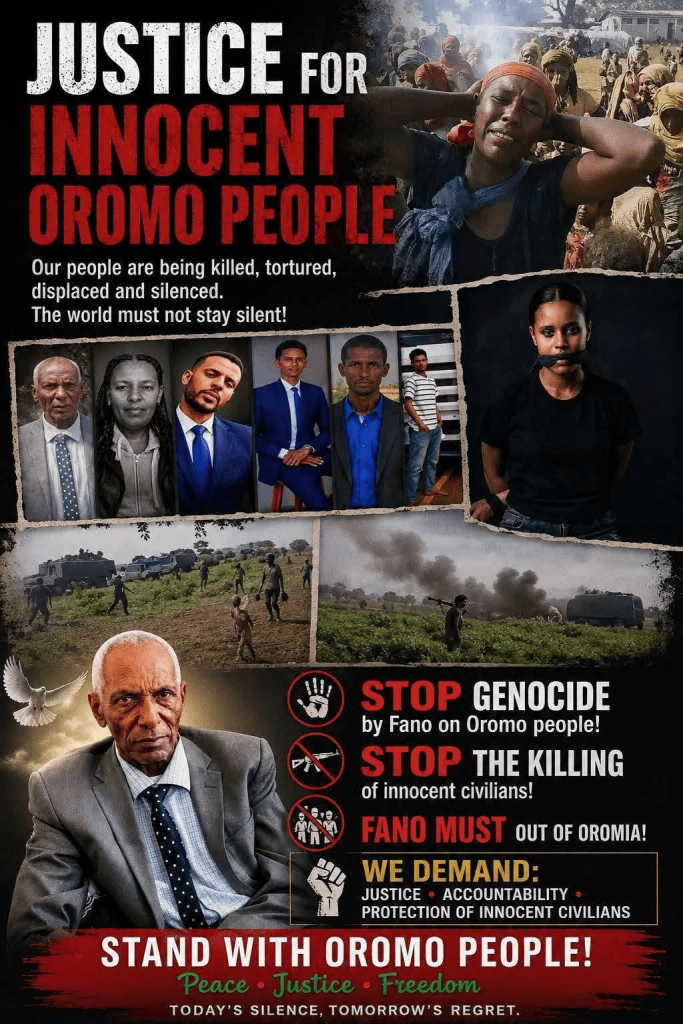
As violence escalates in Ethiopia’s most populous region, a growing chorus of voices is demanding accountability, protection, and peace for the Oromo people.
The plea is urgent and uncompromising: “Stop the killing of Oromo civilians! Stop violence against the Oromo people! Fano must leave Oromia!” These calls reflect a deep-seated crisis that has gripped the Oromia region, where civilians find themselves caught in the crossfire of multiple armed conflicts.
The Human Toll of Conflict
Recent reports paint a harrowing picture of the violence unfolding across Oromia. The Ethiopian Human Rights Commission (EHRC) has documented atrocities including killings, bodily injuries, abductions, displacement, and destruction of property in the Arsi Zone of Oromia . The violence is not isolated—it reflects a broader pattern of human rights abuses across multiple regions, including Amhara and Tigray .
In one particularly devastating incident, armed men killed more than 20 civilians in Oromia. Local civil servants reported that Fano militants attacked civilians “with swords and guns” in the Nono district, approximately 110 kilometers southwest of Addis Ababa, resulting in 25 deaths including women and children, with four more later dying in hospital . A regional security official confirmed that Fano militants had been active in the region for four years, “taking advantage of opportunist moments to launch attacks against civilians and loot property”.
The Humanitarian Crisis
The violence has created a severe humanitarian crisis. The United Nations reports that 3.2 million children are out of school due to the conflict . Hospitals and clinics have been attacked—in 2023, the International Committee of the Red Cross reported that “almost all” of 42 health posts in Oromia’s Beji area had been looted or destroyed . Aid organizations have struggled to distribute supplies, leading to severe malnutrition .
Civilians describe a terrifying reality. One woman from Oromia’s Shewa region told of her family facing constant harassment and extortion from armed groups, with her uncle detained until a 100,000 Ethiopian birr ransom was paid . A coffee farmer from Wollega has been unable to return home for three years due to the security situation, with his harvest stolen by armed fighters .
A Call for Justice and Peace
The demands for justice and protection are clear. As one civil servant noted, the situation “has worsened in recent years” . The Red Cross has warned that the current clashes have “devastating consequences” for civilians, particularly in remote areas, noting that “Oromia doesn’t make the headlines, yet civilians continue to be deeply affected by violence” .
The call for Fano to leave Oromia reflects the reality that multiple armed groups are active in the region, each contributing to the suffering of civilians. For the Oromo people, the demand is simple but profound: protection, justice, and accountability for those who have committed atrocities.
Without decisive action, the cycle of impunity and violence will continue to erode Ethiopia’s stability and legitimacy . The international community, regional bodies, and Ethiopian authorities face a critical choice: allow the violence to continue, or take meaningful steps to protect civilians and bring perpetrators to justice.





 Advocacy for Oromia