The Tenth Anniversary of the Grand Oromo Rally: A Defining Moment in the Struggle for Justice
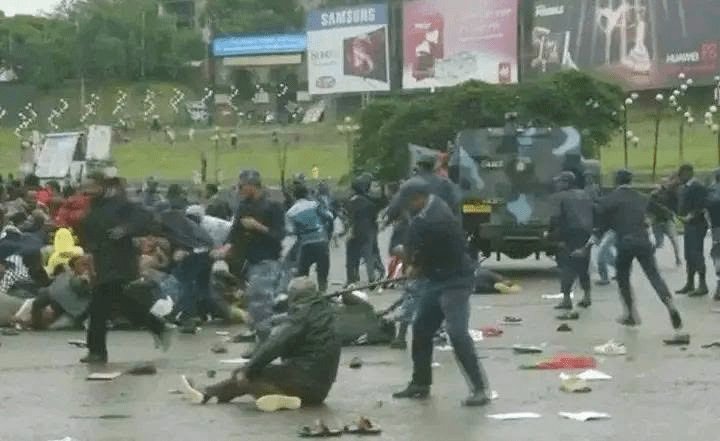
Remembering August 6, 2016, and Its Enduring Legacy for Unity, Identity, and Transformation
By Daandii Ragabaa
When a people understand their history correctly, they are able to learn from past mistakes, draw strength from previous achievements, and chart a clearer course for the future. History is not merely a record of what has passed—it is a compass for what lies ahead. It is a teacher, a witness, and a foundation upon which the dreams of generations are built.
For this reason, the commemoration of the Grand Oromo Rally of August 6, 2016, occupies a significant and sacred place in the history of the Oromo struggle. It is not simply a date on a calendar. It is a milestone, a turning point, and a testament to the power of collective action. As the tenth anniversary approaches, it is time to reflect deeply on what that day meant, what it achieved, and what it continues to teach us today.
A Day That Shook the Nation
The Grand Oromo Rally of August 2016 was not a spontaneous outburst of anger. It was the culmination of years of sustained public mobilization—a peaceful yet powerful resistance against decades of systemic oppression, marginalization, and denial of basic rights. It was one of the largest and most widely recognized demonstrations ever organized across Oromia, drawing participation from every corner of the region.
What made this rally extraordinary was its sheer scale and simultaneity. On that day, Oromo people from all walks of life—young and old, men and women, urban and rural, educated and uneducated—rose together as one. They filled the streets not with weapons, but with voices. They carried not arms, but banners of justice. They demanded not revenge, but recognition.
The world watched. International media covered the events. Global human rights organizations took notice. The Oromo people, long silenced and ignored, had made their voices heard in a way that could no longer be dismissed. The rally became one of the most significant events to attract international attention to the Oromo cause.
More Than a Protest: A Turning Point in History
Although different perspectives exist regarding its causes, results, processes, and consequences, the Grand Oromo Rally is widely regarded as a defining event in both the political history of the Oromo movement and the modern political history of Ethiopia.
It was a moment when the Oromo people declared, with unmistakable clarity, that they would no longer accept invisibility. They would no longer accept the theft of their land. They would no longer accept the denial of their language, culture, and identity. They would no longer accept a political system that treated them as second-class citizens in their own homeland.
The events of that day laid an important foundation for the political changes that unfolded in 2018. The rally was a catalyst—a spark that ignited a broader movement for reform across the country. It demonstrated that when a people are united and determined, even the most entrenched systems of power can be challenged. It showed that peaceful resistance, when organized and sustained, can produce real change.
The Tenth Anniversary: More Than Remembrance
The tenth anniversary of the Grand Oromo Rally is more than a remembrance of a historical event. It is an opportunity—a vital and necessary opportunity—to learn from history, to recognize that today’s achievements were not attained easily, and to appreciate the value of unity and collective strength.
This commemoration serves multiple purposes:
First, it reinforces social cohesion. When a people gather to remember a shared struggle, they affirm their bonds to one another. They recognize that they are part of something larger than themselves.
Second, it educates younger generations. Many of those who will mark this anniversary were too young to participate in the events of 2016—or were not yet born. They must learn what happened, why it happened, and what it means for their future. The history of the Oromo struggle must not be forgotten, distorted, or erased.
Third, it creates space for constructive dialogue. Commemorations should not be occasions for division or recrimination. They should be opportunities for thoughtful discussion about addressing present and future challenges, for examining both achievements and shortcomings, and for building a peaceful, inclusive, and prosperous future.
The Power of Collective Participation
One of the defining characteristics of the Grand Oromo Rally was the remarkable level of collective public participation in confronting oppression. Regardless of age, gender, social status, or place of residence, Oromo people united at the same moment and participated in the historic protest with determination, shared purpose, and a strong sense of solidarity.
The enduring lesson from that experience is clear: unity is our greatest strength.
Standing together around common goals and shared interests, strengthening collective unity, building public trust, and fostering strong social bonds are essential for overcoming complex challenges. The rally taught us that dialogue and coordination play indispensable roles in achieving change.
However, sustaining unity requires effort. It requires respecting differences of opinion. It requires listening to one another. It requires maintaining continuous dialogue. Unity does not mean everyone must hold identical views. True unity means respecting differing opinions while working together toward common objectives. It means recognizing that agreement on common goals can coexist with different views regarding the methods of achieving them.
Lessons for the Present and Future
Political and social circumstances inevitably change over time. What worked yesterday may not work tomorrow. The challenges of today are not identical to those of 2016. Yet the lessons of that historic rally remain as relevant as ever.
Remembering our history helps us to avoid repeating past mistakes while preserving and building upon our strengths. It reminds us that:
- Difficult challenges are most effectively resolved through dialogue and mutual understanding.
- Agreement on common objectives can coexist with different views on methods.
- Differences of opinion should never be mistaken for hostility.
- Current generations must study the past through evidence-based research and objective historical inquiry.
The tenth anniversary is not an invitation to dwell in the past but to draw wisdom from it. It is a chance to critically examine both achievements and shortcomings, and to engage in thoughtful discussions about building a peaceful, inclusive, politically stable, and socially prosperous future.
Strengthening Identity and Social Solidarity
By remembering historic events such as the Grand Oromo Rally, the Oromo people strengthen both their collective identity and their social solidarity. Such remembrance plays a vital role in:
- Learning from history
- Honouring those who made sacrifices
- Preventing the repetition of past mistakes
- Passing historical knowledge to future generations
These commemorations should be inclusive of people with diverse viewpoints. They should promote mutual respect, reconciliation, and lasting peace within society. Although we may hold different political perspectives, sharing a common historical experience reminds us that unity remains essential both today and in addressing our common challenges in the future.
To sustain this spirit, it is important to continue commemorating collective events such as the Grand Rally every year. Annual commemoration ensures that the memory remains alive, that the lessons remain fresh, and that the unity forged in struggle remains strong.
A Call to Remember, Reflect, and Renew
As we approach the tenth anniversary of August 6, 2016, let us remember what that day meant. Let us honour those who stood firm in the face of oppression. Let us recognize the sacrifices that were made—the lives lost, the freedoms curtailed, the dreams deferred. Let us also celebrate what was achieved: a renewed sense of identity, a strengthened movement for justice, and a foundation for the political transformation that followed.
The commemoration of the Grand Oromo Rally should not merely be an occasion to remember the event. It should be an opportunity to draw lessons that strengthen unity, mutual trust, respect, and dialogue in order to address today’s and tomorrow’s challenges through peaceful means.
Above all, the greatest lesson it offers is the importance of working together toward shared goals and common interests, respecting differences of opinion, and learning from history to build a better future for all.
Conclusion: A Legacy for Generations
The Grand Oromo Rally of August 6, 2016, stands as one of the most remarkable demonstrations of broad-based Oromo public participation in history. It is remembered as an important foundation for the political transformation that followed in 2018. Its tenth anniversary is not just a date to mark on the calendar—it is a moment to reflect, to renew, and to recommit.
Therefore, commemorating the Grand Oromo Rally annually plays a vital role in strengthening Oromo identity, social cohesion, and unity while ensuring that an accurate understanding of history is passed on to future generations. It is through such remembrance that we honour the past, navigate the present, and build a future worthy of the sacrifices made.
The memory of August 6, 2016, lives on.
The spirit of unity endures.
The struggle for justice continues.
Oromo Qeerroo Union—forever united!
Gamtaa Qeerroo Oromoo—the strength of the people!
#Silencing_the_Gun_Among_Brothers
#Oromo_Qeerroo_Union
#Gamtaa_Qeerroo_Oromoo
August 6, 2026

Posted on August 6, 2026, in Aadaa, Afaan, Bokkkuu, Diaspora, Election, Events, Face of Injustice, family violence, Finfinne, freedom, Grief Support, Gumaa, health, Information, Kindness, Language, Media, mental health, News, Oromia, Oromo truth telling, Press Release, Promotion, SBO, Siinqee. Bookmark the permalink. Leave a comment.






Leave a comment
Comments 0