Category Archives: Daaniyaa

How to celebrate Irreechaa in Australia?
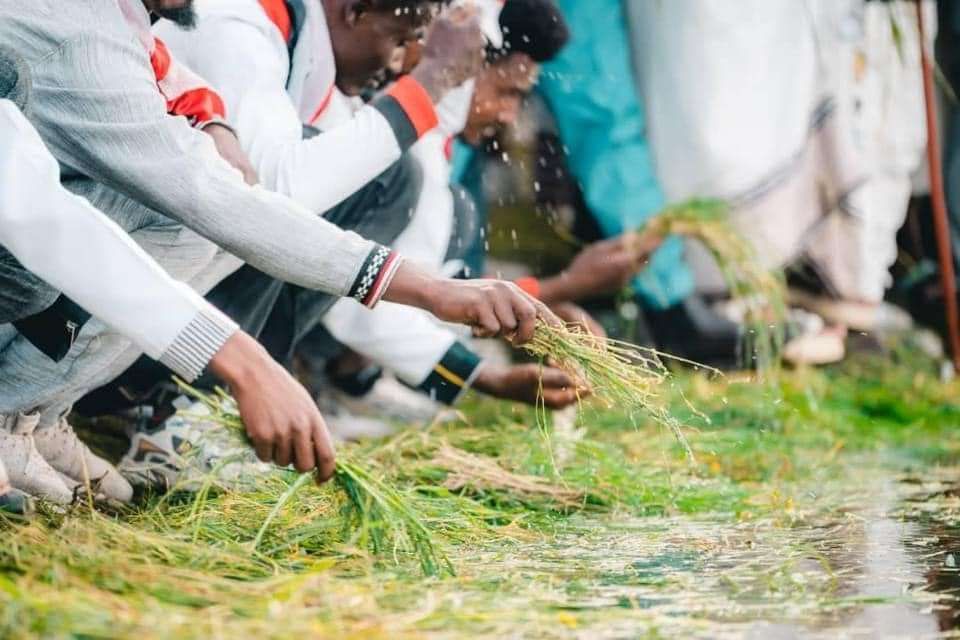
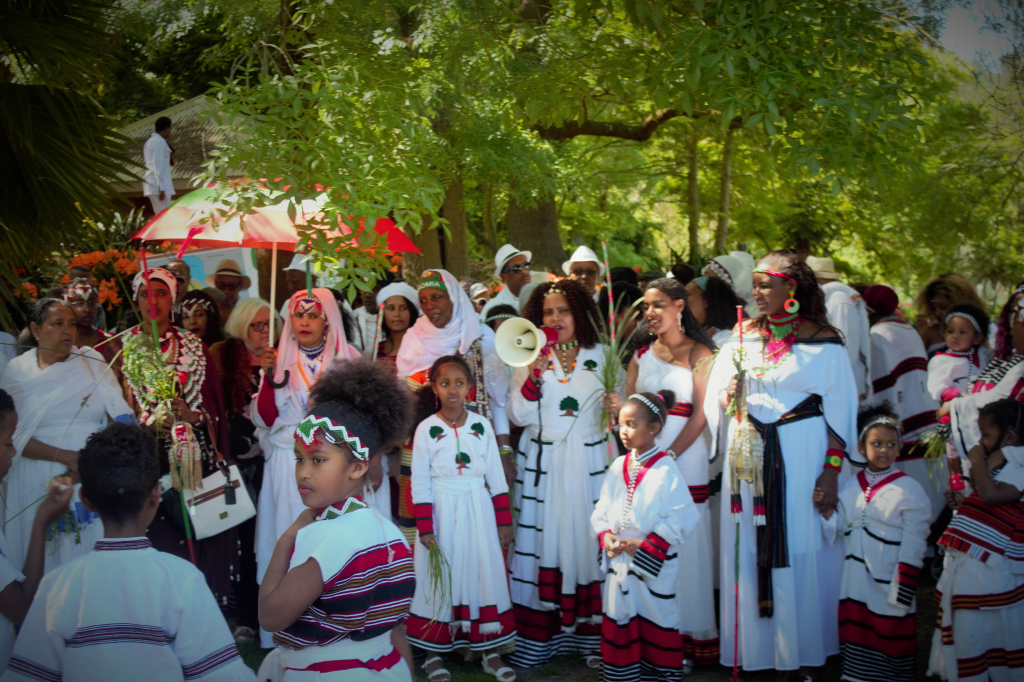
Celebrating Irreechaa in Australia means participating in a vibrant, adapted version of the traditional Oromo thanksgiving festival. While the core spiritual intent remains the same—giving thanks to Waaqa (God) for blessings and renewal—the setting and specific activities are tailored to the Australian environment and the needs of the diaspora community.
The celebrations are primarily organized by community associations and the non-profit Irrecha Australia, with major events held in cities like Melbourne.
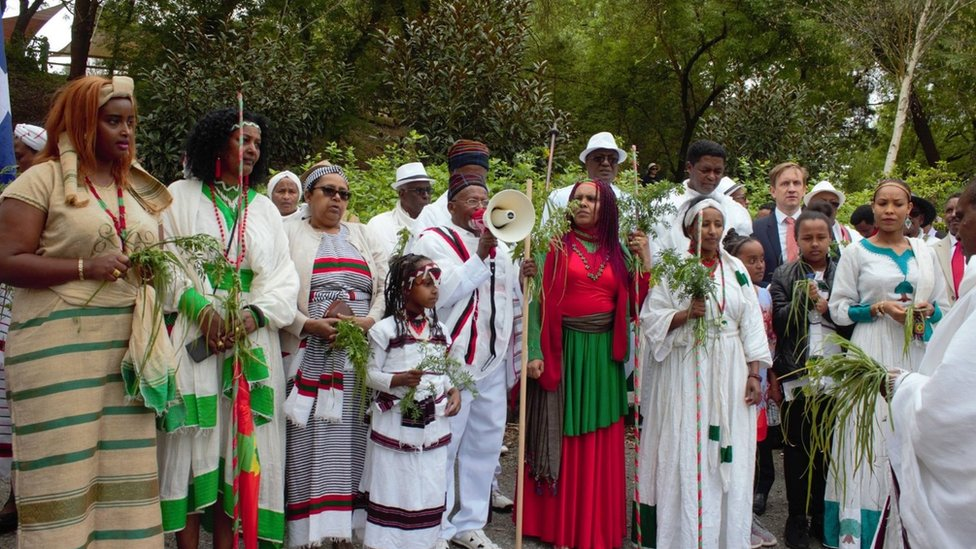
📍 Where and When to Celebrate in Australia
The location is chosen to reflect the traditional importance of nature and water in Irreechaa. In Australia, this often means gathering at parks with lakes, rivers, or scenic natural settings.
- Common Locations: In Melbourne, past celebrations have been held at Wilson Botanic Park in Berwick, Dandenong Mountain (Tulluu Dandenong), and Footscray Park.
- Timing: The festival is typically celebrated in September or October for Irreechaa Malkaa (the main thanksgiving at the water’s edge), and sometimes in April for Irreechaa Arfaasaa (a spring celebration).
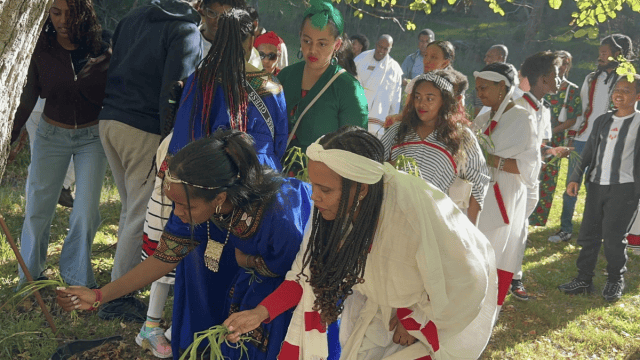
🌿 How to Participate: Key Activities and Rituals
Participating in Irreechaa in Australia involves engaging in both traditional rituals and communal cultural activities.
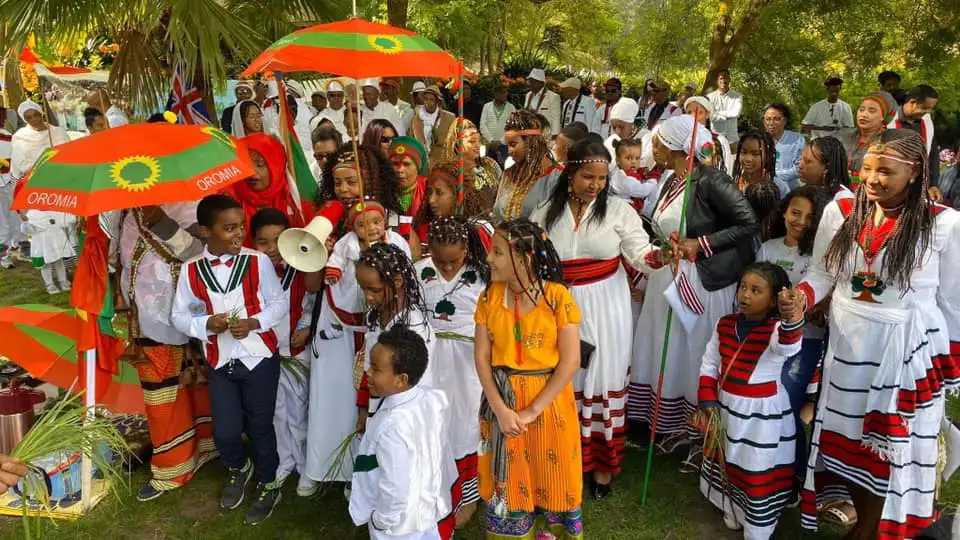
- Wear Traditional Attire: Attendees are strongly encouraged to wear traditional Oromo clothing. The vibrant colors and styles are a visual statement of cultural pride and identity, especially for younger generations.
- Join the Blessing and Prayer: The event typically begins with blessings and prayers led by community elders. These blessings focus on peace, prosperity, and remembering those who sustained the tradition.
- Participate in Symbolic Rituals: Follow the tradition of carrying and dipping fresh green grass and yellow flowers into water (if available at the venue) as a symbol of gratitude, purification, and renewal.
- Enjoy Cultural Performances and Food: The celebration features traditional Oromo music, songs, and dances (such as the Siiqqee and Gumii dances). It is also a time to share communal meals with traditional Oromo food.
- Connect with Community: Irreechaa in Australia is a vital social event. It is a time for the diaspora to unite, strengthen bonds, and for younger generations to learn about their heritage from elders.
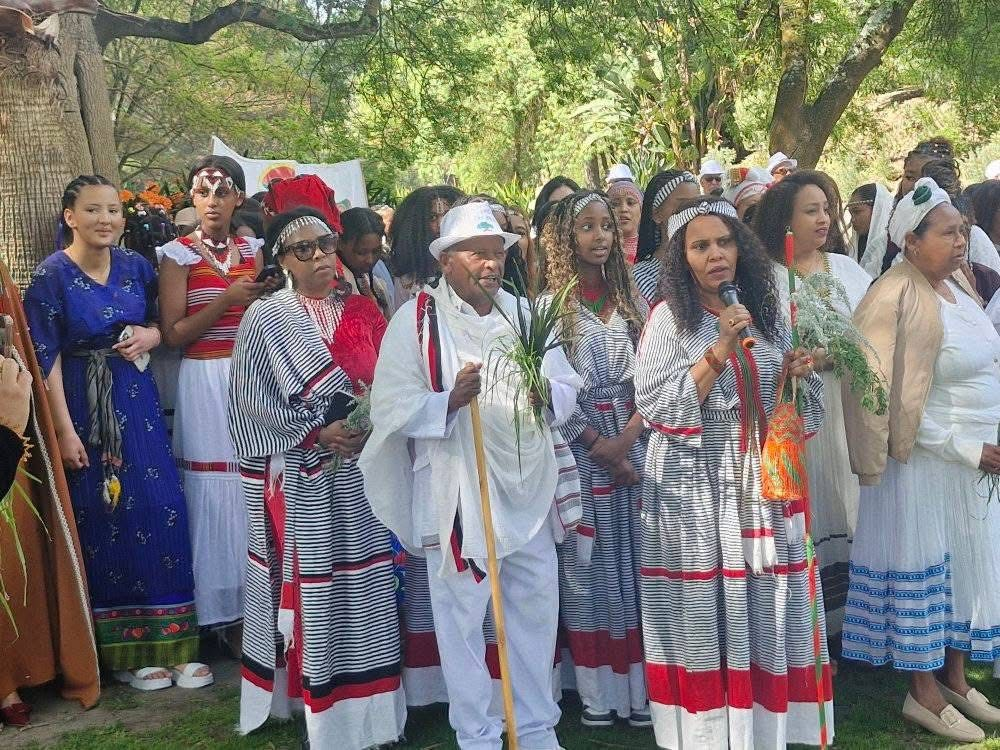
🤝 A Note on Inclusivity
While Irreechaa has deep spiritual roots in Waaqeffannaa (the traditional Oromo faith), the celebrations in Australia are also cultural festivals that welcome everyone. Organizers often invite local government officials, multicultural organizations, and curious residents to foster mutual respect and intercultural exchange. As one attendee noted, it is a unifying cultural practice that transcends religious boundaries.
💡 Practical Tips for Attendees
- Check for Event Details: Look for announcements from Irrecha Australia or local Oromo community associations on social media for the exact date, time, and location of the next event in your city.
- Respect the Environment: Organizers emphasize the importance of respecting the natural surroundings and leaving no waste behind, reflecting the core Oromo value of caring for nature.
- Bring What’s Needed: Some event notices suggest bringing water, flowers (for the ritual), and a spirit of gratitude.
In essence, celebrating Irreechaa in Australia is about actively participating in a living tradition that adapts to a new home while staying true to its core values of gratitude, community, and cultural pride.

Why Water Is So Important in Religious Practice Across the World
Water is the most universal symbol in human spirituality. From the Ganges to the Jordan, from the Zamzam well to the Gadaa springs of Oromia, virtually every faith tradition on Earth places water at the center of its most sacred rituals. The reasons are both practical and profound — rooted in the basic facts of human survival and in the deepest questions of meaning, purity, and renewal.
Water as the Source of Life
The most fundamental reason water is sacred is that it is the source of all life. Every civilization in history has understood that without water, there is no life — no crops, no animals, no human community. This biological reality translates naturally into spiritual reverence.
In the Oromo tradition, this understanding is explicit: water bodies are places where the spirit of Waaqa (God) resides, and the Irreechaa festival draws millions to rivers and lakes to give thanks for rain, fertility, and abundance. Similarly, in ancient Egypt, the Nile was worshipped as a god; in Hinduism, the Ganges is a goddess; in Islam, the Quran states that “We made from water every living thing” (21:30). The recognition of water as the physical basis of life makes it the natural vessel for the spiritual force that sustains life.
Water as a Purifier
Nearly every religion uses water for purification — washing away not just physical dirt but spiritual impurity. This is one of the most consistent patterns in the study of religion.
In Christianity, baptism symbolizes the washing away of sin and the beginning of new life. In Islam, wudu (ritual ablution) precedes prayer, and ghusl (full-body washing) is required after major impurities. In Judaism, the mikveh is a ritual bath used for spiritual cleansing. In Hinduism, bathing in sacred rivers like the Ganges is believed to cleanse sins accumulated over lifetimes. In Shinto, misogi involves purification in waterfalls and rivers. In the Oromo Gadaa system, water in Irreechaa rituals is used to wash away conflict and restore peace.
The logic is consistent: water dissolves and carries away. Just as it removes physical grime, it is believed to remove moral and spiritual stain — restoring the individual to a state of purity before the divine.
Water as the Boundary Between Worlds
Anthropologists have long observed that water often serves as a threshold — a boundary between the ordinary and the sacred, the living and the dead, the human and the divine.
Rivers mark the edge of the underworld in Greek mythology (the Styx), the boundary of the promised land in the Hebrew Bible (the Jordan), and the passage to enlightenment in Buddhism (the crossing of the river). In many traditions, crossing water — or being immersed in it — represents a transition: from death to life (baptism), from sin to forgiveness, from ignorance to awakening.
In Oromo tradition, the riverside (malkaa) where Irreechaa is celebrated is precisely such a threshold — a meeting place between the human community and the divine presence of Waaqa. The act of dipping fresh grass into the water and sprinkling it is a way of drawing the sacred across that boundary and into the community.
Water as a Mirror of the Divine
Water’s reflective surface has made it a natural symbol of the divine. It mirrors the sky, the heavens, and the face of the one who looks into it. In many mystical traditions, the calm surface of water represents the purified soul capable of reflecting God’s image.
This is present in the Oromo practice of gathering at still lakes (Hora) — the mirrored surface of the water symbolizes the peace (nagaa) that the community seeks. In Christian mysticism, the “living water” that Jesus offers is a metaphor for the Holy Spirit. In Sufi poetry, the reflection in water symbolizes the soul’s mirroring of the beloved Divine.
Water as a Source of Healing
Water is widely associated with healing — both physical and spiritual. Pilgrimages to sacred springs and rivers are a global phenomenon: Lourdes in France, the Ganges in India, the Zamzam well in Mecca, and countless local springs across Africa and the Americas.
Research confirms that “blue spaces” — environments with water — promote mental health, reduce stress, and enhance well-being. This scientific finding echoes what religious traditions have known for millennia: water restores. In the Oromo tradition, the healing power of water at Irreechaa is both spiritual and psychological — the community gathers at the water’s edge to renew mind, body, and spirit.
Water as a Symbol of Community
Finally, water is often a communal symbol. It flows and gathers, connecting people and places. Rivers bring communities together; wells are shared gathering places; rain falls on all regardless of status or wealth.
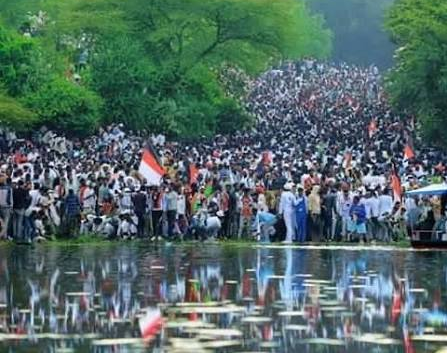
The Oromo Irreechaa festival draws millions of people to the same water sites, celebrating together in a shared and unified manner. This communal dimension of water is present in the Jewish mikveh, the Islamic hammam, and the Christian baptismal font — all places where individuals are incorporated into a larger community of faith.
A Universal Language of the Sacred
Water’s importance across religious traditions is not a coincidence. It reflects something deep in the human condition: our dependence on water for life, our need for cleansing, our longing for renewal, and our search for connection with the divine and with one another.
Whether it is the fresh grass dipped into the Oromo river, the waters of baptism, the ablution before Islamic prayer, or the immersion in the Ganges, water speaks a language that every human being understands. It is the universal symbol of life, purity, transition, and hope.
And wherever humans gather at water’s edge to pray, they are repeating an act as old as humanity itself — and as meaningful as it has ever been.

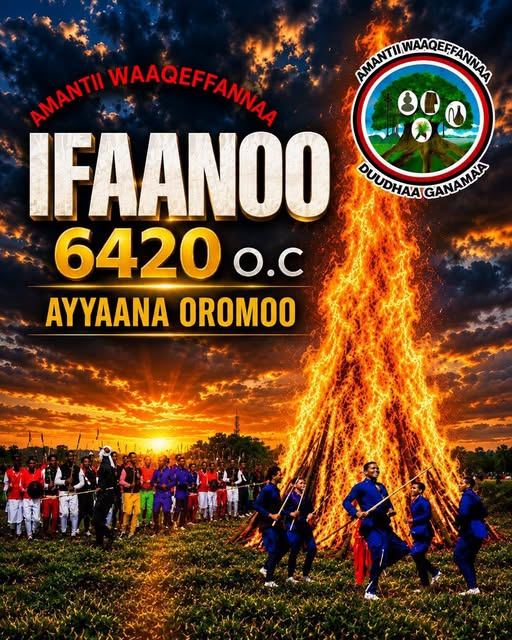
Ifaanoo: A Sacred Oromo celebration of light and renewal of Faith and Unity
An Ancient Ritual of Illumination and Reaffirmation of Faith
In the rich tapestry of Oromo cultural and religious traditions, few ceremonies carry the luminous symbolism of Ifaanoo—a sacred celebration of light, spiritual renewal, and the reaffirmation of community bonds. Rooted in the ancient Waaqeffannaa faith system, this profound ritual embodies the Oromo people’s deep connection to creation, their Creator, and one another.
The Symbolism of Light in Oromo Spirituality
The term Ifaanoo derives from ifaa, meaning “light” in Afaan Oromoo. In the traditional Oromo worldview, light represents not only physical illumination but also spiritual clarity, moral purity, and the presence of divine blessing. Just as light dispels darkness, the Ifaanoo ceremony symbolises the dispelling of ignorance, conflict, and spiritual obscurity from the community.
The concept of light appears throughout Oromo religious practice. The rituals of Ulaa bahuu, Ifa bahuu, and Dhugaa bahuu are among the major components of ceremonies undertaken in the indigenous religion, where the entire family of followers is required to visit the shrine centre to receive blessing, good fortune, and reconciliation with Waaqaa (God) . These “emergence” rituals are deeply connected to the symbolism of coming into the light—emerging from darkness into divine presence.
The Ifaanoo Ceremony
Ifaanoo is closely tied to the Oromo calendar and the Gadaa system—the democratic social and political institution that organised Oromo life for centuries and is recognised by UNESCO as an Intangible Cultural Heritage of Humanity . The festival is fundamentally a ritual of gratitude to Waaqa (God) for life, health, and the bounty of the land .
In the Waaqeffannaa faith, followers celebrate various Ayyannota (ceremonies) to offer thanksgiving . Scholars have noted that the indigenous practices of the Oromo are believed to have been intact for centuries, involving the blessing and reconciliation of entire families . While the specific rituals of Ifaanoo vary by region, they share common elements:
- Gathering at sacred sites — often at shrines or natural locations deemed spiritually significant
- Light rituals — the symbolic use of fire, candles, or the rising sun to represent divine presence
- Blessings by elders — led by the Abba Gadaa or spiritual leaders who offer prayers for the coming season
- Communal singing and dancing — traditional songs and ululations that express joy and gratitude
- Offerings to Waaqa — gifts of dadhii (honey beer), dufo (bread), and other symbolic items
- Reconciliation — resolving conflicts before participating, reinforcing that one cannot give thanks while holding a grudge
A Social Bond Across Communities
The ceremony is profoundly social. Irreechaa—a related celebration—has been described as “a social bond within Oromo people that brings them closer to each other” . Ifaanoo similarly serves as a gathering point, bringing Oromo people from different areas together regardless of their religious background .
In diaspora communities, ceremonies like Ifaanoo and Irreechaa take on added significance. In Bergen, Norway, the festival has been celebrated as the only place in Europe where the event takes place, with participants travelling from across European countries, emphasising how religious celebrations offer opportunities for families and friends to reaffirm relations through face-to-face interaction .
Renewal of Faith and Unity
At its core, Ifaanoo is a reaffirmation of faith in Waaqa and a renewal of the community’s covenant with the divine. It embodies the principle that light represents not only spiritual clarity but also the ongoing presence of Waaqa in the lives of the faithful.
The blessing, which is a central part of Waaqeffannaa ceremonies, is described as a time when “the entire family members of followers of the religion and all their living animals are required to visit the shrine center to have blessing, good fortune and reconciliation with Waaqaa (God)” . This is a holistic act, covering all aspects of life—from the spiritual to the physical to the economic.
Ifaanoo also embodies the values of unity. Like Irreechaa, which “is now observed by the majority of Oromos, regardless of their religion” , Ifaanoo brings together followers of Waaqeffannaa, Muslims, and Christians who come together and celebrate with joy . It is a symbol of cultural identity and social cohesion.
A Living Tradition
Ifaanoo remains a living tradition, celebrated in Oromia and diaspora communities worldwide. It is a powerful expression of Oromo identity and resilience—a declaration that the light of tradition continues to shine brightly despite the challenges of modernity.
As the Oromo people continue to preserve and celebrate their heritage, ceremonies like Ifaanoo ensure that the light of their culture, faith, and unity will illuminate the path for future generations.

The Oromo Calendar and the Year 6420: A Legacy of Ancient Timekeeping
Understanding the Origins of One of Africa’s Oldest Calendrical Systems
By Maatii Sabaa
In March 2026, when most of the world marked the beginning of a new year according to the Gregorian calendar, the Oromo people—across Oromia and the global diaspora—celebrated the arrival of a different milestone: the Oromo New Year, 6420. For many outside the Oromo community, this number raises a fundamental question: Where does the year 6420 come from?
The Oromo Calendar: A 2,300-Year-Old Legacy
The Oromo calendar is one of Africa’s oldest indigenous calendrical systems. It is believed to have been developed by the Oromo people around 300 BC . This places its origins at approximately 2,300 years ago—a period when the Oromo were already sophisticated observers of the cosmos.
Known as the Borana calendar or the Dhaha/Henni calendar, it is a lunar-stellar calendar system. This means it relies on astronomical observations—specifically, the phases of the moon in conjunction with the rising and setting of seven particular stars or constellations.
The calendar’s sophistication lies in its integration of astronomy with daily life. It consists of 12 months and 354 days in a year, based on the lunar cycle. It has no weeks, but rather a name for each day of the month. The first day of the Oromo year begins in the month of Bitootessaa (March), when the constellation Triangulum is in conjunction with the new moon.
The Significance of the Number 6420
The year 6420 is reached by counting forward from the calendar’s inception around 300 BC. While the exact starting point is a subject of ongoing scholarly discussion, the calendar’s antiquity is well-established.
For the Oromo people, the calendar is more than just a way to count time—it is a cornerstone of their identity and cultural continuity. As one elder explained at the Walisoo Liiban celebration of the 6420 New Year:
“Observing Birboo at our Galma is not just about marking a calendar. It is about remembering who we are. It is about connecting our past to our future, grounding ourselves in the values of balance, respect for all creation, and community that Waaqeffannaa teaches” .
The calendar is tied to the traditional Oromo religion, Waaqeffannaa, and is used to schedule the Gadaa system of elections and power transfer. The Gadaa system, recognised by UNESCO as an Intangible Cultural Heritage of Humanity, is itself deeply connected to the calendar.
Archaeological and Astronomical Evidence
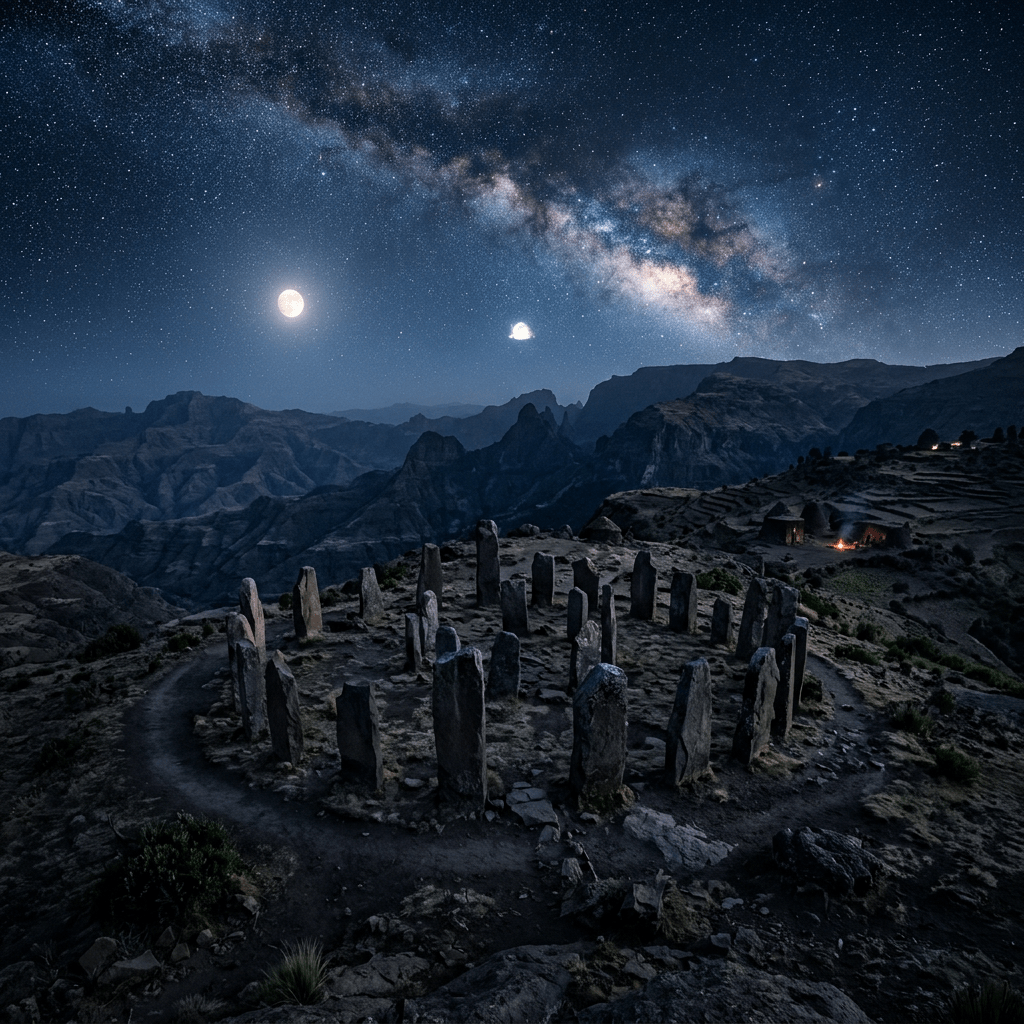
The Oromo calendar’s origins are not merely a matter of oral tradition. The Namoratunga archaeological site near Lake Turkana, Kenya, has been central to understanding its antiquity. Some scholars have argued that the site, dating to around 300 BC, contains evidence of an early Cushitic calendar that shares astronomical alignments with the Oromo calendar. The site’s basalt pillars are aligned with seven star groups that correspond to the Borana star groups still used in the Oromo calendar today.
However, it should be noted that the relationship between Namoratunga and the Oromo calendar has been debated. Astronomer and archaeologist Clive Ruggles, after re-examining the site, concluded there is no direct relationship. Nevertheless, the broader scholarly consensus acknowledges the calendar’s ancient roots and its continuity into the present day.
A Living Calendar in the Modern World
Today, the Oromo calendar remains a living tradition. In January 2026, Waaqeffannaa faithful gathered at the Galma Amantaa (House of Worship) in Walisoo Liiban, Oromia, to observe the Oromo New Year, Birboo, marking the year 6420. The celebration, which included prayers for peace (nagaa), love (jaalala), and unity (tokkummaa), was described as “a powerful reaffirmation of an ancient identity” and “a community’s declaration of continuity”.
The calendar’s months and day names, with their astronomical origins, are still used by Oromo communities in both Ethiopia and Kenya. The Ayyaantu—Oromo time-experts with knowledge about stars—continue to track time astronomically, preserving a tradition that has survived for millennia.
Conclusion: A Calendar of Identity and Continuity
The Oromo calendar, with its year 6420, is a testament to the ancient astronomical knowledge of the Oromo people and their enduring cultural identity. Its development around 300 BC and its continued use today represent one of the longest continuous calendrical traditions in the world. For the Oromo people, the calendar is not just a way to count years—it is a declaration of continuity, a connection to ancestors, and a guide for the future.
As the Oromo New Year 6420 was celebrated, the message was clear: “May this New Year bring you peace, love, and unity” .
This feature article is dedicated to the custodians of the Oromo calendar and to all those working to preserve and promote Oromo cultural heritage.

Legal Foundations of Finfinne’s Special Status: A Review of Federal and Regional Laws
Examining the Constitutional and Statutory Provisions Recognizing Oromia’s Special Interest in the Capital
By Dhabessa Wakjira
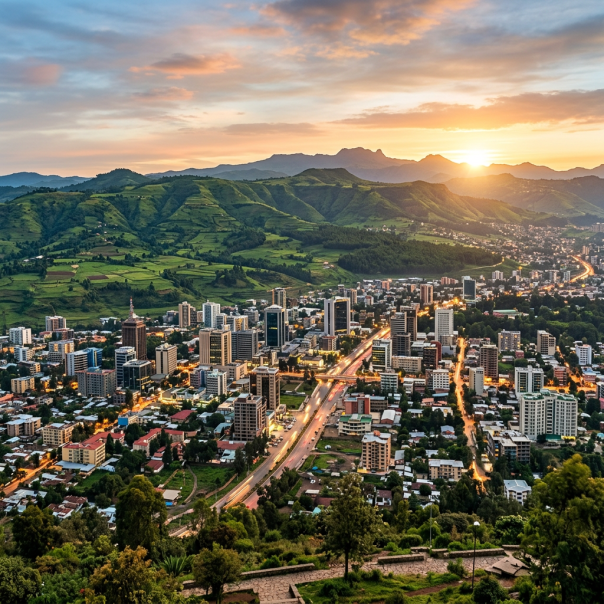
(Melbourne-11 August 2026) The question of Finfinne—the city known internationally as Addis Ababa—is not merely a matter of political debate or historical narrative. It is also a matter of law. Over the past four decades, a series of federal and regional legal instruments have recognized and codified the unique relationship between the Oromo people and their ancestral capital.
From the transitional period following the fall of the Derg to the present day, Ethiopian law has acknowledged that Finfinne, by virtue of its location within the State of Oromia, gives rise to a “special interest” for Oromia—an interest that encompasses social services, natural resources, and joint administrative matters . This legal framework, while contested in its implementation, provides a constitutional foundation for the Oromo people’s claim to their historical capital.
Federal Legal Instruments: The Constitutional and Statutory Framework
A. Proclamation No. 7/1984: Establishing National Regional Self-Governments
The legal recognition of Oromia’s special interest in Finfinne predates the 1995 Constitution. In the transitional period following the fall of the Derg regime, the Transitional Government of Ethiopia enacted Proclamation No. 7/1984 to establish National Regional Self-Governments.
Article 3(1) of this proclamation identified the Oromo people as one of the nations, nationalities, and peoples entitled to establish a regional self-government, designated as “Region 4.” Critically, Article 3(4) of the proclamation stated that the “special national interests and political rights of Oromo” over Harari (Region 13) and Addis Ababa (Region 14) would be protected .
This provision represented the first formal legal acknowledgment of Oromia’s special claim over the capital following the collapse of the unitary state. It recognized that the city’s location within Oromia created a unique relationship that could not be ignored, even as the city was designated as a separate administrative entity.
B. The FDRE Constitution, Article 49(5): The Constitutional Recognition
The most significant legal recognition of Oromia’s special interest in Finfinne is enshrined in the Federal Democratic Republic of Ethiopia Constitution, adopted in 1995.
Article 49(5) states:
“The special interest of the State of Oromia in Addis Ababa, regarding the provision of social services or the utilization of natural resources and other similar matters, as well as joint administrative matters arising from the location of Addis Ababa within the State of Oromia, shall be respected. Particulars shall be determined by law.”
This provision was the product of extensive debate during the Constitutional Assembly. The legislative history reveals that the Oromo representatives argued for the inclusion of this clause on several grounds:
- Geographical reality: Finfinne is located within the State of Oromia.
- Historical connection: The city was established on Oromo land and is the heart of Oromia.
- Practical necessity: The city’s expansion affects surrounding Oromo farming communities.
- Constitutional identity: The city serves as Oromia’s capital and is deeply connected to Oromo identity .
The clause was approved with 507 votes in favour and only 6 against, demonstrating broad consensus on the principle of Oromia’s special interest.
C. Addis Ababa City Administration Charter Proclamation No. 87/1989
The first charter for the Addis Ababa City Administration, Proclamation No. 87/1989, provided detailed provisions on the relationship between the city and Oromia.
Article 33 of this proclamation established four key elements of Oromia’s special interest:
- Boundary Determination: The city’s boundary shall be delimited jointly by the City Administration and the Oromia Regional Government.
- Seat of Government: The Oromia Regional Government has the right to establish its seat in Addis Ababa.
- Access to Services: Social services provided by the City Administration to Addis Ababa residents shall also be accessible to residents of neighbouring Oromia communities, who shall be entitled to benefit from those services on an equal footing.
- Consultation on Development: The City Administration shall undertake development activities affecting Oromia only in consultation and agreement with the Oromia Regional Government.
This charter represented a significant legal acknowledgment of the practical interdependence between the city and its surrounding region .
D. Amended City Charter Proclamation No. 311/1995 and No. 361/1995
Subsequent amendments to the City Charter, including Proclamation No. 311/1995 and Proclamation No. 361/1995, modified the framework for the relationship between the city and Oromia.
Article 62 of these proclamations, concerning the relationship between the City Administration and the Oromia Regional Government, provided that:
- The City Administration shall maintain a relationship based on fruitful cooperation with Oromia.
- In accordance with Article 49(5) of the Constitution, Oromia’s interest shall be respected. The particulars shall be determined by agreement between the City Administration and the Regional Government or by a law enacted by the House of Peoples’ Representatives.
Article 5 of these proclamations, concerning the city’s boundaries, departed from the earlier charter. It provided that the boundary shall be delimited by agreement between the City Administration and Oromia or pursuant to the decision of the Federal Government—a provision that allowed for federal determination of boundaries without necessarily requiring the consent of the Oromia Regional Government .
This shift represented a legal narrowing of Oromia’s special interest compared to the 1989 charter, a development that has been a source of ongoing tension.
Regional Legal Instruments: The Oromia Constitutional Framework
A. The Oromia Transitional Constitution (1984)
The first constitution of the Oromia National Regional State, enacted in 1984 through Proclamation No. 2/1985, established the fundamental identity of the region.
This historic document, adopted by the newly established Oromia Council following popular elections, declared:
- Article 55: The name of the region shall be Oromia.
- Article 57: The working language of the region shall be Afaan Oromoo, written in the Latin script.
- Article 58: The capital city of the region shall be Finfinne.
This constitution represented the first formal assertion of Oromo self-governance and affirmed Finfinne as the heart of Oromia.
B. The Oromia Constitution (1987)
The second Oromia Constitution, enacted through Proclamation No. 1/1987, reaffirmed the region’s identity and capital following the transition to a civilian government.
Article 6 of this constitution confirmed that Finfinne is the capital city of the Oromia Regional State, maintaining the continuity of the region’s constitutional identity.
C. The Amended Oromia Constitution (1994) and Proclamation No. 94/1997
The third Oromia Constitution, enacted through Proclamation No. 46/1994 following the political reforms of 1993, introduced a significant change: Article 6 declared that the capital of Oromia would be Adama.
This change was made following Proclamation No. 35/1992, which had designated Adama as Oromia’s capital effective July 1992. However, this decision was met with widespread public opposition and protest.
Following the 1997 elections, the Oromia Regional Government, responding to popular demand, returned its seat to Finfinne without preconditions. Subsequently, Proclamation No. 94/1997, adopted by the Oromia Council, amended the constitution to restore Finfinne as the capital of Oromia.
Article 2(3) of this proclamation formally declared that the capital of Oromia shall be Finfinne, reversing the 1994 amendment. This decision reflected the deep historical and cultural connection between the Oromo people and their ancestral capital .
The Ongoing Debate: Implementation and Contestation
While the legal framework recognizing Oromia’s special interest in Finfinne is well-established, its implementation has been a source of persistent tension.
The Special Interest Council
The draft proclamation on Oromia’s special interest in Addis Ababa contemplates the establishment of a Joint Council composed of delegates from both the City Government and Oromia Regional State . However, legal experts have noted shortcomings in the draft, including the postponement of determining key details such as the number of members, structure, mandates, and tenure—matters that should be clearly defined in the establishing legislation .
The 2014 Master Plan Controversy
The 2014 Addis Ababa Integrated Development Master Plan, which proposed expanding the city’s boundaries by 1.1 million hectares into surrounding Oromia districts, ignited widespread protests and led to hundreds of deaths. Critics argued that the plan was centrally imposed without prior consultation or participation of the Oromia Regional Government, in violation of constitutional principles .
The Failure to Fully Implement Article 49(5)
Legal commentators have noted that the concept of “special interest” was intended to imply a form of ownership and the immunity of the Oromo people from eviction from the city . However, successive federal governments have been accused of failing to implement the constitutional provision meaningfully, instead pursuing policies that marginalize Oromo communities in and around the capital .
Conclusion: A Legal Framework Awaiting Implementation
The legal instruments examined in this article reveal a consistent pattern: from the transitional period to the present day, Ethiopian law has recognized Oromia’s special interest in Finfinne. The FDRE Constitution, the City Charters, and the Oromia Constitutions all acknowledge the unique relationship between the city and the region that surrounds it.
However, legal recognition alone is insufficient. The gap between the law on paper and its implementation in practice has been a source of ongoing tension and conflict. The failure to fully implement Article 49(5), the controversies over boundary expansions, and the inadequate representation of Oromo interests in the governance of the capital have all contributed to the perception that Oromia’s constitutional rights are being violated.
The path forward lies in the genuine implementation of the constitutional and legal framework—through joint administrative mechanisms, meaningful consultation, and the protection of Oromo communities affected by the city’s expansion. As one legal commentator has noted: “The concept of special interest entered the Ethiopian legal lexicon to ensure that the Oromo people, whose land was taken to establish the capital, would not be excluded from the benefits of the city’s existence” . Fulfilling this vision requires not only legal recognition but also political will.
Injifannoon Ummata Oromoo!
Finfinne haa jabaattu!
Seerri haa raawwatamu!
This feature article is based on a review of federal and regional legal instruments and is dedicated to all those who seek the full implementation of Oromia’s constitutional rights in Finfinne.

For the Cause of Finfinne: Entering Finfinne Itself Is Better Than Entering the Forest
A Reflection on Strategy, Presence, and the Path Forward for Oromo Liberation
By Dhabessa Wakjira
In the long and arduous struggle for Oromo liberation, the question of strategy has always been central. For decades, the Oromo people have employed various methods of resistance—armed struggle in the forests, political advocacy in the diaspora, and mass protests in the streets. Each has its place and its purpose. But there is a principle that deserves careful consideration:
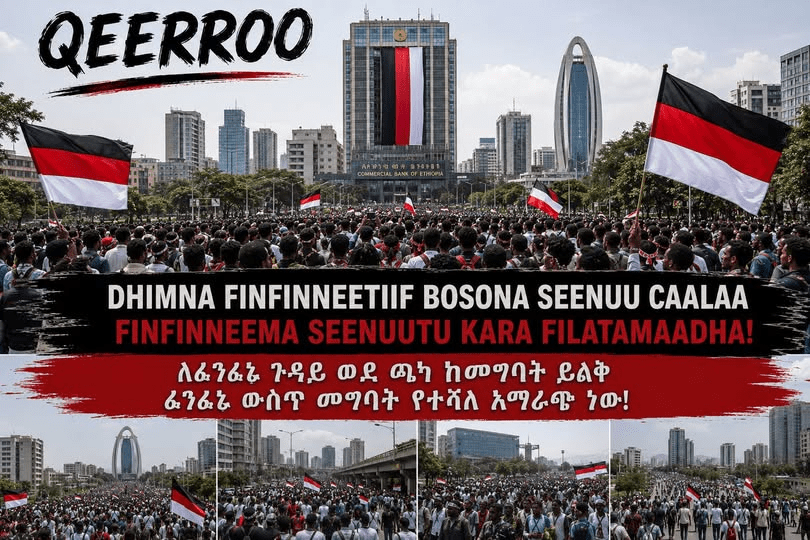
“Dhimma Finfinneetiif bosona seenuu caalaa Finfinneedhuma seenuutu karaa filatamaadha.”
“For the cause of Finfinne, entering Finfinne itself is better than entering the forest.”
This is not a dismissal of armed struggle or the sacrifices made by those who have fought in the forests. It is a strategic reflection on the nature of the struggle for Finfinne and the most effective means of achieving justice for the Oromo people’s ancestral capital.
The Significance of Finfinne
Finfinne—the city known internationally as Addis Ababa—is not just any city. It is the historical and spiritual heart of the Oromo people. It is the place where the Oromo people lived for generations before the expansion of the Ethiopian Empire. It is the site of their cultural heritage, the cradle of their language, and the symbol of their historical presence in the region.
For the Oromo people, Finfinne is not a bargaining chip. It is not a political football to be kicked around by competing interests. It is their ancestral homeland, and their connection to it is inseparable from their identity.
The struggle for Finfinne is therefore not just a political struggle—it is a struggle for the very soul of the Oromo nation. It is a struggle for recognition, for justice, and for the restoration of a people’s connection to their land.
The Forest and the City: Two Strategies
Historically, the Oromo liberation movement has employed two primary strategies: armed struggle in the forests and political organizing in the cities. Both have their strengths and limitations.
The Forest Strategy
Armed struggle has been a vital part of the Oromo resistance. The Oromo Liberation Army (WBO) has fought bravely against successive Ethiopian regimes, and their sacrifices have inspired generations. The forest has been a sanctuary for those who could not operate openly, a place where resistance could be sustained even in the darkest times.
However, the forest strategy has limitations. It is physically demanding, resource-intensive, and often results in heavy casualties. It can also be geographically remote from the centers of political power, limiting its direct impact on urban populations and decision-makers.
The City Strategy
The city strategy—entering Finfinne itself—offers a different approach. It recognizes that the struggle for Finfinne cannot be won solely in the forests. It must be waged in the city itself, among its residents, in its institutions, and in its political life.
Entering Finfinne means:
- Building a presence in the city’s political and civic institutions
- Organizing communities within the city
- Advocating for Oromo rights in the urban space
- Challenging the narrative that denies Oromo history
- Demanding recognition of Finfinne’s Oromo heritage
- Participating in governance to shape the city’s future
This strategy recognizes that Finfinne is not just a piece of land to be claimed from the outside—it is a living city with millions of residents, a complex political landscape, and a role as Ethiopia’s capital. Engaging with the city directly is essential for achieving justice.
Why Entering Finfinne Matters
1. Presence Is Power
In politics, presence is power. If the Oromo people are absent from Finfinne’s political and civic life, their voice will not be heard. Entering Finfinne means being present where decisions are made, where policies are shaped, and where the future of the city is determined.
2. The City Is the Symbol
Finfinne is not just a city—it is a symbol. It is the symbol of Oromo dispossession and the symbol of Oromo resistance. To enter Finfinne is to reclaim that symbol. It is to assert that the Oromo people have a rightful place in their ancestral capital.
3. The City Is the Center of Power
Finfinne is the seat of the Ethiopian government, the African Union, and numerous diplomatic missions. It is the center of political and economic power in Ethiopia. To influence the future of Finfinne, the Oromo people must be present at the center of that power.
4. The City Is a Space for Organizing
Finfinne is home to millions of people, including a significant Oromo population. It is a space for organizing, for building alliances, and for creating a movement that can effect change from within. By entering Finfinne, the Oromo people can build a movement that is rooted in the city itself.
5. The City Is the Future
The future of Finfinne will be shaped by those who are present in the city. If the Oromo people are absent, others will shape that future. Entering Finfinne ensures that the Oromo people have a say in what that future looks like.
The Path Forward
The principle that “entering Finfinne is better than entering the forest” is not a rejection of armed struggle. It is a call to recognize that the struggle for Finfinne must be waged on multiple fronts. It must include:
- Political organizing in the city
- Advocacy for Oromo rights in national and international forums
- Legal action to challenge unjust policies
- Cultural preservation to maintain Oromo heritage in the city
- Economic empowerment to build Oromo prosperity
- Public awareness to educate residents about Finfinne’s history
- Participation in governance to shape the city’s future
This multi-front approach recognizes that the struggle for Finfinne is not just about the past—it is about the present and the future. It is about ensuring that the Oromo people have a rightful place in their ancestral capital and that the city reflects the diversity and history of the Oromo nation.
A Call to Action
The time has come for the Oromo people to enter Finfinne—not as visitors, but as participants. Not as outsiders, but as rightful inhabitants. Not as supplicants, but as citizens with equal rights.
Entering Finfinne means:
- Registering to vote in the city’s elections
- Participating in civic organizations that shape the city’s life
- Advocating for Oromo rights in the city’s institutions
- Building businesses that create jobs and prosperity
- Educating residents about Finfinne’s Oromo history
- Demanding recognition of Oromo heritage in the city’s public spaces
This is not an easy path. It requires patience, persistence, and courage. But it is a path that offers a real chance for lasting change.
Conclusion: A New Chapter in the Struggle
The Oromo people have fought for Finfinne for generations. They have sacrificed their lives, their freedom, and their dreams. They have entered the forests, faced the guns, and endured the prisons. But the struggle is not over.
“Dhimma Finfinneetiif bosona seenuu caalaa Finfinneedhuma seenuutu karaa filatamaadha.”
“For the cause of Finfinne, entering Finfinne itself is better than entering the forest.”
This is a call to a new chapter in the struggle—a chapter of presence, participation, and engagement. A chapter where the Oromo people enter the city they love and claim their rightful place in it.
Let us enter Finfinne. Let us build a future where the Oromo people are recognized, respected, and empowered in their ancestral capital. Let us create a city that reflects the beauty, diversity, and resilience of the Oromo nation.
Finfinne is Oromo.
Entering Finfinne is the path forward.
The struggle continues.
Injifannoon Ummata Oromoo!
Finfinne haa jabaattu!
Finfinnee haa seennu!
This feature article is dedicated to all those who have fought for Finfinne and to those who will continue the struggle in the city itself—the heart of the Oromo nation.

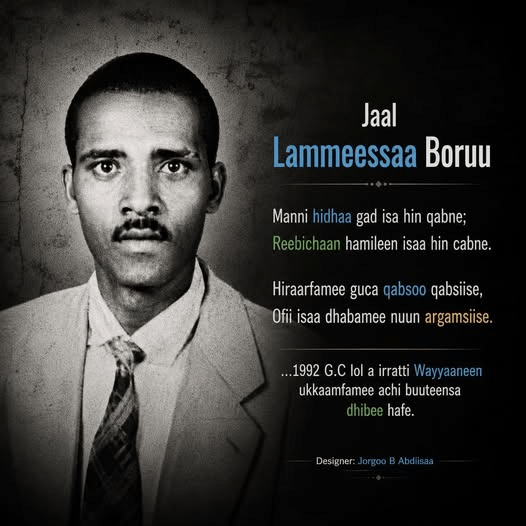
The Lion Who Fell Fighting: Remembering Jaal Lammeessaa Boruu (1943–1992)
By Daandii Ragabaa (Adapted into a feature story based on various sources)
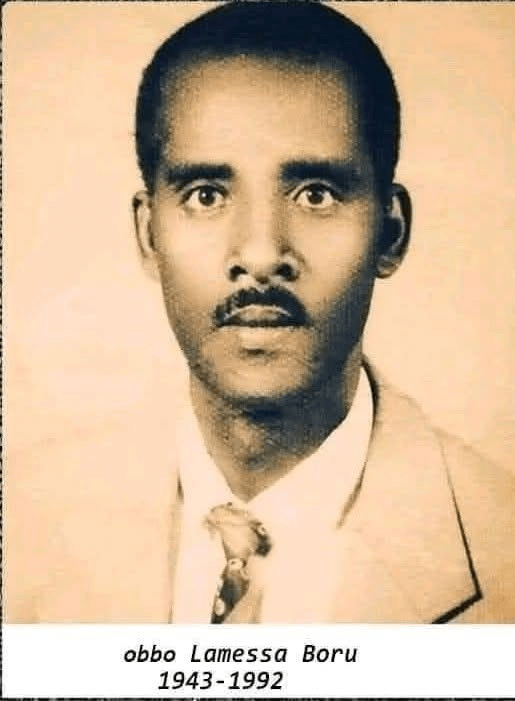
His name means “Lion” in Oromo. And like a lion, Jaal Lammeessaa Boruu lived with courage, fought with conviction, and died with his boots on—somewhere in the forests of western Oromia, in 1992. Three decades later, his grave remains unknown. But his story, carried by oral tradition and fragmentary records, refuses to be buried.
A Humble Beginning in Wallagga
Jaal Lammeessaa Boruu was born in 1943 in Billo, a town in the Bonayya district of East Wallagga, within the Waamaa region. According to those who knew him, he grew up in a typical Oromo farming community, at a time when the imperial government of Haile Selassie exercised firm control over the land and its people.
As a young man, he left his birthplace and moved to Finfinnee (Addis Ababa), where he lived for about 15 years as an adolescent. There, he entered school. But his education was interrupted by a different calling.
The Soldier with the Striking Physique
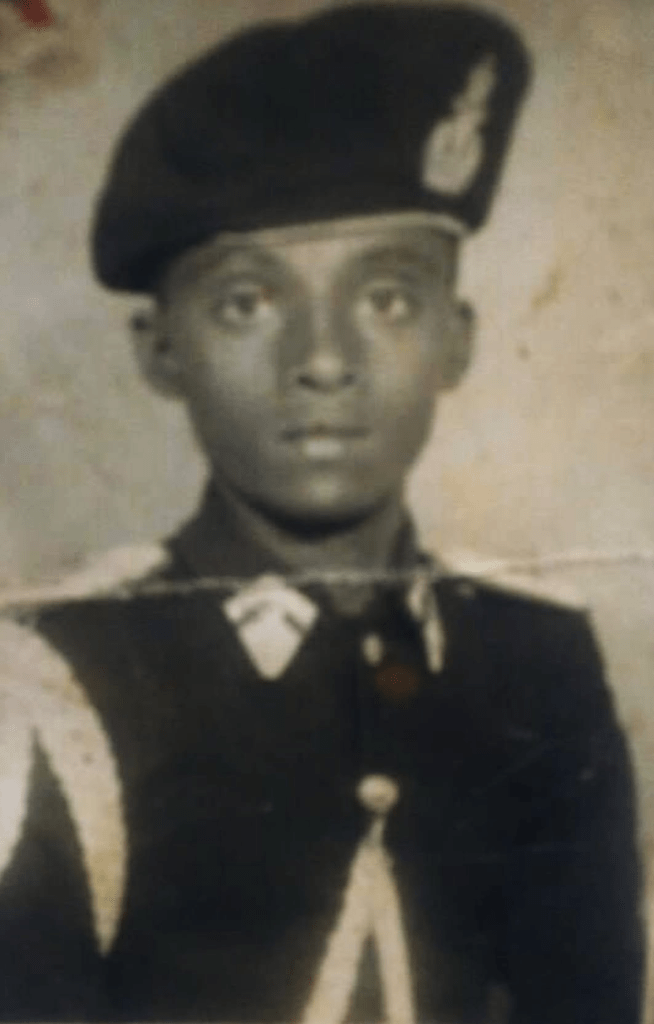
Contemporary accounts describe Jaal Lammeessaa as tall and physically impressive. It was this very stature that drew the attention of military recruiters. Under the imperial regime, he was selected to join a special unit known as “Kubur-Zabanya” and “Faxino-Darash” (likely special police or commando forces). Within the latter, he became known as “Faxino-Daraash Shalaqaa” and served under the command of General Tadesse Birru.
He proved to be an exceptional soldier. His superiors reportedly praised his dedication, and he rose to become a respected non-commissioned officer.
Joining the Machaa Tulema Association
The Machaa Tulema Association was founded as a development and civic organization, but it quickly became a political vehicle for Oromo nationalism. General Tadesse Birru was one of its key leaders. When the association began recruiting members, Jaal Lammeessaa was among those selected.
Initially, the organization’s goal was to work within the system—to address Oromo grievances through legal means. But as General Tadesse and others concluded that the imperial regime had no intention of recognizing Oromo rights, they shifted toward a more radical path. Jaal Lammeessaa became a trusted operative within the association’s secret military wing.
The Failed Plot Against Emperor Haile Selassie
On October 23 (Ethiopian calendar), the Emperor’s birthday, a plot was hatched to assassinate Haile Selassie during the annual celebrations at the site known as “Addabaaba’ii Minlik” (Menelik Square). General Tadesse Birru assigned four commandos to carry out the attack, selecting them for their courage and loyalty.
The four were:
· Lammeessaa Boruu (from the Faxino-Darash unit)
· Camadaa Sobbooqaa
· H/Mariyam Diimaa (from Kubur-Zabanya)
· Fixumaa Hiikisaa
They prepared extensively. But the plot was betrayed. Informants within the government learned of the plan just before it could be executed. The commandos were arrested.
When Jaal Lammeessaa was searched, a bomb intended for the Emperor was found on him. He was tortured severely. According to surviving members of the Machaa Tulema Association, his ribs were broken, and he suffered long-term disability from the interrogation. Despite the brutality, he refused to betray the organization’s deeper secrets—though under extreme duress, some information was extracted.
First Imprisonment and Release
Following the failed plot, General Tadesse and several others were sentenced to death. Jaal Lammeessaa received a five-year prison sentence. After serving his term, he was released. Upon release, he immediately rejoined his former commander, General Tadesse Birru, who had been transferred to Galamso in eastern Oromia. There, they continued to discuss the struggle for Oromo self-determination.
The Cinema Bombing and Second Arrest
As the Machaa Tulema Association continued its activities, the regime grew more determined to crush it. On December 10, 1959 (Ethiopian calendar), a bomb exploded inside a cinema in Addis Ababa where the film Zorba the Greek was being shown. Thirty-six people were wounded.
The government immediately blamed the Machaa Tulema Association. Propaganda claimed that a member named Maammoo Mazaamir had planted the bomb. The incident was used as a pretext for a massive crackdown. Jaal Lammeessaa was arrested again—this time as part of a sweeping roundup of Oromo nationalists.
He was among nine senior Machaa Tulema figures sentenced to long prison terms, while General Tadesse Birru and Maammoo Mazaamir received death sentences (later commuted or carried out, depending on the account).
Life Under the Derg and the Fourth Arrest
Jaal Lammeessaa spent more than 12 years in prison under the Derg regime that overthrew Haile Selassie in 1974. He was held in police stations and military camps, subjected to repeated interrogations. Yet even in detention, he remained committed to the Oromo cause.
After the Derg fell in 1991, Jaal Lammeessaa was released. He joined the Oromo Liberation Front (ABO – a reference to the OLF) and became a member of its central committee, working in the economic department. He lived in Wajjira Gullaallee, continuing his activism.
The Final Battle and Disappearance
In 1992, following a split within the transitional government of Ethiopia (the “Ce’umsaa” or transitional period), Jaal Lammeessaa and other Oromo fighters moved toward western Oromia. They joined ongoing armed confrontations against government forces (referred to as “Wayyaanee” – a term for the Ethiopian military or allied militias).
According to the source, Jaal Lammeessaa Boruu fell in battle near the Jimma Horroo area in Wallagga region. He was killed in armed combat. His body was never recovered, and to this day, the exact location and circumstances of his death remain unknown.
Legacy: The Unknown Grave, the Known Sacrifice
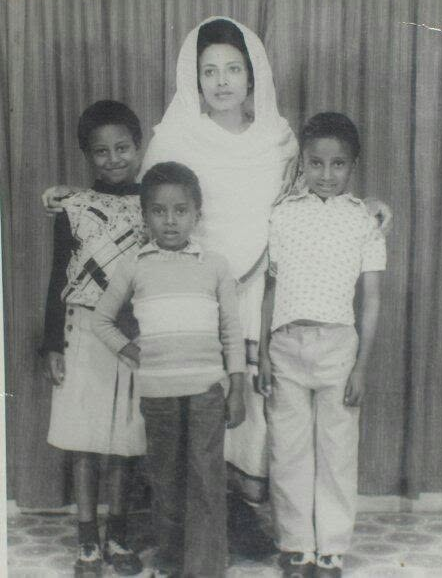
Jaal Lammeessaa Boruu was 49 years old when he died. He left behind three children: Mosisa Lamessa Boru, Lense Lemessa Boru and Tsegaye Lemessa Bouru. He is remembered as a devoted fighter who gave his entire adult life to the Oromo national struggle. From the imperial era through the Derg and into the transitional government, he never wavered.
The biography ends with a poetic refrain:
“The fighter may fall. He may pass away. But Jaal Lammeessaa’s blood was not shed in vain. He has grown for us the plant of freedom.”
His grave may be lost to history. But for those who keep his memory, Jaal Lammeessaa Boruu remains one of the lions of Oromo resistance—a man who turned his back on personal safety and government favor, and chose instead the uncertain path of the forest and the battlefield.
—
*This feature story is based exclusively on various sources of the Oromo-language biography written by Daandii Ragabaa. It is presented as a journalistic adaptation of that source and does not constitute an endorsement of armed struggle or any political organization. The factual claims rest with the original author.

Wealth Creation Strategies for Indigenous Oromians

Taking Control of Your Financial Destiny
Join the growing movement of Oromo people taking control of their financial future. Are you an Indigenous Oromian looking to build wealth and secure a future for your family? Struggling to navigate the complexities of property investment, finance, and long-term savings? Imagine having tailored insights that guide you on the path to financial independence and generational wealth—For Indigenous Oromias, By Indigenous Oromias.
Why Wealth Creation Matters Now
The Oromo people have historically been excluded from economic opportunities across Ethiopia. Successive regimes systematically prevented Oromos from building economic assets, with more than 60% of Ethiopia’s exportable commodities, over 60% of staple food, 70% of industrial raw materials, and 80% of hydro power coming from Oromia—yet no Oromo has been able to qualify among the top 10 richest people in the country. This is not a coincidence; it is the result of deliberate economic marginalization.
But the Oromo people have always had the tools for economic resilience. The Gadaa system contains powerful economic principles that our ancestors used to build and sustain wealth: hard work, planning, mutual assistance, and community-based resource management. The proverb “Tuulamanii taa’anii, Waaqa ofii hin komatan” reminds us: “It is not right to blame God for not working hard.” Hard work and commitment are the sources of wealth.
What Indigenous Wealth Offers
Indigenous Wealth is a 100% Oromo-owned and operated consultancy dedicated to helping our people build generational wealth and achieve financial independence. Our team understands the unique challenges Oromo people face—and we have the strategies to overcome them.
Our Services Include:
Property Investment: We help you gain access to quality investment properties, connect you with finance professionals, and guide you through the property market to build long-term wealth.
Finance & Loans: We connect you with mortgage professionals who can assist with tailored home loans, equipment and business loans, as well as competitive finance for rural Oromo communities.
Wealth Strategy: We create personalized wealth-building plans designed specifically to help you achieve your financial goals.
Our Proven Results
We have successfully supported Oromo people across Ethiopia in achieving financial independence. Across similar models in other communities, Indigenous-owned wealth consultancies have helped create over 110 new property investors in just four years, with a goal of building a community of millionaires .
The Gadaa Foundation for Wealth
Our approach is rooted in the economic wisdom of the Gadaa system:
Hard Work and Planning
“Jabaatan jabaa nyaatu, laafan foxxoqxuu nyaatu” — “The strong eat the strong, and the weak eat the weak.” This proverb reminds us that hard work is mandatory in daily life, and that everyone needs to plan to work hard and secure their future.
Community Support Systems
Traditional Oromo institutions like dabo (labour cooperation) and daadoo (mutual work groups) demonstrate the power of collective effort. When communities work together, they achieve more than individuals working alone. We apply these same principles to modern wealth building.
Guddifachaa (Adoption)
The Oromo practice of guddifachaa demonstrates the belief that children are assets and the community shares responsibility for their welfare and education. This is the foundation of generational wealth—investing in the next generation’s education, skills, and economic opportunities.
Hard Work and Self-Reliance
The Gadaa system emphasizes that people should not wait for others to solve their economic problems. “Hojii hojjechuu isa malee gaafa du’aa hin galus” — “Without work, the day does not end.”.
How It Works: Your Free Wealth Strategy
Take advantage of our No-Obligation, Completely FREE Wealth Strategy. This isn’t just another generic report—it’s a highly personalized plan where you’ll receive unique suggestions on how to:
✅ Build generational wealth for your family and community
✅ Invest in property and understand the market
✅ Secure financial independence and plan for retirement
No cost, no commitment—just a clear path forward.
Real Stories: Oromo Success
Across Ethiopia, Oromo people are already building wealth through determination and community:
Fedhi Gudina Community Saving for Investment in Agribusiness Group: Founded in 2019 with just $141 raised by 20 members (15 women), this Oromo group grew their savings to $28,530 through strategic investment in crop cultivation and processing. They now operate a grain milling service that serves their entire community.
Safiya, an Oromo entrepreneur: Forced to flee Ethiopia, she built a successful business making traditional Oromo beadwork in Nairobi. Her handmade designs are sold for special occasions like weddings, and she now supports her family independently. She says: “I have hope in what I am making with my hands. I believe in it, I believe in myself.“.
Reach for Change Entrepreneurship Training: In April 2025, 83 Oromo women in Me’so, Babile, and Chinaksan woredas participated in entrepreneurship training designed to turn ideas into viable businesses. They are building off-farm businesses that sustain livelihoods and create economic independence.
Taking the First Step
The Oromo people have always been resilient. Despite centuries of oppression, forced displacement, and economic exclusion, we have survived—and now it is time to thrive.
Start your journey today. Complete our quick survey and begin taking control of your financial future. Whether you are looking to invest in property, start a business, or build generational wealth, Indigenous Wealth is here to guide you every step of the way.
Indigenous Wealth — 100% Oromo-owned and operated.
For Indigenous Oromias, By Indigenous Oromias.
Take control of your financial destiny today.
Finfinne: The Living Sacrifice of the Oromo People for Identity, Dignity, and Oromummaa

The Land Where Ancestors Poured Their Blood — and Where the Struggle Continues
By Daandii Ragabaa
There are places that are more than geography. There are places that are memory, identity, and the very soul of a people. Finfinne—the city known internationally as Addis Ababa—is such a place for the Oromo people. It is not merely a capital city; it is the historical heart of Oromia, the ancestral homeland of the Oromo nation, and the site of an ongoing struggle for recognition, dignity, and justice.
Throughout history, the Oromo people have paid a heavy price to defend their connection to Finfinne. They have sacrificed their lives, their freedom, and their dreams—all for the sake of their identity, their dignity, and their Oromummaa (Oromo identity). The land itself is soaked with the blood of ancestors who refused to surrender their heritage.
Tufa Aredo, Jara Jarra, and Jara Tuturu —these names are not merely historical figures. They are living witnesses to the sacrifice that the Oromo people have made for Finfinne. Their stories are etched into the memory of the Oromo nation, a testament to the unwavering commitment of a people who refuse to be erased from their own homeland.
Finfinne: Not Just a City, But a Sacred Trust
For the Oromo people, Finfinne is not a piece of real estate to be negotiated or bartered. It is the place where their ancestors lived, loved, prayed, and died. It is the site of their cultural heritage, the cradle of their language, and the symbol of their historical presence in the region.
Long before the expansion of the Ethiopian Empire under Menelik II, the area known as Finfinnee was inhabited by the Oromo people. The city’s very name is Oromo—meaning “place of hot springs.” This is not a coincidence; it is a testament to the Oromo people’s deep and enduring connection to the land.
But this connection has been contested. The establishment of the city and the subsequent displacement of the Oromo people were acts of dispossession that have never been fully acknowledged or addressed. For generations, the Oromo people have been told that they are not the rightful owners of Finfinne, that their history is a myth, and that their claims are illegitimate.
Yet the Oromo people have never accepted this narrative. They have continued to assert their identity, to demand recognition, and to sacrifice for their homeland.
The Sacrifice of Tufa Aredo, Jara Jarra, and Jara Tuturu
Among the countless Oromo martyrs who have given their lives for Finfinne, the names of Tufa Aredo, Jara Jarra, and Jara Tuturu stand out as symbols of resistance, courage, and unwavering commitment to Oromummaa.
These individuals were not merely victims of oppression; they were active participants in the struggle to defend Oromo identity and land. They understood that Finfinne was not just a city—it was the heart of their nation, the embodiment of their history, and the foundation of their future.
Their sacrifices were not in vain. Their memory inspires a new generation of Oromo youth who continue to demand justice and recognition. Their names are spoken with reverence in Oromo homes, in cultural gatherings, and in the stories passed down from elders to children.
They are the living witnesses—even in death—to the truth that Finfinne is Oromo land, and the Oromo people will never abandon it.
The Historical Context: A Legacy of Dispossession
To understand the significance of the Oromo people’s sacrifice for Finfinne, one must understand the history of dispossession that the Oromo people have endured.
In the late 19th century, the expansion of the Ethiopian Empire under Menelik II brought the Oromo people under the control of a new political order. The establishment of Finfinne as the capital of the empire was accompanied by the displacement of Oromo communities, the confiscation of Oromo land, and the systematic erasure of Oromo identity.
This dispossession was not accidental; it was a deliberate policy of the empire to consolidate control over the region and to marginalize the Oromo people. The Oromo people were excluded from political power, denied access to their own resources, and subjected to cultural and linguistic oppression.
Despite these challenges, the Oromo people have never surrendered their identity. They have continued to speak their language, practice their culture, and assert their rights. And they have continued to sacrifice—in ways both great and small—for their connection to Finfinne.
The Struggle Continues: A New Generation Rises
Today, a new generation of Oromo youth is carrying forward the legacy of Tufa Aredo, Jara Jarra, Jara Tuturu, and countless others who came before them.
They are the Qeerroo—the young people who have taken to the streets to demand justice, who have faced tear gas and bullets, who have been imprisoned and tortured, and who have refused to be silenced. They are the cultural activists who are reviving Oromo language, music, and art. They are the intellectuals who are documenting Oromo history and challenging the narratives that have been used to marginalize their people.
They are the ones who remind the world that Finfinne is Oromo, that Oromummaa is not a political slogan but a deep and abiding identity, and that the struggle for justice will continue until the Oromo people are fully recognized and respected.
The Meaning of Sacrifice in Oromo Culture
In Oromo culture, sacrifice is not a burden—it is a sacred duty. The Oromo people understand that freedom and dignity are not given; they are won. They understand that the land is not just a resource—it is a sacred trust passed down from ancestors to future generations.
The sacrifice of Tufa Aredo, Jara Jarra, and Jara Tuturu is a reflection of this cultural value. Their willingness to give their lives for Finfinne is not an act of desperation; it is an act of profound love and commitment to their people, their culture, and their homeland.
It is the same spirit that animated the Oromo resistance against the Derg regime, the same spirit that fueled the Qeerroo movement, and the same spirit that continues to inspire Oromo activism around the world.
A Message to the World
The Oromo people’s connection to Finfinne is not a matter of political convenience; it is a matter of historical truth and moral justice. The Oromo people have lived on this land for generations, and their connection to it is inseparable from their identity.
The world must recognize that the Oromo people’s claim to Finfinne is not an act of aggression or a threat to others. It is a demand for justice, a recognition of historical truth, and an affirmation of a people’s right to their own land.
The world must also recognize that the Oromo people’s struggle for Finfinne is part of a broader struggle for human rights, self-determination, and dignity—a struggle that is shared by indigenous peoples everywhere.
Conclusion: The Land Lives On
The sacrifice of the Oromo people for Finfinne is not a story of defeat; it is a story of resilience, courage, and enduring hope. Though Tufa Aredo, Jara Jarra, and Jara Tuturu have passed from this world, their spirit lives on in the hearts of the Oromo people.
Their sacrifice is a reminder that Finfinne is not just a city—it is a symbol of the Oromo people’s indomitable spirit, their refusal to be erased, and their unwavering commitment to justice.
As the Oromo saying goes: “Biyya abbaa keessaa hin ba’inu” —”One does not abandon the land of one’s father.”
The Oromo people have not abandoned Finfinne, and they never will.
Finfinne is Oromo.
The sacrifice of the ancestors is not forgotten.
The struggle for justice continues.
Oromummaa lives on.
Injifannoon Ummata Oromoo!
Finfinne haa jabaattu!
Tufa Aredo, Jara Jarra, fi Jara Tuturu haa barabaraan jabaatan!
This feature article is dedicated to Tufa Aredo, Jara Jarra, Jara Tuturu, and all the Oromo martyrs who have given their lives for Finfinne and for the dignity and identity of the Oromo people.
The Question of Finfinne and Dirree Dhawaa: Toward a Balanced and Sustainable Solution
Navigating History, Constitutional Rights, and the Complex Realities of Governance
By Jafer Ali
The question of Finfinne—the city known internationally as Addis Ababa—and its surrounding areas, including Dirree Dhawaa, has long been one of the most contentious and emotionally charged issues in Ethiopian political discourse. For the Oromo people, Finfinne is not merely a city; it is the heart of their ancestral homeland, a symbol of their historical presence, and a constitutional matter that has yet to be resolved. For others, it is the capital of Ethiopia, the seat of the federal government, and a city that belongs to all Ethiopians.
The debate has intensified as the national dialogue process unfolds, and the question of how to resolve the status of Finfinne and Dirree Dhawaa has become central to discussions about the future of Ethiopia’s federal system, ethnic relations, and governance structure.
This article seeks to explore the key questions surrounding Finfinne and Dirree Dhawaa, examining the constitutional, historical, political, and practical dimensions of the issue. It argues that a sustainable solution must move beyond simplistic claims of ownership and instead focus on a framework of mutual consent, shared benefit, and constitutional fidelity.
The Key Questions
The debate over Finfinne and Dirree Dhawaa can be distilled into two fundamental questions:
1. What does the Constitution say?
The Ethiopian Constitution, adopted in 1995, establishes the federal structure of the country and recognizes the rights of nations, nationalities, and peoples. Article 49(5) specifically recognizes Oromia’s “special interest” in Finfinne regarding social services, natural resources, and joint administrative matters arising from the city’s location within the State of Oromia.
This constitutional provision has been the subject of intense debate. For Oromo advocates, it represents a legal acknowledgment of the city’s historical and geographical connection to Oromia—a connection that has never been fully implemented. For others, the provision is a compromise that balances the city’s role as the federal capital with the rights of the surrounding region.
2. What does the people demand?
The Oromo people’s demand regarding Finfinne and Dirree Dhawaa is clear and consistent: the city is Oromo land, and its rightful owners are the Oromo people. The demand is often framed as a call for the city to be placed under the administrative jurisdiction of the Oromia Regional Government or for the Oromo people to have greater control over the city’s governance and resources.
This demand is rooted in a historical narrative that the city was established on Oromo land through conquest and dispossession, and that the Oromo people have never consented to the city’s status as a separately administered entity.
The Need for a Balanced Approach
The challenge of resolving the status of Finfinne and Dirree Dhawaa lies in reconciling these two perspectives. On one hand, the Oromo people’s historical and constitutional claims cannot be ignored. On the other hand, the city’s role as the federal capital, its international significance, and the presence of diverse communities cannot be dismissed.
A balanced approach must consider the following dimensions:
1. The Constitutional Dimension
The Constitution provides a starting point for resolving the issue. Article 49(5) recognizes Oromia’s special interest in Finfinne, but the provision has never been fully implemented. A sustainable solution must begin by implementing this constitutional provision through joint administrative mechanisms, resource-sharing agreements, and coordinated governance frameworks.
However, any implementation must respect the city’s role as the federal capital and the rights of all its residents. The Constitution does not provide for the city to be placed under Oromia’s exclusive administrative control. Rather, it envisions a framework of cooperation and shared responsibility.
2. The Historical Dimension
The Oromo people’s historical connection to Finfinne is a fact that must be acknowledged. The area known as Finfinnee was inhabited by Oromo people before the expansion of the Ethiopian Empire, and the city’s name itself is Oromo, meaning “place of hot springs.”
But historical claims alone cannot determine the city’s future. The city has evolved over the past century into a multi-ethnic metropolis that is home to people from across Ethiopia. The current residents—Oromo, Amhara, Gurage, Tigrayan, and others—have legitimate claims to the city as their home. A just solution must respect both the historical rights of the Oromo people and the contemporary rights of all residents.
3. The Political Dimension
The status of Finfinne and Dirree Dhawaa is a political question that requires political solutions. It cannot be resolved through unilateral declarations or zero-sum demands. It requires negotiation, compromise, and good-faith dialogue between the federal government, the Oromia regional government, and other stakeholders.
The political dimension also includes considerations of power, representation, and resource allocation. Any solution must ensure that the Oromo people have a meaningful voice in the governance of the city while also ensuring that all residents are treated equally and fairly.
4. The Practical Dimension
Finfinne is not just a symbol; it is a functioning city with millions of residents, extensive infrastructure, and a critical role in Ethiopia’s economy and international relations. The city is home to the African Union headquarters, numerous diplomatic missions, and major economic enterprises.
Any change in the city’s governance must consider the practical implications for its residents, businesses, and international partners. Disruption to the city’s administration could have far-reaching consequences that extend beyond Oromia.
The Complexities of the Dirree Dhawaa Question
While the focus has often been on Finfinne, the question of Dirree Dhawaa is equally significant. Dirree Dhawaa is a symbol of Oromo resistance—a site where the Oromo people have gathered to demand their rights and have faced repression from state forces.
The status of Dirree Dhawaa is closely linked to the broader question of Oromo land rights and the expansion of the capital. The area is located within Oromia and has been the focus of protests and resistance. A sustainable solution for Finfinne must also address the concerns of communities in Dirree Dhawaa and other surrounding areas.
The Risk of Unilateral Decisions
The debate over Finfinne and Dirree Dhawaa is not without risk. Unilateral decisions—whether by the federal government or the Oromia regional government—could have serious consequences. As history has shown, when the boundaries of the capital were previously redrawn, it led to widespread protests, conflict, and political instability.
The controversy over the 2014 Finfinne Integrated Development Master Plan highlighted these risks. The proposed expansion of the capital into surrounding Oromia districts led to widespread protests that spread throughout Oromia and eventually led to the cancellation of the plan. The experience demonstrated that decisions made in the capital directly affect neighboring Oromo communities, and that meaningful consultation and participation are essential.
The Need for Comprehensive Analysis
Before any decision is made on the status of Finfinne and Dirree Dhawaa, a comprehensive analysis is needed. This analysis should consider:
- The interests of all residents: The rights and needs of all residents of the city must be respected.
- The interests of the Oromo people: The historical and constitutional claims of the Oromo people must be acknowledged.
- The interests of the federal government: The city’s role as the federal capital must be protected.
- The interests of the Oromia regional government: The region’s constitutional rights and interests must be respected.
- The interests of the broader Ethiopian people: The solution must serve the long-term stability and unity of the country.
A Possible Framework for Resolution
A sustainable resolution to the status of Finfinne and Dirree Dhawaa must be based on mutual consent, shared benefit, and constitutional fidelity. A possible framework could include:
1. Implementation of Constitutional Provisions
Oromia’s special interest in Finfinne, as recognized in Article 49(5), should be implemented through joint administrative mechanisms that ensure meaningful Oromo participation in decisions affecting the city and surrounding communities. This could include joint committees, shared decision-making structures, and resource-sharing agreements.
2. Recognition of Historical Rights
The Oromo people’s historical connection to Finfinne and Dirree Dhawaa should be recognized through cultural institutions, public acknowledgment, and educational programs that celebrate the city’s diverse history.
3. Fair Development and Consultation
Urban expansion and development should be planned with meaningful consultation with affected communities, ensuring fair compensation, environmental protection, and shared benefits.
4. Inclusive Governance
All residents of Finfinne—regardless of ethnicity—should have equal rights to participation, public services, and legal protection. The city’s governance should reflect its diversity and ensure that all voices are heard.
5. Shared Prosperity
The economic benefits of the capital’s growth should be shared with surrounding communities, creating a virtuous cycle of development rather than a pattern of exploitation.
The Role of Dialogue and Mutual Consent
Ultimately, the solution to the status of Finfinne and Dirree Dhawaa must be based on dialogue and mutual consent. The federal government and the Oromia regional government must engage in good-faith negotiations to find a mutually acceptable governance framework.
The national dialogue process provides an opportunity to address this issue in a comprehensive and inclusive manner. However, the dialogue must be genuine, transparent, and committed to finding a solution that serves the interests of all parties.
Conclusion: Toward a Just and Sustainable Future
The question of Finfinne and Dirree Dhawaa is one of the most complex and consequential issues facing Ethiopia today. It touches on history, identity, constitutional rights, governance, and the future of the nation.
A sustainable solution cannot be based on unilateral declarations, zero-sum demands, or the denial of legitimate rights. It requires a commitment to dialogue, constitutional fidelity, and the recognition that the interests of all parties—the Oromo people, the residents of the city, the federal government, and the broader Ethiopian people—must be balanced.
The status of Finfinne and Dirree Dhawaa is not just a question of ownership—it is a question of justice, governance, and the future of Ethiopia itself.
Injifannoon Ummata Oromoo!
Finfinne haa jabaattu!
Nagaan haa bulaa!
This feature article is dedicated to all those who are committed to finding a just, constitutional, and sustainable solution to the status of Finfinne and Dirree Dhawaa.






