Category Archives: Kindness

Irrecha Australia: Celebrating Culture, Community and Gratitude Across a Continent
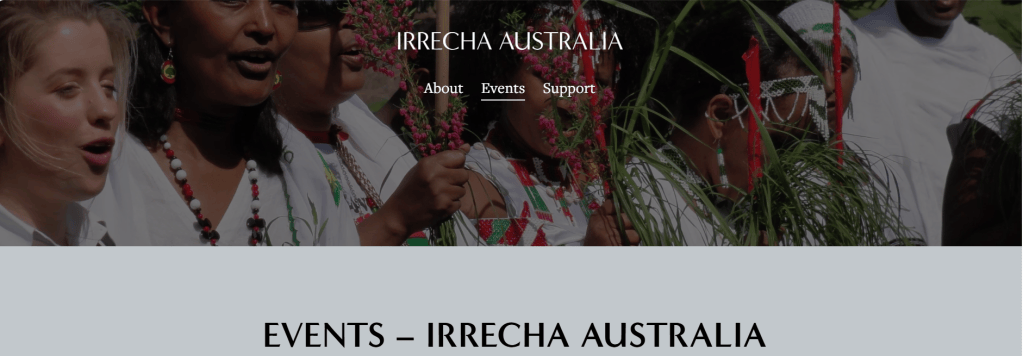
What began as small community gatherings among Oromo families in Australia has blossomed into vibrant national festivals that now draw together elders, youth, and friends from across multicultural Australia — all in the spirit of thanksgiving.
At the heart of this growing movement is Irrecha Australia, a registered non-profit organization dedicated to honoring the Oromo people’s cherished thanksgiving tradition. Rooted in a deep reverence for nature, gratitude, and unity, the celebration has traveled thousands of kilometers from East Africa to find new life on Australian soil.
A Tradition of Thanksgiving Carried Across Continents
Irrecha is one of the most significant cultural and spiritual traditions of the Oromo people, celebrated as an expression of gratitude for nature’s bounty, peace, and community well-being. For Oromo Australians, the festival serves as both a connection to their ancestral homeland and a living, breathing practice passed down through generations.
What was once observed in modest gatherings has expanded into large-scale national festivals, reflecting the growth and vitality of the Oromo diaspora in Australia. These events have become cherished occasions where culture, faith, and community intersect.
Building an Inclusive Home for Culture
As a registered non-profit, Irrecha Australia has committed itself to preserving and promoting Oromo cultural heritage while creating inclusive spaces for learning and celebration. The organization places particular emphasis on empowering young people, equipping the next generation to carry traditions forward with pride and confidence.
Through its work, Irrecha Australia ensures that Oromo culture is not merely remembered but actively practiced, shared, and celebrated — in classrooms, community halls, and festival grounds alike.
A Vision for Multicultural Australia
The organization’s vision extends beyond the Oromo community itself. Irrecha Australia envisions a nation where Oromo culture thrives as an integral part of Australia’s diverse identity — a culture that enriches the broader society and contributes to the country’s multicultural fabric.
“Through festivals, education, and community initiatives, we strengthen connections, honour our heritage, and celebrate a way of life rooted in gratitude, resilience, and unity,” the organization states.
Gratitude, Resilience, and Unity
At a time when cultural preservation and community cohesion are increasingly valued, Irrecha Australia’s mission resonates with a wider Australian audience. Its festivals serve as a bridge — connecting generations, welcoming neighbors of all backgrounds, and demonstrating how heritage can flourish in a new home while remaining faithful to its roots.
For Oromo Australians and their friends across the country, Irrecha is more than a festival. It is a statement of identity, a celebration of survival and resilience, and an invitation to share in a tradition built on gratitude.
To learn more about Irrecha Australia’s festivals, educational initiatives, and community programs, follow the organization’s official channels or contact its team directly. Irrecha Australia

Dandenong Harmony Square: Oromo Community Honors Ilfinash Qanno with Love and Reverence
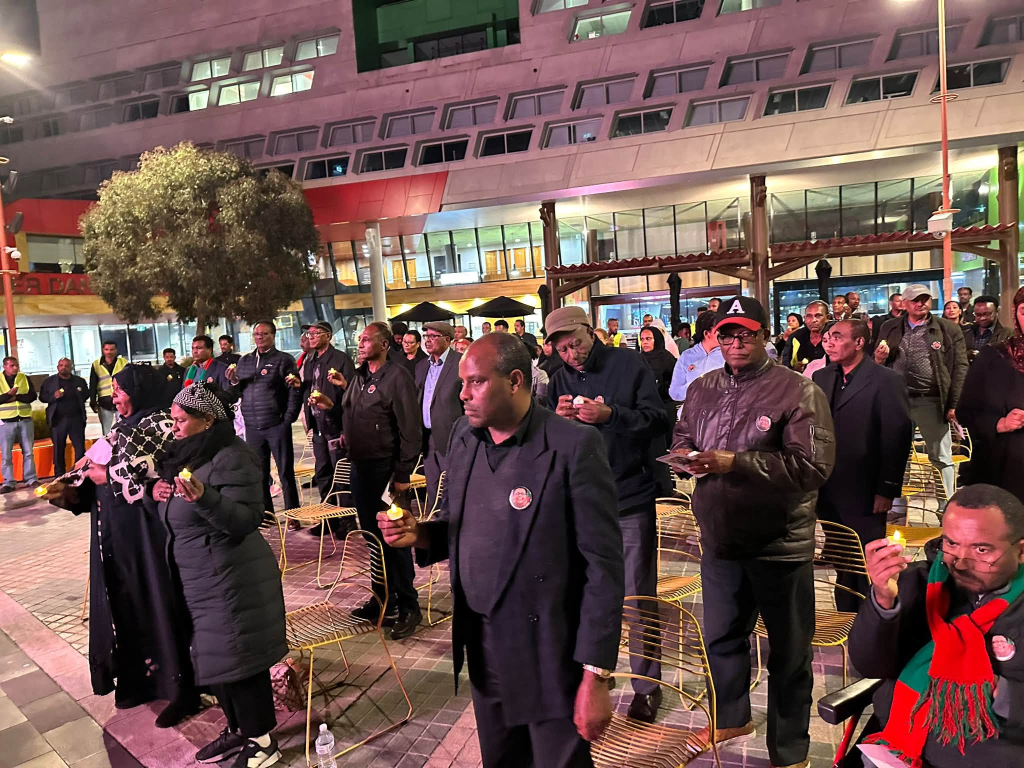
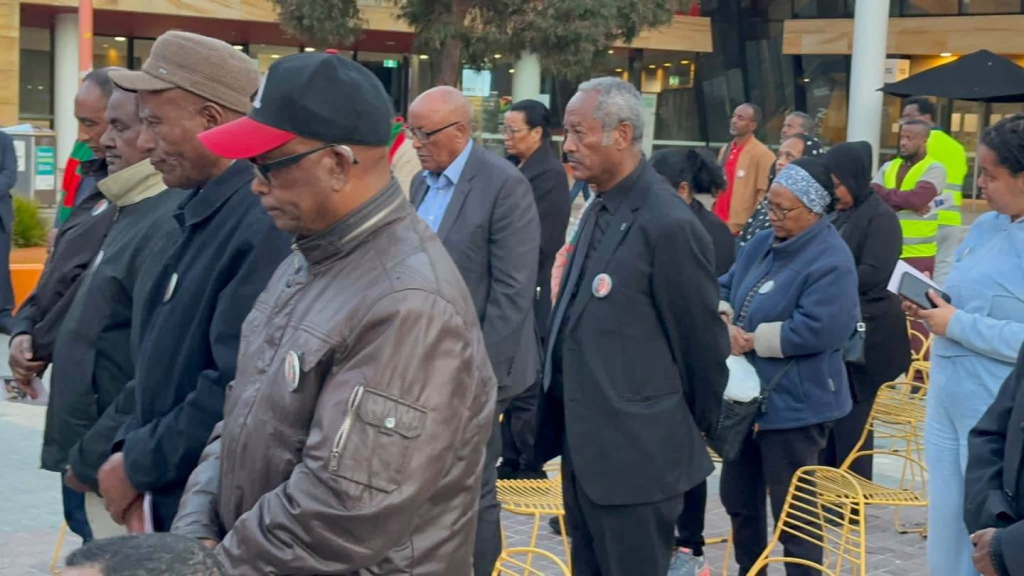
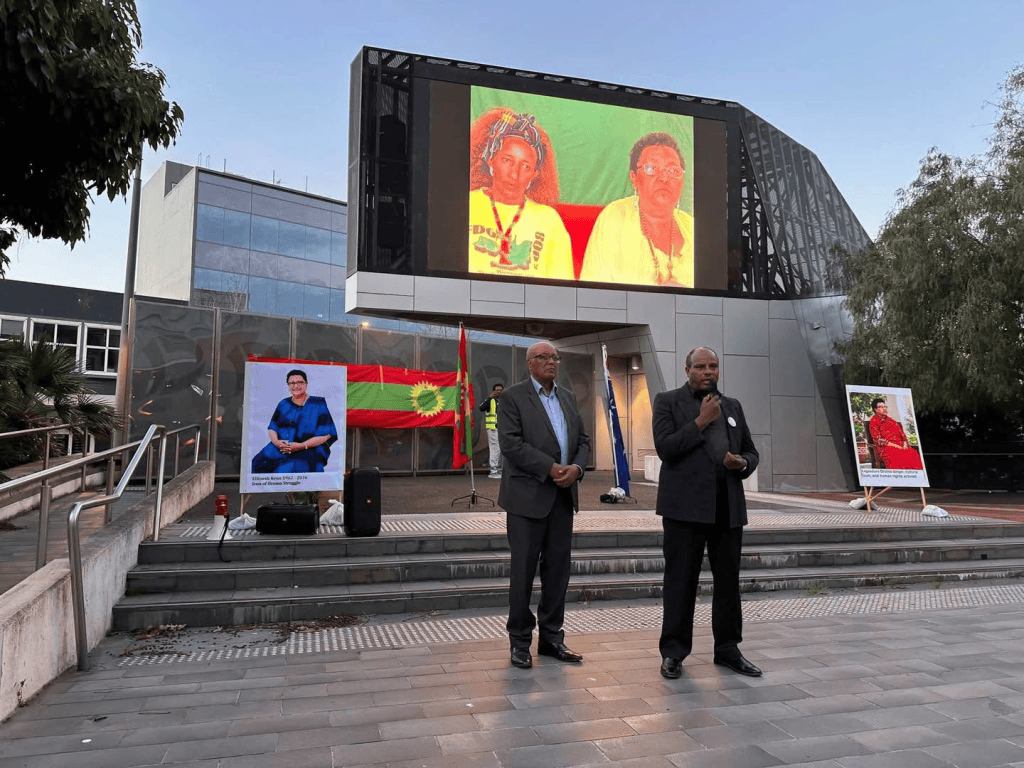
DANDENONG, Victoria — At 5 PM on September 12, 2026, Dandenong Harmony Square became the emotional heart of Melbourne’s Oromo diaspora. The Oromo Community in Melbourne Australia convened a solemn and deeply affectionate commemorative gathering to mourn the passing of legendary artist and freedom fighter Ilfinash Qanno, who died in Finfinnee on September 6. Hundreds of community members and friends assembled to express their profound respect and enduring remembrance for the woman known as “the voice of resistance.”
Grief Transformed into Celebration
From the outset, the commemoration was invested with a meaning that transcended mere mourning. In the days leading up to the event, Oromo advocacy groups in Melbourne called upon the community to transform sorrow into a celebration of Ilfinash’s life. “What she left us is not despair, but a radiant legacy,” the organizers wrote in a statement. “We must draw strength from her and from the spirit of those who came before us, and renew our commitment to the cause she defended throughout her life.”
That spirit permeated the entire gathering at Harmony Square. Participants wove together song, recitation, and remembrance to sketch the portrait of a woman who belonged not only to the stage but to the deepest conscience of a people. As the Oromo community in Minnesota expressed in its own condolence message, Ilfinash “dedicated her extraordinary talents throughout her life to expressing Oromo identity, history, language, aspiration, and resilience — often at tremendous personal cost.”
From Nekemte to Finfinnee: A Voice That Would Not Be Silenced
Ilfinash Qanno was born in 1962 in Nekemte, Oromia, and later moved to Finfinne. Her artistic career began amid the cultural revival of the Oromo renaissance, but it quickly became inseparable from political awakening. In 1976, at a historic cultural performance in Finfinnee, she electrified the audience with a single line: “Qawwee malee maaltu bilisa nu baasa?” — “Without a gun, what will set us free?” From that moment, she bound her destiny irrevocably to the Oromo liberation struggle.
Her music was never merely entertainment. In an era when Afaan Oromo expression and Oromo identity were brutally suppressed, her songs became vessels of memory, defiance, and collective aspiration. She drew on Oromo oral traditions, proverbs, and geerarsa — the traditional praise poetry of Oromo warriors — fusing cultural roots with political consciousness in songs such as “WBO Koo Maaloo Ree,” “Yaa Lammii Koo,” and “Geerarsa.”
The price was devastating. She was imprisoned multiple times under the Derg regime and subsequent governments. According to Oromo human rights documentation and accounts from fellow prisoners, she endured extraordinarily brutal treatment in detention — including having her head forcibly shaved with broken glass. This violence was not merely physical torture; it was a calculated assault on a woman who stood through her voice. Yet as she later reflected, her physical frailty could not simply be attributed to age — the prison gates had opened, but the imprisonment never truly left her body.
She Opened the Road for Oromo Women
Ilfinash’s significance extends far beyond the label of “protest singer.” The Oromo community in Melbourne emphasized in its tribute her role as a pioneer of Oromo women in public life: in an era when restrictive expectations severely constrained women’s participation in public affairs, she challenged both political oppression and social convention, carving out space for those who would follow. “Her courage created possibilities for generations of Oromo artists and women,” the organization wrote.
This dimension was invoked repeatedly at the Harmony Square gathering. For many young Oromo women present, Ilfinash was not merely a name to be honored but a stance to be inherited: the conviction that women have the right not only to sing but to stand at the forefront of struggle.
A Final Resting Place: Ambo’s Loyalty Repaid
Ilfinash Qanno ultimately chose Ambo as her final resting place. It was not an arbitrary decision. In 1992, she was captured alongside comrades in fighting near Ambo and detained at the Kerchele detention center. When elements within the regime discussed whether to execute her, the people of Ambo answered with collective action: they pooled money to bribe the prison commander, and the weight of popular will made the authorities afraid to act.
She never forgot. When her life approached its end, she did not choose to return to her birthplace but to the city whose people had once ransomed her life through their courage. Ambo’s people had refused to let her die; she answered that debt with eternal rest among them.
The Voice Has Fallen Silent; The Song Endures
Ilfinash Qanno left behind more than ten albums and an auditory archive dispersed across Oromo diaspora communities worldwide. Her cassette tapes once crossed borders she herself could not cross; her melodies passed from mouth to mouth through the cracks of prohibition and imprisonment.
The commemoration at Dandenong Harmony Square was the echo of that archive on another continent. When Oromo diaspora members sing her songs in a public square in a foreign land, they are doing more than remembering a person. They are enacting the very truth Ilfinash proved with her life: that a people’s language, memory, and identity are worth defending — and can be defended.
The voice has fallen silent. The song endures.

Birraa: The Oromo Season of Hope, Renewal, and Prosperity

In Oromo culture, Birraa is more than a season—it is a symbol of hope, renewal, and prosperity. It is a time when the land awakens, communities gather, and hearts are filled with optimism for what lies ahead.
As the rains ease and the fields turn green, Oromos across the homeland and the diaspora are welcoming Birraa — the season of renewal and abundance. It is a time deeply rooted in Oromo tradition, culture, and spirituality, marking the transition from the rainy season to a period of growth, flowering, and new beginnings.
A Season Rooted in Tradition
For generations, Birraa has held a special place in Oromo life. It is the season when the land is at its most fertile, when crops begin to flourish, and when communities come together in celebration of nature’s bounty. It is a time of hope—a reminder that after every rainy season, the sun returns, and with it, new life.
In Oromo culture, Birraa represents:
Hope – The promise of a brighter tomorrow and renewed possibilities.
Renewal – The awakening of nature and the human spirit alike.
Prosperity – The abundance that follows patience, hard work, and faith.
“Baga Birraan Isiniif Barihe!”
This beautiful Oromo greeting captures the essence of the season:
“Baga Birraan isiniif barihe!”
It is a wish that the Birraa season may dawn brightly upon you—bringing hope, blessings, and prosperity. It is a phrase exchanged among family, friends, and neighbours, carrying with it the warmth and generosity that define Oromo culture.
A Time of Community and Connection
Birraa is not only a celebration of nature—it is a celebration of community. Families gather, stories are shared, and traditions are passed down from generation to generation. It is a time to strengthen bonds, express gratitude, and look forward together.
For Oromos in the diaspora, Birraa is also a moment of connection to the homeland—a reminder of the land, the people, and the culture that shaped them, no matter how far they may be from home.
Celebrating Birraa Around the World
From the highlands of Oromia to cities across Australia and beyond, Oromos are marking the season with joy and pride. Whether through gatherings, cultural performances, or simple acts of sharing, the spirit of Birraa transcends borders and unites Oromos wherever they are.
A Message of Hope for All
In a world often marked by challenges and uncertainty, Birraa offers a powerful message: that hope endures, that renewal is always possible, and that prosperity follows those who persevere.
May this Birraa season bring blessings to all Oromos and to all who celebrate the beauty of nature’s cycles.
Happy Birraa season!
Baga Birraan isiniif barihe!

A Rare Convergence: Ethiopian, Jewish, and Coptic New Year Festivals Coincide in Australia

AMES Australia highlights an extraordinary moment of cultural and religious convergence as three major festivals—Enkutatash, Rosh Hashanah, and Nayrouz—fall on the same day, offering a powerful reflection of Australia’s shared humanity.
In a remarkable alignment of faith and culture, today marks the celebration of three significant festivals from three distinct traditions: Enkutatash, the Ethiopian New Year; Rosh Hashanah, the Jewish New Year; and Nayrouz, a festival of the Coptic Orthodox Church.
AMES Australia, a leading provider of settlement services and multicultural advocacy, has drawn attention to this rare coincidence, noting that the three events are governed by different calendars—making their convergence an extraordinary occurrence.
Three Festivals, Three Traditions
Enkutatash — the Ethiopian New Year — falls at the end of the rainy season and is celebrated with family gatherings, the blooming of the yellow adey abeba flower, and wishes of peace and prosperity. Melkam Addis Amet!
Rosh Hashanah — the Jewish New Year — is a time of reflection, renewal, and hope. Families gather to hear the shofar, dip apples in honey, and pray for a sweet year ahead. Shana Tova U’Metuka!
Nayrouz — a festival of the Coptic Orthodox Church — marks the beginning of the Coptic New Year and is a time of spiritual renewal and remembrance of the faithful. Nayrouz Mubarak!
A Season of Many Celebrations
Around this same period, millions of people around the world are also observing Mawlid al-Nabi, the birthday of the Prophet Muhammad, and the Christian festival of the Holy Cross — further enriching this season of diverse religious and cultural observance.
The convergence of so many significant dates speaks to the profound diversity of faith and culture that exists in Australia and around the world.
Australia: An Experiment in Cultural Convergence
AMES Australia reflected on the deeper meaning of this moment:
“Just like the conjunction of these cultural and religious celebrations, Australia is an experiment in cultural convergence; a nation that has welcomed people from different cultures while valuing its first peoples and fostering exchanges of ideas.”
This observation captures the essence of Australia’s multicultural identity — a nation built on migration, shaped by diversity, and strengthened by the exchange of traditions, beliefs, and ideas.
Valuing First Peoples and Fostering Exchange
AMES Australia’s statement also acknowledges the importance of honouring Australia’s First Peoples while embracing the contributions of all communities. True multiculturalism is not merely about coexistence—it is about active exchange, mutual respect, and a shared commitment to building a harmonious society.
The rare alignment of these festivals serves as a reminder that while our calendars, languages, and traditions may differ, our hopes for peace, renewal, and a better year ahead are profoundly shared.
A Shared Humanity
At a time when divisions can seem deep, the coincidence of these celebrations offers a powerful counter-narrative—one of unity, mutual recognition, and shared humanity.
Whether lighting candles for Rosh Hashanah, gathering with family for Enkutatash, or observing Nayrouz, millions of people today are united by a common desire: to welcome a new year with hope, gratitude, and peace.
Warm Wishes to All
To all those celebrating today:
Melkam Addis Amet! — Happy Ethiopian New Year!
Shana Tova U’Metuka! — Have a good and sweet year!
Nayrouz Mubarak! — Blessed Nayrouz!
May this rare convergence of faith and culture inspire all Australians to celebrate our diversity and strengthen the bonds that unite us.
Read more from AMES Australia:
Convergence of religious and cultural festivals reflect our shared humanity
#AMES #AMESAustralia #Enkutatash #RoshHashanah #Neyrouz #NewYear #Holidays #MulticulturalAustralia #SharedHumanity

Rosh Hashanah: Victorian Jewish Families Gather to Welcome a Sweet New Year

As the sun sets this evening, Jewish families across Victoria will gather around their tables to celebrate Rosh Hashanah, the Jewish New Year—a sacred time of reflection, renewal, and hope for the year ahead.
The sounding of the shofar, the dipping of apples in honey, and the sharing of festive meals will mark the beginning of the Jewish year 5787, a period of deep spiritual significance for Jewish communities in Victoria and around the world.
Rosh Hashanah, which literally means “head of the year,” is a time when Jewish families come together to reflect on the past year, seek forgiveness, and commit to renewal in the year to come. It is a celebration that blends joy with introspection—a moment to consider one’s actions, strengthen bonds with community and faith, and look forward with hope.
A Time of Reflection and Renewal
The traditions of Rosh Hashanah are rich with symbolism. The shofar—a ram’s horn—is blown in synagogues, its haunting sound calling worshippers to awaken their souls and return to what matters most. Sweet foods, particularly apples dipped in honey and round challah bread, symbolize the wish for a sweet and complete year ahead. The pomegranate, with its many seeds, represents the hope for a year filled with good deeds and blessings.
For Jewish families in Victoria, this is also a time of community—a moment to gather with loved ones, welcome guests, and reaffirm the values that have sustained the Jewish people for millennia.
Celebrating the Jewish Community’s Enduring Contribution
Victoria has long been enriched by the presence and contributions of its Jewish community. From business and the arts to education, medicine, philanthropy, and public service, Jewish Victorians have helped shape the state’s cultural, economic, and social fabric for generations.
Their enduring contributions—built on a foundation of faith, resilience, and a deep commitment to community—deserve recognition and celebration, not only during Rosh Hashanah but throughout the year.
Wishing the Community a Sweet New Year
As Jewish families across Victoria prepare to usher in the new year, we extend our warmest wishes to the entire Jewish community.
May this Rosh Hashanah be a time of peace, health, and joy. May the year ahead bring blessings, success, and sweet moments shared with family and friends.
Shana Tova U’Metuka! — Have a good and sweet year!

The Unbroken Ode: Elfinesh Keno’s Life of Resistance and the Legacy She Left in Ambo
By Daandii Ragabaa
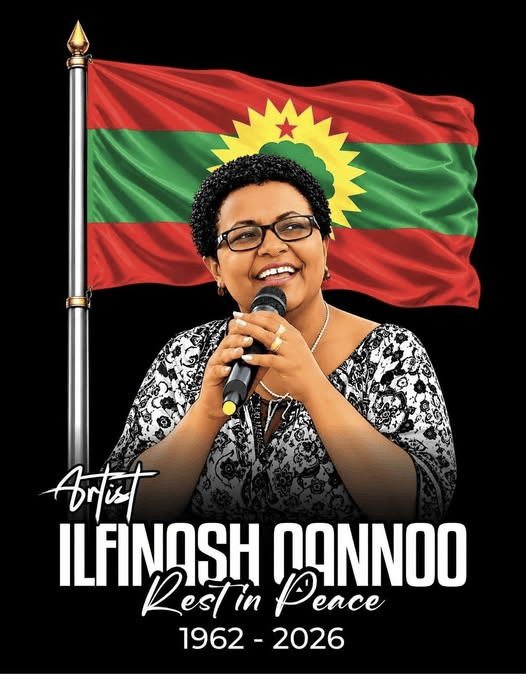
In a world where countless souls bend, break, or sell their dignity for comfort or personal gain, Elfinesh Keno walked through fire and emerged with her value intact. Even in death, her respect stands untouched—a monument to a life lived not for fame, but for freedom. Her art was never mere entertainment; it was resistance. It was a shield. It was a call to conscience.
She was an Oromo singer and cultural icon whose voice rose not for applause but for the rights, equality, and dignity of her people.
The Child of a Legacy
Born into the shadows of a struggle far larger than herself, Elfinesh Keno—known to many as Ilfinash Qannoo—was the daughter of Daraaraa Kafanii. Her lineage traced directly to Obboo Argaw Dinqaa, a towering Oromo patriot, lawyer, and founding father of cultural and political organizations such as Jibatii, Maccaa, and the Waldaa Walgargaarsaa Maccaafi Tuulamaa (WMT). Obboo Argaw was no ordinary man. Imprisoned for his opposition to the H/S government, he emerged from confinement to organize the Grand Oromo Cultural Festival of 1977 in Finfinne. He used culture as a weapon to resurrect Oromo identity and unity.
It was on that stage that young Elfinesh Keno first stepped into the light of history, performing alongside artists like Obboo Tasammaa Nagarii and Aaddee Kuulanii Guddinaa. Her art was a product of that great cultural renaissance—a movement that toured towns such as Asallaa, Waliso, and Naqamtee, where elders like Jaal Nadhii Gammadaa and Jaal Magarsaa Barii worked alongside Obboo Argaw to reinstate the sacred Gadaa system through performance.
A Heroine Forged in the Crucible of Conflict
But the road was never easy. When the Oromo liberation movement intensified, the Derg regime came for its leaders. Obboo Argaw was arrested on October 19, 1978, and later executed. Yet the flame he lit was passed to the next generation—to artists like Daraaraa Kafanii and his daughter, Elfinesh.
In the turbulent years that followed, Elfinesh found herself on the frontline. During a ferocious battle in Burree, Jalduu, in July 1992, between W3O fighters and the Wayyaanee (EPRDF) regime, she and fellow artist Zaruhuun Wadaajoo were captured. They were imprisoned in Ambo’s Karchallee detention center. There, Elfinesh faced the possibility of execution.
Her story at that point offers a stunning glimpse into her character. When the Wayyaanee regime’s OPDO operatives debated executing her, she was saved—not by bending her principles, but by her unwavering association with the Oromo people. Some of those who held her file, knowing the depth of her devotion, feared the wrath of the people so much that they altered her records to avoid carrying out the sentence.
Meanwhile, the people of Ambo acted. They pooled their money and bribed the prison commander, ensuring Elfinesh would not be killed behind bars. When she was finally released, the community welcomed her like a returning queen—taking her to the Daraaraa Kafanii Hotel, where she reunited with elders and fellow fighters. Even in the face of death, she did not run. She chose duty.
Ambo’s Daughter by Choice
One of the most defining moments of Elfinesh Keno’s life came near the end. When she could have chosen to return to her birthplace, to the comfort and familiarity of her early years, she did not. Instead, she chose Ambo—the city whose people once chose to face bullets for her.
Ambo’s masses had refused to let her die. They had stood by her during her darkest hour, chanting for her survival and promising to keep the fight for true freedom alive. In return, Elfinesh honored their bravery with her final resting place. That decision alone speaks volumes about her character.
Her choice reminds us that heroism is not loud; it is consistent. It is not boastful; it is principled. And it is not convenient; it is costly. But Elfinesh Keno paid that cost willingly.
A Lesson for the Wavering
Elfinesh Keno’s life offers a powerful lesson to all who waver, compromise, or forget the weight of responsibility. While many ran for safety, she ran toward duty. While others hid, she stood in the field. While some betrayed their own, she remained truthful to her core.
Her integrity was so complete that she could recognize goodness even in those standing on the opposite side of history—a mark of a true heroine. She taught the cowards and the “gantuus” that she would rather be covered with the flag of resistance, a symbol of freedom, than to live under the shadow of betrayal.
The Eternal Thread
Elfinesh Keno’s story is not an isolated one. It is a thread in a larger tapestry of Oromo resistance and cultural preservation. In her, we see the face of Obboo Argaw Dinqaa. Through her, we hear the voices of Jaal Nadhii Gammadaa, Jaal Magarsaa Barii, Jaal Abboomaa Mitikkuu, and countless unnamed heroes who gave their lives for Oromummaa.
Her passing is a heartbreak—”Bool’akee bookni haa guutu,” as the Oromo poet wrote. Yet she did not die in vain. She passed away with her value intact, her respect untouched, and her legacy eternal.
May her memory continue to guide her people.
May her courage continue to inspire future generations.
May her integrity remain a mirror for all who claim to serve the truth.
Stand for Something
Elfinesh Keno’s final chapter reflects her deepest values: the pursuit of truth, the protection of dignity, and the unwavering commitment to her people. In the end, she was not just an artist or a performer—she was a symbol of what it means to live with purpose and die with honor.
Her voice may be silent now, but the melody of her resistance will echo forever.
Stand for something.
Live truthfully.
Protect your dignity.
Let your final chapter reflect your deepest values.
Elfinesh Keno—Ilfinash Qannoo—passed away with her value intact.
Her respect untouched.
Her legacy eternal.

A Life Worth Celebrating—A4O Calls for Honor, Not Grief, for Artist Ilfinash Qannoo
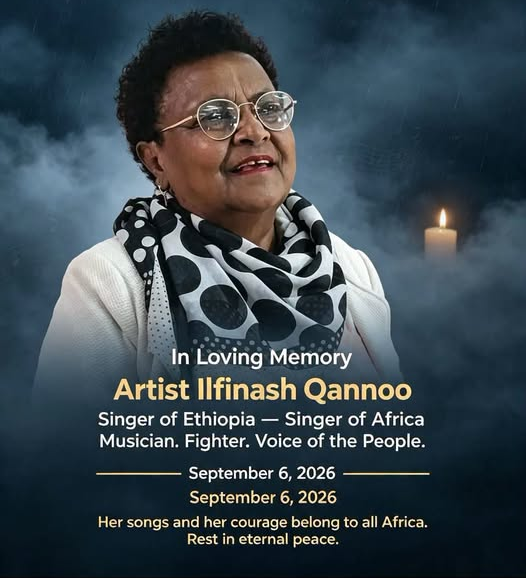
By Our Correspondent
(Melbourne, Australia – 8 September 2026)-In a poignant and powerful statement released today, Advocacy for Oromia (A4O) has called on Oromos and friends of the struggle worldwide to transform mourning into celebration for the late artist and freedom fighter, Ilfinash Qannoo.
The Melbourne-based advocacy group, speaking from their Australian headquarters, emphasized that while the loss of the beloved artist is deeply felt, her life, legacy, and unwavering commitment to the Oromo cause demand a response of honor rather than sorrow.
A Life Dedicated to Liberation
Ilfinash Qannoo was no ordinary artist. According to A4O, she was a steadfast pillar of the Oromo liberation movement, dedicating her entire life to the struggle for Oromo self-determination. Her artistry was not merely entertainment—it was resistance. Her voice was not just melody—it was a clarion call for justice.
“Artist Ilfinash Qannoo spent her whole life supporting and advancing the Oromo struggle for freedom,” the statement reads, positioning her among the most committed cultural warriors of her generation.
More Than an Artist—A Symbol
A4O’s statement highlights ten compelling reasons why Ilfinash Qannoo’s legacy must be celebrated:
A Symbol of Oromo Identity: She embodied the pride, dignity, and cultural richness of the Oromo nation. Her very presence was a testament to Oromo resilience and identity.
Champion of Justice: She was a fearless defender of Oromo rights, human rights, and gender equality. She challenged oppression in all its forms and stood against discrimination, including gender-based injustice.
Unifier of the Oromo People: At a time when division threatens the struggle, Ilfinash Qannoo stood as a powerful symbol of Oromo unity, reminding her people that solidarity is the foundation of victory.
Teacher and Inspiration: Through her life and work, she taught Oromos to resist subjugation with dignity, while also respecting the rights of other nations—a rare and powerful example of principled advocacy.
Martyr for the Cause: Her final resting place in Ambo is now etched into the historical landscape of the Oromo struggle. Her grave, like her life, has become a site of memory and honor.
A Legacy That Transcends Death
Perhaps the most striking aspect of A4O’s tribute is the assertion that Ilfinash Qannoo’s impact extends far beyond her lifetime. She did not simply live for Oromia; she ensured that even in death, she would remain a rallying figure for the movement.
“She left us not with despair, but with a glorious legacy,” the statement declared. “We are called to take strength from what she and our forebears have left us, and to rededicate ourselves to the struggle with renewed vigor.”
A Call to Action, Not Lamentation
In what can be described as a clarion call to the Oromo diaspora and the wider movement, A4O urged supporters to channel their grief into action. The organization stressed that the most fitting tribute to Ilfinash Qannoo is not tears, but a renewed commitment to the goals she championed.
“We must celebrate her life, her work, her history, and her enduring symbol of resilience,” the statement emphasized. “Let us march forward in her honor, advancing the struggle for Oromo liberation with determination and unity.”
Global Reach of the Statement
Issued from Melbourne, Australia, on 8 September 2026, the statement reflects the global nature of the Oromo struggle and the far-reaching influence of cultural icons like Ilfinash Qannoo. A4O’s message transcends geographic boundaries, speaking directly to Oromos in the homeland and across the diaspora.
The advocacy group concluded with an unwavering declaration: “Victory to Oromia!” —a fitting epitaph for a woman whose life was dedicated to that very cause.
Historical Context
Ilfinash Qannoo’s passing marks the end of an era in Oromo cultural and political history. She was among a generation of artists who used their craft as a weapon of resistance, challenging the status quo and inspiring millions. Her death is not just a loss of talent, but the departure of a moral compass for a movement in constant pursuit of justice.
As Oromos around the world reflect on her legacy, A4O’s message is clear: Grieve, yes—but more importantly, celebrate. Honor her by carrying the torch she has passed on.
About Advocacy for Oromia (A4O): Based in Melbourne, Australia, A4O is a diaspora advocacy organization committed to advancing the rights, justice, and self-determination of the Oromo people through awareness, advocacy, and solidarity initiatives.
“We mourn her loss, but we celebrate her life—for in her, Oromia found a voice that will never be silenced.”
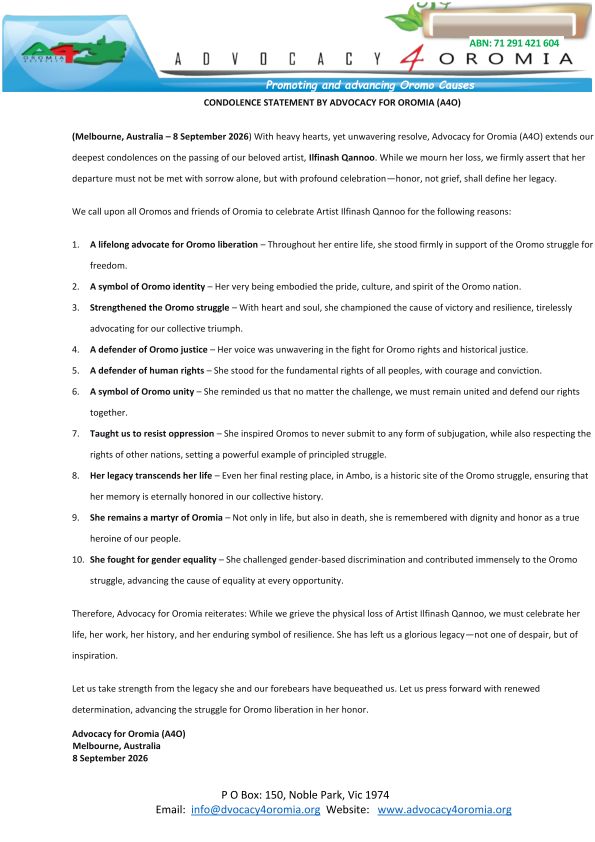

On the Passing of Artist Ilfinash Qannoo – Beloved Cultural Icon and Symbol of Oromo Resistance

The official press release from the Oromo Federalist Congress (OFC/KFO) regarding the passing of Artist Ilfinash Qannoo:
OFFICIAL FEATURE STATEMENT
On the Passing of Artist Ilfinash Qannoo – Beloved Cultural Icon and Symbol of Oromo Resistance
Issued by the Oromo Federalist Congress (OFC/KFO)
Qaammee 2, 2018 (E.C.) | Finfinnee, Oromia, Ethiopia
A Profound Loss to the Oromo Nation
The Oromo Federalist Congress (OFC/KFO) received with deep sorrow, profound heartbreak, and heavy grief the news of the passing of the beloved Oromo artist, cultural emblem, and lifelong advocate for justice – Artist Ilfinash Qannoo.
Born and raised in Naqamtee, Western Oromia, Ilfinash Qannoo was never merely a performer. She was the voice of a silenced people. Her protest songs became the very foundation of Oromo political awakening – lyrics that for decades spoke unflinchingly of oppression, marginalization, and the long-cherished dream of democracy for our people.
A Voice That Would Not Be Silenced
The powerful voice of Ilfinash – which for years had challenged regimes, dictators, and prolonged systems of subjugation – still echoes as an eternal memory. She inspired generations of Oromo youth to preserve their culture, stand firm in their identity, and fight courageously for their fundamental human rights.
Her music was not entertainment; it was resistance set to melody. Her stage was not a platform; it was a pulpit for truth. Her audience was not merely fans; they were a movement in the making.
Her Final Days and Peaceful Departure
In her final days, she had recently returned to her homeland. While undergoing medical treatment at a hospital, she was overtaken by illness, and on Qaammee 1, 2018 (E.C.), she passed from this life – a departure that has left an unfillable void in the heart of the Oromo nation.
Yet, even in this loss, we draw immense strength from the message of unity she left behind – a message that will never fade from the hearts of the Oromo people. Though her physical form may depart, the seeds of unity, resilience, and love for freedom that she planted in the hearts of millions of Oromos will continue to grow and flourish across generations.
A Call to Honor Her Legacy
The Oromo Federalist Congress (OFC/KFO) extends its deepest condolences to her family, her friends, her fellow artists, and the entire Oromo community across the globe.
We call upon our people to honor her memory by upholding the very principles she sang for throughout her lifetime:
- Unity – standing together as one nation.
- Equality – demanding justice for all.
- Democracy – continuing the struggle for fundamental rights.
Let her music remain our anthem. Let her courage be our compass. Let her sacrifice fuel our determination.
Final Prayer and Tribute
We pray to the Almighty to grant her family and loved ones strength and patience during this time of immense loss, and to bestow upon her soul eternal peace and rest.
Her name shall not be forgotten. Her songs shall not fade. Her spirit shall walk with every Oromo who dares to dream of a free and just tomorrow.
Rest in Power, Ilfinash Qannoo.
Your voice was our weapon. Your legacy is our foundation.
Issued by:
Oromo Federalist Congress (OFC/KFO)
Finfinnee, Oromia, Ethiopia
Qaammee 2, 2018 (E.C.)
#IlfinashQannoo #OromoUnity #CulturalHero #JusticeForOromia #LegacyLives
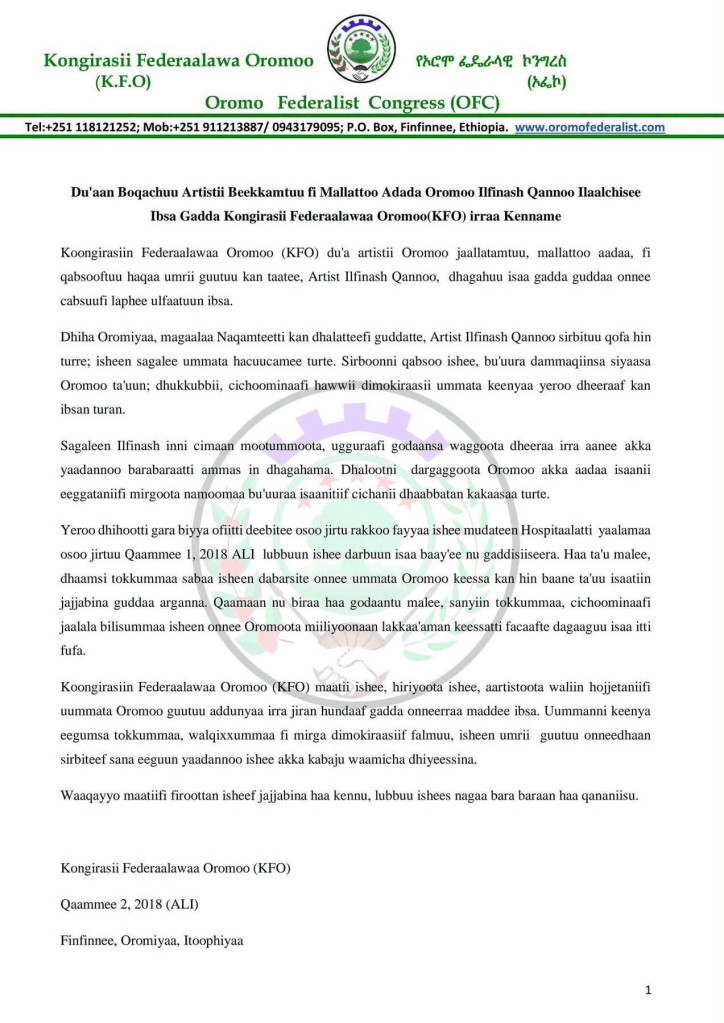

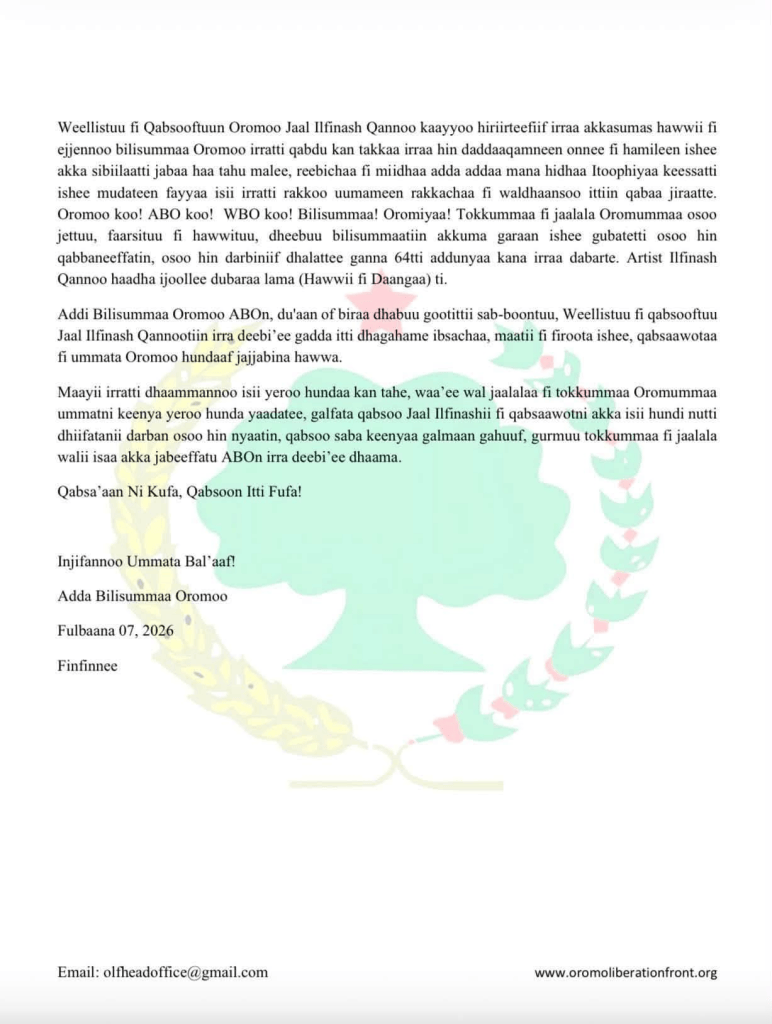
On the Departure of Beloved Artist and Freedom Fighter Ilfinash Qannoo

The official press release from the Oromo Liberation Front (OLF/ABO) regarding the passing of beloved artist and freedom fighter Ilfinash Qannoo:
OFFICIAL FEATURE STATEMENT
On the Departure of Beloved Artist and Freedom Fighter Ilfinash Qannoo
Issued by the Oromo Liberation Front (OLF/ABO)
Fulbaana 07, 2026 | Finfinnee, Oromia
A Great Heroine Has Fallen
The Oromo Liberation Front (OLF/ABO) announces with profound grief and a heavy heart the passing of the great Oromo heroine, patriot, and freedom fighter – Beloved Artist Ilfinash Qannoo – who departed from this world on Fulbaana 06, 2026, in the heart of Oromia, at Finfinnee.
Her loss is not merely the loss of an artist. It is the silencing of a voice that sang freedom for over six decades. It is the emptying of a heart that burned with love for Oromia. It is the falling of a flag that inspired millions to rise against oppression.
Roots of a Revolutionary
Artist Ilfinash Qannoo was born in 1962 to her father, Obbo Qannoo Galdaasaa, and her mother, Aadde Zartihun Qananii, in the town of Saxxoo, located in Eebbaa district, East Wallagga Zone, Western Oromia – a region that would later become the cradle of many liberation struggles.
From her childhood, she was drawn to the arts. But her coming of age coincided with a period of intense political awakening across Ethiopia – a time when the Oromo people and other nations rose against the oppressive system. It was this environment that shaped her destiny and transformed her from a simple performer into a voice of the voiceless.
The Song That Shook the Throne
Her path to fame – and to persecution – began in 1976 at a historic cultural performance in Finfinnee. There, she posed the revolutionary question that would become an anthem of resistance:
“Qawwee malee maaltu bilisa nu baasa?”
(“Without the gun, what will set us free?”)
From that moment onward, her life became inseparable from the struggle for Oromo liberation. She dedicated every song, every performance, and every breath to:
- Glorifying the Oromo struggle
- Preaching Oromo unity
- Dreaming of Oromo freedom
- Empowering the Oromo people
Her stage became a battlefield. Her microphone became a weapon. Her lyrics became a declaration of war against injustice.
The Price of Resistance
For her unwavering commitment to the Oromo cause, she paid a heavy price. Under both the Derg regime and the later Woyanne (TPLF/EPRDF) government, she endured long years of imprisonment alongside countless other freedom fighters.
Her suffering did not end there. During her incarceration under the Woyanne regime, she was subjected to brutal torture – including having her scalp forcibly shaved with broken glass – resulting in deep and lasting physical and psychological wounds.
Upon her release, with the help of Oromo patriots, she was secretly taken to neighboring Kenya, and later granted asylum in Norway, where she continued her work from exile.
A Lifetime of Contribution
Throughout her life, Artist Ilfinash Qannoo produced over 10 albums, each one a powerful contribution to the Oromo liberation movement. Wherever the OLF/ABO had a presence, she was there – answering the call, lending her voice, and rallying the people.
Even during the period when the OLF was hosted in Eritrea and waging its armed struggle, Ilfinash – though living in exile in Norway – traveled repeatedly to Eritrea to inspire and strengthen the fighters. Her presence among the combatants was proof of her unwavering dedication; she did not simply sing about the struggle – she lived it.
Her Final Days – Fire That Would Not Die
Her love for Oromia and her commitment to the cause never wavered. Her heart and spirit remained as strong as steel, untouched by compromise or despair. But the years of imprisonment, torture, and exile had taken a toll on her health. The physical and emotional wounds inflicted upon her in Ethiopian dungeons finally caught up with her.
In her final moments, even as her body weakened, her spirit burned bright. Her last words were not of regret, but of love:
“Oromoo koo! ABO koo! WBO koo! Bilisummaa! Oromiyaa! Tokkummaa fi jaalala Oromummaa…”
(“My Oromo! My OLF! My Oromo Liberation Army! Freedom! Oromia! Unity and love of Oromummaa…”)
She passed at the age of 64, still singing, still hoping, still burning for freedom – until her very last breath.
Artist Ilfinash Qannoo leaves behind her two beloved daughters, Hawwii and Daangaa.
A Call to Honor Her Sacrifice
The Oromo Liberation Front (OLF/ABO) extends its deepest condolences to her family, her relatives, her fellow freedom fighters, and the entire Oromo nation.
We call upon our people to remember her message of unity and love – which was her eternal legacy. We urge all Oromos to carry forward the torch she lit, and to not let the sacrifice of Ilfinash and countless other heroes be in vain.
Let us strengthen our unity. Let us reinforce our love for one another. Let us complete the struggle they began – so that Oromia may be free.
Final Salute
Her memory will forever be etched in our hearts. Her songs will forever echo in our struggles. Her spirit will forever march beside us.
Rest in power, Beloved Ilfinash Qannoo.
You did not die – you were promoted to immortality.
“Qabsa’aan ni kufa, qabsoon itti fufa!”
(“The fighter may fall, but the struggle continues!”)
Glory to the Broad Victory of the People!
Issued by:
Oromo Liberation Front (OLF/ABO)
Fulbaana 07, 2026
Finfinnee, Oromia
#IlfinashQannoo #OLF #ABO #Oromia #Bilisummaa #HeroineNeverDies #StruggleContinues
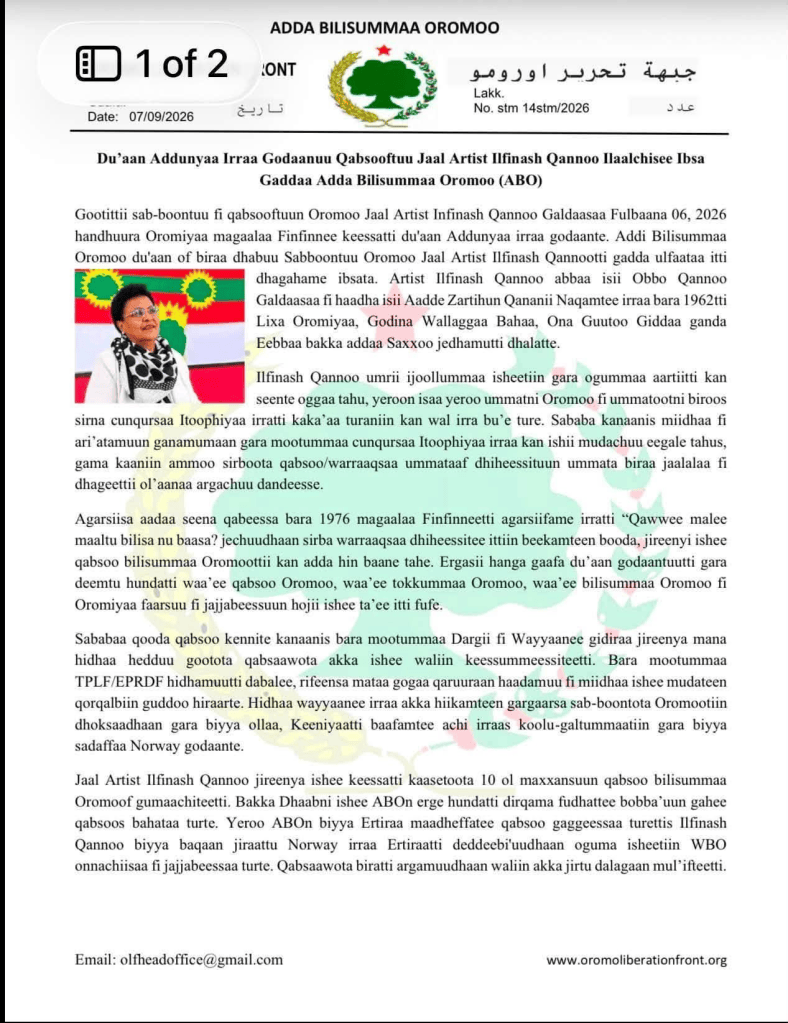

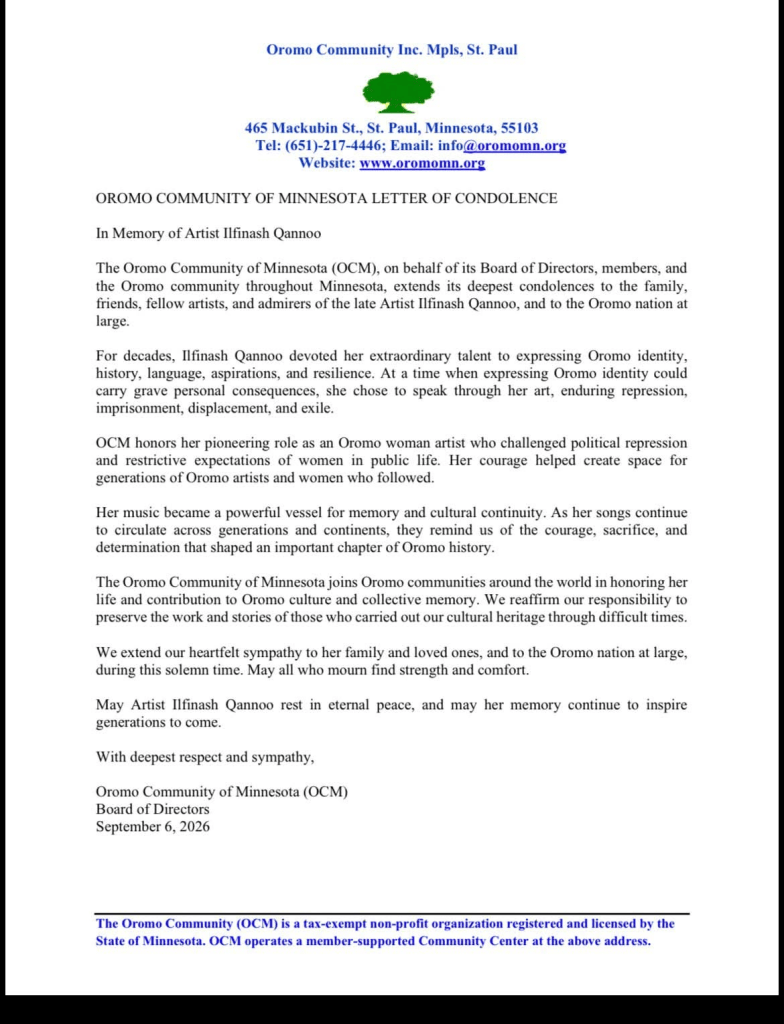
The Voice That Refused to Be Silenced: Minnesota Oromo Community Mourns Iconic Artist Ilfinash Qannoo

A tribute to a pioneering artist whose music and courage shaped Oromo identity across generations and continents
MINNEAPOLIS, Minnesota – September 6, 2026
The Oromo Community of Minnesota (OCM), one of the largest Oromo diaspora organizations in the United States, has issued a formal letter of condolence honoring the life and legacy of Artist Ilfinash Qannoo, whose passing marks the end of an era for Oromo arts and cultural expression.
In a statement released today, the organization paid tribute to an artist who, for decades, transformed personal sacrifice into an enduring cultural treasure, becoming a symbol of resistance, resilience, and identity for Oromo people worldwide.
A Life Dedicated to Cultural Preservation
Ilfinash Qannoo was more than a musician or performer. She was a cultural archivist, a linguistic guardian, and a fearless voice who understood that art could carry the weight of an entire people’s history. Through her extraordinary talent, she devoted her life to expressing Oromo identity, history, language, aspirations, and resilience—often at great personal cost.
The OCM statement emphasized that during decades when openly expressing Oromo identity could carry grave personal consequences, Ilfinash chose to speak through her art. She endured repression, imprisonment, displacement, and exile, yet her creative spirit remained unbroken. Her music and performances became acts of quiet defiance in the face of political oppression, preserving the Oromo language and traditions at a time when they were systematically marginalized.
A Pioneer for Oromo Women in Public Life
Perhaps one of her most significant legacies was her role as a trailblazer for Oromo women. At a time when restrictive expectations limited women’s participation in public life, Ilfinash challenged both political repression and social conventions.
The OCM honored her as a “pioneering role as an Oromo woman artist who challenged political repression and restrictive expectations of women in public life.” Her courage helped create space for generations of Oromo artists and women who followed, proving that creative expression and political consciousness could go hand in hand.
“Her courage helped create space for generations of Oromo artists and women who followed,” the OCM board wrote, acknowledging that her influence extended far beyond music into the very fabric of Oromo social and political life.
Music as Memory and Resistance
Ilfinash’s music became a powerful vessel for memory and cultural continuity. Her songs, which continue to circulate across generations and continents, have served as an informal archive of Oromo history, preserving stories, struggles, and triumphs that might otherwise have been lost.
The OCM statement noted that her music “reminds us of the courage, sacrifice, and determination that shaped an important chapter of Oromo history.” For Oromo communities scattered across the globe—from the Horn of Africa to the diaspora centers of North America, Europe, and Australia—her voice became a thread connecting them to their homeland and heritage.
A Global Mourning
The Minnesota Oromo community, which numbers in the thousands, joins Oromo communities around the world in mourning this profound loss. The OCM pledged to continue preserving her work and the stories of those “who carried our cultural heritage through difficult times.”
“We reaffirm our responsibility to preserve the work and stories of those who carried our cultural heritage through difficult times,” the statement reads, acknowledging that the preservation of Oromo culture rests on the shoulders of those who, like Ilfinash, sacrificed their safety and comfort for the sake of collective memory.
Calls for Celebration Amid Grief
The OCM’s formal letter follows a growing chorus within the Oromo diaspora and homeland alike, urging that Ilfinash’s life be celebrated as much as her death is mourned. Many have echoed sentiments expressed in recent weeks that her legacy is one of joy, defiance, and triumph—not merely sorrow.
“May Artist Ilfinash Qannoo rest in eternal peace, and may her memory continue to inspire generations to come,” the OCM concluded in their letter, striking a tone of solemn respect mixed with hope for the future.
A Legacy That Endures
Ilfinash Qannoo’s death represents a significant loss for the Oromo cultural landscape. Yet her life’s work ensures that her voice will continue to resonate through the generations she inspired and the communities she helped to empower.
As the Oromo diaspora reflects on her contributions, her songs will undoubtedly continue to play in homes, community gatherings, and cultural events—each note carrying the defiance, resilience, and pride of a people whose identity she devoted her life to preserving.
The Oromo Community of Minnesota’s full letter of condolence can be accessed through the organization’s official channels. The Oromo community across Minnesota and beyond extends its deepest sympathy to her family, friends, fellow artists, admirers, and the Oromo nation at large.
With deepest respect and sympathy,
Oromo Community of Minnesota (OCM)
Board of Directors
September 6, 2026
#IlfinashQannoo #OromoArt #CulturalResilience #OromoDiaspora #MinnesotaOromo #LegacyOfResistance