Colonel Hailu Raggassa: The Hero Who Surrendered Power for the Freedom of His People
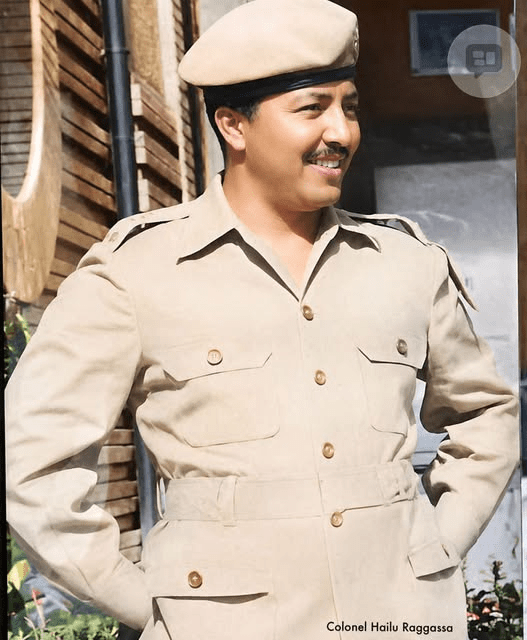
In the annals of Oromo history, there are names that echo through generations—figures who, in the face of overwhelming odds, chose the path of sacrifice over comfort, principle over power. Among these towering figures stands Colonel Hailu Raggassa, a man whose story is one of the most profound testaments to the Oromo struggle for liberation.
Born in the early 1930s in the Mannaangasha district of western Shewa, in what was then known as Ada’a Bargaa, Hailu Raggassa grew up in a Ethiopia under Emperor Haile Selassie’s rule. From an early age, he displayed remarkable intelligence and a natural aptitude for leadership. His uncle, Bashaa Gorbaa, who had fought in the Second Italo-Ethiopian War (Maayichawu), recognized the boy’s potential and insisted he pursue religious education. Through his uncle’s stories of wartime tactics and the heroism of Ethiopian patriots, young Hailu developed a deep sense of duty and a burning desire to serve and protect his people.
When circumstances prevented him from continuing his studies in his hometown, he travelled to Addis Ababa (Finfinne), where he worked various jobs until a benefactor recognized his determination and arranged for him to study at the prestigious Tafari Makonnen School. This was the beginning of a journey that would see him rise through the ranks of the Ethiopian military, becoming a high-ranking officer in the imperial army.
The Turning Point
For years, Colonel Hailu Raggassa served loyally within the system. But like many Oromo officers of his generation, he could not ignore the systematic marginalization, cultural suppression, and political disenfranchisement of the Oromo people under successive Ethiopian regimes. The Oromo language was banned in schools, Oromo identity was denigrated, and the Oromo people were subjected to a system of settler colonialism that stripped them of their land, language, and dignity.
The turning point came in the early 1970s. As the Oromo liberation movement gained momentum—fueled by the emergence of the Oromo Liberation Front (OLF) and the Oromo Liberation Army (OLA)—Colonel Hailu Raggassa made a decision that would define his legacy. Despite holding significant power and privilege as a high-ranking military officer, he chose to surrender his position and join the armed struggle for Oromo freedom.
The Armed Struggle
Colonel Hailu Raggassa became a key commander in the Oromo Liberation Army, working alongside other legendary figures such as General Tadesse Birru, who is widely regarded as the father of modern Oromo nationalism. Together, they began organizing an armed rebellion in Shewa, operating under the name of the Oromo Liberation Army. Hailu played a critical role in distributing land to Oromo peasants and mobilizing rural communities.
His military expertise, honed through years of service in the imperial army, proved invaluable to the nascent liberation movement. He understood that the struggle for Oromo freedom required not just courage, but strategy, organization, and sacrifice.
Arrest and Martyrdom
The Derg, the military junta that seized power in Ethiopia in 1974, viewed the Oromo liberation movement as an existential threat. In a brutal crackdown, Colonel Hailu Raggassa was captured alongside General Tadesse Birru and other Oromo leaders. They were tried, sentenced to death, and on March 19, 1975, executed by firing squad.
Their blood soaked the soil of Addis Ababa, but their legacy did not die. The martyrdom of Colonel Hailu Raggassa and his comrades became a rallying cry for the Oromo people, seeding the consciousness of generations to come.
A Legacy That Endures
Colonel Hailu Raggassa’s story is one of profound selflessness. He had everything—rank, privilege, and the comfort of a system that favored him. Yet he chose to walk away from it all, not for personal gain, but for the freedom and dignity of his people. He understood that true leadership is not about holding power, but about using whatever power one has to uplift the oppressed.
Today, Colonel Hailu Raggassa is remembered as a hero—a man whose life and death continue to inspire the Oromo struggle for self-determination. His name is inscribed in the collective memory of the Oromo people, a symbol of the ultimate sacrifice made in the pursuit of justice.
“Gootota qabsoo Oromoo bu’uressuutii hanga Jeneraal Taaddasaa Birruu waliin ajjeefamutti kanneen dhalootaaf aarsaa kanfalanii darban keessaa tokko Koloneel Hayiluu Raggasaa Hundeeti.”
“Among the heroes of the Oromo struggle—from the early architects to those who fell alongside General Tadesse Birru—Colonel Hailu Raggassa stands at the foundation.”
—
Remembering the Heroes
The month of March holds particular significance in the Oromo liberation struggle. It was in this month, on March 19, 1975, that Colonel Hailu Raggassa, General Tadesse Birru, and their comrades were executed. Their sacrifice is commemorated annually by Oromos around the world, a solemn reminder of the price paid for freedom.
Colonel Hailu Raggassa’s story transcends the boundaries of time and geography. It speaks to the universal human longing for justice, dignity, and self-determination. He was not just an Oromo hero—he was a hero for all who believe that freedom is worth fighting for.

Posted on July 20, 2026, in Aadaa, Afaan, Biography, Bokkkuu, Events, Face of Injustice, Finfinne, freedom, gadaa, Gumaa, health, Information, Kindness, Language, Media, News, Oromia, Press Release, Sirna Oromo. Bookmark the permalink. Leave a comment.






Leave a comment
Comments 0