Category Archives: Asylum Seekers

A Night of Fellowship and Purpose: Oromo Diaspora Celebrates Partnership and Progress

Oromia Diaspora Association Commends Successful Collaborative Event and Applauds Supporters
By Daandii Ragabaa
It was an evening of connection and community as the Oromia Diaspora Association (ODA) came together with fellow diaspora organizations for a special dinner event. The gathering, hosted in partnership with the Consortium of Ethiopian Diaspora Associations and the Ethiopian Diaspora Service, provided a platform for fellowship, networking, and shared commitment to the development of communities both in Ethiopia and abroad.
The event was a resounding success, marking a significant milestone in the growing collaboration between diaspora groups. As the ODA noted in its statement, the beautiful evening was a testament to what can be achieved when communities unite with a common vision.
A Message of Thanks and Acknowledgment
In a statement reflecting on the event, the Oromia Diaspora Association conveyed heartfelt gratitude to the partner organizations that made the night possible. The association emphasized that the success of the gathering was a direct result of hard work and partnership.
“On behalf of the Oromia Diaspora Association, we wish to thank the Consortium of Ethiopian Diaspora Associations and the Ethiopian Diaspora Service for this beautiful evening of fellowship and dinner.”
The statement highlighted the significance of the event, not just as a social occasion, but as a meaningful step forward in strengthening ties between different communities. It is through such initiatives that diaspora groups can better coordinate their efforts and have a more significant impact on their communities both locally and globally.
The Power of Diaspora Unity
The event served as a vivid reminder of the immense potential of the Ethiopian diaspora. The Oromo diaspora in particular is a vibrant community spread across the globe, with its members actively contributing to social, economic, and developmental initiatives. The partnership with the consortium and government service structures reinforces the idea that collaboration is key to maximizing this potential.
This sense of unity is especially valuable given the diverse backgrounds and experiences within the broader Ethiopian and Oromo communities. Engaging with others through fellowship helps bridge communities and build a more cohesive front for tackling shared challenges.
Looking Ahead: Building on Success
The sentiment of the evening was one of looking forward. The Oromia Diaspora Association expressed a strong desire to continue working together with its partners in the future. The success of this event is not an endpoint but a foundation upon which further collaborative projects can be built.
“The event was a great success, and we deeply appreciate your hard work and partnership. We look forward to working together more in the future!”
As the Ethiopian Diaspora Service continues its efforts to connect with and empower the global Ethiopian community, events like this underscore the importance of meaningful engagement. The service plays a crucial role as a bridge, facilitating investment, cultural connection, and community building among the diaspora.
Conclusion: A Bright Future for Diaspora Collaboration
The successful fellowship and dinner event marks a positive chapter in the ongoing story of diaspora engagement. The commitment shown by the Oromia Diaspora Association and its partners is a sign of a stronger, more united community ready to contribute to sustainable development and cultural preservation.
The evening was a celebration of the ties that bind the community—a testament to the power of unity, shared purpose, and a collective vision for the future. The momentum gained from this event promises a future of even greater collaboration and achievement.

Injifannoon Ummata Oromoo!
Oromia Diaspora Association haa jabaattu!
This feature article is dedicated to the Oromia Diaspora Association and all diaspora communities working together for the development and unity of their people.

Reclaiming Oromo Identity: The First Step in the Struggle
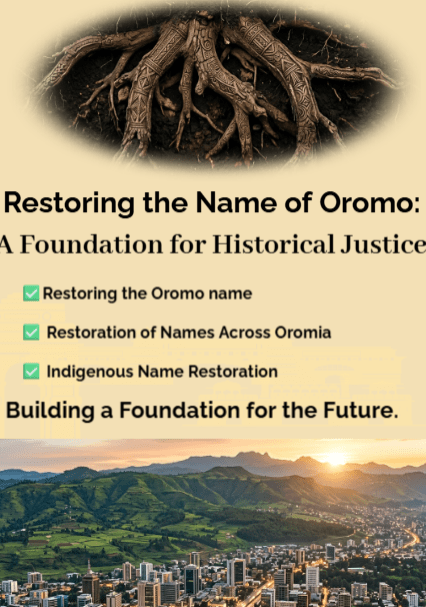
Restoring the Name of Oromo – A Foundation for Historical Justice
By Dhabessa Wakjira
The Oromo struggle for liberation, justice, and self-determination is multifaceted. It encompasses political rights, land rights, economic empowerment, and cultural preservation. But among all the objectives of the struggle, there is a first and foundational task—one that must be addressed before any other can be fully realized:
Restoring the Oromo name wherever it has been distorted, altered, or erased.
For centuries, the Oromo people have endured a systematic campaign of identity erasure. Their names—of people, places, and institutions—have been changed, distorted, and replaced. This is not a coincidence. It is a deliberate strategy of domination, designed to sever the Oromo people from their history, their heritage, and their sense of self.
The first step in the Oromo struggle, therefore, must be the restoration of the Oromo name. Without this, the history of the Oromo people cannot be told truthfully. Without this, the identity of the Oromo people cannot be fully reclaimed. Without this, the future of the Oromo people cannot be built on a foundation of truth.
The Significance of Names: More Than Words
In Oromo culture, names are not merely labels. They carry history, identity, meaning, and connection to the land. A name tells a story—of a person, a place, or a community. It embodies the values, the struggles, and the aspirations of those who bear it.
When names are changed or erased, something profound is lost. The connection to the past is broken. The continuity of culture is interrupted. The identity of a people is called into question.
For the Oromo people, the changing of names has been a tool of colonization and domination. Under successive regimes—from the expansion of the Ethiopian Empire under Menelik II to the Derg and beyond—Oromo names have been systematically replaced with Amharic or other names. This was not an innocent act. It was a deliberate strategy to erase Oromo identity and to impose a new, alien identity on the Oromo people.
Finfinne: A Case Study in Identity Erasure
Perhaps the most powerful example of this phenomenon is the city of Finfinne—the city known internationally as Addis Ababa.
The name “Finfinne” is Oromo. It means “place of hot springs.” This name reflects the history, geography, and culture of the area long before the establishment of the modern city. It is a name that connects the Oromo people to their ancestral land.
However, when Emperor Menelik II established the city in 1886, he gave it a new name: Addis Ababa, meaning “New Flower” in Amharic. This was not a neutral choice. It was a political act—an assertion of imperial power and a denial of Oromo identity.
The renaming of Finfinne to Addis Ababa was part of a broader campaign to erase Oromo presence and history. By changing the name, the empire sought to claim the city as its own and to sever the Oromo people’s connection to their ancestral homeland.
Today, the name “Finfinne” is increasingly being recognized alongside “Addis Ababa.” This is a positive development—a sign that the Oromo people’s historical connection to the city is being acknowledged. But it is not enough. The name “Finfinne” must be fully restored, and the history of the Oromo people in the city must be recognized.
The Broader Pattern: Changing Names Across Oromia
Finfinne is not the only example. Across Oromia, Oromo names have been changed, distorted, or replaced:
- Mountains, rivers, and valleys that once bore Oromo names have been renamed with Amharic or other names.
- Towns and villages have had their names changed to reflect the dominant culture.
- Historical sites have been given new names that obscure their Oromo heritage.
- Institutions and organizations have been named in ways that erase Oromo identity.
This pattern is not accidental. It is a deliberate strategy of cultural erasure—an attempt to make the Oromo people invisible in their own homeland. By changing names, the oppressor seeks to change history. By erasing names, the oppressor seeks to erase identity.
Why the Restoration of Names Matters
The restoration of Oromo names is not a symbolic gesture. It is a fundamental act of justice and a necessary step in the Oromo struggle.
1. Reclaiming History
History is told through names. When names are changed, history is distorted. To restore the Oromo name is to restore the Oromo narrative—to tell the story of the Oromo people in their own words, on their own terms.
2. Affirming Identity
Names are central to identity. To restore the Oromo name is to affirm that the Oromo people exist, that they have a history, and that they have a right to their identity. It is a declaration that the Oromo people will not be erased.
3. Healing Historical Wounds
The changing of Oromo names is a form of violence—a psychological and cultural assault on the Oromo people. Restoring these names is an act of healing. It acknowledges the harm that has been done and begins the process of repair.
4. Building a Foundation for the Future
The Oromo struggle is about building a future of justice, equality, and self-determination. But that future must be built on a foundation of truth. Restoring Oromo names is an essential part of that foundation.
5. Educating Future Generations
If the next generation of Oromo people does not know their own names—the names of their ancestors, their places, and their history—they will be disconnected from their heritage. Restoring names is a way of passing that heritage on.
The Global Context: Indigenous Name Restoration
The Oromo struggle to restore names is part of a global movement. Indigenous peoples around the world are reclaiming their names and their histories.
- In New Zealand, the Māori people have fought to restore Māori names to places that were renamed by European colonizers.
- In Australia, Aboriginal communities have worked to restore traditional names to landmarks and sites.
- In Canada, Indigenous peoples have successfully restored traditional names to places that were renamed during colonization.
- In the United States, Native American tribes have advocated for the restoration of Indigenous names for mountains, rivers, and other landmarks.
These movements are not about nostalgia. They are about justice. They are about recognition. They are about the fundamental right of a people to define themselves on their own terms.
The Oromo struggle for name restoration is part of this global movement. It is a demand for the same recognition and respect that other Indigenous peoples are seeking.
The Role of the Oromo Diaspora
The Oromo diaspora has a critical role to play in the restoration of Oromo names. In communities across the world—in the United States, Canada, Europe, Australia, and beyond—the Oromo diaspora can:
- Use Oromo names in their daily lives, businesses, and organizations.
- Advocate for the recognition of Oromo names in international forums.
- Educate others about the history and significance of Oromo names.
- Support efforts in Oromia to restore names and reclaim history.
- Build institutions that preserve and promote Oromo language and culture.
The diaspora is not separate from the struggle; it is an integral part of it. The restoration of Oromo names is a project that connects Oromo people across borders and generations.
The Challenge and the Hope
The restoration of Oromo names is not without challenges. There are forces that resist this change—those who benefit from the erasure of Oromo identity and who fear the power of a people reclaiming their history.
But there is also hope. The Oromo people are increasingly asserting their identity. The name “Finfinne” is being used alongside “Addis Ababa.” Oromo language and culture are being revitalized. And a new generation of Oromo youth is demanding recognition and justice.
The restoration of Oromo names is not just a demand—it is a movement. It is a declaration that the Oromo people are here, that they have a history, and that they will not be erased.
Conclusion: The First Step in the Struggle
The Oromo struggle is long and complex. It encompasses political, economic, social, and cultural dimensions. But among all these objectives, there is a first and foundational task:
To restore the Oromo name wherever it has been distorted, altered, or erased.
Without this, the Oromo people cannot fully reclaim their history. Without this, the Oromo people cannot fully affirm their identity. Without this, the Oromo people cannot fully build their future.
Finfinne must be called by its Oromo name.
Every place that has been renamed must have its Oromo name restored.
Every person who has been given a foreign name must have the right to reclaim their Oromo identity.
This is not just a cultural project—it is a political project. It is a declaration of self-determination. It is the first step in the struggle for justice.
Finfinne is Oromo.
Oromummaa is not negotiable.
The restoration of Oromo names is the foundation of the struggle.
Injifannoon Ummata Oromoo!
Maqaan Oromoo haa deebi’u!
Finfinne haa jabaattu!
This feature article is dedicated to all those who are working to restore Oromo names and reclaim Oromo history. The struggle continues, and the foundation is being laid.

Wealth Creation Strategies for Indigenous Oromians

Taking Control of Your Financial Destiny
Join the growing movement of Oromo people taking control of their financial future. Are you an Indigenous Oromian looking to build wealth and secure a future for your family? Struggling to navigate the complexities of property investment, finance, and long-term savings? Imagine having tailored insights that guide you on the path to financial independence and generational wealth—For Indigenous Oromias, By Indigenous Oromias.
Why Wealth Creation Matters Now
The Oromo people have historically been excluded from economic opportunities across Ethiopia. Successive regimes systematically prevented Oromos from building economic assets, with more than 60% of Ethiopia’s exportable commodities, over 60% of staple food, 70% of industrial raw materials, and 80% of hydro power coming from Oromia—yet no Oromo has been able to qualify among the top 10 richest people in the country. This is not a coincidence; it is the result of deliberate economic marginalization.
But the Oromo people have always had the tools for economic resilience. The Gadaa system contains powerful economic principles that our ancestors used to build and sustain wealth: hard work, planning, mutual assistance, and community-based resource management. The proverb “Tuulamanii taa’anii, Waaqa ofii hin komatan” reminds us: “It is not right to blame God for not working hard.” Hard work and commitment are the sources of wealth.
What Indigenous Wealth Offers
Indigenous Wealth is a 100% Oromo-owned and operated consultancy dedicated to helping our people build generational wealth and achieve financial independence. Our team understands the unique challenges Oromo people face—and we have the strategies to overcome them.
Our Services Include:
Property Investment: We help you gain access to quality investment properties, connect you with finance professionals, and guide you through the property market to build long-term wealth.
Finance & Loans: We connect you with mortgage professionals who can assist with tailored home loans, equipment and business loans, as well as competitive finance for rural Oromo communities.
Wealth Strategy: We create personalized wealth-building plans designed specifically to help you achieve your financial goals.
Our Proven Results
We have successfully supported Oromo people across Ethiopia in achieving financial independence. Across similar models in other communities, Indigenous-owned wealth consultancies have helped create over 110 new property investors in just four years, with a goal of building a community of millionaires .
The Gadaa Foundation for Wealth
Our approach is rooted in the economic wisdom of the Gadaa system:
Hard Work and Planning
“Jabaatan jabaa nyaatu, laafan foxxoqxuu nyaatu” — “The strong eat the strong, and the weak eat the weak.” This proverb reminds us that hard work is mandatory in daily life, and that everyone needs to plan to work hard and secure their future.
Community Support Systems
Traditional Oromo institutions like dabo (labour cooperation) and daadoo (mutual work groups) demonstrate the power of collective effort. When communities work together, they achieve more than individuals working alone. We apply these same principles to modern wealth building.
Guddifachaa (Adoption)
The Oromo practice of guddifachaa demonstrates the belief that children are assets and the community shares responsibility for their welfare and education. This is the foundation of generational wealth—investing in the next generation’s education, skills, and economic opportunities.
Hard Work and Self-Reliance
The Gadaa system emphasizes that people should not wait for others to solve their economic problems. “Hojii hojjechuu isa malee gaafa du’aa hin galus” — “Without work, the day does not end.”.
How It Works: Your Free Wealth Strategy
Take advantage of our No-Obligation, Completely FREE Wealth Strategy. This isn’t just another generic report—it’s a highly personalized plan where you’ll receive unique suggestions on how to:
✅ Build generational wealth for your family and community
✅ Invest in property and understand the market
✅ Secure financial independence and plan for retirement
No cost, no commitment—just a clear path forward.
Real Stories: Oromo Success
Across Ethiopia, Oromo people are already building wealth through determination and community:
Fedhi Gudina Community Saving for Investment in Agribusiness Group: Founded in 2019 with just $141 raised by 20 members (15 women), this Oromo group grew their savings to $28,530 through strategic investment in crop cultivation and processing. They now operate a grain milling service that serves their entire community.
Safiya, an Oromo entrepreneur: Forced to flee Ethiopia, she built a successful business making traditional Oromo beadwork in Nairobi. Her handmade designs are sold for special occasions like weddings, and she now supports her family independently. She says: “I have hope in what I am making with my hands. I believe in it, I believe in myself.“.
Reach for Change Entrepreneurship Training: In April 2025, 83 Oromo women in Me’so, Babile, and Chinaksan woredas participated in entrepreneurship training designed to turn ideas into viable businesses. They are building off-farm businesses that sustain livelihoods and create economic independence.
Taking the First Step
The Oromo people have always been resilient. Despite centuries of oppression, forced displacement, and economic exclusion, we have survived—and now it is time to thrive.
Start your journey today. Complete our quick survey and begin taking control of your financial future. Whether you are looking to invest in property, start a business, or build generational wealth, Indigenous Wealth is here to guide you every step of the way.
Indigenous Wealth — 100% Oromo-owned and operated.
For Indigenous Oromias, By Indigenous Oromias.
Take control of your financial destiny today.

The Question of Finfinne and Dirree Dhawaa: Toward a Balanced and Sustainable Solution
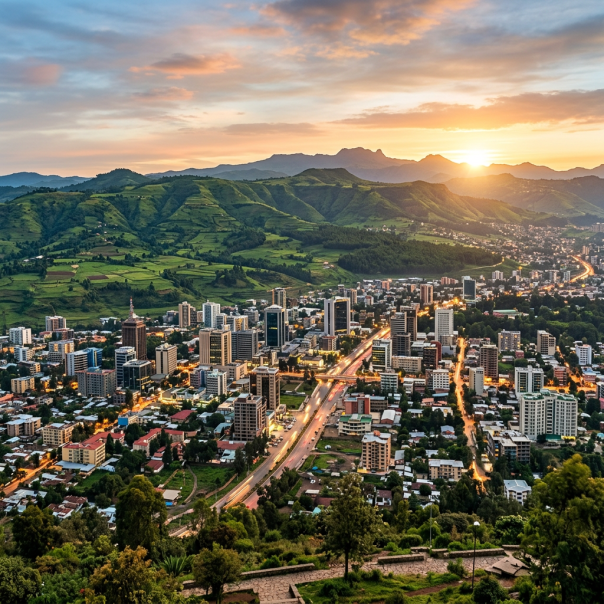
Navigating History, Constitutional Rights, and the Complex Realities of Governance
By Jafer Ali
The question of Finfinne—the city known internationally as Addis Ababa—and its surrounding areas, including Dirree Dhawaa, has long been one of the most contentious and emotionally charged issues in Ethiopian political discourse. For the Oromo people, Finfinne is not merely a city; it is the heart of their ancestral homeland, a symbol of their historical presence, and a constitutional matter that has yet to be resolved. For others, it is the capital of Ethiopia, the seat of the federal government, and a city that belongs to all Ethiopians.
The debate has intensified as the national dialogue process unfolds, and the question of how to resolve the status of Finfinne and Dirree Dhawaa has become central to discussions about the future of Ethiopia’s federal system, ethnic relations, and governance structure.
This article seeks to explore the key questions surrounding Finfinne and Dirree Dhawaa, examining the constitutional, historical, political, and practical dimensions of the issue. It argues that a sustainable solution must move beyond simplistic claims of ownership and instead focus on a framework of mutual consent, shared benefit, and constitutional fidelity.
The Key Questions
The debate over Finfinne and Dirree Dhawaa can be distilled into two fundamental questions:
1. What does the Constitution say?
The Ethiopian Constitution, adopted in 1995, establishes the federal structure of the country and recognizes the rights of nations, nationalities, and peoples. Article 49(5) specifically recognizes Oromia’s “special interest” in Finfinne regarding social services, natural resources, and joint administrative matters arising from the city’s location within the State of Oromia.
This constitutional provision has been the subject of intense debate. For Oromo advocates, it represents a legal acknowledgment of the city’s historical and geographical connection to Oromia—a connection that has never been fully implemented. For others, the provision is a compromise that balances the city’s role as the federal capital with the rights of the surrounding region.
2. What does the people demand?
The Oromo people’s demand regarding Finfinne and Dirree Dhawaa is clear and consistent: the city is Oromo land, and its rightful owners are the Oromo people. The demand is often framed as a call for the city to be placed under the administrative jurisdiction of the Oromia Regional Government or for the Oromo people to have greater control over the city’s governance and resources.
This demand is rooted in a historical narrative that the city was established on Oromo land through conquest and dispossession, and that the Oromo people have never consented to the city’s status as a separately administered entity.
The Need for a Balanced Approach
The challenge of resolving the status of Finfinne and Dirree Dhawaa lies in reconciling these two perspectives. On one hand, the Oromo people’s historical and constitutional claims cannot be ignored. On the other hand, the city’s role as the federal capital, its international significance, and the presence of diverse communities cannot be dismissed.
A balanced approach must consider the following dimensions:
1. The Constitutional Dimension
The Constitution provides a starting point for resolving the issue. Article 49(5) recognizes Oromia’s special interest in Finfinne, but the provision has never been fully implemented. A sustainable solution must begin by implementing this constitutional provision through joint administrative mechanisms, resource-sharing agreements, and coordinated governance frameworks.
However, any implementation must respect the city’s role as the federal capital and the rights of all its residents. The Constitution does not provide for the city to be placed under Oromia’s exclusive administrative control. Rather, it envisions a framework of cooperation and shared responsibility.
2. The Historical Dimension
The Oromo people’s historical connection to Finfinne is a fact that must be acknowledged. The area known as Finfinnee was inhabited by Oromo people before the expansion of the Ethiopian Empire, and the city’s name itself is Oromo, meaning “place of hot springs.”
But historical claims alone cannot determine the city’s future. The city has evolved over the past century into a multi-ethnic metropolis that is home to people from across Ethiopia. The current residents—Oromo, Amhara, Gurage, Tigrayan, and others—have legitimate claims to the city as their home. A just solution must respect both the historical rights of the Oromo people and the contemporary rights of all residents.
3. The Political Dimension
The status of Finfinne and Dirree Dhawaa is a political question that requires political solutions. It cannot be resolved through unilateral declarations or zero-sum demands. It requires negotiation, compromise, and good-faith dialogue between the federal government, the Oromia regional government, and other stakeholders.
The political dimension also includes considerations of power, representation, and resource allocation. Any solution must ensure that the Oromo people have a meaningful voice in the governance of the city while also ensuring that all residents are treated equally and fairly.
4. The Practical Dimension
Finfinne is not just a symbol; it is a functioning city with millions of residents, extensive infrastructure, and a critical role in Ethiopia’s economy and international relations. The city is home to the African Union headquarters, numerous diplomatic missions, and major economic enterprises.
Any change in the city’s governance must consider the practical implications for its residents, businesses, and international partners. Disruption to the city’s administration could have far-reaching consequences that extend beyond Oromia.
The Complexities of the Dirree Dhawaa Question
While the focus has often been on Finfinne, the question of Dirree Dhawaa is equally significant. Dirree Dhawaa is a symbol of Oromo resistance—a site where the Oromo people have gathered to demand their rights and have faced repression from state forces.
The status of Dirree Dhawaa is closely linked to the broader question of Oromo land rights and the expansion of the capital. The area is located within Oromia and has been the focus of protests and resistance. A sustainable solution for Finfinne must also address the concerns of communities in Dirree Dhawaa and other surrounding areas.
The Risk of Unilateral Decisions
The debate over Finfinne and Dirree Dhawaa is not without risk. Unilateral decisions—whether by the federal government or the Oromia regional government—could have serious consequences. As history has shown, when the boundaries of the capital were previously redrawn, it led to widespread protests, conflict, and political instability.
The controversy over the 2014 Finfinne Integrated Development Master Plan highlighted these risks. The proposed expansion of the capital into surrounding Oromia districts led to widespread protests that spread throughout Oromia and eventually led to the cancellation of the plan. The experience demonstrated that decisions made in the capital directly affect neighboring Oromo communities, and that meaningful consultation and participation are essential.
The Need for Comprehensive Analysis
Before any decision is made on the status of Finfinne and Dirree Dhawaa, a comprehensive analysis is needed. This analysis should consider:
- The interests of all residents: The rights and needs of all residents of the city must be respected.
- The interests of the Oromo people: The historical and constitutional claims of the Oromo people must be acknowledged.
- The interests of the federal government: The city’s role as the federal capital must be protected.
- The interests of the Oromia regional government: The region’s constitutional rights and interests must be respected.
- The interests of the broader Ethiopian people: The solution must serve the long-term stability and unity of the country.
A Possible Framework for Resolution
A sustainable resolution to the status of Finfinne and Dirree Dhawaa must be based on mutual consent, shared benefit, and constitutional fidelity. A possible framework could include:
1. Implementation of Constitutional Provisions
Oromia’s special interest in Finfinne, as recognized in Article 49(5), should be implemented through joint administrative mechanisms that ensure meaningful Oromo participation in decisions affecting the city and surrounding communities. This could include joint committees, shared decision-making structures, and resource-sharing agreements.
2. Recognition of Historical Rights
The Oromo people’s historical connection to Finfinne and Dirree Dhawaa should be recognized through cultural institutions, public acknowledgment, and educational programs that celebrate the city’s diverse history.
3. Fair Development and Consultation
Urban expansion and development should be planned with meaningful consultation with affected communities, ensuring fair compensation, environmental protection, and shared benefits.
4. Inclusive Governance
All residents of Finfinne—regardless of ethnicity—should have equal rights to participation, public services, and legal protection. The city’s governance should reflect its diversity and ensure that all voices are heard.
5. Shared Prosperity
The economic benefits of the capital’s growth should be shared with surrounding communities, creating a virtuous cycle of development rather than a pattern of exploitation.
The Role of Dialogue and Mutual Consent
Ultimately, the solution to the status of Finfinne and Dirree Dhawaa must be based on dialogue and mutual consent. The federal government and the Oromia regional government must engage in good-faith negotiations to find a mutually acceptable governance framework.
The national dialogue process provides an opportunity to address this issue in a comprehensive and inclusive manner. However, the dialogue must be genuine, transparent, and committed to finding a solution that serves the interests of all parties.
Conclusion: Toward a Just and Sustainable Future
The question of Finfinne and Dirree Dhawaa is one of the most complex and consequential issues facing Ethiopia today. It touches on history, identity, constitutional rights, governance, and the future of the nation.
A sustainable solution cannot be based on unilateral declarations, zero-sum demands, or the denial of legitimate rights. It requires a commitment to dialogue, constitutional fidelity, and the recognition that the interests of all parties—the Oromo people, the residents of the city, the federal government, and the broader Ethiopian people—must be balanced.
The status of Finfinne and Dirree Dhawaa is not just a question of ownership—it is a question of justice, governance, and the future of Ethiopia itself.
Injifannoon Ummata Oromoo!
Finfinne haa jabaattu!
Nagaan haa bulaa!
This feature article is dedicated to all those who are committed to finding a just, constitutional, and sustainable solution to the status of Finfinne and Dirree Dhawaa.

Irreechaa: The Oromo Thanksgiving — A Celebration of Creation, Renewal, and Gratitude
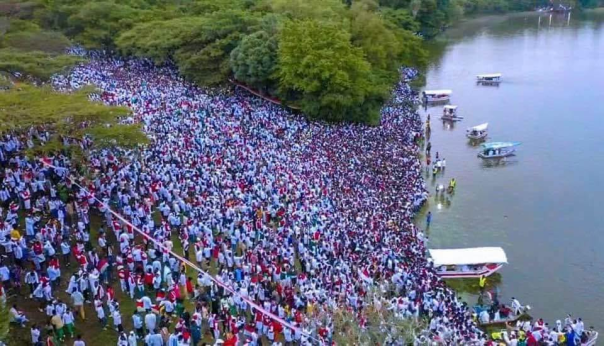
Honouring Waaqa Through Ancient Rituals of Rain, Peace, and Fertility
By Dhabessa Wakjira
In the heart of the Oromo nation, a sacred tradition unfolds each year—a celebration that connects the living to their creator, their ancestors, and the natural world that sustains them. Irreechaa is more than a cultural festival; it is the spiritual heartbeat of the Oromo people, a profound expression of thanksgiving to Waaqa (God) for the gift of life, the renewal of the seasons, and the promise of abundance.
As the Oromo people gather at sacred sites—atop mountains, along riverbanks, and around the shores of lakes—they carry bunches of fresh grass and flowers, symbols of creation and gratitude. They sing, they pray, and they reaffirm their faith in the one universal creator. This is Irreechaa: the Oromo Thanksgiving Day.
The Oromo Belief in One God: Waaqa Tokko
The Oromo people are one of the indigenous peoples of East Africa, with a rich cultural heritage that stretches back millennia. Central to their worldview is a profound and unwavering belief in monotheism—the belief in one God, whom they call Waaqa.
The Oromo are not fetishists. They do not worship the forces of nature; rather, they see in them the manifestations of Waaqa’s power and wisdom. The Oromo people hold this faith so deeply that any expression of doubt regarding the unity of God is met with strong protest. For the Oromo, there is and will always be but one God—Waaqa Tokko—the unique, universal creator and master of all existence.
This belief is the foundation upon which the Irreechaa ceremony is built. It is a celebration not of nature itself, but of the creator whose wisdom and power are revealed through nature’s beauty, fertility, and renewal.
The Gadaa System and Qaalluu Institution: The Framework of Irreechaa
To fully understand Irreechaa, one must understand the broader cultural and political systems of the Oromo people, particularly the Gadaa system and the Qaalluu institution.
The Gadaa system is a millennia-old democratic governance structure based on generational age sets, egalitarian principles, and rotating leadership. It has been recognized by UNESCO as part of the Intangible Cultural Heritage of Humanity. The Qaalluu institution, on the other hand, is the spiritual authority that maintains harmony between society, nature, and the spiritual realm.
Irreechaa is intimately connected to both. The Qaalluus (spiritual leaders) and the Abbaa Malkaas (lineal chiefs of the areas) are at the top hierarchies of the ritual. The Qaalluus give instructions and directives regarding the location and timing of the ritual, ensuring that it is conducted in accordance with ancient traditions.
The Philosophy of Irreechaa: Life, Death, and Resurrection
Irreechaa is not merely a ritual; it is a comprehensive philosophical worldview that reflects the Oromo people’s understanding of existence.
The ceremony embodies a profound admiration for the miraculous spiritual powers of Waaqa and the living secret of generation. The ever-greenness and productivity of plants, the regeneration of life, the replacement of the old by the new, and the death and resurrection of fruits are seen as manifestations of Waaqa’s wisdom.
According to this belief, all is accomplished by the will of Waaqa.
The cycle of seasons—the death of vegetation in the dry season and its resurrection with the rains—is likened to the cycle of life itself. It reflects a philosophy of life after death, of renewal, and of hope.
Historically, this worldview is believed to have originated from the ancient Cushitic people living along the Nile Valley. While the Oromo Waaqeffannaa is not identical to the religious practices of these ancient peoples, it shares a common origin in the Nile Valley Cushitic civilization.
The Two Major Irreechaa Celebrations
The Irreechaa ritual ceremony is conducted at different places and times, governed by its own system and portrayed by its own ritual practices. By and large, it takes place at two major areas:
1. Irreechaa Tulluu — The Mountain Celebration
Irreechaa Tulluu is the ritual ceremony conducted at the top of mountains. It is performed at the beginning of the spring season, usually in the month of March.
For three months prior, the land has endured the harshness of the dry season (bona) . Both people and cattle suffer from drought, shortage of water, and scarcity of grasses. It is during this time of hardship that the Oromo people gather on the mountain tops to pray to Waaqa to send rain, to bring relief, and to restore life to the land.
The mountain tops are solitary places characterized by moisture conducive for praying. This ritual ceremonial practice is said to have closely related to the worship practiced by ancient settlers of peoples of the Nile Valley.
2. Irreechaa Malkaa — The Riverbank Celebration
Irreechaa Malkaa is celebrated immediately after the end of the rainy season, in the middle of September (Fulbaana). It is a time of transition—when the darkness and fog of the rainy season give way to the brightness of spring (Birraa) .
This ritual ceremony is accomplished not only along the banks of rivers but also around lakes and their vicinities. The most famous of these celebrations takes place at Hora Arsadi, near Bishoftu town, a site of profound historical and cultural significance.
This Irreechaa holiday is sometimes known as Ayyaana Birraa (the Birraa holiday). It is the time when relatives, families, and clans, separated by rivers and floods during the rainy season, are able to meet and reconnect.
The Significance of Hora Arsadi
Hora Arsadi, the iconic site of Irreechaa Malkaa, is located adjacent to Bishoftu town, not far from Oda Nabe—one of the Oromo religious, political, and historical centers of ancient times.
The name “Hora Arsadi” is derived from a man named Arsadi, who is said to have belonged to the Liban lineage. The site is a sacred space, where the Oromo people gather annually to give thanks, to pray, and to renew their connection to Waaqa and to each other.
At this site, the Abbaa Malkaas and the Abbaa Gadaas have vital participatory roles. Communities carrying bunches of lovely grasses and flowers in their hands—symbols of creation and abundance—praise, bless, and pray to Waaqa.
The Rituals of Irreechaa
The Irreechaa ceremony is a rich tapestry of song, dance, prayer, and community fellowship.
Carrying the Bunch of Grasses and Flowers
Participants hold in their hands fresh grass and flowers—symbols of the creation they are praising. This act embodies the essence of Irreechaa: “Uumamaan uumaa raajjeeffanna” —we pray and admire the creator having creations in hands.
After the thanksgiving songs are sung, the bunches of flowers and grasses are laid over, symbolizing the offering of gratitude to Waaqa.
The Songs of Irreechaa
The songs of Irreechaa are deeply moving and spiritually charged. The women, decorated in Caaccuu (beads) cultural suits and holding Siiqqee (cultural slender sticks), sing the melody:
“Maareyoo! Maareyoo…!”
The men, holding Harooressa (male sticks), respond with:
“Irrechoo yaa irrecha malkaa roobaafi nagaa…”
This call and response is a prayer for rain, peace, and fertility—for the well-being of the community and the promise of abundance.
The Return Home
After the prayers, all participants return to their villages, accompanying the Abbaa Malkaa and their clan leaders. The journey back is marked by joy, fellowship, and the reaffirmation of community bonds.
Children and Youth Celebrations
Children with peer groups sing seasonal and love songs. This is the season when young people select their partners, give and receive gifts, and express their best wishes to one another through cultural songs. It is a time of hope, renewal, and the celebration of life.
The Cultural and Spiritual Meaning of Irreechaa
Irreechaa embodies the core values of Oromo culture and spirituality:
1. Gratitude to the Creator
The ceremony is an act of thanksgiving, acknowledging that all life and abundance come from Waaqa.
2. Renewal and Hope
Irreechaa marks the transition from hardship to hope, from the scarcity of the dry season to the abundance of spring.
3. Community and Unity
The celebration brings together families, clans, and communities, reinforcing the bonds of kinship and solidarity.
4. Connection to Nature
The use of fresh grass and flowers symbolizes the Oromo people’s deep connection to the natural world and their role as stewards of creation.
5. Peace and Reconciliation
Irreechaa is also a time for reconciliation—for mending relationships, resolving conflicts, and fostering peace within the community.
Irreechaa in the Modern Era
Today, Irreechaa has grown beyond its traditional boundaries. The annual celebration at Hora Arsadi now draws hundreds of thousands of Oromo people from across Ethiopia and the diaspora. It has become a powerful expression of Oromo identity, unity, and cultural pride.
The ceremony has also garnered international recognition. It serves as a reminder of the Oromo people’s rich cultural heritage and their enduring connection to their land, their faith, and their traditions.
In the diaspora, Oromo communities in cities like Minneapolis, Seattle, Melbourne, and Toronto have also begun to celebrate Irreechaa, ensuring that the tradition continues across borders. These celebrations preserve cultural identity, connect younger generations to their heritage, and create spaces for community bonding.
A Call to Preserve and Celebrate
As the Oromo people continue to navigate the challenges of the modern world, Irreechaa remains a source of strength, hope, and identity. It is a reminder of who they are, where they come from, and the values that unite them as a people.
Irreechaa is more than a holiday—it is a way of life. It is a philosophy of gratitude, a celebration of creation, and a reaffirmation of faith in the one universal creator.
As the participants gather at Hora Arsadi and other sacred sites, they carry not just bunches of grass and flowers, but the hopes, prayers, and dreams of an entire nation.
Irreechoo yaa irrecha malkaa roobaafi nagaa!
Injifannoon Ummata Oromoo!
Irreechaa haa jabaattu!
Waaqa haa galatannu!
This feature article is dedicated to the Oromo people—past, present, and future—who carry the spirit of Irreechaa in their hearts, and to the generations yet to come who will continue this sacred tradition.

Celebrating Qaammee: A Sacred Oromo Tradition of Womanhood, Unity, and Cultural Pride
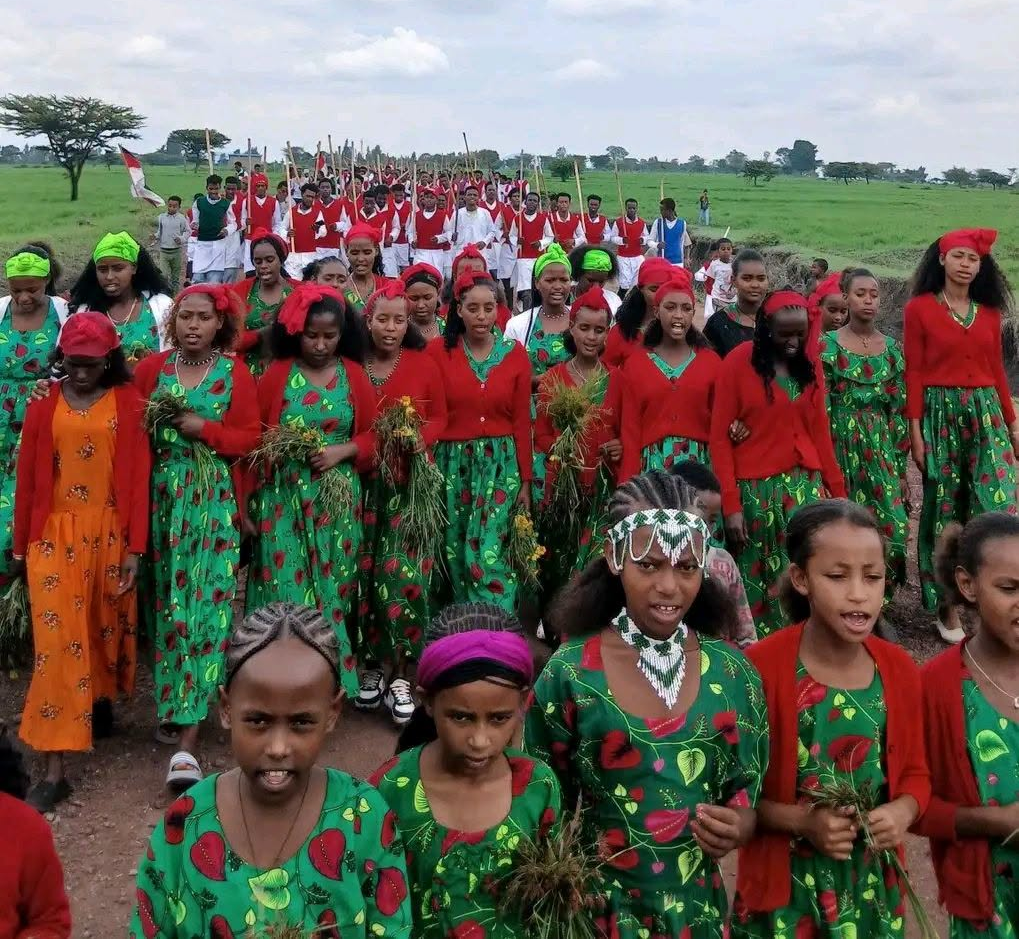
The Rituals of Buqqisaa and Daddarbaa — A Timeless Celebration of Young Women
By Daandii Ragabaa
The Oromo people are blessed with a rich tapestry of cultural traditions that have been passed down through generations. Among these, the Ayyaana Qaammee stands as one of the most beautiful and significant celebrations—a sacred festival honouring young unmarried women, their transition into adulthood, and their vital role in the continuity of Oromo society.
The word Qaammee refers to a young unmarried woman who participates in this sacred festival. The celebration embodies the essence of youthful femininity, purity, and the promise of a bright future. It is a rite of passage, a communal blessing, and a moment of profound cultural significance.
This year, as the community gathers to celebrate Qaammee, we extend our warmest greetings: “Baga Nagaan Ayyaana Qaammee geessan!” —Happy Qaammee Festival!
Understanding Qaammee: More Than a Celebration
The Qaammee festival is more than just a cultural event—it is a sacred tradition that connects the Oromo people to their ancestors, their community, and the natural world around them. It is a celebration of womanhood, a blessing for the future, and a reaffirmation of Oromo identity.
The festival takes place annually, beginning in the month of Hagayya (roughly July-August) and continuing through the month of Fulbaana (September-October). The timing coincides with the end of the rainy season—a time of renewal, abundance, and new beginnings. This year’s celebration is a continuation of this sacred tradition, bringing communities together in joy, song, and blessing.
Central to the Qaammee celebration are two key rituals:
- Buqqisaa — The “Breaking” or preparation ceremony
- Daddarbaa — The “Passing” or blessing ceremony
The Buqqisaa Ceremony: Preparation and Unity
The Qaammee celebration begins with the Buqqisaa ceremony, a vibrant evening of preparation and community bonding.
Gathering by the Water
On the evening of Buqqisaa, young unmarried women (Qaammeen) gather in groups and make their way to a nearby river or stream (laga or caffee). This is a time of sisterhood, joy, and anticipation. The women come together in large numbers, united by their shared identity and purpose.
The Breaking of Qunnii
At the water’s edge, the women perform the ritual of Buqqisaa—the breaking or preparation of Qunnii, a special plant similar to grass that has a fragrant fruit (gumaa/firii) at its base. When the Qunnii blooms, it becomes Dhallaadduu, ready for use.
The Qunnii plant is significant for several reasons:
- It produces a natural fragrance that is pleasing to the senses
- It has medicinal properties that are beneficial for women’s health
- It is used as a natural perfume (Qayya) by the young women
Songs, Dance, and Celebration
The Buqqisaa ceremony is accompanied by traditional songs, dances, and celebrations that continue well into the night. The women sing Faaruu Qaammee (Abaabilee)—special songs composed for the occasion—as they prepare the Qunnii together.
The women break and prepare the Qunnii, sharing in the work and the joy of the occasion. The atmosphere is filled with laughter, song, and the spirit of unity.
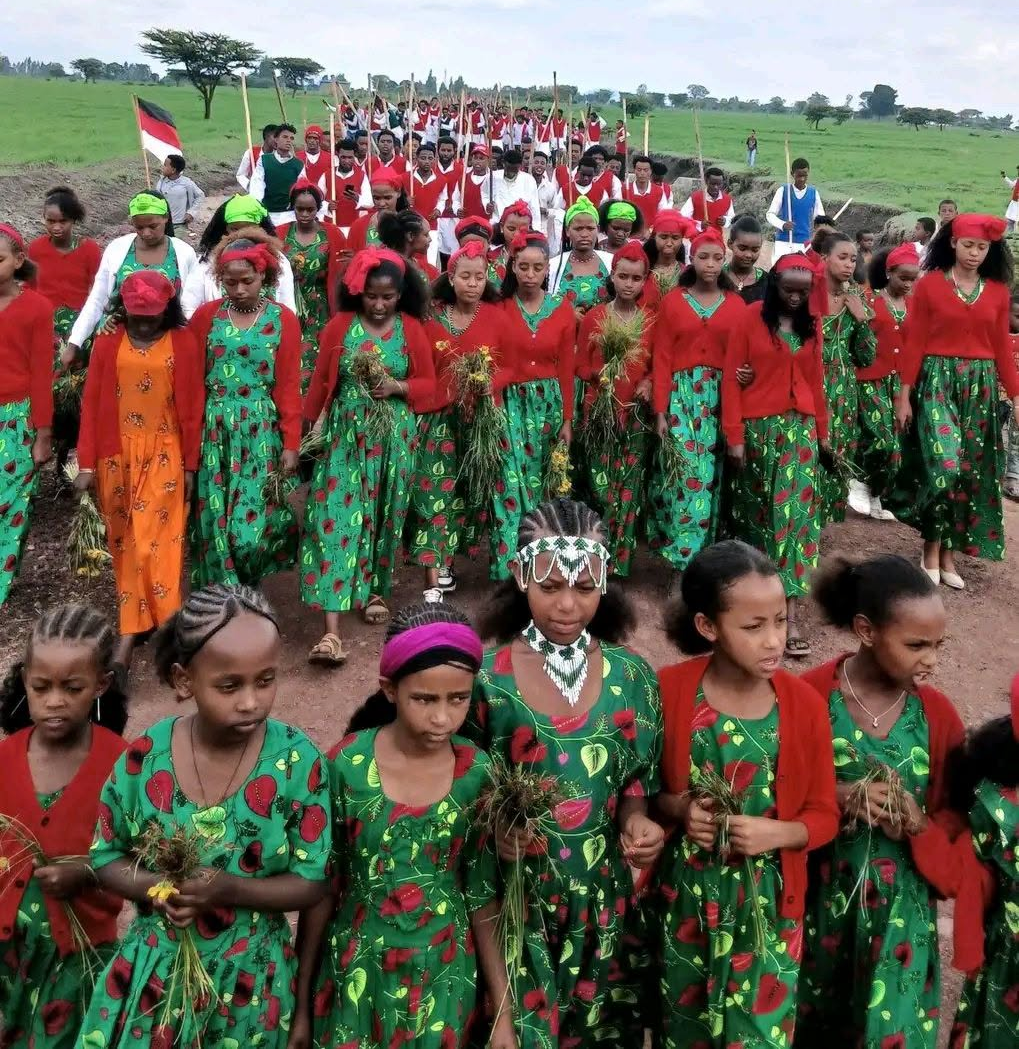
Returning Home with Blessings
After the preparation is complete, each woman returns to her home with the Qunnii she has prepared. She places it on the doorstep (balbala irra kaawwatanii) as she enters, symbolizing the blessings she brings into her home.
The Ashaashullaa Tradition
On this same evening, young girls (ijoolleen dubaraa) participate in a special tradition involving Ashaashullaa—a plant similar to moss or creeping vine. The Ashaashullaa is tied to their hands and feet (harkaa fi quba miilatti hidhatanii bulu), and they sleep with it overnight.
In the morning, the plant has turned their hands and feet red—a beautiful decoration that adds to their adornment. The plant is considered a traditional ornament for girls, enhancing their beauty and connection to nature.
The Daddarbaa Ceremony: Blessings and Passing Forward
The following day is the Daddarbaa ceremony—the Passing or Blessing ceremony. This is the main day of the Qaammee celebration, when the young women receive the community’s blessings and are honoured for their transition.
Gathering at the Meeting Place
In the morning, the young women take the Qunnii they prepared the previous evening and gather at a designated meeting place, known as the Mootii Durbaa (the place of the chosen leader). The Mootii Durbaa is the eldest or most respected among the young women, chosen by the group.
The Journey Through the Community
From the Mootii Durbaa, the women begin their journey through the community. Walking in groups, they sing the Abaabilee songs as they go from house to house. They start with the Warra Angafaa (the elders/leaders of the clan) and then visit every household in their community.
The Ritual of Daddarbaa
At each household, the women perform the Daddarbaa ritual. They pass the Qunnii from the previous day to the household, receiving blessings in return. They eat and drink a little at each home, and the elders offer prayers and blessings for their future.
The women continue this journey until they have visited all the households in their community, spreading joy, receiving blessings, and reinforcing the bonds of community.
The Role of Young Men in Qaammee
While Qaammee is primarily a celebration of young women, young men also play an important role—though it is very different from that of the women.
Young unmarried men (who are not yet married) do not participate in the Buqqisaa or Daddarbaa ceremonies in the same way as the women. However, they accompany the women during the celebrations, walking alongside the groups and participating in the songs and dances.
The Wadaajii Tradition
The most notable tradition involving young men is the Wadaajii Dhungachuu—a ritual that is eagerly awaited, especially by the men. This tradition is unique to the Oromo culture and reflects the playful and respectful nature of the Qaammee celebration.
During the procession, when the women leave one household to go to the next, the young men position themselves along the route. As the women pass, the men suddenly fall to the ground in front of them and attempt to “drink” (dhungachuu) from them. The women, in turn, push the men away using their hands and the Dhallaadduu they are carrying.
This is a playful ritual, not a violation. The men approach with respect, and the women respond with good-natured resistance. The location for this ritual is often a boqoo/maddii—a designated area along the route.
After the ritual, the women continue on their way, laughing and continuing their songs. The men, having participated in the tradition, rejoin the procession. This tradition is an important part of Oromo youth culture, reinforcing bonds between young men and women while maintaining cultural protocols.
Important note: Men who participate in the Wadaajii ritual are not allowed to marry the women they “drink” from—it is a matter of cultural respect and propriety.
The Spiritual Significance of Qaammee
At its heart, the Qaammee celebration is a spiritual experience. The rituals are conducted with reverence and respect, invoking the blessings of Waaqa (God) and the ancestors.
The young women receive the prayers of the elders, the admiration of the community, and the hope of their families. The celebration is an act of thanksgiving—giving thanks for the rain, the harvest, and the continuity of Oromo culture.
The songs of Qaammee, known as Abaabilee, carry deep meaning and are an essential part of the celebration:
“Aababilee haa doolee” — Let the Abaabilee songs be sung
“Haayee yaa shoroorootoo” — Oh, the beautiful songs
“Shoororoo haati deechee” — The mother has sung the Shoororoo
“Yaa qal’oo qaammen geechee” — The Qaammee women have come
A Celebration of Promise and Renewal
As the Qaammee festival concludes, the participants and their families are filled with a sense of pride, joy, and hope. The young women who have been blessed and celebrated carry with them the strength and support of their community as they embark on their journeys into adulthood.
The festival is also a reminder of the beauty and resilience of Oromo culture—a culture that has survived centuries of oppression and continues to thrive in the hearts of its people.
The Challenge of Cultural Erosion
It is important to note that the Qaammee festival is in danger of being forgotten in many areas. In some places, it is no longer celebrated at all. In others, a modified version called “Qaammee Sidaamaa” is celebrated on October 1st (Fulbaana 1, ALH), but even this is not the same as the traditional celebration.
This erosion of cultural traditions is a loss for the Oromo people. These traditions are not just customs—they are expressions of Oromo identity, resilience, and continuity. They connect the present generation to their ancestors and provide a foundation for the future.
The responsibility of reviving and preserving these traditions falls on the current generation. As the saying goes, “Duudhaaleen Oromoo hedduun isaanii bakka hin jiran. Bakkatti deebisuun dirqama dhaloota ammaa ti” —Many Oromo traditions are no longer practiced. It is the duty of the current generation to bring them back.
Conclusion: The Eternal Light of Qaammee
Qaammee is more than a celebration—it is a sacred tradition that connects the Oromo people to their past, their present, and their future. It is a moment to honour young women, to bless their journey, and to affirm the enduring strength of Oromo culture.
As the community gathers to celebrate, let us remember the beauty, grace, and resilience of the Oromo people. Let us honour the young women who carry the hopes of their community. And let us commit ourselves to preserving and reviving these sacred traditions for future generations.
“Kan Baranaa kan egeree nuun haa jedhu!” —May this year’s celebration be one of abundance and joy!
Baga Nagaan Ayyaana Qaammee geessan!
This feature article is dedicated to all the young Oromo women—past, present, and future—who carry the spirit of Qaammee in their hearts, and to the communities who are working to preserve this beautiful tradition.
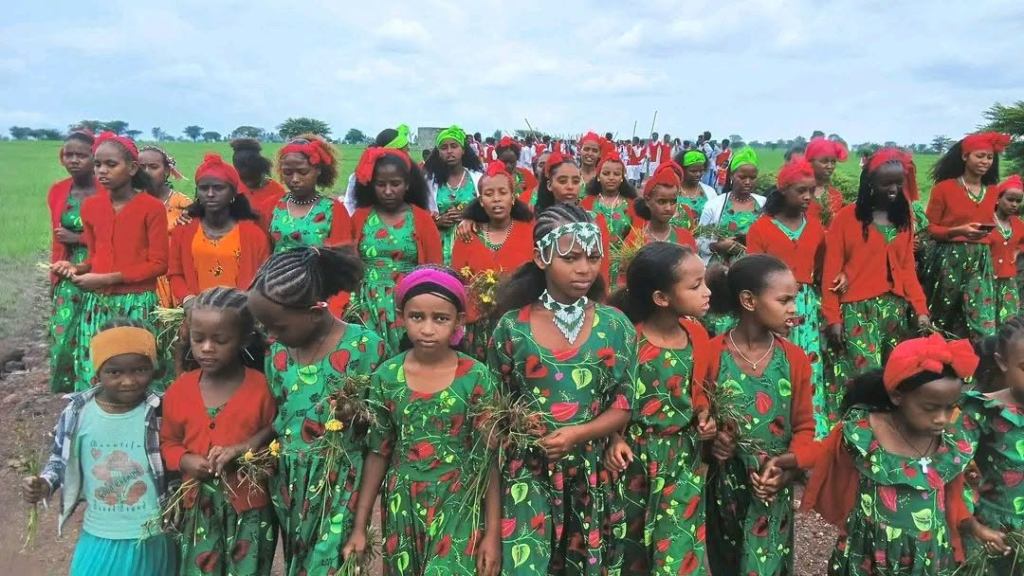

A Milestone Achieved: The ABO Diaspora Structure Council Successfully Concludes
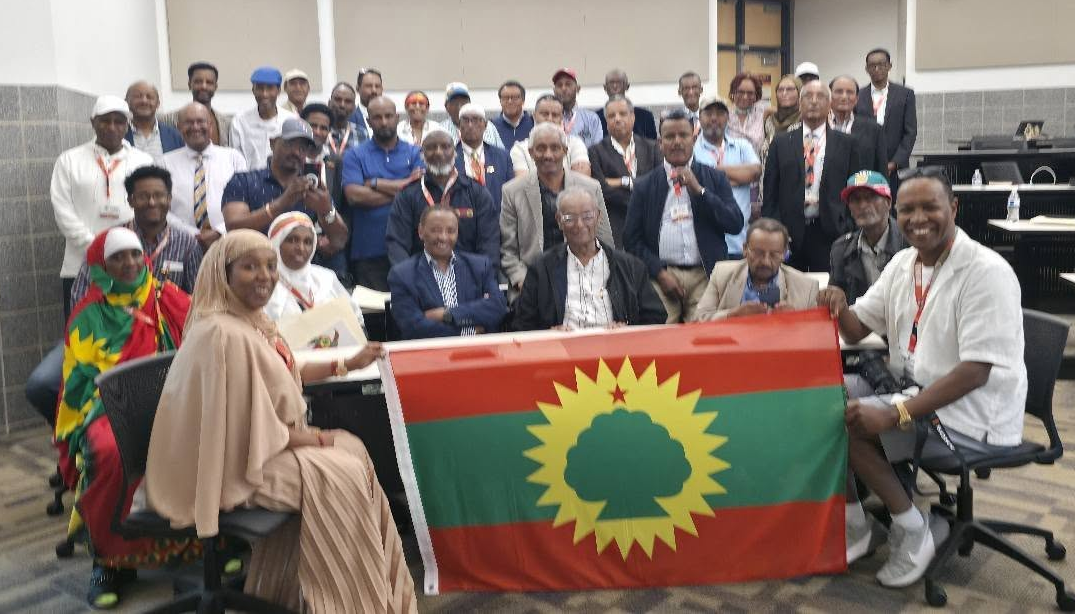
A Historic Gathering in Minneapolis Marks a New Chapter for the Oromo Liberation Front’s Global Organization
By Daandii Ragabaa
Minneapolis, MN — August 6, 2026
In a significant development for the Oromo liberation movement, the Korri Caasaa ABO Biyyoota Alaa —the Diaspora Structure Council of the Oromo Liberation Front (OLF/ABO)—has successfully concluded its proceedings. The event, held in Minneapolis, Minnesota, marks a pivotal moment in the organizational consolidation of the Oromo struggle beyond the borders of Oromia.
The council’s conclusion, announced on August 6, 2026, represents more than a routine organizational meeting. It signals the maturation of the diaspora as a structured, institutional pillar of the liberation movement—a recognition that the struggle for Oromo self-determination is not confined to the homeland but spans continents, uniting Oromo people wherever they reside.
Why Minneapolis? The Heart of the Oromo Diaspora
The choice of Minneapolis as the host city for this historic gathering is no accident. Over the past three decades, Minnesota has become a sanctuary and a springboard for Oromo activism, earning the affectionate title “Little Oromia” for hosting one of the largest Oromo populations outside of East Africa .
From the bustling neighborhoods of Minneapolis to the suburban cities of St. Paul, Oromo culture thrives—through language, music, faith, and political organization. Holding the Diaspora Structure Council here acknowledges the diaspora not as a distant bystander but as a vital pillar of the liberation project .
In this space, the past meets the present. Elders who witnessed the early days of the OLF sit alongside youth born in the West, forging an intergenerational bond that strengthens the movement’s resilience. It is a living classroom where history is taught, grievances are voiced, and hope is rekindled .
The Significance of Institutional Strength
The successful conclusion of the Diaspora Structure Council underscores a central theme that has emerged in the Oromo movement’s recent history: the strength of the institution.
As emphasized at the Oromo New Year celebrations in Edmonton, the focus is increasingly on “jabeenya jaarmiyaa”—the strength of the institution . This represents a mature evolution in diaspora political consciousness: the understanding that liberation requires not just passion or grievance, but organizational resilience, strategic continuity, and the mechanisms required to sustain a movement across decades and continents .
The Diaspora Structure Council’s work, meticulously prepared and executed, was itself a direct, tangible contribution to the struggle. It ensured that “deeggarsii fi tumsi qabsoo bilisummaa akka itti fufiinsa argatu”—that “support and sustenance for the freedom struggle continues to receive continuity” .
The OLF/ABO’s Vision: Building Oromia Without Borders
The successful conclusion of this council aligns with the broader vision of the OLF/ABO leadership, who have consistently emphasized that the work of building Oromia extends beyond Ethiopia’s borders.
As senior OLF leader Jaal Abdii Raggaasaa stated at a February 2026 consultative meeting in Gullallee: “Our foundational organizing must begin at the grassroots level, starting from the village” . This principle applies equally to the diaspora. Wherever Oromos reside—in the villages of Oromia, the refugee camps of Kenya, the community centers of North America and Europe—the work of building Oromo consciousness, organization, and national identity continues .
The council’s successful conclusion demonstrates that the diaspora is not merely a source of financial support or cultural preservation. It is an active, organized, and strategic component of the liberation project.
A Foundation of Truth and Integrity
Throughout its proceedings, the Diaspora Structure Council was guided by the principles that have defined the OLF/ABO’s decades-long struggle. As Abdii Raggaasaa declared: “If we are people of truth, our people will never abandon us under any circumstances. But if we are people of falsehood, even if we hold something, we will lose it” .
This commitment to truth and integrity was central to the council’s work. The diaspora structure is not built on empty rhetoric or political opportunism. It is built on the sacrifice of generations—on the “struggle of blood and bone” that has defined the Oromo liberation movement .
The Cry That Echoes: IUOf!
As the Diaspora Structure Council concluded its work, the hall undoubtedly echoed with the rallying cry that unites Oromo people across continents: “IUOf!” —Victory to the Oromo people .
The abbreviation, derived from the Oromo phrase for victory, resonates across generations, declaring the unshakable belief in the Oromo nation’s future . It is a cry that has been heard in the hidden clearings of Oromia, in the community halls of the diaspora, and now, in the organized structures of the OLF/ABO abroad.
A New Chapter: Consistency and Determination
The flyer circulating for the conclusion of the Diaspora Structure Council carried a powerful mantra: “As always, consistency and determination remain the foundation of lasting progress and success” .
These words are not empty rhetoric. In the long and often brutal struggle for Oromo self-determination, fads and fleeting passions have no place. What sustains the movement is the dogged, day-in and day-out commitment of a people who refuse to be erased. The successful conclusion of the Diaspora Structure Council is the embodiment of this ethic—a ritual of endurance, a moment to recalibrate, to reaffirm, and to recommit .
Consistency means showing up, year after year, regardless of the political winds. Determination means turning setbacks into stepping stones. The OLF/ABO has weathered imprisonment, exile, and state-sponsored repression, yet here it stands, its diaspora structure organized and functioning in the heart of America. That is the quiet power of persistence .
Looking Forward: The Seventh Round and Beyond
The successful conclusion of the Diaspora Structure Council arrives at a crucial moment. As the OLF/ABO prepares for the upcoming 7th round elections, the diaspora structure will play a vital role in mobilization, advocacy, and organizational strengthening .
The council’s work ensures that the diaspora is not a passive observer of political developments in Oromia but an active participant. As one OLF official stated: “OLF is the center of Oromo peace” . The diaspora structure, now successfully organized and concluded, extends that center across the globe.
Conclusion: A Milestone, Not an End
The conclusion of the Korri Caasaa ABO Biyyoota Alaa is not an end but a beginning. It marks the formalization of a structure that will continue to serve the Oromo people’s aspirations for self-determination, dignity, and democratic rights.
As participants departed Minneapolis, the message was clear: the diaspora is organized, the structure is in place, and the work continues. The struggle for Oromo liberation is not confined to the homeland—it is a global movement, sustained by a global community, guided by a global organization.
ABO haa waaru!
Injifannoon Ummata Oromoo!
Korri Caasaa ABO Biyyoota Alaa
Milkiin Xumurameera
Hag. 08/06/2026
Minneapolis, MN
This feature article is dedicated to all those who built the diaspora structures of the Oromo Liberation Front—from the founders to the newest members—and to the generations yet to come who will carry forward the torch of liberation.

A Line Crossed: Ambassador Suleiman Dedefo Warns of Eritrea’s Grave Violation of Ethiopian Sovereignty
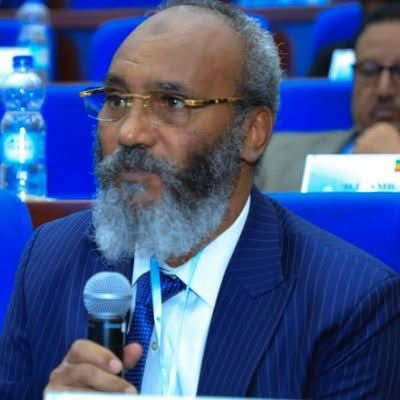
In the volatile landscape of the Horn of Africa, where alliances shift like desert sands and the embers of conflict never fully cool, a stark warning has been issued. Ambassador Suleiman Dedefo, Ethiopia’s top diplomat, has leveled a serious accusation against Eritrea: that it has committed a “grave violation” of Ethiopia’s sovereignty by sending an armed military delegation across their internationally recognized border into the Tigray region—without the consent of the Ethiopian government.
A Breach of Sovereign Borders
According to Ambassador Dedefo, Eritrea’s military delegation did not merely cross into Ethiopian territory; it was received by forces engaged in active military confrontation with the Ethiopian government—a “gang group” aligned with the Tigray People’s Liberation Front (TPLF). This, he argues, constitutes a direct and reckless act of alliance with a group waging war against Ethiopia.
“It is highly unusual and contrary to established principles of international law for an armed military delegation to cross the internationally recognized border of another sovereign state without the consent of its government,” Ambassador Dedefo stated, framing the incursion not as a diplomatic misstep but as a fundamental breach of the rules that govern relations between sovereign nations.
The Legal Framework: A Violation of the UN Charter
The Ambassador’s words carry the weight of international jurisprudence. Under the United Nations Charter and customary international law, the territorial integrity and political independence of sovereign states are inviolable. An armed incursion by one state into another, particularly to support an armed group hostile to the host government, is widely recognized as an act of aggression.
By receiving Eritrea’s military delegation in territory it does not control, the TPLF-aligned forces have, in Ambassador Dedefo’s view, effectively made Eritrea a party to the conflict. “This amounts to joining the war that TPLF is waging on Ethiopia,” he declared. Such an action erases any pretense of Eritrea acting as a neutral observer or a humanitarian partner—it positions Asmara as a belligerent.
A Reckless Alliance
The implications extend far beyond the battlefield. Ambassador Dedefo characterized Eritrea’s move as a “reckless act of alliance with a mercenary group” that jeopardizes not only Ethiopia’s sovereignty but also the stability of the entire region. In the Horn of Africa, where borders remain contested and historical grievances run deep, an act of this nature threatens to unravel the fragile peace.
By aligning with a group that the Ethiopian government has designated as hostile, Eritrea is gambling with regional security. The message sent to other nations in the region is deeply troubling: that borders can be crossed with impunity, and that external actors may choose sides in a neighbor’s internal conflict without consequence.
The Right to Self-Defense
Perhaps the most significant portion of Ambassador Dedefo’s statement is his assertion regarding Ethiopia’s legal recourse. “Such actions may give rise to Ethiopia’s rights under international law, including those recognized by the UN Charter,” he noted. He went further, stating unequivocally that “Eritrea becomes a legitimate target for any action that Ethiopia could take in self defense”.
This is not merely diplomatic rhetoric. Article 51 of the UN Charter enshrines the “inherent right of individual or collective self-defence if an armed attack occurs.” By framing Eritrea’s actions as an armed incursion in support of a hostile force, Ambassador Dedefo has laid the groundwork for a potential Ethiopian military response—one that would be legally justified under international law.
The Broader Context
Ambassador Suleiman Dedefo is no stranger to the complexities of Ethiopian diplomacy. Having served as Ethiopia’s ambassador to the United Arab Emirates and later as its top envoy to Somalia, he has been at the center of some of the region’s most sensitive negotiations. He has previously warned of external forces creating “political and strategic challenges” to Ethiopian interests and has been a vocal critic of those who threaten the nation’s sovereignty.
His latest warning comes at a time of heightened tensions in the Horn of Africa. Ethiopian Prime Minister Abiy Ahmed has spoken of “correcting” the historic loss of Red Sea access, a statement that has drawn sharp criticism from Eritrea. Meanwhile, Egypt has deployed troops to Somalia, further complicating an already fraught regional dynamic. Into this cauldron of competing interests, Eritrea’s alleged military incursion adds a volatile new element.
A Line That Cannot Be Uncrosed
Ambassador Dedefo’s words are a clear signal: Ethiopia views Eritrea’s actions as an act of war. Whether this leads to direct military confrontation between the two neighbors remains to be seen. What is certain is that the diplomatic landscape of the Horn of Africa has shifted.
The international community now faces a critical test. Will it condemn Eritrea’s violation of Ethiopian sovereignty and call for de-escalation? Or will it remain silent, allowing the precedent of armed incursion to take root? Ambassador Dedefo has drawn a line in the sand—a line that, once crossed, may prove impossible to uncross.
As the region holds its breath, one thing is clear: the principle of sovereign borders, hard-won over centuries of international law and diplomacy, hangs in the balance. And Ethiopia, through the voice of its ambassador, has made it known that it will not stand idly by while that principle is trampled.

The Macha-Tulama Self-Help Association Speaks: Finfinne, Dirree Dhawaa, and the Unfinished Struggle for Oromo Justice

A Historic Statement on the National Dialogue, Colonial Atrocities, and the Demand for Recognition
By Daandii Ragabaa
In a powerful and historic statement, the Waldaan Walgargaarsa Misoomaa fi Hawaasummaa Maccaa Tuulamaa (Macha-Tulama Self-Help and Development Association) has declared that the issue of Finfinne and Dirree Dhawaa has been brought before the national dialogue not as a genuine attempt at resolution, but as a deliberate effort to undermine and weaken the Oromo people.
The Association has asserted that the old wounds of the past—the wounds inflicted by the Menelik era—remain unhealed. And today, the same forces of dispossession and denial continue to operate, refusing to recognize Oromo rights and refusing to step back from the land that was stolen.
“The wound of Oromo is still not healed,” the Association declared. “Even today, we are witnessing the theft of our ancestral land.”
The Historical Atrocity: Menelik’s Genocide Against the Oromo
The Association’s statement took the Oromo people and the wider world back to a dark chapter in Ethiopian history—the era of Emperor Menelik, when the Oromo people were systematically dispossessed of their land, their dignity, and their lives.
“Menelik committed a great crime against the Oromo people when he separated Finfinne from its Oromo owners,” the Association stated.
The atrocities of that era are well-documented, but the Association has brought them into stark relief by naming specific victims and families who suffered under Menelik’s expansionist campaign:
- Abbaa Gadaa Guraaraa Lataa was executed by hanging.
- His father, mother, and three children were killed in a brutal and inhumane manner.
- Qajeelaa Dooyyoo and Guraaraa Dooyyoo were also executed, along with their mother, in a similarly horrific fashion.
- Shubbuu Ejersoo had his hands and feet severed before being killed.
- Aaxalee Jaatanii was starved to death in detention—denied food until life was extinguished.
These were not random acts of violence. They were part of a systematic campaign to break the spirit of the Oromo people, to erase their presence from Finfinne, and to establish a new political order built on Oromo suffering.
The Association’s statement serves as a reminder that these crimes were not isolated incidents—they were part of a broader pattern of atrocity committed against the Oromo people who lived on the land now known as Finfinne.
The Legacy of Suffering: Three Generations of Pain
The Association declared that the suffering of the Oromo people over Finfinne has now spanned three generations. From the initial dispossession under Menelik, to the brutal repression under the Derg regime, and now to the present day—the Oromo people have paid a heavy price.
“During the Derg era, many Oromo paid a great price for Finfinne,” the Association stated. “Even today, the wound is still not healed.”
The Association raised a pointed and urgent question:
“As long as this truth exists on this earth, the question of ‘Whose Finfinne is it?’ will always be asked. What has brought us to this point?”
The answer, according to the Association, lies in the persistent refusal of successive Ethiopian regimes to acknowledge Oromo rights. The Association posed a direct challenge to the architects of this injustice:
“Oromo people are struggling to reclaim their land and their rights. How can you govern on someone else’s land? What right do you have to claim authority over people who do not belong to you? It would have been better for you to struggle for your own land rather than occupy ours.”
The National Dialogue: A Tool of Deception?
The Association expressed deep concern about the ongoing national dialogue and how the issues of Finfinne and Dirree Dhawaa are being treated within it.
According to the Association, the dialogue is not being used as a genuine mechanism for reconciliation and justice. Instead, it is being manipulated to further marginalize the Oromo people and to legitimize the ongoing dispossession of Oromo land.
“The agenda of Finfinne and Dirree Dhawaa has been brought to the national dialogue to weaken the Oromo people,” the Association declared. “The old politics of the Abyssinian elite continues, refusing to step back from the land that rightfully belongs to Oromo.”
The Association emphasized that the ongoing process is not just disrespectful—it is a violation of basic rights and dignity. The Association described the current situation as “an insult that crosses all boundaries” and declared that “something that did not exist before has now arrived” —a reference to the unprecedented nature of the current assault on Oromo rights.
A Call to Resistance and Unity
In the face of these challenges, the Macha-Tulama Self-Help and Development Association issued a clear and urgent call to the Oromo people:
“The Oromo people have not yet paid the price that is required. We must fight.”
The Association’s call to action is not a call to violence—it is a call to resistance, to unity, and to the defense of Oromo rights through every legitimate means available. It is a call to refuse subjugation, to refuse silence, and to refuse to accept the theft of Oromo land as a settled fact.
The Association also addressed the issue of Dirree Dhawaa—the area that has become a symbol of Oromo resistance and a flashpoint of conflict. The Association’s declaration that Finfinne and Dirree Dhawaa are inseparable from the broader Oromo struggle serves as a reminder that these are not isolated issues—they are part of a continuous thread of resistance that stretches back over a century.
The Symbolism of Dirree Dhawaa
Dirree Dhawaa is more than just a piece of land—it is a symbol of Oromo resilience and a monument to the struggle for justice. It is the site where Oromo people have gathered to demand their rights, where they have faced brutal repression, and where they have continued to return in defiance of all efforts to silence them.
The Association’s statement linking Finfinne and Dirree Dhawaa in the same breath is significant. It sends a clear message: the Oromo people will not accept piecemeal solutions. They will not accept partial recognition. They will not accept the suggestion that one part of their historical homeland can be compromised while another is defended.
Both Finfinne and Dirree Dhawaa are Oromo.
A Historical Challenge to the Ethiopian State
The Association’s statement is not just a declaration of grievance—it is a fundamental challenge to the legitimacy of the Ethiopian state as it currently exists.
By raising the question “Whose Finfinne is it?” —and by insisting that Oromo people have the right to live on their own land with dignity, self-respect, and self-determination—the Association is questioning the foundational narrative upon which the Ethiopian state was built.
The Association’s demand is not for charity or concessions. It is for recognition of historical truth, for justice for past crimes, and for a future in which Oromo people are treated as equals in their own homeland.
The Path Forward: Recognition, Justice, and Peace
The Association’s statement concludes with a clear vision for what must happen:
The wounds of the past must be acknowledged. The atrocities committed against the Oromo people—from the Menelik era to the present—cannot be ignored or forgotten. They must be named, documented, and taught.
Justice must be pursued. Those who committed crimes against the Oromo people must be held accountable. This is not revenge—it is the foundation of lasting peace.
Oromo rights must be recognized. The Oromo people have the right to their land, their language, their culture, and their self-determination. This is not negotiable.
The national dialogue must be genuine. If the dialogue is to be meaningful, it must include a full and honest discussion of Finfinne, Dirree Dhawaa, and all the historical injustices suffered by the Oromo people.
Conclusion: The Struggle Continues
The statement of the Macha-Tulama Self-Help and Development Association is a powerful reminder that the struggle for Oromo justice is far from over. The wounds of the past remain open. The injustices of the present continue. And the future remains uncertain.
But one thing is clear: the Oromo people will not give up their land, their rights, or their dignity. They will continue to resist. They will continue to demand justice. And they will continue to remember the sacrifices of those who came before—from Abbaa Gadaa Guraaraa Lataa to the thousands of unnamed Oromo who have given their lives for Finfinne and for Oromia.
As the Association stated:
“Oromo people are struggling to reclaim their land. This struggle has not ended—it continues. And it will continue until justice is done.”
Finfinne is Oromo.
Dirree Dhawaa is Oromo.
Oromia is Oromo.
The struggle continues.
For the memory of Abbaa Gadaa Guraaraa Lataa, Qajeelaa Dooyyoo, Guraaraa Dooyyoo, Shubbuu Ejersoo, Aaxalee Jaatanii, and all the Oromo martyrs who gave their lives for the land.
Injifannoon Ummata Oromoo!
Finfinne haa jabaattu!
Dirree Dhawaa haa jabaattu!
End.

The Unbroken Backbone: The Role of Oromo Women in the Struggle for Liberation

For decades, the story of the Oromo liberation struggle has been told as a chronicle of resistance against a sprawling empire. But within that narrative, there is a deeper, more powerful current—one that has flowed quietly yet inexorably beneath the surface. This is the story of Oromo women, who have not merely supported the movement, but have stood as its very backbone: its fighters, its strategists, its memory keepers, and its soul.
A Struggle on Three Fronts
The Oromo people have been engaged in a struggle for liberation since their colonization by the Abyssinian Empire, which evolved into modern-day Ethiopia. However, Oromo women face a unique and intersecting burden. They are not only fighting against what scholar Madeline Bass describes as the “settler colonial state rulers of Ethiopia” and “global anti-Blackness,” but they must also contend with “cisheteropatriarchy”—a struggle against patriarchal oppression that is uniquely Oromo in its application.
This triple oppression means that Oromo women have always had to fight for the liberation of their nation while simultaneously battling for their own dignity and rights within their own communities. As one source notes, “the Abyssinian system oppresses Oromo people, and women in particular.” The state of oppression is deep in general, but Oromo women face even greater difficulty.
Pillars of the Movement: From the Battlefield to the Ballot
Within the Oromo Liberation Front (OLF/ABO), Oromo women have served as “utubaa cimaa”—strong pillars—whose contributions have shaped every facet of the liberation movement. Their involvement has been both visible and behind-the-scenes.
· On the Battlefield: Many Oromo women have joined the Oromo Liberation Army (OLA), the armed wing of the OLF, taking up arms to defend their people and land. Women like Aradoolaa Abdalla, who joined the OLA in 1985 and participated in ten major battles in western Oromia, rose through the ranks to become a platoon commander because of her bravery. Women have participated in every sector—military, medical, and communication—as combatants and supporters.
· In Political Organizing: Beyond the battlefield, Oromo women have been active in political movements for decades, serving as leaders, organizers, and advocates within the OLF and other nationalist groups. They have organized protests and worked tirelessly to inform other women of their rights.
The Unbreakable Spirit of Siinqee
One cannot speak of Oromo women’s resistance without understanding Siinqee. It is not merely a wooden stick; it is a profound cultural and spiritual institution. A Siinqee is a ritual stick given to an Oromo woman by her mother on her wedding day. Once a woman holds this stick, she commands respect from everyone in the community.
More than a symbol, Siinqee is a lived practice of mutual protection, a “covenant of resistance against all forms of oppression.” Women use the power of Siinqee to exercise their rights, control their own economy, and participate in solidarity activities. This tradition, which predates Western feminist thought, represents an Oromo philosophy of womanhood and solidarity that has been passed down through generations.
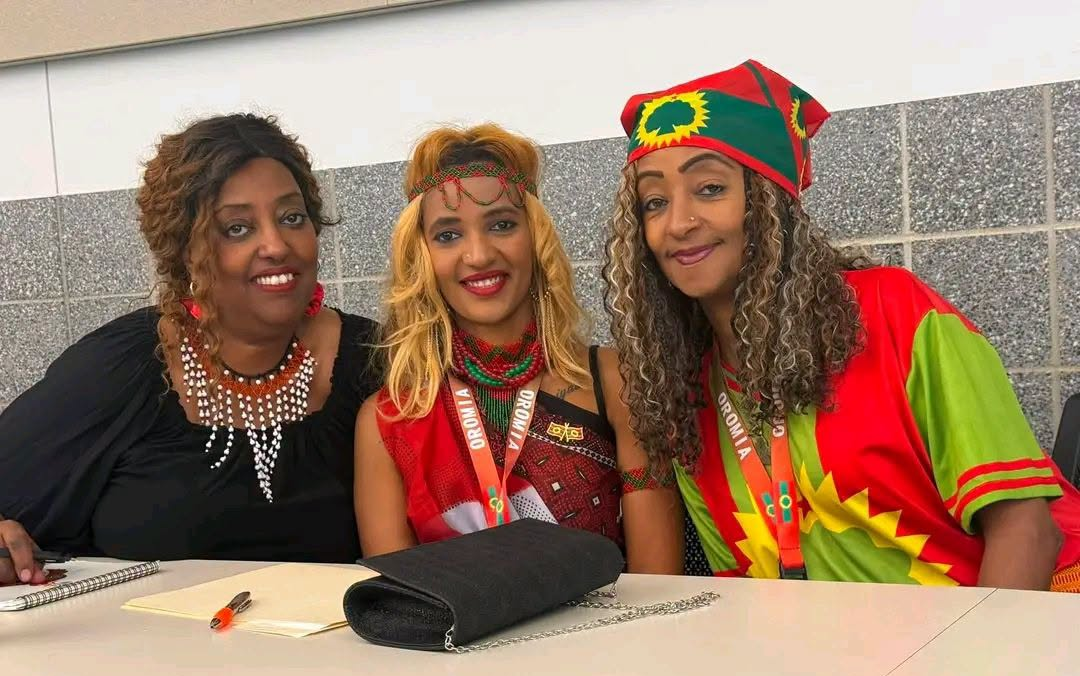
Martyrs and Heroes: The Price of Freedom
The contribution of Oromo women has come at a devastating cost. The liberation struggle has demanded sacrifices that extend far beyond the battlefield, imposing a heavy burden on the families left behind.
One of the most iconic figures in this struggle is Martha Kuwee Kumsa, an Oromo journalist and scholar whose story embodies the spirit of resistance. In 1980, during the Ethiopian Red Terror, she was arrested and detained without charges for nine years after writing an article that called for Oromo women to defy power structures and reclaim their cultural heritage. She was tortured and held until 1989, after which she escaped to Kenya and later Canada. Her activism is deeply rooted in Siinqee feminism—an Oromo philosophy that predates Western feminist thought and is a lived practice of mutual protection and solidarity. Today, she is a professor in Canada and continues to write and advocate on feminist and political issues.
Countless other women have paid the ultimate price—some were killed in battle, others were publicly executed. The story of Agarii Tulluu, who was hanged alongside her two brothers in a market, is just one of many tragic tales. The mothers, wives, and sisters of fallen fighters carry a grief that “does not fade from their minds,” enduring a wound that cannot be measured.
The Hiriira: A Modern Cry for Recognition
The struggle of Oromo women is not confined to the hills of Oromia; it has gone global. In September 2020, Oromo women marched through the streets of Berlin, Germany, in a protest march called a Hiriira—an Oromo word for a parade, demonstration, or queue. They were demanding recognition for their struggle.
This march was more than a protest; it was a powerful act of spatial and historical reckoning. It served as a case study into the entanglements between settler colonial Ethiopia, Germany’s post-empire, and the forces of oppression that link them. By marching through Berlin, Oromo women were mapping their liberation across borders, using a “Black and Blackened way of knowing space with a particularly Oromo perspective” known as geography guraacha. The women wore Oromo cultural garb, distinct to different regions of Oromia, turning the streets of a European capital into a living map of their homeland and their resistance.
Architects of a New Nation
The role of Oromo women extends beyond the struggle for liberation into the vision for what comes after. There is a growing consensus within the movement that the liberation of Oromia cannot be separated from the liberation of Oromo women. Any future Oromo state must be built with women’s full and equal participation from the ground up.
As one advocate powerfully stated, the aim is to ensure that Oromo women are “not just participants but architects of the next chapter.” From the battlefield to the political arena, from the cultural institution of Siinqee to the global stage of the Hiriira, Oromo women have proven that they are not waiting for liberation to be given to them—they are building it with their own hands, one courageous step at a time.
—
This feature article draws on academic research, historical accounts, and journalistic reports to highlight the indispensable role of Oromo women in their people’s long struggle for freedom and dignity.






