Category Archives: Grief Support

Beyond Borders, Toward Peace: Oromo Studies Association Announces Landmark 2027 Mid-Year Conference
By Dhabessa Wakjira
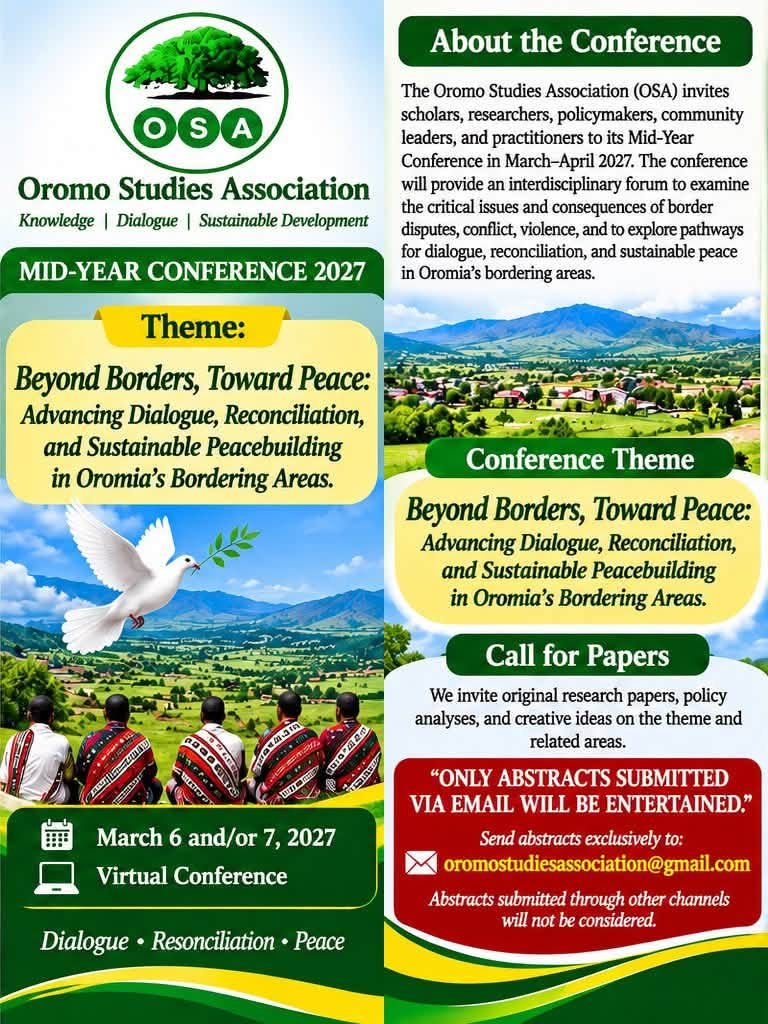
In a world often divided by lines on a map, the pursuit of lasting harmony requires looking beyond traditional boundaries. Recognizing the urgent need for dialogue and reconciliation, the Oromo Studies Association (OSA) has announced its highly anticipated Mid-Year Conference 2027.
Under the poignant theme, “Beyond Borders, Toward Peace: Advancing Dialogue, Reconciliation, and Sustainable Peacebuilding in Oromia’s Bordering Areas,” the virtual conference is set to take place on March 6 and 7, 2027.
The event promises to serve as a vital interdisciplinary forum, bringing together scholars, researchers, policymakers, community leaders, and practitioners from around the globe to tackle some of the most pressing issues facing the region today.
A Focus on the Margins
While much attention is often paid to central political hubs, the OSA is shining a spotlight on the critical—and often volatile—border regions of Oromia. The conference aims to deeply examine the multifaceted dimensions of border disputes, conflict, and violence that have historically plagued these areas.
More importantly, it is designed as a platform for solutions. By promoting research-based solutions and policy options, the OSA hopes to strengthen dialogue among diverse stakeholders and advance sustainable peace and development. The conference will delve into critical issues ranging from human security and the rule of law to the vital role of natural resources and environmental sustainability in community resilience.
A Call for Scholarly Action
The path to peace requires innovative thought and rigorous analysis. To that end, the OSA has officially opened its Call for Papers, inviting original research, policy analyses, and creative ideas that align with the conference theme.
The organizers have outlined several suggested thematic areas for participants to explore, including:
· Border Disputes and Peacebuilding in Oromia
· Conflict, Violence, and Human Security
· Dialogue and Reconciliation Mechanisms
· Justice, Governance, and the Rule of Law
· The role of Women, Youth, and Civil Society in Peacebuilding
Potential contributors must adhere to strict guidelines. Abstracts should be between 250 and 300 words, accompanied by the author’s name, affiliation, and contact information, and must clearly indicate their chosen thematic area.
Important Note for Participants: The OSA has emphasized that only abstracts submitted via email will be entertained. Submissions sent through other channels will not be considered. All abstracts must be sent directly to oromostudiesassociation@gmail.com.
Mark Your Calendars
For those looking to be part of this crucial conversation, the OSA has laid out a clear timeline for the 2027 conference:
· Abstract Submission Deadline: January 15, 2027
· Acceptance Notification: February 5, 2027
· Final Paper Submission: February 25, 2027
· Virtual Conference Dates: March 6 and/or 7, 2027
Knowledge, Dialogue, Sustainable Development
The OSA’s logo features a robust, expansive tree—a fitting symbol for an organization whose motto is “Knowledge | Dialogue | Sustainable Development.” Like a tree putting down deep roots to withstand the storms, the association believes that a foundation built on scholarly dialogue and reconciliation is the only way to secure a sustainable, peaceful future for Oromia’s bordering communities.
As the 2027 Mid-Year Conference approaches, the OSA is extending an open invitation to all who believe that even the most entrenched borders can be crossed through the power of dialogue. For those ready to contribute to this vital mission, the time to act is now. Submit your abstract, mark your calendar, and join the movement toward a peaceful tomorrow.
The Unbroken Spirit: The Story of Obbo Masfin Ittaanaa
By Dhabessa Wakjira
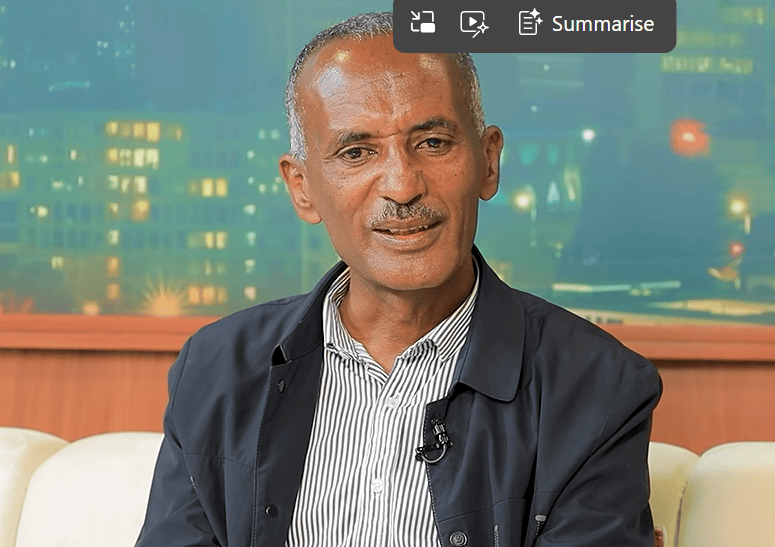
In the annals of the Oromo struggle, there are names that echo through generations—names that carry the weight of sacrifice, resilience, and unwavering commitment to freedom. One such name is Obbo Masfin Ittaanaa, a man whose life story reads like a testament to the indomitable spirit of the Oromo people.
Twenty Years of Captivity
Obbo Masfiin Ittaanaa is a name that evokes both sorrow and pride. For two decades—twenty long years—he was held in chains across some of Ethiopia’s most notorious detention facilities: Maa’ikalawwii, Karchallee, and Qaallittii. These names are not merely locations on a map; they are synonymous with suffering, with the darkest chapters of the Oromo people’s struggle for self-determination.
Maa’ikalawwii, Karchallee, and Qaallittii—these are the places where countless Oromo sons and daughters have been subjected to unimaginable hardship. They are the places where the Ethiopian state sought to break the spirit of a people by breaking the bodies and minds of their leaders, their activists, their voices.
For Obbo Masfiin Ittaanaa, these facilities were his home for twenty years. Twenty years of separation from his family. Twenty years of deprivation. Twenty years of uncertainty. Twenty years of pain.
Released But Not Free
After two decades of imprisonment, Obbo Masfiin was finally released. The gates of the prison opened, and he walked out—a free man in the eyes of the law, but a man whose body and spirit bore the scars of those twenty years.
The phrase “warra hidhamee booda waggaa 20 booda dhiifamaan bahe”—”after being imprisoned, he was released after twenty years”—captures the stark reality of his ordeal. He was detained, held for two decades, and then released. The words are simple, but the weight they carry is immeasurable.
A Symbol of Resilience
Obbo Masfiin Ittaanaa’s story is not merely one of suffering. It is a story of resilience. The fact that he emerged from those twenty years—that he survived, that he endured, that he did not break—is a testament to the strength of the Oromo spirit.
In Oromo culture, elders like Obbo Masfin are revered not only for their age but for their wisdom, their experience, and their sacrifice. His twenty years in detention have made him a living symbol of the Oromo struggle—a reminder of the price that has been paid, and continues to be paid, for the dream of freedom.
The Places That Testify
Maa’ikalawwii, Karchallee, and Qaallittii are names that every Oromo knows. They are the sites of collective trauma, places where the state’s machinery of repression was unleashed against a people who dared to demand their rights. To be held in one of these facilities is to be marked for life. To be held in all three, over the course of twenty years, is an ordeal that few could survive.
Yet Obbo Masfiin survived. He emerged from those gates not broken, but bearing witness. His very existence is a testimony to what the Oromo people have endured—and to their refusal to be defeated.
A Legacy for the Future
Today, as the Oromo people continue their long journey toward freedom, justice, and dignity, the story of Obbo Masfin Ittaanaa serves as a reminder of the sacrifices that have been made. His twenty years of imprisonment are a debt that can never be fully repaid, but one that must never be forgotten.
For the younger generation—the Qeerroo and Qarree who continue the struggle today—Obbo Masfiin’s story is both a warning and an inspiration. It is a warning about the cost of resistance, and an inspiration about the power of resilience.
Honoring Masfin!
As we reflect on the life and sacrifice of Obbo Masfin Ittaanaa, we honor not only him but all those who have suffered in the struggle for Oromo freedom. We remember the nameless thousands who have passed through Maa’ikalawwii, Karchallee, Qaallittii, and countless other detention facilities. We remember those who never came out.
And we celebrate the fact that Obbo Masfin—after twenty years—walked out of those gates a free man. His freedom is a small victory in a larger struggle, but it is a victory, nonetheless. It is a reminder that no matter how long the night, the dawn will eventually come.
The story of Masfin Ittaanaa with Gammadaa show can be watched at:
This feature news is dedicated to Obbo Masfin Ittaanaa and to all Oromo political prisoners—past, present, and future—whose sacrifices will never be forgotten.

“Land Expansion Wars” in Oromia: OLF Statement Condemns Violence, Displacement, and Mass Killings
By Daandii Ragabaa
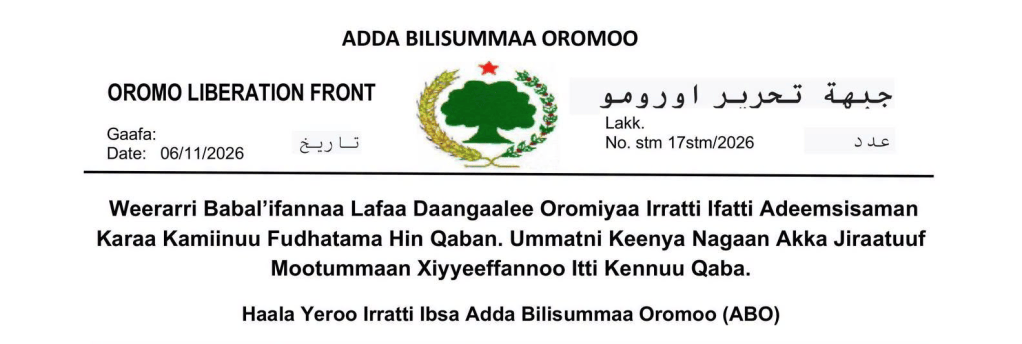
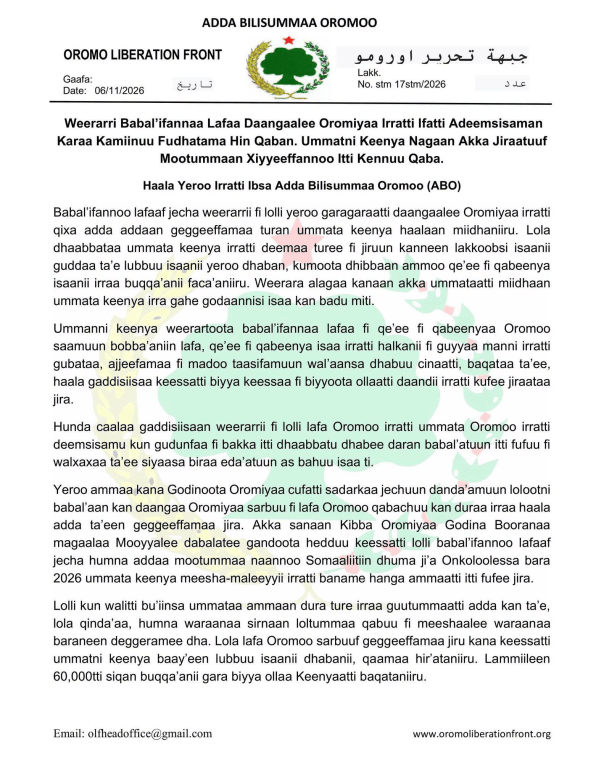
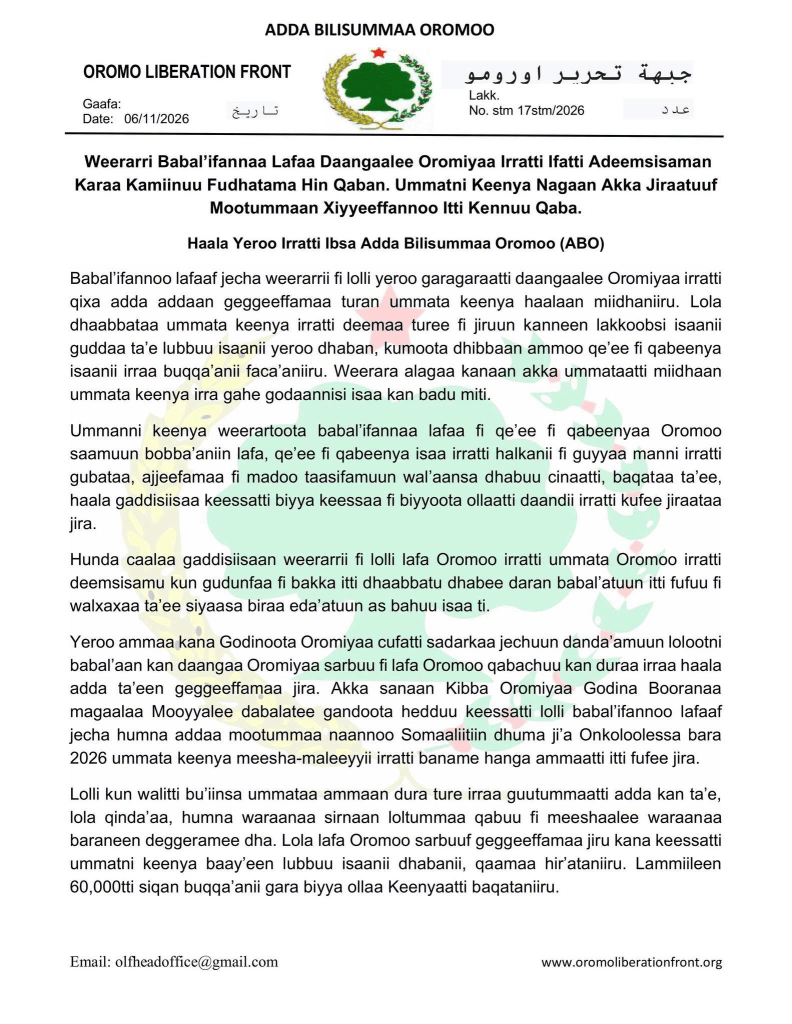
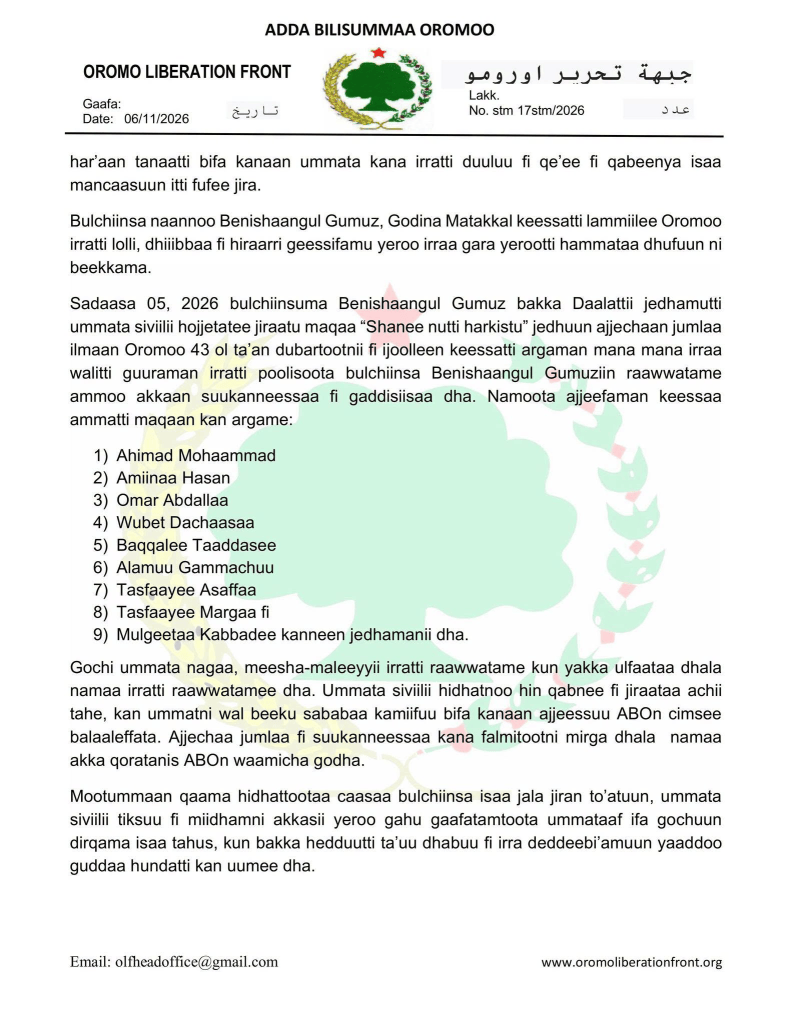
FINFINNEE — In a strongly worded statement released on November 6, 2026, the Oromo Liberation Front (OLF) has condemned what it describes as “land expansion wars” being waged against the Oromo people across multiple regions of Oromia, calling for an immediate end to the violence and accountability for those responsible.
A Pattern of Violence and Displacement
The statement, issued under the title “Land Expansion Wars on Oromia’s Borders Are Unacceptable in Any Form,” documents a series of attacks that it says have caused immense suffering among the Oromo people. According to the OLF, wars and conflicts over land have been waged on Oromia’s borders at various times, with devastating consequences. Many people have lost their lives, and hundreds of thousands have been displaced from their homes and property, scattered across the region.
The OLF describes the situation as particularly tragic: the Oromo people, who have been victims of land expansion and resource plundering, have been forced to abandon their homes, watching their houses burn day and night, being killed and displaced, and—lacking any means of protection—becoming refugees both within Ethiopia and in neighboring countries.
The Current Crisis: An Expanding Conflict
The statement emphasizes that the current situation is not merely a continuation of past conflicts. The attacks on Oromo land have taken on a new and more dangerous character. At present, what the OLF describes as “large-scale military operations” are being conducted in a manner that crosses Oromia’s borders and seizes Oromo land in an unprecedented way.
Specifically, the statement highlights that in Borena Zone, including the town of Moyale and many villages in southern Oromia, a war of land expansion has been waged by the special forces of the Somali regional government since the end of October 2026. This war, the OLF states, is being fought against an unarmed civilian population and continues to this day.
The OLF emphasizes that this war is fundamentally different from previous communal conflicts: it is a well-organized military operation supported by trained soldiers and modern weapons. The statement reports that many Oromo people have lost their lives and been injured in this conflict, and that over 60,000 civilians have been displaced and fled to neighboring Kenya.
A Broader Geographic Scope
The statement identifies a wide range of areas where land expansion attacks are being carried out, including:
- Southeastern Oromia — the lowlands of East Bale and West Bale zones
- Eastern Oromia
- Central Oromia — North Shoa and East Shoa zones
- North Oromia — Walloo
- Northwestern Oromia — Metekkel
- Western Oromia — East Wollega and Horro Guduru Wollega zones
In these areas, the OLF claims, forces supported by “goolessitoota” (a term referring to those who have historically exploited and subjugated the Oromo) are conducting attacks. The statement describes the violence as “heavy and shocking” and says it is difficult to express in words the scale of the suffering being inflicted on the Oromo people.
The “Fannoo” Forces and Mass Killings
The statement specifically names a force called “Fannoo”—described as an armed group mobilized under this name by “goolessitoota” forces—which has been waging war against the Oromo people for years. According to the OLF, these forces continue their attacks with renewed intensity, spilling innocent blood, plundering resources, and burning homes.
The statement provides specific examples of recent atrocities:
- November 4, 2026 — In Kiramuu district, East Wollega Zone, armed forces attacked villages including Guddina Jireenyaa and Caruu (in Abee Dongoroo district). Women, the elderly, and children were injured in the attacks. Homes and property were set on fire, and images of the destruction are circulating.
- In Caruu village, a family of nine people—including a father and mother—were killed by these forces.
Mass Killings in Benishangul-Gumuz
The statement also reports on violence in Benishangul-Gumuz Region, Metekkel Zone, where Oromo civilians have faced repeated attacks, pressure, and harassment.
On November 5, 2026, in a place called Daalattii in Benishangul-Gumuz, a mass killing was carried out under the name “Shanee nutti harkistu” (a derogatory term). According to the OLF, more than 43 Oromo civilians, including women and children, were rounded up from their homes and killed by police of the Benishangul-Gumuz regional administration.
The statement lists some of the victims by name:
- Ahimad Mohaammad
- Amiinaa Hasan
- Omar Abdallaa
- Wubet Dachaasaa
- Baqqalee Taaddasee
- Alamuu Gammachuu
- Tasfaayee Asaffaa
- Tasfaayee Margaa
- Mulgeetaa Kabbadee
The OLF describes this as a “grave crime against humanity” and strongly condemns the killing of unarmed civilians. It calls on human rights defenders to investigate the mass killing.
A Call for Accountability
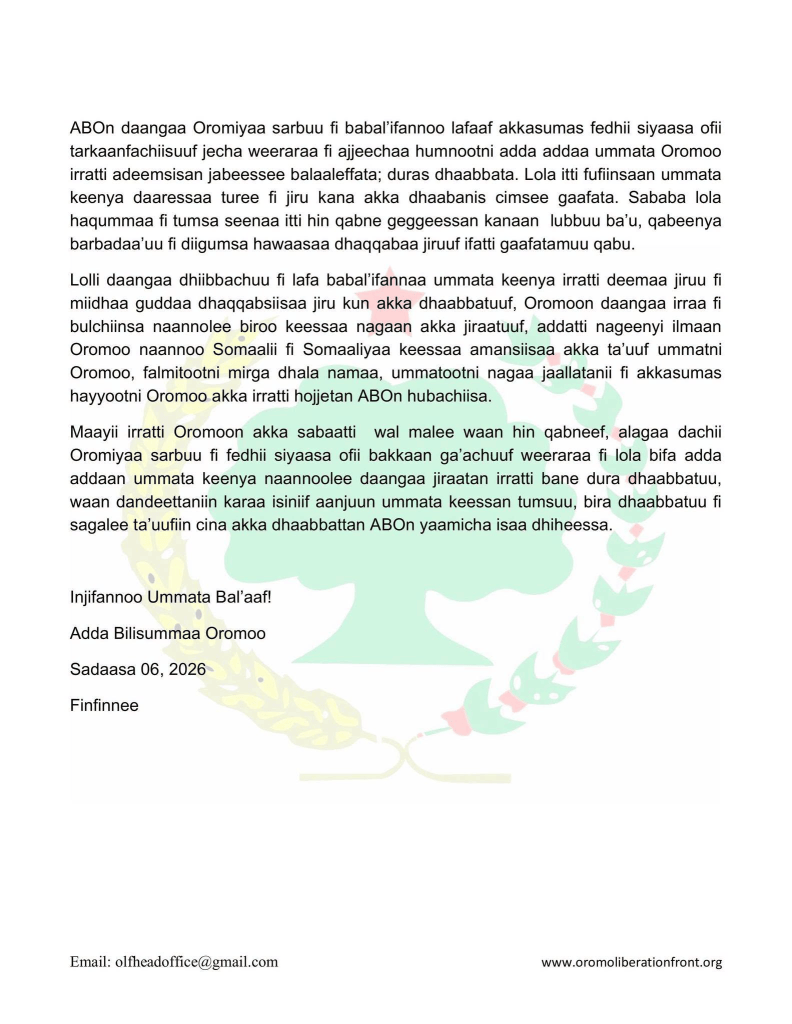
The statement holds the government responsible for failing to protect civilians. It notes that the government has the duty to control its administrative structures, protect civilians, and make those responsible for such violence accountable to the public. The fact that this is not happening—and that such violence is recurring—is a source of grave concern.
The OLF reiterates its strong condemnation of the wars and killings being carried out against the Oromo people by various forces seeking to cross Oromia’s borders, expand land, and impose their own political interests. It calls for an immediate end to the ongoing war that is devastating the Oromo people.
A Call to Action
The statement concludes with a call to the Oromo people, human rights defenders, peace-loving peoples, and Oromo intellectuals to work toward ending the violence and ensuring that Oromos can live in peace within their borders and in neighboring regions. It specifically calls for ensuring the safety of Oromo people in Somali Region and Somalia.
The OLF calls on all Oromo people to stand against the land expansion and attacks being carried out against the Oromo people in border areas, and to support their communities to the best of their ability—to stand with them and be their voice.
“Victory to the Oromo People!”
Source: Oromo Liberation Front (OLF) Statement, November 6, 2026, Finfinnee.
Note: This article is based on a statement issued by the Oromo Liberation Front.

Why Oromo Unity Remains a Constant Theme in the Oromo Freedom Struggle?
By Bona Oromia
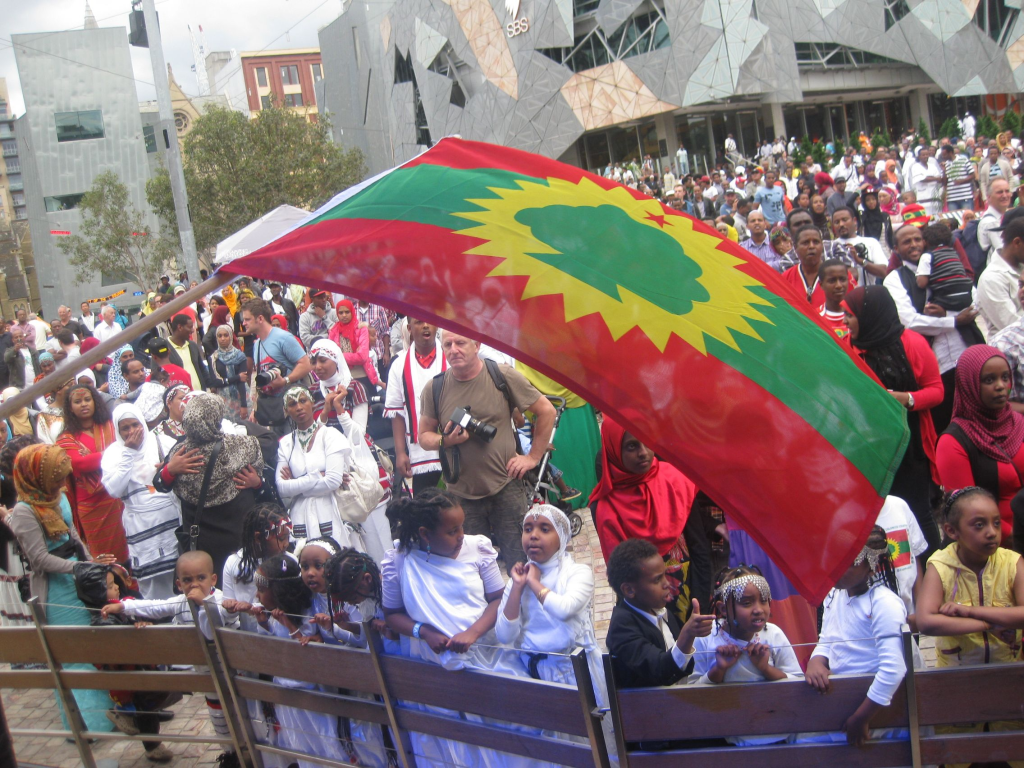
Across more than a century of the Oromo freedom struggle, “unity” (Tokkummaa) has remained an unavoidable core theme. It serves both as a profound diagnosis of historical setbacks and as a fundamental precondition for the future. The Oromo people constitute the largest ethnic group in the Horn of Africa, yet they have long been politically marginalized. This paradox—a majority without power—makes unity not merely a moral appeal but a strategic necessity for survival and liberation.
The Official Diagnosis: Lack of Internal Unity as the Main Reason the Struggle Remains Unfinished
In October 2026, Ethiopian Prime Minister Abiy Ahmed, in an interview on Oromia Broadcasting Network, offered a rare systematic assessment of why the Oromo struggle has not achieved rapid victory. He categorized the Oromo people’s core demands into three pillars: economic (autonomy over land and resources), identity (preservation of culture, language, and moral values—Safuu), and democratic (self-governance based on Gadaa principles).
However, he explicitly stated that despite the struggle having lasted more than a century, it has not achieved its desired victory, and one of the primary reasons is a lack of internal unity. He explained that although the Oromo are geographically dispersed and share an identity, political conspiracies, religious divisions, and geographic boundaries formed by rivers and regional lines have prevented them from maintaining strong internal cohesion. This judgment from the highest level of government confirms, from another angle, the central place of the unity question in Oromo political discourse.
Historical Echoes: Unity Was the Starting Point of the Movement
The history of modern Oromo political mobilization is itself a history of the practice of unity. In 1963, three limited-scale Oromo self-help associations—Jibat and Macha, Metta Robii, and Tulama Shawa—merged to form the Macha-Tulama Self-Help Association. The significance of this merger went far beyond organizational integration: it “embraced all Oromo irrespective of religion and region,” and within just three years registered over two million members, becoming the symbol of the public rise of Oromo nationalism.
Although the association’s charter was framed around social services such as education, healthcare, and road construction, its core orientation was “Oromo national development.” As scholarly literature notes, its formation “laid the foundation for the centralized leadership of the Oromo liberation struggle.” In other words, the organizational form of unity—integrating scattered self-help groups into a unified national movement—was precisely the starting point of all subsequent political struggle. When the imperial government banned the association in 1967, it had already demonstrated the energy that unity could unleash.
Cultural Wisdom: Unity as a Defense Against Being “Consumed from Within”
In Oromo political discourse, the emphasis on unity also stems from a deep cultural vigilance. Academic research has analyzed metaphors in Oromo political speeches: How does a weak wolf defeat a strong elephant? The answer is “from inside the elephant’s belly.” This analogy is used to explain why Oromo unity is difficult for external enemies to shake, yet easily weakened by “a few Oromo politicians pursuing personal interests.”
This “self-centeredness” is seen as a corrosive agent of unity. Another set of metaphors in the speeches—the sickle and the saw—further illustrates this point: the curved blade of the sickle symbolizes politicians who take everything for themselves, while the straightness of the saw symbolizes fair sharing. These cultural expressions reveal a core understanding: the greatest threat to unity is often not external oppression itself, but internal division and self-interest. For this reason, the call for unity carries enduring urgency in Oromo political culture.
Contemporary Echoes: Religious Leaders Practicing Unity
The theme of unity has not remained confined to history or rhetoric. In September 2026, in Finfinnee (Addis Ababa), leaders of the three major faith pillars of Oromo society—Waaqeffannaa (traditional belief), Christianity, and Islam—gathered at a rare roundtable dialogue. Participants reached a series of consensus points, the most central of which was the commitment: “Yoo rakkoon jiraate waliin dhaabbannee hiikuu”—”If difficulty comes, we will stand together and solve it.”
Religious leaders also explicitly condemned “any act that uses religious identity to sow discord or harm the Oromo nation,” and pledged to use the Oromo language and culture as tools of unity rather than weapons of division. This event demonstrates that unity remains, in contemporary Oromo society, a practical goal that must be actively constructed and continually reaffirmed—not an accomplished fact to be taken for granted.
Conclusion
Oromo unity remains a constant theme in the freedom struggle because it simultaneously carries three functions: diagnostic—it explains why the Oromo people, despite their large population, have not achieved their political goals; historical—it was the organizational principle through which the modern Oromo national movement was born; and normative—it is seen as the fundamental safeguard against internal division and for consolidating collective strength. In Oromo political discourse, unity has never been a settled question, but a task that each generation must take up anew.

Unity Beyond Borders: What the Oromo Nation Can Learn from a Community That Organized and Won
By Dhabessa Wakjira
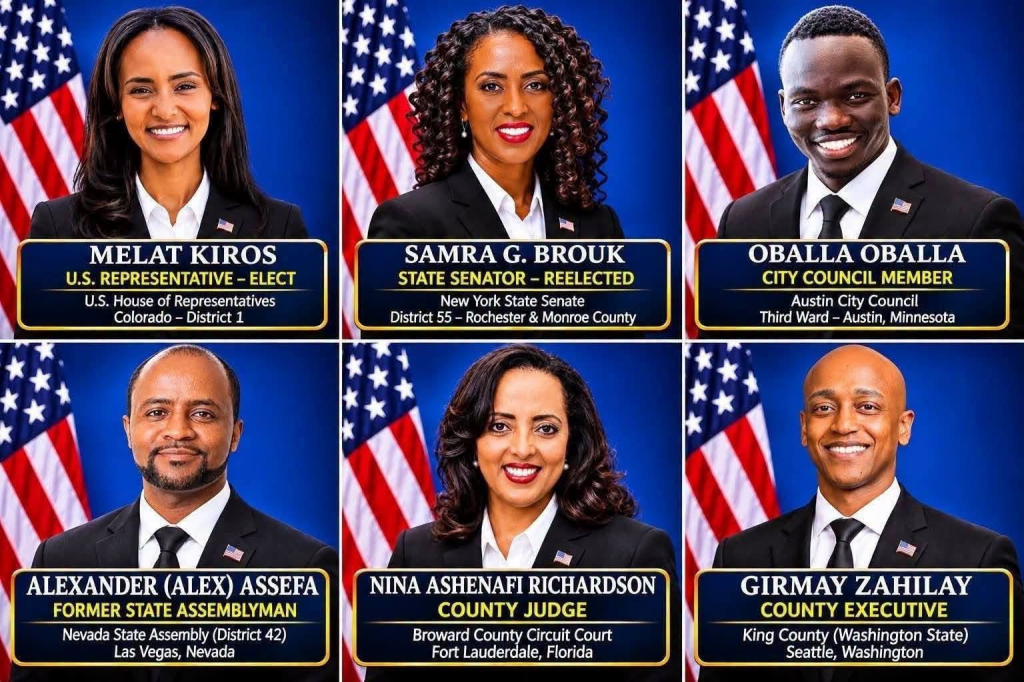
There is a lesson that every oppressed people must eventually learn: a community united is never powerless. When a people organize—not only at home but across borders—and build collective strength, they can bring their voice to the seat of power itself. This is not a theory. It is a demonstrated truth, and it stands as an example for every nation that aspires to freedom.
The Oromo people, the largest ethnic group in Ethiopia and the Horn of Africa, are no exception. The lesson is clear: however heavy the burden, disciplined work and principled action are what lead to success. A nation does not win its rights through despair or division; it wins them through patience, integrity, and unwavering unity.
The Power of Organized Community
History is filled with examples of communities that were dismissed as powerless until they organized. When people who share a common identity and a common grievance come together—when they build institutions, pool resources, coordinate action, and speak with one voice—they become a force that no government can ignore. This is true within a country’s borders, and it is equally true across the diaspora.
The Oromo diaspora, particularly in North America, Europe, and Australia, has built structures explicitly designed for collective action: fundraising, advocacy, political mobilization, and cultural preservation. These networks sustain the struggle across borders and generations. They demonstrate that distance is not a barrier to solidarity—and that a community that organizes abroad can amplify the voice of those who cannot speak freely at home.
Lessons for the Oromo Struggle
The lesson for the Oromo nation is both simple and demanding. It requires patience (obsa)—the willingness to endure hardship without losing sight of the goal. It requires integrity (naamusaa)—the commitment to act with moral clarity and consistency, even when it is inconvenient. And it requires diligence (cichoomina)—the disciplined, sustained effort that turns aspiration into achievement.
These are not abstract virtues. They are the practical foundations of any successful movement. A people that works together, acts with principle, and refuses to be divided can achieve what seems impossible to those who underestimate them.
A Responsibility to the Next Generation
But the lesson is not only about the present. It is about the future. The generation that inherits the struggle must be equipped to carry it further—to bring about change that is better than what came before. That requires commitment and courage. It requires the willingness to learn from the past while refusing to be imprisoned by it. And it requires the conviction that the sacrifices of those who came before will not be in vain.
The Oromo struggle is not a sprint. It is a marathon that spans generations. Each generation must do its part: to preserve what has been gained, to push forward where progress has stalled, and to hand to those who follow a stronger, more united, and more determined nation.
The Example That Inspires
Communities that have organized and won—whether in the struggle for civil rights, for independence, or for democratic self-governance—share a common pattern. They did not wait for power to be handed to them. They built power from the ground up. They organized in their neighborhoods, their workplaces, their places of worship, and their diaspora communities. They spoke with one voice. And when the moment came, they were ready.
The Oromo nation has the numbers, the resources, the cultural heritage, and the diaspora networks to do the same. What remains is the will to act—with patience, integrity, and unity—and the determination to ensure that the next generation inherits not only the struggle but also the tools to win it.
A united community is never powerless. A people that organizes, endures, and acts with principle will be heard—at home and abroad.

When Those in Power Refuse to Listen: Martin Luther King Jr. and the Power of Nonviolent Dialogue
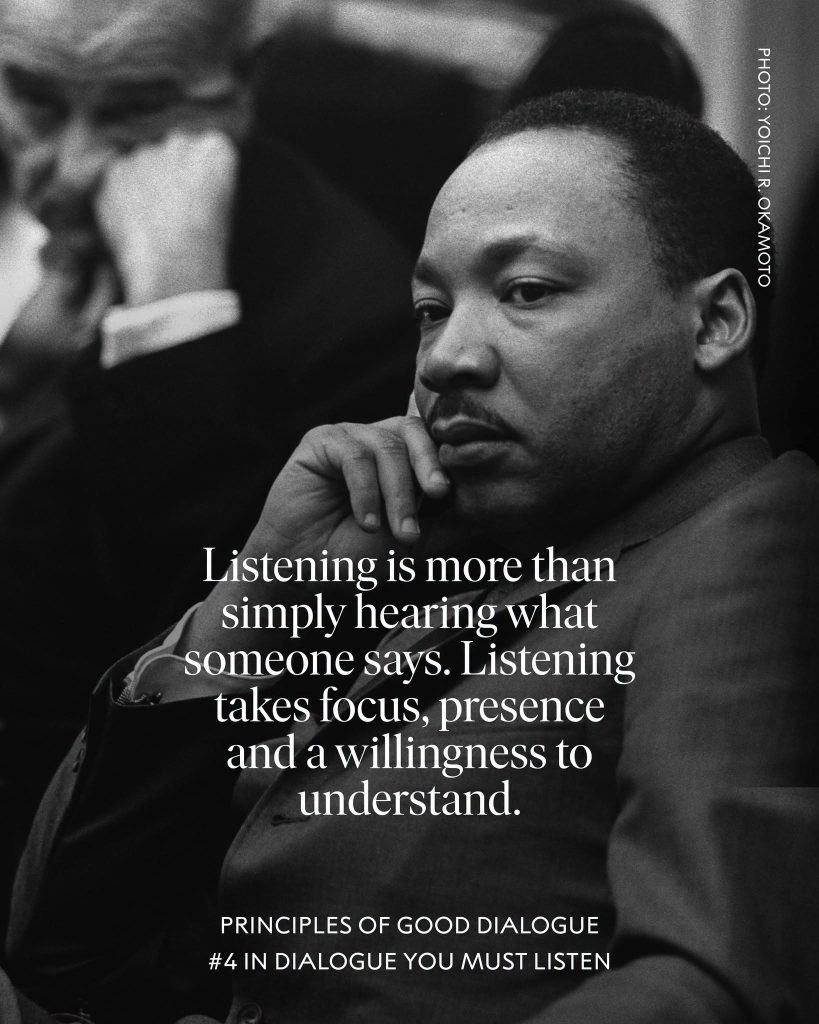
By Daandii Ragabaa
What happens when those in power refuse to listen?
Martin Luther King Jr. grew up in a segregated United States, where Black Americans were denied a voice and risked threats and violence for speaking out. The institutions of government, the courts, the police, and much of the public square were closed to them. To speak was to risk one’s life. To be heard was almost unimaginable.
Yet King chose not to answer silence with silence. He chose nonviolent resistance.
The Strategy of Peaceful Protest
King understood that the refusal to listen is itself a form of violence—a denial of the other’s humanity. His response was not to mirror that denial but to expose it. Through peaceful protests, sit-ins, marches, and boycotts, he helped make the situation of Black Americans impossible to ignore. The point was not merely to disrupt but to reveal: to show the nation and the world what segregation actually looked like, and to force those in power to confront what they had chosen not to see.
In 1963, 250,000 people joined the March on Washington, where King delivered his famous “I Have a Dream” speech. It made people listen. The following year, legislation prohibiting racial discrimination was passed—the Civil Rights Act of 1964—and King was awarded the Nobel Peace Prize.
Principle 4: In Dialogue, You Must Listen
The Nobel Peace Center identifies this as an example of Principle 4 of good dialogue: In dialogue, you must listen. The principle is deceptively simple, but it carries profound implications. Listening is more than merely hearing. It requires focus and presence. It requires the willingness to set aside one’s own prejudices and judgments long enough to actually receive what another person is saying.
The Nobel Peace Center offers practical guidance on what this looks like:
- Listen to what is being said. Do not let your own thoughts and prejudices interfere with your ability to listen.
- Do not give advice unless it is requested.
- Do not interrupt. Let the other person finish talking.
- Do not capture the conversation by drawing parallels to your own experiences.
- Be empathic and show understanding for the other person’s situation.
- Do not presume to know other people’s opinions.
These are not abstract ideals. They are disciplines—habits of attention that must be practiced, especially by those who hold power.
The Courage to Make Listening Impossible to Avoid
King’s genius was in understanding that when those in power refuse to listen, the response is not to shout louder but to create conditions in which listening becomes unavoidable. The March on Washington was not merely a protest; it was an invitation—a demand—for the nation to hear what it had spent generations trying to drown out.
The Nobel Peace Center notes that King “used Principle 4: In dialogue, you must listen to find a solution.” This is a crucial insight. King did not abandon dialogue; he insisted on it. He did not seek to destroy his opponents; he sought to awaken them. His nonviolent resistance was, in its deepest logic, an act of faith in the possibility of dialogue—even with those who had shown no willingness to engage.
Listening as a Moral Practice
The lesson for our own time is clear. In a world where political leaders often speak past one another, where social media rewards outrage over understanding, and where the powerful routinely dismiss the grievances of the marginalized, Principle 4 remains a radical challenge. Listening is not a passive act. It is a moral practice—a recognition that the other person has something to say that we need to hear.
King’s life is a testament to this truth. He listened to the pain of his community. He listened to the conscience of the nation. And he forced those in power to listen to him—not through violence, but through the disciplined, peaceful insistence that their humanity and his were bound together.
A Legacy That Still Speaks
More than half a century after his death, King’s example continues to teach. When those in power refuse to listen, the answer is not to abandon dialogue but to practice it more faithfully—to create the conditions, through peaceful means, in which listening becomes inevitable. That is the lesson of the March on Washington. That is the lesson of the Civil Rights Act. And that is the lesson of Martin Luther King Jr.’s extraordinary life.
The Nobel Peace Center’s eight principles of dialogue—of which listening is the fourth—are not merely a framework for conflict resolution. They are a way of being in the world. And as King showed, they have the power to change history.
Principle 4: In dialogue, you must listen.
Read more about the Nobel Peace Center’s dialogue principles: https://www.nobelpeacecenter.org/en/dialogue/principle-4

A Crisis of Blood and Borders: OSG Alleges Somali Region Forces Behind Deadly Moyale Attacks Amidst Wave of Displacement and Regional Fallout
By ONA News Desk
November 3, 2026
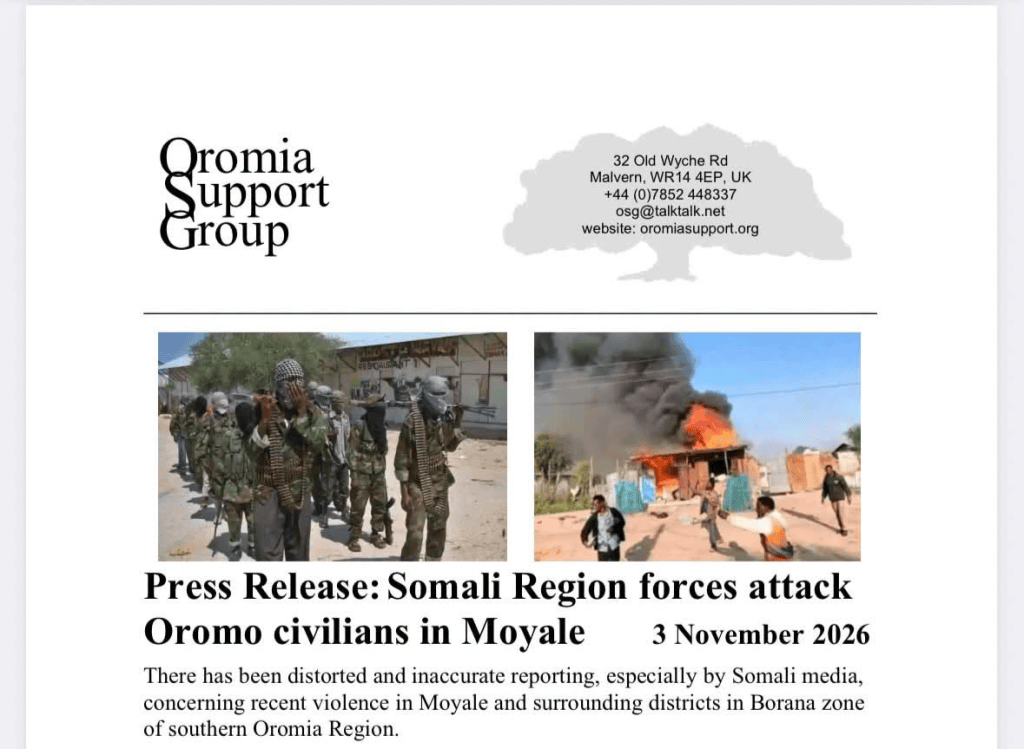
MOYALE / LONDON — A harrowing picture of escalating violence, mass displacement, and deadly misinformation is emerging from the Borana zone in southern Oromia, following a new press release from the UK-based Oromia Support Group (OSG). The organization alleges that heavily armed Somali militia and Somali Region forces, potentially backed by al-Shabaab fighters, launched a devastating campaign against Oromo civilians in Moyale and surrounding districts between October 21 and 30.
According to the OSG, the violence has been met with little to no response from Ethiopian federal or regional forces. Instead, the group reports that federal troops themselves killed five Oromo civilians in the Borana zone earlier in the month on October 10.
A Spark of Violence and Grisly Discoveries
The OSG points to October 18 as a critical flashpoint, when the Somali Region and Somalia national flags were reportedly raised at an office on the Oromo side of Moyale. Following this, a 13-year-old girl, Diqqoo Jaataan Aaagaa, was killed. The OSG states that Somali forces denied her family access to her body for several days.
While national and international media have reported a death toll of nine, the OSG insists the true number of fatalities is much higher. On October 25, a reliable informant reportedly sent the OSG gruesome photographic evidence of ten severed heads and the mutilated body of an Oromo policeman. The group notes that while demonstrations by Oromo residents erupted on October 21, they were rapidly crushed as the violence intensified.
The humanitarian toll is staggering. By November 1, more than 50,000 residents had fled across the border into Kenya, with thousands more seeking refuge in the towns of Yabelo, Mega, Bokku, and Dubuluk. The OSG notes that the Borana Oromo have been pushed westward by Somali forces, losing much of their ancestral pastoral land—described as the cradle of the Oromo people and a historic stronghold of Gadaa democracy—over the last 140 years.
Misinformation and Regional Backlash
The OSG is sharply criticizing Somali media for what it calls “distorted and inaccurate reporting” that frames the violence as “Oromo expansionism” by an “Oromo government.” The organization vehemently rejects this, arguing that Oromo territory has actually shrunk and that the Oromo people are targets of the regime of Prime Minister Abiy Ahmed—a situation they describe as “drying out the ocean to catch the fish.”
This inflammatory rhetoric has had dangerous real-world consequences. On October 29, reportedly in response to these media reports, mobs in the city of Borama in Somaliland burnt down over 150 homes belonging to Oromo refugees. Thousands of refugees in Hargeisa now reportedly fear an increase in violence from their host communities.
Furthermore, the OSG warns that similarly misinformed accusations regarding the Oromo Liberation Army’s involvement in the recent killing of 60 Ethiopian Orthodox Christians in the Arsi zone are deliberately designed to foment discord between the Amhara and Oromo people.
Desperate Pleas from Yemen
Beyond the Horn of Africa, the OSG is also raising the alarm over the plight of destitute Oromo refugees in Yemen. The organization reports receiving desperate pleas for help from refugees who are suffering from fatal Saudi air attacks on Sana’a and a migrant detention center near the border in Sadaa. These refugees are facing severe insecurity as Houthi forces encircle Taiz and occupy the war zone around the al-Kharaz refugee camp, north of Aden. Citing an Al Jazeera report from a Yemeni rights group, the OSG noted that 189 civilians were killed by Houthi militia between September 1 and October 29.
As the situation on the ground remains highly volatile, the OSG is calling for immediate international attention. The organization notes that further details on the killings will be published in OSG Report 75.
For further information, contact:
Dr Trevor Trueman, Chair, OSG
Email: osg@talktalk.net
Phone: +44 (0)7852 448337
The OSG Press Release: Somali Region forces attack Oromo civilians in Moyale

The Silence of the Press: Ethiopia’s Media Authority Suspends The Reporter Indefinitely

In a decision that rights advocates are calling a watershed moment for press freedom, the Ethiopian Media Authority has revoked the registration of one of the country’s most storied independent news brands — and the clock on its silence has no end date
By Daandii Ragabaa
—
ADDIS ABABA — For more than two decades, The Reporter has been a fixture of Ethiopian public life — a bilingual newspaper that carried investigative reporting, analysis, and the kind of scrutiny that powerful institutions rarely welcome. Its Amharic edition, its English edition, and its digital platforms together formed one of the few remaining spaces where Ethiopian readers could encounter reporting not calibrated to official messaging.
That space, as of this week, has been declared closed.
The Ethiopian Media Authority announced that it has indefinitely suspended the registration certificate of The Reporter — encompassing the Amharic-language Reporter, the English-language The Reporter, and the Ethiopia Reporter digital platforms — effective from the 23rd of the month. The suspension has no stated end date. The institution has been barred from all printing and publishing activity.
A Decision in Full
The Media Authority grounded its decision in the powers granted to it under Proclamation No. 1238/2013, invoking a year of content monitoring that it says confirmed “repeated violations of the law and professional ethics.”
The violations cited are sweeping. The Authority accused the publication of disseminating content contrary to the country’s national interest; of fomenting confusion among the public by inflating political and economic issues; and of spreading distorted information that exerts a negative influence on foreign investment, tourism, and diplomacy. It further stated that the publication had persisted in offering unbalanced reporting that tarnished the country’s image.
According to the announcement, the Authority had previously engaged with the media outlet’s owners and editors, held discussions, and issued final warnings in an effort to secure corrections. But no improvement was observed in the content, it said — and so the suspension was imposed.
A Familiar Script, a Higher Stakes
The language of the decision will be familiar to anyone who has followed Ethiopia’s media landscape in recent years. The Authority has used similar formulations to justify the suspension of other outlets — most prominently Tigray TV, which was shut down indefinitely in the aftermath of the breakdown of the Pretoria Agreement. Earlier this month, the Authority also indefinitely suspended the registration of another independent publication, Addis Standard.
What distinguishes the suspension of The Reporter is not the language but the institution. The Reporter is not a partisan outlet or a niche platform. It is one of the oldest and most established independent newspapers in the country — a publication that has, over the years, trained generations of Ethiopian journalists, hosted debate, and maintained a reputation for professional rigor that even its critics acknowledge.
The closure of a newspaper is never merely the closure of an office. It is the closure of a habit of reading, of a community of writers, of a memory of what independent journalism in Ethiopia can look like.
“National Interest” and the Moving Line
The Authority’s invocation of “national interest” is the crux of the matter, and the source of deepest concern among press-freedom advocates.
The concept is not defined in the announcement. It does not need to be. In practice, “national interest” functions as a moving line — one whose location is determined by the regulator, in the moment, according to criteria it does not disclose. A report on a security operation may be said to endanger national interest. An analysis of economic policy may be said to foment confusion. An investigation into official misconduct may be said to tarnish the country’s image.
The problem with such a standard is not that it is applied too strictly. It is that it cannot be contested. There is no counter-argument the accused can offer against a criterion whose content is never specified. The Authority’s decision cites a year of monitoring, but the monitoring methodology, the specific articles found wanting, and the reasoning connecting them to the cited violations are not made public.
The result is a regulatory environment in which a newspaper can be shut down without ever knowing exactly which words condemned it — and in which every other publication is left to guess.
The Wider Context
The suspension of The Reporter did not happen in a vacuum. It follows a pattern that has accelerated in recent months.
In January, Haymanot Zeleke was appointed Director of the Ethiopian Media Authority — a figure with a long career inside Ethiopia’s state media apparatus, who had previously enumerated the categories of content she considered violations: obscenity, content harmful to youth, disrespect toward women, unverified sourcing. The board of the Authority is chaired by Redwan Hussein, who simultaneously serves as Director General of the National Intelligence and Security Service — an arrangement whose implications for press freedom are difficult to overstate.
In September, Tigray TV was suspended indefinitely and barred as a source. This month, Addis Standard was suspended. This week, The Reporter. The sequence is not random. It is a consolidation — a steady, methodical narrowing of the space in which independent journalism can operate.
Meanwhile, the country’s political and security situation remains fragile: the collapse of the Pretoria Agreement, renewed fighting in the north, a restive Oromia, and strained relations with Eritrea. In such moments, the temptation to treat information as a weapon to be controlled rather than a public good to be protected is at its strongest.
What the Newspaper Leaves Behind
The Reporter’s closure will not be felt immediately in the way a power outage or a road closure is felt. Its absence will accumulate slowly, in the stories that go unreported, the questions that go unasked, the readers who gradually forget that a newspaper once held the powerful to account.
But for the journalists who worked there, the end is immediate. Their bylines are suspended. Their investigations — some of them months or years in the making — are frozen. Their sources, who trusted them, are left exposed. And their colleagues at other publications are left with a single, inescapable question: am I next?
The Authority has framed its decision as a matter of law and professional ethics. The newspaper’s defenders frame it as a matter of survival — of an independent press in a country that has never fully allowed one to flourish. Both framings can be true at once. What cannot be disputed is that a newspaper that existed last week does not exist this week, and that the decision to end it was made by an institution whose chairman also runs the country’s intelligence service.
The Reporter’s presses have gone quiet. The question now is how long the silence will last — and who will be left to break it.
—
The Ethiopian Media Authority’s decision was announced in an official statement. The Reporter has not issued a public response at the time of publication.

The Price of Truth: When Telling the Story Costs Everything
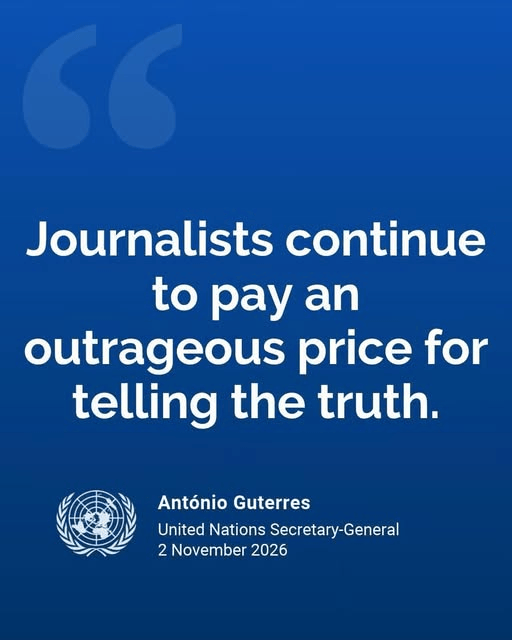
On the International Day to End Impunity, the UN chief sounds an alarm: journalists are being harassed, surveilled, sued, attacked, imprisoned — and sometimes killed — simply for doing their jobs
By Dhabessa Wakjira
—
They gather the news in war zones and city halls, in courtrooms and courthouse squares. They ask the uncomfortable questions, chase the paper trail, and knock on the doors of the powerful. And increasingly, for doing exactly that, they pay a devastating price.
On Monday, as the world marked the International Day to End Impunity for Crimes against Journalists, United Nations Secretary-General António Guterres issued a blunt and urgent appeal: the world must protect media professionals so they can carry out their essential work safely.
“Journalists continue to pay an outrageous price for telling the truth,” Guterres said, noting that reporters are routinely harassed, surveilled, sued, physically attacked or imprisoned — and sometimes even tortured or killed — simply for doing their jobs.
“Nothing should impede journalists’ ability to do their work, which is fundamental to human rights, democracy and the rule of law,” he added.
A Global Pattern of Pressure
The Secretary-General’s warning reflects a reality familiar to press-freedom organizations around the world. From authoritarian capitals to established democracies, journalists face a growing arsenal of tools designed to silence them: surveillance software deployed against reporters’ phones, defamation lawsuits engineered to bankrupt newsrooms, arbitrary detention, and, in the worst cases, physical violence that goes unpunished.
The day itself — established by the UN General Assembly in 2013 — commemorates the 2013 assassination of two French journalists, Ghislaine Dupont and Claude Verlon, killed in Mali. More than a decade later, the core problem it was designed to confront persists: the vast majority of crimes against journalists go unpunished, emboldening those who would harm them.
Impunity, press-freedom advocates argue, is the engine of the crisis. When attacks on journalists go unprosecuted, the message sent is unmistakable: the truth-teller is fair game.
“Fundamental to Human Rights, Democracy and the Rule of Law”
Guterres’ statement places journalists at the center of the democratic project — not as a special-interest group, but as an essential infrastructure of free societies. A free press holds governments accountable, exposes corruption, and gives citizens the information they need to make decisions about their own lives. When journalists are intimidated into silence, it is not only their rights that are violated — it is the public’s right to know.
That principle has particular resonance in a year that has seen journalists detained in record numbers, newsrooms raided, and reporters targeted online with coordinated campaigns of harassment and disinformation. In conflict zones, press insignia have offered little protection; in peacetime, legal harassment has become a favored weapon of the powerful.
A Call to Action
The UN chief’s message on Monday was less a commemoration than a call to action. Protecting journalists, he suggested, requires more than rhetoric — it demands that governments investigate attacks, prosecute perpetrators, and safeguard the legal and physical safety of media workers.
For the journalists still working the beat — the ones filing from conflict lines, sitting through court hearings, and requesting records that someone would prefer stay buried — the stakes are personal. Every story filed is an act of persistence. Every byline, a small assertion that the truth matters.
On this International Day to End Impunity, the message from the UN’s highest office was clear: the price journalists pay for telling the truth is already too high — and the world has a duty to bring it down.
—
This article was produced in recognition of the International Day to End Impunity for Crimes against Journalists, observed annually on November 2.

“The Worqitu We Saw at Moyale”: Oromo Identity, Boorana Women, and the Fire of Defiance
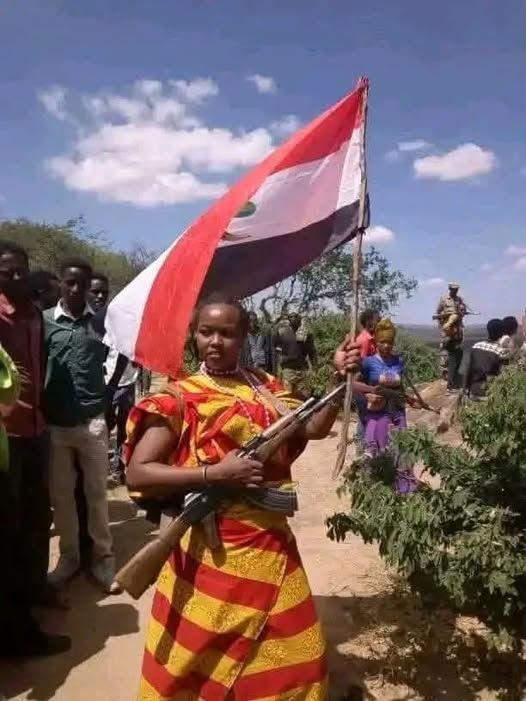
A viral message from the frontier of identity — celebrating the Boorana women who stand at the border of land and selfhood — has reignited a conversation about what it means to be Oromo, and who pays the price for defending it
By Daandii Ragabaa
—
It begins with a declaration, and it ends with a blessing.
Across social media this week, an impassioned message written in Afaan Oromoo has been shared and reshared — a tribute to the Oromo spirit, to the fighters at Moyale, and above all to the women of Boorana who, in the words of the post, stand for their land and their identity.
“Every Oromo, if she/he is wounded for her/his Oromoness and defies the enemy in this way — even if we become a plaything for anyone’s mockery — behold, at Moyale we have seen many Worqitus ones who struggle for their border and their identity,” the message reads. “May their seed multiply, Abo.”
Then, a proverb, and a salute: “Sabni Hidhannoo qabu mataa gadii hin qabu” — a nation with a covenant holds its head high. “Baga kabachiiftan! Ammallee duratti!” — Congratulations! And forward, still forward! “Dubartii Boorana!!” — Boorana women!!
A Message from the Frontier
Moyale sits at the edge of things — a place where land, identity, and history press against one another. In the Oromo imagination, and particularly in Boorana memory, such places are not merely geography. They are archives. Every ridge and river carries the story of who belongs to the land and who has defended it.
The message’s reference to “the border” is therefore more than a line on a map. It is the boundary of belonging itself — the place where a people’s right to be who they are is tested.
And it is there, the message insists, that “golden ones” have been seen. The imagery is deliberate: gold in Oromo and Boorana oral tradition is not merely precious — it is enduring, tested by fire, and impossible to counterfeit. To call the women of Boorana “golden” is to say that their worth has been proven in the crucible.
“Dubartii Boorana” — The Women Who Carry the Nation
The exclamation that closes the message — Dubartii Boorana! — is both salute and summons. In Boorana society, women hold a distinct and honored place: custodians of tradition, keepers of the gadaa calendar’s moral memory, and, in moments of crisis, the ones who stiffen the spine of the community.
The message’s author understands this. By centering women in a tribute to resistance, the post quietly overturns the assumption that the story of struggle belongs only to men. It is the mothers, the daughters, the wives, and the sisters who transmit identity across generations — who teach a child what it means to be Oromo before any flag or border can.
“May their seed multiply” is thus not a casual blessing. It is a prayer for continuity — for the future itself.
The Weight of “Being a Plaything”
Perhaps the most striking line in the message is also its most painful: the acknowledgment that a people who fight for their identity may be mocked, dismissed, or made “a plaything” in the eyes of others.
It is a recognition born of experience. Oromo communities have long contended with marginalization, with the distortion of their history, and with the casual contempt of those who see identity assertion as inconvenient. The message does not deny this. Instead, it absorbs the mockery and answers it with dignity: even if we are mocked, behold what we have seen at Moyale.
There is an old strength in that posture — the strength of a people who have learned that dignity is not granted by others but claimed by oneself.
“A Nation with a Covenant Holds Its Head High”
The proverb at the heart of the message — Sabni Hidhannoo qabu mataa gadii hin qabu — is a key to understanding everything else.
Hidhannoo is covenant, bond, agreement — the sacred compact that binds a community to its values, its land, and its future. A nation with such a covenant, the proverb says, need never bow its head. It can look the world in the eye.
For the Oromo, that covenant is carried in the gadaa system, in the oral epics, in the shared memory of the Boorana and beyond. It is the reason the message can move so quickly from lament to triumph — from the wound to the blessing, from the mockery to the gold.
A Blessing That Travels
What makes this message remarkable is not only its content but its movement. Composed in Afaan Oromoo and shared across platforms, it travels from the specific — a place called Moyale, a people called Boorana — to the universal: the right of any people to defend who they are.
“Baga kabachiiftan! Ammallee duratti!” — Congratulations! Forward, still forward!
It is the language of a people who know that the struggle for identity is never finished, only renewed. And it is a reminder, as the message’s author clearly intends, that the “golden ones” are not only at Moyale. They are wherever an Oromo woman teaches her child the name of her people, wherever a community holds its head high, and wherever the covenant is remembered.
The seed, the blessing says, will multiply.
—
The message referenced in this feature was widely shared in Afaan Oromoo on social media. This article honors the sentiment expressed in that message and the communities it celebrates.