The Enduring Wisdom of Gumaa: How an Indigenous Justice System Heals Communities and Prevents Revenge
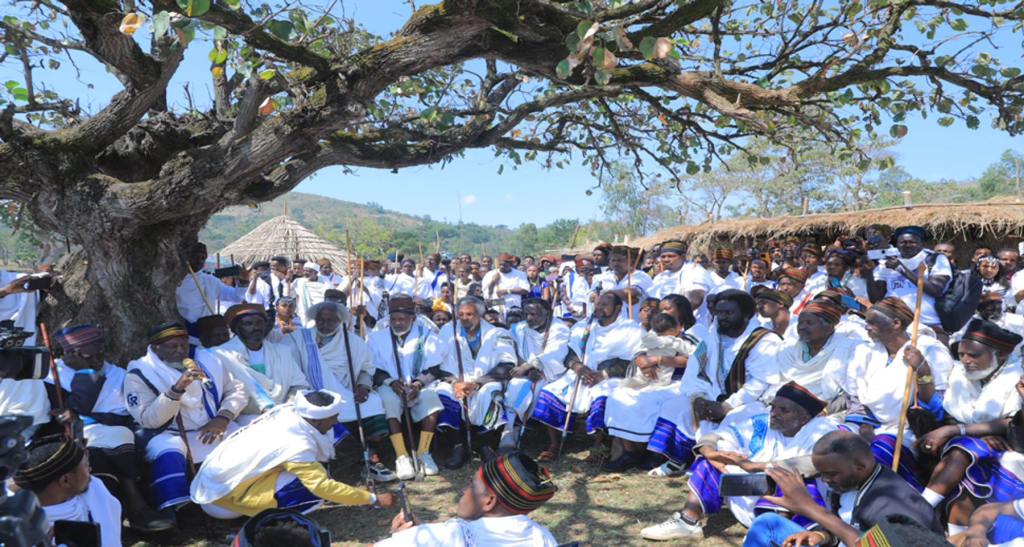
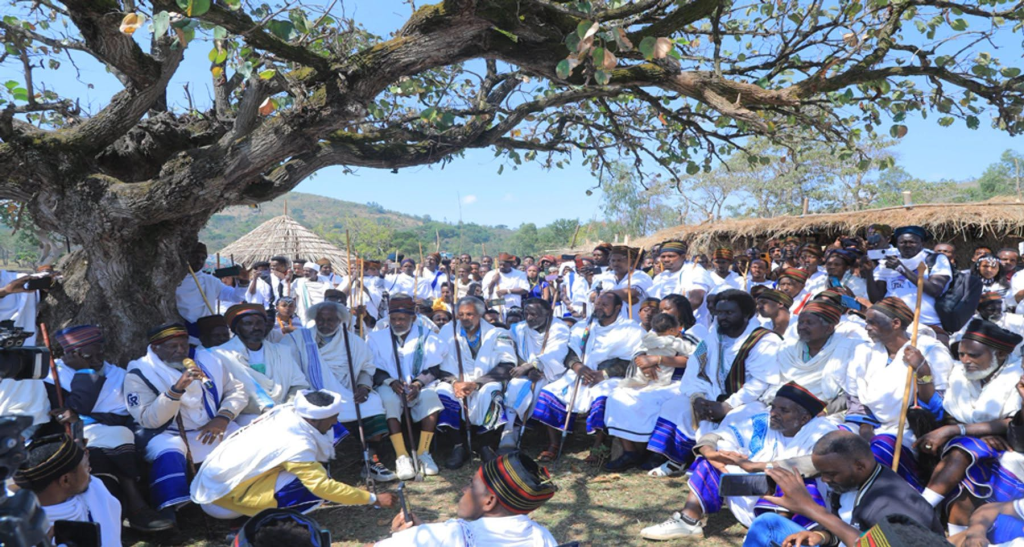
For centuries, the Oromo people of Ethiopia have practised a unique system of restorative justice that focuses not on punishment, but on healing the social fabric. Known as “Gumaa,” this indigenous institution offers profound lessons for modern conflict resolution.
Across the diverse landscapes of Ethiopia, communities have long relied on traditional systems to resolve disputes and maintain social harmony. Among the most sophisticated of these is Gumaa, the Oromo institution for settling blood feuds. In a world where modern legal systems often leave victims feeling unheard and communities fractured, Gumaa stands as a powerful alternative—one that prioritises healing over punishment and peace over retribution.
“Gumaa is one of the multitude of Oromo indigenous institutions that has exclusively been used to settle blood feuds of various types” . As researcher Tamene Keneni explains, the term Gumaa carries multiple meanings, but at its core, it refers to the institution of settling blood feuds through compensation, cleansing rituals, and reconciliation .
Beyond Punishment: The Philosophy of Gumaa
The philosophy underpinning Gumaa is rooted in two fundamental Oromo values: Nagaa (peace) and Safuu (moral order). For the Oromo, peace is not merely the absence of conflict, but an essential key to an orderly universe and societal wellbeing that humans must actively pursue . This is reflected in daily greetings, songs, prayers, and proverbs—a recognition that peace is central to life itself.
Unlike the modern judicial system, which tends to focus on punishing the offender, Gumaa aims to restore relationships that have been ruptured by wrongdoing. As one study notes, the practice “prioritises restorative justice over retributive justice, targeting restoring the ruptured relations between the parties in dispute to maintain social order and peace rather than punishing the offender and compensating the victim” .
When a homicide occurs, both the clan of the killer and the clan of the victim take responsibility for resolving the dispute. The process involves neutral elders who serve as mediators, guiding the conflicting parties through a journey of acknowledgment, compensation, and ultimately, reconciliation .
The Ritual Journey: From Blood Feud to Brotherhood
The Gumaa process is far more than a simple transaction. It involves a series of deeply meaningful rituals designed to heal emotional wounds and prevent the cycle of revenge from continuing into the next generation.
The reconciliation process typically begins with the offender’s supplication or payment of Shimoto to the victim’s family . This is followed by elaborate purification ceremonies, including the slaughter of cattle, handwashing rituals, and oaths that carry profound spiritual significance . These rituals are not merely symbolic—they serve a psychological function, helping both parties to process grief, anger, and the desire for vengeance.
As Tamene Keneni describes, the Gumaa ritual includes cleansing ceremonies that allow the slayer to be reintegrated into the community . This is a crucial element of the system: the goal is not to permanently alienate the offender, but to bring them back into the fold, ensuring that the community remains whole.
The outcome can be transformative. In some cases, former enemies are united through marriage, turning hostility into kinship . This remarkable capacity to convert conflict into connection is what makes Gumaa so unique.
Lessons for the World: What Gumaa Teaches Us
The Gumaa system offers several valuable lessons for modern conflict resolution:
1. Justice Must Heal, Not Just Punish
Modern legal systems often leave communities fractured even after a verdict is delivered. Gumaa demonstrates that justice can also be about healing—acknowledging the pain of the victim’s family, giving them a voice, and ensuring that the offender takes genuine responsibility .
2. Community Involvement Strengthens Outcomes
In the Gumaa system, the entire community plays a role in resolving disputes. Elders, clan leaders, and even ordinary members are involved in the process, ensuring that the outcome is accepted and respected by all. This collective ownership makes the peace more sustainable .
3. Ritual and Symbolism Matter
The rituals of Gumaa—the handwashing, the oaths, the shared meals—help to create a sense of closure and renewal. They provide a tangible way for people to move forward, leaving behind the weight of the past .
4. Forgiveness Is a Choice Worth Making
The Oromo believe that forgiveness (oofuu or yaa hafuu) is a higher value than revenge . This is not naivety—it is a recognition that the alternative, endless cycles of vengeance, only brings more suffering.
A Call for Recognition and Integration
Despite its effectiveness, Gumaa faces significant challenges. Lack of awareness, limited documentation, and competition from the state justice system have contributed to its decline . Yet there is growing recognition that these indigenous institutions have immense value.
The Ethiopian Constitution, under Article 78(5), allows for the recognition of customary and religious courts, suggesting a pathway for integration . Scholars have called for the official recognition and revitalisation of Gumaa, arguing that it could complement the formal legal system, reduce court workloads, and offer a more accessible form of justice for rural communities .
As one researcher notes, Gumaa is “time effective, prevents revenge and financial saving” . Its ability to address deep-seated grievances at the community level could be a powerful tool for peacebuilding in Ethiopia and beyond.
A Tradition Worth Preserving
In a country that has experienced decades of political turmoil and ethnic conflict, the wisdom of Gumaa is more relevant than ever. It offers a proven, locally rooted approach to reconciliation—one that does not require expensive legal fees, lengthy court processes, or foreign intervention.
Gumaa reminds us that justice is not just about laws and punishment. It is about people, relationships, and the shared desire to live in peace. It is a testament to the resilience of indigenous knowledge and its capacity to address some of the most complex challenges of human existence.
“The ultimate goal of any type of nagaa is communal well-being in an orderly universe” . In a world that often seems fragmented, the Oromo people’s ancient wisdom offers a path toward wholeness.
The Gumaa system stands as a vital example of how indigenous knowledge can illuminate the path to a more just and peaceful future—one community at a time.

Posted on July 6, 2026, in Aadaa, Afaan, Bokkkuu, Events, Finfinne, freedom, gadaa, Gumaa, Information, Kindness, Language, Media, News, Oromia, Press Release, Promotion, Siinqee, Sirna Oromo. Bookmark the permalink. Leave a comment.






Leave a comment
Comments 0