Category Archives: health

The Irony of Faisal Roble’s Attack on Oromo Nationalism: A History of Somali Expansionism
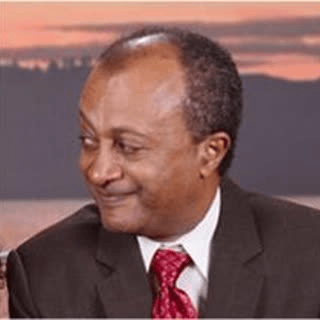
By Asfaw Beyene
I was taken aback by recent comments from two prominent political commentators of Somali ethnicity, Farah Maalim and Faisal Roble, both associated with Nairobi’s political circles. My focus here is on the remarks made by Faisal Roble.
In an interview with a media outlet unfamiliar to me, Faisal Roble expressed concern about what he described as the growing number of “ultra-nationalists” among the Oromo. He claimed that these nationalists had become so numerous, indeed, “huge” in number, that the phenomenon posed a danger to Ethiopia.
He then asked why Oromo nationalists had become so radicalized, suggesting that the movement’s supposed extremism might be explained by its being relatively new and youthful. As evidence of what he called the “pervasive” nature of Oromo nationalism, he alleged that Oromo nationalists were making territorial claims extending as far as Mogadishu, Djibouti, Yemen, Kenya, and Eritrea.
By the time I finished listening to the interview, I found myself wondering whether Faisal Roble had confused Somali ultra-nationalists with Oromo nationalists. Nearly every characteristic he attributed to Oromo nationalism seemed far more applicable to the historical record of Somali expansionist nationalism.
His argument deserves careful examination.
The Contradictions in Faisal Roble’s Argument
First, the history of radical nationalism in the Horn of Africa cannot be discussed without examining Somali expansionism. Somali nationalism has a long and complicated history. Its expansionist manifestations, particularly the ideology of Greater Somalia, contributed to regional wars, territorial disputes, and political instability. Somalia’s own experience with authoritarian rule, civil war, and state collapse demonstrates the destructive potential of nationalism when it becomes inseparable from territorial ambition and political exclusion.
It would be simplistic to attribute Somalia’s decades of instability entirely to nationalism. Nevertheless, the historical consequences of expansionist and pervasive Somali nationalism are too significant to ignore.
Second, Faisal Roble describes Oromo nationalism as a danger to Ethiopia. This assertion raises a fundamental question: a danger to which Ethiopia? If Oromo nationalism seeks equality, self-determination, political representation, and the protection of Oromo rights, it can be considered a danger only to a political order that refuses to recognize those rights.
A political movement demanding justice for a historically marginalized people should not automatically be characterized as extremist. The distinction between legitimate national aspirations and exclusionary ultra-nationalism is essential.
Third, Faisal portrays Oromo nationalism as a new and youthful phenomenon.
This reflects a troubling misunderstanding of Oromo history. The historical roots of Oromo collective identity, political institutions, resistance, and struggles over sovereignty extend back centuries. The Oromo played a major role in the political transformations of the Horn of Africa during the sixteenth century, long before the emergence of the modern Ethiopian state.
Modern Oromo nationalism took shape through subsequent historical experiences, particularly the incorporation of Oromo territories into the expanding Ethiopian Empire during the nineteenth century. To describe Oromo nationalism simply as a new movement is to overlook this long historical trajectory.
Fourth, Faisal alleges that Oromo nationalists claim territories extending to Mogadishu, Djibouti, Yemen, Kenya, and Eritrea. This is perhaps the most extraordinary part of his argument. I have yet to encounter a credible statement by a recognized Oromo political party, organization, or prominent nationalist leader asserting territorial claims over Mogadishu, Yemen, Eritrea, or Djibouti.
If Faisal possesses such evidence, he should present it. Which Oromo political organization has made these claims? When were they made? In what official document or public statement? Without such evidence, these allegations amount to a sweeping and potentially inflammatory misrepresentation of Oromo nationalism.
The irony is striking: the territorial ambitions he attributes to Oromo nationalists bear a much closer resemblance to the historically documented ideology of Greater Somalia. This leads to a more important question: Why has Faisal Roble chosen this moment to launch such an attack on Oromo nationalism? To explore that question, we must examine the emerging political connections between Nairobi, Mogadishu, and Jijjiga.
The Nairobi–Mogadishu–Jijjiga Nexus
Recent political developments in the Horn of Africa raise questions about the relationships among Somali nationalist networks, political actors in Somalia, and political movements operating within Ethiopia’s Somali Region. Nairobi has long served as an important center for Somali political, commercial, and diaspora activity. Its significance as a meeting place for politicians, businesspeople, and opposition figures is well established. However, the existence of these networks does not, by itself, establish that they operate under a coordinated political agenda.
What concerns me is the possibility that certain political actors are attempting to exploit regional tensions, territorial disputes, and opposition alliances to advance a renewed expansionist agenda. This concern becomes particularly important when viewed alongside recent political developments in Ethiopia and the changing alliances among armed and opposition movements.
The Minnesota Fraud Cases and the Nairobi Connection
Recent federal fraud prosecutions in Minnesota have also drawn attention to the movement of stolen public funds into overseas investments, including real estate in Kenya. Among the individuals named in connection with these cases, several of them have investments in Nairobi realestate. The diversion of funds intended to feed vulnerable children is deeply disturbing. Such misconduct betrays taxpayers’ trust, harms the communities these programs were designed to serve, and unfairly tarnishes the reputation of the many honest, hardworking Somali Americans who have contributed to their communities and American society. Criminal responsibility rests with the individuals involved and should never be generalized to an entire ethnic or immigrant community. Nevertheless, for Oromos and Kenyans, reports of property acquisitions by individuals indicted in the Minnesota fraud cases, in a city (Nairobi) where allegations of a nonexistent Oromo ultranationalist movement have suddenly surfaced, raise legitimate concerns. This does not imply any connection between those implicated in Minnesota and political figures in Nairobi. Rather, the broader question is whether illicit financial networks, political influence, and regional nationalist agendas intersect in ways that warrant further investigation.
The ONLF and the Changing Political Alliances in Ethiopia
In September 2026, the Ogaden National Liberation Front (ONLF) was reported to have joined a coalition known as the Ethiopian Peoples’ Forces Alliance for Survival, bringing together seven armed and opposition organizations opposed to Prime Minister Abiy Ahmed’s administration.
The ONLF has historically pursued Somali self-determination in Ethiopia’s Somali Region. Its political trajectory must also be understood in the context of the broader history of Somali nationalism and the territorial disputes that have shaped relations between Ethiopia and Somalia. The changing fortunes of opposition alliances, including those associated with the TPLF, may have created opportunities for other political movements to reposition themselves.
I am particularly concerned that some advocates of Somali expansionist nationalism may see these developments as an opportunity to revive older territorial ambitions. Faisal Roble’s political commentary and Farah Maalim’s reported statements about support for the ONLF deserve examination in this context, despite political sympathy for an organization should not be confused with proof of operational involvement in its activities. The critical issue is whether opposition to the Ethiopian government is being used to advance legitimate political demands or to reopen territorial conflicts between neighboring communities.
Moyale, Borana, and the Politics of Territorial Expansion
Recent tensions around Moyale and Borana territory have intensified these concerns. Moyale lies in a historically sensitive borderland where Oromo and Somali communities, including Borana and Garri populations, have longstanding relationships shaped by trade, migration, political competition, and periodic conflict.
Reports of violence, including the alleged killing of a 13-year-old girl and the reported refusal to return her body to her family, are deeply disturbing. These allegations demand an independent investigation, accountability, and justice for the victim’s family. No territorial or political dispute can justify the killing of a child. This is extreme nationalism in action.
Of particular concern are reports that a Somali national flag, rather than the flag of Ethiopia’s Somali Regional State, was raised in contested territory. If verified, such an act would carry political significance extending beyond an ordinary local dispute. It would raise questions about whether the conflict was being framed in terms of Somali national territorial ambitions rather than local administrative boundaries. This is why I do not believe the tensions should be dismissed simply as a dispute between the Garri and Borana communities both of whom are Oromos and both of whom speak Oromo language. There is a larger historical and political context that deserves examination.
The timing of Faisal Roble’s remarks, following heightened tensions and Oromo reactions to events in the area, is striking. His criticism of Oromo nationalism appears to reflect a broader political anxiety about Oromo resistance to territorial encroachment. Whether this interpretation is correct requires further evidence. Nevertheless, it provides a compelling reason to examine the historical record of Somali expansionist nationalism.
Greater Somalia: The Historical Irony
Perhaps the greatest irony in Faisal Roble’s accusations is that the territorial expansionism he attributes to Oromo nationalists closely resembles the ideology of Greater Somalia. The Greater Somalia project was not an imaginary accusation invented by political opponents. It was an explicit political objective promoted by extreme Somali nationalist movements and successive Somali governments. Its central ambition was to unite Somali-inhabited territories across the Horn of Africa under a single political entity. This included the Somali Republic, the Ogaden and other Somali-inhabited territories of Ethiopia, the Northern Frontier District of Kenya, and Djibouti. The five-pointed star on Somalia’s flag historically symbolized these five Somali territories.
Under Siad Barre, this ideology became closely associated with military expansionism and the attempt to alter established international borders by force. Thus, the history of Somali ultra-nationalism is not merely a history of territorial ambition. It is also a warning about the destructive consequences of authoritarianism, militarization, and exclusionary political identity.
Against this historical background, Faisal Roble’s portrayal of Oromo nationalism as uniquely expansionist becomes especially difficult to understand.
The Western Somali Liberation Front and the Ogaden War
The Western Somali Liberation Front (WSLF) provides one of the clearest historical examples of ultra nationalism and the territorial objectives associated with Greater Somalia. Supported by the Somali government, the WSLF operated in eastern Ethiopia and played a significant role in the conflict that culminated in the 1977 – 1978 Ogaden War. The name Western Somali Liberation Front itself reflected a territorial conception in which parts of internationally recognized Ethiopian territory were regarded as belonging to a broader Somali nation.
During the war, Somali forces advanced into substantial portions of eastern Ethiopia before being defeated by Ethiopian forces. The conflict had devastating consequences for the region and its civilian populations, the broader military campaign and associated political movements affected Oromo communities and territories. But the central point is undeniable: territorial revisionism was an explicit component of the Greater Somalia project, manifested as ultra nationalism. These fanatical adventures to alter boarders by force led to the disintegration of the Somali state apparatus and the mushrooming of warlords.
Where, then, is the equivalent documented Oromo nationalist program claiming Mogadishu, Yemen, or Eritrea? If Faisal Roble wishes to make that comparison, the burden of evidence rests with him.
From the WSLF to the ONLF
The decline of the WSLF and the emergence of the ONLF marked an important transformation in Somali nationalist politics in Ethiopia. The ONLF emerged in the 1980s and eventually became a major political and armed organization advocating self-determination for ethnic Somalis in Ethiopia. Although the ONLF and WSLF differed in their organizational structures, political circumstances, and stated objectives, their histories are connected to the broader question of Somali national identity and political sovereignty in the Horn of Africa.
The relationship between Somali nationalist movements and Oromo liberation organizations has also been complex. At different times, their interests have converged around opposition to Ethiopian central governments. At other times, territorial competition, political rivalry, and conflicting national aspirations have generated serious tensions. Historical attacks of Somali extremists on Oromo liberation figures, including the 10 massacred at Shinniga in 1980 have deeply saddened the Oromo people, leaving a historical scar. Faisal shall pour no more fuel to these historic wounds and respect the brotherly sentiment that existed between Oromos and Somalis for centuries.
The Somali Abo Liberation Front and the Struggle Over Oromo Territory
During the 1970s, the Somali government supported extremist Somali movements operating in southern Ethiopia, including areas historically associated with the provinces of Bale, Sidamo, and Arsi. These regions were primarily inhabited by Oromo populations. The SALF mobilized some communities in these areas to suit Somalia’s regional political and military objectives. Unlike the WSLF, which focused primarily on Somali national claims in eastern Ethiopia, the SALF’s activities extended into areas where Oromo identity and political aspirations were central. It was a clear expansionist and extremist move to annex some Oromo territories including the Garri.
Following Somalia’s defeat in the Ogaden War, the Oromo Abo Liberation Front (OALF) emerged reflecting changing political identities and alliances. The precise organizational relationship between the SALF and OALF, including claims about formal renaming and changes in political affiliation, remain beyond the scope of this paper. Nevertheless, the broader history illustrates an important point: Somali state-sponsored political and military movements were active in territories inhabited by Oromo communities, and the growing national aspirations of Somali extremism was already evident decades ago.
This is the historical context in which false accusations of Oromo territorial expansionism must be evaluated. It is important to note that out of such piles of political extremism was born Al-Shabaab, whose emergence was also shaped by a different mix of ideology, state collapse, and extremist politics. There simply are no parallels to such extremism in the Oromo body politics, reason why Faisal’s statement itself comes as extreme.
Who Is Really Promoting Expansionist Nationalism?
Faisal Roble’s comments raise questions that cannot be avoided. Why are political commentators such as Faisal Roble and Farah Maalim devoting so much attention to the alleged dangers of Oromo nationalism while appearing less concerned about the documented history of Somali territorial expansionism? Why portray Oromo demands for political rights and territorial security as extremist while failing to apply the same scrutiny to the ideology of Greater Somalia? And why should Oromo opposition to perceived territorial encroachment be interpreted as radicalization rather than as a legitimate concern about security, identity, and political rights?
These questions are especially important given the continuing challenges facing Somalia itself.
Somalia has struggled for decades with state fragmentation, armed insurgency, political instability, and the difficulty of establishing effective authority across its territory. Regional and international assistance, including sacrifices made by Ethiopian forces, has played a significant role in efforts to restore security. I have no doubt that many of these forces come from Oromia.
Rather than reopening old territorial disputes, political leaders and commentators should devote greater attention to peace, accountable governance, economic development, and cooperation among the peoples of the Horn of Africa.
This is not an argument against Somali nationalism as an expression of cultural identity or legitimate political aspiration. Nor is it a criticism of Somali people, whose communities have suffered enormously from war, displacement, and political instability. It is an argument against expansionist ultra-nationalism, regardless of who promotes it.
Conclusion: The Danger of Historical Amnesia
Faisal Roble’s criticism of Oromo nationalism suffers from a fundamental contradiction. He warns against an alleged Oromo expansionist movement without identifying credible evidence of the extraordinary territorial claims he attributes to it. Yet the historical record contains extensive documentation of Somali nationalist movements that openly pursued territorial revisionism across the Horn of Africa.
The Greater Somalia project, the WSLF, the Ogaden War, and the history of Somali-backed political movements in southern Ethiopia are not matters of speculation. They are part of the region’s political history.
None of this means that Oromo nationalism should be exempt from criticism. Any nationalist movement can become intolerant, exclusionary, or extremist. Oromo nationalism, like every other political movement, should be judged by its principles, conduct, and respect for the rights of others. But criticism must be grounded in evidence, not sweeping accusations or historical distortions.
If Faisal Roble believes that Oromo nationalists are claiming Mogadishu, Yemen, Djibouti, Eritrea, and Kenya, he should identify the organizations, leaders, statements, and documents that substantiate his allegations. Until then, his claims remain unsupported.
The peoples of the Horn of Africa have suffered enough from territorial wars, political manipulation, and competing nationalist ambitions. They deserve a future based on mutual recognition, historical honesty, and respect for one another’s rights. The real danger to Ethiopia and the wider Horn of Africa is not the legitimate expression of Oromo or Somali national identity. It is the revival of expansionist ideologies that treat the territories and rights of neighboring peoples as objects of political conquest. That is the danger Faisal Roble should be addressing rather than projecting onto Oromo nationalism the very expansionist tendencies that have already caused so much suffering in the region.

From Refugee Roots to Leadership: Louise Perry to Lead Victoria’s Multicultural Commission
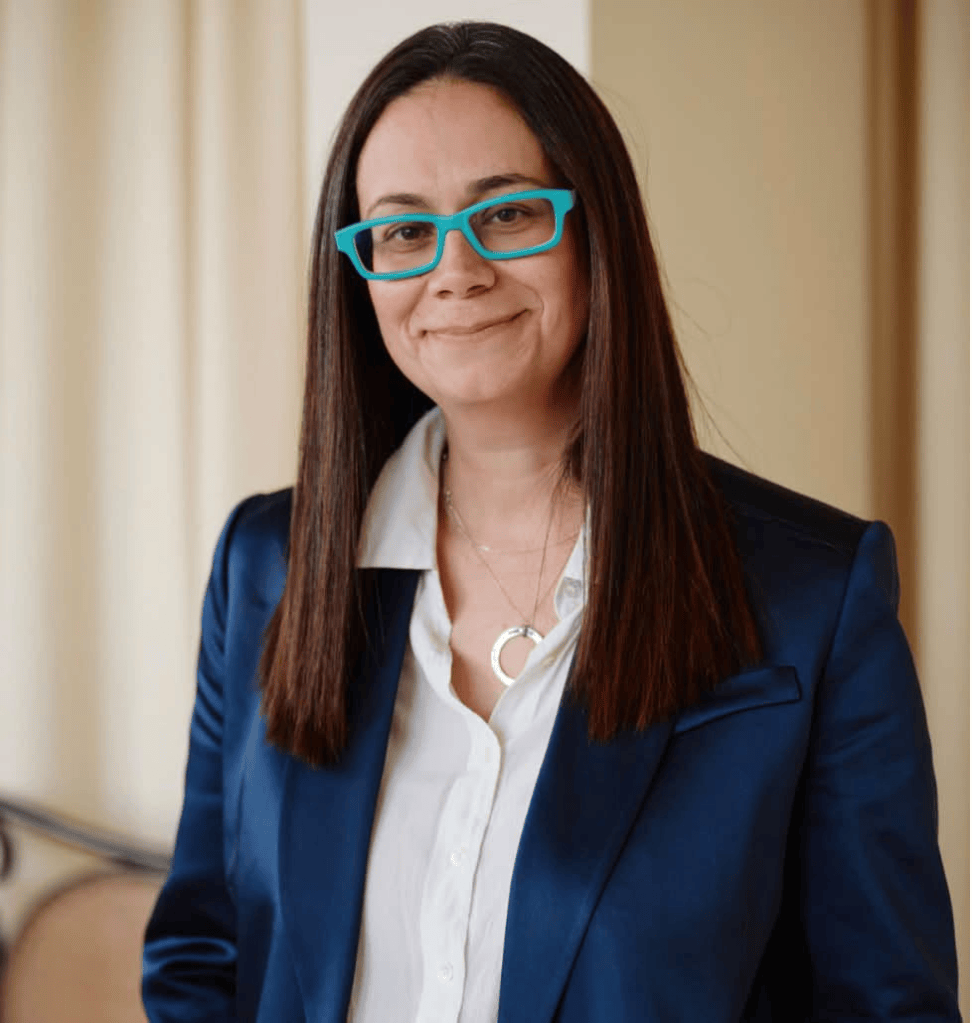
By Dhabessa Wakjira
MELBOURNE – Victoria’s commitment to fostering an inclusive and harmonious society has found a steadfast champion. Multicultural and Multifaith Victoria (MMV) has announced that Ms. Louise Perry will continue her tenure as the Interim Multicultural Coordinator General.
While the title is long, the mission is deeply personal. For Perry, the role is not just a bureaucratic appointment, but a culmination of a life shaped by migration, resilience, and a profound dedication to human rights.
As a Burmese woman, a migrant, and the daughter of a refugee, Perry brings a unique duality to the position. She merges her lived experience with significant professional expertise across the public, development, and human rights sectors. It is this combination of personal insight and professional acumen that MMV leadership believes will be instrumental in driving the organization forward.
“Louise brings extensive experience across government, human rights, and international development, along with a lifelong commitment to strengthening inclusion and opportunity for diverse communities,” MMV said in a statement announcing her continued appointment.
Having traversed the complex landscapes of international development and public service, Perry is acutely aware of the challenges and opportunities facing Victoria’s diverse populace. Her career has been defined by a drive to ensure that systemic barriers are dismantled and that opportunity is accessible to all, regardless of background.
In her role as Interim Coordinator General, Perry is tasked with positioning MMV as a trusted, effective, and robust institution. She is passionate about ensuring the organization builds strong, meaningful partnerships across a wide spectrum of stakeholders—from grassroots community groups and government bodies to businesses and the broader Victorian public.
Her vision for MMV is one of active engagement and tangible results. By fostering these cross-sector alliances, Perry aims to deliver meaningful change, ensuring that the voices of multicultural and multifaith communities are not just heard, but are integral to the shaping of policy and public life in Victoria.
As she continues to lead the organization through its establishment phase, Perry stands as a testament to the very values MMV seeks to uphold: that diversity is a strength, and that leadership is often most powerful when informed by the journey of those who have lived it.

The Lion of Borana: Remembering Guyyoo Boruu Galmaa, the Abbaa Gadaa Who Defied Empires
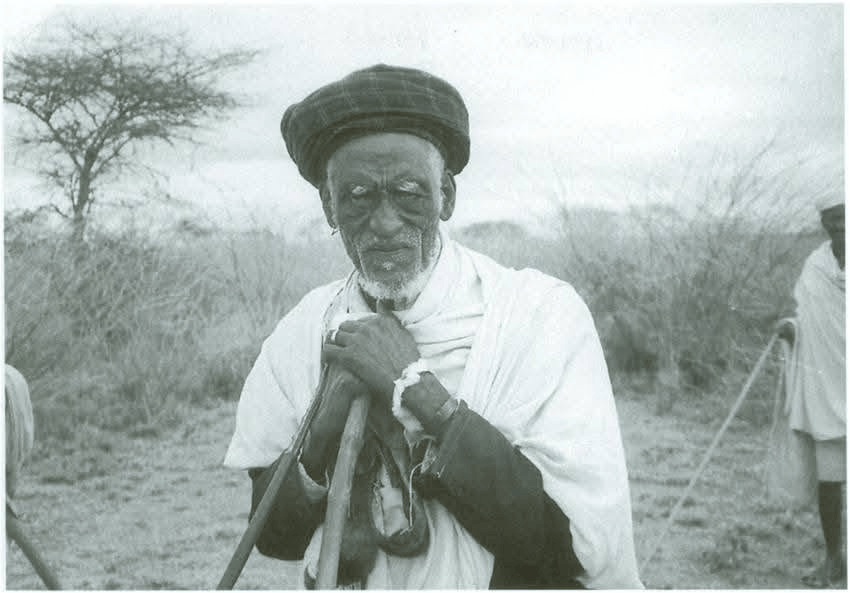
By Dhabessa Wakjira
In the annals of Oromo history, there are leaders who govern, and then there are those who become the embodiment of a people’s resistance. Guyyoo Boruu Galmaa, who served as the Abbaa Gadaa of the Borana Oromo from 1944 to 1952, belongs unequivocally to the latter. He was not merely a custodian of the ancient Gadaa system; he was a shield against the encroaching empires of the 20th century—a man whose defiance of both Italian invaders and the Ethiopian imperial state preserved the soul of the Borana people.
His story, deeply intertwined with the fate of the sacred wells and the contested borders of Moyale, offers a masterclass in indigenous diplomacy and unyielding sovereignty.
A Legacy Born in the Shadow of Partition
The roots of Guyyoo Boruu’s leadership stretch back to a defining tragedy for the Borana nation. In 1907, the British and Ethiopian empires signed the Anglo-Ethiopian Boundary Agreement, a colonial decree that arbitrarily carved the Borana homeland in two, dividing the people of Moyale.
At that time, it was Boruu Galmaa Dooyyoo—the father of Guyyoo—who served as the Abbaa Gadaa. He was among the first to openly reject the treaty, recognizing it not as a legal boundary, but as an existential threat to the unity and sovereignty of the Borana. The son inherited the father’s fire.
In 1944, when Guyyoo Boruu Galmaa took the Baallii (the ritual transfer of power) and assumed the mantle of Abbaa Gadaa, he stepped into a region rife with external pressure. The Borana were not only facing the legacy of the 1907 partition but were also navigating the chaotic fallout of global wars and shifting imperial ambitions in the Horn of Africa.
Defying the Italian War Machine
Historical records reveal that Guyyoo Boruu’s leadership did not begin in 1944; his journey as a freedom fighter started much earlier. Between 1936 and 1945, he was actively leading the Borana Oromo in resistance against the Italian occupation.
When the Italians invaded, they brought not just armies, but a strategy of land seizure. As the historical account notes, the Italian forces attempted to annex vast tracts of Handaraa land, claiming everything except the sacred Arddaa and Tula (water wells). Guyyoo Boruu responded by building the Borana Gadaa structures and waging a relentless war against the Italians.
His struggle was not just about repelling a foreign army; it was about defending the sacred ecology of Borana life. The Tula wells were the lifeblood of the cattle and the people. Guyyoo Boruu understood that to lose the land was to lose the wells, and to lose the wells was to lose the Borana identity itself.
Standing Against the Imperial Crown
Following the defeat of the Italians, the Borana faced a new, more insidious threat: the expanding centralization of Emperor Haile Selassie’s government. Between 1947 and 1950, the imperial regime sought to impose its administrative and cultural dominance on the southern frontiers.
Guyyoo Boruu Galmaa became the primary obstacle to this encroachment. He did not merely resist the political pressures of the imperial state; he actively protected the Gadaa system, ensuring that traditional laws, democratic consensus, and indigenous governance continued to thrive despite the centralizing forces of Addis Ababa.
His defiance culminated in a moment of profound historical significance. In 1950, the Haile Selassie government, seeking to co-opt local leaders, offered Guyyoo Boruu the title of “Giraazmach”—a high-ranking imperial military and administrative honor.
He refused.
In rejecting the title, Guyyoo Boruu Galmaa made a definitive statement of Oromo autonomy. He rejected the legitimacy of an empire that had partitioned his people and threatened their customs. By turning his back on imperial honors, he affirmed that his authority came not from a distant emperor, but from the Gadaa, the Borana people, and the land itself.
The Enduring Wisdom of the Elders
The legacy of Guyyoo Boruu Galmaa is not confined to the history books; it is a living, breathing testament to the resilience of Oromo culture.
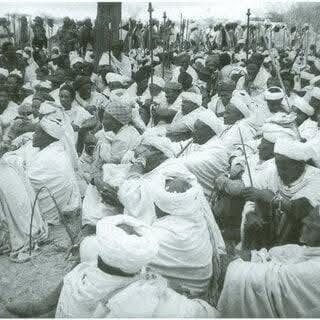
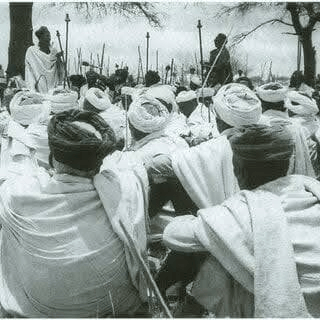
His life was meticulously documented by Western anthropologists who recognized the profound nature of the Borana political system. The renowned scholar Eike Haberland photographed him in 1952—the year he completed his term as Abbaa Gadaa. Decades later, in 1986, anthropologist Günther Schlee captured another historic moment: Guyyoo Boruu, then approximately 95 years old, was photographed at the Gumii Gaayyoo (the great assembly) as his son, Boruu Guyyoo Boruu, took the Baallii and assumed the leadership of the Gadaa.
That photograph, showing the aged father watching his son take the reins of power, is a powerful visual metaphor. It represents the unbroken chain of the Gadaa system—a system that Guyyoo Boruu fought to protect with weapons, diplomacy, and sheer moral courage.
A Beacon for the Present
As the Oromo people today face a renewed crisis of state violence, displacement, and the ongoing political capture of their sacred resources—including the Tuula Saglan Booranaa—the legacy of Guyyoo Boruu Galmaa serves as a vital beacon.
He stands as a reminder that Oromo sovereignty is ancient, sophisticated, and deeply rooted in a democratic culture that predates modern statehood. He proved that true leadership is not measured by the titles bestowed by empires, but by the courage to defend one’s people against them.
Nearly a century after he began his resistance, the spirit of Guyyoo Boruu Galmaa still echoes across the plains of Borana, flowing like the waters of the sacred wells he fought to protect: undivided, unbroken, and eternally free.
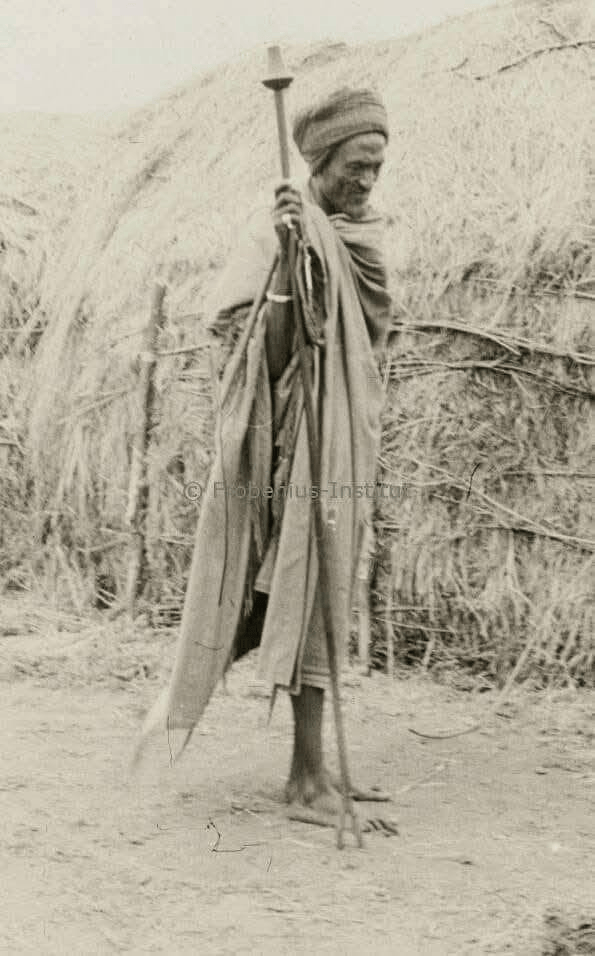
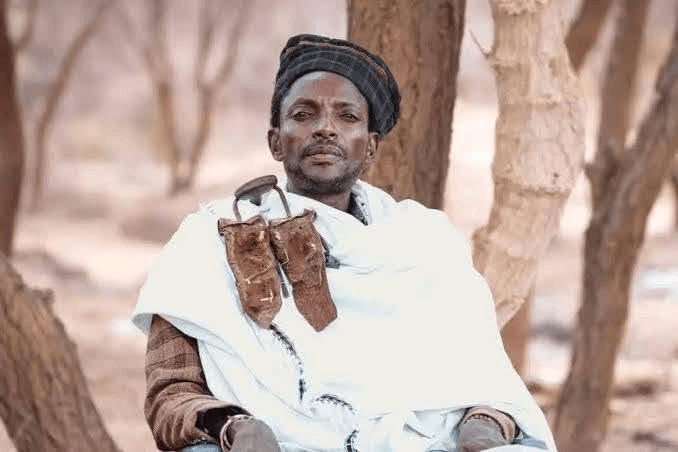
Photos: Guyyoo Boruu Galmaa, photographed by Eike Haberland (1952) and Günther Schlee (1986).

The Passing of a Pillar: Professor Abdullahi A. Shongolo and the Enduring Legacy of Oromo Indigenous Knowledge
By Dhabessa Wakjira
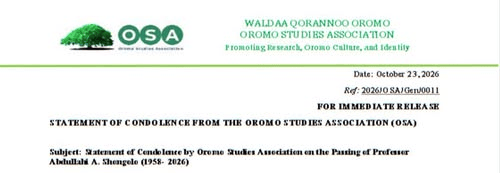
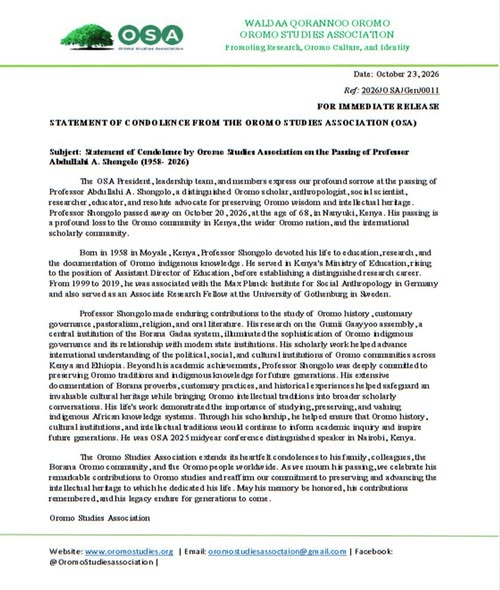
On October 20, 2026, the scholarly and cultural world lost a towering figure. In Nanyuki, Kenya, Professor Abdullahi A. Shongolo—a distinguished anthropologist, social scientist, and resolute advocate for Oromo intellectual heritage—passed away at the age of 68. In a formal statement of condolence released on October 23, the Oromo Studies Association (OSA) announced his passing, describing it as “a profound loss to the Oromo community in Kenya, the wider Oromo nation, and the international scholarly community.”
For those who knew his work, Professor Shongolo was not merely an academic; he was a bridge. Born in 1958 in Moyale—the very border town where the sacred wells of the Borana have faced generations of political siege—he spent his life ensuring that the sophisticated governance, oral literature, and customary laws of his people were not just preserved, but globally recognized as vital contributions to human civilization.
From the Classroom to the Global Stage
Professor Shongolo’s journey began in education. Before establishing a distinguished research career, he served in Kenya’s Ministry of Education, eventually rising to the position of Assistant Director of Education. This foundational experience shaped a career defined by a dual commitment: rigorous academic inquiry and the practical upliftment of his community.
From 1999 to 2019, his intellectual home was the Max Planck Institute for Social Anthropology in Germany. He also served as an Associate Research Fellow at the University of Gothenburg in Sweden. Yet, despite his extensive international footprint, his research gaze never strayed far from the Horn of Africa.
His scholarship was deeply rooted in the lived realities of the Oromo people. He made enduring contributions to the study of Oromo history, pastoralism, religion, and oral literature. His meticulous research on the Gumii Gaayyoo assembly—a central institution of the Borana Gadaa system—illuminated the remarkable sophistication of Oromo indigenous governance. At a time when colonial and post-colonial narratives often dismissed African traditional systems as primitive, Shongolo’s work provided irrefutable evidence of a highly structured, democratic, and consensus-based political order, and he expertly examined how this system interacted with modern state institutions.
Safeguarding the “River of Blessings”
Professor Shongolo understood that a culture survives through its language and its stories. Beyond his formal academic publications, he was deeply committed to the meticulous documentation of Borana proverbs, customary practices, and historical experiences.
In recent years, as the Oromo people have faced systemic marginalization and violence, Shongolo’s work served as a vital anchor. By archiving the intellectual traditions of the Oromo, he ensured that future generations would inherit a robust cultural identity. His life’s work demonstrated the absolute necessity of studying, preserving, and valuing indigenous African knowledge systems.
His dedication to the Oromo nation was recognized just a year prior to his passing. In 2025, he served as the distinguished speaker at the OSA’s midyear conference in Nairobi, where he continued to challenge and inspire a new generation of Oromo scholars and activists.
A Legacy That Endures
The passing of Professor Shongolo comes at a critical juncture for the Oromo people. As the Oromo Studies Association fights to center Oromo voices in global human rights discussions—often countering biased narratives promoted by state-aligned institutions—the loss of a scholar of Shongolo’s stature is deeply felt.
Yet, as the OSA noted in their statement, his work has laid a foundation that cannot be erased. “His extensive documentation of Borana proverbs, customary practices, and historical experiences helped safeguard an invaluable cultural heritage,” the statement reads, “while bringing Oromo intellectual traditions into broader scholarly conversations.”
The Oromo Studies Association extended its heartfelt condolences to his family, colleagues, the Borana Oromo community, and the Oromo people worldwide. In mourning his passing, the organization reaffirmed its commitment to preserving and advancing the intellectual heritage to which Professor Shongolo dedicated his life.
Professor Abdullahi A. Shongolo is gone, but the Gumii Gaayyoo he studied, the proverbs he recorded, and the dignity of the Gadaa system he brought to the world’s attention will continue to echo. He ensured that the intellectual wealth of the Oromo nation is no longer a hidden treasure, but a beacon for generations to come.
May his memory be honored, his contributions remembered, and his legacy endure.
Dhabessa Wakjira is a writer covering Horn of Africa affairs and Oromo cultural heritage.

Celebrating Oromia Media: The Unyielding Voice of a People
By Dhabessa Wakjira
In a country where the state maintains a near-monopoly on the levers of national and international media, the existence of independent Oromia media is nothing short of an act of defiance. To celebrate Oromia media today is to celebrate the resilience of a people who, for over a century, have seen their history distorted, their language suppressed, and their struggles silenced.
While the government in Finfinnee projects a façade of progress to the international community, the reality on the ground—as documented by human rights organizations—is a landscape scarred by violence, displacement, and systemic marginalization. In this environment, Oromia media serves as the vital, beating heart of the Oromo nation’s quest for truth and self-determination.
The Battle Against Erasure
The importance of an independent Oromo press cannot be understood without acknowledging the historical context. As the Oromia Support Group (OSG) notes in its submissions to the UN Human Rights Council, the Oromo people were subjected to the neftenya-gabbar system of subjugation, and while formal slavery was abolished, the culture of supremacy continued. Even today, the OSG warns that the gains in autonomy and the adoption of the Oromo language within the 1995 constitution are in danger of being lost as power is centralized.
For decades, mainstream Ethiopian media has been complicit in this erasure. It has often served as a mouthpiece for the state, demonizing Oromo organizations, masking state-sponsored atrocities, and amplifying biased narratives. When international human rights organizations are sometimes duped into publishing poorly researched reports that wrongly attribute massacres to the Oromo Liberation Army (OLA), independent Oromia media becomes the essential corrective mechanism. It is the platform that documents the drone strikes in East Wallega, the mass displacements in West Showa, and the forced conscription of children.
Oromia media does not just report the news; it archives the truth. It ensures that the 7,862 civilian killings documented since 2018 are not reduced to mere statistics, but are remembered as the mothers, fathers, and children lost to a brutal conflict.
Amplifying the Culture of Gadaa
To view Oromia media solely through the lens of conflict is to miss its profound cultural significance. The Oromo people possess a rich, vibrant heritage rooted in the ancient Gadaa system—a democratic, egalitarian, and consensus-based governance model recognized by UNESCO as a World Heritage treasure.
Oromia media is the guardian of this heritage. Through music, poetry, literature, and broadcasting in Afaan Oromoo, it nourishes a language that was once forbidden in schools and public life. It carries the voices of the Borana elders reciting the blessings of the Tuula Saglan Booranaa (the Nine Sacred Water Wells) across the diaspora. It celebrates the resilience of the Qerroo youth, who have stood at the forefront of demanding justice.
In a world where the government and its allies abuse their influence in global media and institutions to demonize Oromo people, these independent platforms offer a counter-narrative of dignity. They remind the world that the Oromo are not merely victims of a geopolitical crisis, but a proud nation with a sophisticated history of compromise, power-sharing, and democracy.
The Courage of the Diaspora
Much of this vital work is shouldered by the Oromo diaspora. Fleeing the violence that has created a global refugee crisis—with Oromos facing xenophobia in South Africa, detention in Egypt, and extortion in Yemen—the diaspora has weaponized media as a tool for survival.
Organizations like the Oromia Support Group (OSG) and various independent Oromo media outlets operate under immense pressure. They face digital surveillance, smear campaigns, and the constant threat of being discredited by state-aligned actors. Yet, they persist. They bridge the gap between the isolated villages of Oromia and the halls of the United Nations in Geneva.
A Voice for the Future
As the Horn of Africa faces increasing instability, the role of Oromia media will only grow in importance. It is the vehicle through which the Oromo people can demand accountability for the crimes committed against them, and it is the medium through which they articulate their vision for the future—a future built on self-determination, human rights, and the revival of their indigenous democratic values.
The existence of a free Oromia media is a testament to the fact that no amount of state repression, drone strikes, or media manipulation can extinguish the spirit of a people. To celebrate Oromia media is to celebrate the journalists, the poets, the citizen reporters, and the diaspora activists who refuse to let the world look away.
It is the sound of a nation reclaiming its own story. And it is a sound that will not be silenced.
Dhabessa Wakjira is a commentator on Horn of Africa affairs and human rights.

Dr. Taaddasaa Eebbaa (Gadaa Meelbaa): The Visionary Who Breathed Life into Ethiopia’s Biodiversity Legacy
By Dhabessa Wakjira
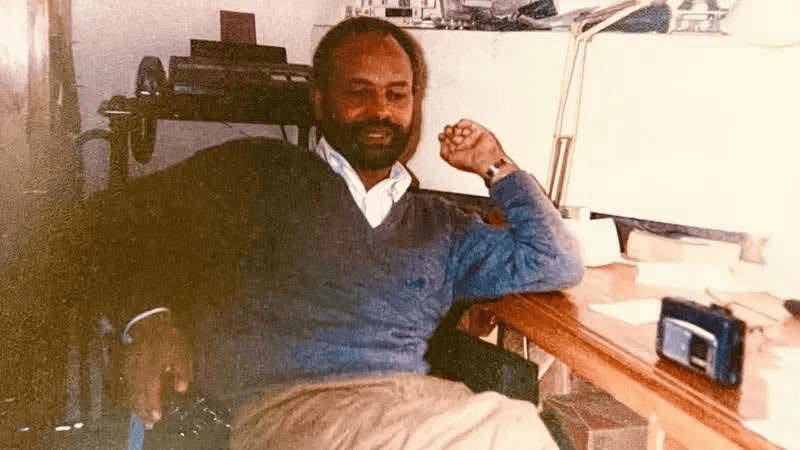
In the annals of Ethiopian and Oromo history, few figures embody the rare combination of scientific brilliance, political conviction, and unwavering sacrifice as profoundly as Dr. Taaddasaa Eebbaa. Known affectionately by many names—Dr. Fidoo, Doktoree, and most famously in literary circles as Gadaa Meelbaa—this remarkable scholar, freedom fighter, and author left an indelible mark on his nation’s scientific and political landscape before his passing on May 1, 2022, in Washington, D.C.
Humble Beginnings, Extraordinary Vision
Born in Najjoo, in the West Wallagga region, Dr. Taaddasaa’s journey from a young student in his hometown to an internationally recognized geneticist reads like a testament to the power of determination. He completed his primary education in Najjoo before pursuing his secondary studies in Jimma—a journey that would set the stage for an extraordinary academic career.
His first degree in agriculture from Alemaya College (now Haramaya University) marked the beginning of a lifelong dedication to understanding and preserving Ethiopia’s natural wealth. Not content with domestic excellence, Dr. Taaddasaa pursued his master’s and doctoral degrees at universities in the United States and the United Kingdom, specializing in genetics—a field that would become central to his life’s work.
The Architect of Ethiopia’s Biodiversity Conservation
The 1970s found Dr. Taaddasaa teaching at Haramaya University before joining the Ministry of Agriculture as a researcher. It was during this period that his visionary leadership would leave an enduring legacy on Ethiopian science.
As the director of a groundbreaking research project dedicated to studying Ethiopia’s plant genetic resources, Dr. Taaddasaa didn’t merely participate in scientific inquiry—he fundamentally shaped it. The institution that would eventually become the Ethiopian Biodiversity Institute (EBI) stands as a monument to his foresight and dedication.
According to historical accounts, Dr. Taaddasaa was not just a founding member but the intellectual force behind the establishment of this crucial institution in 1978, initially named the Plant Genetic Resource Centre of Ethiopia. Professor Endashaw, a former colleague, emphasizes this point with conviction: “Everything was initiated by Taaddasaa. Nothing was added. They removed him from the institution’s history. From all of us, they bought it from there.”
The institution’s original location near present-day Embasi, Kenya, was selected under Dr. Taaddasaa’s guidance—a decision that reflected his deep understanding of Ethiopia’s ecological diversity and its importance for global food security.
When Science Met Politics
Dr. Taaddasaa’s brilliance extended beyond the laboratory. His passion for Oromo culture and identity led him to help organize the first Oromo cultural showcase at the National Theatre in the 1970s—an act of cultural preservation that foreshadowed his later political engagement.
The political repression of the Derg regime did not spare this distinguished scientist. Historical accounts document that he was imprisoned twice in 1979 for his activities. The political pressure became unbearable, forcing Dr. Taaddasaa to make the heart-wrenching decision to leave his work and family behind in Finfinne, escaping through Assosa to Sudan at the end of 1979. From there, he joined the Oromo Liberation Front (OLF), beginning a new chapter in his life of service.
Dr. Shuggux Galataa Qondaalaa, a former OLF leader who knew Dr. Taaddasaa intimately, recalls his political journey: “He was among those who participated in founding the OLF. He took part in the secret meeting held in Finfinne on June 11, 1976. Everyone who participated in that meeting continued as members of the central committee, and Dr. Taaddasaa continued the struggle from then on.”
Sacrifices Beyond Measure
The personal cost of Dr. Taaddasaa’s commitment to freedom was staggering. His wife, Aadde Addisaalem Gannat, was imprisoned for over ten years during the Derg regime, finally released in 1988. His young son, barely two years old, died from neglect—a tragedy that haunts the pages of his life story. His daughter Urjii remains as a testament to a family that paid dearly for their convictions.
“Taaddasaa is not just someone with a good mind, but someone who thinks of others. Someone who thinks of his country,” reflects Professor Endashaw. “If he had stayed in science, he would have been a star researcher. What is past cannot be returned.”
Within the OLF, Dr. Taaddasaa’s contributions were equally significant. He served as a member of the Political Bureau after the 1988 leadership transition and contributed to the Biree Diplomaasii—a foundational document for the organization’s diplomatic strategy. His journey of exile took him through Khartoum, Germany, and finally to the United States, where he lived until his death.
The Pen That Awakened a Nation
Perhaps Dr. Taaddasaa’s most enduring contribution to Oromo consciousness came not through politics or science, but through literature. In 1988, while in Khartoum, he published “Oromia”—a book that would become a cornerstone of Oromo national awakening.
Published under the pseudonym Gadaa Meelbaa, the book’s authorship remained a mystery to many for years. The text, later translated into both Afaan Oromoo and Amharic, comprehensively addressed Oromia’s resources, culture, traditions, historical oppression, and the challenges facing the Oromo people.
Bulii Ejjetaa, who was a university student when the book was published, recalls its transformative impact: “We saw that book as a ‘pill of freedom.’ It asked us clearly: What is Oromia? Where is it located? What does it have? What has it been through? We shared it and discussed it at university. After joining the struggle, we used it to educate our people.”
The book served as a consciousness-raising tool for countless young Oromos, many of whom had been disconnected from their cultural identity. “For students who didn’t know their Oromummaa, we would say, ‘Give this child that pill,'” Bulii remembers. “That book was a pill for strengthening Oromummaa and nationalism.”
Years after its publication, when Dr. Taaddasaa’s authorship became known, he transferred the book’s rights to the Oromo people and the OLF—a final act of generosity from a man who had given everything.
An Unacknowledged Legacy
Despite his monumental contributions, Dr. Taaddasaa’s role in founding the Ethiopian Biodiversity Institute has been systematically erased from official narratives. Five years after he established the institution, records began crediting someone else with its founding.
This erasure of his legacy represents a broader pattern of historical amnesia that has obscured the contributions of Oromo intellectuals to Ethiopian national development. Yet those who knew him and benefited from his work ensure his memory endures.
A Life of Purpose, A Legacy of Inspiration
Dr. Taaddasaa Eebbaa’s life represents the intersection of scientific excellence and political conviction—a rare combination that produced lasting change in multiple spheres. He was a geneticist who understood that preserving Ethiopia’s biodiversity was essential for the nation’s future. He was a freedom fighter who believed that the Oromo people deserved dignity, self-determination, and cultural recognition. And he was an author whose words awakened a generation.
In his final years, Dr. Taaddasaa returned to Ethiopia briefly when the OLF transitioned to peaceful political participation, serving as an advisor to the organization. His journey had come full circle—from a young student in Najjoo to an internationally recognized scientist, from a political prisoner to a freedom fighter, from an exiled author to a respected elder statesman.
He passed away on May 1, 2022, in Washington, D.C., after a long illness, leaving behind his daughter Urjii and a legacy that transcends the boundaries of science, politics, and literature.
Dr. Taaddasaa Eebbaa—Gadaa Meelbaa—reminds us that true greatness lies not in what we accumulate but in what we give. He gave his scientific genius to Ethiopia’s biodiversity, his political passion to Oromo liberation, and his literary gift to a people hungry for self-knowledge. In doing so, he became more than a scholar or a revolutionary—he became a pillar of Oromo memory, a testament to what one person can accomplish when guided by love for people and country.
His story deserves to be told, retold, and never forgotten—not merely as a historical record, but as an inspiration for generations yet to come. For in remembering Dr. Taaddasaa Eebbaa, we remember what it means to live with purpose, to sacrifice with dignity, and to leave the world better than we found it.
—
This feature article honors the life and legacy of Dr. Taaddasaa Eebbaa (Gadaa Meelbaa), whose contributions to Ethiopian science, Oromo liberation, and literature continue to inspire.

The Thirst of Moyale: How Politics and Power Threaten the Sacred Wells of the Borana

By Daandii Ragabaa*
In the dry, unforgiving expanse of the Ethiopia-Kenya borderlands, water is not just a resource; it is the architecture of existence. For the Borana Oromo people, water is life, identity, and law. It is enshrined in the Tuula Saglan Booranaa—the Nine Sacred Water Wells—whose sanctity is still invoked in public blessings and whose historical significance was meticulously archived by British colonial anthropologists as “vital for the survival of the Borena tribes.”
Yet today, these ancient lifelines are at the center of a bitter, decades-long geopolitical struggle. Through the lens of a book written two years before the fall of the EPRDF regime by Obboo Alaka Simbiru, a former Governor of the Borena Zone, a troubling narrative emerges. It is a story of how the manipulation of borders, the politics of identity, and the heavy hand of the military eroded Borana autonomy and facilitated the capture of sacred resources by immigrant Somali groups.
A Border Drawn in Sand and Blood
The origins of the current crisis in Moyale can be traced back to the arbitrary drawing of colonial borders. As the book documents, the 1907 Anglo-Ethiopian treaties artificially divided the Borana people, splitting their traditional grazing lands and water sources between Ethiopia and Kenya. Moyale, located exactly 770 kilometers from Addis Ababa, became a divided town—a “twin city” straddling two nations.
For decades, this division was navigated through traditional governance. According to historical records and oral traditions cited in the text, the Borana managed their water sources through a deeply democratic system, rooted in the Gadaa system and governed by councils of elders. Under Emperor Haile Selassie and later the Derg regime, special administrative arrangements (like the Dembi Dollo and Goba systems) allowed the Borana to maintain relative control over their wells and grazing lands.
But the ascension of the TPLF-led EPRDF regime brought a seismic shift. The new government reorganized the country into ethnic federalism, redrawing internal boundaries and creating a volatile administrative reality on the ground.
The Anatomy of Dispossession
In 1991 and 1992, Moyale found itself at the center of a regional power struggle. The TPLF, consolidating its control over the south, established new administrative boundaries that placed the Borana and Somali communities in fierce competition for resources.
According to Simbiru’s account, the TPLF government did not merely redraw maps; it altered the demographic and political reality through force. The text highlights how the government systematically disarmed the local Borana population—leaving them defenseless—while allegedly arming and supporting immigrant Somali tribes, including groups crossing from neighboring countries.
The result was catastrophic for the Borana. As the book explicitly outlines, under the watch of TPLF military generals who controlled the region, two of the nine sacred Tuula Saglan Booranaa wells fell into the hands of these immigrant groups. This was not a natural migration, but a politically engineered displacement.
A Well is Cattle. A Well is Wife. A Well is Family.
To an outsider, the loss of two wells might seem like a minor logistical setback. But in Borana cosmology, the wells are sacred. They are the physical manifestation of a covenant between the people, their cattle, and Waaqa (God). “The well is cattle. The well is wife. The well is family,” the Borana say.
Access to these wells is governed by nagaa Boran—the peace and moral order of the Borana—which demands that no one is denied water. However, the political capture of the wells by rival groups, backed by military force, shattered this order.
The text details how the TPLF’s “divide and rule” tactics weaponized water and land. Borana politicians and elders who attempted to advocate for their people were systematically marginalized. The text notes that the Ethiopian government of the time pursued a deliberate strategy of “population settlement” and administrative gerrymandering to weaken the Borana demographic majority, thereby ensuring that the region’s resources were controlled by groups aligned with the central government.
The Echoes of LAPSSET and the Fight for the Future
Today, Moyale is no longer just a pastoral backwater; it is a strategic geopolitical node. The town is slated to be a major hub in the LAPSSET (Lamu Port-South Sudan-Ethiopia Transport) corridor. The promise of oil pipelines, highways, and international trade has made control of Moyale and its surrounding lands immensely valuable.
The historical grievances documented by Simbiru provide the necessary context for the intermittent violence that continues to plague the region. When communities feel that their sacred sites have been stolen and their traditional governance dismantled by state-backed forces, peace becomes elusive.
The River of Blessings, an essay written in honor of the late British anthropologist Dr. Paul Baxter, documented the resilience of Borana culture. But resilience has limits.
The story of Moyale is a cautionary tale about what happens when state power ignores traditional sovereignty and tramples on sacred ecology. As the Borana elders continue to recite the blessings of the Nine Sacred Wells, two of those names are now spoken with a sense of mourning and dispossession. The water still flows, but for the Borana, the moral order of the land remains broken.
Until the grievances of the past—the arbitrary borders, the militarized disarmament, and the stolen wells—are addressed with historical honesty, Moyale will remain a powder keg on the edge of the Horn of Africa. The thirst of the Borana is not just for water; it is for justice.
Daandii Ragabaa is a journalist covering the Horn of Africa, with a focus on land, water, and conflict in borderland communities.

Feature News: Death of 13-Year-Old Oromo Girl in Moyale Exposes the Human Cost of a Frozen Border Conflict
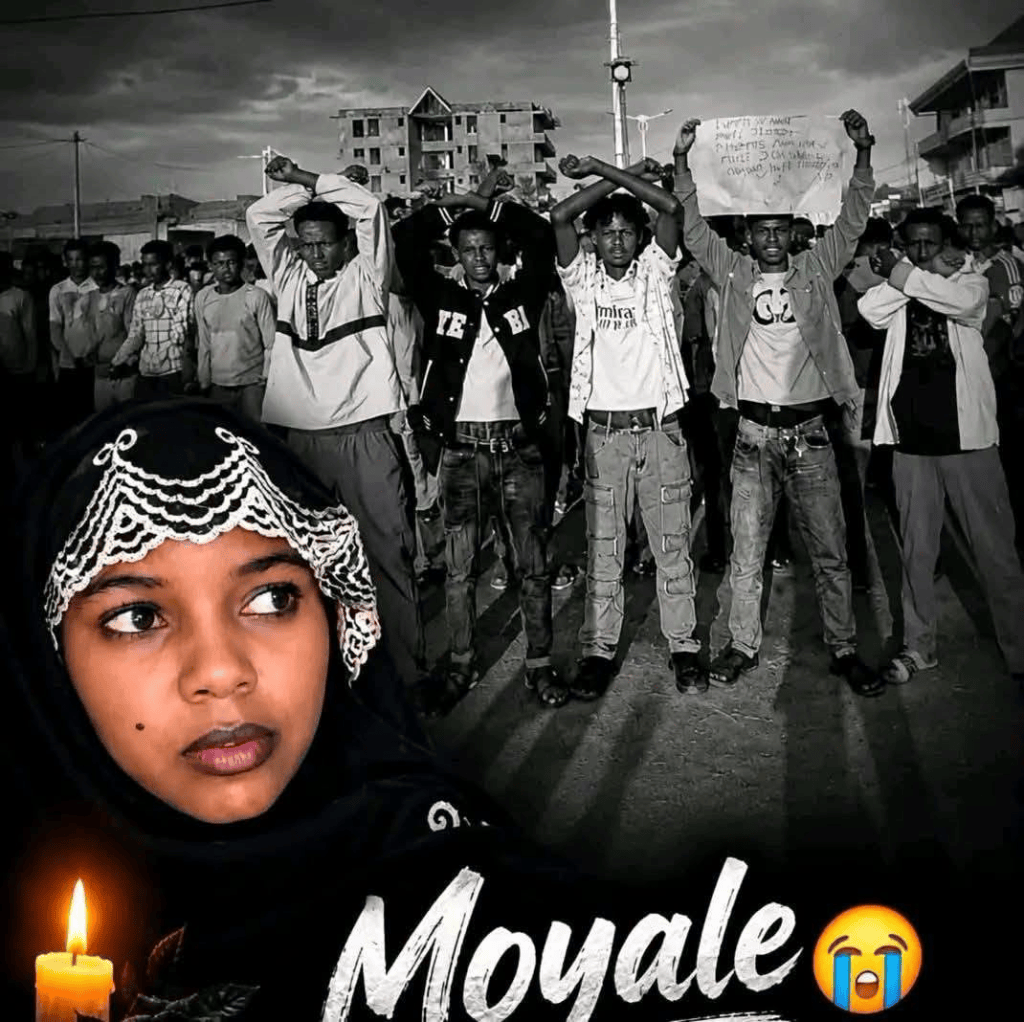
The killing of a teenage girl during a flag dispute in Moyale has reignited protests and grief in Borana, laying bare a decades-old territorial fracture between Oromia and Somali Region that neither federal intervention nor peace conferences have managed to heal.
By the time the gunfire stopped on 18 October, Diqqoo Jaataan Aagaa was dead. She was 13 years old.
According to residents who spoke to Addis Standard, the violence began when authorities from the Somali Region opened a new administration office in Moyale town, located in the Borana zone of Oromia regional state, and raised the Somali regional flag . Oromia local militia members and Somali Region police exchanged fire. The Ethiopian National Defense Force intervened to halt the shooting, but not before the girl was struck.
The accounts diverge sharply. Residents on the Oromo side accuse Somali Region police of shooting the child directly, with one resident describing the act as “cruelty and lawlessness” and claiming officers accused her of throwing stones . Residents from the Somali side insist she was caught in crossfire and that Somali forces did not target her. A security official who spoke to Addis Standard sided with the Oromo account, saying Somali Region security forces killed the girl in connection with the flag dispute .
Shuraa Waariyoo, the girl’s uncle, told Addis Standard that her body had not been buried as of Tuesday. He alleged that Somali Region forces had taken the body, and the family was still negotiating for its return .
The killing triggered immediate protests. Transport services were disrupted, businesses shuttered, and bus stations closed as security fears gripped the town . Elders and security officials reportedly agreed on Monday to remove the Somali Region flag, but that decision itself prompted counter-demonstrations from Somali residents, particularly in Kebele 02, deepening the standoff .
For the people of Moyale, the pattern is agonizingly familiar. Mallicha Diida, a resident of Kebele 02, told Addis Standard: “In Moyale, human blood has been spilled year after year” .
The roots of the recurrent violence lie in a border dispute that has never been fully resolved. Moyale sits at the frontier between the traditional territories of Somali and Oromo communities, both with vested interests in the area’s pastoral resources . A 2004 referendum was meant to settle the boundary between Oromia and Somali Region, but its implementation remains contested, and the underlying competition over land, pasture, and water continues to fuel clashes .
The scale of the suffering is staggering. Tensions intensified in July and August 2025 after the Somali Regional State approved an administrative restructuring plan creating new woredas and zonal administrations in contested territories. Subsequent clashes along the Oromia-Somali border displaced more than 288,000 people .
The death of a 13-year-old girl in a dispute over a flag is, in one sense, a singular tragedy. In another, it is the inevitable arithmetic of a conflict that has been allowed to fester for generations—where the symbols of administrative control carry life-and-death weight, and where the bodies of children become the price of unresolved boundaries.
The funeral arrangements for Diqqoo Jaataan Aagaa remain incomplete. Her family is still waiting for her body. In Moyale, the flags still fly, the militias still watch, and the question of whose land this is remains as unanswered as ever.

53 Years of Oromo Freedom Struggle, 53 Years of Impact
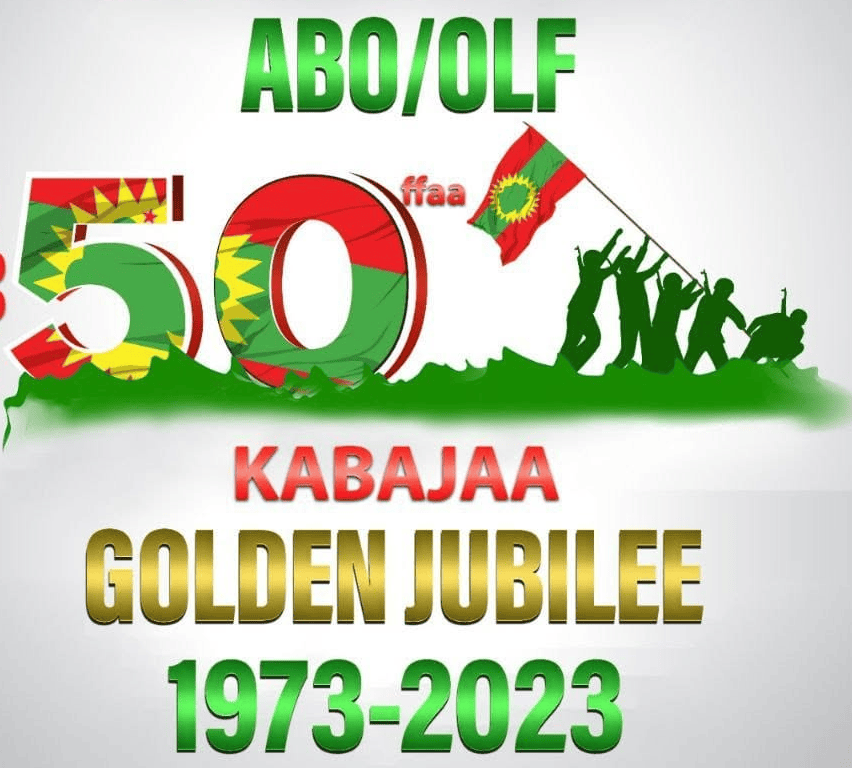
Half a century after a small band of nationalists took up the Oromo cause, the movement has transformed the political landscape of Ethiopia—even without achieving the independent state it once sought. Its deepest impact lies not in territorial control, but in the irreversible awakening of a people who can no longer be governed as before.
The Oromo Liberation Front was founded in 1973, emerging from the ferment of Oromo student activism and the memory of the banned Mecha-Tulama Self-Help Association . What began as a clandestine project among intellectuals would, over five decades, become the central axis of Ethiopian political contestation—not because it won, but because the questions it raised about identity, land, and power could never again be buried.
The early years were defined by armed insurgency and brutal repression. The OLF established itself as a guerrilla force operating across Wollega, Bale, and Hararghe, drawing recruits from peasants who had watched the imperial and then Derg regimes dispossess and marginalize them . The Derg’s response was predictable and catastrophic: mass arrests, executions, and a campaign of terror that killed thousands accused of harboring OLF sympathies. Yet repression produced what it so often does—martyrdom, recruitment, and an enduring sense of grievance that outlasted the gun.
The movement’s most significant impact, however, came not on the battlefield but in the realm of consciousness. The OLF’s founding vision articulated something that had been suppressed for generations: that the Oromo were a nation, not merely a labor force or a demographic majority to be managed. This idea, once planted, proved impossible to uproot. Even after the OLF was pushed out of the transitional government in 1992 and reduced to a marginal political actor, the seeds of Oromo nationalism continued to grow underground .
The eruption came in 2014, when the Qeerroo—Oromo youth—took to the streets over the Addis Ababa master plan, a policy they saw as another chapter in a long history of land dispossession. The protests spread, intensified, and by 2018 had forced the ruling coalition to install Abiy Ahmed, an Oromo, as prime minister . It was a remarkable inversion: a ruling party that had once sought to contain Oromo nationalism now depended on Oromo street power to survive.
The human cost of this struggle has never been abstract. In 2020, the assassination of Hachalu Hundessa, a musician whose lyrics had given voice to a generation’s anger and longing, triggered days of unrest that left at least 166 people dead, according to police figures . Hachalu’s music had become an instrument of the movement itself—his songs were sung at protests, his death a rallying cry. The violence that followed exposed how fragile the gains remained and how deeply the wounds of marginalization had festered.
Fifty-three years on, the struggle’s landscape is fractured. The OLF split in 2018, with its political wing entering legal politics and its armed wing—the Oromo Liberation Army—continuing an insurgency that the government has designated as terrorism . Peace talks between the government and the OLA have repeatedly collapsed, with Addis Ababa accusing the rebels of “unrealistic demands” and the OLA charging the government with seeking co-optation rather than addressing root causes . Meanwhile, the regional government in Oromia pursues a dual track: encouraging surrender through elders and Abba Gadas while waging military operations against those who refuse .
Yet the struggle’s most enduring legacy may lie elsewhere—in the cultural and intellectual infrastructure that no military campaign can dismantle. The Gada system, the indigenous Oromo governance structure that regulates political, social, and religious life through rotating eight-year cycles, was inscribed on UNESCO’s Representative List of the Intangible Cultural Heritage of Humanity in 2016 . What was once dismissed or ignored by the Ethiopian state is now recognized globally as a sophisticated democratic tradition. Oromummaa—the articulation of Oromo peoplehood and identity—has become a force in Ethiopian politics that no government can afford to ignore .
What, then, does 53 years of impact look like? It looks like a language once suppressed now spoken in parliament. It looks like a youth movement that toppled a prime minister and then grew disillusioned with his successor. It looks like a struggle that began as a separatist insurgency and became, instead, a permanent renegotiation of what Ethiopia means. The OLF’s founding dream of an independent Oromia has not been realized. But the conditions that made that dream thinkable—a people conscious of their history, their numbers, and their rights—have become irreversible.
The next chapter remains contested. The government insists the answer is peace and reintegration. The OLF’s political wing insists it is negotiation. The OLA insists it is continued resistance. The Qeerroo, who inherited a struggle they did not start, wait to see which vision will prevail. What is certain is that 53 years after a handful of nationalists took up the Oromo cause, the question they raised is no longer a question at all. It is a fact of Ethiopian life, and it will not be resolved by ignoring it.

Celebrating 75 Years of Impact: AMES Australia Honors a Legacy of Building New Lives
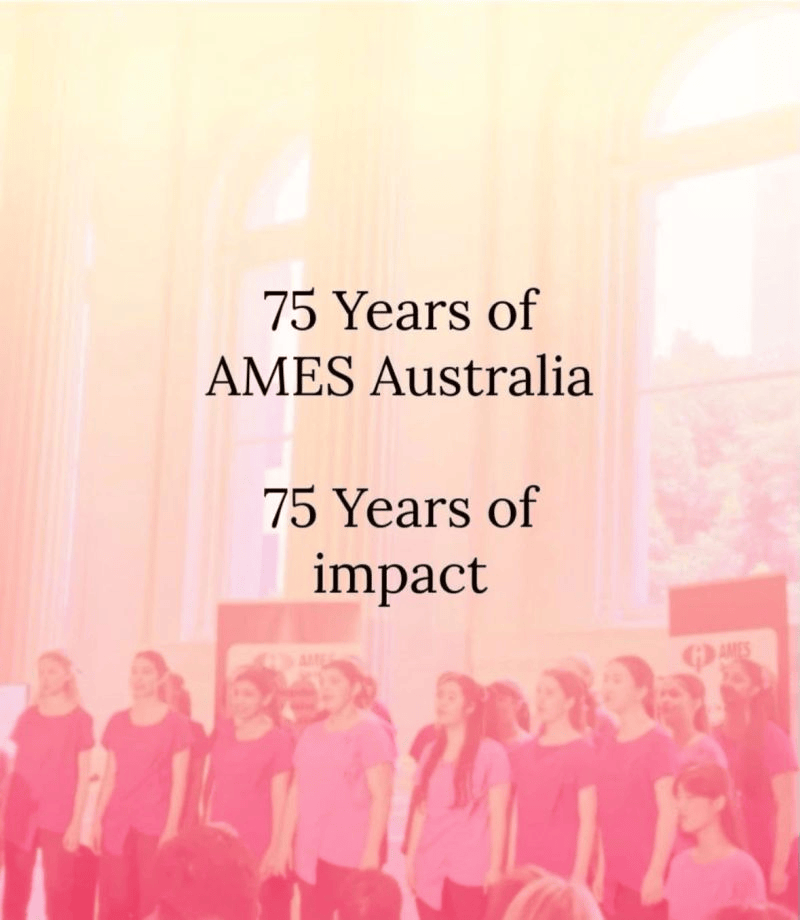
For 75 years, AMES Australia has been a cornerstone of the nation’s multicultural success, and last night, community leaders, politicians, and advocates gathered to celebrate a remarkable milestone.
Under the glowing banner of “75 Years of AMES Australia, 75 Years of impact,” attendees reflected on the transformative power of support, training, and opportunity. The celebration highlighted the absolutely incredible stories and achievements of refugees and migrants who have successfully built their new lives in Australia.
The event underscored why Australia’s multiculturalism remains so successful and vibrant. It is the result of dedicated organizations like AMES providing vital services—from settlement and employment assistance to English language training and ongoing support. These foundational pillars have helped nearly one million clients transition into their new communities and thrive.
The anniversary was a moment to honor the visionaries and hard workers behind the organization’s success. Special congratulations were extended to Melinda Collinson (GAICD), Vanda Fortunato (PhD, FAICD), the current and former AMES Board members and CEOs, and the entire AMES Australia team.
The celebration also brought together notable figures, including Laura Lo Bianco-Smith, Matt Carrick, Lee Tarlamis OAM MP, and Meena Naidu (GAICD), who gathered to recognize the profound #Impact that skills and education (#Skills) have had on the state of Victoria (#Victoria) over the decades.
As AMES Australia marks 75 years of making a difference, the evening served as both a powerful retrospective of past achievements and a hopeful look toward the future, continuing its mission of empowering individuals and strengthening the fabric of Australian society.






